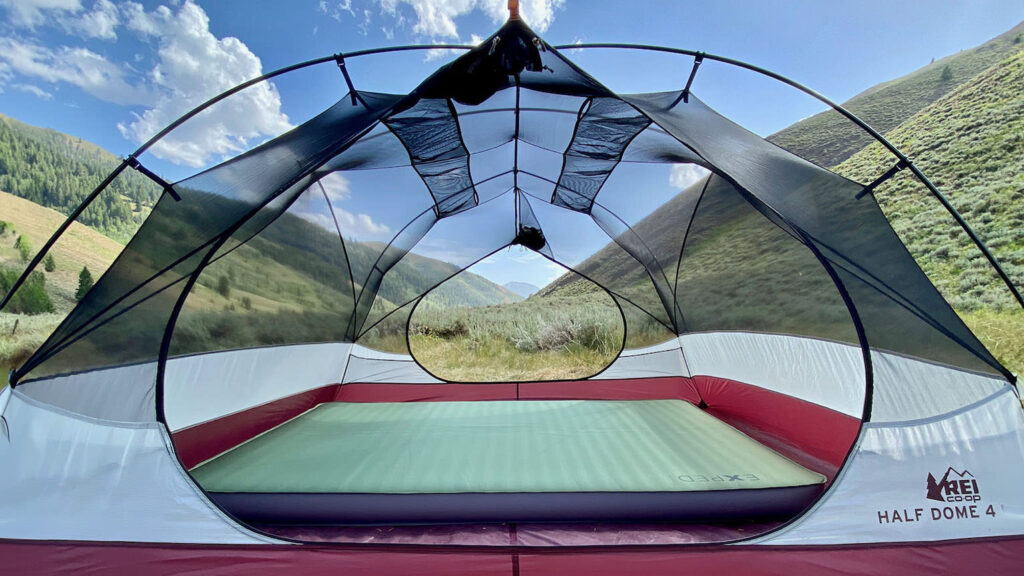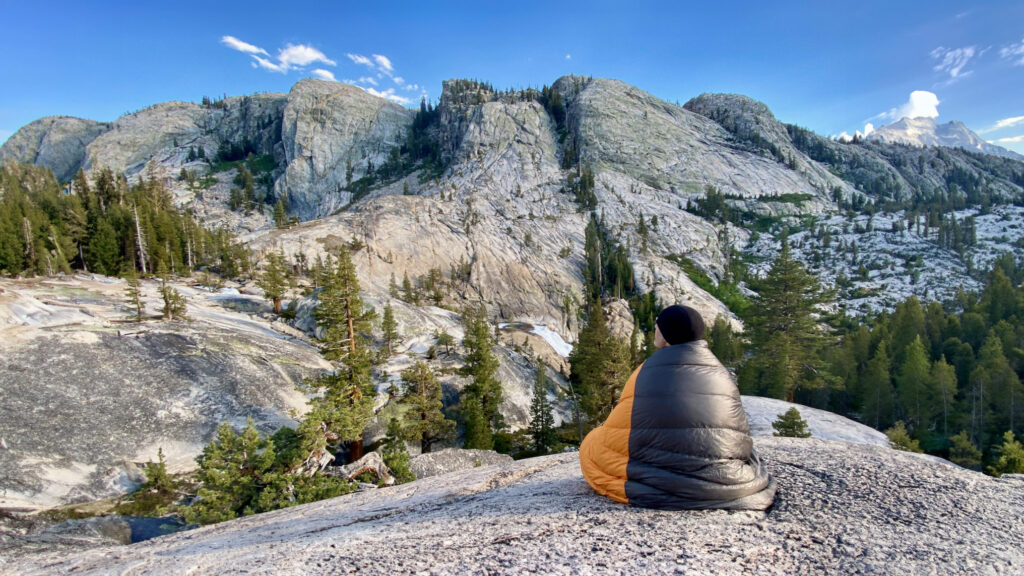
A good camping sleeping bag should feel comfortable at the temperatures you actually encounter, fit your sleeping style, and be manageable to carry and store. After many nights of testing across the Rockies, desert camps, and family campgrounds, we’ve narrowed the choices to designs that solve different sleep problems—not merely those with the lowest temperature printed on the label.
We favor the roomy REI Siesta Hooded 20 for most car campers, but that recommendation changes when you need a compact trail crossover, truly cold-weather insulation, a two-person layout, or adjustable ventilation. The ranked picks below distinguish these use cases and explain the tradeoffs behind each score.
Editor’s Note: We updated this guide on October 15, 2026 with refreshed findings, revised prices, and product details across the full list.
How We Test Camping Sleeping Bags
Our analysts evaluate sleeping bags in actual camp conditions, assessing the fit and feel of liners, comfort at observed overnight lows, raft management, ease of operating zippers and hoods, stuffed bulk, and how smoothly bags work with pads and pillows. A claimed temperature rating is only one piece of the evaluation: firsthand warmth, realistic weight, and the versatility of each setup shape our recommendations.
The field research represented here includes extended use by Ian Krammer, Marion Tucker, and other CleverHiker testers, with trips ranging from warm car-camping weekends to snowy Rocky Mountain nights. We compare each bag against the alternatives most likely to serve the same kind of camper.
For more info, check out some of our other most popular gear guides:

#1. Best Camping Sleeping Bag Overall

The REI Siesta Hooded 20 is a roomy rectangular bag with a pillow-friendly hood, a substantial collar, an easily managed zipper, and a long track record of use. It is the strongest all-around recommendation for car campers who place a premium on comfort and straightforward value.
Quick Picks for Sleeping Bags
Check out our favorite camping sleeping bags here, or scroll down for deep dives and in-depth reviews.
1. Best Camping Sleeping Bag Overall: REI Siesta Hooded 20 ($149)
2. Best Sleeping Bag for Features & Adjustability: Therm-a-Rest Boost 650 ($340)
3. Most Inclusive Camping Sleeping Bag for All Shapes & Sizes: REI Trailmade 25 ($129)
4. Most Comfortable No-Frills Sleeping Bag: The North Face Wawona Bed 20 ($150)
5. Best Budget-Friendly Cold-Weather Sleeping Bag: Teton Sports Celsius XXL 0F ($100)
6. Value Sleeping Bag with Excellent Warmth-to-Weight: Kelty Cosmic Down 20 – Men’s ($190) / Women’s ($240)
7. Best Flexible Comfort in a Down Sleeping Bag: REI HunkerDown 20 ($219)
8. Versatile Down Bag for Camping & Backpacking: NEMO Disco 15 Endless Promise – Men’s / Women’s ($300)
9. Best Sleeping Bag for Different Temperatures: The North Face One Bag ($390)
10. Best Crossover Sleeping Bag: Mountain Hardwear Bishop Pass 15 ($335)
11. Best Bed-Like Comfort in a Sleeping Bag: Big Agnes Echo Park 20 ($220)
12. Best Cold-Weather Sleeping Bag: Exped DeepSleep 20F ($150)
13. Best Two-Person Camping Sleeping Bag: Kelty Tru.Comfort Doublewide 20 ($220)
14. Best Budget-Friendly Warm-Weather Sleeping Bag: Kelty Galactic 30 ($190)
15. Best Budget Camping Sleeping Bag: Coleman Brazos 30 ($54)
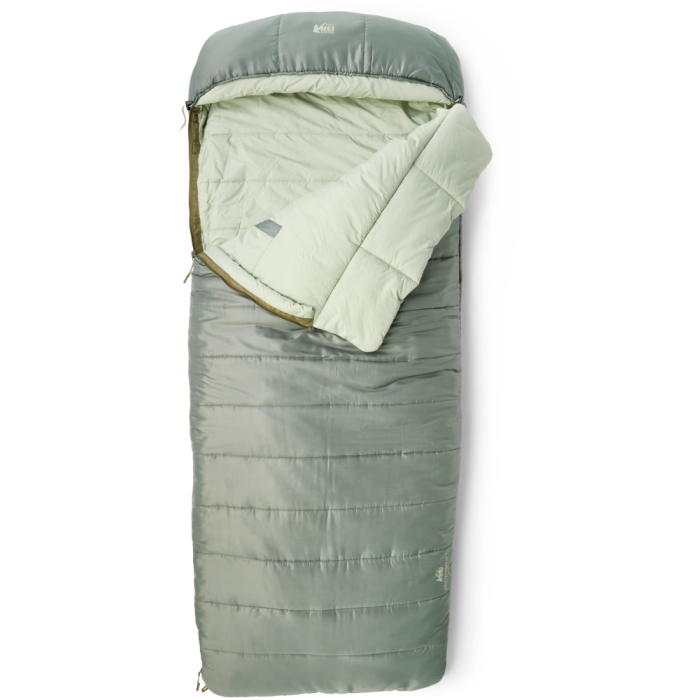
REI Siesta Hooded 20
Best Camping Sleeping Bag Overall
CleverHiker Rating: 4.9/5.0
Price: $149
Temperature Rating: 20°F
Weight: 5 lb. 7.3 oz.(Medium)
Fill Type: Synthetic
Pros
- Plush liner and roomy rectangular fit
- Large hood accommodates full-size pillow
- Thick collar and useful draft protection
- Blanket-style opening and adjustable venting
- Easy-running zipper pulls
- Inclusive size options
- Strong campground value
Cons
- Not comfortable near its stated 20°F temperature rating
- Heavy and bulky for backpacking
- Slippery shell can slide on certain pads
- No mesh storage sack included
- Synthetic fill shows some loft compression after extensive use
The REI Siesta Hooded 20 is our top camping sleeping bag for campers who prioritize a soft, spacious place to sleep without paying a premium. Between CleverHiker founder Dave Collins and the published gear analyst testing, the Siesta has seen more than 100 nights of use. Its generous rectangular cut, oversized hood, and thick draft collar make it exceptionally comfortable for people who change positions through the night.
The important limitation is warmth. Although the label says 20°F, our testing found the bag most comfortable around 35°F to 70°F, with extra layers needed below about 35°F. The synthetic fill and roomy footbox also make it heavier and less packable than a down backpacking bag. For most spring-through-fall campground trips, however, its combination of comfort, handling, and price is difficult to beat.
The heavier rectangular construction is a worthwhile tradeoff for families who value nighttime freedom of movement over backpack-ready packed size. For a smaller bag with more adjustment options, the Therm-a-Rest Boost 650 fills a different need.
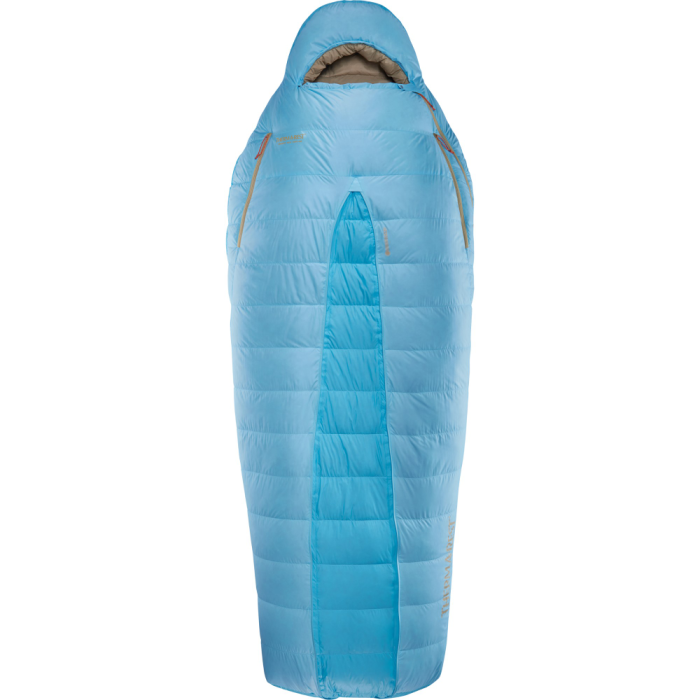
Therm-a-Rest Boost 650
Best Sleeping Bag for Features & Adjustability
CleverHiker Rating: 4.7/5.0
Price: $340
Temperature Rating: 20°F
Weight: 2 lb. 11 oz.(Regular)
Fill Type: 650-fill down
Pros
- Expands from mummy to rectangular fit
- Dual armhole vents
- Relatively light and packable
- Inclusive sizing options
- Compression and mesh storage sacks included
Cons
- Numerous zippers are confusing in the dark
- Shallow hood
- Cold-weather comfort falls short of 20°F label
- Down requires special care
- Higher cost than simpler alternatives
The Therm-a-Rest Boost 650 is one of the most adjustable sleeping bags we’ve used. Ian Krammer tested it on more than two dozen nights in the Colorado Rockies and especially appreciated its center expansion zipper and twin armhole vents, which let active sleepers alter the fit or reach outside without opening the whole bag. At 2 lb. 11 oz., its 650-fill down also makes it portable for occasional backpacking.
The drawbacks are its many zipper tracks and modest cold-weather performance. Ian needed extensive layers on a 27°F night despite using two highly insulated pads, so we recommend the Boost mainly above 40°F rather than trusting its nominal 20°F rating. For cooler conditions and simpler handling, consider the Kelty Cosmic Down 20 or Mountain Hardwear Bishop Pass 15.
The center expansion zipper and arm vents are its defining advantage over traditional mummy bags. However, campers who want simple, affordable comfort rather than multiple zipper systems can save considerably with the Siesta.
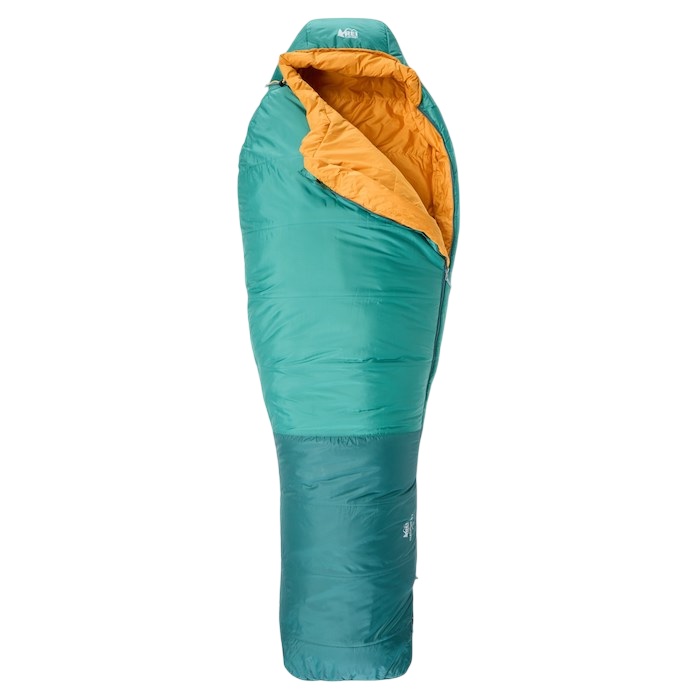
REI Trailmade 25
Most Inclusive Camping Sleeping Bag for All Shapes & Sizes
CleverHiker Rating: 4.6/5.0
Price: $129
Temperature Rating: 25°F
Weight: 2 lb. 15.1 oz.(Medium)
Fill Type: Synthetic
Pros
- Nine length and width options
- Affordable for an entry-level crossover bag
- Soft, quiet lining
- Practical hood and draft collar
- Warm in low-30s field use
- Small enough for short backpacking trips
Cons
- Tapered mummy cut is restrictive for some
- No mesh storage sack
- Not as packable as premium down
The REI Trailmade 25 is a versatile entry point for campers who want one affordable sleeping bag for car camping and short backpacking trips. Nine length-and-width combinations help more body types find a proper fit, while Marion Tucker’s field testing confirmed that its stated 31°F comfort rating matches the low-30s conditions where the bag felt best. The soft liner and uncomplicated hood and collar round out a practical sleep setup.
This is still a tapered synthetic mummy, not a plush campground rectangle or an ultralight down bag. Active stomach sleepers may dislike the restricted lower fit, and a mesh storage sack is not included. Choose the Siesta for stretch-out car-camping comfort or the Cosmic Down for more efficient packing.
Nine length-and-width combinations make fit its strongest selling point. It has less room for sprawling than the Siesta, but the narrower shape is more useful for occasional short backpacking trips.

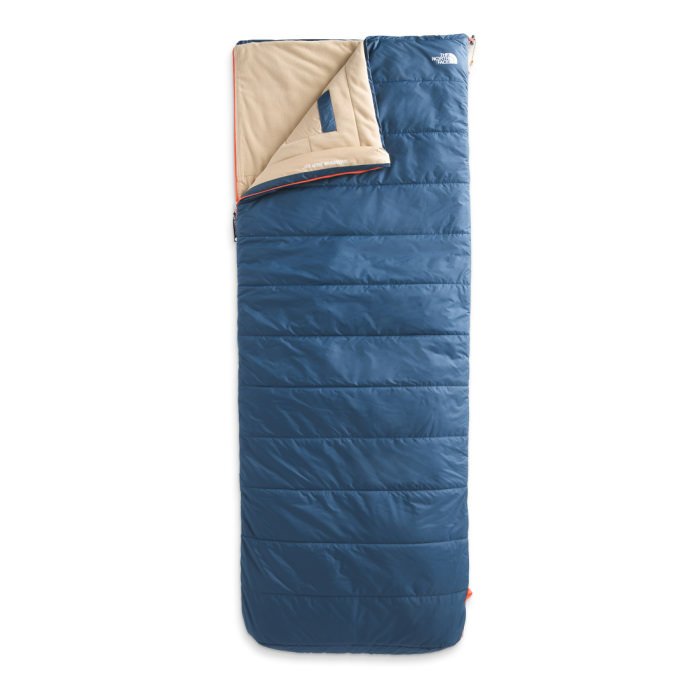
The North Face Wawona Bed 20
Most Comfortable No-Frills Sleeping Bag
CleverHiker Rating: 4.6/5.0
Price: $150
Temperature Rating: 20°F
Weight: 4 lb. 14.3 oz.(Regular)
Fill Type: Synthetic
Pros
- Soft fleece lining at the neck
- Roomy rectangular fit
- Smooth zipper with oversized pulls
- Unzips fully into a blanket
- Can join to a second Wawona
- Useful interior stash pocket
Cons
- No insulated hood
- Thin draft tubes
- Not suited to freezing conditions
- Bulky for backpacking
- No mesh storage sack
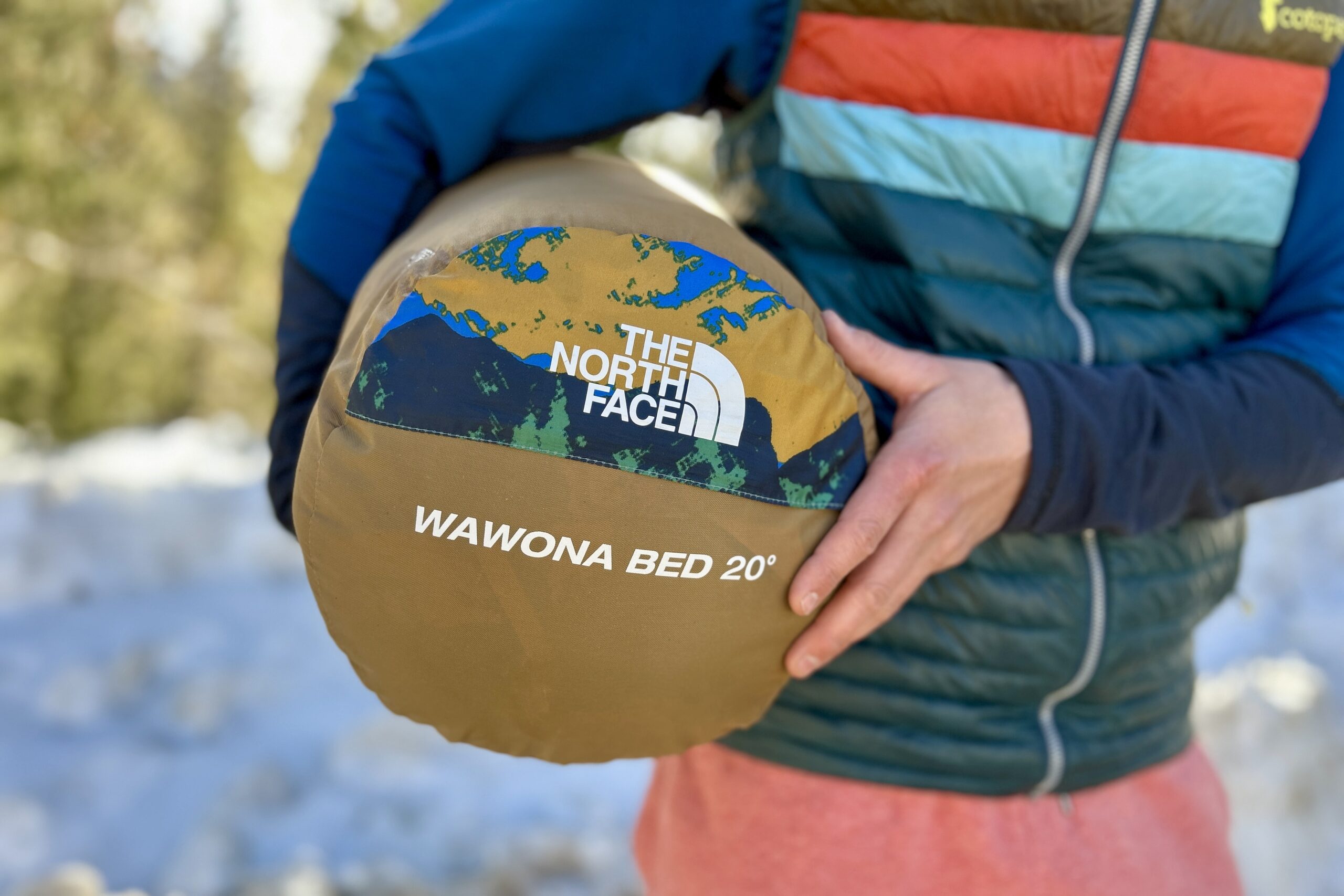
The North Face Wawona Bed 20 excels at relaxed summer car camping. Ian Krammer spent over 30 nights in it between May and October in the Colorado Rockies, appreciating the soft fleece upper lining, spacious rectangular body, smooth zipper, and full blanket conversion. It’s especially comfortable for campers who move around in their sleep or want to zip two bags together.
Its 20°F name is not an accurate guide to our field comfort range: we prefer it around 40–70°F. The lack of a hood and thin draft tubes leave more exposure during colder nights, and the synthetic bundle isn’t suitable for backpacking. Campers who want more head coverage should consider the Siesta instead.
The fleece-lined top, smooth zip and blanket conversion feel pleasantly close to ordinary bedding. It is more straightforward than feature-heavy alternatives, but its open, hoodless top is less protective than the Siesta for colder nights.
Teton Sports Celsius XXL 0F
Best Budget-Friendly Cold-Weather Sleeping Bag
CleverHiker Rating: 4.5/5.0
Price: $100
Temperature Rating: 0ºF
Weight: 7 lb. 3.2 oz.
Fill Type: Synthetic
Pros
- Very warm in testing down to about 10°F
- Extra-wide rectangular interior
- Soft poly-flannel lining
- Opens into a blanket
- Large draft tubes and improved baffles
- Affordable for cold-weather camping
Cons
- Heavy and very bulky
- Zipper snags fabric
- Shallow hood doesn't fit large pillow well
- Long hood cinch cords get in the way
- Uncomfortably hot on warm nights
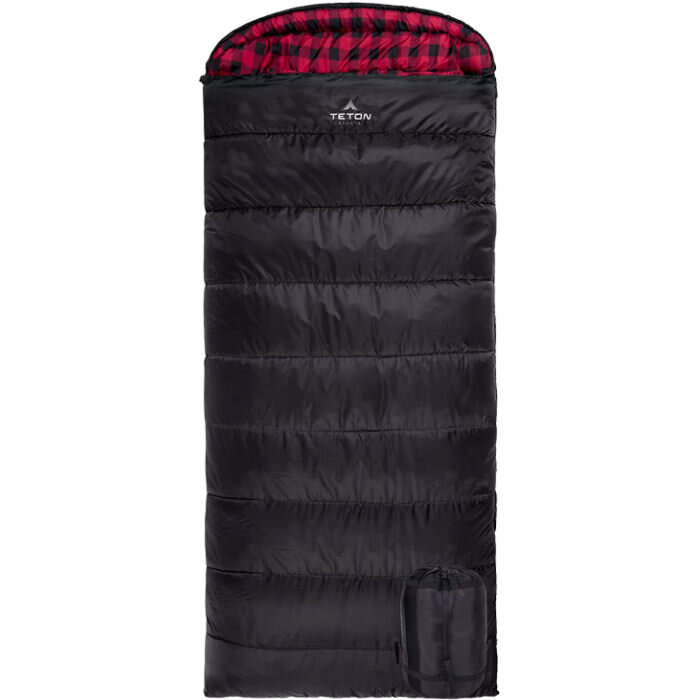
The Teton Sports Celsius XXL 0F is one of the best low-cost ways to build a warm, spacious car-camping bed for cold nights. Ian Krammer used it on dozens of winter outings near Moab and in Colorado and found its insulation particularly useful from roughly 10–45°F. The poly-flannel lining, huge rectangular cut, and substantial draft tubes make it feel closer to a heavy comforter than a technical sleeping bag.
This is not a versatile travel bag. It weighs over seven pounds, fills a large stuff sack, and gets uncomfortably hot above about 50°F. The shallow hood, long cinch cords, and snag-prone zipper are further compromises. Choose it for stationary cold-weather camping rather than summer trips or backpacking.
For the money, the enormous poly-flannel-lined shape and genuine cold-weather field performance stand out. That warmth and room come with substantial bulk, a shallow hood and a zipper that demands patience.
Kelty Cosmic Down 20
Value Sleeping Bag with Excellent Warmth-to-Weight
CleverHiker Rating: 4.5/5.0
Price: $190 (Men’s) / $240 (Women’s)
Temperature Rating: 20ºF
Weight: 2 lb. 7 oz. / 3 lb. 4.8 oz.(Men’s / women’s)
Fill Type: 550-fill down
Pros
- Good warmth-to-weight value for down
- Packs down smaller than bulky synthetic bags
- Snag-resistant two-way zipper
- Insulated hood and draft tubes
- Zippered internal stash pocket
Cons
- Narrow mummy fit
- Women's version costs and weighs more
- Down requires specific cleaning and drying
- No mesh storage bag included
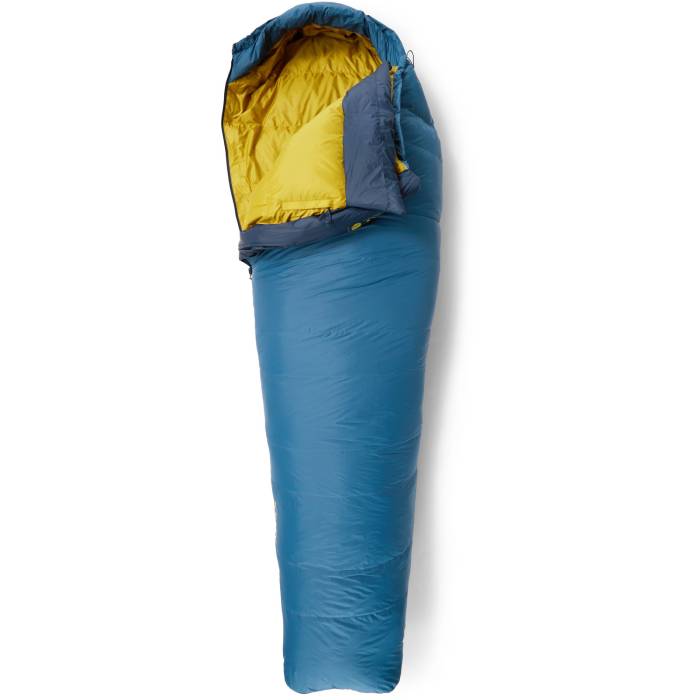
The Kelty Cosmic Down 20 (men’s / women’s) is a standout value for campers who occasionally backpack and want down’s portability without premium pricing. Ian Krammer used it through more than 14 cold nights in Colorado and over 150 backpacking miles, including a 30-mile Canyonlands loop. Its 550-fill down and fitted mummy cut were comfortable around 30°F, and the zipper and storage pocket worked reliably.
This is not the right fit for everyone. Stomach sleepers and campers who sprawl may find its narrow shape confining, and the women’s version costs and weighs more than the men’s. Down also needs careful washing and loose storage. If a little extra space matters more than a compact pack, consider the NEMO Disco 15.
The efficient down fill gives it a much more backpack-friendly weight than most roomy car-camping bags. Its mummy taper is a deliberate tradeoff: the Siesta suits spread-out campground sleepers better, while the Cosmic makes sense when the walk to camp matters.
REI HunkerDown 20
Best Flexible Comfort in a Down Sleeping Bag
CleverHiker Rating: 4.5/5.0
Price: $219
Temperature Rating: 20°F
Weight: 3 lb. 6.3 oz.(Medium)
Fill Type: 600-fill down
Pros
- Wide rectangular cut suits different sleep positions
- Down fill packs smaller than synthetic options
- Insulated hood fits a regular pillow
- Converts completely into a quilt
- Includes stuff sack and mesh storage bag
Cons
- Chilly in low-30s field use
- Still too heavy for backpacking
- Down requires special washing care
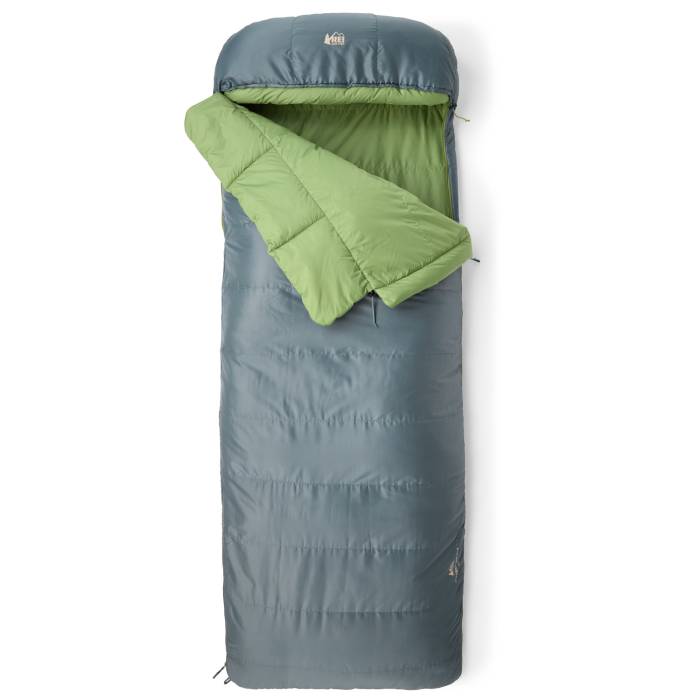
The REI HunkerDown 20 gives car campers the stretch-out comfort of a rectangular bag with the more compact packing of 600-fill down. Marion Tucker appreciated its wide body, soft liner, pillow-friendly hood, and wraparound zipper that turns it into a quilt. It makes sense for campers who want a comfortable three-season bed without the huge bundle of a synthetic rectangle.
Its 20°F label is optimistic. During a low-30s night in California’s Inyo National Forest, our tester felt chilly, so we recommend it mainly for the mid-30s and warmer. At over three pounds it also isn’t a technical backpacking choice. For colder or more weight-sensitive trips, a fitted mummy makes more sense.
The wide shape and down insulation deliver a distinctive mix of comfort and moderate packed volume. It does not provide the low-temperature protection suggested by its label, so the Cosmic‘s fitted design is a better use of down when carrying a pack.
NEMO Disco 15 Endless Promise
Versatile Down Bag for Camping & Backpacking
CleverHiker Rating: 4.4/5.0
Price: $300
Temperature Rating: 15°F
Weight: 2 lb. 14 oz. / 3 lb. 8 oz.(Men’s / women’s)
Fill Type: 650-fill down
Pros
- Roomy fit for side and stomach sleepers
- Excellent neck collar and full-length draft tube
- Warm in documented cold-weather testing
- Ventilation gills help manage excess heat
- Protective hood and footbox materials
- Pillow and stash pockets; compression sack included
- Fully recyclable Endless Promise design and RDS-certified down
Cons
- Heavier and bulkier than many backpacking bags
- Wider shape sacrifices some thermal efficiency
- Poor fit for ultralight or long-distance travel
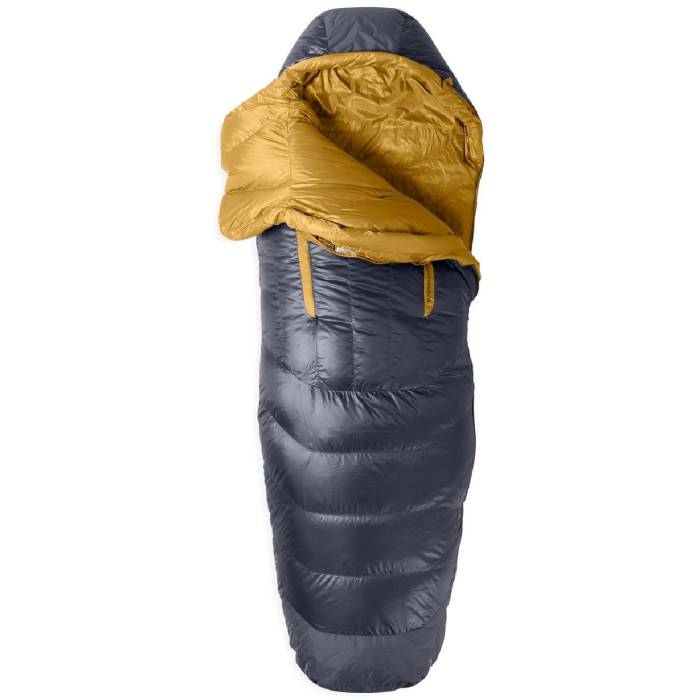
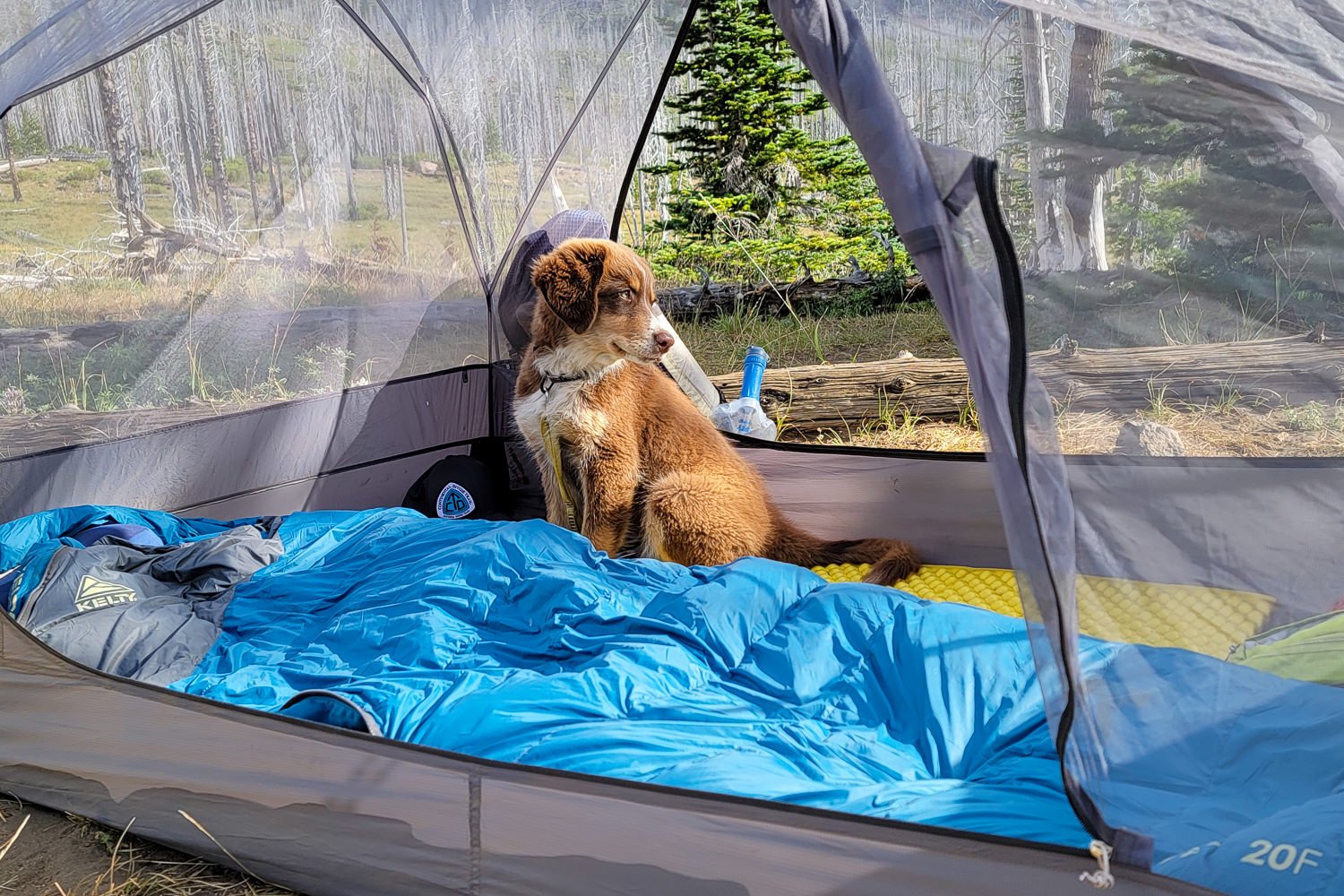
The NEMO Disco 15 Endless Promise (men’s / women’s) is a strong choice for side sleepers and restless sleepers who want far more movement than a traditional mummy bag allows. Its spoon-shaped cut, broad footbox, pillow pocket, and oversized BlanketFold collar make it particularly comfortable for campers who tend to feel trapped in narrower bags. It is also genuinely capable in cold conditions: the published firsthand testing includes a week of Utah desert nights around 15–20°F with a base layer.
That space has a cost. At 2 lb. 11 oz., the Disco 15 is heavy for a backpacking bag, and its roomy interior does not retain heat as efficiently as a closer-fitting mummy shape. We see it as a particularly compelling crossover bag for car camping and shorter backpacking trips—not as an optimal choice for high-mileage, ultralight travel.
The spoon-shaped cut, Thermo Gills and BlanketFold collar help active sleepers regulate heat without abandoning a protective hood. It has more structure and technical detail than a simple campground rectangle.
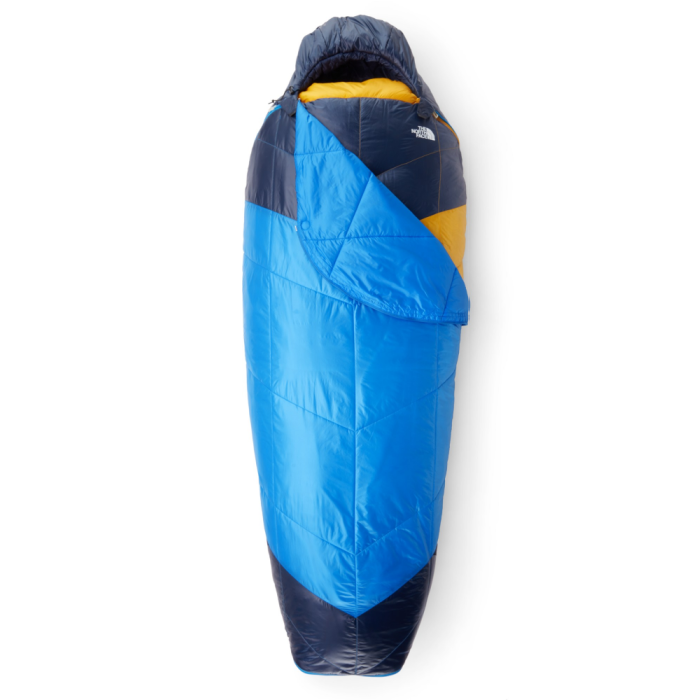
The North Face One Bag
Best Sleeping Bag for Different Temperatures
CleverHiker Rating: 4.3/5.0
Price: $390
Temperature Rating: 5°F, 20°F, 40°F
Weight: 3 lb. 13 oz.
Fill Type: 800-fill down & synthetic hybrid
Pros
- Three temperature configurations for changing seasons
- Warm combined layers in cold field testing
- Roomy fit for active sleepers
- Compact down-and-synthetic hybrid design
- Substantial draft collar
- Glow-in-the-dark zipper pulls
- Fleece-lined stuff sack doubles as pillow
Cons
- High price for a camping bag
- Perimeter zippers feel stiff beneath sleeper
- Regular length runs short
- No interior stash pocket
- Thin underside needs a warm pad
The North Face One Bag replaces several seasonal sleeping bags with one modular design. Its removable synthetic and 800-fill down layers produce labeled 40°F, 20°F, and 5°F configurations. Ian Krammer used the combined system on a 12°F Rocky Mountain night with a well-insulated pad and stayed warm, making the approach credible for campers who range from summer trips to occasional winter outings.
You pay for that versatility in dollars and complexity. Long perimeter zippers feel stiff, the regular length fits short, and the lightly insulated underside requires a high-R-value sleeping pad in cold weather. We recommend it for people who will actually swap layers, not shoppers seeking a simple bag for one season.
Three interchangeable insulation arrangements offer unusual flexibility for campers moving between warm and cold conditions. Its complexity and full-system weight are drawbacks against a single-season bag.
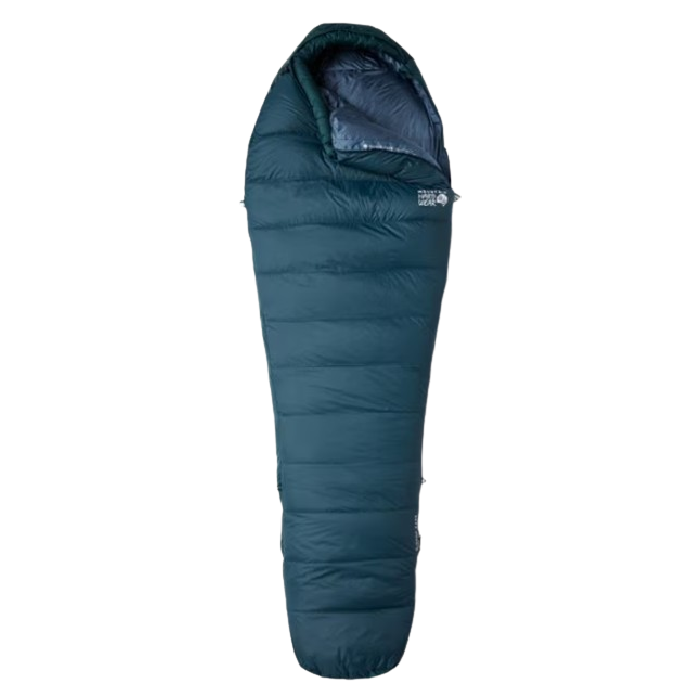
Mountain Hardwear Bishop Pass 15
Best Crossover Sleeping Bag
CleverHiker Rating: 4.2/5.0
Price: $335
Temperature Rating: 15°F
Weight: 2 lb. 5.2 oz.
Fill Type: 650-fill down
Pros
- Comfortable in shoulder-season conditions with warm pad
- Affordable for a cold-weather down mummy
- Smooth webbing-lined anti-snag zipper
- Glow-in-the-dark zipper pull
- Compression sack included
Cons
- Snug cut, especially around the hips
- Heavier than premium ultralight down bags
The Mountain Hardwear Bishop Pass 15 is a down mummy for campers who need real cold-weather capability without carrying the bulk of a frontcountry synthetic bag. Brett Kretzer tested it through snowy Rocky Mountain nights around 15°F with an R-4-plus pad. Its 650-fill down, draft collar, and cinchable hood make a capable shoulder-season system, though testers began feeling chilly below roughly 30°F.
That heat-efficient cut is narrow, especially through the hips, so it won’t suit every side or stomach sleeper. The listed 26°F comfort rating is also distinct from the 15°F model name and the colder field observation. Campers who prefer spacious bedding can accept more weight in the NEMO Disco 15.
Down insulation, relatively light weight and a hooded mummy cut make it a realistic choice for trips beyond a car campground. The close fit is less forgiving through the hips, and the tester was chilly below about 30°F despite the 15°F name.
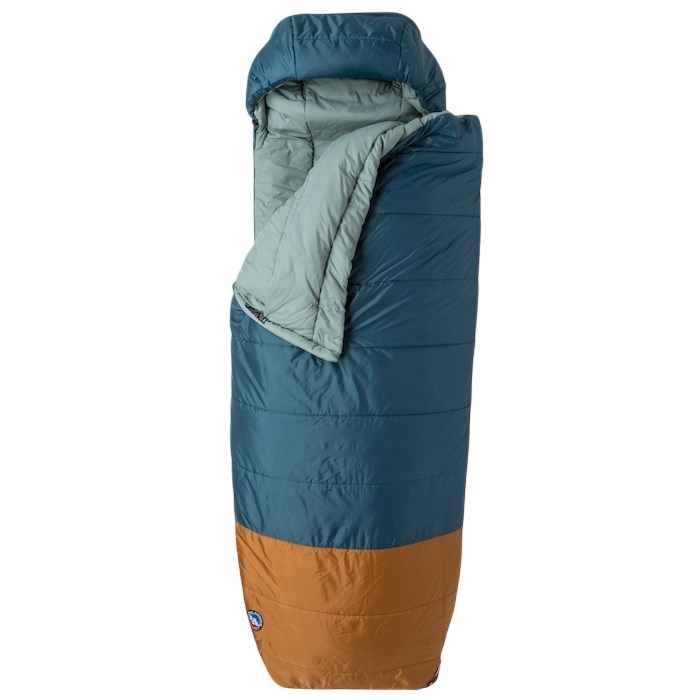
Big Agnes Echo Park 20
Best Bed-Like Comfort in a Sleeping Bag
CleverHiker Rating: 4.2/5.0
Price: $220
Temperature Rating: 20°F
Weight: 4 lb. 9.6 oz.
Fill Type: Synthetic
Pros
- Soft cotton-blend lining has a familiar bedsheet feel
- Wide hybrid shape allows multiple sleep positions
- Pad sleeve reduces sleeping bag slippage
- Cinchable hood and substantial draft collar
Cons
- Uninsulated underside requires a warm sleeping pad
- Bulky and heavy for backpacking
- Temperature performance depends on mattress insulation
The Big Agnes Echo Park 20 delivers unusually bed-like comfort through a soft polyester-cotton liner, broad hybrid shape, and integrated pad attachment. Marion Tucker found it particularly comfortable in the low 30s, where its top insulation, hood, and collar worked well with a sufficiently insulated sleeping pad. Its 19-by-9-inch packed size makes it much more appealing at a car campground than on a backpacking route.
The bottom of this bag is not insulated, and that’s the critical buying condition. The Echo Park needs a thick pad securely held by its cinch sleeve to prevent heat loss and moisture transfer from below. Campers who frequently switch pads or want to sleep directly on the ground should choose a conventional insulated bag.
Its soft poly-cotton lining, oversized space and mattress attachment feel more like an assembled bed than a standalone sleeping bag. The uninsulated underside requires a suitably warm pad, and the packed bundle makes vehicle travel the practical option.
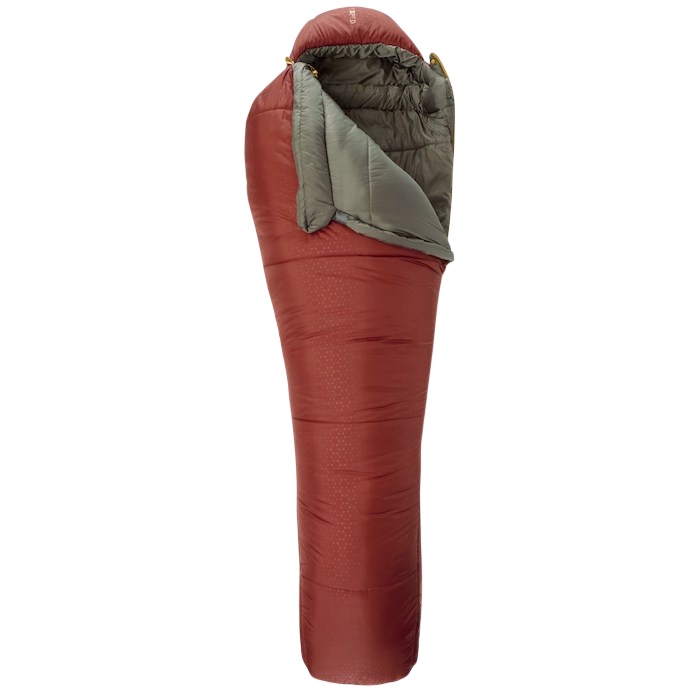
Exped DeepSleep 20F
Best Cold-Weather Sleeping Bag
CleverHiker Rating: 4.2/5.0
Price: $150
Temperature Rating: 20°F
Weight: 4 lb. 0.4 oz.(Medium)
Fill Type: Synthetic
Pros
- Warm in low-30s testing
- Soft, heavily insulated construction
- Effective cinchable hood and draft collar
- Insulated underside limits ground chill
- Foot pocket for a hot-water bottle or warmer
- Accessible price for cold-weather comfort
Cons
- Very narrow cut around the legs
- Uncomfortable on mild nights above about 50°F
- Bulky for backpacking
The Exped DeepSleep 20F is an unusually focused choice for cold sleepers who camp beside their vehicle. Marion Tucker stayed comfortable in the low 30s with light layers, aided by dense synthetic fill, an insulated underside, snug hood, snap-closed collar, and a dedicated foot-warmer pocket. Those features make it particularly effective on cold shoulder-season nights.
Its severe lower taper leaves little room to move, and the bag becomes stifling when conditions warm: our tester had to switch bags on a low-50s March night. At about four pounds, it’s also too bulky for serious backpacking. Choose it for cold, stationary camps rather than summer travel or active side sleeping.
Strong insulation around the hood and collar makes this one a useful choice for cooler campground nights. However, the tapered lower half can frustrate campers who want to spread out, and the insulation can feel excessive when temperatures climb.
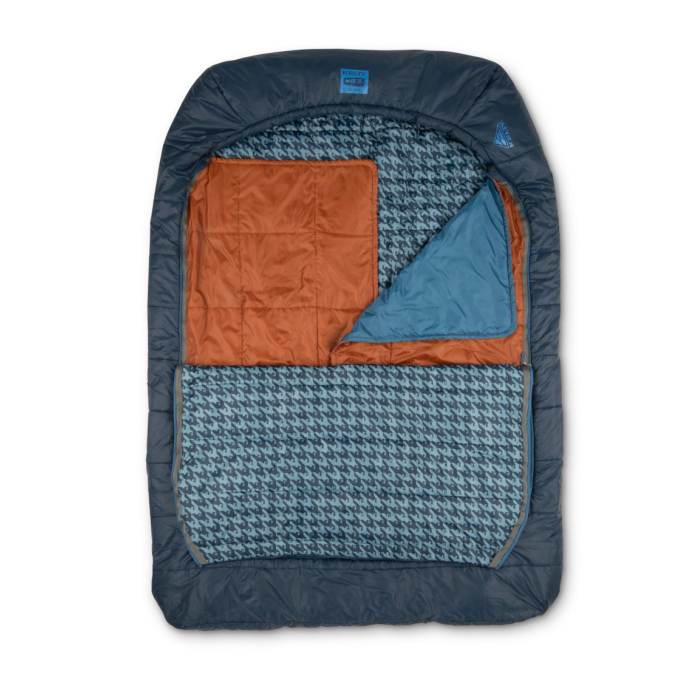
Kelty Tru.Comfort Doublewide 20
Best Two-Person Camping Sleeping Bag
CleverHiker Rating: 4.1/5.0
Price: $220
Temperature Rating: 20°F
Weight: 9 lb. 8 oz.
Fill Type: Synthetic
Pros
- Roomy shared compartment for two sleepers
- Costs less than many pairs of individual bags
- Oversized hood fits two regular pillows
- Two built-in blankets allow separate adjustments
- Wraparound side zippers vent each person's feet
- Top layer can be removed
- Large stuff sack makes packing straightforward
Cons
- Bulky and nearly ten pounds
- Cold below approximately 45°F
- Blankets too narrow for full coverage
- Slippery, slightly noisy lining
- Zippers can catch and are tricky in the dark
The Kelty Tru.Comfort Doublewide 20 works best for couples who want one shared sleeping setup on mild car-camping trips. Ian Krammer used it on dozens of outings in Colorado, Wyoming, and Utah, appreciating the broad interior, hood that accommodates two regular pillows, integrated blankets, and wraparound zippers for separate foot ventilation.
Despite the 20°F label, our testing found it chilly below about 45°F. The small sewn-in blankets add limited coverage, and the nearly ten-pound bundle is for vehicle access only. Buy it for shared summertime space, not freezing-weather insulation. Separate bags are more flexible when partners have different warmth needs.
Shared blankets and a broad two-person sleeping area give couples a more unified sleep setup than two separate bags. Its near-ten-pound weight, slippery lining and limited real-world warmth below about 45°F restrict it to mild, car-based outings.
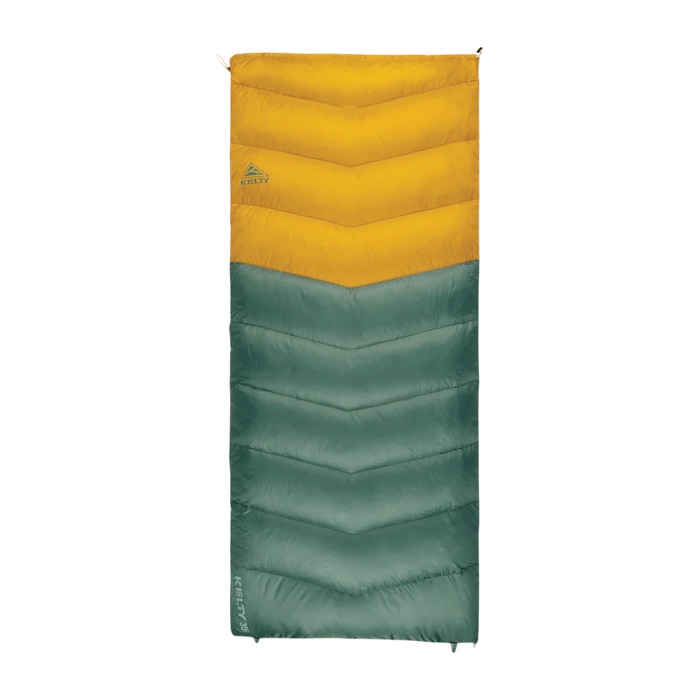
Kelty Galactic 30
Best Budget-Friendly Warm-Weather Sleeping Bag
CleverHiker Rating: 4.1/5.0
Price: $190
Temperature Rating: 30°F
Weight: 2 lb. 14.4 oz.
Fill Type: Down
Pros
- Roomy rectangular shape
- Down filling keeps packed volume small
- Opens into a quilt for summer use
- Two-way zipper permits foot ventilation
Cons
- Hoodless design loses heat below the mid-40s
- Slippery liner shifts on some pads
- Shorter fit than expected for some sleepers
The Kelty Galactic 30 offers a simple rectangular down bag for summer campers who want room to move without the huge packed size of a synthetic winter model. Marion Tucker appreciated the generous shape, light bundle, and two-way zipper that fully opens into a quilt. Its down fill also makes short carry-in trips plausible.
The hoodless design is not meant for real cold. Our tester needed extra layers on a mid-30s night, and the bag felt more comfortable when lows stayed in the mid-40s. The interior is also slippery, with no substantial collar to seal warmth. Choose the Galactic for warm-weather simplicity, not shoulder-season protection.
The hoodless rectangular down design unzips into a quilt and stows smaller than many synthetic car-camping options. Its short fit and poor head protection limit it to predictably warm nights; choose a hooded model as forecasts approach freezing.
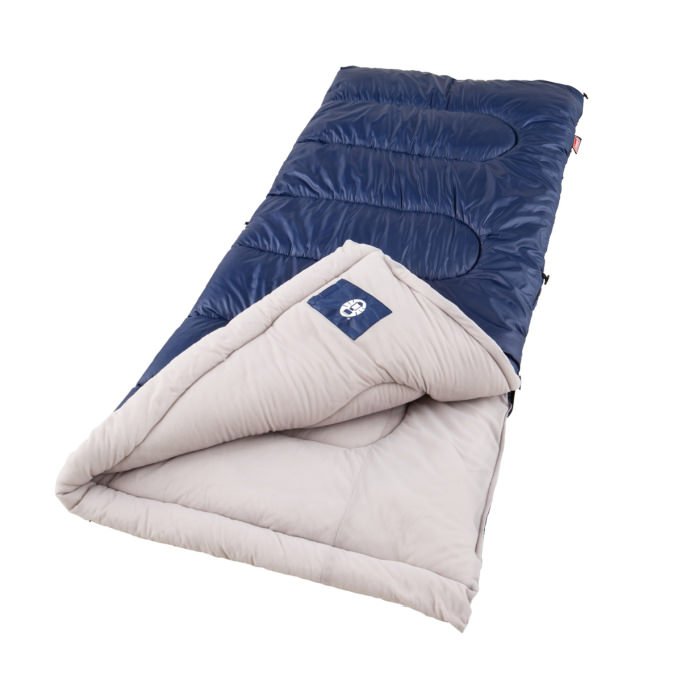
Coleman Brazos 30
Best Budget Camping Sleeping Bag
CleverHiker Rating: 3.7/5.0
Price: $54
Temperature Rating: 30ºF
Weight: 6 lb. 14.4 oz.
Fill Type: Synthetic
Pros
- Very low price for occasional campers
- Soft tricot liner
- Rectangular cut allows free movement
- Interior pocket for small essentials
- Unzips fully into a blanket
- Can connect two bags
Cons
- Bulky and difficult to repack
- Tricot attracts debris and clings to clothing
- No hood or cinching mechanism
- Weak draft protection near freezing
- Shell is not water-resistant
The Coleman Brazos 30 is a low-cost option for occasional summer campers who want a spacious, straightforward rectangular bag. Ian Krammer stayed warm during three 40°F nights near Lake City, Colorado, and found its synthetic fill retained warmth even when the bag became damp with dew. The L-shaped zipper also opens the bag into a blanket or joins two compatible bags.
The tradeoffs are real: its tricot liner attracts dirt, pet hair, and static; the zipper can snag; and the supplied stuff sack is frustratingly tight. We don’t recommend it below 40°F because the hoodless opening and thin draft tube let heat escape. The Wawon Bed 20 is a more polished summer upgrade.
A roomy rectangle and blanket conversion are appealing at this extremely low price. But the fabric collects debris, the zipper can snag, and the nearly seven-pound weight gives it little appeal beyond occasional summer car camping.
Product Comparison Table
| oSort | Product | Price | Temperature Rating | Weight | Fill Type | Comfort | Warmth | Packed Size | Features | 0 |
REI Siesta Hooded 20 View at REI 
|
$149 | 20°F | 5 lb. 7.3 oz. (Medium) | Synthetic | 4.9 | 4.3 | 4.5 | 4.7 | 1 |
Therm-a-Rest Boost 650 View at REI View at Amazon
|
$340 | 20°F | 2 lb. 11 oz. (Regular) | 650-fill down | 4.7 | 4.5 | 4.7 | 5.0 | 2 |
REI Trailmade 25 View at REI 
|
$129 | 25°F | 2 lb. 15.1 oz. (Medium) | Synthetic | 4.7 | 4.5 | 4.7 | 4.4 | 3 |
The North Face Wawona Bed 20 View at REI View at Amazon
|
$150 | 20°F | 4 lb. 14.3 oz. (Regular) | Synthetic | 4.4 | 4.2 | 4.5 | 4.1 | 4 |
Teton Sports Celsius XXL 0F View at Amazon View at Cabela's
|
$100 | 0ºF | 7 lb. 3.2 oz. | Synthetic | 4.7 | 4.8 | 3.3 | 4.3 | 5 |
Kelty Cosmic Down 20 View Men's View Women's |
$190 (Men’s) / $240 (Women’s) | 20ºF | 2 lb. 7 oz. / 3 lb. 4.8 oz. (Men’s / women’s) | 550-fill down | 4.3 | 4.6 | 4.9 | 4.3 | 6 |
REI HunkerDown 20 View at REI |
$219 | 20°F | 3 lb. 6.3 oz. (Medium) | 600-fill down | 4.5 | 4.3 | 4.5 | 4.5 | 7 |
NEMO Disco 15 Endless Promise View Men's View Women's |
$300 | 15°F | 2 lb. 14 oz. / 3 lb. 8 oz. (Men’s / women’s) | 650-fill down | 4.8 | 4.4 | 4.7 | 4.8 | 8 |
The North Face One Bag View at REI View at Amazon
|
$390 | 5°F, 20°F, 40°F | 3 lb. 13 oz. | 800-fill down & synthetic hybrid | 4.1 | 4.8 | 4.4 | 4.3 | 9 |
Mountain Hardwear Bishop Pass 15 View at REI View at Backcountry |
$335 | 15°F | 2 lb. 5.2 oz. | 650-fill down | 4.5 | 4.7 | 4.8 | 4.2 | 10 |
Big Agnes Echo Park 20 View at REI View at Backcountry |
$220 | 20°F | 4 lb. 9.6 oz. | Synthetic | 4.3 | 4.5 | 3.8 | 4.3 | 11 |
Exped DeepSleep 20F View at REI View at Backcountry |
$150 | 20°F | 4 lb. 0.4 oz. (Medium) | Synthetic | 3.8 | 4.7 | 4.1 | 4.1 | 12 |
Kelty Tru.Comfort Doublewide 20 View at REI View at Backcountry |
$220 | 20°F | 9 lb. 8 oz. | Synthetic | 4.6 | 4.0 | 3.5 | 4.5 | 13 |
Kelty Galactic 30 View at REI View at Backcountry |
$190 | 30°F | 2 lb. 14.4 oz. | Down | 3.9 | 4.0 | 4.6 | 3.9 | 14 |
Coleman Brazos 30 View at Amazon View at Coleman
|
$54 | 30ºF | 6 lb. 14.4 oz. | Synthetic | 4.1 | 4.1 | 3.4 | 3.9 |
|---|
Analysis & Results
What’s the Best Value Camping Sleeping Bag?
Value begins with the climate and number of nights you expect to camp. The Siesta combines an approachable $149 price with an unusually polished liner, hood and zipper, earning the top overall recommendation; the Trailmade costs less and offers far more sizing combinations, especially for a buyer who might occasionally backpack.
For a very tight budget, the Coleman Brazos costs $54 and provides the essential roomy rectangle, but our testing exposed clingy fabric, awkward packing and weak draft protection. The Teton Celsius XXL costs more and takes dramatically more trunk space, yet supplies the stronger cold-weather performance missing from minimalist summer bags. The Cosmic Down is a particularly useful value when low carried weight matters as much as purchase price.
Which Bags Are the Most Comfortable?
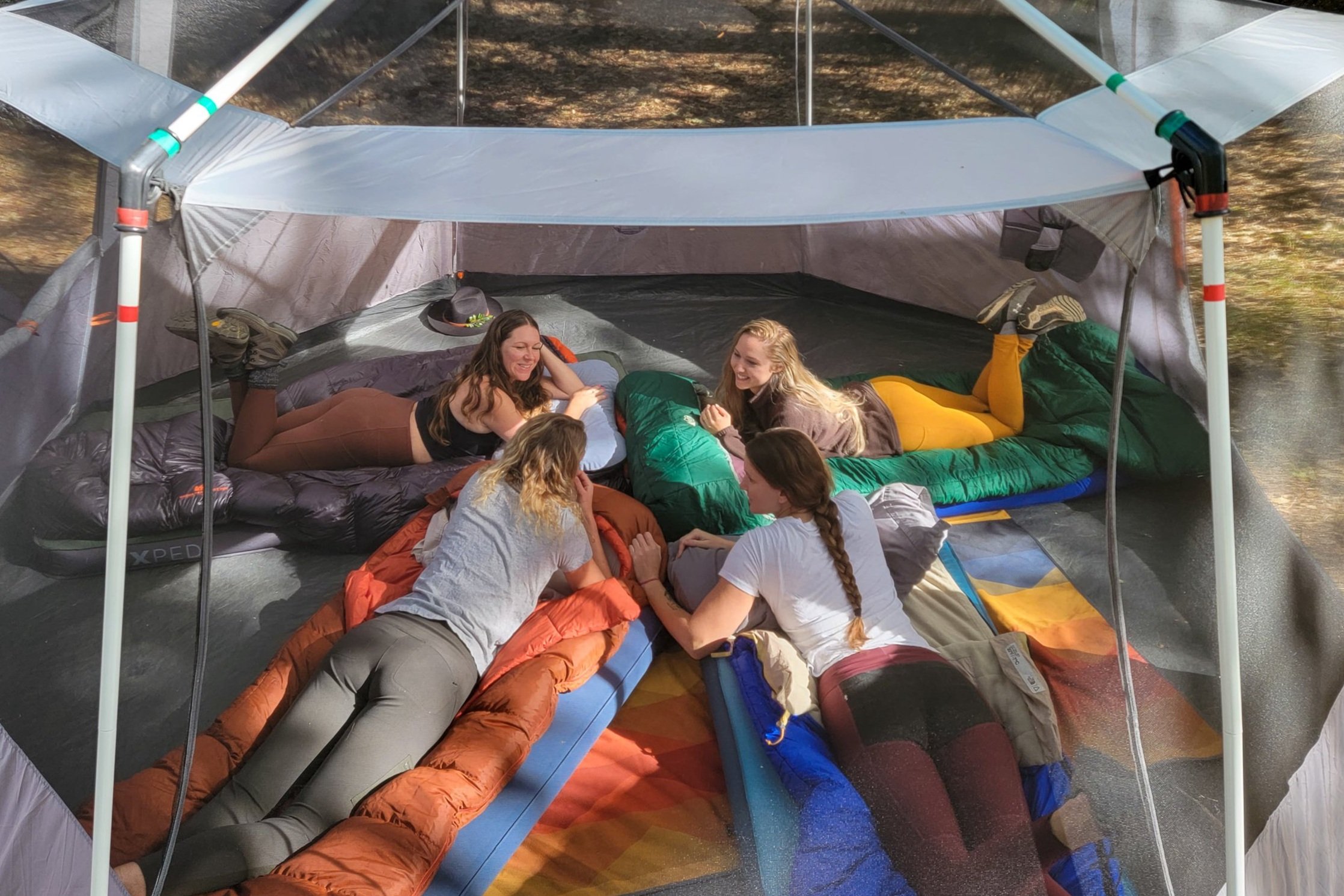
Rectangular bags offer the easiest movement. The Siesta combines a generous shape with a real hood and collar; the Wawona trades away its hood for a fleece-lined upper edge and a simple bedding-like feel. The HunkerDown provides a roomy down-filled alternative that can fold into a comforter, while the Echo Park offers soft liner contact and a mattress-sleeve approach for campers who build a complete bed setup.
Couples who prefer one shared sleeping space should consider the Tru.Comfort Doublewide, though its inner blankets are smaller than expected. Active solo sleepers who still want a technical hood can use the Disco’s spoon-shaped body and adjustable vents. The Trailmade and Cosmic have less spare room, so their fit is more useful when insulation efficiency and carrying weight take priority.
Which Camping Sleeping Bags Keep You Warmest?
A label reading 0°F, 15°F, or 20°F is not itself a promise of comfortable sleep at that temperature. Field evidence places the Teton Celsius XXL among the better genuinely cold-weather campground choices: its huge insulated rectangle worked in substantially colder conditions than many lighter summer bags, though its hood and zipper are imperfect. The DeepSleep also earns attention for a well-padded collar and reliable low-30s warmth, with a more restrictive leg shape.
The Bishop Pass has a more backpack-ready hooded design but was chilly for our tester below about 30°F despite its 15°F name. The One Bag’s interchangeable layers supported varied conditions during testing, while the Disco’s collar, hood and Thermo Gills provide another approach to warmth control. At the other end, the hoodless Wawona, Galactic and Brazos are much better matched to predictable mild weather than near-freezing nights.
Which Bags Pack Smallest & Carry Easiest?
Down-filled and tapered designs rise to the top for portability. The Cosmic Down and Bishop Pass make the clearest cases for carrying a camping-capable bag into the backcountry, while the Boost’s compressed shape and expandable zipper offer an unusual compromise between a compact pack and extra movement at camp. The Disco also bridges backpacking and casual camping when a spacious spoon cut is worth the additional bulk.
For vehicle-based nights, a wider and heavier bag may be the smarter purchase. The Siesta and Wawona take more room than a small down mummy; the Teton, Tru.Comfort and Brazos are especially bulky. The Echo Park’s insulated-pad dependency and large stored shape mean its convenience depends on an established car-camping sleep system.
Which Sleeping Bags Have the Most Useful Features?
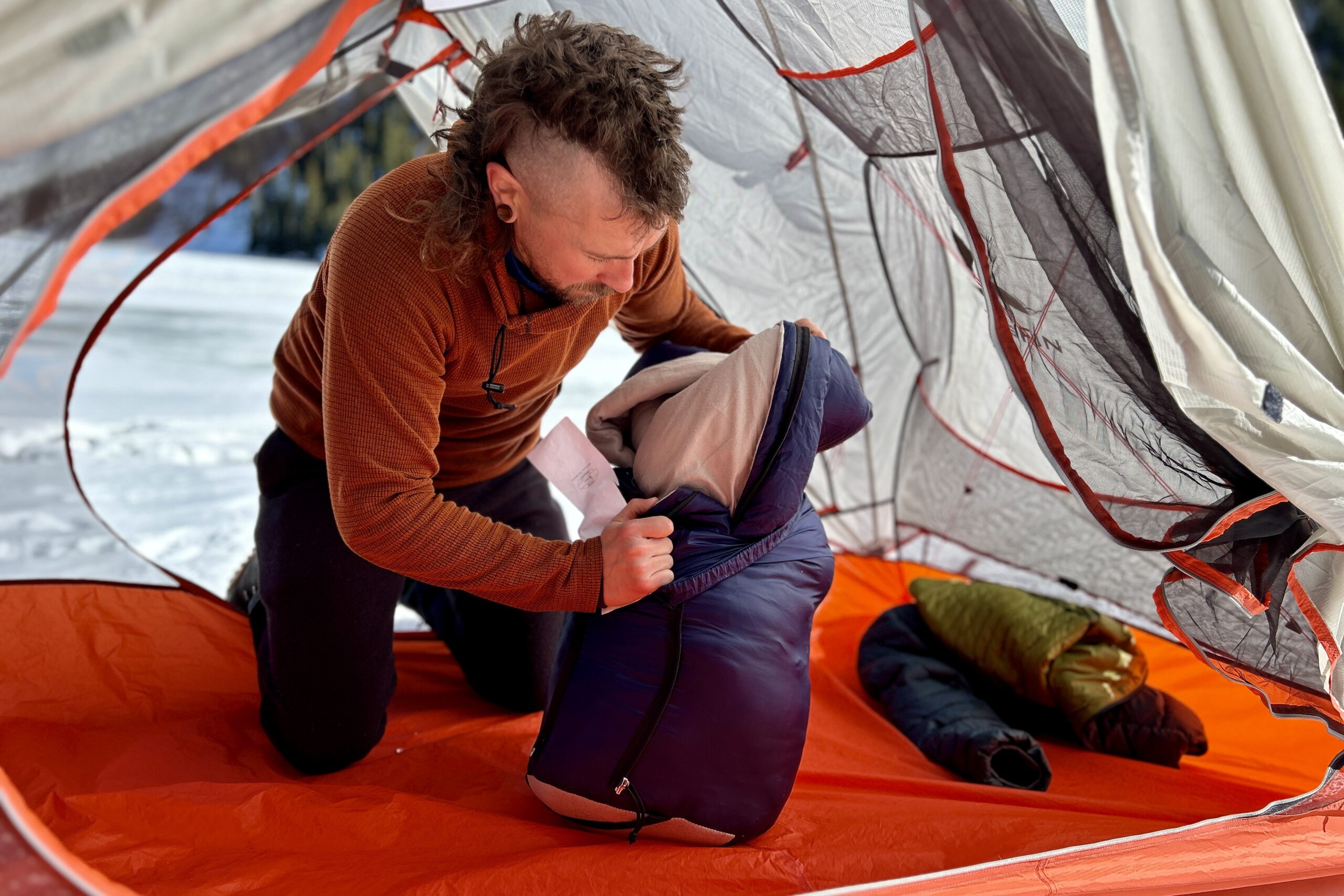
The Boost offers the most adjustable layout: its expansion zipper widens the mummy cut, two smaller zips double as arm vents, and a long side opening vents the footbox. The One Bag addresses a different question, letting campers swap insulating sections for several temperature configurations. They are unusually adaptable, but zipper complexity and price can be unnecessary for campers who routinely sleep in similar conditions.
Small details matter every night, too. The Siesta’s big hood, substantial collar and wraparound zipper are easier to appreciate in practice than a long specification list. The Disco’s Thermo Gills and collar support fine temperature control, whereas the Galactic’s simple quilt conversion prioritizes minimal hardware. The Echo Park’s mattress integration is valuable only when paired with an appropriately insulated pad.
How to Choose a Camping Sleeping Bag
What Temperature Rating Do I Need?
Start with the coldest overnight low you reasonably expect, then leave a margin for your own sleep temperature and the limitations of an advertised model rating. Check whether a quoted temperature is a lower limit or a tested comfort rating; they do not represent the same experience. An insulated sleeping pad, dry clothing and shelter all affect how warm you feel.
Should I Choose Down or Synthetic Insulation?
Down generally delivers more warmth for its packed size and weight, making it especially attractive when you must carry your sleep system. Synthetic insulation costs less in many roomy car-camping designs, is easier to manage in damp conditions, and can be a practical choice when packed size is not a priority. Consider what matters more to you: portability, moisture tolerance, purchase price, or how much maintenance you want to do.
Should I Buy a Mummy or Rectangular Sleeping Bag?
A tapered mummy keeps more insulation close to your body, usually saving weight and limiting drafts. A rectangular design allows more natural movement and can feel closer to ordinary bedding; many also unzip into blankets. Side and stomach sleepers should evaluate shoulder and hip space rather than assuming a bag’s length determines comfort.
How Do I Choose the Right Fit?
Check shoulder and hip girth as well as height limits. A bag that is too tight can compress insulation or restrict turning; a bag that is much too large leaves more space to heat. If possible, lie in your usual position and try operating the zippers and hood from inside before buying.
Do I Need a Hood & Draft Collar?
A well-shaped hood and collar make a significant difference on chilly nights, especially when cold air enters around the neck. A hoodless design can feel airy and pleasant in summer but requires more preparation when temperatures approach freezing. Consider whether the hood must also accommodate your regular camp pillow.
Does Sleeping Bag Weight Matter for Car Camping?
In a vehicle, packed dimensions and the ease of stuffing the bag can matter more than a few ounces. For walk-in sites, storage-constrained trips, or occasional backpacking, pay closer attention to both weight and compressed volume. Large synthetic rectangles are often comfortable enough to justify their bulk only when carrying distance is short.
Can I Zip Two Sleeping Bags Together?
Only count on this when the manufacturer specifies compatible models and zipper orientations. A shared doublewide bag offers more coordinated space, but separate bags can provide better individual temperature control. Confirm whether each sleeper can enter and exit without disturbing the other.
How Should I Store and Clean My Sleeping Bag?
Store insulation loosely and completely dry rather than compressed for months. Follow the manufacturer’s care instructions for the fabric and fill, wash only when needed, and dry it thoroughly before putting it away. A large breathable sack may be more useful for storage than the tiny stuff sack intended for travel.
Why trust cleverhiker
CleverHiker’s recommendations draw on repeated real-world use by gear analysts who camp and backpack in variable conditions. We emphasize specific field outcomes—including when a bag felt too cold, packed poorly, or fit awkwardly—rather than repeating advertised performance claims. Testing observations determine the buying advice, while the ranking spreadsheet provides the approved numerical order.
Testing Methodology
How Do We Test Comfort?
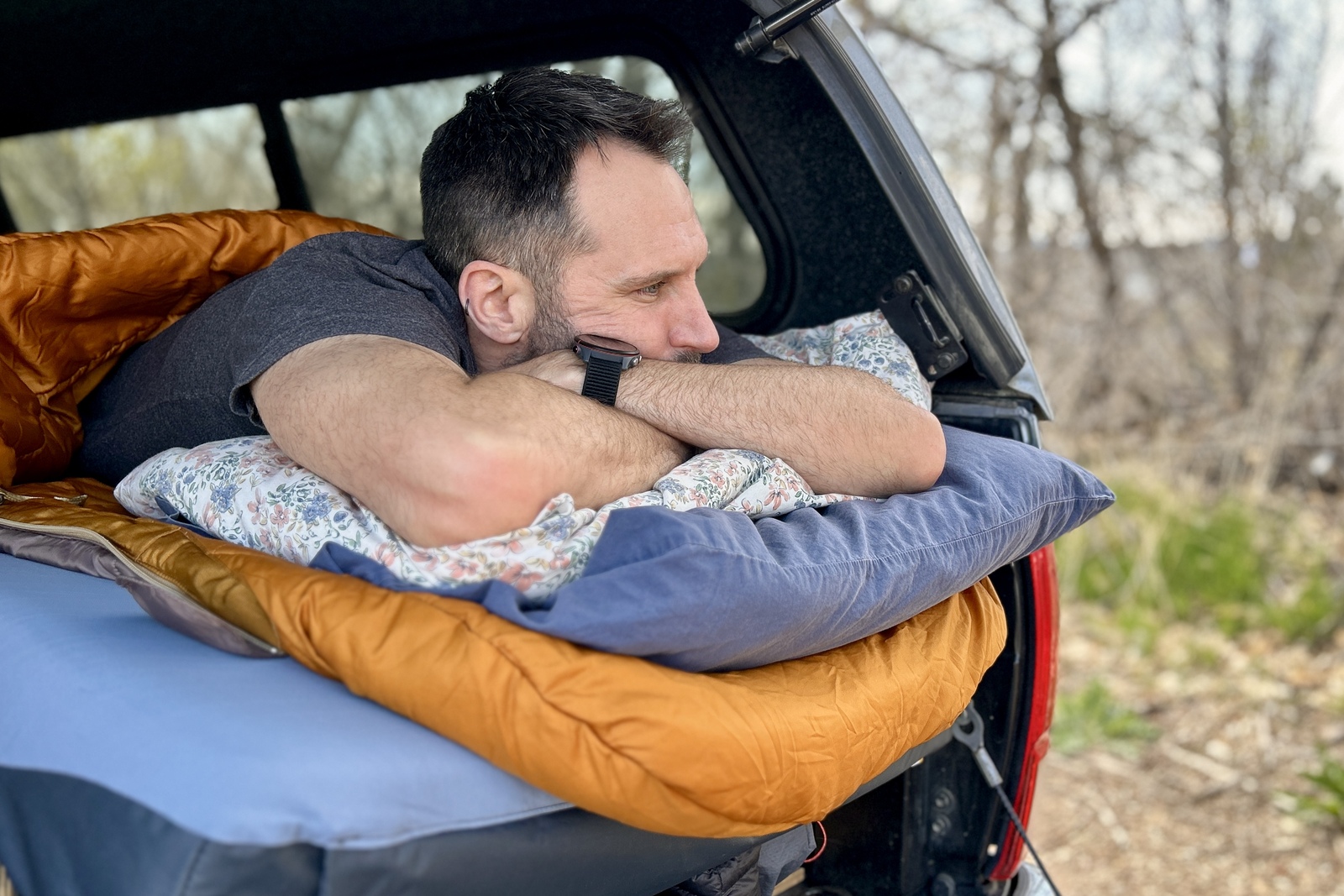
Testers sleep in their usual positions and assess room at the shoulders, hips and feet, liner feel, noise, hood compatibility, and whether turning or sitting up is practical. We weigh a cozy first impression against problems that appear after repeated nights, such as clingy fabric, excess slipperiness, or awkward zippers.
How Do We Assess Warmth?
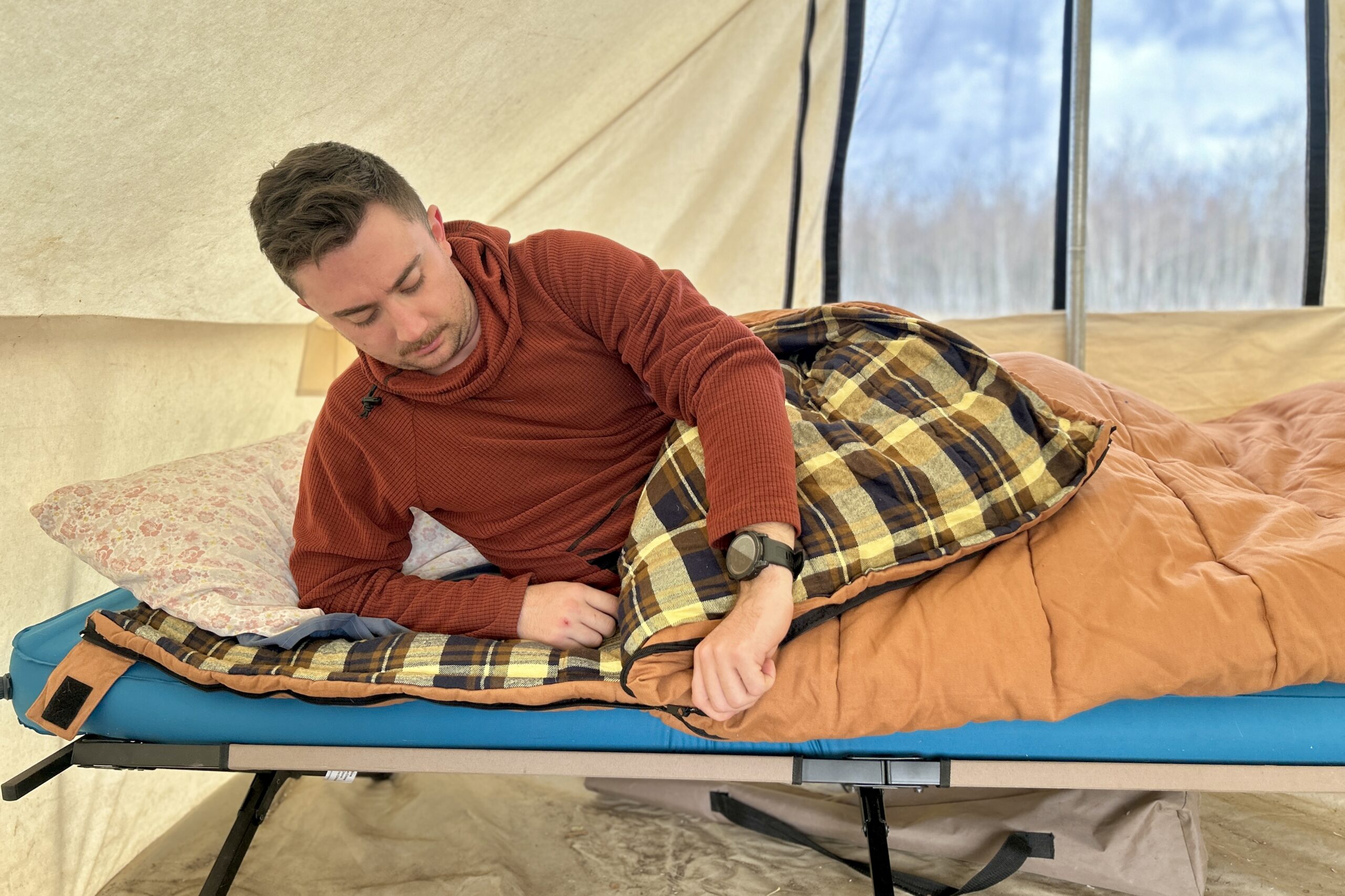
Field notes record overnight conditions and whether extra layers or changes in the sleep system were necessary. We look for drafts at the neck and zipper, the effectiveness of hoods and collars, and practical comfort ranges rather than treating a temperature label as a measured guarantee.
How do We Compare Packed Size?
We consider carry weight, stuff-sack dimensions, how hard it is to repack after a night out, and whether the size makes sense for a backpack, car trunk, or home closet. We also identify the origin of listed weights rather than treating every specification as a field measurement.
How Do We Test Features?
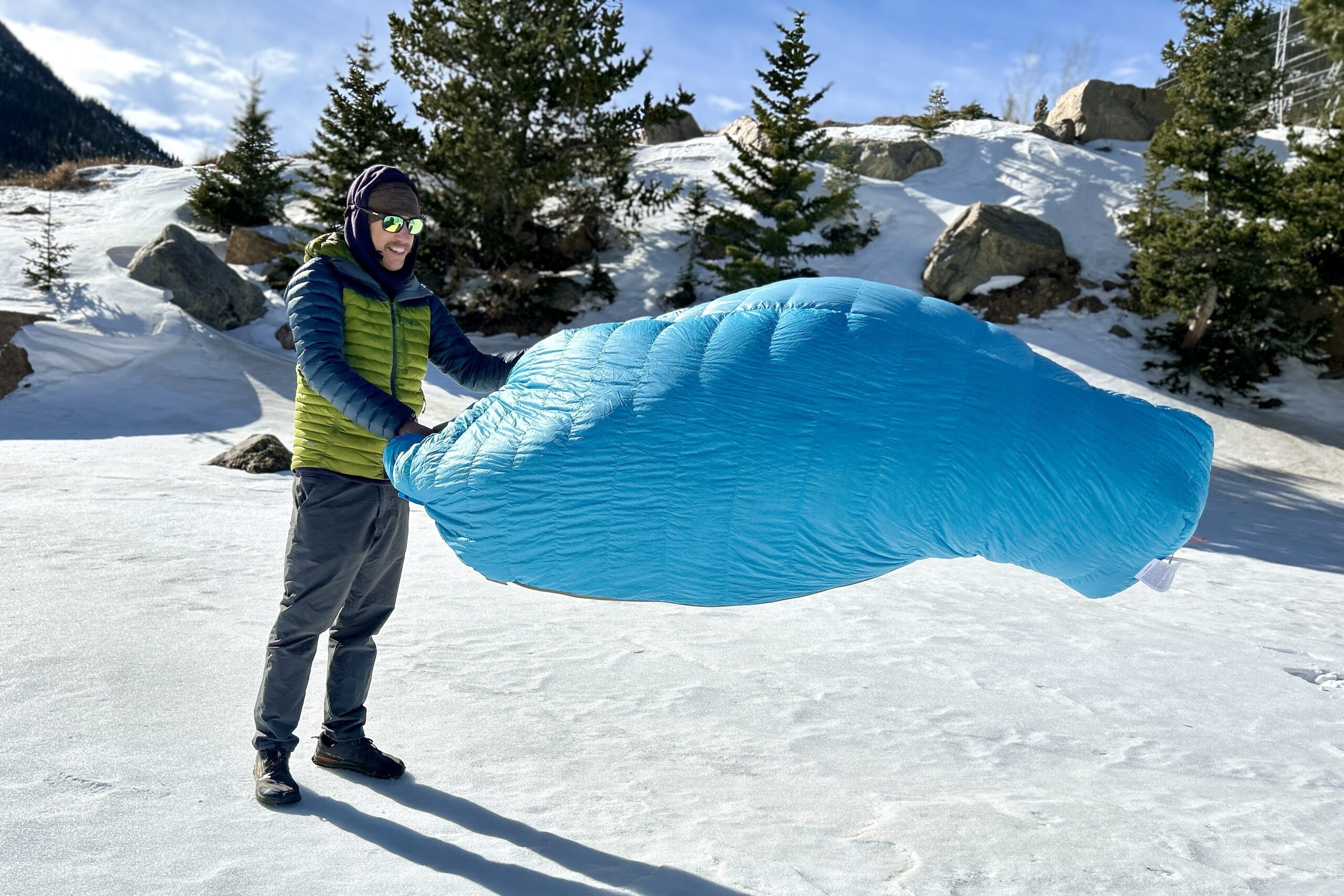
Features are useful when they improve nights outdoors: consistent zipper operation, effective vents, accessible pockets, secure pillow arrangements, and comfortable blanket or quilt conversion. We note when extra adjustments make a bag harder—not easier—to use.
Conclusion
The best sleeping bag is the one that suits your real overnight lows, sleeping position, carrying distance, and tolerance for bulk. Prioritize a comfortable fit and dependable draft management before chasing a headline temperature rating, and choose technical adjustability only when it solves an actual camping problem. For most campers, clear strengths and manageable compromises matter more than the longest list of features.