

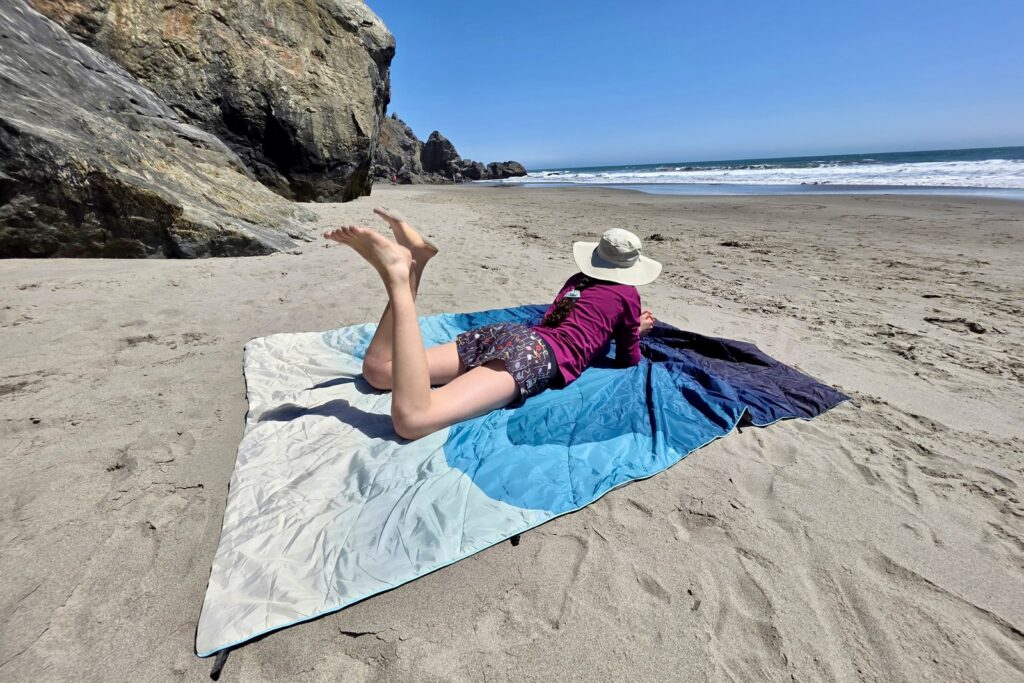
Throughout the past decade, we’ve researched more than 100 camping blankets and tested over 60 on outdoor adventures across the country. Our selection of 10 standouts below is the result of multiple seasons of hands-on testing, with designs from brands like Rumpl, YETI, NEMO, Kelty, and more proving themselves in the field.
Editor’s Note: We updated this guide on July 16, 2026, to ensure all prices and technical specifications were accurate.
How We Test Camping Blankets
From lounging at beaches to gearing up for day hikes and snuggling up at camp, we put each blanket through its paces in real-world, outdoor environments. We pay close attention to durability, warmth, packability, comfort, and features, comparing blankets side by side across a wide range of conditions and activities. We also conduct targeted warmth and repellency tests to gauge how well blankets retain heat and shed moisture and debris, respectively.
For more info, check out some of our other most popular gear guides:
#1. Best Camping Blanket Overall
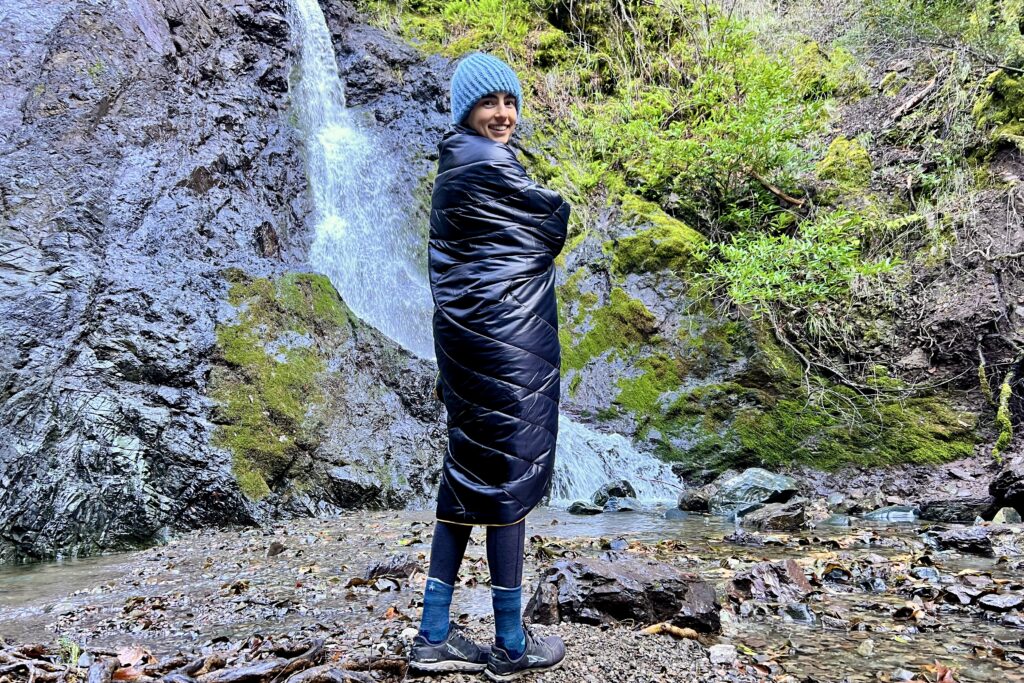
The Rumpl Original Puffy Blanket combines generous coverage, competitive warmth, and reliable durability in a great-looking package. It performed extremely well throughout a winter of testing in northern California, scoring high in nearly every testing metric.

Quick Picks for Camping Blankets
Check out this quick list of our favorite camping blankets if you’re in a hurry, or continue scrolling to see our full list with in-depth reviews.
1. Best Camping Blanket Overall: Rumpl Original Puffy ($100 – $200)
2. Best Ground Blanket: YETI Lowlands ($200)
3. Best Premium Down-Insulated Blanket: Kammock Firebelly 30°F ($310)
4. Best Packable Down Blanket: Horizon Hound All Season ($85)
5. Coziest Camp Blanket: Sackcloth & Ashes Camp ($140)
6. Best Durable & Fully Featured Blanket: NEMO Victory Patio Blanket ($100 – $200)
7. Best Oversized Blanket: Kelty Biggie Blanket ($55)
8. Most Budget-Friendly Blanket: Glorsign Outdoor Puffy ($34)
9. Best Blanket for Indoor Use: Pendleton Yakima Camp ($228 – $285)
10. Most Sustainably Made Blanket: Nomadix Festival Blanket ($70)
Rumpl Original Puffy
Best Camping Blanket Overall
CleverHiker Rating: 4.6/5.0
Price: $100 – $200
Weight: 2 lb. 3.2 oz. / 3 lb. 13.6 oz.(1-person / 2-person)
Insulation: 240g synthetic
Dimensions: 75 x 52 in. (1P) / 84 x 80 in. (2P)
Pros
- Large (even as a one-person blanket)
- Offered in multiple sizes
- Handy Cape Clip for hands-free wear
- Fun colorways and patterns
- Plush and warm
Cons
- Not very packable
- Carry bag isn't the most functional
- Cape Clip is tricky to use at first
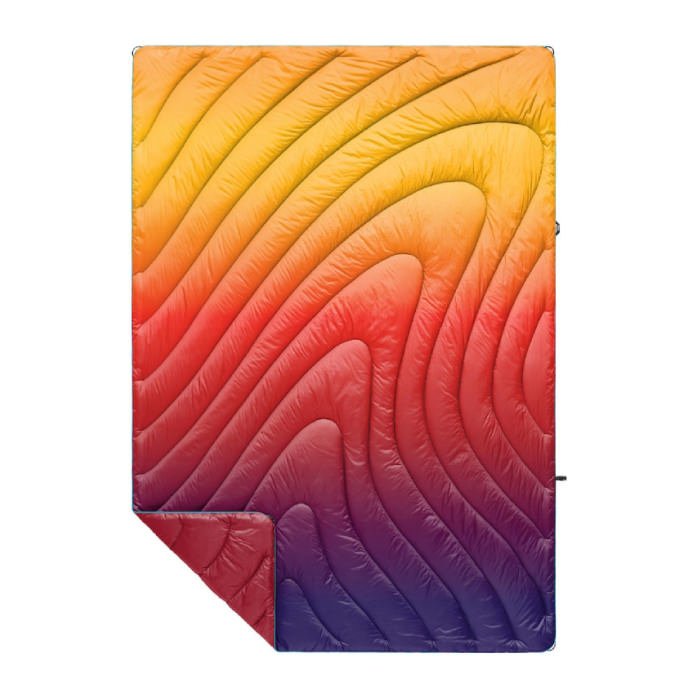
Rumpl did it again, producing a high-ranking and popular camping blanket for any outdoor pursuit. The Original Puffy Blanket is a versatile option that comes in multiple sizes for individuals or couples.
Although this blanket wasn’t the most packable in our lineup, it still ranked competitively with its generous coverage, solid insulating properties, plush synthetic fabric, and durable materials. Rumpl also offers tons of fun colorways and unique patterns that make their blankets stand out.
This blanket ranked as the third-warmest we tested, proving its capabilities to trap body heat in chilly weather. Like other synthetic blankets in our lineup, the Original Puffy also shed moisture and debris with ease.
This blanket has a handy Cape Clip, which allows you to secure it around your neck and wear it hands-free. We found this feature particularly convenient for cold walks or multitasking at camp. Clipping the blanket with cold hands can be a little challenging due to the tight fit of the plastic clasps, but it gets easier once you’re used to the motion.
Though we appreciated the included stuff sack, it was difficult to pack the blanket while also holding the tight opening steady. The process was much more efficient with two people working together. Still, the Rumpl Original Puffy ranked high in every metric and stands out as an excellent choice for the everyday and all-around outdoor adventurer.
YETI Lowlands
Best Ground Blanket
CleverHiker Rating: 4.6/5.0
Price: $200
Weight: 5 lb. 12.8 oz.
Insulation: Polyester
Dimensions: 78 x 55 in.
Pros
- Plush, thick, and insulated from the ground
- Extremely durable
- Waterproof bottom
- Easy to clean
- Large size
- Corner and side loops for anchoring
- Functional and durable carry case
Cons
- Bulky
- Waterproof later is noisy when not on the ground
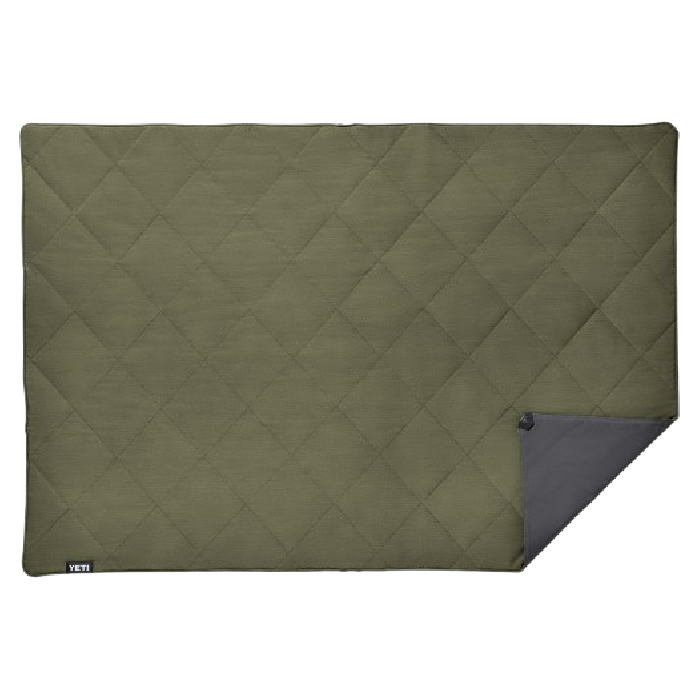
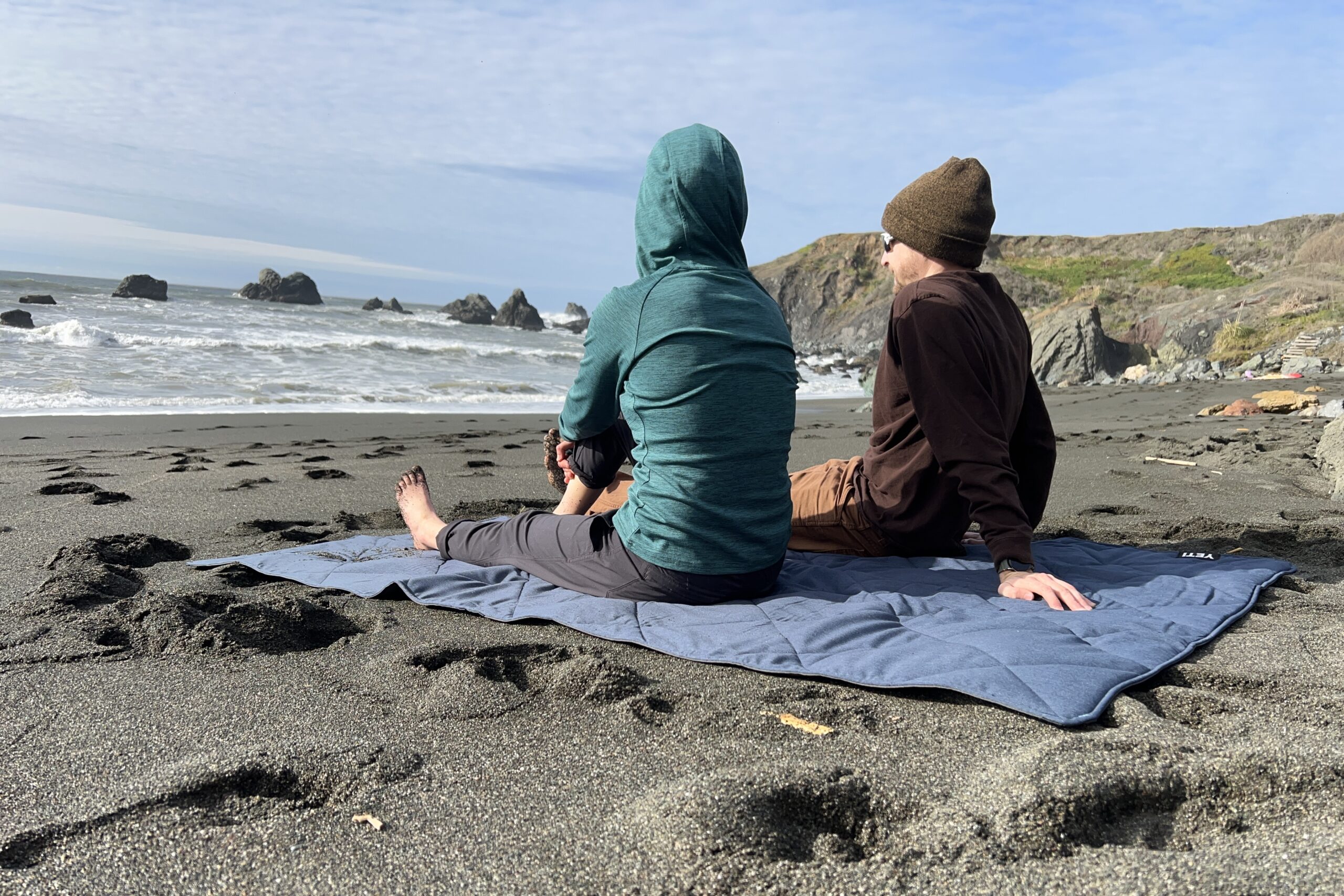
The YETI Lowlands Blanket was one of our gear analyst’s favorite blankets, great for outdoor outings from beach hangs to sitting by the campfire. It’s thick, well padded, and the only insulated ground blanket we tested – surpassing other ground blankets in all-around performance.
The Lowlands was also one of the most durable designs we tested, deflecting water and debris easily on both sides. The plush top plush proved just as hardwearing as the waterproof bottom lining. The blanket also repels pet hair and fur, which only adds to overall versatility.
When the blanket did get muddy, damp, or dirty, it dried quickly and was easy to spot-clean without leaving stains (it’s also machine-washable when it needs extra care). After being used near a campfire, we appreciated that the fabric didn’t absorb or retain any smoky odor.
Ultimately, the YETI is bulkier and heavier than most ground blankets, which limits its packability. However, its durable carry case comes with side handles and an optional shoulder strap that makes it easy to transport by hand. The carry case was the most functional and convenient of all the blankets we tested. Rolling the Lowlands up to fit inside its case is efficient and simple, even with a sloppy pack job.
Although the YETI Lowlands is one of the more expensive blankets here, it’s built to last and has top-notch performance that makes it a solid long-term investment.

Kammok Firebelly 30°F
Best Premium Down-Insulated Blanket
CleverHiker Rating: 4.6/5.0
Price: $310
Weight: 1 lb. 12.2 oz.
Insulation: 750-fill duck down
Dimensions: 88 x 55 in.
Pros
- Extremely versatile and multifunctional
- Warm and well insulated
- Plush material
- DWR coating for shedding moisture
Cons
- Not the lightest or most packable
- Down insulation requires special care
Although the Kammok Firebelly 30°F is on the heavier and bulkier end, its 750-fill duck down and incredible versatility make it one of our top recommendations for campers. It’s not our first pick for strenuous multi-day backpacking trips when space and weight are at a premium, but it’s a standout choice for casual outdoor adventures.
Our favorite thing about the Firebelly is its versatility. It can be used as a hammock underquilt, minimalist sleeping bag, throw blanket, or worn as a poncho. As an underquilt, the Firebelly can be laid in a hammock to provide extra insulation on chilly nights. As a sleeping bag, there are cinchable cords at the foot box and shoulders, as well as straps to secure it to your sleeping pad. For use as a poncho, simply unzip the opening and pull the quilt over your head to go hands-free.
Though we love the Firebelly’s features and warmth, its down insulation requires special care: handwashing with cold water and using a down-specific cleaner. This could be a downside for folks who like to toss everything in the wash after a trip.
Another important note is that down can become flat, clumped, or displaced when compressed for long periods of time, making it important to store the blanket loosely and allow for loft time before each use.
Horizon Hound All Season
Best Packable Down Blanket
CleverHiker Rating: 4.5/5.0
Price: $85
Weight: 1 lb. 6 oz.
Insulation: 10.6 oz. of 650-fill down
Dimensions: 77 x 50 in.
Pros
- Very warm
- Packable and comes with a stuff sack
- Can be worn as a cape
- Generous sizing
Cons
- Shouldn't be compressed in its stuff sack for long-term storage
- Down requires special care
- Not very water-resistant
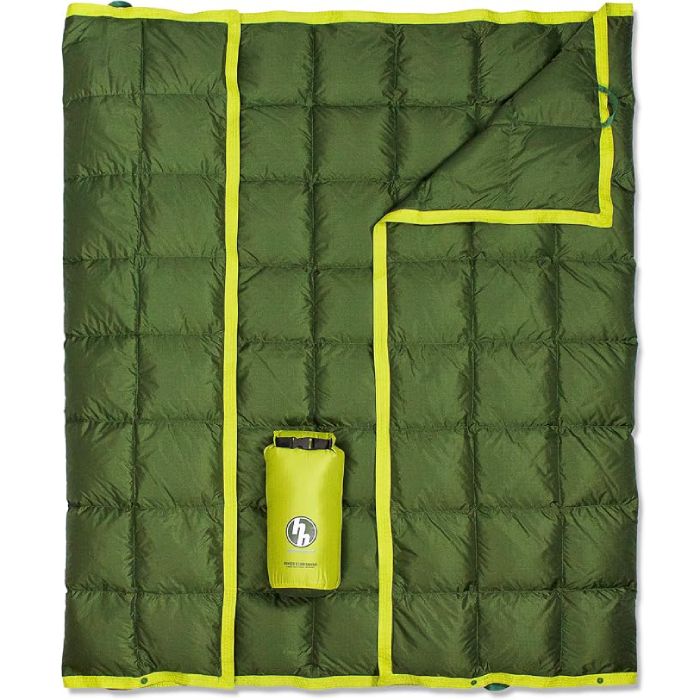
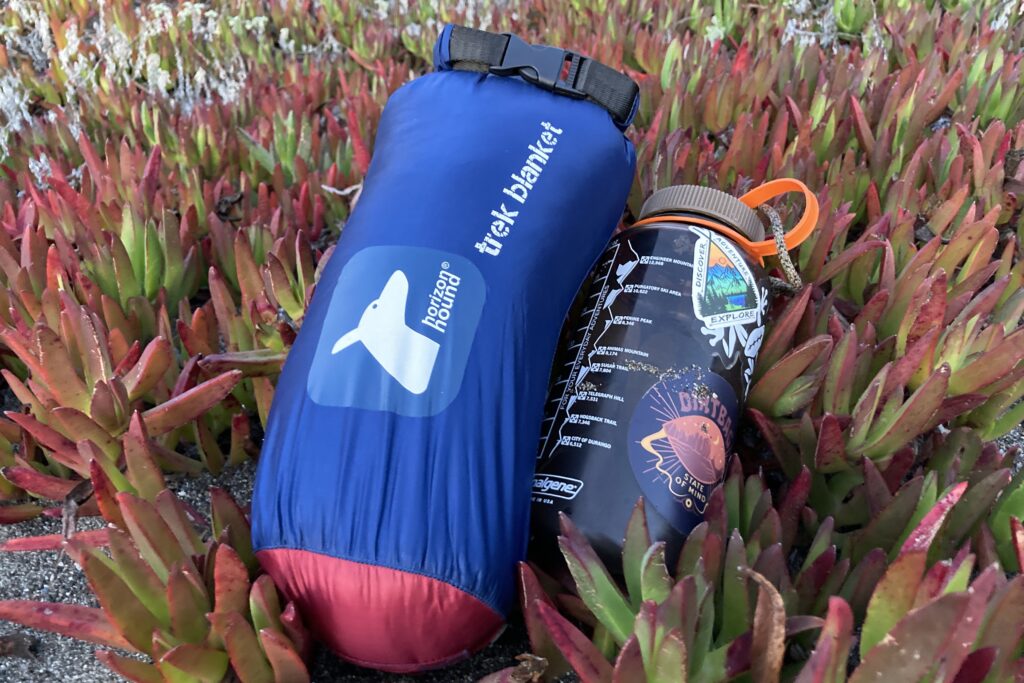
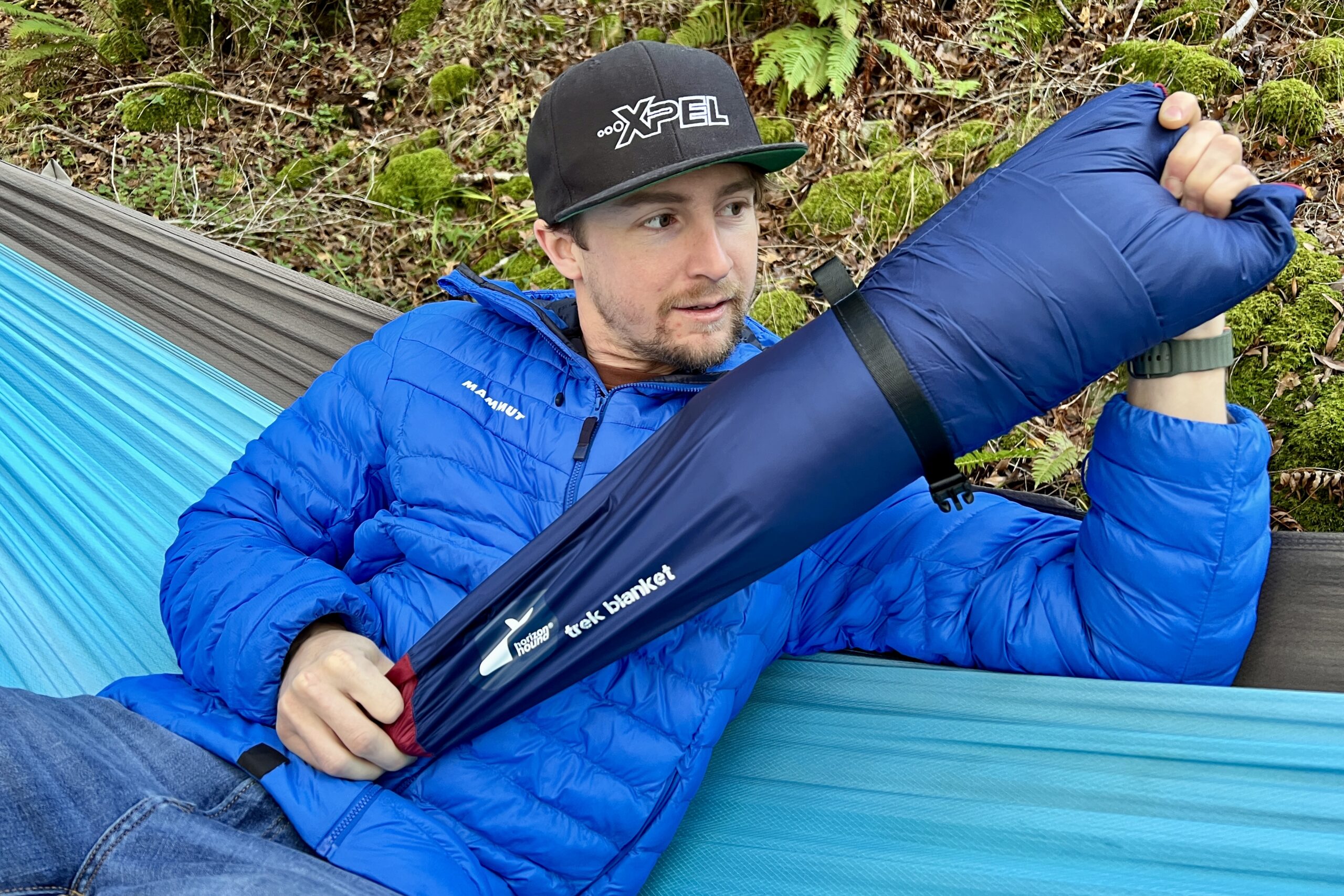
Though down-insulated camp blankets come with a mixed bag of pros and cons, the Horizon Hound All Season impressed us overall. This blanket is a top budget pick with an excellent coverage-to-packability ratio, making it great for longer adventures on the trail. Stuffed into its included stuff sack, it is just slightly larger than a 32-ounce Nalgene bottle.
The Horizon Hound ranked as one of the warmest blankets we tested. It proved itself as a dependable companion in chilly weather, as long as the down is cared for appropriately. The blanket also offers decent coverage, and we preferred its simple button closure over Rumpl’s Cape Clip for going hands-free – especially with cold fingers.
However, there are some drawbacks to down. First, we noticed the Horizon Hound isn’t as water-repellent as other puffy blankets we tested. It also requires special cleaning to maximize its lifespan, and it’s best to store the blanket uncompressed so the down remains lofty. Horizon Hound does not provide a separate storage bag for this, so you may want to purchase one separately.
Overall, the Horizon Hound is a quality option at a hard-to-beat price. As long as you don’t mind taking some extra care, it’s a great choice for those looking for packability on a budget.
Editor’s Note: Our review linked below covers the Horizon Hound Trek, which was very similar to the newer All Season model. We will update our coverage once we’ve had a chance to test the latest version.

Sackcloth & Ashes Camp
Coziest Blanket
CleverHiker Rating: 4.4/5.0
Price: $140
Weight: 2 lb. 8 oz.
Insulation: None
Dimensions: 72 x 60 in.
Pros
- Chemical-free, dye-free, and cruelty-free wool
- Exceptionally warm and cozy
- Ample coverage for one or two people
- Sheds water and debris well for a wool blanket
Cons
- No storage bag
- Not very packable
- Light colors stain and show dirt
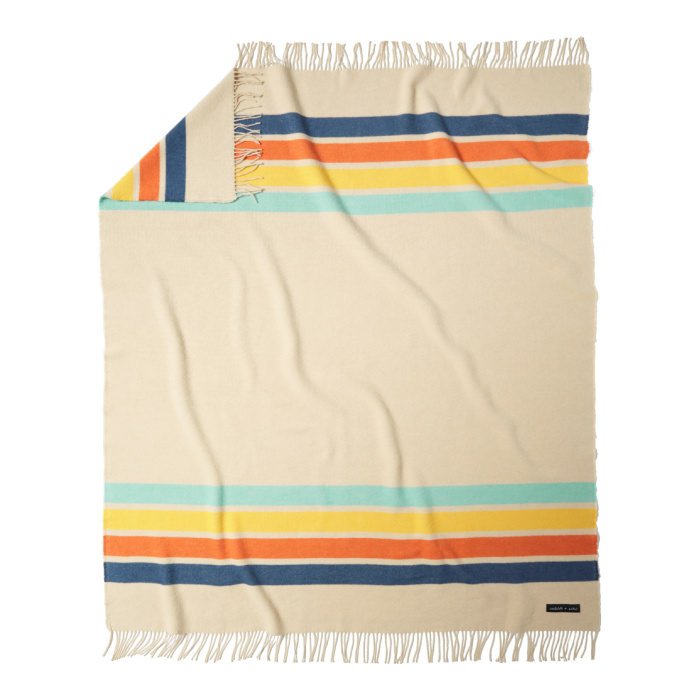
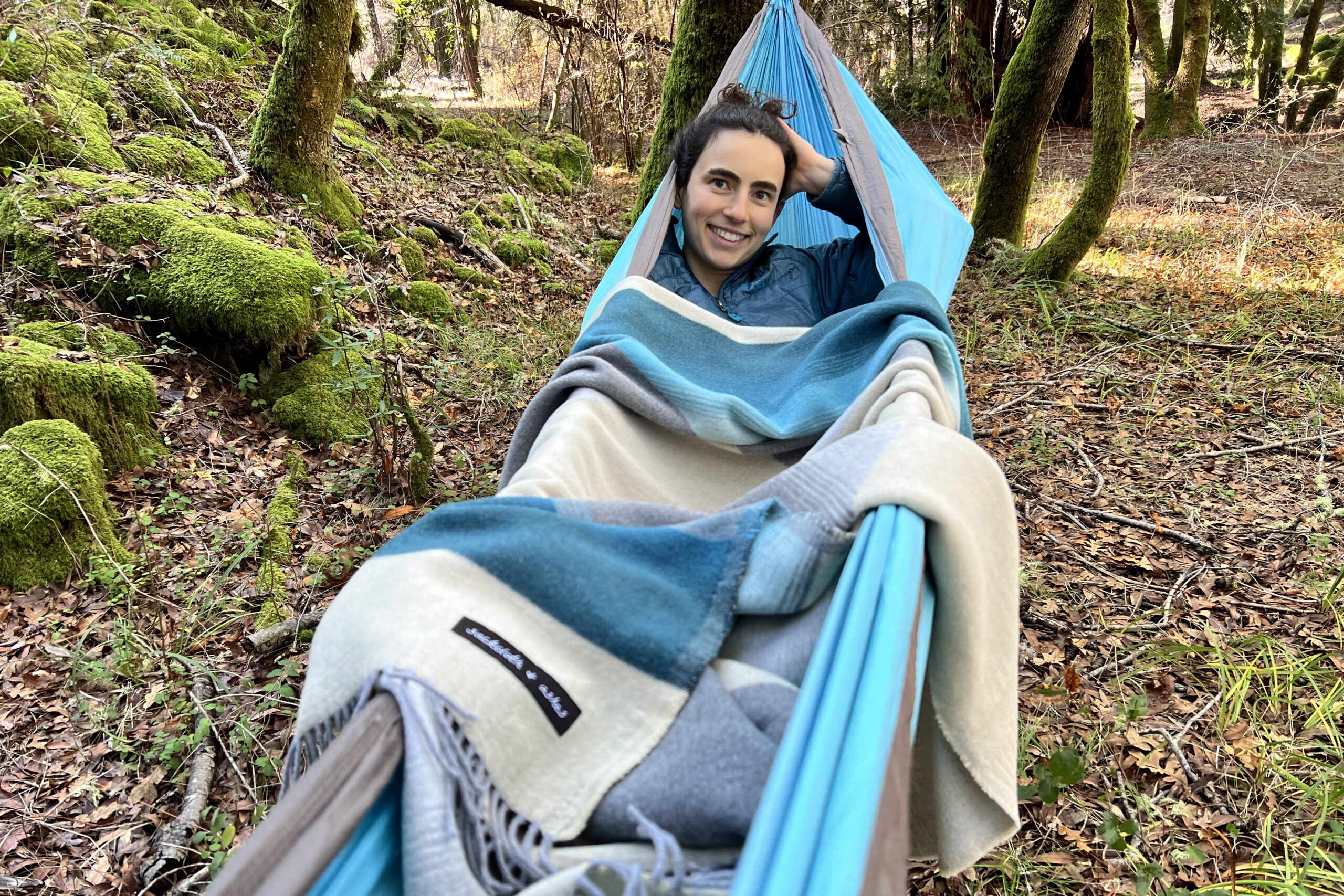
We love the Sackcloth & Ashes Camp blanket for its soft and cozy feel. Combined with its generous size that can accommodate one or two people, this wool blanket stands out as the comfiest in our lineup. It’s also made with chemical-free, dye-free, and cruelty-free wool, making it a sustainable choice.
Although the Sackcloth & Ashes Camp blanket absorbs moisture and clings to debris more readily than synthetic alternatives, it outperformed other soft blankets in our lineup. It’s still important to treat this blanket with care, as the wool can snag and stain relatively easily in an outdoor environment. We tested one of the white-heavy colorways, which was quick to show dirt. We wish the blanket came with a storage bag to help keep it protected (and easier to pack).
Overall, the Sackcloth & Ashes is still our top pick for staying cozy and snuggly. We especially loved it for days at camp in areas where we could keep the blanket off the ground and away from excessive dirt and moisture – think lounging in a hammock or relaxing in a tent.
NEMO Victory Patio Blanket
Best Durable & Fully Featured Blanket
CleverHiker Rating: 4.3/5.0
Price: $100 – $200
Weight: 3 lb. 5 oz. / 4 lb. 7 oz.(Medium / Large)
Insulation: None
Dimensions: 88 x 50 in. (M) / 88 x 70 in. (L) / 88 x 100 in. (XL)
Pros
- Corner loops for anchoring
- Rolls up for easy transport
- Waterproof bottom
- Sheds debris easily
- Generous size
- Includes an attached zippered pocket
Cons
- Thin material
- Heavy for what it is
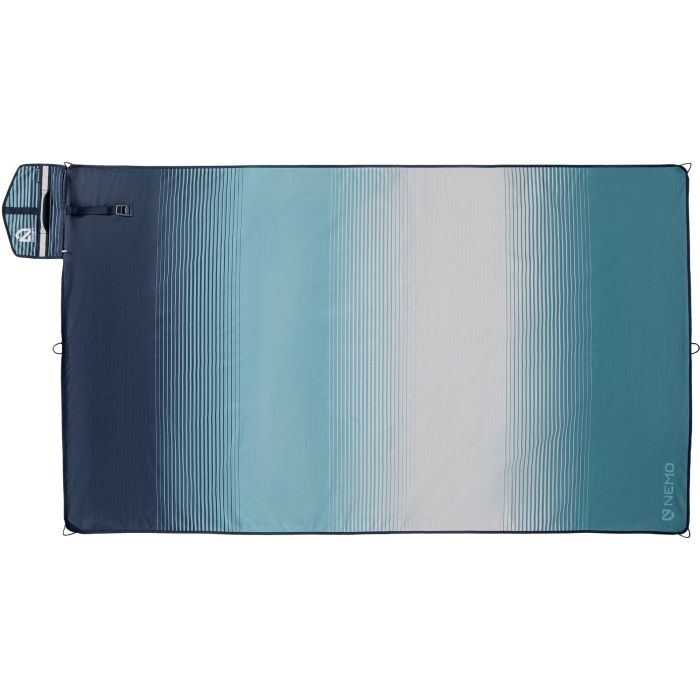
The NEMO Victory Patio Blanket is an all-around durable ground blanket that comes in three sizes. We were satisfied with its performance in almost all conditions we put it through and appreciated its generous coverage even in the medium size.
The only environment where the NEMO did not excel was on rocky or uneven ground. With its thin and unpadded material, we could feel every ridge, lump, and rock underneath.
The top of the blanket performed just as well as the waterproof bottom in terms of repelling water and shedding debris. At the beach, it was easy to shake sand off the mat, and it did not accumulate as we rolled up the blanket to pack out for the day. We also appreciated the zippered stash pocket, bottle opener, and corner loops for securing the mat on windy days.
Although this is a heavier blanket, it is not very bulky. It rolls up quickly and features an attached handle for easy portability. Overall, the NEMO Victory Patio is a durable option that we highly recommend for those who want an easy-to-care-for beach or ground blanket.
Kelty Biggie
Best Oversized Blanket
CleverHiker Rating: 4.3/5.0
Price: $55
Weight: 2 lb. 15.2 oz.
Insulation: Synthetic
Dimensions: 82 x 80 in.
Pros
- Comfortably fits two people
- Soft outer shell with a brushed liner
- Stuff sack included
- DWR coating on outer shell
- Thicker and plusher than other budget blankets
Cons
- Heavy, bulky, and not very packable
- Lacks features
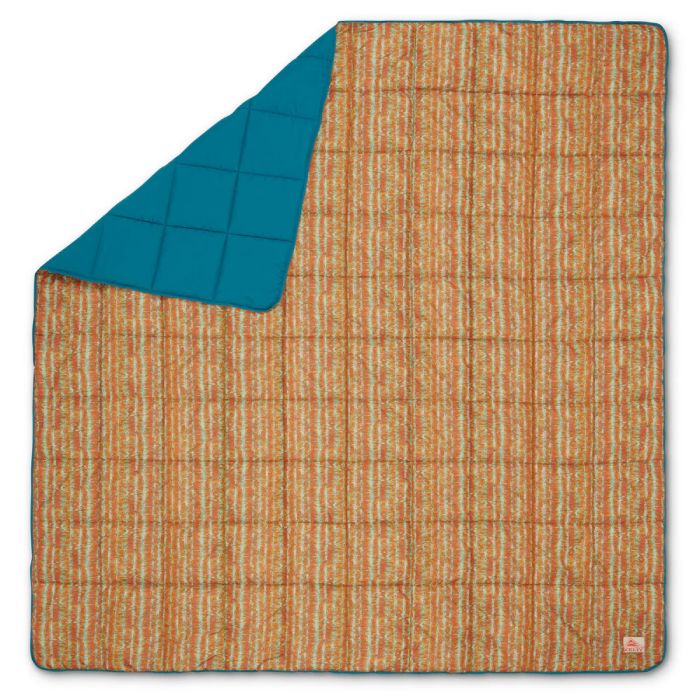
Sure, the Kelty Biggie blanket is a bit bulky and heavy, but for good reason. This blanket is durable, plush, and well made – exactly what we’ve come to expect from Kelty over the years.
Though the Biggie is not a go-to for trail days or carrying around in a daypack due to its large packed size, it is an excellent, cozy companion to have when lounging around a drive-to campsite. Our dog also loved it for nesting (without causing any damage).
The Kelty Biggie is our favorite oversized blanket that fits two people comfortably. It is packed with lightweight CloudLoft synthetic insulation, features a soft brushed liner, and has a DWR coating for shedding light moisture. We found it versatile enough for both ground coverage and wraparound warmth.
Aside from the provided stuff sack, the Kelty Biggie doesn’t have many features. Ultimately, it is a very simple yet functional design – and we love that it’s thicker than some of the other puffy blankets in our lineup.
More: Kelty Biggie Full Review
Glorsign Outdoor Puffy
Best Budget-Friendly Blanket
CleverHiker Rating: 4.1/5.0
Price: $34
Weight: 1 lb. 1.6 oz.
Insulation: Synthetic
Dimensions: 79 x 55 in.
Pros
- Affordable
- Stuff sack and shawl clip features are easy to use
- Very water-resistant
- Versatile
- Colorful designs
Cons
- Relatively thin
- Not very packable
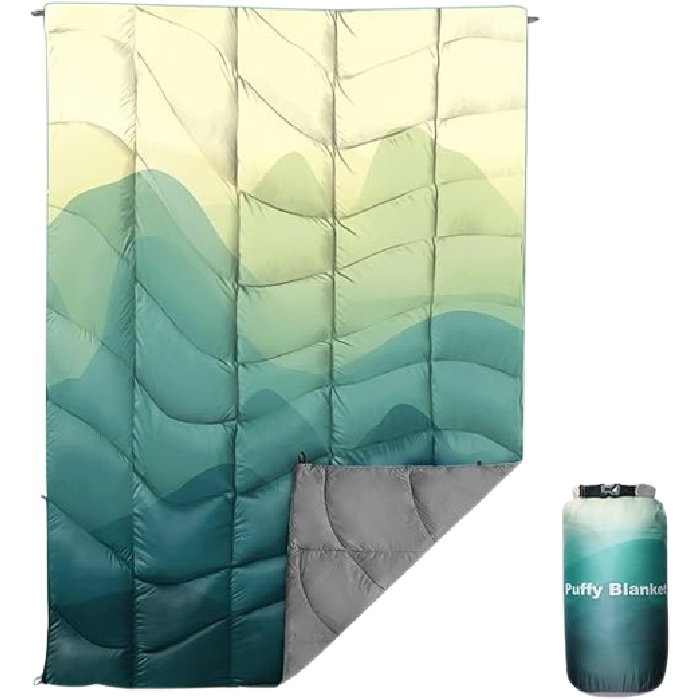
Even though the Glorsign Outdoor Puffy is the cheapest blanket in our lineup, it doesn’t skimp on features. It is constructed with odor-resistant and water-repellent polyester that effectively sheds moisture and debris. We also love the simple, easy-to-use shawl clip that allows you to go hands-free while staying warm.
This blanket has a lot going for it, but the material feels thinner than the other synthetic puffy blankets in our lineup. We didn’t experience any wear and tear in the field, but the Outdoor Puffy definitely has a cheaper feel than more premium competitors. On the bright side, it’s durable enough to be used as a ground mat or throw blanket at camp.
Though the included stuff sack is stretchy, easy to use, and can accommodate a haphazard pack job, the Outdoor Puffy’s packed size is larger than we’d prefer. Sure, it fits into our daypack, but it doesn’t leave space for much else.
Ultimately, if affordability and versatility are your top priorities when selecting a camping blanket, the Glorsign is worth a closer look.
Pendleton Yakima Camp
Best Blanket for Indoor Use
CleverHiker Rating: 3.8/5.0
Price: $228 – $285
Weight: 4 lb. 8 oz. / 6 lb. 8 oz.(Twin / Full/Queen)
Dimensions: 66 x 84 in. (Twin) / 90 x 90 in. (Full/Queen)
Insulation: None
Pros
- Very warm
- Generous size
- Versatile
- American-made
- Attractive styling
Cons
- Heavy and bulky
- Expensive
- Debris clings to the fabric
- Dry cleaning required
- Sheds fibers a lot at first
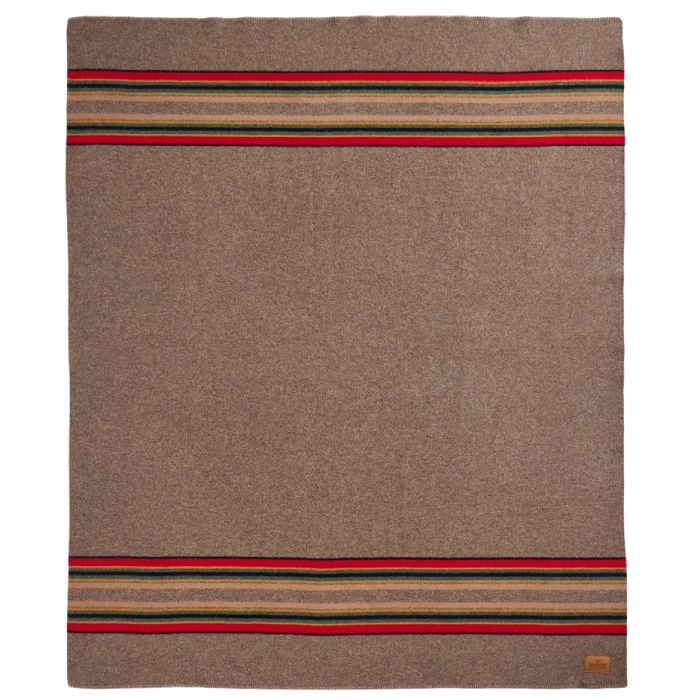
Coming from another well-known brand, the Pendleton Yakima Camp is a traditional wool blanket that’s American-made. It’s best suited for indoor and light outdoor use, where its fabric can be better cared for. It even comes in traditional bedding sizes (Twin, Full/Queen, etc.).
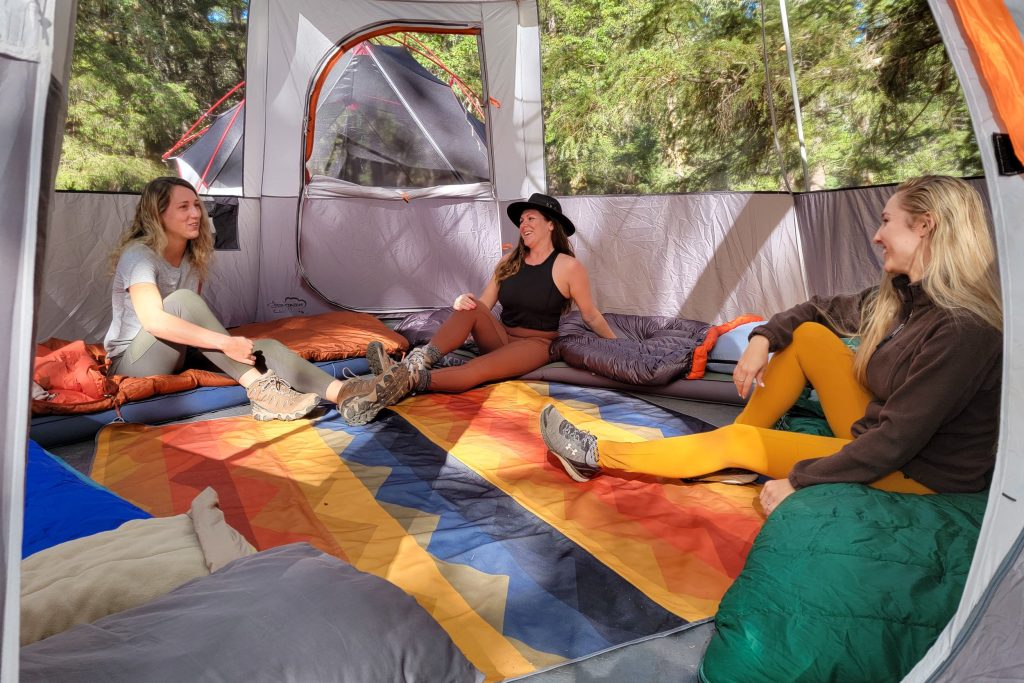
We tested the two-person Full/Queen size, and it was the roomiest in our lineup by far. For reference, it took up the entire floor of our two-person tent with fabric to spare.
Although we loved its large size, the Yakima is a heavier and bulkier blanket – it’s one of the least packable options we reviewed. It unfortunately does not come with a carry bag and instead arrives in a plastic casing (again, reminiscent of traditional bedding).
The wool feels thick and made with high attention to detail. These blankets get softer with time, so although we found it a little scratchy a first, the warmth was immediately noticeable. The blanket does absorb water and odors quickly and clings to debris, making it difficult to clean (dry cleaning is recommended). Also, when using the blanket as a throw, it shed some fuzz onto our synthetic pants.
As one of the most expensive blankets we reviewed, the Yakima Camp is a great investment if you’re in the market for a forever blanket. It’s best for those looking to style it at home, in an RV, or as part of a glamping kit.
Nomadix Festival Blanket
Most Sustainably Made Blanket
CleverHiker Rating: 3.6/5.0
Price: $70
Weight: 2 lb.
Dimensions: 72 x 60 in.
Insulation: None
Pros
- Packs down small
- Slip-resistant fabric
- Sustainably minded materials and company
- Machine-washable
- Water-resistant bottom layer
- Fun colorways
Cons
- Top fabric isn't very water-resistant
- Very thin
- No carry bag
- Stains easily
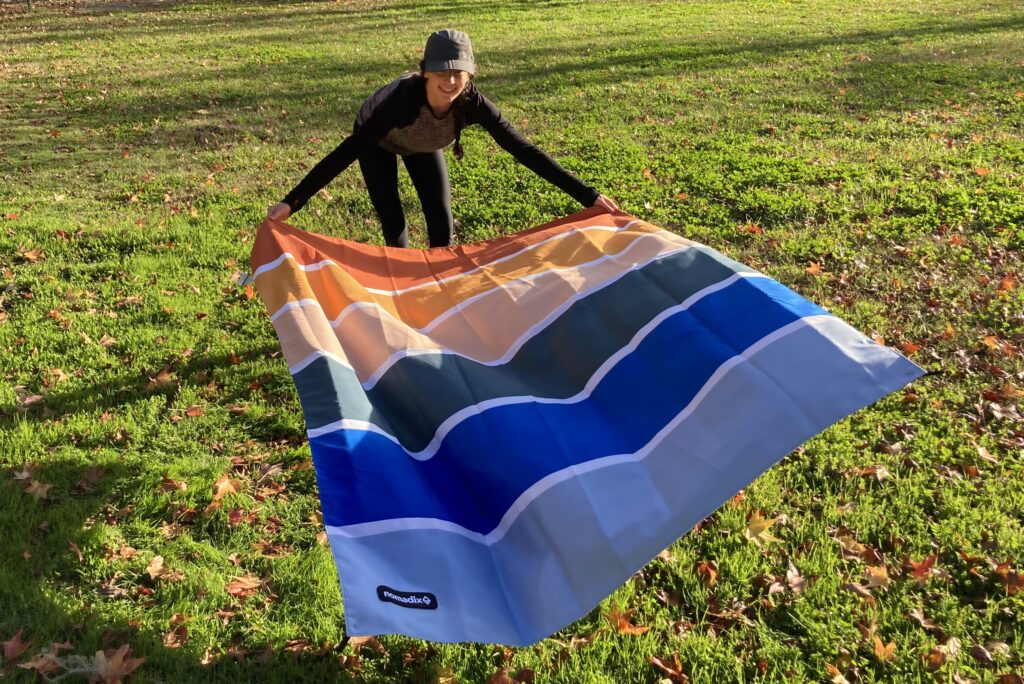
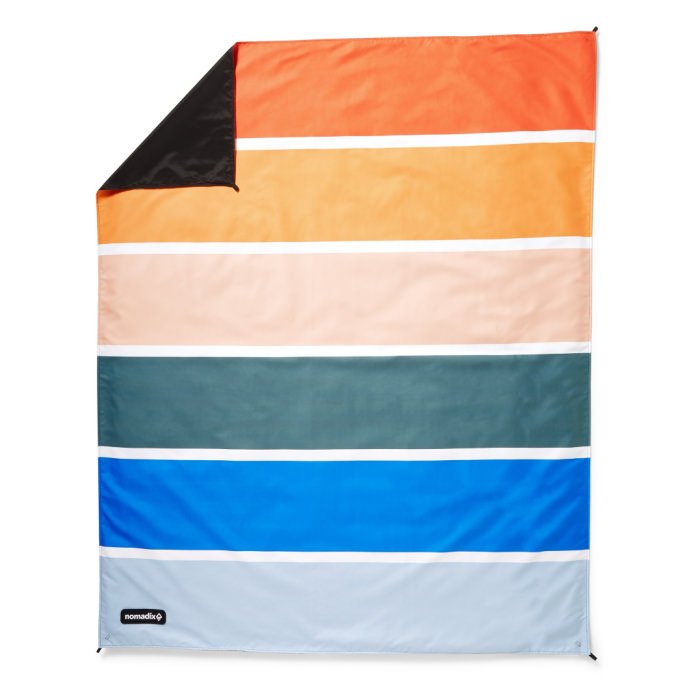
The Nomadix Festival Blanket is one of the simplest blankets we tested. It lacks features but boasts a strong sustainability focus. Nomadix is a Climate Neutral Certified company with a commitment to reducing their environmental footprint. One Festival Blanket is made from 58 recycled plastic bottles, and ours was shipped with absolutely no plastic.
Although the Festival Blanket doesn’t come with a stuff sack, it rolls up nicely into a tight package that can fit into virtually any pack or tote bag. One downside to the excellent packability is the thinness of the material, resulting in a lack of barrier between you and the ground.
The Nomadix Festival does come with a unique slip-resistant surface and water-resistant bottom layer. Unfortunately, the top material does soak through quickly and take a long time to dry out. In our shake test, the blanket didn’t shed debris as well as others in our lineup, and mud took some work to remove.
Small complaints aside, the Nomadix Festival Blanket is a sustainably minded option for those looking for a simple, packable ground mat for everyday use.
Product Comparison Table
| oSort | Product | Price | Weight | Durability | Warmth | Size:Packability Ratio | Comfort | Features | 0 |
Rumpl Original Puffy View at REI View at Amazon 
|
$100 – $200 | 2 lb. 3.2 oz. / 3 lb. 13.6 oz. (1-person / 2-person) | 4.5 | 4.7 | 4.2 | 4.7 | 4.6 | 1 |
YETI Lowlands View at REI View at Amazon
|
$200 | 5 lb. 12.8 oz. | 4.8 | 4.2 | 4.0 | 4.2 | 4.0 | 2 |
Kammok Firebelly 30°F View at Amazon View at Kammok
|
$310 | 1 lb. 12.2 oz. | 4.5 | 4.8 | 4.2 | 4.7 | 4.8 | 3 |
Horizon Hound All Season View at Amazon View at Horizon Hound 
|
$85 | 1 lb. 6 oz. | 4.2 | 4.7 | 4.8 | 4.5 | 4.6 | 4 |
Sackcloth & Ashes Camp View at Sackcloth & Ashes
|
$140 | 2 lb. 8 oz. | 4.0 | 4.0 | 3.8 | 4.8 | 4.0 | 5 |
NEMO Victory Patio Blanket View at REI View at Amazon |
$100 – $200 | 3 lb. 5 oz. / 4 lb. 7 oz. (Medium / Large) | 4.8 | 3.5 | 3.9 | 4.0 | 4.8 | 6 |
Kelty Biggie View at Amazon View at Kelty |
$55 | 2 lb. 15.2 oz. | 4.5 | 4.2 | 4.0 | 4.7 | 3.9 | 7 |
Glorsign Outdoor Puffy View at Amazon
|
$34 | 1 lb. 1.6 oz. | 4.5 | 3.8 | 3.9 | 4.0 | 4.5 | 8 |
Pendleton Yakima Camp View at Amazon View at Backcountry |
$228 – $285 | 4 lb. 8 oz. / 6 lb. 8 oz. (Twin / Full/Queen) | 3.8 | 4.0 | 3.8 | 4.2 | 3.8 | 9 |
Nomadix Festival Blanket View at REI View at Amazon |
$70 | 2 lb. | 3.6 | 3.6 | 4.8 | 3.8 | 3.7 |
|---|
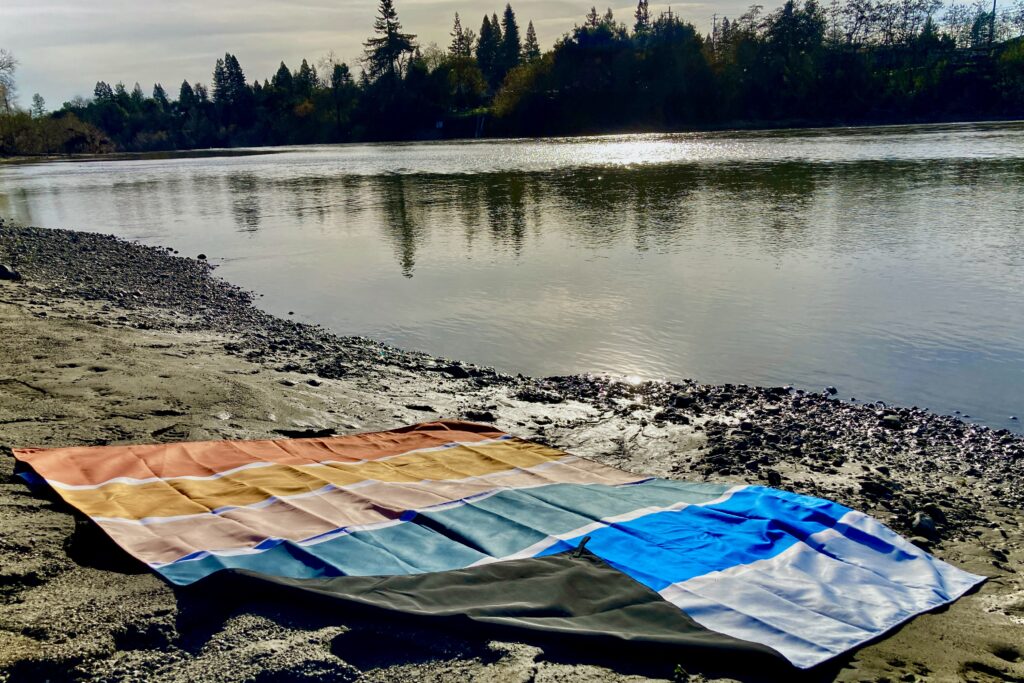
Analysis & Results
Which Camping Blanket is the Best Value?
Though we prioritize performance and quality, we are always on the lookout for gear that comes at an affordable price while still delivering competitive results.
The Glorsign Outdoor Puffy makes the top of our list. It is considerably cheaper than many of our other favorites but doesn’t skimp on durability, features, or versatility.
The Horizon Hound All Season comes in second with its incredible coverage, warmth, and packability. It’s one of the warmest blankets we tested, making it a very solid value for those looking to stay cozy without breaking the bank.
Although heavy and bulky, the Kelty Biggie is worth considering if you’re looking for two-person coverage at a lower price. It’s pretty barebones in terms of features but packs in a lot of comfort and warmth.
Finally, the NEMO Victory Patio Blanket and Nomadix Festival Blanket are affordable ground mats. They lack insulation but are well priced for everyday use, beach outings, and other scenarios when you just need ground protection without the warmth of down or synthetic fill.
Which Camping Blanket is the Most Durable?
When it comes to durability, the NEMO Victory Patio Blanket takes the top spot in our rankings, with the YETI Lowlands being a close second. Overall, the Victory gets the slight edge over the Lowlands since it costs less without sacrificing quality.
Both blankets feature a waterproof bottom lining and a water-resistant top layer. They shed debris equally well and emerged from our testing with no snags or signs of wear. Ground blankets can get dirty quickly, but both blankets are easy to care for and clean.
Next in line are the synthetic puffy blankets in our lineup, including the Rumpl Original Puffy, Kelty Biggie, and Glorsign Outdoor Puffy. These blankets shed debris, repel water, and can be thrown in the washing machine with the rest of your load.
Finally, the Kammok Firebelly proved highly durable for a down-insulated blanket. Its ripstop nylon shell is relatively thick and resistant to tears and abrasion, although the down insulation requires special care to maximize its lifespan.
Which Camping Blanket is the Warmest?
The Kammok Firebelly scored the highest in our “hot sock” test, which wasn’t too surprising given its generous dose of lofty, 750-fill duck down. Kammock gives the blanket a 30-degree temperature rating, which feels a little ambitious but not entirely unrealistic. Whether you use it as a poncho, minimalist sleeping bag, hammock underquilt, or throw blanket, the Firebelly offers cozy warmth and great coverage.
Close behind were the Horizon Hound All Season and Rumpl Original Puffy. For reference, our hot sock wrapped inside the Horizon Hound lost only 1.8 degrees of heat, while our sock inside the Rumpl lost 3.2 degrees. This is quite impressive considering the Horizon Hound is both cheaper and lighter than the Rumpl.
In general, most ground blankets are poor insulators, but the YETI Lowlands was a notable exception. In our hot sock test, our infrared thermometer clocked a drop of 11.7 degrees, which was much better than the other ground blankets in our lineup. This is likely due to the waterproof layer and soft linings, which do a respectable job trapping heat.
As far as wool blankets go, the Sackcloth & Ashes Camp performed better than the Pendleton Yakima Camp. Our infrared thermometer logged a difference of 10.4 degrees for our hot sock wrapped in the Sackcloth & Ashes, while the Pendleton saw a drop of 15.3 degrees. The Sackcloth & Ashes is made with a mix of synthetic fibers and wool, while the Pendleton uses cotton and wool, which could explain the difference (synthetic materials are better at retaining heat than cotton).

Which Camping Blanket is the Most Packable?
When measuring the packability of each blanket, we also took into account its overall coverage. This helped us level the playing field, since most two-person blankets are inherently bulkier than one-person designs.
The blankets that scored highest in this category were the Horizon Hound All Season and Nomadix Festival. The Horizon Hound is slightly larger than a 32-ounce Nalgene bottle when stuffed away but expands to a very competitive 77 by 50 inches. The Nomadix Festival rolls up to about the same size and measures 72 by 60 inches when laid out.
For a beach day or picnic, the NEMO Victory Patio also offers decent packability. It rolls up into an attached carry bag with a built-in handle for easy portability. The medium size we tested measures 88 by 50 inches and packs down to just 6.5 by 13 inches.
Two final blankets worth calling out are the Rumpl Original Puffy and Kammock Firebelly, both of which are competitively packable for the level of coverage and warmth they offer. The Firebelly is larger and more compressible than the Original Puffy, although Rumpl does sell a two-person version for added coverage (at the cost of weight and packability).
Which Camping Blanket is the Most Comfortable?
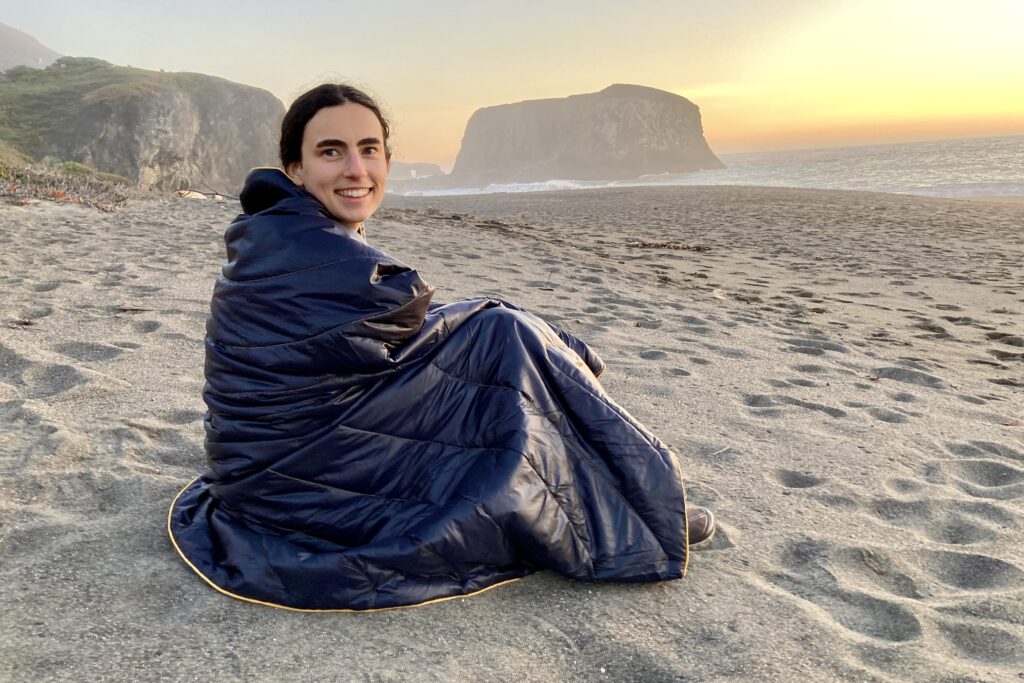
Comfort is arguably the most important consideration for many campers – ourselves included. The top billing in this metric goes to the Sackcloth & Ashes Camp. This blanket is made from a soft and cozy wool blend that’s dye-free, chemical-free, and cruelty-free. It’s not the biggest option in our lineup, but at 72 by 60 inches, it offers solid coverage without excess bulk.
The next-most-comfortable blankets were the Rumpl Original Puffy, Kammok Firebelly, Kelty Biggie, and Horizon Hound All Season. All of these blankets are plush, soft to the touch, and well insulated. They have adequate coverage and are exceptionally cozy to wrap up in.
The most comfortable ground blanket we tested was the YETI Lowlands. It is the only insulated ground blanket on our list, which also makes it the thickest. Its plush top layer is soft and supple but still resists water and dirt.
Which Camping Blanket has the Best Features?
The two most fully featured options in our lineup are the NEMO Victory Patio Blanket and Kammok Firebelly. The Victory boasts an attached zippered pocket, a bottle opener, corner loops for anchoring, and a waterproof bottom layer. When it comes time to pack up camp, the blanket rolls up into its attached carry bag, which features a handle for seamless portability.
Though simpler, the Kammok Firebelly is arguably even more versatile. It can be used as a poncho, a throw blanket, a hammock underquilt, or even a minimalist sleeping bag. Kammok managed to achieve this without adding a ton of excess material or components, resulting in a competitive balance of weight and features.
From there, it was a close spread among the Rumpl Original Puffy, Horizon Hound All Season, and Glorsign Outdoor Puffy. All of these blankets come with a dedicated stuff sack and feature a shawl/poncho clip to go hands-free without totally sacrificing coverage.
The YETI Lowlands wasn’t too far behind. We especially like the durable carry case that comes with a side handle and shoulder strap. It also boasts a waterproof bottom, as well as corner and side loops for anchoring down in the wind.
How to Choose a Camping Blanket
What is Your Intended Use for a Camping Blanket?
As with many gear-buying decisions, it’s first important to determine how you intend to use your camping blanket. Do you want a ground mat for beach outings, a throw for warmth, or something you can wear hands-free at camp?
If you’re eyeing a ground mat, consider features like corner loops for anchoring the blanket in wind and a waterproof bottom that will resist moisture and debris. Most ground mats are uninsulated, but some have a bit of insulation for added protection and comfort. In general, we’re big fans of ground blankets for days by the water, outdoor concerts, and other scenarios where protection matters more than warmth.
If warmth and coziness at camp are your top priorities, you’ll want to narrow your search to insulated blankets with adequate wraparound coverage. Most insulated camp blankets are packed with synthetic fill, but some use more premium duck or goose down. In general, down is warmer for the weight and more compressible than synthetic fill but pricier and harder to care for. It also tends to clump up if it gets wet, while synthetic fill will retain its loft and insulating capabilities.
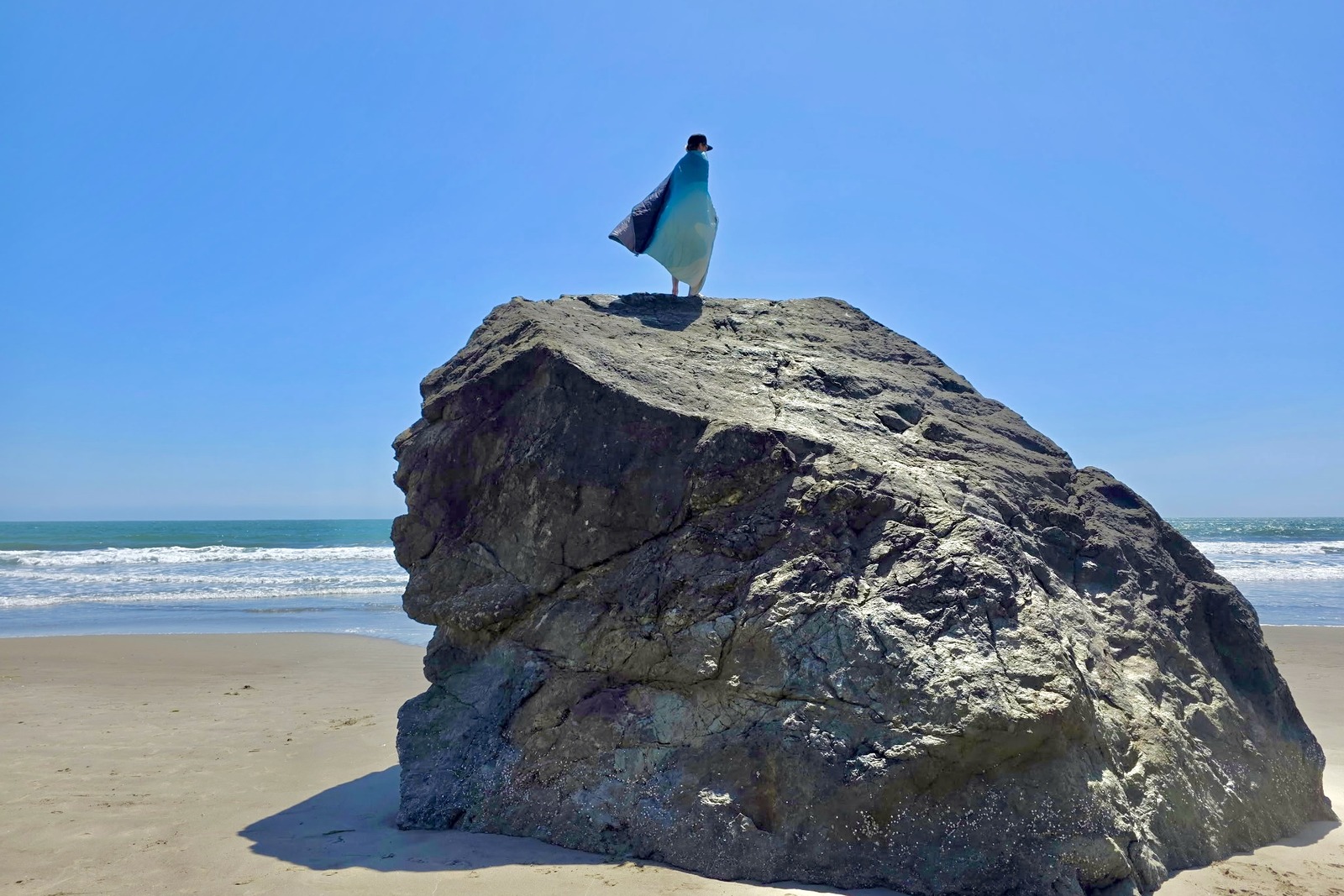
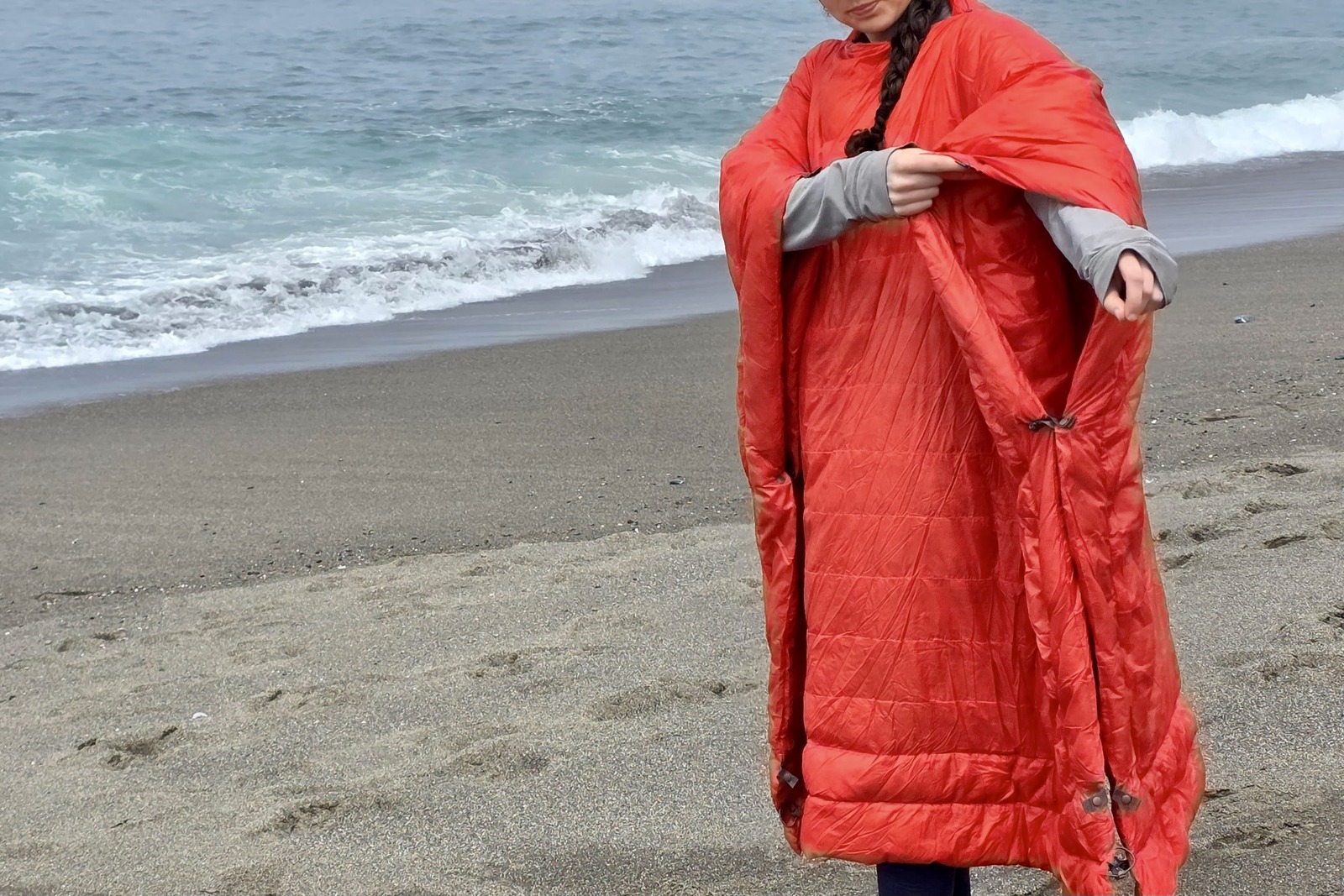
If you’d like the option to wear your blanket as a poncho, look for ones that offer a clip, snap, or button. Some are more functional than others, but any sort of closure should get the job done when you need to go hands-free.
How Light & Packable Does Your Camping Blanket Need to Be?
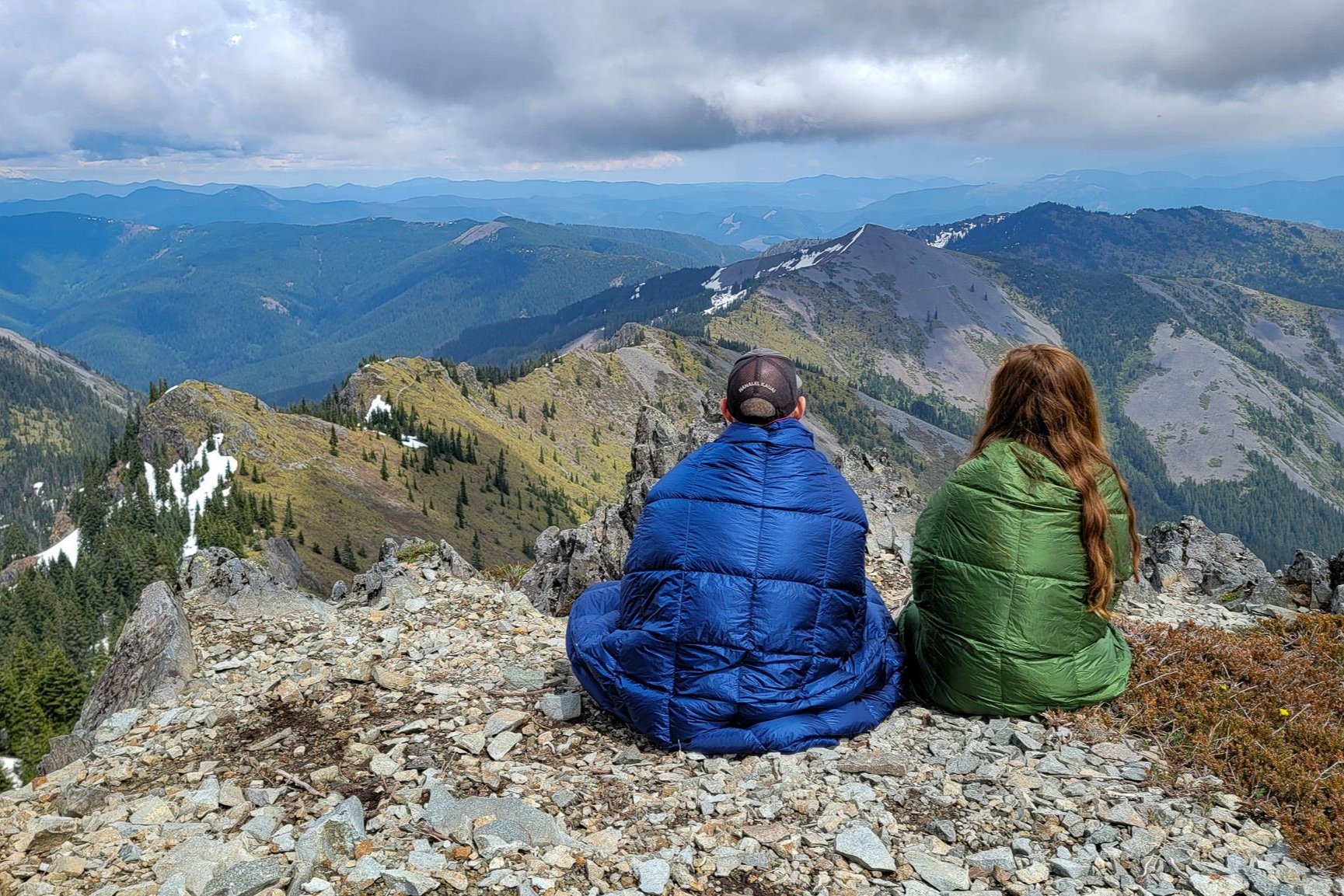
For overnights or multi-day trips when you’ll be carrying your gear on your back, a light and compressible insulated blanket is your best bet. True ounce-counters generally steer clear of creature comforts like blankets, but casual backpackers may be able to justify packing a blanket that weighs around a pound – especially on shorter or easier trips or if you’ll be spending a lot of time at camp.
Weight is generally a good indicator of packability, but you’ll also want to take warmth into account. Down is a better insulator than synthetic and packs down better, too, although it requires extra care to maintain its loft over time.
If beach days, picnics, and campfires are more your speed, you can get away with a heavier and bulkier blanket. Many of our favorites are in the 1.5- to 2-pound range. Stuff sacks or carry handles can be useful for the trek from your car, but weight and packability matter much less.
Finally, wool blankets tend to be the heaviest and bulkiest options (starting around 3 pounds) but offer unmatched style and cozy warmth for casual campground outings, cabin getaways, and van camping. They’re not great for hauling into the backcountry or any other sort of serious outdoor pursuit, but they’re excellent for casual at at-home use.
What Size Camping Blanket Should You Choose?
Though there aren’t standardized sizes for camping blankets, most fall into a relatively tight range. One-person blankets are generally around 72 to 80 inches long and 50 to 60 inches wide. Most one-person designs are large enough to wrap around your entire body but not big enough to spread across two people’s laps or cover both you and your dog.
Stepping up to a two-person blanket will get you an additional 20 to 30 inches of width (length often stays the same). If you are deciding between two sizes, we recommend choosing the larger option since most folks prefer additional coverage over weight savings when using a camping blanket. The good news is that many designs are offered in multiple sizes so you can choose what works best for you.
It almost goes without saying that more coverage often means more weight and bulk. Opting for a two-person blanket is fine if you stick to the frontcountry, but backcountry users will almost certainly want to opt for something smaller, lighter, and more compressible.
Why Trust CleverHiker
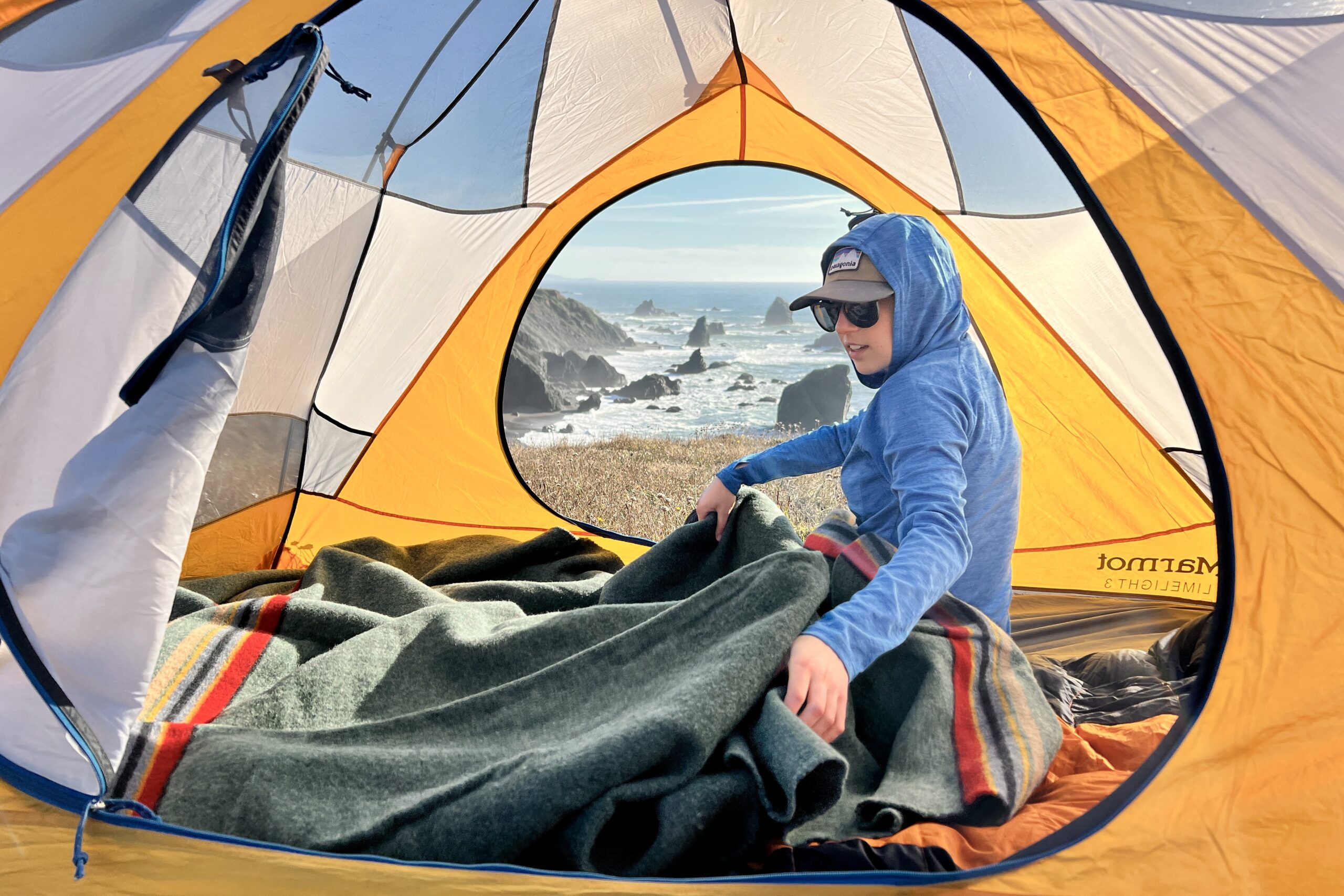
CleverHiker gear analyst Emily Parnay has a background working in the outdoor industry with a degree in Adventure Education from Fort Lewis College. As an avid outdoor enthusiast, she spends a lot of time using and abusing gear – whether she’s hiking through the mountains, floating down a river, or rock climbing.
Emily takes a data-focused approach to her testing. For blankets, she designed a controlled warmth test using an infrared thermometer to measure the before and after temperatures of a hot sock wrapped inside each blanket for 30 minutes. She took a similar approach to gauging durability, getting each blanket wet and dirty to see how well it repelled moisture and debris.
Testing Methodology
How Do We Evaluate Durability?
To determine the most durable and resilient blankets, we focused on debris-cling, water resistance, cleaning instructions, and general wear and tear after use.
We exposed each blanket to various environments – cold temperatures, wind, wet sand at the beach, etc. – to test weather resistance and note how easily moisture soaked through the fabric. To determine debris cling, we covered each blanket in a cup of debris (sand, dirt, etc.) to observe how easily it shook off. Throughout the testing, we monitored the fabric for any signs of fraying, holes, or wear and referred to each brand’s cleaning guide for any special care instructions.
How Do We Measure Warmth?
We tested each blanket for its ability to maintain body temperature in cold weather through subjective experience in the field as well as standardized heat-retention tests.
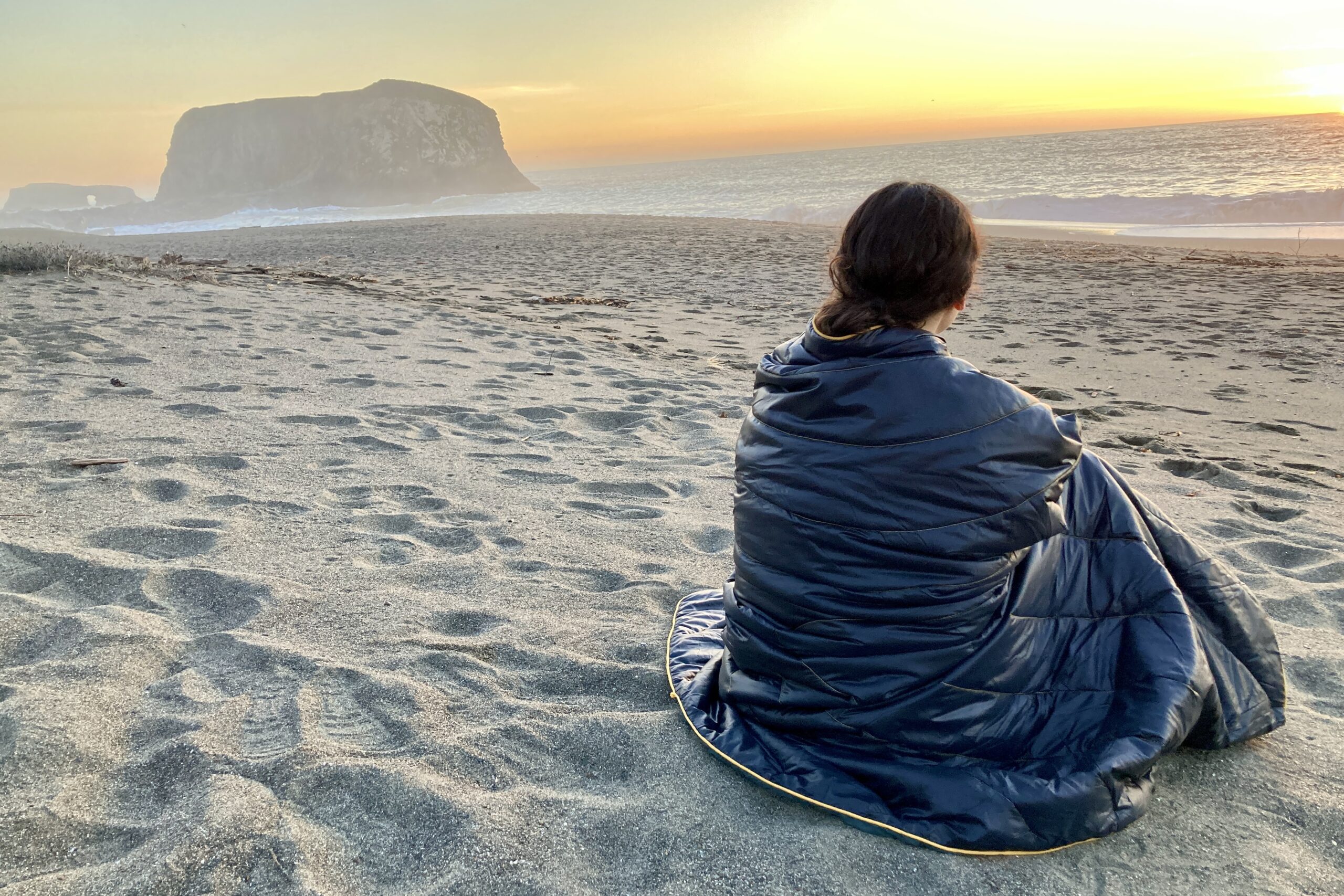
For each blanket, we completed a heat sock test, heating a sock filled with rice in the microwave for 1.5 minutes or until it read 136 degrees Fahrenheit on our infrared thermometer. We then placed the sock inside each blanket for 30 minutes in a 60-degree room. After 30 minutes, we retook the temperature of the sock with the infrared thermometer and noted the temperature drop.
How Do We Assess Packability?
We took each blanket outdoors to review its packability for adventures. We also utilized any included stuff sacks or carry bags, evaluating them for ease of use, durability, and all-around functionality. Finally, we compared each blanket’s dimensions to its packed size to determine if overall packability lined up with coverage.
How Do We Test Comfort?
To determine blanket comfort, we thoroughly tested the fabric for its softness on bare skin, thickness, and amount of coverage. Generally, the thicker and softer the blanket was, the more comfort it provided. If it offered more coverage, it also provided greater warmth to more of the body, making for a cozier experience.
We also tested each blanket on hikes or beach walks to determine how noisy the fabric was. It is common for materials with waterproof linings to sound crinkly when moving.
How Do We Evaluate Features?
We thoroughly tested and documented every feature on each blanket. We stuffed blankets down into their included stuff sacks or carry bags, noting how easy and efficient the process was. We packed items into pockets, secured any shawl/poncho clips, and utilized corner loops to anchor blankets down in inclement weather. If a blanket advertised serving multiple purposes (e.g., a throw or ground mat), we tested it in all possible configurations.
Conclusion
Camping blankets come in all shapes and sizes, from uninsulated ground mats to down-filled designs that pack down small for hauling into the backcountry. Most campers will gravitate toward an insulated blanket for cozy warmth, while uninsulated ground mats are appealing for beach days and outdoor concerts. Wool blankets have their place for van/RV adventures, cabin getaways, and use at home. We hope this guide has helped you dial in your preferences to choose the best option for your adventures.