

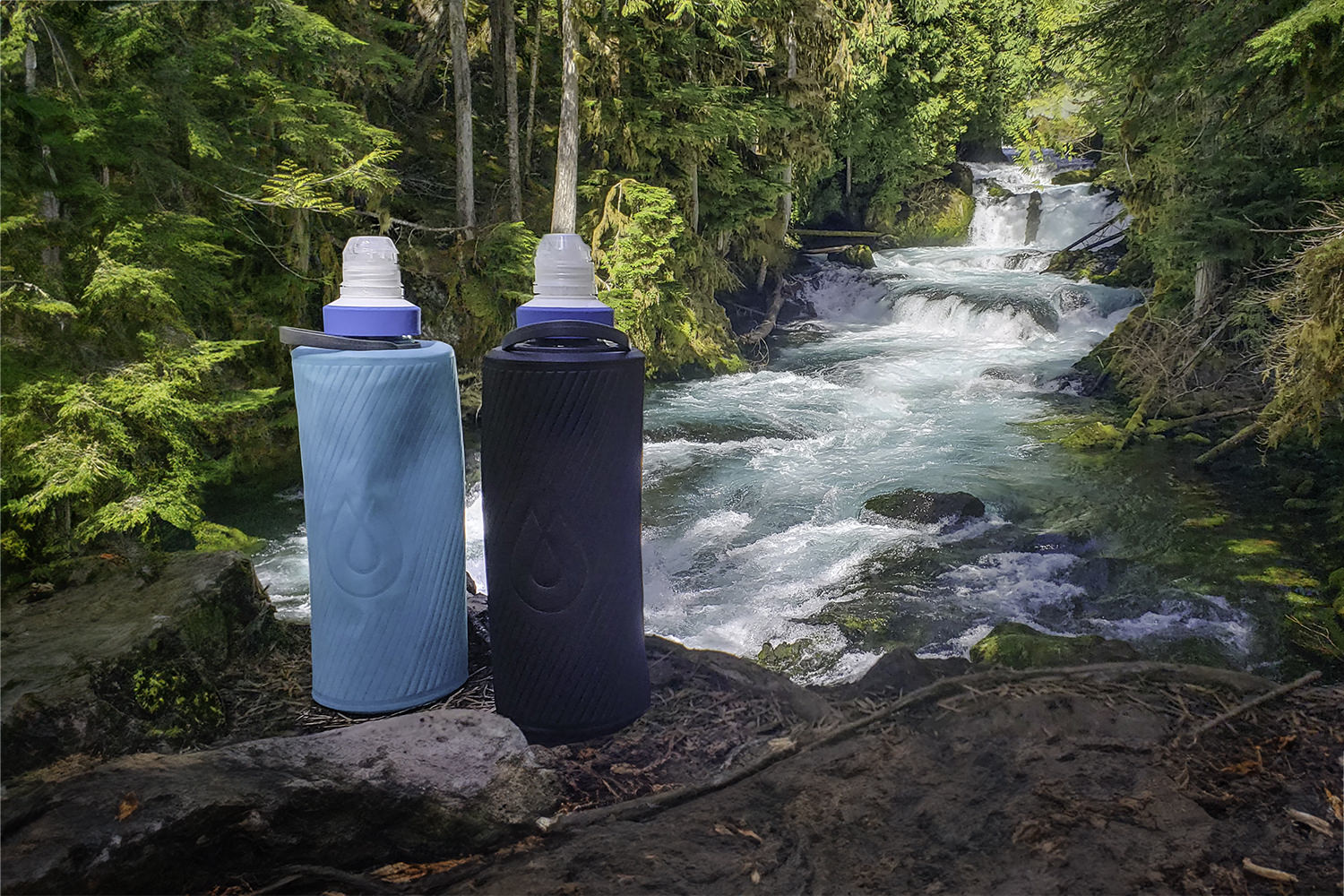
Over the past 13 years, our team has tested dozens of water bottles on and off the trail. We’ve used them for high-mileage days and relied on them for activities like climbing, fishing, and hanging out at basecamp.
Editor’s Note: We updated this guide on June 23, 2026, to add the Igneous NOBO and Cnoc Outdoors ThruBottle to our list.
How We Test Water Bottles
We took top performers from brands like Hydro Flask, YETI, Nalgene, Owala, and more to the desert of southern Utah and into the mountainous terrain of California’s Eastern Sierra. We carried them with us for miles on canyon hikes, steep approaches to climbing crags, and rest days in town to see which bottles held their own against the ever-variable desert and alpine climates.
And for more info, check out some of our other popular gear guides:
#1. Best Water Bottle Overall
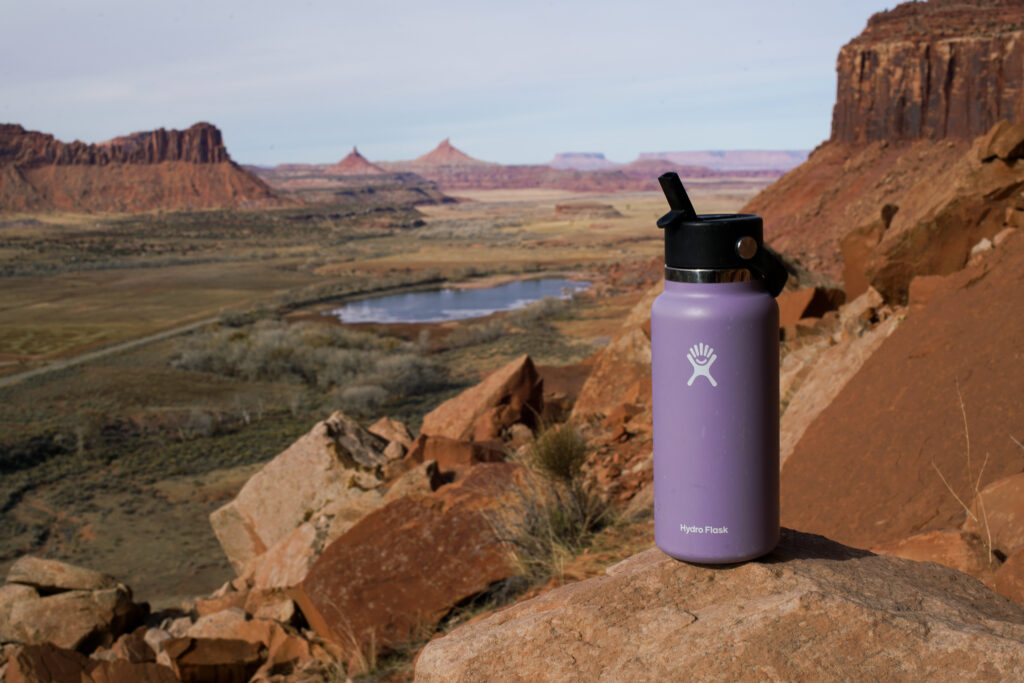
The Hydro Flask Wide Mouth is an enduring favorite thanks to its top-notch insulation that keeps drinks cold (or hot) for hours. Its stainless steel build provides excellent temperature control and gives the bottle a burliness that ensures you won’t need to buy another for years.
Quick Picks for Water Bottles
Check out this quick list of the best water bottles or continue scrolling to see our full list of favorites with in-depth reviews.
1. Best Water Bottle Overall: Hydro Flask Wide Mouth ($45)
2. Best Insulated Bottle for Everyday Use: Hydro Flask Standard Mouth ($40)
3. Best Ultralight & Packable Water Bottle: HydraPak Flux ($29)
4. Most Durable Budget Water Bottle: Nalgene Wide Mouth ($17)
5. Most Eco-Friendly Ultralight Water Bottle: Igneous NOBO Bottle ($22)
6. Most Durable Insulated Water Bottle: YETI Rambler ($50)
7. Most Packable Ultralight Hard-Sided Bottle: Cnoc Outdoors ThruBottle 1000 ($14)
8. Best Filter Water Bottle: Grayl GeoPress ($100)
9. Best Budget Insulated Water Bottle: Owala FreeSip ($35)
10. Best Budget-Friendly Filter Bottle: Lifestraw Go Series ($45)
11. Most Affordable Water Bottle: CamelBak Chute Mag Renew ($19)
12. Best Bottle for Ultralight Backpacking: Glaceau Smartwater ($3)
13. Most Packable High-Capacity Water Storage: Platypus Platy Bottle ($20)
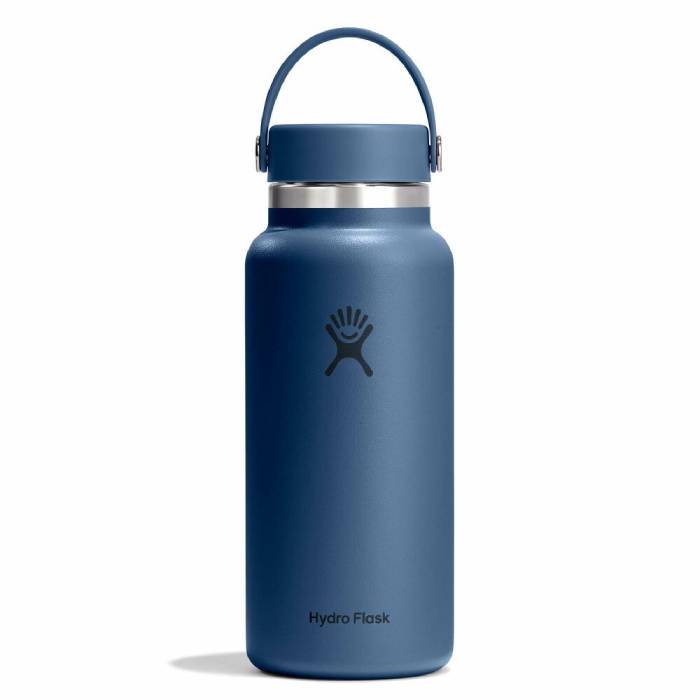
Hydro Flask Wide Mouth
Best Water Bottle Overall
CleverHiker Rating: 4.9/5.0
Price: $45
Weight: 15.5 oz.(32 oz. capacity)
Insulated: Yes
Pros
- Excellent insulation
- Lots of color choices
- Several accessory options
- Leakproof
- Easy to add ice or supplements
- Dishwasher-safe
Cons
- Expensive
- Heavy for backpacking
- Larger sizes don’t fit in a cup holder
With its superior insulation and attractive design, the Hydro Flask Wide Mouth shines with its combination of style and practicality. Though its weight makes it impractical for ultralight backpacking, the Hydro Flask is well suited for everyday use and more casual outdoor adventures.
Hydro Flask touts the insulating capability of their bottles with results to back up the hype. Featuring double-wall vacuum insulation, the Wide Mouth works with both cold and hot liquids (although you’ll want to avoid the latter if you use the straw lid).
We put the Hydro Flask to the test in the Utah desert, leaving the Wide Mouth in full sun for a full day at the climbing crag. Even after baking in the sun, the bottle’s insulation kept our water cold, and ice remained intact into the afternoon. It’s slightly less effective with hot beverages but still a quality insulator.
Hydro Flask embraces personalization, offering a wide range of color choices and lid options, including the Flex Straw Cap, Chug Cap, and Flex Cap – just to name a few. Spillage is often hard to avoid when drinking from wide-mouth bottles. Lids like the Flex Straw Cap, which features a foldable mouthpiece that locks in place, make drinking on the go easy and spill-free while also sealing tightly to prevent leakage.
The Hydro Flask’s exterior is eye-catching and solid – free from seams and flexing that could weaken the bottle over time. The higher cost might give some people pause, but there’s no question that this bottle is built to last. We put it through a series of durability tests, including hard falls onto rocky landings, and the Wide Mouth emerged with only a few dings and scuffs.
We’ve had our Hydro Flask for several years, and it’s still going strong. It’s a bottle that won’t need replacing anytime soon, making it a solid long-term investment for those who are serious about everyday hydration.
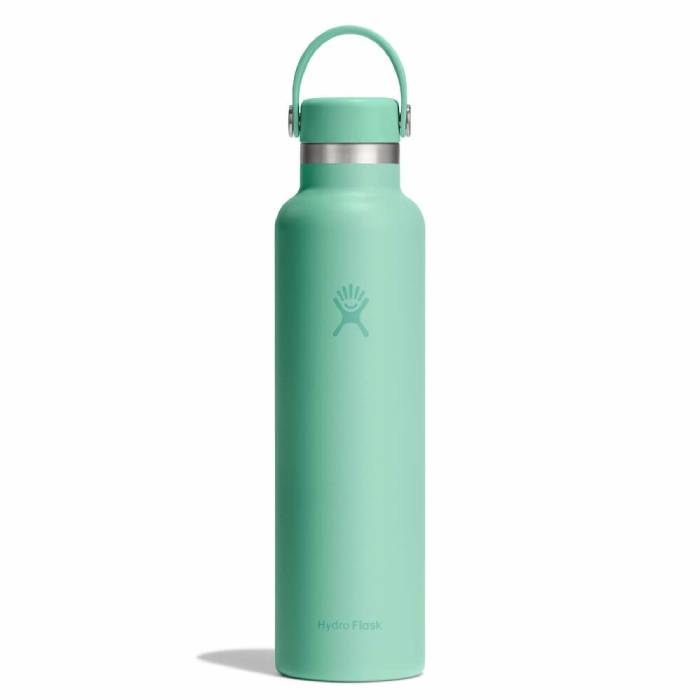
Hydro Flask Standard Mouth
Best Insulated Bottle for Everyday Use
CleverHiker Rating: 4.8/5.0
Price: $40
Weight: 13.3 oz.(24 oz. capacity)
Insulated: Yes
Pros
- Excellent insulation
- Lots of color choices
- Several accessory options
- Leakproof
- Fits in a cup holder
- Dishwasher-safe
Cons
- More difficult to add ice or supplements
- Harder to wash by hand
Sharing many qualities with its Wide Mouth cousin above, the Hydro Flask Standard Mouth repackages exceptional insulation and durability in a slimmer and lighter design. For day hikes and situations when refills are readily available, this bottle’s thinner profile allows it to slip into a car cup holder or a backpack pocket.
The narrower build is just as tough and free from structural deficiencies. We conducted extensive fall tests with the bottle, dropping it from standing height onto surfaces from dirt trails to jagged talus. The Standard Mouth sustained no damage apart from minor scrapes and a couple dents in the bottom from a protruding rock.
The Standard Mouth features Hydro Flask’s excellent double-wall vacuum insulation to hold cold and hot liquids. Replicating the testing we did with the Wide Mouth in the sunny Utah desert, the Standard Mouth kept our water cold all day in direct sun and our ice frozen into the afternoon. Hot liquids became lukewarm after a few hours, staying hot through the morning but cooling by early afternoon.
Though there aren’t as many lid options for the Standard Mouth, there is a Flex Straw Cap available, which eliminates leakage and makes drinking on the move quick and spill-free. The flexible, pivoting handle built into both the standard and straw lids provides a comfortable option for carrying the bottle by hand. And we can’t help but love the wide range of color choices.
The Wide Mouth ranks higher than the Standard Mouth because of its larger capacity and added convenience. The wider opening makes it easier to hand-wash and add ice or hydration mixes. Still, the Standard Mouth’s effective insulation, durable stainless steel build, and sleek profile earn it a spot high on our list.
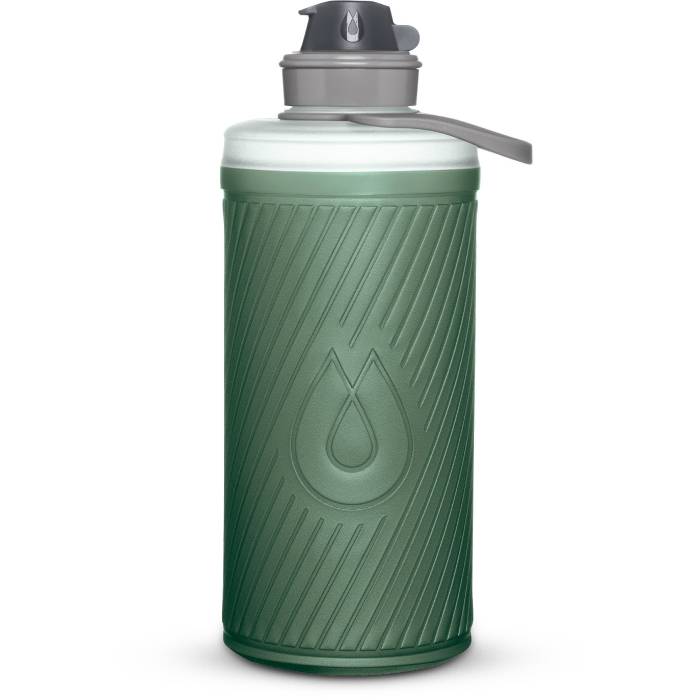
HydraPak Flux
Best Ultralight & Packable Water Bottle
CleverHiker Rating: 4.7/5.0
Price: $29
Weight: 3.6 oz.(1L / 32 oz. capacity)
Insulated: No
Pros
- Ultralight
- Compact
- Leakproof
- Compatible with 42mm water filters
- Dishwasher-safe
- Helpful measurement lines
Cons
- Holds onto flavors
- Plastic bottle is less environmentally friendly
Soft water bottles often take a back seat to their hard-sided counterparts, but the flexibility and packability of the ultralight HydraPak Flux make it a top contender for hikes and backpacking trips.
The Flux is made of a malleable plastic that readily bends, folds, and compresses into whatever shape you need. This makes it well suited for traveling or squeezing into the tight corners of a pack. A side seam running the length of the bottle has potential to deteriorate over time with repetitive folding. However, the material is robust, easily fending off tears and punctures.
The biggest downsides to the HydraPak Flux are the initial plasticky taste and the fact that flavors linger in the bottle. It’s possible to add ice and hydration mixes to the Flux, but it takes multiple cleanings to rid the bottle of residual flavors. On the bright side, the bottle is dishwasher-safe, which makes this task easier.
As a non-insulated bottle, the HydraPak offers limited temperature control. Unlike most plastic and soft bottles, however, it’s rated for both cold and hot liquids.
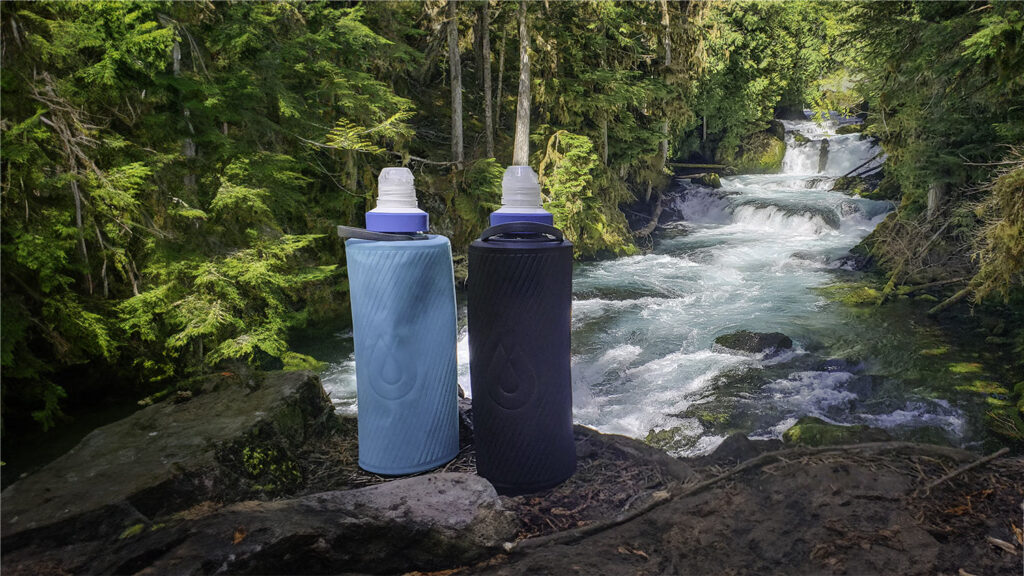
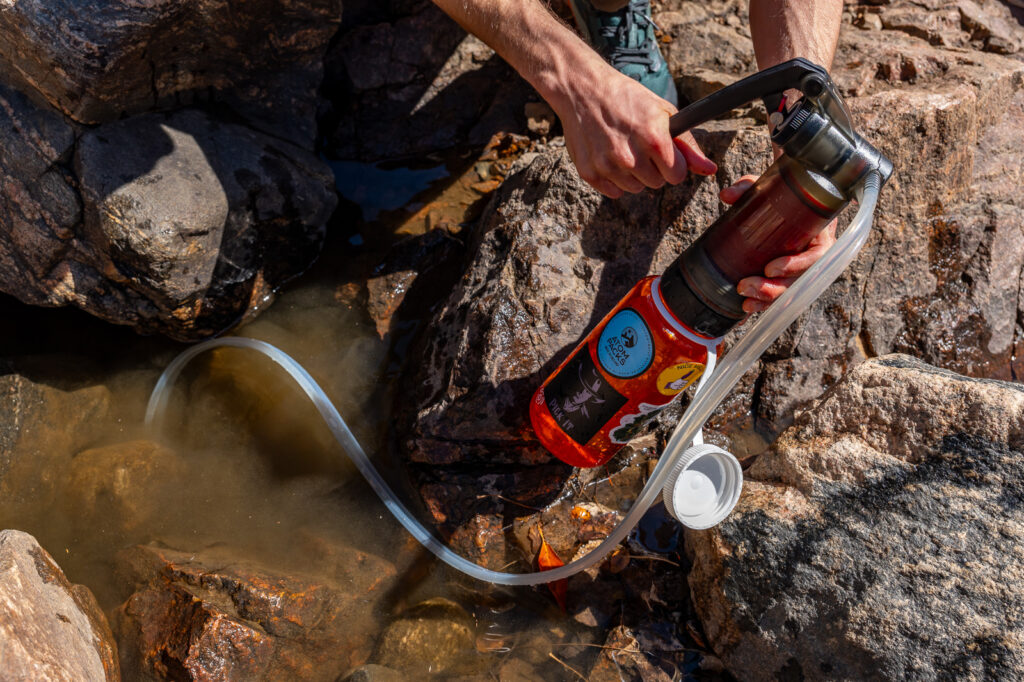
HydraPak also makes a compatible Filter Cap that removes bacteria, parasitic cysts, and microplastics. We’ve used the filter on backcountry camping and fishing trips, simply dipping the Flux into a nearby stream and taking a sip. It’s a no-brainer system that works well for quick fill-ups.
The HydraPak’s ability to fold away without sacrificing structural integrity sets it apart from other soft bottles, making it a great choice for backpacking. Stainless steel designs get the clear edge in longevity, but the HydraPak is very durable for a soft-sided bottle – and competitively lightweight to boot.
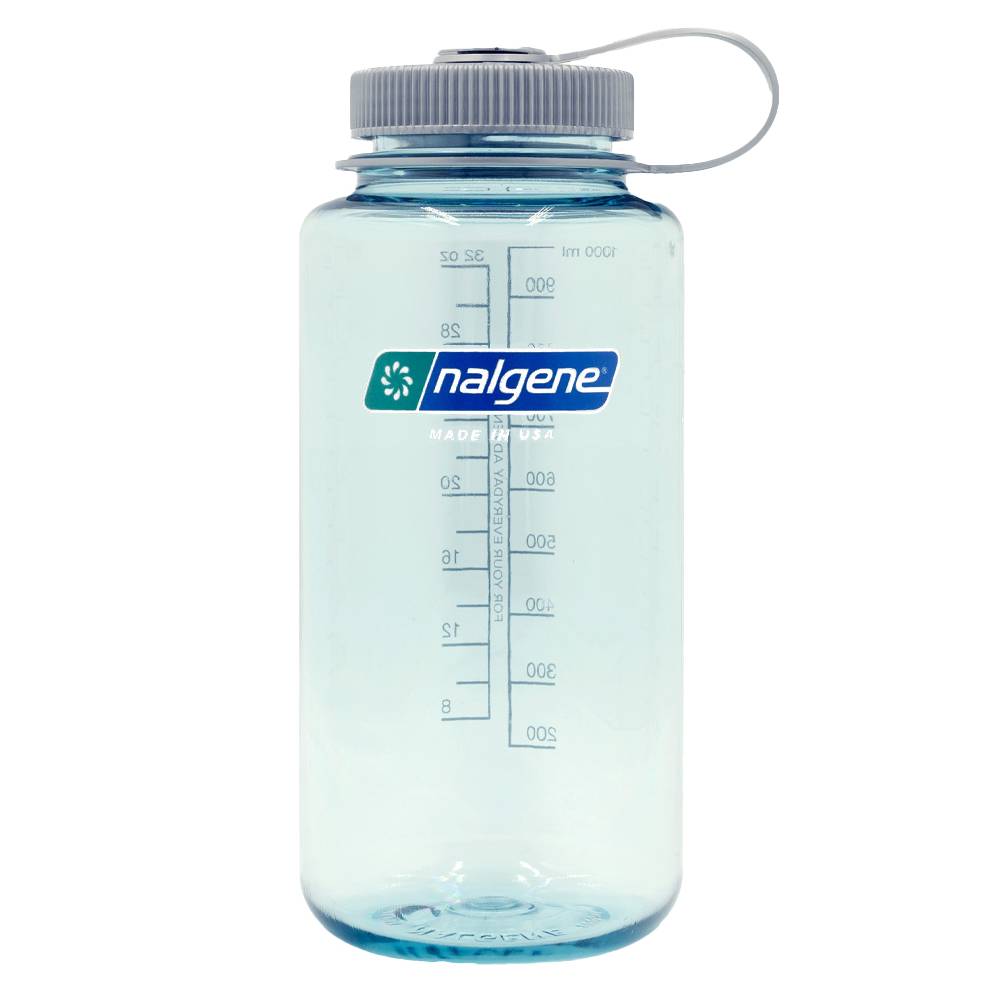
Nalgene Wide Mouth
Most Durable Budget Water Bottle
CleverHiker Rating: 4.6/5.0
Price: $17
Weight: 6.3 oz.(32 oz. capacity)
Insulated: No
Pros
- Durable
- Affordable
- Lots of color choices
- Leakproof
- Easy to add ice and supplements
- Dishwasher-safe
- Built-in measurement lines
Cons
- Doesn’t fit in a cup holder
- Heavier than many ultralight competitors
The Nalgene Wide Mouth lives up to its reputation as the classic outdoor water bottle. Its no-frills design is simple and straightforward, keeping weight and price to a minimum. Made of burly, BPA-free plastic, it withstands scrapes and falls, even from heights and hits onto rough surfaces.
Though too big to fit into a car cup holder, the Nalgene slides easily into backpack pockets. As one of the lightest bottles on our list, it’s comfortable to carry over long distances, making it a clear choice for backpacking trips and other high-mileage adventures.
They may not be insulated, but Nalgenes can hold cold and hot water. We love shoving a toasty Nalgene into our sleeping bag for extra warmth on cold nights in the backcountry. The wide opening makes it easy to clean the bottle or add ice or hydration mixes, although it’s easy to spill while drinking on the go. Nalgene does sell a Narrow Mouth version, as well as a 3.8-ounce Ultralite variation.
Overall, with its long-lasting design, ability to withstand tough conditions, and cheap price tag, there’s no question why the Nalgene Wide Mouth remains a popular sight on the trail.

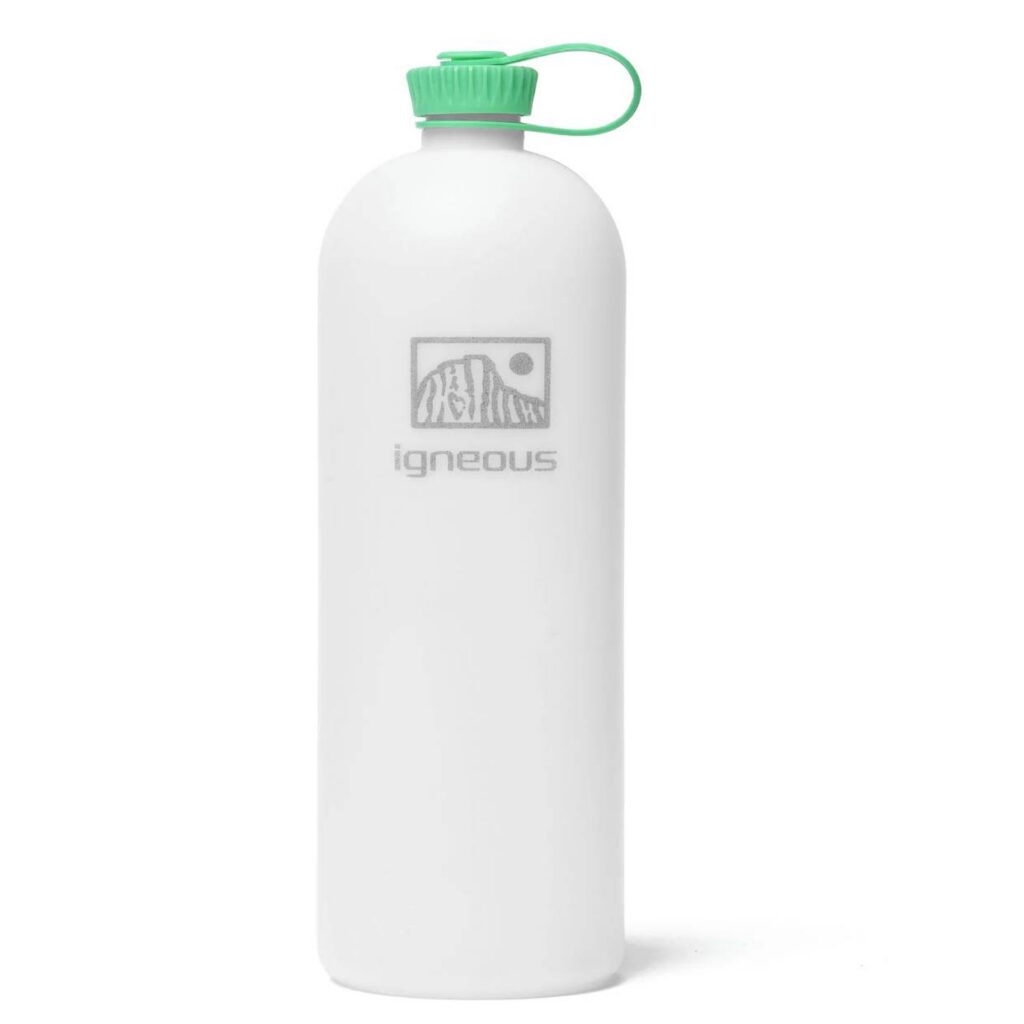
Igneous NOBO Bottle
Most Eco-Friendly Ultralight Bottle
CleverHiker Rating: 4.5/5.0
Price: $22
Weight: 2.3 oz.(1L / 33.8 oz. capacity)
Insulated: No
Pros
- Super lightweight
- Durable
- Eco-friendly alternative to disposable Smartwater bottles
- Compatible with many filters
Cons
- Not insulated
- More challenging to clean
- Harder to add hydration tablets or ice
For ultralight enthusiasts who want an eco-friendly alternative to single-use Smartwater bottles, the Igneous NOBO is one of the lightest options on the market.
Designed with thru-hikers in mind, the bottle’s cylindrical shape mimics Smartwater with a slim profile that’s easy to slide into a pack pocket, crevice, or cup holder. Its plastic build is flexible, which helps with packability while also allowing for controlled, consistent sipping – with or without a filter.
The NOBO Bottle checks in at 2.3 ounces, which is impressively light for a hard-sided water bottle. We carried it in our pack for miles and even clipped it on our harness while rock climbing and hardly noticed its weight.
Though heavier than a Smartwater bottle, the NOBO is reusable and made with burly HDPE (high-density polyethylene) that’s designed to resist microplastic shedding and prevent bacteria growth. It’s also tough enough to withstand rough outdoor use. We dropped the NOBO while scrambling through a granite talus field, and it suffered no damage other than some minor surface scratches.
The NOBO has a fairly basic design, although you do get helpful measurement markings printed on the side – great for tracking water intake and cooking in the backcountry. Its 28-millimeter threaded mouth is compatible with many popular filtration systems, including the Sawyer Squeeze and Platypus QuickDraw.
The NOBO is not insulated, prioritizing weight over cold retention. However, for those pulling high-mileage days, its low-profile design is both practical and durable, proving that ultralight doesn’t have to be single-use.
More: Igneous NOBO Full Review
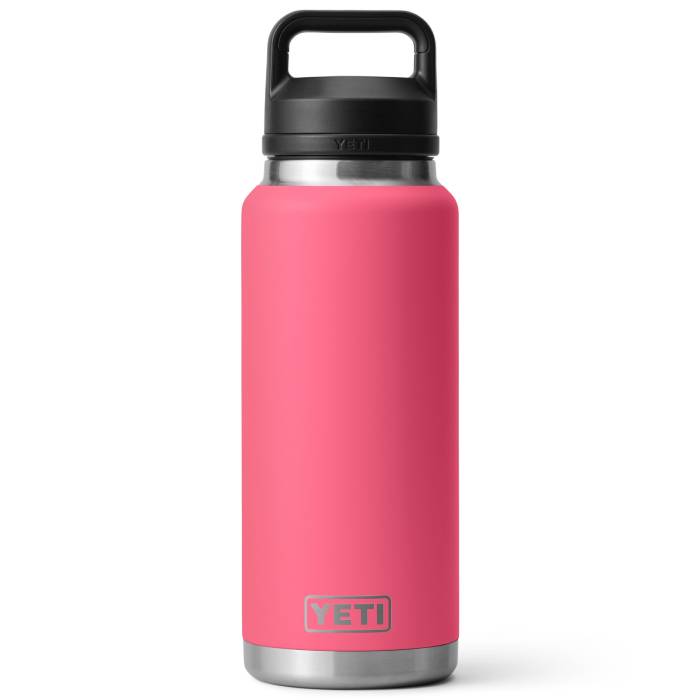
YETI Rambler
Most Durable Insulated Water Bottle
CleverHiker Rating: 4.5/5.0
Price: $50
Weight: 1 lb. 8 oz.(36 oz. capacity)
Insulated: Yes
Pros
- Excellent insulation
- Lots of color choices
- Durable
- Leakproof
- Easy to add ice or supplements
- Dishwasher-safe
Cons
- Expensive
- Heavy for backpacking
- Doesn’t fit in a cup holder
YETI has built a brand around high-performance insulation, and the Rambler bottle lives up to this reputation with its superior cold retention and rugged durability. Built with kitchen-grade stainless steel that’s designed to resist punctures, the Rambler is one of the burliest bottles we tested. Our bottle endured several drops and falls with almost no impact – the only sign of damage being minor scuffs to the exterior paint.
Featuring double-wall vacuum insulation, the YETI works for both cold and hot liquids. It held our beverages at their intended temperatures and kept ice frozen all day, edging out comparable models. The Rambler is one of the most reliable options if temperature control is an important factor – think keeping beverages or soup hot in the winter.
YETI takes lid choice to the next level, offering several unique caps for the Rambler. These include the MagDock Cap with a magnetic cover, the Chug Cap for easy gulping, the Straw Cap with a deployable straw, and the Commuter Cap that pairs well with hot liquids.
We particularly liked the Chug Cap: Its spout is wide enough for gulping but small enough for spill-free drinking on the move. A removable cover protects the Chug Cap mouthpiece, sealing firmly to eliminate leaks. It features a built-in handle that’s easy to grab.
The Rambler’s biggest downside is bulk. The heaviest bottle we tested by several ounces, the Rambler’s heft makes it less practical for long-distance carrying and backpacking trips.
Even so, the Rambler is a great outdoor water bottle. Its insulating prowess exceeded expectations, and we were impressed by the bottle’s ability to withstand rough use. Whether you’re using it at basecamp or stashing it in your crag pack for all-day climbing adventures, the Rambler is up to the task.
More: YETI Rambler Full Review
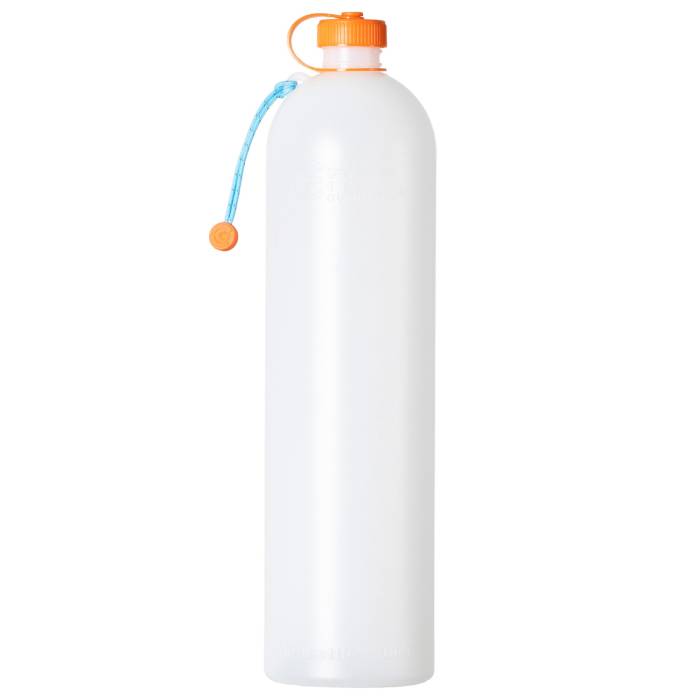
Cnoc Outdoors ThruBottle 1000
Most Packable Ultralight Hard-Sided Bottle
CleverHiker Rating: 4.4/5.0
Price: $14
Weight: 2.2 oz.(1L / 33.8 oz. capacity)
Insulated: No
Pros
- Affordable
- Eco-friendly alternative to Smartwater bottles
- Compatible with 28mm filters
- Super lightweight
Cons
- Mouth is a bit sharp
- Not insulated
- Difficult to add ice or hydration tablets
Now in its second iteration, the Cnoc Outdoors ThruBottle is one of the most ergonomic ultralight bottles available. The lightweight design – paired with an extremely approachable price tag – make the ThruBottle a viable long-term replacement for single-use water bottles used by thru-hikers.
Weighing just over 2 ounces, the Cnoc is the lightest reusable water bottle we tested. Even on high-mileage days, we were unencumbered by its weight in our pack. Compared to the classic Smartwater bottle, the ThruBottle only adds an ounce, which is pretty remarkable given its lasting design. The tough, BPA-free plastic is made to handle all the scuffs, scrapes, and dings that come with regular outdoor use.
The ThruBottle has a taller and narrower build than most bottles, which makes it easy to stash in a pocket or car cup holder. In fact, we could fit two ThruBottles in the side pocket of our pack. With the most recent update, the ThruBottle is more flexible and squeezable, which makes it easier to stash in small crevices or use with a filter (the threaded neck is 28mm).
Some hikers may find the bottle’s height inconvenient for stashing in shoulder strap pouches. Plus, the narrow mouth makes it difficult to add ice or electrolyte tablets. Despite these small shortcomings, the ThruBottle’s barely there weight and budget-friendly price give single-use Smartwater bottles a run for their money.
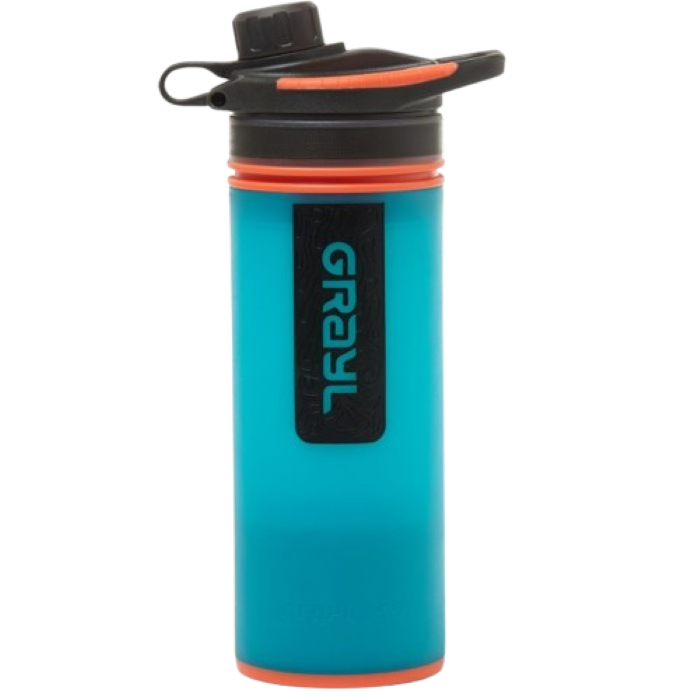
Grayl GeoPress
Best Filter Water Bottle
CleverHiker Rating: 4.3/5.0
Price: $100
Weight: 15.9 oz.(24 oz. capacity)
Insulated: No
Pros
- Reliable filtration and purification
- Durable
- Leakproof
- Replaceable filter
Cons
- Expensive
- Heavy for backpacking
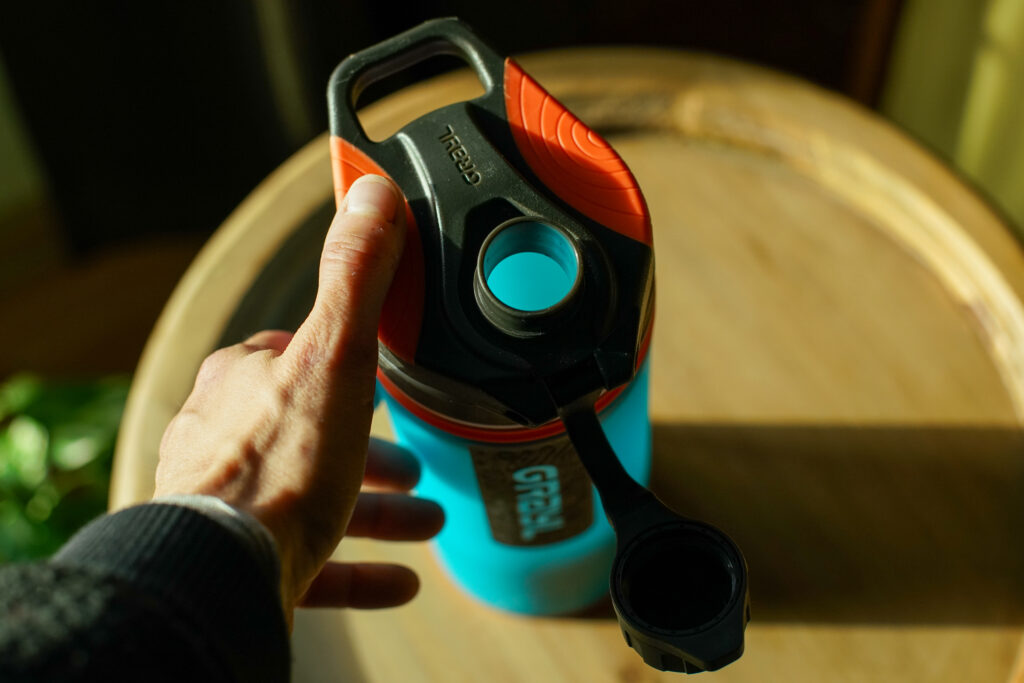
When it comes to filtering water in the backcountry, the comprehensive filtration capability of the Grayl GeoPress eliminates any worry or risk.
In other filter-equipped and filter-compatible bottles, water passes through the filter as you sip, meaning the water remains unfiltered until you drink it. With the Grayl, you press water from the outer cup through the purifier cartridge into the inner cup, resulting in a bottle of fully filtered water.
The GeoPress’ cartridge filters out protozoa, bacteria, viruses, chemicals, pesticides, and heavy metals while also improving water’s taste, smell, and clarity – abilities unmatched by other bottles we tested. It also has a one-way valve, which prevents liquid from flowing back into the cartridge. This makes it possible to add hydration mixes, which is not true of most filter bottles.
The Grayl requires some force to press water through the cartridge, but the process is relatively quick and simple. The narrow mouth makes drinking while moving easy and spill-free. Plus, there’s a protective covering over the mouthpiece that attaches to the lid, keeping liquid in and debris out. The lid is easy to remove for hand-washing or adding hydration mixes or ice (the bottle is not dishwasher-safe, however).
Featuring a slim, cylindrical shape with a convenient carrying handle, the GeoPress fits easily in pack pockets and cup holders. It’s not particularly lightweight or cheap, though – especially when you consider the long-term cost of replacement cartridges. But for worry-free backcountry hydration, the GeoPress is an indispensable tool.
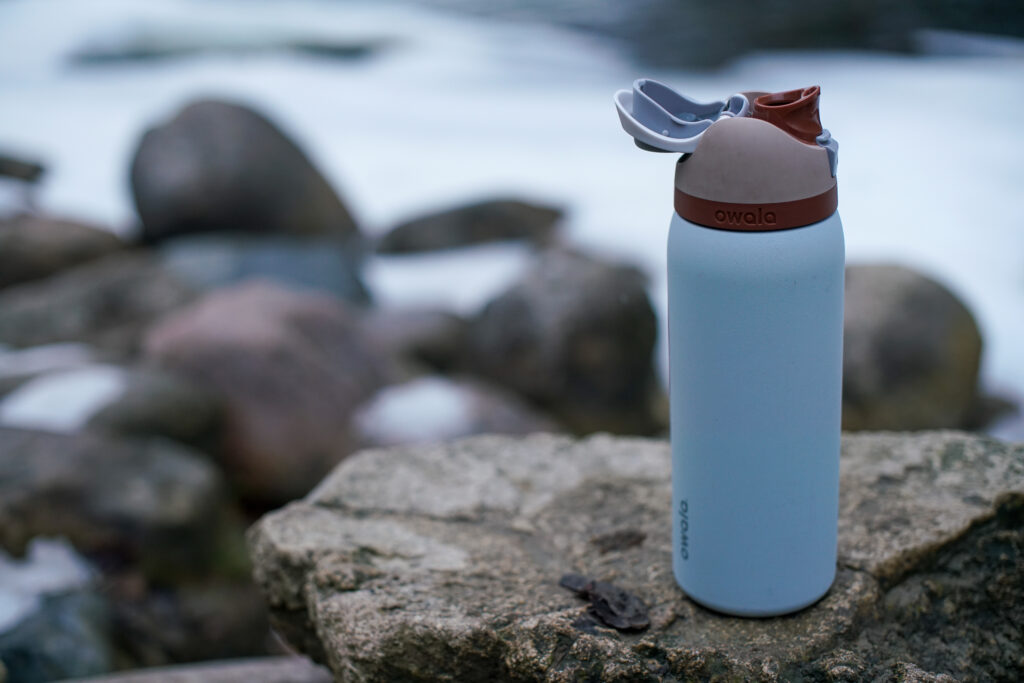
Owala FreeSip
Best Budget Insulated Water Bottle
CleverHiker Rating: 4.2/5.0
Price: $35
Weight: 15.2 oz.(32 oz. capacity)
Insulated: Yes
Pros
- Lots of color choices
- Leakproof
- Easy to add ice and supplements
- FreeSip spout accommodates different drinking methods
Cons
- Can’t be used with hot liquids
- Not dishwasher-safe
- Doesn’t fit in a cup holder
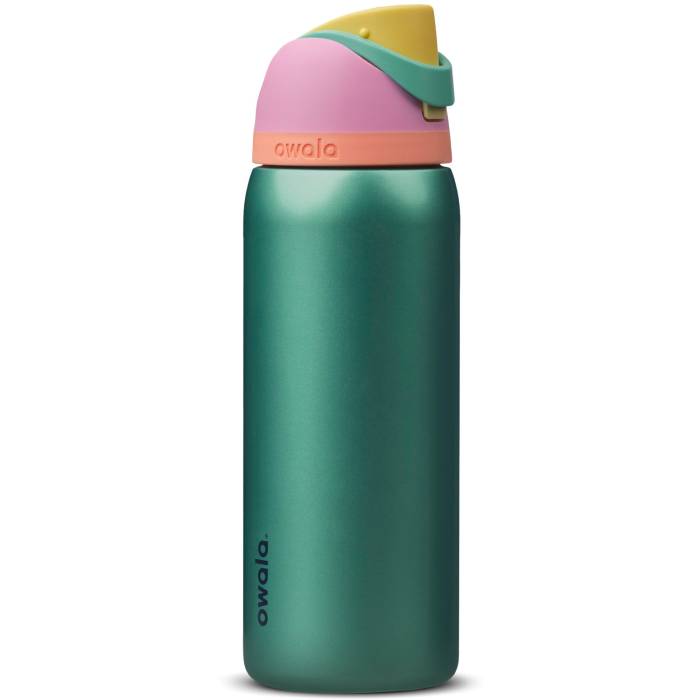
The higher price tag of insulated water bottles can be a deterrent, but the Owala FreeSip is proof you don’t need to spend a fortune to get a quality design.
With its triple-layer vacuum insulation, the Owala kept our water cold throughout the day, and ice remained intact for several hours. However, it should not be used with hot or carbonated beverages, making it less versatile than the Hydro Flasks above and many other insulated designs.
The most unique component is the namesake FreeSip lid, which features a two-part spout. The front of the spout has a smaller opening with a built-in straw for controlled sipping, while the rear is open and wider for fast chugging. This multi-purpose design eliminates the need for multiple lids.
A push-button lid flips open for spout access. When closed, it keeps the mouthpiece protected and the bottle tightly sealed. There’s a locking mechanism for keeping the lid in place, but we found it more useful as a carrying handle since the lid is secure without it.
Though not as rugged as other stainless steel bottles, the FreeSip’s solid metal design suffered only minor dents and scratches after enduring several falls. The frame is sleek, enabling it to fit in backpack pockets or a purse for everyday use. It comes in several great-looking colorways and three capacity options: 24, 32, or 40 ounces.
The eye-catching aesthetics, innovative spout design, and reasonable price point make the FreeSip a very attractive option for daily hydration.
LifeStraw Go Series
Best Budget-Friendly Filter Water Bottle
CleverHiker Rating: 4.1/5.0
Price: $45
Weight: 8.7 oz.(22 oz. capacity)
Insulated: No
Pros
- Replaceable filter
- Durable
- Dishwasher-safe
Cons
- Can’t use hydration mixes
- Some pull is required to suck water through the filter
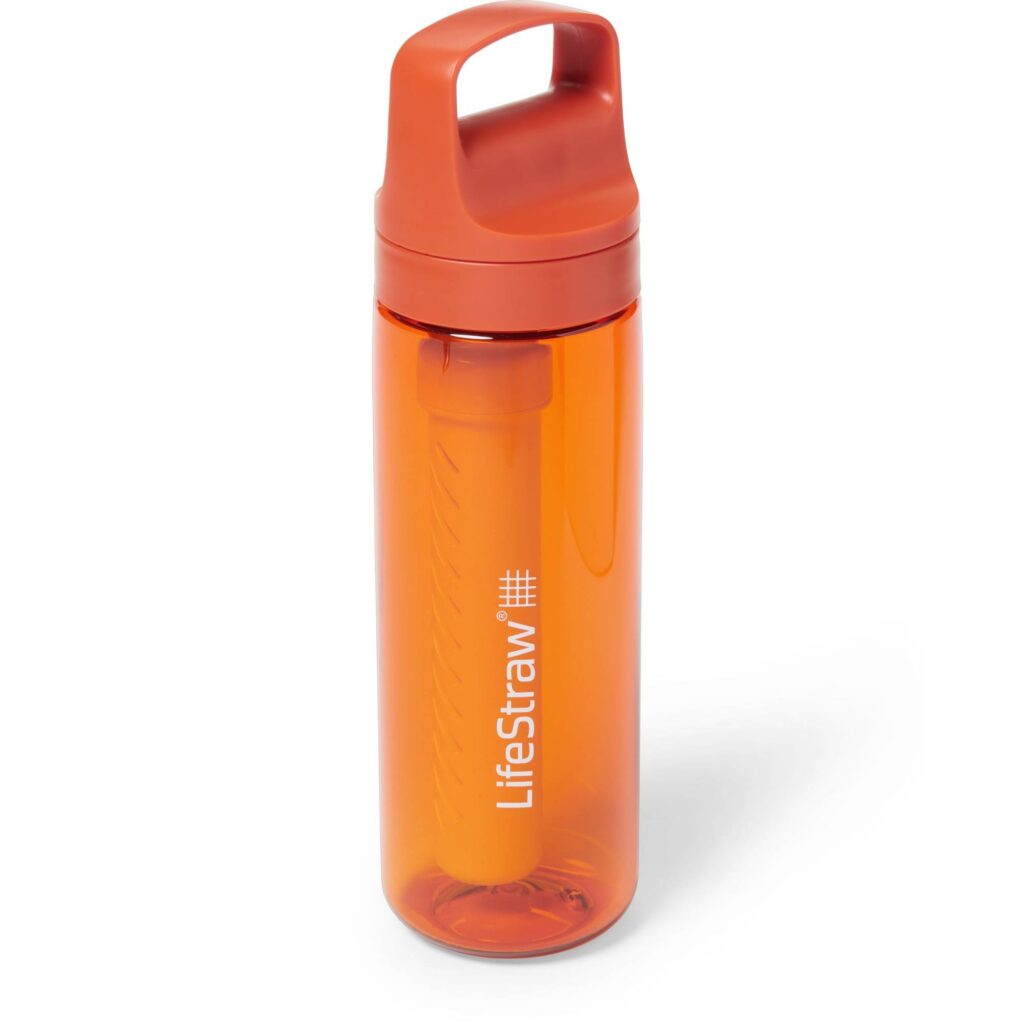
Water quality is important wherever we play, and the LifeStraw Go Series bottle has a built-in filter that ensures our water is safe and clean at a reasonable cost.
The bottle features a two-stage filtration system: a Membrane Microfilter that removes bacteria, parasites, microplastics, sand, and dirt, plus a Carbon Filter that reduces chlorine, odors, and organic chemical matter. Both are replaceable, although it’s tough to track their lifespans. The filter prevents the use of hydration mixes but improves the taste of water, making it a good option for funky tap water and camping trips.
Built with BPA-free plastic, the bottle is sturdy and long-lasting. In testing its capacity to withstand falls, neither the bottle nor the filter sustained any real damage, even when dropped onto harder surfaces. The body and the handle suffered a few scratches, but the wounds were purely cosmetic.
There are a few quirks to be aware of with the LifeStraw Go. First, water passes through the filter before it reaches the narrow rubber mouthpiece. This makes drinking slightly slower than the average bottle – some pull is required to suck water up through the filter.
We also experienced some issues with pressurization when the bottle was fully filled. Upon removing the lid, water tended to spurt up through the mouthpiece and spill out. Simply bringing the water level down solved this problem, but it happened frequently enough to make our notes.
For those looking to reduce their plastic usage, LifeStraw also offers an insulated Stainless Steel variation that’s heavier and pricier but very high-quality. We prefer the lower weight of the plastic version for outdoor use, but both are great with reliable filtration and hardwearing builds.
CamelBak Chute Mag Renew
Most Affordable Water Bottle
CleverHiker Rating: 4.0/5.0
Price: $19
Weight: 6.8 oz.(32 oz. capacity)
Insulated: No
Pros
- Cheap
- Leakproof
- Easy to add ice and supplements
- Dishwasher-safe
Cons
- Clunky lid design
- Doesn’t fit in a cup holder (the smaller sizes do)
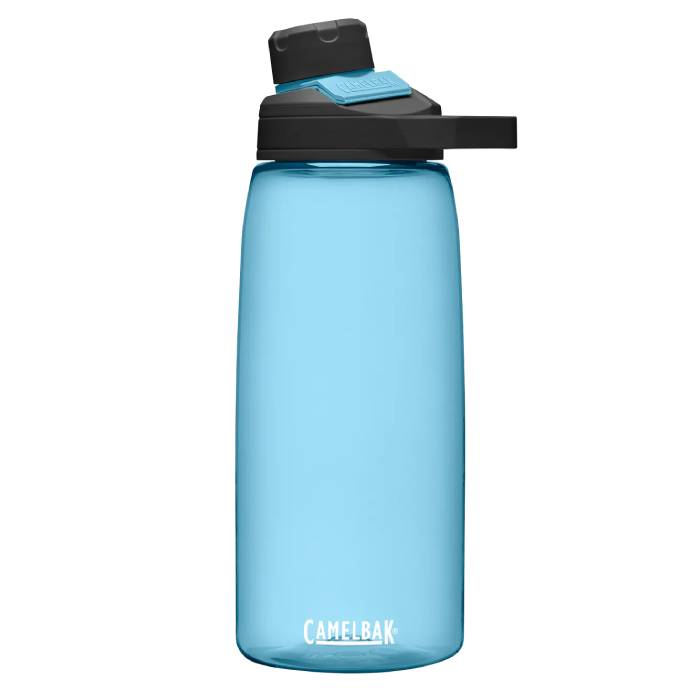
Staying hydrated shouldn’t break the bank, and the CamelBak Chute Mag Renew follows that guideline. One of the cheapest bottles we tested, the Chute Mag makes hydration straightforward and affordable.
The Chute Mag is defined by its lid, which features a spout covered by an attached lid that’s held in place by an internal magnet. The spout cover stays out of the way while drinking, although it’s awkward to unscrew and tighten. When sealed, both the lid and spout cover fit snugly with no leakage. The spout itself is contoured for precise funneling – a subtle but practical feature.
The 32-ounce version we tested is too wide to fit into a cup holder, but we like the built-in handle. It’s comfortable to grab and makes it easier to get the bottle out of a backpack pocket. The rest of the bottle is equally well built with a solid, seam-free construction that suffered just a few scratches after several hard impacts.
There aren’t a ton of customization options for the Chute Mag, but it’s sold in a decent range of colors and sizes. If no-frills, wallet-friendly hydration is what you’re after, it’s a great option for daily use and hikes.
Glaceau Smartwater
Best Bottle for Ultralight Backpacking
CleverHiker Rating: 3.9/5.0
Price: $3
Weight: 1.2 oz.(700 mL / 1 L capacity)
Insulated: No
Pros
- Ultralight
- Widely available
- Cheap (if you can make one last a while)
- Compatible with 28mm filters
Cons
- Difficult to wash
- No real features
- Reusable bottles last longer – and some mimic the Smartwater shape
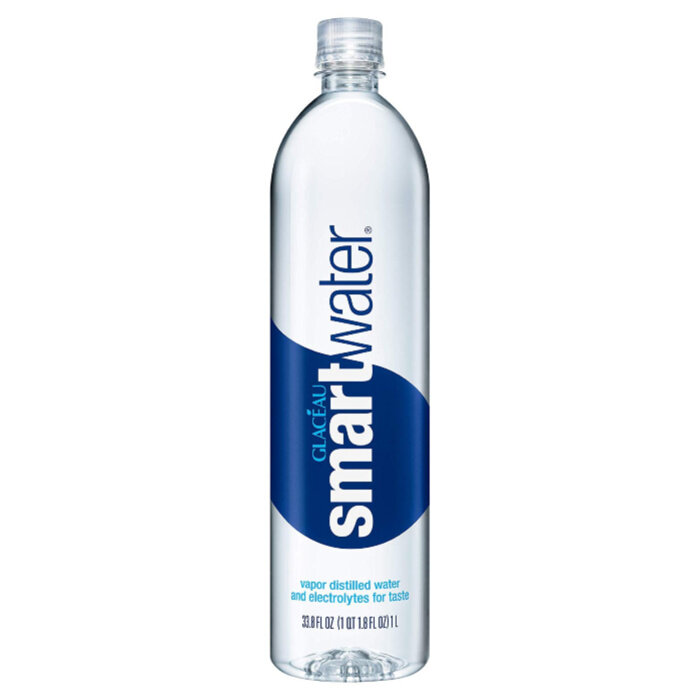
If you cross paths with any thru-hiker, there’s a good chance you’ll see them carrying a bottle of Glaceau Smartwater – the bottled water that has become synonymous with ultralight backpacking. Available at almost every grocery store and gas station, Smartwater is accessible whether you’re in a pinch or hitting the trail for several months.
Smartwater bottles are intended for single use, but they are made with sturdier plastic than most disposable water bottles. This makes it possible to reuse them multiple times. Though they lack the burliness of hard plastic bottles, Smartwater bottles hold their own against drops, sustaining very little damage.
The bottle’s narrow mouth allows for quick and easy sipping, although the smaller opening makes it difficult to wash by hand. The slim design fits seamlessly into backpack pockets and car cup holders. The softer plastic build offers some flexibility for squeezing the bottle into tighter corners and crevices.
As one of our most barebones recommendations, these bottles do not offer many features or options for customization. Glaceau does sell the bottle in three sizes (500 mL, 700 mL, and 1.5 L) – all of which are compatible with 28-millimeter filters like the popular Sawyer Squeeze. This is why many thru-hikers love them.
For the average user, Smartwater bottles have limited appeal. However, for situations when every ounce counts, the unmatched ubiquity and low weight make them an obvious choice.
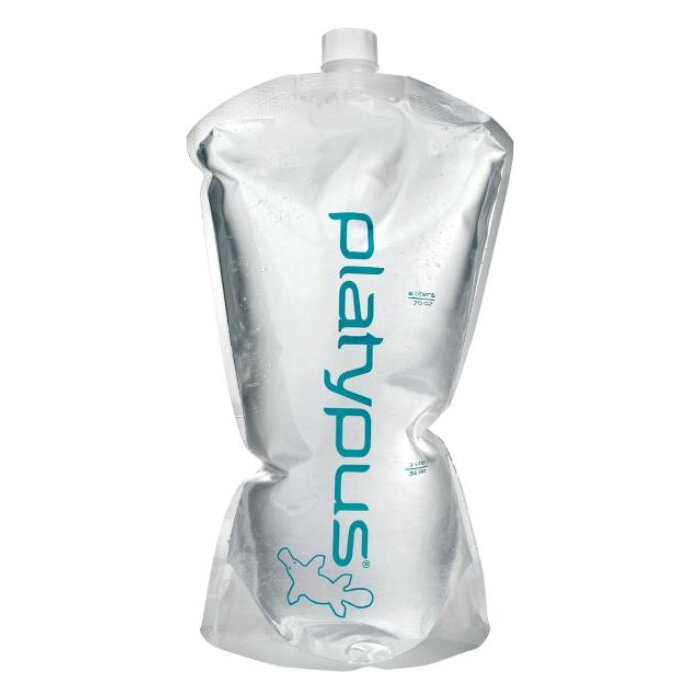
Platypus Platy Bottle
Most Packable High-Capacity Water Storage
CleverHiker Rating: 3.7/5.0
Price: $20
Weight: 1.3 oz.(70 oz. capacity)
Insulated: No
Pros
- Ultralight
- Packable
- Compatible with 28mm filters
- Dishwasher-safe
Cons
- Hard to wash by hand
- Awkward to drink from
- Design isn’t as durable
When quantity matters, the Platypus Platy Bottle makes it easy to replenish large amounts of water without adding much weight or bulk to your pack. Tipping the scales at just 1.3 ounces, the Platypus is barely noticeable while offering a generous 70 fluid ounces (2 liters) of capacity.
Similar to a big plastic bag with a resealable mouthpiece, the Platypus Platy Bottle is nothing fancy. It’s made from a tough yet flexible plastic that can withstand scrapes, falls, and being shoved into a fully loaded pack. There’s a seam running around the bottle, which can deteriorate over time. The good news is that the bottle should last a very long time before this becomes an issue (it hasn’t for us yet).
The flexibility of the bottle is one of its most appealing features. When empty, the Platy rolls or folds up, making it easy to stash in a backpack pocket or pouch. Fully filled, the Platypus is pliable enough to squeeze into spaces many hard-sided bottles cannot – particularly helpful for activities like backpacking or travel.
With a 2-liter capacity, the Platypus Platy Bottle is an efficient option for water storage when refills are few and far between. It’s also compatible with Platypus’ GravityWorks Filter, making it a great setup for backcountry groups.
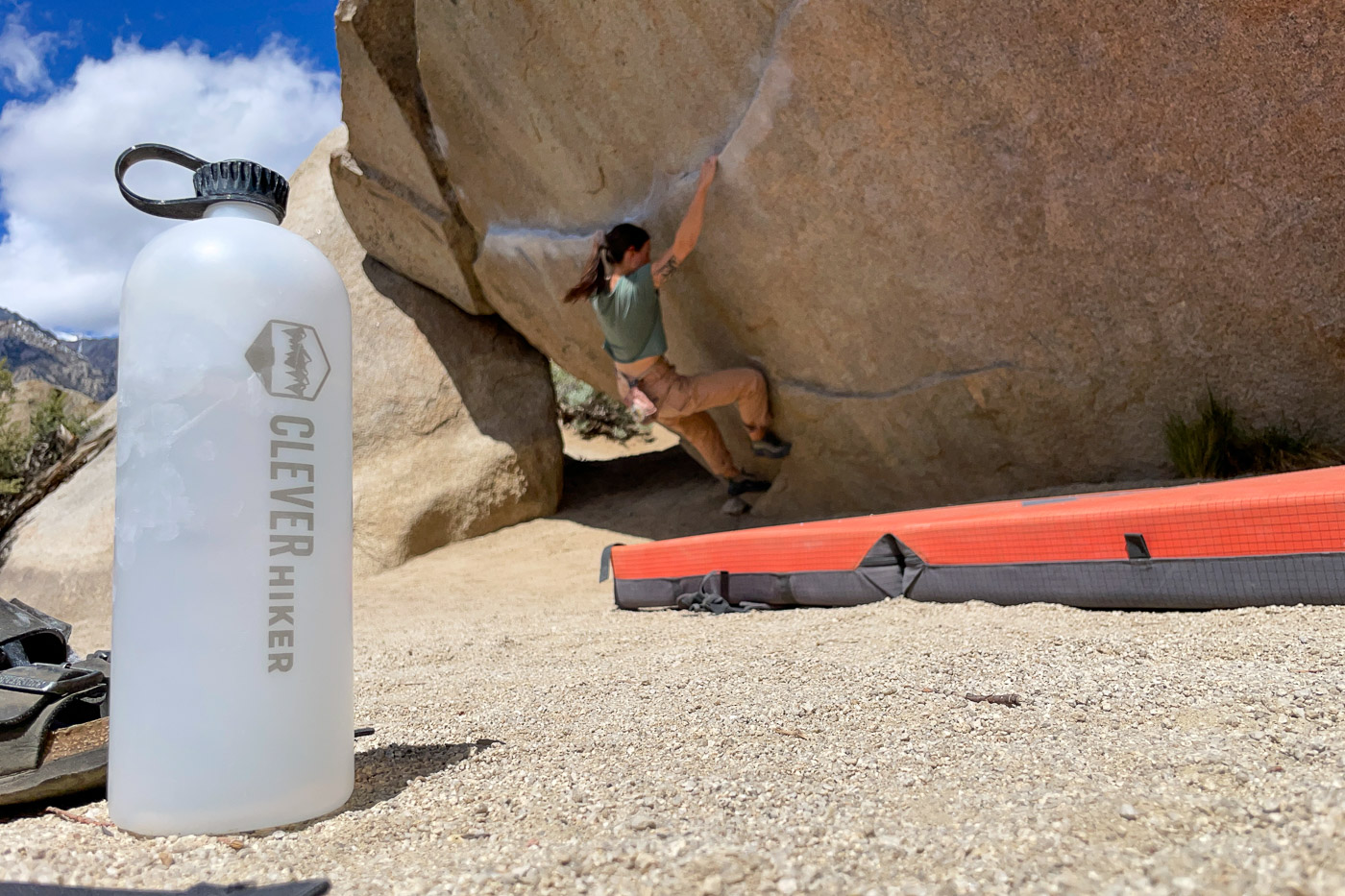
Product Comparison Table
| oSort | Product | Price | Weight | Insulated | Durability | Ergonomics | Insulation | Weight Score | Features | 0 |
Hydro Flask Wide Mouth View at Amazon View at Hydro Flask 
|
$45 | 15.5 oz. (32 oz. capacity) | Yes | 4.8 | 4.6 | 4.8 | 3.9 | 4.9 | 1 |
Hydro Flask Standard Mouth View at Amazon View at Hydro Flask
|
$40 | 13.3 oz. (24 oz. capacity) | Yes | 4.8 | 4.8 | 4.8 | 4.6 | 4.8 | 2 |
HydraPak Flux View at REI View at Amazon
|
$29 | 3.6 oz. (1L / 32 oz. capacity) | No | 4.4 | 4.6 | 3.6 | 4.8 | 4.4 | 3 |
Nalgene Wide Mouth View at Amazon View at Nalgene 
|
$17 | 6.3 oz. (32 oz. capacity) | No | 4.6 | 4.3 | 4.0 | 4.6 | 4.2 | 4 |
Igneous NOBO Bottle View at Igneous |
$22 | 2.3 oz. (1L / 33.8 oz. capacity) | No | 4.8 | 4.7 | 3.9 | 4.9 | 4.2 | 5 |
YETI Rambler View at REI View at Amazon
|
$50 | 1 lb. 8 oz. (36 oz. capacity) | Yes | 4.9 | 4.2 | 4.9 | 3.8 | 4.8 | 6 |
Cnoc Outdoors ThruBottle 1000 View at REI View at Amazon |
$14 | 2.2 oz. (1L / 33.8 oz. capacity) | No | 4.8 | 4.8 | 3.9 | 4.8 | 3.9 | 7 |
Grayl GeoPress View at REI View at Amazon |
$100 | 15.9 oz. (24 oz. capacity) | No | 4.7 | 4.5 | 4.2 | 3.8 | 4.5 | 8 |
Owala FreeSip View at REI View at Amazon |
$35 | 15.2 oz. (32 oz. capacity) | Yes | 4.5 | 4.5 | 4.6 | 4.1 | 4.4 | 9 |
LifeStraw Go Series View at REI View at Amazon |
$45 | 8.7 oz. (22 oz. capacity) | No | 4.3 | 4.0 | 4.0 | 4.7 | 4.0 | 10 |
CamelBak Chute Mag Renew View at Amazon View at CamelBak |
$19 | 6.8 oz. (32 oz. capacity) | No | 4.0 | 3.8 | 3.9 | 4.4 | 3.8 | 11 |
Glaceau Smartwater View at Amazon |
$3 | 1.2 oz. (700 mL / 1 L capacity) | No | 3.8 | 4.2 | 3.6 | 4.9 | 3.5 | 12 |
Platypus Platy Bottle View at REI View at Amazon |
$20 | 1.3 oz. (70 oz. capacity) | No | 3.9 | 3.6 | 3.5 | 4.9 | 3.5 |
|---|
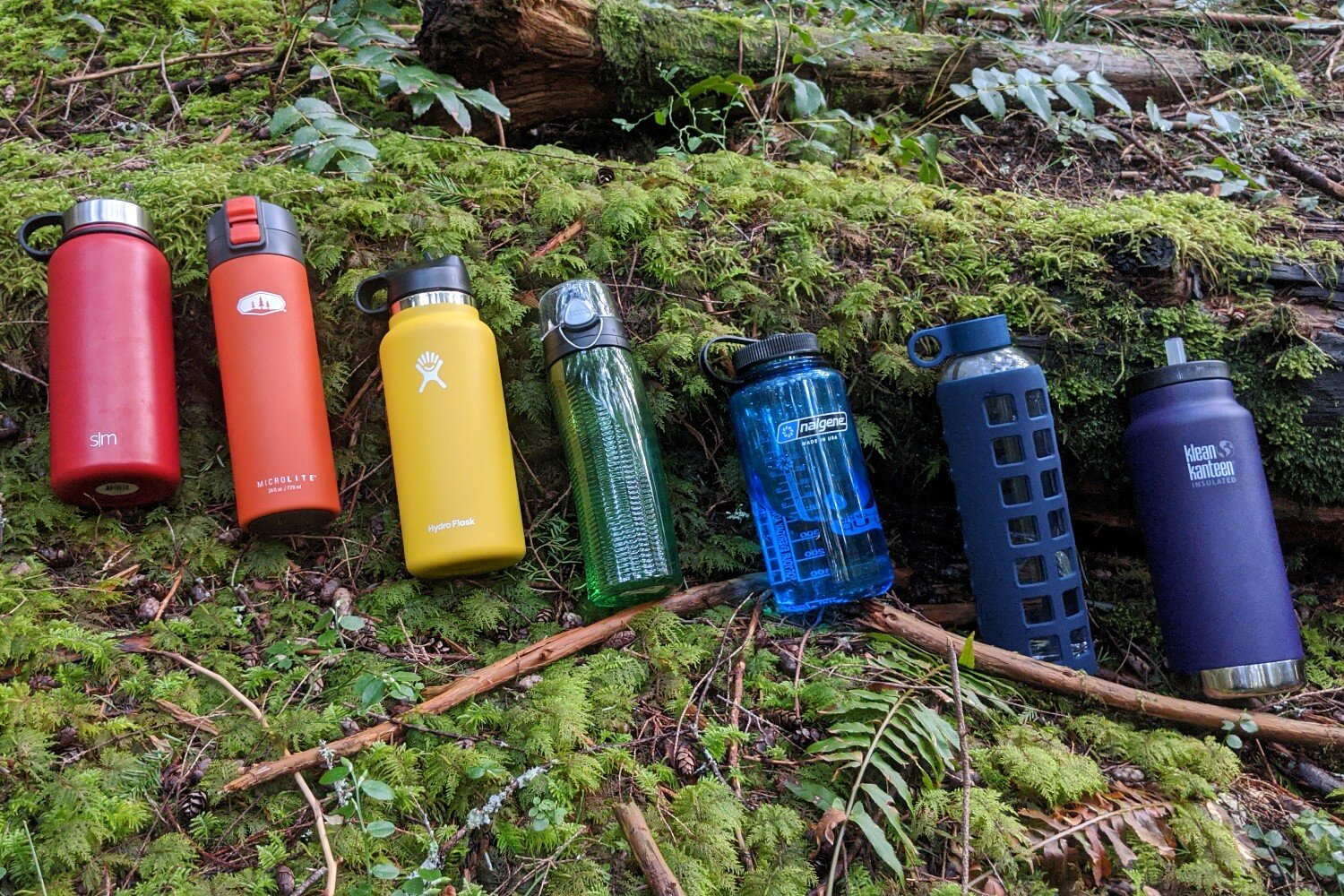
Analysis & Results
We assess water bottles based on value, durability, ergonomics, insulation, weight, and features. Check out how they performed in our real-world, hands-on testing.
Which Water Bottle is the Best Value?
A price tag isn’t necessarily indicative of the quality of a water bottle, but it does impact what we choose to buy. We consider cost alongside performance to give you an idea of how far your dollar goes with each bottle.
Though pricier than many other bottles we tested, the Hydro Flask Wide Mouth is a solid long-term investment. You get what you pay for: excellent insulating capabilities, ample customization options, and a sturdy design that all but guarantees you won’t have to buy another bottle for years to come.
That said, you don’t have to break the bank to get a high-quality water bottle – as seen with the HydraPak Flux. The Flux is remarkably packable, compatible with many popular filters, and weighs very little – all at a very palatable price point.
At the other end of the spectrum is the Grayl GeoPress, which costs almost twice as much as any other bottle on our list. The steep price difference is hard to justify, even factoring in the Grayl’s filtration and purification abilities. Not to mention, it’s quite heavy for backcountry use. Unless you need the top-notch filtration and purification, there are better deals to be found.
Which Water Bottle is the Most Durable?
We found that metal bottles handled drops, falls, and hits better than their plastic or soft-sided counterparts. In particular, the YETI Rambler impressed us with its burly design and high-quality materials. We hiked it up to the crag for a day of climbing and loved how the kitchen-grade stainless steel withstood falls on rocky terrain, sustaining no damage apart from a couple scuffs to the exterior paint.
The Hydro Flask Wide Mouth was a close second. Its steel build is slightly less robust than the Rambler but handled our drop tests with minimal impact. Our Hydro Flask has kept us hydrated for years through the ups and downs of backpacking trips and everyday life. The only damage includes a worn paint job and a few dents.
The Nalgene Wide Mouth showcases the strength of a well-made plastic bottle. We’ve heard people joke that a Nalgene would survive getting tossed off a mountain. Though we have yet to put this scenario to the test, our Nalgene has withstood significant abuse with only cosmetic scratches to show for it.
Like the Nalgene, the Igneous NOBO and Cnoc Outdoors ThruBottle are also impressively hardwearing for plastic bottles. They’re ultralight but tough, making them a great choice for thru-hikers and other weight-conscious users who are hard on their gear.

Which Water Bottle is the Most Ergonomic?
Differences in design elements – like spout size, bottle shape, and lid closure – impact a water bottle’s convenience. The most ergonomic bottles are easy to drink from, comfortable to carry, and sized appropriately for cup holders and backpack pockets.
The Hydro Flask Standard Mouth has a solid yet sleek frame that fits everywhere from cup holders to the tight corners of a pack. The design is attractive and useful: The narrow mouth makes it easy to drink from without spilling, and the slim build fits comfortably in hand. The lid seals tightly and prevents leakage without being difficult to open or close.
The Owala FreeSip stood out for its innovative spout design. The namesake FreeSip spout has two openings: One side is for chugging, while the other has a built-in straw for sippling. We loved having the choice to drink slower or faster without needing to swap lids.
The Igneous NOBO and Cnoc Outdoors ThruBottle are taller and slimmer than many alternatives. Their narrow cylindrical shapes and pliable plastic constructions better enable them to fit into the cramped corners of a pack or inside pockets and pouches.
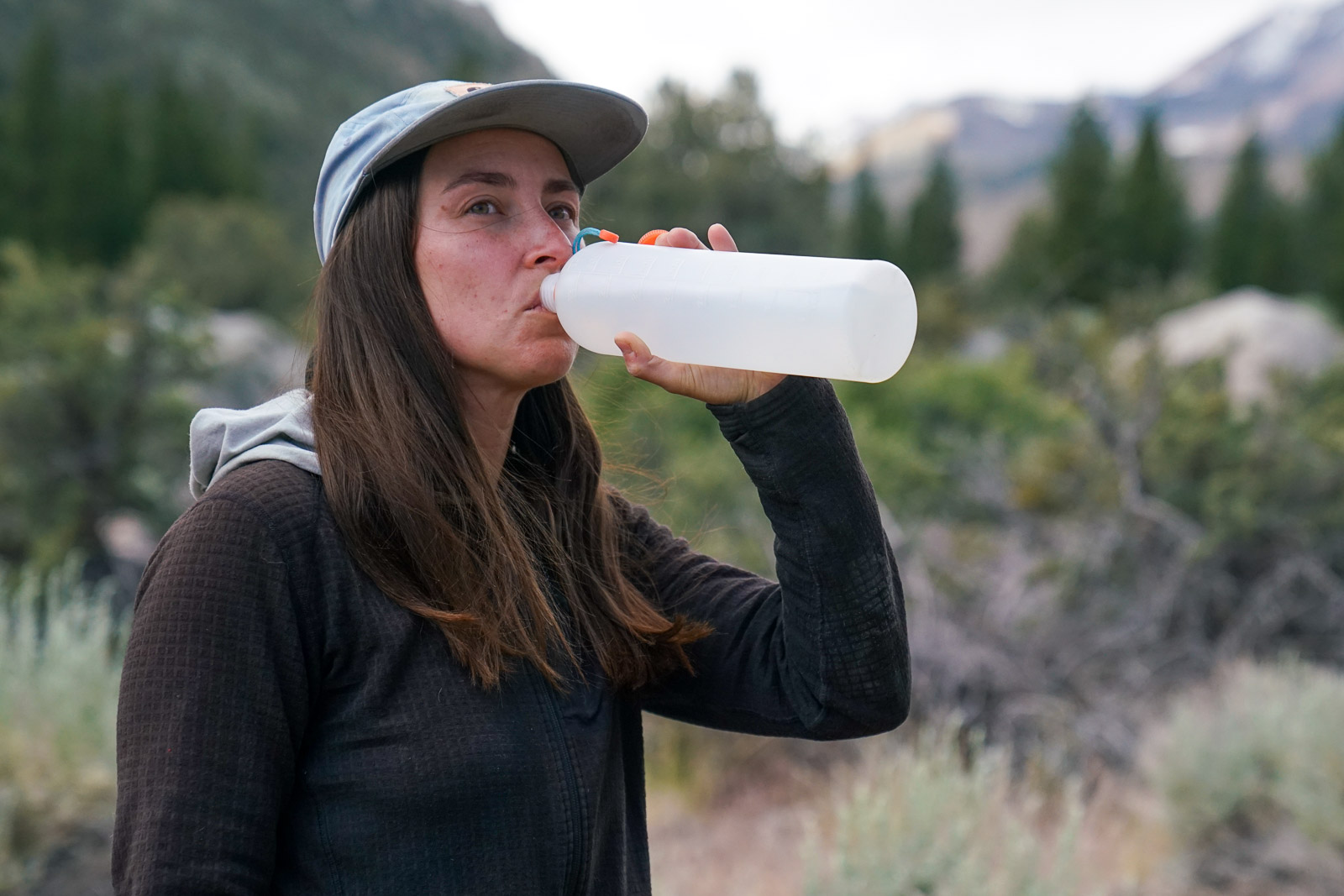
Which Water Bottle has the Best Insulation?
The YETI Rambler stole the show with its double-wall vacuum insulation. Both hot and cold liquids remained at their intended temperatures for the entire day. It also kept ice frozen longer than other insulated models.
The Hydro Flask Wide Mouth and Hydro Flask Standard Mouth were also top performers. Also featuring double-wall vacuum insulation, the Hydro Flasks kept our beverages appropriately hot or cold for hours. Though their insulating capabilities don’t quite match that of the Rambler, the Hydro Flasks weigh less, which will be enough to sway some.
We were disappointed that the Owala FreeSip is not recommended for hot beverages. It did a good job keeping water cold, but the fact that we couldn’t use it for hot drinks or soup made the added heft harder to justify.

Which Water Bottle is the Lightest?
Plastic bottles are our choice when we want to keep things as light as possible. Glaceau Smartwater is the ultimate ultralight bottle. Although it lacks the features offered by reusable bottles, the fact that it weighs almost nothing is a boon for thru-hiking and ultralight backpacking. It’s durable enough to last many miles on the trail, and replacements are easy to come by.
For more eco-conscious ultralight enthusiasts, the Cnoc Outdoors ThruBottle and Igneous NOBO are excellent alternatives to the disposable Smartwater bottle. At 2.2 and 2.3 ounces respectively, they come pretty darn close in the weight department while providing longer-lasting durability.
The Platypus Platy Bottle is similarly feathery, with a flexible build that folds up easily for storage. The Platypus has a 2-liter capacity, making it a high-capacity but ultralight option for those with serious water storage needs.
The HydraPak Flux is an ultralight bottle that holds up well. Its soft body is incredibly durable but can be compressed for packing or storage. It was one of the lightest bottles we tested and quickly became a favorite for hiking and backpacking.
Although far from the lightest bottle on our list, the LifeStraw Go Series is respectably light for a filter bottle. The integrated filter spares you from having to carry a separate filter into the backcountry, and it doesn’t add a ton of weight or bulk.
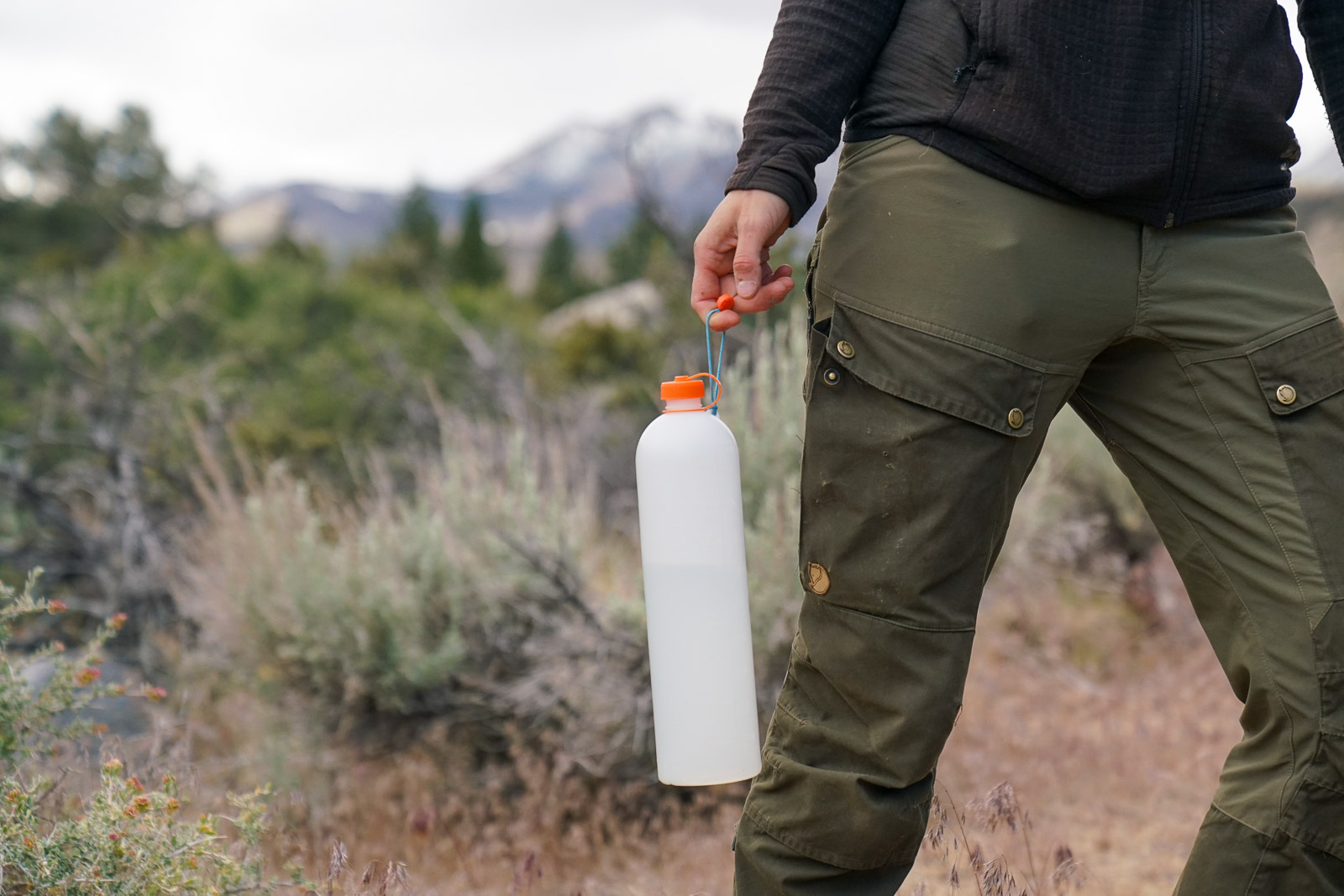
Which Water Bottle has the Best Features?
We love the ability to customize a water bottle to our personal preferences. The Hydro Flask Wide Mouth, Hydro Flask Standard Mouth, and YETI Rambler are all highly customizable options.
Hydro Flask and YETI offer their bottles in multiple sizes and lots of color options, from classic whites and blacks to fun, vibrant options that stand out in the market. Both brands also offer various lid designs that allow for sipping, gulping, or chugging. Some, like YETI’s Commuter Cap, are intended specifically for hot drinks.
When looking at features, we also considered things like filtration abilities. Here, the Grayl GeoPress stood out with its innovative press system that both filters and purifies water. The one-way valve allows you to use hydration mixes, too – something that wasn’t possible with other filter bottles we tested.
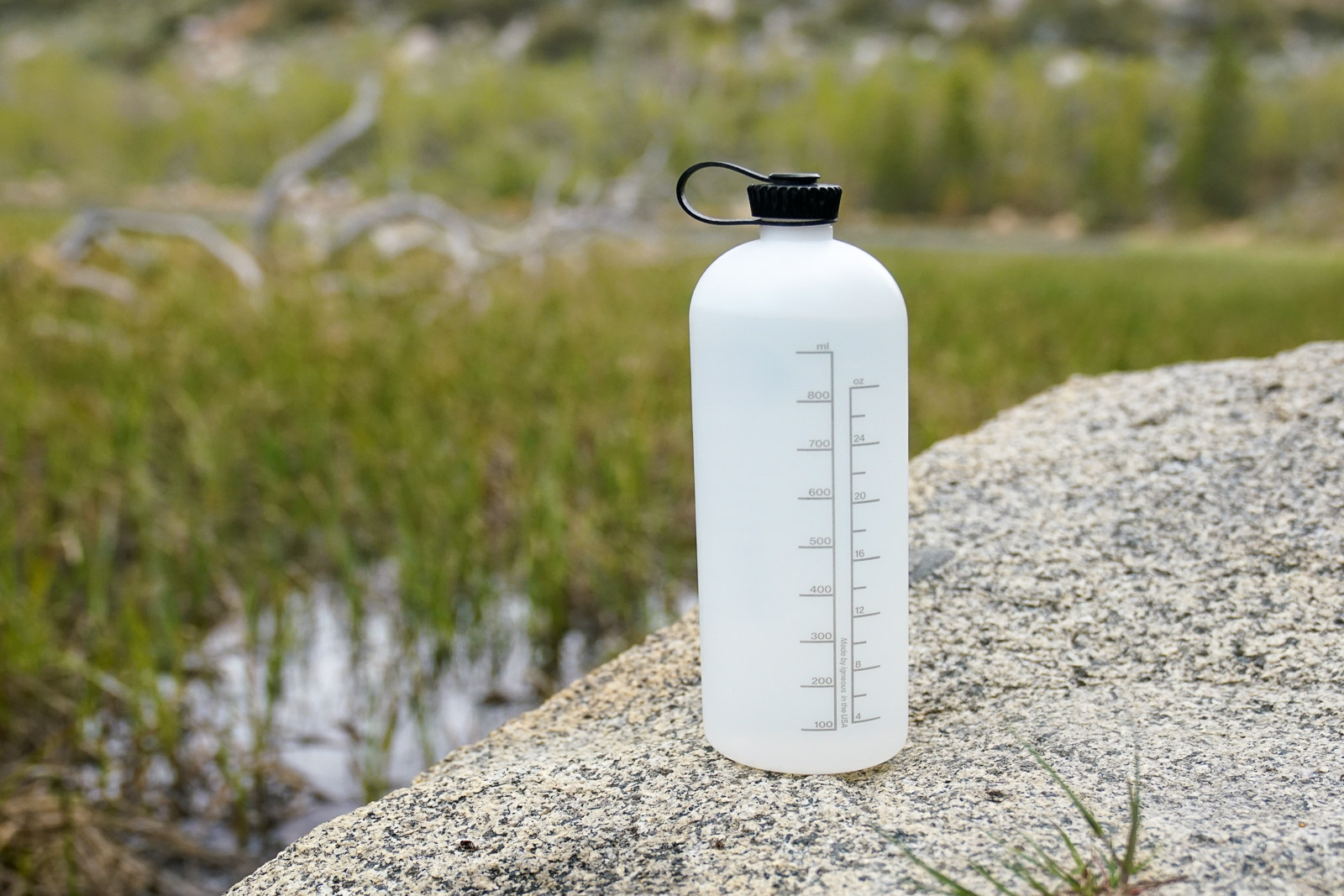
How to Choose a Water Bottle
What’s Your Intended Use for a Water Bottle?
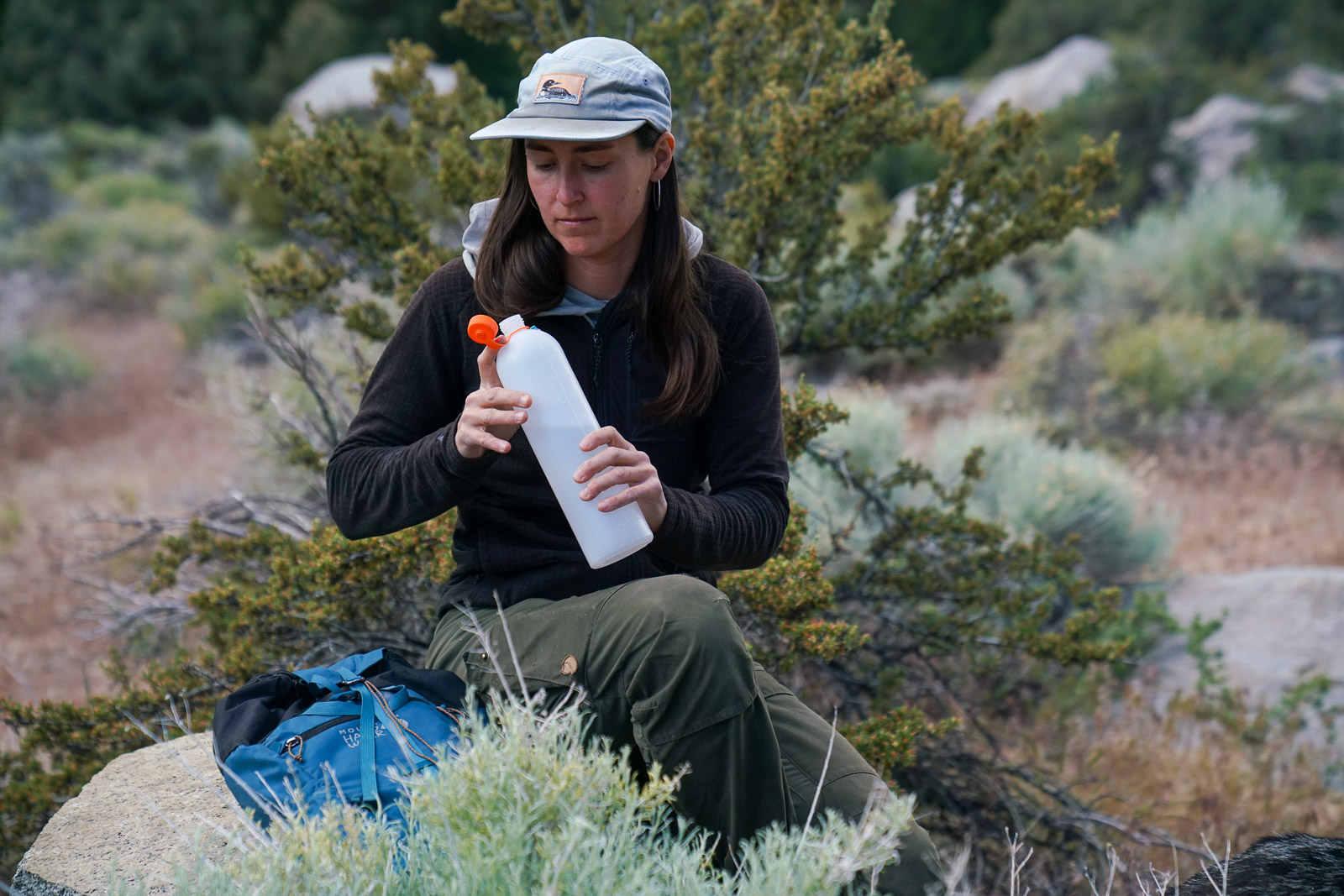
When picking out the perfect water bottle, the primary guiding question should be: What am I using this for? What you need to keep yourself hydrated at the office or the gym looks a lot different than what you need when you’re spending days backpacking through the mountains. Is filtration important? Will every extra ounce make your pack harder to carry? How hot do you want your morning coffee to stay, and for how long?
Pinpointing your intended use will illuminate which factors are most crucial to help narrow your search. If you like a hot cup of coffee in the morning and cold water to sustain you throughout the day, an insulated bottle is your best bet. If keeping ounces to an absolute minimum is top priority, consider a lightweight plastic bottle – ideally one that folds down for easy storage. If you plan to backpack with your bottle, consider things like packability and pocket compatibility (tall, cylindrical shapes work best with side pockets).
For size, 24 to 32 ounces is standard. Many 32-ounce bottles are too large for cup holders, which is worth considering – especially if you plan to use your bottle during commutes. The good news is that many of the bottles above are offered in multiple sizes, so you can choose what’s right for you and your specific hydration needs.
How Durable Does Your Water Bottle Need to Be?
Water bottles are relatively cheap, but most people don’t want to replace their bottle every year. Particularly if you’re using it in rough backcountry conditions, choosing one that’s durable means you won’t have to find a replacement anytime soon. Paying attention to what a bottle is made of will help ensure it meets your needs and expectations. Metal holds up better than plastic and is less susceptible to damage, and avoiding those with seams is a good idea if you’re worried about punctures or leaks.
Picking a bottle that’s easy to clean will also help ensure it lasts a long time. A water bottle that’s hard to wash can easily develop mold, potentially shortening its lifespan. Bottles with wide-mouth openings make hand-washing less of a hassle, and those that are dishwasher-safe are even easier to keep clean.
Which Type of Opening/Lid is Best?
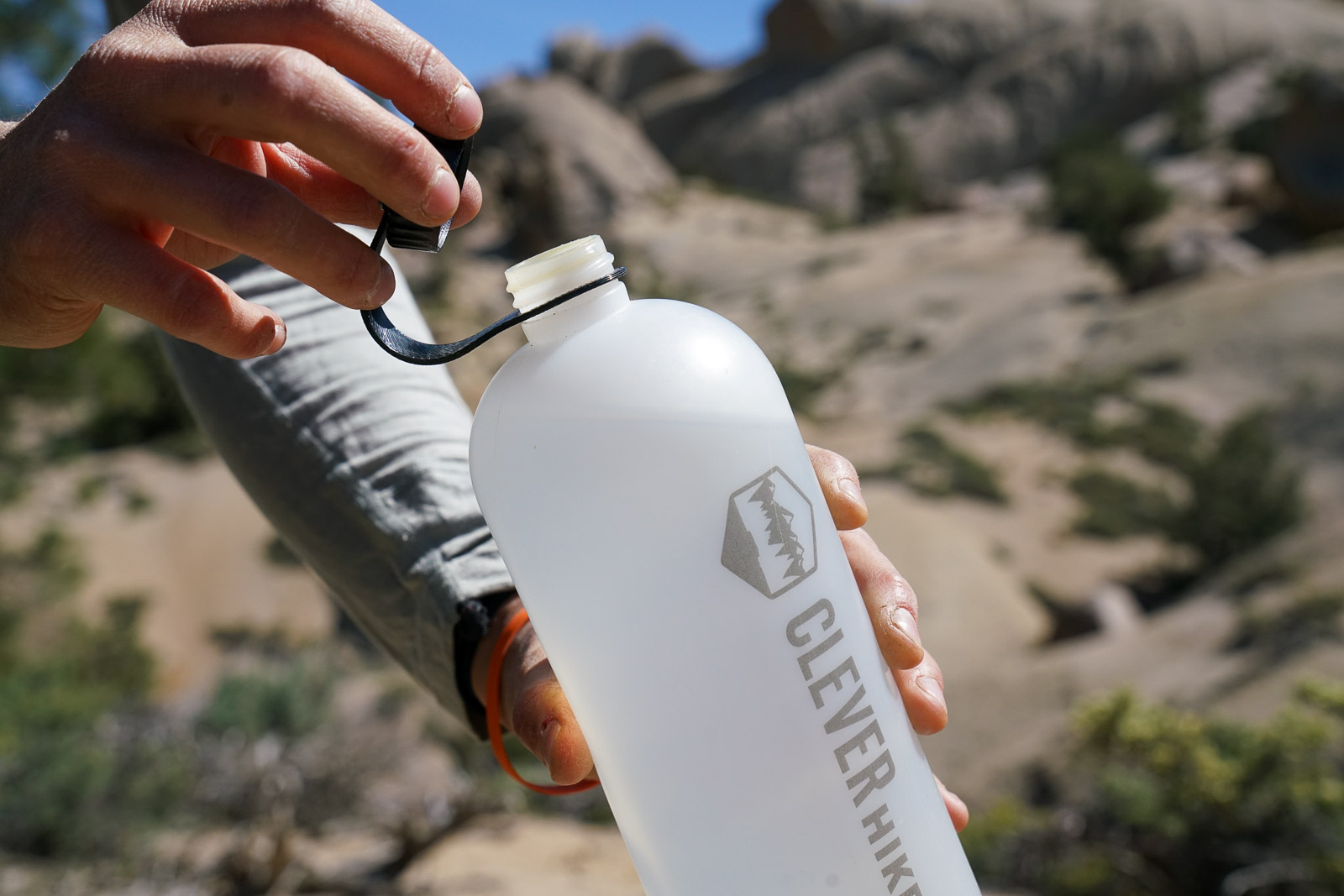
With an abundance of lid styles and spouts available, you can sip, gulp, or chug depending on what the situation calls for. The size and style of an opening impacts how quickly you’re able to drink. For those who need hydration on the go, straws and narrow mouths offer easy sipping free from spillage, even while in motion. Wide mouths and chug caps are great when you need to consume a lot of water quickly, but they’re more difficult to drink from while moving and make it hard to avoid spills.
Stainless Steel, Plastic, or Glass?
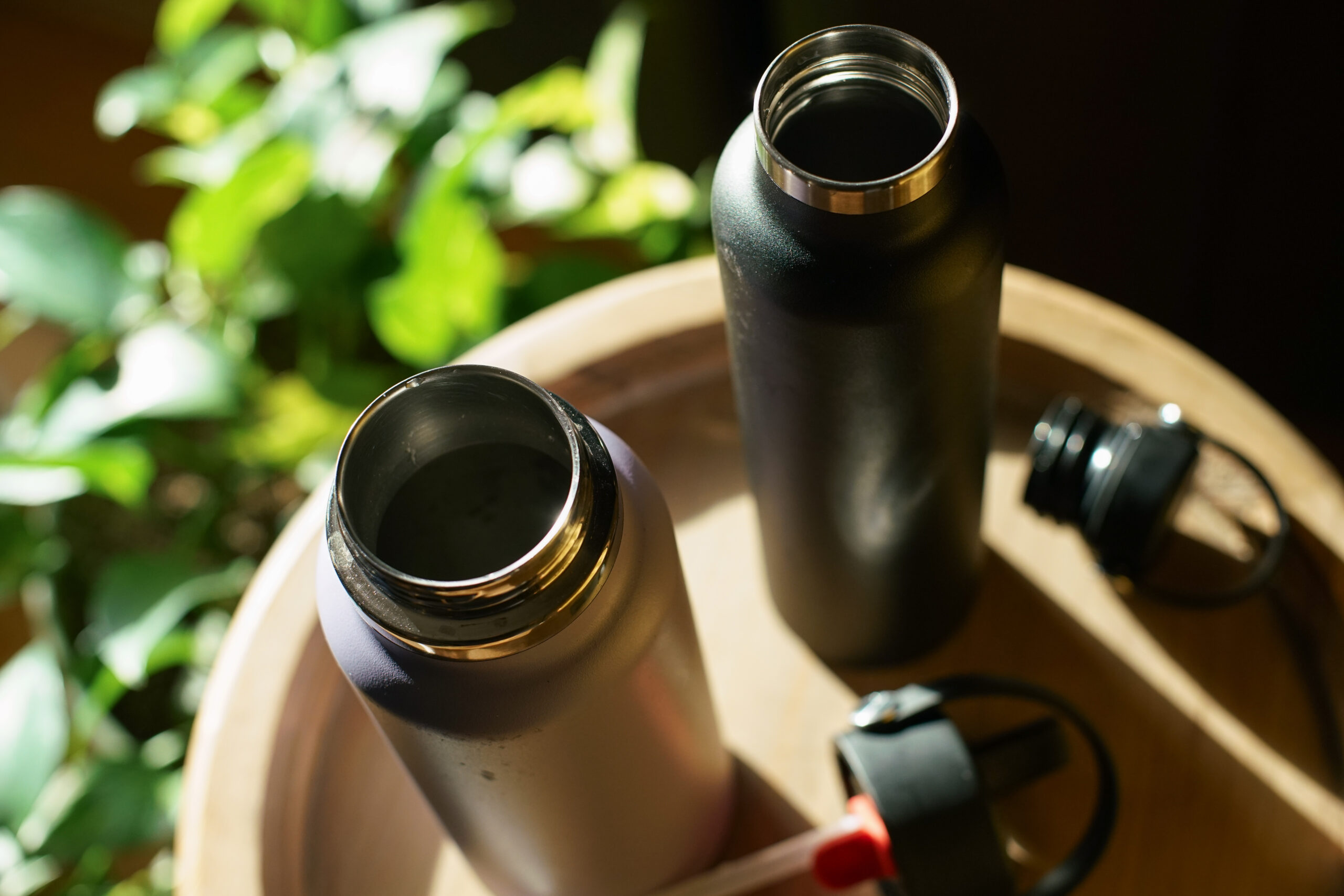
As many people look to reduce their plastic consumption and move away from single-use products, water bottle companies have embraced materials like stainless steel and glass as worthy alternatives. If eco-friendliness is a priority, most glass bottles are completely plastic-free, while stainless steel bottles offer top-notch durability and insulation – often at a higher price.
However, many bottles feature at least some plastic elements (like lids or handles), and some are fully plastic. Plastic is lighter than metal or glass and much cheaper, too. If your budget or weight goals necessitate a plastic bottle, make sure it’s BPA-free. An industrial chemical used to make plastic, BPA (short for Bisphenol A) has been found to cause harm to humans, particularly infants and children. BPA can still be found in many consumer products, so be sure to double check the bottle you’re eyeing before making a purchase.
Why Trust CleverHiker
Hydration is critical for all of gear analyst Marion Tucker’s outdoor endeavors. As a backpacker, climber, and former kayak guide, she has spent years exploring the trails, crags, and waterways of the western United States. Always armed with a water bottle, Marion’s experience ranges from hoarding fresh water for multi-day sea kayaking trips to finding streams to filter from on alpine treks. For this guide, Marion researched 40 different water bottles and tested the 13 most promising contenders.

Testing Methodology
We evaluated water bottles based on five metrics: durability, ergonomics, insulation, weight, and features. We take each bottle out on hikes and daily errands to get an idea of all-around usability and performance. Some even accompany us on climbs and more technical adventures.
How Do We Test Durability?
When evaluating durability, we focused on the construction of the water bottles and their potential longevity. For hard bottles, we observed whether they were easily dented or damaged. For soft bottles, we monitored whether they might be susceptible to rips or tears. We tested the bottles’ abilities to handle everyday use by putting them through drops and hits against other objects and examined each bottle for flexing or seams that could threaten structural integrity.
How Do We Evaluate Ergonomics?
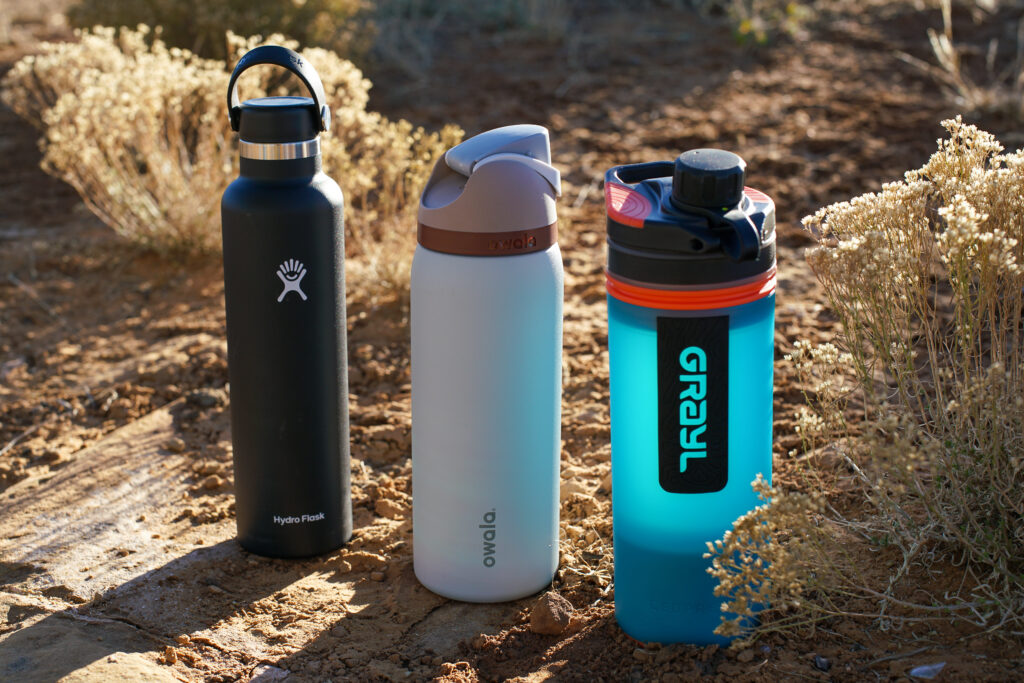
Ergonomics consider the design efficiency and practicality of a water bottle, including its ease of use, packability, and drinkability. We looked at design elements like handles, lid style, and mouthpiece design to see how comfortable a bottle was to carry and drink from. We noted any spillage while trying to drink, especially when in motion.
We carried bottles in backpack side pockets and main compartments to see how different styles and shapes fit (or didn’t). We also tried to fit each bottle in a standard vehicle cup holder, since many people use their bottle for more than just hiking.
Leakage drastically impacts a water bottle’s efficiency. As a result, we focused a lot on lid design, assessing how well they closed and kept a bottle sealed. Ice, electrolyte tablets, and hydration mixes are common supplements to a water bottle. We looked at how a bottle’s design supported the addition of these elements.
Finally, the ability to clean a water bottle extends its longevity. Not all bottles are dishwasher-safe, so we washed each by hand to see how simple they were to keep clean over time.
How Do We Assess Insulation?
Some water bottles offer insulation. For both insulated and non-insulated bottles, we examined their ability to preserve a liquid’s temperature, paying particular attention to the effectiveness of insulated designs. We observed how long it took for hot and cold beverages to become lukewarm, as well as the time it took for ice to melt.
How Do We Measure Weight?
The extra pounds and ounces of a bottle can be a make or break for water carry, particularly when it comes to backpacking or travel. We weighed each bottle individually and also assessed how similar models compared to one another.
Hiking for miles with each bottle enabled us to feel out its heft over time and distance and determine whether its weight impacted our overall experience. Insulation often makes a water bottle heavier. For insulated bottles, we considered whether the insulation provided enough value to override any added weight.
How Do We Evaluate Features?
When assessing a water bottle’s features, we looked at the built-in design elements, available accessories, and the ability for consumers to tailor the bottle to their personal preferences. We visited manufacturer websites to see customization options, including color choices, capacities, and available add-ons like different lids, straws, and carrying handles. We also assessed specialty elements that might give extra value to a bottle, such as filter compatibility and environmental friendliness.
Conclusion
Whether you’re hitting the gym or a backcountry trail, a good water bottle will help you stay hydrated over many miles and years of use. From double-wall stainless steel designs that keep ice frozen all day to ultralight plastic bottles that roll up for easy storage, our list above covers the full gamut. We hope our thorough testing and analysis helps you choose the best bottle for you.