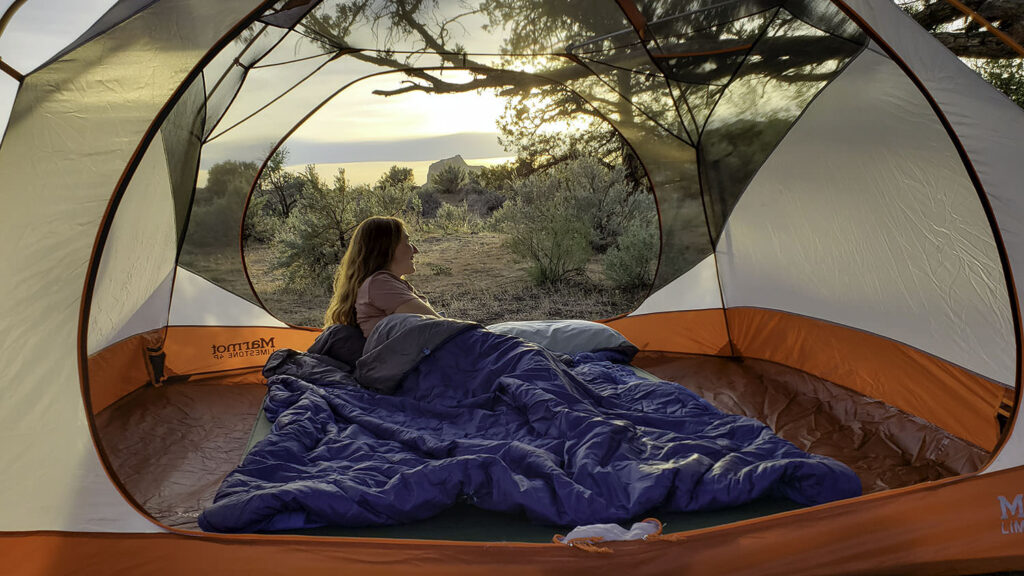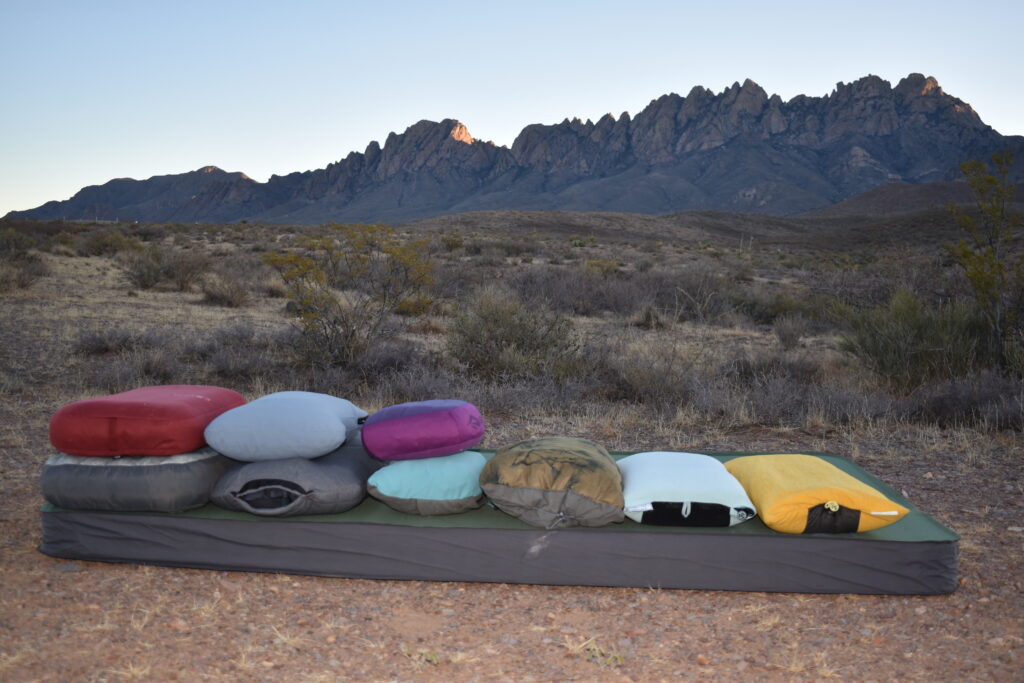



In the last eight years, our team has spent over 800 nights in desert and high country campgrounds, testing 30 mattresses from brands like Exped, NEMO, REI, Therm-a-Rest, and more to find the very best. It was hard work, but somebody had to do it! The eleven sleeping pads that made the cut are too bulky for backpackers but are the coziest picks for car campers, glampers, and van lifers.
How We Test
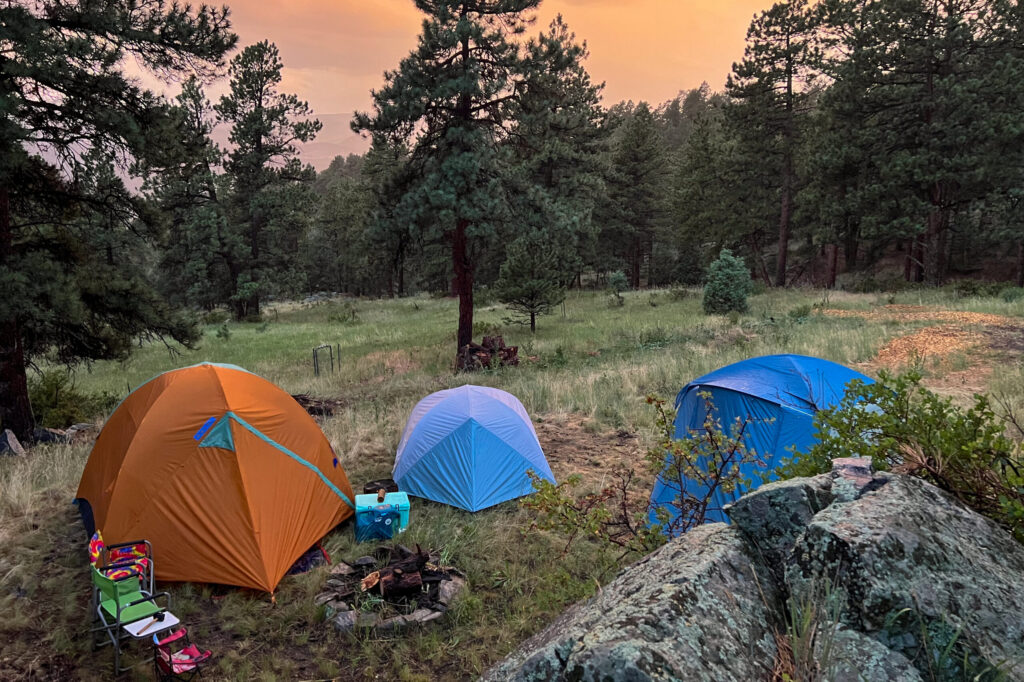
Our field testing included many nights at campsites across Colorado, New Mexico, and Utah, as well as side-by-side tests at home. Our gear analysts prioritized comfort comparisons in the field while also timing inflation and deflation times, evaluating valve performance, considering the pros and cons of each mattress’s R-Value, and measuring weight and packed size. Since comfort matters most at the campground, our final rankings place greater weight on comfort than on other metrics.

#1. Best Camping Mattress Overall

Made entirely of foam, the HEST Foamy is the plushest camping mattress we’ve tested and reviewed. This is Gear Analyst Ian Krammer’s favorite for car camping and glamping after more than 60 nights of field testing.
Quick Picks for Camping Mattresses
Check out this quick list of our favorites if you’re in a hurry, or continue scrolling to see our full list with in-depth reviews.
1. Best Camping Mattress Overall: HEST Foamy ($379 – Wide)
2. Softest Self-Inflating Sleeping Pad: Sea to Summit Comfort Deluxe ($319 – Large)
3. Thickest Luxury Camping Mattress: Big Agnes Captain Comfort Deluxe ($280 – Medium Wide)
4. Second Thickest Luxury Camping Mattress: Therm-a-Rest MondoKing 3D ($290 – XXL)
5. Classic Luxury Camping Mattress: Exped MegaMat ($280 – Long, Extra-Wide)
6. Most Luxurious Camping Mattress for Two: NEMO Roamer Double ($400)
7. Best Custom-Fit Vehicle Mattress: Luno AIR Pro Vehicle Mattress ($350)
8. Best Low-Profile Camping Mattress: Therm-a-Rest LuxuryMap ($250 – XL)
9. Best Mid-Range Camping Mattress: NEMO Flyer Cloud ($190 – Regular Wide)
10. Best Camping Mattress for $100: Sea to Summit Camp Plus ($99 – Regular Mummy)
11. Best Entry-Level Camping Mattress: REI Co-op Campwell ($159 – XL)
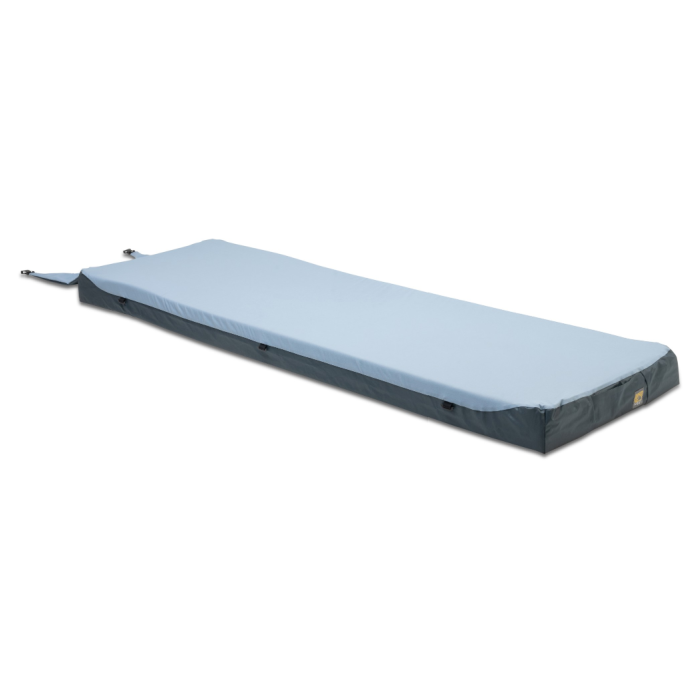
HEST Foamy – Wide
Best Camping Mattress Overall
CleverHiker Rating: 4.7/5.0
Price: $379
Dimensions (LxWxH): 78 x 30 x 4 in.
Weight: 13 lb.
Style: Memory Foam (no inflation)
R-Value: 8.8
Pros
- Plush foam
- Extremely soft
- High R-value
- Shoe mat and side phone pocket
Cons
- Expensive and heavy
- Can't adjust firmness
- Large packed size
If you’re looking for one of the warmest, comfiest, and easiest-to-use camping mattresses out there, the Hest Foamy is the sleep system of your dreams. This one is all-memory foam — no air here — making it the plushest, poshest mattress we’ve ever tested. It’s our top comfort pick, which is the most important characteristic of a camping mattress. With an impressive R-value of 8.8, the Foamy lets you sleep safely even in the coldest conditions. And as a bonus, Hest includes a fitted sheet to complete the setup.
The Foamy is easy to set up and use. Since no air is needed and no chamber to fill, it deploys in one step. Simply unroll the mattress and lie down. On the downside, this thing weighs 13 pounds. It’s also one of the bulkiest on our list, so you’ll need some space to store it in your truck or car, garage, or gear room.
Sure, the HEST Foamy mattress is expensive. That said, it’s a solid, long-term investment as a basecamp mattress, car-camping pad, or even a semi-permanent guest bed. This is the one you want if you don’t mind paying a premium for the softest sleeping pad on the market.
More: HEST Foamy Full Review
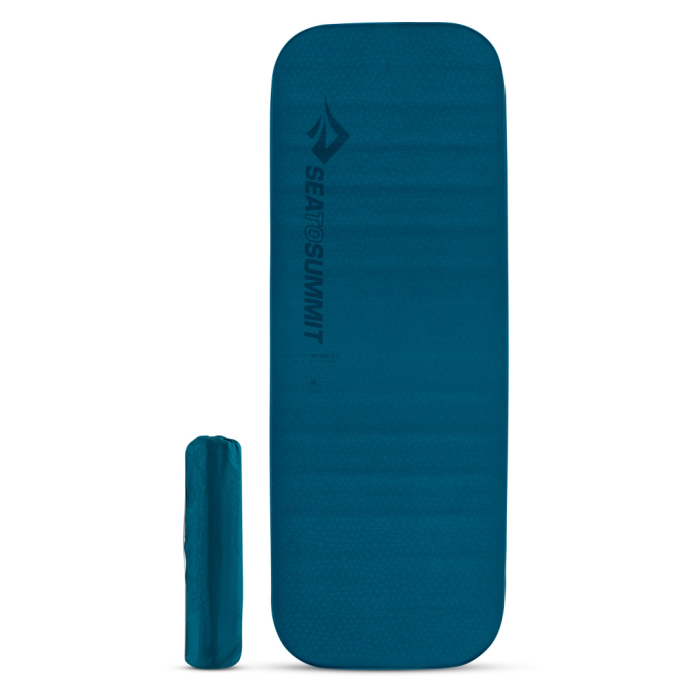
Sea to Summit Comfort Deluxe
Softest Self-Inflating Camping Mattress
CleverHiker Rating: 4.7/5.0
Price: $319
Dimensions (LxWxH): 79 x 29 x 3.9 in.
Weight: 5 lb. 3.3 oz.
Style: Self-inflating
R-Value: 7.7
Pros
- Comfortable face fabric
- Cushy construction
- Good thickness
- High R value
- Hybrid stuff sack-pump sack
Cons
- Only partially self-inflates
- Some valve hiccups
- Premium price point
Just like its name suggests, the Sea to Summit Comfort Deluxe is a cushy camping mattress — arguably the plushest of the self-inflating pads we tested and reviewed. Two of our editors called out the Comfort Deluxe as one of the more memorable models we’ve tested. Our team has relied on the Comfort Deluxe for camping, sleeping in the car, and crashing at festivals. We’ve even used it as a guest bed when friends and family come to visit.
But what really sets the Comfort Deluxe apart is its ultra-soft sleep surface and multidirectional air cells. We found it cushier than the competition, even though it’s not quite as thick as some other comfort stalwarts. The all-in-one valve means you’ll inflate, fine-tune the firmness, and dump all the air out from the same valve. That places a lot of pressure and activity on it. Plus, we found the inflation process a bit slower than other mattresses on our list.
The latest edition is lighter and has a higher R-Value, rated for four-season camping. If you’re looking for comfort, long-term durability, and warmth, you can’t go wrong with the Comfort Deluxe — one of our editor’s picks.
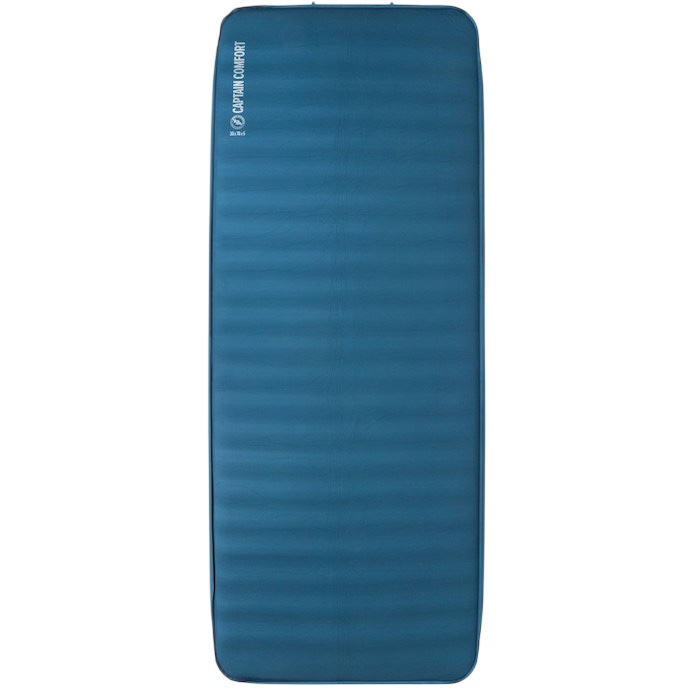
Big Agnes Captain Comfort Deluxe
Thickest Luxury Camping Mattress
CleverHiker Rating: 4.7/5.0
Price: $280
Dimensions (LxWxH): 78 x 30 x 5 in.
Weight: 6 lb. 6 oz.
Style: Self-inflating
R-Value: 8.3+
Pros
- Extra thick loft
- Extra-comfortable
- Double valves speed inflation and deflation
- Extremely high R-value
- Convenient side-loading carrying sack
Cons
- Takes more time to re-pack
- On the expensive side
There’s little separating the luxury sleep pads on this list, but the Big Agnes Captain Comfort Deluxe has a distinct advantage. It’s the thickest camping mattress we’ve tested and reviewed.
A whopping 5 inches thick, the Captain is arguably the cushiest self-inflating option we recommend. After our latest round of field testing, we had some of our best nights of sleep on the Captain Comfort while car camping near White Sands National Park. It also rose to the top during our side-by-side comfort tests at home.
As you might imagine, all that heavenly foam makes the Big Agnes mattress a bit heavier and bulkier. Plan on rolling it twice before squeezing out enough air to pack it in its stuff sack. It’s not made for the Arctic, but its over-the-top comfort features also give it an overkill R-Value of 8.3- 9.9 (depending on size).
In a crowded field of oversized sleeping pads that are insanely comfortable, the Big Agnes Captain Comfort Deluxe may be the most decadent.
More: Big Agnes Captain Comfort Deluxe Full Review
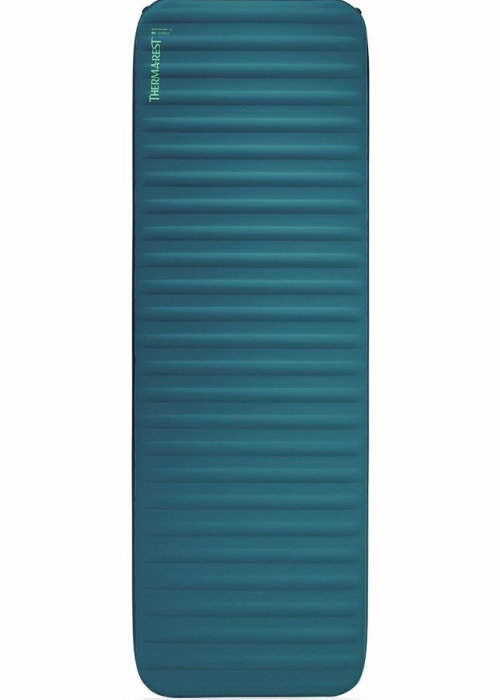
Therm-a-Rest MondoKing 3D XXL
Second Thickest Luxury Camping Mattress
CleverHiker Rating: 4.6/5.0
Price: $290
Dimensions (LxWxH): 80 x 30 x 4.25 in.
Weight: 5 lb. 8 oz.
Style: Self-inflating
R-Value: 7
Pros
- Very thick mattress
- Comfortable and quiet material
- Easy and fast to inflate
- High-quality construction
- Pairs with other MondoKing mattresses
Cons
- Expensive and bulky packed size
- Pump sack challenging to connect to valve
Most of the mattresses on this list are 4 inches deep, but the Therm-a-Rest MondoKing is a posh 4.25 inches. That extra quarter-inch of foam might not seem like much of a difference, but we think you’ll notice. The extra padding makes for one of the most inviting and comfortable nights of rest of any mattress we tested. The surface has a plush, soft chamois feel on the skin.
We almost always choose the largest size of each camping mattress for comfort, and the MondoKing is truly one of the most mondo in length, too. The XXL is a whopping 80 inches long — over 6.5 feet. We also like the high-flow valves, which are really important for mattresses with such impressive volume. That said, the pump sack and mattress valves could be more effective. We sometimes had trouble connecting the pump sack to the mattress. Plus, it sometimes slips out because there isn’t any texture or threading to keep it in place.
The only other downside is that it usually takes two rounds to roll this one up before it’s compact enough to pack away. That said, if you’re looking for a really spacious and super cushy mattress to take your camping slumber to the next level, the MondoKing will make you feel like royalty.
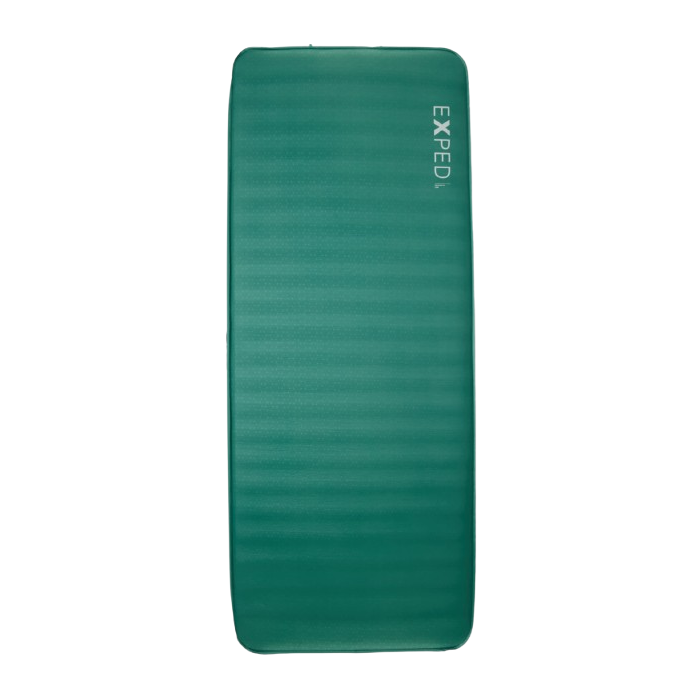
Exped MegaMat
Classic Luxury Camping Mattress
CleverHiker Rating: 4.6/5.0
Price: $280
Dimensions (LxWxH): 77.6 x 30.3 x 4 in.
Weight: 5 lb. 11.7 oz.
Style: Self-Inflating
R-Value: 8.1
Pros
- Cozy fabric on top
- Spacious for all sleeping positions
- Durable materials
- Easy to inflate and deflate
- Convenient stuff sack design
Cons
- On the expensive side
- Long packed size
The Exped MegaMat has largely defined the luxury camping mattress category. It’s still stellar we hav been using it happily for several years and counting. But it now has some company near the top of our list.
With 4 inches of foam and air, the MegaMat is much more comfortable than mortal camping mattresses. We found a couple of self-inflating pads slightly softer in our side-by-side tests, but the MegaMat still makes our short list for comfort. It also offers a striking R-value of 8.1, so it has more than enough insulation to sleep on frozen ground. Still, it sleeps comfortably in more hospitable conditions, which is why we use ours for a backup guest bed at home.
The two valves are easy to inflate and deflate. Simply unroll the mattress, open the inflation valve, and wait about 10 minutes. When it’s nearly full, you can top it off with air with the included stuff sack. Exped also offers the Mega Pump to inflate and deflate the MegaMat even quicker.
Like all luxury sleeping pads for the campground, the MegaMat is heavy and bulky, but that doesn’t matter much there. It’s also pricey. Campers have been choosing the MegaMat for two decades because it’s mega-comfortable for those who want a home-like sleeping experience.
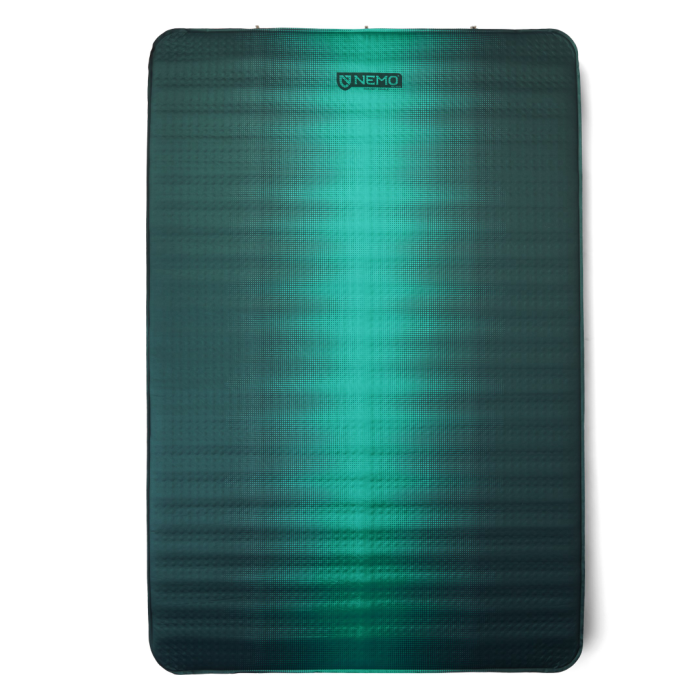
NEMO Roamer Double
Most Luxurious Camping Mattress for Two
CleverHiker Rating: 4.7/5.0
Price: $400
Dimensions (LxWxH): 78 x 52 x 4 in.
Weight: 6 lb. 9 oz.
Style: Self-inflating
R-Value: 7
Pros
- Comfortable material on top
- Thick loft
- Supersized (and included) pump sack
Cons
- Bulky and expensive
If you camp with your partner — or pupper — the NEMO Roamer Double is the only double mattress to make our guide. We’ve slept more than 30 nights on multiple versions of this mattress. Gear Analyst Ian Krammer especially loves the Roamer when camping with his dog.
When it comes to comfort, the Roamer is top-tier. Testing the Roamer Double and Exped MegaMat Duo side by side, we gave the Roamer the slightest edge in overall comfort. One of our analysts also found the Roamer minimizes bounce when sharing space with a partner or four-legged friend.
This self-inflating mattress is fairly easy to set up and deflate. Even with two valves, however, the process is slower than other self-inflating mattresses we tested. Like the others on this list, the Roamer’s high R-value makes this mattress safe in extreme cold if that’s your camping style.
We recently tested the 2026 update to the Roamer, which increased its R-Value while decreasing its weight and packed size. Its packed size isn’t much larger than the beefier single mattresses we tested. The NEMO Roamer Double is yet another luxury sleeping pad with heaps going for it. If you share a bed at camp and want to level up, we recommend the Roamer Double.
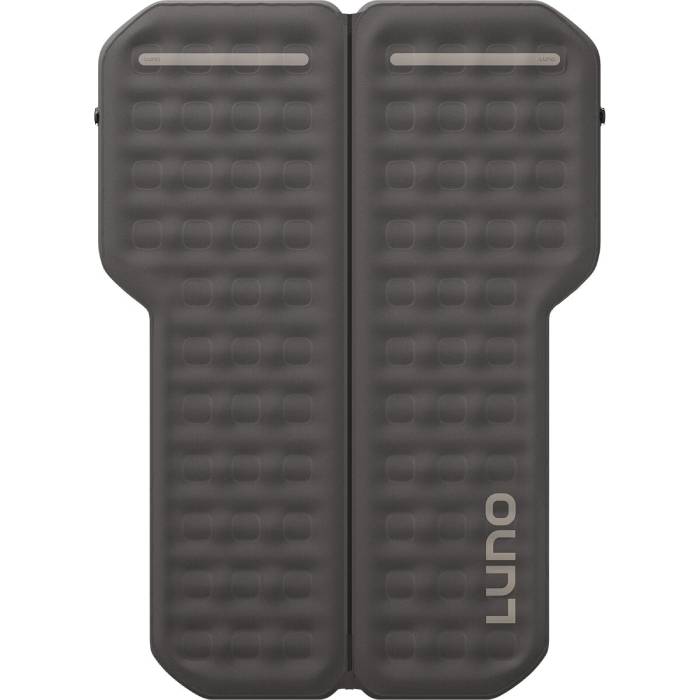
Luno AIR Pro Vehicle Mattress
Best Custom-Fit Vehicle Mattress
CleverHiker Rating: 4.4/5.0
Price: $350
Dimensions (LxWxH): Varies by vehicle
Weight: 13 lb.
Style: Vehicle Mattress
R-Value: 1.5
Pros
- Custom fit for popular vehicles
- Extremely durable and pet-friendly
- Faster inflate and deflate than self-inflating pads
- R-value is summer-appropriate
Cons
- Firmer than self-inflating mattresses
- Limited to warmer weather camping
- Doesn't fit all vehicles
The first time we saw the Luno AIR Vehicle Mattress, it looked too good to be true. A bed-quality camping mattress that’s custom-fit for your vehicle. But it’s a real thing. And we’re fans.
During testing, the Luno vehicle mattress transformed our SUV into a mobile campground in minutes. This double mattress fully inflates in just 2 minutes, thanks to a 12V electric pump that plugs into your vehicle’s cigarette lighter. The material is more durable than any other camping mattress we tested, so it’s pet-friendly.
The Luno AIR’s calling card is its custom fit. You select your vehicle’s make, model, and year to get the exact dimensions. This makes sleeping in a vehicle as comfortable as possible. Plus, there’s nothing stopping you from plopping this vehicle mattress in a tent — it’s versatile.
The mattress itself is 4 inches thick — a comfort plus — but not as plush as the self-inflating foam mattresses on our list. Our side sleeper liked its support in our field tests, but it’s a firmer air mattress – not teddy bear soft. With an R-Value of 1.5, the Luno Air handles summer temperatures better than the other mattresses on our list. The downside is it’s not insulated enough for cold-weather camping – which we learned the hard way during some field tests with overnight lows in the 20s and 30s.
If you’d rather crash in your car than at a campground, the Luno AIR Vehicle Mattress crushes this type of camping.
More: Luno AIR Full Review
Editor’s Note: This review covers the original Luno Air Vehicle Mattress, which Luno upgraded to the Air Pro in 2026. We will update our review once we’ve finished testing the new Luno Air Pro.
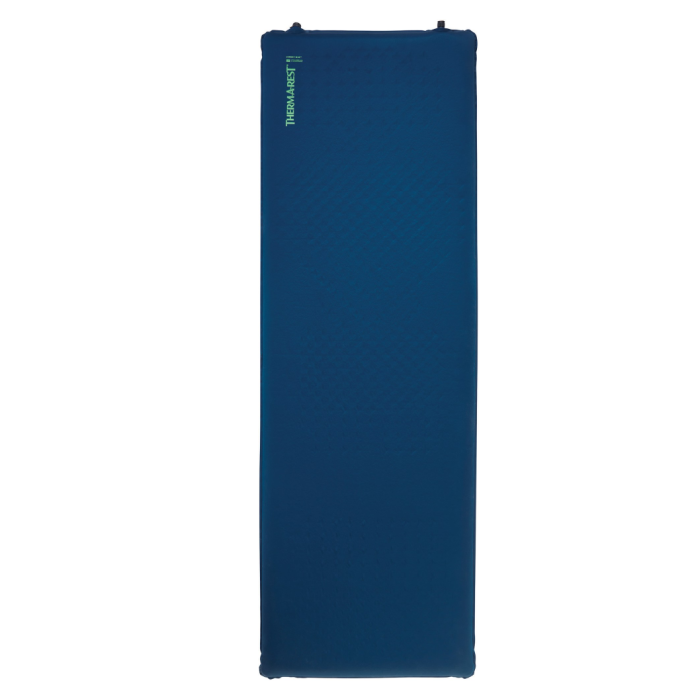
Therm-A-Rest LuxuryMap XL
Best Low-Profile Camping Mattress
CleverHiker Rating: 4.4/5.0
Price: $250
Dimensions (LxWxH): 77 x 30 x 3 in.
Weight: 5 lb. 2 oz.
Style: Self-inflating
R-Value: 6
Pros
- Foam mapping
- Lower profile
- High R-value
- Quick to inflate and delfate
- Easy to pack
Cons
- Bulky valves
- Noisy material
- Tapered at edges — elbows amd knees can bottom out
- Pump not included
If you’re looking for a supportive and low-profile mattress for sleeping in your car or spending a night under the stars, the Therm-a-Rest LuxuryMap XL combines comfort, warmth, and convenience in one package.
At 3 inches thick, the LuxuryMap is one of the slimmest options on this list — our top comfort choices are 4 inches or more. This may be a good thing if headspace is limited, such as sleeping in the back of a vehicle or on a cot. Even though it’s thin, the LuxuryMap still boasts an R-value of 6, so you can stay warm in extreme cold.
The LuxuryMap is named after its unique foam-mapping design, which features slightly softer foam at the shoulders, torso, and hips for extra relief, comfort, and support. This body-mapping offsets some of the comfort costs of its thinner build. The valves on the LuxuryMap are not the sleekest — they protrude from the mattress. But we didn’t mind because they’re among the easiest to use.
Still, this model didn’t score straight A’s. The corners of this Therm-A-Rest model are tapered, so our knees and elbows would occasionally bottom out as we neared the edges. The material and internal structure make more noise than other mattresses. And, this model doesn’t include a pump, which isn’t a dealbreaker because it’s thin enough to fill up in a handful of breaths.
Overall, though, we recommend the LuxuryMap — especially if your sleep setup is short on headroom.
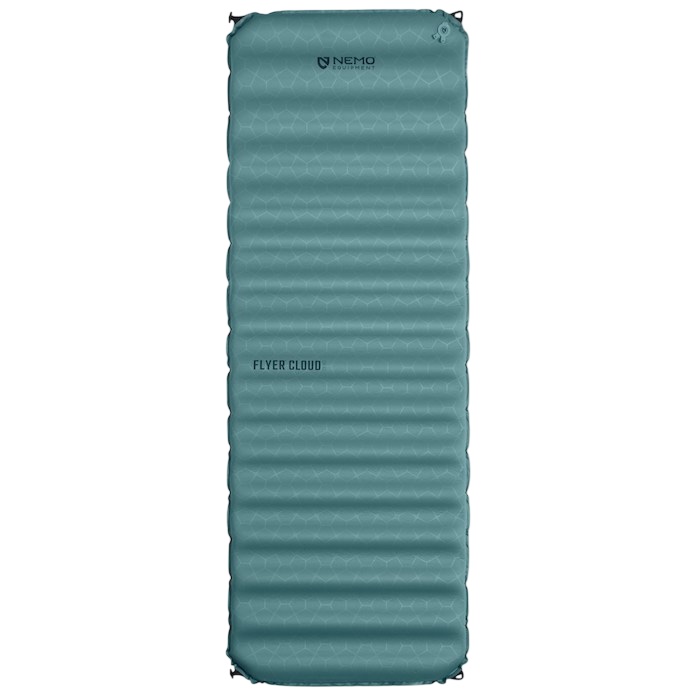
NEMO Flyer Cloud
Best Mid-Range Camping Mattress
CleverHiker Rating: 4.3/5.0
Price: $190
Dimensions (LxWxH): 72 x 25 x 3 in.
Weight: 2 lb. 9 oz.
Style: Self-inflating
R-Value: 5.1
Pros
- Comparatively light and packable
- Rippled texture
- Included stuff/pump sack is also a dry bag
- Insulated for four-season camping
- Eco-friendly (bluesign-approved)
Cons
- The texture is not for everybody
- Lower loft at 3 inches
New for 2026, the NEMO Flyer Cloud Self-Inflating Sleeping Pad bridges the big price and performance gaps between the budget and premium sleeping pads on our list. It’s a solid option if you don’t want to drop $300 to $400 on a camping mattress but know you want more than an entry-level sleeping pad.
As a self-inflating pad, the Flyer Cloud combines the support of an air bladder with the cushiness of foam. It’s an inch thinner than most pads we recommend, so it wasn’t as plush as our comfort splurges. Still, the Flyer Cloud provided a supportive, quiet, and somewhat squishy sleeping surface when we tested it in New Mexico’s Sandia Mountains, Jemez Mountains, and Gila Wilderness.
We’re not sure about the Flyer Cloud’s rippled texture. You may find the pad’s ridges and valleys restorative — similar to the massaging effect of a recovery slide on your feet — or uncomfortable. We didn’t have strong feelings either way. But we recommend testing this model indoors before cutting the tags to see what you think about its feel.
If you’re pressed for space in your Prius or gear closet, the NEMO Flyer Cloud is lighter and more packable than most camping mattresses. We wouldn’t take it backpacking, but it’s a definite space saver for car campers and van lifers. This isn’t our favorite frontcountry sleeping pad. But the Flyer Cloud gives campers a rare mid-priced option in a category dominated by luxury mattresses.
More: NEMO Flyer Cloud Review
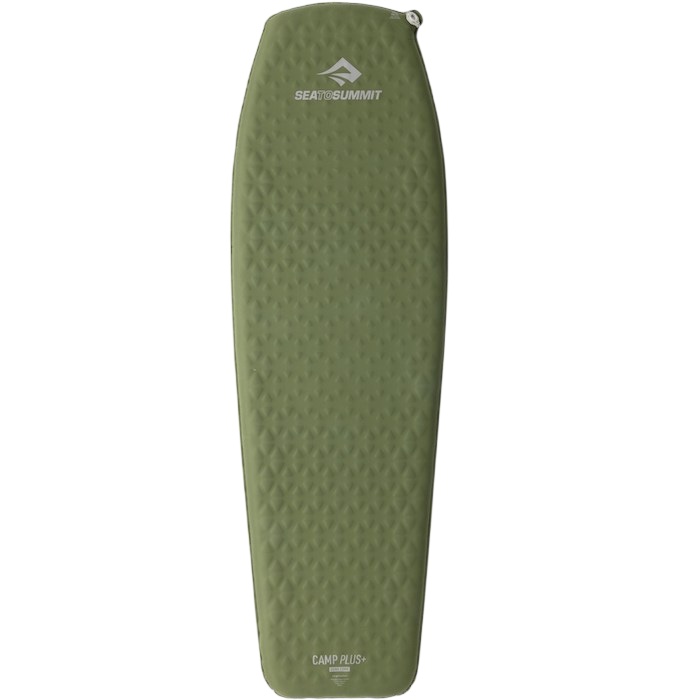
Sea to Summit Camp Plus
Best Budget Camping Mattress
CleverHiker Rating: 4.2/5.0
Price: $99
Dimensions (LxWxH): 72 x 22 x 2.8 in.
Weight: 2 lb. 5 oz.
Style: Self-inflating
R-Value: 5.3
Pros
- Great value
- Light and packable
- Four-season capability
- Durable
Cons
- Less comfort
- Lowest loft on our list
If you’re looking for the best camping mattress for $100, we’re fans of the Sea to Summit Camp Plus Self-Inflating Pad. After testing it in the Gila Wilderness and Jemez Mountains, we’ve awarded it our best budget badge.
No, the Camp Plus is not as comfortable as the luxury sleeping pads we recommend. It’s thinner and firmer than the pads that cost three to four times as much. But, yes, it’s comfortable for its price point. Plus, Sea to Summit’s durability track record has us trusting their entry-level pad more than other brands’ basic models.
One benefit of this pad’s thinner construction is that it’s lighter and more packable than most models on this list. Plus, its R-Value of 5.3 means you can use it in all four seasons without the ground sapping your body heat.
For us, the Sea to Summit Camp Plus is a great way to get off the ground and sleep warmer and more comfortably. In a perfect world, it’d be thicker. But during our field tests, we found the Camp Plus cozy and supportive enough to upgrade our sleeping experience in the campground.
More: Sea to Summit Cloud Plus Review

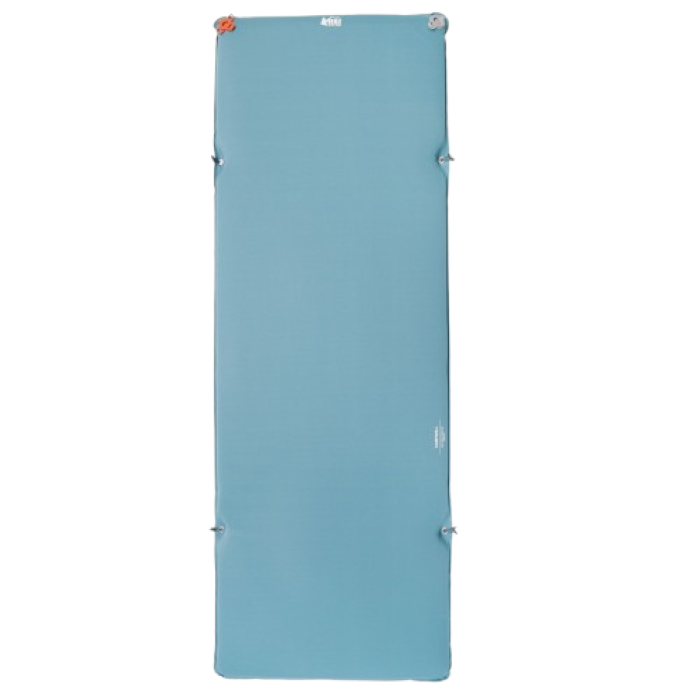
REI Campwell XL
Best Entry-Level Camping Mattress
CleverHiker Rating: 4.2/5.0
Price: $140
Dimensions (LxWxH): 78 x 30 x 2.5 in.
Weight: 4 lb. 8 oz.
Style: Self-inflating
R-Value: 7
Pros
- Very affordable
- Warm
- Fast inflation and deflation
- Smaller packed size than most
- Toggles to connect to another pad or cot
- Soft fabric on top
- Comfortable for back and stomach sleepers
Cons
- Not as durable as some
- No pump sack
- May be too thin for side sleepers
- Valves can be touchy
The REI Campwell is new to our lineup as one of the most affordable camping mattresses on the market, and it’s also slim, warm, and easy to use. At 2.5 inches thick, it gives more headroom than most mattresses when sleeping in lower tents or the back of a car. It may be slimmer than many on this list, but we find the mattress’s foam construction is a supportive and cushy choice for back and stomach sleepers, and its polyester fabric is quiet and smooth.
We were especially impressed by the Campwell’s outstanding warmth. In fact, it’s one of the warmest options on our list, making it a stellar choice for year-round use. With an R-Value of 7, you’ll stay warm in the coldest temps.
The Campwell’s self-inflating design is also one of the fastest in the category: it only takes 5 minutes to fill, so it’s a great choice if you like a low-key setup. Plus, this is one of the most compact options compared to many of the bulkier, thicker designs we’ve tested. Weighing 4.5 pounds and packing up a bit smaller, it’s easier to stash in your trunk or gear closet.
This model is part of REI’s entry-level line of Campwell products, so it includes unique, built-in toggles on the side meant to integrate with other Campwell products. These toggles allow campers to connect two mats for shared space — without the obnoxious gap between pads — or attach the pad to a cot to prevent sliding at night.
However, the REI Campwell is not without its drawbacks. Its durability is a bit questionable. We experienced a puncture during the first setup of this mattress. Although its replacement has been flawless. And this one may not be the best choice for side sleepers since the 2.5-inch thickness can cause pressure points and potential bottoming out. We also found that the valves can be finicky, requiring a bit of extra attention to ensure they’re fully closed before lying down.
Despite these minor issues, the REI Campwell remains an excellent choice if you’re looking for a simple, affordable mattress that’s not only warm but easy to use. Whether you’re just getting started with your camping setup or you need a cozy place to lie down without breaking the bank, the Campwell is a versatile choice for car camping, festivals, road trips, and beyond.
Product Comparison Table
| oSort | Product | CleverHiker Rating | Price | Dimensions (LxWxH) | Weight | Style | R-Value | Comfort | Ease of Use | Warmth | Packed Size | 0 |
HEST Foamy – Wide View at REI View at Hest 
|
4.7/5.0 | $379 | 78 x 30 x 4 in. | 13 lb. | Memory Foam (no inflation) | 8.8 | 4.9 | 4.9 | 5.0 | 3.0 | 1 |
Sea to Summit Comfort Deluxe View at REI View at Amazon
|
4.7/5.0 | $319 | 79 x 29 x 3.9 in. | 5 lb. 3.3 oz. | Self-inflating | 7.7 | 4.7 | 4.4 | 5.0 | 3.8 | 2 |
Big Agnes Captain Comfort Deluxe View at REI View at Amazon |
4.7/5.0 | $280 | 78 x 30 x 5 in. | 6 lb. 6 oz. | Self-inflating | 8.3+ | 4.8 | 4.5 | 5.0 | 4.0 | 3 |
Therm-a-Rest MondoKing 3D XXL View at Amazon View at Backcountry |
4.6/5.0 | $290 | 80 x 30 x 4.25 in. | 5 lb. 8 oz. | Self-inflating | 7 | 4.7 | 4.7 | 5.0 | 3.3 | 4 |
Exped MegaMat View at REI View at Amazon |
4.6/5.0 | $280 | 77.6 x 30.3 x 4 in. | 5 lb. 11.7 oz. | Self-Inflating | 8.1 | 4.6 | 4.8 | 5.0 | 3.5 | 5 |
NEMO Roamer Double View at REI |
4.7/5.0 | $400 | 78 x 52 x 4 in. | 6 lb. 9 oz. | Self-inflating | 7 | 4.7 | 4.6 | 5.0 | 4.0 | 6 |
Luno AIR Pro Vehicle Mattress View at Luno View at Backcountry |
4.4/5.0 | $350 | Varies by vehicle | 13 lb. | Vehicle Mattress | 1.5 | 4.5 | 4.5 | 3.5 | 4.0 | 7 |
Therm-A-Rest LuxuryMap XL View at REI View at Therm-A-Rest |
4.4/5.0 | $250 | 77 x 30 x 3 in. | 5 lb. 2 oz. | Self-inflating | 6 | 4.4 | 4.5 | 5.0 | 3.5 | 8 |
NEMO Flyer Cloud View at REI View at Amazon |
4.3/5.0 | $190 | 72 x 25 x 3 in. | 2 lb. 9 oz. | Self-inflating | 5.1 | 4.2 | 4.5 | 4.5 | 4.5 | 9 |
Sea to Summit Camp Plus View at REI View at Amazon 
|
4.2/5.0 | $99 | 72 x 22 x 2.8 in. | 2 lb. 5 oz. | Self-inflating | 5.3 | 4.0 | 4.5 | 4.5 | 4.6 | 10 |
REI Campwell XL View at REI |
4.2/5.0 | $140 | 78 x 30 x 2.5 in. | 4 lb. 8 oz. | Self-inflating | 7 | 4.0 | 4.7 | 5.0 | 4.0 |
|---|

Analysis & Results
Below, we share the results of our testing and discuss the top performers in terms of value, warmth, comfort, packed size, and standout features.
Which camping mattress is the best value?
CleverHiker calculates value by comparing price with performance — not simply by recommending the least expensive products we tested.
Two of the luxury camping mattresses on our list actually scored above their premium prices: the Sea to Summit Comfort Deluxe and Big Agnes Captain Comfort Deluxe. The Comfort Deluxe — which multiple editors selected as our Editor’s Pick — is expensive but backs up its price with excellent comfort and a high R-Value. The Captain Comfort Deluxe scores value points because it provides more comfort per dollar than the competition, thanks in large part to its extra-thick cushioning.
On the budget end, the Sea to Summit Camp Plus is also competitively priced. It didn’t score high in our side-by-side comparisons with products priced $200 to $300 more. Yet it performed well enough that it’d be worth picking up at the budget price point.
What’s the most comfortable camping mattress?
If you prefer a foam camping mattress to a self-inflating camping mattress, it’s tough to beat the comfort of the HEST Foamy. It stands out as the only all-foam sleeping pad we tested and reviewed.
Among the self-inflating mattresses we tested, you can’t go wrong with the Big Agnes Captain Comfort Deluxe, Sea to Summit Comfort Deluxe, NEMO Roamer Double, Therm-a-Rest Mondoking, or Exped MegaMat. Even after months of side-by-side testing, we could only find the slightest differences among these luxury picks.
We gave the Captain Comfort (5 inches of loft) and Mondoking (4.25 inches of loft) the edge because they’re slightly thicker, but that’s only a slight edge. For whatever reason, our most recent testers kept coming back to the Sea to Summit Comfort Deluxe. We found it super-soft. If you’re shopping for two, we found the NEMO Roamer Double slightly cushier than our Exped Megamat Duo.
There’s a drop-off in comfort after these top six picks, but we had comfortable nights of sleep on all 11 camping mattresses on this list.
Which camping mattresses are easiest to use?
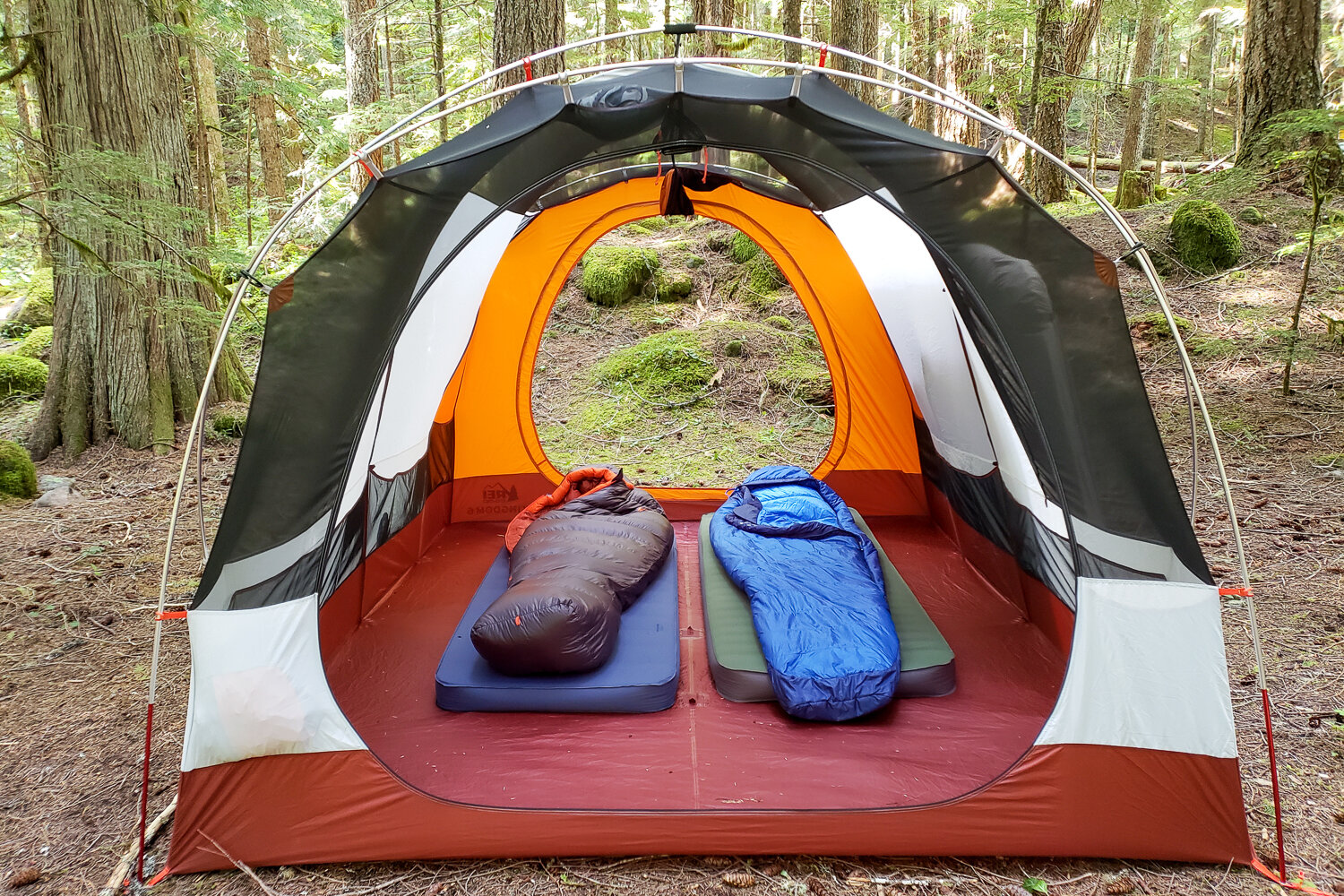
The HEST Foamy mattress is as easy as it gets since there’s no inflation required — the only one on our list with this distinction. Its all-foam construction means you can unroll it and lie down almost immediately. The only air mattress on our list — the LUNO Air Vehicle Mattress — also did well. You can inflate it in approximately two minutes using its electric air pump (included).
The self-inflating sleeping pads on our list are more similar than different. Most inflate at least 75% if you open their intake valves and let them sit for 10 minutes. We needed to top all of them off with their included pumps or pump sacks. Most took two to three minutes to deflate, roll, and pack back up in their included stuff sacks. Since self-inflating mattresses confuse some people, nearly every one we tested includes printed instructions in at least one place: next to the valves, on the pump sack, or on the stuff sack.
Which camping mattresses are best for cold weather?
If you camp in freezing temperatures, every sleeping pad on our list is rated for 4-season camping, except for the LUNO Air Pro Vehicle Mattress. You can evaluate their cold-weather performance by comparing their R-Values.
Sleeping pads with R-values of 5.5 or higher are rated for extreme cold (think below 0°F). The Hest Foamy (8.8), Big Agnes Captain Comfort (8.3-9.9), ExPed MegaMat (8.1), Sea to Summit Comfort Deluxe (7.7), NEMO Roamer Double (7), Therm-a-Rest MondoKing (7), and REI Campwell (7) easily exceed the minimum R-Value for extreme winter camping. If you camp in below-zero (Fahrenheit) temperatures, focus on these models.
You don’t need a camping mattress with an extremely high R-Value if you don’t sleep in extremely cold temperatures (below zero).
Sleeping pads with R-values between 4 and 6 provide enough insulation for 4-season camping, including temperatures well below freezing (32°F). The Therm-a-Rest LuxuryMap (6), Sea to Summit Camp Plus (5.3), and NEMO Flyer Cloud (5.1) are 4-season sleeping pads. Each should prevent you from losing too much body heat in more typical winter conditions, as well as spring, summer, and fall camping.
The only camping mattress on our list that’s NOT appropriate for winter camping is the LUNO Vehicle Mattress. We got chilly testing it with overnight lows in the 20s and 30s because its 1.5 R-value is rated for warm temperatures. At the same time, most people camp in summer, where this mattress’s lower R-value is not only more appropriate but potentially more comfortable, especially if you sleep warm.
What camping mattresses are most packable?
If you’re looking for camping mattresses that pack small, then the Sea to Summit Camp Plus, Therm-a-Rest LuxuryMap, and NEMO Flyer Cloud are for you. We wouldn’t take any of these camping mattresses backpacking, but they’re the most packable camping mattresses we tested and reviewed.
If you’re worried about a specific storage problem — in your vehicle, garage, or gear closet — pay attention to the packed shape and measurements of each product we recommend. Some pack down longer and leaner than others — better for standing in a corner, hanging on a hook, or cramming into a nook or cranny. Others are shorter but bulkier — like a winter sleeping bag. That can be a good thing for narrower shelves, but a bad thing for tight squeezes.

How to Choose a Camping Mattress
Which size camping mattress should I buy?
Choosing the best size camping mattress mostly comes down to comfort and tent space, followed by storage space (if you have a small apartment or compact car).
- Comfort: As a general rule, bigger camping mattresses are most comfortable. As long as it will fit your tent, we recommend the thickest, widest, and longest version of every mattress on this list.
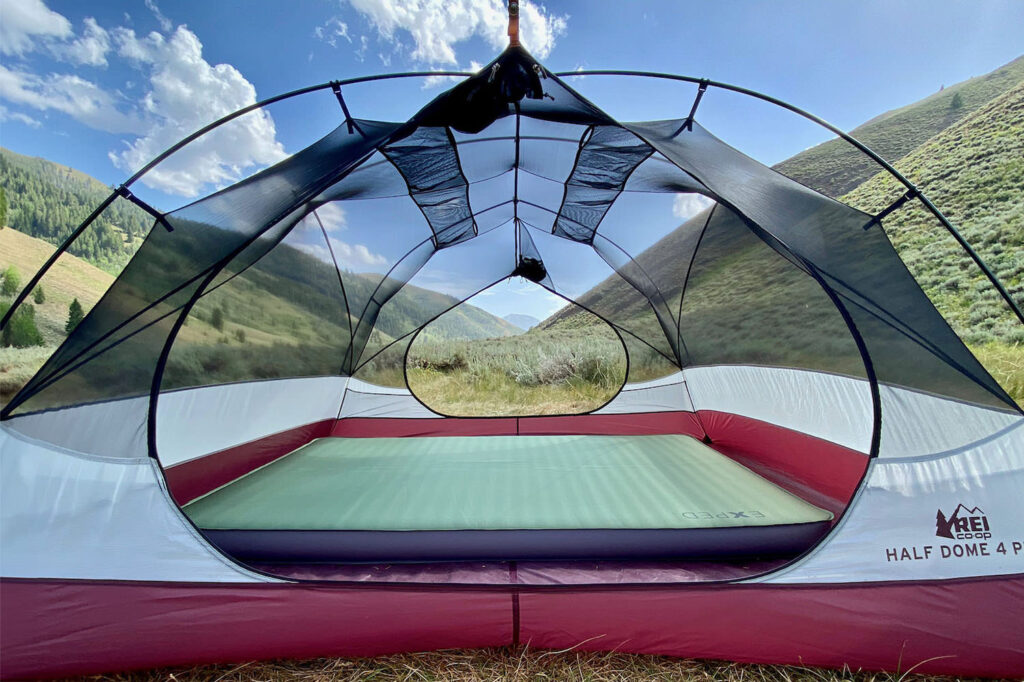
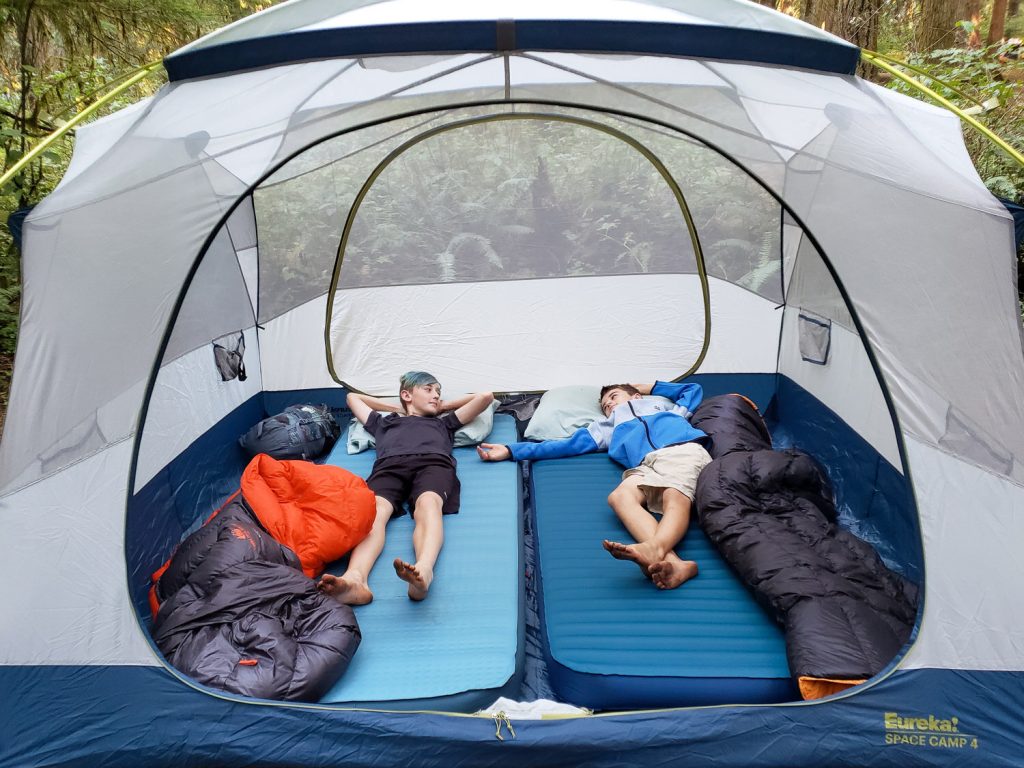
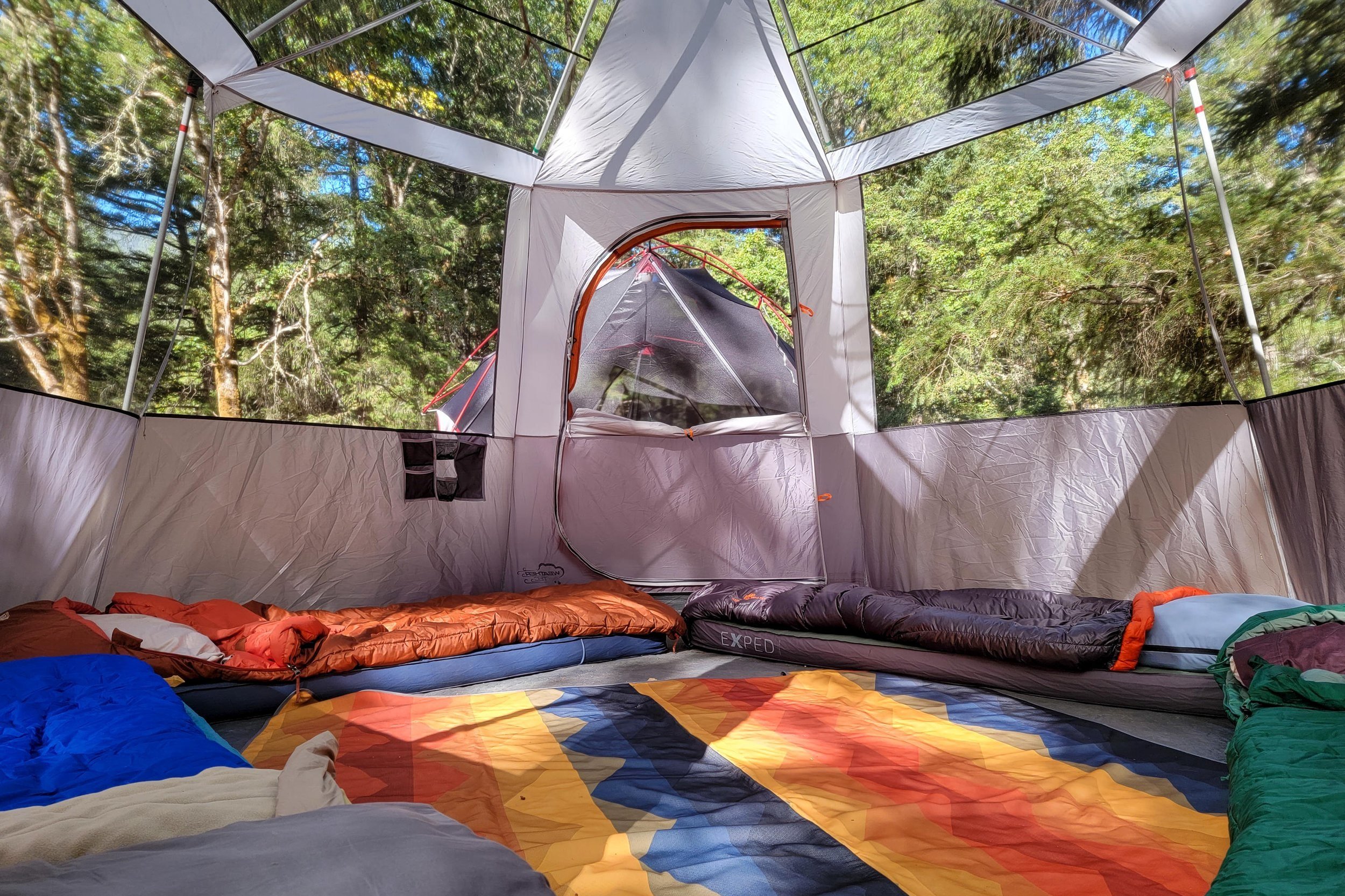
- Tent Size: It’s good practice to compare each camping mattress’s dimensions with your tent’s dimensions. Many of the camping mattresses we recommend are oversized for comfort, but they may not fit your tents. For example, some wide and XL sleeping pads for ONE barely fit in our tents for TWO. Just watch the specs.
- Storage space: Packed size matters much more for backpacking than car camping. A vehicle can carry much more gear and weight. But if space is at a premium — in your apartment, Prius, or vanlife setup — you may need to balance the comfort of a bigger mattress with the packability of a smaller one.
How thick of a camping mattress should I buy?
Through testing, we’ve found a positive correlation between a camping mattress’s thickness and comfort. That is, the thicker mattresses generally feel more comfortable (especially if you’re a side sleeper). We’ve found four inches to be the sweet spot. For the most comfortable sleep, choose a sleeping pad that’s four inches thick — or thicker.
Most of the camping mattresses we recommend are at least four inches thick, including the Big Agnes Captain Comfort Deluxe (5 inches), Therm-a-Rest MondoKing (4.25 inches), NEMO Roamer (4 inches), and Exped MegaMat (4 inches).
What’s the best type of sleeping pad to buy for car camping?
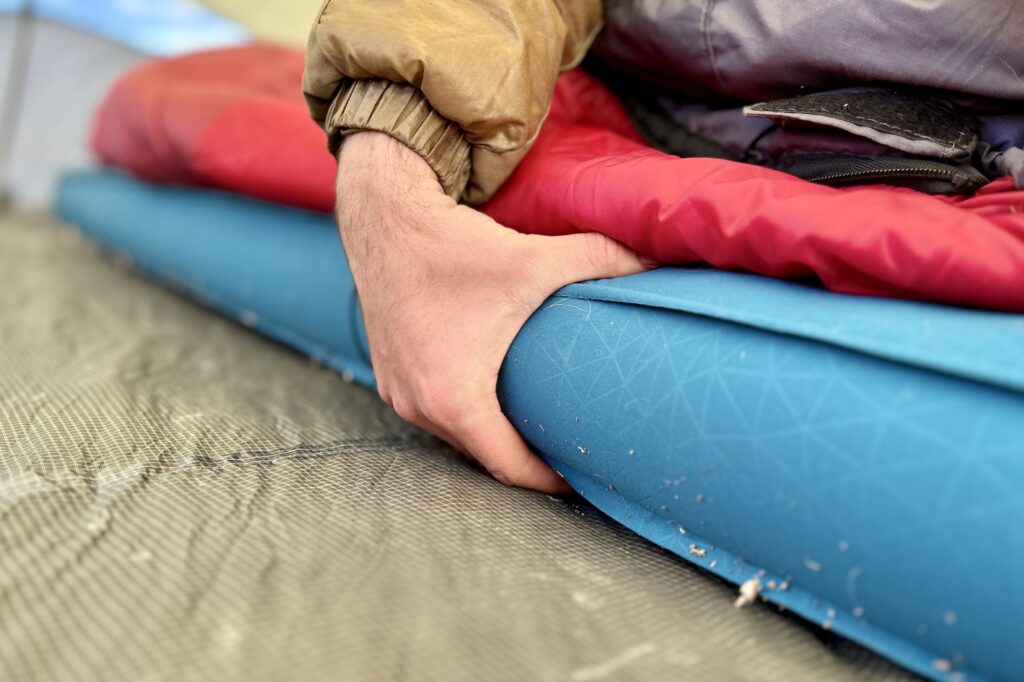
For car camping, we prefer self-inflating sleeping pads. Their mix of air and foam makes them more comfortable than air pads — and comfort matters most in the campground. The added weight and packed size of self-inflating camping mattresses usually don’t matter because you’re not carrying them on your back. You’re hauling them in a truck, car, or SUV.
For backpacking, we prefer inflatable sleeping pads that are ultralight and ultrapackable. Here’s our guide to the best backpacking sleeping pads.
How do self-inflating camping mattresses work?
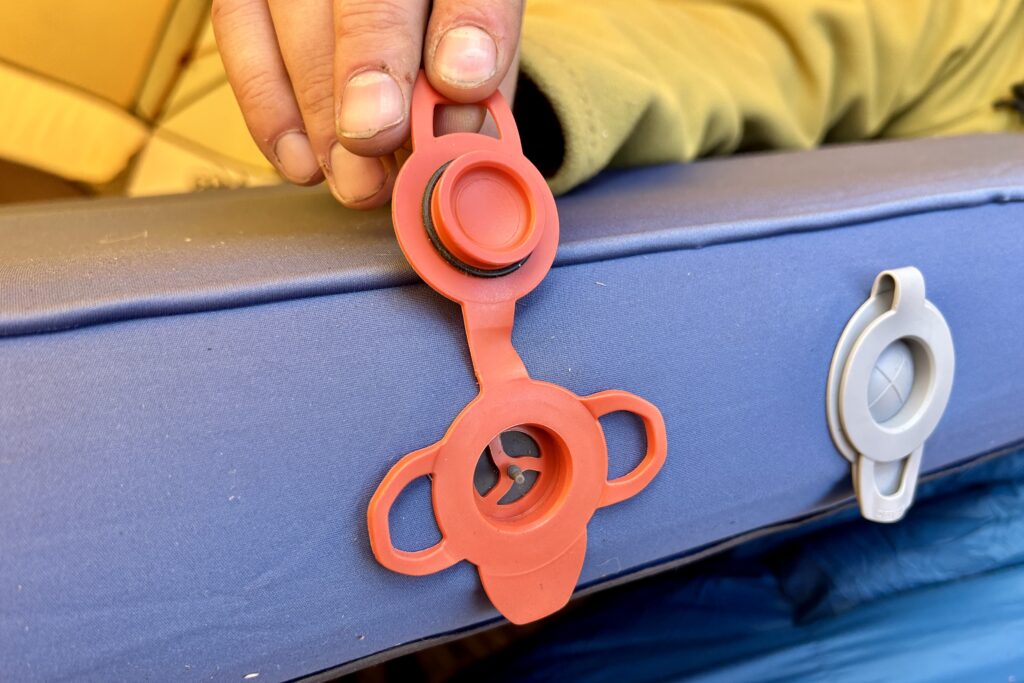
Self-inflating camping mattresses have open-cell foam in their air bladders, which take in air and expand when you open the mattress’s intake valve(s). All you need to do is open one or two valves (depending on the model) and leave the mattress alone for several minutes while you set up camp or crack open a cold one. Most of the time, you’ll want to top them off with a little air by using a pump sack, pump, or your lungs. Then you close the intake valves.
Self-inflating sleeping pads aren’t work-free, but they’re usually easy to use. The ones we recommend have instructions (on the pad or pump sack) to make sure you know which valve(s) to open and close when inflating and deflating.

Trouble-shooting self-inflating camping mattresses
If you have trouble inflating a new self-inflating camping mattress, most brands recommend unpackaging it a day before your trip. Lay them out flat and open the intake valve(s) for 24 hours to allow the open-cell foam to decompress. Then it’ll be in better shape to take in air.
If you have trouble packing up your self-inflating camping mattress, first roll it from the bottom up with the valves open to squeeze out the air. Then close the intake valve and repeat step one with the mattress folded in half (for most mattresses). As you reach the top of the mattress, open the valve to release any remaining air. Once it’s squeezed out, recap the valve and stuff the pad in its storage sack.
What is R-value?
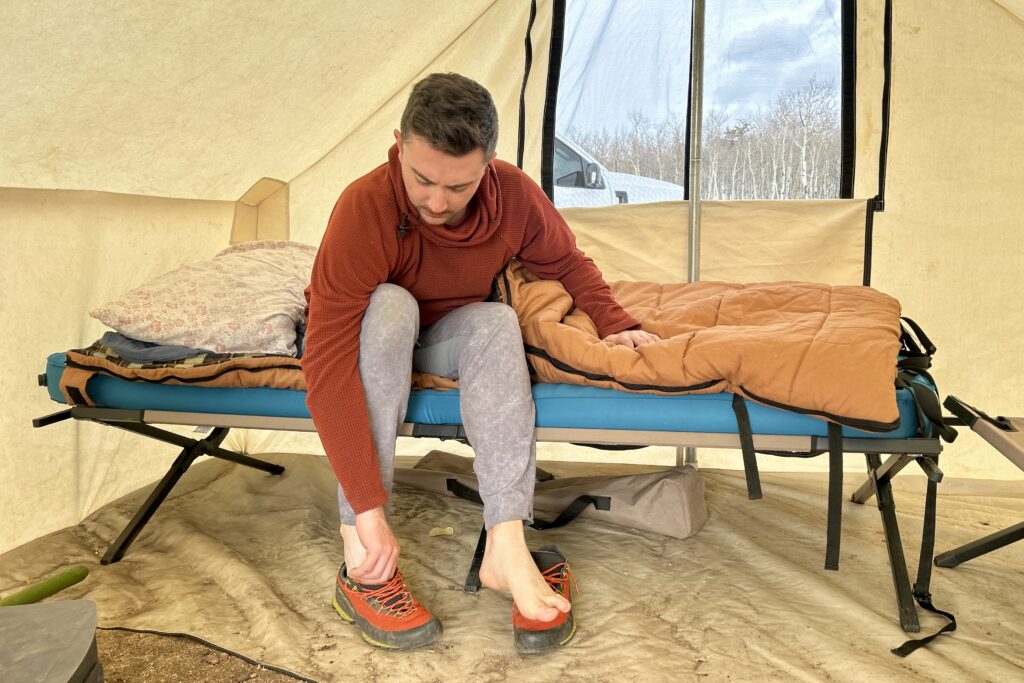
R-value is not a measure of warmth. It’s a measure of thermal resistance. Or, how much an insulating layer resists the transfer of heat from a warmer surface to a colder surface.
Manufacturers publish R-values for their sleeping pads and camping mattresses, so campers can understand how well that product will slow the transfer of body heat to the colder ground or air beneath them. The higher the R-value, the higher the resistance to heat loss. In the field, this means you’ll retain more body heat by sleeping on a mattress with a higher R-value.
What’s the best R-value for a camping mattress?
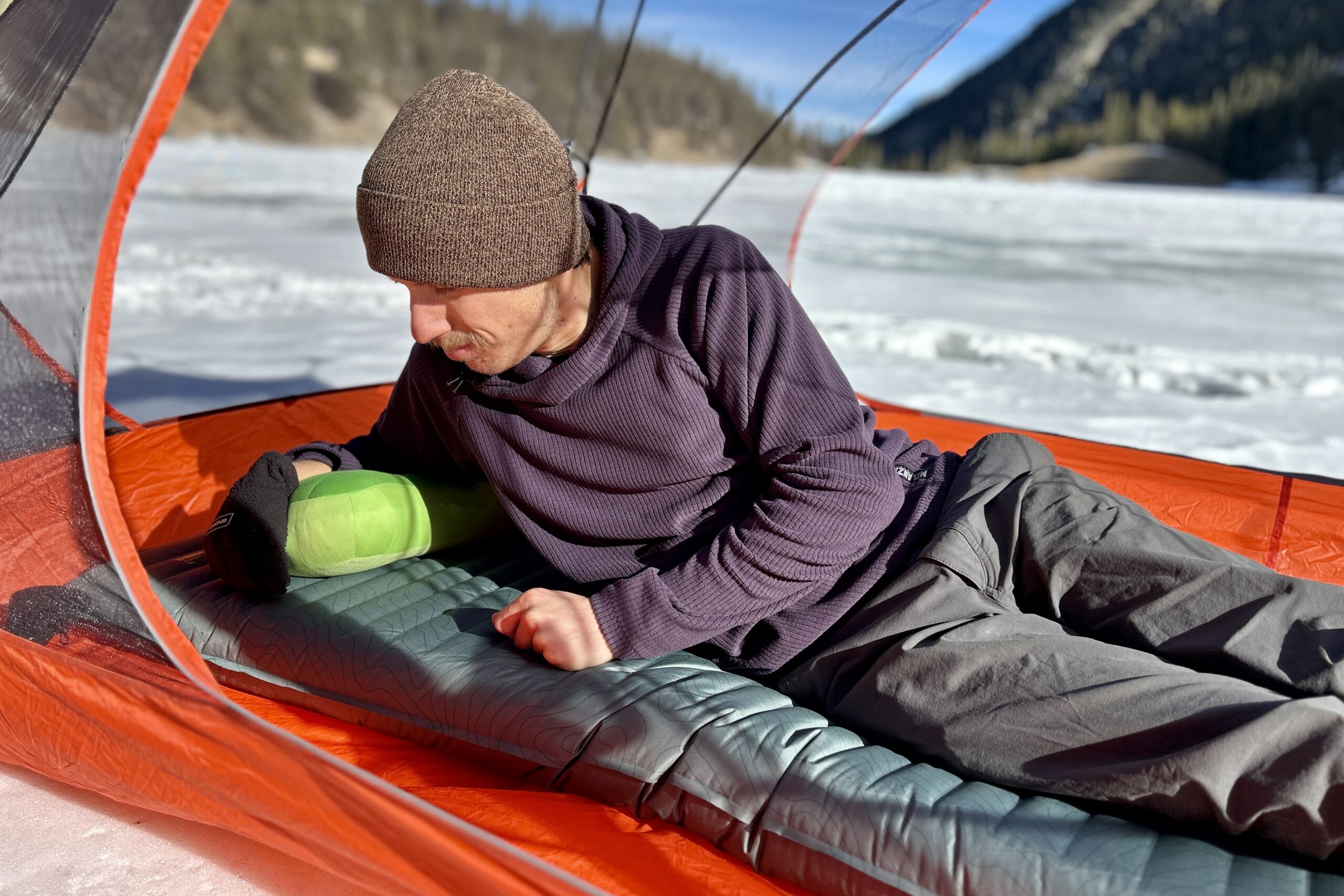
The best R-value for a camping mattress depends on the season and the temperatures where you camp. For lower temperatures, choose a higher R-value. For higher temperatures, choose a lower R-value.
As a rule of thumb, a sleeping mattress with an R-value of 1 to 2 is best for summer (warm/mild weather). An R-value of 2 to 4 is best for three-season camping (spring, summer, and fall). An R-value of 4 to 6 is best for winter camping (cold weather). An R-value of 5.5 or more is best for extreme cold (below 0°F).
Most of the camping mattresses that we recommend have way more insulation than most campers need, even in winter. That’s because their comfort features — an air bladder and foam cushion — also trap warm air underneath your body, which slows your heat loss.
If — like most people — you do most of your camping in summer, don’t freak out about the high R-values of the sleeping pads on this list. You probably won’t roast on the sleeping pads we recommend in summer.
Remember, R-value means thermal resistance — not warmth. So these mattresses won’t heat you up in summer. They’ll simply slow the loss of body heat to the ground. We’ve slept comfortably on all of these mattresses in both summer and indoor temperatures. In the end, R-value is much more important in winter than in summer.
Why Trust CleverHiker
At CleverHiker, we’ve logged thousands of nights under the stars, scrutinizing camping mattresses in conditions from sweaty summer heat to frigid winter nights. Ian Krammer, Gear Analyst and lead camping mattress tester, has camped in the Colorado Rockies for over ten years testing camping mattresses to find the top options available. His passion for quality gear, coupled with years of sales and analysis expertise, ensures this guide includes the best camping mattresses on the market.
Jory Brass led the most recent round of side-by-side testing. He’s a light sleeper — which makes him sensitive to subtle differences between camping mattresses. Plus, he has heaps of expertise in outdoor gear and apparel, thanks to five years working at Appalachian Outdoors and at Backcountry as a Gearhead Expert and copywriter for camping gear.

How We Test & Methodology
To determine the best mattresses for camping, our comprehensive testing covers four dimensions: comfort, ease of use, warmth, and packed size.
COMFORT
We rigorously test camping mattresses for comfort by sleeping on them in campgrounds and taking notes on their comfort. Our tests include sleeping in multiple positions — on our backs, stomachs, and sides — and nights at different temperatures. Gear analysts maintain testing notebooks to jot down pros and cons of every mattress in this guide.
In our latest tests, our gear analyst also conducted side-by-side comfort tests at home by switching camping mattresses each night for three months, cycling through each several times. This gave us more than a week of first-hand experience testing each mattress. Near the end of our testing, we also switched mattresses every few hours to compare the comfort of similar mattresses literally side by side.
Our testers mostly take qualitative notes on the cushioning and support of each sleeping pad. However, we also assess the face fabric’s softness against the skin and the noise of each mattress while shifting positions overnight.
EASE OF USE
The inflation and deflation process is key to a camping mattress’s ease of use. Mattresses that are quick and straightforward to fill win in this category. We measure the setup and pack-down times to determine how efficient and convenient a mattress is in real-world conditions. We scrutinize the valve design for functionality and reliability to prevent air leaks.
We consider how durable and easy to repair each model is by testing puncture resistance and whether the included repair kit is effective. We also review the instructions and included accessories to ensure they are clear and to improve the user experience.
WARMTH
For warmth, we test the mattress in a wide variety of weather conditions, including extreme cold and soaking wet weather, to gauge real-world performance. We look at the mattress’s R-value, which indicates its insulation capacity and helps us understand how well it helps campers retain body heat.
In most cases, the mattresses on our list all have exceptionally high R-values. Probably more than the average camper will ever need, which didn’t clearly differentiate the options. Since most campers sleep outside in summer, we didn’t weigh warmth scores as heavily as other metrics.
PACKED SIZE
We measure the dimensions when the mattress is fully packed and compressed to gauge its compactness for easy transport and storage. Our side-by-side testing included comparing how each packed camping mattress fit on our garage shelves, in the corner of our gear closet, and in the rear of our vehicle. If a sleeping mattress includes handy handles, carry sacks, or straps, we gave it extra credit for packability.
Our scores also considered weight in relation to packed size. However, weight doesn’t matter as much for car camping as it does for backpacking. Overall, we didn’t weigh this metric as heavily as others, since weight and packability matter much more for backpackers than for car campers.

Conclusion
Finding the perfect camping mattress based on comfort, ease of use, warmth, and packed size at the right price point can be a real hassle with so many options out there. No matter what your priorities are, though, we hope this guide will help you find the comfort and convenience you need for a good night’s sleep in the wild, so you can wake up refreshed and ready for the day ahead.