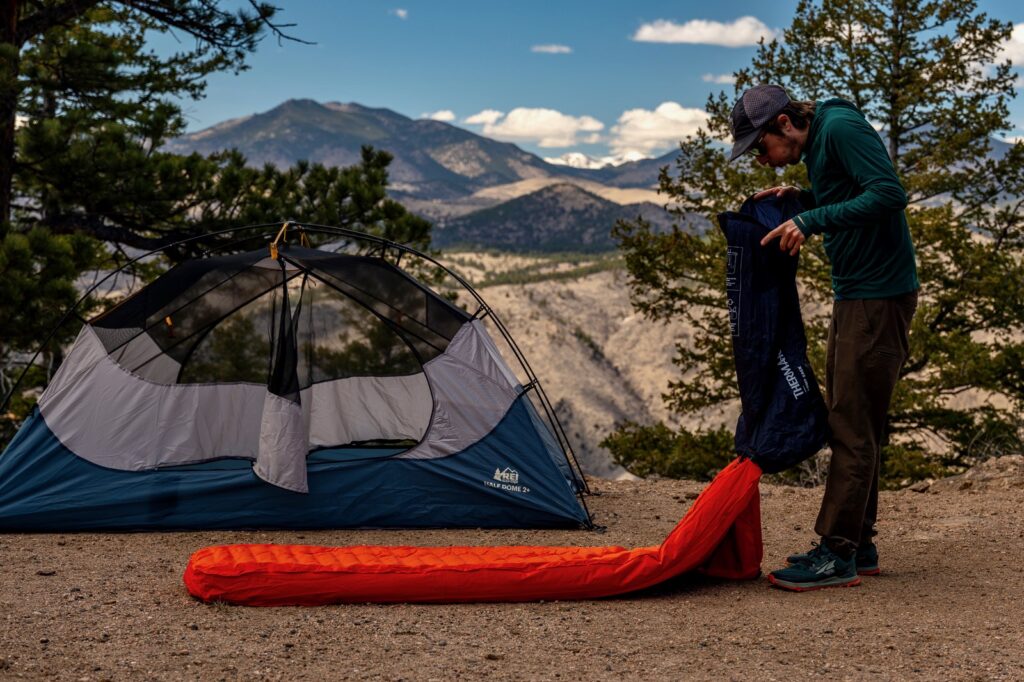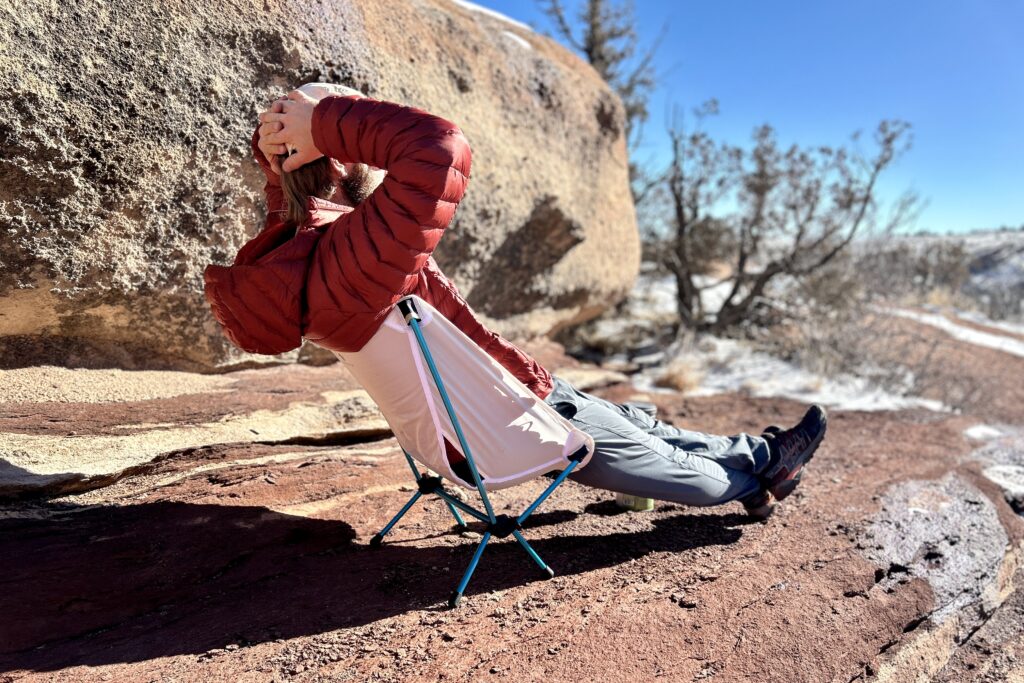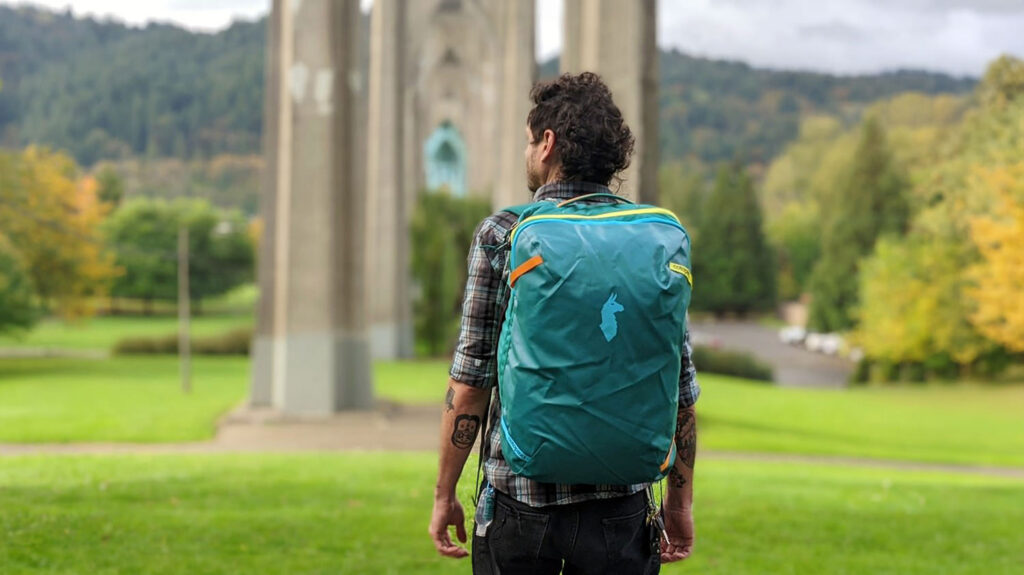

A good pillow helps make nights outdoors more restful, but the right design depends on how far you carry it and how you sleep. Tiny air pillows save backpack space, while cushioned inflatables and compressible foam can feel more like bedding at home. Our team has spent over 1,000 nights outside and compared more than 30 camping pillows to find the models worth bringing along.
Editor’s Note: This guide was updated on October 16, 2026 to reflect our latest findings and revised buying guidance on comfort, support, and packability.
How We Test Camping & Backpacking Pillows
Our testers use pillows overnight at backpacking camps and vehicle-accessible campsites, then compare them side by side to distinguish soft surface comfort from reliable head and neck support. Testing across Arizona, Colorado, and New Mexico has included the Gila and Pecos wilderness areas, long-distance trail trips, and repeated pillow swaps during the same night.
We consider how a pillow feels for different sleeping positions, whether it stays on a pad, how easily its firmness can be adjusted, and what it takes to pack each morning. We compare weight and packed volume separately because a foam pillow can be manageable on a scale and still occupy a disproportionate amount of space.
And for more info, check out some of our other popular gear guides:

#1. Best Backpacking Pillow Overall

The Sea to Summit Aeros Premium provides our favorite balance of packability, side-sleeping support, and adjustment. Its contoured neck edge and useful air valve stand out over many nights of testing; the chief compromise is the firmer feel and smaller surface compared with a plush campground pillow.

Quick Picks for Backpacking And Camping Pillows
Check out this quick list of our favorite backpacking and camping pillows if you’re in a hurry, or continue scrolling to see our full list of favorites with in-depth reviews.
1. Best Backpacking Pillow Overall: Sea to Summit Aeros Premium ($55 – $70)
2. Most Packable Backpacking Pillow: Sea to Summit Aeros Down ($65 – $85)
3. Most Ergonomic Backpacking Pillow: Therm-a-Rest Air Head Down ($65 – $76)
4. Best Campground Comfort Splurge: HEST Camp Pillow ($79 – $129)
5. Best Budget Campground Pillow: Wise Owl The Snoozy ($29 – $35)
6. Best Air/Foam Hybrid Pillow: NEMO Fillo ($50)
7. Best Large Luxury Air Pillow: Exped Mega Pillow ($70)
8. Best Budget Backpacking Pillow: Trekology Aluft Pro ($24)
9. Best Car Camping Pillow: Luno Packable Camp Pillow ($60 – $70)
10. Best Ultralight Pillow for Back Sleepers: NEMO Fillo Elite Wide Ultralight ($70)
11. Best Adjustable Foam Pillow: Therm-a-Rest Compressible Cinch ($35 – $50)
12. Best Quilted Air Pillow: Klymit Pillow X Luxe Summit ($40)
13. Best Minimalist Option: Hyperlite Stuff Sack Pillow ($63)

Sea to Summit Aeros Premium
Best Backpacking Pillow Overall
CleverHiker Rating: 4.7/5.0
Price: $55 – $70
Weight: 3.5 oz. (Regular)
Pillow Type: Air
Pros
- Lightweight and very compact
- Curved neck support
- Easy-to-adjust valve
- PillowLock attachment
Cons
- Firm inflatable feel
- Limited sleeping area
Few backpacking pillows make such an effective compromise between a tiny packed bundle and dependable neck alignment. The Sea to Summit Aeros Premium has been a favorite of our gear analyst for more than a decade, and its crescent shape continues to stand out when compared directly with rectangular inflatables. At 3.5 ounces for Regular, it is a compelling choice for backpackers who sleep on their sides and want meaningful support without devoting much pack space to a pillow.
The multifunction valve lets us release a little pressure without emptying the pillow, and PillowLock patches help it stay put on compatible sleeping pads. It remains an air pillow at heart, though: the firm sleeping surface and relatively small footprint will disappoint campers looking for a wide, plush cushion. The Sea to Summit Aeros Down is lighter and softer at the top but less ergonomically shaped, while the Therm-a-Rest Air Head Down offers a padded contour at a higher weight.
Our testing helps explain why this design has stayed ahead of larger, softer competitors. Its 4.3-inch Regular profile creates useful elevation without the weight of a foam-filled pillow, and its curved outline fits against the shoulders more naturally than a straight edge. We noticed its limitations most when lying on one side for a long stretch: pressure against the ear builds on a fully inflated bladder. Letting a little air out helps, but sleepers who insist on a cushioned face-contact layer should consider the down-topped alternatives instead.
Sea to Summit Aeros Down
Most Packable Backpacking Pillow
CleverHiker Rating: 4.7/5.0
Price: $65 – $85
Weight: 2.5 oz. (Regular)
Pillow Type: Air with down top
Pros
- Extremely light and packable
- Down top softens air chamber
- Convenient valve
- PillowLock attachment
Cons
- Small sleeping surface
- Rectangular neck fit
- Down requires maintenance
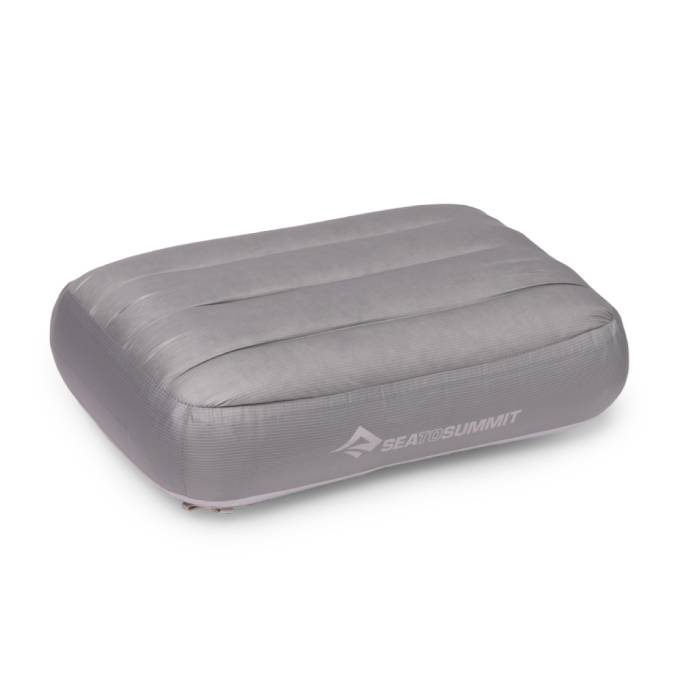
The advantage of the Sea to Summit Aeros Down is unusually straightforward: it offers a gentler cheek-contact surface while barely taking up room in a backpack. We logged more than 75 nights with this design, including long-distance trail use, and our comparisons of Regular and XL sizes confirmed that the Regular is the one to choose for minimum weight and volume.
Its narrow, rectangular surface is not as forgiving when you move around at night, and the down layer requires more careful laundering than a straightforward synthetic cover. For side sleepers who prioritize shoulder and neck fit over the very smallest package, the curved Aeros Premium or Air Head Down can be better choices. The Down earns its high ranking for hikers who want a real pillow but count every ounce.
The down layer is not a substitute for an entire foam cushion, but it makes a noticeable difference where the cheek meets the pillow. In side-by-side nights, our side sleeper experienced less ear pressure than with several bare-air designs, even though the Aeros Down remained a compact inflatable. We also tried the extra-large version: the welcome additional sleeping area came with a much bigger packed bundle and a substantial weight increase. The Regular’s tiny size, convenient pressure adjustment, and secure pad attachment are what make it particularly compelling for longer backpacking trips.

Therm-a-Rest Air Head Down
Most Ergonomic Backpacking Pillow
CleverHiker Rating: 4.6/5.0
Price: $65 – $76
Weight: 4.9 oz. (Regular)
Pillow Type: Air with down top
Pros
- Contoured ergonomic shape
- Down-cushioned cover
- Trail-friendly weight
Cons
- Fiddly twist valve
- Down requires special care
- Heavier than Aeros Down
For backpackers who can’t settle comfortably on a rectangular air chamber, the Therm-a-Rest Air Head Down is worth a close look. Its curved profile and soft top combine more natural neck placement with some relief from the pressurized feel of a bare inflatable. During a cold Pecos Wilderness night, our analyst preferred it to three other inflatable options he had brought for comparison.
The twist valve is the real drawback. Closing it can allow some air to escape, so bedtime adjustments take more patience than on the Sea to Summit models. Its 4.9-ounce ranking weight also makes it less attractive to strict ounce-counters than the Aeros Down, but shoppers choosing for side-sleeper fit rather than the lightest possible kit have a clear reason to accept that tradeoff.
The comfort distinction showed up when we rotated among air pillows at camp rather than relying only on product dimensions. Our tester kept returning to the Air Head Down for its cushioned face feel and the way the crescent edge supported the neck while side sleeping. The regular pillow also fits inside sleeping-bag hoods, a useful detail when keeping a small pillow positioned overnight. The Sea to Summit models remain easier to operate and lighter in a pack; choose this one when the improvement in shoulder fit outweighs those small carrying and valve compromises.

HEST Camp Pillow
Best Campground Comfort Splurge
CleverHiker Rating: 4.4/5.0
Price: $79 – $129
Weight: 1 lb. 3.2 oz. (Small)
Pillow Type: Memory foam
Pros
- Excellent foam comfort
- Supportive for side sleepers
- Durable construction
- Washable components
Cons
- High price
- Heavy and bulky
The HEST Camp Pillow is our comfort splurge for camping near a vehicle, not a sensible choice for a long hike. In overnight comparisons with a dozen pillows, our tester repeatedly returned to its memory-foam-and-polyester fill. It has a plush but resilient feel that held the head up better than some extremely soft campground alternatives, especially for a side sleeper who wants both cushioning and support.
Adjustable fill makes it more adaptable than a sealed foam cushion, and washable components help with repeated use. Even the Small weighs more than a pound, however, and its compressed bundle takes substantial space; the durable cover is not the softest fabric in the group. Choose the Wise Owl The Snoozy if you want an inexpensive taste of foam-pillow comfort, or consider the Luno Packable Camp Pillow if your top priority is a particularly yielding surface rather than support.
HEST’s size options matter because more pillow is not automatically better for every campsite. Our published comparison found the Small sufficient for our tester, while Medium and Large cater to people who want something closer to bedroom-pillow proportions at greater cost and bulk. Paired with a thick camping mattress, its resilient fill creates a notably home-like sleep setup. That same substantial construction makes it inconvenient for hikers who have to carry everything on their backs, but more sensible for vehicle-based trips where reliable comfort can justify both the storage space and premium price.

Wise Owl The Snoozy
Best Budget Campground Pillow
CleverHiker Rating: 4.4/5.0
Price: $29 – $35
Weight: 11 oz. (Medium)
Pillow Type: Memory foam
Pros
- Very comfortable memory foam
- Excellent campground value
- Simple, inflation-free setup
- Washable cover
Cons
- Not suited to backpacking
- Large packed size
- Limited loft adjustment
Budget car campers can get a notably comfortable place to rest without the expense of a luxury foam pillow. The Wise Owl The Snoozy surprised our testers with soft, microsuede-covered memory foam during comparisons in Colorado and New Mexico, earning its place for real sleeping comfort rather than low price alone. It needs no inflation or valve adjustments, and the cover can be washed after dusty trips.
A comfortable foam pillow still occupies room in the car or pack, and The Snoozy’s low, compressible feel won’t provide enough neck height for everyone who sleeps on their side. The Therm-a-Rest Compressible Cinch gives more control over loft; the HEST adds support and a more premium fill for considerably more money. The Snoozy remains one of the smartest choices when soft campground comfort and a modest budget matter most.
Our published comparison also makes the value proposition unusually clear: The Snoozy costs far less than HEST yet delivers the soft foam feel our campers consistently preferred to exposed inflatable surfaces. The savings do not make it an all-purpose pillow, however. A compressed foam bundle still takes considerable room, and the yielding fill may sink too low for some side sleepers even when it feels terrific at first contact. For campground nights, hammocks, travel, or other trips where ounces are secondary, that comfort-for-dollar tradeoff is precisely why it earned its budget distinction.


NEMO Fillo
Best Air/Foam Hybrid Pillow
CleverHiker Rating: 4.4/5.0
Price: $50
Weight: 9.3 oz.
Pillow Type: Air with foam
Pros
- Cushioned foam surface
- Adjustable air support
- Quieter than bare inflatable pillows
Cons
- Heavier than ultralight models
- Foam adds packed bulk
The NEMO Fillo bridges the gap between a packable inflatable and the softer surface of a campground foam pillow. A foam top quiets and cushions the air bladder while the inflatable core can be tuned for height. Our analyst slept comfortably on it during New Mexico camping and found it competitive with better air-based pillows in overnight comparisons.
Its hybrid construction is also why it packs larger and weighs more than lightweight air-only models. At 9.3 ounces, it is a deliberate comfort upgrade rather than the obvious answer for a long-distance hike. The Aeros Premium is easier to carry and has a more ergonomic neck contour, while full-foam options make more sense for campers who never need the compactness or air adjustment.
One practical appeal of this hybrid is the ability to alter head height without giving up the quieter, softer sensation of a foam contact layer. In our comparisons, that combination made the Fillo easier to enjoy than many exposed-air pillows while retaining more packability than a full-size foam cushion. Its washable cover and integrated storage arrangement also make repeated use straightforward. The slippery underside was a nuisance on smooth sleeping pads, though, and the extra foam does not disappear when packed. It suits comfort-conscious backpackers willing to carry more, rather than dedicated ultralight hikers.
More: NEMO Fillo Full Review

Exped Mega Pillow
Best Large Luxury Air Pillow
CleverHiker Rating: 4.4/5.0
Price: $70
Weight: 9.2 oz.
Pillow Type: Air
Pros
- Soft sleeping surface
- Wide and comfortable
- Exceptional air-pillow support
Cons
- Bulky for long backpacking trips
- No fast-dump valve
- Premium price
Air-pillow skeptics may appreciate the Exped Mega’s broad surface, soft fabric, and unusually supportive internal baffles. When our tester alternated among inflatable pillows overnight, this was the one he repeatedly wanted to return to. Its 4.7-inch height and width provide room and loft for side sleeping without relying on a thick block of compressible foam.
The Mega’s packed bundle approaches the size of a one-liter bottle, and it lacks a separate fast-dump opening, making morning deflation less convenient than on some competitors. Those are worthwhile concessions on short trips or when a vehicle carries the gear, but not for hikers seeking the smallest load. The Aeros series saves considerable space; the HEST is the more plush, foam-filled splurge.
The Mega’s comfort advantage is not simply that it is large. Our overnight comparisons found its covered surface and internal construction kept the head supported without the concentrated firmness we noticed on some smaller inflatable designs. That makes it a strong candidate for side sleepers who have struggled to stay comfortable on narrow air pillows. Its air construction is still less plush than a memory-foam campground cushion, and the relatively bulky roll reduces its appeal for extended backpacking. For shorter approaches, it offers a convincing middle path between tiny trail inflatables and full-size car-camping foam.
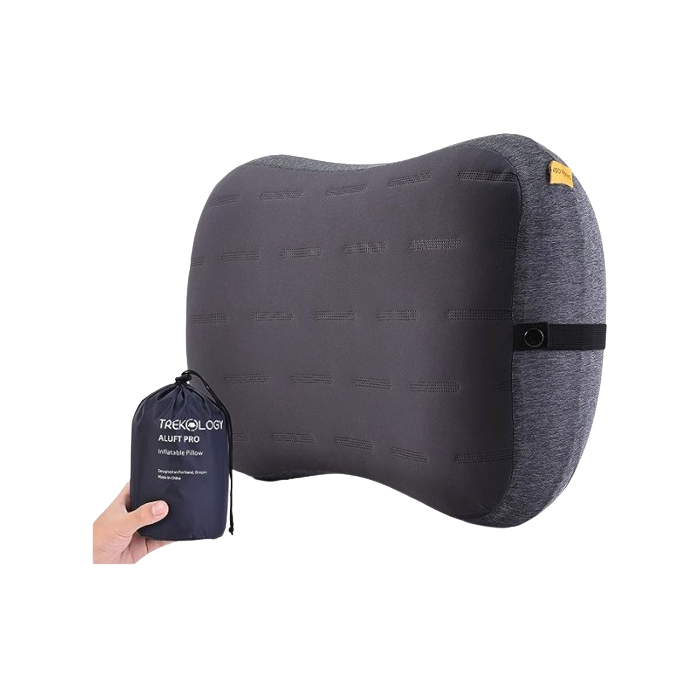
Trekology Aluft Pro
Best Budget Backpacking Pillow
CleverHiker Rating: 4.3/5.0
Price: $24
Weight: 8.7 oz.
Pillow Type: Air
Pros
- Affordable
- High inflatable loft
- Strap holds pillow in place
- Removable cover
Cons
- Ergonomic fit won't suit everyone
- Heavier than premium ultralight choices
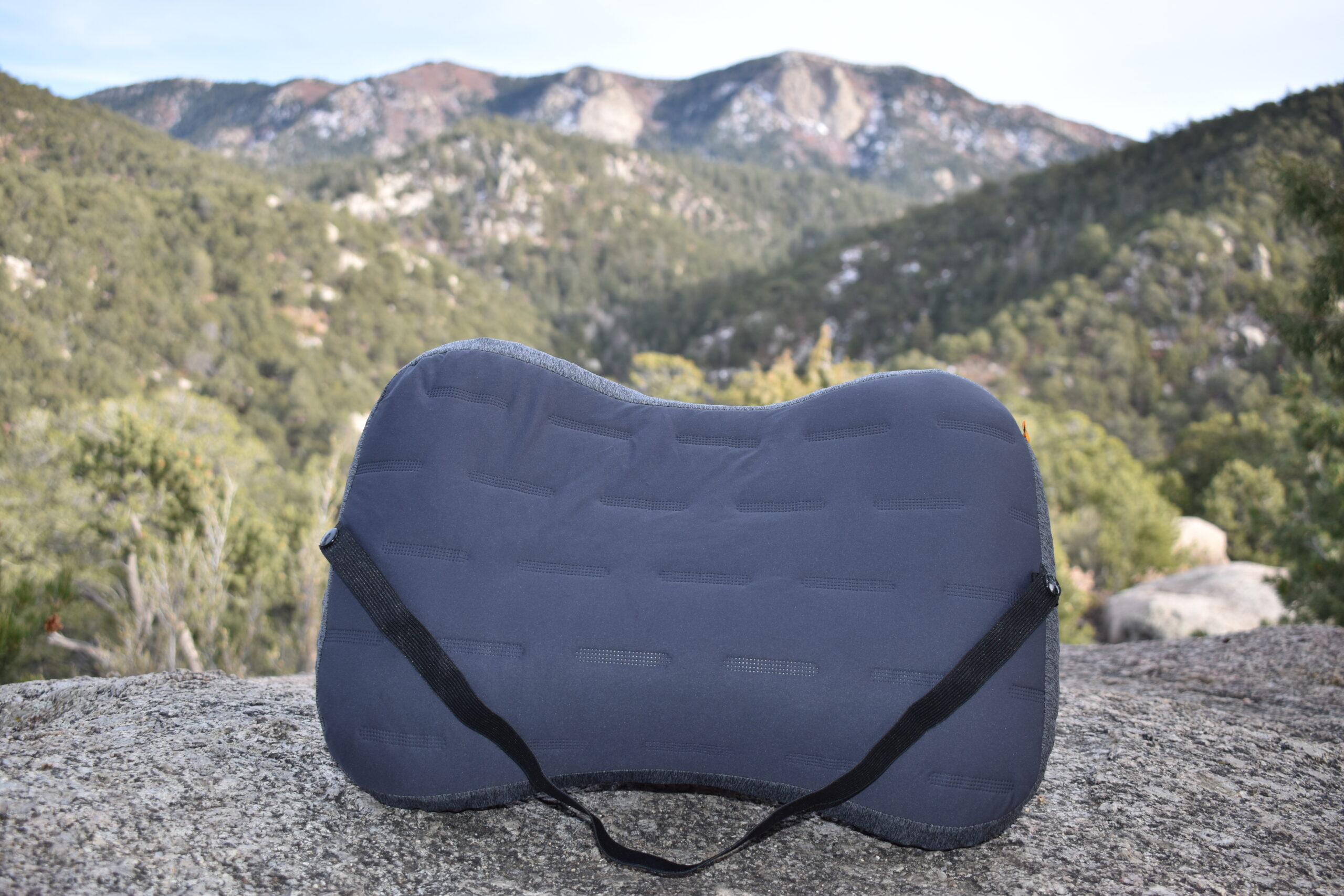
A low price doesn’t automatically make a useful backpacking pillow, but the Trekology Aluft Pro has features that earn it a place on this list. Its tall inflatable chamber supplies ample loft, and the removable strap helps keep the pillow centered on a sleeping pad. Our testers took it on Arizona Trail and Continental Divide Trail outings without encountering a major durability or setup problem.
Its pronounced ergonomic outline divided our team: one analyst found it naturally supportive, while another shifted out of position overnight. At 8.7 ounces, it’s heavier than the lightest backpacking pillows. Shoppers who can tolerate the fit uncertainty get a useful budget option; spending more on the Aeros Premium buys a lighter, more consistently well-liked neck shape.
The value argument is strongest for occasional hikers who want real pillow features rather than the bare minimum. The Aluft Pro combines a removable, washable cover with its pad-securing strap, useful touches at a price well below the premium inflatable field. Our field results also explain the caution: the central recess and curved ends positioned one tester comfortably but felt unnatural to another. Its five-inch air height cannot compensate for a shape that does not suit your shoulders. Buyers who already know they like a sculpted pillow may find an excellent deal; uncertain side sleepers should prioritize fit over the savings.

Luno Packable Camp Pillow
Best Car Camping Pillow
CleverHiker Rating: 4.2/5.0
Price: $60 – $70
Weight: 1 lb. 11 oz. (Regular)
Pillow Type: Memory foam
Pros
- Exceptionally soft memory foam
- Reversible fabric
- Good car-camping comfort
Cons
- Heavy
- Bulky
- Less supportive for some side sleepers
For the campground rather than the trail, the Luno Packable Camp Pillow feels especially close to a soft pillow from home. Its yielding shredded memory foam impressed our tester enough that an early trial nap lasted for hours, and subsequent outings reinforced that comfort. The reversible cover offers two distinct face-fabric textures, and its two surfaces feel distinctly different against the skin.
This is an intentionally cushy choice, not one for everyone who wants neck elevation. Side sleepers seeking a firmer foundation may prefer the HEST, while shoppers trying to save money can get a comfortable foam surface with The Snoozy. At 1 pound 11 ounces for Regular and with a bulky packed case, Luno makes sense when the walk from car to campsite is short and softness is the main purchase priority.
Our tester especially liked how the shredded fill yielded under the face, making Luno feel less like outdoor equipment and more like a familiar bedroom pillow. The reversible cover provides a choice of surface textures, so campers can choose whichever feels more comfortable. The softness is part of the appeal and also the reason it may not hold a side sleeper’s neck as high as firmer foam options. Campers who move between car sites and road trips will get more from that plushness than backpackers watching space and weight.

NEMO Fillo Elite Wide Ultralight
Best Ultralight Pillow for Back Sleepers
CleverHiker Rating: 4.5/5.0
Price: $70
Weight: 4.2 oz.
Pillow Type: Air with synthetic top
Pros
- Lightweight
- Wide sleeping surface
- Soft synthetic top
Cons
- Limited side-sleeper support
- Less cushioning than regular Fillo
A wide sleeping surface normally demands a substantial packed-size penalty, but the NEMO Fillo Elite Wide Ultralight stays at a manageable 4.2 ounces. Its jersey-covered top and broad platform give back sleepers room to move their heads without balancing on a tiny air chamber. Our team tested it on New Mexico outings, and We carried this design on hundreds of Arizona Trail miles.
Width is not the same as vertical support. At roughly three inches thick, the Elite Wide can leave a side sleeper’s neck lower than it would be on the curved Aeros Premium or a deeper inflatable. The regular Fillo adds plush foam at a higher weight, while this Elite version is the more sensible choice for a backpacker whose head moves around on the pillow but whose neck doesn’t need a tall platform.
Our long-distance use offers useful perspective on the Elite Wide’s priorities: its larger landing zone can make a lightweight pillow feel less restrictive without demanding a heavy foam top. Our tests also found the synthetic-covered fabric pleasant against the face, even though it does not have the regular Fillo’s thick cushioned feel. Back sleepers who turn their heads may especially appreciate the added width. Those who sleep mostly on their sides should check loft before choosing it, since a broad surface alone cannot fill the space between shoulder and neck.

Therm-a-Rest Compressible Cinch
Best Adjustable Foam Pillow
CleverHiker Rating: 4.2/5.0
Price: $35 – $50
Weight: 11.5 oz.Regular size
Pillow Type: Foam
Pros
- Adjustable foam loft
- Soft fabric
- No inflation required
Cons
- Bulky for backpacking
- Less plush than Wise Owl The Snoozy
The clever feature of the Therm-a-Rest Compressible Cinch isn’t a new material but the way its rear adjustment changes foam distribution. Tightening the cinch can build a taller, more supportive platform under a side sleeper’s neck, something that ordinary compressible cushions can’t easily offer. Our testers appreciated the practical fit adjustment even though they found the Wise Owl The Snoozy softer.
The tradeoff is obvious once you pack it: compressed foam still takes up meaningful space, and the 11.5-ounce weight is poor competition for small air pillows. This is a better campground or vehicle-travel choice than a long-distance hiking accessory. Choose it over The Snoozy when customizable loft is important, or move up to the HEST when premium foam feel takes priority over price and volume.
Unlike a sealed block of foam, the Cinch lets you shift the feel of the pillow by drawing in its rear cord and concentrating fill where additional height is needed. That gives it an advantage over softer campground pillows that flatten beneath the head, particularly for side sleepers who want adjustment but dislike inflating a bladder. In our testing, it did not feel as sumptuous as the Snoozy, and the foam remained bulky even when packed. It makes the most sense for car campers seeking variable support without the setup or face feel of an air pillow.

Klymit Pillow X Luxe Summit
Best Quilted Air Pillow
CleverHiker Rating: 4.0/5.0
Price: $40
Weight: 7 oz.
Pillow Type: Air
Pros
- Quilted sleeping surface
- Wide pillow
- Supportive loft
Cons
- Less comfortable than Exped Mega Pillow
- Middling packed size
- Limited value compared with alternatives
The Klymit Pillow X Luxe Summit combines a broad sleeping area with a quilted contact surface and approximately five inches of inflatable loft. That can appeal to side sleepers who want more space than a minimalist air pillow provides. During our comparisons it worked as a capable option, but it did not surpass the Exped Mega on comfort or support.
The middle ground is a crowded place to shop. Trekology sells a less expensive tall inflatable that includes a pad strap, while Exped offers a more consistently comfortable luxury air surface for a higher price. Klymit earns this specialized recommendation for shoppers who specifically prefer its wide quilted top, not because it leads the field in compactness, price, or overall sleep comfort.
Published comparisons give this model a narrower but still useful role. The X-shaped contours and quilted top offer an alternative to plain rectangular air chambers, and its broad profile supplies enough loft for people who do not want a tiny minimalist cushion. Still, our testers preferred Exped Mega for overall air-pillow comfort and head support. Trekology undercuts it on price and includes a pad strap, while the lighter premium models pack down smaller. Klymit is therefore a fit-and-texture preference rather than an obvious value or weight winner; it is worth choosing only if that particular surface agrees with you.

Hyperlite Mountain Gear Stuff Sack Pillow
Best Minimalist Option
CleverHiker Rating: 3.9/5.0
Price: $63
Weight: 1.7 oz.
Pillow Type: Stuff sack
Pros
- Extremely lightweight
- Doubles as gear storage
- Fleece-lined sleeping surface
Cons
- Comfort depends on spare clothing
- No fixed neck support
- Crinkly fabric
- High cost for a stuff sack
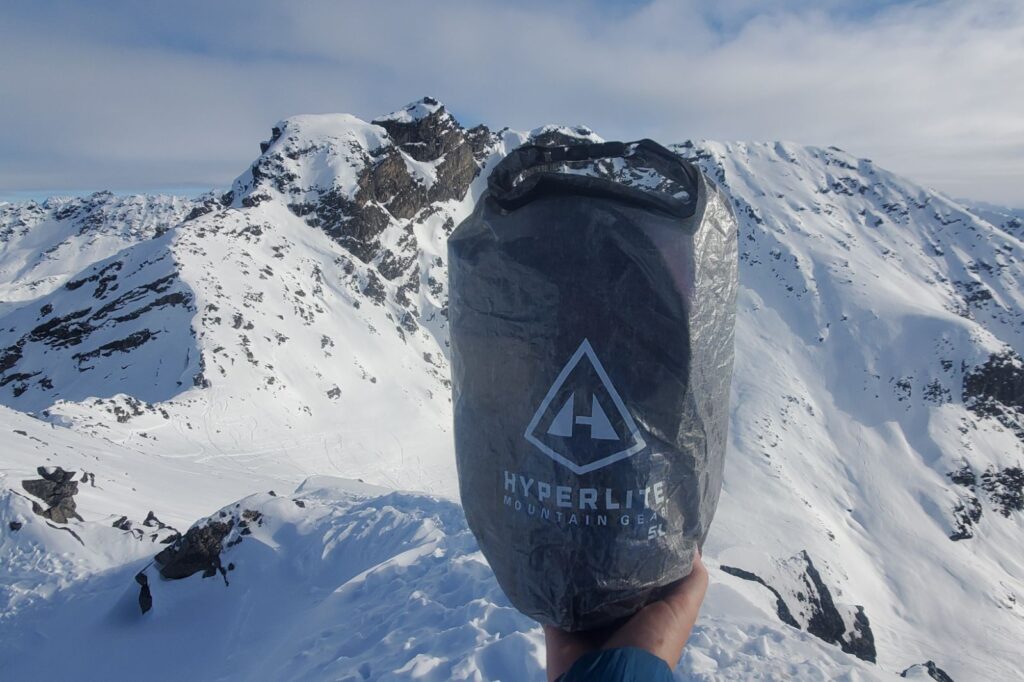
Some ultralight hikers would rather carry one item that serves two purposes than pack a dedicated pillow. The Hyperlite Stuff Sack Pillow stores extra clothing during the day, then turns its fleece-lined side outward to create a cushion at night. When the clothing would otherwise require its own storage sack, that is a real opportunity to avoid redundant equipment.
The problem is predictability. Head height, firmness, and even the smoothness of the sleeping surface depend on what clothing happens to be available, and our tests found less consistent support than purpose-built pillows. The shell can also be noisy. At $63, it is not a budget recommendation; it is for committed minimalists who value multipurpose storage more than dependable bedtime comfort.
Long-term use shows why the sack has a place in a minimalist kit despite the comfort penalty. We have carried this style of storage system for thousands of trail miles, while our overnight testing found the fleece side more inviting than a plain crinkly bag. The amount of spare clothing can change abruptly with weather: an insulation layer that makes a good pillow one night may need to be worn for warmth the next. That uncertainty matters most for side sleepers who need consistent loft, and makes this a deliberate weight-saving compromise rather than an equivalent replacement for a dedicated pillow.

Product Comparison Table
| oSort | Product | Price | Weight | Pillow Type | Comfort | Weight & Packability | Support | Ease of Use | 0 |
Sea to Summit Aeros Premium View at REI View at Sea to Summit 
|
$55 – $70 | 3.5 oz. (Regular) | Air | 4.5 | 4.8 | 4.8 | 4.7 | 1 |
Sea to Summit Aeros Down View at REI View at Amazon
|
$65 – $85 | 2.5 oz. (Regular) | Air with down top | 4.4 | 4.9 | 4.7 | 4.7 | 2 |
Therm-a-Rest Air Head Down View at REI View at Amazon |
$65 – $76 | 4.9 oz. (Regular) | Air with down top | 4.5 | 4.6 | 4.7 | 4.7 | 3 |
HEST Camp Pillow View at REI View at Amazon
|
$79 – $129 | 1 lb. 3.2 oz. (Small) | Memory foam | 4.8 | 3.5 | 4.3 | 4.5 | 4 |
Wise Owl The Snoozy View at Amazon View at Wise Owl 
|
$29 – $35 | 11 oz. (Medium) | Memory foam | 4.7 | 3.6 | 4.3 | 5.0 | 5 |
NEMO Fillo View at REI View at Amazon |
$50 | 9.3 oz. | Air with foam | 4.6 | 4.0 | 4.7 | 4.1 | 6 |
Exped Mega Pillow View at REI View at Backcountry |
$70 | 9.2 oz. | Air | 4.6 | 4.1 | 4.9 | 4.7 | 7 |
Trekology Aluft Pro View at Amazon |
$24 | 8.7 oz. | Air | 4.0 | 4.5 | 4.3 | 4.5 | 8 |
Luno Packable Camp Pillow View at Amazon View at Luno |
$60 – $70 | 1 lb. 11 oz. (Regular) | Memory foam | 4.7 | 3.4 | 4.2 | 4.6 | 9 |
NEMO Fillo Elite Wide Ultralight View at REI View at Backcountry |
$70 | 4.2 oz. | Air with synthetic top | 4.0 | 4.7 | 4.0 | 4.1 | 10 |
Therm-a-Rest Compressible Cinch View at REI View at Amazon |
$35 – $50 | 11.5 oz. Regular size | Foam | 4.5 | 3.7 | 4.3 | 3.9 | 11 |
Klymit Pillow X Luxe Summit View at Amazon View at Klymit |
$40 | 7 oz. | Air | 4.1 | 3.9 | 4.2 | 4.2 | 12 |
Hyperlite Mountain Gear Stuff Sack Pillow View at Hyperlite Mountain Gear View at Garage Grown Gear |
$63 | 1.7 oz. | Stuff sack | 3.5 | 5.0 | 3.0 | 4.9 |
|---|

Analysis & Results
We compare pillows across five buying dimensions: value, comfort, weight and packability, support, and ease of use. These categories overlap, but a good score in one does not necessarily predict whether a pillow will fit your trip or sleeping position. The highest-ranked designs earn their places by making the most persuasive tradeoffs for their intended users.
Which Camping Pillows Offer the Best Value?
The two clearest low-cost choices solve different problems. The Wise Owl The Snoozy offers soft memory-foam campground comfort for considerably less than the premium foam models, while the Trekology Aluft Pro gives budget backpackers inflatable loft and a pad-securing strap. Their savings have limits: the Snoozy is bulky, and our testers disagreed about the Trekology’s ergonomic fit.
The Sea to Summit Aeros Premium is another strong value because its versatile neck support, low weight, and straightforward adjustments justify a middle-of-the-field price for frequent hikers. The NEMO Fillo sits between ultralight minimalism and plush comfort, and the Therm-a-Rest Compressible Cinch gives foam fans a useful fit adjustment without a luxury price tag.
Spending more is most persuasive when you already know your sleep preference. The HEST and Luno pillows cater to frontcountry softness, the Exped Mega prioritizes wide inflatable comfort, and the Aeros Down charges a premium for especially low weight and a cushioned top. The Hyperlite sack offers less predictable comfort for a substantial price, so its value depends almost entirely on whether it replaces storage you were already carrying. The Klymit’s quilted shape has an audience but faces compelling alternatives at nearby prices.
Which Camping Pillows are the Most Comfortable?
Foam dominates when soft face contact matters more than small packed volume. The HEST Camp Pillow provides our favorite combination of cushy fill and resilient head support, while the Luno has an especially yielding, bedroom-like feel. Wise Owl’s The Snoozy comes surprisingly close on softness for much less money, though the loft can be too low for certain side sleepers. The Compressible Cinch isn’t quite as plush but gives those sleepers a way to concentrate foam where they need it.
Air-based pillows vary much more than the category label suggests. The Exped Mega was our tester’s favorite conventional inflatable because of its broad, softly covered sleeping surface. The NEMO Fillo uses foam over an inflatable core to dampen the balloonlike sensation, and the down-topped Air Head Down combines cushioning with a neck-friendly contour. The Aeros Down also softens cheek contact but offers very little room to shift; the Aeros Premium is firmer despite its strong overall ranking.
Sleepers who want more width should investigate the Fillo Elite Wide, particularly if they lie mostly on their backs. The Klymit’s quilted surface adds some forgiveness without matching Exped’s comfort. The Trekology’s curve suited one tester but not another, and the Hyperlite’s clothing-dependent surface is the least predictable option for restful sleep.
Which Camping Pillows Are Lightest & Most Packable?
The smallest dedicated choices are the Sea to Summit Aeros Down at 2.5 ounces, the Aeros Premium at 3.5 ounces, and the NEMO Fillo Elite Wide at 4.2 ounces. Their compact air chambers make them reasonable additions to long-distance kits. The 1.7-ounce Hyperlite Stuff Sack Pillow is lighter still, but it needs spare clothing to become a pillow and only saves gear weight when it replaces another sack.
The Therm-a-Rest Air Head Down remains sensible for backpacking at the 4.9-ounce weight in our ranking data. The Klymit’s 7-ounce weight and the Trekology’s 8.7-ounce ranking figure represent a more noticeable burden for hikers seeking maximum efficiency. The NEMO Fillo and Exped Mega are each near nine ounces, with packed bundles larger than the lightest inflatables; their more comfortable surfaces and additional width are the reasons to accept the penalty.
Compressible foam occupies an entirely different volume category. The Snoozy and Compressible Cinch can be carried short distances, but the Large foam bundles are hard to justify on a long hike. The HEST and Luno pillows are clearly oriented toward car camping, where packing a bigger cushion has much less impact on the rest of a trip.

Which Camping Pillows Provide the Best Neck Support?
Thickness matters, but shoulder fit can matter just as much. The Exped Mega combines roughly 4.7 inches of height with stable air baffles, and our testers found it exceptionally supportive. The Aeros Premium’s curved edge places the pillow against the neck more naturally than several rectangular competitors. The Therm-a-Rest Air Head Down made a particularly convincing case for ergonomic fit during direct overnight comparisons, even though its inflation height is not the greatest.
The Aeros Down supplies plenty of air-supported elevation in a small surface, though its rectangular shape is less accommodating when sleepers shift. The NEMO Fillo offers adjustable air height beneath soft foam, while the Klymit and Trekology provide relatively tall chambers with differences in how naturally their shapes meet the shoulders. The Fillo Elite Wide suits a different sleeper: its width is appealing for back sleeping, but its shallower profile can fall short for side-sleeping support.
Among foam pillows, HEST’s resilient fill provided comfortable support without the harshness of an inflated bladder. Tightening the Compressible Cinch can improve loft when an ordinary foam cushion feels too low. The softer Luno and The Snoozy allow more sinking, which is pleasant for some positions but less ideal for sleepers who need a high, steady platform. The Hyperlite sack depends entirely on the clothing used for fill and offers no consistent neck height.

Which Camping Pillows Are Easiest to Use?
For uncomplicated bedtime routines, foam pillows stand out: take them from their bags, allow them to regain loft, and settle in. The Wise Owl The Snoozy and Luno Camp Pillow are particularly simple, while the Compressible Cinch adds an adjustment step that pays off for sleepers fine-tuning height. The HEST Camp Pillow is also straightforward at camp, though packing a large foam bundle is more involved than deflating an air chamber.
Among inflatables, Sea to Summit’s multifunction valves make inflation, small pressure changes, and morning deflation particularly convenient. PillowLock patches add stability when paired with compatible pads. The Therm-a-Rest Air Head Down’s twist valve can lose pressure during closure, while the Exped Mega lacks a separate quick-dump opening. Those little differences become more noticeable when pitching and packing camp every day.
The NEMO Fillo and Fillo Elite Wide offer washable covers, but the standard Fillo’s slippery underside can be annoying on a smooth pad. The Trekology’s removable strap helps counter nighttime sliding, although its valve takes some learning. The Klymit’s setup works without offering the same standout conveniences. The Hyperlite eliminates inflation but requires moving and reshaping clothes every night, a recurring task rather than an effortless shortcut.
How to Choose a Camping Pillow
Should I Choose an Inflatable or Foam Camping Pillow?
Air pillows offer the best packed-size savings and let you adjust support by adding or releasing pressure. Compressible foam usually feels gentler against your face and is simpler to set up, but you carry its bulk even when you aren’t using it. A hybrid can provide cushioning and adjustment together, at the cost of extra volume.
What Type of Pillow Is Best for Side Sleeping?
Side sleepers generally need enough loft to fill the gap from shoulder to head, plus an edge that fits comfortably near the neck. Shape can be more important than the tallest advertised height. Test whether your head stays aligned when the pillow softens or shifts during the night.

How Much Should My Backpacking Pillow Weigh?
The right target depends on trip length and how much sleep comfort affects you. A small inflatable in the low-single-digit ounces is the easiest to justify on a long hike, while a larger or cushioned pillow can be a worthwhile tradeoff if you consistently struggle to sleep without it. Packed volume deserves equal attention because bulky designs can crowd out other essential gear.

Do I Need a Pillow That Attaches to My Sleeping Pad?
If you wake up with the pillow beside your head rather than underneath it, attachment features can be valuable. Straps and compatible adhesive-style systems help keep a cushion from sliding on slick pad fabric. A stable sleeping surface can sometimes matter more than adding more loft.
Should I Prioritize Softness or Neck Support?
Softness makes initial contact pleasant, but a pillow that collapses too far may not hold your neck in a comfortable position. Firmer support can be effective for side sleepers yet uncomfortable against the ear. Look for a balance of surface cushioning and underlying shape that suits how you actually sleep.
How Should I Clean & Store a Camping Pillow?
Follow the care instructions for each fabric and fill. Removable washable covers are useful after dusty outings, while down-topped designs require more careful drying to protect insulation. Store compressible pillows loosely when practical, and let inflatable products dry fully before long-term storage.
Why Trust CleverHiker
Our camping pillow testing is led by our editor and gear analyst Jory Brass, who has hiked roughly 17,000 miles over 15 years and worked in outdoor gear at Appalachian Outdoors and Backcountry. His experience sleeping outdoors on long-distance trails and comparing pillows overnight in New Mexico’s Gila and Pecos wilderness areas gives our recommendations a practical foundation in comfort, neck support, and packability.
We evaluate pillows side by side on backpacking trips and at campgrounds, paying attention to how they perform for different sleep positions rather than relying on product descriptions. We consider the pillow each tester returns to after trying alternatives, while recognizing that a side sleeper, back sleeper, ultralight hiker, and car camper may need very different levels of loft and cushioning.

Testing Methodology
We evaluate camping pillows across four core metrics: comfort, weight and packability, support, and ease of use. Our testers compare pillows over multiple nights and swap between models to separate first impressions from what stays comfortable through a full night’s sleep.
How Do We Test Pillow Comfort?
We sleep on each pillow in different positions, paying attention to how its surface feels against the face and ears, whether its shape leaves enough room to shift, and how cushioning changes as the night goes on. Comparing air chambers, down-topped inflatables, foam hybrids, and compressible pillows side by side helps us distinguish soft contact materials from overall sleeping comfort.
We also note rustling, fabric texture, and pressure points. A pillow can feel plush when first inflated yet become distracting after hours on one side, so sustained comfort matters more than a quick squeeze in camp.
How Do We Assess Weight & Packability?
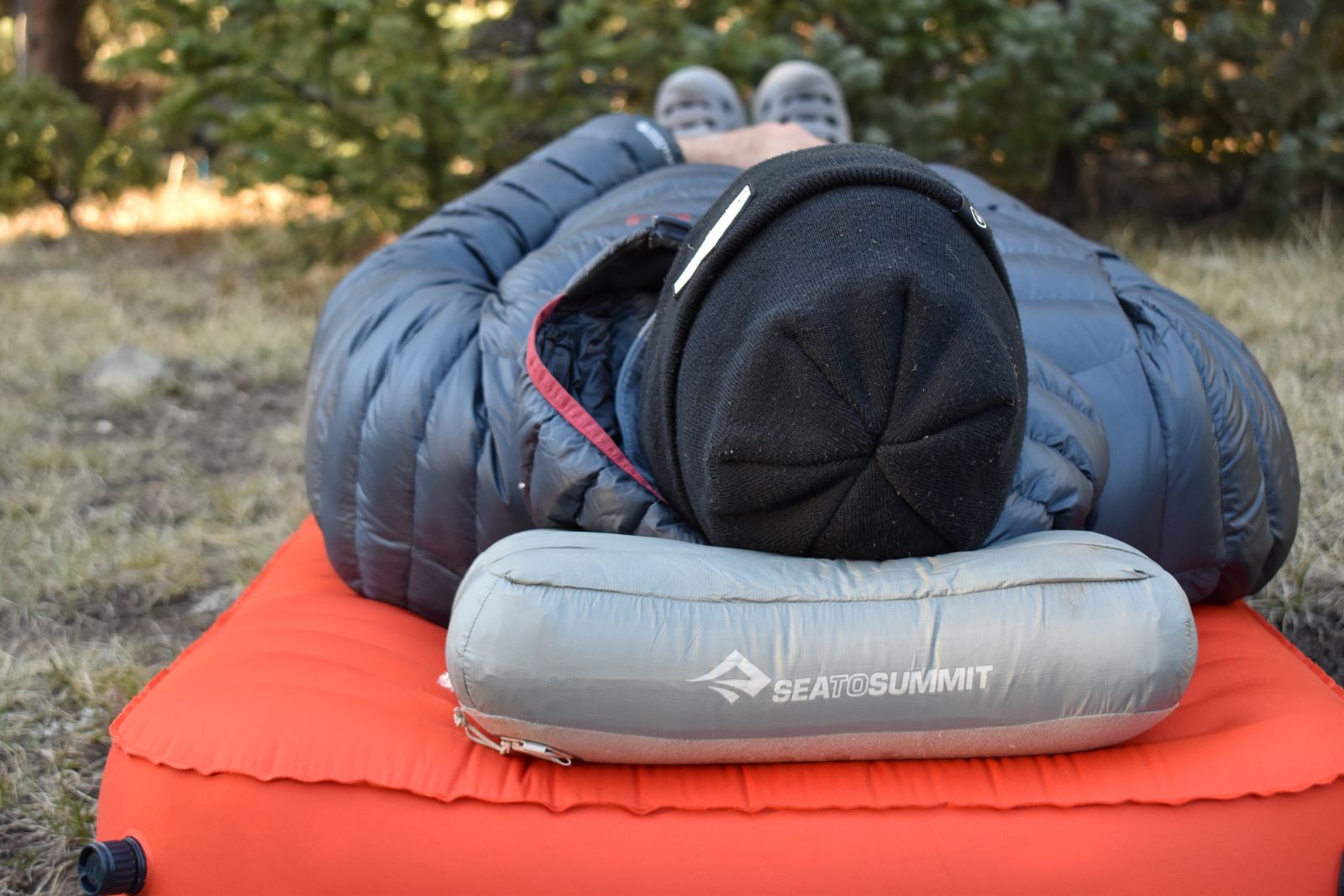
We consider the pillow’s carried weight alongside the space it occupies when packed. For backpacking models, we compare how easily the pillow fits into a sleeping kit and what happens to packed volume when choosing a wider size or adding foam cushioning.
We also consider whether accessories such as stuff sacks, straps, or removable covers add useful function. A lightweight pillow that occupies too much space can be a poor match for long trips, while car campers can reasonably prioritize a larger, softer cushion.

How Do We Evaluate Neck Support?
We test whether each pillow holds the head at a comfortable height and how naturally its edge fits against the neck and shoulders, especially for side sleepers. We adjust inflation pressure or foam fill where possible, then compare how well each design maintains alignment without excessive sinking or a hard, concentrated pressure point.
Width and thickness are only part of the picture. We pay particular attention to contoured shapes, internal baffles, and how consistent support feels when testers change sleeping positions.

How Do We Test Ease of Use?
We set up, adjust, pack, and clean pillows as we would on a normal trip. For inflatables, we compare valve operation, inflation effort, fine-tuning, deflation, and how well the pillow stays on a sleeping pad. For foam pillows, we focus on how quickly they regain loft, whether adjustments are straightforward, and how much effort it takes to compress them again.
Removable covers, securing straps, and care requirements factor into our evaluation when they change day-to-day convenience. We value features that solve problems in camp rather than simply adding complexity.

Conclusion
A camping pillow is a small part of a sleep system, but it can have an outsized effect on how rested you feel the next morning. Start by choosing the right level of neck support and face-contact comfort for your preferred sleeping position. Then consider how many ounces, how much packed volume, and how much morning fuss you are willing to accept for a better night’s sleep.