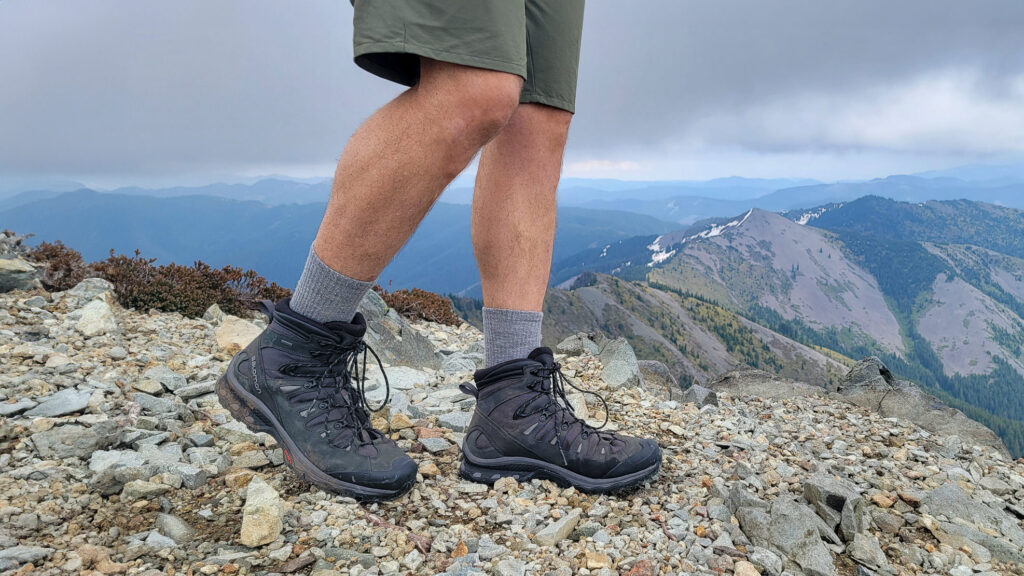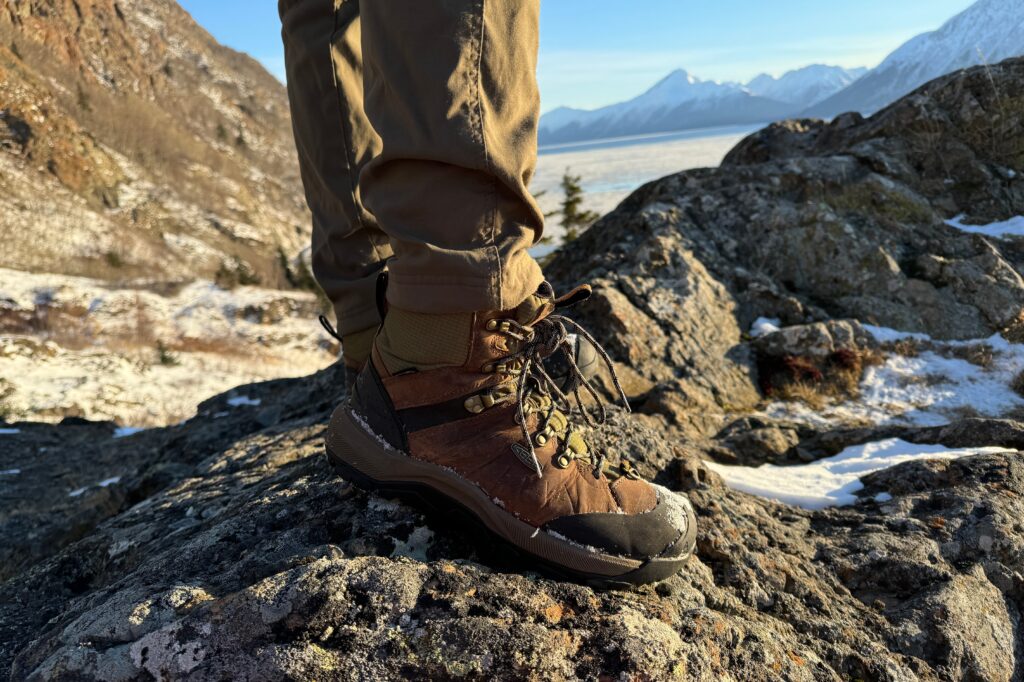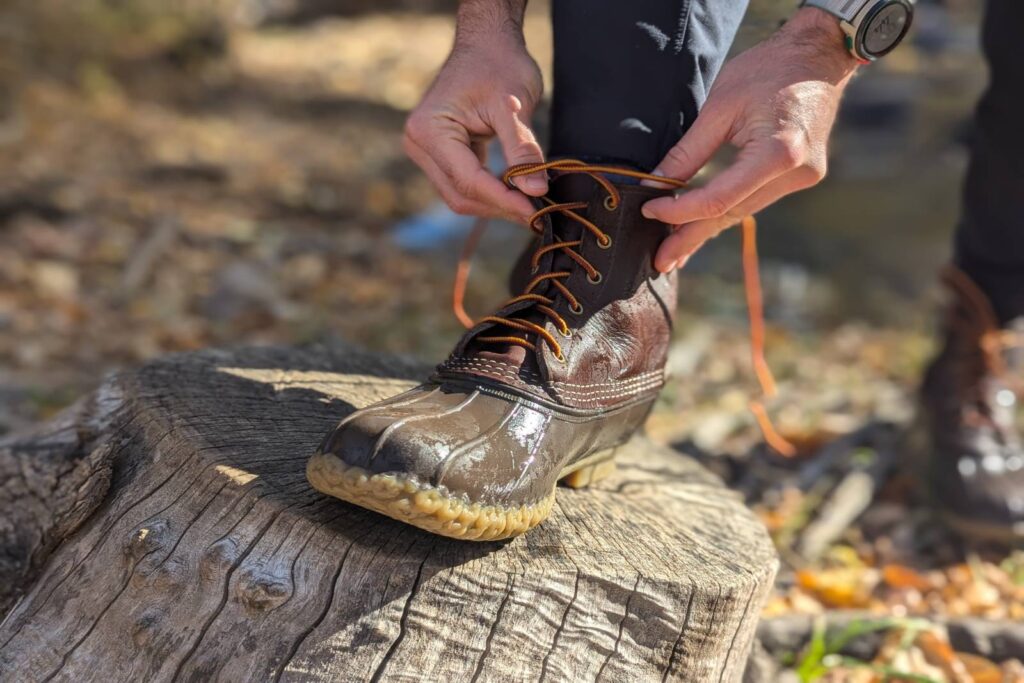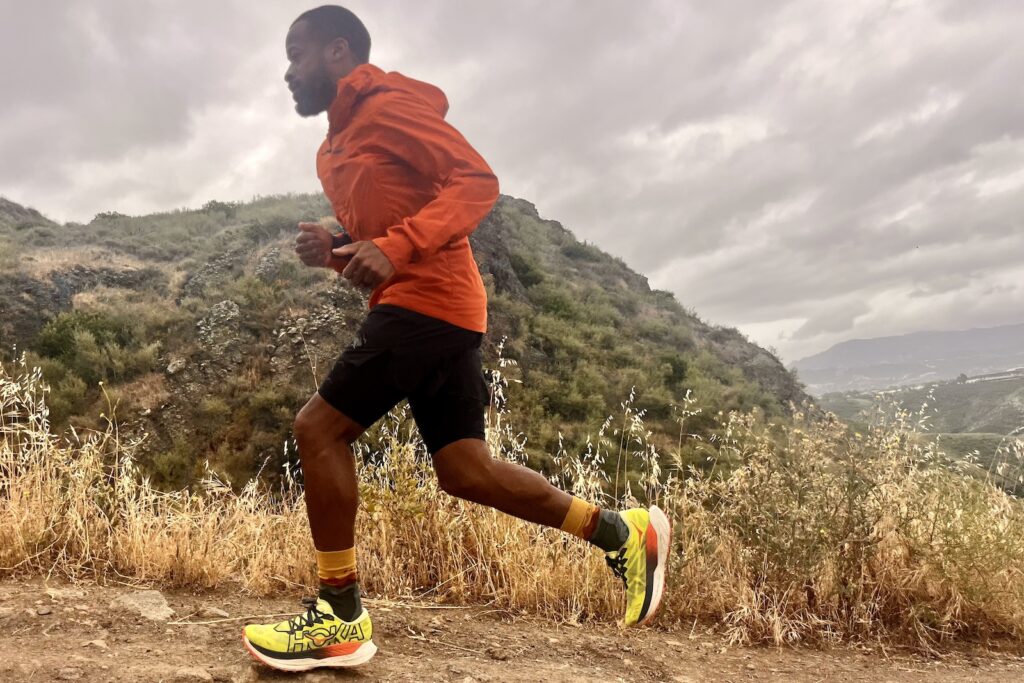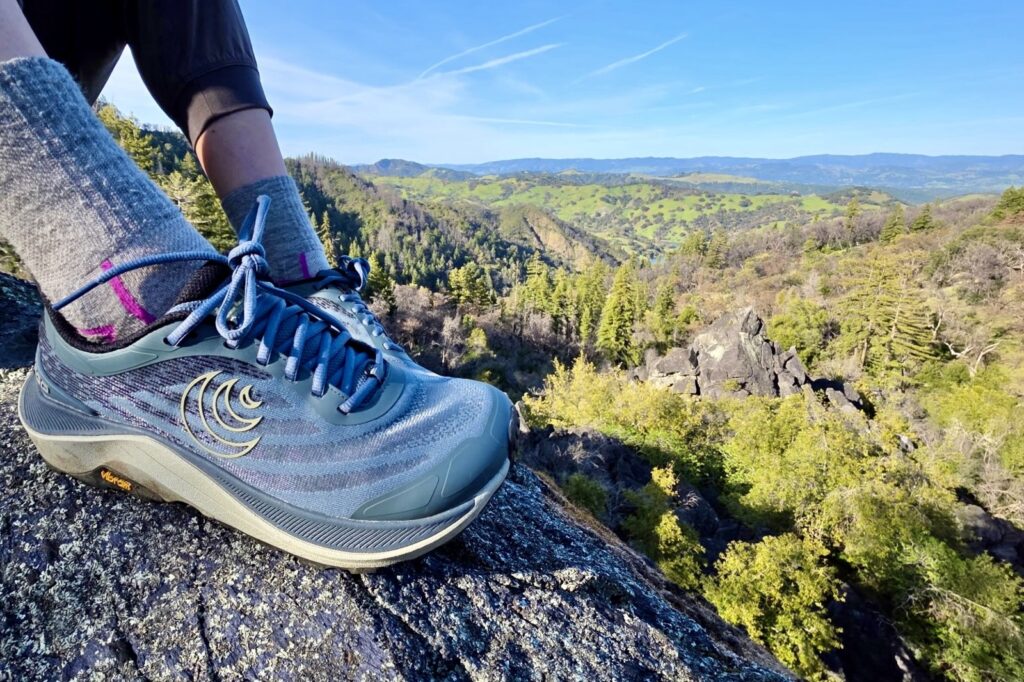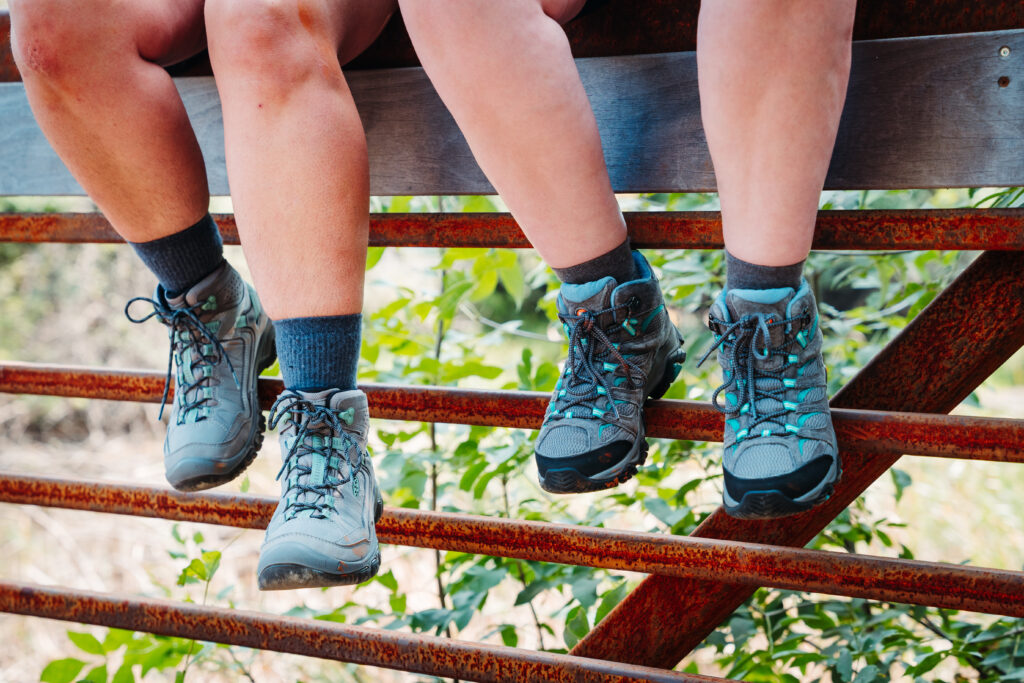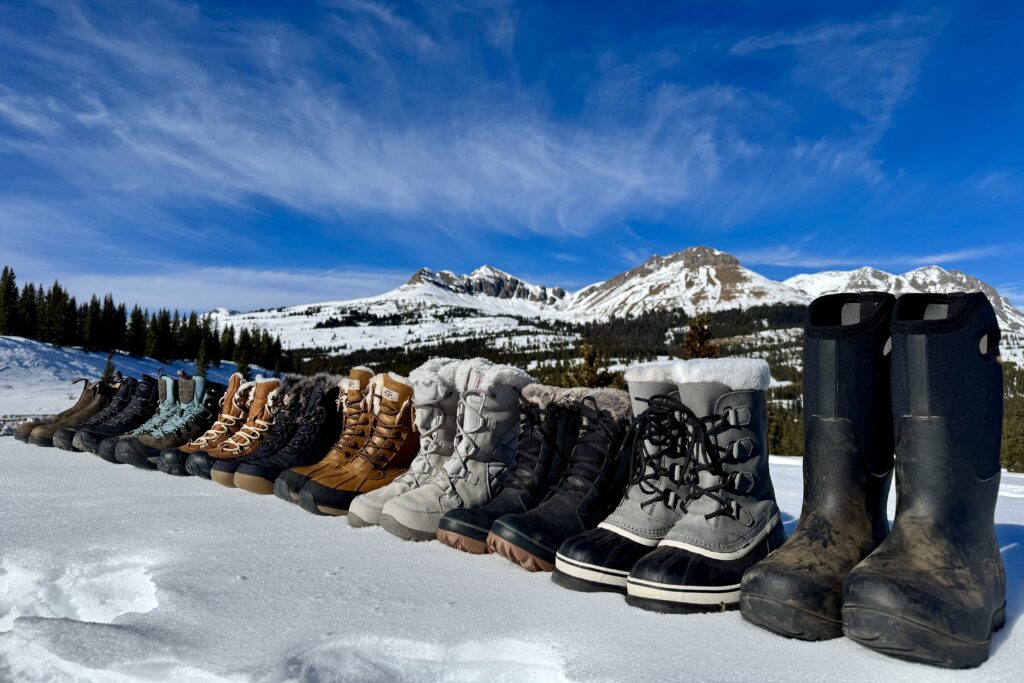
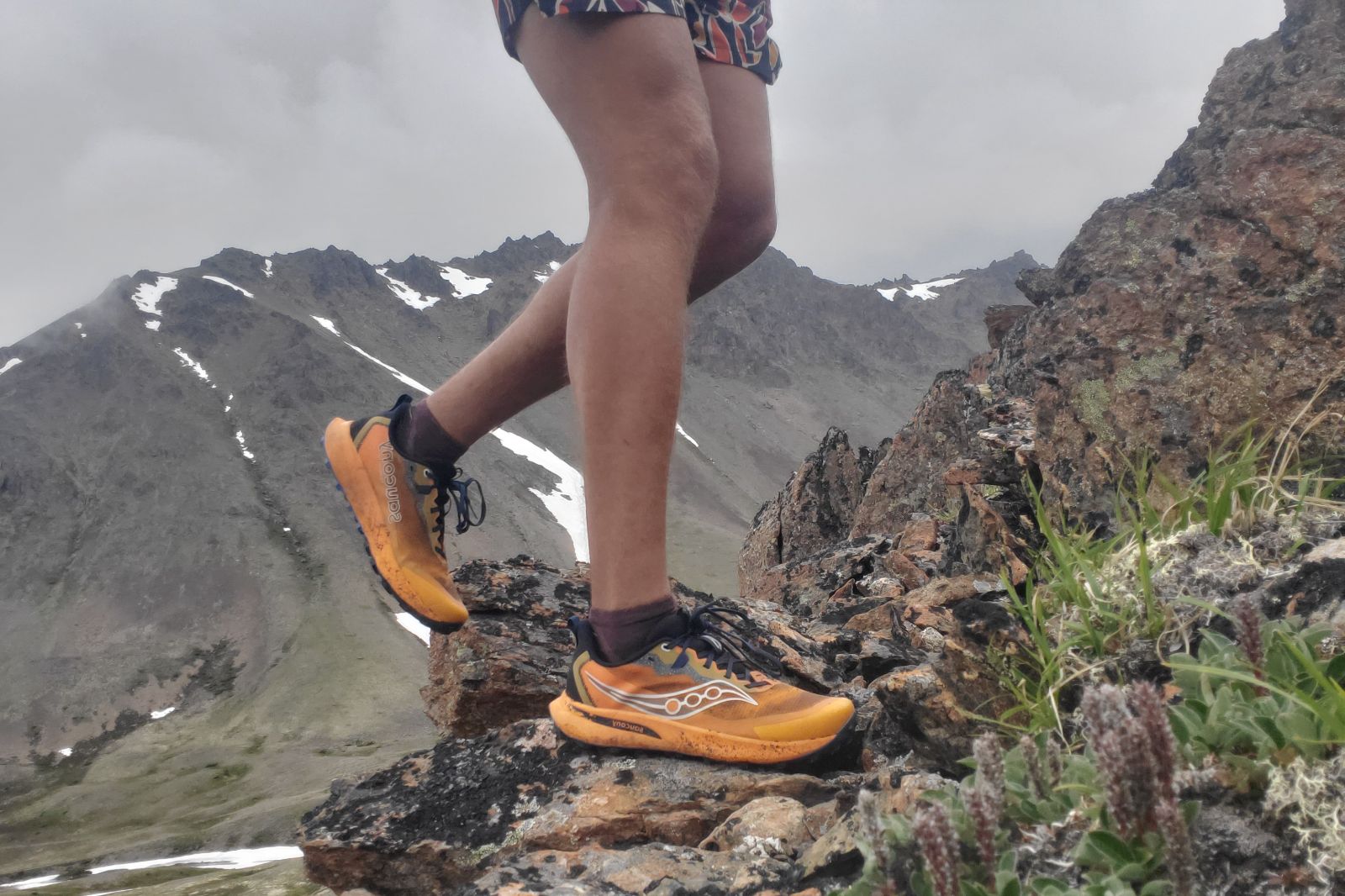
Over more than a decade of hands-on testing, CleverHiker has researched roughly 300 pairs of hiking shoes and tested more than 100 models across day hikes, long backpacking trips, thru-hikes, alpine routes, deserts, mud, snow, and technical off-trail terrain. This guide brings that experience together with our current side-by-side scoring so you can match the right shoe to your terrain, fit, and hiking style.
Editor’s Note: We updated this guide on September 28, 2026 after refreshing all 12 individual reviews, auditing current specifications and links, and reconciling product scores against our current men’s hiking-shoe ranking sheet.
How We Test Hiking Shoes
Our team evaluates men’s hiking shoes across five core metrics: comfort, traction, durability, weight, and weather resistance. We also consider value, fit, protection, and intended use, but those are not separate numerical scores.
We test hiking shoes in real trail conditions, not just around town. CleverHiker’s footwear experience spans more than 100,000 miles, from local day hikes to 3,000-mile thru-hikes, with current category testing across Alaska, Colorado, Utah, California, and other demanding terrain.
For more info, check out some of our other most popular gear guides:

#1. Best Men’s Hiking Shoe Overall
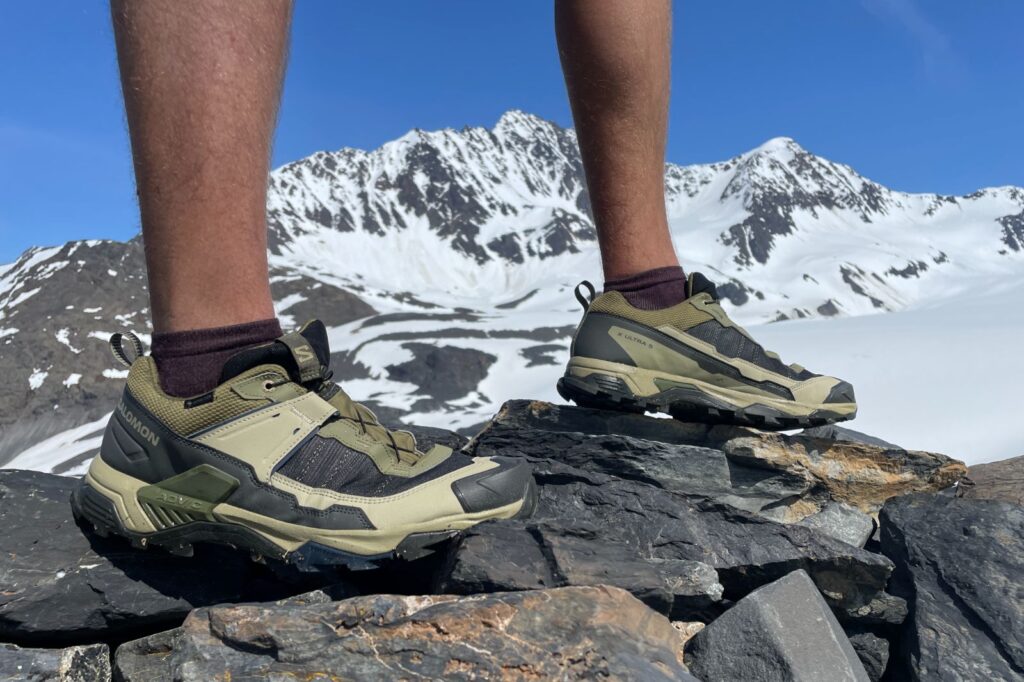
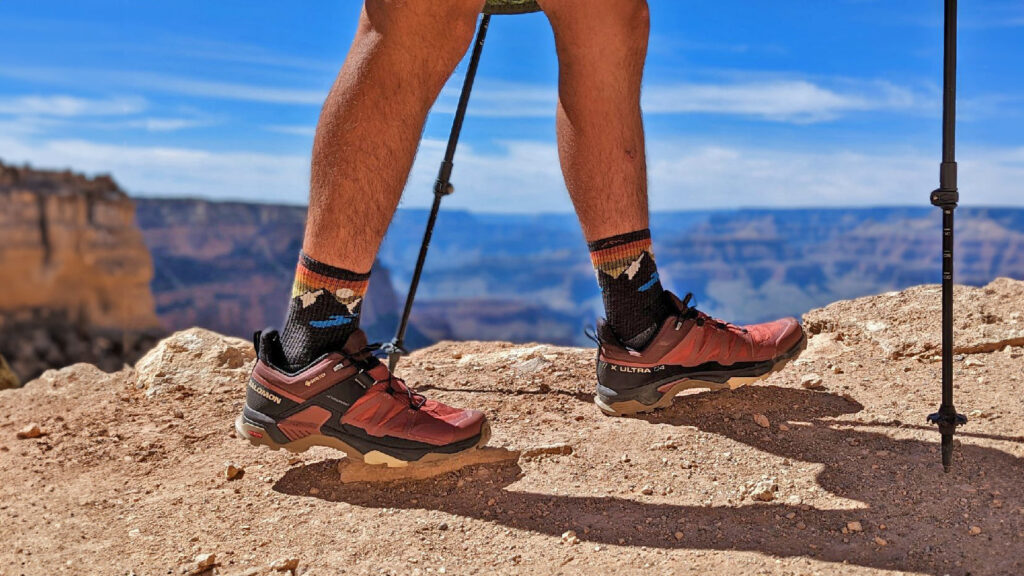
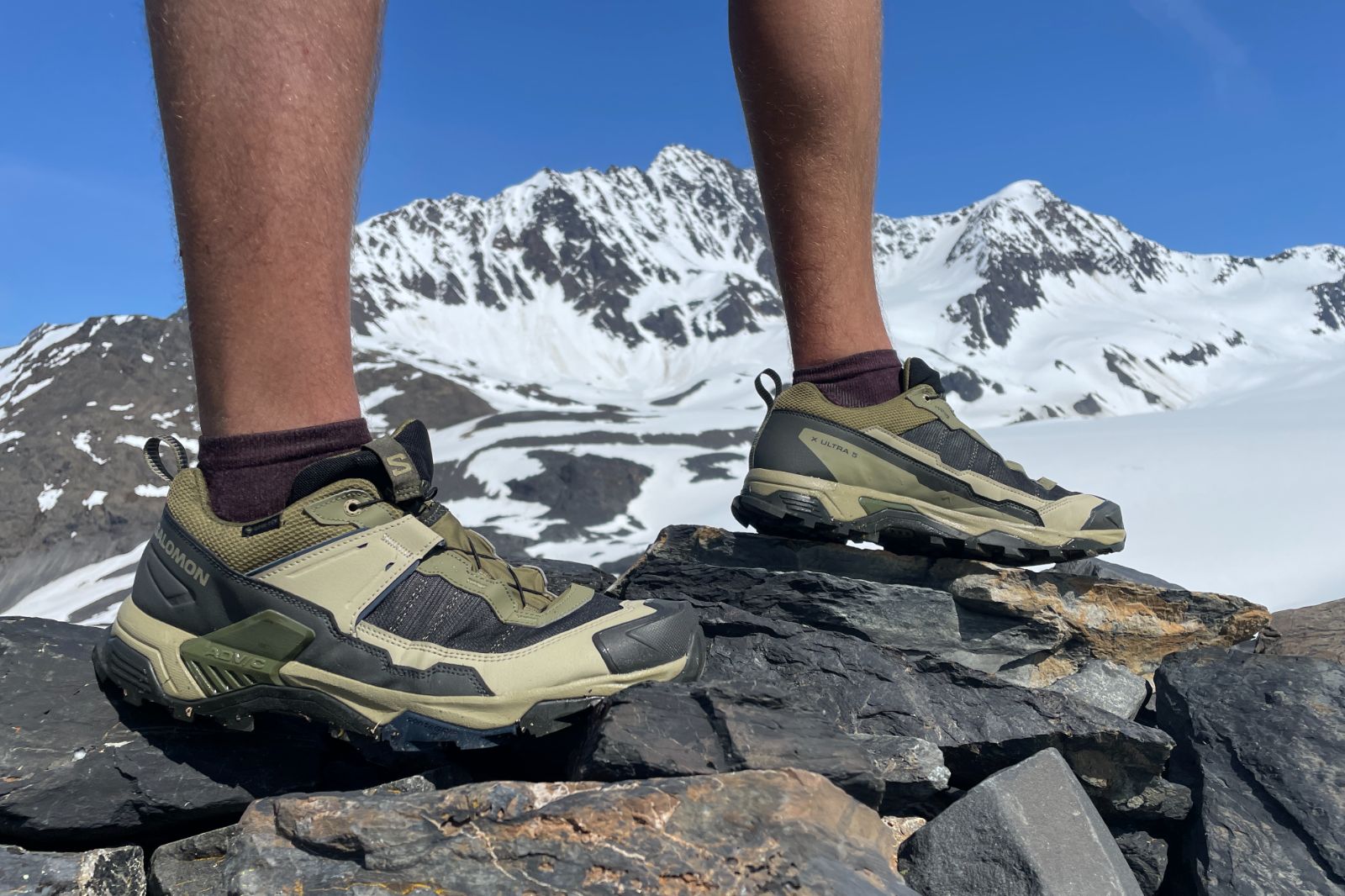
The Salomon X Ultra 5 GTX is our best overall men’s hiking shoe. It combines excellent stability, strong traction, reliable waterproofing, and substantial protection; CleverHiker’s experience with the X Ultra platform now exceeds 500 cumulative miles across multiple iterations.

Quick Picks for Men’s Hiking Shoes
Check out this list of the best hiking shoes, or continue scrolling to see our full lineup of favorites with in-depth reviews.
1. Best Hiking Shoes Overall: Salomon X Ultra 5 GTX ($175)
2. Best Lightweight Trail Runners for Long Distances: Saucony Peregrine 16 ($150)
3. Best Hiking Shoes for Technical Terrain: La Sportiva Ultra Raptor III ($169)
4. Best Hike Shoes for Fast and Light Missions: La Sportiva Prodigio 2 ($170)
5. Good Balance of Comfort & Traction: HOKA Speedgoat 7 ($165)
6. Best Grippy & Comfy Waterproof Hiking Shoes: HOKA Anacapa 2 Low GTX ($180)
7. Best Hiking Shoes for Cold and Damp Conditions: On Cloudrock Low Waterproof ($200)
8. Best Hiking Shoes for Narrow Feet: Scarpa Ribelle Cross 2 ($159)
9. Best Budget Hiking Shoes: Merrell Moab 3 ($140)
10. Supportive & Comfortable Trail Runners for Long Distances: Brooks Cascadia 20 ($160)
11. Best Shoe-Boot Hybrid: La Sportiva Spire GTX ($219)
12. Best Zero Drop Shoes for Thru-Hiking: Altra Lone Peak 9 ($145)
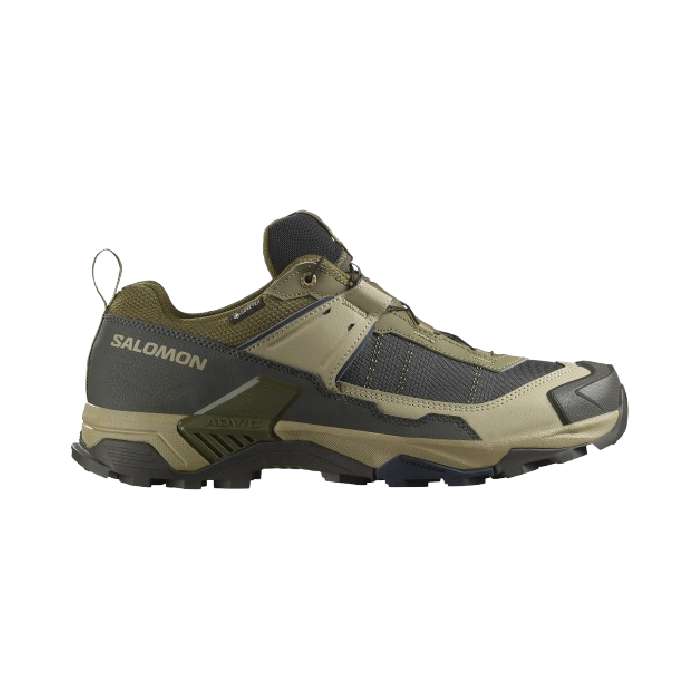
Men’s Salomon X Ultra 5 GTX
Best Hiking Shoes Overall
CleverHiker Rating: 4.8/5.0
Price: $175
Weight (Pair): 1 lb. 11 oz.
Heel-to-Toe Drop: 11 mm
Pros
- Excellent stability on uneven terrain
- Strong traction in mud, dirt, scree, and mixed conditions
- Reliable waterproofing
- Highly protective toe and upper construction
- Excellent long-term durability
- Quicklace system is fast and secure
Cons
- Heavier than trail-runner-style hiking shoes
- Stiffer and less flexible than some
- Runs warm in hot weather
- High-volume fit and 11 mm drop will not suit everyone
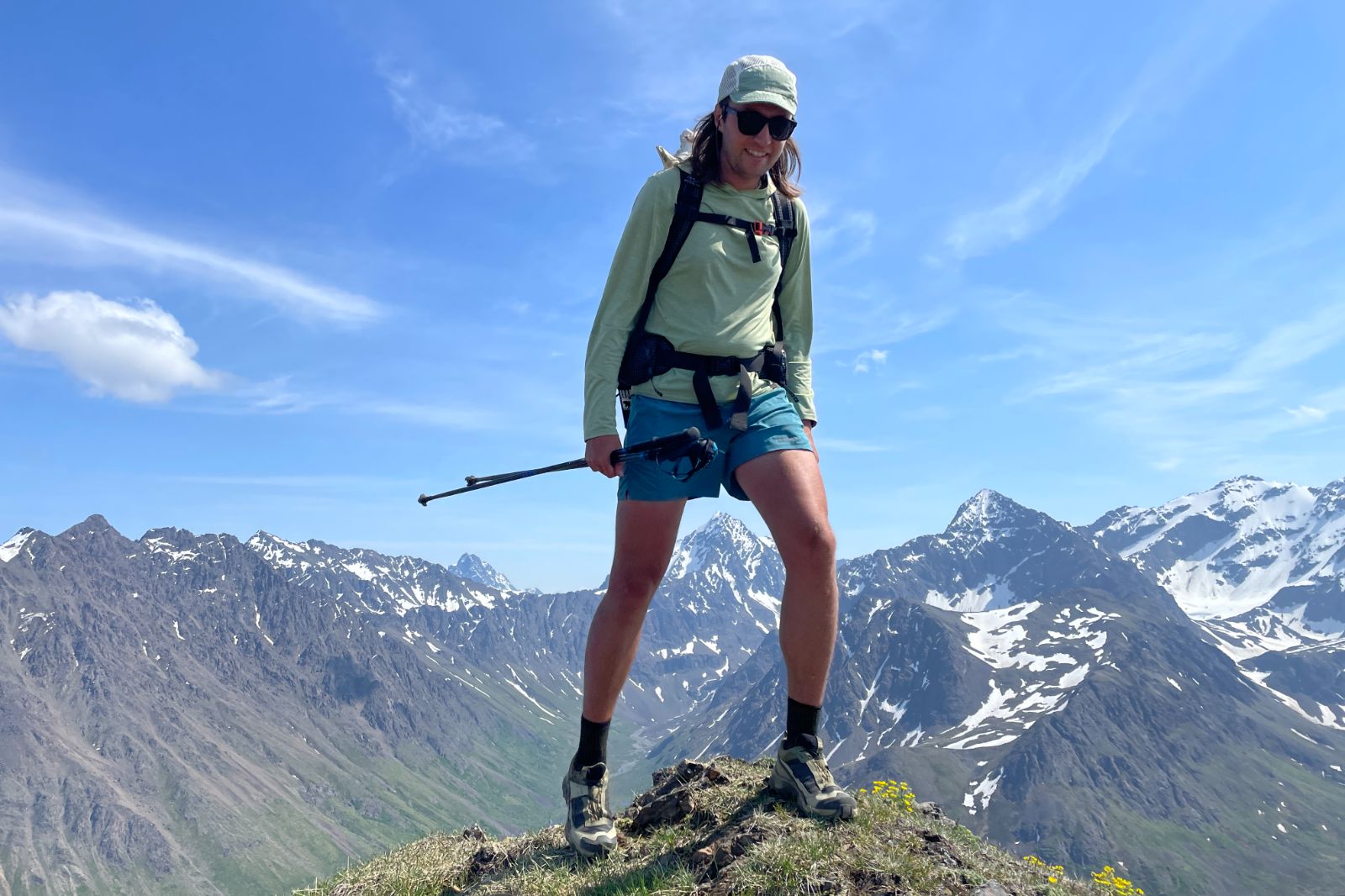
The Salomon X Ultra 5 GORE-TEX is our favorite overall pick because it combines the stability and protection of a traditional hiker with enough agility for long days on rough trails. Our testing in Alaska’s Chugach Range included off-trail traverses, scree, snow patches, creek crossings, mud, and steep alpine terrain, and the X Ultra consistently felt secure and protective.
Gear Analyst Miles Knotek tested the X Ultra 5 GTX extensively on and off trail around Anchorage and in Alaska’s Chugach Range. The current recommendation also reflects more than 500 miles of cumulative CleverHiker experience with the X Ultra line across multiple iterations—not 500 miles on one pair.
The tradeoffs are weight, warmth, and stiffness. These shoes are heavier and less flexible than trail-runner-style options, and the GORE-TEX upper can feel hot in warm weather. But for hikers who prioritize dependable footing, protection, and dry feet over minimal weight, the X Ultra 5 GTX is exceptionally well-rounded.
Choose the X Ultra 5 GTX if you want a durable, stable, waterproof hiking shoe for rugged terrain. It is especially well suited to wet climates, off-trail travel, and hikers who want more protection than a trail runner provides.

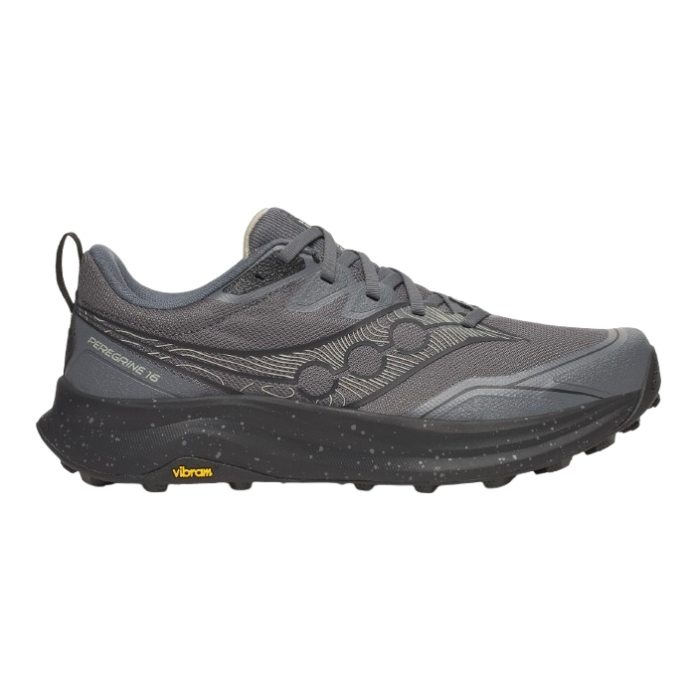
Men’s Saucony Peregrine 16
Best Lightweight Trail Runners for Long Distances
CleverHiker Rating: 4.6/5.0
Price: $150
Weight (Pair): 1 lb. 3 oz.
Heel-to-Toe Drop: 4 mm
Pros
- Very lightweight
- Excellent traction
- More accommodating forefoot than previous versions
- Breathable and quick drying
- Flexible and responsive
- Good value for a high-performing trail shoe
Cons
- Less protective than traditional hiking shoes
- Not as durable as burly hiking shoes
- Cushioning is moderate rather than plush
- Laces may wear faster than previous versions
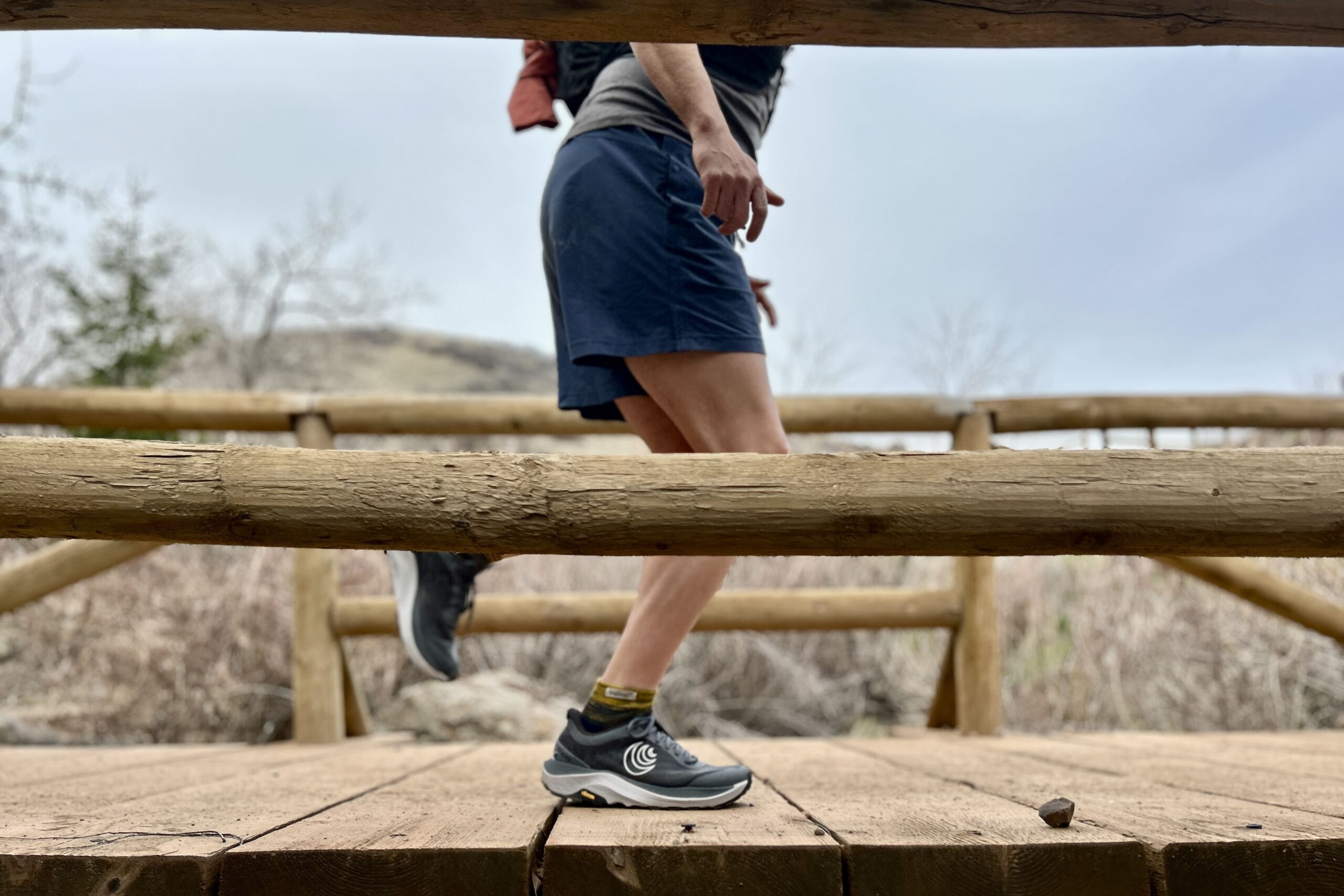
The Saucony Peregrine 16 is one of our favorite men’s hiking shoes for long-distance hiking. CleverHiker has used Peregrines for years on everything from local trails to major international treks, and the latest version keeps the formula we like most: low weight, secure fit, strong traction, flexible movement, and enough cushion for long days.
Our testing of the Peregrine 16 covered wet, muddy, rocky, and alpine terrain in Alaska. The updated forefoot is more accommodating than previous versions, but our test pair still needed roughly 20–25 miles to settle in and produced hotspots during that period. Comfort improved after break-in.
The main tradeoff is protection and longevity. This is still a trail runner, so it does not have the heavy toe cap, thick upper, or structural reinforcement of shoes like the Salomon X Ultra 5 GTX or La Sportiva Spire GTX. For hikers who value low weight and efficient movement, that is a compromise we are happy to make.
Choose the Peregrine 16 if you want a light, grippy hiking shoe that can handle long distances without feeling bulky. It is one of our favorite choices for lightweight backpacking and hikers who prefer trail runners over traditional hiking shoes.

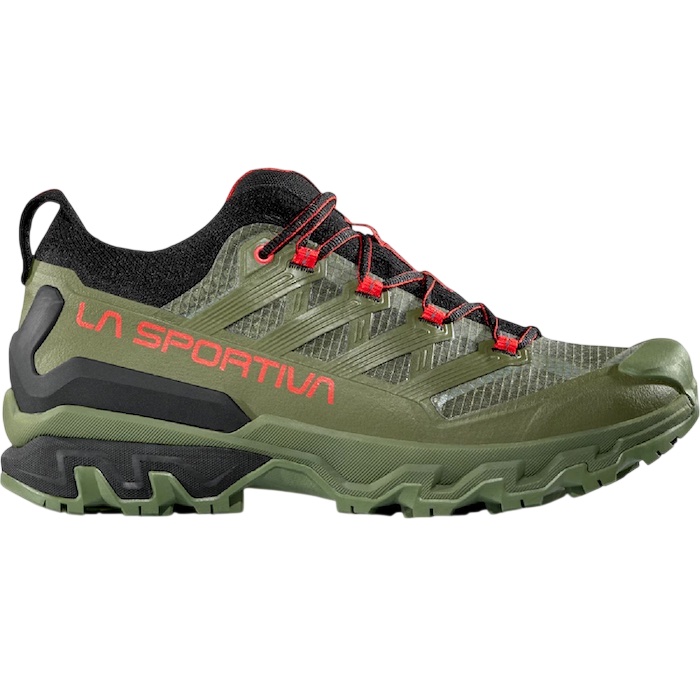
Men’s La Sportiva Ultra Raptor III
Best Hiking Shoes for Technical Terrain
CleverHiker Rating: 4.5/5.0
Price: $169
Weight (Pair): 1 lb. 9 oz.
Heel-to-Toe Drop: 9 mm
Pros
- Solid construction
- Comfortable
- Sticky grip
- Durable
- Huge toe guard
- Snug fit
Cons
- Runs a bit narrow
- High heel drop not for everybody
- Limited breathability
- Stiffer midsoles than some
The La Sportiva Ultra Raptor III is one of our top men’s hiking shoes for technical mountain terrain. Tested on steep trails, scree, rocky ridgelines, and rugged terrain in Alaska’s Chugach Range, it stands out for secure traction, substantial protection, and excellent stability.
Our Ultra Raptor III testing covered steep, rocky trails and loose alpine terrain in Alaska’s Chugach Range. Testing focused on comfort, traction, durability, weight, weather resistance, protection, and stability on technical routes.
The downside is that all of that structure can feel like overkill on easy trails. The Ultra Raptor III is relatively stiff, runs warm, and has a narrow low-volume fit. Hikers with wide feet or those who prioritize plush cushioning and flexibility may prefer something else.
Choose the Ultra Raptor III if your hikes regularly involve steep, rocky, technical terrain. It is one of the most confidence-inspiring shoes in our lineup for alpine routes and off-trail travel.
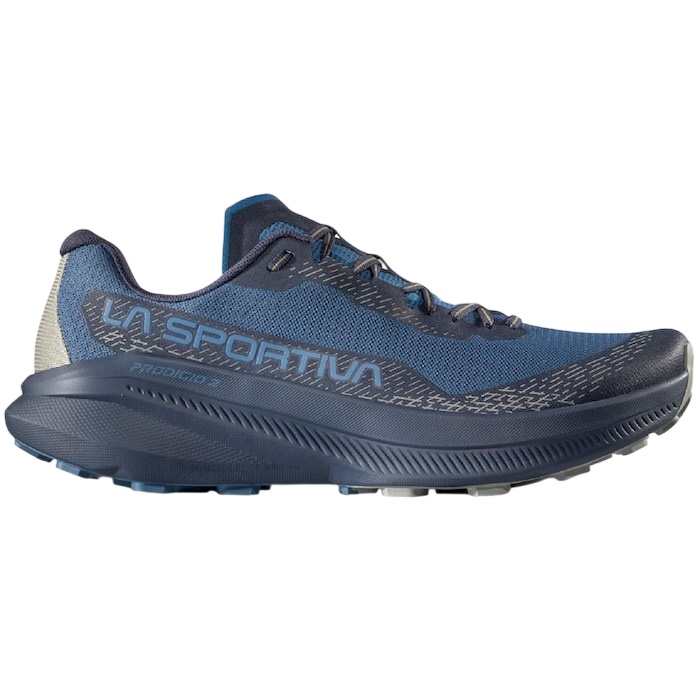
Men’s La Sportiva Prodigio 2
Best Hiking Shoe for Fast & Light Missions
CleverHiker Rating: 4.5/5.0
Price: $170
Weight (Pair): 1 lb. 2.3 oz.
Heel-to-Toe Drop: 6 mm
Pros
- Very lightweight
- Excellent traction
- Secure performance fit
- Good durability for a trail runner
- Improved cushioning over the previous version
- Strong protection for its weight
Cons
- Still not ideal for wide feet
- Stiff ankle collar may bother some hikers
- Performance hit can make sizing tricky
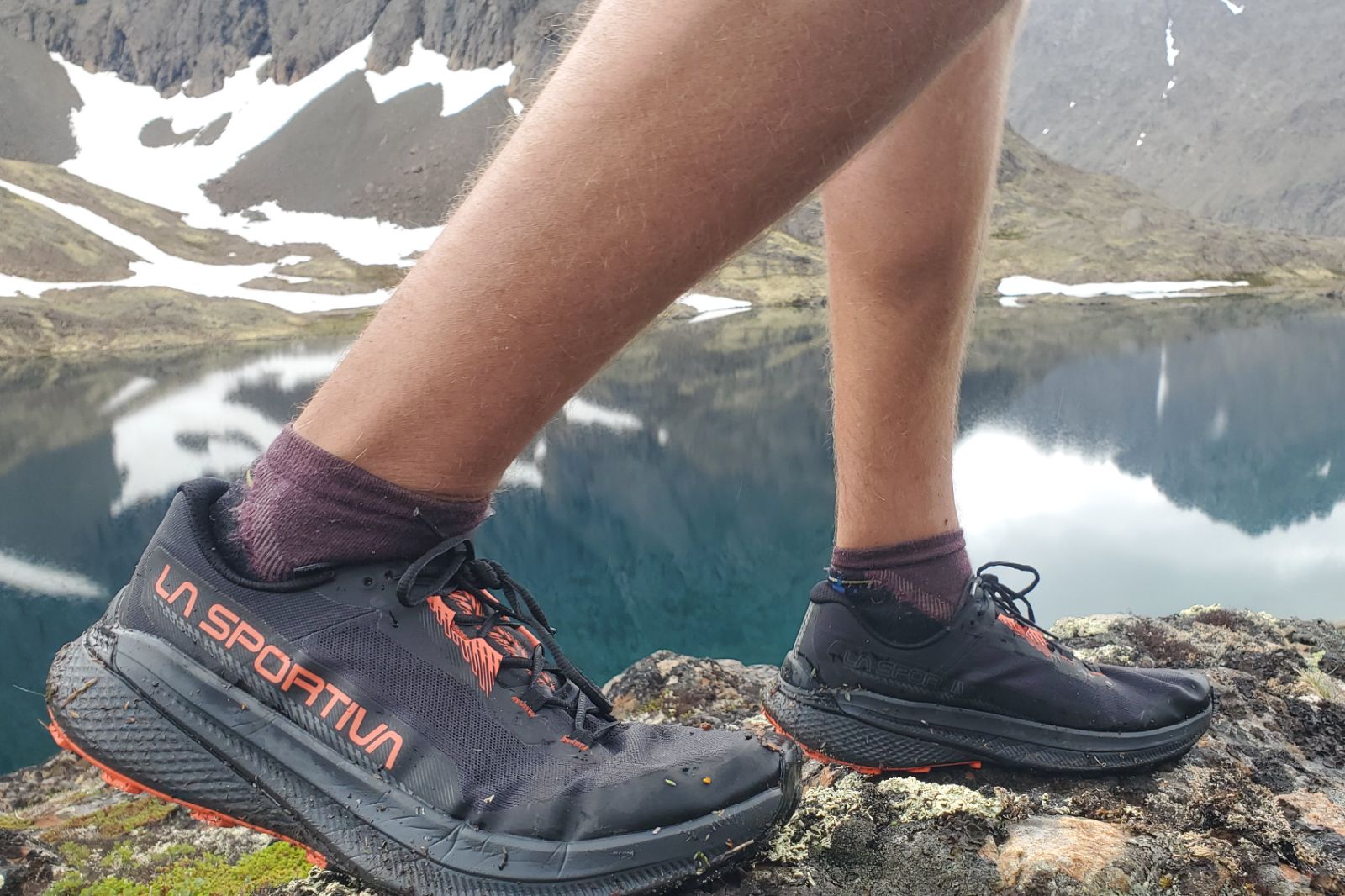
The La Sportiva Prodigio 2 is one of our favorite men’s hiking shoes for fast-and-light mountain missions. It combines low weight with the precise fit, secure midfoot hold, and aggressive traction we want when moving quickly through technical terrain.
Our Prodigio 2 testing emphasized fast movement, technical footing, fit, traction, protection, durability, and long-day comfort.
The main limitation is fit. Even with the updates, the Prodigio 2 still favors narrower or lower-volume feet, and the ankle collar can feel stiff for some hikers. If the shape works for you, this is an excellent option for people who want to cover technical ground quickly without stepping up to a heavy hiking shoe.
Choose the Prodigio 2 if you want a light, precise shoe for moving quickly through technical terrain and the fit works for your foot. It is especially compelling for mountain runners, fast hikers, and lightweight backpackers.
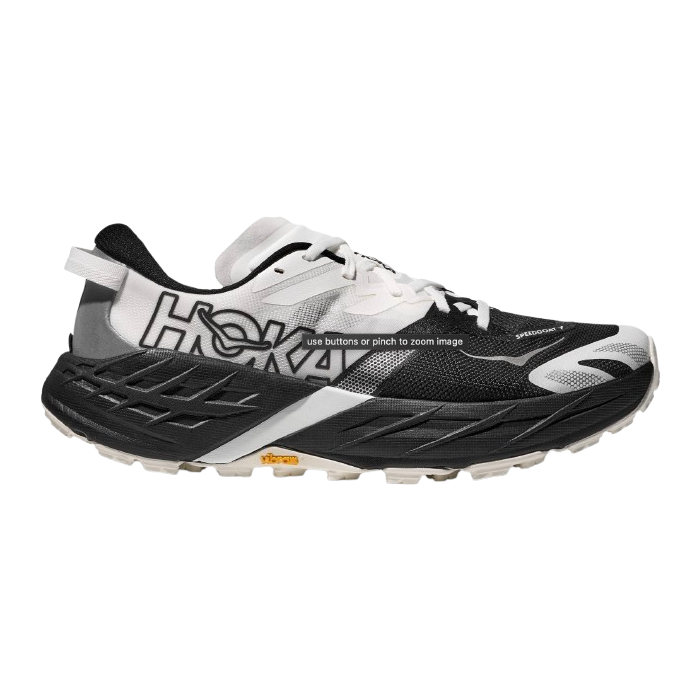
Men’s HOKA Speedgoat 7
Good Balance of Comfort & Traction
CleverHiker Rating: 4.5/5.0
Price: $165
Weight (Pair): 1 lb. 3.4 oz.
Heel-to-Toe Drop: 5 mm
Pros
- Cushy soles
- Excellent traction
- Great arch support
- Lightweight
- Roomy toe box
- Breathable
- Short break-in time
Cons
- Uppers and midsoles less durable than some
- Stiffer midsoles than prior versions
- Toebox not as wide as prior versions
- Dovetail heel may take getting used to
The HOKA Speedgoat 7 balances comfort, traction, and low weight exceptionally well. The Speedgoat has been a CleverHiker favorite for years, and the latest version remains a strong choice for hikers who want a soft, supportive trail runner for long mileage.
CleverHiker has tested multiple generations of the Speedgoat over hundreds of miles. Our current Speedgoat 7 testing covered long-distance hiking, trail running, traction, cushioning, fit, weight, durability, and drying performance.
There are tradeoffs. The latest midsole feels a little stiffer than some prior Speedgoats, the toe box is lower-volume than older versions, and the extended heel geometry takes some adjustment. Durability is also more trail-runner-like than hiking-shoe-like.
Choose the Speedgoat 7 if you want a lightweight hiking shoe with substantial cushioning and excellent traction. It is especially appealing for long-distance hikers who prefer a softer, supportive trail-runner feel.
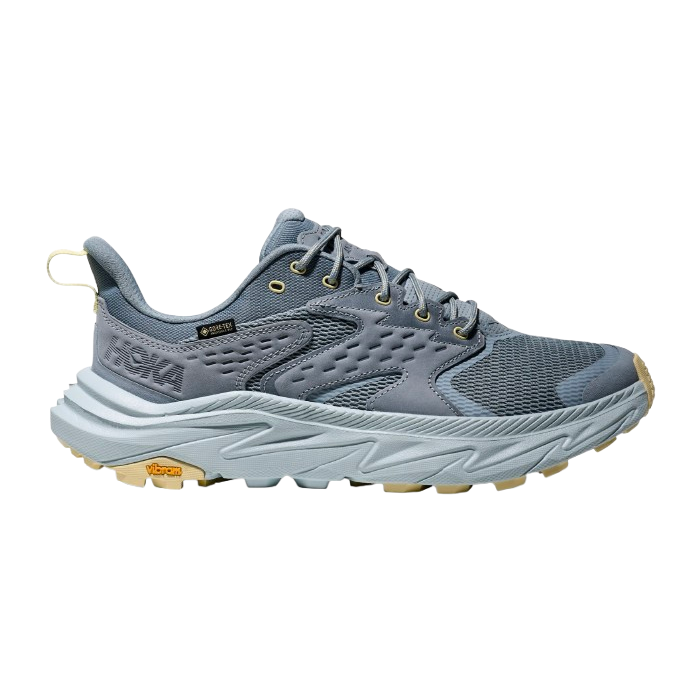
Men’s HOKA Anacapa 2 Low GTX
Grippy & Comfy Waterproof Hiking Shoes
CleverHiker Rating: 4.4/5.0
Price: $180
Weight (Pair): 1 lb. 14.6 oz.
Heel-to-Toe Drop: 8 mm
Pros
- Comfortable midsole
- Strong traction
- Reliable waterproofing
- Supportive rockered platform
- Laces stay secure
- Good toe protection
Cons
- Heavy compared with trail runners
- Wide fit will not suit everyone
- Extended heel shape takes adjustment
- Significant investment for occasional hikers
The HOKA Anacapa 2 Low GTX is one of our favorite waterproof men’s hiking shoes for hikers who want substantial cushioning and support without stepping into a full boot. Its roomy platform, rockered geometry, and grippy outsole make it comfortable on long days and capable on a wide variety of trail conditions.
CleverHiker tested the Anacapa 2 Low GTX across Colorado’s high country in rain, snow, mud, and steep terrain, evaluating comfort, traction, durability, weight, weather resistance, fit, and day-to-day hiking performance.
The main downsides are weight, price, and fit specificity. It is one of the heavier shoes in our lineup, and the wide platform plus extended heel shape can feel unusual. Hikers who want a lighter, more nimble shoe have better options.
Choose the Anacapa 2 Low GTX if you want a cushioned, waterproof hiking shoe with strong traction and a roomy, supportive platform. It is a great fit for hikers who prioritize comfort and weather protection over low weight.
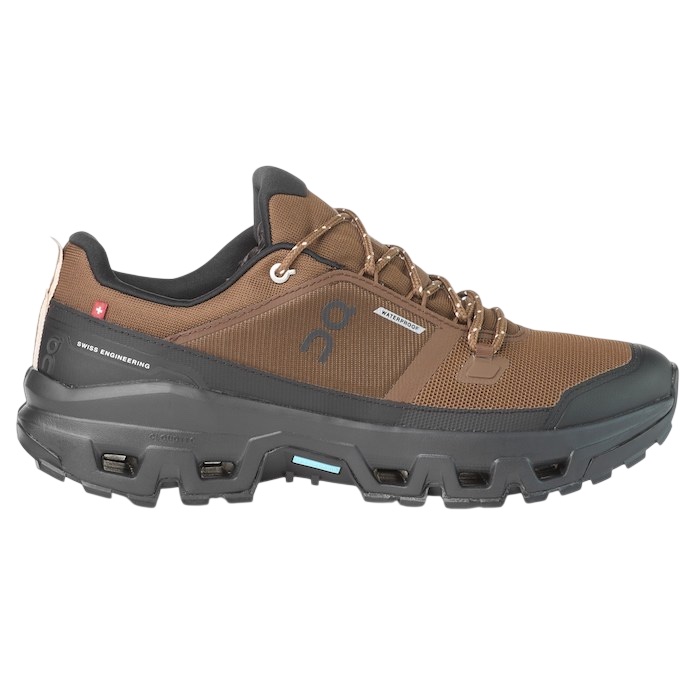
Men’s On Cloudrock Low Waterproof
Best Hiking Shoes for Cold & Damp Conditions
CleverHiker Rating: 4.4/5.0
Price: $200
Weight (Pair): 1 lb. 14.3 oz.
Heel-to-Toe Drop: 8 mm
Pros
- Supportive
- Strong waterpoofing
- Durable
- Rubber rand
Cons
- Warm
- Expensive
- Heavy
The On Cloudrock Low Waterproof is one of our favorite men’s hiking shoes for cold and damp conditions. Over months of testing in springtime Alaska, it proved to be a rugged, durable shoe that handles mud, wet trails, coastal conditions, and abrasive mountain terrain exceptionally well.
Our Cloudrock Low Waterproof testing covered roughly three months of variable spring mountain and coastal conditions in Alaska. Testing included muddy trails, wet terrain, rocky routes, and sustained damp conditions.
That construction comes with predictable tradeoffs. The Cloudrock is heavy, warm, and firm underfoot. Hikers seeking a soft, light, breathable shoe should look elsewhere. For people who frequently hike in cool, mucky conditions and want a shoe that feels built to last, the Cloudrock is excellent.
Choose the Cloudrock Low Waterproof if you hike frequently in cool, wet, muddy environments and want a durable shoe that feels protective and stable.
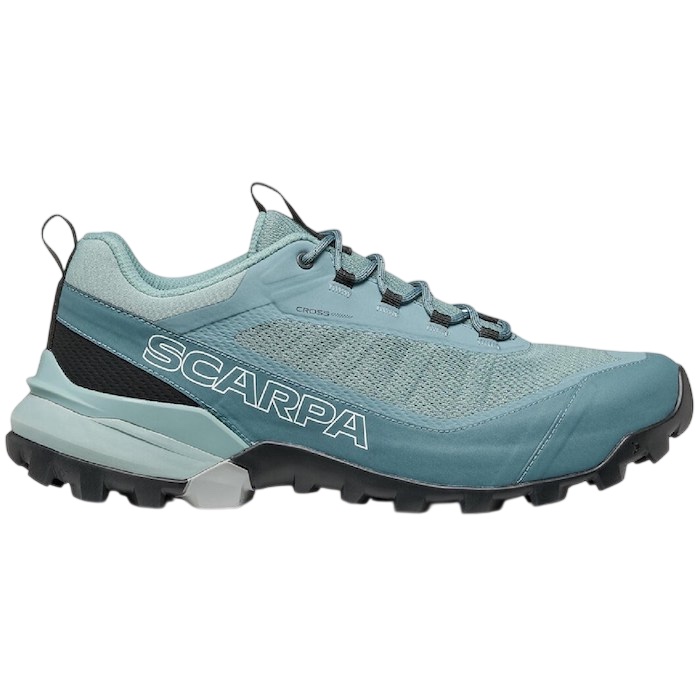
Men’s Scarpa Ribelle Cross 2
Best Hiking Shoes for Narrow Feet
CleverHiker Rating: 4.4/5.0
Price: $159
Weight (Pair): 1 lb. 11.6 oz.
Heel-to-Toe Drop: –
Pros
- Excellent traction
- Very durable
- Protective uppers
- Stable on steep/techy terrain
- Breathable for a technical shoe
Cons
- Narrow fit
- Long break-in period
- Stiff underfoot
- Heavier than most trail runners
The Scarpa Ribelle Cross 2 is one of our favorite men’s hiking shoes for narrow feet. It is built for steep mountain terrain, where deep lugs, a stiff platform, and robust protection help with sidehilling, scrambling, and loose footing.
Our Ribelle Cross 2 testing covered months in Alaska’s Chugach Mountains, including steep alpine terrain, loose scree, muddy trails, rock, and sidehills.
Comfort is the compromise. The Ribelle is narrow, stiff, and slow to break in, and it feels more like a lightweight mountain boot than a soft trail runner. If that technical fit matches your foot and your terrain, the performance is excellent.
Choose the Ribelle Cross 2 if you have narrow feet and spend a lot of time on steep, rocky, technical terrain. It is one of the most durable and grippy shoes we tested.
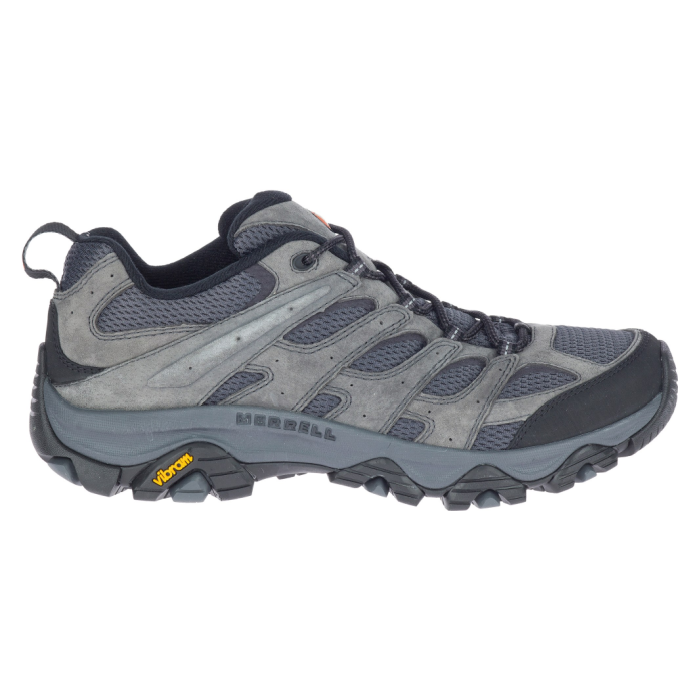
Men’s Merrell Moab 3
Best Budget Hiking Shoes
CleverHiker Rating: 4.3/5.0
Price: $140
Weight (Pair): 1 lb. 9 oz.
Heel-to-Toe Drop: 11.5 mm
Pros
- Excellent value
- Very comfortable
- Little break-in required
- Durable upper and outsole
- Breathable mesh
- Reliable traction
- Protective toe and heel
Cons
- Heavier than trail runners
- Less flexible than trail runners
- Bulky underfoot
- Standard version is not waterproof
The Merrell Moab 3 has been our favorite budget hiking shoe for years because it gets the fundamentals right: comfort, traction, durability, ventilation, and protection at a relatively approachable price.
We put more than 100 miles on the Moab line in Oregon and Washington, and then added more than 250 miles in Colorado and Utah. We evaluated the standard non-waterproof Moab 3 for comfort, traction, durability, ventilation, drying, weight, and everyday trail performance.
The main tradeoff is weight and flexibility. The Moab is bulkier than modern trail runners and not our first choice for huge mileage days. But for weekend hikers, warm-weather day hikes, and short backpacking trips, it remains one of the easiest shoes in this guide to recommend.
Choose the Moab 3 if you want a comfortable, durable hiking shoe at a strong value. It is particularly well suited to day hikers, weekend hikers, and people who prefer the supportive feel of traditional footwear.
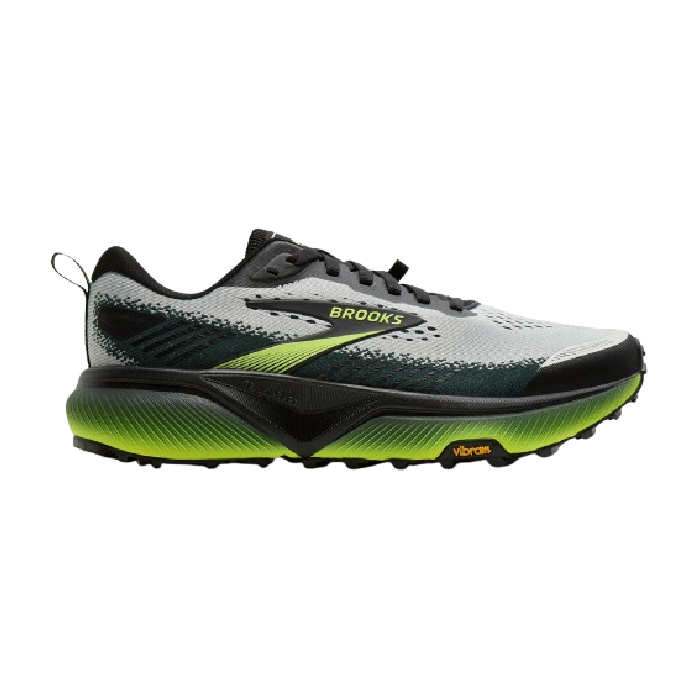
Men’s Brooks Cascadia 20
Supportive & Comfortable Trail Runners for Long Distances
CleverHiker Rating: 4.3/5.0
Price: $160
Weight (Pair): 1 lb. 5.6 oz.
Heel-to-Toe Drop: 6 mm
Pros
- Versatile for road & trail running
- Breathable
- Relatively lightweight
- Flexible upper
- Versatile for road and trail
- Very little break-in
Cons
- Mesh uppers are less durable than hiking shoes
- Laces can loosen
- Less ground feel than some trail runners
- Not designed for sustained off-trail abuse
The Brooks Cascadia 20 is a dependable option for hikers who want comfort, support, and versatility without the weight of a traditional hiking shoe. The Cascadia line has been part of CleverHiker’s long-distance footwear rotation for years.
The CleverHiker team has more than 8,000 cumulative miles of Cascadia experience across multiple generations, including thru-hikes of the Pacific Crest Trail, Continental Divide Trail, Pinhoti Trail, and other long-distance routes.
The tradeoff is durability and technical capability. Mesh uppers and trail-runner construction are more vulnerable than hiking-specific footwear, and the Cascadia offers less ground feel than some competitors. We like it most for high-mileage trail hiking rather than off-trail abuse.
Choose the Cascadia 20 if you want a supportive, breathable trail runner for long-distance hiking on established routes. It is a dependable choice for thru-hikers and day hikers who value comfort over maximum protection.
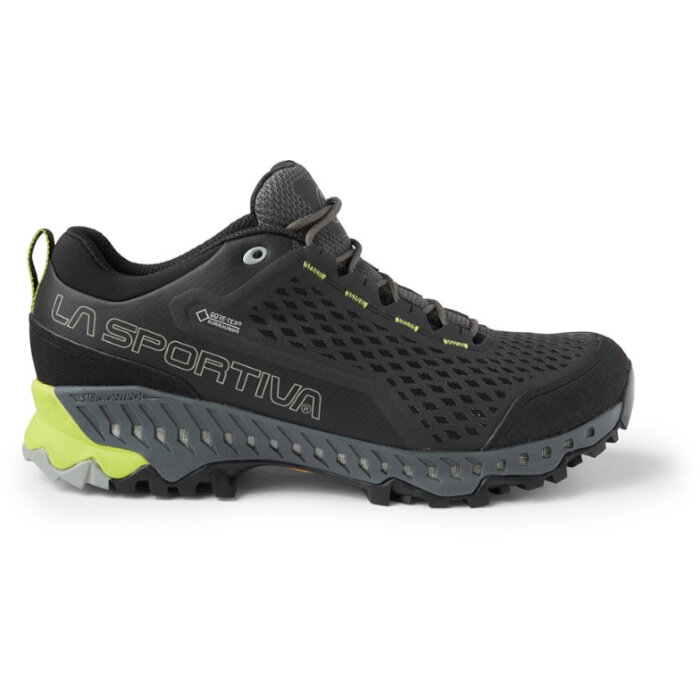
Men’s La Sportiva Spire GTX
Best Shoe-Boot Hybrid
CleverHiker Rating: 4.0/5.0
Price: $219
Best For: Technical hiking, backpacking, shoulder seasons, wet and cold conditions
Weight (Pair): 1 lb. 15 oz.
Heel-to-Toe Drop: 6 mm
Pros
- Excellent long-term durability
- Waterproof
- Strong traction
- Very stable
- Protective construction
- Breathes well for a waterproof shoe
Cons
- Heavy
- Stiff
- Requires break-in
- Runs narrow
- Shoelaces are less durable than the shoe
- Large investment for casual hiking
The La Sportiva Spire GTX is the burliest shoe in our men’s hiking lineup and one of our favorite options for technical backpacking. It blends the stability, traction, waterproofing, and load-bearing feel of a hiking boot with a lower-cut profile that is more agile than a traditional mid-height boot.
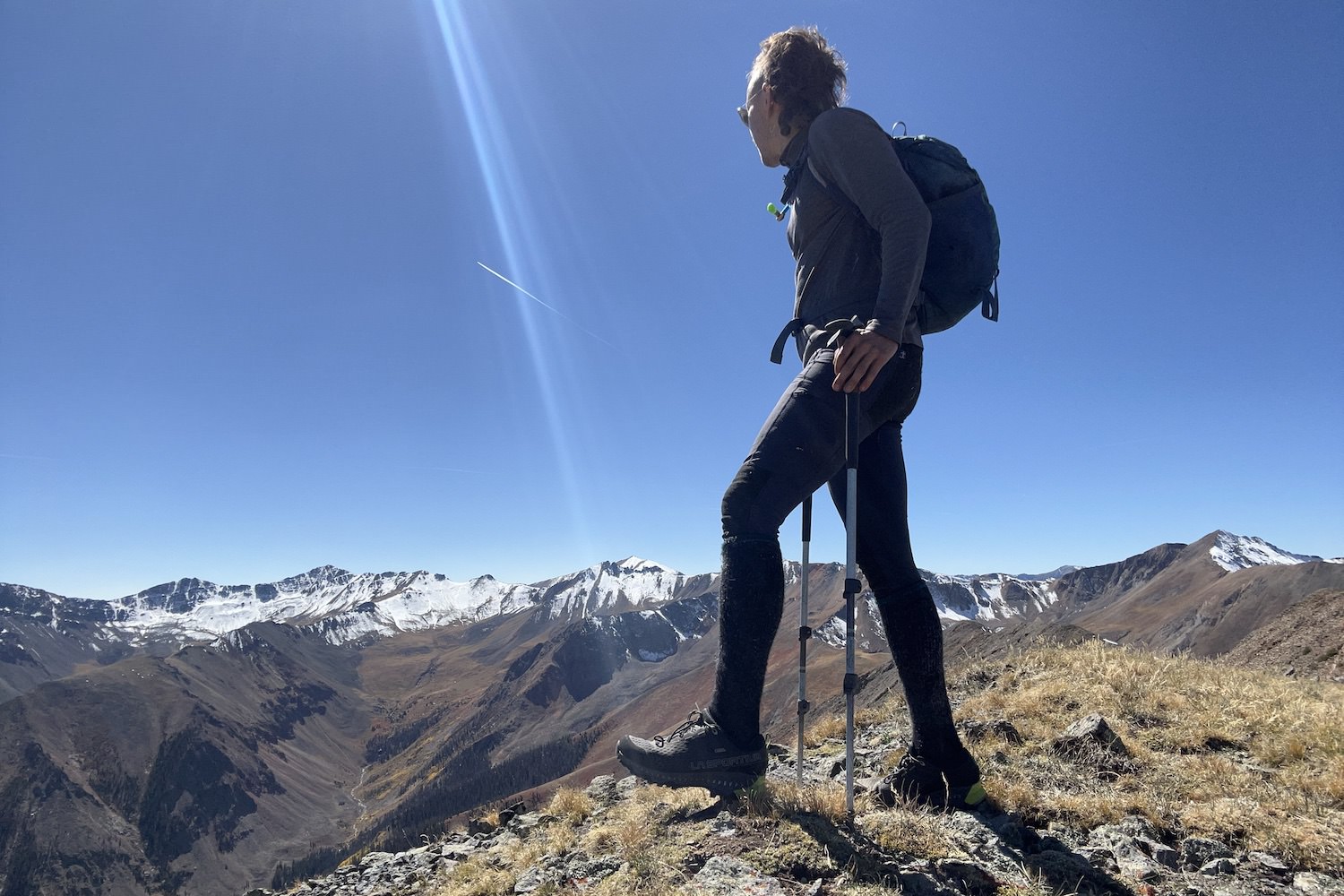
CleverHiker has tested the Spire GTX for hundreds of miles in Colorado, Utah, California, and other western terrain, including high-alpine routes, mud, snow, desert trails, and long backpacking trips. Testing includes roughly 700 miles on one long-term pair plus extensive additional use.
The tradeoffs are substantial weight, stiffness, break-in time, and a narrow fit. The shoelaces are also a weak point relative to the rest of the shoe. For hikers who want maximum technical performance and longevity from a low-cut shoe, though, the Spire is hard to beat.
Choose the Spire GTX if you want a low-cut hiking shoe that behaves more like a durable waterproof boot on technical terrain. It is excellent for backpacking, shoulder-season routes, and rough conditions.
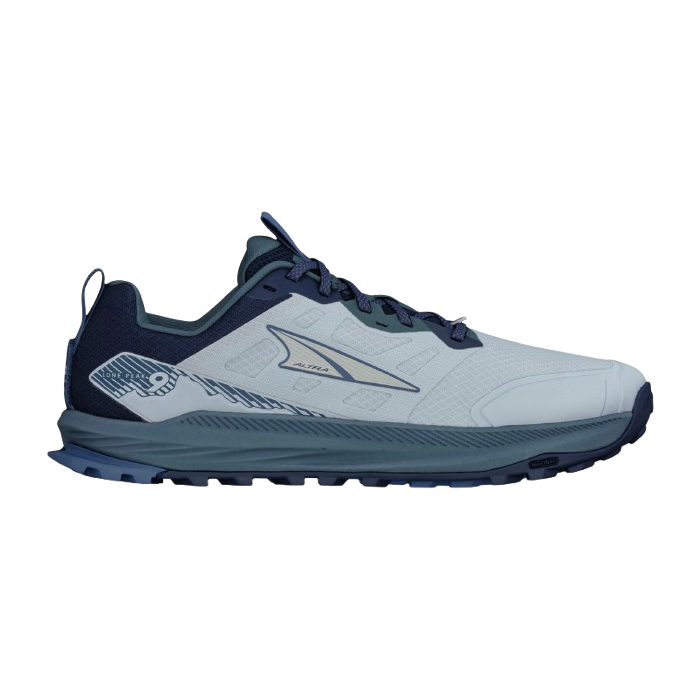
Men’s Altra Lone Peak 9
Best Zero Drop Shoes for Thru-Hiking
CleverHiker Rating: 3.9/5.0
Price: $145
Weight (Pair): 1 lb. 6.4 oz.
Heel-to-Toe Drop: 0 mm
Pros
- Roomy toe box
- Excellent traction
- Lightweight
- Flexible outsoles
- Breathable uppers
- Rock plate
- No break-in needed
- Built-in gaiter attachment
Cons
- Not as durable as some
- Zero drop doesn't work for everyone
- Lacing system is a bit cumbersome
- Thinner soles
- Not weather resistant
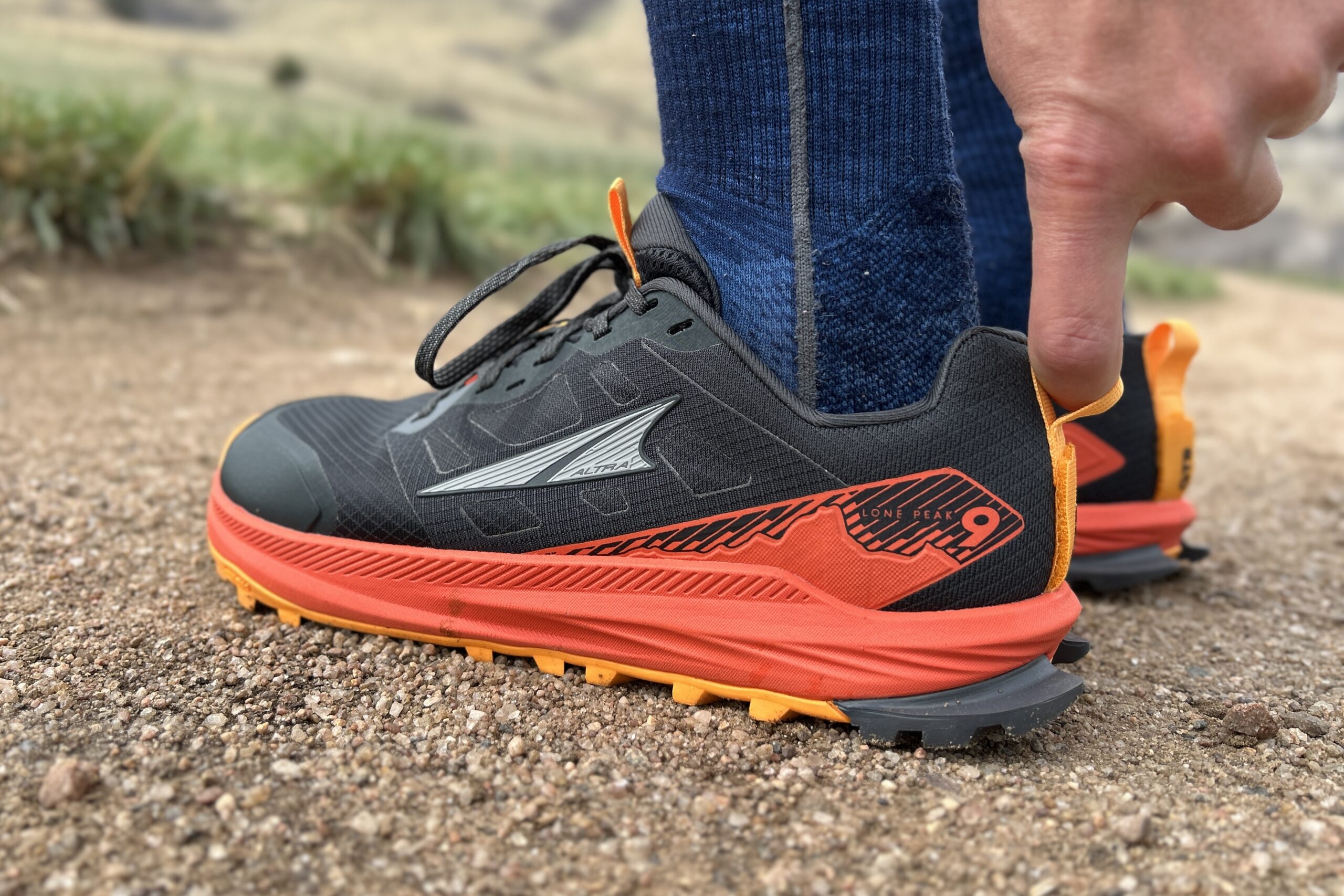
The Altra Lone Peak 9 remains our top zero-drop pick for hikers who already know they like Altra’s foot-shaped platform. Its wide toe box, low-to-the-ground feel, breathable mesh, gaiter compatibility, and quick-drying make it a distinctive choice for long-distance hiking.
Current category testing of the Lone Peak 9 covered mud, loose scree, wet rock, sidehills, and off-trail terrain. CleverHiker’s broader Lone Peak 9 testing also includes more than 200 miles across Utah, Colorado, and other western terrain.
The Lone Peak 9 is not universally comfortable. Our testing documented heel and cuff irritation during break-in, fit issues on sidehills and descents for some feet, weaker wet-rock traction, and lower durability than the best shoes in this category.
Choose the Lone Peak 9 only if you already prefer zero-drop footwear, want a very roomy toe box, and prioritize breathability and ground feel. We recommend confirming that the fit and zero-drop geometry work for your feet before committing to long mileage.
Product Comparison Table
| oSort | Product | Price | Weight (Pair) | Heel-to-Toe Drop | Comfort | Traction | Durability | Weight Score | Weather Resistance | Best For | 0 |
Salomon X Ultra 5 GTX View at REI View at Amazon 
|
$175 | 1 lb. 11 oz. | 11 mm | 4.5 | 4.7 | 4.7 | 4.2 | 4.8 | – | 1 |
La Sportiva Ultra Raptor III View at REI View at Amazon
|
$169 | 1 lb. 9 oz. | 9 mm | 4.5 | 4.6 | 4.6 | 4.3 | 4.5 | – | 2 |
La Sportiva Prodigio 2 View at REI View at Amazon |
$170 | 1 lb. 2.3 oz. | 6 mm | 4.6 | 4.5 | 4.5 | 4.7 | 4.4 | – | 3 |
HOKA Speedgoat 7 View at REI View at Amazon
|
$165 | 1 lb. 3.4 oz. | 5 mm | 4.4 | 4.5 | 4.4 | 4.8 | 4.4 | – | 4 |
HOKA Anacapa 2 Low GTX View at REI View at Amazon
|
$180 | 1 lb. 14.6 oz. | 8 mm | 4.5 | 4.5 | 4.4 | 3.5 | 4.7 | – | 5 |
On Cloudrock Low Waterproof View at REI View at Amazon |
$200 | 1 lb. 14.3 oz. | 8 mm | 4.4 | 4.4 | 4.7 | 4.0 | 4.7 | – | 6 |
Scarpa Ribelle Cross 2 View at REI View at Amazon |
$159 | 1 lb. 11.6 oz. | – | 4.4 | 4.7 | 4.7 | 4.0 | 4.3 | – | 7 |
Merrell Moab 3 View at REI View at Amazon 
|
$140 | 1 lb. 9 oz. | 11.5 mm | 4.7 | 4.6 | 4.3 | 4.2 | 4.3 | – | 8 |
Brooks Cascadia 20 View at REI View at Amazon |
$160 | 1 lb. 5.6 oz. | 6 mm | 4.1 | 4.2 | 4.1 | 4.5 | 3.9 | – | 9 |
La Sportiva Spire GTX View at REI View at Amazon |
$219 | 1 lb. 15 oz. | 6 mm | 4.0 | 4.5 | 4.6 | 4.0 | 4.4 | Technical hiking, backpacking, shoulder seasons, wet and cold conditions | 10 |
Altra Lone Peak 9 View at REI View at Amazon |
$145 | 1 lb. 6.4 oz. | 0 mm | 3.8 | 3.8 | 3.9 | 4.5 | 3.9 | – |
|---|
Analysis & Results
Our rankings reflect five core performance dimensions plus intended use. The goal is not simply to identify the highest-ranked shoe. It is to show what each shoe gives up to earn its strengths in comfort, traction, durability, weight, weather protection, and value.
What’s the best value hiking shoe?
The Merrell Moab 3 offers the strongest traditional-hiker value. It combines comfort, dependable traction, and protection at an approachable price. The Altra Lone Peak 9 costs the same, but it makes more sense for hikers who specifically want zero drop and a roomy toe box. The Saucony Peregrine 16 is the better lightweight value, while the Brooks Cascadia 20 is a strong choice for established-trail mileage.
The HOKA Speedgoat 7 costs a little more, but the extra money buys more cushioning and stronger technical traction. The La Sportiva Ultra Raptor III is a better value for hikers who need stability on rough mountain terrain. The La Sportiva Prodigio 2 favors speed and low weight instead. The Scarpa Ribelle Cross 2 makes the most sense for narrow feet and demanding terrain, where its grip and durability justify the price.
The Salomon X Ultra 5 GTX is the strongest all-around value among the premium models because it balances protection, traction, durability, and weather resistance. The HOKA Anacapa 2 Low GTX prioritizes cushioning and waterproofing but carries more weight. The On Cloudrock Low Waterproof is expensive, yet its durability can justify the cost in cold, wet, abrasive conditions. The La Sportiva Spire GTX is the hardest value sell for casual hikers, but its support and longevity can pay off for technical backpacking.
What are the most comfortable hiking shoes?
The Merrell Moab 3 leads for broad, immediately supportive comfort. The Saucony Peregrine 16 becomes flexible and natural after its roughly 20–25 mile break-in. The La Sportiva Prodigio 2 feels more precise and performance-oriented. The Salomon X Ultra 5 GTX is firmer, but its secure fit and support work well on rough terrain.
The La Sportiva Ultra Raptor III also favors security over softness. The HOKA Anacapa 2 Low GTX gives broader feet more room and adds substantial cushioning. The HOKA Speedgoat 7 offers the softest underfoot feel in the group, although its lower-volume toe box limits universal appeal. The On Cloudrock Low Waterproof feels firmer and more supportive, especially in cold and sloppy conditions.
The Scarpa Ribelle Cross 2 is comfortable only if its narrow, stiff mountain fit matches your foot. The Brooks Cascadia 20 is supportive rather than plush. The La Sportiva Spire GTX makes weight, stiffness, and break-in more noticeable. The Altra Lone Peak 9 is the most fit-sensitive because its roomy forefoot can coexist with heel irritation, sidehill slop, and zero-drop adaptation.
Which shoes have the best traction?
The Scarpa Ribelle Cross 2 and Salomon X Ultra 5 GTX are the traction standouts. The Ribelle is more specialized for deep mud, scree, steep sidehills, and edging. The X Ultra delivers similar confidence in a more versatile hiking-shoe platform. The Saucony Peregrine 16 is lighter and more agile, while the La Sportiva Ultra Raptor III feels more planted on rocky mountain terrain.
The Merrell Moab 3 is impressively dependable for a budget-oriented traditional hiker. The La Sportiva Prodigio 2 favors fast technical movement. The HOKA Speedgoat 7 combines cushioning with aggressive trail traction, while the HOKA Anacapa 2 Low GTX feels predictable on ordinary wet hiking trails.
The La Sportiva Spire GTX pairs strong grip with a rigid backpacking platform. The On Cloudrock Low Waterproof depends as much on chassis stability as outsole bite in mud and wet terrain. The Brooks Cascadia 20 is dependable on maintained trails. The Altra Lone Peak 9 is the clearest traction caution because our testing found inconsistent grip on wet rock, loose scree, and mud.
What are the lightest hiking shoes?
The La Sportiva Prodigio 2 is the lightest shoe in the lineup at about 1 pound 2.3 ounces per pair. The Saucony Peregrine 16 and HOKA Speedgoat 7 are close behind at roughly 1 pound 3 ounces per pair. The Brooks Cascadia 20 remains light enough for high-mileage hiking while adding more support.
The Altra Lone Peak 9 is still relatively light, especially compared with traditional hiking shoes. The La Sportiva Ultra Raptor III adds noticeable structure and protection. The Salomon X Ultra 5 GTX and Scarpa Ribelle Cross 2 sit in the middle of the weight range, using their extra ounces for stability and durability.
The Merrell Moab 3 and HOKA Anacapa 2 Low GTX feel substantially more traditional underfoot. The Anacapa adds waterproofing and a broad cushioned platform. The La Sportiva Spire GTX and On Cloudrock Low Waterproof are the heaviest choices, so their weight only makes sense if you value boot-like support, waterproofing, or abrasion resistance more than hiking efficiency.
What’s the most durable hiking shoe?
The On Cloudrock Low Waterproof, Scarpa Ribelle Cross 2, and Salomon X Ultra 5 GTX form the durability-leading group. The Cloudrock has the most visibly armored construction. The Ribelle is built for abusive mountain terrain, while the X Ultra delivers similar longevity in a more versatile package. The La Sportiva Spire GTX also stands out, with roughly 700 miles on one long-term CleverHiker pair before serious wear.
The La Sportiva Ultra Raptor III is a strong technical-trail option with substantial protection. The La Sportiva Prodigio 2 is notably durable for such a light trail-runner-style shoe. The HOKA Anacapa 2 Low GTX adds more structural protection than most trail runners. The Merrell Moab 3 remains sturdy for its price, even if it is not as overbuilt as the leaders.
The Saucony Peregrine 16 and HOKA Speedgoat 7 accept lighter uppers and outsoles in exchange for lower weight and flexibility. The Brooks Cascadia 20 is more vulnerable off trail because of its mesh trail-runner construction. The Altra Lone Peak 9 showed the fastest meaningful wear in our testing, including lug rounding, mesh wear, and outsole deterioration around the 200-mile range.
Which hiking shoes have the best weather protection?
The Salomon X Ultra 5 GTX offers the strongest overall weather protection. Its GORE-TEX liner is backed by a secure upper and strong performance in mud, snow, creek crossings, and sustained wet terrain. The HOKA Anacapa 2 Low GTX is the more cushioned waterproof alternative. The On Cloudrock Low Waterproof is warmer and tougher, while the La Sportiva Spire GTX adds true waterproofing in a more boot-like package.
The La Sportiva Ultra Raptor III offers useful protection without a waterproof membrane. The Scarpa Ribelle Cross 2 and Merrell Moab 3 provide moderate protection but are not our first picks for prolonged saturation. The HOKA Speedgoat 7 gives up weather sealing for better ventilation and faster drying.
The Saucony Peregrine 16 and La Sportiva Prodigio 2 also rely on breathability and quick drying rather than keeping water out. The Brooks Cascadia 20 follows the same strategy on long-distance trails. The Altra Lone Peak 9 is among the least weather-protective choices, but its ventilation and drainage can be an advantage in warm conditions.
How to Choose Hiking Shoes
What is the Difference Between Hiking Boots, Shoes, and trail Runners?
Hiking shoes generally use more protective uppers, stiffer platforms, and more substantial toe and heel reinforcement; trail runners prioritize low weight, flexibility, ventilation, and quick drying. Many modern models sit between those categories. Choose traditional hiking-shoe construction for rough terrain and protection, and trail-runner construction when low weight and efficient movement matter more.
What Size Hiking Shoe Do I Need?
Fit should leave enough room for swelling and downhill movement without letting the heel or midfoot slide. Many hikers prefer roughly a half size more room than street shoes, but model shape matters more than the number on the box. Try footwear late in the day with the socks you actually hike in, and confirm that your toes do not strike the front on descents.
How Long Do Hiking Shoes Take To Break In?
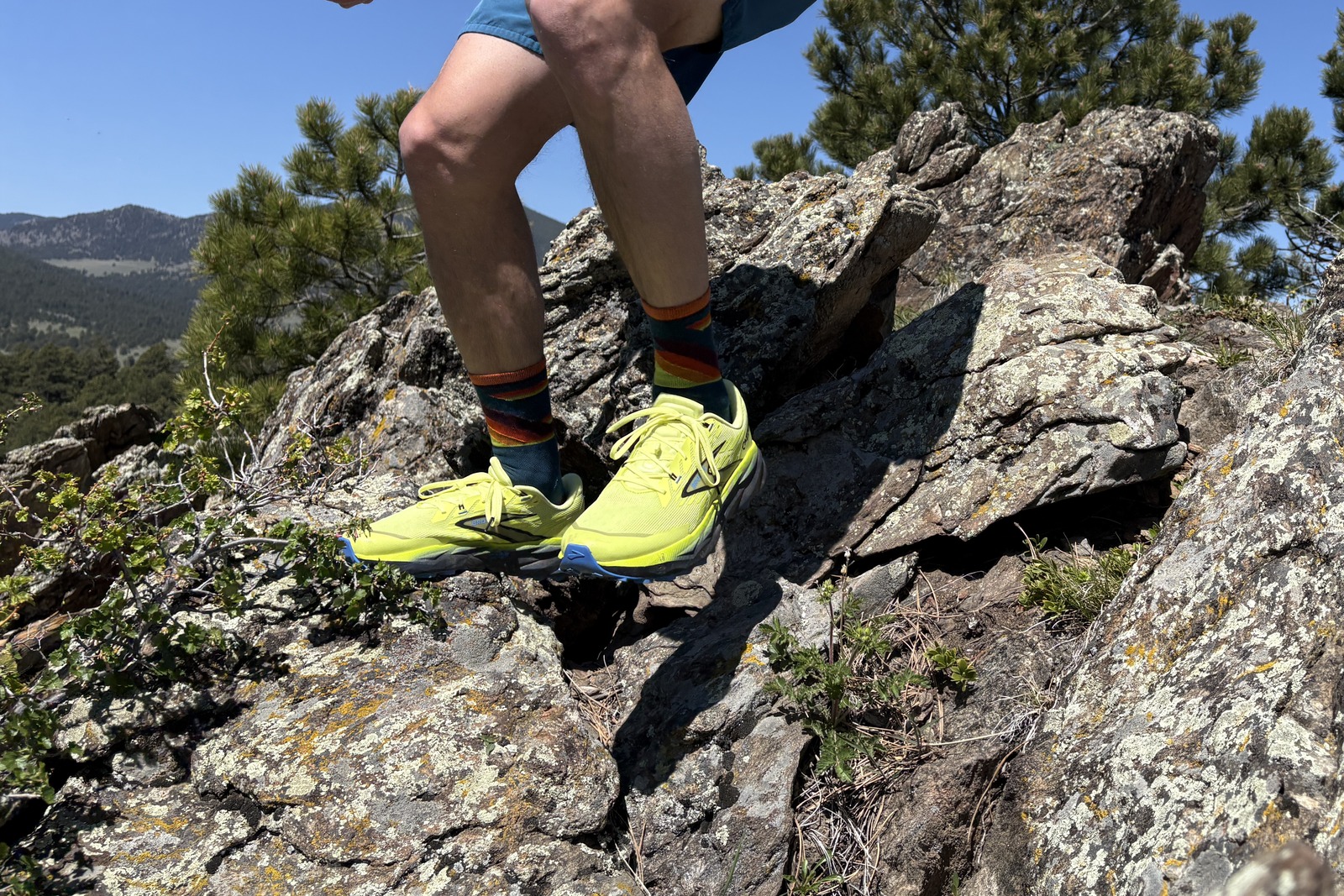
Break-in varies by construction and by foot. Lightweight mesh trail runners may feel good quickly, while stiffer or heavily reinforced shoes can need dozens of miles. Our Peregrine 16 test pair needed roughly 20–25 miles to settle in, the Ribelle Cross 2 required a longer break-in, and the Spire GTX also softened over multiple hikes. Never assume a shoe is break-in free solely because it is lightweight.
How Much traction do I need in a hiking shoe?
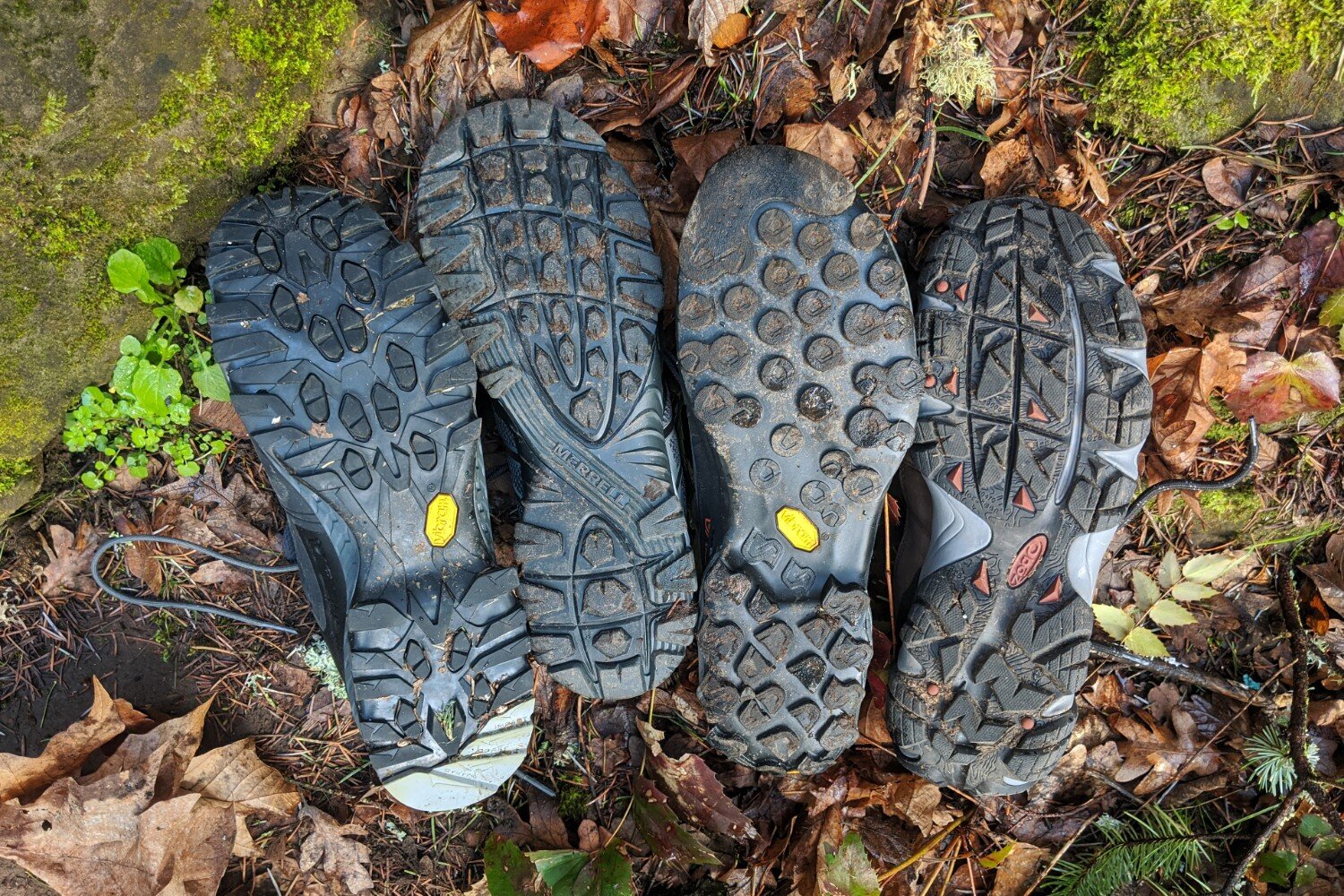
For maintained trails, a versatile rubber outsole with moderate lugs is enough for most hikers. Steep mud, loose scree, off-camber terrain, and wet rock demand more aggressive tread and stickier compounds. Lug depth is only one part of traction; rubber compound, lug shape, spacing, and platform stability all affect grip.
Do I Need Waterproof Hiking Shoes?
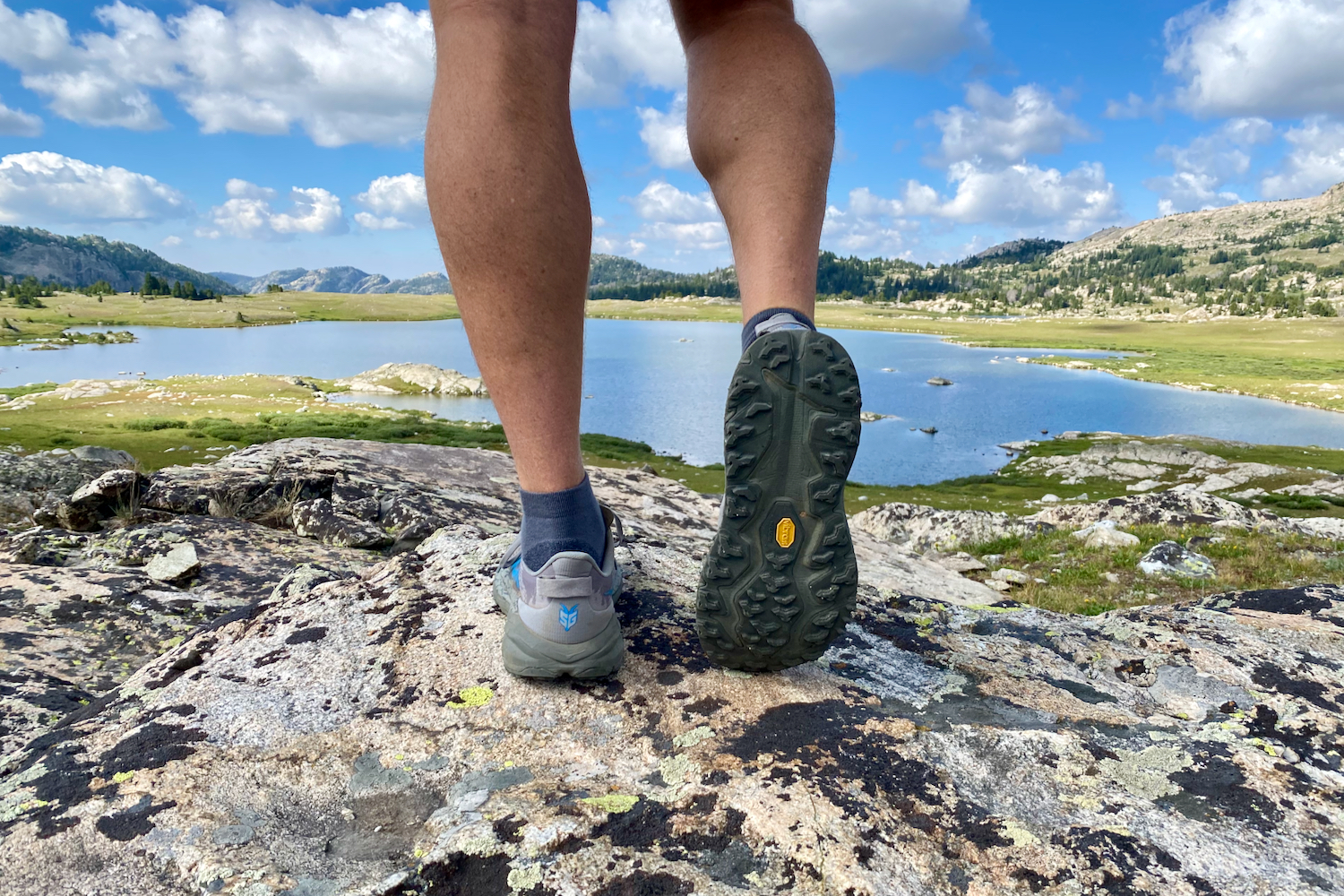
If you’ll be hiking in a damp, wet climate, waterproof hiking shoes are great. However, if your trip involves many water crossings, it may not make a difference. If your feet have a chance to dry out (i.e., you’ll have warm, sunny stretches mixed in with periods of rain), waterproof shoes can limit how wet they get during those wet times.
However, if they’ll be chronically wet, it’s more important to keep your feet warm and wet than to try to keep them dry when that’s not a realistic option. If you’re hiking in an arid climate, go with a non-waterproof option, even if you have to cross through some water.
If you do go waterproof, remember that external treatments become less effective over time, so you’ll need to reapply a treatment to keep your shoes in tip-top shape.
There are waterproof and non-waterproof versions of most shoes on this list. We recommend first finding the hiking shoe that meets your comfort, traction, and stability needs, then determining whether you’ll need a waterproof or non-waterproof option.
What Heel-to-Toe Drop is best?
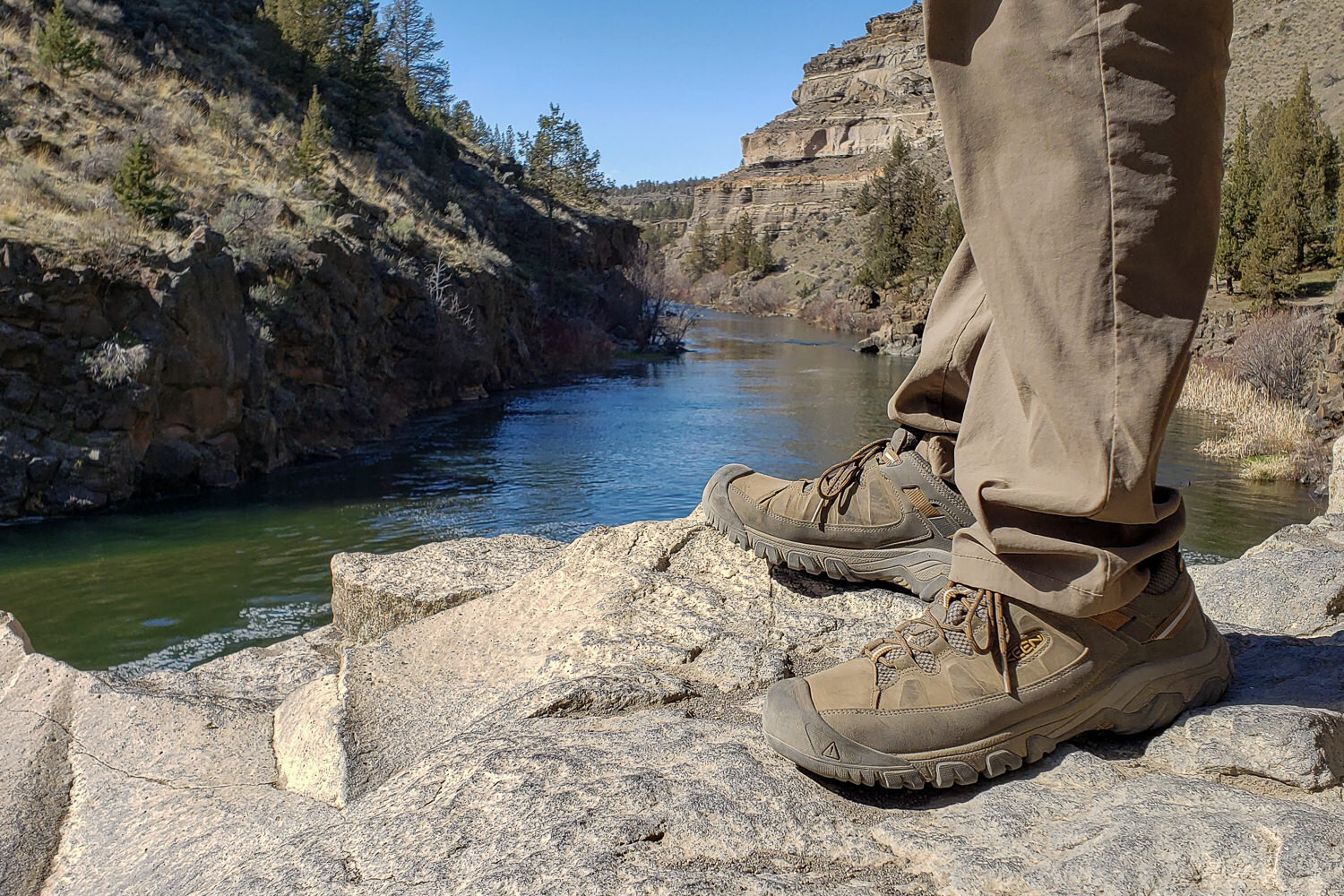
There is no universally best heel-to-toe drop. Higher-drop shoes can feel familiar to hikers coming from traditional footwear, while low- and zero-drop shoes change calf, Achilles, and foot loading. If you are considering zero drop, transition gradually and make sure the geometry suits your body before committing to a long trip.
What Is a Good Weight for Hiking Shoes?
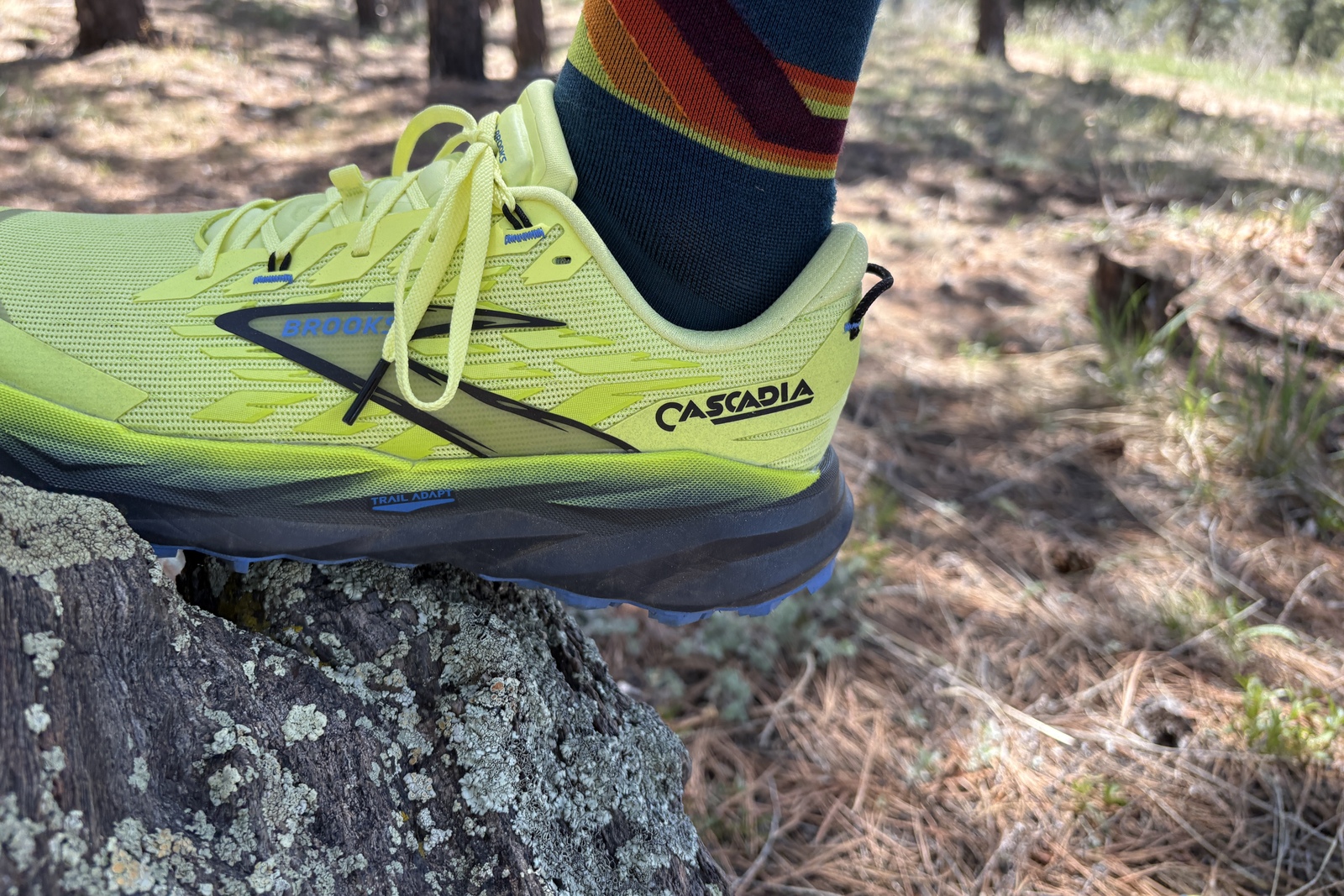
Around 1 pound 3 ounces to 1 pound 7 ounces per pair is a useful lightweight range for trail-runner-style hiking shoes. Heavier shoes should buy you a meaningful advantage in waterproofing, stability, protection, or durability. The lightest choice is not automatically the best choice for technical terrain.
Do I Need Insoles?
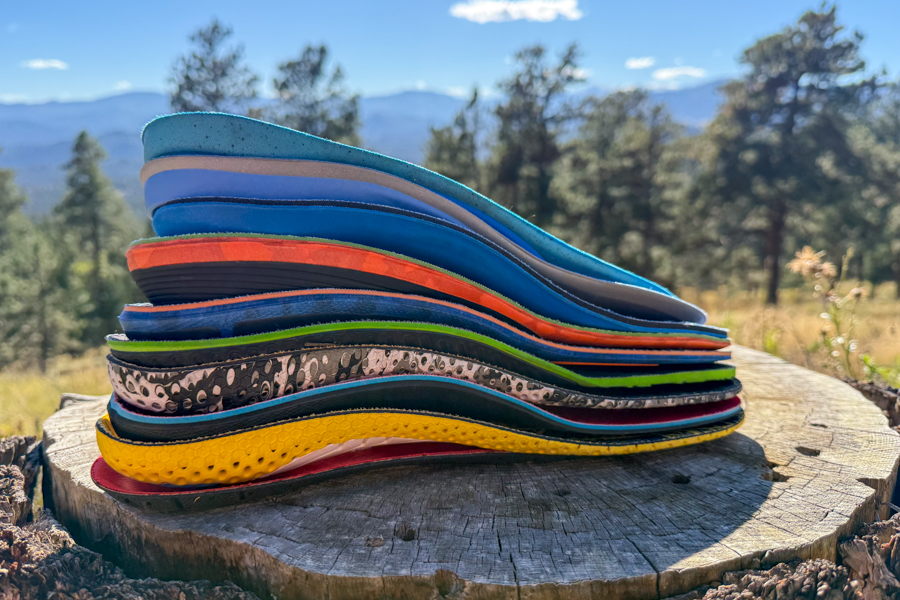
Stock insoles work for many hikers, but aftermarket insoles can add arch support, cushioning, or volume adjustment when a shoe otherwise fits well. Insoles cannot fix a fundamentally wrong last shape, sloppy heel hold, or cramped toe box, so start with the right shoe fit first.
How Much Should I Spend on Hiking Shoes?
Most of the shoes in this guide fall between about $145 and $219. The Moab 3 and Lone Peak 9 sit near the low end, while waterproof and technical models cost more. Pay for the performance you actually need—fit, traction, weather protection, and durability matter more than choosing the highest-priced shoe.
Why Trust CleverHiker
Our team has hiked, run, and backpacked more than 100,000 miles in footwear across local trails, long-distance routes, alpine terrain, deserts, wet climates, and technical mountain environments.
This category combines long-term CleverHiker experience with current testing from Gear Analyst Miles Knotek and other members of the team. We preserve firsthand observations from prior testing where they remain valid, but we do not present former staff as current testers.
We keep comfort, traction, durability, weight, and weather resistance scores separate, preserve product-specific testing evidence, and compare those judgments across the category before assigning rankings and recommendations.
Testing Methodology
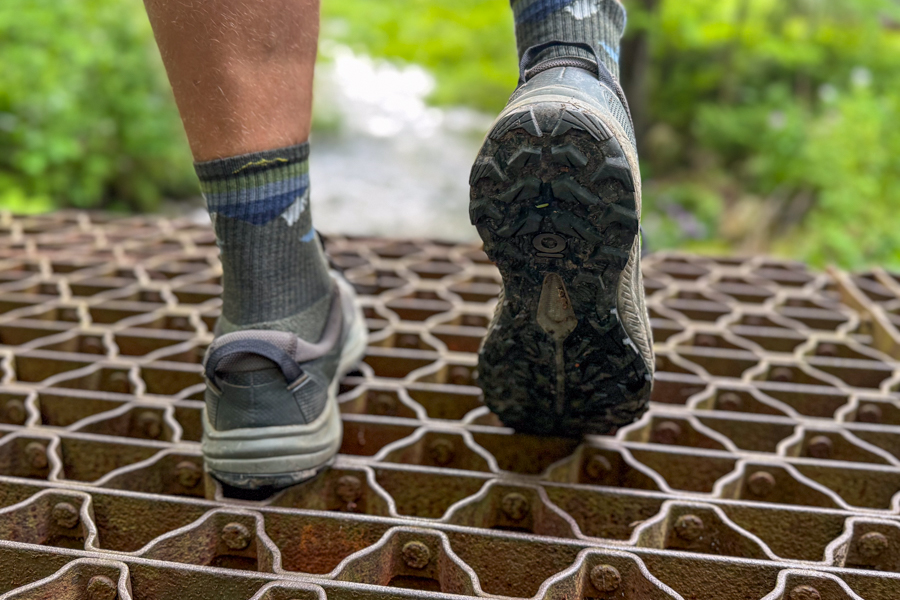
We assess men’s hiking shoes across five core dimensions: comfort, traction, durability, weight, and weather resistance. Scores summarize the evidence in each metric; the overall CleverHiker rating is a holistic editorial judgment, not a mathematical average.
How Do We Assess Comfort?
We evaluate toe-box shape, heel and midfoot hold, cushioning, arch support, flexibility, underfoot protection, break-in, and how the fit changes over long days. We also record foot-shape sensitivity rather than assuming one last works for everyone.
How Do We test Traction?
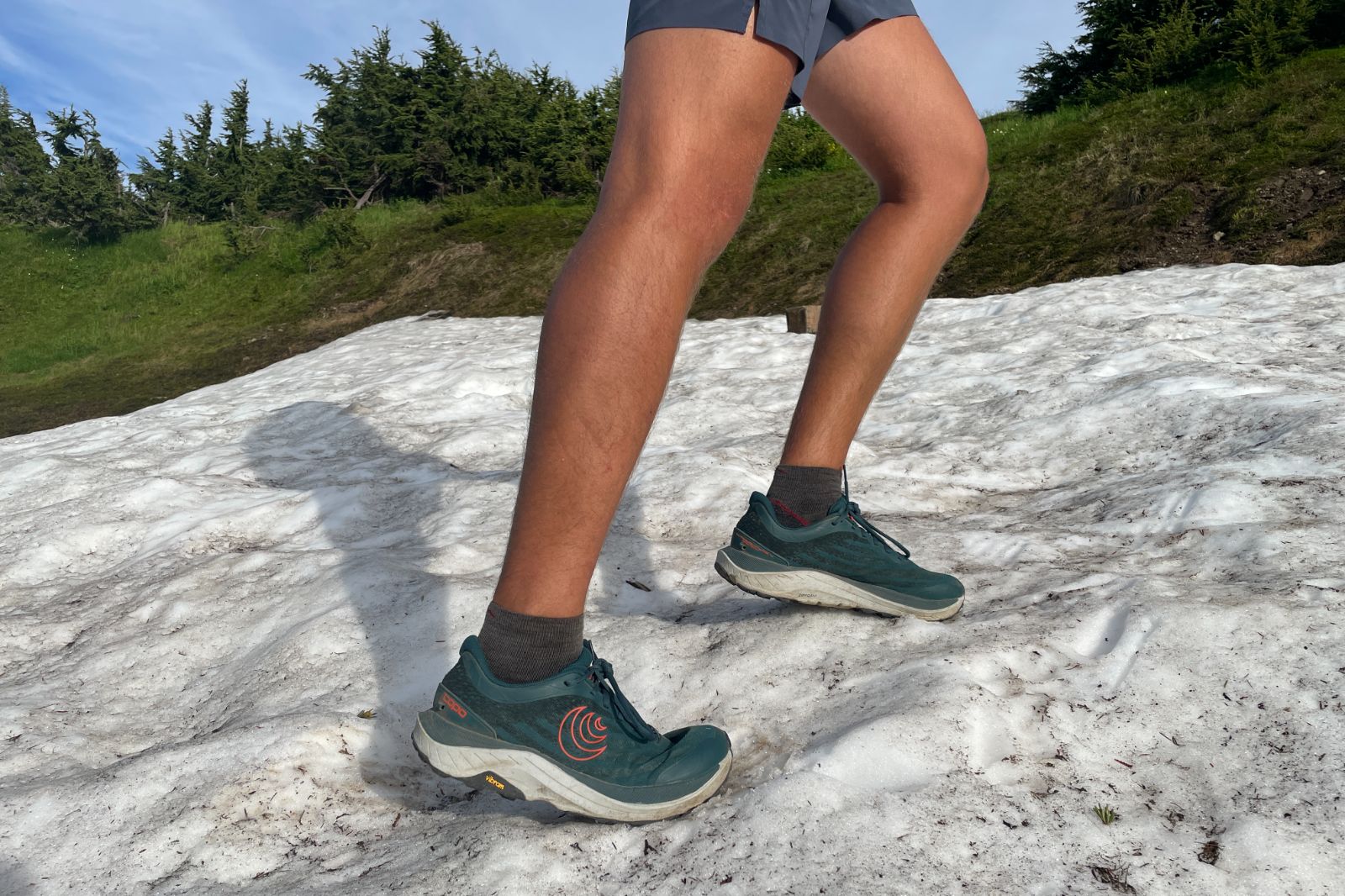
We test grip on dirt, loose soil, mud, wet and dry rock, roots, sand, scree, climbs, descents, and sidehills. We consider outsole compound, lug shape and spacing, braking, debris shedding, and how stable the shoe feels when footing is inconsistent.
How Do We Measure Weight?
We use CleverHiker-measured pair weights when we have a documented measurement for the exact tested configuration. When we rely on a manufacturer-listed weight instead, we label that distinction explicitly rather than presenting it as our own measurement.
How Do We Assess Durability?
We track upper abrasion, mesh wear, outsole and lug degradation, bonded and stitched seams, toe and heel protection, lace wear, and any decline in performance over mileage. Long-term field evidence takes precedence over assumptions based only on material thickness.
What Do We Look at for Weather Resistance?
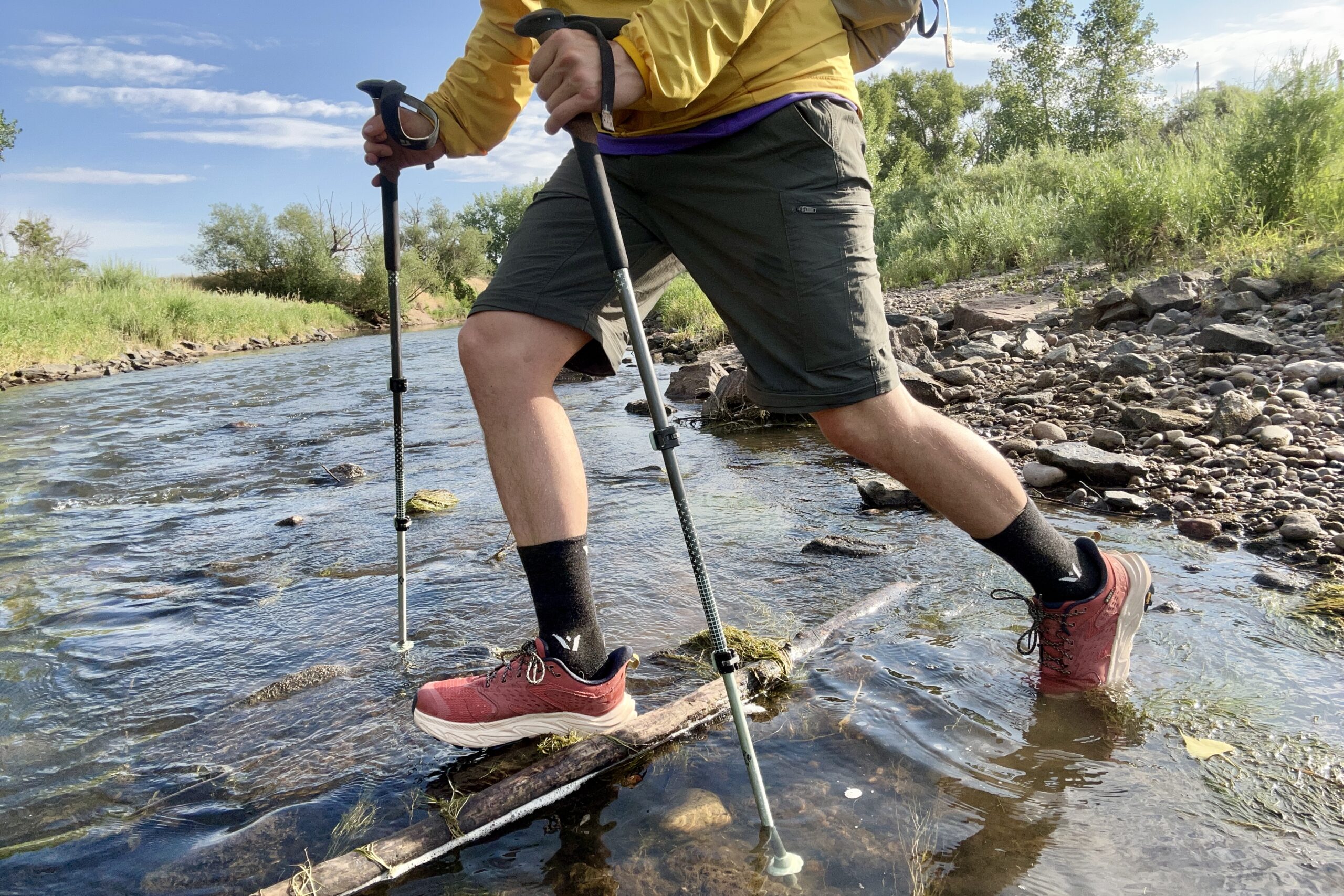
We evaluate waterproofing, water entry, drying time, breathability, warmth, and performance in rain, snow, mud, bogs, wet vegetation, and water crossings. A waterproof membrane can be an advantage in cold wet conditions and a liability in hot conditions, so the score reflects the complete tradeoff.
Conclusion
The best men’s hiking shoe is the one that fits your foot and matches your terrain. Start with fit, then decide how much weight, protection, traction, waterproofing, and durability your trips actually require. For most hikers, the Salomon X Ultra 5 GTX offers the strongest all-around balance; lighter trail-runner options make more sense for high-mileage efficiency, while technical shoes earn their extra weight in rough terrain.