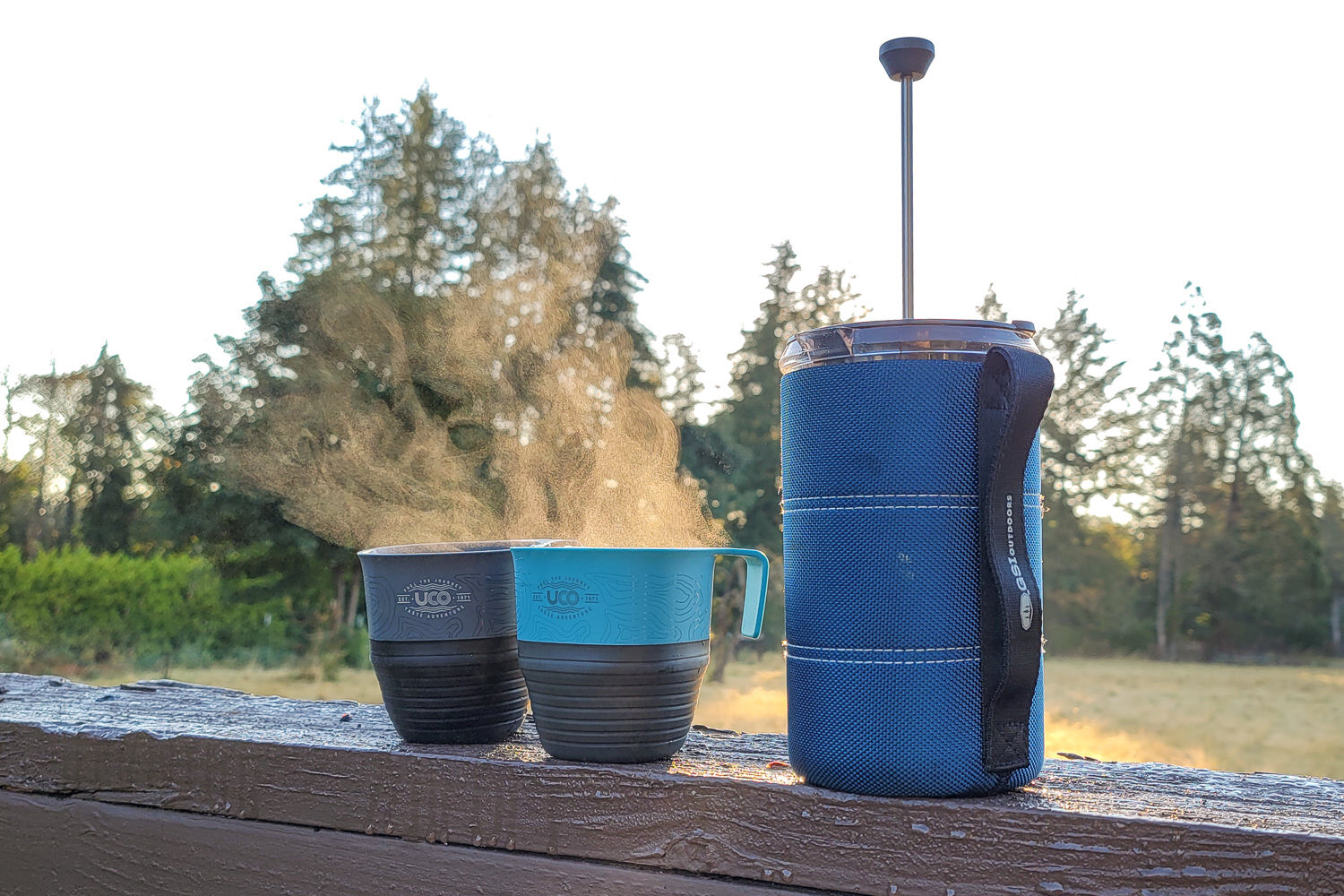

Our team has researched and tested dozens of coffee makers over the past decade. For this guide, we’ve narrowed down our picks to 11 devices that have been thoroughly vetted in the field.
Editor’s Note: We updated this guide on June 26, 2026, to add the nCamp Cafe, Alpine Mountain Gear Stainless Steel Percolator, and Hydro Flask Insulated French Press to our list of favorites.
How We Test Coffee Makers
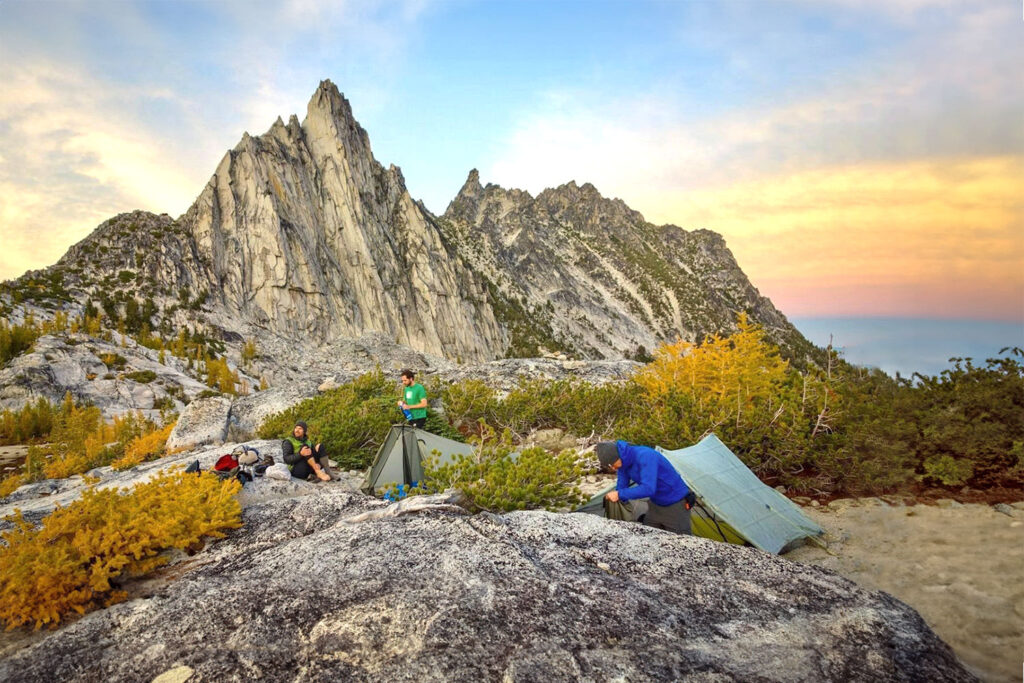
We tested coffee makers from AeroPress, Bialetti, GSI Outdoors, Hydro Flask, and more at frontcountry campgrounds, on the trail, and during road trips across the American West. From desert campsites in Utah and New Mexico to alpine starts in the Colorado mountains, we brewed over 100 cups of coffee outside over several months, assessing portability, ease of use, brew time, cleanup, and coffee strength in real-world conditions.
And for more info, check out some of our other popular gear guides:
#1. Best Camp Coffee Maker Overall
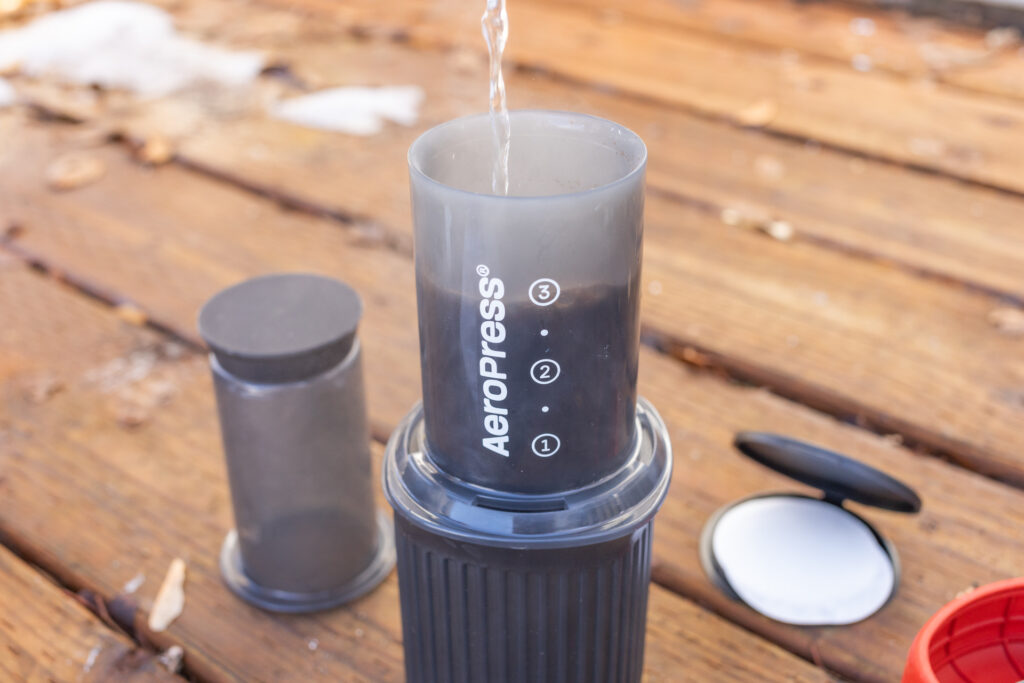
The AeroPress Go claims the top spot for its unmatched versatility: It’s the only design we tested that makes espresso, French press-style coffee, or cold brew. After testing over a dozen coffee makers across frontcountry camps, early mornings on the trail, and cross-country road trips, it is the one we reach for first every time.
Quick Picks for Camping Coffee Makers
Check out this quick list of our top choices, or keep reading to see our full list with in-depth reviews.
1. Best Coffee Maker Overall: AeroPress Go ($50)
2. Best One-Pot Wonder: Bialetti Moka Express ($40)
3. Best Ultralight Coffee Maker: GSI Outdoors Ultralight Java Drip ($13)
4. Best All-In-One Espresso Maker: nCamp Cafe ($49)
5. Most Compact Coffee Maker: MiiR Pourigami ($35)
6. Classiest Camp Coffee Maker: GSI Outdoors MiniEspresso Set ($60)
7. Best Percolator: Alpine Mountain Gear Stainless Steel Percolator ($55)
8. Best Camp Espresso: Wacaco Minipresso GR ($55)
9. Best for Keeping Coffee Hot: Hydro Flask Insulated French Press ($70)
10. Best for On-the-Go Coffee: ESPRO P0 Ultralight Travel French Press ($50)
11. Best Coffee Maker for Groups: GSI Outdoors JavaPress ($50)
AeroPress Go
Best Coffee Maker Overall
CleverHiker Rating: 4.9/5.0
Price: $50
Liquid Capacity: 8 fl. oz.
Weight: 11.5 oz.
Size: 5.3 x 3.9 x 3.9 in.
Pros
- Easy to customize coffee strength
- Comes in a convenient package
- Can be made zero-waste
- Easy to clean
- Fast coffee prep
- Durable construction
- Makes different types of coffee
Cons
- Mug isn’t insulated
- Only makes one to two small cups at once
Since we first got our hands on the inimitable AeroPress Go, we were smitten. After all, what other coffee-making device can produce espresso, French press-style coffee, and even cold brew in such a compact package? What’s more, this simple brewer excels at making the precise strength of brew you desire. Just adjust your technique using one of many different brewing styles to take your cup from light to dark with just a few tweaks.
In addition to using the AeroPress as a cross between a pour-over and a French press, you can invert it, add coffee and water, let it steep for several minutes, and press it for a stronger, espresso-style cup. This was our favorite method during testing. The options are endless, and a quick search on YouTube will reveal as many brewing methods as there are coffee drinkers.
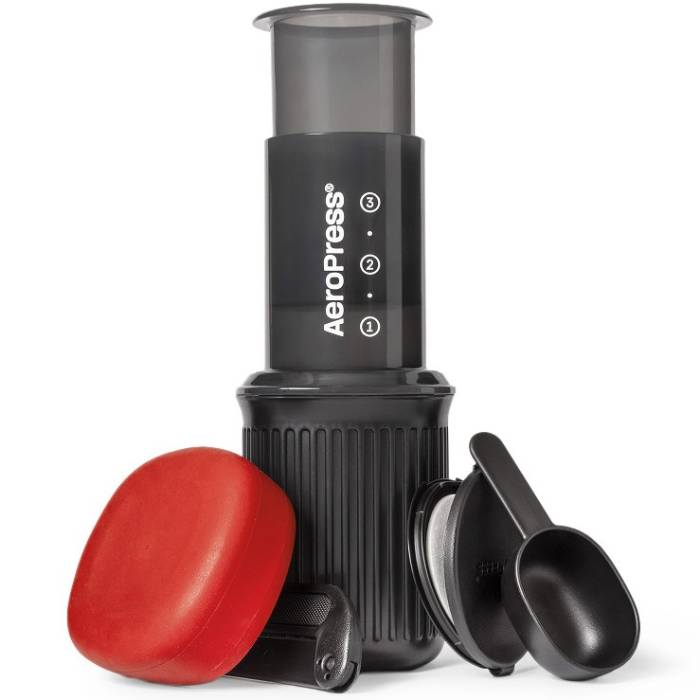
It comes in a durable, travel-ready package that includes a coffee scoop, stir wand, filters (which can be replaced by a metal filter to reduce waste), filter keeper, mug, and lid. Everything nests together for easy storage and transport. Despite years of being knocked around, dropped, and tossed into storage bins on countless camping trips, our AeroPress is as functional as ever.
It may not be the cheapest option on this list, but the Go’s versatility makes it a worthwhile investment for coffee-loving adventurers. For those who prefer an insulated mug, there’s also the AeroPress Go Plus, which offers the same functionality with an improved (albeit heavier) vessel.
More: AeroPress Go Full Review
Bialetti Moka Express
Best One-Pot Wonder
CleverHiker Rating: 4.8/5.0
Price: $40
Liquid Capacity: 2 fl. oz.
Weight: 13.1 oz.
Size: 3.8 x 5.7 x 4.3 in.
Pros
- No kettle required
- Makes strong coffee
- Durable
- Inactive brewing process
- Easy to use
- Reliable results
Cons
- Not quick to clean
- Takes time to cool
- Only makes one to two small cups
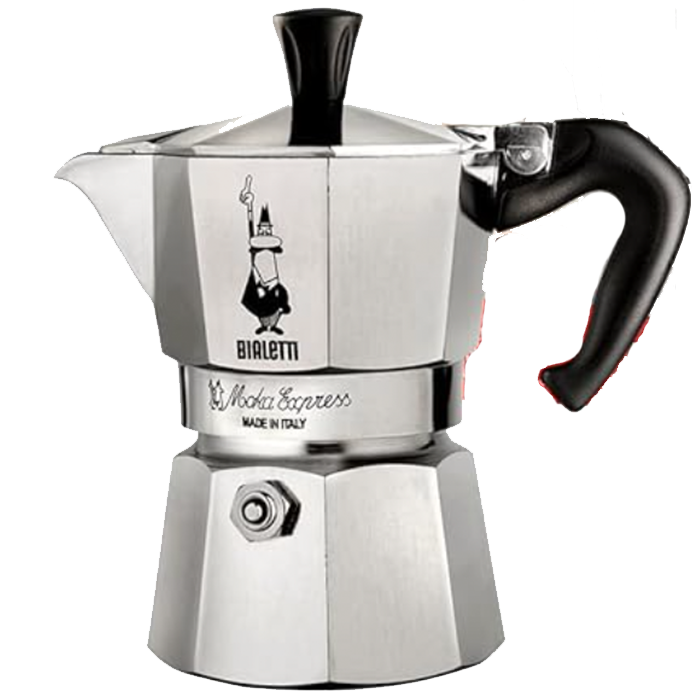
We’ve been using a Bialetti Moka Express around the house for years, and it makes sense that this easy-to-use, one-pot wonder would be just as suitable for outdoor adventures. It has a cult following for a reason – and not just in Italy, where this hardy metal brewer originated. Outdoor enthusiasts around the world appreciate it for its ease of use, reliability, and straightforward brewing.
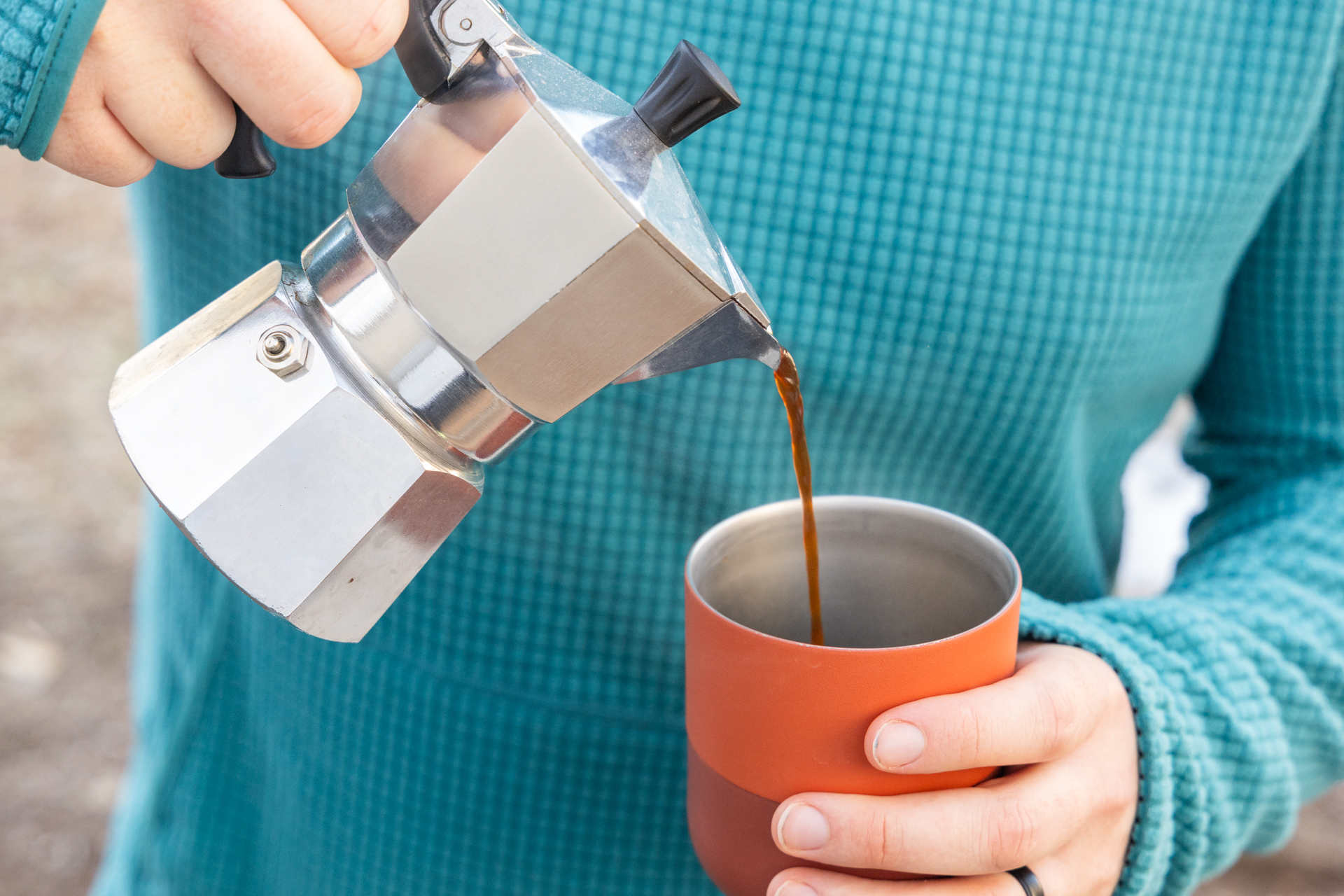
It also makes strong coffee. Like a classic percolator but with more pressure and a finer grind, the Moka Express ensures every bit of flavor is extracted as water bubbles up through the grounds into the upper reservoir. The result is a piping-hot cup of espresso-strength brew in just a few inactive minutes. There’s no need for pre-boiling water or careful pouring – just fill the base with cold water, pack the basket with grounds, screw on the top, set it on your camp stove, and let it do its thing.
The Moka Express is very durable thanks to its nearly all-metal construction. Only the handle and lid knob are made of heat-resistant plastic. There’s no need to worry if it falls off a picnic table or rolls across your campsite. We’ve dropped ours plenty of times over the years with no notable damage to report. The only part that will need to be replaced regularly is the rubber seal inside the top.
It’s heavy for backpacking if you keep your kit ultralight, but if you don’t mind carrying a few extra ounces for a quick, easy, and strong cup of coffee, we have few complaints. Just bring a towel so you can disassemble it for cleaning or reloading if you don’t want to wait for it to cool.
GSI Outdoors Ultralight Java Drip
Best Ultralight Coffee Maker
CleverHiker Rating: 4.7/5.0
Price: $13
Liquid Capacity: 8 fl. oz.
Weight: 0.3 oz.
Size: 4.2 x 4.2 x 0.5 in.
Pros
- Customizable flavor profile
- Simple to use
- Ultralight
- Inexpensive
- Fits most camp mugs
- Packs flat
- No filter required
Cons
- Damp after use
- Makes one cup at a time
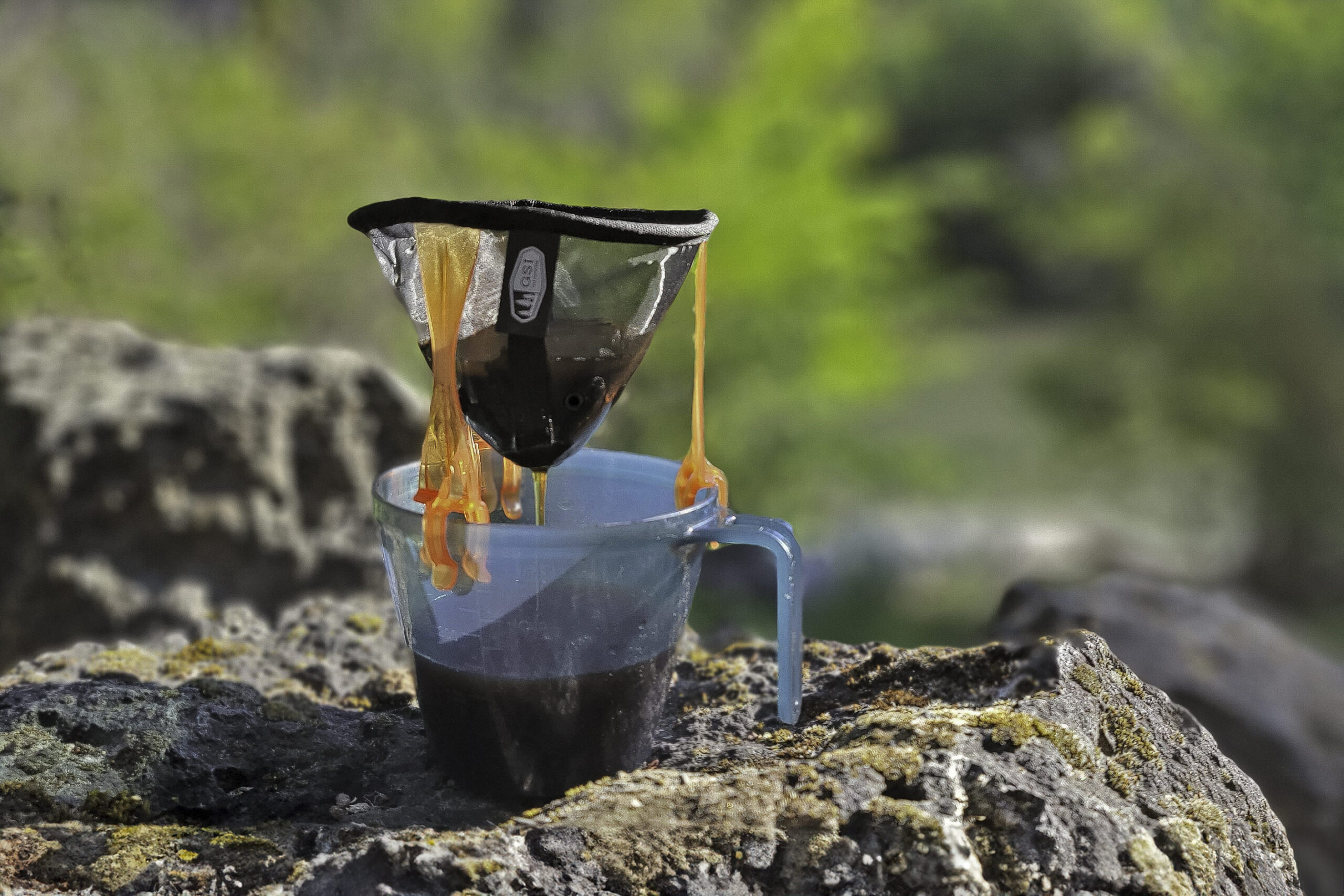
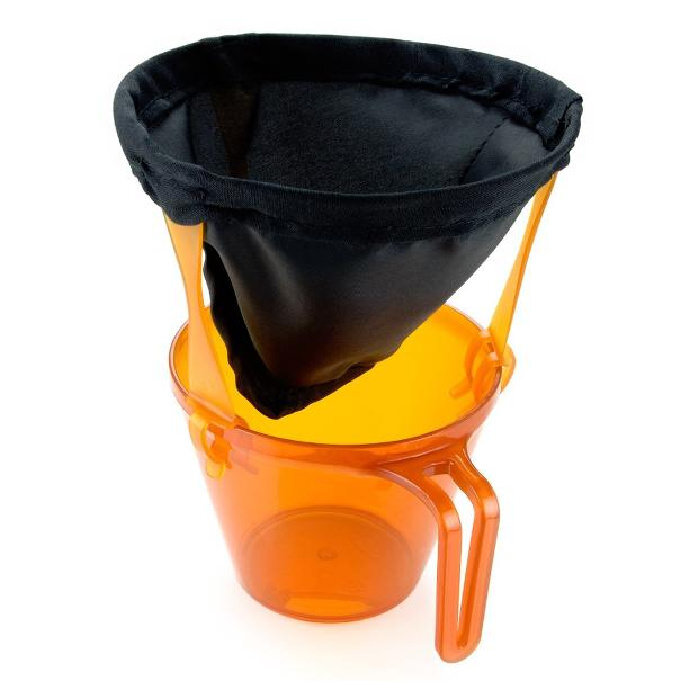
The GSI Ultralight Java Drip is truly a backpacker’s dream: It packs flat, weighs almost nothing, and allows you to customize coffee strength by adjusting the size of the grounds you use for your classic pour-over coffee. It’s easy to clean up when you’re done and simple to reset for the next brew (although it only makes one cup at a time).
The Java Drip is designed with a reusable and washable mesh fabric basket instead of the typical hard-sided cone found on most pour-over devices. This means you don’t need to pack extra filters – just add grounds to the basket and pour hot water on top. Three plastic legs feature clips at the end that fit onto the rim of most travel cups, camp mugs, and standard coffee mugs at home.
You can easily customize your brew strength by using a finer or coarser grind. We preferred a slightly finer grind due to the faster flow-through rate compared to most paper filters. After brewing, cleanup involved dumping out the grounds and rinsing the filter, making it quick and easy. When backpacking in Utah, we had to pack away the device while it was still wet, which wasn’t a dealbreaker but wasn’t ideal, either.
The Ultralight Java Drip is extremely lightweight, so even minimalist backpackers can consider making the switch from instant coffee. And although it may not be the most durable option we tested, it’s hard to argue with the value – it’s the cheapest option here by a wide margin.
nCamp Cafe
Best All-In-One Espresso Maker
CleverHiker Rating: 4.7/5.0
Price: $49
Liquid Capacity: 12 fl. oz.
Weight: 1 lb. 11 oz.
Size: 9.6 x 3.4 in.
Pros
- Excellent espresso-style coffee
- All-in-one design
- Durable
- Makes coffee for two
- No sediment
- Easy cleanup
Cons
- Incomplete instructions
- Somewhat time-consuming
- Heavy
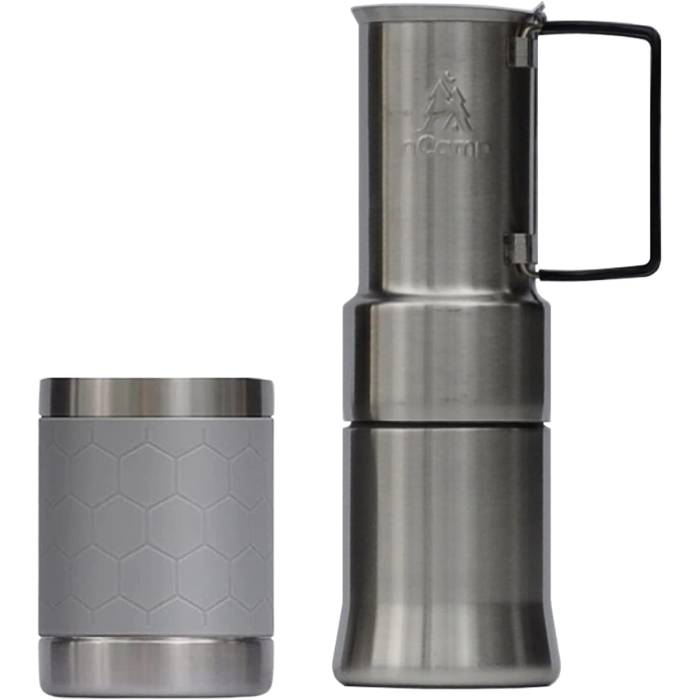
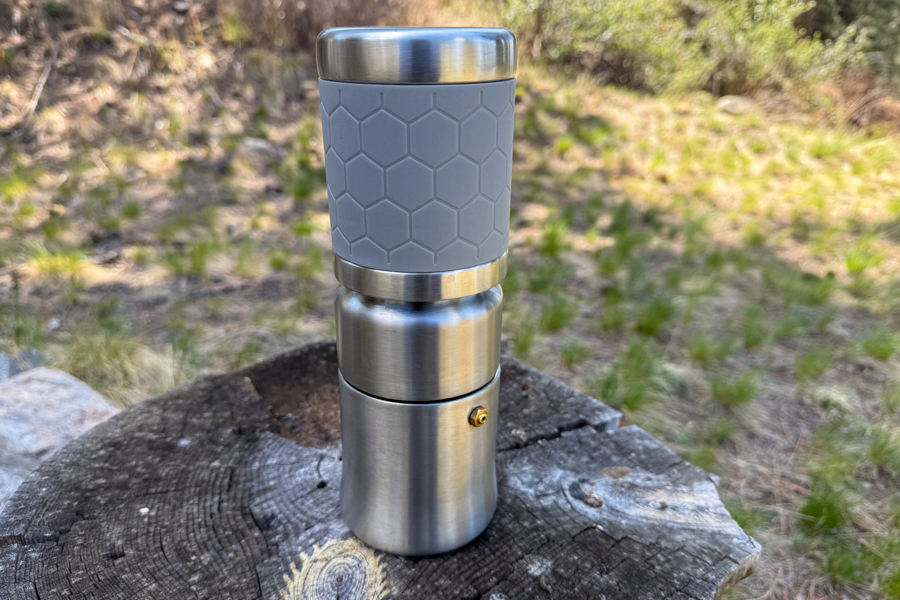
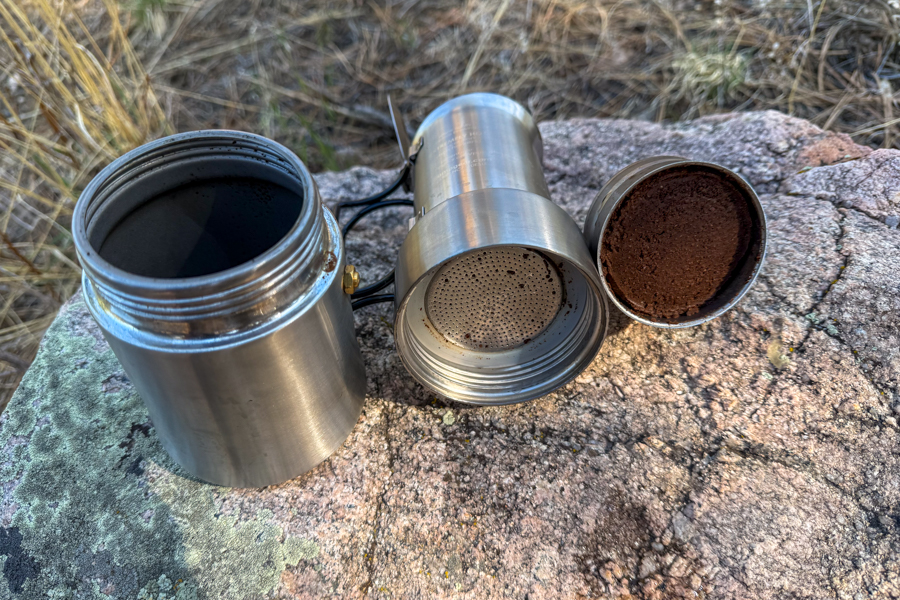
The nCamp Cafe is one of the coolest camp coffee makers we tested, especially if you’re the type of person who really cares about your coffee. It is a compact, stainless steel, Moka pot-style brewer that packs down to about the size of a Nalgene – nesting mug included.
The coffee it makes is no joke. This thing turns out a rich, espresso-style shot that is impressively close to what you’d get from a good machine at home. We were happy to find that the stainless steel construction didn’t add any weird metallic taste.
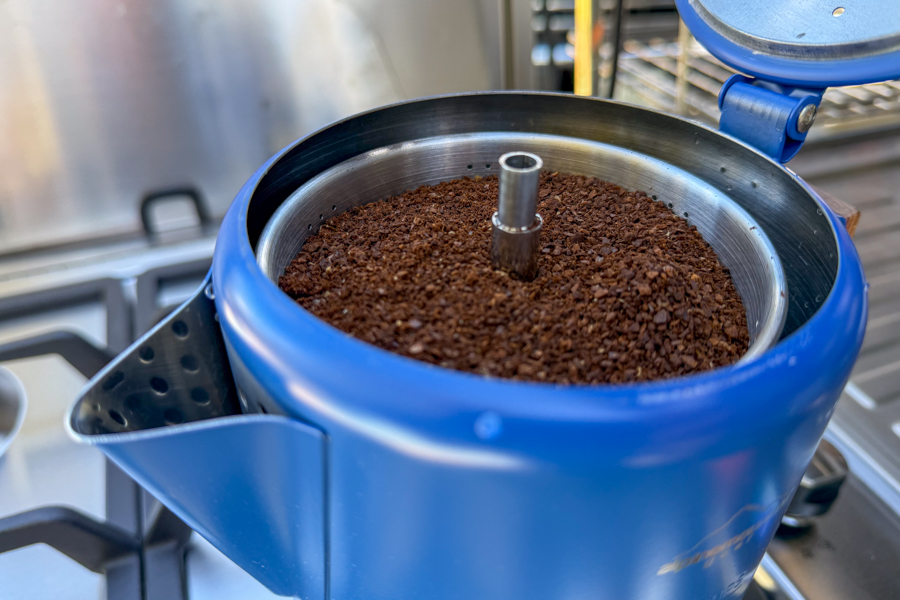
There’s a little bit of a learning curve, but it’s not bad once you figure out the rhythm. The biggest thing is knowing a few details the instructions leave out: Use a fine espresso grind, fill the basket to the line with the lightest tamp, fill the water chamber to just below the side valve, and watch for air coming out of that valve. Brew time usually lands somewhere around five to eight minutes depending on your stove, which feels totally reasonable at camp.
The narrow base is happiest on a canister stove. It works on other stoves, but you’ll want to make sure it feels stable. It’s marketed as compact enough for backpacking, but in real life, most backpackers probably are not going to want to deal with the extra pieces, fine-ground espresso, and slightly more involved setup. For car camping, van trips, or anyone who wants genuinely good espresso in the outdoors, though, this thing is a treat.
Cleanup is a little more involved than simpler brewers and easiest with running water, but if good coffee is high on your priority list, that will probably feel worth it.
More: nCamp Cafe Full Review
MiiR Pourigami
Most Compact Coffee Maker
CleverHiker Rating: 4.7/5.0
Price: $35
Liquid Capacity: 8 fl. oz.
Weight: 6.7 oz.
Size: 5.6 x 3 in.
Pros
- Folds flat
- Highly portable
- Comes with a carrying case
- Customizable coffee strength
- Compatible with reusable filters
- Durable
Cons
- Heavy for backpacking
- Specific filters recommended
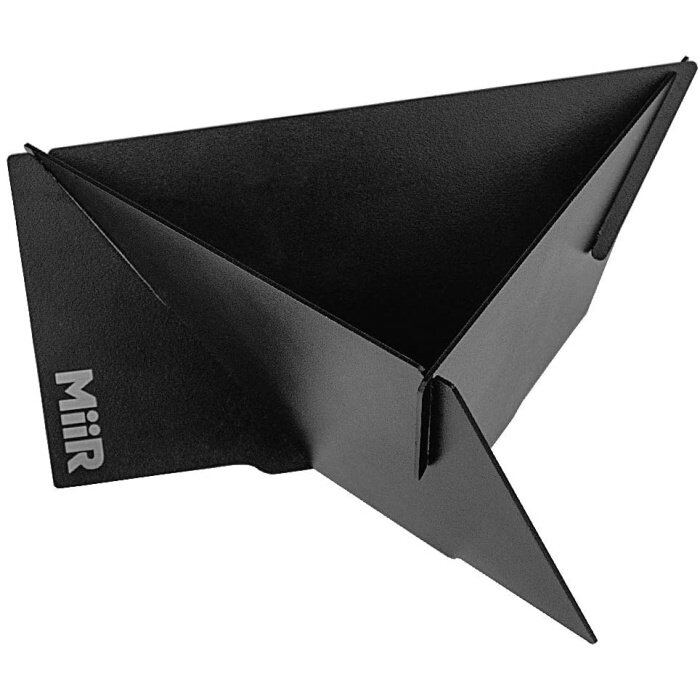
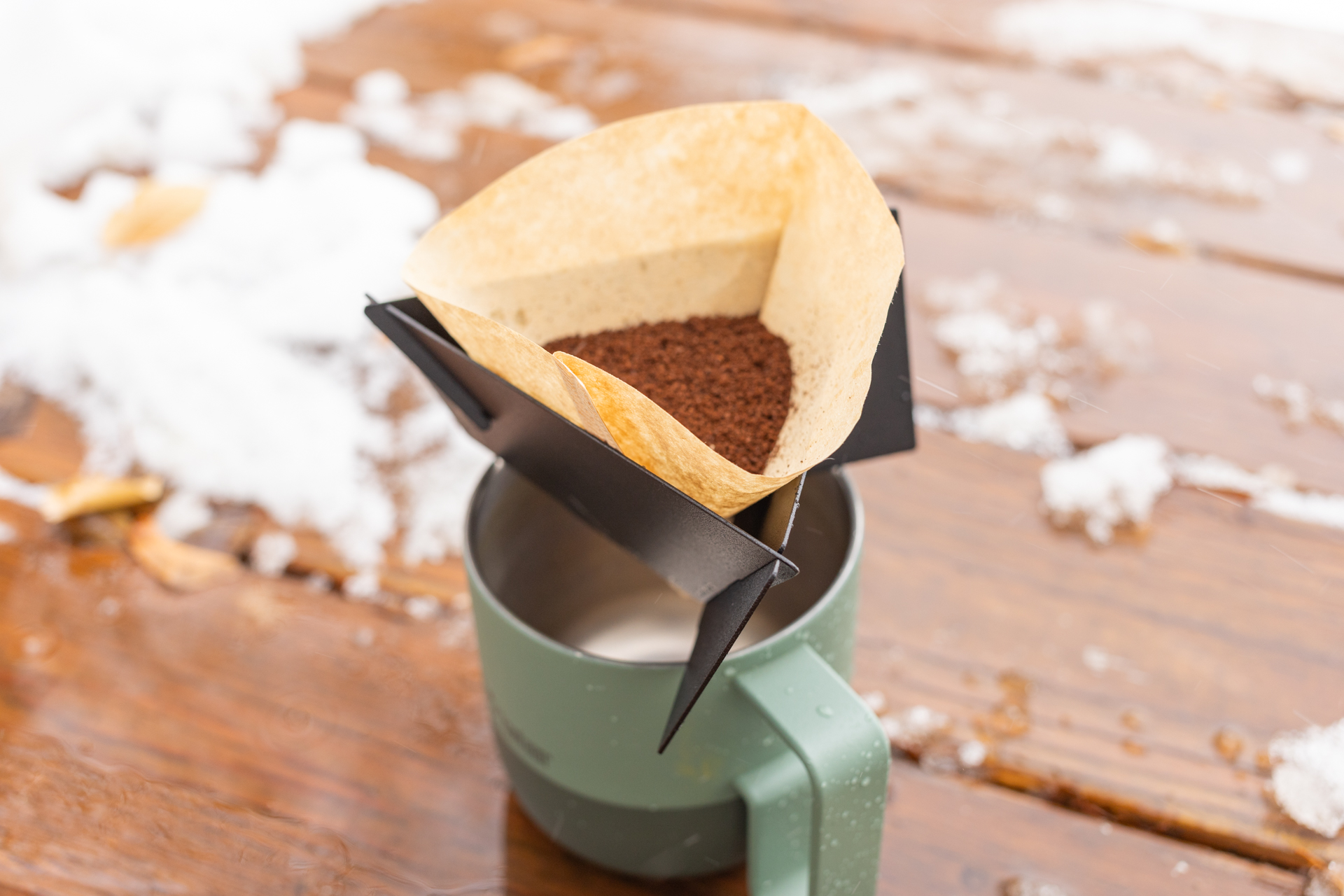
If you’re looking for the most compact and portable pour-over cone available, the MiiR Pourigami takes the cake. It collapses almost completely flat and reassembles using slides and notches on three identical pieces that come together to form a triangular cone. Simply place a filter with coffee grounds inside, add water, and you have your cup of coffee. It even includes a folding storage sleeve with space for filters.
Using specific, cone-shaped filters is recommended. During testing, we found that traditional #4 filters could be used, but they didn’t fit as well and were more prone to breaking along the bottom seam. Fortunately, reusable filters were also effective and helped reduce waste.
The Pourigami is made entirely of stainless steel, and grooves in the base help it stay centered on almost any camp mug. It may be too heavy for some backpackers, but the good news is that cleanup is a breeze – no running water required. Simply dispose of the filter and grounds, then wipe or rinse the device before disconnecting the interlocking panels and storing them in the sleeve.
This is the coffee maker we keep in our camp kitchen box at all times because it takes up almost no space, leaving more room for essentials (like more coffee).
GSI Outdoors MiniEspresso Set
Classiest Camp Coffee Maker
CleverHiker Rating: 4.6/5.0
Price: $60
Liquid Capacity: 2.5 fl. oz.
Weight: 11 oz.
Size: 5.9 x 3.6 x 3 in.
Pros
- All-in-one system
- Makes espresso-strength coffee
- Can be used to make an Americano
- Comes with a protective case
- Inactive brewing
- Durable
Cons
- Makes one cup at a time
- Cooldown is required before cleanup
- Small base
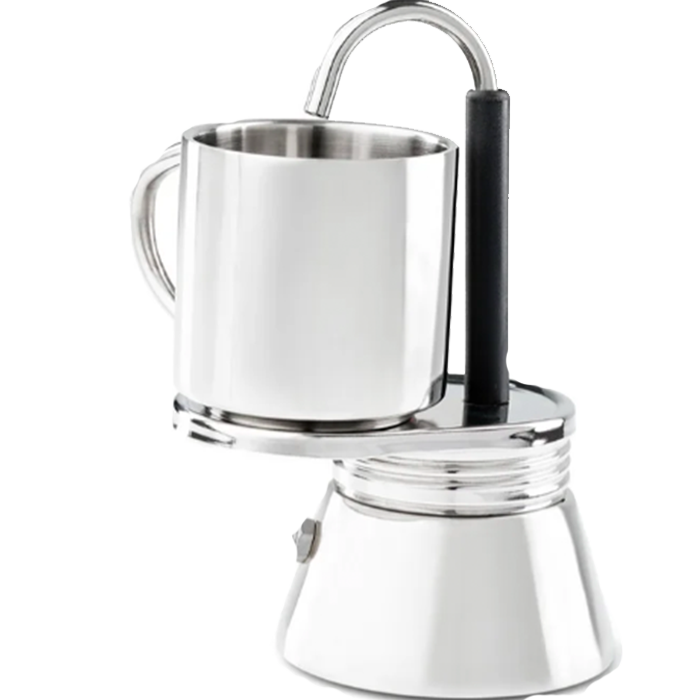
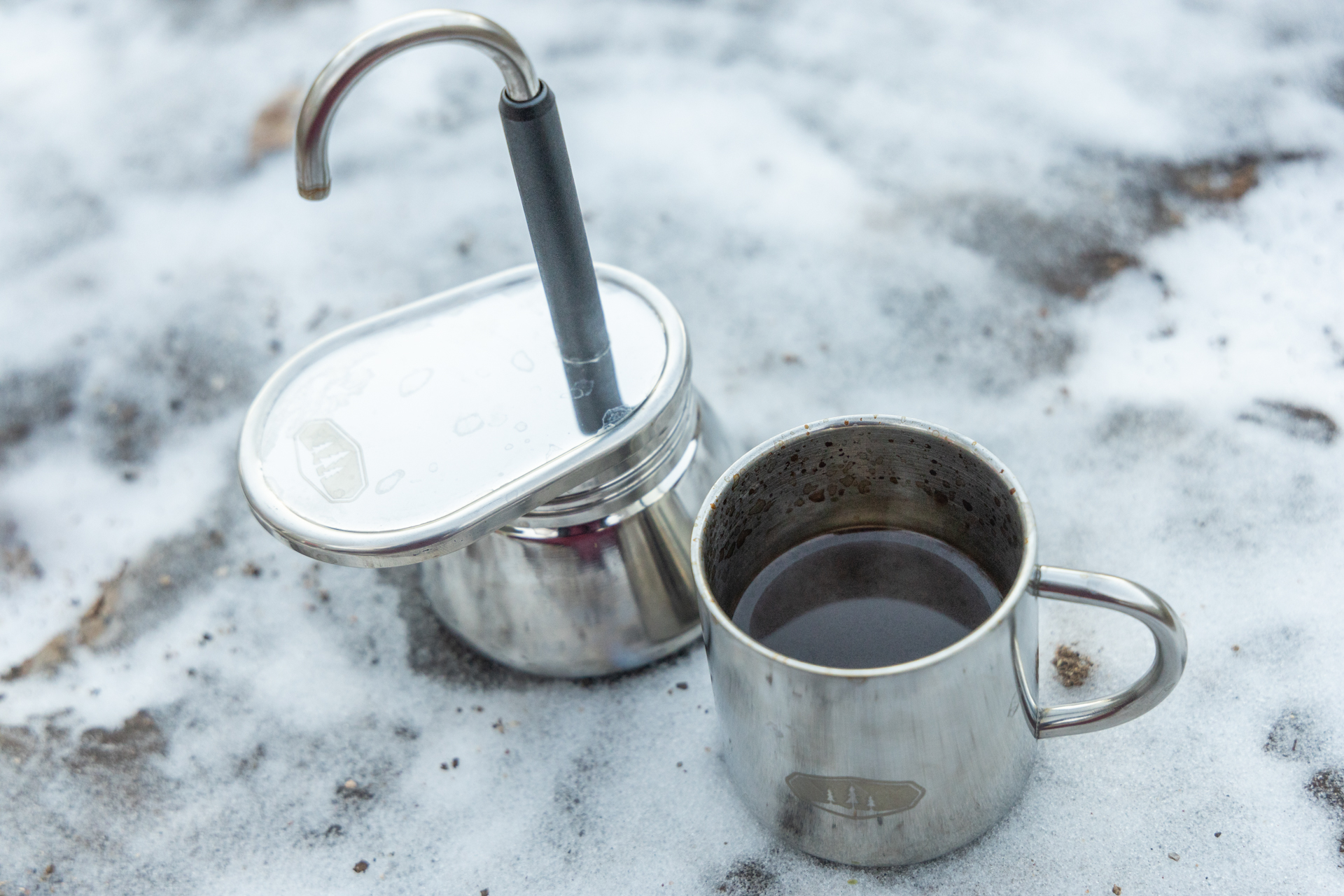
When we want to impress our friends and family with our coffee skills on camping trips, we pull out the GSI MiniEspresso Set. Similar in concept to the Bialetti Moka Express, it uses heat to generate pressure and brew a strong cup of espresso right into a waiting cup. Just add water to the base and coffee grounds to the basket, then place it on top of a hot stove and wait. In a couple of minutes, a hot shot of coffee will be ready to drink in the insulated cup.
The entire set comes in a sturdy, protective case for easy transport. The case kept the espresso maker in pristine condition, even when we carelessly tossed it into a camp kitchen box in the back of our car during road trips and campouts in Utah and Idaho.
We appreciated that we didn’t have to pre-boil water in a pot or kettle to brew. This does mean the entire device gets hot, making it difficult to clean or reset for another cup before it cools down. We still managed to do both as long as we had a small camp towel to protect our hands from the heat.
The MiniEspresso’s base is small, so it may not fit on all stoves. We found that we could make it work with strategic placement in most cases, but it’s something to be aware of going into the purchase.
The setup produces one shot at a time, which can be diluted with hot water to create an Americano. There is also a four-cup version available if you want a few more fluid ounces of coffee.
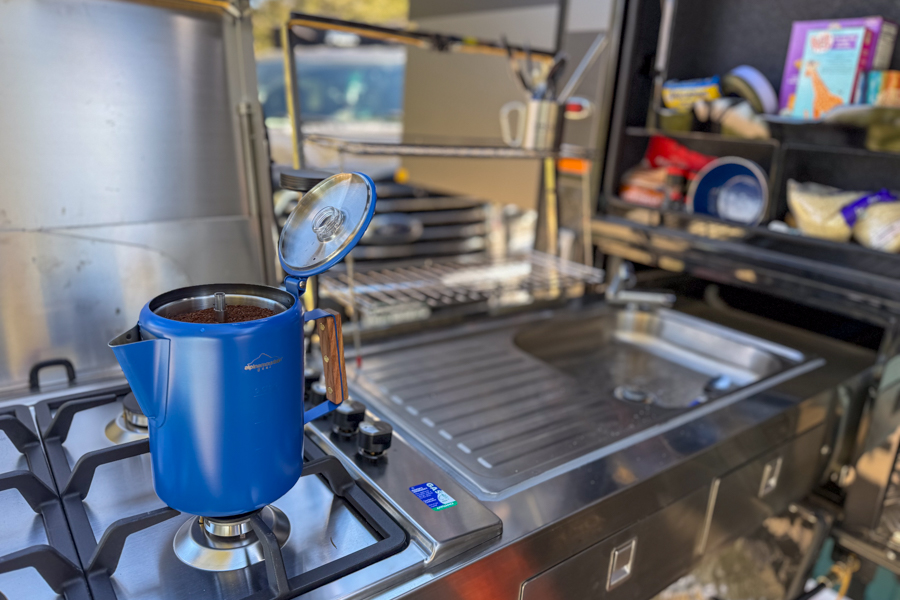
Alpine Mountain Gear Stainless Steel Percolator
Best Percolator
CleverHiker Rating: 4.6/5.0
Price: $55
Liquid Capacity: 72 fl. oz.
Weight: 1 lb. 13.3 oz.
Size: 8.2 x 6 x 5.8 in.
Pros
- Large brewing capacity
- Easy to use
- Durable
- No filters
- No plastic
- Easy to clean
- No metallic taste
Cons
- Percolator coffee is rarely sediment-free
- Requires some experimenting to dial in strength
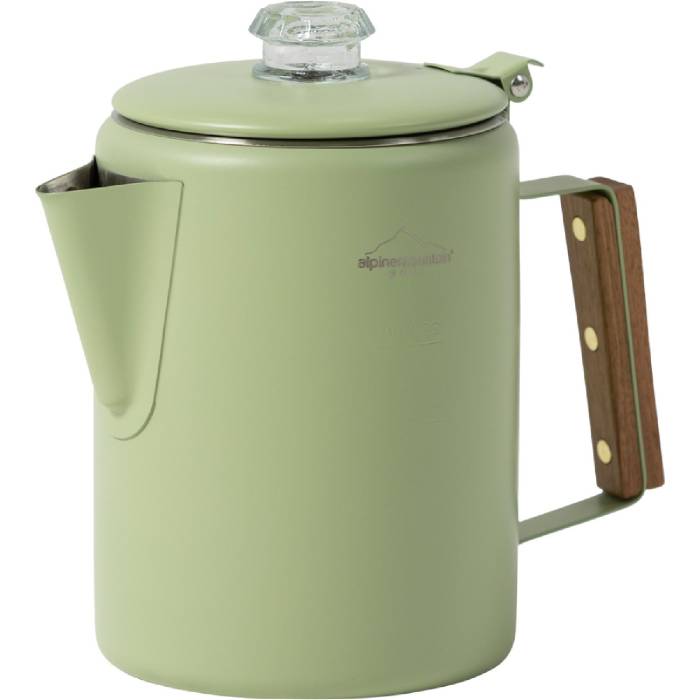
The Alpine Mountain Gear Stainless Steel Percolator feels like a classic camp coffee maker in the best way. It’s all stainless steel with the exception of the glass knob and wooden handle, and it feels sturdy and well made without being overly complex or expensive. The nine-cup capacity makes it especially handy for group trips.
We also like that it’s not limited to one type of setup. The percolator worked well for us on a two-burner camp stove, on a smaller canister stove, over a campfire, and even on an electric range at home. It also does a nice job pulling double duty for things like tea or hot chocolate, making it easy to keep in our camp kitchen rotation.
Brew quality was solid, too. Coffee comes out bold and flavorful with surprisingly little sediment for a percolator, and we never picked up any weird metallic taste. The glass knob on top is especially helpful if you are still figuring out your timing – you can actually watch the coffee start to perk and adjust your heat from there. Like any percolator, it takes a batch or two to dial in your preferred strength, but that’s normal.
The trade-offs mostly relate to size. The percolator is bulky, relatively heavy, and makes way more sense for car camping than backpacking. Cleanup is also easiest when you have access to running water. But for the kind of camping this thing is made for, those are pretty easy downsides to live with.
If you want a sturdy, high-capacity percolator that makes good coffee and doesn’t cost a fortune, the Alpine Mountain Gear is an easy one to like.
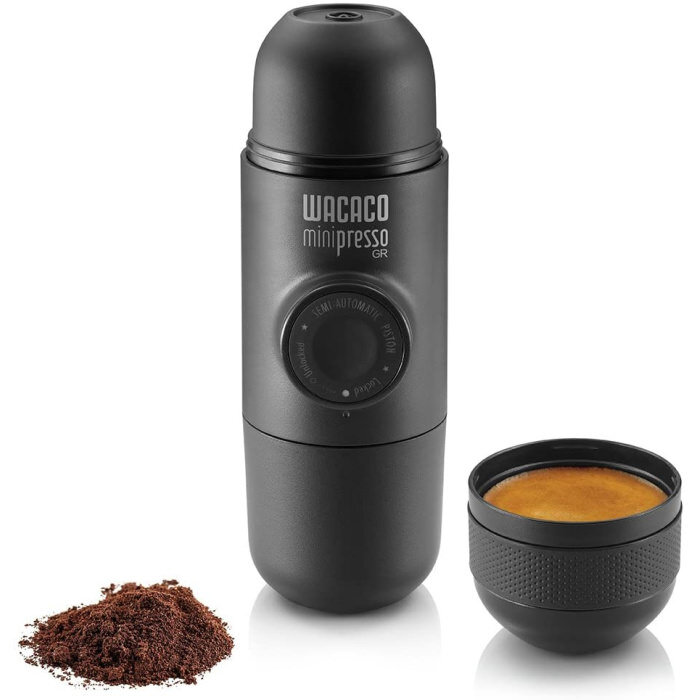
Wacaco Minipresso GR
Best Camp Espresso
CleverHiker Rating: 4.5/5.0
Price: $55
Liquid Capacity: 2.4 fl. oz.
Weight: 12.7 oz.
Size: 2.8 x 2.4 x 6.9 in.
Pros
- Makes strong espresso
- Makes cold or hot coffee
- Quick preparation
- Two coffee basket size options
- Can be lengthened with water
Cons
- Lots of parts
- Takes longer to clean up
- Not as durable
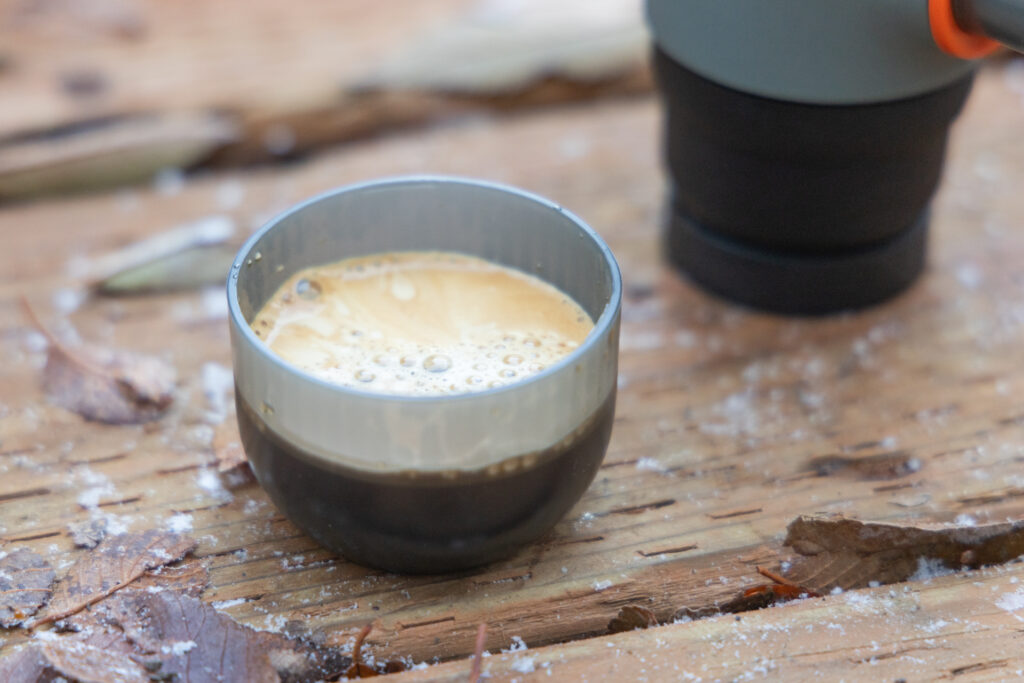
If you’re after cafe-level espresso, there’s no better way to make it in the frontcountry or backcountry than with the Wacaco Minipresso GR. Not only does it produce a strong shot quickly, but no other espresso maker we tested yielded a cup with crema – a barista must-have. You do have to put in just under one minute of pumping to build pressure, but it still made one of the fastest cups of the bunch.
It prepares hot coffee as well as cold espresso for times when you don’t want to boil water, like during long road trips or quick pit stops between trailheads. Despite having many parts, it was easy to use once we got the hang of it. We had to be careful not to tamp the grounds in the basket too hard, but otherwise, we had no issues with extraction. Plus, there are two basket size options (8 or 12 grams), allowing you to customize the strength of your espresso.
The device is slightly less durable than other coffee makers we tested, but it withstood being tossed into a backpack and camp kitchen box without issue. It also includes a storage and transport stuff sack. If you want to make multiple shots, you will need to disassemble and reset the machine, although cleanup time is minimal.
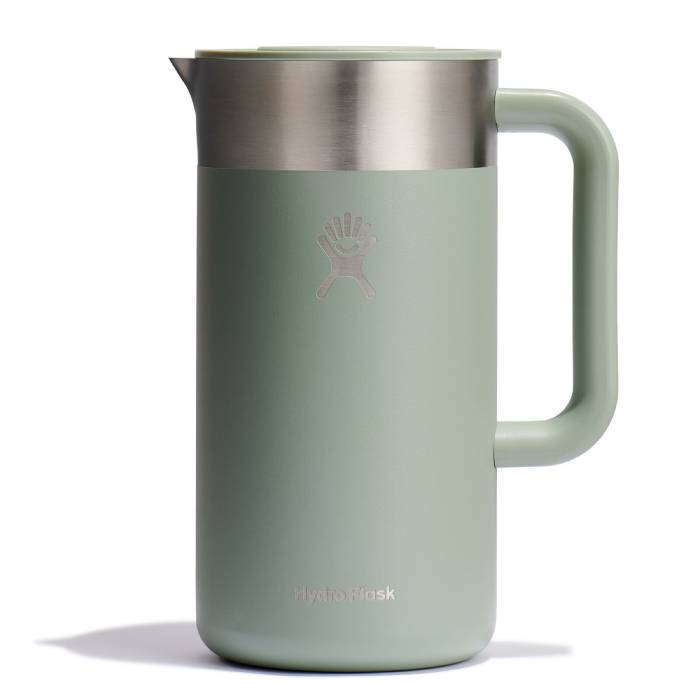
Hydro Flask Insulated French Press
Best for Keeping Coffee Hot
CleverHiker Rating: 4.4/5.0
Price: $70
Liquid Capacity: 32 fl. oz.
Weight: 1 lb. 7.7 oz.
Size: 8.2 x 5.5 x 4 in.
Pros
- Insulated
- Durable
- Ergonomic
- Dishwasher-safe
- Familiar design
Cons
- Poorly designed lid
- Susceptible to leaks
- Small pour spout
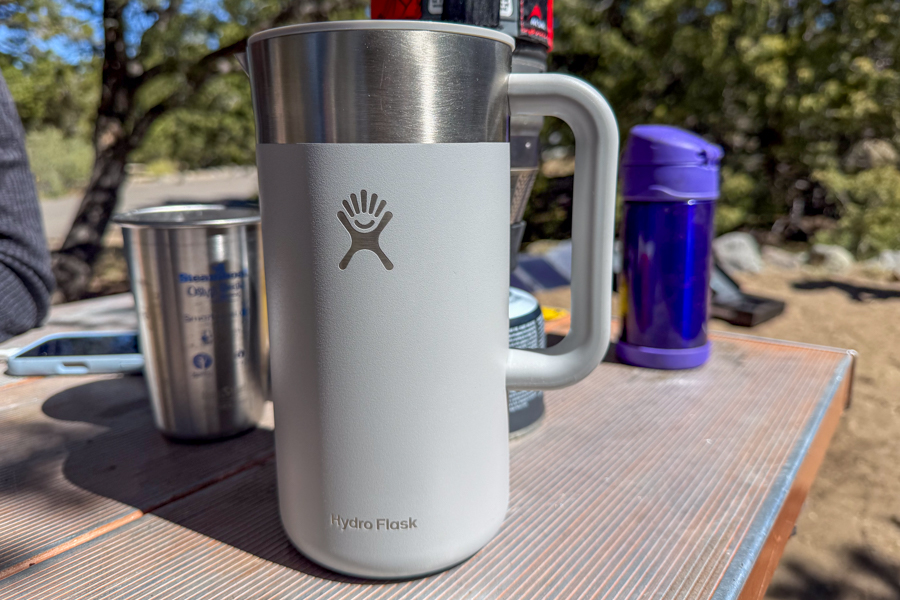
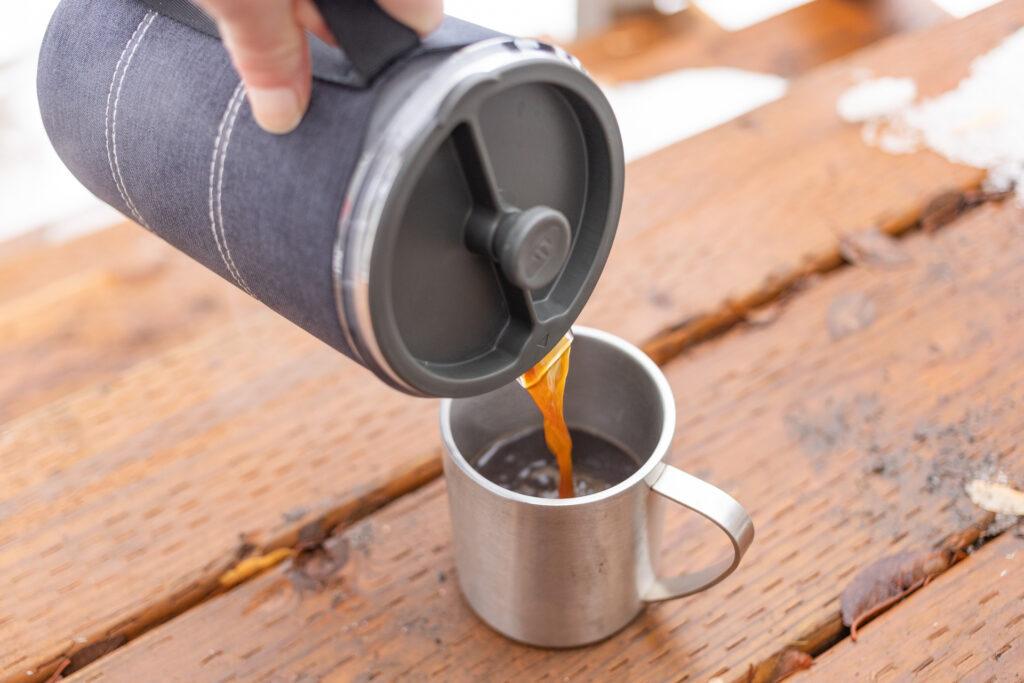
The Hydro Flask Insulated French Press gets the most important part right: It makes a good cup of coffee. The stainless steel body feels solid, it is comfortable to handle, and it does not leave behind any weird metallic taste, which is not always the case with stainless steel coffee makers. The double-wall insulation does a nice job keeping coffee warm longer than a standard French press, and we appreciate that the plunger and filter are metal, so no plastic touches the coffee while it brews.
The plastic lid feels noticeably cheaper than the rest of the design and does not seal particularly well. If you press too quickly or with too much force, hot coffee and grounds can push up and out through the lid. This happened to us twice in testing, and based on user reviews, it does not seem like a fluke. The pour spout is also smaller than we’d prefer, so pouring a full mug takes a bit more patience.
The insulation does a respectable job keeping coffee warm, though we suspect some heat loss is happening through the plastic lid. Sediment in the cup is par for the course with any French press and was not worse than average here.
If you can live with the lid’s quirks and are willing to press slowly and deliberately, the Insulated French Press produces a legitimately enjoyable cup of camp coffee in a durable, well-designed package. Hydro Flask is clearly onto something here, and a lid upgrade would make this an easy recommendation.
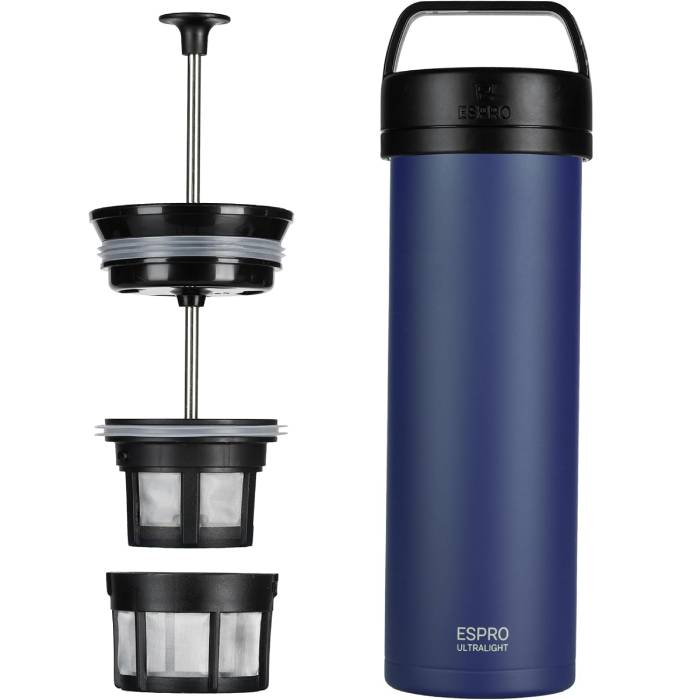
ESPRO P0 Ultralight Travel French Press
Best for On-the-Go Coffee
CleverHiker Rating: 4.4/5.0
Price: $50
Liquid Capacity: 16 fl. oz.
Weight: 9.6 oz.
Size: 2.9 x 2.9 x 9.2 in.
Pros
- Makes coffee on the go
- Keeps coffee hot
- Also makes tea
- Easy to customize the coffee strength
- Minimal grit
- Durable
- Easy to use
Cons
- Designed for a single user
- Expensive
Sometimes, we crave a good cup of coffee but don’t want to wait around to hit the trail. Other times, we wouldn’t mind having a second cup ready to enjoy for a pick-me-up later in the day. In either case, the ESPRO P0 Ultralight Travel French Press is a great tool for the job. It’s lightweight, easy to use, brews good coffee, and is ready to pack up whenever you are.
We love the P0 for early-morning trail dates when we prefer to hit snooze rather than wait for our coffee to brew. All we had to do was wake up, boil water, add grounds, and let the coffee steep as we got moving. You do have to leave the lid off the mug while the coffee steeps, but as soon as three to four minutes are up, you can press, screw on the lid, and enjoy a leakproof cup of coffee whenever you’re ready.
The double-filter basket helps ensure even the last few swigs are nearly grit-free. This allows you to make a stronger cup using a finer grind than with other French press-style makers.
During testing, the double-walled mug kept our coffee hot for hours, even on chilly days. This allowed us to enjoy a warm beverage well into the afternoon after preparing it in the morning. The pressed-down plunger didn’t interfere with drinking, and the multiple holes in the top let you sip from anywhere around the rim.
The device also makes tea. Just remove the filter’s outer basket, add loose-leaf tea and hot water, then press when steeping is done.
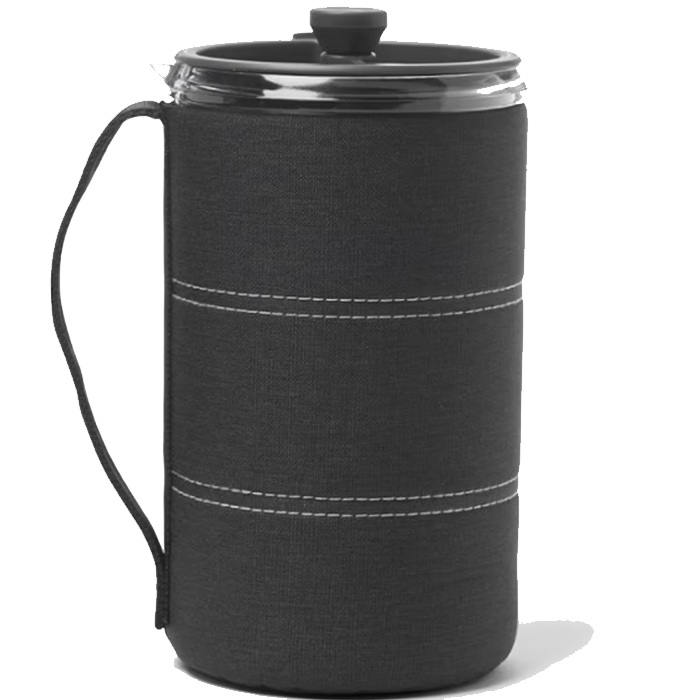
GSI Outdoors JavaPress
Best Coffee Maker for Groups
CleverHiker Rating: 4.2/5.0
Price: $50
Liquid Capacity: 30 fl. oz.
Weight: 10.2 oz.
Size: 7.7 x 4.5 x 4.2 in.
Pros
- Makes multiple cups at a time
- Inactive brew time
- Lightweight for the capacity
- Easy to customize the brew strength
Cons
- Can be difficult to clean
- Not easily packable
When you need to make coffee for multiple people, whipping up one large batch instead of a cup at a time is often more time-efficient. If that’s your end goal, the GSI Outdoors JavaPress makes it easy. This adventure-ready French press brews two to three cups at a time with no waiting in between. All you need to do is add coffee and hot water to the pitcher, set a timer, then press and pour. It’s easy, straightforward, and highly efficient.
You can customize the strength of your brew based on steeping time, but only to a small extent. When we attempted to make it stronger by using a finer grind during backyard hangouts, we ended up with grit settling at the bottom of each cup. With a medium to medium-coarse grind, grit was minimized thanks to the fine metal mesh filter. Overall, the press generally produced a medium-strength cup.
The JavaPress is durable thanks to a shatter-resistant carafe protected by an insulating sleeve. We were never afraid it would break or scratch. During testing in cold weather, the sleeve didn’t keep the coffee hot for very long, so we transferred the liquid to insulated mugs as soon as it finished steeping. The handle made pouring feel more secure, although we still had to grasp the vessel by the body when it was full.
Packing the JavapPress isn’t the easiest task. The setup is large, and you can’t easily store items inside the vessel due to the plunger and filter. However, it can be clipped to the outside of a pack using the soft handle. Overall, it brews good coffee and plenty at a time.
Product Comparison Table
| oSort | Product | Price | Liquid Capacity | Weight | Size | Portability | Ease of Use | Time to Brew | Ease of Cleaning | Strength of Flavor | 0 |
AeroPress Go View at REI View at Amazon 
|
$50 | 8 fl. oz. | 11.5 oz. | 5.3 x 3.9 x 3.9 in. | 4.7 | 4.4 | 4.6 | 4.9 | 4.5 | 1 |
Bialetti Moka Express View at Amazon
|
$40 | 2 fl. oz. | 13.1 oz. | 3.8 x 5.7 x 4.3 in. | 4.0 | 4.8 | 4.7 | 4.3 | 5.0 | 2 |
GSI Outdoors Ultralight Java Drip View at REI View at Amazon 
|
$13 | 8 fl. oz. | 0.3 oz. | 4.2 x 4.2 x 0.5 in. | 5.0 | 4.9 | 4.4 | 4.5 | 4.0 | 3 |
nCamp Cafe View at Amazon View at nCamp
|
$49 | 12 fl. oz. | 1 lb. 11 oz. | 9.6 x 3.4 in. | 4.5 | 4.4 | 4.7 | 4.1 | 5.0 | 4 |
MiiR Pourigami View at Amazon View at MiiR |
$35 | 8 fl. oz. | 6.7 oz. | 5.6 x 3 in. | 5.0 | 4.6 | 4.0 | 4.9 | 4.3 | 5 |
GSI Outdoors MiniEspresso Set View at Amazon View at GSI Outdoors |
$60 | 2.5 fl. oz. | 11 oz. | 5.9 x 3.6 x 3 in. | 3.8 | 4.7 | 4.6 | 4.1 | 5.0 | 6 |
Alpine Mountain Gear Stainless Steel Percolator View at REI View at Amazon |
$55 | 72 fl. oz. | 1 lb. 13.3 oz. | 8.2 x 6 x 5.8 in. | 3.2 | 4.7 | 4.4 | 4.1 | 4.4 | 7 |
Wacaco Minipresso GR View at Amazon |
$55 | 2.4 fl. oz. | 12.7 oz. | 2.8 x 2.4 x 6.9 in. | 4.4 | 3.9 | 5.0 | 3.9 | 5.0 | 8 |
Hydro Flask Insulated French Press View at REI View at Amazon |
$70 | 32 fl. oz. | 1 lb. 7.7 oz. | 8.2 x 5.5 x 4 in. | 3.2 | 4.7 | 4.0 | 4.0 | 4.2 | 9 |
ESPRO P0 Ultralight Travel French Press View at Amazon View at ESPRO |
$50 | 16 fl. oz. | 9.6 oz. | 2.9 x 2.9 x 9.2 in. | 4.7 | 4.9 | 3.9 | 3.7 | 4.2 | 10 |
GSI Outdoors JavaPress View at Amazon View at GSI Outdoors |
$50 | 30 fl. oz. | 10.2 oz. | 7.7 x 4.5 x 4.2 in. | 3.4 | 4.7 | 3.9 | 4.0 | 3.8 |
|---|
Analysis & Results
We rate our camp coffee makers based on specific metrics: value, portability, ease of use, time to brew, ease of cleanup, and coffee strength. See how they performed in our real-world testing below.
Which Camp Coffee Maker is the Best Value?
For a coffee maker that’s both affordable and long-lasting, we really like the GSI Outdoors Ultralight Java Drip. It’s easy to use, allows you to customize your brew strength, and works with pretty much any coffee mug. In addition to being the cheapest option on our list, it doesn’t require single-use filters. This means you’ll save money (and help the environment) by not having to stock up on paper filters every month or two.
The Alpine Mountain Gear Stainless Steel Percolator is another strong value pick, especially for group camping. It has a stainless steel build with no plastic, makes enough coffee for a crowd, and includes thoughtful details like a glass knob on top and even a spare in the box. Added up, it packs in a lot of performance for the price – especially if you do a lot of group camping.
The nCamp Cafe is a different kind of value but a really solid one for the right person: a camper who wants quality espresso outdoors. The coffee it makes is genuinely impressive, and the all-in-one, stainless design with the nesting mug makes the whole setup feel tidy and well thought out. If you camp often and really value good coffee, it is the kind purchase you make once and enjoy for a long time.
On the higher end of the cost spectrum, the AeroPress Go, Bialetti Moka Express, and Wacaco Minipresso GR all justify their prices with excellent all-around performance and reliable durability. Each delivers a quality brew you can rely on trip after trip.
Which Coffee Maker is the Most Portable?
The Miir Pourigami is the most portable coffee maker we tested. It disassembles quickly and stores nearly flat thanks to its three-section design that slides together in seconds. It even includes a storage case with space for filters.
For something even simpler, the GSI Outdoors Ultralight Java Drip packs down to almost nothing and works with most mugs. Plus, the mesh fabric basket means you don’t need to pack extra filters – just add grounds and pour hot water on top.
Another convenient and portable option is the ESPRO P0 Ultralight Travel French Press. It’s designed to brew coffee on the go, fitting into most backpack bottle pockets and car cup holders. Made from durable stainless steel, it is leakproof with the lid securely attached. You can even clip it to the outside of your pack if needed – it’s light enough that it’s not a burden.
The nCamp Cafe is the most portable espresso solution in our lineup. The mug slides over the outside of the brewer, resulting in an all-in-one unit about the size of a wide-mouth Nalgene. For car camping and van trips, it fits nicely into a camp kitchen box. For backpackers who cannot leave quality espresso at home, it is the only espresso option in our lineup that was designed with the backcountry in mind.
Which Coffee Maker is the Easiest to Use?
The ESPRO P0 Ultralight Travel French Press is a quick and straightforward option. It’s a French press disguised as a travel mug, which means you can brew a mug quickly and then take it to enjoy on the trail. Just add coffee grounds to the bottom of the insulated vessel, pour in hot water, set a timer for three to five minutes (depending on how strong you like your coffee), and press. You don’t even have to remove the filter basket before drinking. Twist on the cap to keep it hot for hours.
Another user-friendly option is the GSI Outdoors Ultralight Java Drip. This practical pour-over device doesn’t require a paper filter. Simply clip the device onto your camp mug, add coffee to the mesh basket, pour boiling water over it, and you’ll have a piping-hot mug of coffee. It’s easy to set up and simple to clean and store away when you’re finished.
The Bialetti Moka Express is a classic for a reason. Though some assembly is required to make a cup of espresso, we’re fine with it since we don’t have to boil water separately, and the actual brewing process is inactive. This means you can eat breakfast or pack up camp while your coffee brews. Just add water to the base of the Moka Express, place coffee grounds in the basket, screw on the top, set it on the stove, and let it work its magic.
Which Coffee Maker Brews the Fastest?
The fastest camp coffee maker was the Wacaco Minipresso GR, which pumped out a shot of espresso in one minute and 20 seconds. You do have to boil water first (unless you’re making cold coffee), but the actual process of adding grounds and pumping to extract the espresso flew by during testing. Brew time is active, however, meaning you can’t multitask while your coffee is brewing.
The Bialetti Moka Express is not only easy to use – it’s fast, too. Since you don’t have to boil water first, you can prepare breakfast or pack up camp while your coffee brews. Just add water to the base of the Moka Express, add coffee grounds to the basket, screw on the top, set it on the stove, and let it do its thing. The heat creates pressure, filtering the water upward through the grounds for a strong cup of coffee that’s ready in less than two and a half minutes.
The GSI Outdoors MiniEspresso Set functions much like the Bialetti but with a slightly different design. It brews a single, small cup at a time, depositing it directly into an insulated demitasse. The brewing process takes less than three minutes, all of which are inactive.
The nCamp Cafe runs five to eight minutes, depending on your heat source, with a high-powered canister stove at the faster end. Just like the Bialetti and GSI MiniEspresso, brewing is hands-off once the device is on the heat, which makes it less of a burden on relaxed camp mornings.
On the opposite end of the spectrum, the Alpine Mountain Gear Stainless Steel Percolator takes the most time at roughly 15 to 20 minutes from setup to pour. But for a group of four to six, it produces enough coffee in a single batch that the wait is proportional to the payoff.
Which Coffee Maker is the Easiest to Clean?
The GSI Outdoors Ultralight Java Drip is one of the quickest and most straightforward to clean. Simply dump the grounds and give the filter a quick rinse. There’s no disassembly, no small parts to lose, and no filter basket to wrestle with.
The Miir Pourigami is also easy to clean since it uses paper filters for coffee prepared pour over-style. After you’ve brewed your coffee, toss the entire filter and used grounds in the nearest trash can, then rinse off the metal device before disassembling it and placing it back in its storage case. You can use a reusable filter, of course, but be aware that this will increase cleanup time by 15 to 20 seconds.
The AeroPress Go also provides quick and easy cleanup thanks to its plunger design and the use of small paper filters. After brewing, simply twist off the filter cap, position the entire device over a trash bag, and press down the plunger. This action expels both the coffee puck and the filter. Rinse the bottom of the plunger briefly to remove any stuck-on grounds, and you’re ready to go – or to reset and make another cup.
Which Coffee Maker Makes the Strongest Cup of Coffee?
If potency is important to you, the Bialetti Moka Express and nCamp Cafe are both powerhouses. In a short time, they produce a cup or two of coffee with a strength that rivals anything you’ll find at your corner coffee shop. It’s dark, rich, and easy on the palate. You can easily dilute the brew with water to create an Americano or use it as a base for a camp cappuccino.
Similarly, the GSI Outdoors MiniEspresso Set produces a coffee shop-quality shot of espresso. Just fill the basket with your favorite dark roast and the base with water, place it on the stove, and let it work its magic. Rich and flavorful, you can enjoy the resulting cup as is or add water or milk without worrying about making it too weak.
Another great camp espresso maker is the Wacaco Minipresso GR. It produces a strong, smooth shot of coffee with crema – that light, frothy head you expect to see on barista-prepared espresso. You can change the coffee basket capacity from 8 grams to 12 grams by removing a plastic disc. This provides the option to craft an even more potent cup using the same amount of water but more coffee.
The Alpine Mountain Gear Stainless Steel Percolator produces a bold, full-bodied cup that’s well suited for group camp mornings. Strong by default, it is easy to dial back by adjusting the grounds-to-water ratio, and the nine-cup capacity means one batch covers the whole camp.
How to Choose a Coffee Maker for Camping & Backpacking
How Much Time Do You Want to Spend Making Coffee?
Are you a wake-up-and-go type of person? Instant coffee or a device that brews coffee quickly with minimal effort on your part is likely your best bet. However, if you enjoy taking the time to create the perfect cup, you might prefer a method that is a bit more involved and allows you to customize your drink. If you’re really in a rush – or if you’re feeling a bit lazy (we don’t blame you) – consider instant coffee instead.
How Many Cups Do You Need to Brew at Once?
If you’re a solo camper, unless you regularly drink multiple cups at once, you may not want a device that brews 20 ounces of coffee. Instead, consider a coffee maker that prepares just one or two cups. For those who frequently travel with others, think not only about how many cups a device can brew, but also whether there’s cleanup time needed between preparing individual servings, like with a pour-over.
Which Type of Grind is Best?
Not all camp coffee makers require the same size of coffee grind. Espresso-style makers often need a finer grind than pour-overs, while French presses require an extra-coarse grind. Consider whether you need to purchase specially ground coffee or if you should invest in a manual coffee grinder so you always have the right grind for the right device.
What Other Supplies Do You Need?
Will you need a kettle or pot to boil water separately from your coffee maker, or is the entire device self-contained? Do you need a camp mug? How about a coffee grinder or digital scale to measure out your preferred water-to-coffee ratio? Finally, for stovetop devices, ensure the coffee maker you choose fits on the stove(s) you intend to place it on.
Why Trust CleverHiker
Gear analyst Ben Dawson spent four years living full-time on the road, where weekly backpacking outings, river trips, and general backcountry adventures were the norm. He has since dialed back travel as a father but still hits the road with his family for around six months a year.
Ben has used some of the coffee makers above for years. He is a recovering coffee snob who has not missed a morning cup in as long as he can remember. Beyond coffee, Ben is a seasoned gear analyst with over a decade of experience researching and writing about outdoor equipment and clothing across every category.
Testing Methodology
We take testing coffee makers as seriously as we do making coffee. We evaluated each one carefully based on several criteria, including weight and portability, ease of use, ease of cleaning, and the strength of the coffee it brewed.
How Do We Evaluate Portability?
To evaluate the portability of each device, we considered their weight and size. When camping or backpacking, space is limited in vehicles, backpacks, and campers, so devices that are compact or come with travel cases rank higher. Lightweight devices also scored well since weight is a crucial factor for backpackers. Finally, portability encompassed how easy the coffee maker was to transport, including whether it could be conveniently stowed, clipped to the outside of a pack, or nested together for a more compact package.
How Do We Assess Ease of Use?
Ease of use – or how simple it is to make coffee with the maker – was also an important ranking factor, though perhaps less so for some users. Coffee, and the making of it, is a very personal thing. Though some folks may prefer a quick and easy cup, others may not mind taking a few extra steps to craft the beverage they want.
We ranked these devices based on how many required parts and pieces make up the device and how many steps it takes to prepare coffee. For example, we considered if we had to boil water separately, if there was assembly required, and how many parts and pieces are included with each device. How much effort is required also plays a part – like hands-on pouring or pumping.
How Do We Measure Time to Brew?
We don’t always have the luxury of time when preparing coffee at the campground or in the backcountry, so we tested and ranked all these devices based on how quickly they made a cup. We timed how long it took to brew from the moment we combined coffee and water to when we filled our cup.
We didn’t include boiling water since boil time varies depending on your stove, kettle, or pot. We started the clock when we added coffee to the device. For example, when using a pour-over, we timed the addition of coffee to the cone and how long the pour-over process took. With a French press, we timed the addition of water and coffee and how long it took to press, etc.
How Do We Evaluate Ease of Cleanup?
Since most people don’t have access to a full kitchen while camping and backpacking, cleanup is crucial when making coffee. You must consider not only what to do with your used coffee grounds but also how you will clean the coffee maker once you’re done.
We used each device and timed how long it took to empty the grounds and rinse out the coffee maker until no grounds remained. We also considered whether a cool-down period was necessary. For example, when a device gets hot during coffee prep, it can become unsafe to handle or disassemble without using a towel until it cools down.
How Do We Assess Coffee Strength?
Naturally, the strength of the coffee each coffee maker produces is an important factor, though users may have different preferences. This means we may have ranked a device lower on the strength scale, but if weaker coffee is your preference, a lower score shouldn’t deter you from trying it.
That said, stronger coffee can provide more servings from a single extraction compared to other methods that yield weaker coffee. For example, hot water can be added to espresso-strength coffee to make an Americano, turning a couple of ounces of strong coffee into a full cup of medium-strength coffee without needing to brew another batch or use a different method. Thus, a high score indicates stronger coffee, while a low score indicates weaker coffee.
Conclusion
If you’re looking for the perfect camp coffee maker, you’ve come to the right place. We spent hours testing, researching, and sampling the brews produced by each of these devices, breaking down what makes them excellent and how they’re unique. Hopefully, we’ve helped you find the ideal option for your next adventure regardless of how you enjoy your morning cup, the space you have in your bag, or your budget. After all, just because you’re outdoors doesn’t mean you have to suffer through subpar coffee.