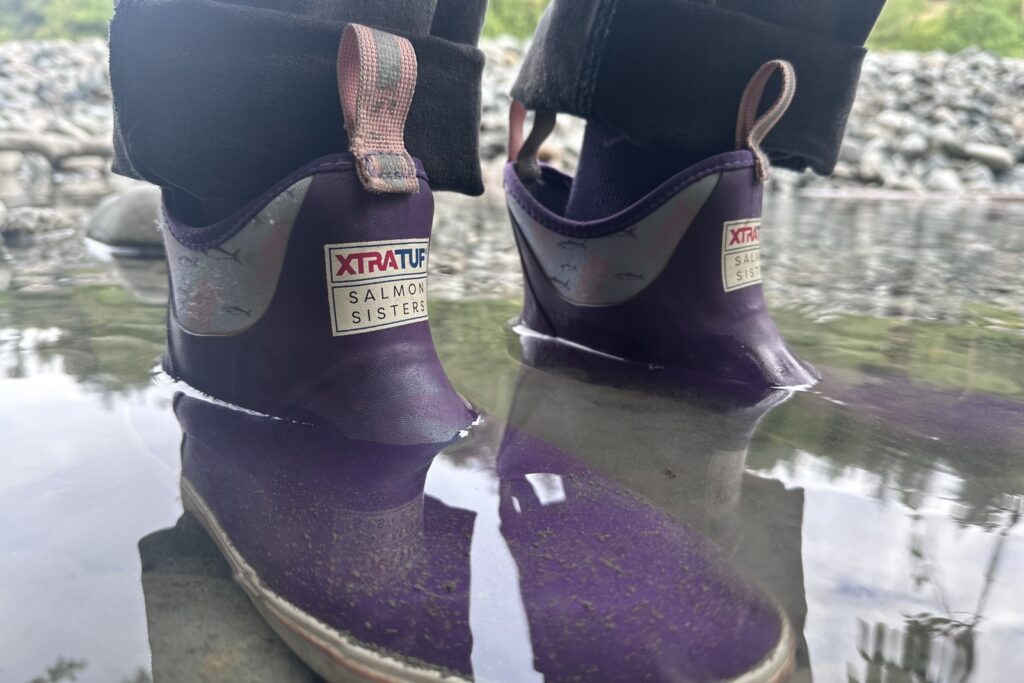


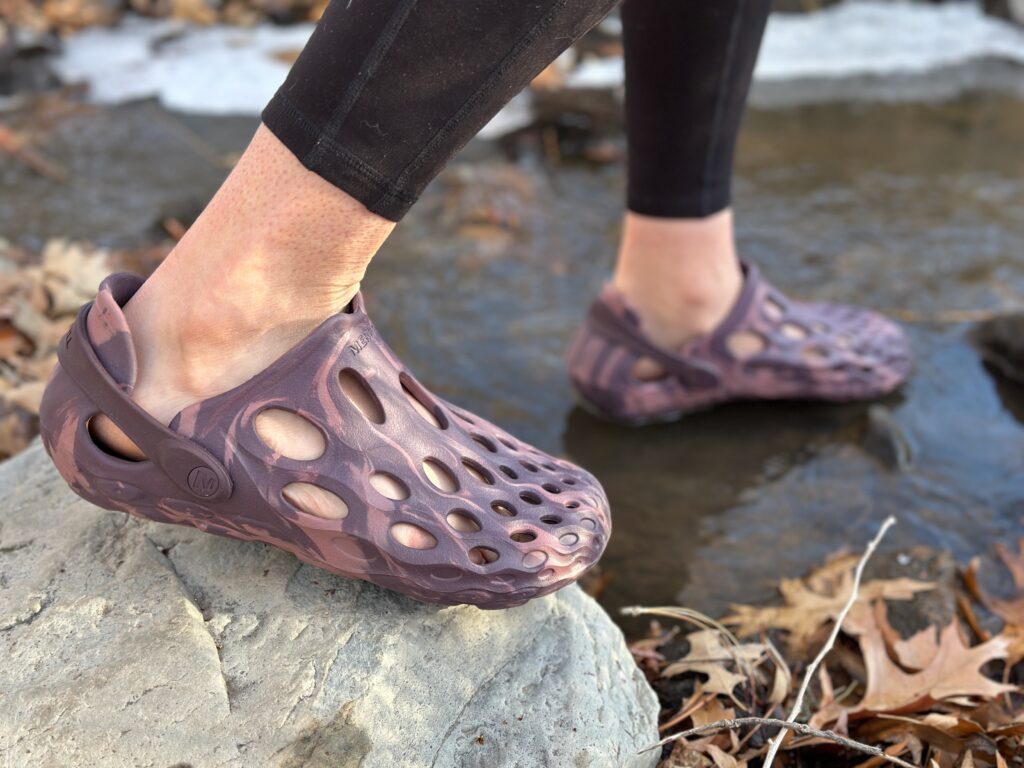
As a team, we’ve collectively hiked thousands of miles in over two dozen pairs of camp shoes. Our gear guide ranks 10 shoes – from flip-flops to clogs, mules, booties, slippers, and recovery shoes – for their comfort, versatility, support, and durability.
Editor’s Note: We updated this guide on July 2, 2026, to add four new shoes to our list: the Chaco Z/Cloud, Birkenstock Arizona Essentials EVA, LUNA Leadville Pacer, and Teva ReEmber Terrain Slip On.
How We Test Camp Shoes
We tested the shoes below at camp as well as at home, around town, and on the trail to ensure a well-rounded assessment of their performance and overall value. We walked in each shoe for at least a mile every day of the work week, totaling a minimum of five miles. The shoes were tested on pavement, dirt, and rocks, as well as near creeks and rivers.
And for more info, check out some of our other most popular gear guides:

#1. Best Camp Shoe Overall
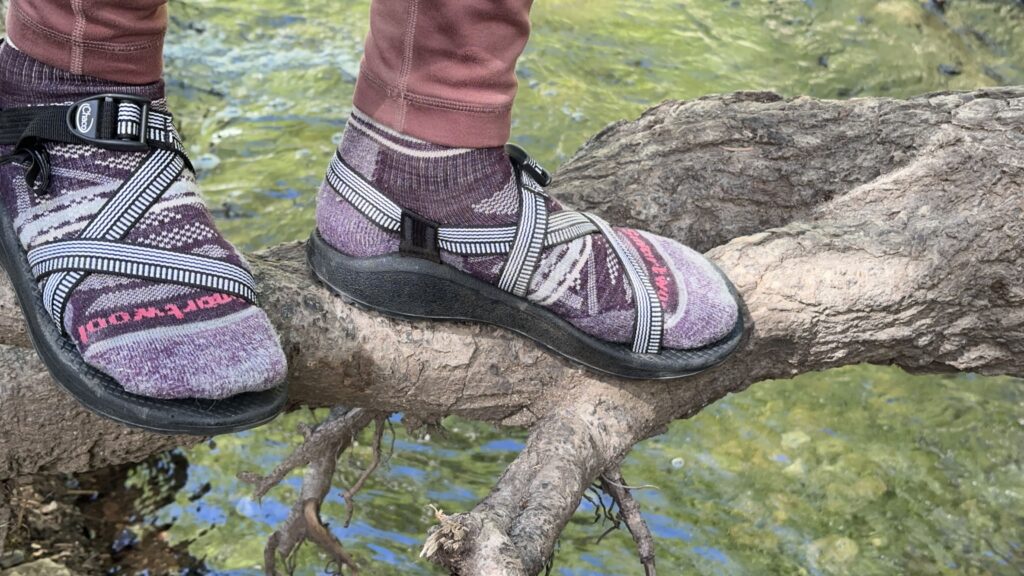

Quick Picks for Camp Shoes
Check out this quick list of our favorites if you’re in a hurry, or continue scrolling to see our full list of the best camp shoes with in-depth reviews.
1. Best Camp Shoe Overall: Chaco Z/Cloud – Men’s / Women’s ($105)
2. Best Adventure Clog: Bedrock Sandals Mountain Clog ($160)
3. Best for Everyday Wear: Birkenstock Arizona Essentials EVA – Men’s / Women’s ($50)
4. Grippiest Minimalist Sandal: LUNA Sandals Leadville Pacer ($125)
5. Best Flip-Flop: OOFOS OOriginal ($60)
6. Best Budget Buy: Crocs Classic Clog ($50)
7. Best Camp Slipper: The North Face ThermoBall Traction Mules V – Men’s / Women’s ($70)
8. Cushiest Camp Shoe: Teva ReEmber Terrain Slip On ($100)
9. Best Recovery Shoe: HOKA ORA Recovery Slide 3 ($60)
10. Best Down Bootie: Feathered Friends Down Booties ($119)
Chaco Z/Cloud
Best Camp Shoe Overall
CleverHiker Rating: 4.9/5.0
Price: $105
Weight (Pair): 1 lb. 14.1 oz. / 1 lb. 5 oz.(men’s / women’s)
Closure Mechanism: Ladderlock buckle
Traction: ChacoGrip rubber
Pros
- Excellent support and cushioning
- Durable
- Highly adjustable for dialing in a good fit
- Straps keep feet secure
- Can be resoled
- True to size
Cons
- Straps can be cumbersome
- Heavy and bulky
- Footbed can feel slippery when wet
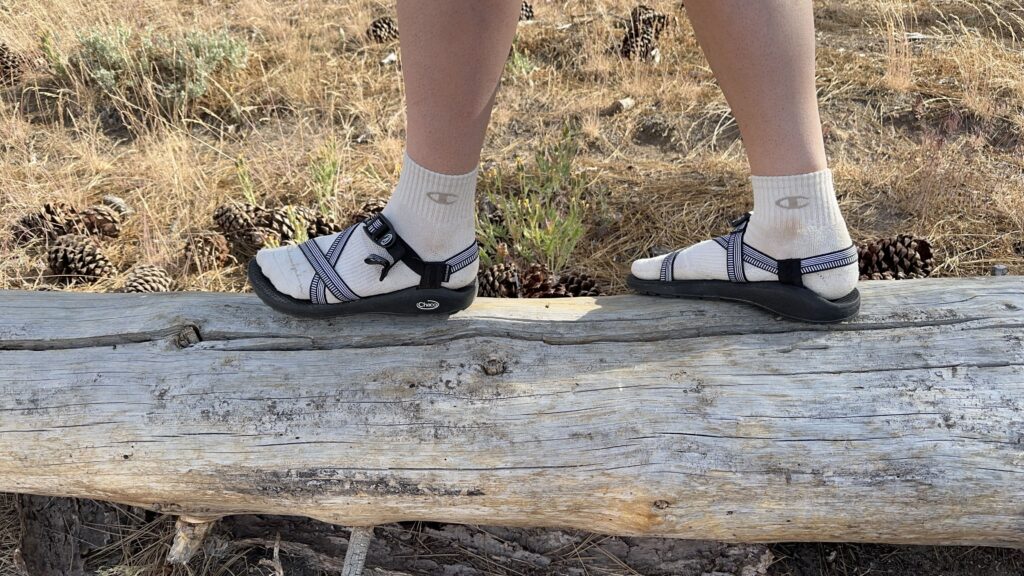
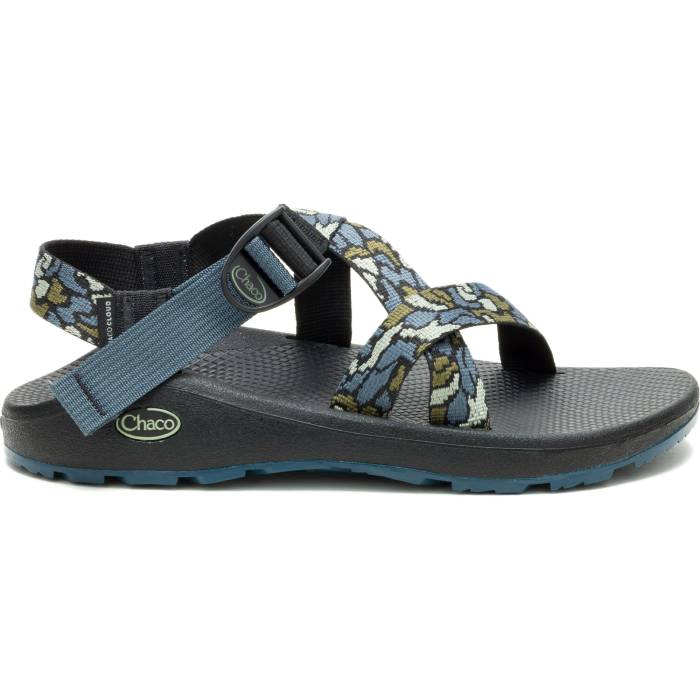
Chaco is a dependable name in the outdoor world, and their Z/Cloud sandals (men’s / women’s) carry the torch. They earned our top spot this year because they provide excellent support, comfort, and versatility – all in a trustworthy and long-lasting package.
This shoe has become a favorite for casual day hiking. The straps make it easy to customize fit, lending a very snug and secure feel once you’ve dialed things in. The midsole is nicely cushioned for taking the sting out of impacts and protecting against trail obstacles like rocks and roots. Support is evident as soon as you put the sandals on – they are one of the most structured and confidence-inspiring options here.
The only major drawback is heft. At nearly 2 pounds for the men’s pair, the Z/Cloud is the heaviest option on our list and relatively bulky for hauling into the backcountry. Our gear expert had no issue doing so, however, which goes to show it’s entirely up to you.
Bedrock Sandals Mountain Clog
Best Adventure Clog
CleverHiker Rating: 4.6/5.0
Price: $160
Weight (Pair): 1 lb. 9 oz.(size 9)
Closure Mechanism: Three-point adjustment system
Traction: Vibram Megagrip
Pros
- Highly adjustable fit
- Heel strap keeps feet secure
- Class-leading traction
- Cushioned sole offers great underfoot protection
- Easy to slip on
- Vegan options available
- In-house repair program
- Fits true to size
Cons
- Expensive
- Heavy
- Suede leather requires extra care
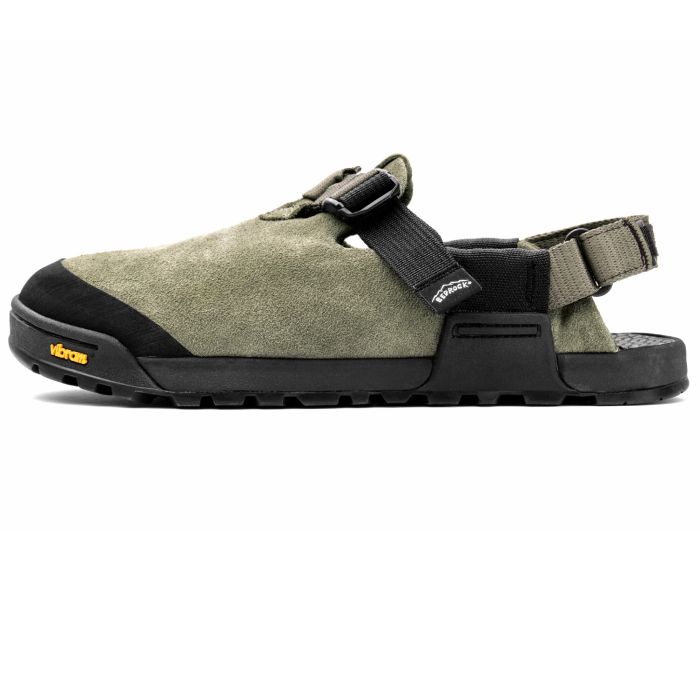
We fell in love with the Bedrock Sandals Mountain Clog early into testing. Not only can this shoe go anywhere comfortably, but the company behind it boasts a comprehensive repair program that will extend its life well past the first crack or tear.
The most notable qualities of this shoe are its comfort, versatility, and durability. Though not the most supportive, it offers a stiff, zero-drop sole that allows your feet to splay and move freely – great after long days of hiking.
Though pricey, the Mountain Clog is a long-term investment that delivers incredible value. It’s a great three-season option for hiking, camp, travel, and around the house thanks to its deft balance of breathability and warmth. Most of the heel is open, allowing for airflow, while the front of the foot is covered for protection and heat retention.
The Vibram Megagrip sole stood up to climbing over wet, slippery rocks and casual games of driveway basketball. There are three adjustment points on the straps for tweaking fit, along with a wide toe box we found comfortable right out of the box.
All of the materials are durable and built to last, from the soft suede upper to the sturdy rubber toe cap. Plus, Bedrock’s in-house repair program makes it easy (and relatively cheap) to fix any damage the shoes accumulate as the miles add up.
Birkenstock Arizona Essentials EVA
Best for Everyday Wear
CleverHiker Rating: 4.4/5.0
Price: $50
Weight (Pair): 8 oz.
Closure Mechanism: Adjustable pin buckles
Traction: EVA foam
Pros
- Affordable
- Waterproof
- Lightweight and flexible
- Cushioned sole for underfoot protection
- Easy to get on and off
- Supportive
- True to size
Cons
- EVA build can be bent out of shape in packs
- Sloppy feel
- Quality lines up with the price tag
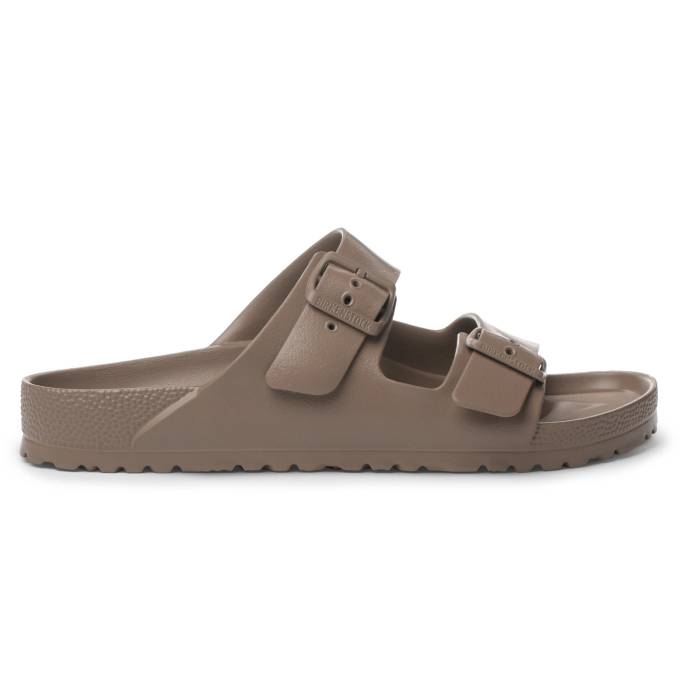
The Birkenstock Arizona Essentials EVA sandal (men’s / women’s) is comfortable and lightweight, making it an easy choice for a range of summer adventures. Combined with the approachable price tag, it quickly became a staple for our gear expert.
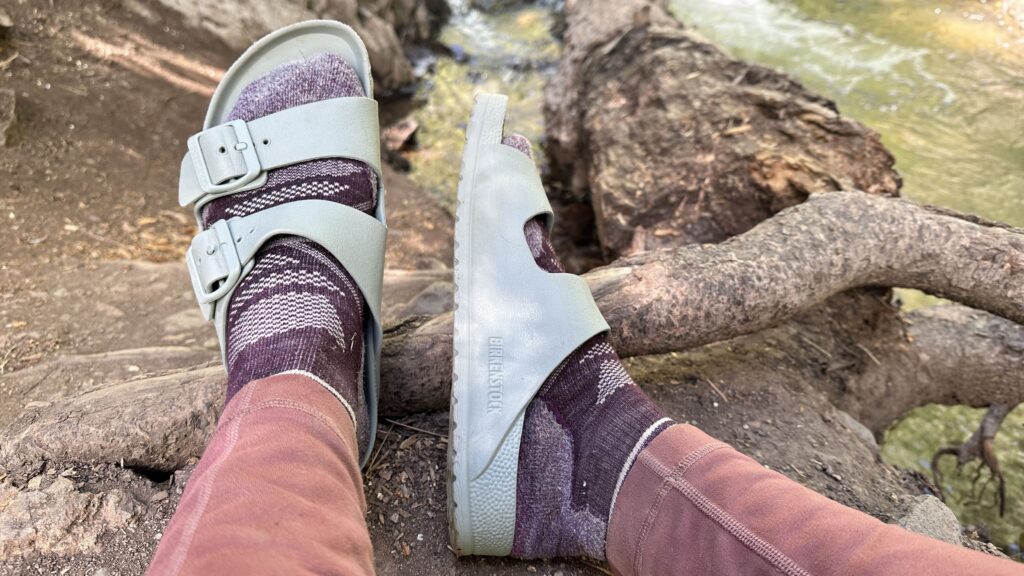
The Arizona Essentials EVA gets the job done both outdoors and around town. It’s easy to wear, comes in a range of classy colorways, and can be paired with socks thanks to the lack of toe loop.
At 8 ounces per pair, this shoe is remarkably lightweight. Much of this is due to the EVA foam build. Though different from the traditional cork and suede we’ve come to expect from Birkenstock, the shoe maintains good support with a quality footbed that conforms to your foot over time.
The all-foam design does make the shoe more susceptible to damage, but it will last a while if you treat it well. For the price, you really can’t expect much more.
LUNA Sandals Leadville Pacer
Grippiest Minimalist Sandal
CleverHiker Rating: 4.4/5.0
Price: $125
Weight (Pair): 8.9 oz.(men’s size 9)
Closure Mechanism: Three-point adjustment system
Traction: Vibram Newflex
Pros
- Adjustable straps
- Super grippy
- Allows for natural foot movement
- Lightweight
- Made for rugged environments
- Vegan
Cons
- Expensive
- Barefoot design might not work for everyone
- Issues with fit and sliding
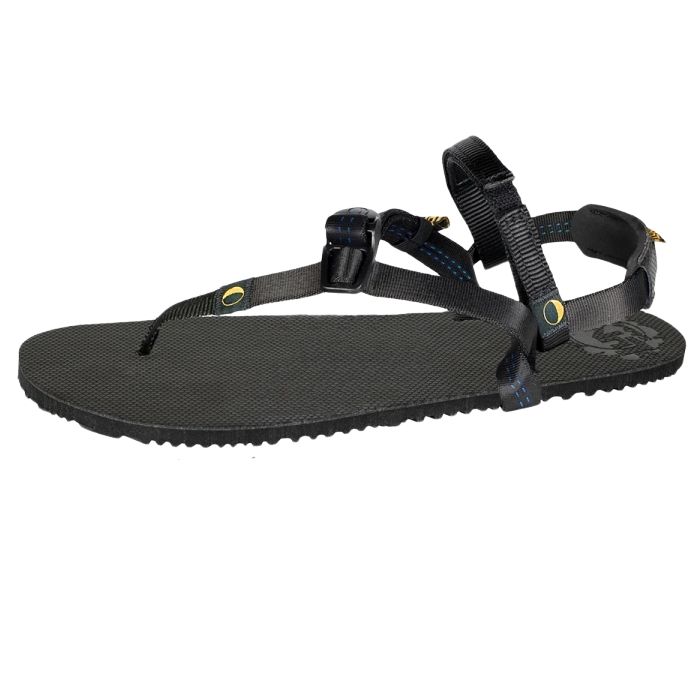
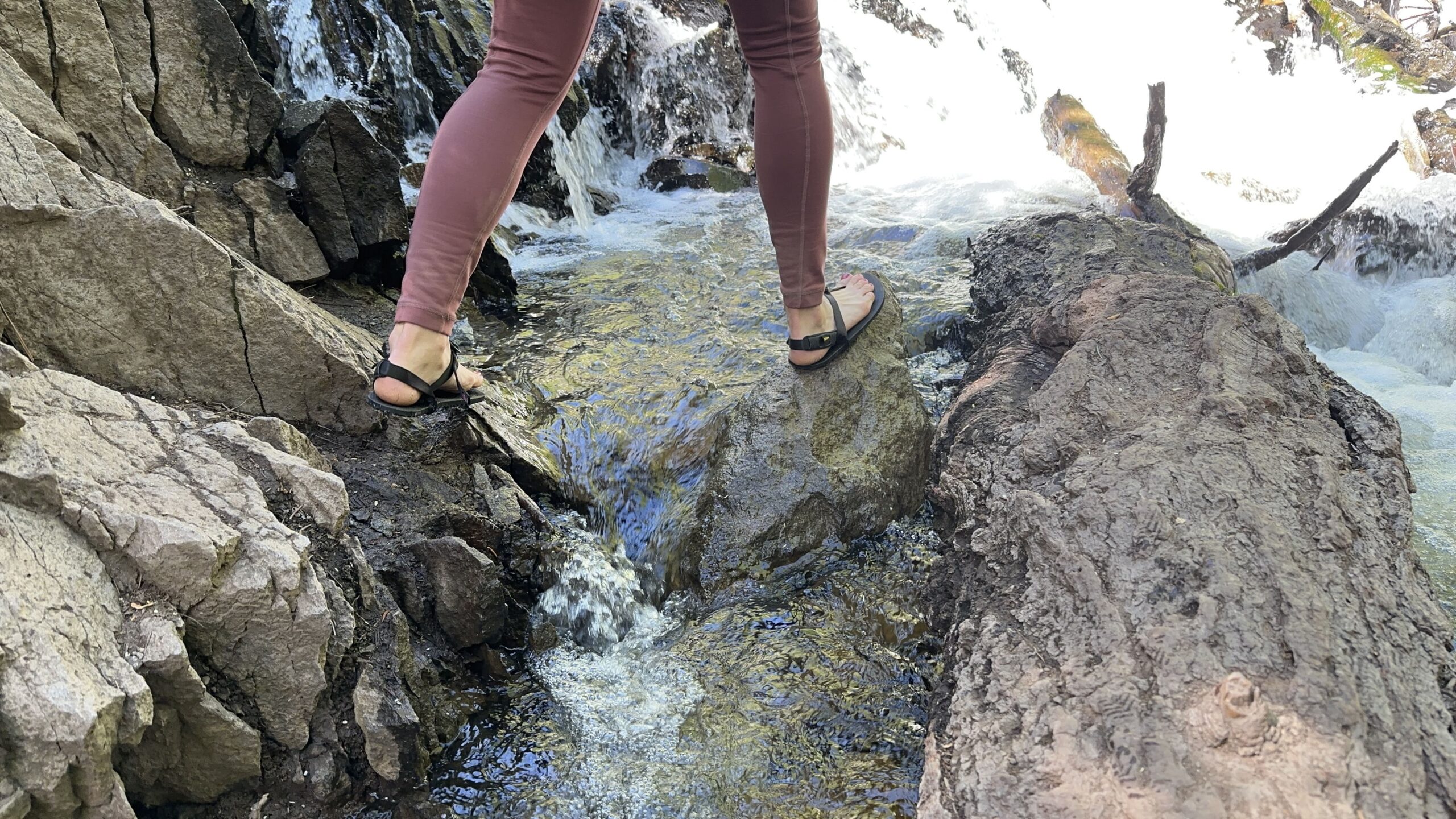
The LUNA Sandals Leadville Pacer is purpose-built for minimalist backpackers looking for trustworthy grip in a feathery package. The sandals felt like they suctioned our feet to outdoor features, even wet rocks during creek crossings.
The Monkey Grip Technology (MGT) footbed and Vibram Newflex outsole are clear hallmarks of the design. Our feet were able to move and flex freely, and grip never faltered, even on tricky terrain that other shoes here couldn’t handle. Combined with a competitively low weight, the Leadville Pacer is a very compelling option for backpacking and thru-hiking.
However, the straps and general fit of the shoe proved problematic. Most notably, the toe strap dug into the space between our big and index toes on uneven surfaces. There were also times we found our toes completely overhanging the front of the shoe.
If the fit works for you, the Leadville Pacer won’t disappoint. It offers class-leading traction and impressive support for such a lightweight and low-profile design.
OOFOS OOriginal
Best Flip-Flop
CleverHiker Rating: 4.6/5.0
Price: $60
Weight (Pair): 9.5 oz.
Closure Mechanism: None
Traction: OOfoam
Pros
- Very supportive and comfortable
- Fits true to size
- Easy to slip on
- Waterproof
- Machine-washable
- Good performance for the price
Cons
- Doesn’t pack down well
- May deform if exposed to sun and heat
- Underbuilt for more than casual walking
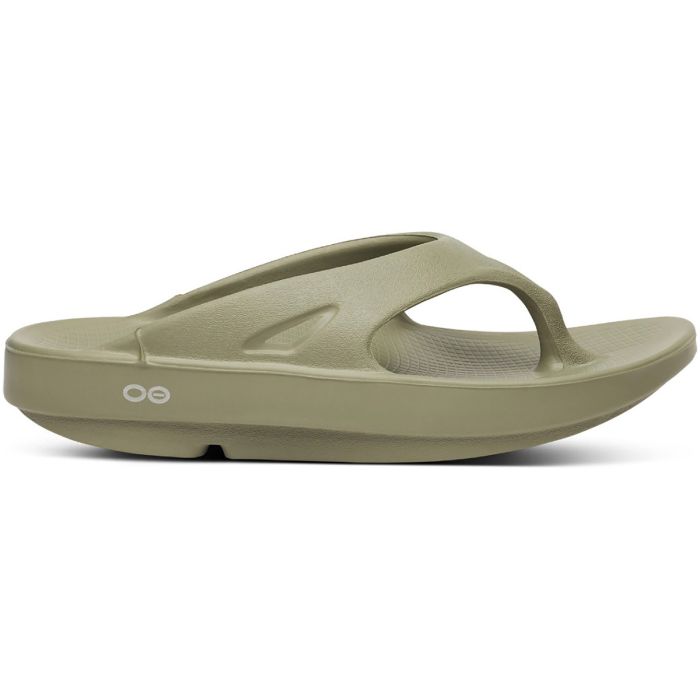
The OOFOS OOriginal sandals are made for post-workout recovery, with a springy platform that feels downright luxurious after a long, joint-pounding hike or run.
In testing, the shoe actually did improve our joint pain after big efforts. They have a cushy, cloud-like feel that does a nice job reducing stress and promoting recovery. They’re light enough that they don’t feel like a burden underfoot, and there’s enough padding to isolate your foot from harsh surfaces like rocks or roots.
We think these shoes are awesome for hanging around camp at the end of a long day – but not so much for exploring beyond camp. They also wouldn’t be our first choice for backpacking. The sole is underbuilt for handling rough terrain, and they don’t pack down as well as you’d expect for flip-flops.
Whether you’re training for a race or simply enjoy slipping into a comfy pair of shoes after a long hike or tough workout, the OOFOS OOriginal is an easy choice. For the price, you’d be hard-pressed to find a better recovery shoe.

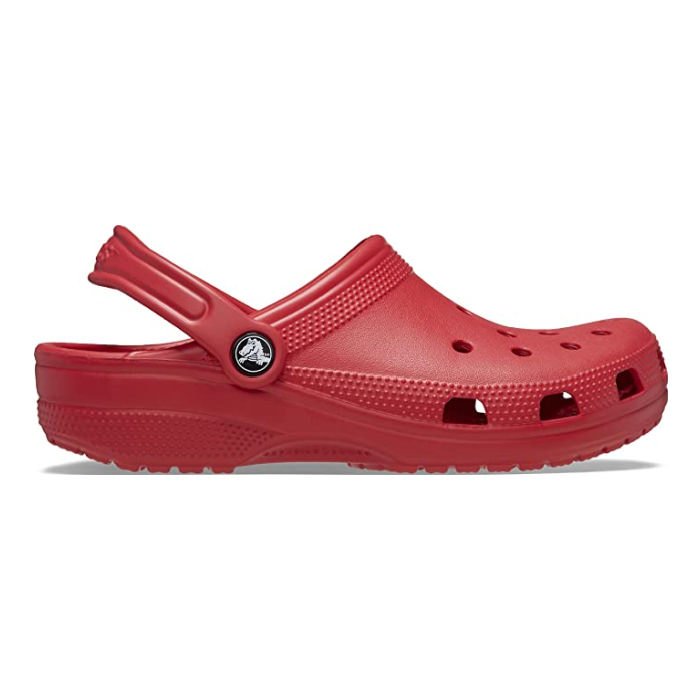
Crocs Classic Clog
Best Budget Buy
CleverHiker Rating: 4.4/5.0
Price: $50
Weight (Pair): 11.2 oz.
Closure Mechanism: Pivoting heel strap
Traction: EVA foam
Pros
- Easy to slip on
- Waterproof
- Affordable
- Lightweight
- Pivoting heel straps add security
Cons
- Polarizing looks
- Fit intricacies
The Crocs Classic Clog has been a staple in this gear guide for years. The simplicity of the shoe – paired with its impressive versatility and low weight – make it a top choice for backcountry and frontcountry adventures alike.
If you can get past the Classic Clog’s polarizing, love-it-or-hate-it look, there’s a lot to like. Our pair dried faster than some of the water shoes we tested, making them just as appealing for days on or by the water as they are for campground hangs and backyard gardening.
These clogs can be worn alone or with socks – even those of the thick, cold-weather variety. Perhaps best of all, they are extremely light and made of foam, so we’re not afraid to squish them down next to our grimiest gear.
However, the Crocs’ limited support and poor fit hindered us on more demanding outdoor adventures. With the heel strap around our heel, our foot was pressed against the top of the shoe. Without the heel strap, the shoe was so loose it slid off. We even had trouble fast-walking through a busy airport.
Fit issues aside, the Classic Clog is a classic for a reason. If you can nail the fit, it’s a great all-around camp shoe (and potential daily driver) that won’t break the bank.
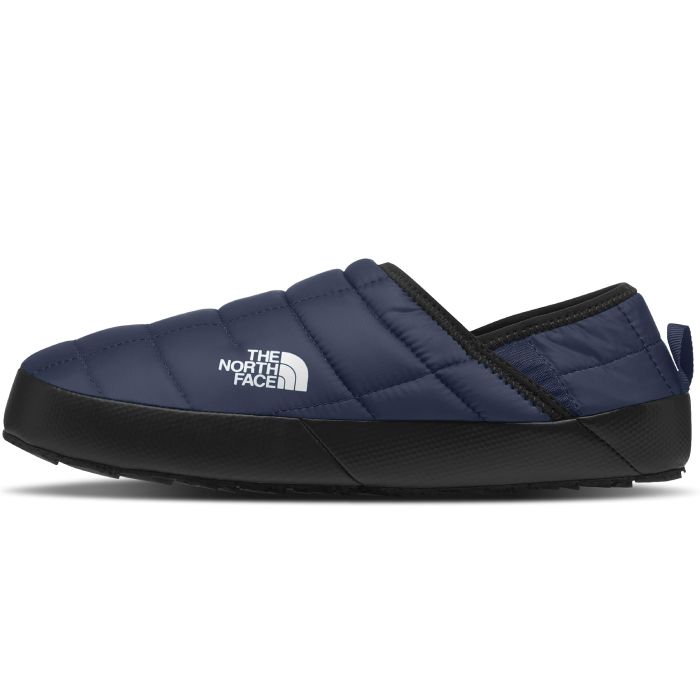
The North Face ThermoBall Traction Mules V
Best Camp Slipper
CleverHiker Rating: 4.3/5.0
Price: $70
Weight (Pair): 1 lb. 0.3 oz. / 14.2 oz.(men’s / women’s)
Closure Mechanism: None
Traction: Rubber
Pros
- Easy to slip on with a collapsible heel
- Secure fit with the heel engaged
- Capable tread
- Works well at camp and at home
- Attractive look
- Water-resistant upper
- Made with recycled materials
Cons
- Overbuilt for mild temperatures
- Relatively heavy
The North Face ThermoBall Traction Mules V (men’s / women’s) pairs the comfort of a slipper with the tough sole of an outdoor shoe. We reached for them more than any other camp shoe in our lineup, which says a lot.
These slippers are minimally insulated with The North Face’s namesake ThermoBall polyester fill. We found them well suited for temperatures around 40 to 60 degrees Fahrenheit. Our feet did grow a little uncomfortable at either end – sweaty in the upper 50s and cold in the low 40s – but they’re overall a great shoulder-season shoe.
The ThermoBall Traction Mules V are relatively lacking in support, but they hold up well for walks and short hikes from camp. They also cross over well for light winter use – think throwing on for the drive home after a day at the ski resort.
More: The North Face ThermoBall Traction Mules V Full Review
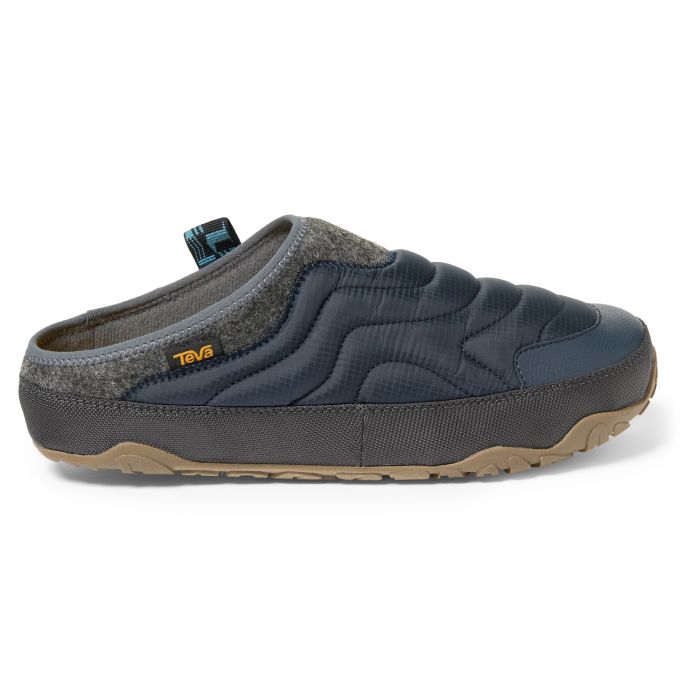
Teva ReEmber Terrain Slip On
Cushiest Camp Shoe
CleverHiker Rating: 4.3/5.0
Price: $100
Weight (Pair): 1 lb. 3 oz.(men’s size 8 / women’s 10)
Closure Mechanism: None
Traction: Rubber
Pros
- Pillowy interior
- Water-resistant
- Grippy outsole
- Breathable but warm
- Easy to slip on
- Made with sustainable materials
Cons
- Some fit issues
- Prone to slipping off
- Heavy
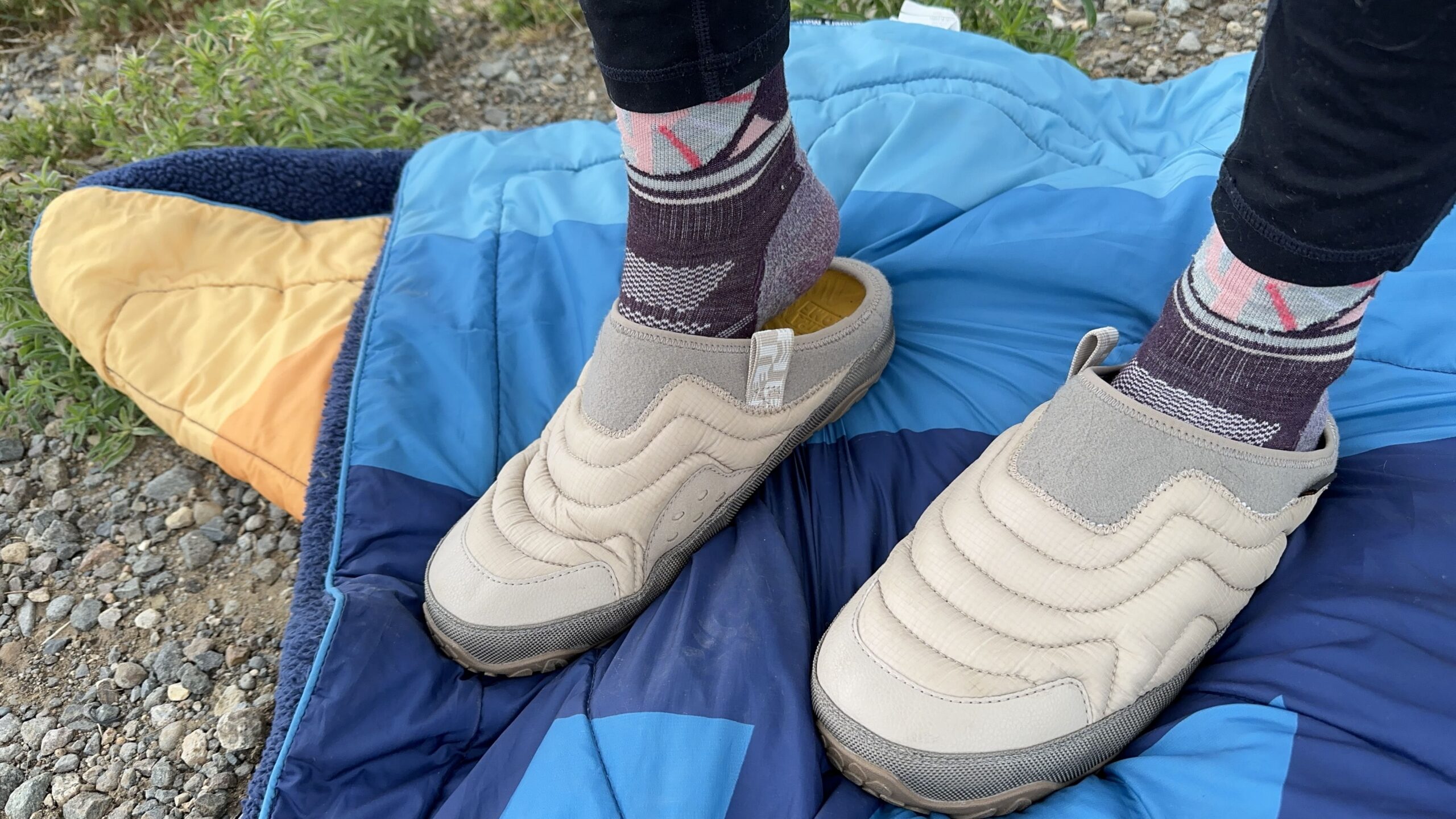
Easy to wear and remarkably comfortable, the Teva ReEmber Terrain Slip On has become a go-to for us.
The ReEmber is a top choice for a quiver-of-one camp shoe. We love that the upper is water-resistant to protect against light precipitation and camp spills. The insole is extremely plush (it’s Teva’s most-cushioned foam footbed), and the rubber outsole is tough and capable with minimal bulk.
However, the ReEmber isn’t the most versatile option. It’s great for casual lounging and milling about camp, but it’s underbuilt for more intense activities and longer distances. At one point, it slipped off while walking our dog around the park, highlighting a real lack of security.
If you stick to its wheelhouse, however, the ReEmber is a solid all-around shoe. From camping to daily chores or even grabbing a coffee after pilates, it’s a very comfortable and well-built option.
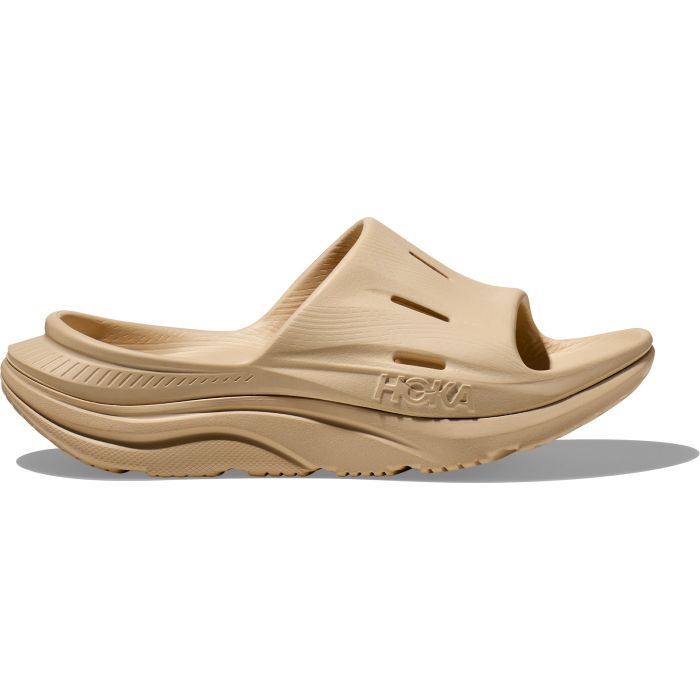
HOKA ORA Recovery Slide 3
Best Recovery Shoe
CleverHiker Rating: 4.3/5.0
Price: $60
Weight (Pair): 15.6 oz.
Closure Mechanism: None
Traction: EVA foam
Pros
- Very supportive
- Solid traction
- Comfortable
- Plush feel after long days on the trail
- Great at home or around camp
- Easy to pair with socks
- True to size
Cons
- Not made for covering long distances
- Insole takes some getting used to
- Potential rubbing from the strap
- Some have issues with the lip at the heel
Joining the OOFOS OOriginal above, the HOKA ORA Recovery Slide 3 is a recovery shoe designed for reducing joint stress after long efforts.
The best qualities of the ORA are its support and cushioning, but it also has solid traction. There was enough support to relax our tense muscles and cradle our tired feet after long hikes, intense workouts, and gym sessions. The thick padding offered adequate protection against prickly obstacles in our high-desert environment. And though these are slides, the soles did anything but slide on challenging slopes.
The fit may not work for everyone, though. We experienced some arch pressure that we weren’t used to, which took about 10 minutes of consistent walking to work out each time we wore the shoes. Additionally, rubbing along the strap strap caused blistering after about a mile and a half. Finally, some users complain about the high lip at the heel detracting from overall fit.
At the end of the day, the ORA Recovery Slide 3 wasn’t meant to be an ultra-lightweight option to carry into the backcountry (though it’s not out of the question). Where it shines is providing melt-your-bones support and cushion that we crave at the end of intense adventures.
Feathered Friends Down Booties
Best Down Bootie
CleverHiker Rating: 3.3/5.0
Price: $119
Weight (Pair): 9.3 oz.(size medium)
Closure Mechanism: Ankle & cuff drawcords
Traction: Waterproof fabric
Pros
- Cloud-like comfort
- Very warm – great for winter camping
- Ultralight
- Filled with responsibly sourced, high-quality goose down
- Water-resistant, removable shell
- Drawcords help seal out cold air
Cons
- Limited to winter use
- Slippery interior
- Only sold in six sizes
- Pricey
- Not as durable as other camp shoes
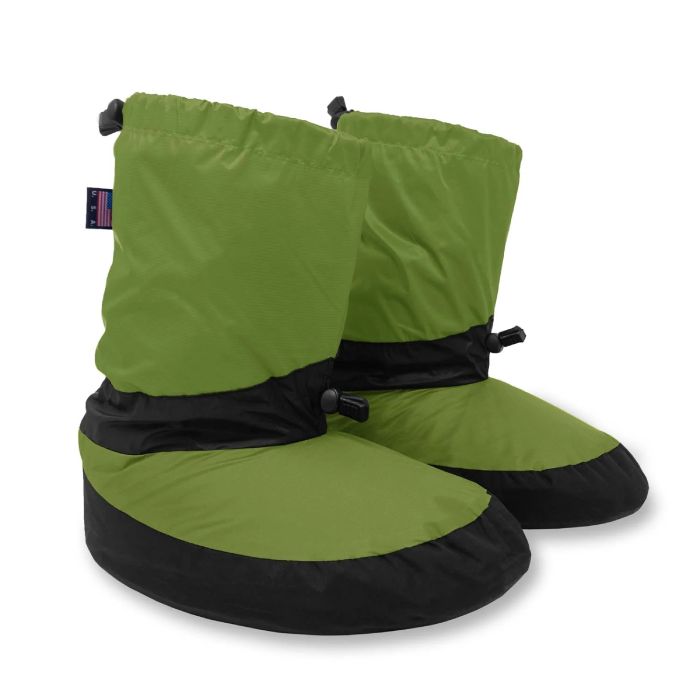
The Feathered Friends Down Booties are cold-weather camp shoes with sleeping bag-like comfort and warmth.
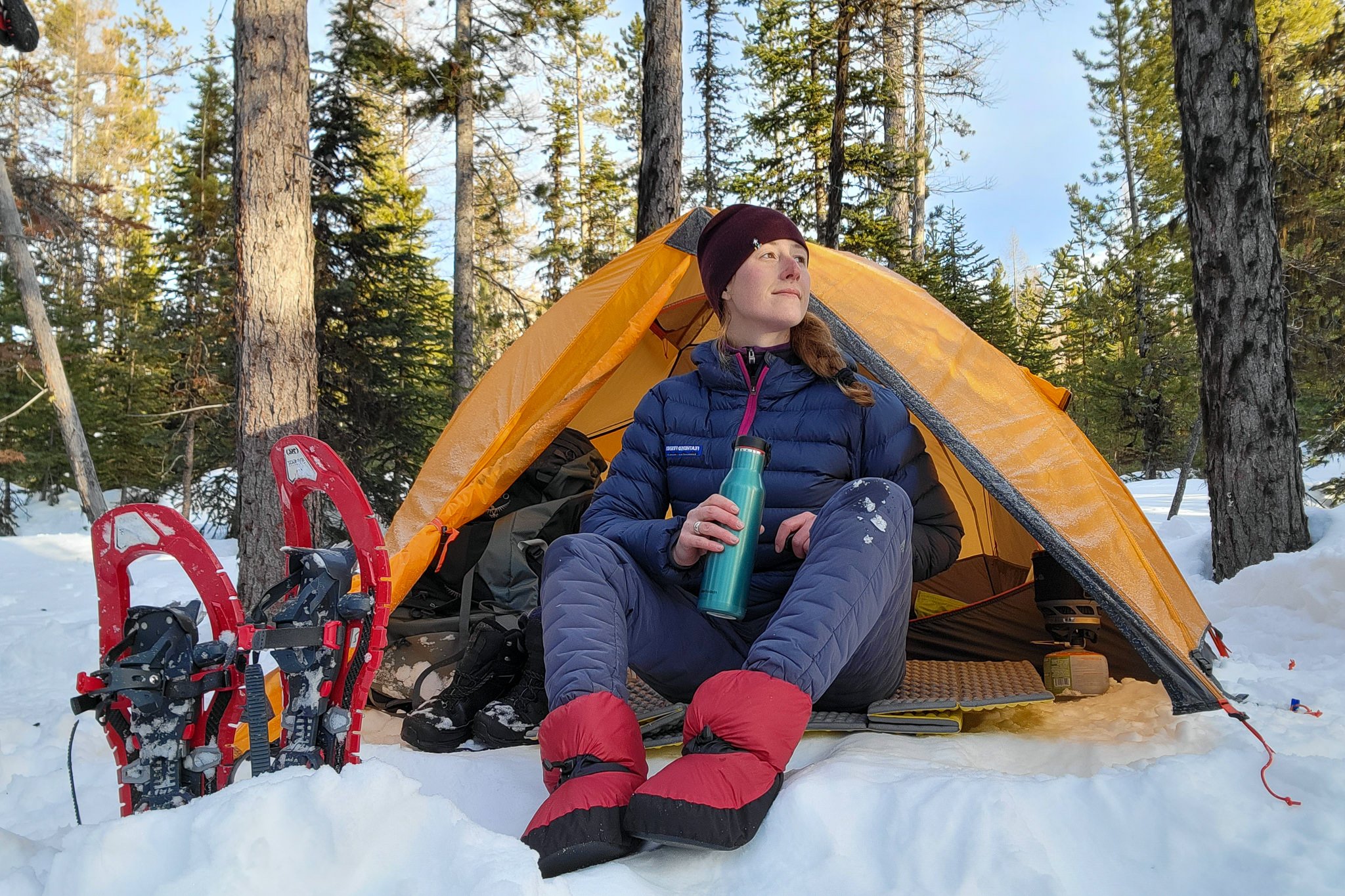
These insulated booties helped keep our toes toasty on frozen ground and in our sleeping bags during an early-January camping trip. The shell is highly water-resistant, while the insulated liners are packed with lofty down fill. The liners are also removable, so you can wear them inside your tent or sleeping bag without worrying about dirt and grime. We loved the cinches at the ankle and cuff for sealing out cold air.
The bottom of the boot features a thin, waterproof pad. The sole adequately protected our feet (and the boot) from pine needles, twigs, and small rocks at camp. However, given the booties’ unstructured design, our feet slid around a lot, often coming off the footpad. One of the cinches also failed during testing, which gives us pause about long-term durability.
The Down Booties ended up at the bottom of our list mostly due to their lack of versatility. The insulation makes them great for backcountry hut trips and winter camping, but it’s overkill even for many shoulder-season adventures.
Product Comparison Table
| oSort | Product | Price | Weight (Pair) | Traction | Comfort | Versatility | Support | Durability | 0 |
Chaco Z/Cloud View Men's View Women's 
|
$105 | 1 lb. 14.1 oz. / 1 lb. 5 oz. (men’s / women’s) | ChacoGrip rubber | 5.0 | 4.9 | 5.0 | 5.0 | 1 |
Bedrock Sandals Mountain Clog View at REI View at Bedrock Sandals
|
$160 | 1 lb. 9 oz. (size 9) | Vibram Megagrip | 4.8 | 4.3 | 4.3 | 5.0 | 2 |
Birkenstock Arizona Essentials EVA View Men's View Women's |
$50 | 8 oz. | EVA foam | 4.7 | 4.3 | 4.6 | 4.0 | 3 |
LUNA Sandals Leadville Pacer View at LUNA Sandals |
$125 | 8.9 oz. (men’s size 9) | Vibram Newflex | 4.3 | 4.5 | 4.0 | 4.8 | 4 |
OOFOS OOriginal View at REI View at Amazon 
|
$60 | 9.5 oz. | OOfoam | 5.0 | 3.5 | 5.0 | 4.0 | 5 |
Crocs Classic Clog View at Amazon View at Crocs
|
$50 | 11.2 oz. | EVA foam | 4.5 | 4.5 | 4.4 | 4.0 | 6 |
The North Face ThermoBall Traction Mules V View Men's View Women's |
$70 | 1 lb. 0.3 oz. / 14.2 oz. (men’s / women’s) | Rubber | 4.9 | 3.5 | 4.3 | 4.8 | 7 |
Teva ReEmber Terrain Slip On View at REI View at Amazon |
$100 | 1 lb. 3 oz. (men’s size 8 / women’s 10) | Rubber | 4.7 | 3.5 | 4.3 | 4.8 | 8 |
HOKA ORA Recovery Slide 3 View at REI View at HOKA |
$60 | 15.6 oz. | EVA foam | 4.7 | 3.5 | 5.0 | 4.0 | 9 |
Feathered Friends Down Booties View at Feathered Friends |
$119 | 9.3 oz. (size medium) | Waterproof fabric | 4.4 | 3.0 | 1.0 | 3.0 |
|---|
Analysis & Results
Which Camp Shoes are the Best Value?
When we consider value, we think about a shoe’s overall performance and versatility (i.e., how often it can be worn) alongside its cost.
Though far from the cheapest option available, the Chaco Z/Cloud scored high for value because of its strong all-around performance and long-lasting design. One pair of Chacos has easily lasted us multiple seasons of use, and Chaco’s in-house repair/resole program makes it easy to extend their life even further. For a shoe that can go just about anywhere, the Z/Cloud is a solid long-term investment.
At the cheaper end, the Birkenstock Arizona Essentials EVA costs around half as much as the Z/Cloud but is surprisingly versatile. They earned our “best for everyday wear” superlative because they look the part both outdoors and around town, boosting their overall appeal. Though far less aggressive and capable than the Chacos, the Arizona Essentials are comfortable, lightweight, and easy to wear. They also come in a nice selection of colorways and can be paired with socks.
The HOKA ORA Recovery Slide 3 is also easy to wear at camp or around town and won’t break the bank. The fit may not work for everyone, and the shoes are far less outdoor-ready than many other options above, but we like them a lot for post-effort and post-workout recovery.
For slippers, The North Face ThermoBall Traction Mules V get our value vote. They are the cheapest slipper on our list and great for lounging around camp, weekend cabin getaways, or even working from home. We reached for them more frequently than any other camp shoe in our lineup, which speaks volumes about their overall versatility and comfort.
Which Camp Shoes are the Most Comfortable?
Two of the shoes we reviewed scored perfectly in the comfort category, starting with the Chaco Z/Cloud sandal. It did require some fussing to achieve a perfect fit, but once the straps were dialed in, we thoroughly enjoyed the plush comfort and top-notch support.
The OOFOS OOriginal recovery shoe also received our top rating for comfort. These flip-flops are extremely plush and supportive – great for reducing stress on your muscles after big efforts.
The North Face ThermoBall Traction Mules V also impressed us with their comfort. A lightly insulated slipper, they feature a collapsible heel for easy on and off, along with the brand’s temperature-regulating ThermoBall synthetic fill for shoulder-season warmth.
Final comfort standouts were the Bedrock Mountain Clog, Teva ReEmber Terrain Slip On, Birkenstock Arizona Essentials EVA, and HOKA ORA Recovery Slide 3. There were some caveats with each of these shoes – from slippage to rubbing – so they scored a little lower on our comfort scale. If you can get a good fit, they all feature good support and cushioning.
The LUNA Sandals Leadville Pacer and Feathered Friends Down Booties had major issues keeping our foot in place when walking on uneven terrain, scoring the lowest of the bunch.
Which Camp Shoes are the Most Versatile?
The top-rated Chaco/Z Cloud scored high for versatility. It handled water, hiking, and camp activities equally well – and can even transition into cooler weather if paired with socks. It’s well-rounded performance and year-round appeal make it a top choice for those looking for a quiver-of-one camp shoe. Plus, it can be repaired or resoled to extend its lifespan.
The LUNA Sandals Leadville Pacer also received strong marks for versatility. It’s competitively lightweight, packs down well, and offers excellent grip. However, we experienced some fit issues that detracted from our otherwise positive impressions. The toe strap dug into our foot, and there was enough movement that our toes completely overhung the front of the shoe at times.
We also considered everyday appeal as part of the versatility equation. A few pairs we turned to consistently for daily wear were the Birkenstock Arizona Essentials EVA, Bedrock Mountain Clog, and Teva ReEmber Terrain Slip On.
Which Camp Shoes are the Most Supportive?
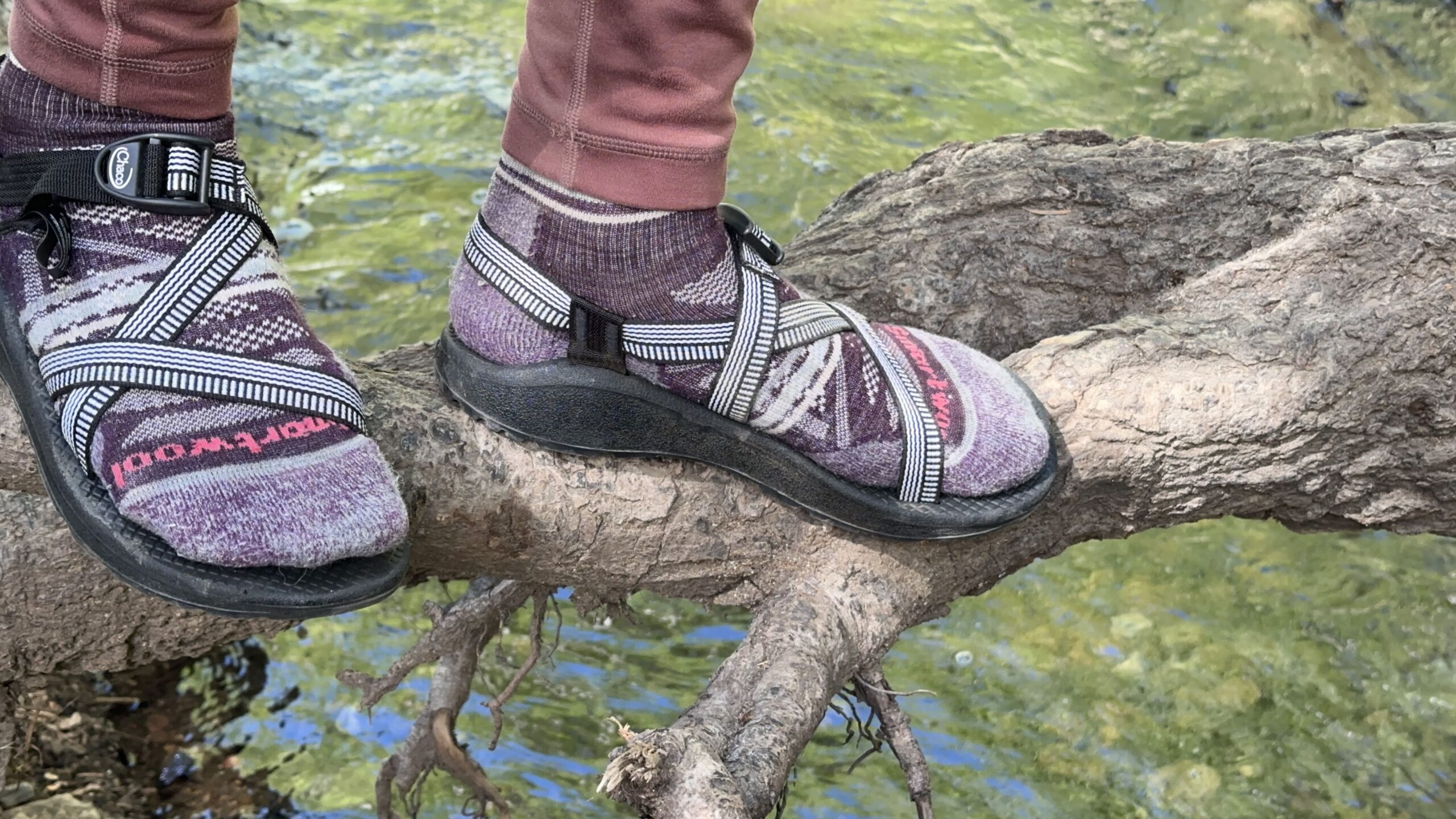
The most supportive options we tested were the Chaco Z/Cloud, OOFOS OOriginal, HOKA ORA Recovery Slide 3, and Birkenstock Arizona Essentials EVA. All of these shoes passed our rigorous tests (outlined in the “Testing Methodology” section below) and felt amazing on our feet, especially after long hikes.
The Z/Cloud has a well-cushioned midsole that takes the sting out of impacts and protects against sharp surfaces like rocks and roots. Overall support is excellent, and the straps make it easy to dial in a secure, confidence-inspiring fit.
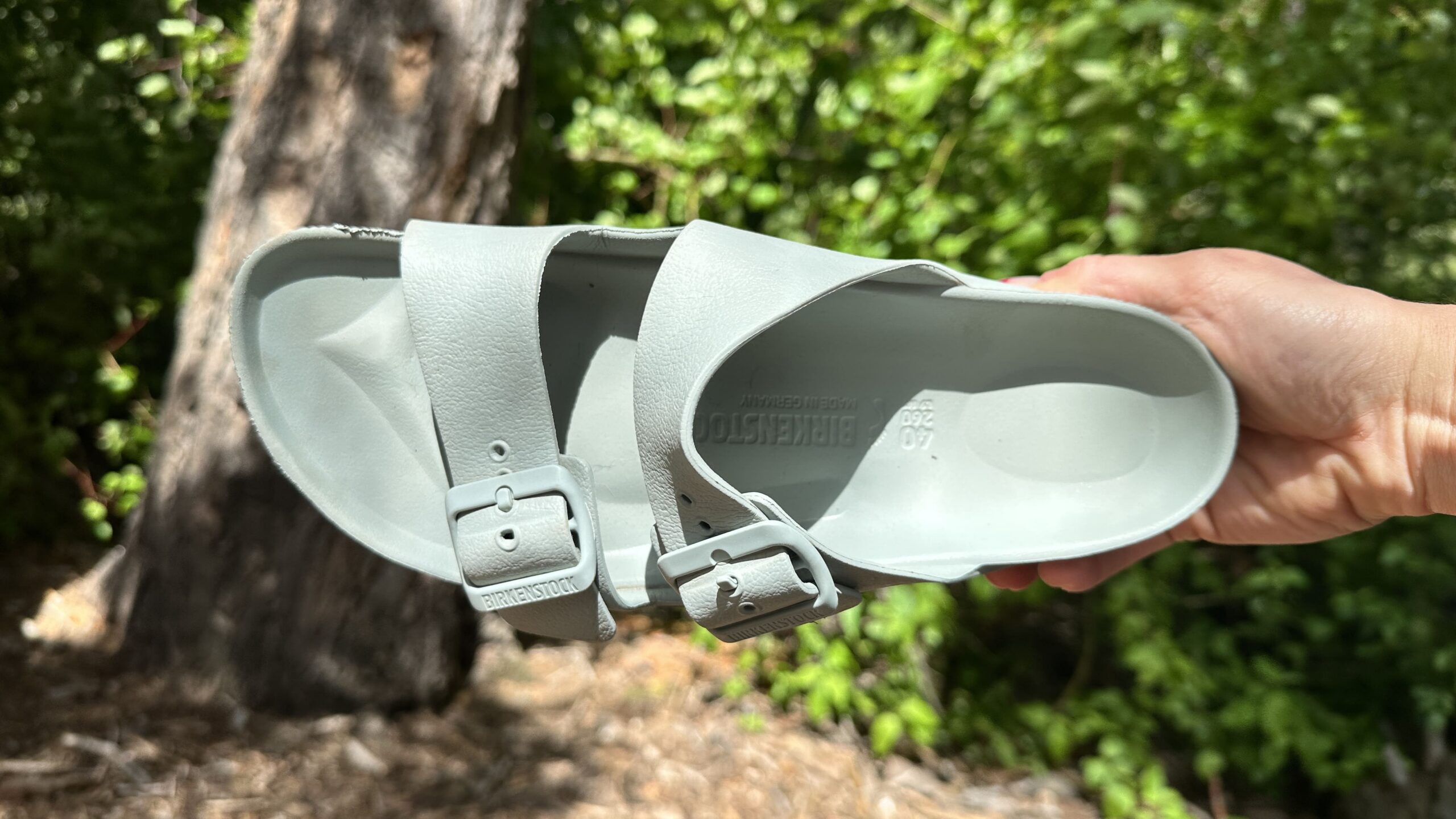
The Arizona Essentials EVA also offers solid support. Though far less technically savvy than the Z/Cloud, the Birkenstocks have an anatomically shaped footbed designed to cradle your feet. We found them easy to wear both outdoors and around town, although the all-foam build will break down quicker than more substantial options like the Chacos.
The HOKA ORA Recovery Slide 3 and OOFOS OOriginal both stood out for their plush support and cushioning. This wasn’t too surprising given their intentions as recovery shoes, but we came away impressed by how fresh our feet felt after wearing each pair for extended periods.
Finally, it’s worth noting that zero-drop shoes like the LUNA Sandals Leadville Pacer are not made to support your feet. Instead, they are built to allow for complete foot freedom and flexibility – so your foot ends up doing the work rather than the shoe. Some folks prefer this for a closer and more grounded feel, while some will find it fatiguing (at least until they get used to it).
Which Camp Shoes are the Most Durable?
The most durable shoes we tested and reviewed were the Chaco Z/Cloud and Bedrock Sandals Mountain Clog. Both shoes handily withstood our field testing and feature quality constructions that inspire a lot of confidence. We also love that both Chaco and Bedrock have in-house repair programs to extend the shoes’ lifespan.
A few other shoes that scored high in our durability tests were the LUNA Sandals Leadville Pacer, The North Face ThermoBall Traction Mules V, and Teva ReEmber Terrain Slip On. Though less beefy and substantial than the Z/Cloud and Mountain Clog, all three shoes emerged from our testing with almost no wear to show for it.
The only shoes that gave us serious pause were the Feathered Friends Down Booties. The delicate materials are reminiscent of a sleeping bag: susceptible to snags and tears. We also have qualms about the Birkenstock Arizona Essentials EVA and Crocs Classic Clog, which could shrink or warp in high heat or prolonged sun exposure. Thankfully, we did not deal with either issue in testing.
How to Choose Camp Shoes
What is Your Intended Use?
“Camp shoes” is an umbrella term that encompasses a range of styles, from recovery flip-flops to winter-ready booties. The first step in pinning down your ideal pair is thinking about how you intend to use them.
If you do a lot of backpacking, a minimalist sandal that’s lightweight and packable is likely a good bet. If you’re just looking for a shoe to wear around camp and at home, a lightly insulated slipper may be the ticket. If you do a lot of winter camping, it’s probably worth stepping up to a down-insulated bootie.
At the end of the day, each shoe has its strengths depending on your objective. We did our best to call out each shoe’s intentions and best use(s) to help you find the one that’s best suited for your adventures and personal preferences.
Which Materials Make the Best Camp Shoes?
Camp shoe construction varies widely, but there are some commonalities among top performers. Vibram rubber is widely regarded as the best in the business, offering class-leading grip over a wide variety of terrain. If traction is important to you, look for a full rubber outsole with clearly defined lugs that can bite into softer surfaces like mud or sand.
For uppers, materials like leather will hold up better over time than EVA foam, for example, but you can expect some trade-offs. Leather is generally heavier and pricier than most alternatives, especially foam. For slippers, synthetic materials like polyester are common, and some are even insulated with down or synthetic fill for added warmth.
At the end of the day, there’s no single material we recommend for camp shoes. It will all come down to how you prioritize characteristics like weight, durability, support, warmth, etc. In general, you can expect heavier shoes to hold up better over time than lighter options, but there are certainly exceptions to that rule.
How Much Should a Camp Shoe Weigh?
The ideal weight of your camp shoes will largely depend on where you plan to take them. For long backcountry missions, something in the 7- to 10-ounce (per pair) range will go largely unnoticed as the miles add up. Packability also matters, with flexible and low-profile shoes leaving more space for other gear and necessities.
For use around camp or at home, weight matters a lot less. Even shoes that creep close to the 2-pound mark may be worth packing if you’ll be mostly lounging and hanging around camp. In general, heavier shoes tend to be more durable since they utilize more substantial materials, which is something to consider as you narrow down your options.
Which Closure System & Shoe Style Works Best for Camp?
We’ve tested clogs, mules, slides, sandals, and even booties for use at camp and concluded that the most camp-friendly option is the one that’s easy to get on. Shoes that can be put on and taken off hands-free make it supremely easy to get in and out of a tent, get changed quickly, and move around without constant adjustments. Styles that fit this bill include flip-flops, mules, slippers (especially those with collapsible heels), and clogs.
That said, the same shoes that are easy to get on may not be the most secure when you embark on a hike. For more adventurous outings, a shoe that tightens securely via straps or buckles is likely worth the drop in convenience. Keep in mind that closure systems in general may cause rubbing or discomfort depending on where they’re positioned on your foot, so make sure the placement works for you before hitting the trail for an extended period.
Will Camp Shoes Keep You Warm at Night?
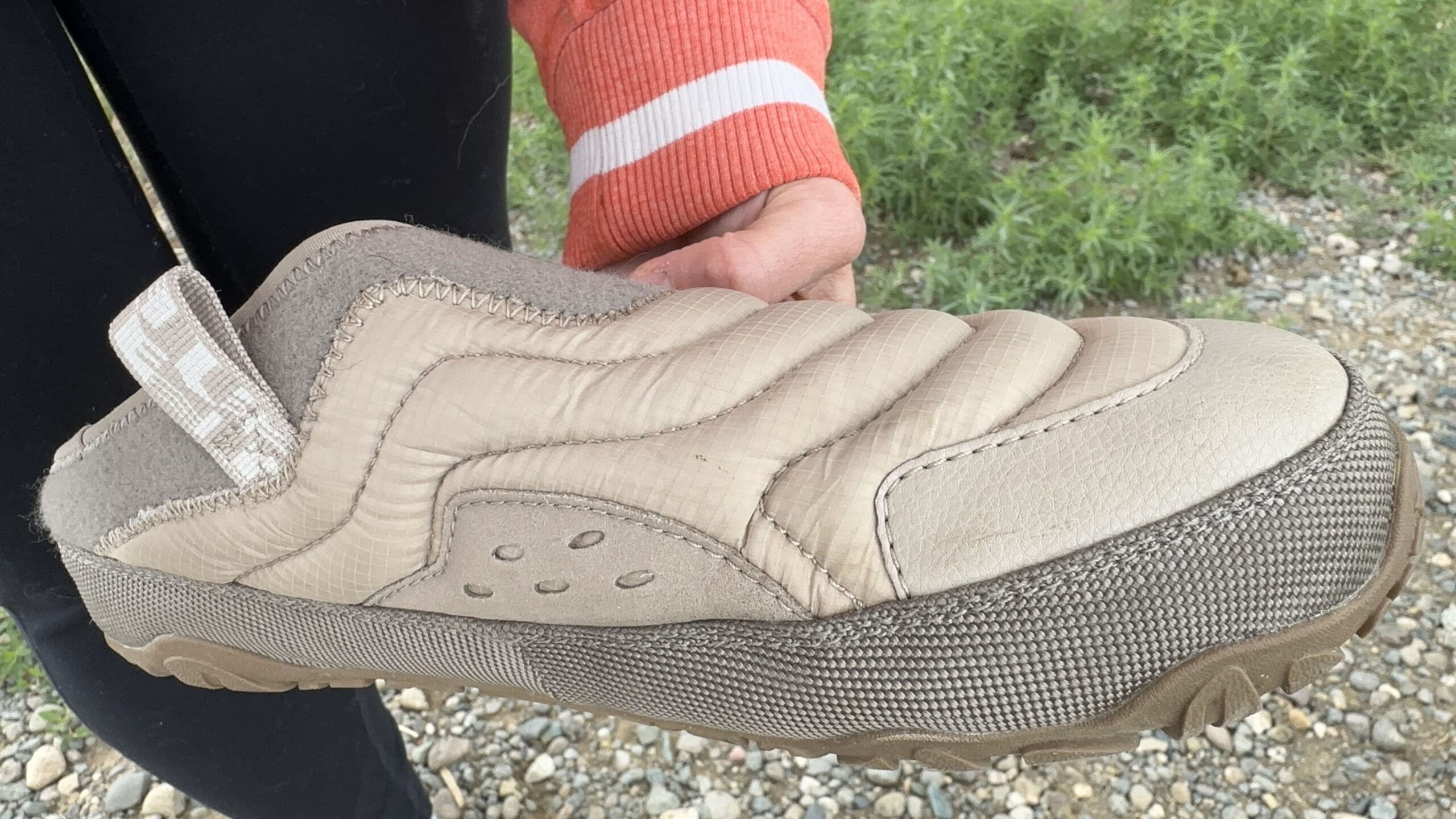
Some camp shoes are insulated or made with quilted exteriors to enhance warmth. Some are minimally insulated for cool mornings and evenings during the summer and shoulder seasons, while others are packed with lofty down fill for true winter conditions. Regardless of how insulated they are, slippers in general sacrifice some breathability due to the added warmth, limiting their all-around appeal.
If you’re looking for a more well-rounded camp shoe, consider something that can be paired with socks – like a sandal without the toe strap. Though this combination may not keep you as warm as a true slipper or down bootie, the upgrade in versatility may be worth it depending on your objectives. You can tailor your sock thickness depending on the conditions.

Why Trust CleverHiker
Gear analyst Helena Guglielmino is well versed in finding camp shoes’ limits outdoors. Having completed the John Muir Trail and Tahoe Rim Trail, she has been forced to haul a 40-plus-pound pack for up to 20 miles in camp shoes. She’s spent more than a year camping, running errands, hiking, walking, and kayaking in the shoes listed above, giving her a keen eye for a quality pair that will hold up to the rigors of outdoor use and daily life.
Testing Methodology
How Do We Test Comfort?
We tested comfort by evaluating three elements: fit, break-in period, and ease of wear. To gauge fit, we slid our fit inside each shoe and paid close attention to length and width, looking for areas of roominess or tightness. An ideal fit is one that allows the toes to wiggle without being overly loose. We evaluated fit while sitting, standing, and walking on varied surfaces and slope angles, noting any sliding or discomfort.
While walking, we noted if and where the shoes rubbed or needed any break-in. Back at the office, we felt the inside of the shoes to check for tags, seams, or other materials that might cause irritation. In general, we feel camp shoes shouldn’t need to be broken in – they should be reasonably comfortable out of the box.
Finally, we evaluated how easy it was to get our foot in and out of each shoe. Camp shoes should be easy to throw on in the dark when you have to leave your tent for a bio break, which we took into account when ranking them.
What Do We Look at for Versatility?
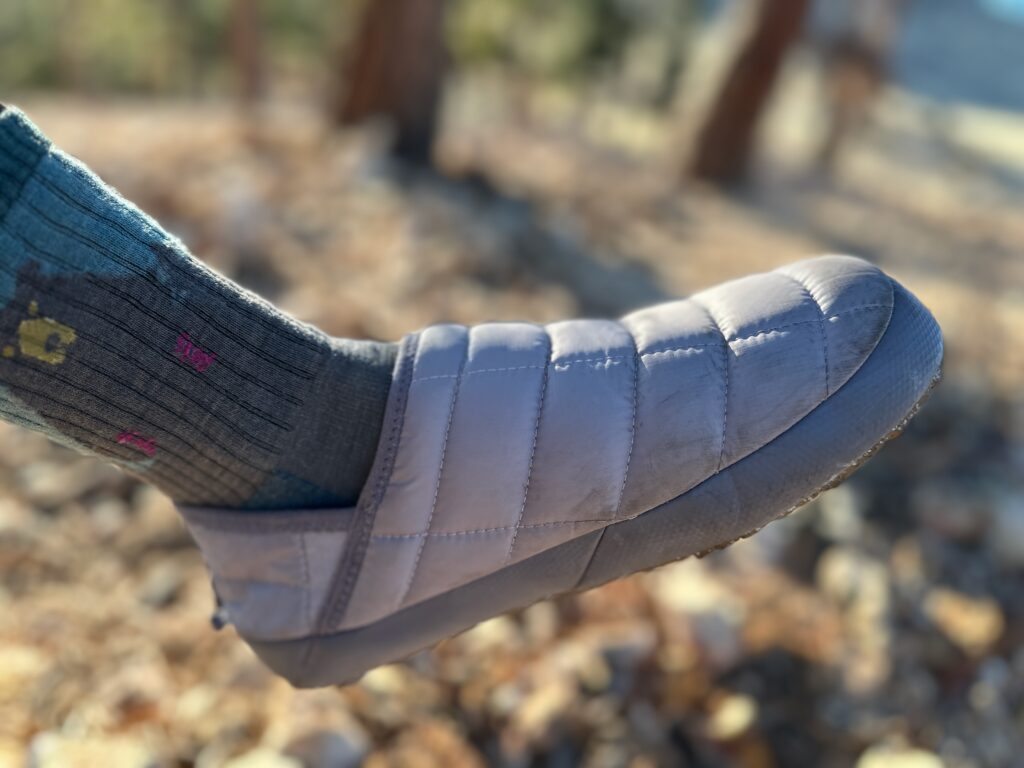
To test the versatility of each shoe, we took them on long walks on varied terrain. Since many people purchase camp shoes for adventures beyond just hanging around at camp, we expected any shoes that made our list to be reasonably capable on at least mellow trails.
We considered how well each shoe performed within its wheelhouse. For example, we expected down booties to keep our feet warm and water shoes to be grippy on slick rocks. We took things like traction, drying time, packability, and on-trail comfort into account. We also paid attention to cushioning underfoot, giving points to designs that kept our feet protected from obstacles like sharp rocks and protruding roots.
How Do We Assess Support?
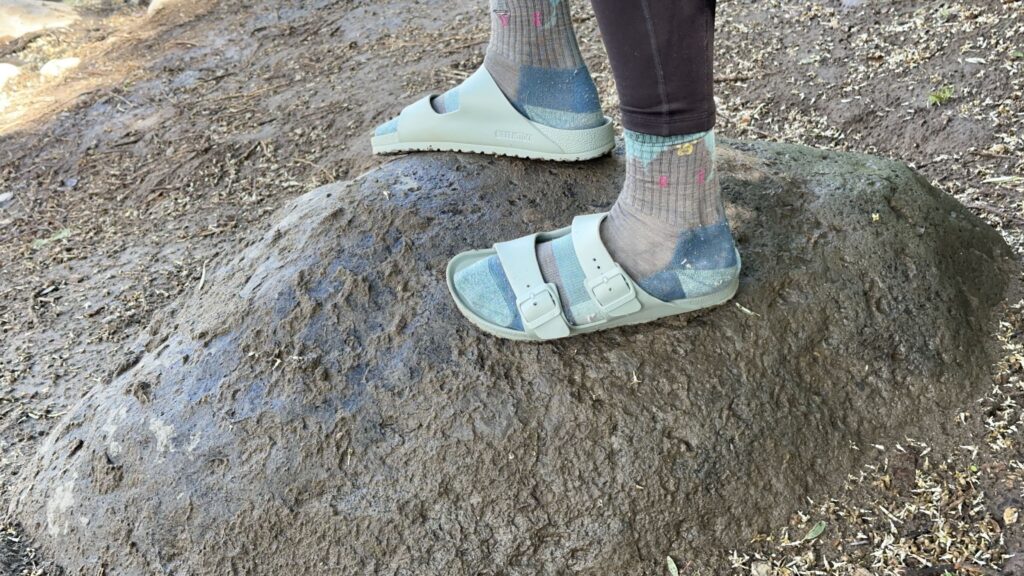
To judge the support of each shoe, we made sure each shoe held up to a simple test of bending, twisting, and squeezing. This demonstrated how each shoe supports – or doesn’t support – the structure of the foot and ankle when walking. To enhance our empirical findings, we also walked in each shoe for at least a mile to see how supportive they felt in action.
When bending, we placed the toe of the shoe on the floor so that the shoe stood vertically and pressed down on the heel. A supportive shoe should only flex at the toe, while the midsole or arch keeps its structure – even with considerable pressure.
Twisting the shoe (with the heel and toe rotating in opposite directions) should yield a similar result. The shoe shouldn’t wring out like a towel. A shoe that twists easily can lead to instability and ankle injuries.
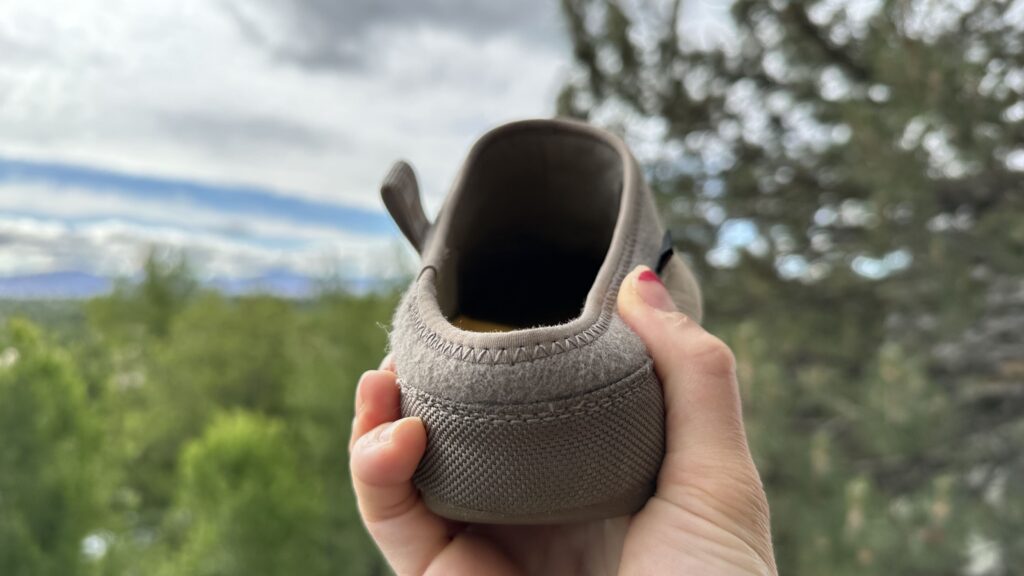
Finally, we took the heel of the shoe between our fingers and squeezed to ensure that the heel doesn’t collapse. Good resistance means the back of the shoe keeps its shape, ensuring that your heel is firm and will stay in place.
How Do We Evaluate Durability?
To test durability, we took several factors into account. We considered the materials used, user reviews on longevity, and how the shoes held up in our real-world tests. We also took into account each company’s warranty and repairs policies, awarding points to brands with in-house repair or resole programs to extend the lifespan of their shoes.

Conclusion
No matter how you choose to get outside, a quality pair of camp shoes can be a worthwhile addition to your kit. We look forward to them after rigorous adventures, rely on them for traveling to and from the trailhead, and often just enjoy wearing them at camp and while working from home. From trail-friendly sandals to winter-ready down booties, there’s an option above for everyone.