

Bottom Line
The Katadyn Steripen Ultra makes purifying clear water convenient. UV-C treatment inactivates viruses alongside bacteria and protozoa, without adding chemical flavor or requiring a pump. A rechargeable battery and exposed glass bulb need care, and murky water can undermine effectiveness. It is a good specialized option, not a universal replacement for filtration.
On a clear alpine water source, stirring for the treatment cycle is easy and quick. In silty water, particles can shield microorganisms from UV, so the Ultra doesn’t eliminate the need to choose suitable sources. A damaged glass lamp or flat battery also leaves you without purification; we would carry a lightweight backup on longer remote trips.
For ultraviolet, chemical, and mechanical treatment tradeoffs, read our best backpacking water filters guide.
How We Tested
We used successive generations of Steripen purifiers on hiking trips and assessed the Ultra’s reliability, charging demands, and the limitations of treating cloudy sources.
Quick Specs
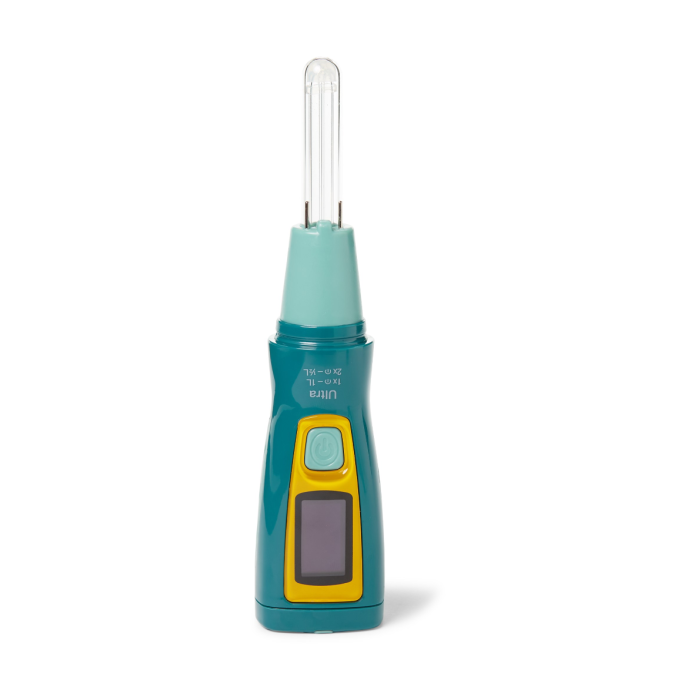
Katadyn Steripen Ultra
Best UV Light Water Purifier
CleverHiker Rating: 4.4/5.0
Price: $135
Weight: 4.9 oz.
Flow Rate: N/A
Filter Pore Size: N/A
Lifetime Volume: 8,000 activations
Pros
- Inactivates viruses
- Fast and easy
- No chemical flavor
- Rechargeable
Cons
- Needs clear water
- Battery dependent
- Fragile exposed bulb
Water Quality
The Ultra uses ultraviolet light to inactivate bacteria, protozoa, and viruses, making it more broadly protective against microorganisms than a basic squeeze filter. Unlike chlorine-dioxide treatments, UV introduces no chemical taste. The treated water retains its original flavor and appearance, which is particularly appealing at clear alpine sources.
Those same characteristics become a limitation in muddy water. UV does not extract suspended dirt, and opaque particles can block light from reaching microorganisms. If the source is cloudy, we need to strain or otherwise clarify it before treatment. On routes where silty puddles are the norm, we would rather carry a purifier designed to physically remove particles, such as the MSR Guardian.
Water Quality Score: 3.9/5.0

Ease of Use
Place the lamp in a suitable water container, activate the cycle, and stir according to the instructions. Compared with a squeeze filter, there is less repetitive exertion or contact with dirty filter bags. There is also no clean/dirty reservoir system to manage, but container size and geometry matter.
We prefer a wide-mouth Nalgene or pot so the lamp can be moved through the full volume without striking the sides. The unit signals when treatment has completed, reducing guesswork. Narrow necks and suspended debris complicate an otherwise simple routine.
Ease of Use Score: 4.7/5.0

Treatment Time
The actual UV treatment is quick, especially compared with waiting on chlorine dioxide to address resistant organisms. Recharging and finding water clear enough for effective UV treatment are the practical time costs. The method does not provide a solution when its battery is depleted.
The treatment cycle takes about 90 seconds for one liter with the correct stirring motion. That is much faster than the extended waits sometimes required for chlorine dioxide, although not as instantaneous as a squeeze filter. We also budget for charging and possible pretreatment of cloudy water.
Treatment Time Score: 4.3/5.0

Weight
The 4.9-ounce pen falls well below heavy pump purifiers but outweighs a basic Sawyer cartridge. If you already carry USB power and a compatible bottle, the total system is manageable. A protected storage case is worthwhile rather than optional for a delicate lamp.
At 4.9 ounces, the pen is neither a minimalist squeeze filter nor a full-sized expedition pump. A charging cable, backup power, and a bottle wide enough for the lamp can increase total carried weight. It pays off best when travelers already have those items packed.
Weight Score: 4.4/5.0

Maintenance & Longevity
The built-in battery is rated for roughly 50 liters per charge, and our field experience has sometimes surpassed that figure. Its UV element is designed for long use, but the lamp can break when exposed. Avoid treating the presence of a rechargeable battery as freedom from maintenance.
The rechargeable battery avoids disposable cells, but the glass UV element demands protection. We check charging before leaving town and carry a backup method for long itineraries. Rated lamp life does not eliminate the risk of breakage or a dead battery in the field.
Maintenance & Longevity Score: 4.7/5.0

Should You Buy the Steripen Ultra?
Choose the Steripen Ultra for clear-water routes where virus protection and natural taste both matter. Chemical tablets offer a more compact backup without electronics. Travelers facing reliably muddy sources should look at a purifier designed to remove particles as well.
What Other Water Treatment Systems Should You Consider?
Katadyn Micropur Review: Micropur tablets offer a nearly weightless backup if you worry about the Ultra running out of power. They’re simpler to store but require patience, especially for resistant protozoa, and don’t remove sediment from cloudy water.
Aquamira Review: Use Aquamira when you need chemical purification over many liters without relying on electronics. Its two-part drops demand mixing and contact time, so the Ultra is quicker when the source is already clear.
MSR Guardian Review: The Guardian is a better expedition option when you expect opaque, silty water as well as viral contamination. It physically clears the water as it purifies, at the cost of much more weight and a steep price.