

Our team is made up of passionate backpackers who, over the years, have collectively covered tens of thousands of miles with dozens of different packs. For this guide, we’ve narrowed down our picks to 14 packs that we’ve field-tested over the past year.
If you need more carrying capacity or a heavier-duty option, we also have a list of our favorite traditional backpacking packs.
Editor’s Note: We updated this guide on July 10, 2026, to add the Mountainsmith Zerk 40, Evolved Supply Co. The Ranger, and Black Diamond Beta Light 45 to our list of favorites.
How We Test Ultralight Backpacks
We’ve thru-hiked many of the prized long trails in the U.S., including the Pacific Crest Trail, Appalachian Trail, Colorado Trail, Arizona Trail, Continental Divide Trail, and more. From soggy, humid forests to high alpine and arid desert, we’ve carried packs from big hitters like REI and Black Diamond to lesser-known standouts from cottage brands like ULA, Gossamer Gear, and Atom Packs.
And for more info, check out some of our other most popular gear guides:
- Best Backpacking Tents
- Best Backpacking Sleeping Pads
- Best Backpacking Sleeping Bags
- Best Hiking Shoes for Men / Best Hiking Shoes for Women
- Best Hiking Boots for Men / Best Hiking Boots for Women

#1. Best Ultralight Backpack Overall
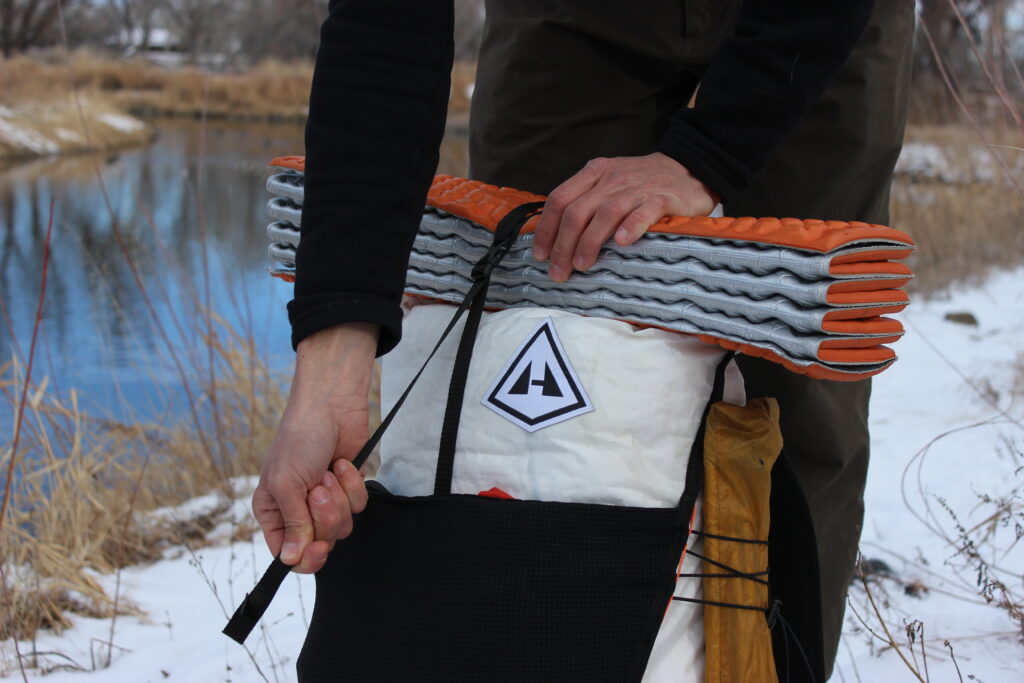
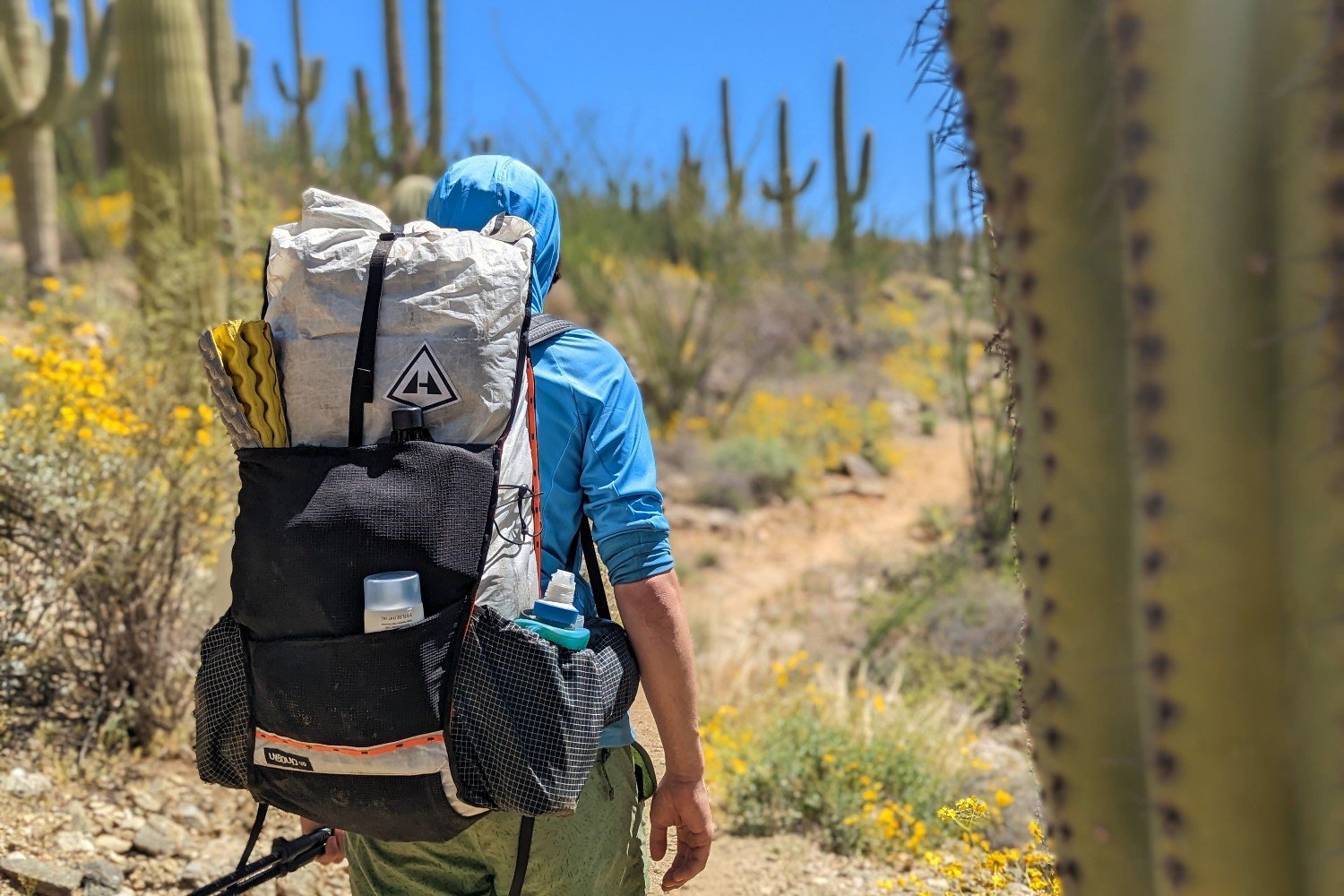
The Hyperlite Mountain Gear Unbound 40 nails the balance among weight, durability, waterproofing, and on-the-go functionality. We’ve hiked tens of thousands of miles with dozens of backpacks, and we would happily take the Unbound 40 on any lightweight trip.
Quick Picks for Ultralight Backpacks
Check out this quick list of the best ultralight backpacks, or continue scrolling to see our full list of favorites with in-depth reviews.
1. Best Ultralight Backpack Overall: Hyperlite Mountain Gear Unbound 40 ($385 – $405)
2. Most Versatile Ultralight Backpack: Atom Packs The Pulse EP50 ($314)
3. Best Frameless Ultralight Backpack: Mountainsmith Zerk 40 ($230)
4. Best Ultralight Pack for Fastpacking: Nashville Pack The Cutaway 40 ($335 – $415)
5. Most Comfortable Ultralight Backpack: Gossamer Gear Mariposa 60 ($315)
6. Best Minimalist Ultralight Backpack: Hyperlite Mountain Gear Southwest 55 ($420)
7. Best Ultralight Pack for Photographers: Evolved Supply Co. The Ranger ($260)
8. Lightest High-Capacity Ultralight Backpack: Zpacks Arc Haul Ultra 60L ($399)
9. Best Load-Hauling Ultralight Backpack: ULA Equipment Circuit ($300)
10. Affordable & Comfortable Ultralight Backpack: Gossamer Gear Gorilla 50 ($275)
11. Best Ultralight Pack for Alpine Pursuits: Black Diamond Beta Light 45 ($450)
12. Lightest-Feeling Ultralight Backpack: Pa’lante Packs v2 ($240)
13. Best Budget Ultralight Backpack: Durston Kakwa 55 ($199 – $279)
14. Best Crossover Ultralight Backpack: REI Flash Air 50 – Men’s / Women’s ($299)
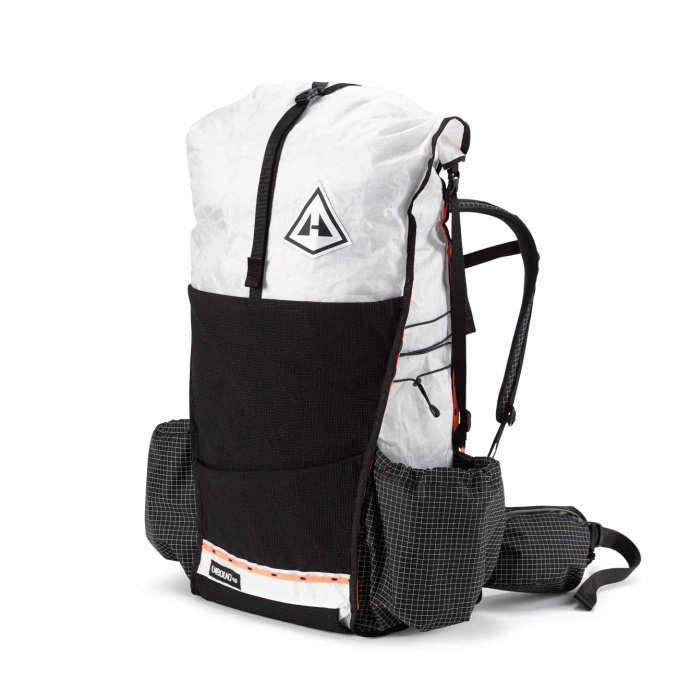
Hyperlite Mountain Gear Unbound 40
Best Ultralight Backpack Overall
CleverHiker Rating: 4.9/5.0
Price: $385 – $405
Weight: 1 lb. 13.6 oz.(white, medium torso)
Volume: 49 L (40 L internal, 9 L external)
Max Weight Rec.: 40 lb.
Pros
- Waterproof
- Durable
- Good organization
- Stable
Cons
- Thinner padding than others
- Flimsy side straps
The Hyperlite Mountain Gear Unbound 40 is our favorite all-around ultralight pack. It excels in wet weather, carries comfortably even under heavy loads, and offers excellent on-trail functionality.
The pack’s outstanding water resistance comes from its Dyneema Composite Hybrid (DCH) construction. The fabric naturally resists moisture without relying on a coating or treatment that could wear off over time.
We tested this pack extensively in the Rocky Mountains and Colorado deserts and absolutely drenched it in our water exposure testing. It consistently kept our gear bone dry and provided excellent carrying comfort over high-mileage days.
The suspension system is simple but well designed, featuring a contoured aluminum stay that effectively transfers weight to the hips. Despite its minimalist design, the Unbound 40 provided a comfortable, stable carry with loads up to 40 pounds. However, the moderately padded straps and plastic back panel may not provide enough cushioning or airflow for some people’s preferences.
The Unbound’s pockets provide excellent efficiency and accessibility. The Dyneema front mesh pocket features two access points, making it easy to grab small items that have sunk to the bottom. The side and hipbelt pockets are spacious and easily reachable on the go, and the innovative bottom pocket with a dedicated trash port is a game-changer.
Although the Unbound 40 comes with a hefty price tag, its water resistance, durable construction, and well-executed design are worth their weight in gold for serious ultralight backpackers. If you frequently venture into wet or harsh environments and demand top-tier performance from your gear, the Unbound 40 is a worthwhile investment that should serve you well for countless miles.
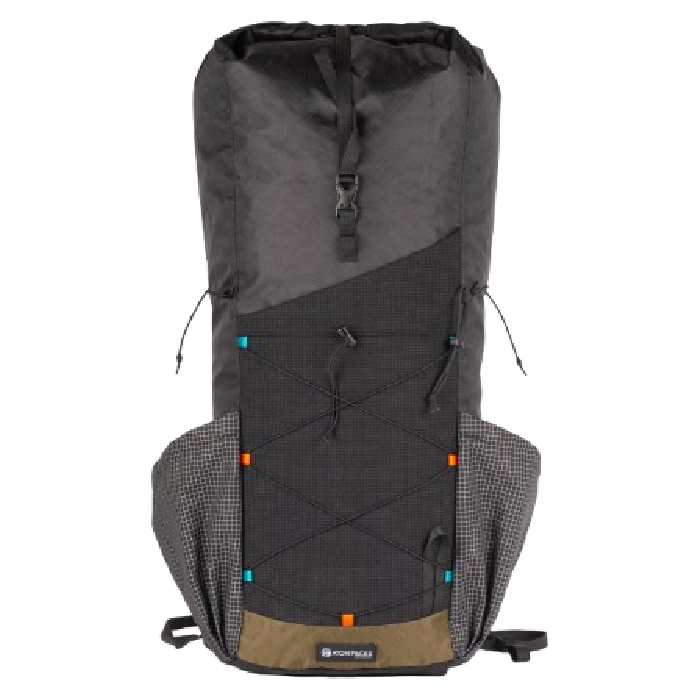
Atom Packs The Pulse EP50
Most Versatile Ultralight Backpack
CleverHiker Rating: 4.8/5.0
Price: $314
Weight: 1 lb. 7.8 oz.
Volume: 54 L (45 L internal, 9 L external)
Max Weight Rec.: 29.8 lb.
Pros
- Lightweight
- Good organization
- Water-resistant
- Customizable hip and torso sizing
- Removable carbon-hooped frame, foam sleeve, and hipbelt
Cons
- Doesn't carry heavy loads well
- Waist belt is thin
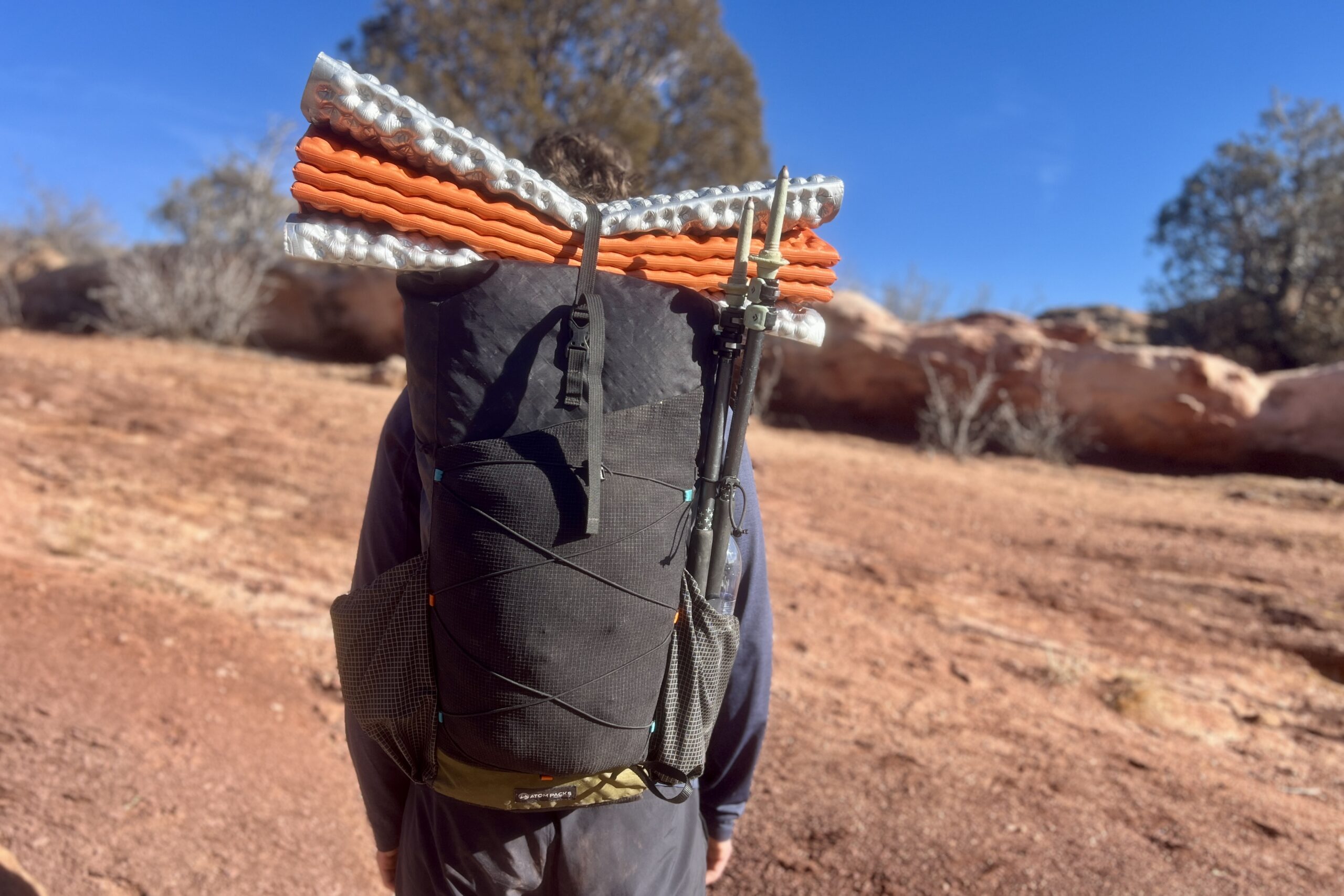
Atom Packs’ The Pulse EP50 is a thoughtfully designed pack built for thru-hikers by thru-hikers. It became a favorite after accompanying us on a thru-hike of the Colorado Trail. We loved its well-placed and accessible pockets, reliable durability, and solid water resistance.
The Pulse bridges the gap between frameless designs and traditional framed packs. Its lightweight frame provides some rigidity and weight transfer but isn’t meant to carry loads over about 30 pounds.
The minimalist hipbelt also provides less support than some other ultralight packs. However, for loads under that sweet spot, The Pulse EP50 rides with comfort and stability mile after mile. The contoured shoulder straps distribute weight evenly without pressure points, even after long days on trail.
The Pulse EP50 really stands out for its well-designed feature set, which prioritizes on-the-go access to essentials. The stretchy shoulder and side pockets reduce the need to take off your pack frequently, allowing you to cover ground more efficiently. The innovative bottom pocket with a trash port is extremely useful, too.
The Pulse EP50 has top-notch quality that balances lightweight performance and durability. The EPX200 fabric on the main body is abrasion- and tear-resistant. High-use areas are reinforced with 210-denier Robic Extreema, and the entire bag is impressively water-resistant. After 500 miles, we’ve seen no wear on the body or the burly Dyneema mesh front and bottom pockets.
For thru-hikers who appreciate a functional, trail-ready design, the Atom Packs The Pulse EP50 packs a lot of performance into an affordable package.
Mountainsmith Zerk 40
Best Frameless Ultralight Backpack
CleverHiker Rating: 4.8/5.0
Price: $230
Weight: 1 lb. 14 oz. / 2 lb. 2 oz.(stripped / standard)
Volume: 40 L (44 L w/ expanded roll top)
Max Weight Rec.: 45 lb. (30 lb. recommended)
Pros
- Lightweight
- Excellent organization and functionality
- Comfortable
Cons
- Can’t carry heavy loads
- Not waterproof
- Might not fit smaller backpackers
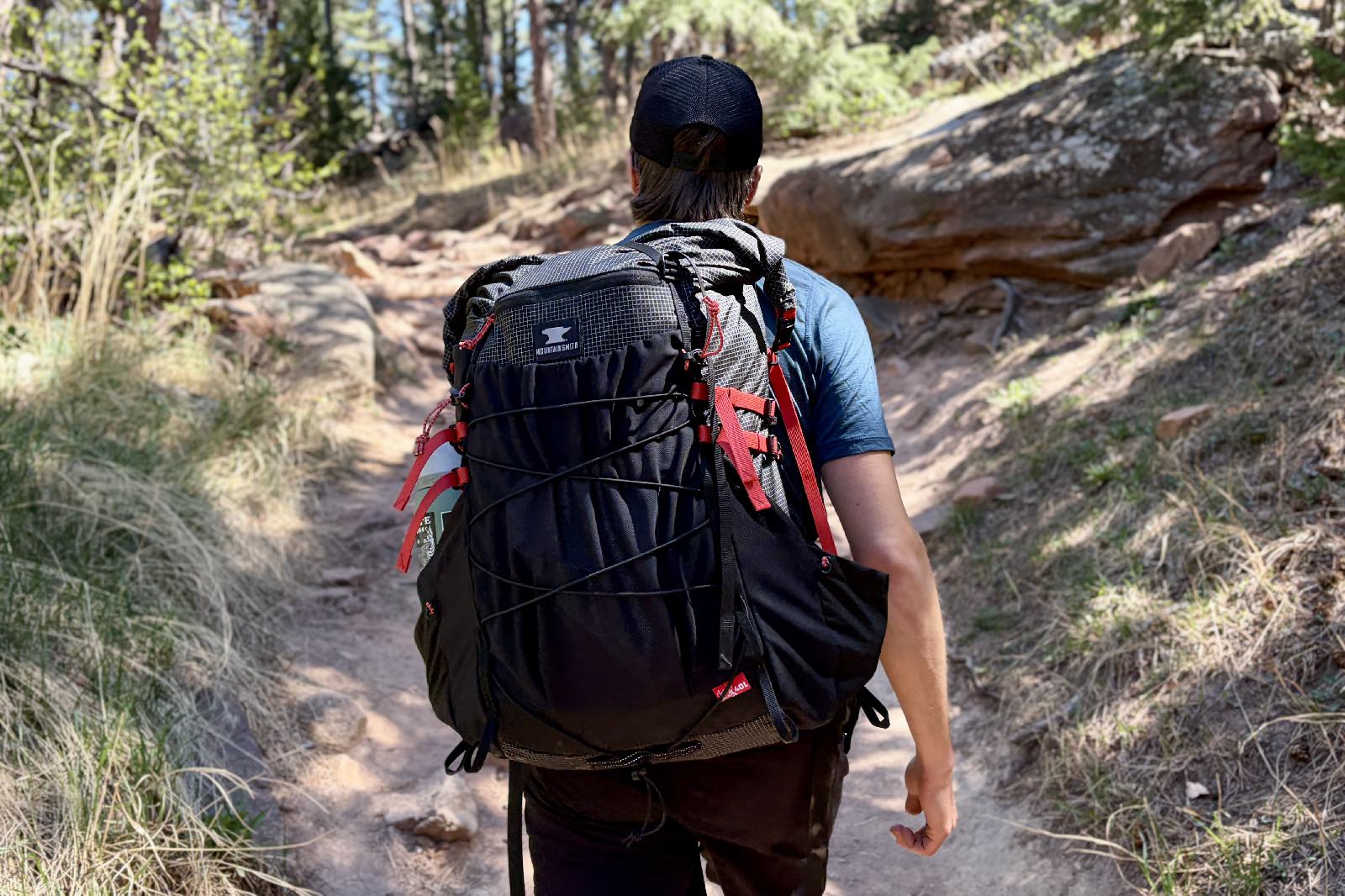
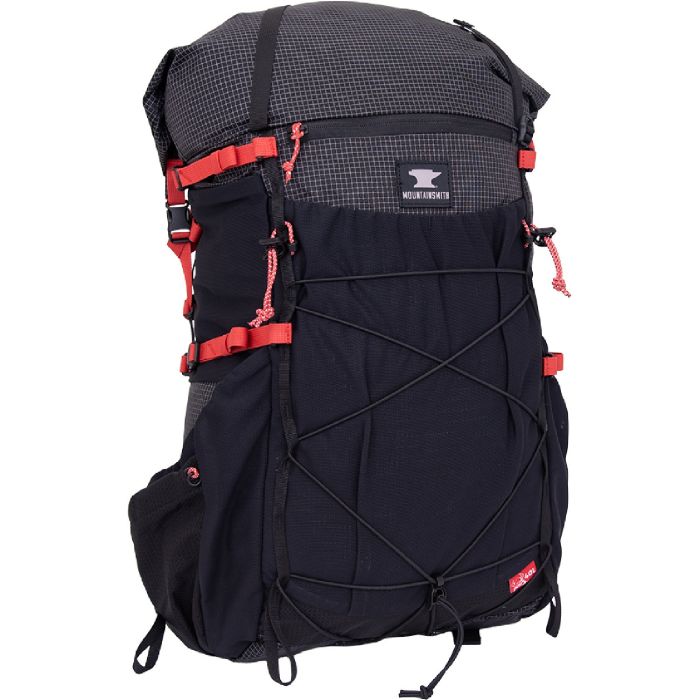
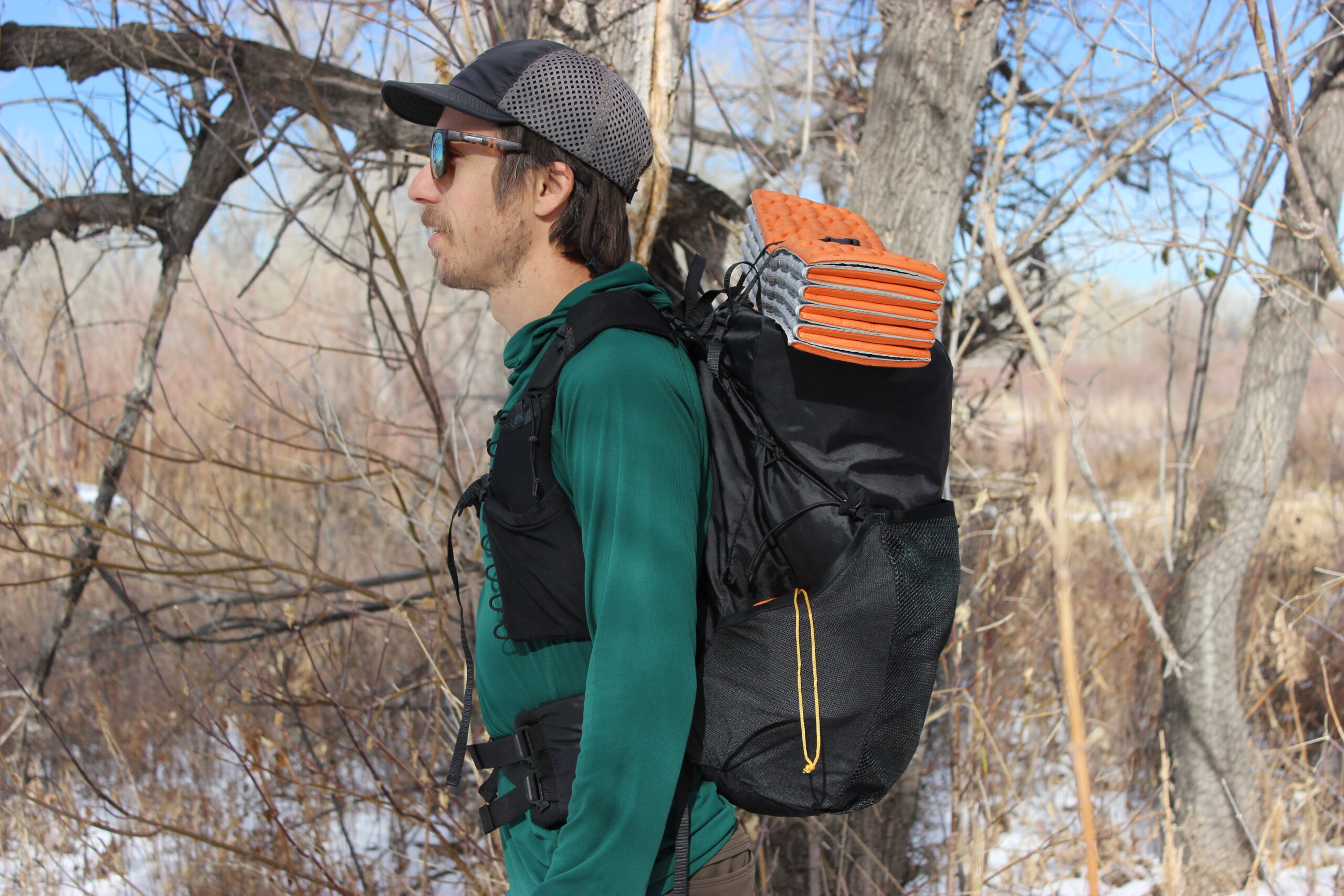
The Mountainsmith Zerk 40 fills a niche as a tactical/ultralight hybrid backpack. It delivers a lot of functionality in a truly lightweight, frameless platform. This makes it best suited for experienced fast-and-light hikers who prioritize access and organization over heavy-hauling comfort. It’s also great for folks making the transition from traditional framed packs to ultralight frameless ones.
The Zerk has a ridiculous amount of roomy, well-placed pockets. The vest-style shoulder straps feature oversized mesh pockets, while the side pockets are double-layered and reachable on the move. It’s a very intuitive and trail-ready layout that makes it easy to access water, snacks, and essentials on the move. The modular design is also a big win, allowing you to strip or add features depending on the trip.
The Zerk is one of the most supportive frameless packs we’ve ever tested, even though comfort and weight distribution are fundamentally limited in a frameless design. It carries loads up to 30 pounds with ease, but once you push beyond its comfort range, it can take a toll on the shoulders.
Weather protection is modest at best. We strongly recommend using a pack liner or dry bags if you expect to face anything beyond light moisture.
Overall, the Zerk 40 is a great value for hikers who will appreciate its extensive feature set. It’s not the right choice for beginners or those wanting the support of frame, but for seasoned ultralight hikers who want maximum functionality for minimal weight, it’s one of the most capable and thoughtfully designed frameless packs available.

Nashville Pack The Cutaway 40
Best Ultralight Pack for Fastpacking
CleverHiker Rating: 4.8/5.0
Price: $335 – $415
Weight: 1 lb. 0.5 oz.(18-inch torso)
Volume: 39 – 47 L (depending on torso length)
Max Weight Rec.: 25 lb.
Pros
- Remarkably lightweight
- Good organization
- Customizable
- Excellent carry for a frameless pack
Cons
- Takes some getting used to
- Might be too customizable for some
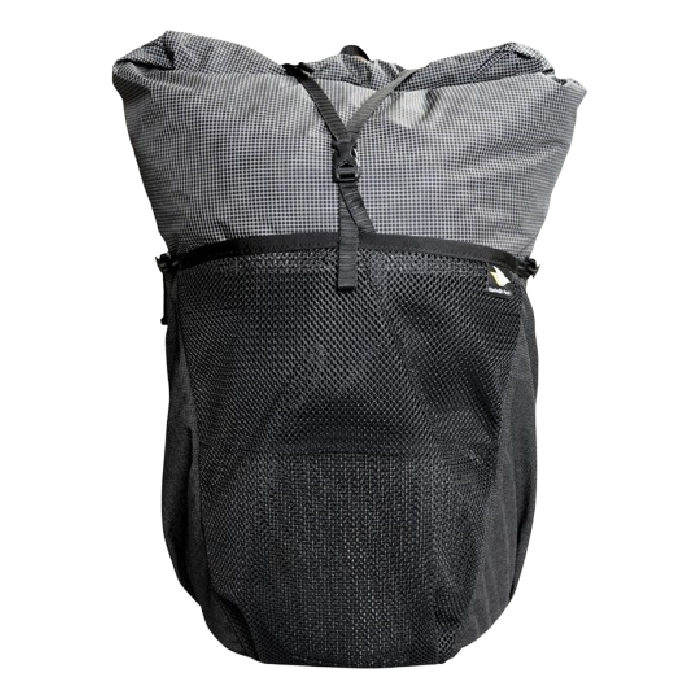
Nashville Pack’s The Cutaway 40 is ideal for dialed-in ultralight backpackers and fastpackers who are used to crushing high-mileage days. Its nine easily accessible exterior pockets and large, wraparound front pocket swallow tons of essentials and snacks, so you almost never have to stop and unshoulder the pack.
The wide and plush shoulder straps and optional hipbelt offer a rarely achieved comfort level among frameless packs. The Cutaway carries loads up to 25 pounds with surprising stability and comfort, adding appeal for scrambling missions and multi-day food carries.
Adding to comfort is the pack’s unmatched customizability. You can choose everything from the shoulder strap width to the hipbelt style, and there are several add-ons for tweaking the pack to your specific preferences.
Though not the most weather-resistant pack on the market, The Cutaway is built with durability in mind. The standard Venom Gridstop ECO fabric is very strong for its weight, and it’s coated with PU and DWR finishes for moisture repellency. For added assurance, you can upgrade to Aluula Graflyte, a newer but promising material that fuses a waterproof film backing to a UHMWPE face fabric.
The Nashville Pack Cutaway is a sizable investment, but its comfort and exceptional design make it a worthy contender for dedicated ultralight enthusiasts. If you’re looking for a frameless pack that offers comfort, convenience, and customization, The Cutaway is a top choice.
Gossamer Gear Mariposa 60
Most Comfortable Ultralight Backpack
CleverHiker Rating: 4.7/5.0
Price: $315
Weight: 2 lb. 2.2 oz.(medium w/ S-M Straight belt)
Volume: 60 L
Max Weight Rec.: 35 lb. (30 lb. recommended)
Pros
- Comfortable
- Quick closure
- Good organization
- Convenient sit pad included
Cons
- Not water-resistant
- Fabric isn't the most durable
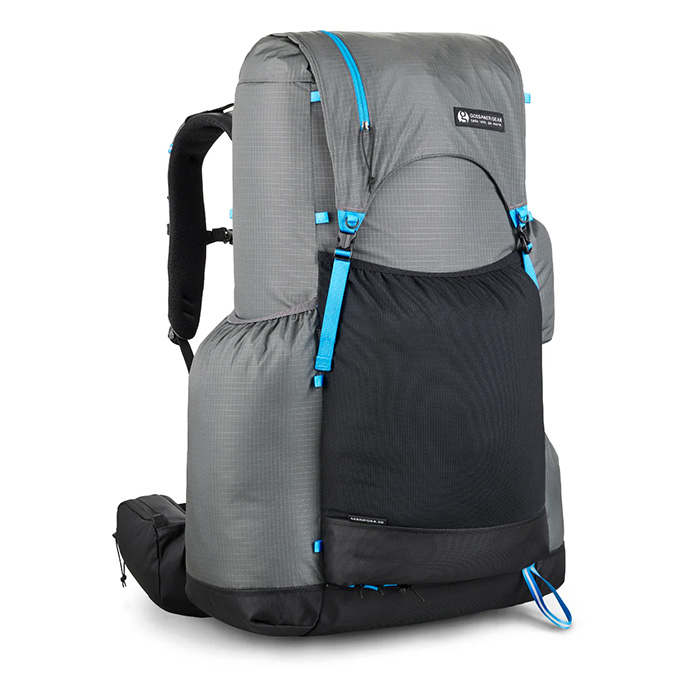
The Gossamer Gear Mariposa 60 delivers an impressive balance of comfort, functionality, and weight, earning our endorsement as the most comfortable ultralight pack we tested.
We covered thousands of miles on the PCT and CDT with the Mariposa. It carried exceptionally well, comfortably handling up to 30 pounds without compromising stability or fit. The ultralight build held up surprisingly well, only showing wear after thousands of miles.
Key to the Mariposa’s outstanding comfort is its smart aluminum frame system, load lifter straps, and contoured shoulder straps and hipbelt. The design effectively transfers weight to the hips, alleviating strain on the shoulders and upper body during long days on the trail. The removable foam back panel provides decent ventilation and doubles as a convenient sit pad.
The Mariposa’s organization layout is streamlined but thoughtful, including a generous front stretch pocket, multiple side pockets, and easy-to-use hipbelt pockets. The pack’s fold-top closure – a signature Gossamer Gear feature – provides a unique alternative to traditional roll-top designs.
Though the Mariposa’s construction prioritizes weight savings over maximum durability and water resistance, using 210-denier Robic nylon in high-wear areas increases the pack’s overall longevity. For those seeking an ultralight pack that doesn’t compromise on comfort or functionality, the Mariposa 60 is a compelling option.
Hyperlite Mountain Gear Southwest 55
Best Minimalist Ultralight Backpack
CleverHiker Rating: 4.7/5.0
Price: $420
Weight: 1 lb. 14.8 oz.(white)
Volume: 68.4 L (55 L internal, 13.4 L external)
Max Weight Rec.: 40 lb.
Pros
- Waterproof
- Durable
- Large pockets
- Excellent carry
Cons
- Minimalist design might not suit everyone
- Not as padded as others
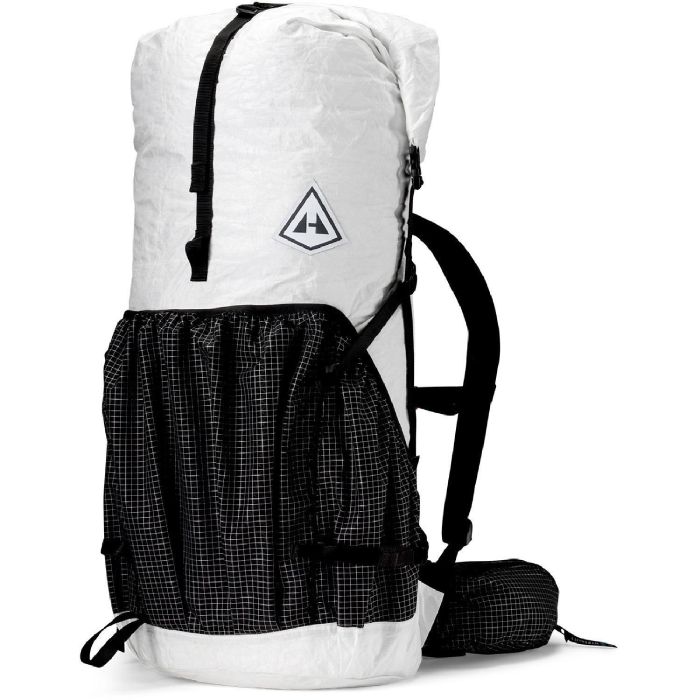
The Hyperlite Mountain Gear Southwest 55 is a highly effective ultralight backpack focused on minimalism, weather resistance, and durability. Through extensive testing across challenging terrain and conditions, we’ve found this pack offers better durability than most competitors in its weight class.
The pack’s Dyneema Woven Composite construction is what makes it stand out. Its natural water repellency virtually eliminates the need for a pack liner and provides longer-lasting resistance than coated fabrics. The premium materials and construction come at a hefty price point, but we think it’s worth every penny for the right person.
Hyperlite opted for simplicity when it comes to organization. The pack features two hipbelt pockets, two easily reachable side pockets, and one giant front pocket – all made from Dyneema. Some might find themselves wanting more exterior pockets, but an extra 13.4 liters of volume is nothing to scoff at.
The Southwest’s relatively thin shoulder straps and minimalist organization may be a stark change for those used to traditional backpacks. But Hyperlite packs are built with seasoned lightweight backpackers in mind, and the Southwest is sure to please that crowd.
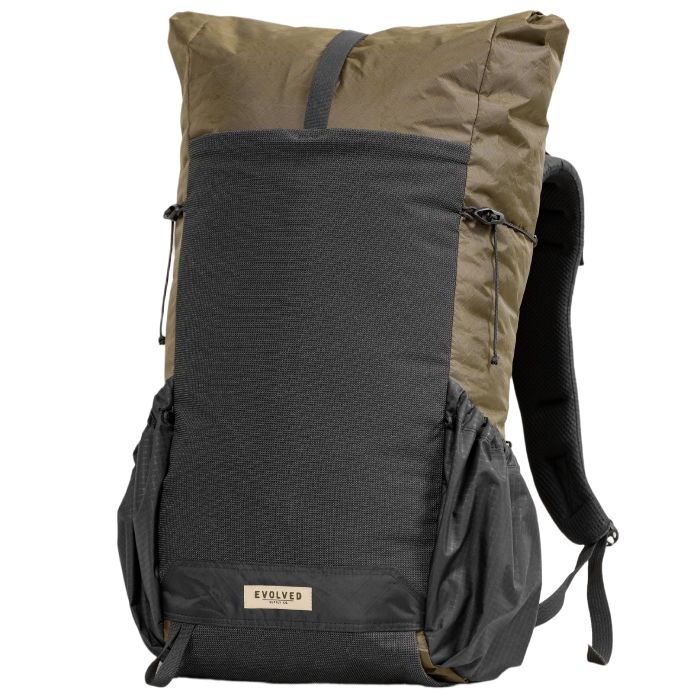
Evolved Supply Co. The Ranger
Best Ultralight Pack for Photographers
CleverHiker Rating: 4.7/5.0
Price: $260
Weight: 1 lb.
Volume: 46.8 L (35 L internal, 11.8 L external)
Max Weight Rec.: 20 lb.
Pros
- Ultralight
- Comfortable and supportive for a frameless pack
- Durable
- Designed by thru-hikers
Cons
- Minimal features
- Not fully waterproof
- Availability can be tricky
The Ranger by Evolved Supply Co. is a streamlined ultralight pack built for minimalist backpackers who already know what they want out of their system. It’s especially dialed for fast-and-light hikers and photographers with a modular design and dedicated camera attachment point. The core build keeps things refreshingly simple and extremely light, while optional add-ons let you scale the feature set up or down depending on the trip.
Where The Ranger really separates itself from other frameless packs is its load-hauling capability. The thick, well-padded shoulder straps and included load lifters make a noticeable difference in comfort and stability, giving it a more structured, confidence-inspiring carry than most competitors.
In testing, we pushed it to its 20-pound limit during long days in harsh desert environments. It handled moderate bushwhacking without issue and comfortably carried a full load without feeling overwhelmed.
Durability is another strong suit. The ECOPAK EPLX200 fabric and sturdy stretch pockets feel far more robust than you’d expect at this weight, and the overall construction is built to last. Though not fully waterproof, it does a decent job resisting light to moderate weather (although it’s still a good idea to use a pack liner).
It’s not the right choice for beginners, heavier carries, or anyone looking for framed support or full weather protection. But for experienced ultralighters with a dialed kit, the thoughtfully engineered, trail-tested Ranger delivers excellent value.
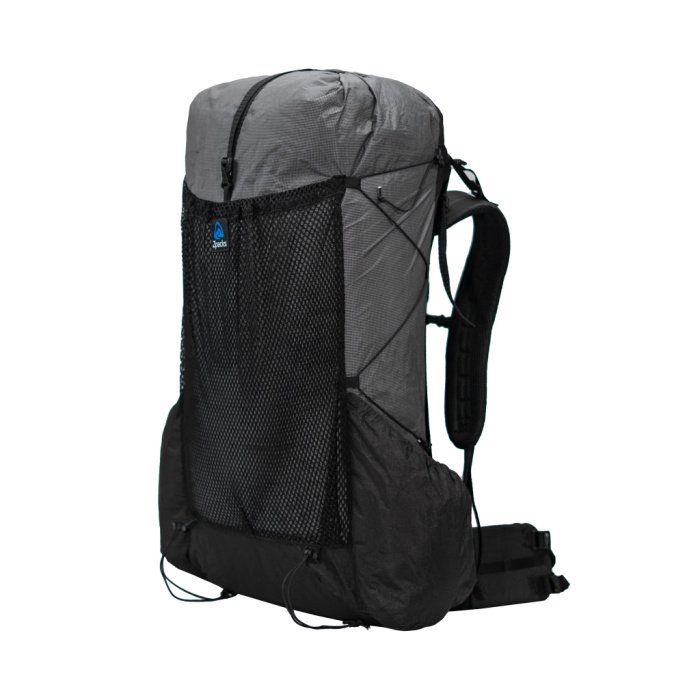
Zpacks Arc Haul Ultra 60L
Lightest High-Capacity Ultralight Backpack
CleverHiker Rating: 4.7/5.0
Price: $399
Weight: 1 lb. 6.5 oz.(medium torso, standard straps, medium belt)
Volume: 60 L (47 L internal, 13 L external)
Max Weight Rec.: 40 lb. (30 – 35 lb. recommended)
Pros
- Lightweight
- Stable
- Durable
- Good back ventilation
- Waterproof
Cons
- Not the softest or most comfortable
- Pricey
The Zpacks Arc Haul Ultra 60L combines innovative design choices, premium materials, and a high-end construction for thru-hikers and seasoned ultralighters. Through real-world use in the Rocky Mountains and controlled lab testing, this pack held up beautifully to the elements and provided a stable carry for off-trail scrambling.
One of the Arc Haul Ultra’s standout features is its unique suspension system, which is centered around a curved carbon fiber frame and suspended mesh. The design creates a gap between the pack and your back, promoting airflow so you can stay cool and dry. The frame efficiently transfers weight to the hips, while the shoulder straps and hipbelt hug the body, creating an extremely stable carry with moderate padding.
The pack’s pockets favor size over quantity. A spacious main compartment with a roll-top closure is complemented by a large mesh front pocket and two easily accessible side pockets. Although hipbelt pockets aren’t included, there are additional attachment points for trekking poles, an ice axe, and other gear on the bottom and sides of the pack.
Constructed with 100-denier Ultra fabric, the Arc Haul Ultra offers excellent durability and water resistance. During our testing, the fabric showed almost no wear and kept out virtually all moisture.
Though the Arc Haul’s minimalist design may not suit everyone (and comes at a premium), it caters nicely to experienced ultralight backpackers seeking maximum volume at minimal weight.
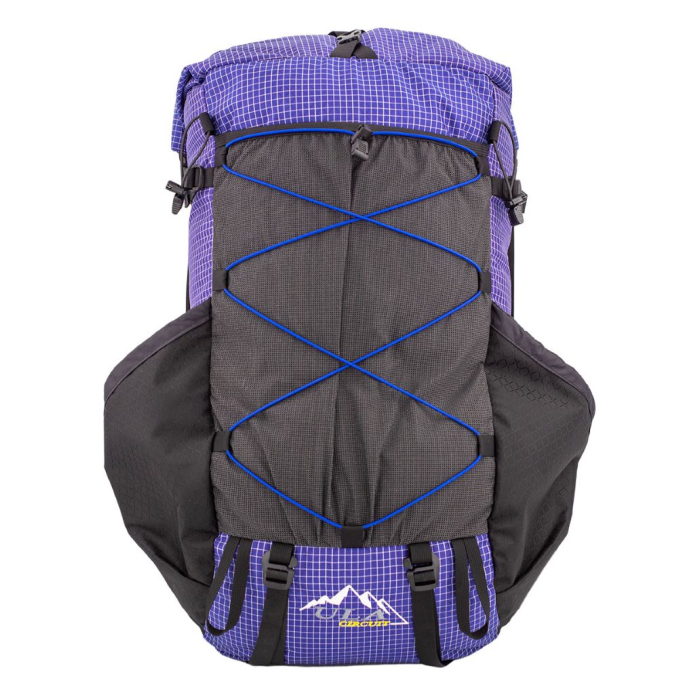
ULA Equipment Circuit
Best Load-Hauling Ultralight Backpack
CleverHiker Rating: 4.6/5.0
Price: $300
Weight: 2 lb. 6.5 oz.
Volume: 68 L
Max Weight Rec.: 35 lb.
Pros
- Excellent hauling capacity for the weight
- Durable
- Carries weight well
Cons
- Too big for some
- Water resistance needs upkeep
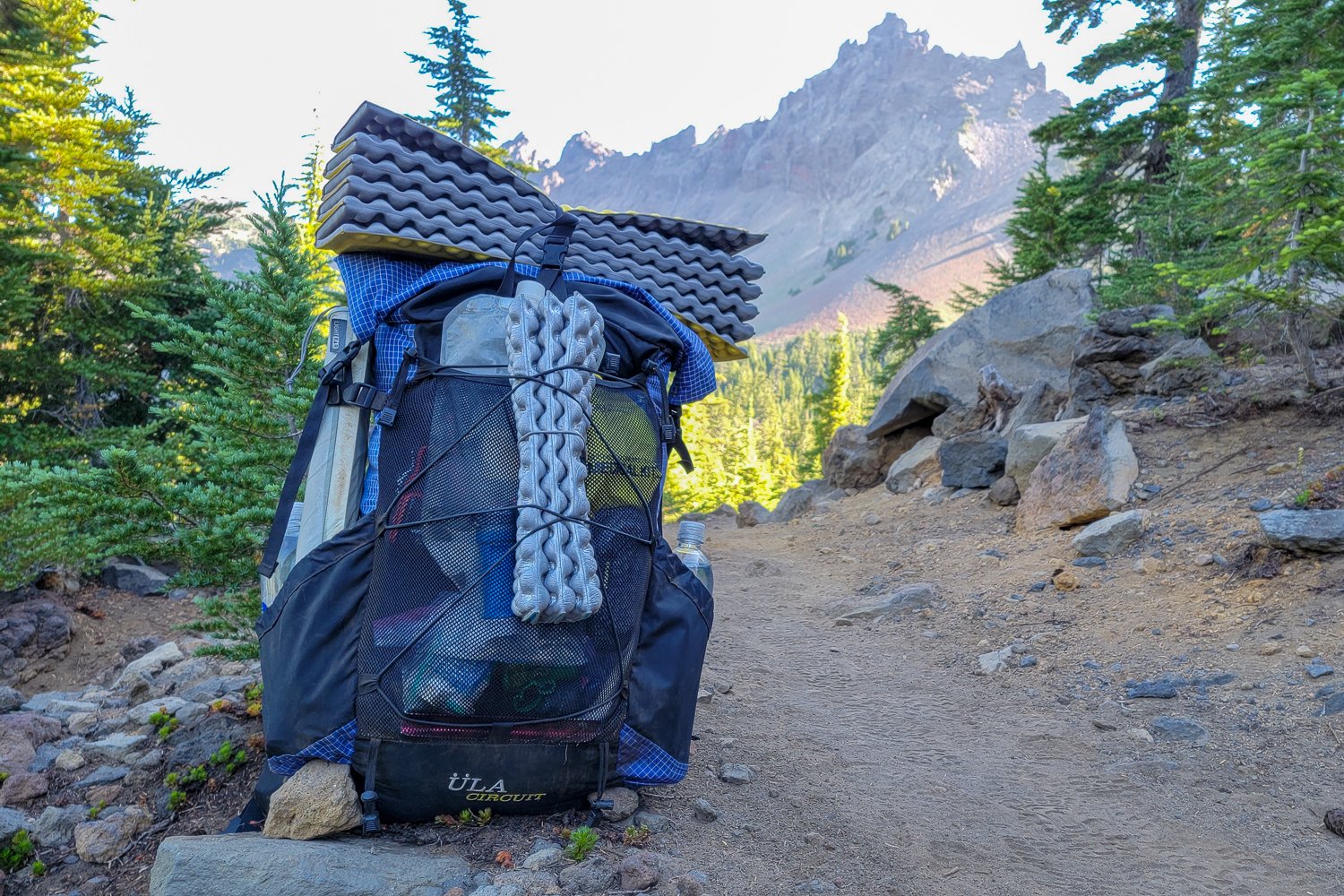
The ULA Equipment Circuit has long been a favorite among thru-hikers on long trails, and after testing it on varied terrain all over the American West, it’s easy to see why. This pack strikes an impressive balance among comfort, durability, and load capacity, making it one of our favorites for carrying large loads on extended treks.
The Circuit’s robust suspension system is key to its performance. A carbon fiber and Delrin hoop frame, dense foam back panel, and aluminum stay transfer weight efficiently to the hips, ensuring a stable and comfortable carry.
The padded shoulder straps could use a touch more cushioning for heavier loads. Still, the pack’s extensive adjustability and thoughtful composition – including dual hipbelt adjusters, load lifters, and breathable mesh – help maintain comfort over long days.
ULA utilized tried-and-true organization features that keep things simple but functional. The top strap easily accommodates bulky items like a bear canister. The large side and hipbelt pockets keep water bottles, snacks, and other essentials within easy reach. The front mesh pocket is perfect for wet or frequently accessed items, though it could be slightly bigger. The unique wraparound webbing strap is handy for attaching oversized gear like snowshoes.
Though not fully waterproof, the Circuit effectively resists light rain thanks to its triple-coated, 400-denier Robic nylon fabric. Some dampness was noticeable with extended exposure, but we found no critical leaks.
The fabric is also highly durable. In addition to the thick Robic nylon, the sturdy front mesh pocket and heavy-duty webbing ensure the pack will hold up to years of use and abuse. Whether you’re tackling a thru-hike or a weekend backcountry trip, the Circuit is a reliable and versatile companion.
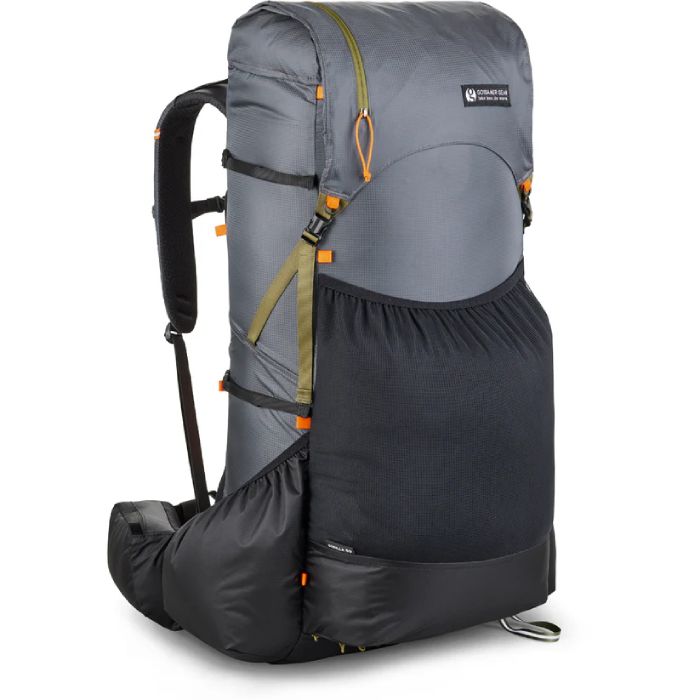
Gossamer Gear Gorilla 50
Affordable & Comfortable Ultralight Backpack
CleverHiker Rating: 4.6/5.0
Price: $275
Weight: 1 lb. 15.9 oz.(medium w/ M Straight belt)
Volume: 50 L
Max Weight Rec.: 30 lb. (25 lb. recommended)
Pros
- Well priced for what you get
- Stretchy exterior pockets
- Nicely padded and comfortable
- Integrated sit pad
Cons
- Mesh pocket isn't the most durable
- Two-step closure system
- Not very water-resistant
The Gossamer Gear Gorilla 50 has earned its reputation as a go-to pack for ultralight enthusiasts. We put it through its paces on over 600 miles of trail, from scrambling through the Spanish Pyrenees to grinding out long days on the PCT, traversing the Olympics, and circling Rainier on the Wonderland Trail. Through it all, this pack continually impressed us with its ability to balance comfort and weight savings.
At the heart of the Gorilla’s performance is its PVT frame system, which handles loads up to 25 pounds with surprising stability. The hipbelt and shoulder straps deserve a special shoutout. Their breathable mesh and generous padding make long trail days noticeably more pleasant. We did experience some occasional rubbing from the back panel edge during particularly sweaty climbs, but it’s a minor gripe and could be just our personal experience.
The trail-focused details really showcase Gossamer Gear’s backpacking experience. The redesigned trekking pole attachments work beautifully. The hipbelt pockets swallow a day’s worth of snacks, and the removable back pad doubles as a welcome lunch seat. Sure, the two-step closure system takes some getting used to, and you’ll need to baby the mesh pocket a bit, but any ultralight pack comes with weight-saving quirks.
For hikers who’ve been thinking about going ultralight but don’t want to sacrifice every creature comfort, the Gorilla 50 hits a sweet spot. Though it might not be our first choice for heavy loads or bush-bashing adventures, it’s become a go-to for run-of-the-mill lightweight backpacking trips.
Black Diamond Beta Light 45
Best Ultralight Pack for Alpine Pursuits
CleverHiker Rating: 4.5/5.0
Price: $450
Weight: 1 lb. 15.4 oz.
Volume: 45 L
Max Weight Rec.: 40 lb.
Pros
- Very durable
- Waterproof
- Unique vest-style design
Cons
- Expensive
- Features don’t feel dialed yet
- Tricky to load efficiently
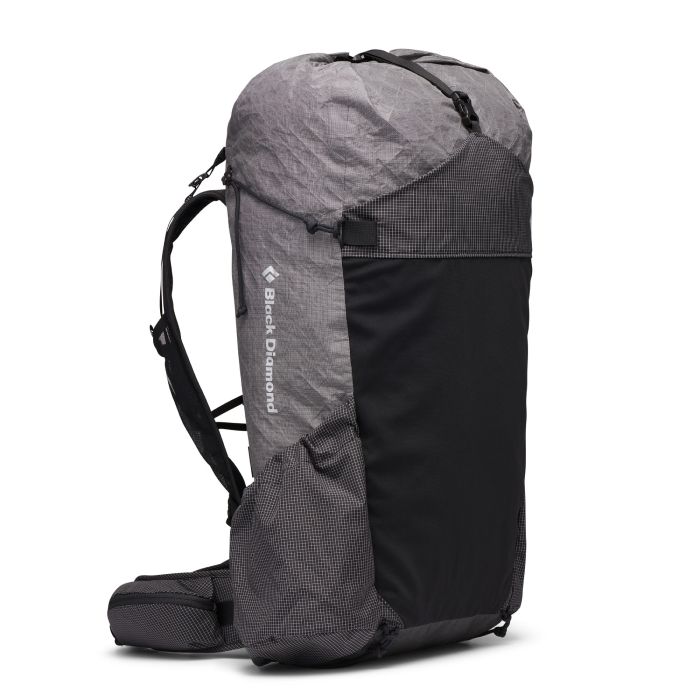
The Black Diamond Beta Light 45 carves out a unique space as a true hybrid between nimble trail running vests and traditional backpacking packs. It’s built for hikers who like to move efficiently through big terrain – covering ground quickly, scrambling when needed, and not shying away from rough, off-trail travel.
The vest-style harness gives it a stable, body-hugging feel, while the internal frame and hipbelt provide legitimate load support. It’s a rare combination that feels both agile and sturdy.
Two other areas where the Beta Light stands out are its durability and weather protection. The UltraWeave construction feels incredibly tough for the weight – this is the kind of pack you don’t hesitate to drag through brush or over rock. The construction is fully waterproof, making the Beta Light a solid pick for year-round adventures in pretty much any conditions.
That said, it’s not the most refined design. Some of the features feel a little overengineered or not quite dialed yet – especially the pocket layout and access. It also takes some calculated packing to balance the weight, and the thin shoulder straps can create pressure points when you’re pushing heavier loads or longer days.
The Beta Light is already a very good pack, and it feels close to being a great one. It comes at a premium, but you’re paying for high-end materials, serious durability, and a design that’s built for demanding, fast-paced backcountry use.
Pa’lante Packs v2
Lightest-Feeling Ultralight Backpack
CleverHiker Rating: 4.5/5.0
Price: $240
Weight: 1 lb. 2.6 oz.(Gridstop fabric, 19-inch torso)
Volume: 31 – 37 L (internal capacity)
Max Weight Rec.: ~25 lb.
Pros
- Lightweight
- Good organization
- Cool features
Cons
- Underbuilt for big loads
- Small front pocket
- Not very water-resistant
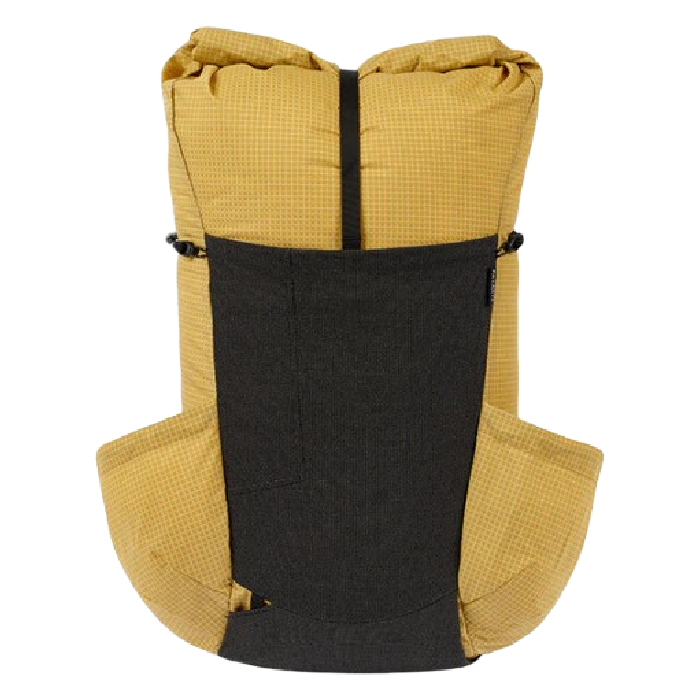
The Pa’lante Packs v2 is one of our favorite frameless backpacks. It is designed for experienced thru-hikers who have dialed in a minimalist kit. Its thoughtful, streamlined design supports high-mileage days with easy access to essential gear.
We tested the v2 extensively in the Rocky Mountains, carrying loads up to 25 pounds. The contoured shoulder straps provided a surprisingly comfortable carry for a frameless pack. However, the v2 does lose some comfort when pushed past about 25 pounds, straining the shoulders without a frame or load lifters to distribute the weight better.
We love the large shoulder strap pockets that fit everything from snacks to water bottles. The bottom pocket has a handy trash port for stashing wrappers on the go. The stretchy front mesh pocket is on the small side but still quite functional.
It’s not a rugged bushwhacking pack, but the v2 is built with hardwearing, 210-denier UHMWPE Gridstop to withstand the constant abuse of thru-hiking. For maximum weather protection, consider upgrading to the Ultraweave 200X version. The Ultraweave model is more durable and water-resistant than our Gridstop version, which showed significant water leakage through the seams.
For sub-12-pound-base-weight minimalists wanting a smartly designed, durable pack for cranking out big mileage, the Pa’lante v2 is tough to beat.
Durston Kakwa 55
Best Budget Ultralight Backpack
CleverHiker Rating: 4.4/5.0
Price: $199 – $279
Weight: 1 lb. 15.5 oz.(Ultra 200X fabric, size medium)
Volume: 68 – 72 L (53 – 57 L internal, 15 L external)
Max Weight Rec.: 45 lb.
Pros
- Durable
- Competitively priced (especially if you opt for the UltraGrid fabric)
- Good organization
Cons
- Not the comfiest
- Water gets through the seams/bladder port
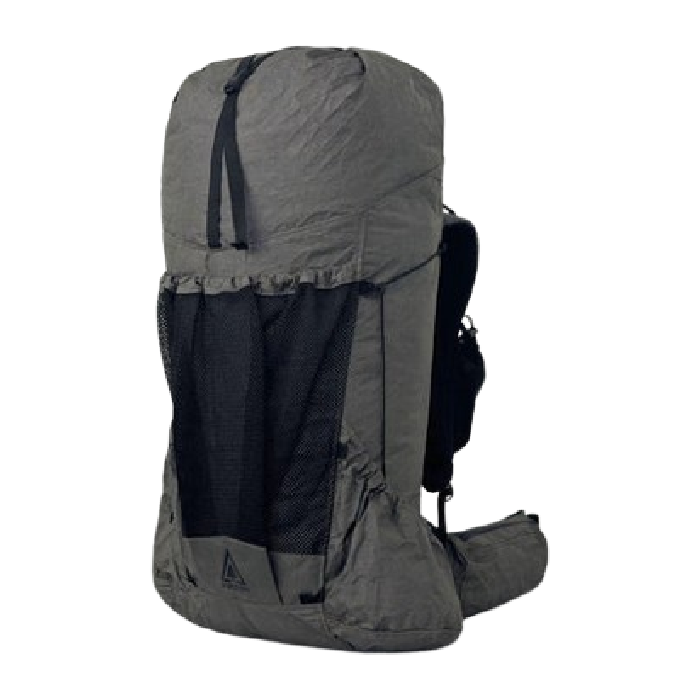
The Durston Kakwa 55 prioritizes rugged durability, functionality, and stability over luxurious comfort. Its rigid frame and minimalist backsheet sacrifice some comfort compared to other packs but ensure a stable and consistent carry.
We think Durston’s estimate of 45 pounds as a maximum load is a little ambitious, but we experienced solid performance from the aluminum tubing frame up to 35 pounds. It’s still an impressive feat, and most ultralighters rarely approach a 45-pound pack weight.
Constructed with Ultra 200X fabric, a high-tenacity blend of UHMWPE fibers, this pack offers outstanding resistance to abrasion and punctures. We bushwacked through dense brush and scrambled over jagged rocks with the Kakwa, and it emerged with minimal wear.
Reinforced stress points and folded seams further enhance the pack’s structural integrity and heavy-hauling capabilities. It’s also available in a slightly less durable but lighter and cheaper UltraGrid version.
The feature set is clearly trail-tested and designed by seasoned backpackers. The pack has ample capacity and intelligently placed pockets, including an innovative side zipper pocket, generous hipbelt pockets, and elastic shoulder strap pockets. Each is designed to enhance efficiency and provide easy access to essential gear.
Although the Kakwa 55 features a laminated waterproof backing, our testing revealed some vulnerability to moisture through the hydration port and seams. Even so, the pack’s highly water-resistant construction provides solid protection compared to many other ultralight options.
Durston famously produces high-quality, well-designed products at an impressively affordable price point, and the Kakwa is no exception.
REI Flash Air 50
Best Crossover Ultralight Backpack
CleverHiker Rating: 4.2/5.0
Price: $299
Weight: 1 lb. 14 oz. / 1 lb. 13 oz.(men’s medium / women’s small)
Volume: 49 – 51 L (depending on size)
Max Weight Rec.: 25 lb.
Pros
- Lightweight
- Accessible side pockets
- Good intro to ultralight packs
- Dedicated men's and women’s designs
Cons
- Top and side straps aren’t durable
- Hipbelt is uncomfortable for some
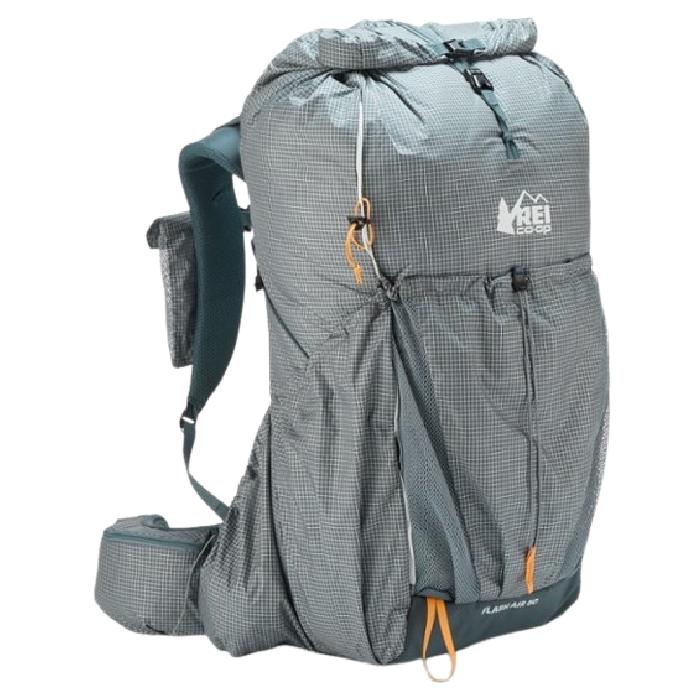
The REI Flash Air 50 (men’s / women’s) offers an excellent blend of traditional comfort and ultralight mentality, making it an ideal choice for hikers transitioning into ultralight backpacking. The pack’s robust suspension system – consisting of a stiff internal frame, supportive hipbelt, and generously padded back panel with air channels – provides comfort reminiscent of much heavier backpacks.
Despite its focus on support and comfort, the Flash Air 50 manages a streamlined, weight-conscious design. The nylon construction is lightweight and moderately durable. The seven exterior pockets include a cinchable front pocket, two tall side pockets, and two easily accessible side bottle pockets. The dual hipbelt pockets provide extra storage for frequently needed items.
During our field testing, we were impressed by the Flash Air’s load-hauling capabilities, comfortably handling weights up to 30 pounds. The pack’s DWR coating demonstrated impressive water resistance, although we recommend using a pack liner for long-term waterproofing as the coating may wear off over time.
The Flash Air 50 isn’t the lightest or most durable option in the ultralight category. But its exceptional comfort and practical features make it a soft landing for backpackers looking to bridge the gap between traditional packs and minimalist UL designs.
Product Comparison Table
| oSort | Product | Price | Weight | Volume | Max Weight Rec. | Comfort | Functionality | Water Resistance | Construction | 0 |
Hyperlite Mountain Gear Unbound 40 View at REI View at Hyperlite 
|
$385 – $405 | 1 lb. 13.6 oz. (white, medium torso) | 49 L (40 L internal, 9 L external) | 40 lb. | 4.7 | 4.7 | 4.9 | 4.9 | 1 |
Atom Packs The Pulse EP50 View at Atom Packs
|
$314 | 1 lb. 7.8 oz. | 54 L (45 L internal, 9 L external) | 29.8 lb. | 4.6 | 4.8 | 4.8 | 4.8 | 2 |
Mountainsmith Zerk 40 View at REI View at Amazon 
|
$230 | 1 lb. 14 oz. / 2 lb. 2 oz. (stripped / standard) | 40 L (44 L w/ expanded roll top) | 45 lb. (30 lb. recommended) | 4.8 | 5.0 | 4.7 | 4.7 | 3 |
Nashville Pack The Cutaway 40 View at Nashville Pack |
$335 – $415 | 1 lb. 0.5 oz. (18-inch torso) | 39 – 47 L (depending on torso length) | 25 lb. | 4.8 | 4.8 | 4.7 | 4.5 | 4 |
Gossamer Gear Mariposa 60 View at Gossamer Gear View at Garage Grown Gear
|
$315 | 2 lb. 2.2 oz. (medium w/ S-M Straight belt) | 60 L | 35 lb. (30 lb. recommended) | 4.9 | 4.8 | 4.3 | 4.6 | 5 |
Hyperlite Mountain Gear Southwest 55 View at REI View at Hyperlite |
$420 | 1 lb. 14.8 oz. (white) | 68.4 L (55 L internal, 13.4 L external) | 40 lb. | 4.6 | 4.7 | 4.9 | 4.8 | 6 |
Evolved Supply Co. The Ranger View at Evolved Supply Co. |
$260 | 1 lb. | 46.8 L (35 L internal, 11.8 L external) | 20 lb. | 4.6 | 4.7 | 4.7 | 4.9 | 7 |
Zpacks Arc Haul Ultra 60L View at Zpacks |
$399 | 1 lb. 6.5 oz. (medium torso, standard straps, medium belt) | 60 L (47 L internal, 13 L external) | 40 lb. (30 – 35 lb. recommended) | 4.5 | 4.6 | 5.0 | 4.9 | 8 |
ULA Equipment Circuit View at ULA Equipment |
$300 | 2 lb. 6.5 oz. | 68 L | 35 lb. | 4.7 | 4.7 | 4.7 | 4.8 | 9 |
Gossamer Gear Gorilla 50 View at Gossamer Gear View at Garage Grown Gear
|
$275 | 1 lb. 15.9 oz. (medium w/ M Straight belt) | 50 L | 30 lb. (25 lb. recommended) | 4.8 | 4.7 | 4.3 | 4.6 | 10 |
Black Diamond Beta Light 45 View at REI View at Amazon |
$450 | 1 lb. 15.4 oz. | 45 L | 40 lb. | 4.5 | 4.4 | 4.9 | 4.8 | 11 |
Pa’lante Packs v2 View at Garage Grown Gear View at Pa'lante Packs |
$240 | 1 lb. 2.6 oz. (Gridstop fabric, 19-inch torso) | 31 – 37 L (internal capacity) | ~25 lb. | 4.5 | 4.6 | 4.5 | 4.6 | 12 |
Durston Kakwa 55 View at Durston
|
$199 – $279 | 1 lb. 15.5 oz. (Ultra 200X fabric, size medium) | 68 – 72 L (53 – 57 L internal, 15 L external) | 45 lb. | 4.3 | 4.7 | 4.4 | 4.8 | 13 |
REI Flash Air 50 View Men's View Women's |
$299 | 1 lb. 14 oz. / 1 lb. 13 oz. (men’s medium / women’s small) | 49 – 51 L (depending on size) | 25 lb. | 4.6 | 4.7 | 4.7 | 4.3 |
|---|
Analysis & Results
Which Ultralight Backpack is the Best Value?
Value looks a little different for everyone when it comes to gear. Some will prioritize materials and comfort over the most innovative features. Fastpackers who want to travel fast and light may value weight and accessible pockets above all else. We’ve done our best to give each pack a fair overall rating on a five-point scale in order to level the playing field.
The Mountainsmith Zerk 40 really impressed us with its feature set, customizability, and build quality. Mountainsmith could easily charge more for this very capable pack, but we appreciate that it’s approachable for entry-level and experienced ultralight users alike.
Although it’s a bit pricier, the Hyperlite Mountain Gear Unbound 40 stands out as a solid all-around performer. Its superior weather resistance, excellent durability, streamlined feature set, and ability to carry a good amount of weight make it incredibly well rounded. Many dedicated ultralight backpackers will find it easy to justify the middle-of-the-road price.
The Atom Packs The Pulse EP50 also offers solid bang for your buck. It scored high in every testing category, especially functionality, while coming in at a very palatable price point.
The ULA Equipment Circuit and Gossamer Gear Mariposa 60 also provide a lot of value due to their comfort and capability of handling larger loads. Both are extremely popular packs on the Pacific Crest Trail and Appalachian Trail, which is telling.
Closely behind them is the Gossamer Gear Gorilla 50. Gossamer Gear has been delivering quality packs at reasonable prices for decades, and the Gorilla is no exception.
Durston is another company that regularly cranks out smartly engineered outdoor gear at staggeringly affordable prices. Though the Durston Kakwa 55 has a few kinks to work out, it offers a ton of value for everyone from beginners to seasoned thru-hikers.
Which Ultralight Backpack is the Most Comfortable?
A pack’s comfort (or lack thereof) is the biggest determining factor for a pleasant carrying experience. Backpacking is already a grind, so a comfortable pack is paramount.
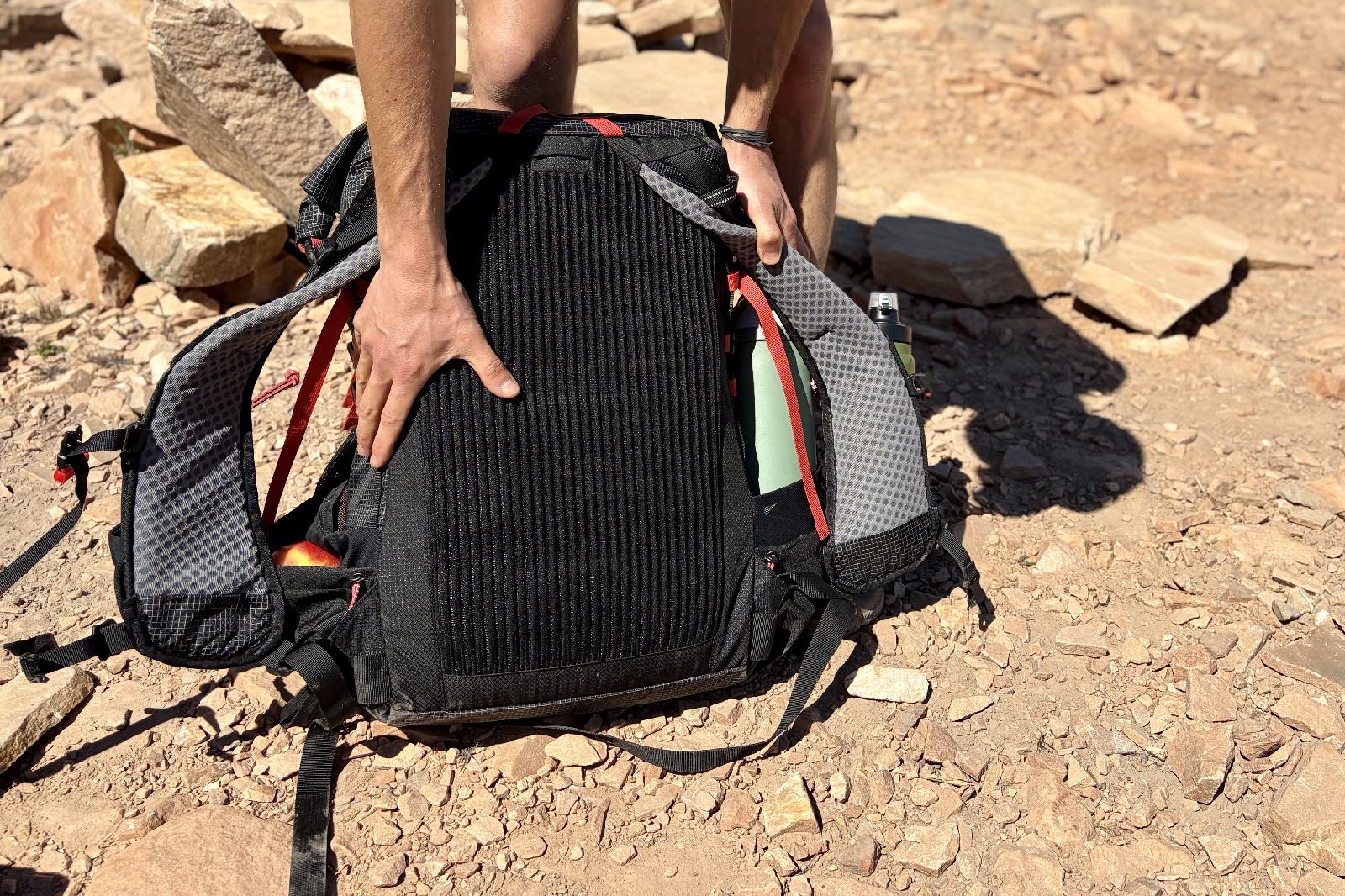
Comfort comes in many forms, but overall, we found the Gossamer Gear Mariposa 60 to be the most comfortable. Its generously padded shoulder straps and hipbelt pair nicely with the lightweight frame to transfer weight and provide a comfortable, stable ride.
Closely behind the Mariposa is its slightly boxier sibling, the Gossamer Gear Gorilla 50, along with the frameless Nashville Pack The Cutaway 40. We weren’t shocked to see another Gossamer Gear pack this high on the list, but a frameless pack surprised us. With its wide, plush shoulder straps and optional hipbelt, The Cutaway carries incredibly comfortably, doesn’t strain the shoulders, and delivers excellent stability on technical scrambles.
The Mountainsmith Zerk 40 also impressed us with its comfort. Another frameless design, it lacks the weight transfer and stability of a framed pack, but Mountainsmith did a good job making up for it with a semi-rigid back panel, ample padding, and supportive shoulder straps.
From there, we move into a different comfort style with the Hyperlite Mountain Gear Unbound 40. Hyperlite packs opt for simplicity as their comfort strategy, and it works. With no abrasive or potentially irritating fabrics to create pack rash, the plastic pack glides freely over the wearer’s back. Despite their lack of load lifters or heavily padded straps, Hyperlite’s framed packs managed to carry weight incredibly well.
The ULA Equipment Circuit is one of the best UL workhorses out there. Although it’s not stacked with as much luxury as other packs, the Circuit has an ambitious capacity of 68 liters, which it carries remarkably well. There’s a reason it’s one of the most popular packs on the Pacific Crest Trail.
Another pack to note for its uniqueness is the REI Flash Air 50. The Flash Air successfully bridges the gap between traditional backpacks and ultralight designs. The combination of streamlined organization and plush support make it appealing for those shopping for their first UL pack.
Which Ultralight Backpack is the Most Functional?
Functionality is what it feels like to put a pack into real, practical use. Does everything work as it’s supposed to, and do the features noticeably enhance your overall experience on the trail?
Our favorite pack in terms of functionality is the Mountainsmith Zerk 40. Its abundance of handy features, pockets, and customization are simply unmatched. Straps are removable, pockets are easy to reach, and Mountainsmith even offers a slew of accessories like a chest harness to increase your load capacity.
The Atom Packs The Pulse EP50 is also incredibly versatile. It can be used as a minimalist frameless pack or a supportive framed pack, which significantly boosts all-around appeal. The features are well thought out for all sorts of adventures with several reachable pockets, lots of shock cord, an ice axe loop, and other unique inclusions.
For fastpackers who can’t stand to stop and take off their pack, the Nashville Pack The Cutaway stands out for its on-trail efficiency. It’s a frameless pack that’s built like a running vest, encouraging the wearer to keep their load light. It has a whopping nine reachable pockets to ensure everything you’ll need throughout the day is within arm’s reach.
The Mariposa 60 and Gorilla 50 stand out for their innovative designs. The fold-top enclosure, sit pad back panel, and unique trekking pole attachment are all exclusive to Gossamer Gear. Though the fold-top isn’t for everyone, some consider it a game-changer in functionality. We also appreciate the side pocket configuration on the Mariposa, which includes a tall pocket for tents and two standard pockets stacked on top of each other.
Final unique features worth calling out are the REI Flash Air 50’s ultra-accessible water bottle holsters, the Durston Kakwa 55’s waterproof side zipper pocket, and the Pa’lante v2’s designated tent stake pocket.
Which Ultralight Backpack is the Most Water-Resistant?
The Zpacks Arc Haul Ultra 60L came out on top thanks to its use of highly water-resistant Ultra fabric and a laminated waterproof backing. The latter creates a physical moisture barrier instead of a chemical one. During our extensive testing, we observed virtually zero signs of moisture penetration inside the pack.
The Hyperlite Unbound 40 and Southwest 55 also performed well in our tests, with no moisture entering the packs. Both packs rely on Dyneema-heavy constructions to keep out water. The Unbound also has taped, reinforced seams for added assurance. Theoretically, these packs could become more permeable over time, but we have yet to see a major issue after extended use.
Water resistance is one of the standout features of the Black Diamond Beta Light 45. Like the packs above, the Beta Light is made with a very water-resistant fabric (Challenge Sailcloth UltraWeave) and features taped seams and a roll-top closure. It proved almost entirely waterproof in our testing.
The Atom Packs The Pulse EP50 uses water-resistant ECOPAK EPX200 fabric and a DWR finish, but it lacks taped seams. It kept our gear dry for the most part, but moisture can leak through the seams.
Similarly, the Evolved Supply Co. Ranger is built with ECOPAK EPLX200 fabric, a waterproof lining, and a hybrid seam design with taped horizontal seams and bound vertical ones. During our testing, the inside of the pack stayed mostly dry, but not entirely.
Packs like the Nashville Pack The Cutaway, REI Flash Air 50, Mountainsmith Zerk 40, and ULA Equipment Circuit demonstrated impressive water resistance for using non-repellent fabrics. All of them are treated with a waterproof coating – the Circuit even has three passes of two different coatings. However, coatings wear off over time and must eventually be reapplied. In our experience, reapplication is never quite as good as the factory treatment, landing these packs lower on the list.
We expected the Durston Kakwa 55 to be extremely water-resistant due to its laminated waterproof backing, but we noticed significant leakage in testing, likely from the hydration port. This pack will probably keep your gear safe if you’re mindful when the weather turns, but we recommend using a pack liner for added assurance.
Which Ultralight Backpack Has the Best Construction?
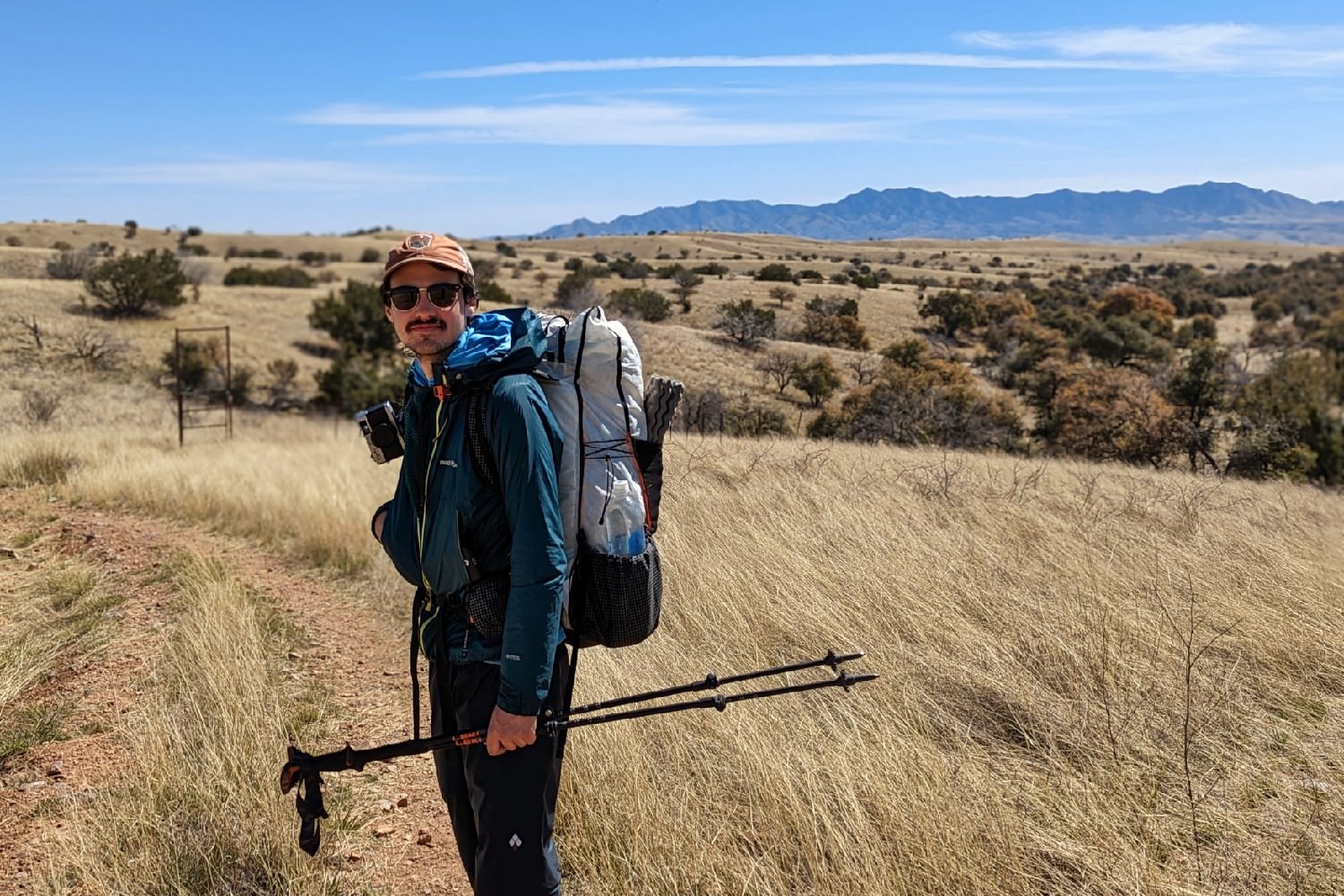
This metric comprises several factors, including weight-to-capacity ratio, seam construction, abrasion resistance, and more. The packs that stood out the most in this category were the Zpacks Arc Haul Ultra 60L, Evolved Supply Co. The Ranger, and Hyperlite Mountain Gear Unbound 40.
The Arc Haul Ultra is incredibly lightweight for such a tough pack, weighing around 0.4 ounces per liter of capacity. The use of high-end Ultra 100X fabric is key to the pack’s success. A carbon fiber frame, minimal straps, and lightweight mesh further increase the strength-to-weight ratio.
The Ranger also achieves a remarkable strength-to-weight ratio at around 0.5 ounces per liter. It’s made with 200-denier ECOPAK fabric, and even common weak points like the mesh pockets and lining are built to last.
The Hyperlite Unbound 40 and Southwest 55 are durable packs thanks to their Dyneema-based fabrics, which are touted as being stronger than steel. The Unbound even has Dyneema mesh pockets and robustly reinforced seams.
The Black Diamond Beta Light 45 stands out as a capable bushwhacking pack thanks to its 200-denier Challenge Sailcloth UltraWeave body and reinforced bottom. It does have some weak points, however, including the lightweight mesh and thin webbing.
Other remarkably well-constructed packs are the ULA Equipment Circuit and Durston Kakwa 55. The Circuit is made with super thick (400D) Robic nylon, which is less puncture-resistant than DCF, DCH, or Ultra but about as tough as it gets for backpacks. Speaking of Ultra, the Kakwa 55 uses a 200-denier variety that’s double-stitched with heavyweight thread and folded seams.
How to Choose an Ultralight Backpack
What is Your Base Weight?
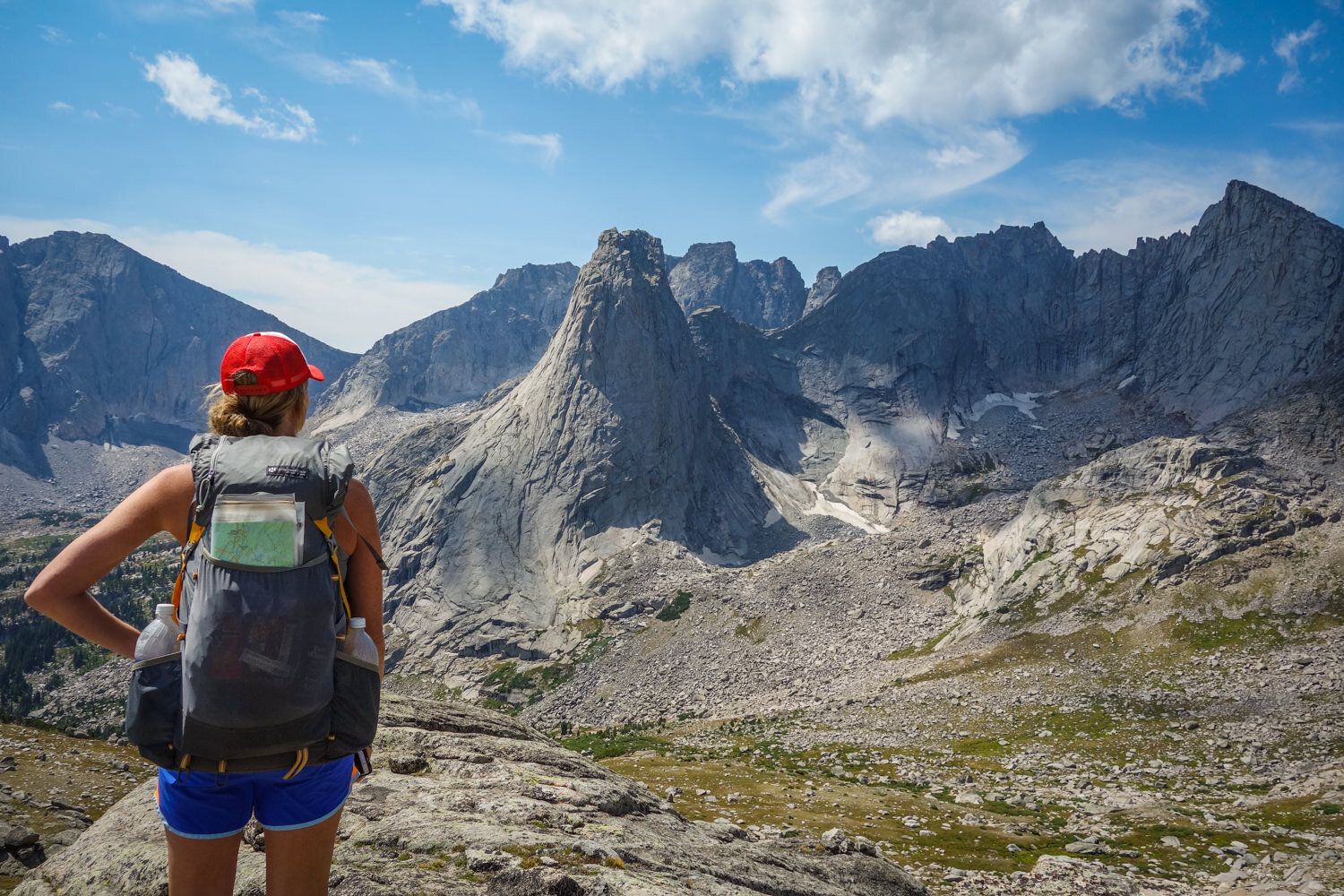
The right pack depends on your trails, hiking seasons, and distances between food and water resupply points. Ultralight backpacks (weighing less than 3 pounds) work best for hikers who have already dialed in their gear to a low base weight of 10 to 12 pounds (all your gear minus food, water, and fuel).
Then there are uber-ultralight backpackers and fastpackers, whose base weight hovers around 5 pounds. This is usually made possible by going tentless and stoveless, swapping a sleeping bag for a quilt, getting out in warmer temps, and reserving most or all creature comforts for resupply stops. These types of users are best served by ultra-minimalist, frameless designs that move with them.
If your base weight is heavier (12 to 20 pounds), we recommend opting for a lightweight backpack with a higher recommended load limit. This will ensure you can carry heavier loads with adequate structural support and suspension.
Overloaded ultralight packs can feel worse than heavier packs because they often lack features like load lifters, beefy hipbelts, rigid frames, and thick padding to help support and distribute the weight. With that in mind, we recommend pinning down your base weight, calculating the volume and weight of your biggest food/water carries, and then shopping accordingly.
Should You Choose a Traditional or Frameless Pack?
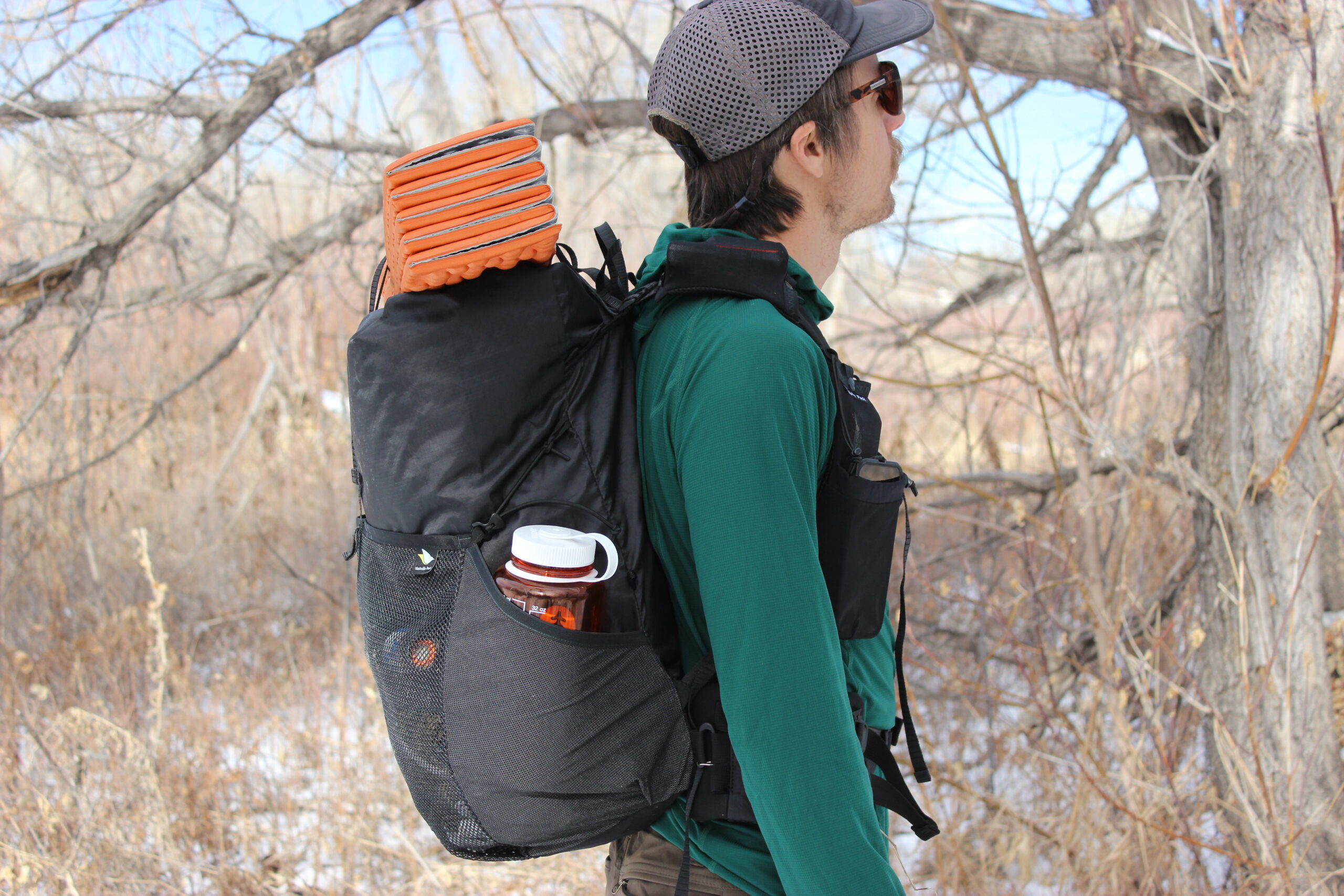
If you’re considering a frameless pack, you’ve probably already tried out several framed packs and have gotten your ultralight base weight dialed in. We generally recommend framed packs for anyone with a base weight over 12 pounds.
A frame transfers some of the weight to your hips so you can experience a more stable, balanced carry and take some strain off of your shoulders. The addition of load lifters will bring the pack closer to your body, further stabilizing the load.
A frameless pack will force all of the weight on your shoulders, which can get uncomfortable unless your pack weight is very light. Many ultralight backpackers who cover lots of miles enjoy the freer feel of a frameless pack.
How Much Capacity Do You Need?
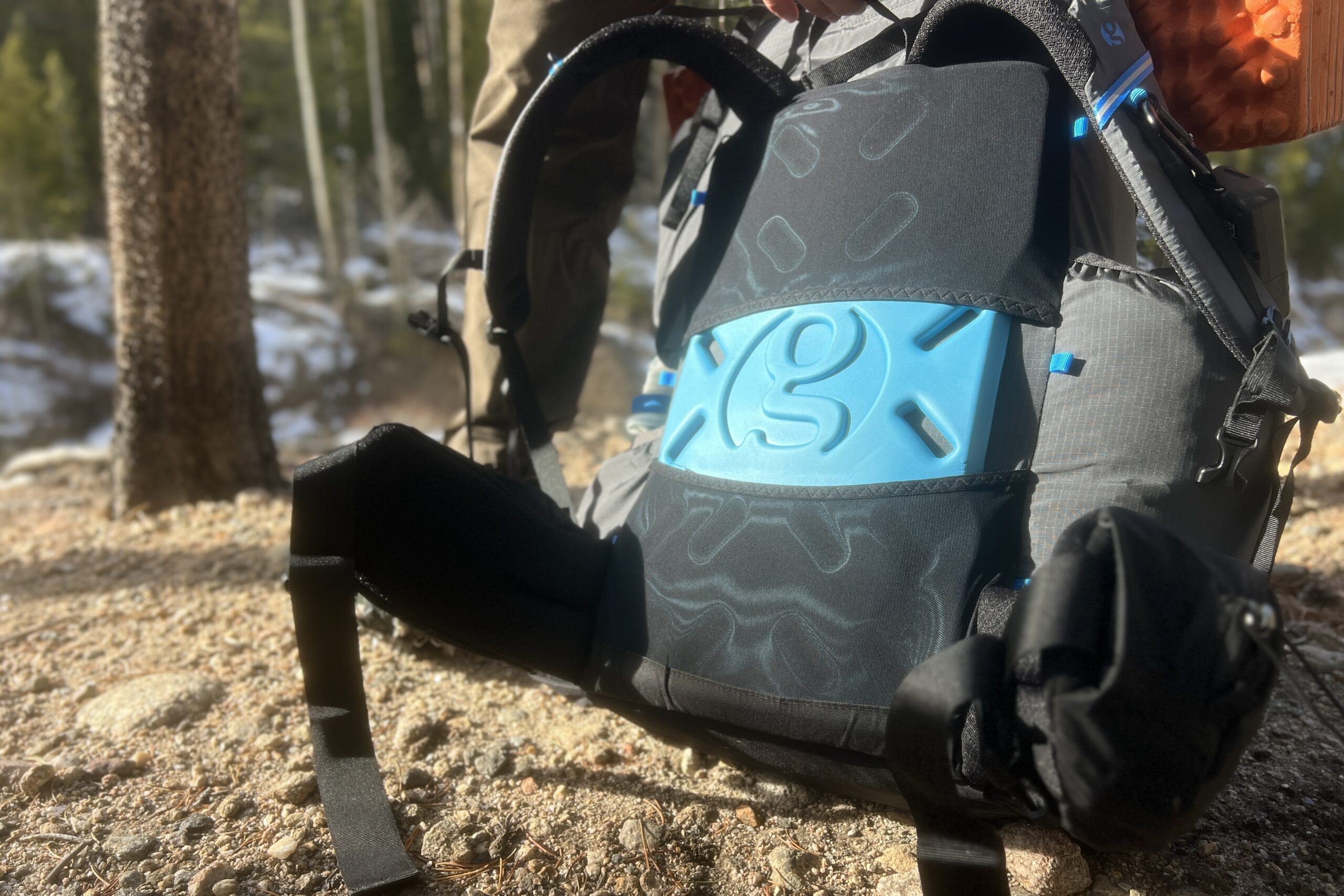
This is simply how much gear a pack can carry, measured in liters. Capacity should be decided by what your kit looks like, not what you want it to look like.
Think about how much space it takes up and if you have any long food or water carries on an upcoming trip. Fifty to 60 liters is the sweet spot for most people, while experienced ultralight users and fastpackers may be able to get away with 30 to 40 (or even less).
Which Features are Important to You?
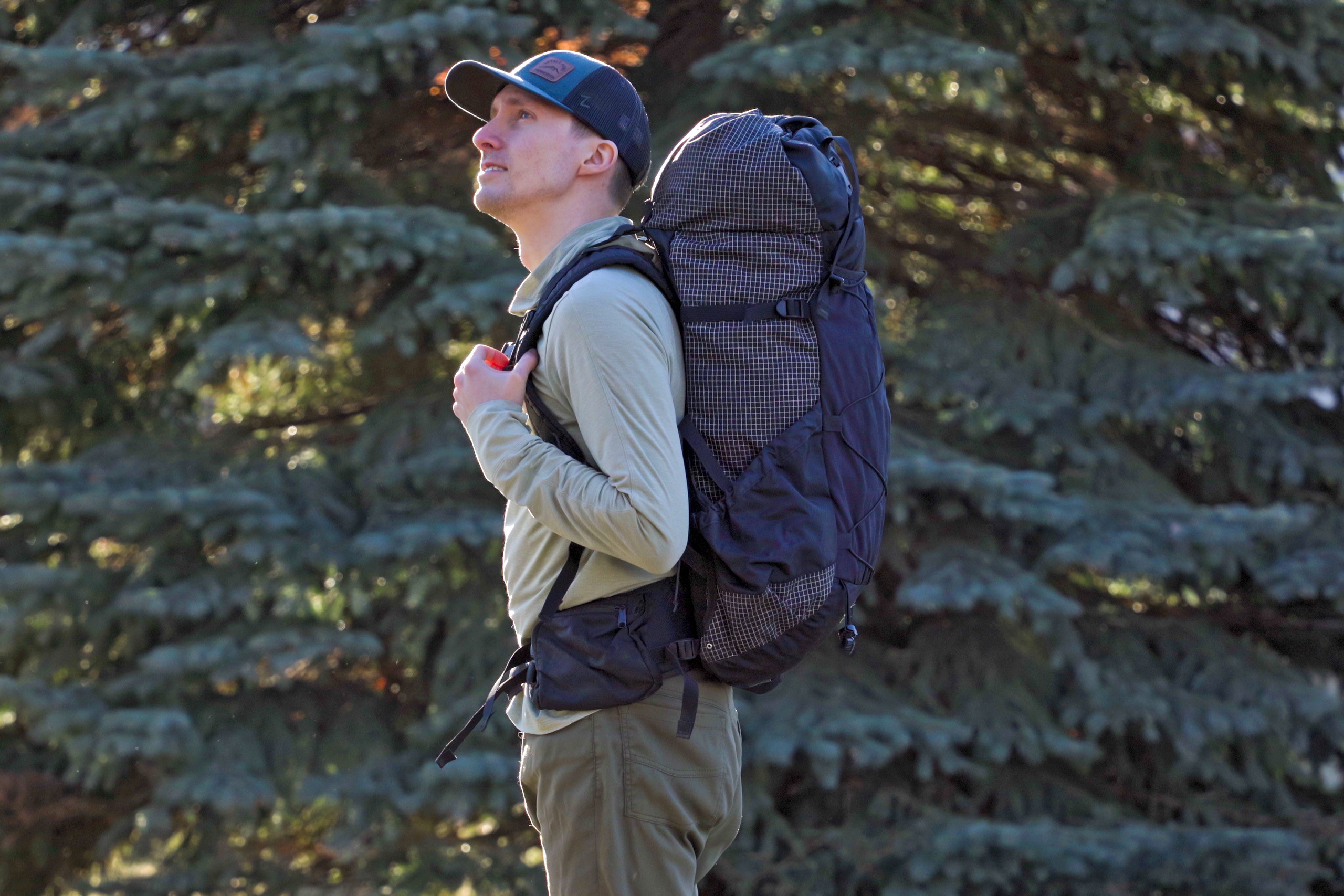
In our opinion, a pack’s features are what make it feel like your own. Manufacturers are constantly brainstorming new, innovative ideas that enhance the overall usability of the pack.
Close your eyes and imagine yourself on the trail – hiking, snacking, hydrating, navigating, doing camp chores, packing, and unpacking. Are there any features you consider crucial to your hiking style? Some design choices to think about are hipbelt pockets, shoulder strap pockets, closure type, compression straps, adjustability/customizability, load lifters, and attachments for trekking poles or an ice axe.
How Water-Resistant are Ultralight Packs?
Some consider water resistance a crucial feature and love the peace of mind. Others prefer the weight savings of a non-water-resistant fabric, opting for a pack liner or cover to protect their gear.
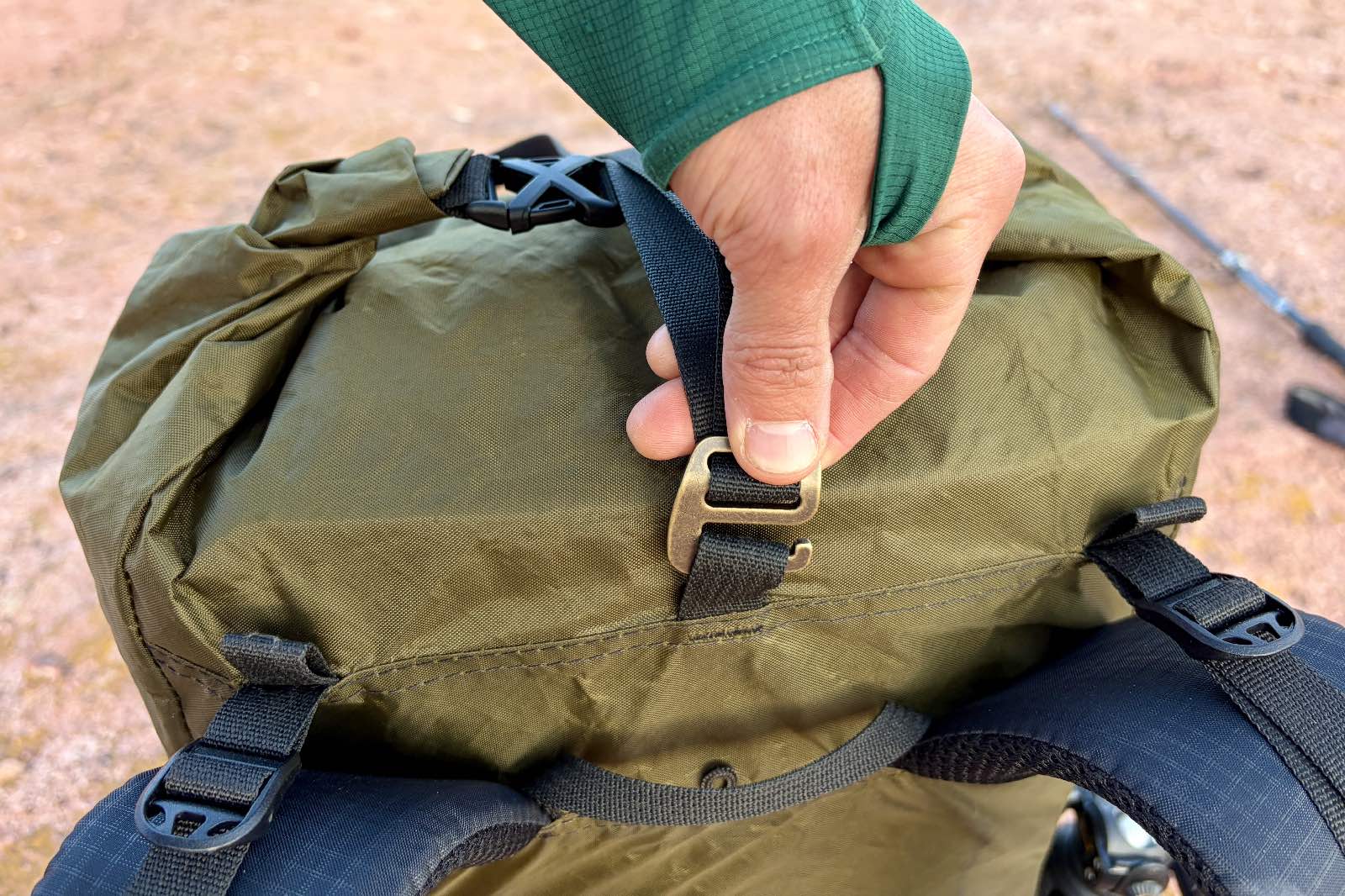
There are three main types of waterproofing to consider. First is a waterproof coating, which often comes in the form of a DWR (durable water repellent) finish or PU (polyurethane) coating. Waterproof coatings wear off over time and eventually need to be reapplied, which is a relatively easy process but another maintenance item to add to the list.
The second type of waterproofing is a laminated backing. This physical barrier is the most reliable, most permanent type of waterproofing.
Finally, some packs use a water-resistant material like Dyneema or Ultra. These materials are naturally moisture-repellent – to the point that they seem totally waterproof at first. However, keep in mind that these fabrics can grow more permeable over time, so it’s important not to trust them blindly.
How Durable Does Your Ultralight Pack Need to Be?
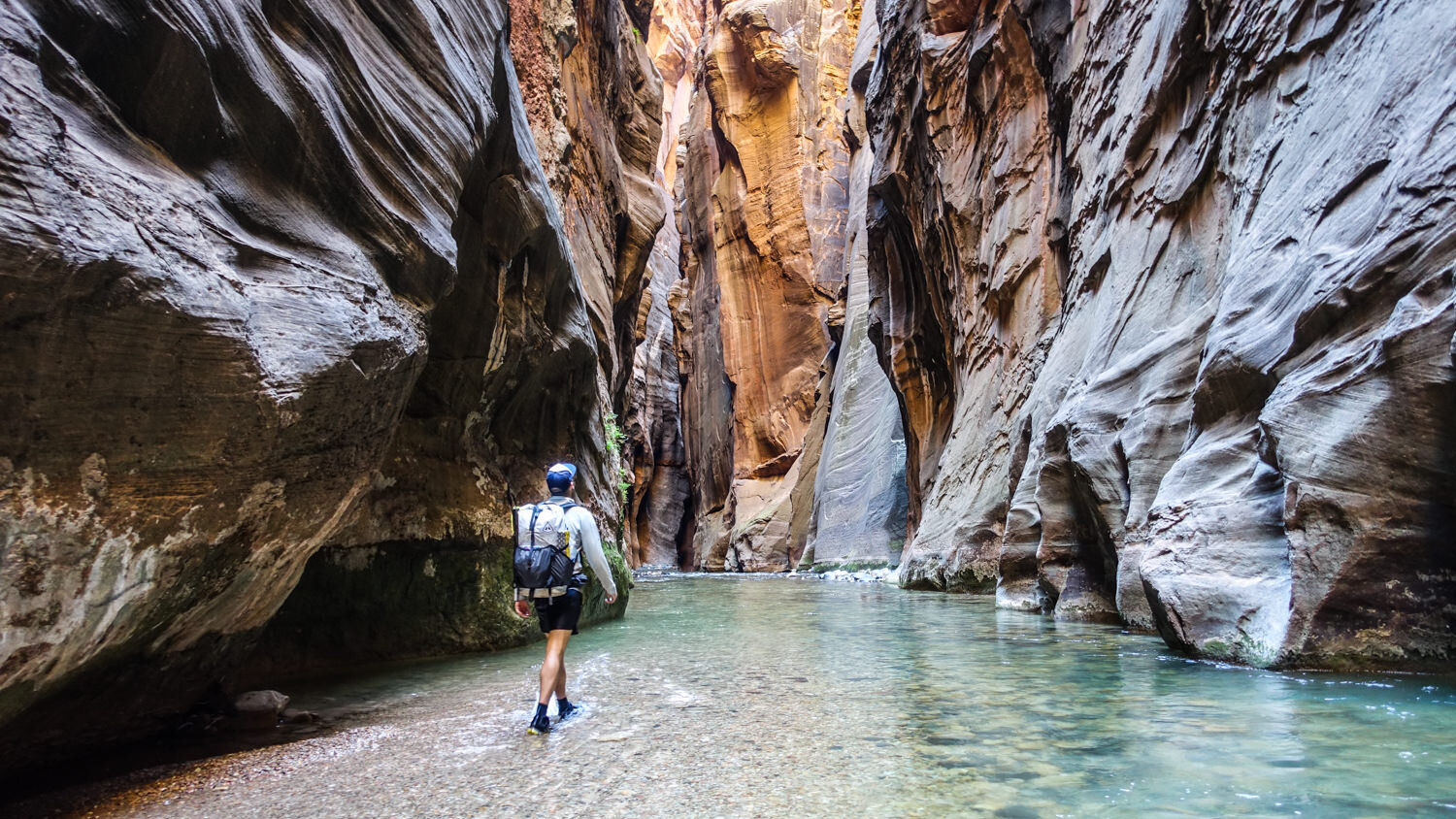
The nature of the adventure often determines the demand for durability. Are you planning on squeezing your pack through the tight limestone tunnels of the Mahoosuc Notch, or will you stick to wide-open trails in the alpine? It’s always tough to get a feel for a pack’s durability without putting it to the test, but we can learn a lot from the materials used.
Ultra and Dyneema fabrics are popular because they are incredibly tough for their weight – gram for gram, they are stronger than steel. Robic and ripstop nylon are still commonly trusted, as well. No matter the fabric, look for denier count (often abbreviated to “D”) for an idea of thickness. The higher the number, the more abrasion- and tear-resistant the fabric. For instance, you can expect a 200D material to be much tougher than 100D.
Finally, your own nature should influence how durable your pack needs to be. If you’re hard on your gear, drop your pack often, or find yourself tripping or slipping a lot, go for a pack that uses a durable fabric and rugged components (e.g., zippers and buckles).
How Much Padding Do You Need?
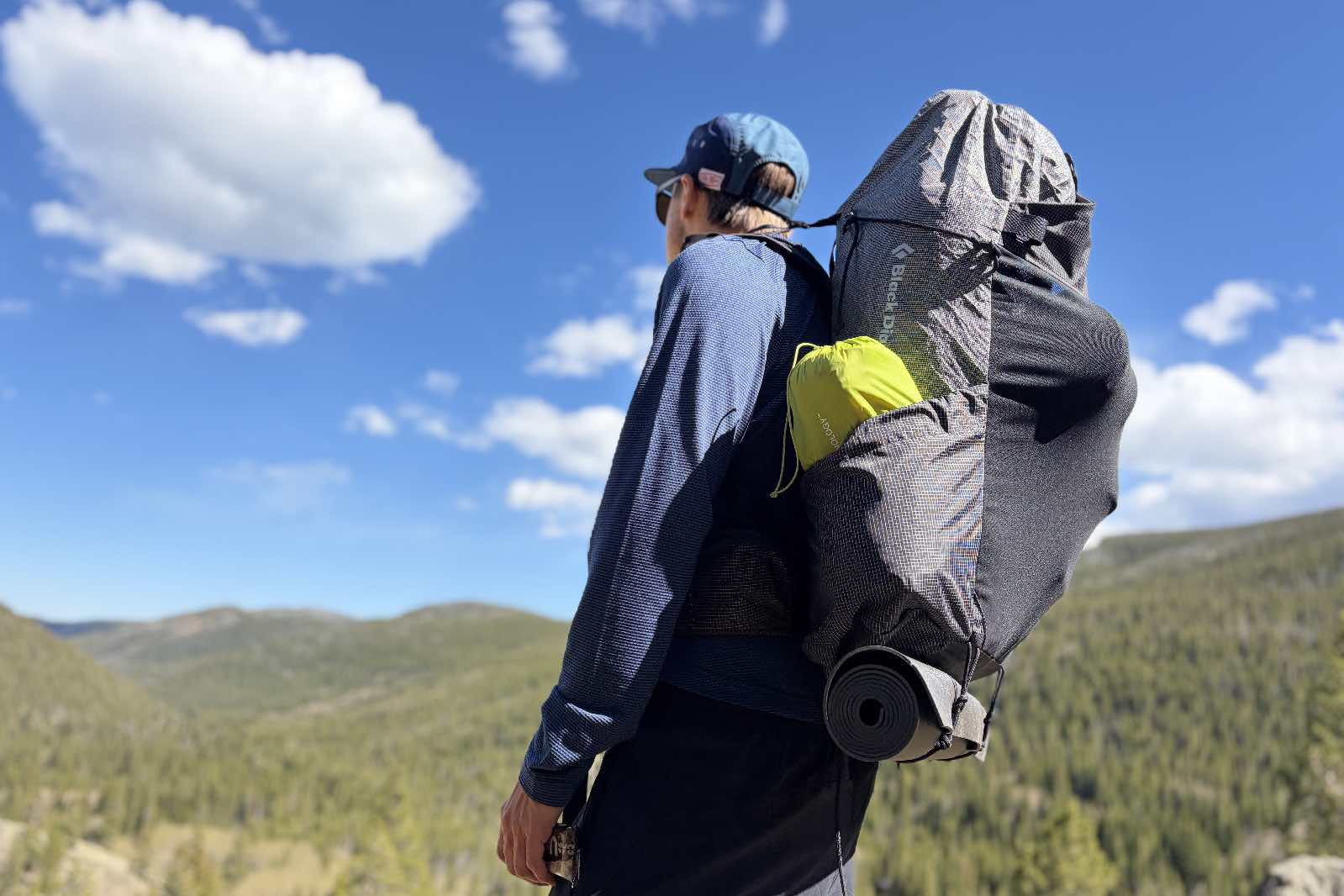
More experienced backpackers often prefer a minimalist suspension system with less padding. It can offer significant weight savings and avoid potential pack rash from foam and mesh. This style also pairs nicely with a low base weight – there’s no need for beefy suspension and padding if you’re not carrying much.
However, if you are used to a more traditional backpack and know that you like a supportive feel, you might seek a pack with ample padding on the back, hips, and shoulders. Though more cushioning adds weight and bulk, it may be worth the boost in comfort depending on your priorities.
Why Trust CleverHiker
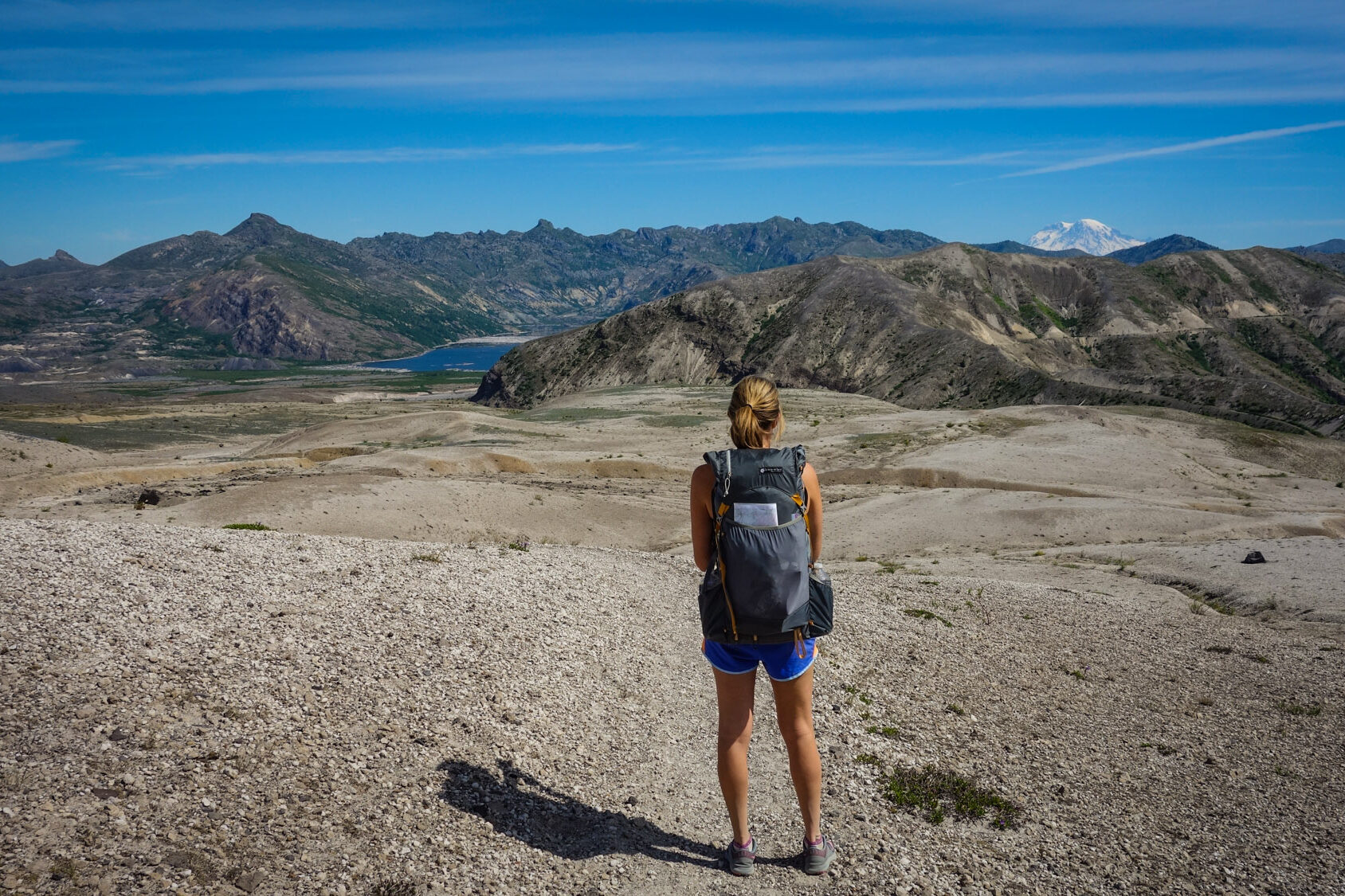
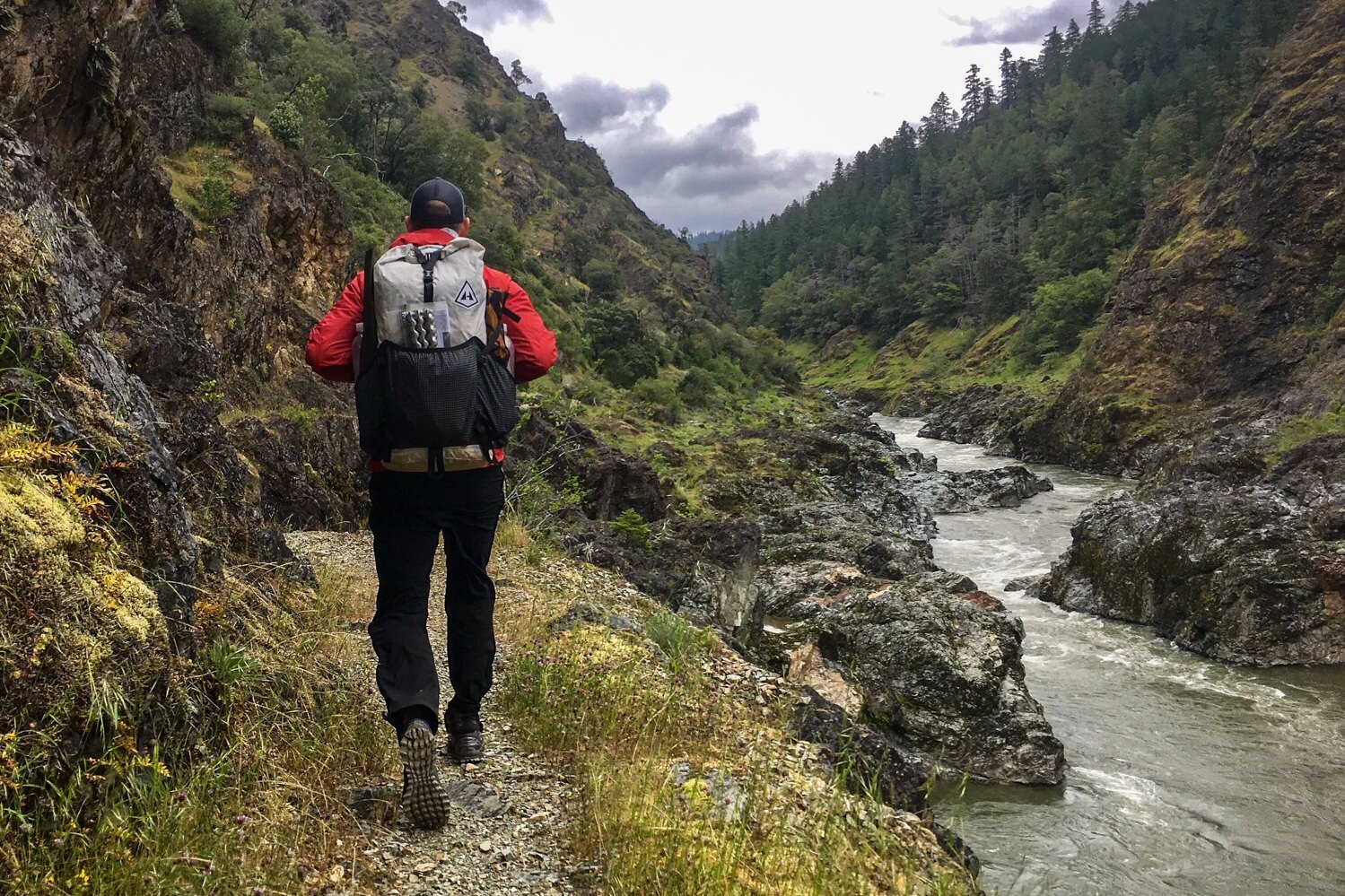
We’ve shouldered these packs for over 25,000 miles on trails all over the world. We’ve pulled on the straps, clipped the buckles, and reached in and out of every pocket hundreds of times.
Gear analyst Brett Kretzer has thru-hiked over 2,500 miles on the Colorado Trail, Wonderland Trail, Spain’s GR11, Vermont’s Long Trail, and even the Himalayas. He’s managed this guide since its inception and continues to nerd out on ultralight gear. As an experienced gear tester and backpacker, he pairs an eye for detail with a trail-ready mentality.
Testing Methodology
How Do We Test Comfort?
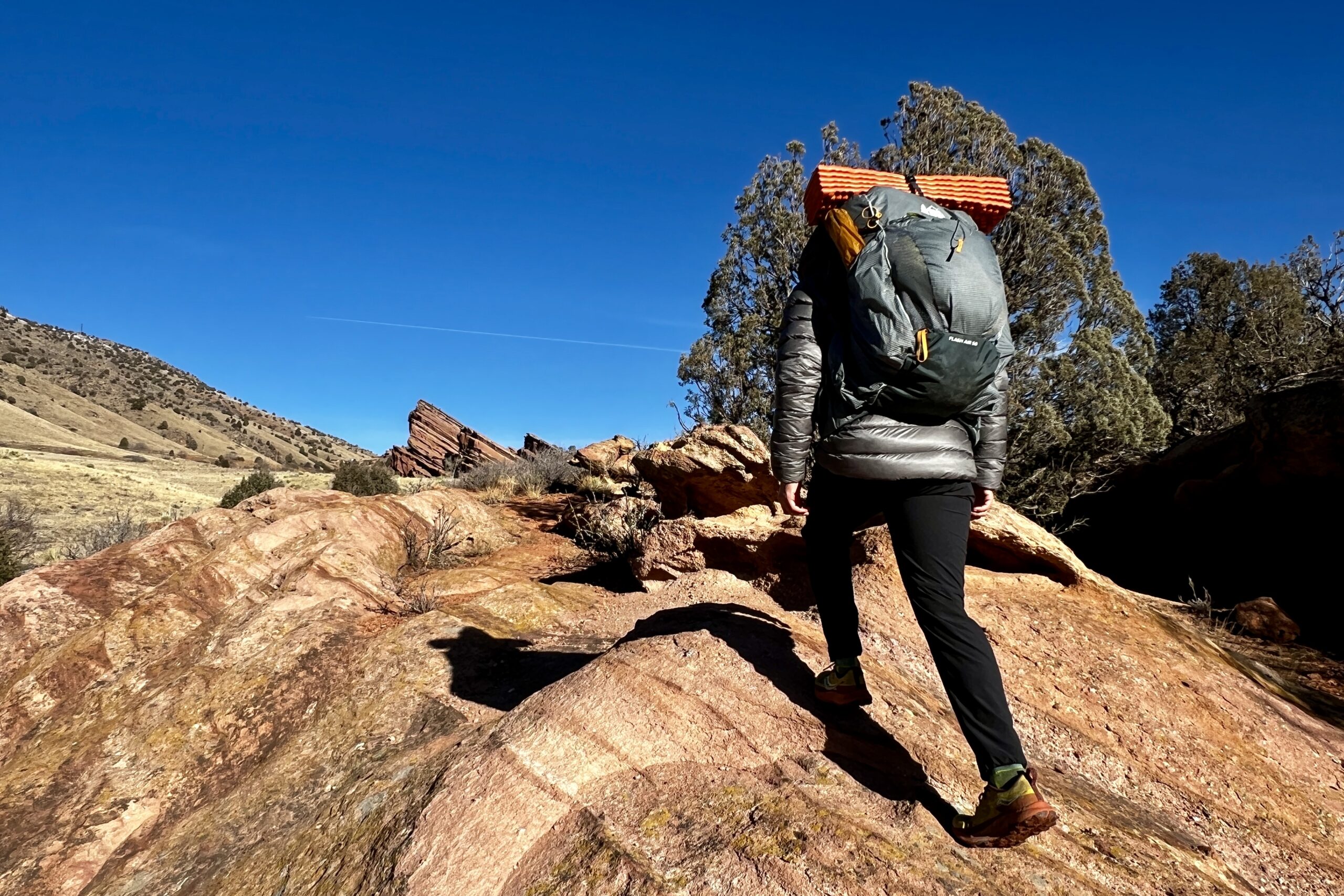
Comfort is one factor that can make or break your hiking experience. To determine the comfort of a pack, we hiked several miles in the Rocky Mountains with each pack loaded to its maximum recommended limit. We considered things like weight transfer, stability on uneven terrain, padding, airflow, and adjustability.
Comfort is subjective, however, and what works for us might not work for you. Some people feel more comfortable with the minimalism of a frameless pack, while others associate comfort with stability. In other words, be sure to always consider your own experience and hiking style.
How Do We Assess Functionality?
If you were to design your dream backpack to be the most streamlined, easy-to-use system with adequate storage in as lightweight a package as possible, what would it look like? This is essentially how most of these packs were conceived: by wearing the wrong packs and wishing these ones into a reality.
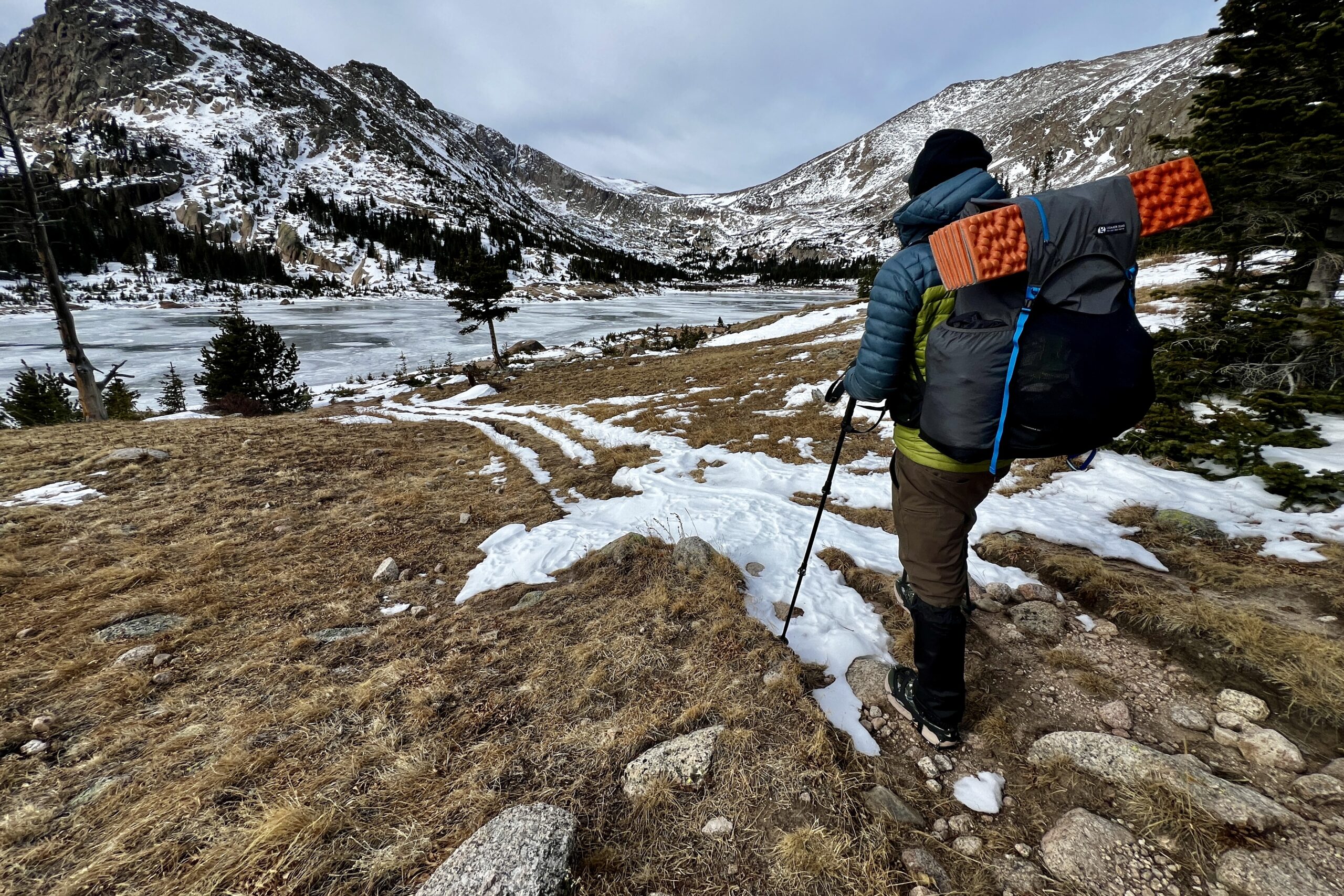
We took stock of each pocket, strap, feature, and anything else that contributed to the pack’s efficiency and put them to the test. We got out on the trail and closely analyzed the effectiveness of each feature. We tested the pockets for ease of use, reachability, and size. We cinched and loosened straps, clipped and unclipped buckles, and attached gear externally, boiling down our findings into a single score that broadly reflects each pack’s overall functionality.
How Do We Measure Water Resistance?
Some products provide a water resistance rating based on the pressure needed to permeate a fabric, but we think the best way to determine water resistance is to get hands-on.
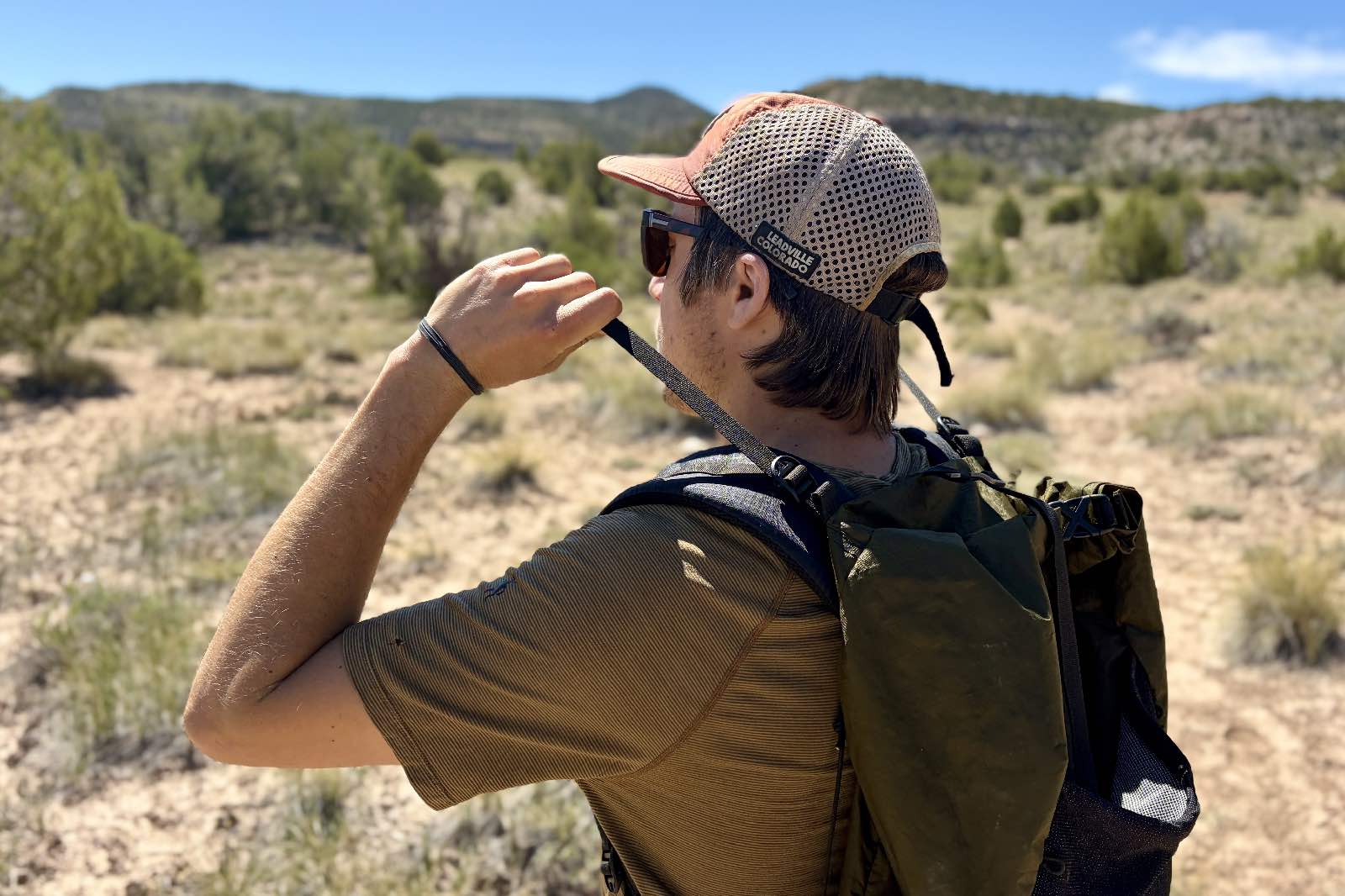
With that in mind, we stuffed a dry pillow into each pack, closed the pack up tight, and tossed it in the shower. We left each pack under a steady flow for several minutes, being sure to sufficiently drench every side before removing the pillow and assessing the damage.
Some packs leaked along the seams, some allowed moisture to permeate directly through the face fabric, and some were virtually waterproof. There are different types of waterproofing, which must be taken into account to determine the pack’s long-term protection.
How Do We Evaluate Construction?
Construction encompasses factors like weight, abrasion and tear resistance, stitching, and anything else that contributes to the pack’s lifespan.
The durability of a pack can only be truly determined by lots of trail time. Luckily, we are a team of thru-hikers, runners, and experienced backcountry travelers. Our gear analysts have hundreds to thousands of miles of experience with many packs on the list.
Things like stitching, material composition, hardware quality, and fabric weight also factor into the long-term durability equation. Durability usually comes at the sacrifice of weight savings, so it’s particularly impressive when a lightweight pack holds up well to regular backcountry use.
Conclusion
As you can see from the spread above, there’s a lot of variety within the ultralight pack market. Whether you’re a comfort seeker or an ounce-counter – or somewhere in between – there’s an option that will complement your hiking style and preferences. We hope our in-depth testing and expertise has helped narrow it down to your ideal trail companion.