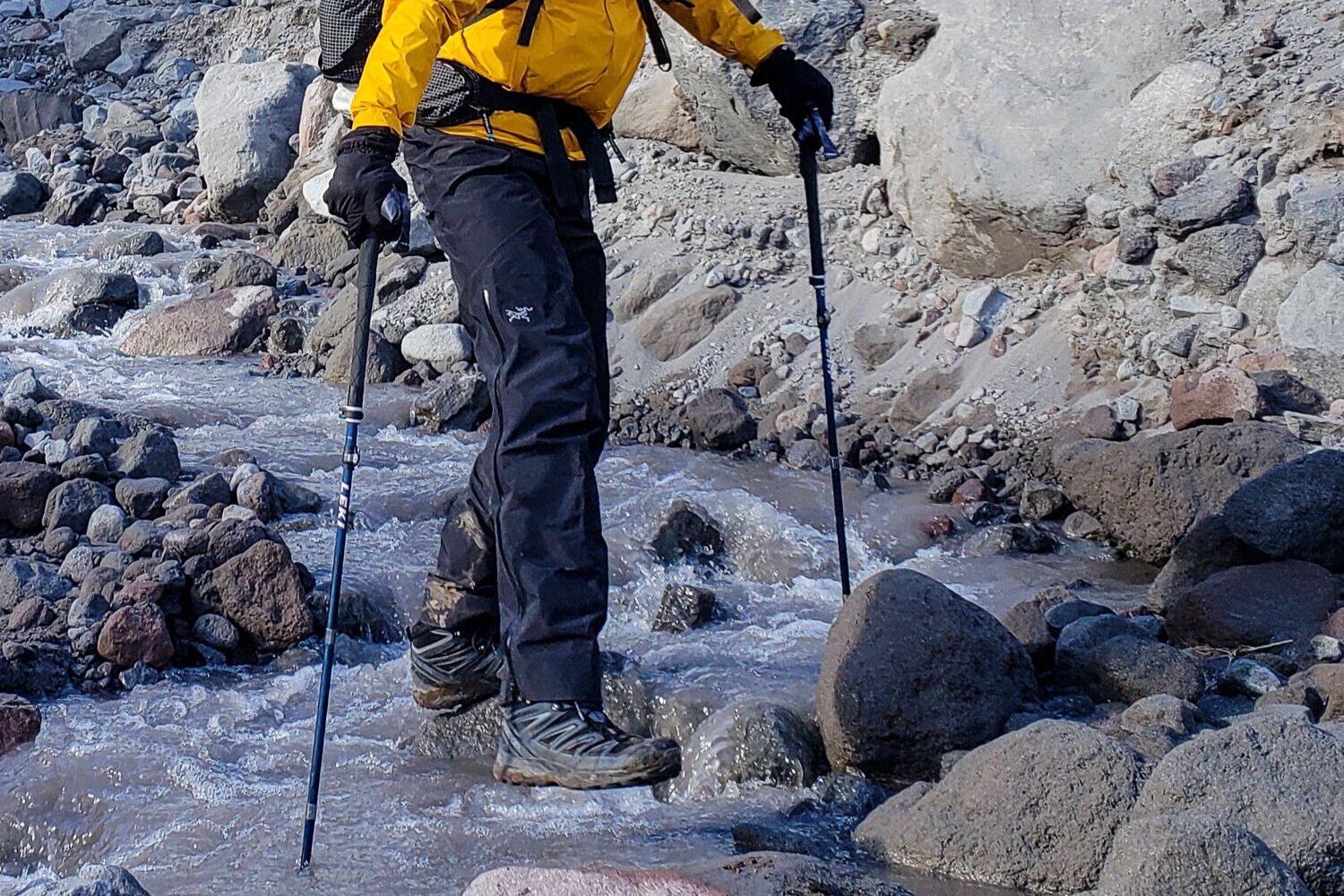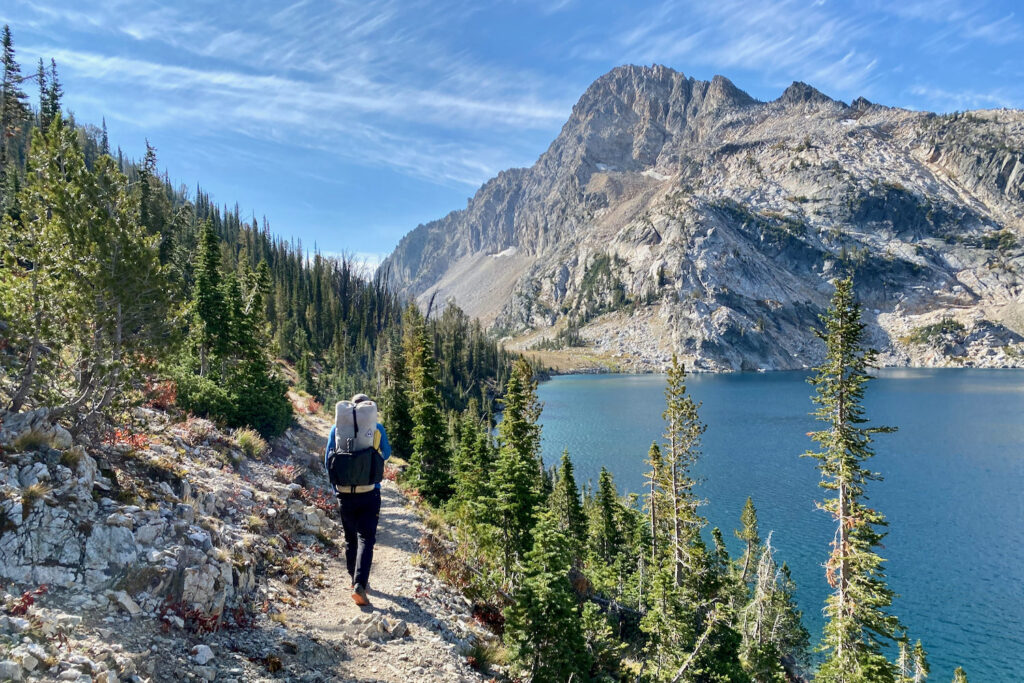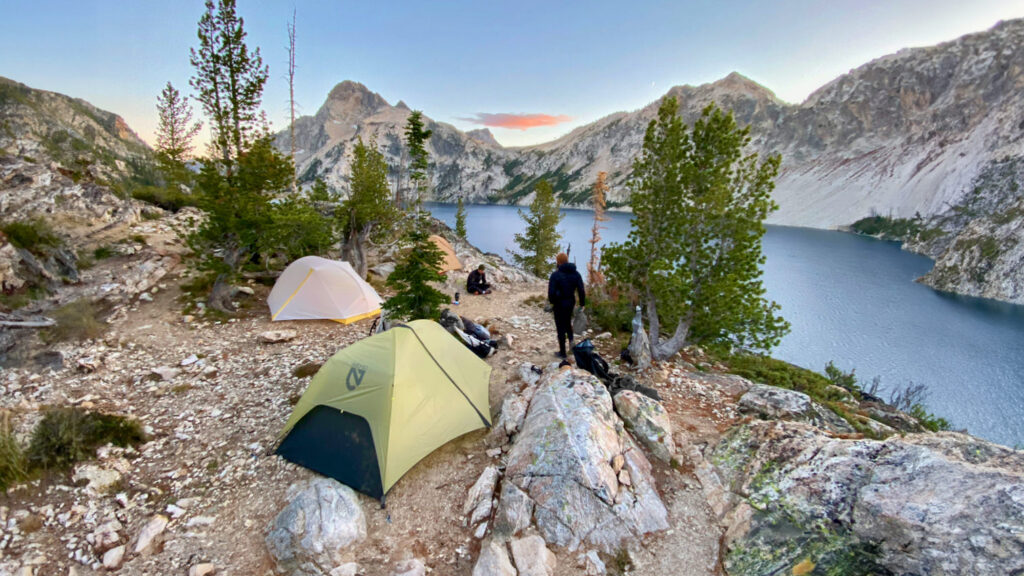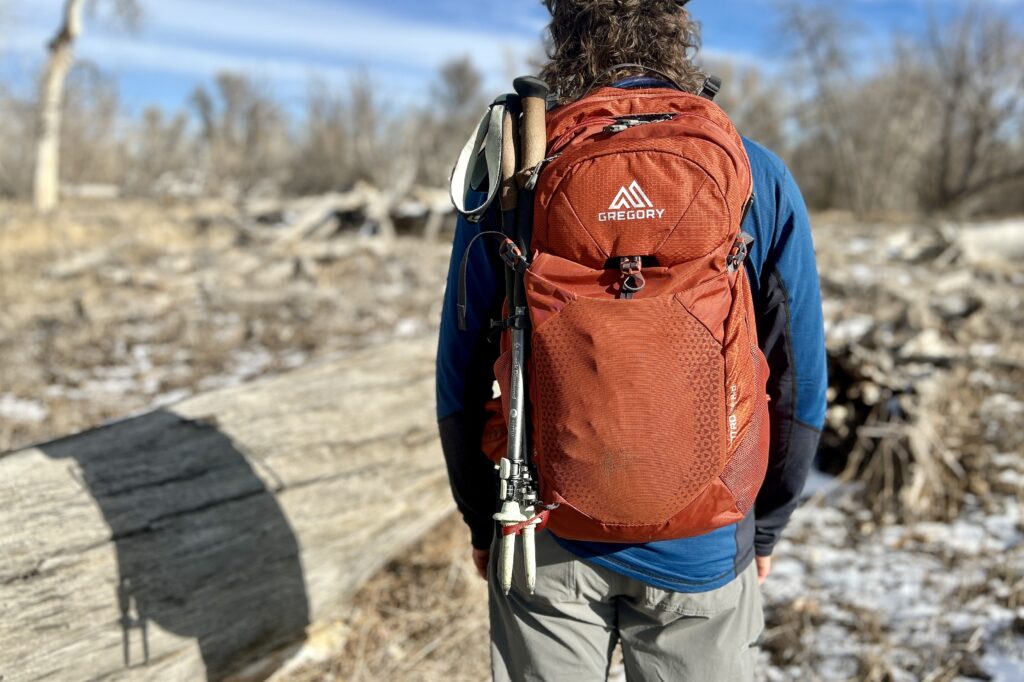



CleverHiker drew upon our 100,000 miles of combined thru-hiking experience to rank the best trekking poles. After researching promising poles, we put 14 of the best models through side by side testing to narrow down your choices.
Editor’s Note: We last updated this guide on April 7, 2026 to verify 2026 prices and tech specs and to add two new models to our list.
How to Test
For this gear guide, our analyst field tested 14 trekking poles while backpacking in the Southwest and skiing in Colorado’s San Juans. After taking them into the field for months, we rated each trekking pole for durability, weight, comfort, ease of use, packability, and features.
And for more info, check out some of our other popular gear guides:

#1. Best Trekking Poles Overall
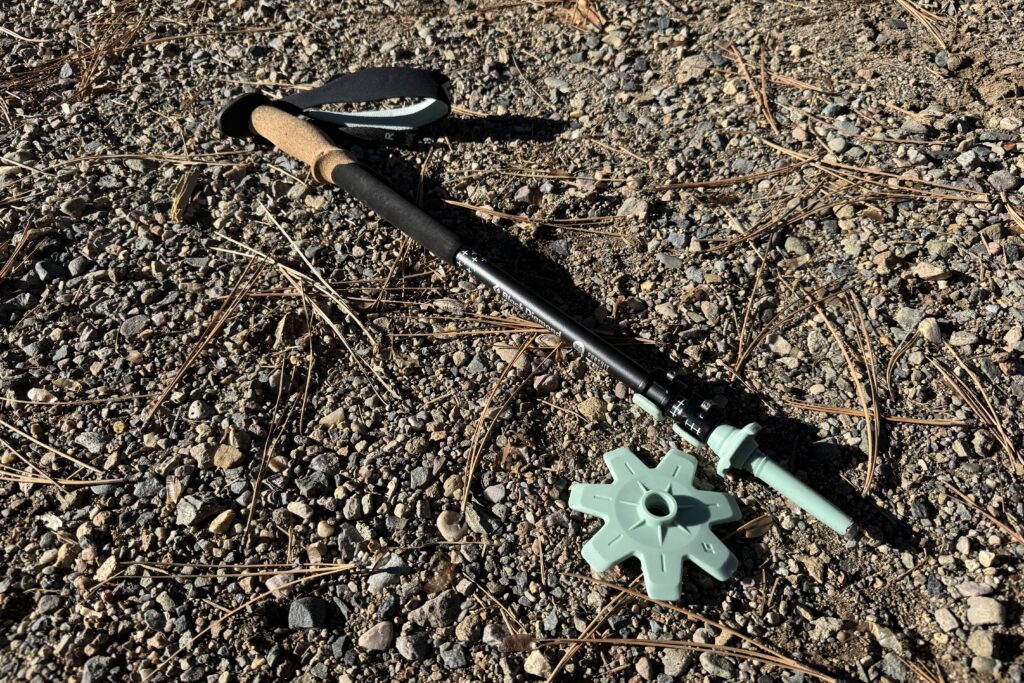
The Black Diamond Pursuit trekking poles are comfortable in hand and durable for the long haul. We’ve hiked 2,000 miles in the backcountry with these poles, and their light weight and cork grip make them our favorites.

Quick Picks for TREKKING POLES
Check out this quick list of our favorites or continue scrolling to see our full list of the best trekking poles with in-depth reviews.
1. Best Trekking Poles Overall: Black Diamond Pursuit ($170)
2. Most Innovative Design: Durston Iceline ($189)
3. Best Trekking Poles for Trail Running: Black Diamond Distance Carbon FLZ ($240)
4. Best Folding Trekking Poles: LEKI Black Series FX Carbon ($220)
5. Most Durable Carbon Trekking Poles: Black Diamond Alpine Carbon Cork ($230)
6. Best Flick Locking Trekking Poles: MSR DynaLock Explore ($120)
7. Best Included Accessories Trekking Poles: Cascade Mountain Tech Carbon Fiber Quick Lock ($65)
8. Best Telescoping Poles: LEKI Makalu Cork Lite ($160)
9. Best Budget Buy Trekking Poles: Trekology Trek-Z 2.0 ($56)
10. Best Beginner Trekking Poles: Black Diamond Trail Back ($100)
11. Best Ultralight Trekking Poles: Gossamer Gear LT5 ($195)
12. Best No-Frills Trekking Poles: LEKI Legacy Lite ($110)
13. Best Streamlined Design: REI Flash Carbon ($189)
14. Best Budget Ultralight Trekking Poles: Zpacks Minimalist ($120)
Black Diamond Pursuit
Best Trekking Poles Overall
CleverHiker Rating: 4.8/5.0
Price: $170
Weight (Pair): 1 lb. .6 oz.
Shaft Material: Aluminum
Grip Material: Cork
Collapsed Length: 24 in.
Pros
- Cork grips wick sweat
- Durable
- Lightweight
- Built-in adjustment tool
- Multiple size options
- Small collapsed length
- Comes with two basket sizes
Cons
- There are some more affordable options
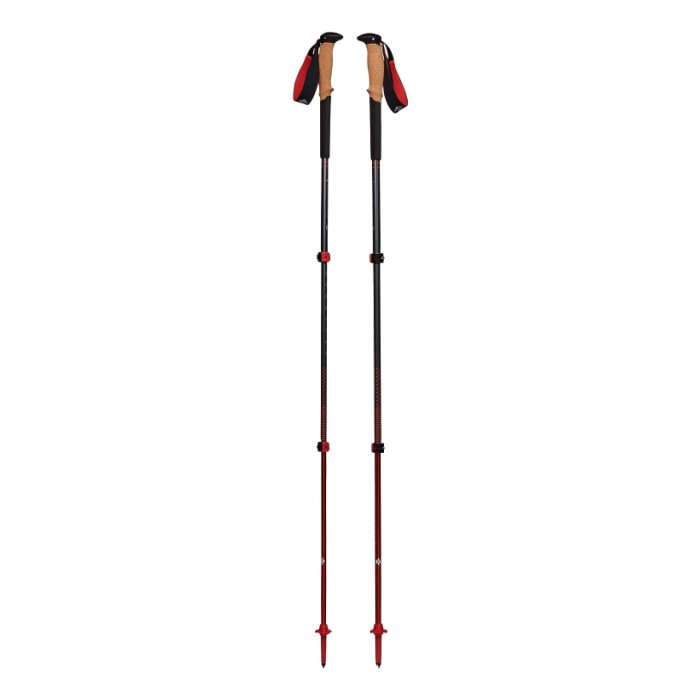
The Black Diamond Pursuit trekking poles offer an excellent combination of durability, versatility, and comfort, making them a great option for a wide variety of outdoor activities, including hiking, backpacking, and skiing.
We tested them in multiple environments, and they impressed us in almost every category. With an average price tag, these poles provide solid value for the performance they offer.
Weighing just over 16 ounces per pair, the Pursuit poles are relatively lightweight, especially for aluminum poles. They also feature a short collapsed length (24 inches for the small/medium size), making them easy to pack, whether you’re hiking, skiing, or traveling.
The cork grips are a standout feature, absorbing sweat and providing a secure, comfortable hold. The padded wrist straps are the most cushioned of all the trekking poles we tested, further enhancing overall comfort. These features, along with a well-designed grip curvature, make the Pursuit poles the most comfortable in our lineup.
Durability is another major strength of the Pursuit poles. They held up well during drop tests, skiing on mogul runs, and general field use, showing minimal wear or scratches. The poles performed well under the stress of downhill skiing, with no bending or breaking. This makes them a reliable choice for off-trail adventures, trekking pole tents, and winter sports.
The Pursuit poles are easy to use, with flick locks that offer precise adjustments and quick setup. They come with both summer and winter baskets, adding to their versatility across various activities. The extended grip is also a great feature for steep climbs, reducing the need for frequent height adjustments.
Though the Pursuit poles are slightly more expensive than some alternatives, their performance across multiple activities, durability, and comfort justify the investment. These poles are perfect for hikers, backpackers, and winter sport enthusiasts who want reliable, all-around trekking poles.

Durston Iceline Trekking Poles
Most Innovative Design
CleverHiker Rating: 4.7/5.0
Price: $189 (without straps)
Weight (Pair): 9.5 oz.(without straps)
Shaft Material: Carbon Fiber
Grip Material: EVA Foam
Collapsed Length: 19.5 in.
Pros
- Ultralight
- Innovative design
- Durable for the weight
- Easy to set up
Cons
- Minimal features
- Wrist straps aren't as comfortable as others
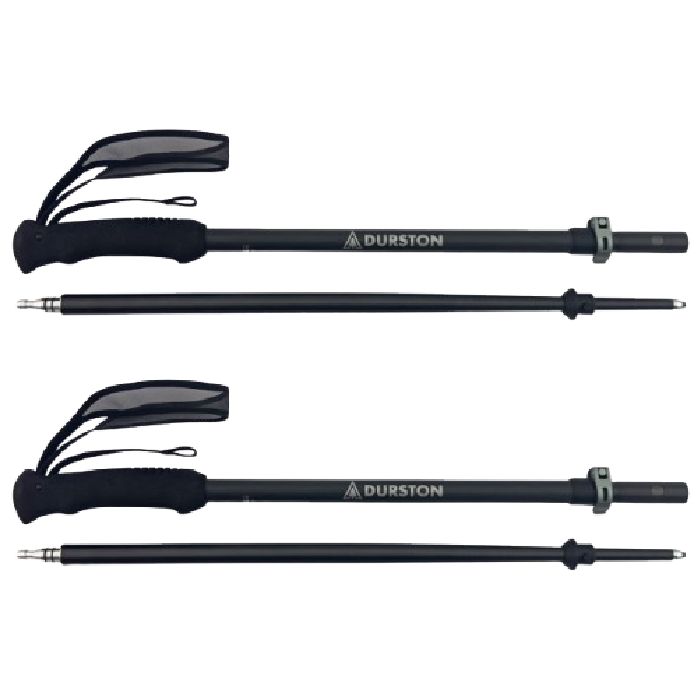
The Durston Iceline trekking poles are a top choice for ultralight backpackers who prioritize weight savings and simplicity. Their innovative hybrid design combines folding and telescoping features, making them incredibly fast and easy to set up.
Weighing just 9.5 ounces per pair, these poles are among the lightest we tested, making them a standout option for anyone focused on reducing pack weight without sacrificing too much durability.
We tested the Iceline poles during a backpacking trip in Arizona’s Chiricahua Mountains, where they performed admirably in snowy conditions and dense brush. Despite their lightweight carbon fiber construction, these poles held up surprisingly well, with minimal bending or damage during tests, although they still remain more prone to snapping than metal poles. The hybrid design also contributed to their fast setup and ease of use, with a ball-and-socket joint and flick lock tensioner that made adjusting the pole length quick and simple.
The Iceline poles do have some drawbacks. Their minimalistic design, aimed at reducing weight, results in fewer comfort features. The foam grips, while lightweight, don’t absorb shock as effectively as cork grips, and they can become sweaty and dirty during long hikes.
The wrist straps are also thin and not as comfortable for extended use. Additionally, the Komperdell baskets can be difficult to attach, and they offer limited versatility compared to other trekking poles that come with multiple basket options for various conditions.
At a slightly above-average price, the Iceline poles are an investment but offer great value for those committed to ultralight backpacking. They are ideal for well-maintained trails and lightweight hikes, though not the best choice for rock bashing or winter conditions. For ultralight enthusiasts, the Durston Iceline trekking poles are a solid option that balances weight, durability, and ease of use.
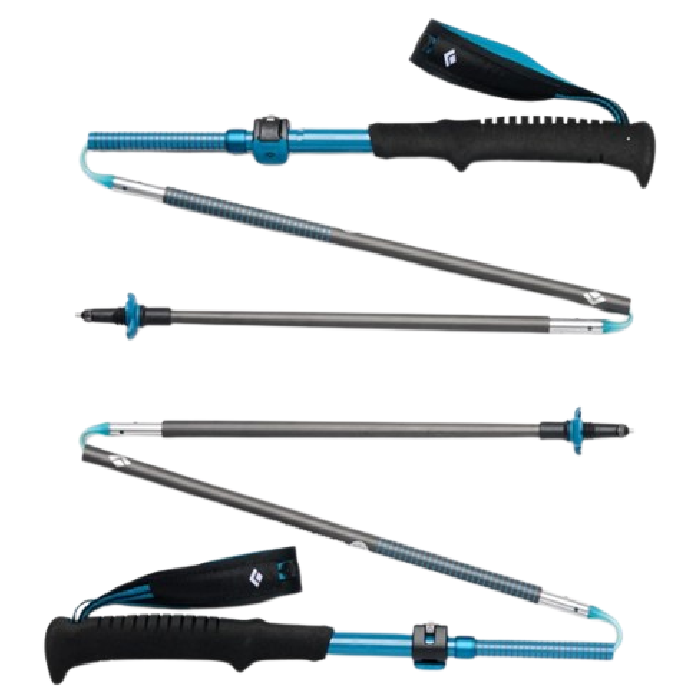
Black Diamond Distance Carbon FLZ
Best Trekking Poles for Trail Running
CleverHiker Rating: 4.6/5.0
Price: $240
Weight (Pair): 12 oz.
Shaft Material: Carbon Fiber
Grip Material: Foam
Collapsed Length: 14.25 in.
Pros
- Packs down super small
- Lightweight
- Includes two sets of baskets
- Rubber tip covers included
Cons
- They're expensive
- Grip diameter is smaller than most
The Black Diamond Distance Carbon FLZ Trekking Poles are ultra-light, compact, and durable, making them an excellent choice for ultralight backpackers and trail runners seeking reliable performance in rugged terrain. These poles are among the lightest and most compact models we tested, making them ideal for runners and hikers who prioritize minimal weight and space savings. They pack down incredibly small, fitting easily into a pack or trail running vest, which is a standout feature for long-distance hikers and those on the move.
In terms of performance, the Distance Carbon FLZ poles impressed us with their surprising durability, considering they are made from carbon fiber. They withstood rough terrain, rocky washes, and uneven footing in the Superstition Mountains of Arizona without showing signs of breakage. While they aren’t as indestructible as some aluminum models, they perform admirably for their weight. However, the smaller grip diameter and minimal padding on the wrist straps could make them less comfortable for those seeking extra comfort on long hikes.
Setting up the poles is a breeze, taking just six seconds to expand and lock into place. This quick setup, along with the folding design, makes them ideal for fast-paced activities like trail running. Despite their streamlined design, these products still include useful features such as two basket sizes and rubber tip covers, adding versatility for different conditions.
Although the Black Diamond Distance Carbon FLZ poles come with a higher price tag, their lightweight and compact design makes them a solid investment for those who value convenience and performance on the trail.
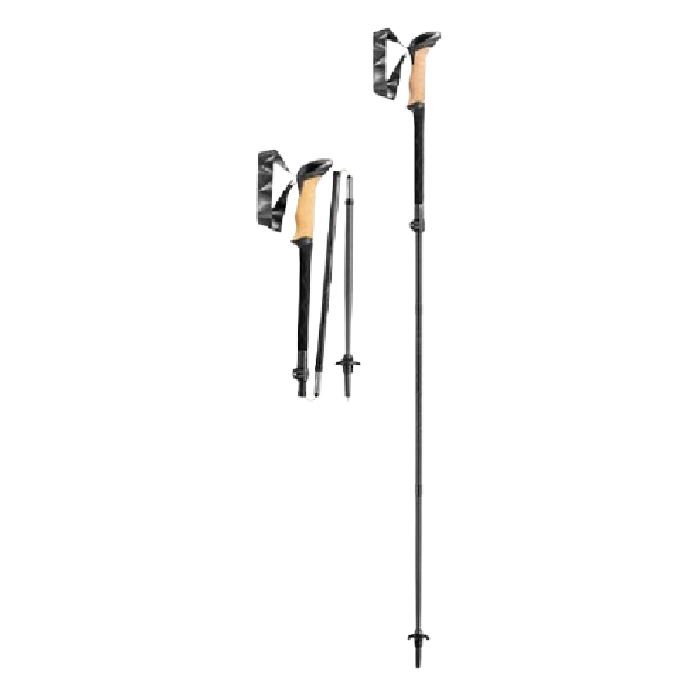
LEKI Black Series FX Carbon
Best Folding Trekking Poles
CleverHiker Rating: 4.6/5.0
Price: $250
Weight (Pair): 1 lb.
Shaft Material: Carbon Fiber
Grip Material: Cork
Collapsed Length: 16 in.
Pros
- Durable for carbon fiber
- Comfortable cork grips
- Packs down small
- Usable grip extension
Cons
- Expensive compared to other poles
- A bit heavy for carbon fiber
- Takes practice to set up
The LEKI Black Series FX Carbon trekking poles deliver balanced performance across several categories, making them a solid choice for experienced hikers seeking a reliable pair.
These folding poles stand out for their durability, performing well under stress, especially considering their carbon fiber construction. In testing, they were able to withstand drops and bending without significant damage, which is a rare feat for carbon fiber poles.
Weighing 16 ounces for the pair, the Black Series poles are slightly heavier than average for carbon fiber, largely due to their cork grips and extended grip feature. While not ultralight, the cork grips provide comfort by absorbing moisture, and the poles have a grip extension for added versatility during varying terrain.
In terms of packability, the Black Series is compact but not the most packable folding option, ranking third in our comparison. The poles require some practice to set up because of their z-folding mechanism, which, while secure, is more complex than the typical flick-lock or telescoping systems. However, once familiar with the setup, they are fairly easy to use.
These poles are packed with useful features, including baskets, replaceable tips, and a storage bag. They do lack snow baskets, which limits their use in winter conditions.
The Leki Black Series FX Carbon trekking poles are not cheap, and while they are excellent for those who value durability and performance, they may not be the best choice for beginners or those on a budget. If you’re looking for a versatile, durable folding pole for a variety of hiking conditions, these are a great option.
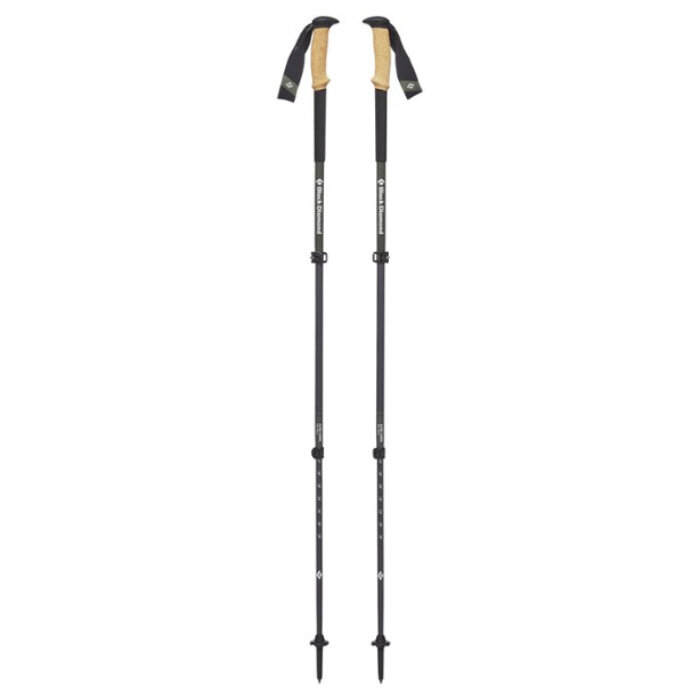
Black Diamond Alpine Carbon Cork
Most Durable Carbon Fiber Trekking Pole
CleverHiker Rating: 4.5/5.0
Price: $230
Weight (Pair): 1 lb. 1.1 oz.
Shaft Material: Carbon Fiber
Grip Material: Cork
Collapsed Length: 24 in.
Pros
- Structurally durable
- Comfy cork grips
- Grip extension
- Wide wrist straps
Cons
- Prone to cosmetic damage
- Heavier than other carbon poles
- Longer collapsed length
The Black Diamond Alpine Carbon Cork trekking poles are a solid mid-tier choice for hikers and backpackers seeking durability and comfort. Tested in Arizona’s Chiricahua Mountains, these poles performed well on rugged terrain, with excellent durability that rivals higher-end aluminum poles.
Their cork handles and wide wrist straps provided a comfortable grip during extended use. However, at 17.1 ounces, they’re heavier than other carbon fiber poles, making them less ideal for those prioritizing ultralight gear. While they are durable, their longer collapsed length (24 inches) makes them less packable compared to folding poles.
The poles include essential features like replaceable carbide tips, summer baskets, and grip extensions, but lack extras such as additional baskets or tip covers. Thanks to built-in tensioners, these poles are easy to adjust.
Despite the higher price tag, the Black Diamond Alpine Cork poles offer solid performance for trail hiking and moderate backpacking. They are best for those seeking durability and comfort on varied terrain without needing ultralight packing or extensive extra features.
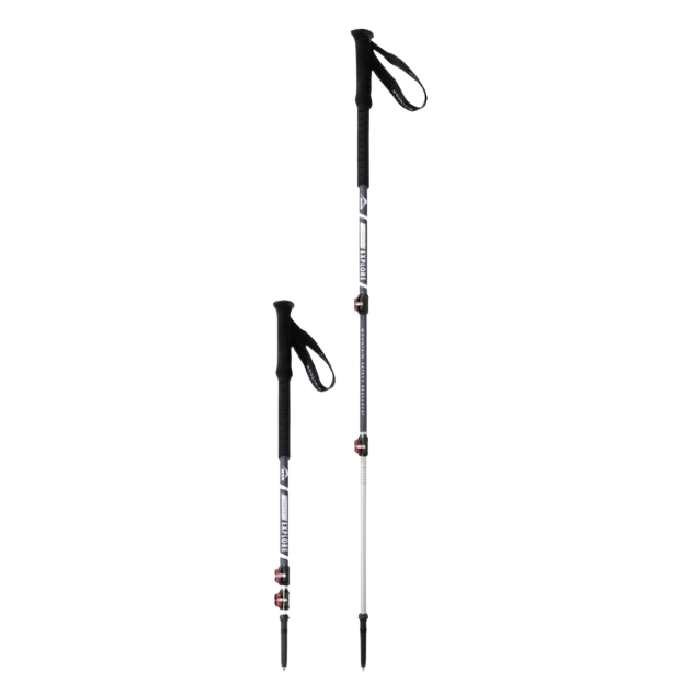
MSR DynaLock Explore
Best Flick Locking Trekking Poles
CleverHiker Rating: 4.5/5.0
Price: $120
Weight (Pair): 1 lb. 3 oz.
Shaft Material: Aluminum
Grip Material: Foam
Collapsed Length: 24.5 in
Pros
- Padded wrist straps
- Comes with winter baskets
- Built in tensioners
Cons
- One of the heavier options
- Long collapsed length
The MSR DynaLock Explore trekking poles are a well-rounded option for those seeking versatility in their gear. We tested them while backpacking through Arizona’s Chiricahua Mountains, where they performed reliably on varied terrain, including snowy paths and thick brush. The poles are a good choice for those who want to use them year-round, as they come with both summer and winter baskets. This makes them suitable for different conditions, such as hiking and snowshoeing.
Because the poles are made of aluminum, they are heavier than some other models, weighing about 19 ounces per pair. This makes them feel a bit bulky in hand, though they’re not overly cumbersome on the trail. The weight is noticeable, especially when compared to carbon fiber poles, but the performance does not suffer significantly. The collapsed length of 24.5 inches is average, so they’re not the most compact option for packing.
Comfort-wise, the MSR DynaLock Explore poles feature padded wrist straps and ergonomic foam grips, which help make long hikes more comfortable. The foam grips, however, tend to get slick with sweat, which is a downside compared to cork grips. The poles are easy to use thanks to their flick locks, though the shafts can feel sticky when adjusting, requiring extra effort to extend or collapse them. However, the tensioners on the locks are a nice touch, though somewhat clumsy to adjust.
The MSR DynaLock Explore poles offer great value for the price. Their durability, comfort, and versatile features, like replaceable carbide tips and dual baskets, make them a solid choice for hikers and backpackers who need a dependable, all-season pole, despite their heavier weight.
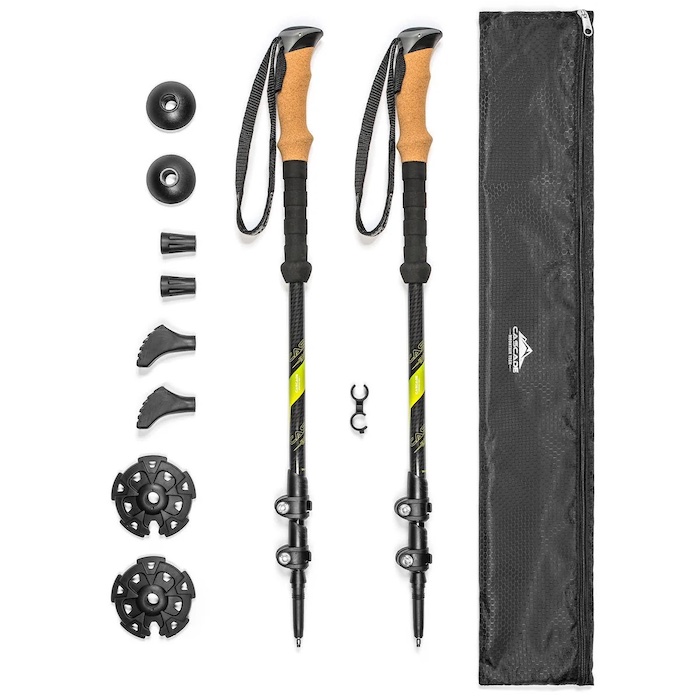
Cascade Mountain Tech Carbon Fiber Quick Lock
Best Included Accessories Trekking Pole
CleverHiker Rating: 4.4/5.0
Price: $65
Weight (Pair): 1 lb. 1 oz.
Shaft Material: Carbon Fiber
Grip Material: Cork
Collapsed Length: 26 in.
Pros
- Excellent value for carbon fiber poles
- Very strong and durable shafts
- Comfortable cork grips
- Includes multiple baskets and tip covers
- Versatile for hiking, snowshoeing, and skiing
- Replaceable parts available
Cons
- Heavier than premium carbon poles
- Long collapsed length
- Slow height adjustment
- Tight telescoping sections
The Cascade Mountain Tech Carbon Fiber Quick Lock Trekking Poles deliver exceptional value, with impressive strength, versatile features, and a price that undercuts most carbon-fiber trekking poles on the market. After extensive side-by-side testing and real-world use on hikes, snowshoe trips, and ski slopes in Colorado’s San Juan Mountains, we found these poles to be a reliable and surprisingly durable option for hikers who want strong performance without spending a premium.
Durability and strength are standout qualities of these poles. During testing, we leaned our full body weight on the shafts, dropped them on rocks, and used them for downhill skiing and snowshoeing. Despite the carbon fiber construction, which can sometimes be prone to snapping under stress, the poles showed no signs of cracking or structural weakness. They picked up a few cosmetic scratches from rock impacts, but otherwise held up extremely well in demanding conditions.
Features and versatility are another major advantage. The Cascade poles come with both summer and winter baskets, rubber tip covers, and a storage bag, making them adaptable for hiking, skiing, and snowshoeing. We especially appreciated the cork grips, soft wrist straps, and grip extension when climbing steep terrain. The ability to purchase replacement parts directly from the manufacturer is another thoughtful touch that helps extend the poles’ lifespan.
There are a few minor tradeoffs to consider. At about 8 ounces per pole, they are heavier than many premium carbon fiber options, and their telescoping design collapses to a relatively long packed length. Adjusting the pole height also takes slightly longer due to limited measurement markings on the lower shaft.
Still, for hikers prioritizing durability, versatility, and price, the Cascade Mountain Tech Carbon Fiber Trekking Poles are an excellent choice that punches well above their budget-friendly cost.
More: Cascade Mountain Tech Carbon Fiber Quick Lock Full Review
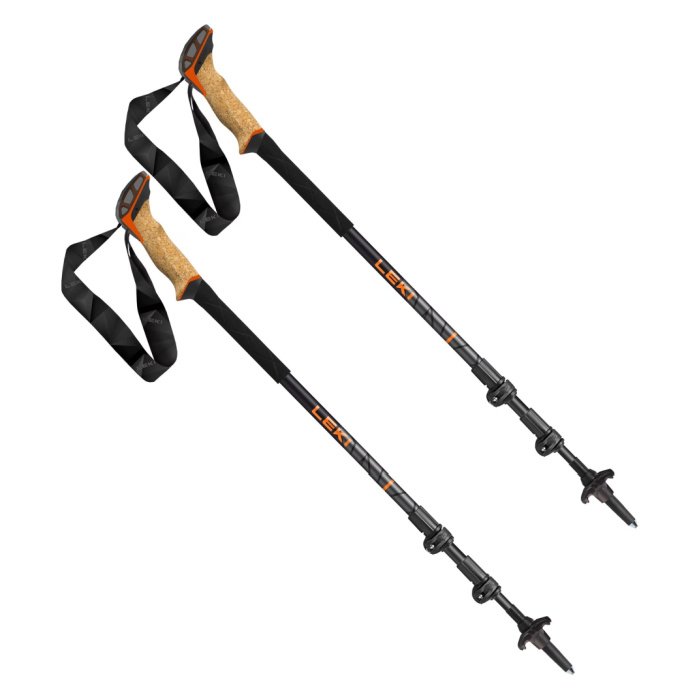
LEKI Makalu Cork Lite
Best Telescoping Poles
CleverHiker Rating: 4.3/5.0
Price: $160
Weight (Pair): 1 lb. 2 oz.
Shaft Material: Aluminum
Grip Material: Cork
Collapsed Length: 26 in.
Pros
- Great value
- Very durable
- Comfy cork grips
- No tools required for adjusting locks
Cons
- Long collapsed length
- A bit heavy
The Leki Makalu Cork Lite trekking poles are a solid mid-tier option designed for hiking and backpacking. They offer a balance of durability, comfort, and ease of use without being overly specialized in any one area. We tested these poles on day hikes in Durango, Colorado, where they performed well in various conditions.
We like Makalu Cork Lite poles for their durability, withstanding normal wear and tear of life on the trail. They feature comfortable cork grips that help absorb moisture, keeping your hands dry and clean on long hikes. These poles also have easy-to-use flick locks with adjustable tension, allowing for simple height adjustments without tools. The cork handles are a standout feature for comfort, and the overall design is reliable for regular use. We also appreciate the inclusion of a grip extension and replaceable carbide tips.
While the Makalu poles offer solid performance, we poked and prodded to find a few drawbacks. Their collapsed length of 26 inches is longer than other trekking poles we tested, which may be inconvenient for packing or traveling. The weight, while typical for aluminum poles, is a bit heavy compared to carbon fiber models, making them less ideal for ultralight gear. Additionally, while the wrist straps work well, they lack padding, which can be uncomfortable on longer treks.
With a mid-range price tag, the Makalu Cork Lite trekking poles offer excellent value for those seeking durable, comfortable hiking poles. They perform well across most categories, making them a dependable choice for average hikers and backpackers. However, they may not be the best option for those seeking ultralight or highly specialized gear.
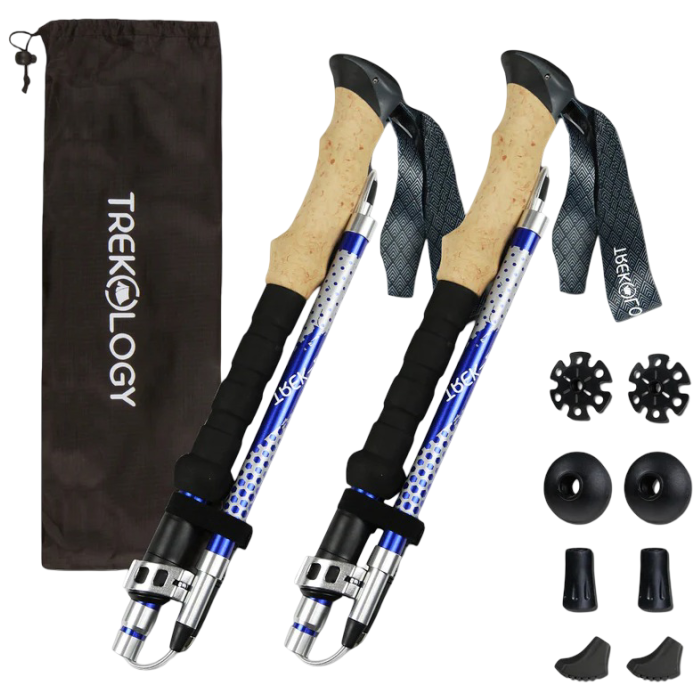
Trekology Trek-Z 2.0
Best Budget Buy Trekking Poles
CleverHiker Rating: 4.2/5.0
Price: $56
Weight (Pair): 1 lb. 3 oz.
Shaft Material: Aluminum
Grip Material: EVA Foam
Collapsed Length: 15 in. (sm)
Pros
- Very affordable
- Comes with winter baskets
- Includes two types of tip covers
- Compact when collapsed
Cons
- On the heavier side
- Not easy to set up
The Trekology Trek-Z 2.0 trekking poles offer a solid, budget-friendly option for beginner hikers or anyone looking for a reliable and affordable set of trekking poles.
Weighing in at 19 ounces per pair, these aluminum poles are heavier than most models tested, but the price reflects this trade-off. While they aren’t the most durable poles, they offer good value with additional features, including winter baskets, two types of tip covers, and a compact collapsed length of just 15 inches. These features make them a versatile option for various terrains and weather conditions.
Because of their affordability, the Trek-Z poles are not the easiest to set up. The folding design requires some coordination and time to assemble, and while the flick locks are functional, the poles take longer to adjust compared to other models we tested. Additionally, the foam grips lack the breathability of cork, and the wrist straps are basic, impacting comfort on longer hikes.
Other than that, these poles are incredibly packable and can fit easily into a daypack. They perform adequately for short to moderate day hikes, as we saw during testing in Colorado’s San Juan National Forest. However, their weight and setup time make them less ideal for long-distance backpacking or more technical use.
Overall, the Trekology Trek-Z 2.0 trekking poles are a great choice for casual hikers or those on a budget. They offer good features and solid performance for day hikes, but are not recommended for more strenuous or extended hiking trips.

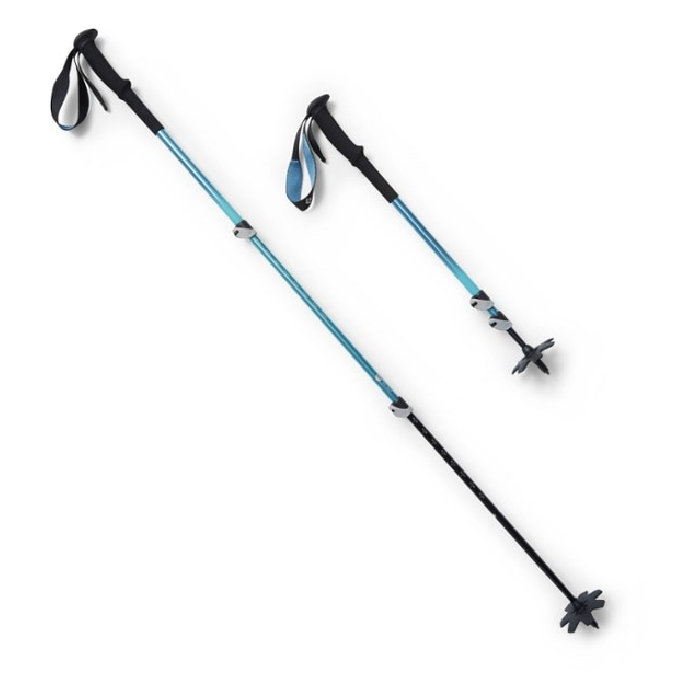
Black Diamond Trail Back
Best Beginner Trekking Poles
CleverHiker Rating: 4.1/5.0
Price: $100
Weight (Pair): 1 lb. 3 oz.
Shaft Material: Aluminium
Grip Material: Foam
Collapsed Length: 24 in.
Pros
- Beginner price point
- Built to last
- Good for summer and winter sports
- Included winter baskets
Cons
- There are lighter options on the list
- Long collapsed length
The Black Diamond Trail Back trekking poles offer great value for those seeking affordable, durable, and versatile poles without extra frills. Tested under various conditions, including downhill skiing on mogul runs in Colorado and hiking, these poles proved incredibly durable.
They withstood bumps, drops, and pressure without significant signs of damage, making them a solid choice for both summer and winter activities, such as hiking and snowshoeing. The aluminum construction ensures these poles hold up to tough conditions, with the included winter baskets enhancing their versatility.
While durability is a standout feature, the Trail Back poles have some drawbacks. At 9.7 ounces per pole, they are heavier than many other models, which may be a concern for those looking to shave every possible ounce. Additionally, the poles have one of the longest collapsed lengths in their class. The flick locks are secure but can be tricky to adjust due to their small size and limited surface area.
Comfort-wise, the foam grips and wrist straps are functional, but not as high-end as those of other models. The wrist straps have a fabric liner, which adds some comfort, but the foam grips tend to get sweaty and dirty quickly. The poles also feature an extension grip for climbing, though it’s shorter than that of other models.
Despite these drawbacks, the Trail Back poles are an excellent choice for beginner hikers or those on a budget. They perform well in durability tests, are versatile enough for different activities, and are much more affordable than most poles on the market. If you don’t need the latest features or a super lightweight design, these poles offer great value and reliability for various outdoor adventures.
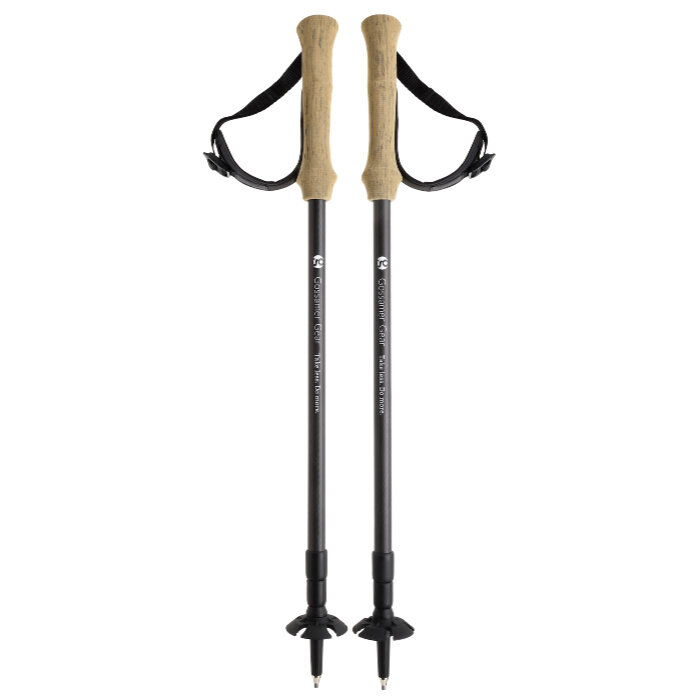
Gossamer Gear LT5
Best Ultralight Trekking Poles
CleverHiker Rating: 4.0/5.0
Price: $195
Weight (Pair): 10.6 oz.
Shaft Material: Carbon Fiber
Grip Material: Foam
Collapsed Length: 23.5 in.
Pros
- Ultralight
- Comfy handles
- Very durable for the weight
- Sections are replaceable
Cons
- Expensive compared to other poles
- Twist locks take time to use
The Gossamer Gear LT5 trekking poles are an excellent choice for ultralight backpackers seeking minimal weight without sacrificing essential performance. These poles are made from carbon fiber, keeping them incredibly light at just 9.8 ounces for the pair.
The poles are equipped with twist locks, which, while not the most user-friendly or fast, allow for easy adjustment of the pole length. They also feature EVA foam handles, which provide decent comfort but lack the moisture-wicking and shock-absorbing qualities of cork. These features are intentionally pared down to reduce weight, making them ideal for fast-packing or long-distance hikers.
Where the LT5s shine is in their weight. Weighing just 5.3 ounces per pole, they’re some of the lightest poles we’ve tested, offering an excellent balance of function and minimalism. The poles performed well in southern Arizona’s Chiricahua Mountains, which included off-trail washes and rugged, uneven terrain.
While they held up better than expected during this field test, they are not built to withstand heavy impact. In our durability tests, the poles showed slight cosmetic damage after being thrown and dropped. They also bent easily during the pressure tests, indicating they are more fragile than some competitors, especially under stress.
The LT5 trekking poles are best suited for hikers who prioritize weight over rugged durability or added features. They are lightweight, adjustable, and comfortable for short to medium hikes, but their carbon fiber build makes them less reliable in extremely tough conditions.
There’s no getting around it: these sticks are premium-priced. So if uber-ultralight isn’t your top priority, other poles may offer better value. Overall, the LT5 is perfect for those seeking minimal weight for hikes on well-maintained trails.
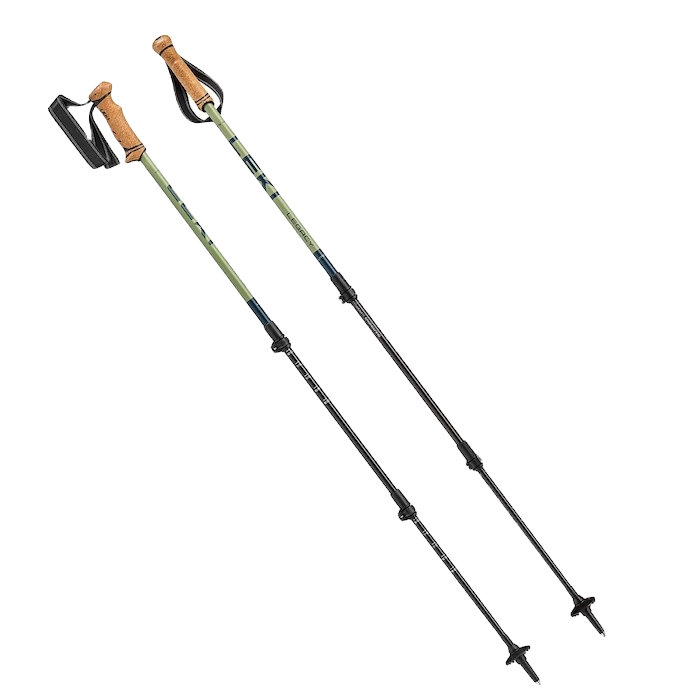
Leki Legacy Lite
Best No-Frills Trekking Pole
CleverHiker Rating: 3.9/5.0
Price: $110
Weight (Pair): 1 lb. 2 oz.
Shaft Material: Aluminium
Grip Material: Cork
Collapsed Length: 26 in.
Pros
- Affordable price
- Comfortable cork grips
- Ventilated handles reduce sweat
- Reliable aluminum construction
- Simple, no-frills design
Cons
- Snug lower shaft adjustment
- Long collapsed length
- Noticeable flex under heavy load
- Minimal extra features
The LEKI Legacy Lite Trekking Poles are a straightforward, reliable option that deliver solid performance for hikers who want a dependable trekking pole without paying for premium features. During testing on day hikes around Durango, Colorado, we found that these poles provide the basic functionality most hikers need while maintaining a reasonable price point, making them accessible to beginners and casual adventurers.
Durability and construction are generally dependable, but they aren’t the stoutest poles we tested. During our durability tests, we leaned on the poles with our full body weight, dropped them onto rocks, and clacked them together to simulate trail abuse. While the aluminum shafts showed noticeable bending during the weight test, they held up well overall and only picked up minor cosmetic scratches during impact testing. On the trail, they performed reliably in typical day-hiking conditions and felt sturdy enough for well-maintained trails and moderate terrain.
Comfort is one area where these poles stand out slightly compared to other budget options. The cork handles have an ergonomic shape that fits comfortably in the hand, and we especially liked the small ventilation holes in the grip that help reduce heat buildup on warm hikes. During several hikes on dry trails in southwestern Colorado, the handles remained comfortable and easy to grip even after extended use.
There are a few minor drawbacks to keep in mind. The lower shaft can be quite snug when extending the pole, making adjustments slower than in some other models we tested. The poles also have a relatively long collapsed length, making them less convenient to stow in a backpack when not in use.
Overall, hikers looking for a simple, affordable trekking pole that performs reliably on everyday trails will likely find the Leki Legacy Lite Trekking Poles a practical and dependable choice.
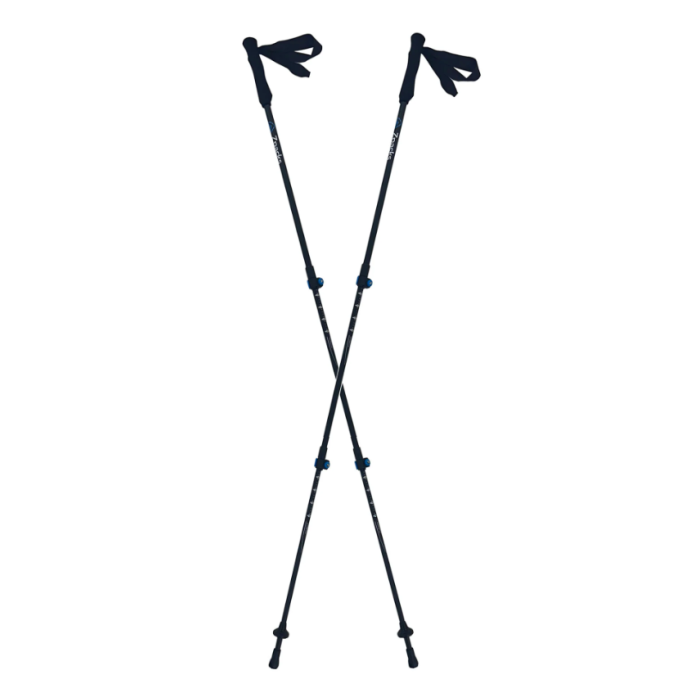
Zpacks Minimalist
Best Budget Ultralight Trekking Poles
CleverHiker Rating: 3.6/5.0
Price: $120
Weight (Pair): 11.7 oz.
Shaft Material: Carbon Fiber
Grip Material: Foam
Collapsed Length: 24.25 in.
Pros
- Affordable price point
- Ultralight
- Sections are replaceable
- Quick locks are simple and quick
Cons
- Not as durable
- Longer collapsed length
- Grips are a bit less comfortable
The Zpacks Minimalist trekking poles are a highly affordable ultralight option, ideal for budget-conscious hikers looking to minimize weight on their trips. With inexpensive price tags for either a single pole or for a pair, they stand out as the lightest in the lineup, weighing just 5.7 ounces per pole. This makes them an excellent choice for ultralight backpacking trips or those who prioritize weight savings over added features.
These poles were tested on the Durango, Colorado, trail system and were particularly appreciated for their light weight and ease of use. They feature a simple, telescoping design with flick locks that are easy to adjust and come with measurements on the shafts, making it simple to set the right height. At 24.25 inches when collapsed, they are fairly packable, though not the smallest option in the lineup.
However, there are trade-offs. Durability is a major concern with the Zpacks Minimalist poles. While they performed decently in drop and throw tests, they felt fragile during the bend test and could snap under heavier pressure. They lack comfort features such as padded wrist straps or cork handles, which are standard in other poles. The foam grips are functional but less comfortable over long distances, and the wrist straps are basic, lacking extra padding.
In terms of value, the Zpacks Minimalist poles are a great choice for ultralight hikers seeking a budget-friendly and lightweight option. They offer solid performance for the price but may not be the best fit for more rugged hikes or those requiring higher durability. If you prioritize weight over comfort and durability, these poles are a solid pick for lightweight and fast-paced adventures.
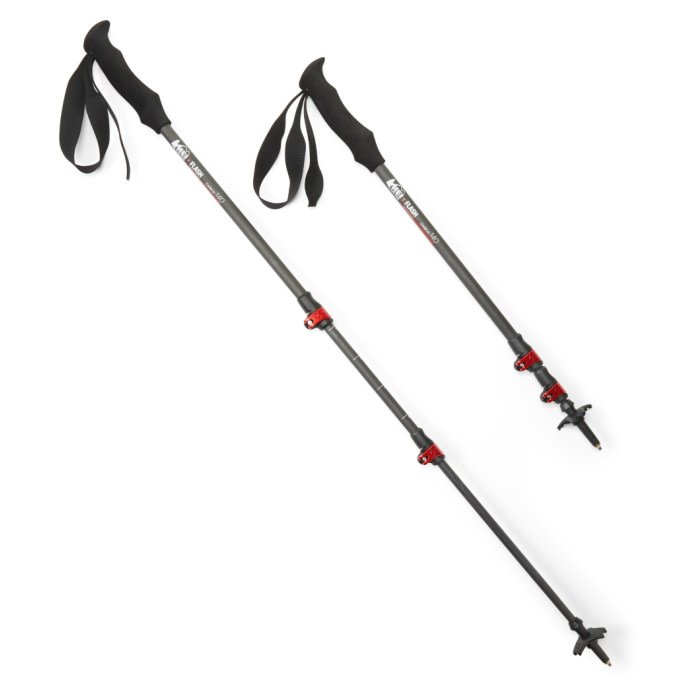
REI Flash Carbon
Best Streamlined Design
CleverHiker Rating: 3.8/5.0
Price: $189
Weight (Pair): 13.6 oz.
Shaft Material: Carbon Fiber
Grip Material: Foam
Collapsed Length: 25 in.
Pros
- Good value
- Lightweight
- Streamlined design
Cons
- Longer collapsed length
- Hard to extend poles
The REI Flash Carbon trekking poles are an excellent option for the average hiker seeking a lightweight, straightforward pair. Weighing only 13.6 ounces per pair, these poles are lighter than most, thanks to their carbon fiber shafts.
While the poles did feel somewhat prone to snapping under heavy stress, they held up well in testing, including a fall from a tester and use on a rugged off-trail hike through Arizona’s Chiricahua Mountains. Despite some durability concerns, they performed adequately in the field, showing no damage even in challenging conditions.
One of the primary drawbacks of the REI Flash Carbon poles is the difficulty in adjusting the telescoping shafts. The friction between the sections makes them hard to expand and collapse, a significant issue when it comes to ease of use. Adding some Chapstick, Vaseline, or Carmex helps while you’re in the backcountry.
The lack of measurements on the shafts also adds frustration when trying to set the correct height. These poles also have a longer collapsed length (25 inches), which can be cumbersome for packability.
In terms of features, the REI Flash Carbon poles are fairly basic. While they come with padded wrist straps and summer baskets, they lack more advanced features like replaceable carbide tips and grip extensions. This results in a shorter overall lifespan compared to poles with more robust features.
Despite these cons, the Flash Carbon trekking poles offer good value for those seeking a no-frills, lightweight pole for day hikes and weekend backpacking trips. They provide solid performance without being overly complex or expensive, making them a practical option for casual outdoor enthusiasts. However, those in need of more durability or extra features might want to keep shopping.
Product Comparison Table
| oSort | Product | Price | Weight (Pair) | Shaft Material | Grip Material | Collapsed Length | Durability | Weight Score | Comfort | Ease of Use | Packability | Features | 0 |
Black Diamond Pursuit View at REI View at Amazon 
|
$170 | 1 lb. .6 oz. | Aluminum | Cork | 24 in. | 4.9 | 4.0 | 5.0 | 4.2 | 4.0 | 4.5 | 1 |
Durston Iceline Trekking Poles View at Durston Gear
|
$189 (without straps) | 9.5 oz. (without straps) | Carbon Fiber | EVA Foam | 19.5 in. | 4.0 | 4.9 | 3.7 | 5.0 | 4.5 | 3.9 | 2 |
Black Diamond Distance Carbon FLZ View at Black Diamond View at REI
|
$240 | 12 oz. | Carbon Fiber | Foam | 14.25 in. | 3.8 | 4.6 | 3.7 | 4.8 | 5.0 | 4.2 | 3 |
LEKI Black Series FX Carbon View at Leki |
$250 | 1 lb. | Carbon Fiber | Cork | 16 in. | 4.5 | 4.1 | 4.0 | 4.0 | 4.7 | 4.5 | 4 |
Black Diamond Alpine Carbon Cork View at REI View at Amazon |
$230 | 1 lb. 1.1 oz. | Carbon Fiber | Cork | 24 in. | 4.6 | 3.9 | 4.4 | 3.8 | 3.7 | 3.9 | 5 |
MSR DynaLock Explore View at REI View at Amazon |
$120 | 1 lb. 3 oz. | Aluminum | Foam | 24.5 in | 4.2 | 3.8 | 4.0 | 4.0 | 3.9 | 4.5 | 6 |
Cascade Mountain Tech Carbon Fiber Quick Lock View at Amazon |
$65 | 1 lb. 1 oz. | Carbon Fiber | Cork | 26 in. | 4.7 | 4.0 | 4.4 | 3.6 | 3.6 | 4.9 | 7 |
LEKI Makalu Cork Lite View at REI View at Leki |
$160 | 1 lb. 2 oz. | Aluminum | Cork | 26 in. | 4.4 | 3.9 | 4.0 | 4.5 | 3.4 | 4.2 | 8 |
Trekology Trek-Z 2.0 View at Amazon View at Trekology 
|
$56 | 1 lb. 3 oz. | Aluminum | EVA Foam | 15 in. (sm) | 3.9 | 3.6 | 3.7 | 3.4 | 4.9 | 4.8 | 9 |
Black Diamond Trail Back View at REI View at Amazon |
$100 | 1 lb. 3 oz. | Aluminium | Foam | 24 in. | 4.8 | 3.8 | 4.0 | 3.5 | 3.5 | 4.2 | 10 |
Gossamer Gear LT5 View at Gossamer Gear View at Garage Grown Gear
|
$195 | 10.6 oz. | Carbon Fiber | Foam | 23.5 in. | 3.4 | 5.0 | 3.7 | 3.0 | 4.0 | 4.2 | 11 |
Leki Legacy Lite View at REI View at Amazon |
$110 | 1 lb. 2 oz. | Aluminium | Cork | 26 in. | 4.3 | 3.9 | 4.6 | 3.6 | 3.6 | 3.9 | 12 |
Zpacks Minimalist View at Zpacks
|
$120 | 11.7 oz. | Carbon Fiber | Foam | 24.25 in. | 3.0 | 4.8 | 3.2 | 4.0 | 3.8 | 4.2 | 13 |
REI Flash Carbon View at REI |
$189 | 13.6 oz. | Carbon Fiber | Foam | 25 in. | 3.6 | 4.3 | 4.0 | 3.4 | 3.8 | 3.7 |
|---|
Analysis & Results
We rank trekking poles based on six metrics: durability, weight, comfort, ease of use, packability, and features. Our comparative results below outline the top performers in each metric.
Which trekking poles offer the best value?
Value is determined by comparing a piece of gear’s performance to its price. There are a few models that provide a lot of value, such as the Trekology Trek-Z 2.0, Cascade Mountain Tech, and Black Diamond Pursuit.
The Pursuit was one of our favorite pairs of trekking poles in the field, and they also performed strongly in our side-by-side tests. We also love how versatile these poles are. Because they come with a variety of add-ons and are durable, they can be used for both summer and winter outdoor activities. We enjoyed hiking with these poles on summer backpacking trips and also used them for downhill skiing in the winter. With that in mind, most users will get thousands of miles out of these poles, making them well worth the cost.
We have two budget pole options in our lineup, both of which performed really well in all our tests. The first is the Trekology Trek-Z 2.0. The Trek-Z poles are made of aluminum, and though they aren’t the most durable, they pack down really small and are loaded with features. The features, in particular, make them very useful as they come with multiple baskets, rubber tips, and a storage bag.
Likewise, the Cascade poles come with a similar assortment of add-ons. They were slightly more difficult to set up, but we really appreciate how durable these poles are. Given the low price point and carbon fiber construction, we assumed they would fall apart easily. However, they proved us wrong and were sturdy enough to ski or snowshoe with. Like the pursuit, the durability and add-ons mean these poles can accompany you year-round, making them a great investment.
Which trekking pole is the most durable?
We expected many of the results from the durability tests, but there were a few surprises too. We started by throwing each trekking pole as far as possible, like a javelin. After picking up the poles, we proceeded with the drop test. Again, all of the poles survived with minimal damage. The bend test was the most telling, resulting in the broadest range of results.
The Black Diamond Pursuit, Black Diamond Trail Back, and Cascade Mountain Tech poles all impressed us with their durability during these tests.
All three of these poles felt physically difficult to bend, even when we “put our back into it,” so to speak. Given that aluminum has a propensity to bend rather than break, it was a promising sign that both the Pursuit and Trail Back models did not want to bend. That signals that they will likely last a long time on trail before wearing out. Carbon fiber, on the other side, is known for being strong but can suddenly snap during use. This is usually predated by some hairline cracks and crackling in our experience. We didn’t notice either of these signs when we pushed hard on the Cascade poles. We do want to note that some of the plastic flick locks on the Cascade poles could be prone to damage, but they come with a warranty or the option to buy new pole sections.
In the field, we used the Pursuit, Trail Back, and Cascade poles while downhill skiing. This puts a lot of extra strain on the poles due to dragging at high speeds, sudden jerks when changing direction, and placing full weight on them without thought in moguls or on catwalks. All three models stood up well to the rigors of the ski hill, demonstrating their supremacy as our most durable models.
Which trekking pole is the lightest weight?
Unsurprisingly, the lightest trekking poles we tested are all made from carbon fiber. The Gossamer Gear LT5 took the top spot, closely followed by the Durston Iceline and Zpacks Minimalist. All three trekking poles are explicitly designed for ultralight backpacking, so they lack features that add weight and may cut corners elsewhere to compensate.
We evaluated weight by placing all of the models in our lineup on a scale. When we did this with the LT5’s, they came in at 5.3 ounces per pole. The Durston and Zpacks poles followed closely at 5.5 and 5.7 ounces, respectively. Generally, we don’t notice the weight of average trekking poles too much, but all three of these models felt noticeably lighter when we used them on hiking and backpacking trips in the San Juans and Chiricahua Mountains.
The downside is that all of these poles do have some durability concerns. The Zpacks in particular feel quite flimsy, which is something to keep in mind when choosing a pole solely based on weight. That said, one of our editors has used the LT5 poles on thru-hikes like the Pacific Crest Trail without any problems.
Which trekking pole is the most comfortable?
When we ranked the trekking poles we tested on comfort features, we had two main standouts. The Black Diamond Pursuit is our favorite by far for comfort, thanks to the well-padded wrist straps and ergonomically designed cork handles. There is about twice as much padding on this wrist strap as on any other in our lineup, which provides a nice way to rest the arms at pit stops. Likewise, the shape of the handles just seemed to fit the hand better than any other model we tested. The cork material helps to wick moisture and absorb shock from the ground.
Another favorite is the Leki Legacy Lite thanks to the unique vent holes in the cork handle. There are three little holes near where the bottom of the hand holds the handle, which provides extra airflow to the hand when in use. We do wish that there was more padding on the wrist straps, but overall, the handle’s shape was comfortable to hold. Not quite as comfortable as the Pursuit, but still nice in the hand. We weren’t sold on the texture of the cork grip at first, but after using them on a seven-mile day hike, we no longer noticed it.
The Black Diamond Alpine Carbon Cork and Cascade Mountain Tech Carbon Fiber Poles had slightly lower scores but were our next-best options for comfort. Both these poles also have cork grips (see the theme there?) and padded wrist straps. Most of the other models in our lineup had only one of those features. The Cascade poles, in particular, had nice, fuzzy fleece lining the straps, though there wasn’t much padding.
Which trekking poles are the easiest to use?
After timing how long it took to set up each pole, we had a few clear favorites: the Durston Iceline, Black Diamond Distance Carbon FLZ, and Leki Makalu Cork Lite. To keep testing fair, we had a helper time how long it took to set up each pole from fully collapsed to ready to walk down the trail. We then used their times and our field experience to compare and rank them.
One advantage of the Durston Iceline’s unique design is that it is faster and easier to set up. This model was the quickest when we timed how long it took to extend a collapsed pole to hiking length. The single folding joint, paired with a shaft that slides easily along the telescoping section, speeds up the process. The way the folding joint fits together is the fastest method we have tested so far, though the flick lock is necessary for adjustment.
Another model that was incredibly easy to put together was the Black Diamond Distance Carbon FLZ. The shafts were easy to lock together thanks to the inner cord, and the new closure on the updated model has the perfect tension for both ease of use and security. When we timed these models, they both took about six seconds per pole to set up.
The Leki Makalu Cork Lite poles are also among our favorites due to their well-designed flick-lock shapes and shafts, which do not stick when expanded. When we timed how long it took to set up these poles, it took nine seconds.
All three of these poles were easy to set up each morning while backpacking in the Chiricahuas and White Mountains of Arizona, and on day hikes around Durango, Colorado.
Which trekking pole is the most packable?
Trekking poles with a folding design tend to be more compact than telescoping models. After measuring the collapsed length of each pole in our lineup, we found that the Black Diamond Distance Carbon FLZ and Trekology Trek-Z 2.0 models were easily the most compact trekking poles. The Leki Black Series FX Carbon poles are not too far behind.
The Distance Carbon trekking poles are geared a bit more towards trail runners, but still make an excellent pole for hiking and backpacking in our experience. The folding design makes them short, but the smaller shaft diameters prevent them from being wider. We also like that they come with a small velcro closure that can be used to hold them together. They are our top choice for trips where the poles will be stowed away for most of the trip, but are also helpful for steep ascents and descents in tough terrain, such as our thru-hike of the Vancouver Island Trail.
The Trek-Z poles were only slightly longer at 14.75 inches versus the Distance Carbon’s 14.25 inches. This, paired with a slightly wider packed width of 3.5 inches, brought them into second place. Again, they came with velcro straps to hold them together, and they were easy to carry in our backpack on backpacking trips. The Black Series poles measured 16 inches long, with a slightly wider width, and rounded out third place in this category.
Which trekking poles have the best features?
The Cascade Mountain Tech and Trekology Trek-Z 2.0 trekking poles have the most features, making them highly versatile. Specifically, these poles include the basics, such as wrist straps and summer and winter baskets, several tip covers, and a grip extension. Both also come with a storage bag.
One thing we like about the Cascade poles is that, even though replacing the carbide tips is hard (but possible), replacement parts are sold for almost every part of the pole on Cascade Mountain Tech’s website. That makes it easy to keep this pole going, rather than having to replace the entire thing when something breaks. We found the grip extension to be very helpful and comfortable to use when on a winter snowshoe trip and when skiing.
The Trek-Z had almost identical features; the biggest difference is that it isn’t possible to replace the carbide tips. This is something we would like to see to keep them usable for longer. That being said, we really appreciate the extra baskets, storage bag, and rubber tip covers, particularly given the price point for these poles.
Our overall top performer, the Black Diamond Pursuit, also did well in the features category. They include great winter baskets that we used while skiing and a small tension adjuster hidden inside the lower pole shaft. Both the MSR DynaLock Explore and the Leki Black Series FX Carbon offered similar versatility to the Pursuit due to their respective combinations of features. More specifically, the Black Series comes with a storage bag, and the DynaLock includes two sets of baskets. We really appreciate the storage bag with folding poles, as it makes less of a mess when not being used.

How to Choose Trekking Poles
What’s the best material for trekking poles?
Carbon fiber and aluminum are the two materials that make up most trekking poles. Carbon fiber is an excellent choice for those who prioritize weight, but it is typically not as durable. This material does not bend, so a large amount of weight will cause the pole to snap.
Aluminum poles tend to weigh more than carbon fiber poles but tend to offer greater durability. They have more give and will bend some before breaking. Some poles have shafts made up of both materials in different sections for those looking for the best of both.

are expensive trekking poles worth it?
Poles can get spendy! Some price tags reflect more value, comfort, and versatility. Usually, cork handles and carbon fiber shafts are the culprits for a high price tag.
Sometimes, spending a little bit more for a set of poles that will last a long time might be worth it as the cost will be more economical in the long run. There is nothing wrong with choosing a cheap pair of poles; however, they may come with some tradeoffs in terms of weight, durability, and packability.
is weight an important consideration for a trekking pole?
Even though trekking poles are not typically counted towards a backpack’s base weight, the ounces still add up when your arms are doing thousands of lifts throughout a trip.
Weight becomes more of a consideration if trails require you to stash them on your pack. For day hikers or winter use, a heavier/more sturdy pole may be a better option.

which trekking poles are most durable?
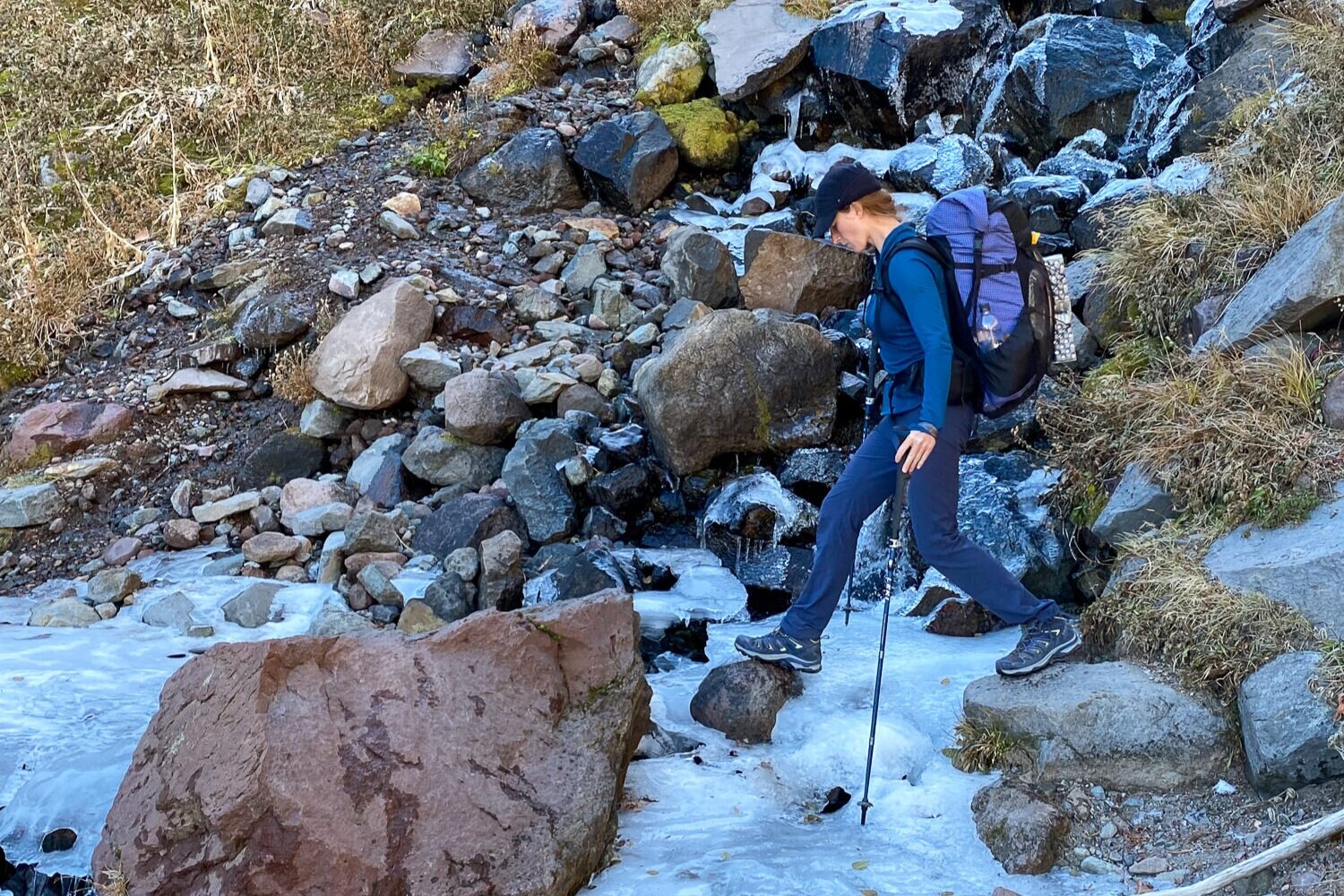
Aluminum trekking poles are more durable than trekking poles made of carbon fiber. When crossing streams, snowfields, or bushwhacking off-trail, we trust aluminum poles. At worst, they’re might bend – but probably won’t break – under stress.
Cheap poles will bend and it can be a big bummer. Sometimes they won’t telescope and nest in the larger shaft or slide into their adjacent pole if it deforms enough.

What pole designs do trekking poles come in?
Telescoping
The most common style of trekking pole, telescoping poles, consists of two to three poles nested together. A locking mechanism keeps them in place when packed down or extended, allowing for incredible flexibility when choosing the pole’s length.
Folding
This style folds down very small, is lightweight, and has thinner shafts, making these poles great for activities where they are stowed away frequently, such as trail running. Most have a fixed length, but some include a telescoping section to increase adjustability.
Fixed
Fixed poles, mostly used by downhill skiers, have no built-in adjustability. Instead, they consist of one long pole that cannot be broken down or collapsed. These poles are not typically well-suited for hiking or backpacking, as better options are available that are easier to stow away.
What locking systems are available?
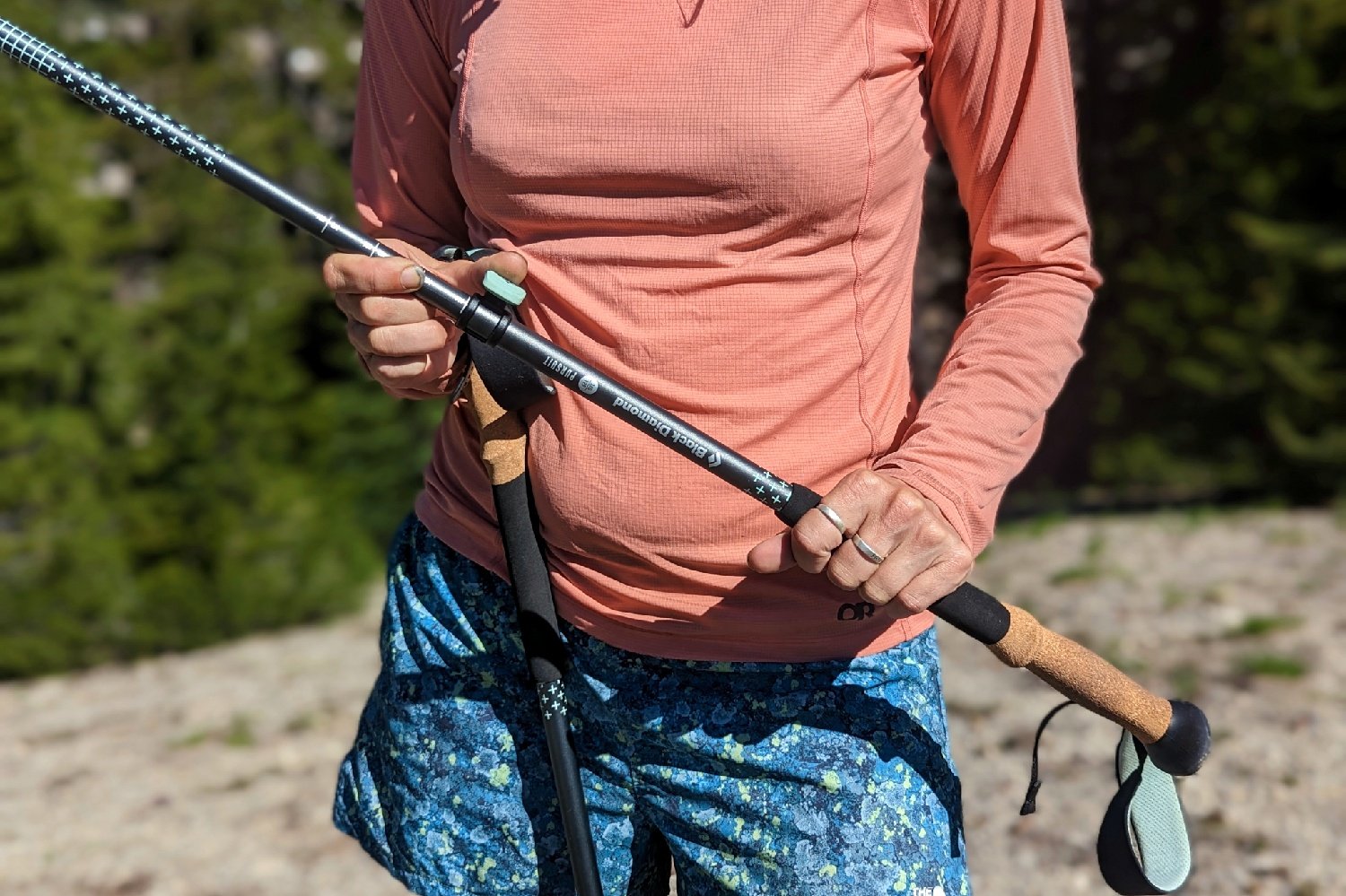
The two most common locking systems are flick and twist locks. Flick locks feature an external locking mechanism that can be easily adjusted for optimal use.
Twist locks have an internal system with a small bracket that expands when activated. Flick locks are more reliable and adjustable, whereas twist locks are more streamlined but take longer to set up.
What grip material should i choose?
Grip material can significantly affect comfort, blister prevention, cleanliness, weight, and durability. We recommend choosing a cork grip for its comfortable grip, its ability to minimize dirty hands, and its durability. If weight or price is a bigger priority, foam might be the way to go.
do i really need straps?
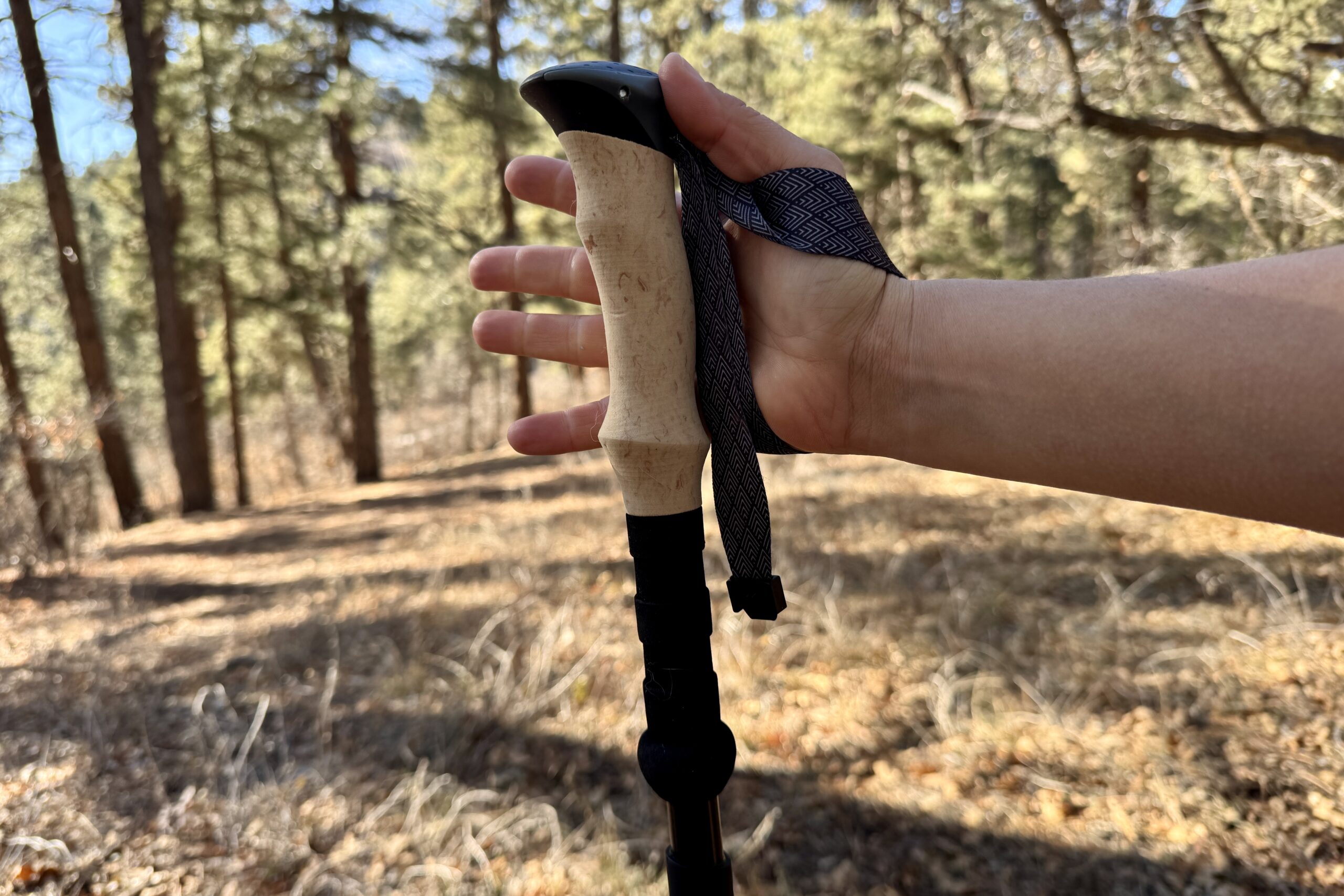
Straps can help increase stability and prevent the pole from being lost if it is dropped on a slope. They also help relieve hand fatigue from all the gripping.
The most efficient way to use the wrist straps is to place the hand through the strap from below and then grab the pole. Some poles have thicker padding on the wrist straps to avoid chaffing or discomfort. Others are no-frills affairs with rudimentary webbing, but these don’t usually feel very good at the end of a long day. Most poles also feature a cinch system to adjust the strap length.
what is the purpose of baskets?
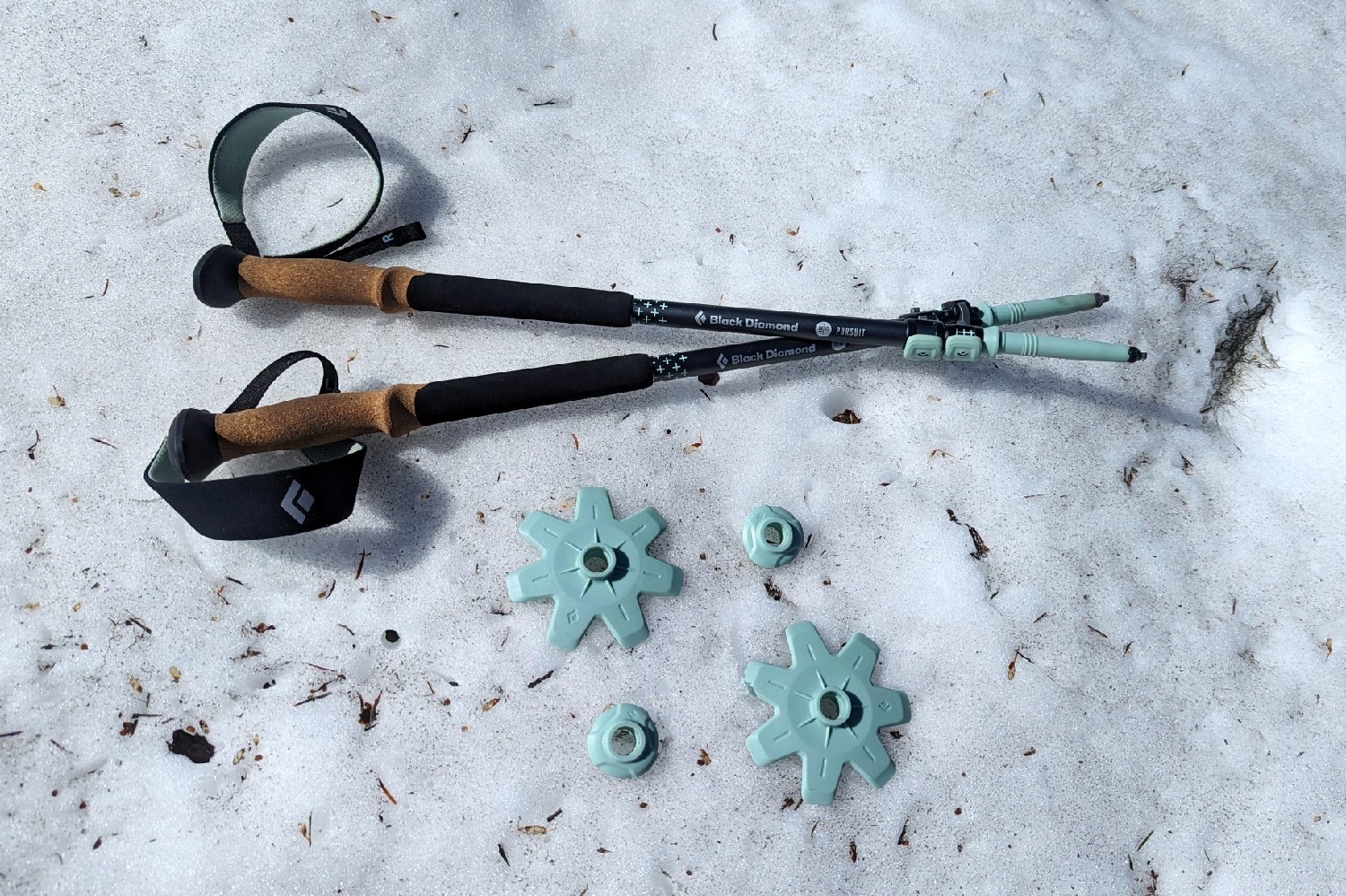
Round plastic baskets at the end of the pole are a great feature for preventing them from plunging into snow, mud, or sand. Most poles include at least one small summer basket, and some include a second, larger basket for winter use. Poles typically have threading just above the tip, making it relatively easy to replace or exchange the baskets.
are trekking pole tips replaceable?
Pole tips typically consist of a plastic body that holds a carbide tip, enhancing stability and traction. This tip is durable but can wear down over time as it comes into contact with rocks. Fortunately, they can usually be replaced by removing either the carbide tip or the entire plastic body, then inserting a new tip from the manufacturer.
Should I Choose a Model With Shock Absorbers?
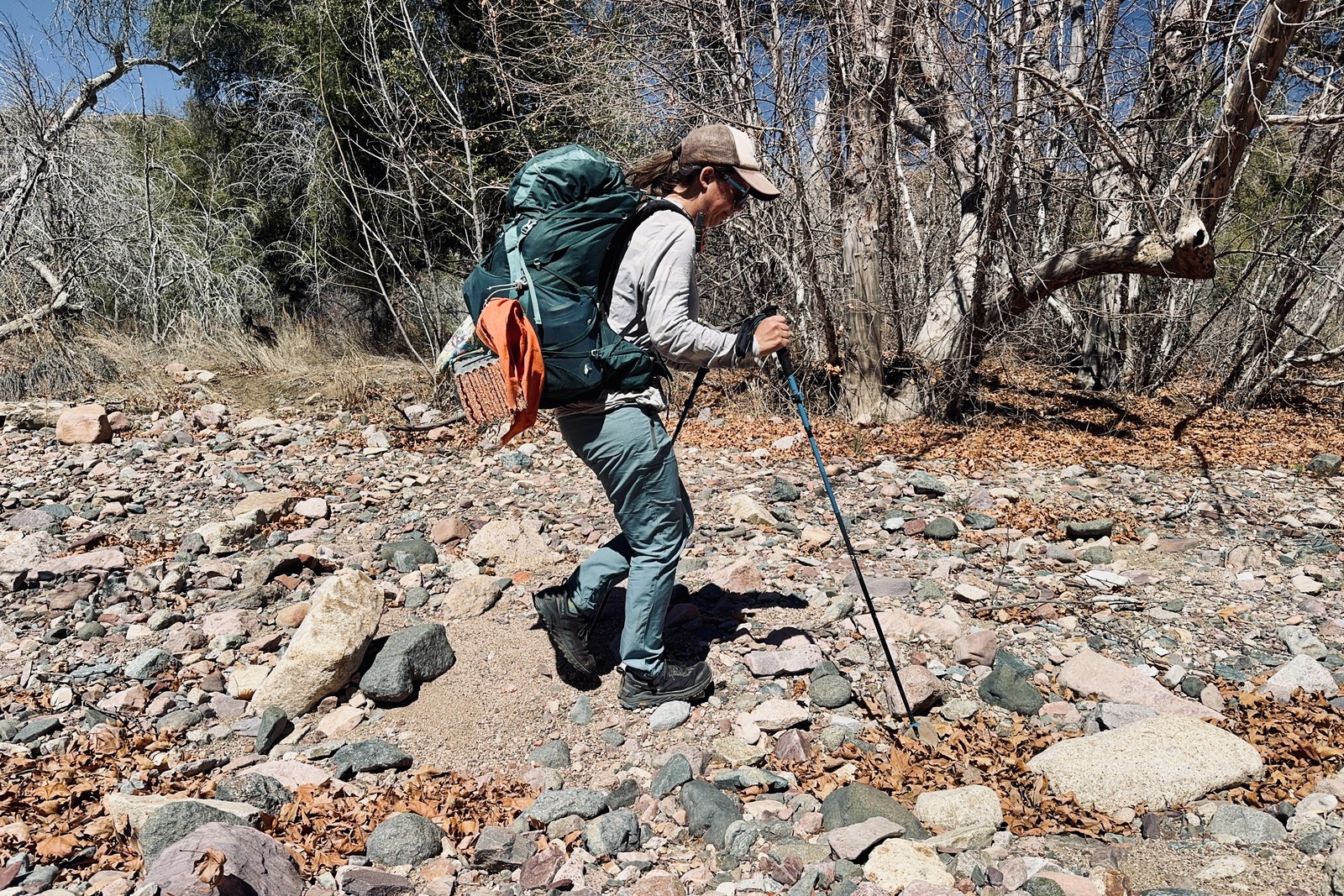
Shock absorbers are small, spring-like mechanisms near the pole’s tip that help absorb some of the impact of striking the ground. Shock absorbers are a personal preference, though we tend to avoid them. For one, the moving internal parts are prone to breakdown and difficult to repair. They also reduce some of the stability benefits of poles in rugged terrain and can become squeaky, which is annoying at the end of a long day.
How long should my trekking poles be?
Regardless of the pole design, your arms should not be bent more than 90° when holding the poles vertically when standing still on flat ground. This helps reduce the chance of injury and maximizes efficiency. Shortening the poles 5 to 10 centimeters when hiking uphill may help improve traction and planting. On descents, lengthening the poles can increase stability and footing.
Should I Buy a Gender-Specific Pole?
While there are a few gender-specific poles on the market, most of the difference is in color options and pole length. The majority of trekking poles are unisex, and our recommendation is to choose the pole that feels best on the trail.
Why Trust CleverHiker
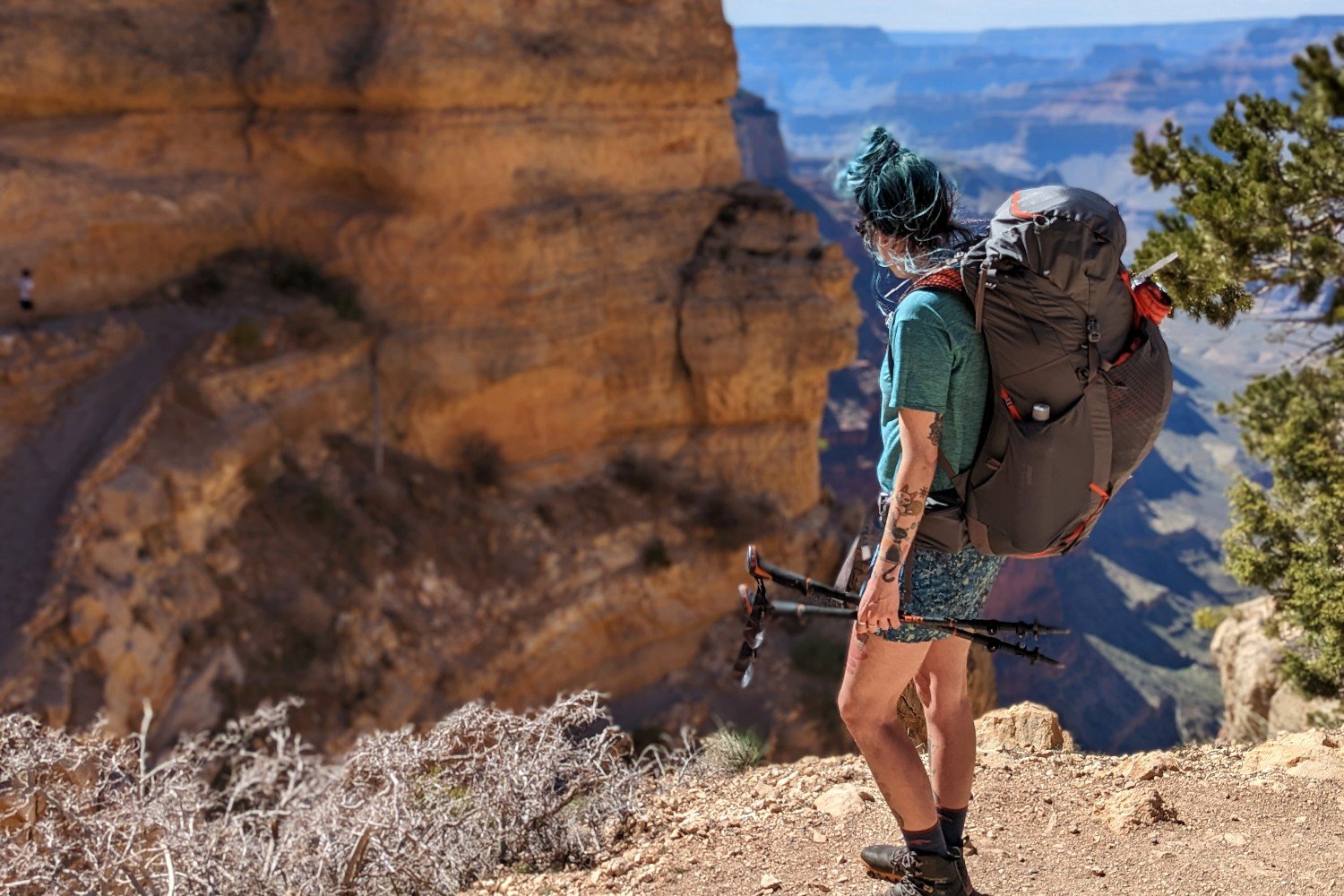
Gear analyst Bailey Bremner has spent over 600 nights and nearly 9,000 miles on trails across the U.S. with various trekking poles. Many of her shelters have been trekking pole tents, and she leans on trekking poles to help her hike through rugged terrain on and off the trail. She found her trekking poles particularly useful while backpacking in Alaska and thru-hiking original routes such as the San Luis Loop, Columbine Route, and Western Wanderer Route.

Testing Methodology
How do we Test durability?
Durability is essential for various reasons, including those who rely on their poles for stability in uneven terrain, use them to pitch their shelter, or for crossing swift rivers.
We tested the durability of each model by subjecting it to several tests. In the first assessment, we threw each trekking pole approximately 10 feet, like a javelin. Afterward, we dropped every pole onto a large boulder. Might sound crazy, but we’ve had some gnarly crashes while sliding down scree fields and boulder hopping.
Finally, we planted each pole in the ground and leaned on it. We don’t actually want to break any poles, so we noted which poles seemed likely to be very easy to break and which would be very difficult to snap. This test was the primary basis for our ranking system. However, we also used the degree of cosmetic damage to help with rankings.

How do we Assess weight?
The importance of weight varies by use case, but for most backpackers, every ounce counts. You’re already hauling your life on your back, so poles don’t need to add to the afternoon slumps.
The difference between the lightest and heaviest trekking poles is easily noticeable, particularly at the end of a long day. Although trekking pole weights are listed online, we weighed each model on our scale to verify the listed weights.
We used a small kitchen scale to weigh each pole for our test. Because the poles are long and don’t fit well, we used a medium-sized box and zeroed the scale before placing each trekking pole inside to weigh it. We weighed just one pole at a time, as many hikers prefer one pole. Those looking to compare pole weights should always ensure they know whether the listed weights refer to one or two poles and whether the straps are included in the weight.
What Do We Look At For comfort?
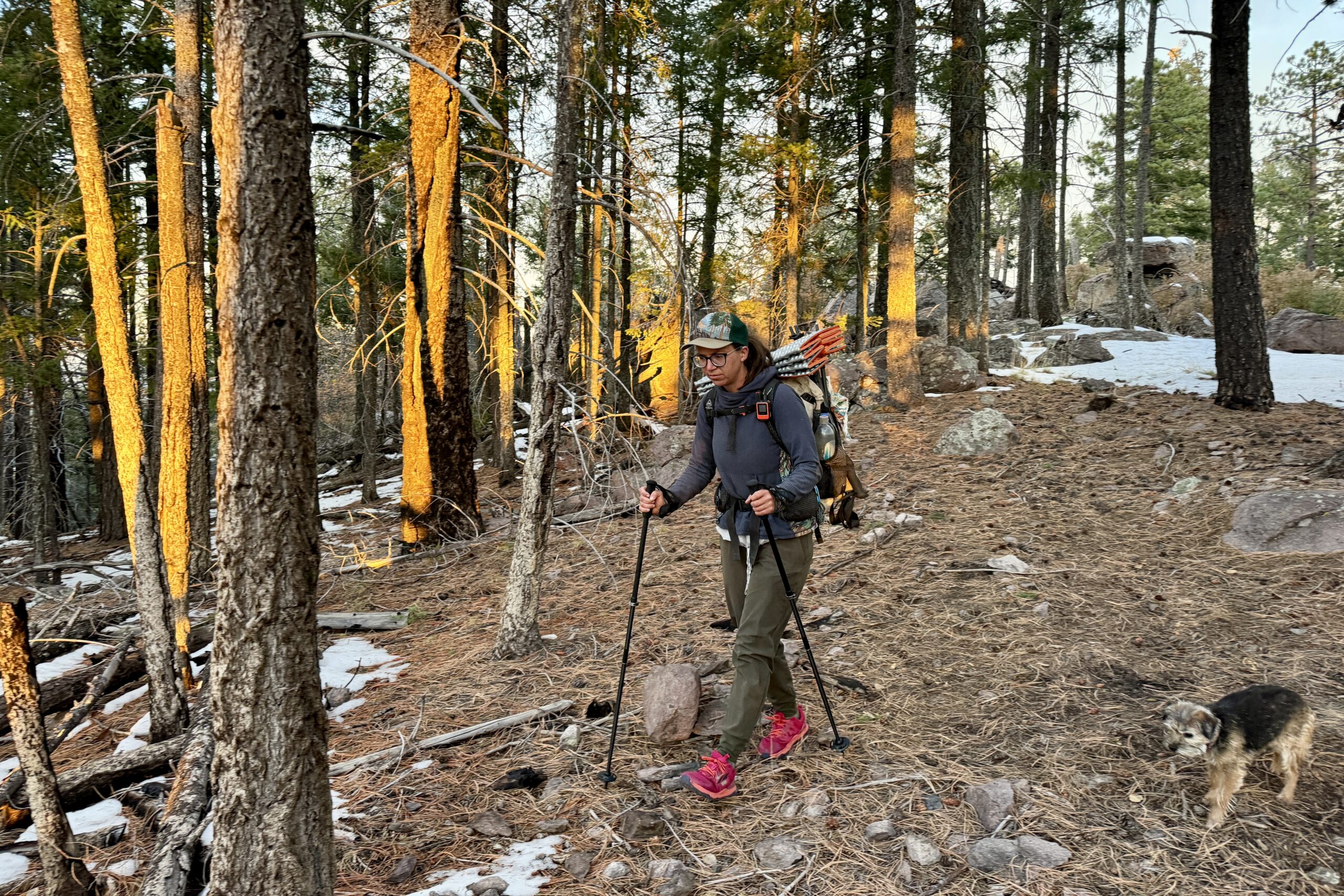
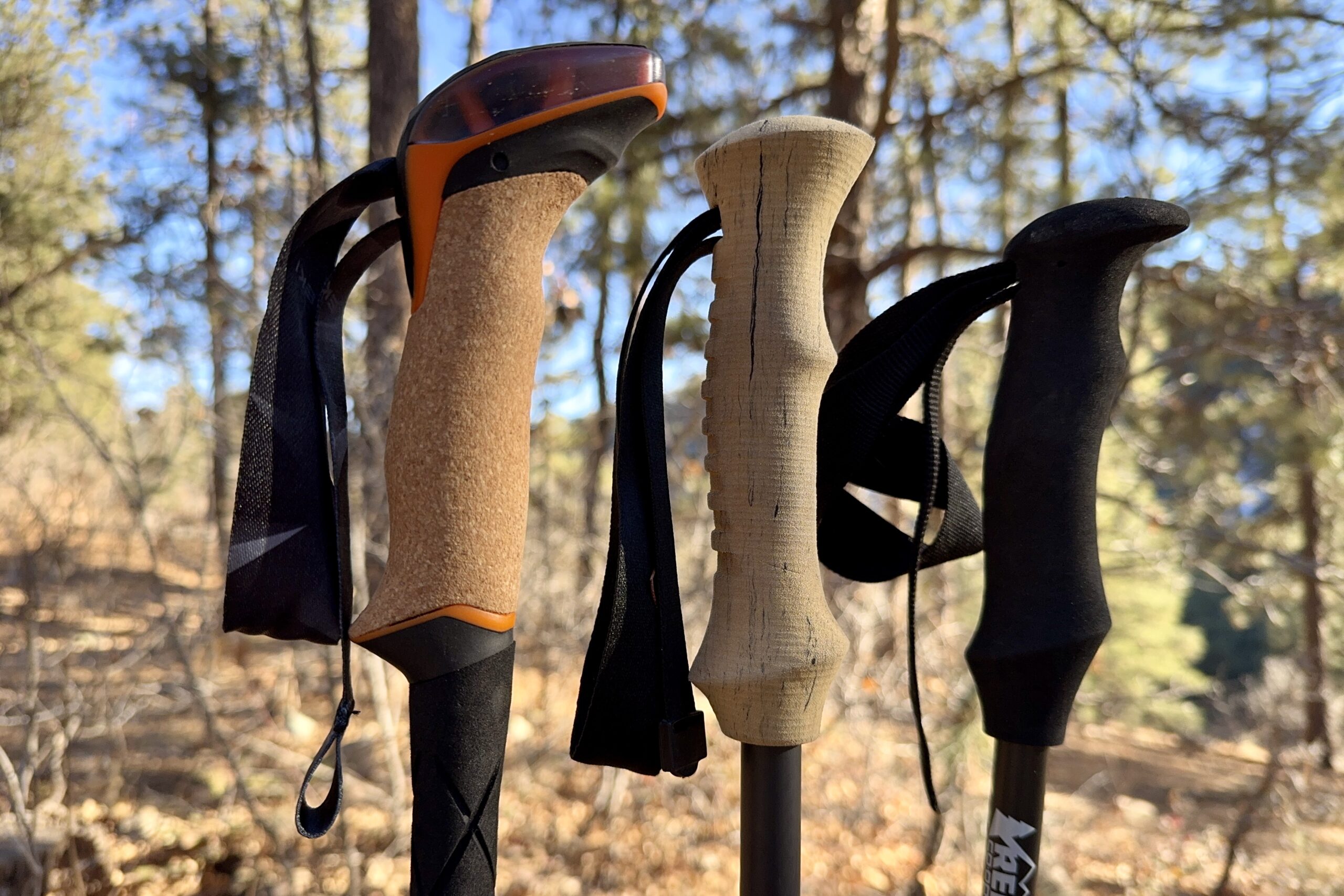
Cork handles quickly come to mind when choosing a pole specifically for comfort. Compared to foam, cork reduces vibrations in the hand from the pole hitting the ground. It also absorbs sweat better, reducing dirt on the handle. Aside from cork, we also examined whether each pole had padded wrist straps, the handle diameter, and how the handle’s shape felt in our hands.
We gave each model a point for every comfort feature it had and counted the total. Before giving each model a final ranking, we also considered design features that would negatively impact comfort, such as weirdly shaped lumps or uncomfortable wrist straps. We took points away if those were present.
How do we test ease of use?
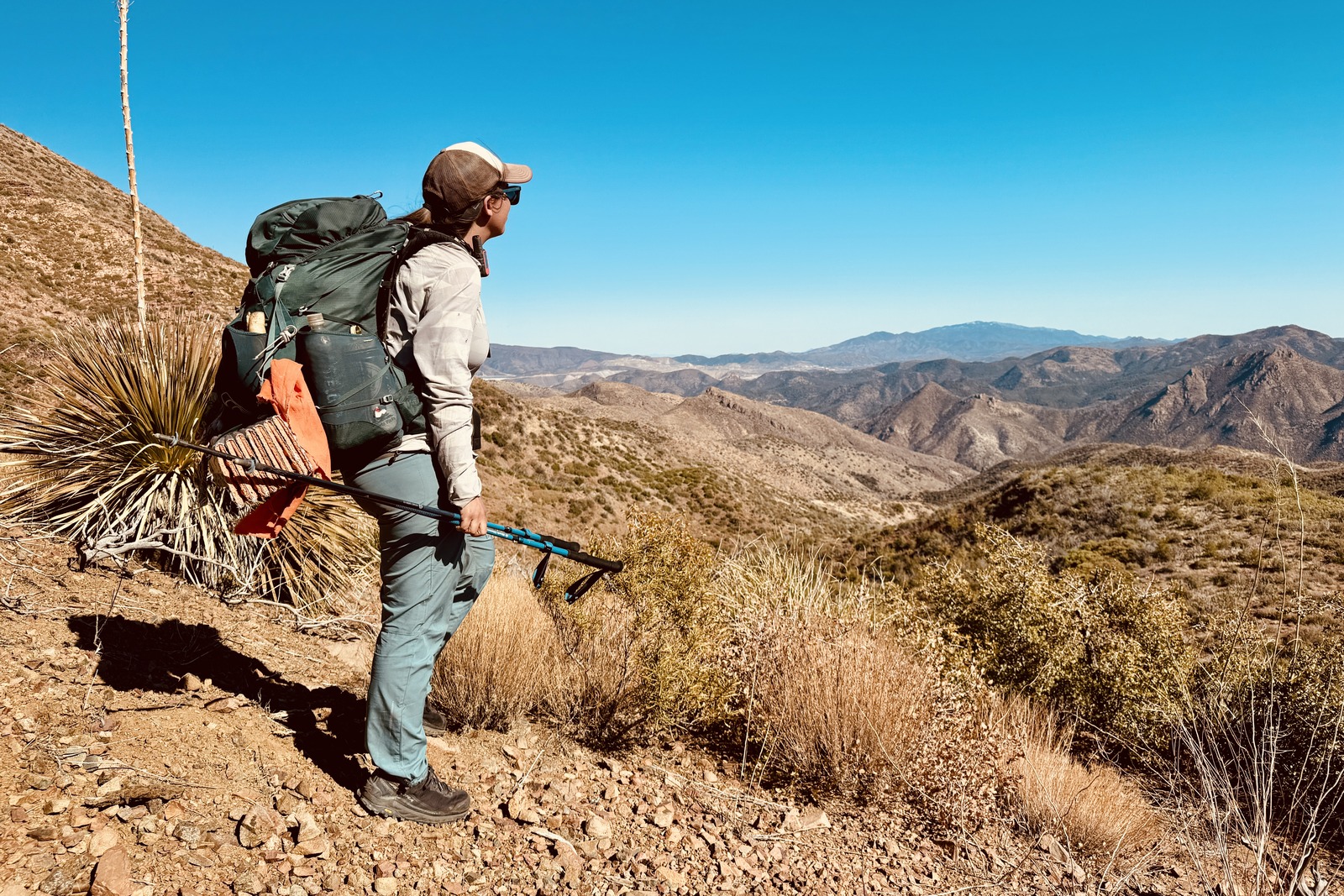
After testing many trekking poles, it is evident that some are easier to set up and use than others. The storage design, the tightness of any flip locks, and the materials affect how easy it is to open the poles in the field.
To test for this, we practiced setting up each pole to the desired length a few times, then timed how long it took to switch the pole from fully collapsed to ready to use. The model with the shortest time is the easiest to use, and the pole with the longest time is the most difficult to use.
How do we Assess packability?
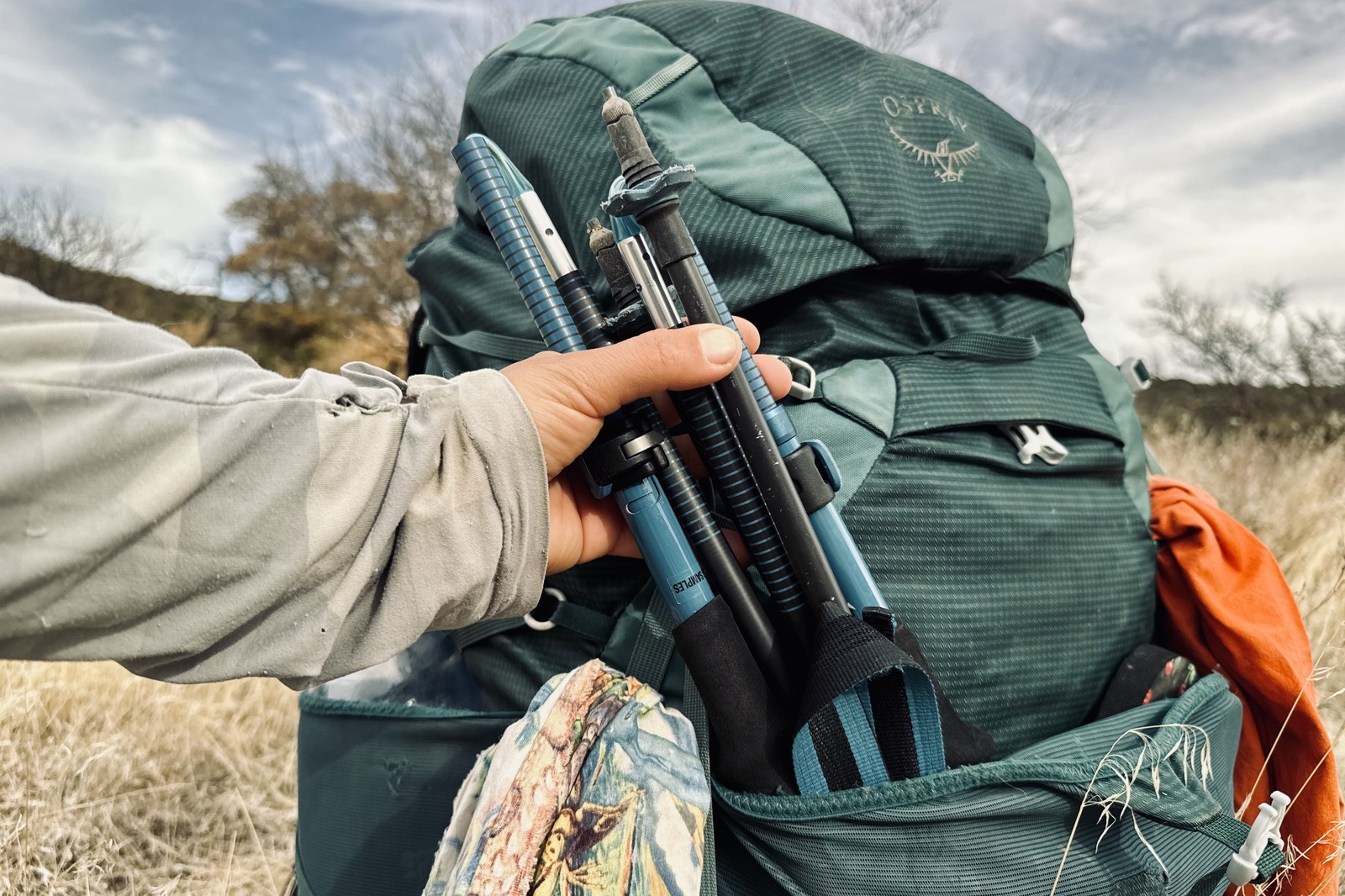
Packability is an essential quality for traveling with trekking poles or storing them. We have found this to be especially true when flying or hitchhiking. To test how small each set of poles packs down, we completely collapsed each set and measured the length from end to end.
The set of poles with the shortest length is the most packable. While we primarily focused on length, we also measured their collapsed dimensions. This measurement was used only to break ties.
How Do We Look For features?
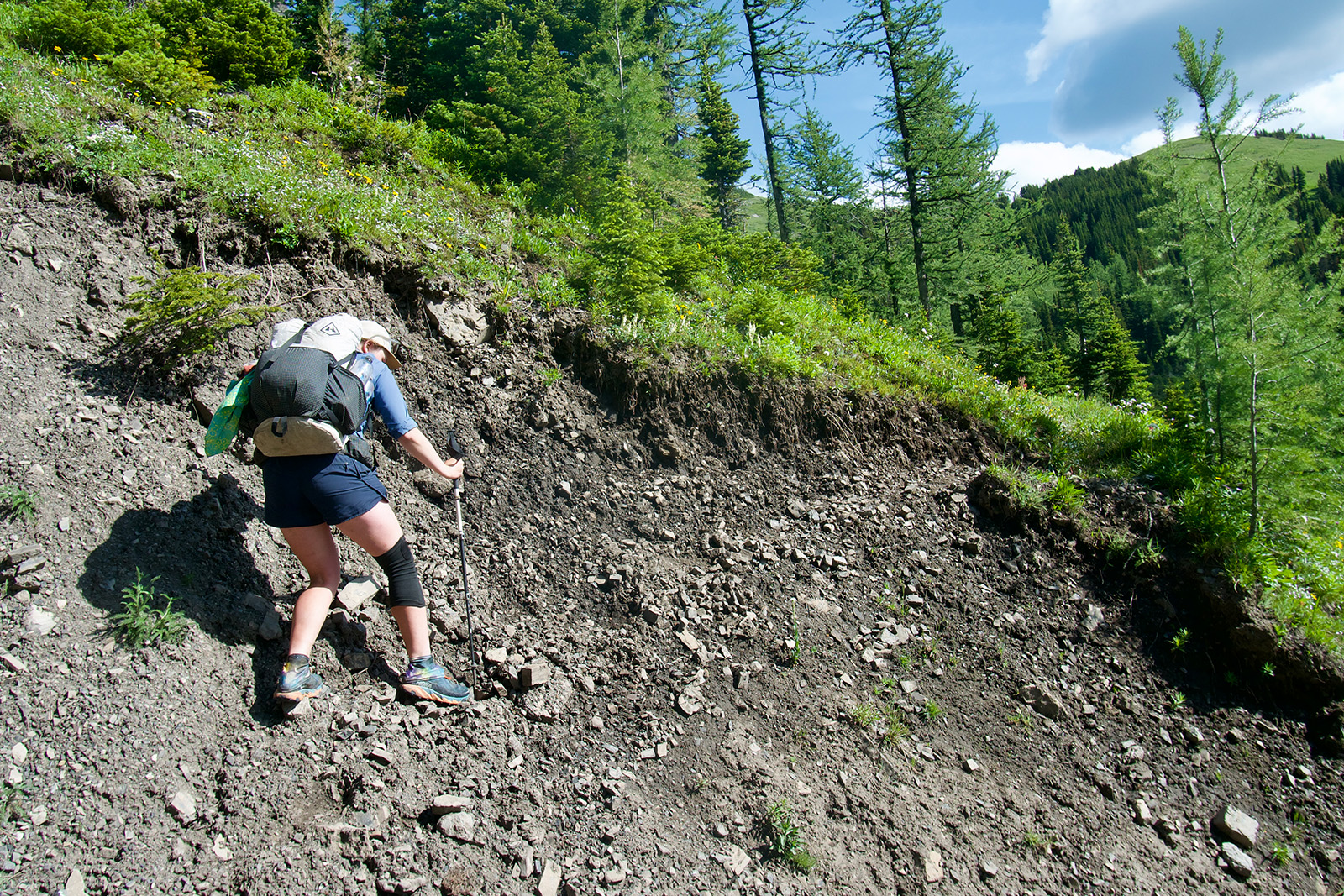
Different features can provide more versatility for each pair of trekking poles. We awarded points to each model for features such as wrist straps, summer and winter baskets, tip covers, the ability to replace the tip, flip-lock tightness adjusters, grip extenders, and storage bags. We awarded the model with the most features the highest ranking in this category.
Conclusion
There is a wide variety of trekking poles on the market. Some are designed to save as much weight as possible; others take a well-rounded approach; and still others focus on offering the most competitive price. We hope this guide has provided you with all the information needed to choose the best trekking pole for your needs.