

Bottom Line
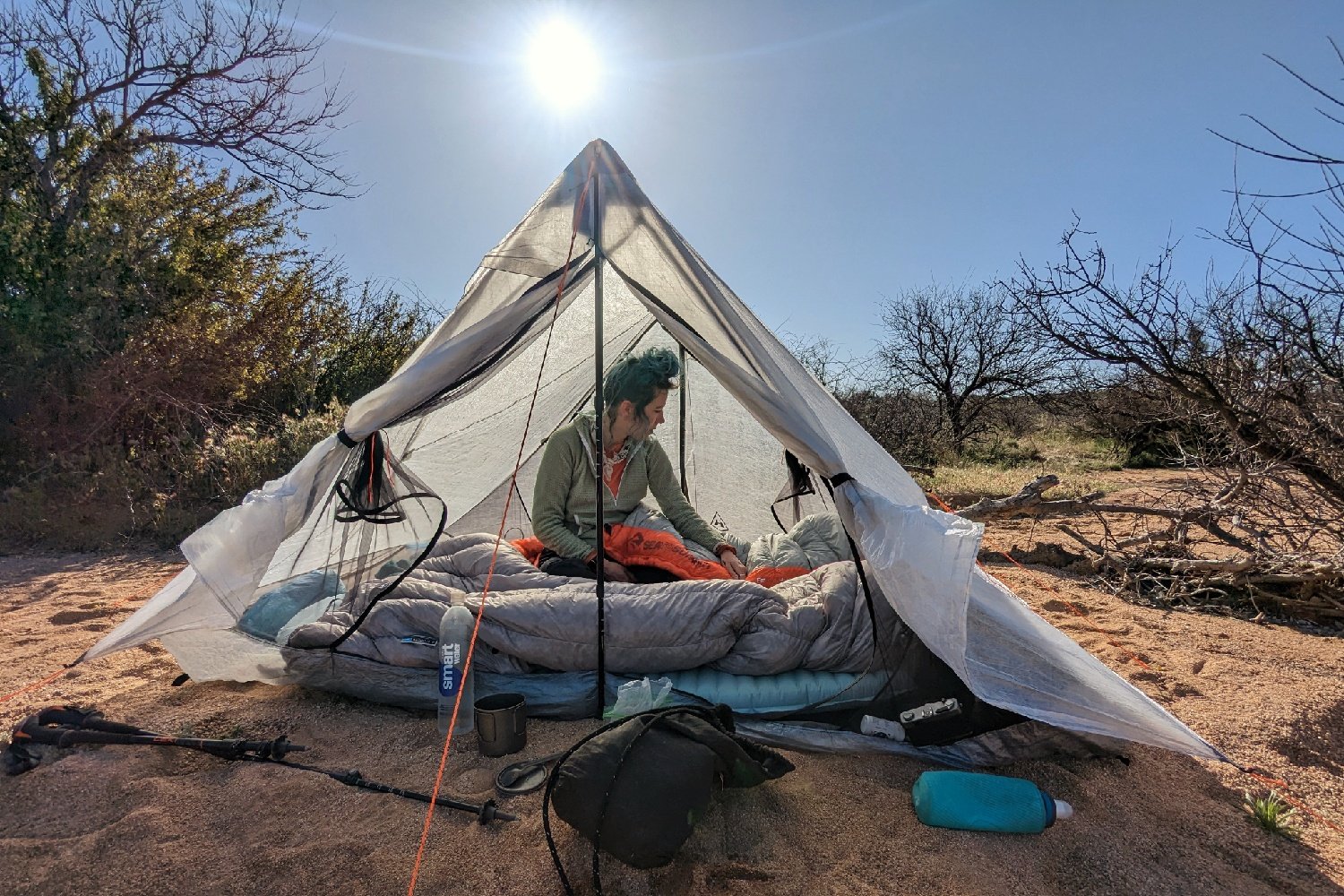
The Hyperlite Mountain Gear Unbound 2 is our top ultralight backpacking-tent pick for experienced hikers willing to pay heavily for a shelter that combines extremely low weight, excellent usable space, and strong long-distance durability.
At a CleverHiker-measured 1 pound, 5.8 ounces, the Unbound is dramatically lighter than conventional freestanding tents. Its 48-inch peak height and 90-by-48-inch floor also give two hikers surprisingly usable interior space.
The tradeoffs are classic single-wall trekking-pole compromises: more setup technique, more dependence on good stake placement, minimal interior storage, and more condensation management. The $795 price is also among the highest in the category.
How We Tested
CleverHiker’s current category testing includes the Unbound 2 alongside the Duplex, X-Mid, and lighter pole-supported tents. We focused on space-to-weight, weather performance, pitch quality, condensation, and long-term material durability.
Quick Specs
- Best for: Experienced ultralight backpackers and thru-hikers
- Floor area: 28 sq. ft.
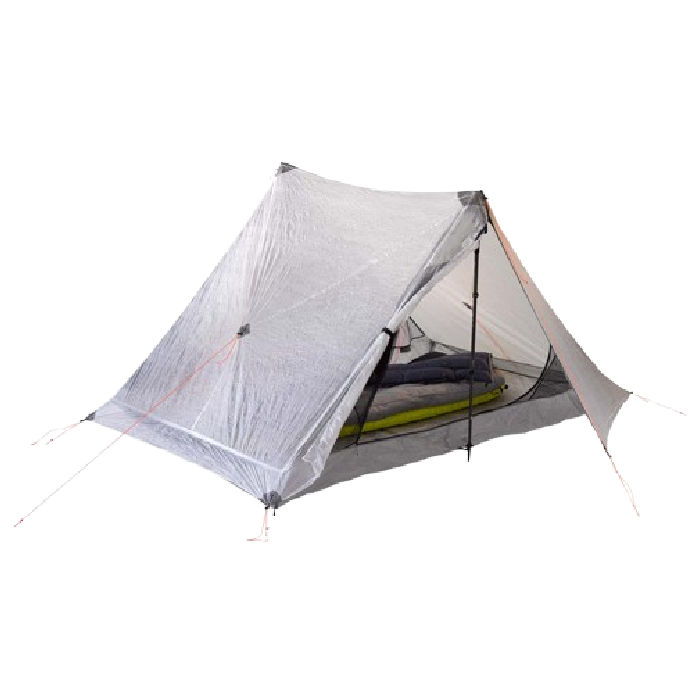
Hyperlite Mountain Gear Unbound 2
Best Ultralight Backpacking Tent
CleverHiker Rating: 4.5/5.0
Price: $795
Packed Weight: 1 lb. 5.8 oz.
Dimensions (LxWxH): 90 x 48 x 48 in.
Type: Non-freestanding
Pros
- Ultralight
- Spacious
- Durable for the weight
Cons
- Non-freestanding setup has a learning curve
- Collects condensation
- Very expensive

Comfort
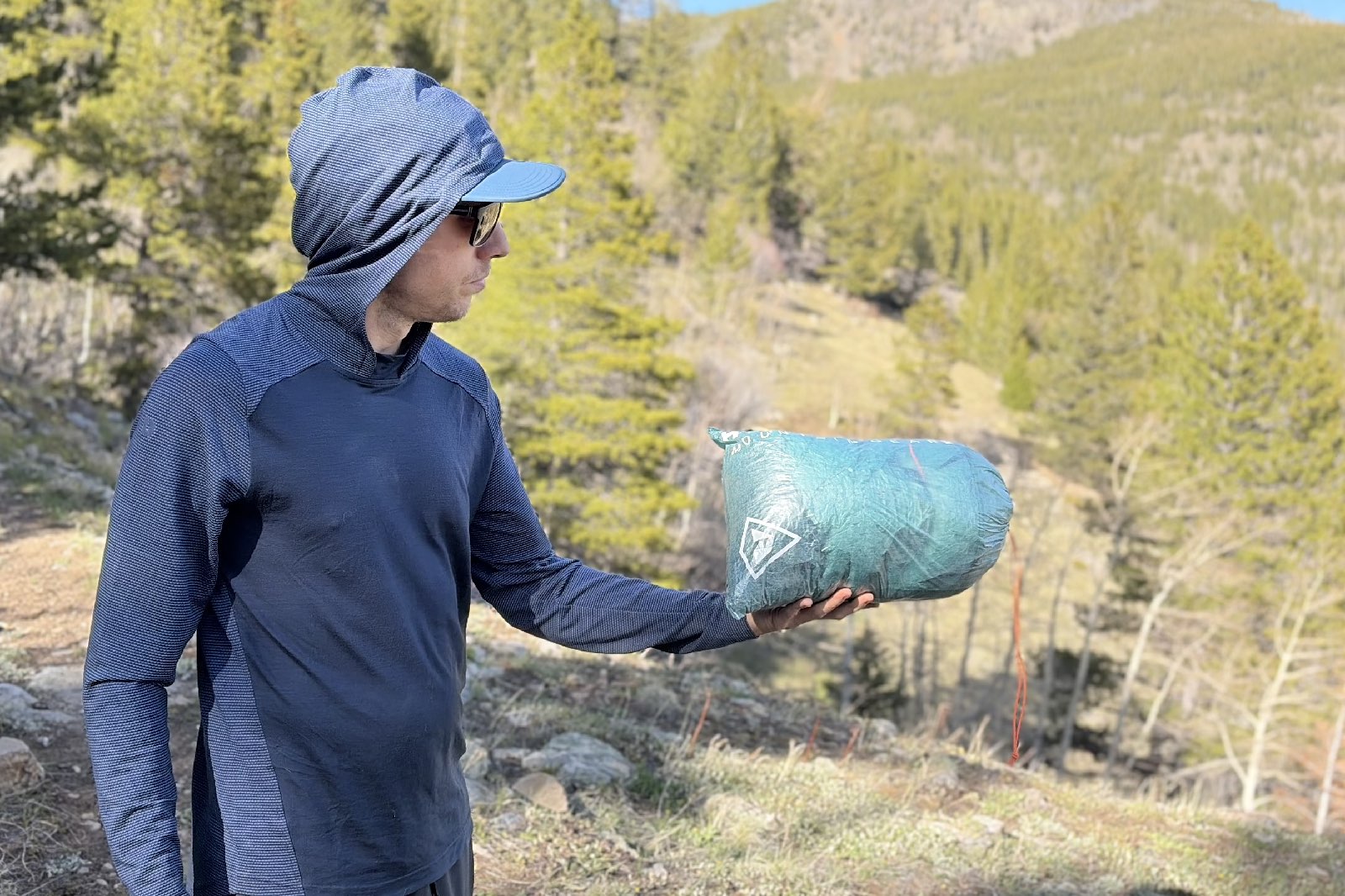
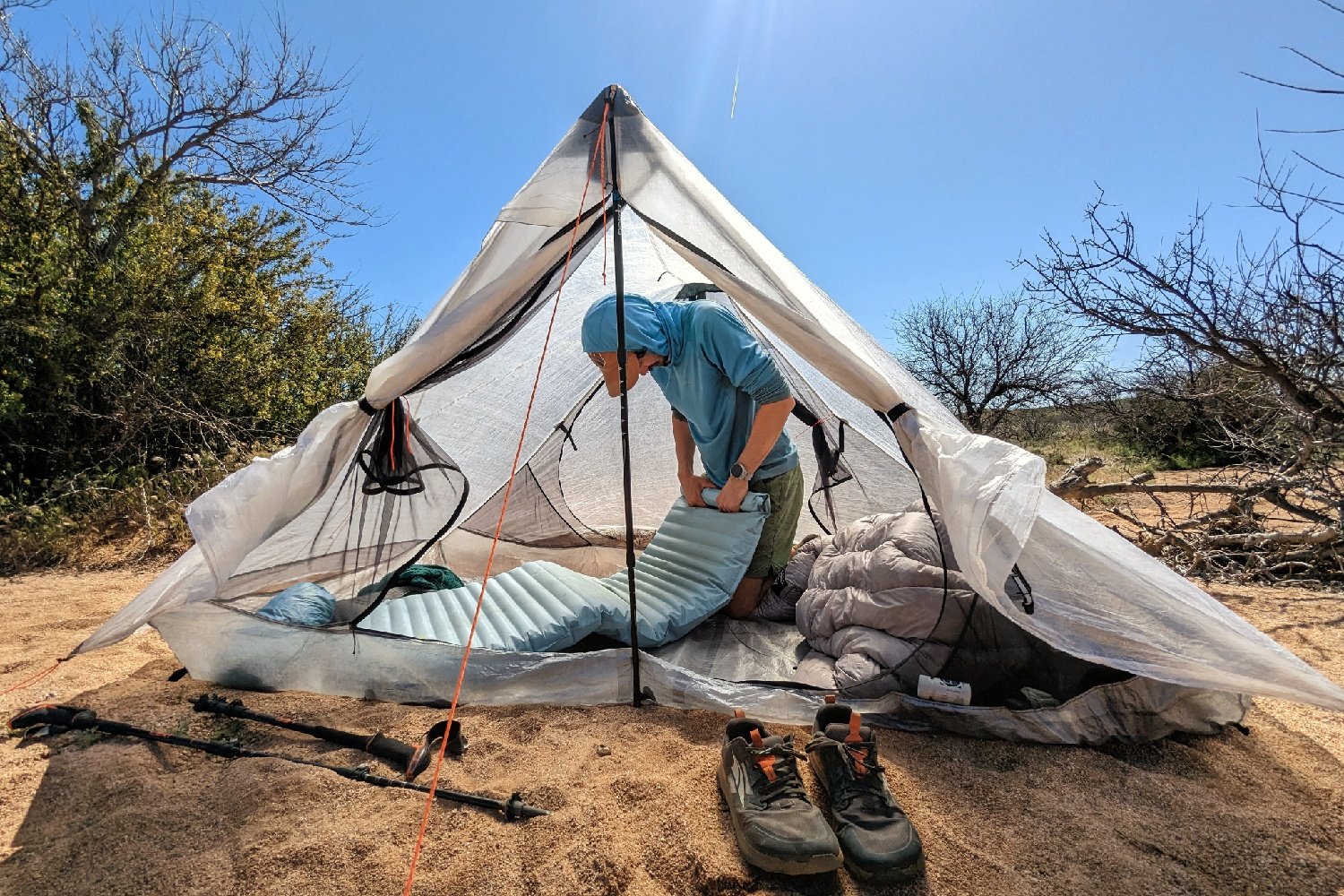
The Unbound 2 creates an impressive amount of usable room for a shelter that weighs well under two pounds. A 48-inch peak and 90-by-48-inch floor give one person abundant space and make the tent workable for two regular-width pads. The steep sidewalls also keep more of that height useful instead of concentrating it at a single narrow point.
Two large side entries make the shelter easy to share, and the wide doors open up excellent views in good weather. The interior is intentionally minimalist, though, with far less built-in storage than feature-rich freestanding tents. That means small items usually stay in a few pockets, in stuff sacks, or on the floor around the sleeping area.
The single-wall design is the main comfort compromise. Condensation can collect on the inside surface in humid or still conditions, so ventilation and campsite selection matter more than they do in a double-wall tent. Experienced ultralight hikers will find the space-to-weight ratio exceptional, while newer backpackers may prefer a more conventional interior.
For an ultralight shelter, the Unbound gives hikers impressive usable length, width, and peak height without filling the interior with support poles. That makes it feel much less restrictive than its weight suggests. The minimalist storage and single-wall construction are the main comfort compromises, especially for hikers who are used to more pockets or greater separation from condensation.
Comfort Score: 4.3 / 5.0
Weight & Packability
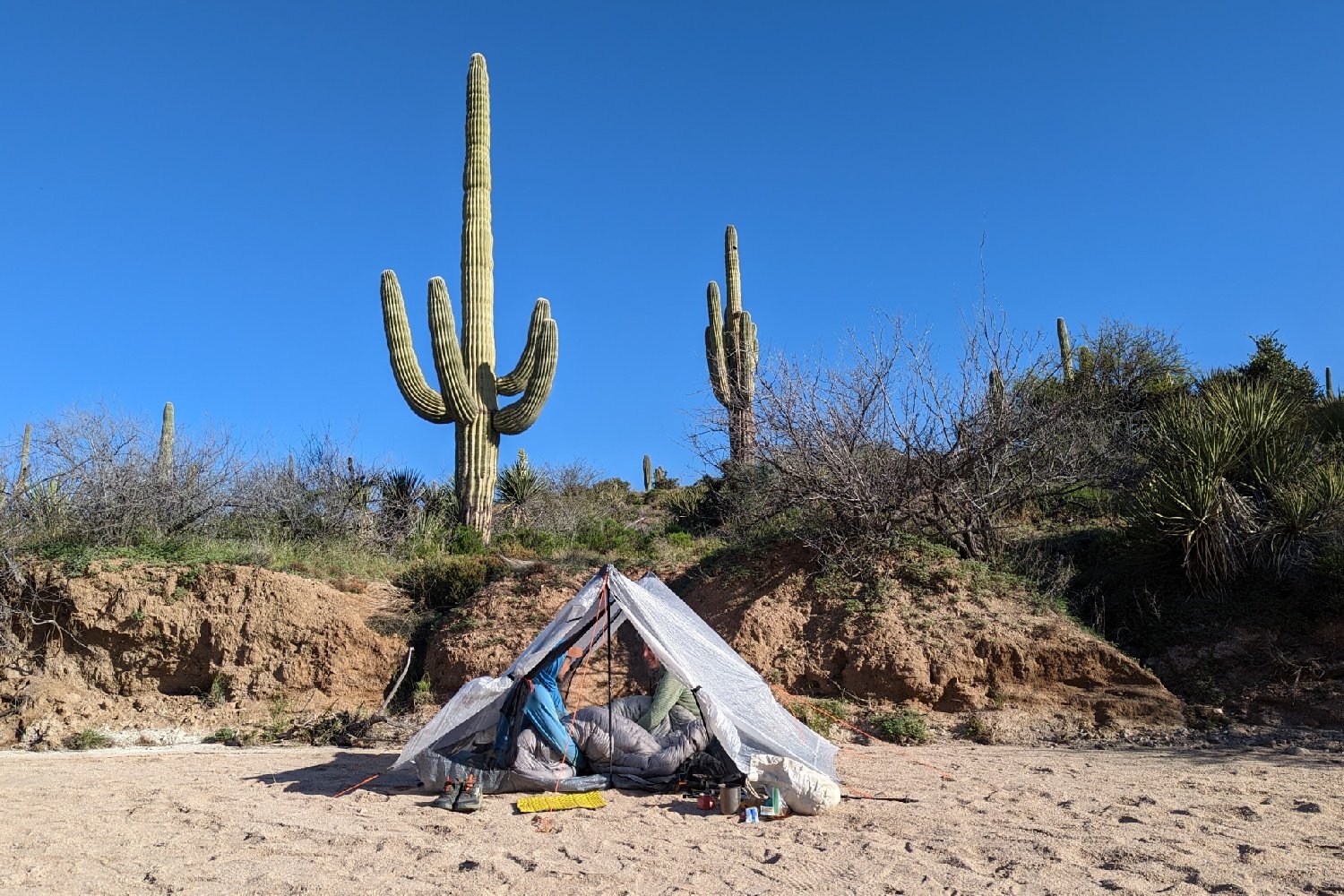
At a CleverHiker-measured 1 pound, 5.8 ounces, the Unbound 2 is one of the lightest two-person shelters in our entire backpacking-tent lineup. It achieves that weight by using Dyneema Composite Fabric, trekking poles for structure, and a stripped-down single-wall design. For long-distance hikers counting every ounce, the savings are substantial.
Because there are no dedicated tent poles, the packed package is shorter and easier to place around other gear than most freestanding tents. DCF itself is relatively bulky and does not compress like thin nylon or polyester, so the tent is best folded or rolled rather than crammed into the smallest possible space. Hyperlite’s oversized stuff sack makes packing less fussy.
The real benefit appears over high-mileage days and big elevation changes, where dropping one to two pounds from shelter weight can materially improve how a pack carries. The Unbound is expensive, so these savings make the most sense for backpackers who will use them often. Occasional users can get excellent performance for much less money with slightly heavier tents.
The Unbound’s weight is its defining advantage. DCF construction and trekking-pole support eliminate much of the structure found in conventional tents, producing a shelter that is dramatically lighter than most two-person options. The main packing tradeoff is volume rather than mass: DCF is stiff and does not compress as tightly as nylon or polyester shelters.
Weight & Packability Score: 5.0 / 5.0
Weather Resistance
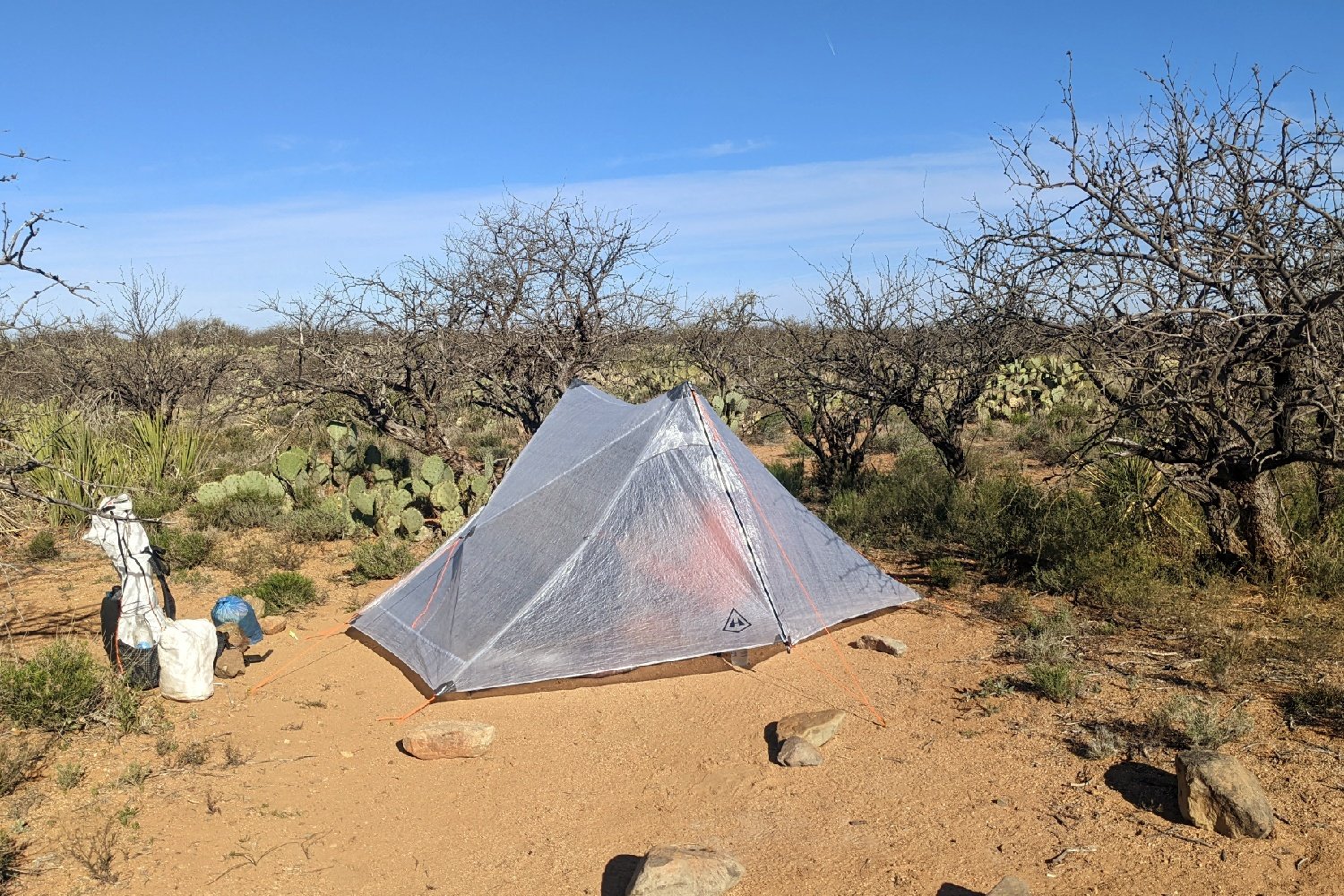
DCF gives the Unbound 2 excellent baseline weather protection because the material is highly waterproof and does not absorb water or sag as it gets wet. Fully taped seams keep water from entering at construction points, and the tall bathtub floor helps protect the sleeping area from splashback. When the shelter is pitched taut, the canopy sheds rain efficiently.
Wind performance depends heavily on the pitch. The trekking-pole structure, stake placement, and guyline tension all work together, so a rushed setup can feel much less secure than the same tent carefully tensioned. In exposed camps, using every important tie-out and choosing solid stake locations is essential.
Condensation is the other major weather consideration. Single-wall construction puts the waterproof canopy directly beside the living space, which means moisture on the interior is easier to brush against. Ventilation, avoiding low humid depressions, and leaving airflow beneath the doors when conditions allow are part of using this shelter well.
DCF provides excellent waterproofness and does not stretch or sag when wet, which helps the shelter maintain its intended geometry through rain. The larger variable is pitch quality. Secure stakes, balanced tension, and appropriate site orientation matter in wind, while the single-wall design makes ventilation and condensation management more important than with a double-wall tent.
Weather Resistance Score: 4.5 / 5.0
Ease of Setup
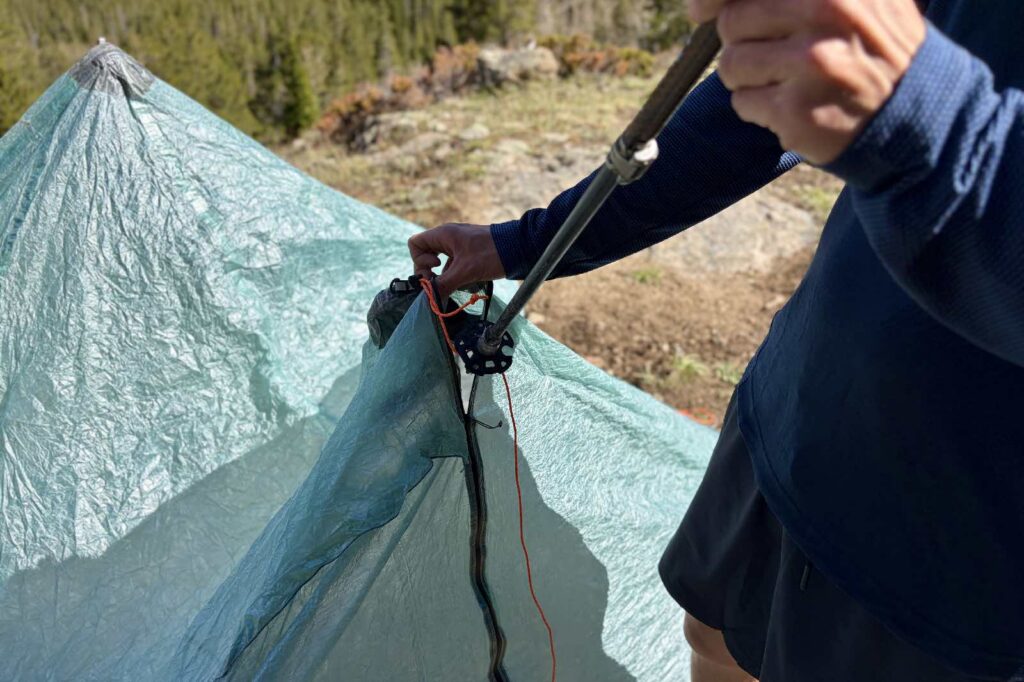
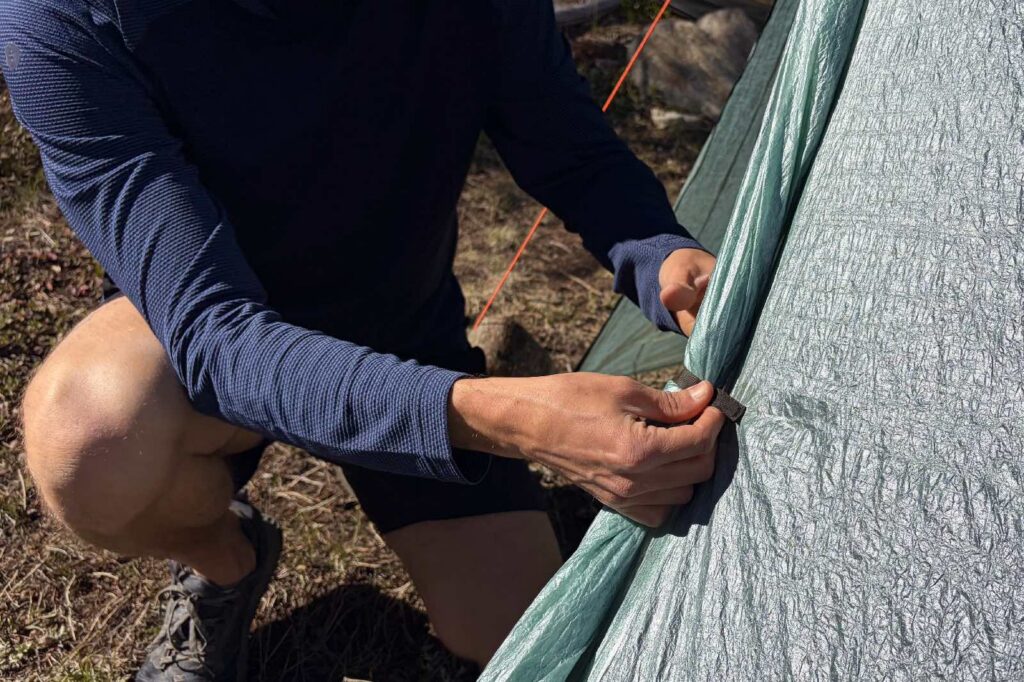
The Unbound 2 has a learning curve because the stakes and trekking poles are structural, not optional finishing touches. A good pitch starts with a well-shaped footprint and solid corner stakes, followed by correctly adjusted pole height and even tension. Backpackers coming from freestanding domes should expect a few practice sessions before the process feels automatic.
Once the geometry is familiar, the setup can be very fast because there is no separate pole assembly or inner tent to clip in. The tradeoff is that campsite selection matters more: hard ground, exposed rock, or roots can force you to relocate stakes or tie off to natural anchors. A little extra cord dramatically increases flexibility in those situations.
The tent also requires more attention to final tension than a freestanding model. Small stake movements can change wall clearance, vestibule shape, and wind stability, so it is worth spending an extra minute on a clean pitch. Experienced trekking-pole-tent users will find the process efficient; beginners may find it less forgiving.
This is a shelter that rewards familiarity more than raw speed. The basic stake-and-trekking-pole layout is simple once learned, but small changes in pole height, corner placement, or tension affect the final shape. Hikers who practice before a trip will find it efficient; users expecting freestanding convenience may find rocky or cramped sites more demanding.
Ease of Setup Score: 4.1 / 5.0
Durability
The Unbound 2 delivers unusually strong durability for its weight. Hyperlite uses DCF on the canopy and a heavier DCF specification on the floor, along with waterproof YKK zippers and reinforced high-load areas. Those choices are consistent with the brand’s broader emphasis on equipment that can survive long-distance use without becoming heavy.
DCF has excellent tensile strength and does not rely on a waterproof coating that can peel or hydrolyze over time. It also patches easily with compatible repair tape, which is useful for thru-hikers who may need a quick field repair. The material can still puncture or develop wear where it is repeatedly folded or abraded.
Careful campsite selection remains important because this is an ultralight shelter, not a heavy expedition tent. Avoiding sharp debris and varying fold lines when packing can help extend service life. For hikers who accept those habits, the Unbound offers one of the better durability-to-weight ratios in the category.
DCF gives the Unbound an excellent strength-to-weight profile and makes small field repairs straightforward with compatible tape. The material still benefits from careful handling because abrasion, repeated creasing, and sharp punctures are different failure modes than simple tensile stress. For experienced ultralight users, that maintenance profile is usually an acceptable trade for the exceptionally low weight.
Durability Score: 4.6 / 5.0
Should You Buy the Hyperlite Mountain Gear Unbound 2?
Buy the Unbound 2 if you already know you like trekking-pole shelters and want one of the lightest premium two-person tents we recommend for long-distance backpacking.
Skip it if you are new to non-freestanding shelters, camp mostly on difficult rocky sites, or cannot justify spending nearly $800 to save weight.
What Other Backpacking Tents Should You Consider?
Zpacks Duplex Classic Review: The Duplex Classic is lighter in our measured data at 1 pound, 1.9 ounces versus 1 pound, 5.8 ounces for the Unbound, and both use single-wall DCF construction supported by trekking poles. The Unbound carries a slightly higher overall CleverHiker rating at 4.5 versus 4.4, while both earn top marks for weight. Choose the Duplex when minimizing shelter weight is the priority; choose the Unbound if you want our current Best Ultralight Backpacking Tent pick.
Durston X-Mid 2: The X-Mid 2 costs dramatically less and uses a true double-wall design, which makes condensation easier to manage. It is heavier and has a large rectangular footprint that demands more campsite space and careful corner geometry. Choose the X-Mid for value and ventilation; choose the Unbound when minimum weight is the overriding goal.
Big Agnes Tiger Wall UL2 Review: The Tiger Wall UL2 is heavier, but its dedicated pole structure and semi-freestanding pitch are much easier for hikers who do not want to depend on trekking poles and perfect stake placement. It also provides excellent interior storage and a familiar double-wall design. The Unbound wins decisively on weight, while the Tiger Wall wins on conventional ease of use.