Bottom Line
The Osprey Exos 58 / women’s Eja 58 is one of the best choices in this field for hikers who want a real frame, excellent ventilation, and a relatively low pack weight. Its suspended AirSpeed back panel keeps most of the pack body off your back, and we also liked the trekking-pole attachment, hipbelt pockets, and practical exterior storage.
That ventilation comes with a distinct carry feel: the load sits farther from your body, which can change balance and make the pack feel heavier than the scale suggests. We like the Exos most for warm-weather backpackers with lighter kits; hikers who want the load planted closer to the body have stronger paths in the ULA Circuit or Gregory Paragon.
How We Tested
The Exos refresh took place on local Midwest trails in winter, where Taylor Passofaro focused on the suspended AirSpeed frame, hipbelt comfort, pocket access, feature choices, and construction. Cold conditions limited how far we could push warm-weather ventilation conclusions, so our airflow judgment also draws on the design’s direct comparison with close-contact packs rather than pretending winter testing answered every question.
Quick Specs
- Best for: Backpackers who want low framed weight and excellent ventilation
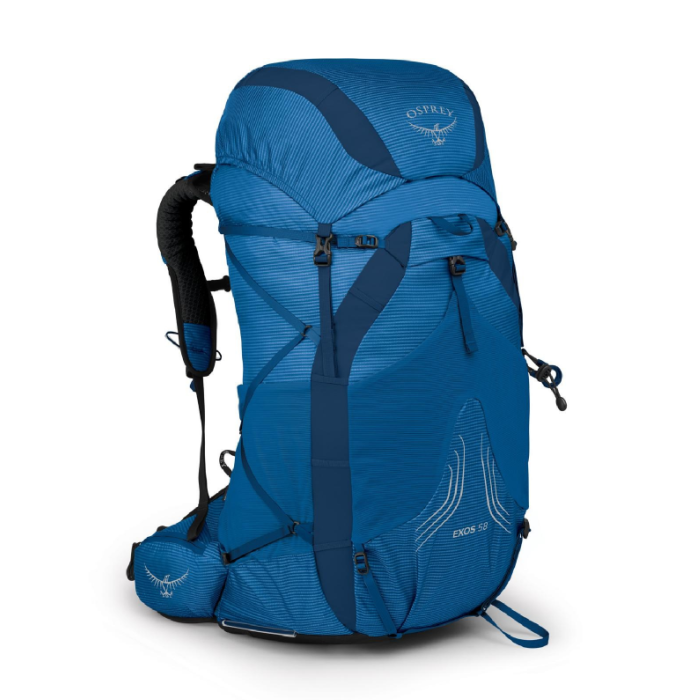
Osprey Exos 58 / Eja 58
Best Lightweight Ventilated Pack
CleverHiker Rating: 4.4/5.0
Price: $285
Measured Weight: 2 lb. 13.5 oz.
Volume: 58 L
Max Weight Rec.: 35 lb.
Pros
- Excellent ventilation and comfort
- Good hipbelt pockets
- Lightweight for a framed pack
Cons
- Shifted center of gravity makes the pack feel heavier
- Frame may rub on muscles

Comfort
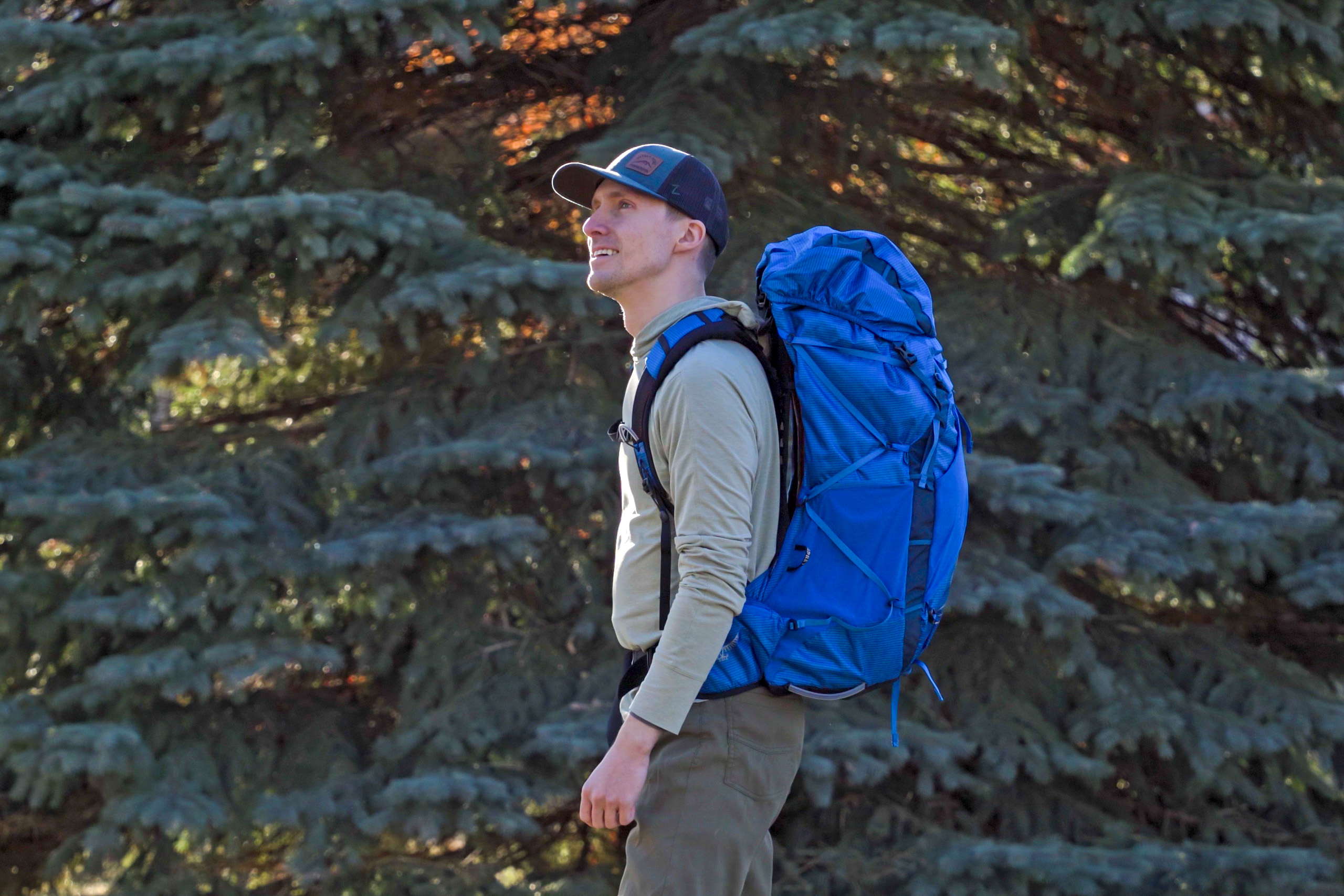
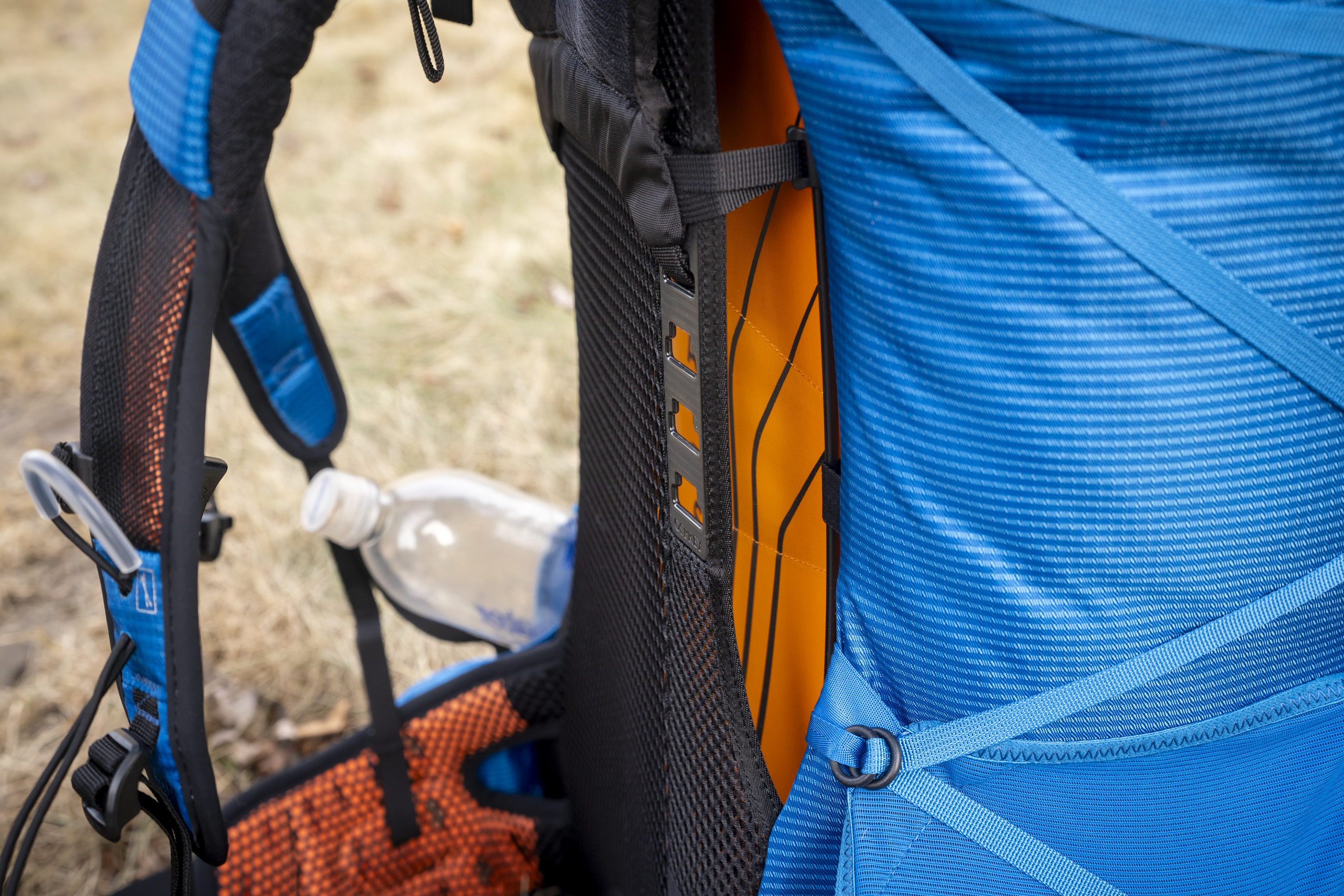
Airflow is the defining comfort benefit of the Exos. Its AirSpeed mesh suspends the pack body away from the back and moves noticeably more air than close-contact foam systems, while the hipbelt and harness still support lighter backpacking loads well enough for a 4.6 score. The price of that ventilation is leverage: cargo rides farther from the spine, so the pack can feel less planted on uneven ground.
Our 30-pound test reinforced why the Exos has such a loyal following. The suspended mesh panel hugs the body while keeping the pack bag itself away from the back, which creates markedly better airflow than a foam panel. The hipbelt also feels secure when moving over uneven ground. The same geometry creates the main tradeoff: cargo sits farther from the spine, adding leverage that can make the load feel heavier than its actual weight.
We also carry forward an important fit lesson from multiple days in previous Exos versions. The lower frame can sit close to the top of the glute muscles, and two testers experienced increasing discomfort as their bodies changed over consecutive days. That is not a universal Exos defect, but it is a reason to check frame clearance carefully with realistic weight before committing to the pack.
Comfort Score: 4.6 / 5.0
Features
Osprey kept the Exos useful without turning it into a stripped shell. Quick trekking-pole carry, usable hipbelt pockets, exterior storage, compression, and practical capacity give it enough trail function for a 4.5 feature score. It deliberately stops short of the compartment-heavy Atmos or Baltoro, which is part of why the pack remains relatively light. The restraint feels purposeful rather than incomplete.
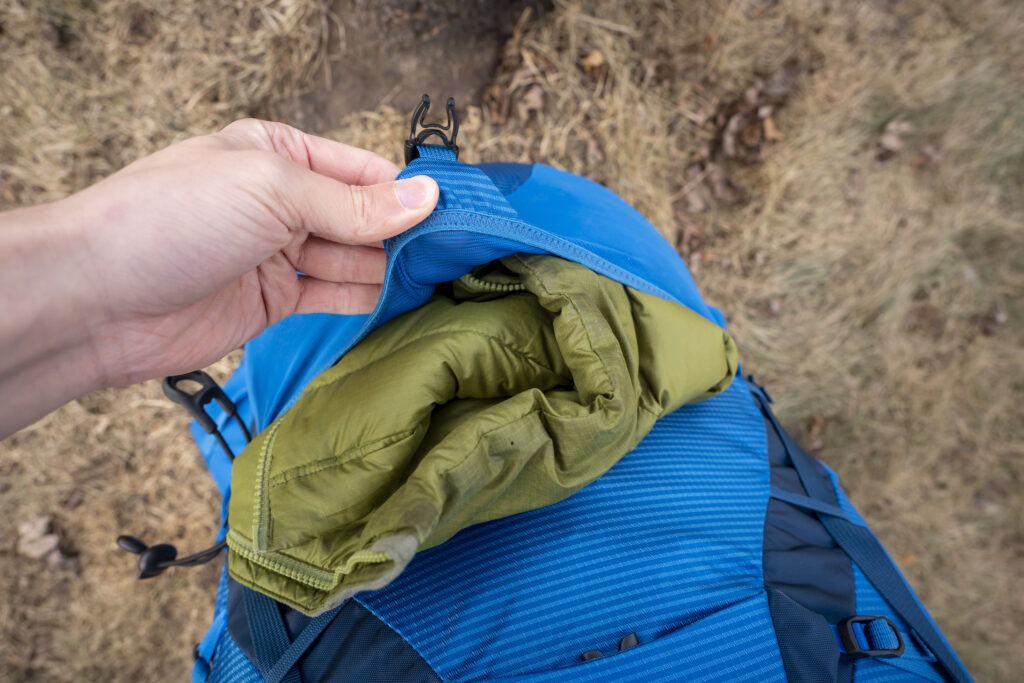
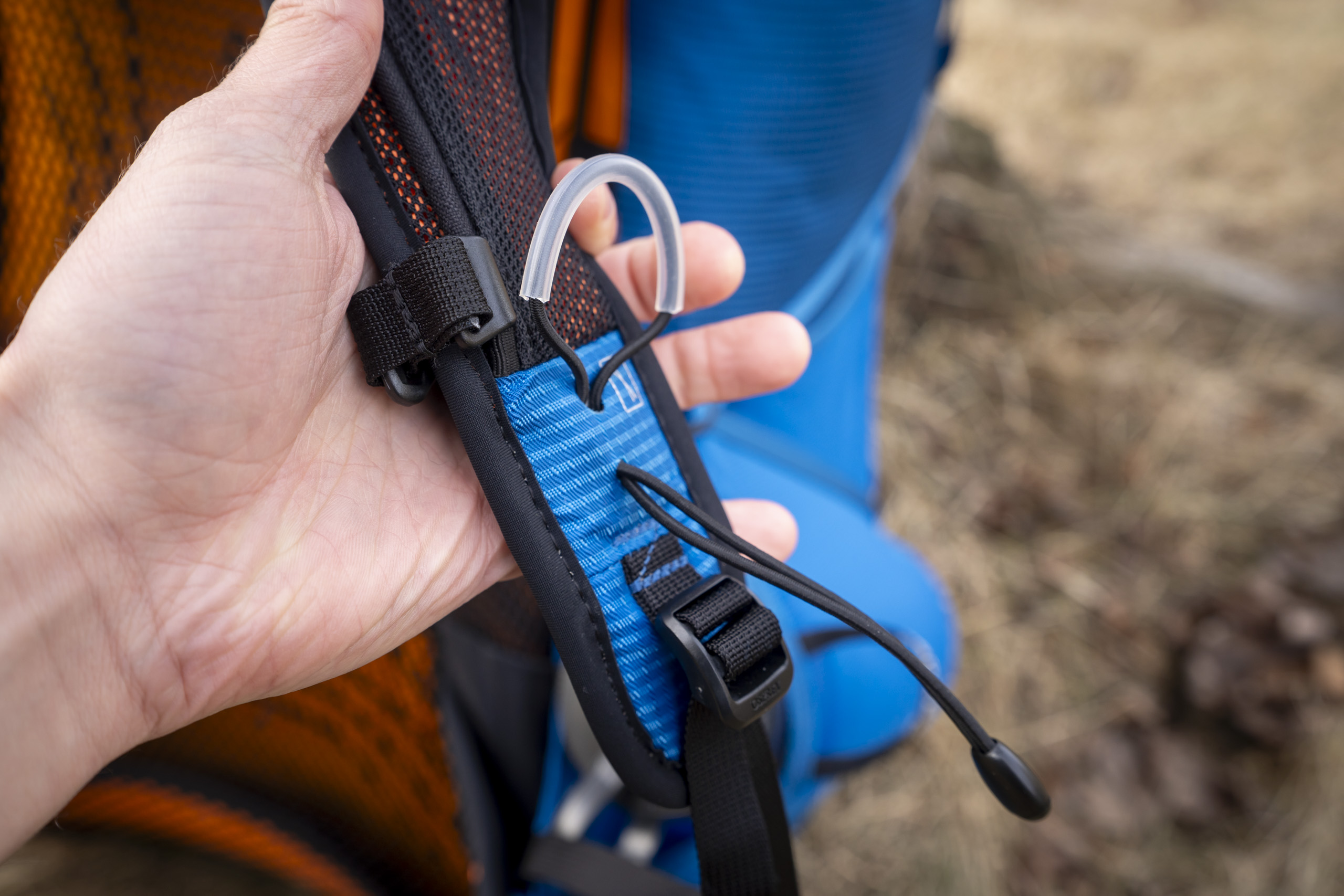
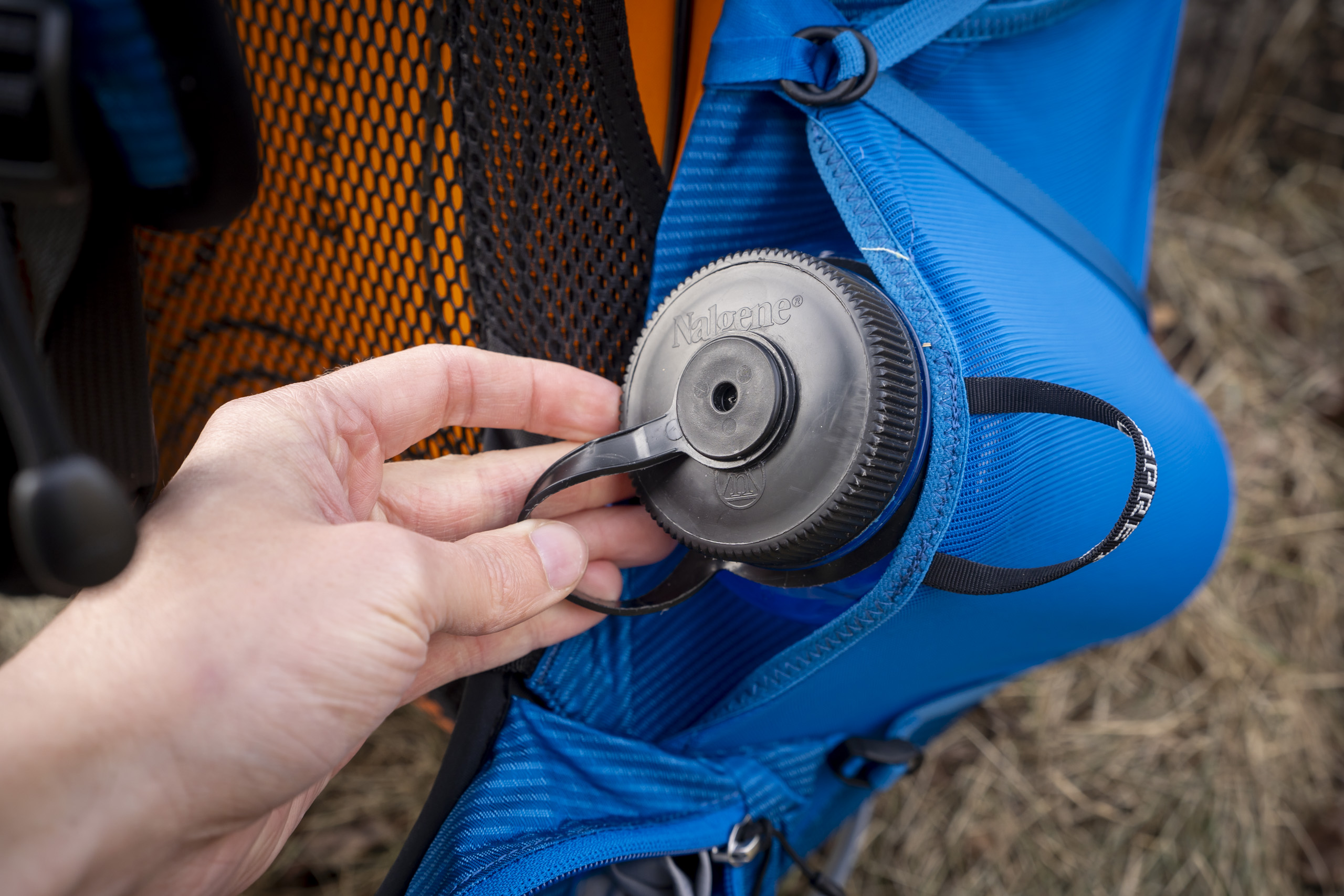
Osprey brought back hipbelt pockets after removing them from an earlier Exos generation, and we are glad they did. The current pockets use solid face fabric, operate smoothly, and hold the small items we reach for throughout the day. The integrated trekking-pole attachment on the shoulder strap is another feature we value enough to imitate on other packs with shock cord; it lets a hiker free both hands without stopping. Dual-opening bottle pockets also make hydration access much easier than tall top-loading sleeves.
These systems give the Exos more everyday convenience than many lightweight packs while keeping overall weight below most traditional framed designs. It still lacks the deep compartmentalization of the Atmos, and that is intentional. The feature set prioritizes the things we actually use on the move rather than trying to provide every possible storage option.
Features Score: 4.5 / 5.0
Durability
The Exos feels durable enough for the established-trail use its weight suggests, not for repeated abuse. Materials, stitching, and frame parts inspire reasonable confidence, and Osprey’s support history helps, but the construction is lighter than the Aether’s and lacks the Circuit’s thousands-of-miles evidence. That distinction is why we land at 4.3 rather than treating it as a rough-use pack.
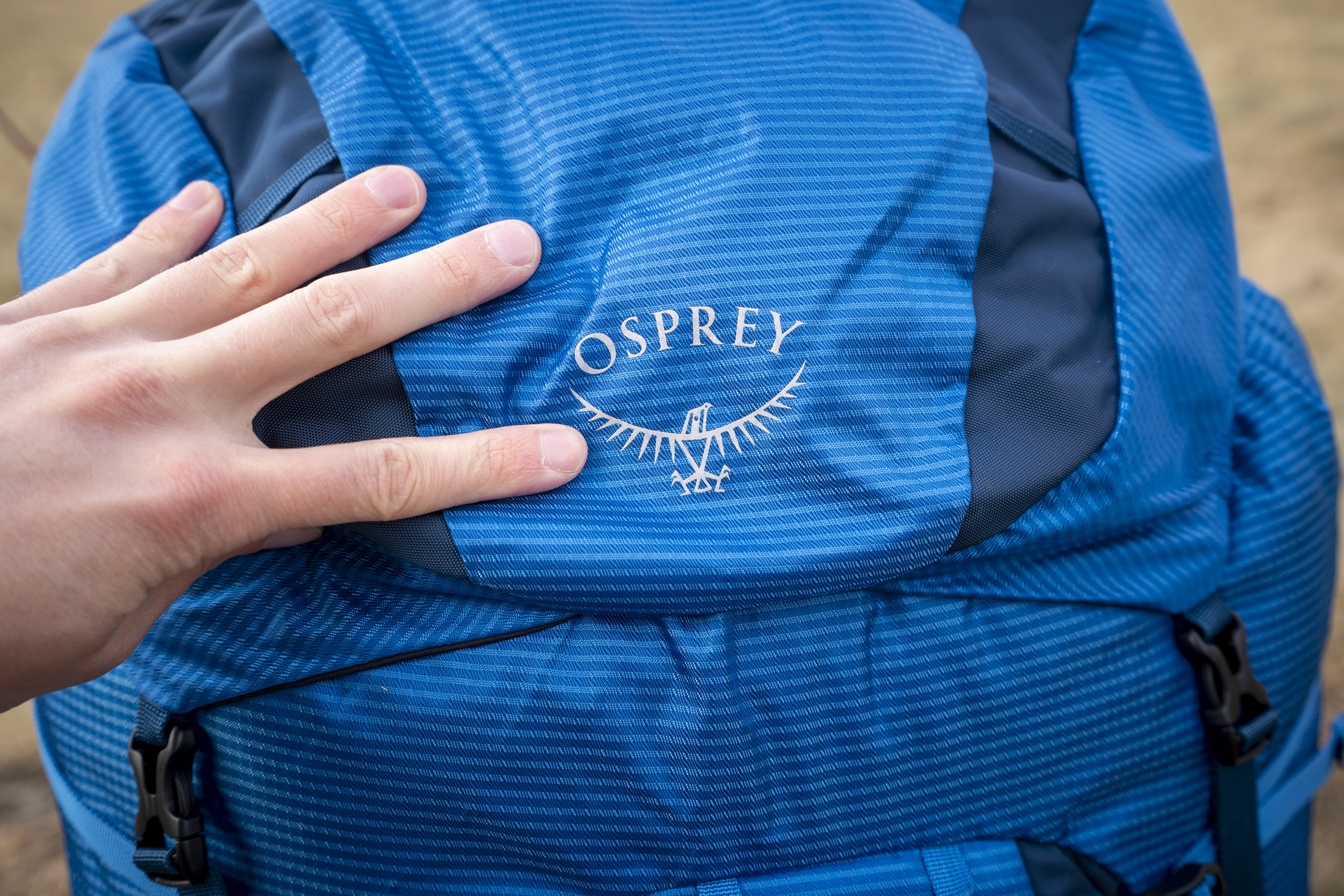
The Exos uses roughly 100D nylon through much of the pack and 400D reinforcement in higher-stress areas, placing it in the middle of the durability spectrum. That construction is lighter than the Aether or Baltoro and therefore deserves more care, but it is robust enough for a thru-hike when treated normally. Historically, the exposed fabric around the frame and the mesh storage have been the areas we watch most closely because they receive abrasion or snagging.
Moving the hipbelt pockets from mesh to solid fabric removes one of those weak points. The remaining mesh on the rear and side pockets still needs protection around branches and rough rock. We view this as an appropriate durability compromise for a lightweight framed pack: it is not built for careless abuse, but it is not so delicate that normal long-distance backpacking should be a concern.
Durability Score: 4.3 / 5.0
Ease of Use
Most of the Exos behaves like a familiar backpack even though the suspension feels different. Hipbelt pockets, bottle storage, trekking-pole carry, and compression are straightforward, while low empty weight makes the pack easier to handle off-body; together those traits support a 4.4 ease-of-use score. The main learning curve is packing around the suspended frame because cargo sits farther from the back.
Most interactions with the Exos are familiar and efficient. The hipbelt pockets open smoothly, the dual-opening bottle pockets are easy to reach, and the shoulder-strap trekking-pole system lets hikers transition between using and stowing poles without removing the pack. Compression and external storage are straightforward, and the low empty weight makes the pack easier to lift and maneuver at camp than the heavier traditional options.
The main adjustment is conceptual rather than mechanical: a suspended frame changes how the pack loads and carries because the bag is held away from the back. Hikers used to a close-contact design may need to pay more attention to keeping dense items near the spine and controlling sway. Once packed well, however, the Exos does not demand much ongoing attention, which is exactly what we want from a high-mileage lightweight framed pack.
Ease of Use Score: 4.4 / 5.0
Should You Buy the Osprey Exos 58 / Eja 58?
Buy the Exos if ventilation is one of your highest priorities and you still want the structure and familiar organization of a framed pack. It gives warm-weather hikers much more airflow than close-contact foam designs without jumping into four- or five-pound pack territory. The tradeoff is load position: some hikers will notice the cargo sitting farther away from the spine. The ULA Circuit is better for proven thru-hike durability and a closer carry, while the REI Flash 55 delivers strong value at a lower price.

What Other Backpacking Backpacks Should You Consider?
REI Flash 55 Review: Similar overall weight, a lower price, and more modular organization give the Flash the value edge. The Exos wins on suspended-mesh ventilation, while the Flash is easier to customize and more conventional to pack.
Gregory Paragon 60 Review: Backpackers who prefer our favorite traditional comfort and a closer load position should accept the Paragon’s extra weight. It is heavier than the Exos, but the suspension feels more planted and the access is especially intuitive.
ULA Circuit Review: Proven durability, simple storage, and a closer load position make the Circuit the more natural thru-hiking choice. The Exos offers more airflow and a familiar framed feel, while the Circuit has the deeper long-distance track record.