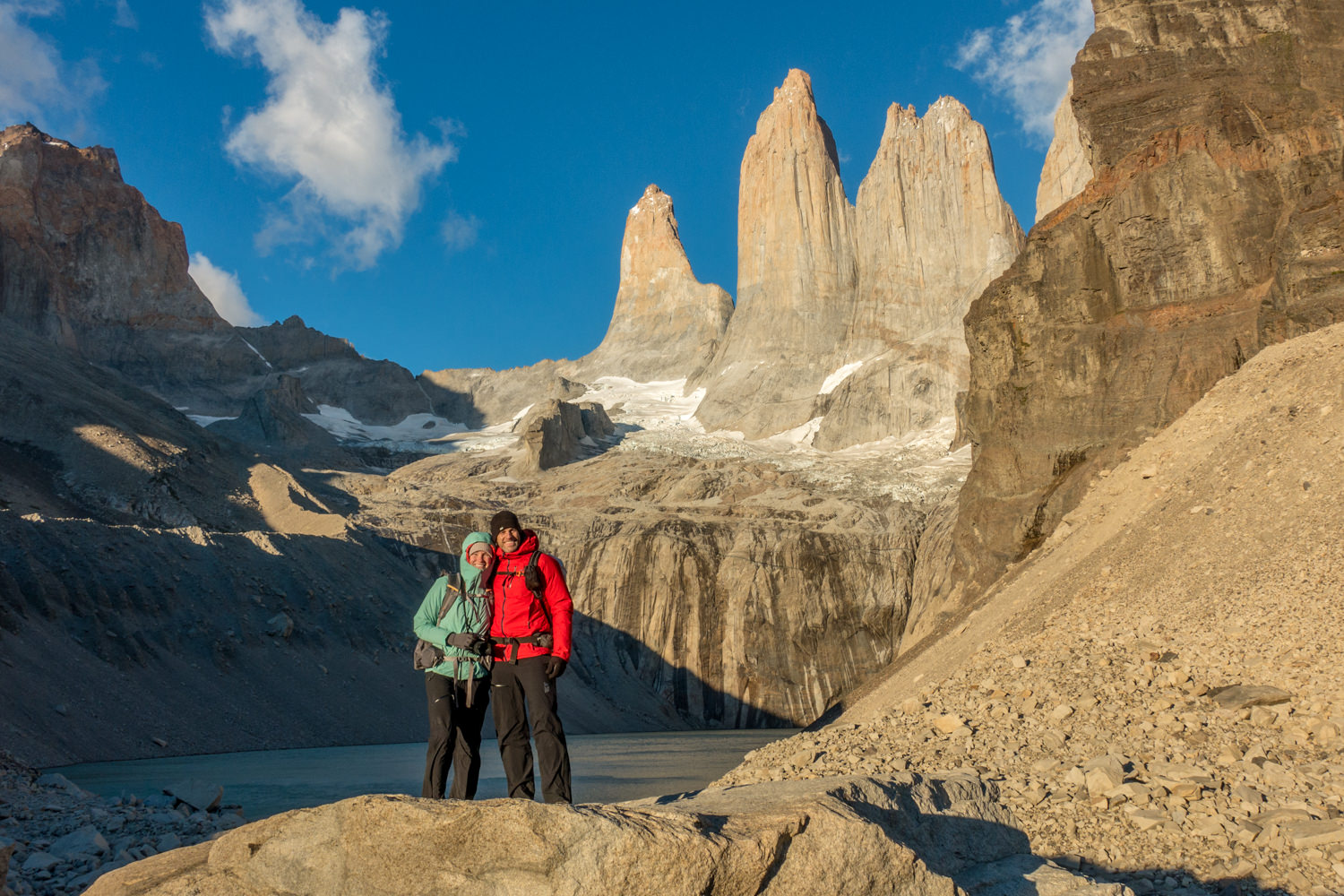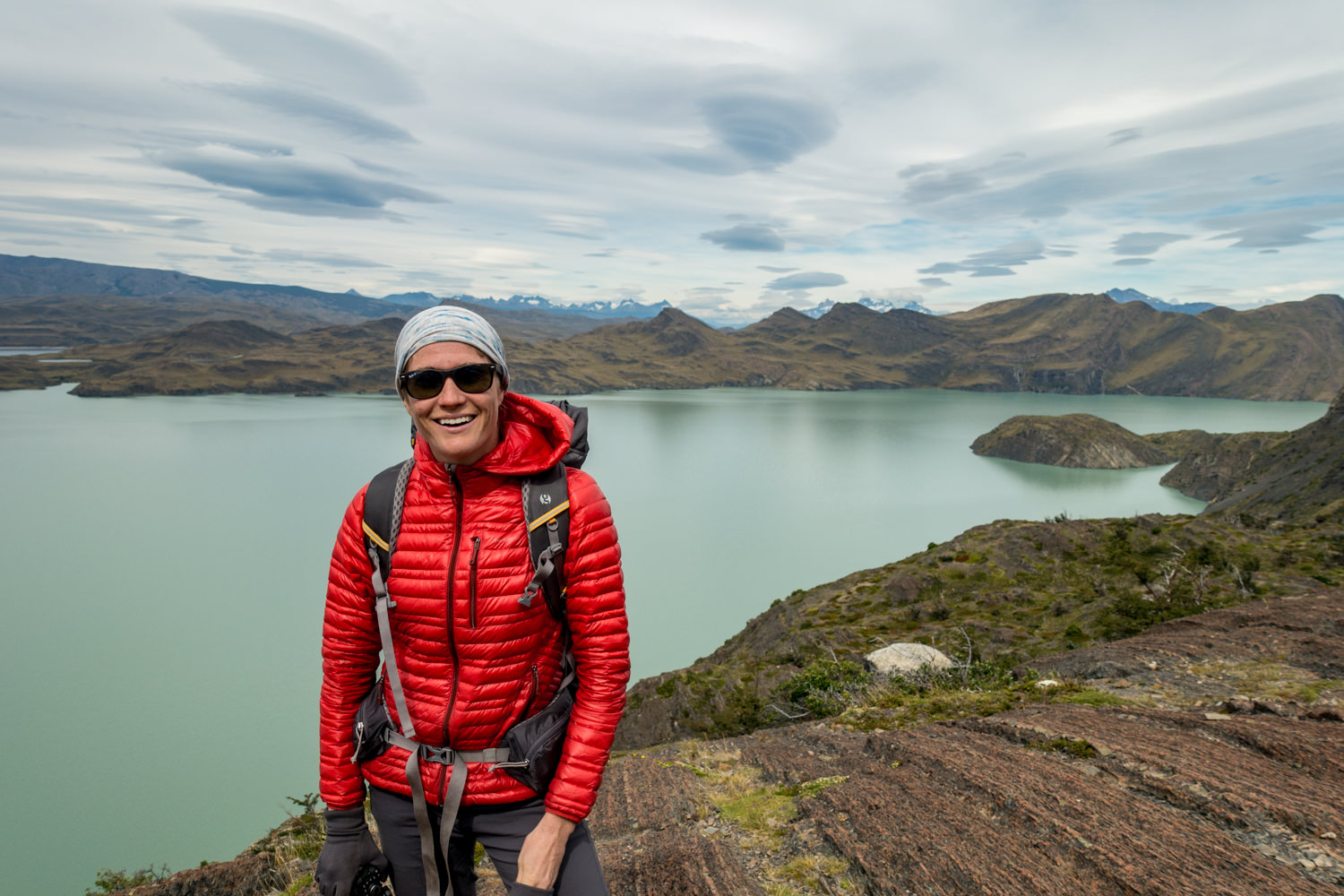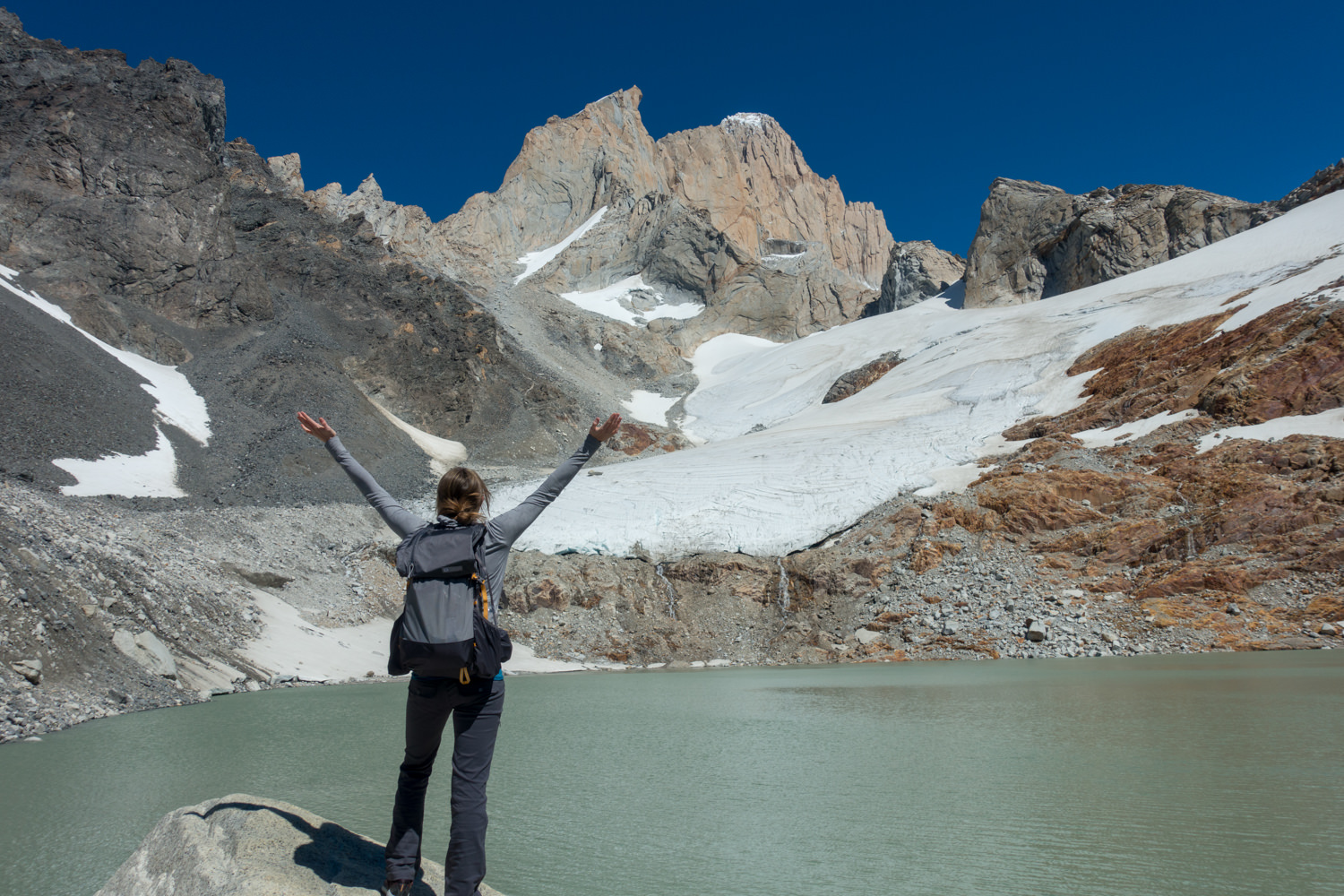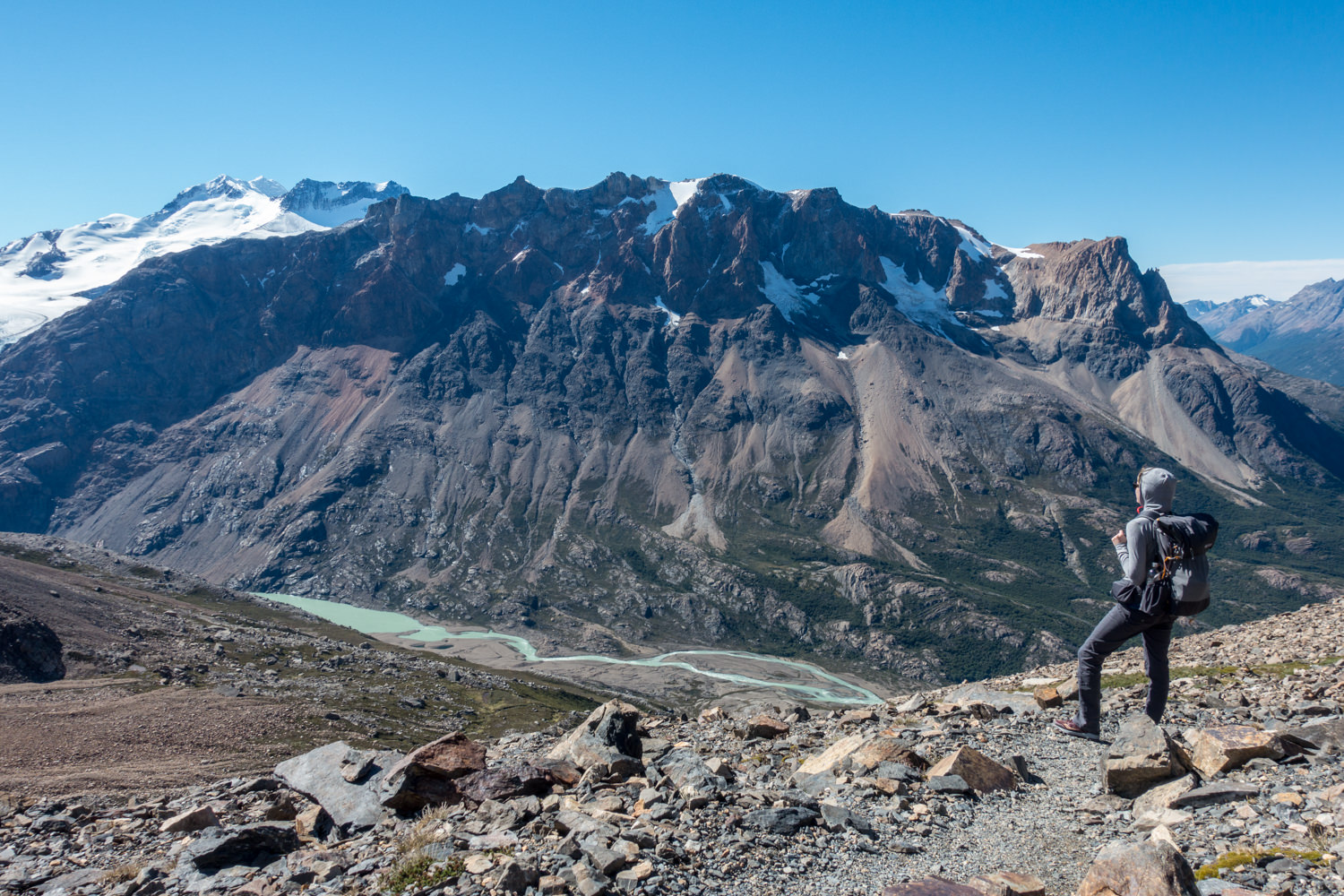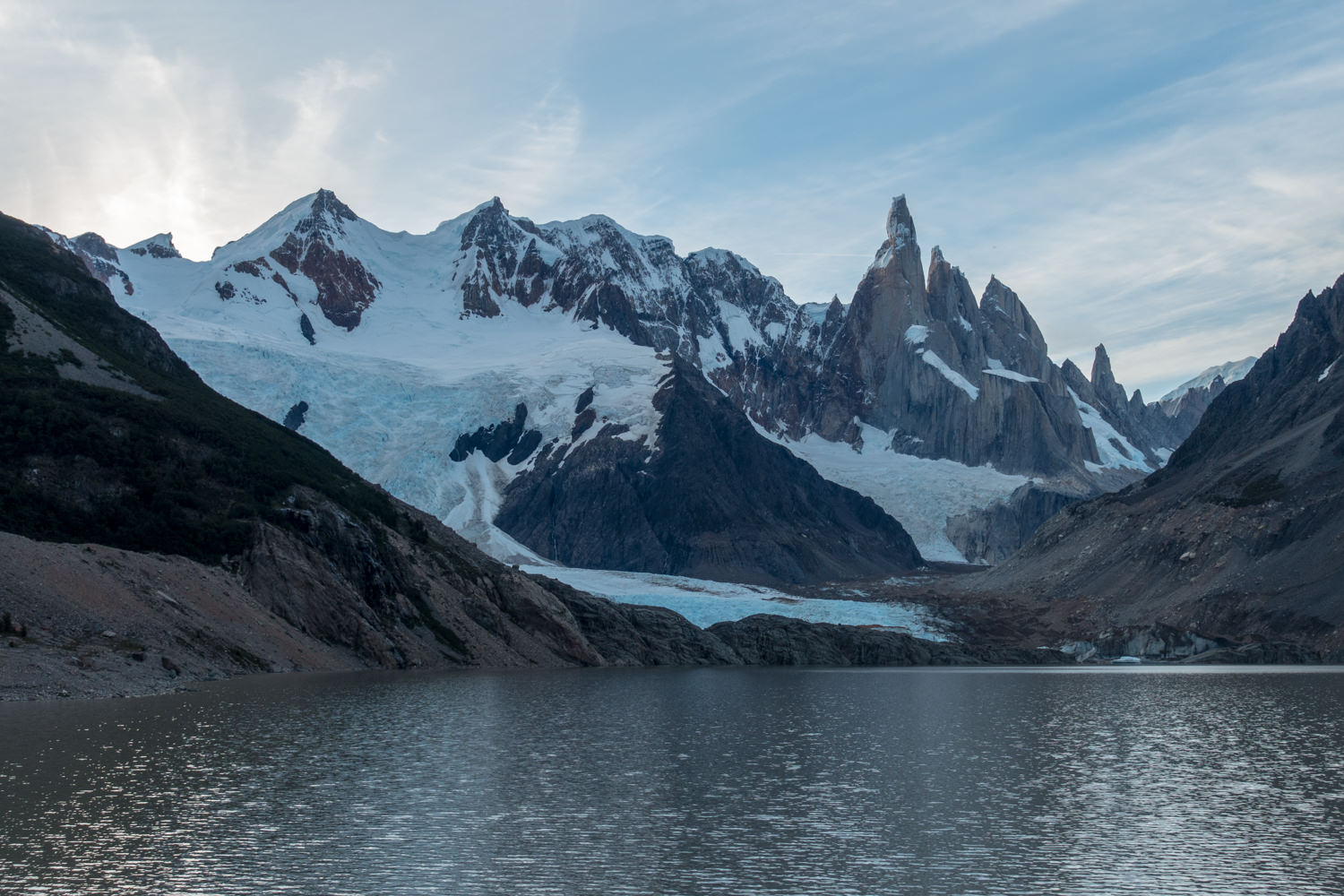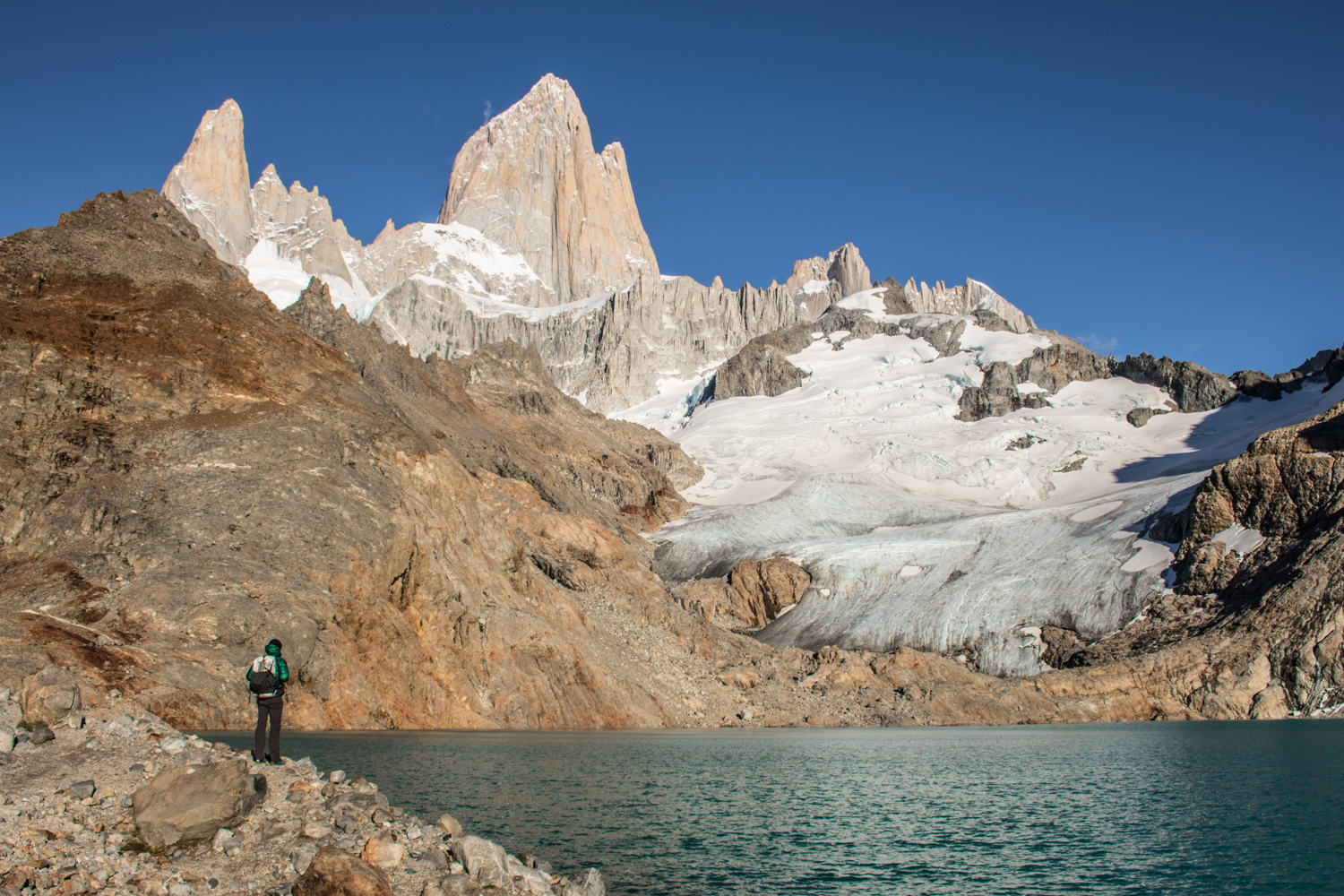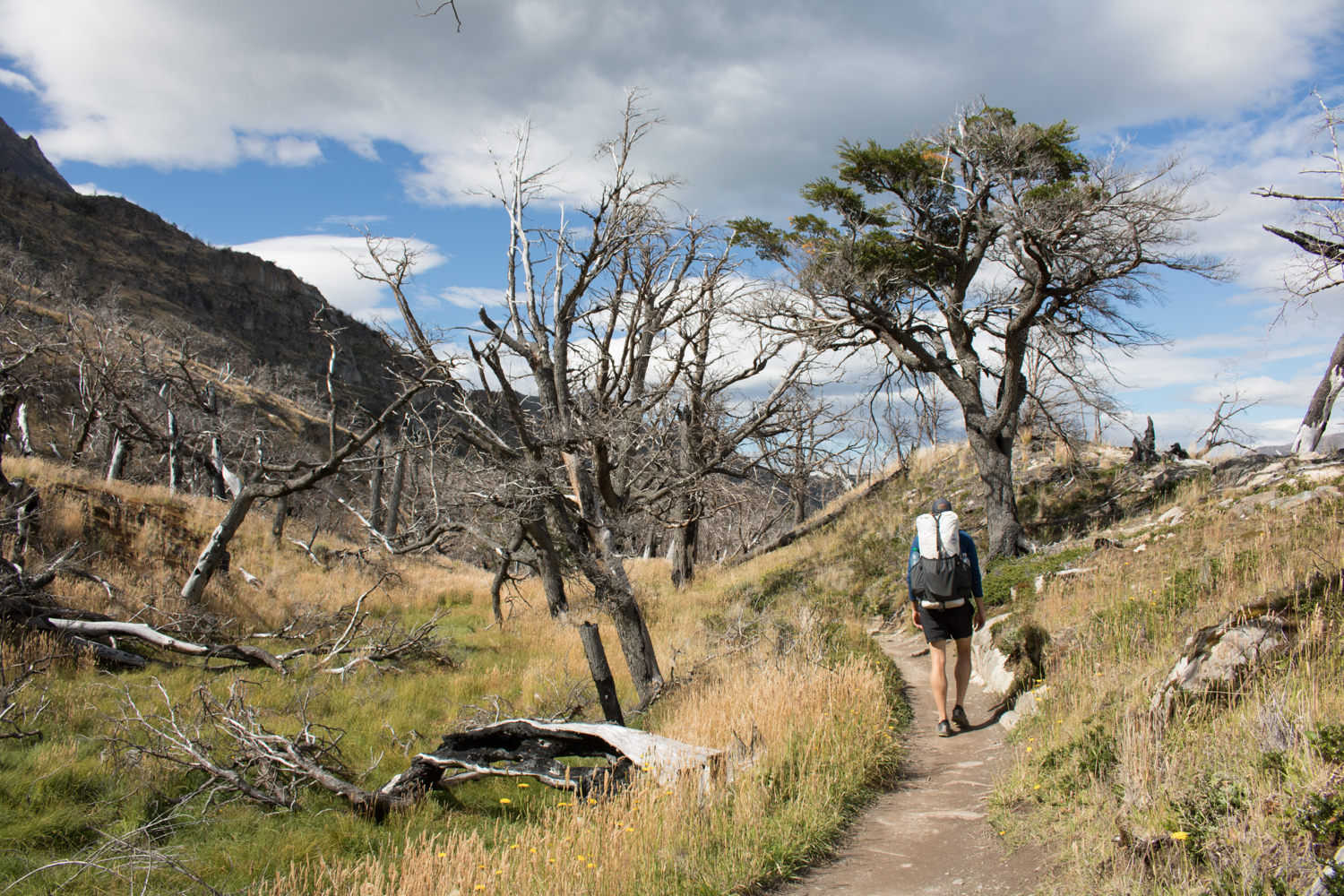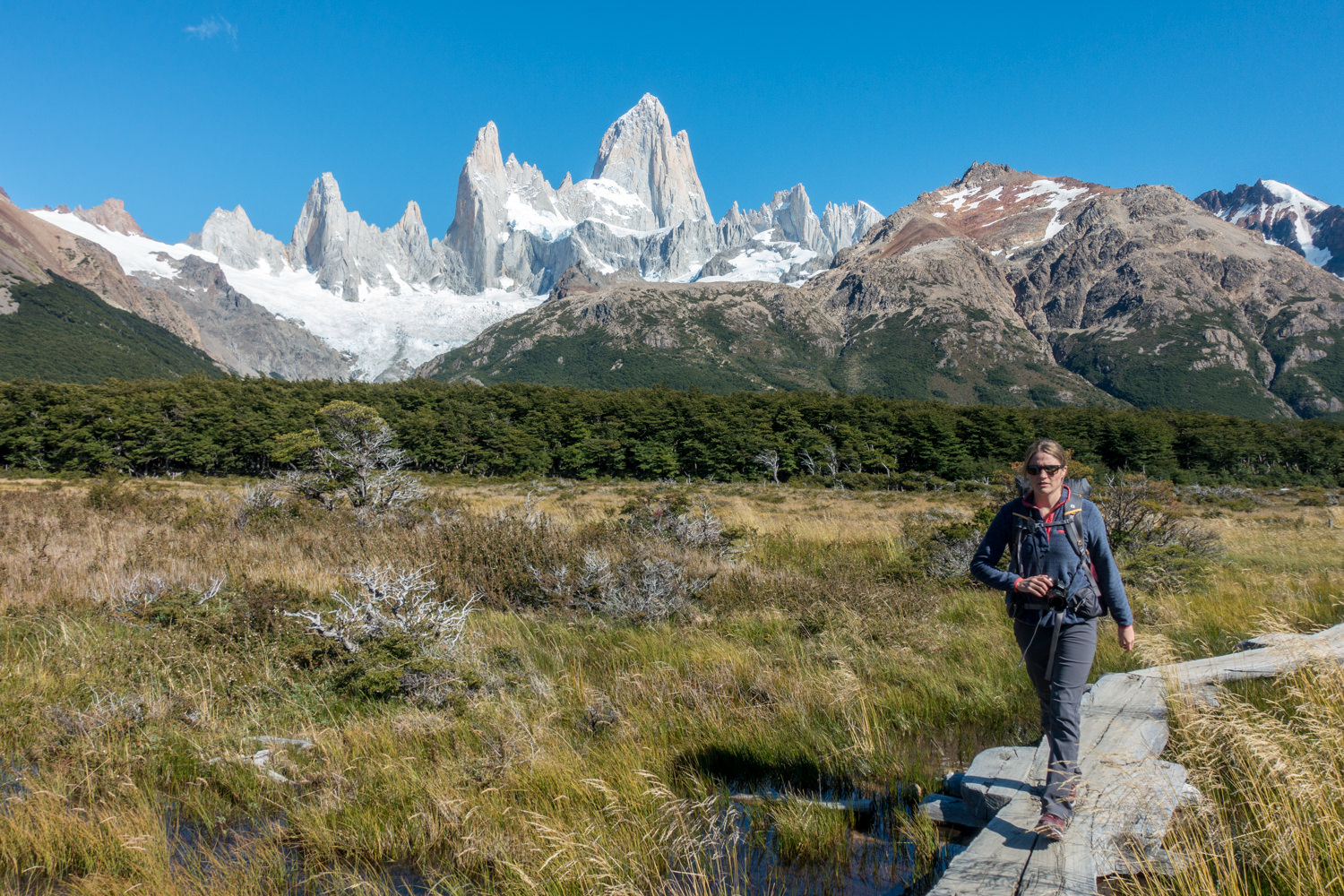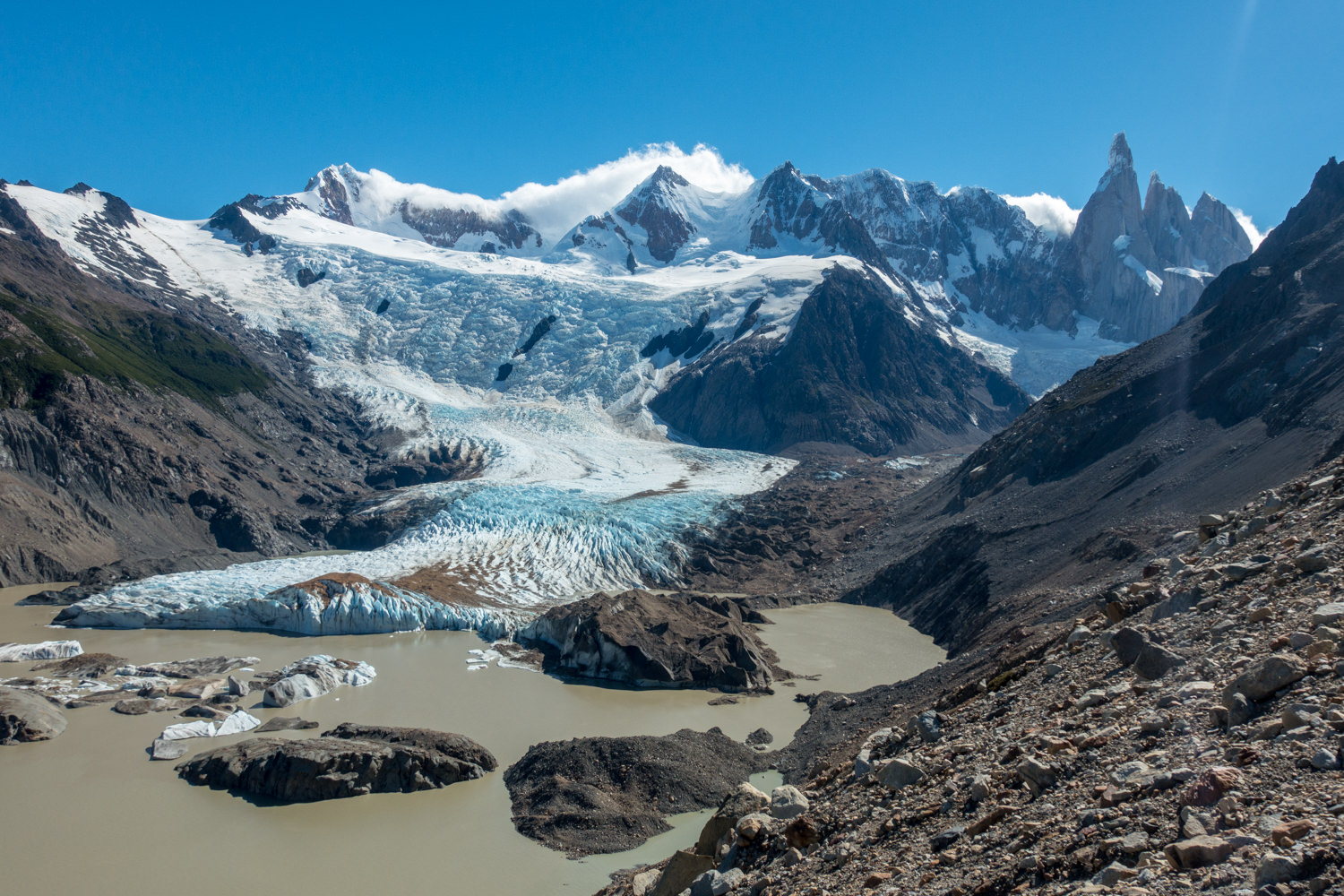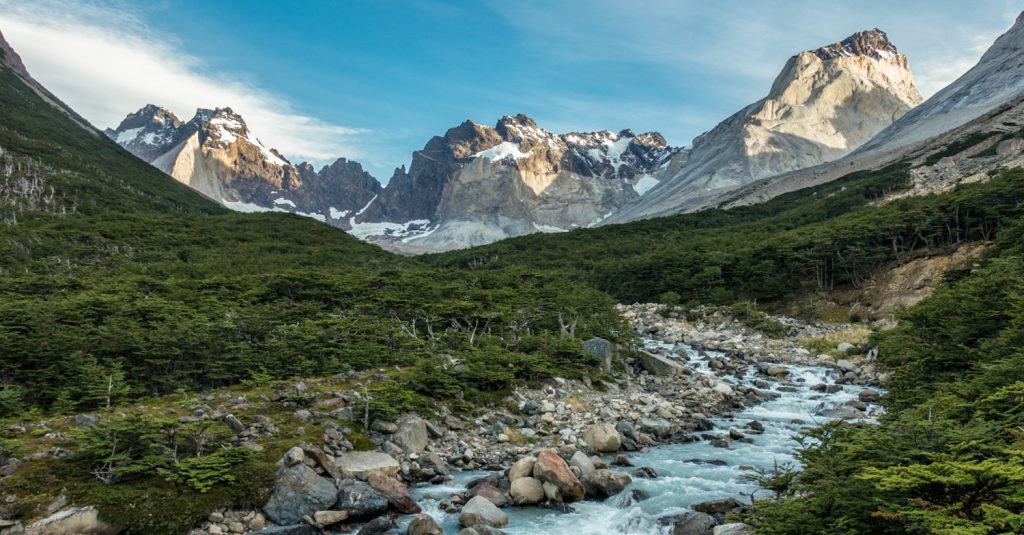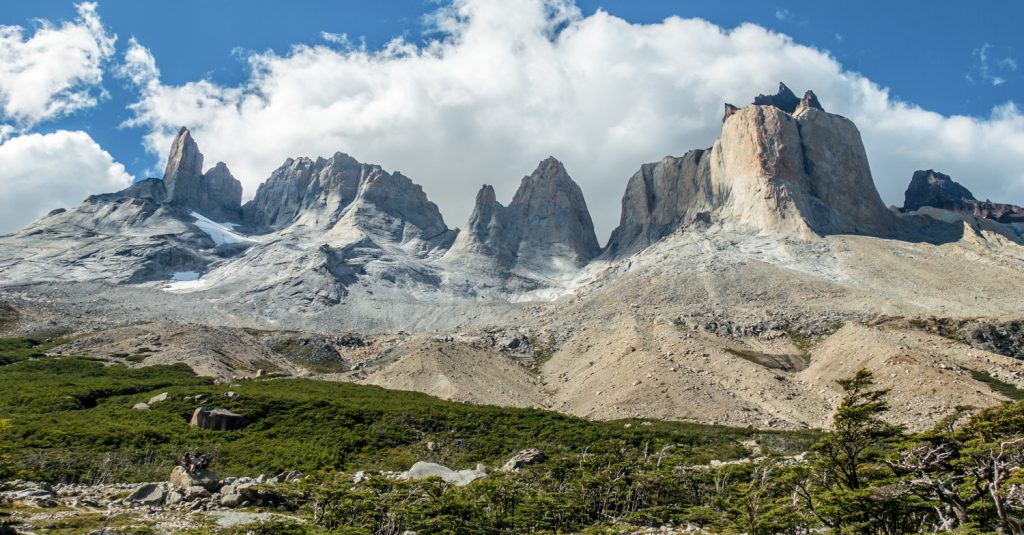
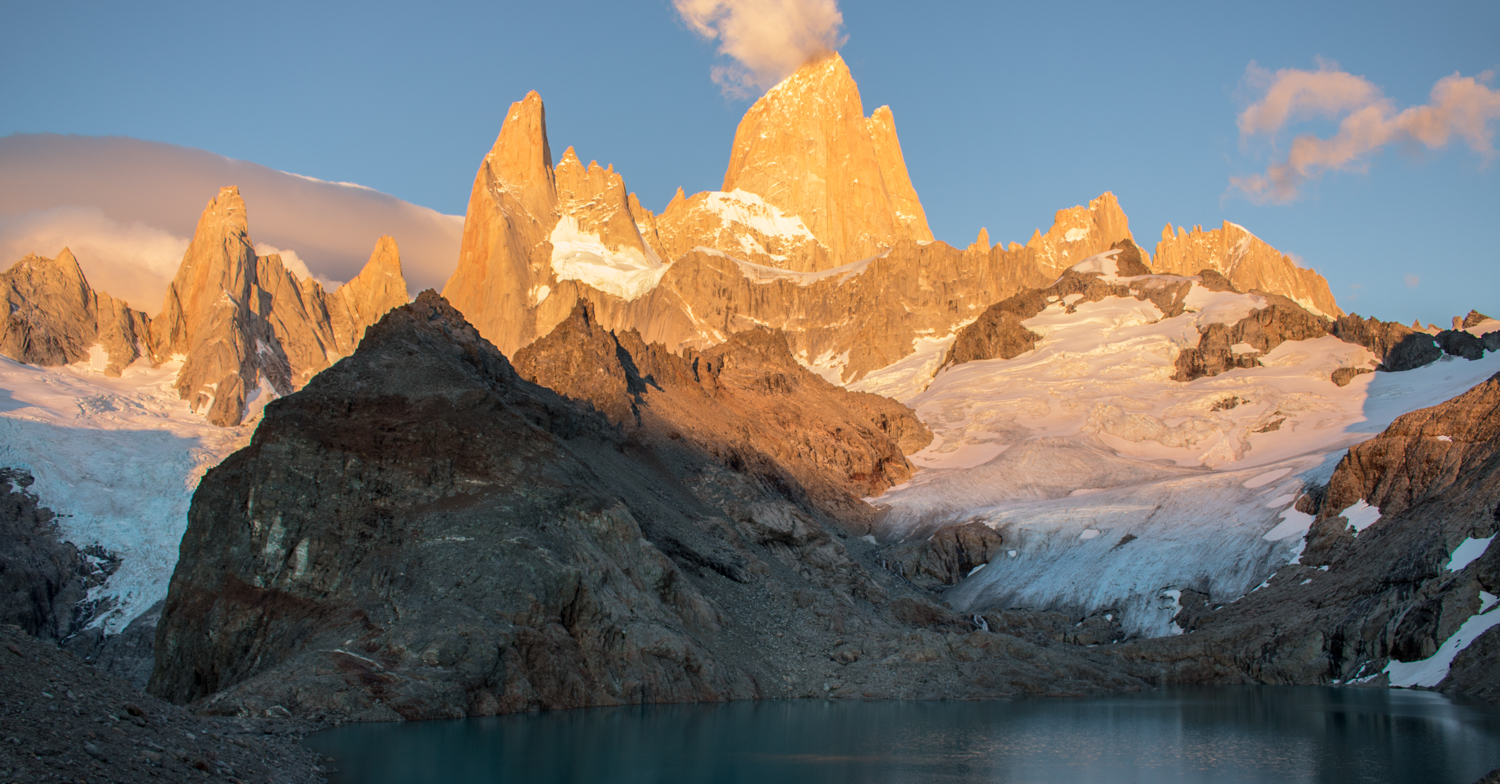
Patagonia is one of the most pristine and wild regions on our planet. Just the word itself evokes images of windswept landscapes with jagged granite spires twisting to the sky, immense glaciers, and some of the largest ice fields on Earth. Spanning the southern regions of Chile and Argentina, Patagonia offers a diverse mix of landscapes, flora, and fauna, including guanacos, condors, red-headed woodpeckers, and – if you’re lucky – maybe even a puma, huemul, or pygmy owl.
For all its beauty and grandeur, hiking in Patagonia can be a very accessible activity. Trekking tourism has been rapidly increasing in Patagonia over the past decade, so you should expect to be sharing the trails. Though many people hike with organized tour groups, hiking independently is very possible in most places. Even those with little backpacking experience will find trekking in Patagonia to be an approachable and unforgettable adventure.
When Is the Best Time to Visit?
SUMMER (December-February)
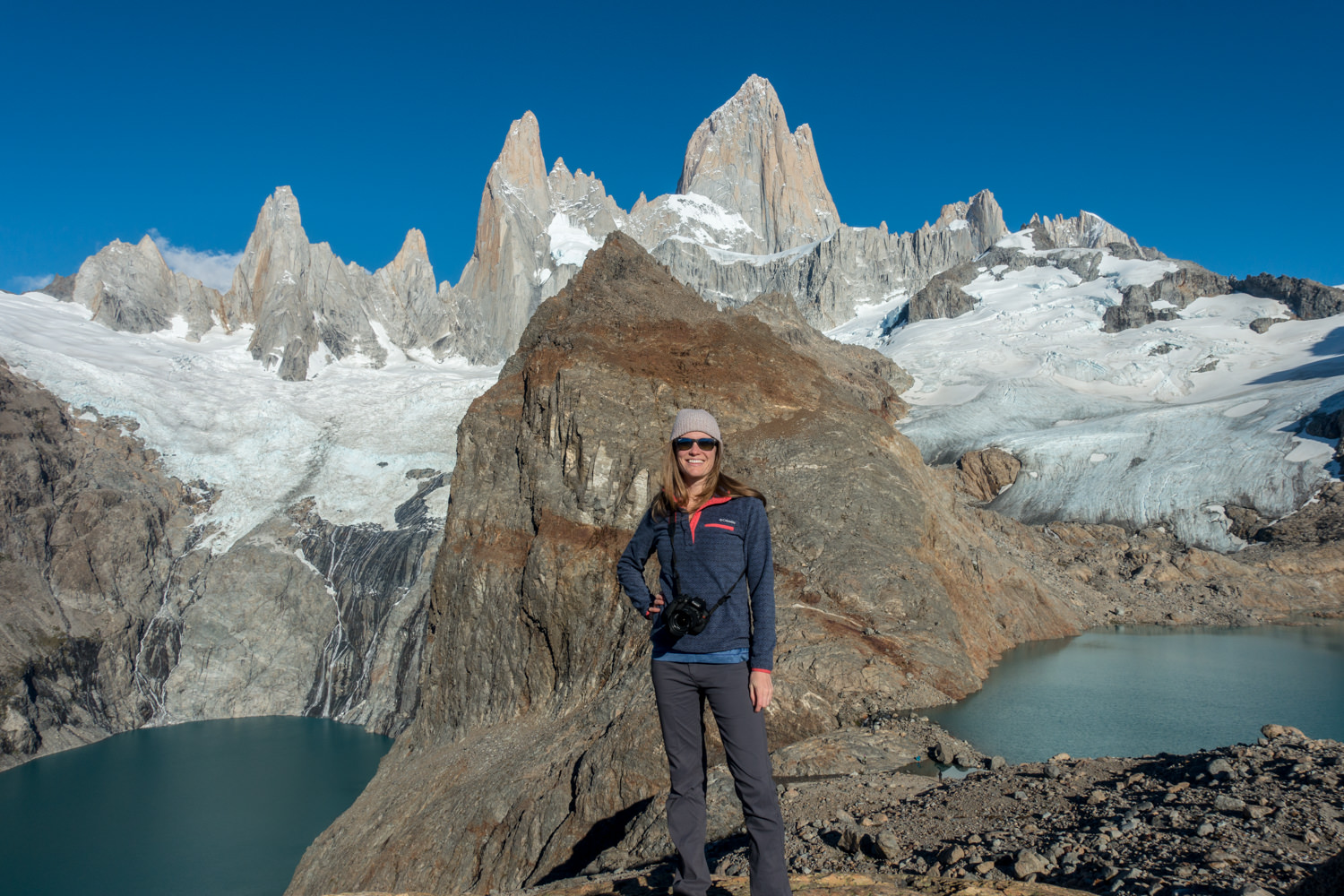
The peak hiking season in Patagonia is during the summer months of December through February when the temperatures are the warmest and the days are the longest. Though hiking in 60- to 70-degree temperatures is quite nice, the crowds will be high, and the wind can be fierce during this time of year – with gusts up to 75 miles per hour at times. It’s common to receive some precipitation during the summer months, though with less intensity than in the fall.
FALL (March-April)
Hiking in the fall months can be a nice alternative to summer. The temperatures will be slightly cooler, but the crowds will be lighter, and the wind is often less intense during this time. However, precipitation can be high during April and May, so you’ll want to plan accordingly. Many people also choose to come during fall months to watch the trees turn from green to a fiery red, which is a breathtaking contrast against the granite and glaciers.
SPRING (September-November)
Hiking in the spring months is a great way to enjoy Patagonia before the swaths of tourists arrive. Temperatures will be cool, with daytime highs averaging in the 50s, so you’ll need to bring warmer clothing. You can also expect less wind and less precipitation during spring months compared to summer.
What’s the Weather Like in Patagonia?
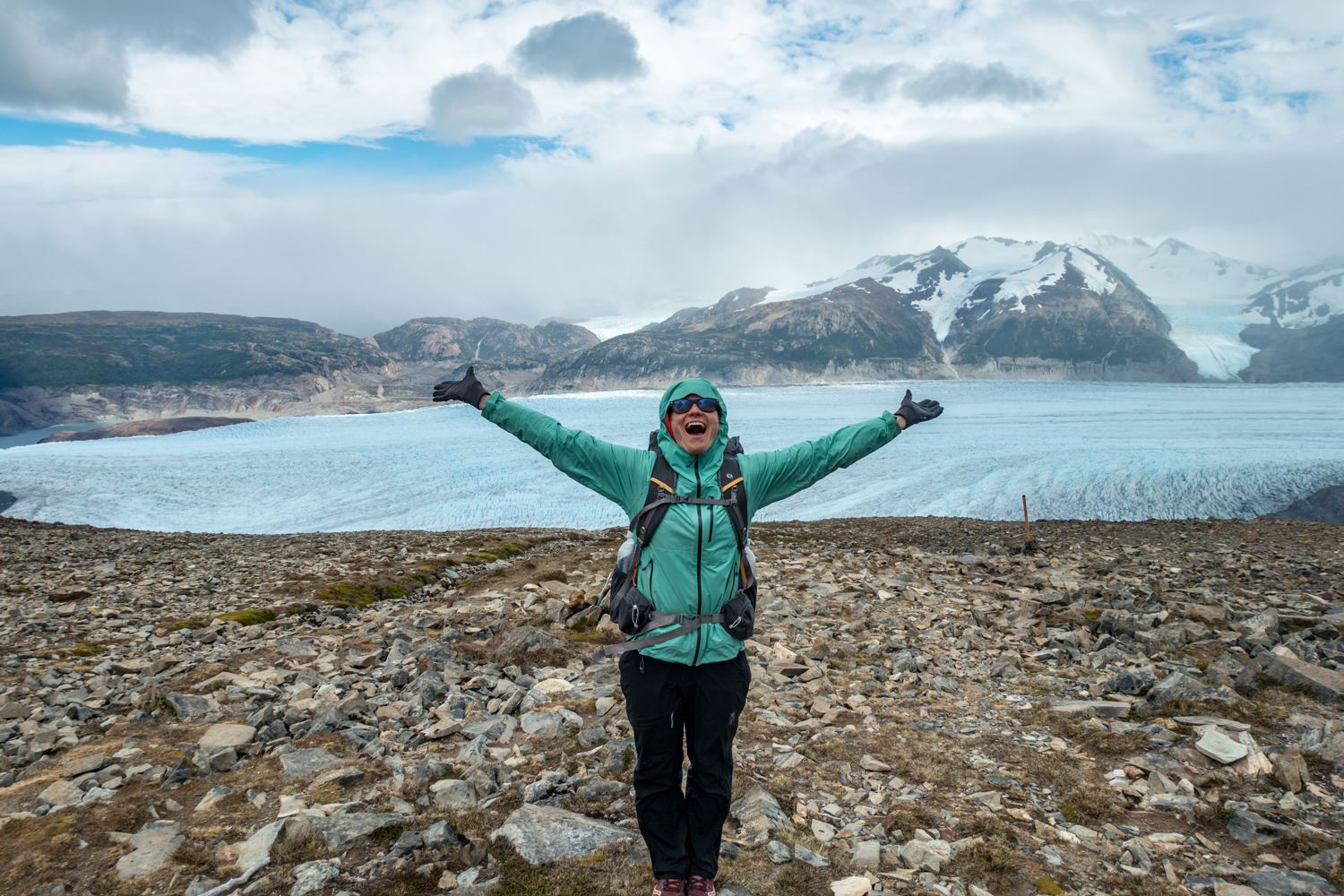
The weather in Patagonia is ever-changing and unpredictable. You’ll often hear people talk about how you can experience all four seasons in one day – any day of the year.
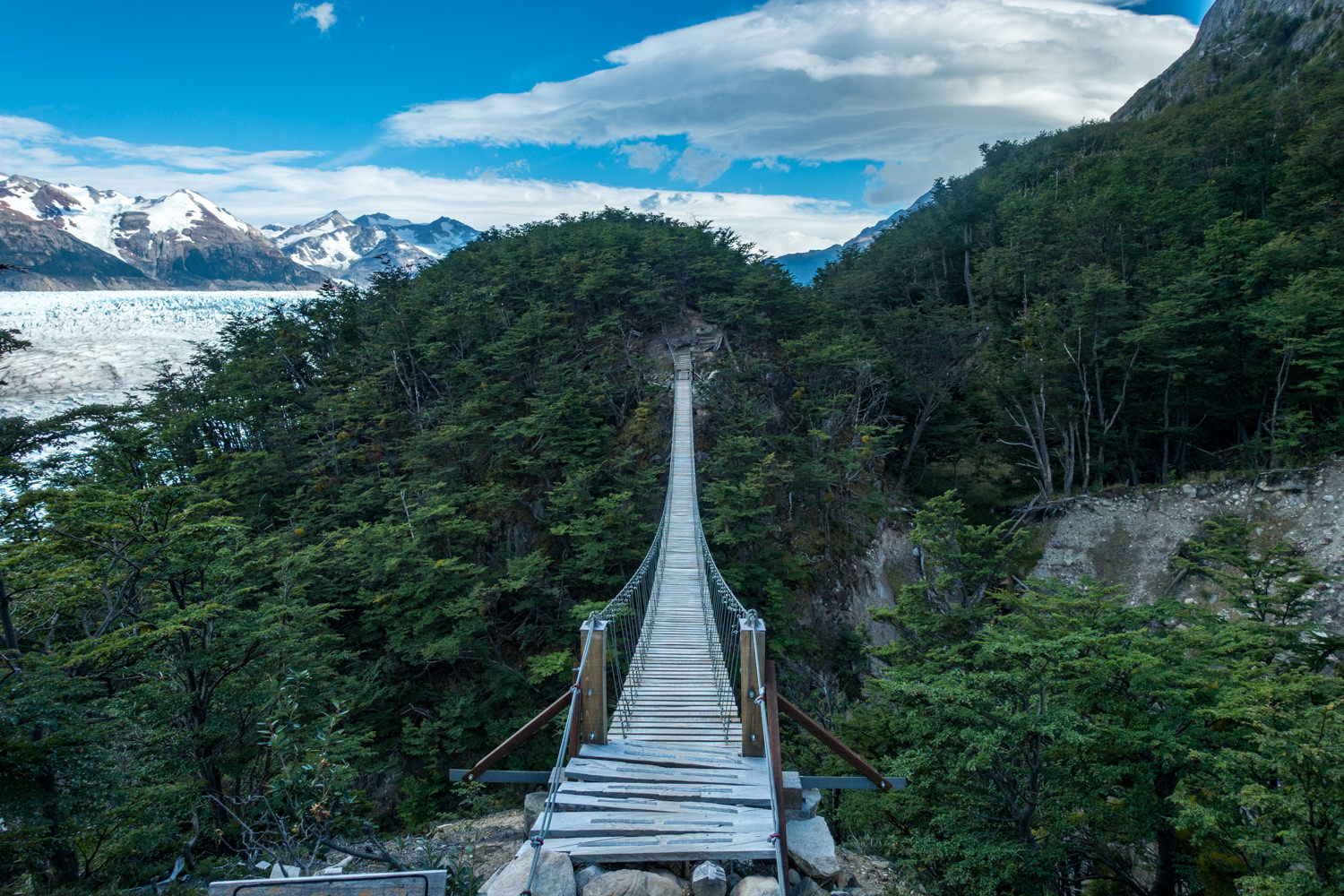
During your trip, you’ll most likely experience some rain, but what will stick with you is the wind. It’ll be like nothing you’ve experienced before. The strongest winds occur during the summer months of December to February, with gusts up to 75 miles per hour possible. The air is calmer in spring and fall and almost non-existent in winter. Always be careful on exposed ledges, suspension bridges, and when ascending passes.
The best source we’ve found for accurate information on weather is Windguru, which provides data on wind speed and gusts, precipitation, and cloud cover. If you stop by a ranger station in the area you’ll be hiking, they’ll most likely have the forecast printed and can help you decipher the somewhat confusing grid of numbers.
How Do I Get There?
Most people traveling to Patagonia will first arrive at either the Arturo Merino Benítez International Airport in Santiago, Chile, or the Ezeiza International Airport in Buenos Aires, Argentina. From there, you can take a domestic flight to the Patagonia region.
If you fly into Santiago, it’s most economical to take a domestic flight to Punta Arenas, Chile to begin. If you are coming from Buenos Aires, it generally makes the most sense to fly to El Calafate, Argentina.
It’s important to note that it can be very expensive and time-consuming to fly between countries (e.g., from Santiago to El Calafate). For example, to fly from Santiago to El Calafate on our last trip would have taken 16 hours due to a long layover in Buenos Aires en route to El Calafate. Once you’re in the southern region, it is easy, affordable, and convenient to bus between the main trekking areas in Patagonia. More on that below.
What’s the Best Way to Get Around Patagonia?
There are some long-distance bus routes connecting the northern and central regions of Patagonia to the south. That said, in this section, we focus primarily on getting around the Torres del Paine and Los Glaciares regions, as this is the most common route people will take during their visit.
There are many bus companies running routes between the towns of El Chalten, El Calafate, Puerto Natales, and Punta Arenas. Most of the buses are reliable, comfortable, and punctual. We recommend buying your tickets ahead of time, especially during peak season. Purchasing tickets online is easy and convenient through BusBud and Recorrido.cl. You can save a couple bucks by purchasing your tickets in country, but for ease of planning and peace of mind, there’s not much penalty for buying ahead of time.
Below is an idea of general bus times between towns. We found the buses to be very punctual, with the exception of the bus from Puerto Natales to El Calafate, which involves an inherently unpredictable border crossing.
- Punta Arenas to Puerto Natales: 3 to 3.5 hours
- Puerto Natales to El Calafate: 5 to 5.5 hours (with border crossing)
- Puerto Natales to Torres del Paine: 1.5 to 2 hours
- El Calafate to El Chalten: 3 hours
Our one complaint regarding bus travel was that it was very difficult to make the trip from Punta Arenas to El Calafate in one day due to the schedule. Almost everyone has to break the trip into two days, with day one from Punta Arenas to Puerto Natales and the next day traveling from Puerto Natales to El Calafate. It’s possible to catch a bus from El Calafate to El Chalten that same day.
Do I Need a Visa?
According to the U.S. State Department, American citizens do not need a visa for visits of up to 90 days for tourism in Chile or Argentina. We recommend checking with the State Department of each country prior to your trip to ensure requirements haven’t changed.
Upon arrival, you’ll receive a visa at no cost. You’re able to move freely between the countries with very little hassle. You’ll want to make sure you hold onto the immigration form you receive from Chile upon entrance, as you will need to present it to hotels as well as customs prior to leaving the country.
Regarding customs, Chile is very strict about the food you bring into the country. If you’re bringing any plant or animal products, you must declare them on the immigration form. There are heavy fines associated with bringing in items that you failed to declare, so to be on the safe side, we recommend declaring any food items. For example, we brought some freeze-dried backpacking meals and energy bars from the United States that contained meat, so we declared them and had no issues.
How Much Does It Cost to Visit Patagonia?
To put it simply, Patagonia is not a cheap place to visit. Compared to other South American destinations, you can expect to pay more for lodging, food, and pretty much everything. If you’re on a tight budget, there are generally free or very cheap places to pitch a tent around many of the towns. Also, buying your food at grocery stores rather than restaurants or refugios can make for a more affordable trip.
The type of lodging you choose along your hiking route will largely dictate costs. Generally speaking, there are three levels of accommodations in Torres del Paine: refugios, supported camping (you prearrange rented equipment at each site), and camping (you bring your own gear). In the Fitz Roy area, camping is free. If you choose to hike with a guided group in either region, you should expect to pay significantly more than if you decide to hike independently. More on this later.
Should I Camp or Stay at a Refugio?
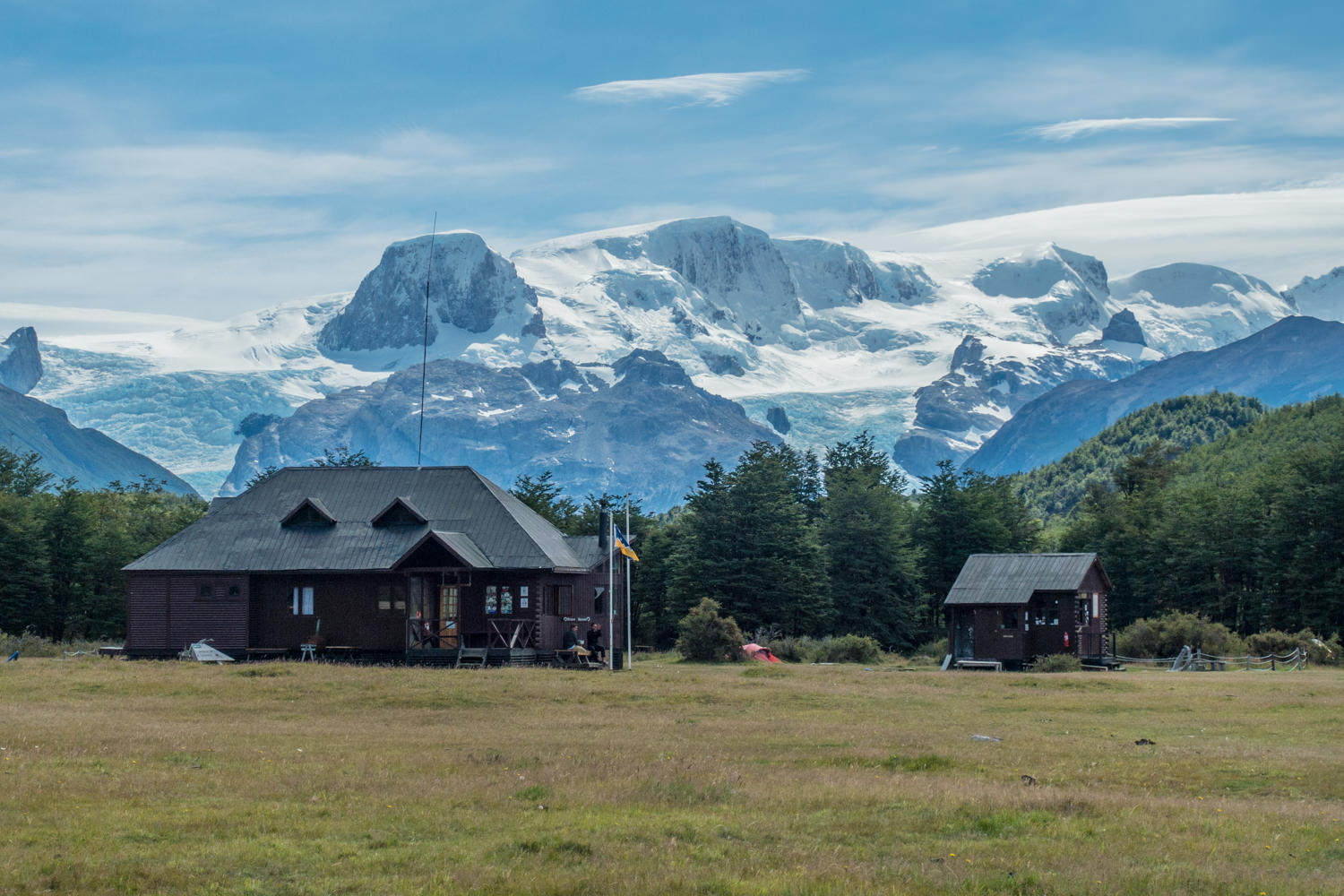
Many of the hiking areas in Patagonia have a system of mountain huts called refugios along popular backpacking routes. For many, the existence of refugios are what makes hiking so accessible in Patagonia. They almost always provide meals, drinks, and snacks for purchase, so the only thing many hikers need to carry is a daypack with their essentials.
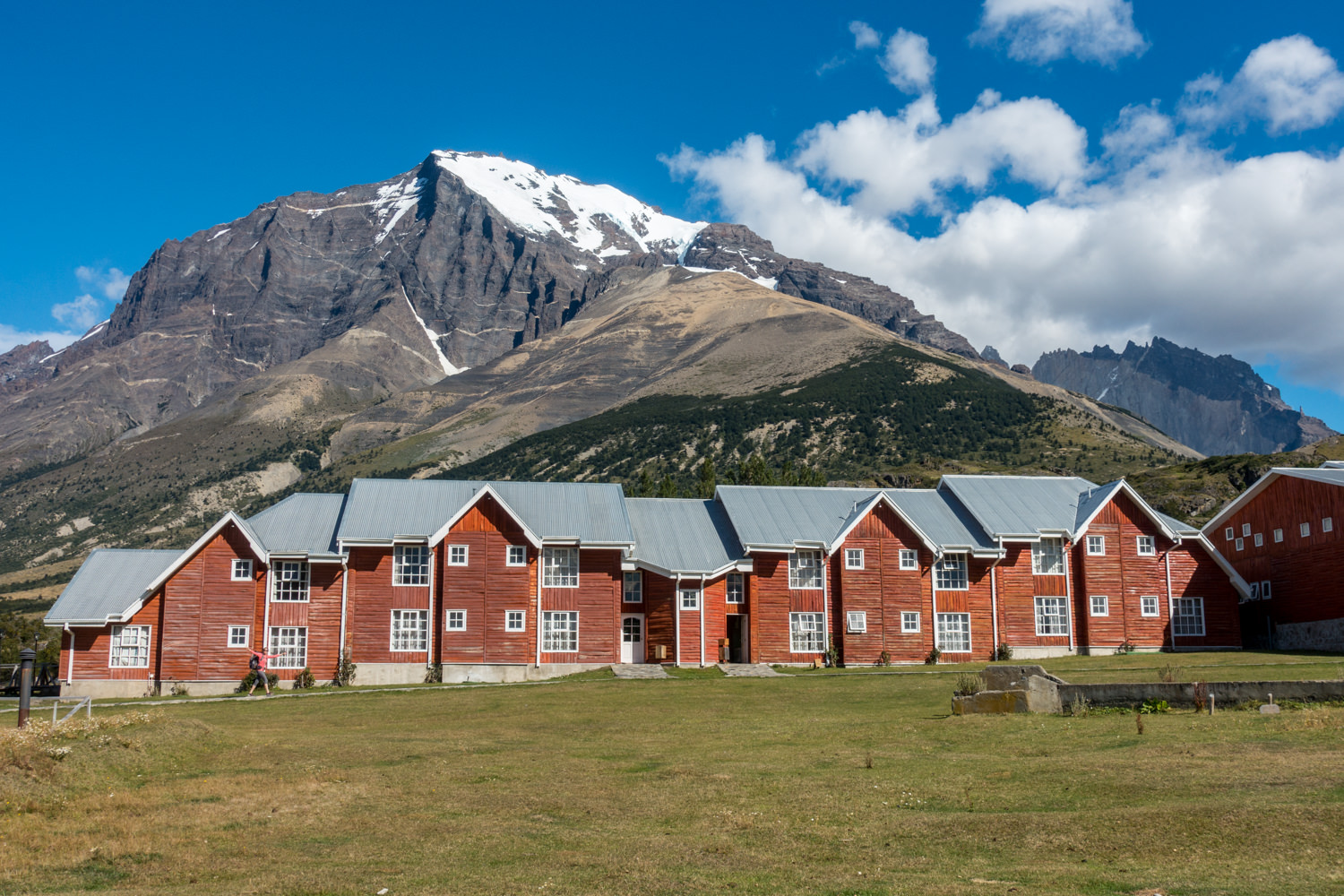
Refugios can range from small, charming huts with six rooms to large hotels serving hundreds. Regardless of size, almost all refugio sleeping options offer dorm-style bunk beds. Almost every refugio has meals and has a small store, though prices can be quite expensive.
You’ll have the option of adding full board to your refugio stay, which includes a breakfast, a packed lunch the next day, and dinner. Most refugios also have showers, shared bathrooms, and areas to hang out. We recommend packing your own sleeping bag, as some refugios only provide a bottom sheet on the bed.
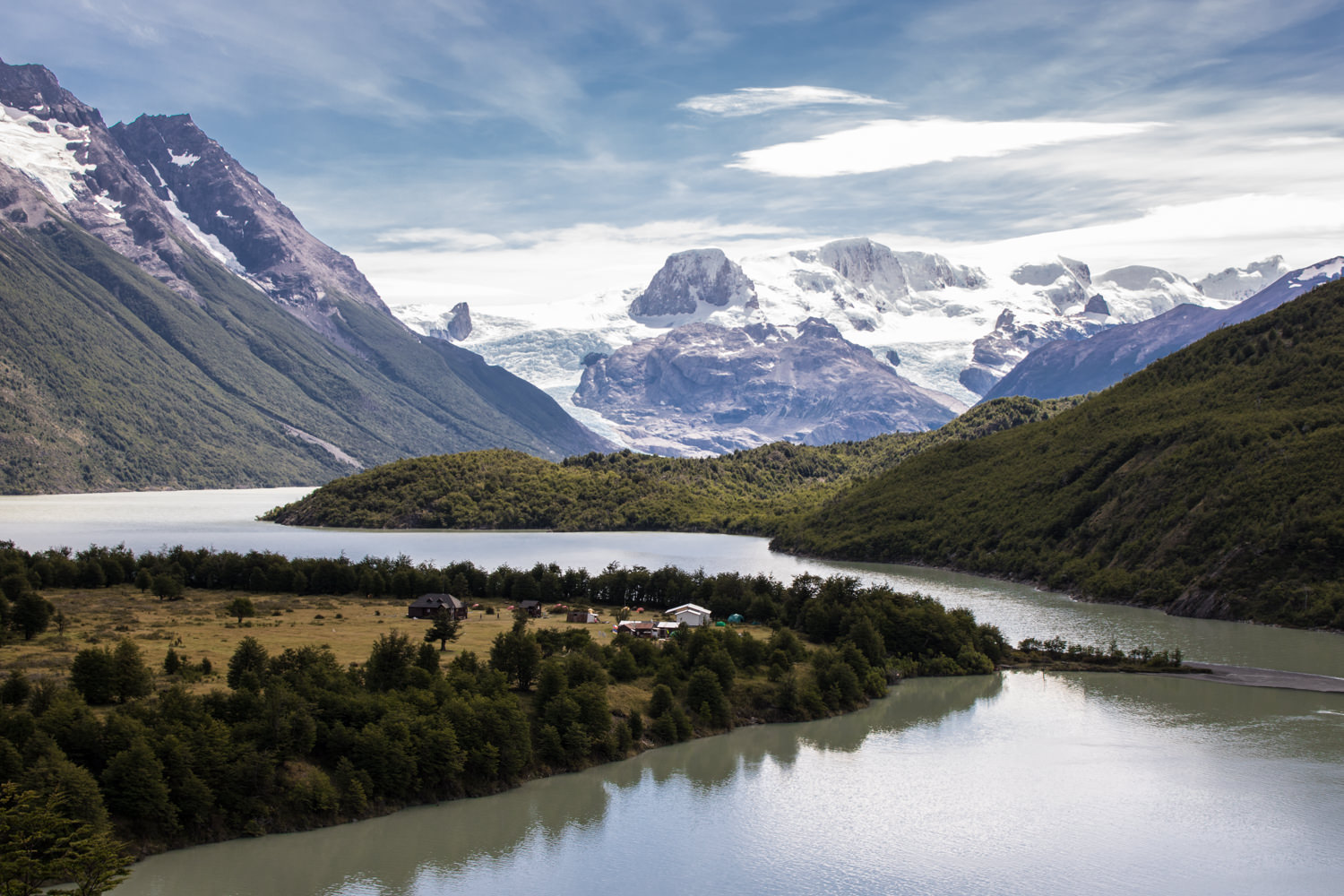
For a more economical and adventurous option, you can camp at all the sites with a reservation. The campsites are generally located right outside or very near the refugios. Even if you’re not paying to spend the night, you’re almost always able to use the facilities in a refugio – including buying a meal or a beer, taking a shower, and charging devices (if the outlets aren’t being used by refugio guests). Having a glass of wine in a refugio before crawling into your tent is a rare and wonderful wilderness luxury.
What Are the Highlights of Each Region?
Patagonia is a vast, massive region spanning thousands of miles. For ease of planning, we’ll break down each region and discuss the highlights of each area. Most people who travel to Patagonia for the first time will visit the Torres del Paine region of Chile and the Fitz Roy region of Argentina. Though these places absolutely deserve to be on anyone’s itinerary to Patagonia, there are also more off-the-beaten-track options that offer just as much beauty with significantly more solitude.
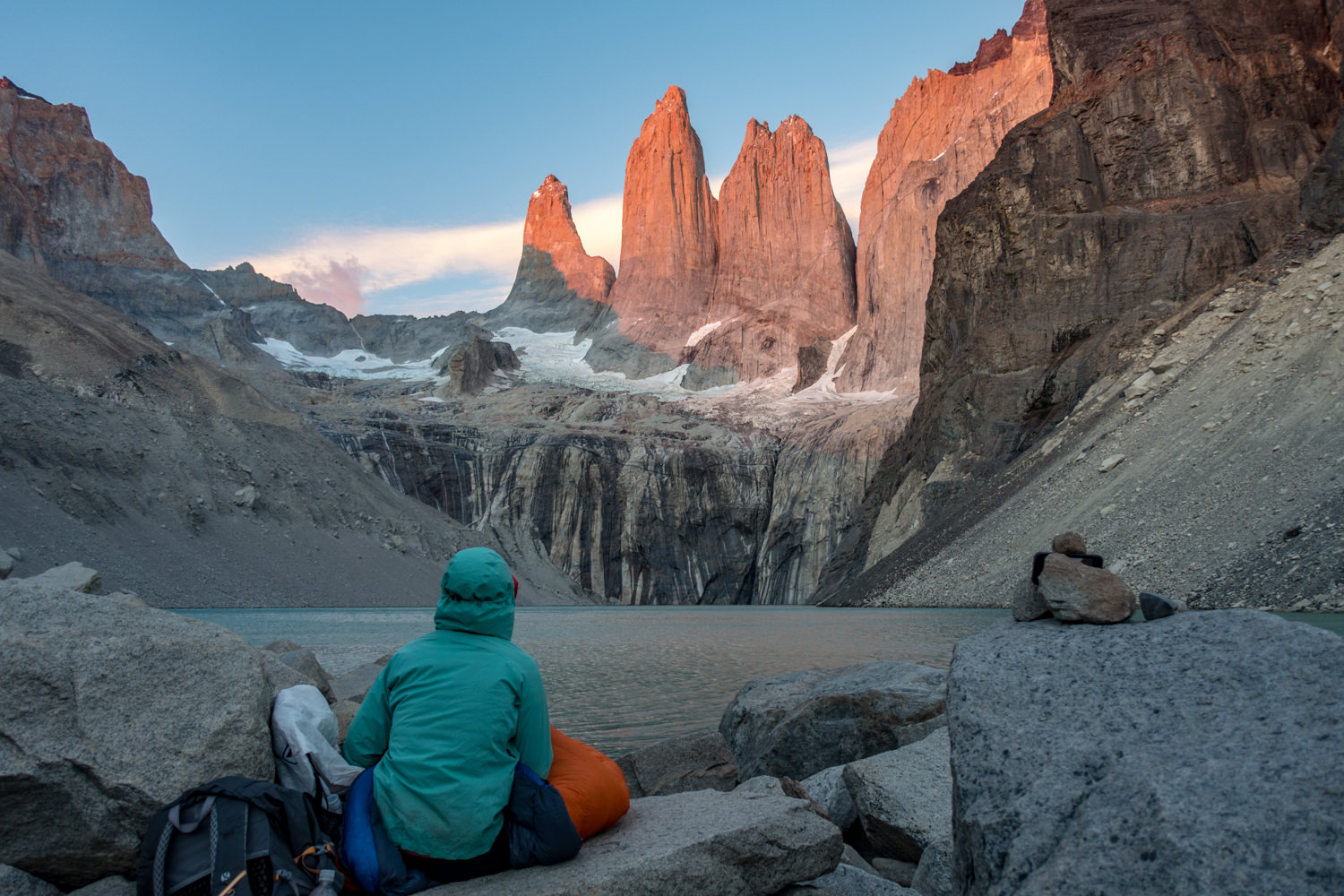
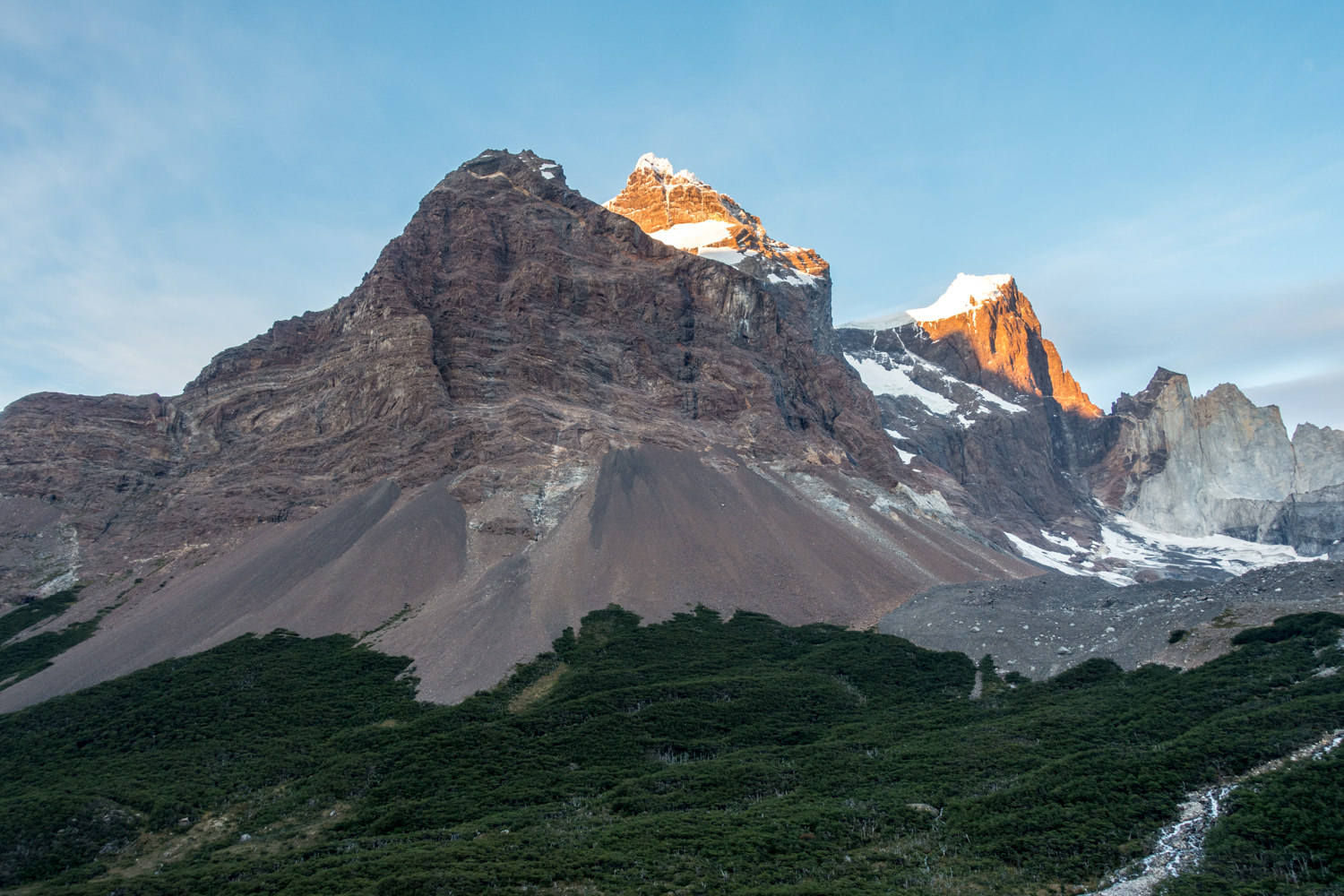

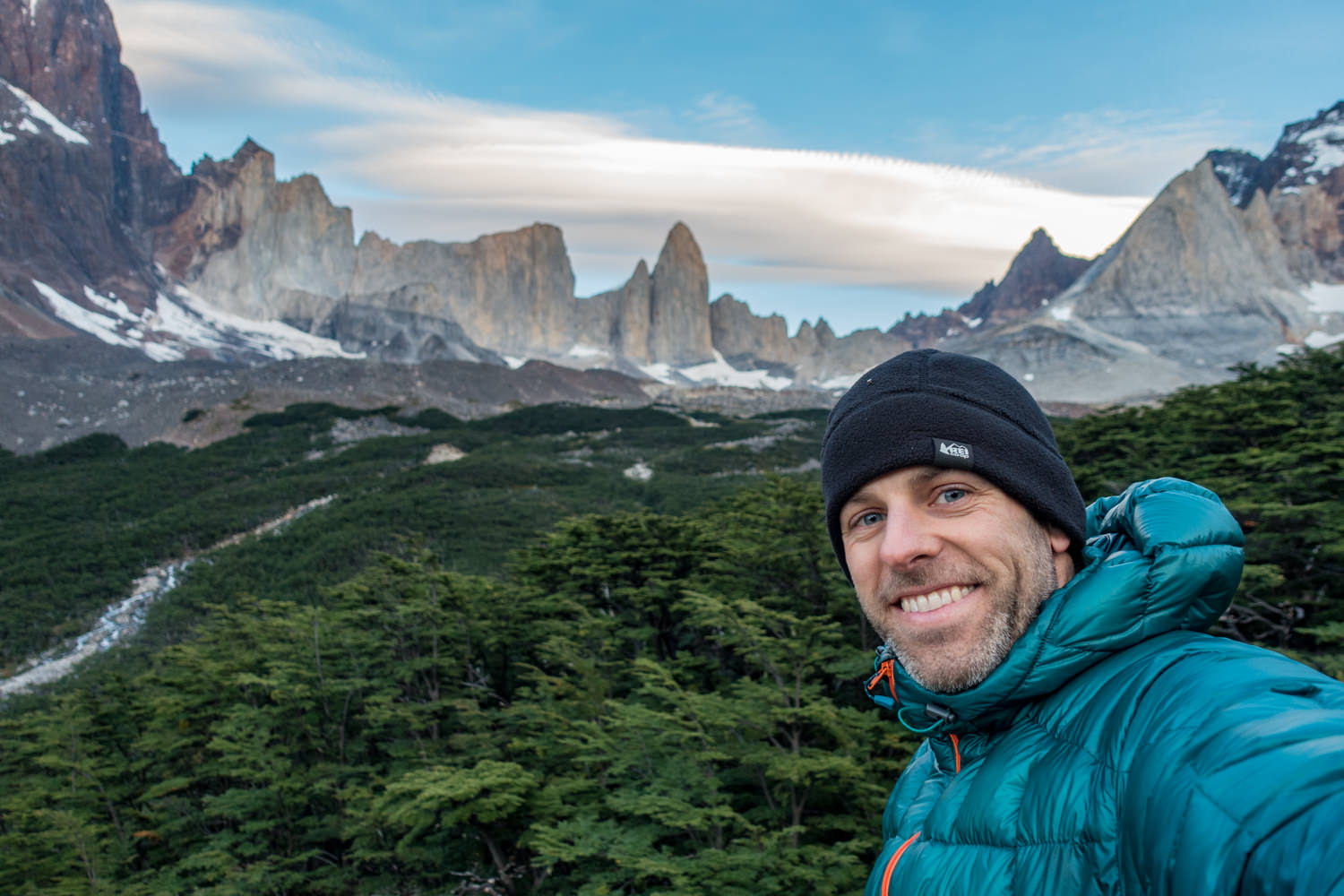
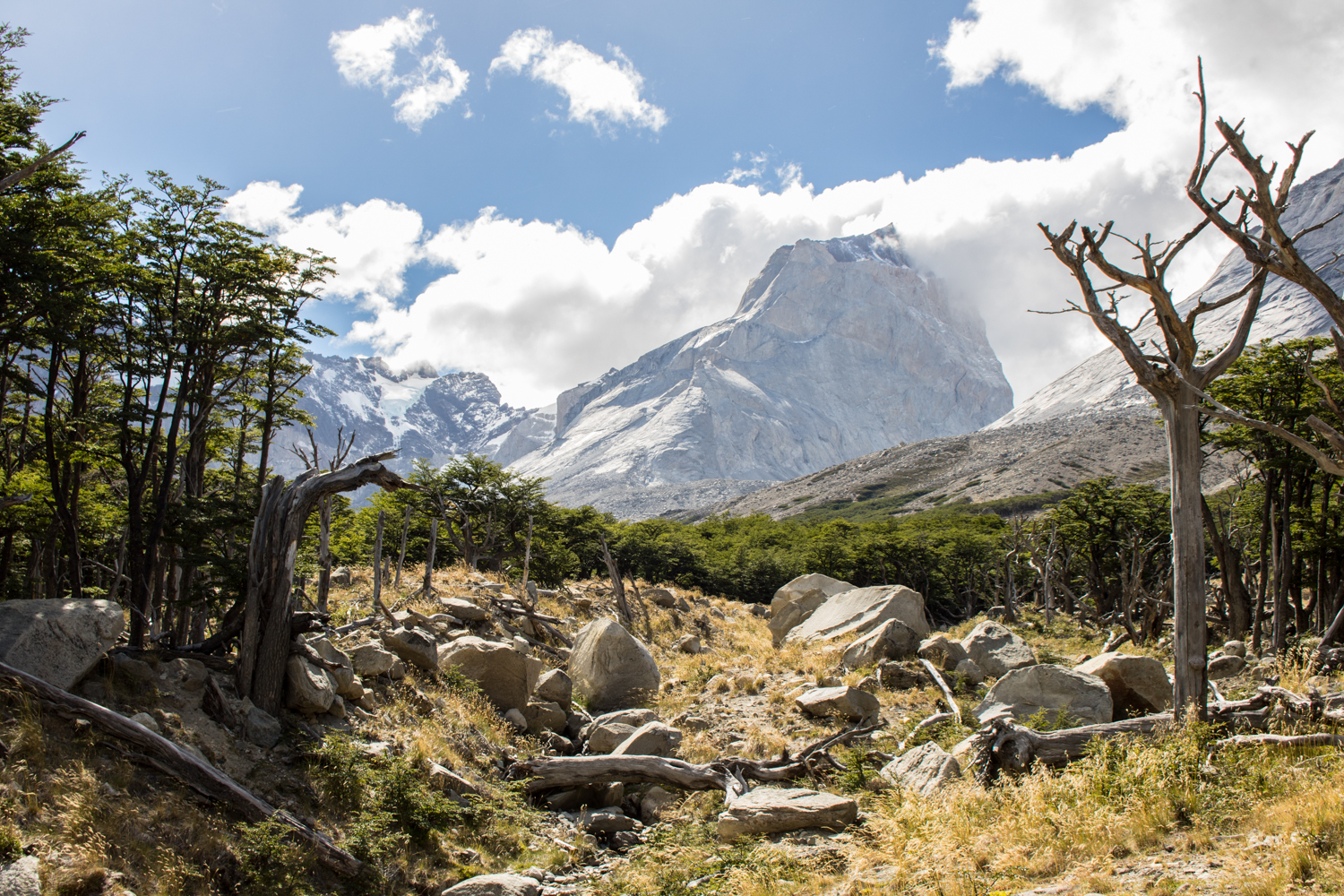
TORRES DEL PAINE
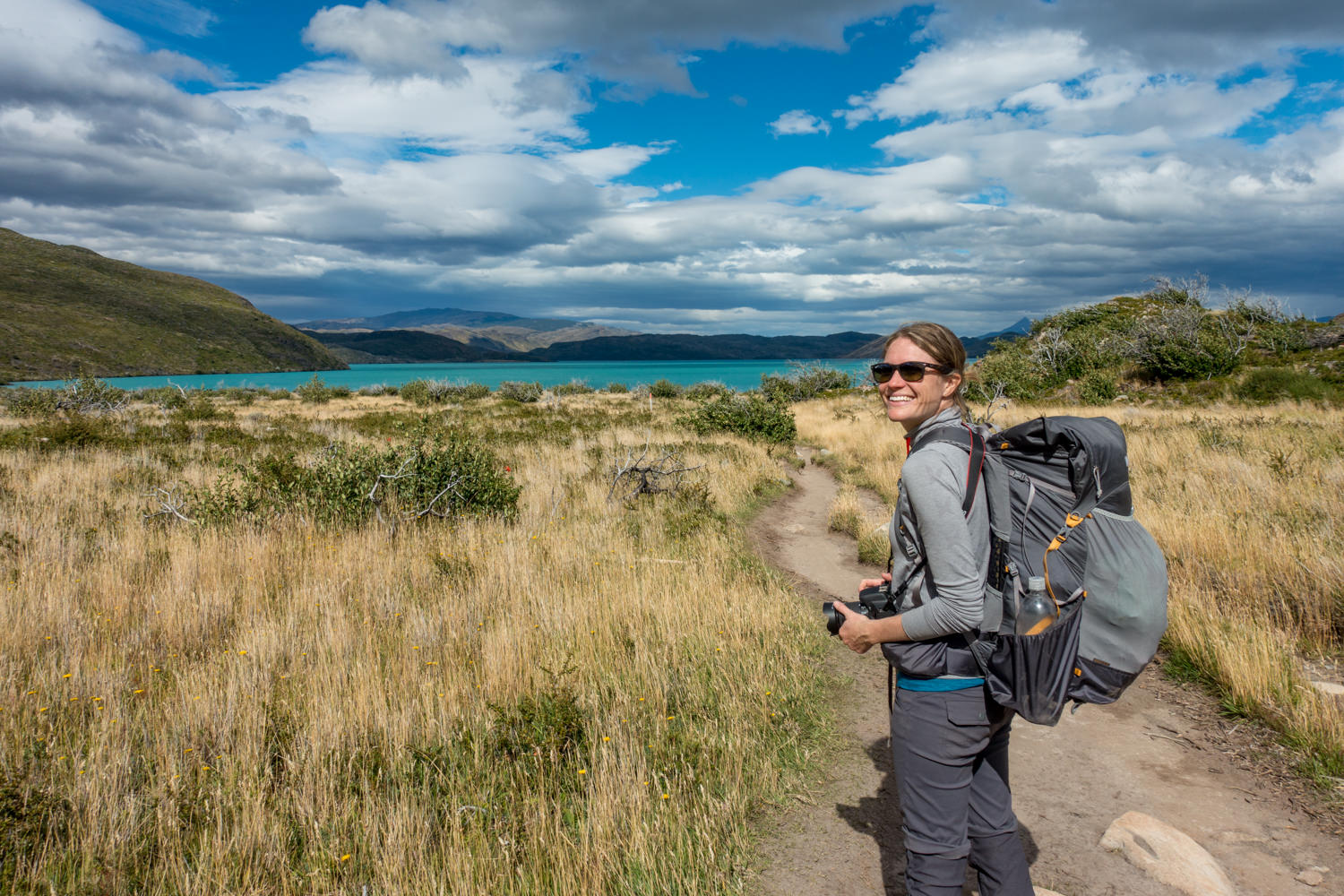
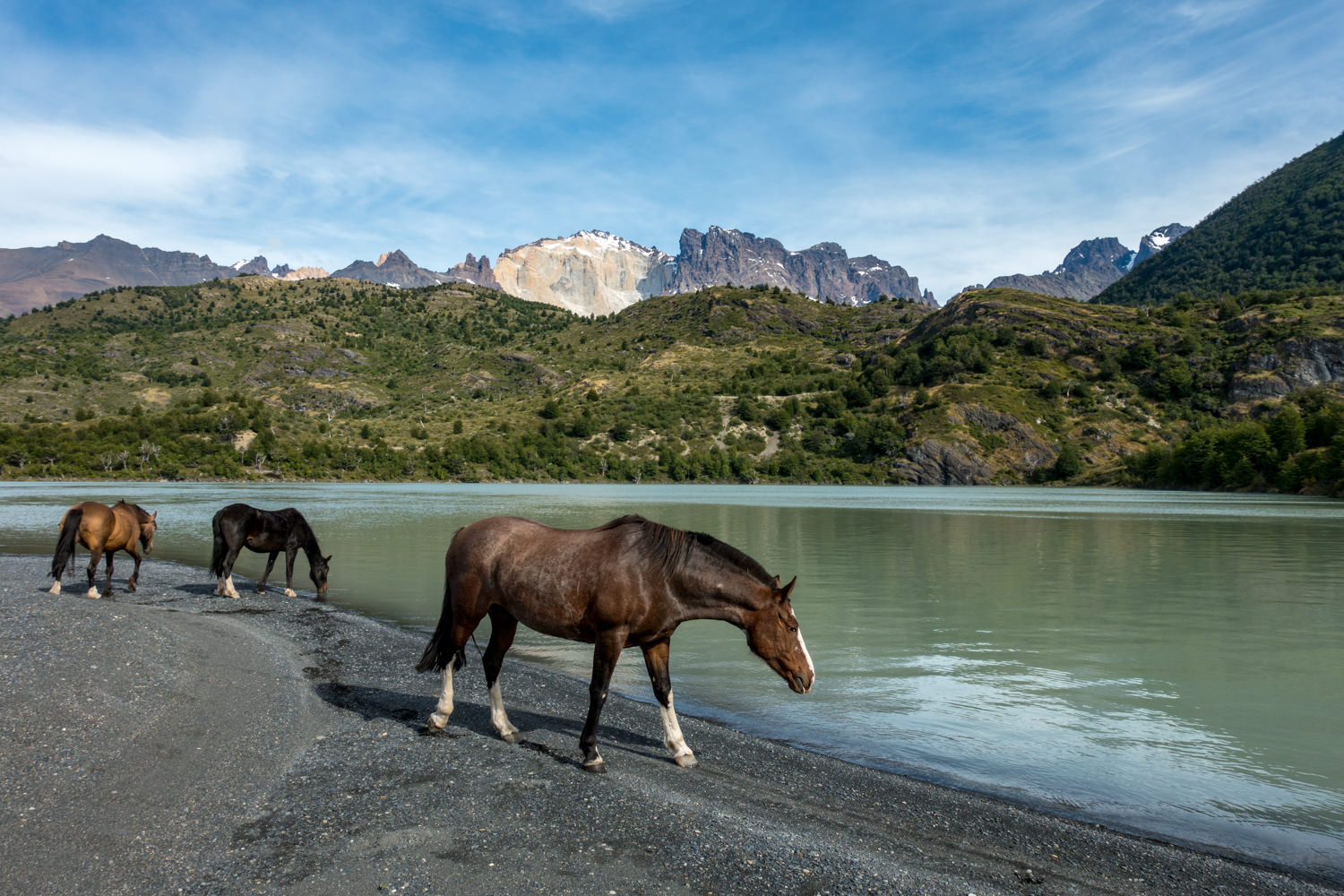
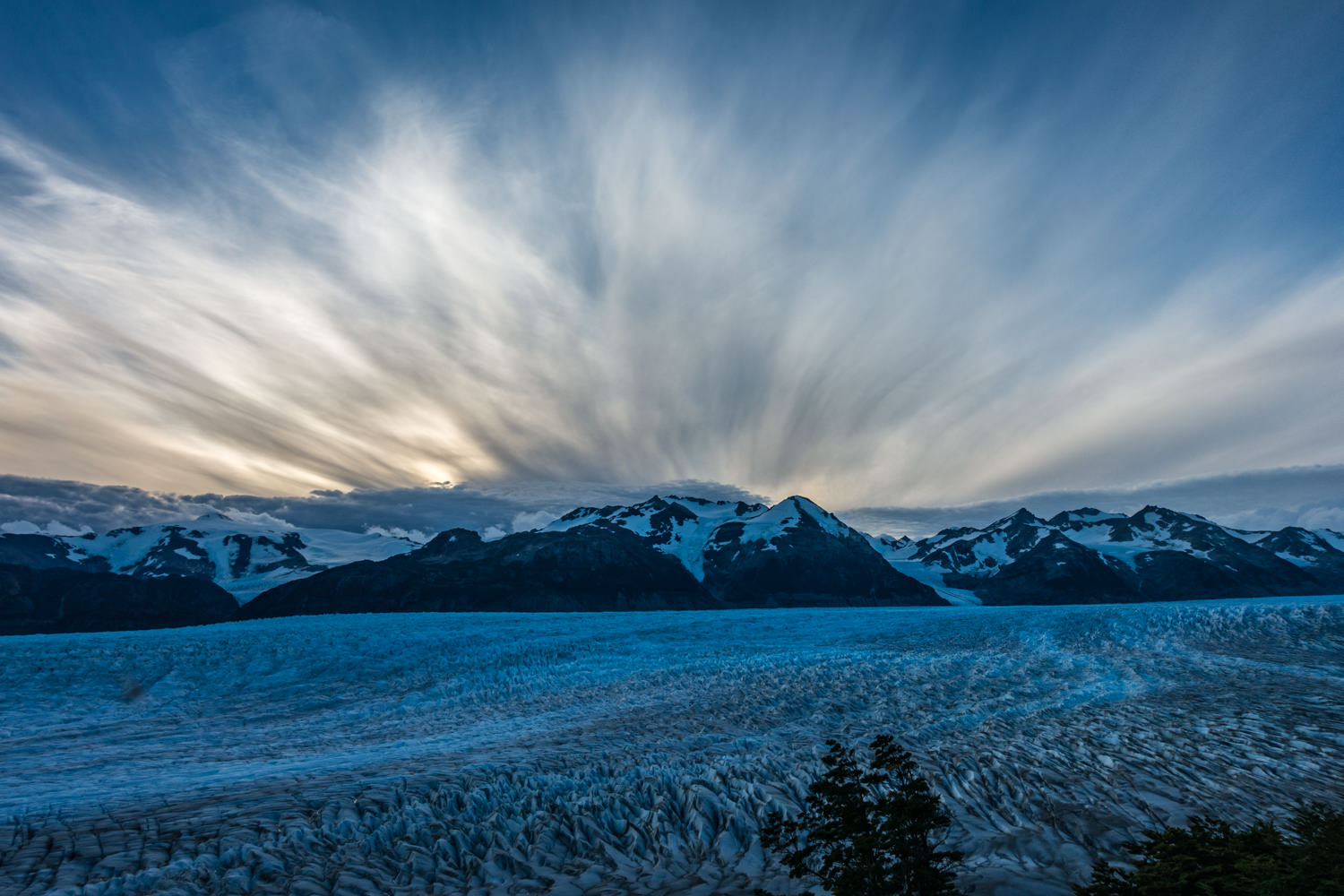
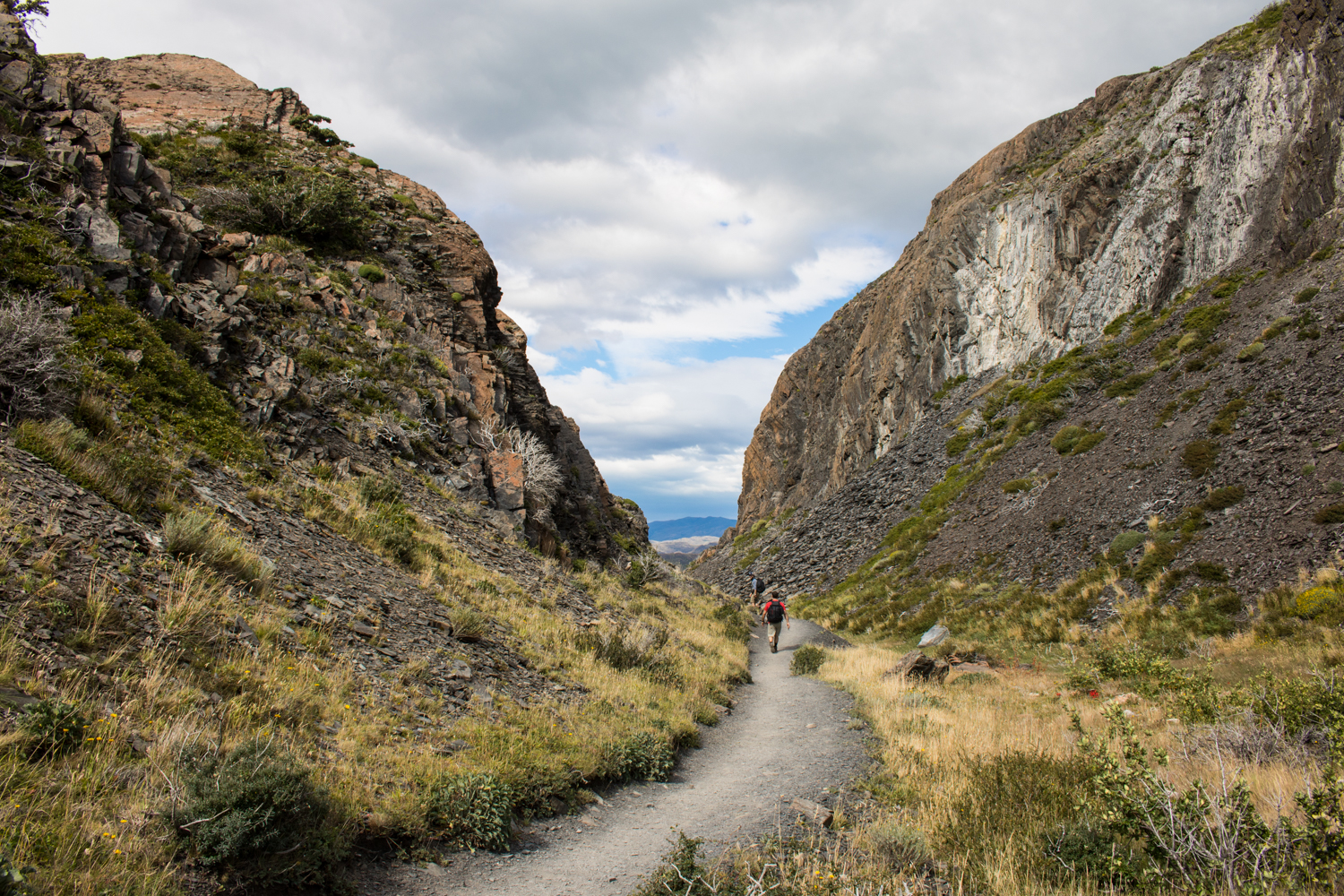
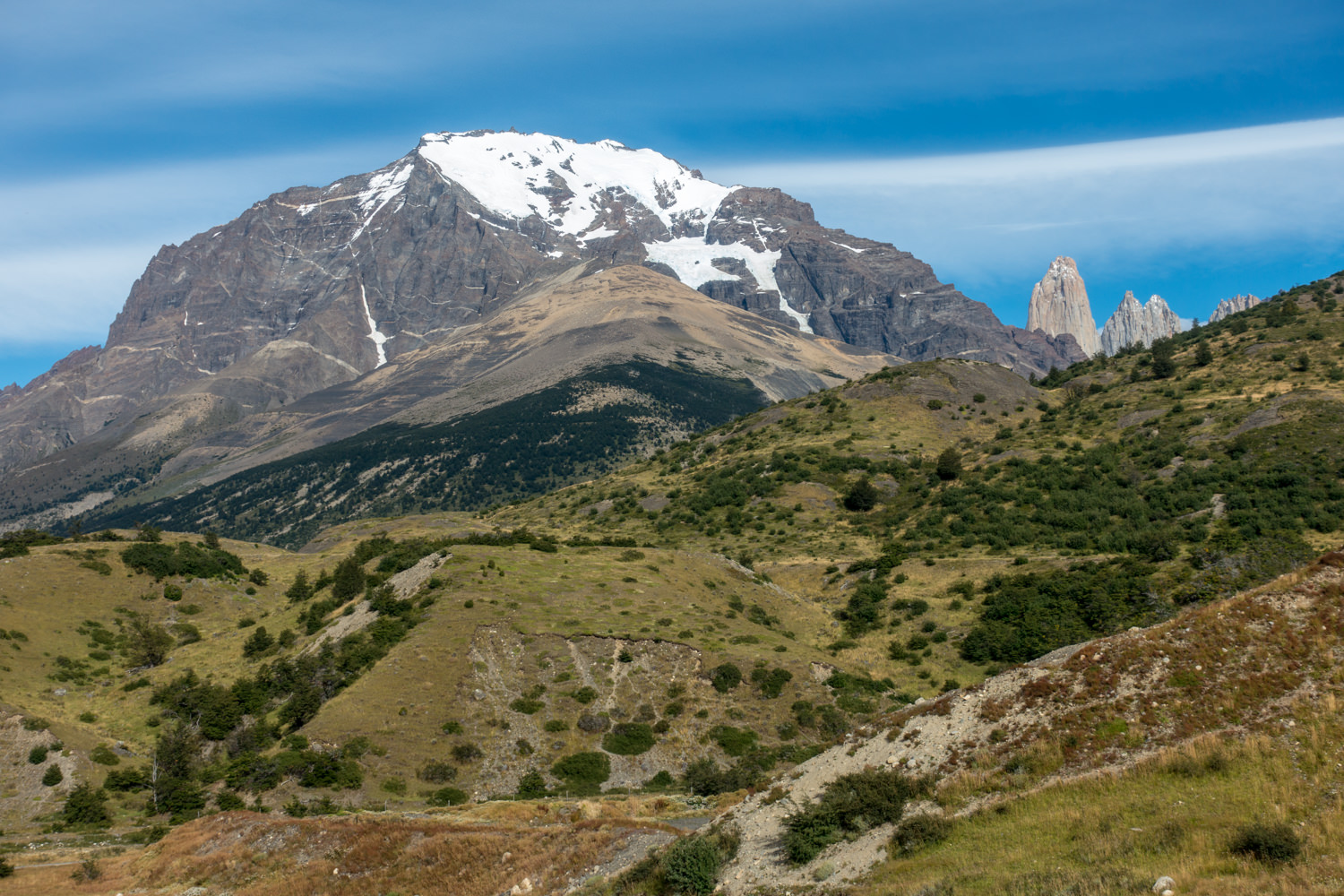
If it’s your first time visiting Patagonia, a trip to Torres del Paine should definitely be on your itinerary. Located on the Chilean side of the Andes and a two-hour bus ride from the gateway town of Puerto Natales, most people spend multiple days hiking through this region on the W, O, or Q trek. It’s one of the busiest hiking regions in all of Patagonia, so don’t expect too much solitude.
If you’re hiking independently, you’ll need to begin planning and booking your campsites months in advance. Competition is high, and coordinating with the multiple reservation systems (Las Torres Patagonia and Vertice) can be a test of patience. Some third-party booking platforms have popped up in recent years to streamline the process, but we can’t speak to their cost or credibility.
LOS GLACIARES NATIONAL PARK
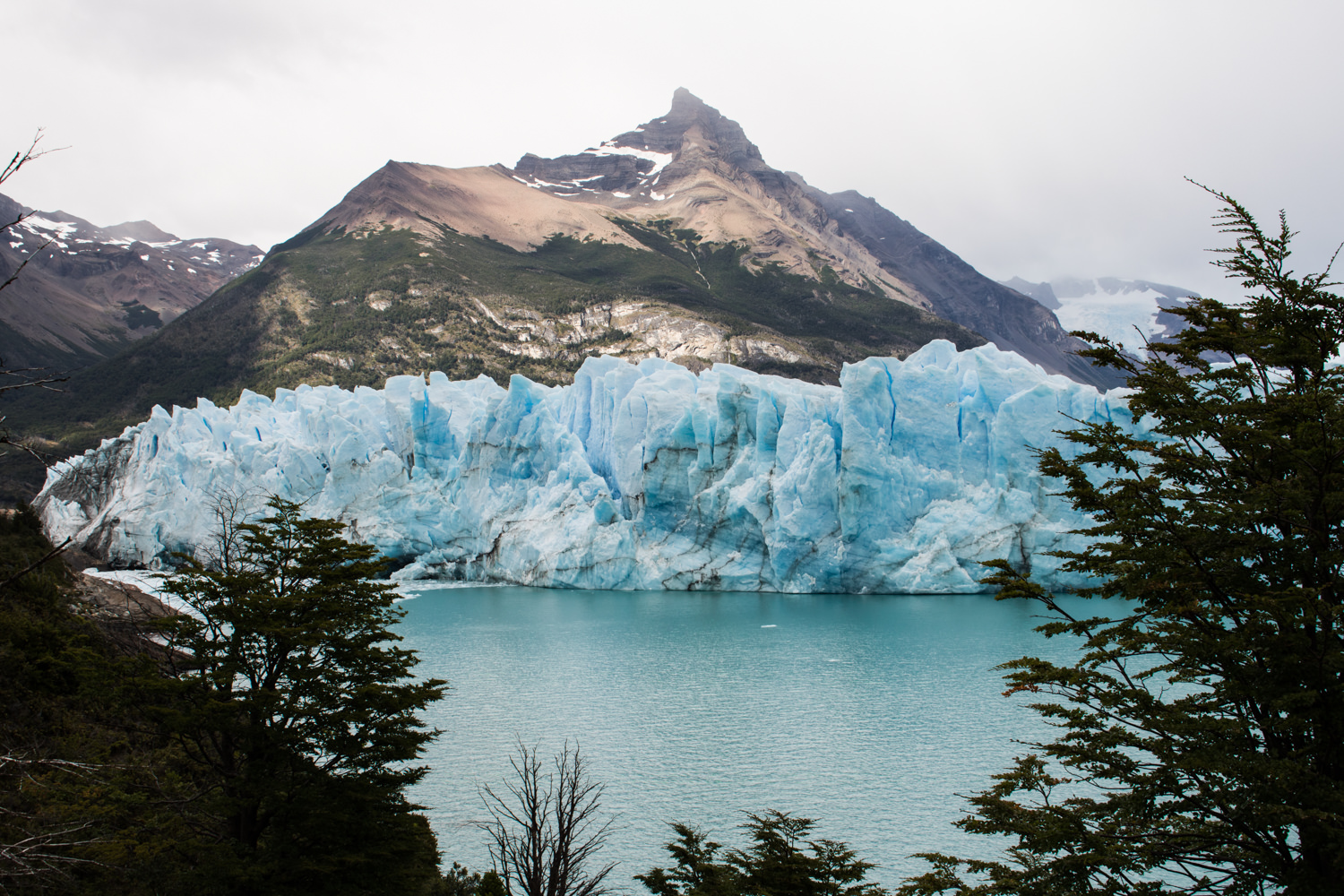
Argentina’s most famous national park, Los Glaciares, is home to the famous Fitz Roy massif as well as the Perito Moreno Glacier. Often referred to as the adventure capital of Argentina, the charming and quaint town of El Chalten is the jumping-off point for hikes around Fitz Roy, with trails literally leaving from town.
There are many great day hiking opportunities, but we recommend immersing yourself in this region with a multi-day backpacking trip. Located three hours south of El Chalten, the larger and more commercialized town of El Calafate is the jumping-off point for a visit to the world-famous Perito Moreno Glacier.
CHILEAN LAKES DISTRICT
Compared to the glaciated regions down south, the Lakes District in Chile offers a landscape dotted with lakes, rivers, volcanoes, and a temperate rainforest. Though not as epic as the Patagonian regions down south, there are many worthwhile hikes in the Huerquehue National Park and Villarrica National Park. This region is also the official starting point for the famous Carretera Austral, the rugged and picturesque “highway” that stretches 770 miles (1,240 kilometers) down to southern Chile.
NORTHERN ARGENTINE PATAGONIA
This beautiful region has several glacial lakes, stunning mountain vistas, and wonderful whitewater rafting opportunities. Most travelers accessing this region do so through Bariloche, which is often referred to as the Argentine Switzerland. Home to two national parks – Parque Nacional Lanín and Parque Nacional Nahuel Huapi – there are numerous hiking and backpacking opportunities, including some awesome refugio trips where you can string together hikes to isolated huts in the mountains. There are also some great multi-day backpacking trips through Parque Nacional Nahuel Huapi.
AYSEN
Perhaps the area we’re most excited to explore on our next trip – the Aysen region – is located between the Lakes District of the north and the more popular Torres del Paine region in the south. The Aysen region is vast, remote and has so much to offer on a less-traveled route. You can expect huge glaciers, turquoise lakes, temperate rainforests, and great backpacking and hiking options.
This area is far less developed than both the Lakes District and the southern Patagonia regions, so transportation and logistics can be more difficult. The Cerro Castillo Reserve is located in this area and offers a fantastic four-day backpacking trip.
We recommend renting your own wheels to explore. You’ll also see many cyclists and hitchhiking backpackers along the Carretera Austral, the stunning 770-mile highway, which alternates between pavement, gravel, and dirt, and runs through the heart of the Aysen region.
SOUTHERN ARGENTINE PATAGONIA (TIERRA EL FUEGO)
At the southernmost tip of South America sits the large archipelago of Tierra del Fuego. Though you can access this region by bus or ferry, most people opt to fly to the town of Ushuaia. Often considered the “end of the world”, Ushuaia is a resort town most notably used as a jumping-off point for cruises to Antarctica.
Less than 5 miles outside of Ushuaia is Parque Nacional Tierra del Fuego, which has some of the most rugged and extreme landscapes on the continent. The most popular day hike in Tierra del Fuego is the Glaciar Martial, which is a steep but beautiful climb to expansive summit views of the Beagle Channel and Cordillera Darwin. There are also some multi-day backpacking opportunities, such as the Montes Martial Circuit, though they are quite challenging and can be logistically more complicated.
What Are Some Popular Hikes & Backpacking Trips?
It would be impossible to list all the varied and unique trails in Patagonia. Instead, we wanted to highlight a few of our favorites and some popular recommendations. These trekking routes are all exceptional and a great place to start for your first trip to Patagonia.
W TREK
Located in Parque Nacional Torres del Paine, the W trek is by far the most popular multi-day hike in Patagonia. Covering roughly 50 miles and usually completed in four to five days, the W Trek highlights some of the best sights in the region.
O TREK
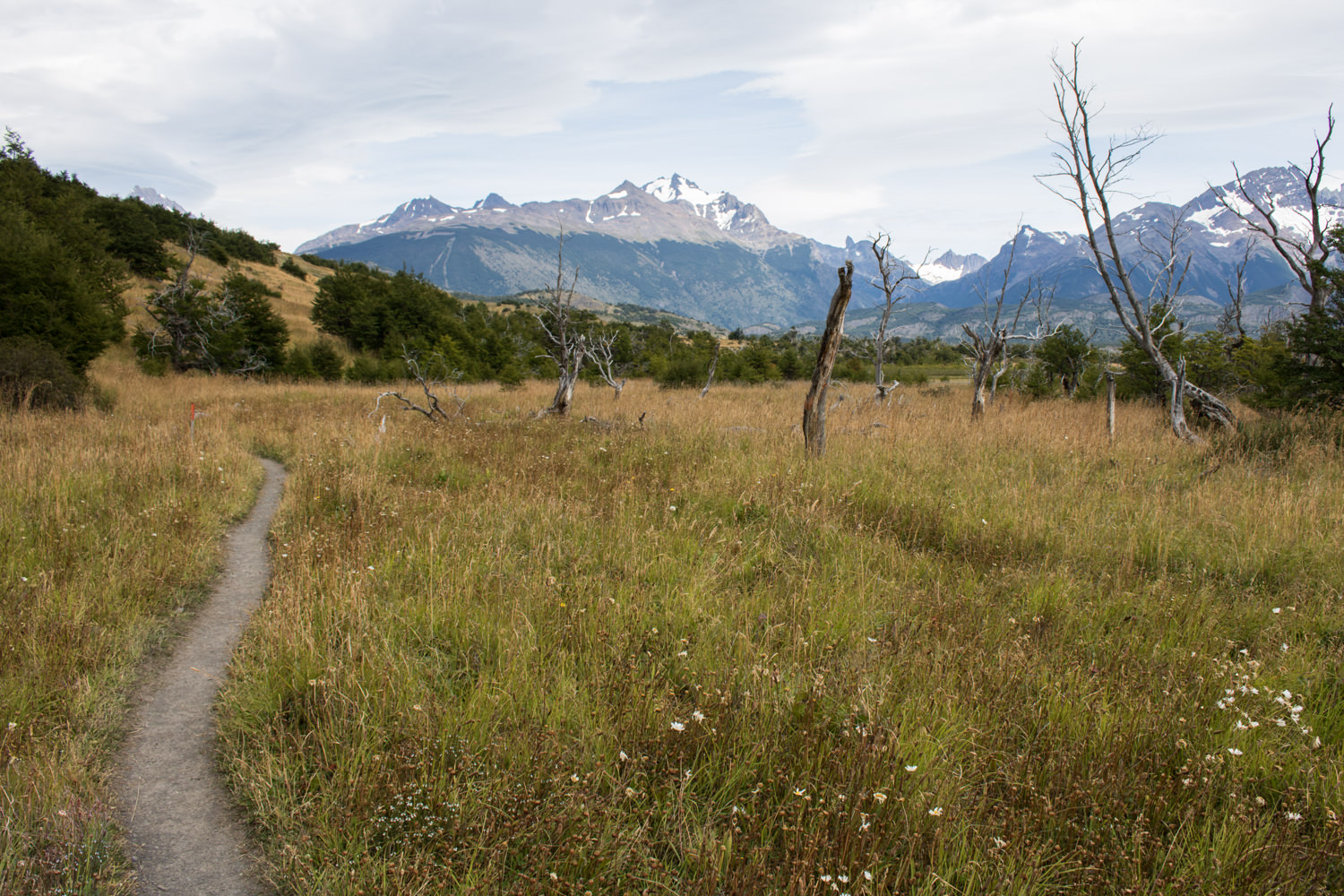
Also known as the Circuit of Torres del Paine, the O Trek covers the same trail as the W Trek but also traverses the less visited backside of the park. Over the course of 68 miles, you’ll connect the two ends of the W. Generally completed in six to nine days, you’ll spend two to three nights camping on the backside, which offers more solitude (albeit less dramatic views). However, compared to the W trek where you can stay in refugios every night, camping is required to complete the O Trek.
FITZ ROY
Hiking in the Fitz Roy region should be on everybody’s itinerary when visiting Patagonia. El Chalten is the laidback, charming town you’ll use as a base, with trails leaving right from town. The two most popular day hikes are Laguna de Los Tres and Cerro Torre. However, there are four free campsites in the park you can use to string together a backpacking trip.
HUEMUL CIRCUIT
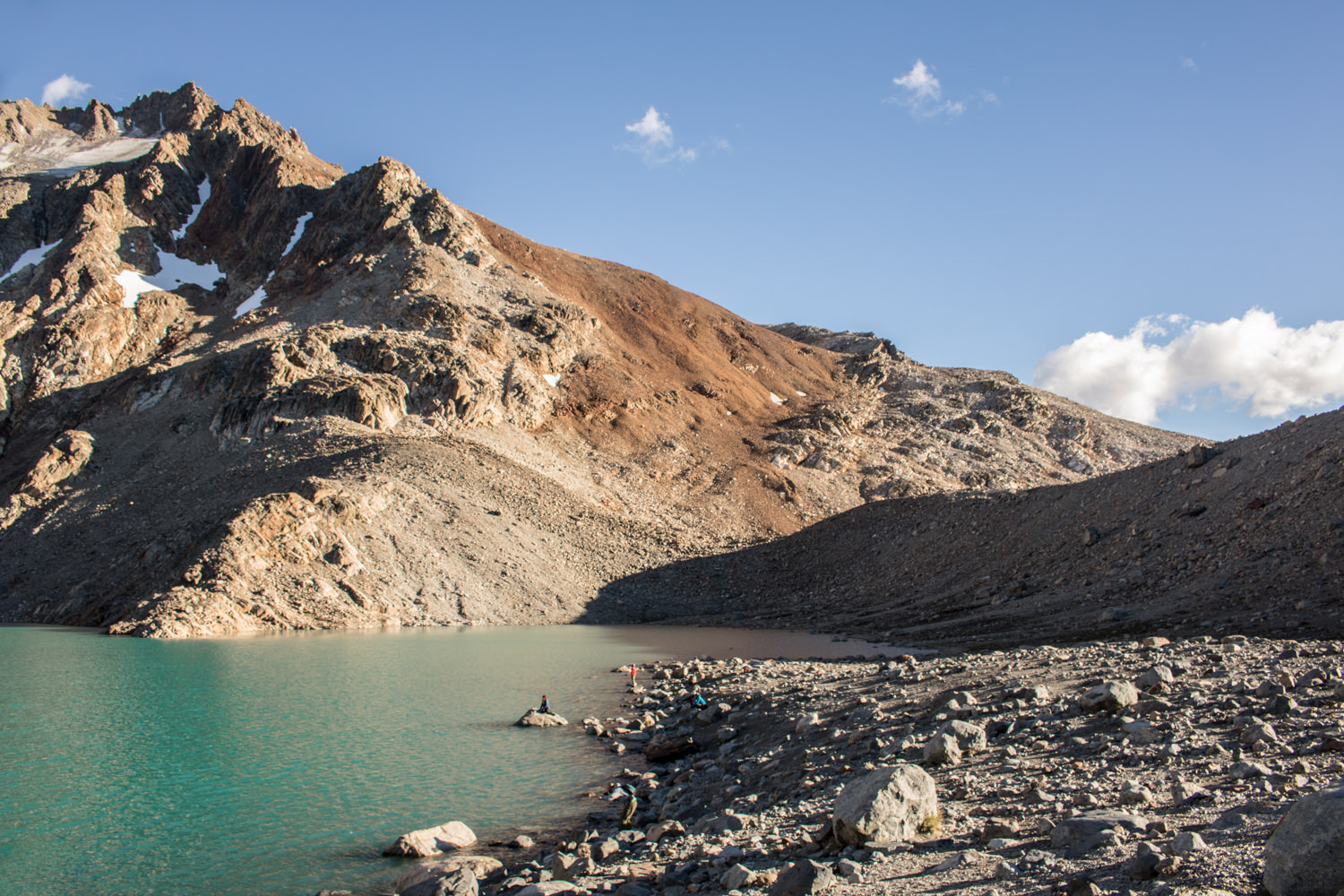
One of Patagonia’s most challenging routes, the four-day, 40-mile loop around Cerro Huemul will give you some of the best views of the Southern Patagonian Ice Field.
However, this hike is not for beginners. The trail is unmarked in many places, requiring GPS or map/compass navigation. Further, in order to complete the loop, you’ll have to navigate a Tyrolean traverse (basically a self-propelled zipline), which requires bringing or renting your own equipment (harness, carabiner, etc.). Depending on the time of year and water flow, you may be able to ford the rivers rather than use the Tyrol, but you’ll still be required to have the equipment.
In order to complete this loop, you’ll have to register with the park rangers in El Chaten, where they’ll make sure you have the gear you need. You’ll also be required to watch a mandatory safety video before setting off.
CERRO CASTILLO
Located in the Aysen region of Patagonia, the Cerro Castillo Reserve offers fantastic backpacking opportunities. You’ll encounter the same immense beauty of glaciers, stunning mountains, and turquoise lakes but with a fraction of the crowds down south. The 28-mile route can be completed in three to five days, and campsites are free. Logistics can be more complicated, but the payoff will be well worth it.
NAHUEL HUAPI TRAVERSE
Located right outside the town of Bariloche in the Argentina Lakes District, this 25-mile traverse can be completed in three days. You have the option of sleeping in refugios or camping in free campsites along the route. Though most of the trail is well marked, the hiking can be tough, and you’ll have to navigate some somewhat sketchy scree fields as you cross several passes.
What Are the Best Maps & Guidebooks for the Area?
- Moon Patagonia – We used this book heavily in the planning phases of our trip. It offers a nice overview of all the regions and towns. Though there is limited detailed information on specific hiking and backpacking routes, we still found it to be a helpful resource.
- Torres del Paine Trekking Map – This waterproof and tear-resistant topographical map includes contour lines, point-to-point time estimates, shelters, camping, and clear information on water sources. We used this map every day on our O Trek.
- El Chalten Trekking Map – Last updated in 2018, this topographical map covers all the trails in the hiking area of El Chaltén: Fitz Roy, Cerro Torre, the Huemul Circuit, Piedra del Fraile, Poincenot, De Agostini, the trail to Paso Marconi over the Southern Ice Field, and more. It also covers Lago del Desierto, as well as a significant portion of Lago O’Higgins and the glaciers that flow into it on the Chilean side.
How Difficult Is the Trekking in Patagonia?
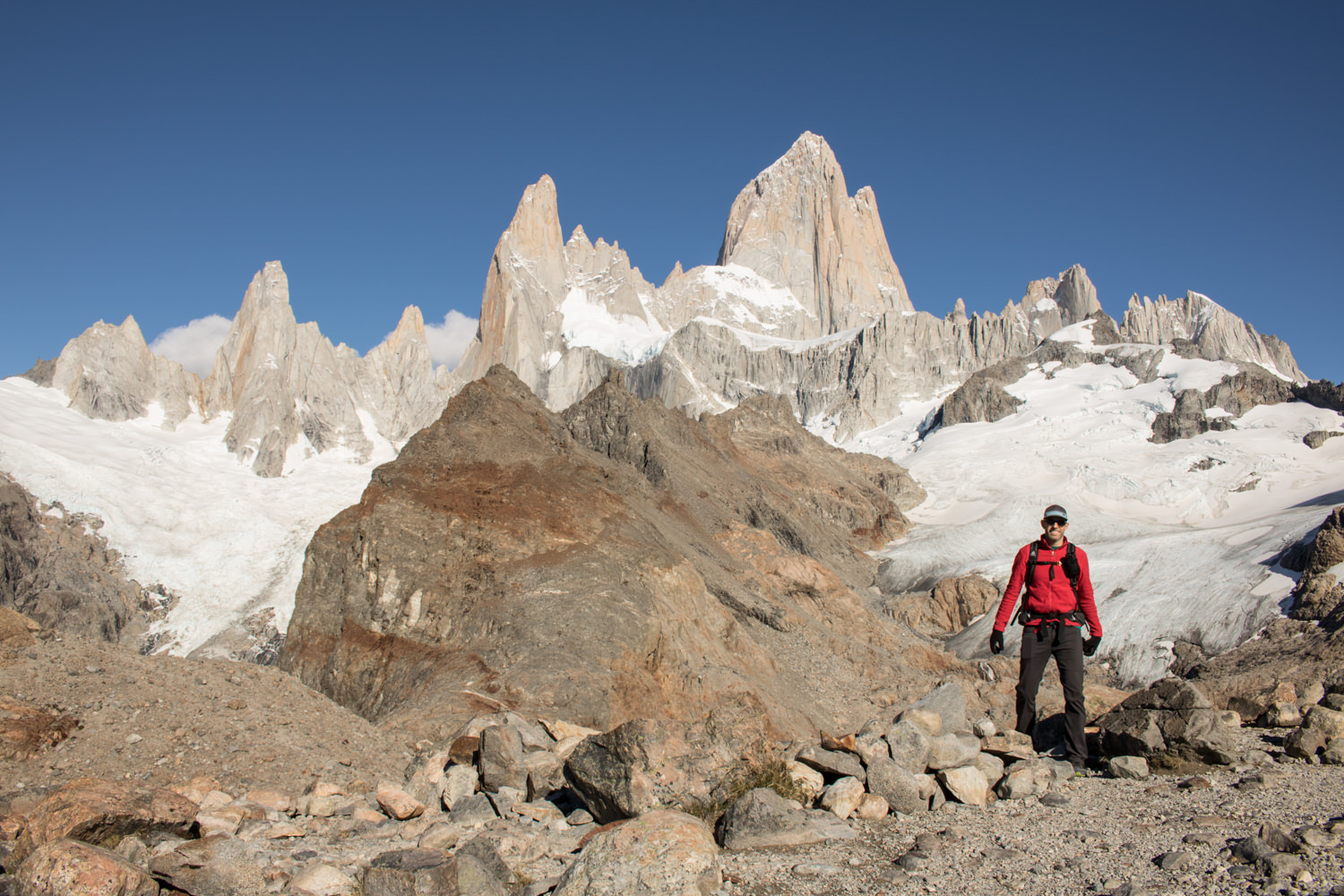
Trekking difficulty will depend on a multitude of factors including your experience, physical fitness, pack weight, and weather conditions. There are many different hikes to choose from in Patagonia with varying degrees of difficulty. If you’re hiking in Torres del Paine or around Fitz Roy, the trails are generally well maintained and easy to follow.
Most of the popular hikes in Patagonia are not technical (no ropes, ice axes, or crampons needed). There will be some long days with big ups and downs, but most trails are at low elevation, so you won’t have to deal with altitude issues.
Do I Need a Water Filter?
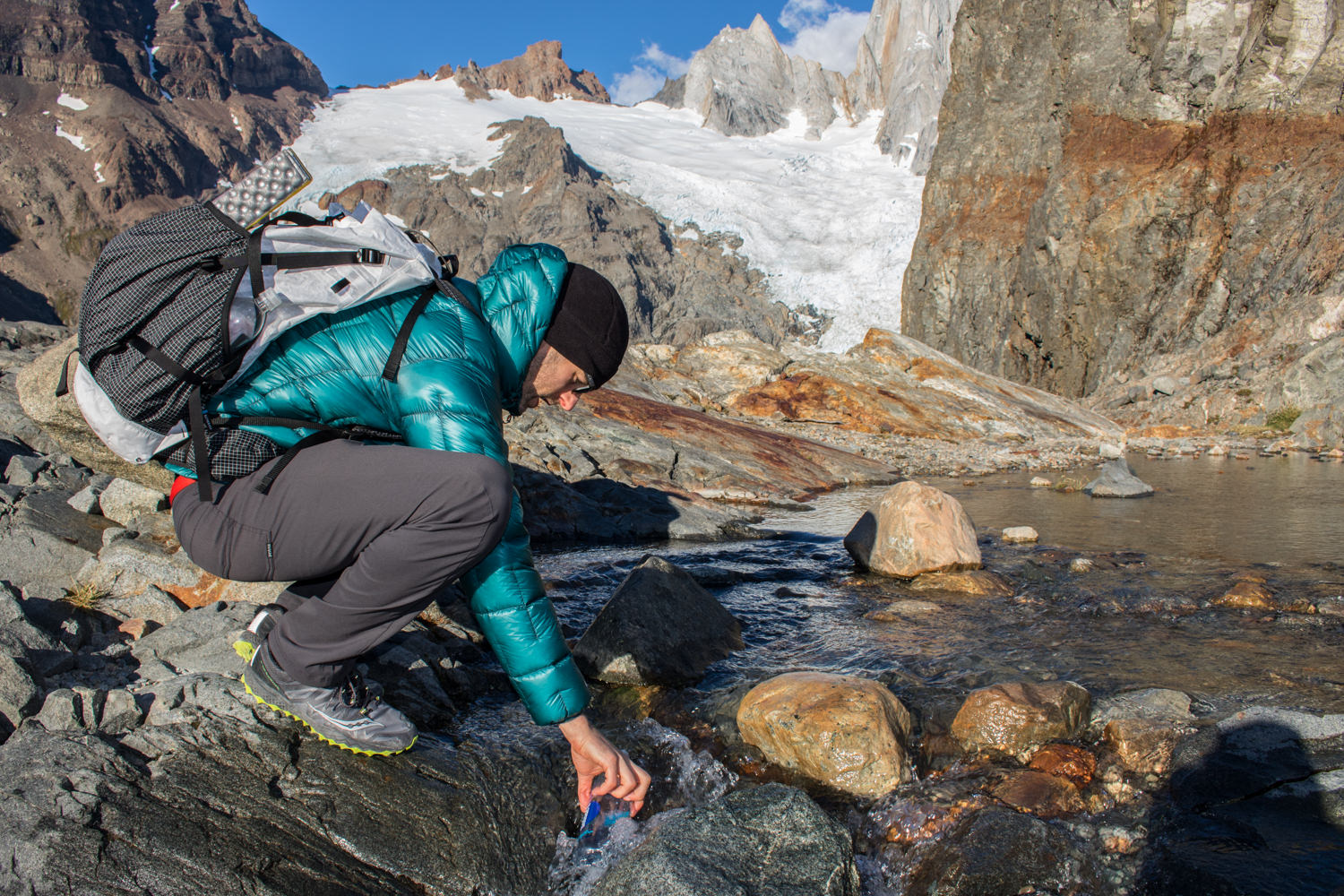
One of the pleasures of hiking in Patagonia is that you can often drink water directly from the source on the trail. The management agencies in Patagonia do a really great job educating visitors on how to prevent contamination of water sources and keep the water safe for everyone.
That said, we still recommend judging your water source before dipping your bottle. If there is livestock in the area or if the source runs through a trekking trail, you may be better off waiting for the next source. We brought along some chlorine dioxide tablets but never had to use them.
Should I Hike Independently or Hire a Guide?
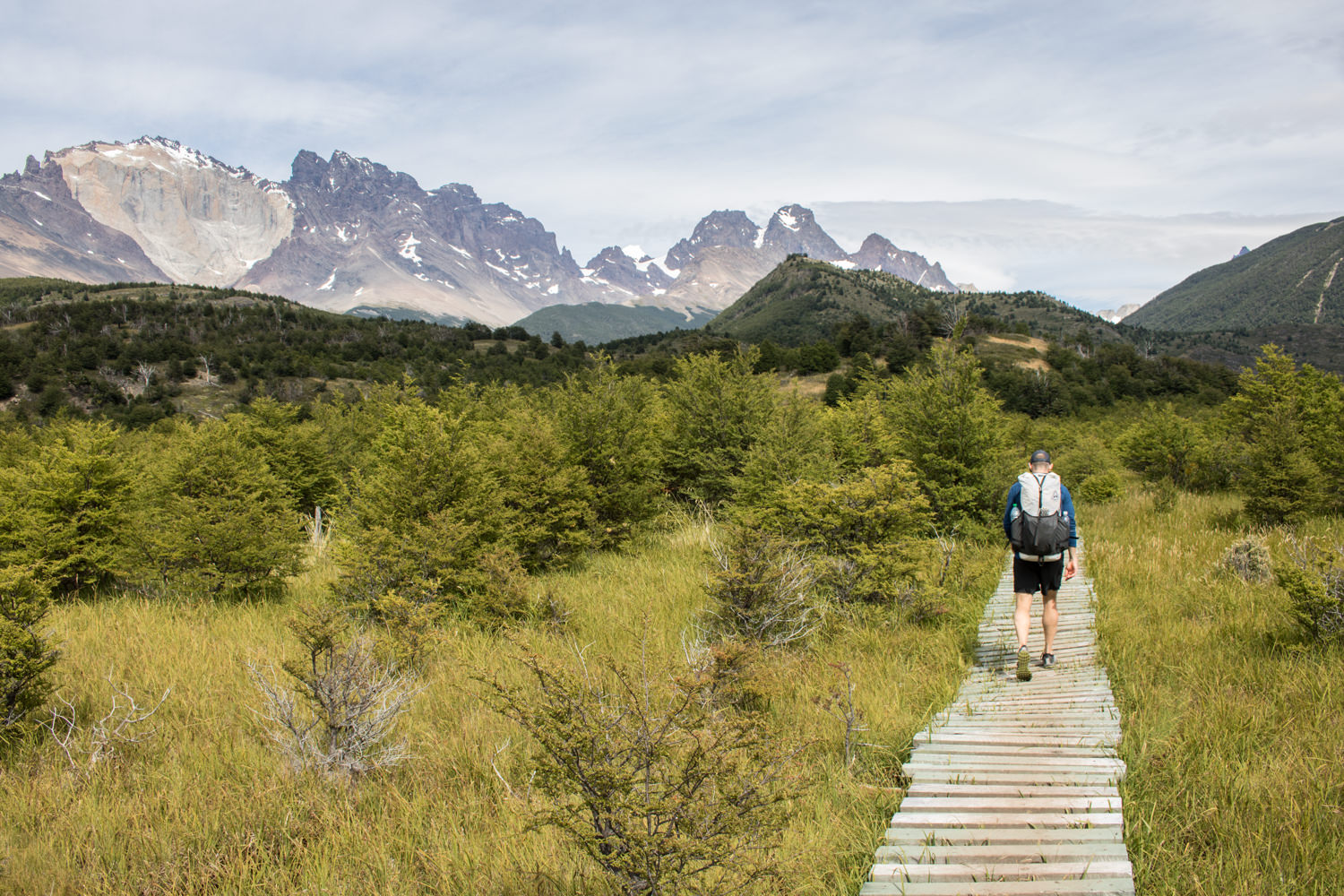
This is an important question for many hikers, and the choice will likely come down to experience and personal preference. If you’re an experienced backpacker traveling along a popular route (the W or O trek or Fitz Roy hikes), it is absolutely possible to hike independently. The trails are well marked and maintained.
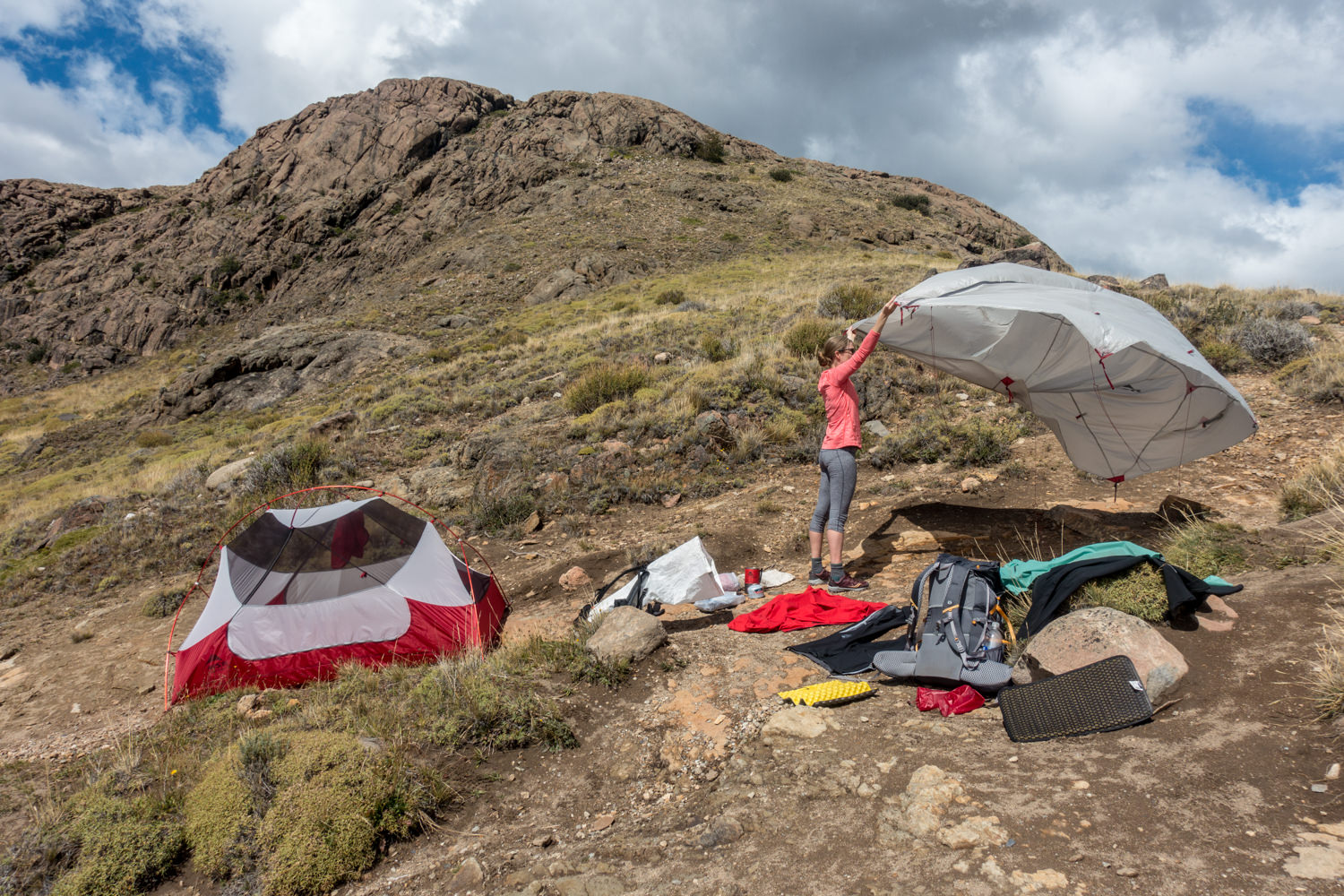
If you plan to hike independently, make sure you have a good map, necessary campsites booked (mandatory in Torres del Paine), and a guidebook before you hit the trail. Also, expect to put in a good amount of planning time to fully prepare for your hike. If you are camping, you will need to bring all your camping gear with you. There is also the option of renting gear in nearby towns. If you’ll be hiking in Torres del Paine, you can prearrange to rent gear at each campsite.
That said, guides can bring more to the table than just logistics management. Making reservations for camping in Torres del Paine can be confusing and logistically frustrating. When you book with an agency, they take care of all the details (lodging, food, transportation, permits, etc). Additionally, a good guide can teach you about the local culture, flora, and fauna.
Though quality of service and lodging options can vary greatly within each travel agency, below are some average costs of guided treks within Torres del Paine with full board (all meals) included. Some agencies include your transportation and lodging from Punta Arenas.
- W Trek : $1,500 – $3,000 per person
- O Trek: $2,000 – $4,000 per person
GUIDED TREKKING PROS
- All pre-trip details handled (permits, campsites, etc.)
- All transportation arranged
- Little worry about any details while hiking (lodging, meals, route, schedule, etc.)
- Local information on culture, food, etc.
INDEPENDENT TREKKING PROS
- Can be much less expensive
- Ability to hike on your own schedule
- No group dynamics to deal with – just you and the trail
Do I Need Travel Insurance?
We highly recommend purchasing travel insurance if you plan to trek in Patagonia. Most trekking locations in Patagonia are remote, so if something goes wrong, you’re likely to need an emergency evacuation. That can get ridiculously expensive.
We did a lot of research on travel insurance companies and ended up choosing World Nomads for our travels. Their rates were reasonable, their coverage met our needs, and communication was easy. We fortunately didn’t need to use our travel insurance, but the peace of mind alone was well worth it.
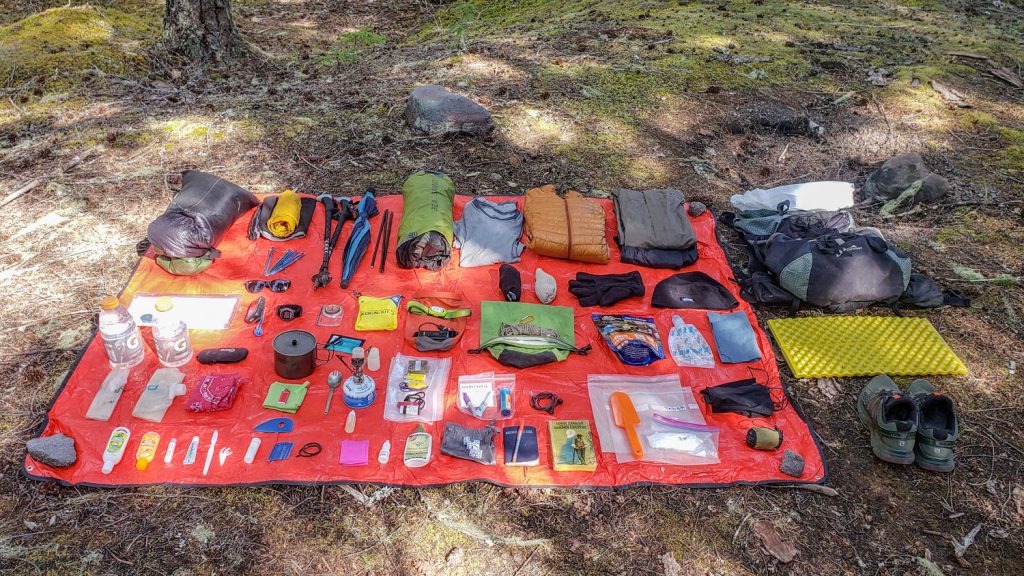
What Gear Should I Pack?
Make sure to check out our Ultimate Backpacking Checklist, so you don’t forget something important.
Below you’ll find our current favorite backpacking gear. If you want to see additional options, our curated gear guides are the result of many years of extensive research and hands-on testing by our team of outdoor experts.
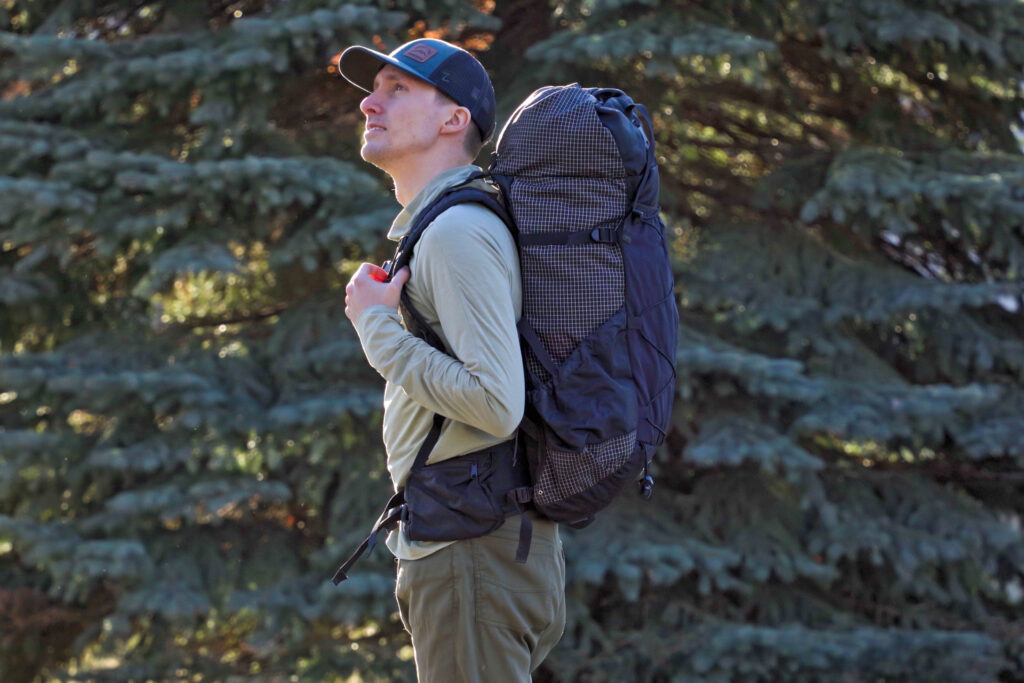
BACKPACK
- Best Backpacking Pack Overall: Gregory Paragon 58 – Men’s / Gregory Maven 58 – Women’s
- Best Ultralight Backpacking Backpack: Hyperlite Mountain Gear Unbound 40
- More: Check out our best backpacking backpacks guide for ultralight and trekking options
TENT
- Best Backpacking Tent Overall: Big Agnes Copper Spur HV UL2
- Best Ultralight Tent: Zpacks Duplex
- Best Budget Tent: REI Half Dome 2
- Best Tent Stakes Overall: All One Tech Aluminum Stakes
- More: Check out our best backpacking tents guide for more options
SLEEPING BAG/QUILT
- Best Sleeping Bag Overall: Men’s Feathered Friends Swallow YF 20 / Women’s Feathered Friends Egret YF 20
- Best Quilt Overall: Enlightened Equipment Revelation 20
- More: Check out our best backpacking sleeping bags guide and best backpacking quilts guide for more options
SLEEPING PAD
- Best Sleeping Pad Overall: NEMO Tensor All-Season
- Best Foam Sleeping Pad: NEMO Switchback
- More: Check out our best backpacking sleeping pads guide for ultralight and trekking options
CAMP KITCHEN
- Best Backpacking Stove Overall: MSR PocketRocket 2
- Best Backpacking Cookware Overall: TOAKS Titanium 750ml
- Best Backpacking Coffee Overall: Starbucks VIA
- More: Check out our best backpacking stoves guide and best backpacking cookware guide for ultralight and large group options
WATER & FILTRATION
- Best Water Filter Overall: Sawyer Squeeze
- Best Hydration Bladder Overall: Gregory 3D Hydro
- Best Backpacking Water Bottles: Smartwater Bottles
- More: Check out our best backpacking water filters guide and best backpacking water bottles guide for ultralight and large group options
CLOTHING
- Best Hiking Pants Overall: Men’s Outdoor Research Ferrosi / Women’s The North Face Aphrodite 2.0
- Best Hiking Shorts Overall: Men’s Patagonia Quandary / Women’s Outdoor Research Ferrosi
- Best Women’s Hiking Leggings: Fjallraven Abisko Trekking Tights HD
- Best Rain Jacket Overall: Men’s Patagonia Torrentshell 3L / Women’s Patagonia Torrentshell 3L
- Best Rain Pants: Men’s Patagonia Torrentshell 3L / Women’s Patagonia Torrentshell 3L
- Best Down Jacket Overall: Men’s Patagonia Down Sweater Hoodie / Women’s Patagonia Down Sweater Hoodie
- Best Fleece Jacket Overall: Men’s Patagonia Better Sweater / Women’s Patagonia Better Sweater
- Best Sunshirt Overall: Men’s Outdoor Research Echo / Women’s Outdoor Research Echo
- Best Socks Overall: Men’s Darn Tough Light Hiker Micro Crew / Women’s Darn Tough Light Hiker Micro Crew
- Beste Ultralight Liner Glove: Patagonia Capilene Midweight Liner
- More: Check out our best backpacking apparel lists for more options
FOOTWEAR & TRACTION
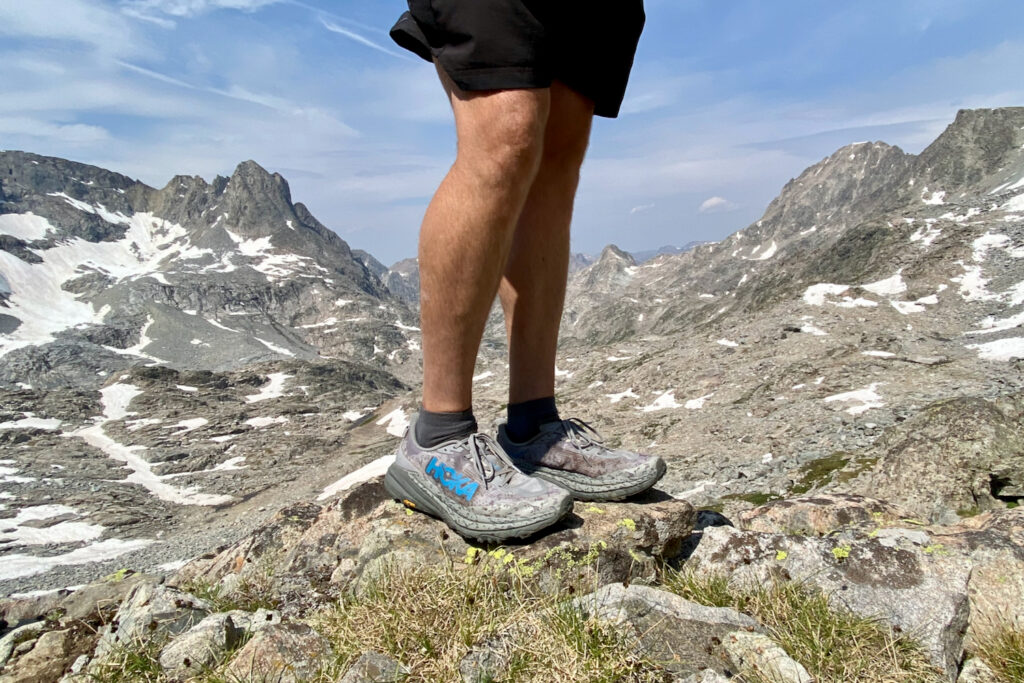
- Best Hiking Shoes Overall: Men’s HOKA Speedgoat 6 / Women’s HOKA Speedgoat 6
- Best Hiking Boots Overall: Men’s Salomon X Ultra 5 GTX / Women’s Lowa Renegade Evo GTX
- Best Hiking Sandals Overall: Men’s Chaco Z/1 Classic / Women’s Chaco Z/1 Classic
- Best Camp Shoes Overall: Crocs Classic Clogs
- Best Traction Device for Hiking Overall: Kahtoola MICROspikes
- More: Check out our best backpacking footwear lists for more options
NAVIGATION
- Best GPS Watch Overall: Garmin Instinct 2 Solar
- Best Personal Locator Beacon (PLB): Garmin inReach Mini 2
- More: Check out our article How to Use Your Phone as a GPS Device for Backpacking & Hiking to learn more
FOOD
FIRST-AID & TOOLS
- Best First-Aid Kit Overall: Adventure Medical Kits Ultralight/Watertight .7
- Best Pocket Knife Overall: Kershaw Leek
- Best Multitool Overall: Leatherman Wave+
- Best Headlamp Overall: Black Diamond Spot 400-R
- Best Power Bank Overall: Nitecore NB 10000 Gen 3
- More: Check out our best first-aid kit guide, best pocket knife guide, best multitool guide, best backpacking headlamps guide, and best power banks guide for more options
MISCELLANEOUS
- Best Trekking Poles Overall: Black Diamond Pursuit
- Best Backpacking Chair Overall: REI Flexlite Air
- Best Backpacking Stuff Sack Overall: Hyperlite Mountain Gear Drawstring
- More: Check out our best trekking poles guide, best backpacking chairs guide, and best stuff sacks guide for more options
More Patagonia Photos