Bottom Line
The HOKA Speedgoat 7 earns its place near the top of our guide to the best men’s hiking shoes because it balances comfort, traction, and low weight exceptionally well. The Speedgoat has been a CleverHiker favorite for years, and the latest version remains a strong choice for hikers who want a soft, supportive trail runner for long mileage.
The thick midsole absorbs impact from rocks and roots, while the grippy outsole provides dependable traction on steep climbs and mixed trail surfaces. Despite all that cushion, the Speedgoat 7 remains one of the lightest shoes in our lineup.
There are tradeoffs. The latest midsole feels a little stiffer than some prior Speedgoats, the toe box is lower-volume than older versions, and the extended heel geometry takes some adjustment. Durability is also more trail-runner-like than hiking-shoe-like. But for hikers who prioritize cushioning, support, and traction, it is an excellent all-around choice.
How We Tested
CleverHiker has tested multiple generations of the Speedgoat over hundreds of miles. Gear Analyst Miles Knotek evaluated the Speedgoat 7 for long-distance hiking, trail running, traction, cushioning, fit, weight, durability, and drying performance. Our current gear-guide assessment reflects the latest version’s updated fit and ride.
Quick Specs
- Best for: Long-distance hiking, trail running, cushioned hiking, established rugged trails
- Waterproof: No
- Fit: Average with a lower-volume toe box; Wide available
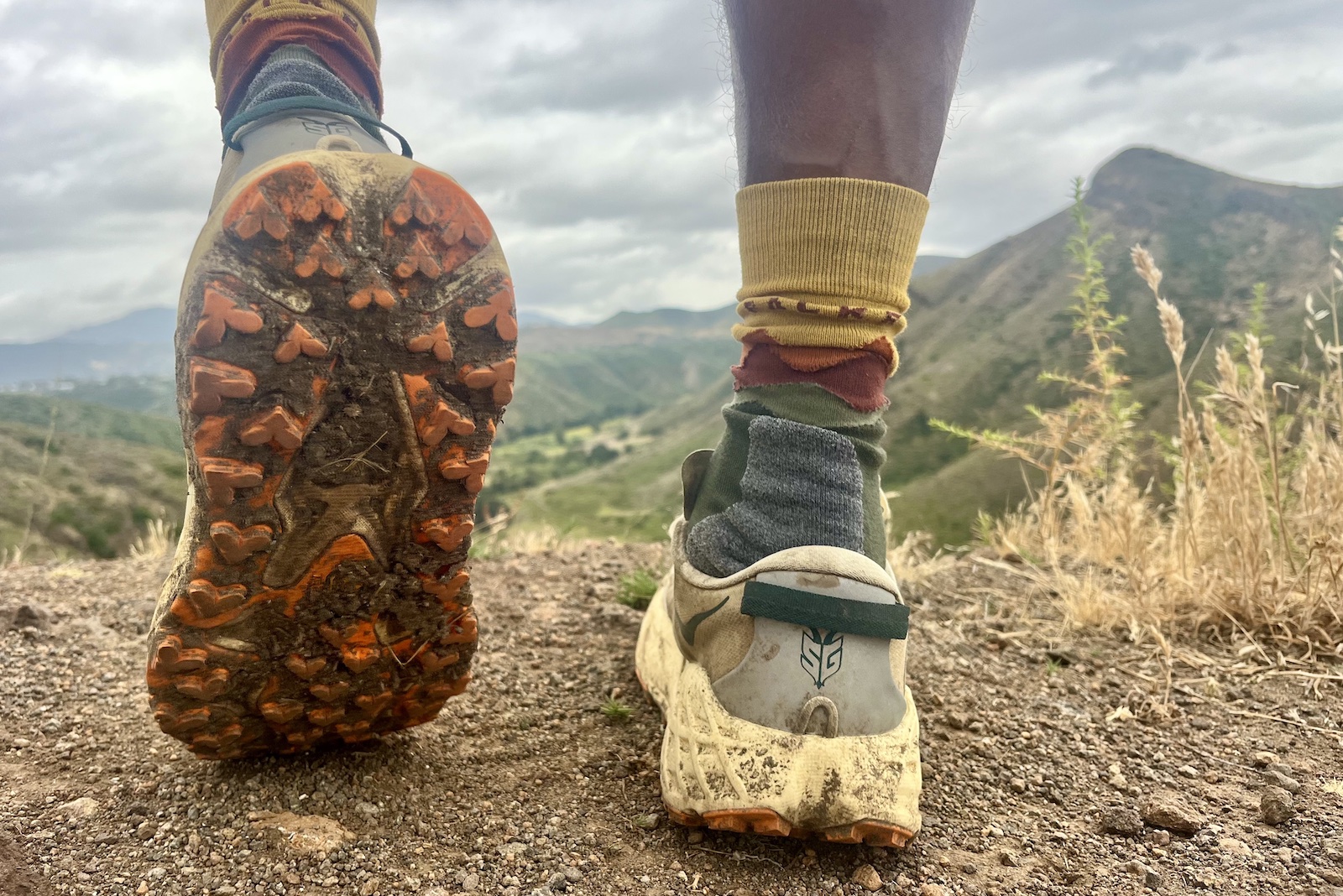
- Outsole: Vibram Megagrip with Traction Lug; 5 mm lugs
- Underfoot protection: No dedicated rock plate listed
- Available widths: Standard & Wide
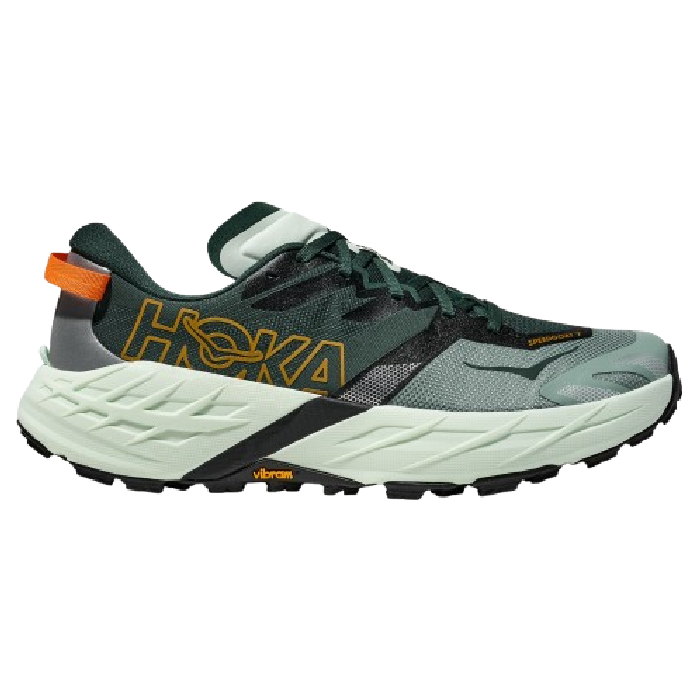
HOKA Speedgoat 7
Most Cushioned Trail Running Shoe
CleverHiker Rating: 4.1/5.0
Price: $165
Weight (Pair): 1 lb. 3.4 oz.
Heel-to-Toe Drop: 5 mm
Cushioning: Maximum
Best For: Long-distance hiking, trail running, cushioned hiking, established rugged trails
Pros
- Plush, supportive cushioning
- Excellent traction
- Very lightweight
- Good arch support
- Breathable and quick-drying
- Available in wide
Cons
- Not as durable as traditional hiking shoes
- Midsole is stiffer than prior versions
- Toe box is lower-volume that previous versions
- Extended heel shape takes getting used to
Comfort
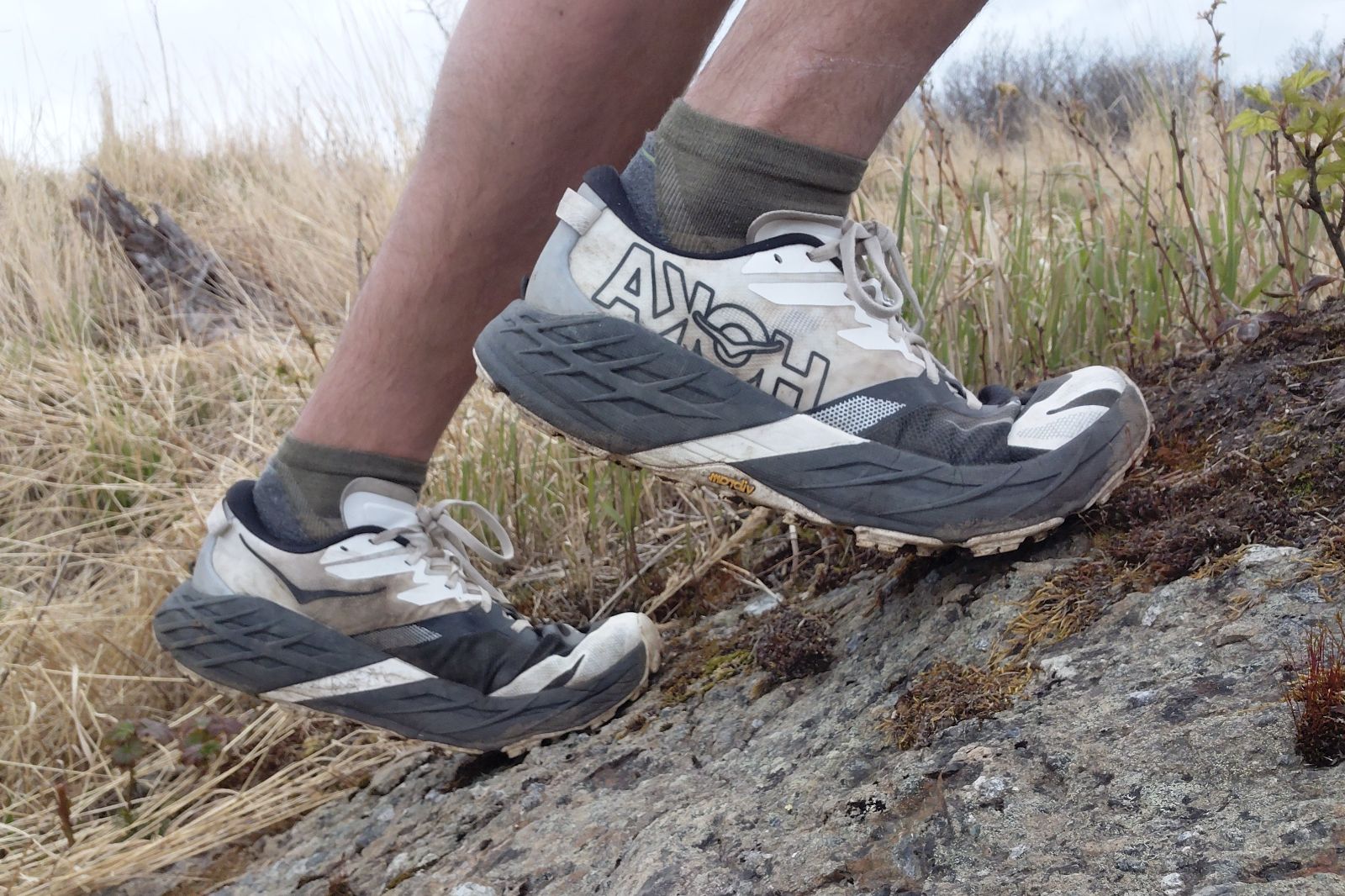
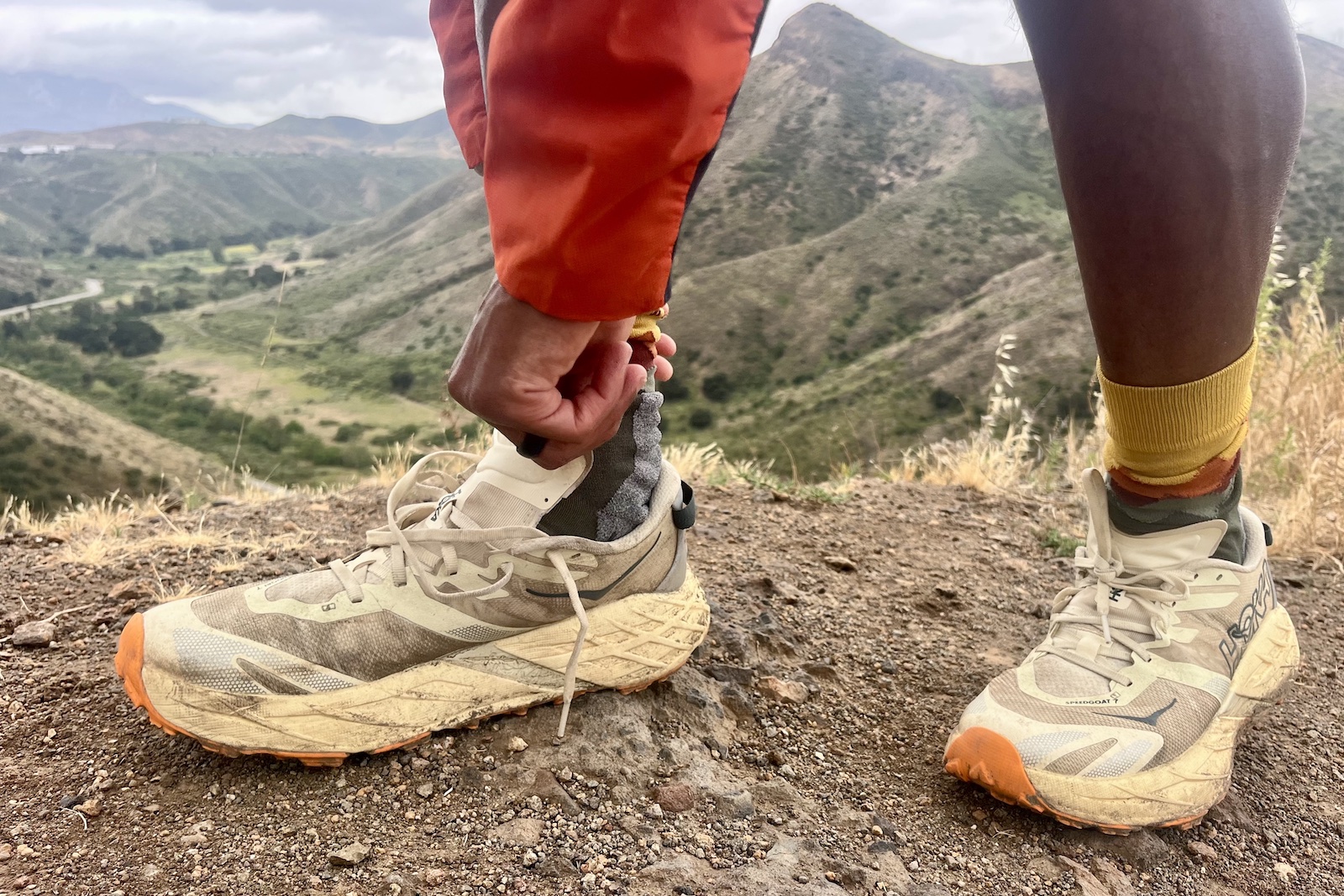
Comfort is the Speedgoat 7’s defining strength. The tall midsole absorbs trail impact well, reducing how much sharp rock, roots, and hard ground you feel over long days. The shoe also offers strong arch support and a smooth, rockered stride.
The latest fit is a bit more structured than some prior Speedgoats. The toe box is lower-volume, though it relaxes slightly with use and a wide version is available. We still consider it one of the most comfortable shoes in the category, particularly for hikers who like substantial cushioning.
Comfort Score: 4.4 / 5.0
Traction
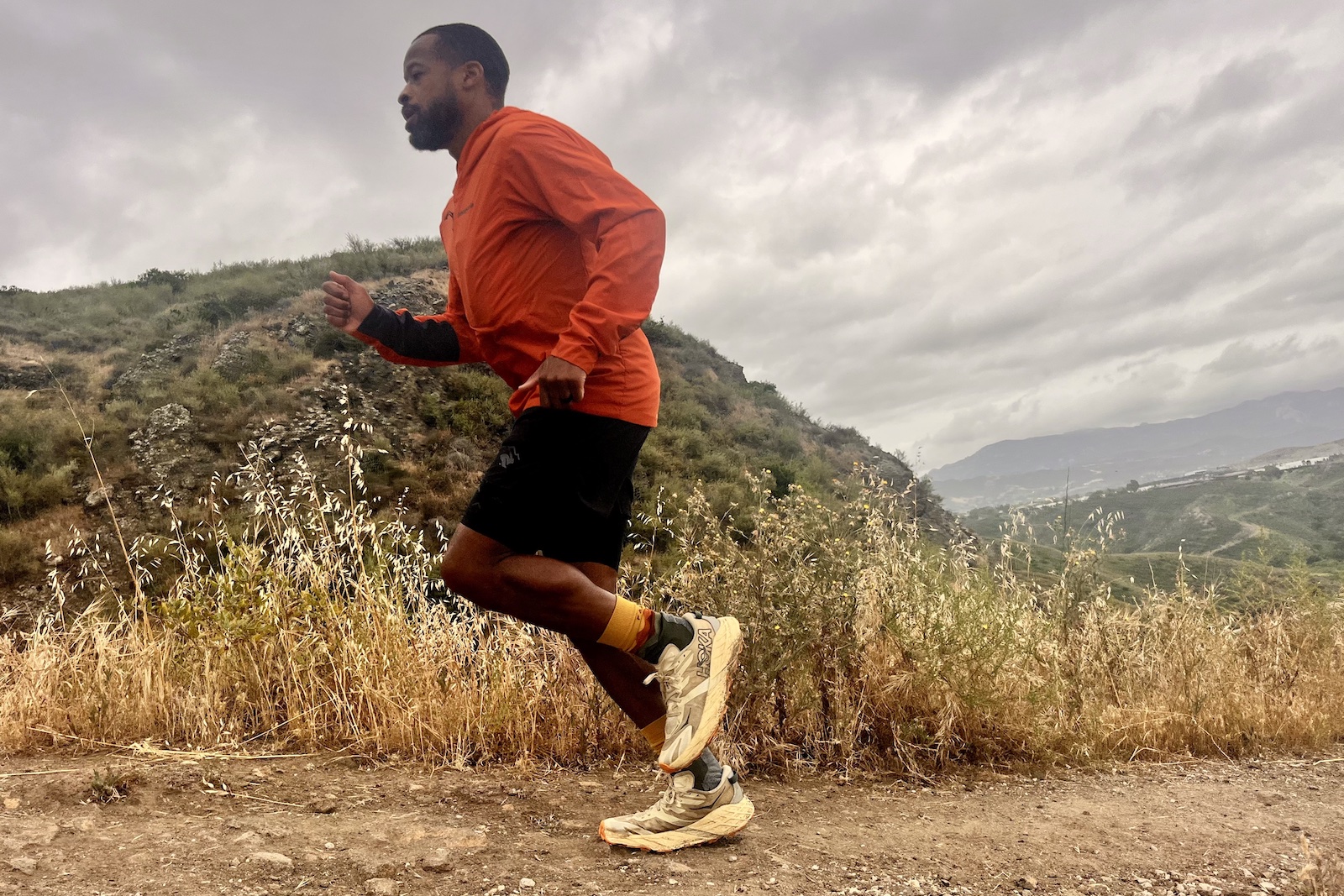
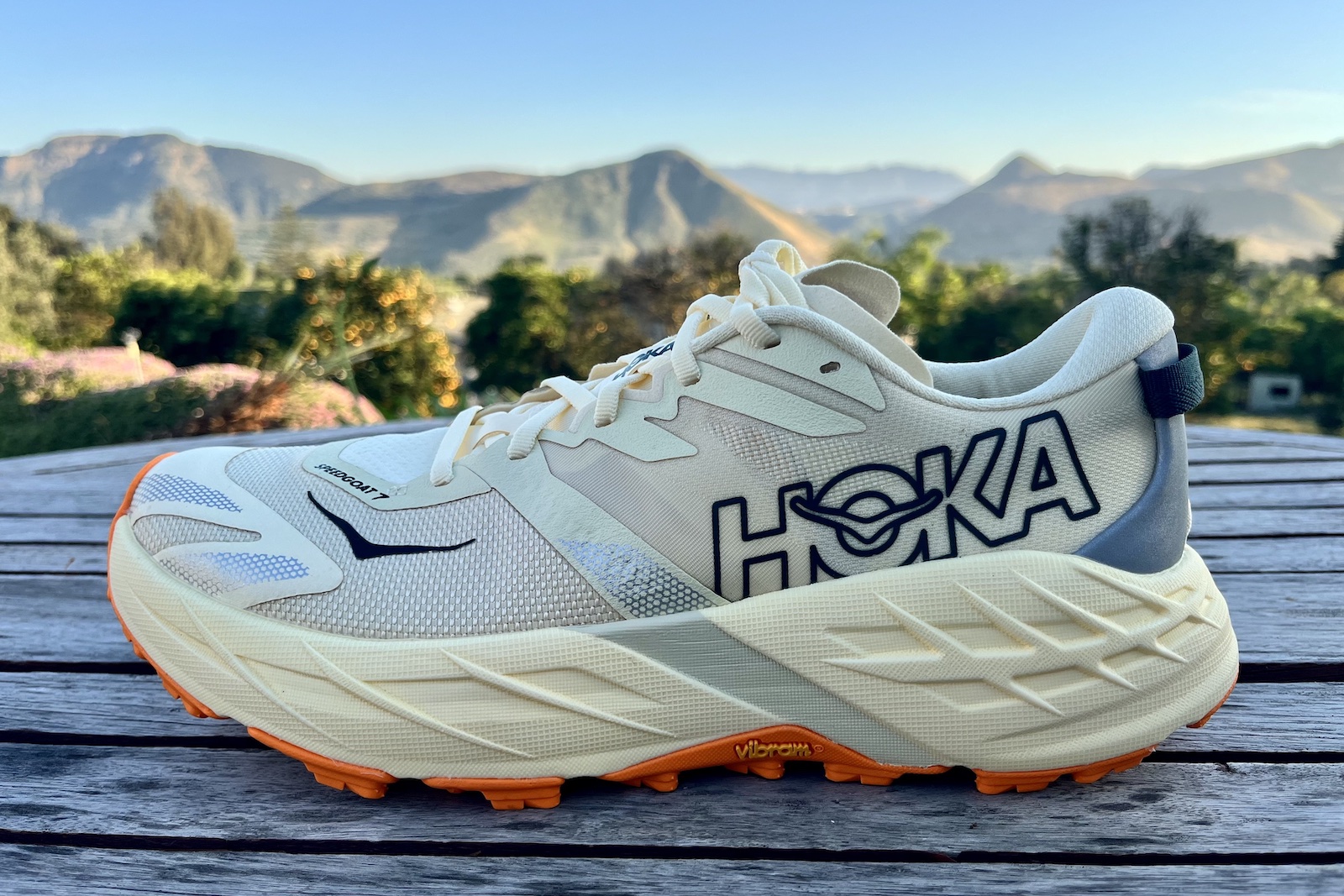
The Speedgoat 7’s outsole offers reliable grip on climbs, descents, dirt, rock, and mixed trail surfaces. The lug pattern feels secure without making the shoe clunky on smoother sections.
That traction, combined with the cushioned platform, makes the Speedgoat a strong option for long routes where hikers want both underfoot protection and confident footing.
Traction Score: 4.5 / 5.0
Weight
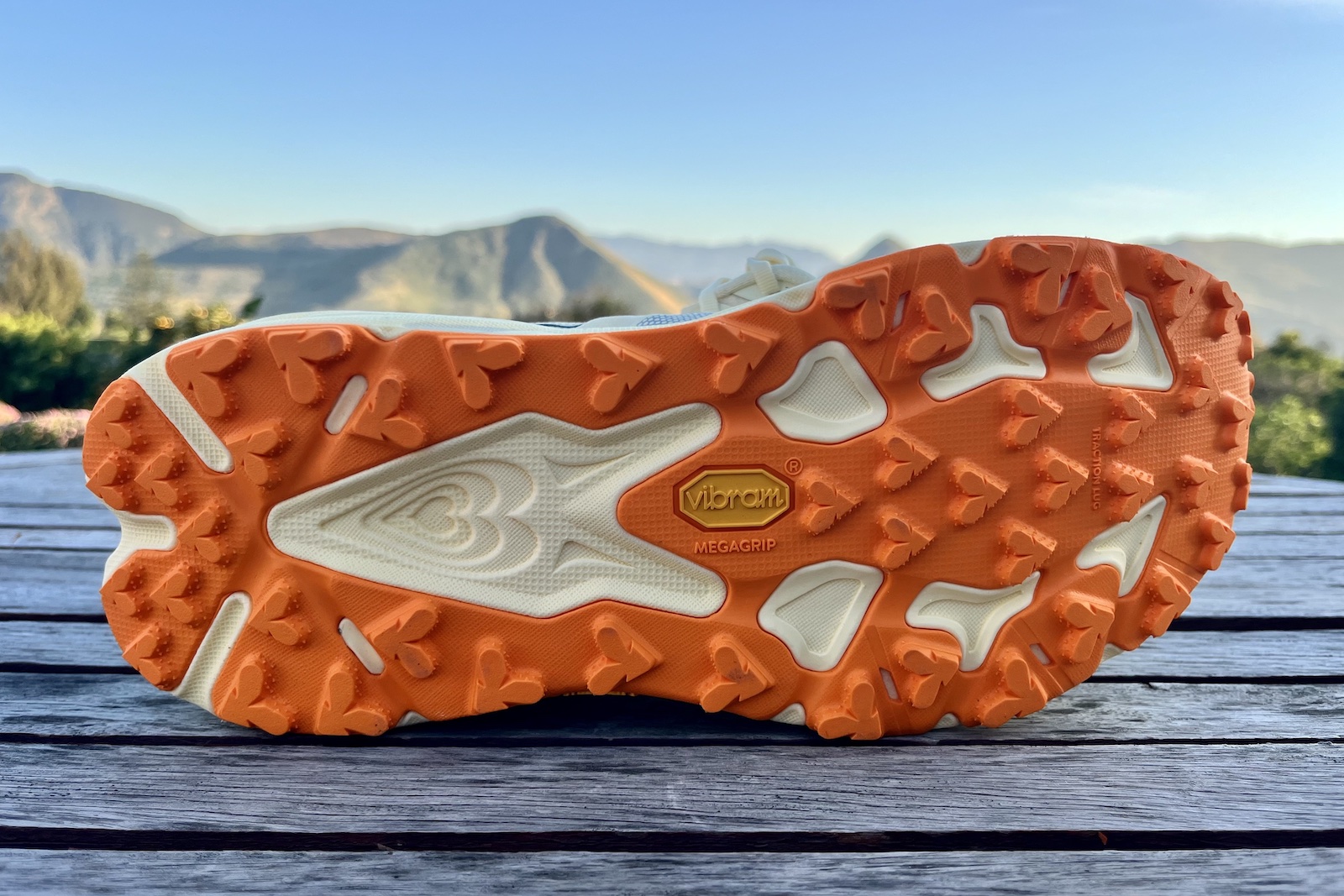
At roughly 1 pound 3.4 ounces per pair, the Speedgoat 7 is impressively light for how much cushioning it provides. That low weight helps reduce fatigue on long hikes and keeps the shoe feeling lively.
Only a handful of shoes in this guide are lighter, and few combine this much cushioning with such a low overall weight.
Weight Score: 4.8 / 5.0
Durability
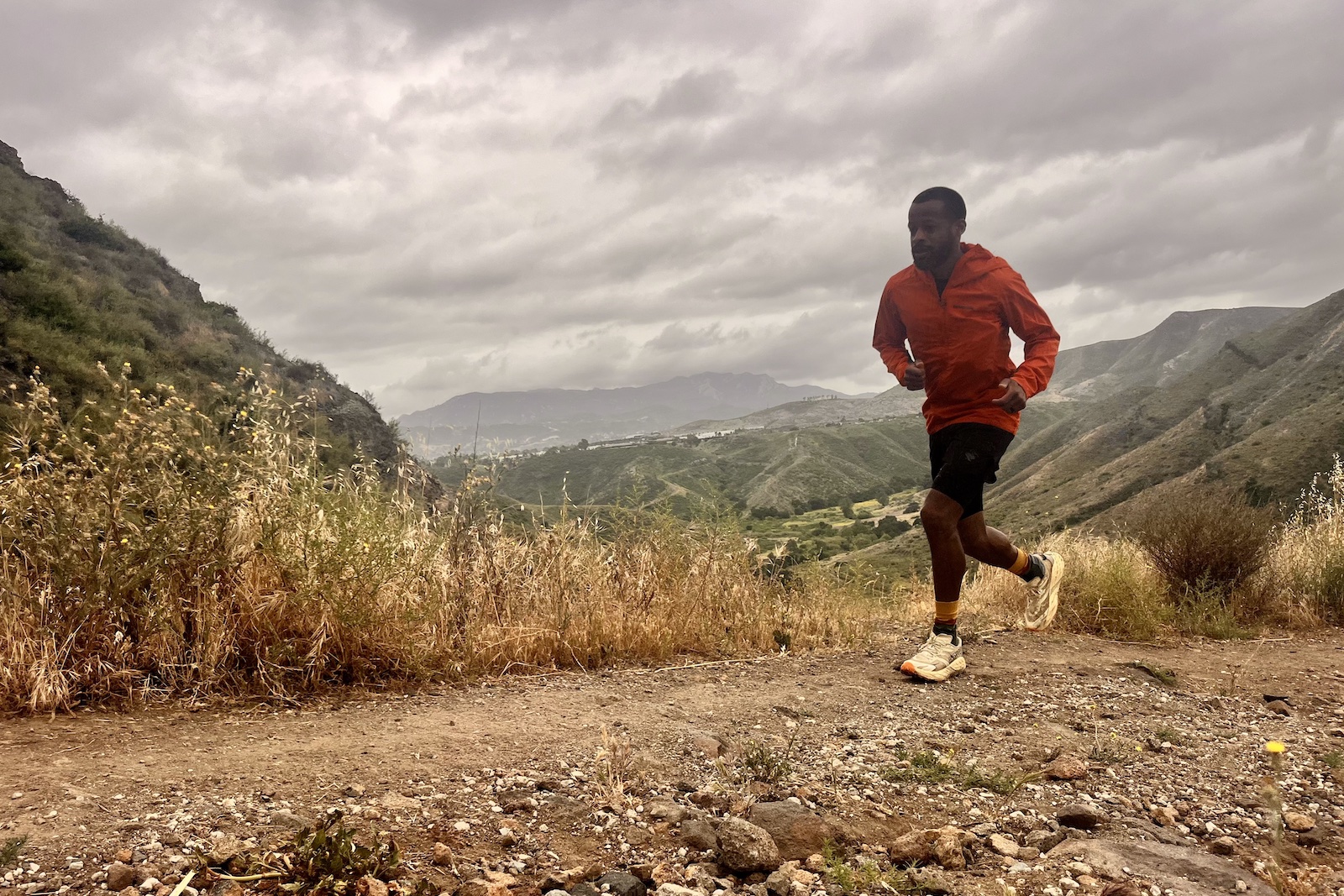
The Speedgoat 7 is reasonably durable for a lightweight trail runner, but it does not match burlier hiking shoes. The upper can last well, while the exposed foam and softer midsole materials tend to show wear sooner than dense hiking-shoe rubber and leather.
Our broader Speedgoat testing has produced hundreds of miles of useful life, but hikers who spend most of their time in sharp scree or off trail should expect faster wear than with the Salomon X Ultra 5 GTX or La Sportiva Spire GTX.
Durability Score: 4.4 / 5.0
Weather Resistance
Weather Resistance
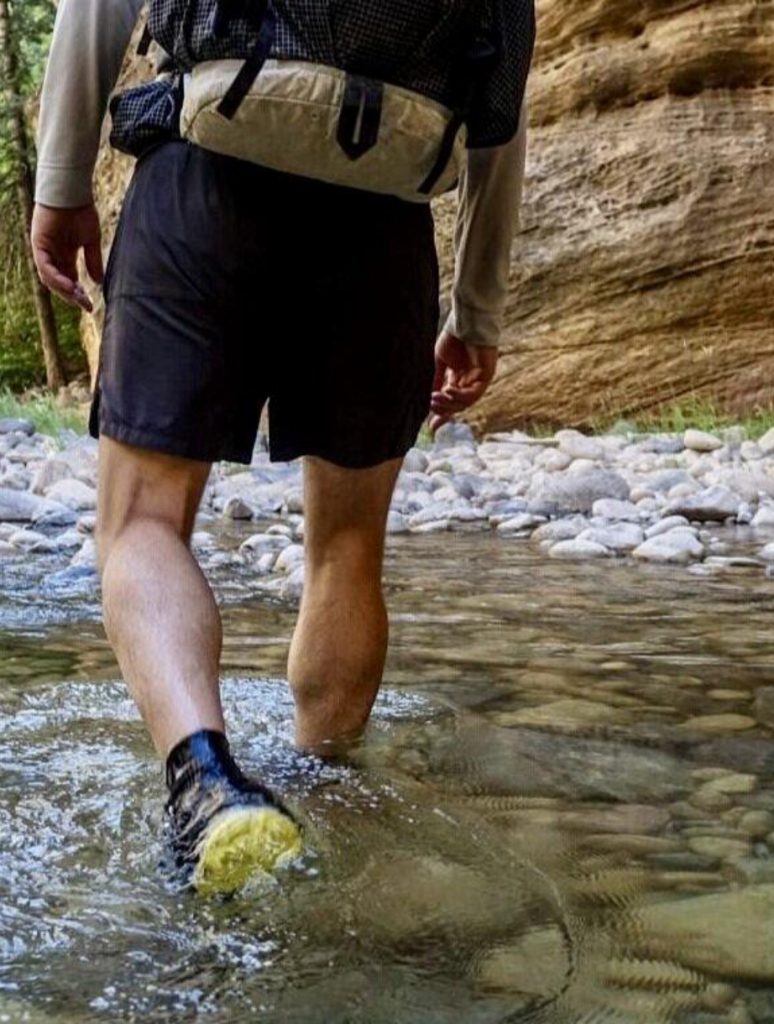
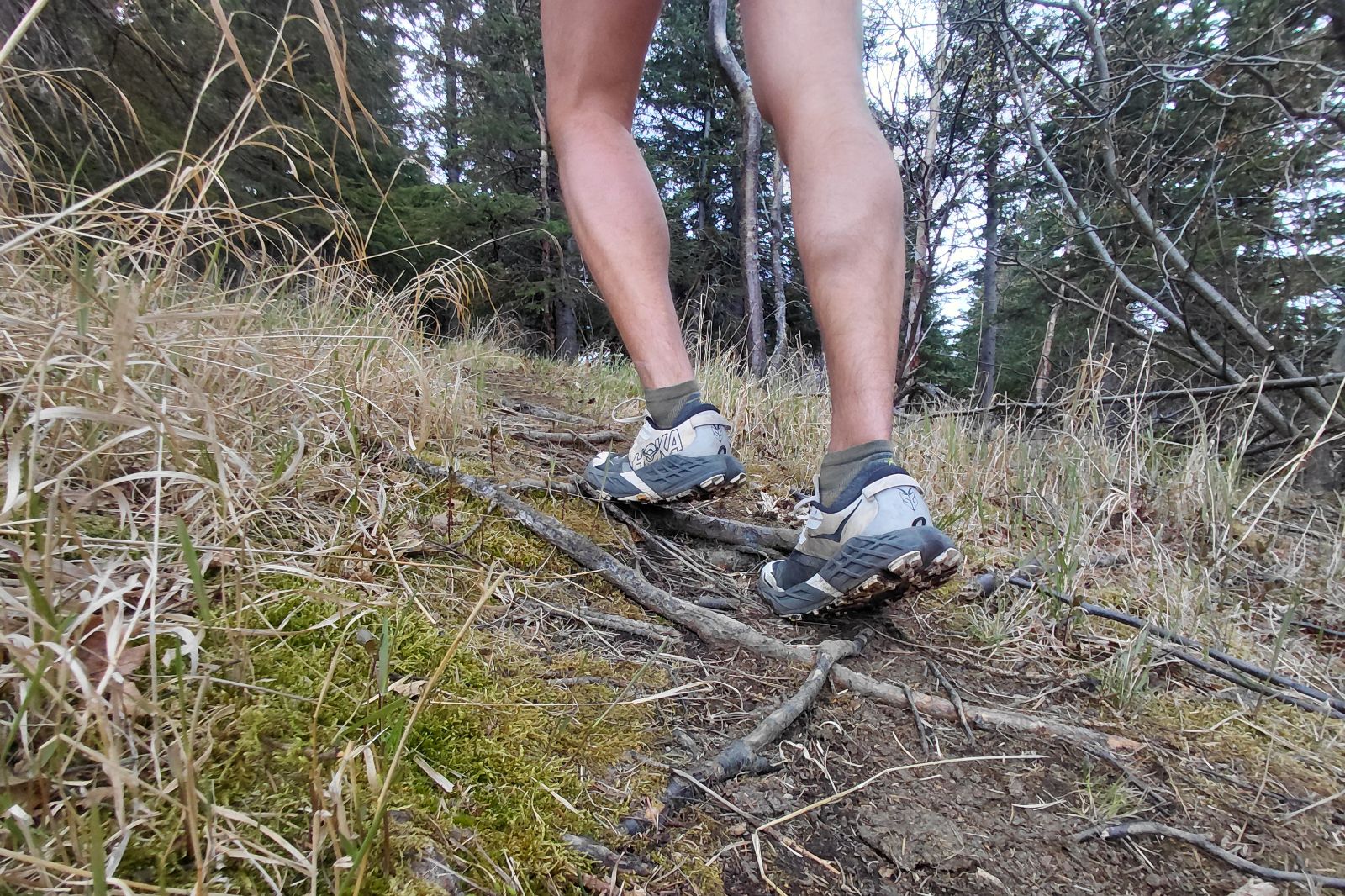
The standard Speedgoat 7 is not waterproof, but the breathable upper vents well and dries quickly after getting wet. That makes it a good choice for warm-weather hiking and routes where occasional water crossings are expected.
For sustained cold rain, snow, or muddy shoulder-season use, a waterproof hiking shoe offers more protection.
Weather Resistance Score: 4.4 / 5.0
Should You Buy the Hoka Speedgoat 7?
Yes, if you want a lightweight hiking shoe with substantial cushioning and excellent traction. It is especially appealing for long-distance hikers who prefer a softer, supportive trail-runner feel. Choose something burlier if maximum durability or waterproofing is more important.

What Other Hiking Shoes Should You Consider?
Want to see how the HOKA Speedgoat 7 compares to our other top picks? Pop over to our lists of the best hiking shoes for men and best trail running shoes for men. And if these caught your eye, consider these other winners:
Saucony Peregrine 16 Review: Choose the Peregrine 16 if you want a more flexible, lower-profile trail runner with stronger ground feel. It is similarly light and offers excellent traction, but it has less cushioning than the Speedgoat. We prefer the Peregrine for hikers who like a nimble ride and the Speedgoat for those who want more underfoot comfort.
Brooks Cascadia 20 Review: Consider the Cascadia 20 if you want a versatile long-distance trail runner with a more traditional ride. It is less plush than the Speedgoat but offers a supportive, familiar feel and has a long CleverHiker history on thru-hikes. The Speedgoat is the more cushioned option; the Cascadia is a dependable middle ground.
HOKA Anacapa 2 Low GTX Review: Pick the Anacapa 2 Low GTX if you like HOKA cushioning but need waterproofing and more hiking-shoe structure. It is much heavier than the Speedgoat, but the GORE-TEX liner, supportive platform, and protective upper make it a better match for wet three-season hiking and rougher trail conditions..