Bottom Line
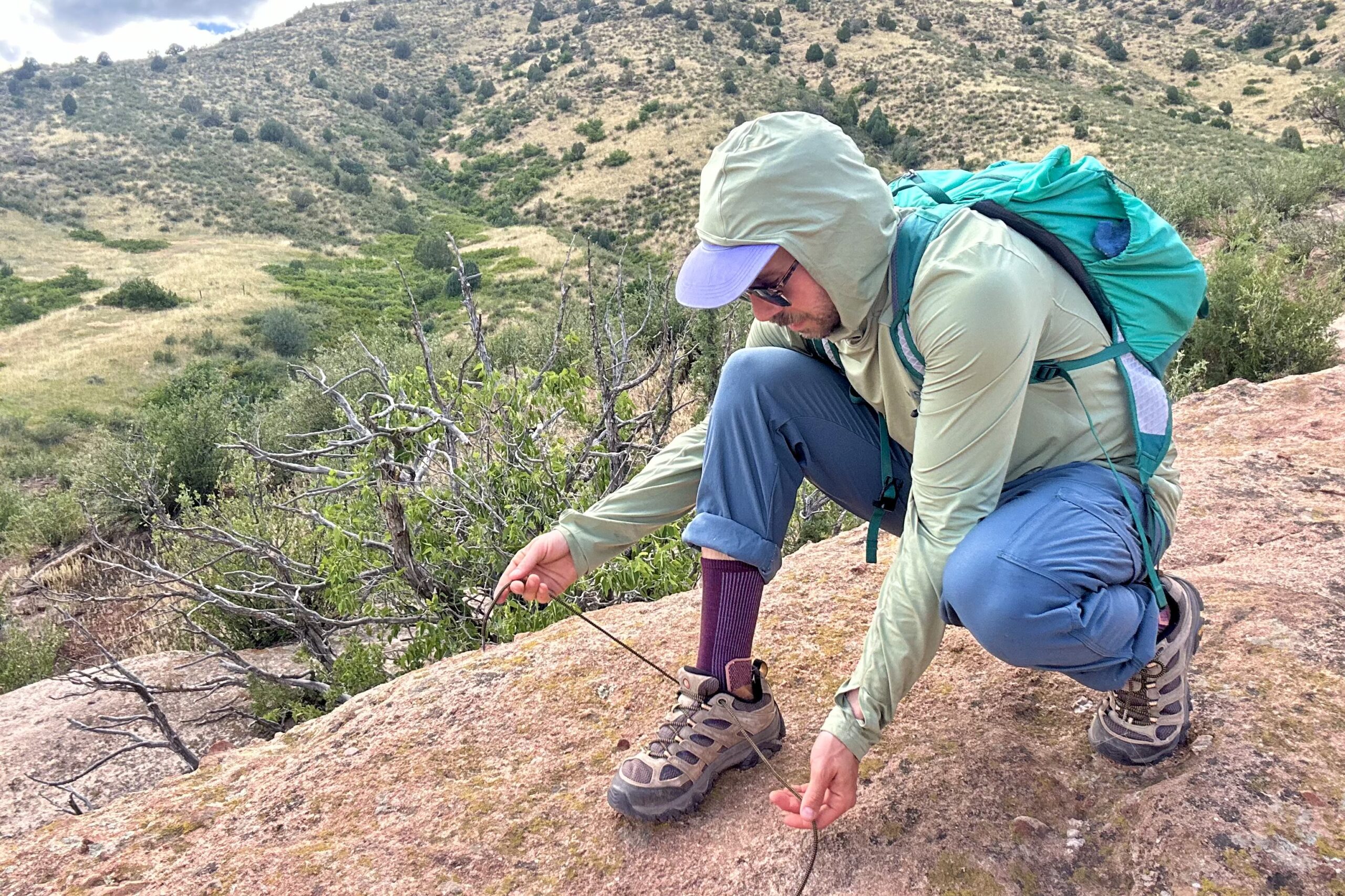
The men’s Merrell Moab 3 has been our favorite budget hiking shoe for years because it gets the fundamentals right: comfort, traction, durability, ventilation, and protection at a relatively approachable price.
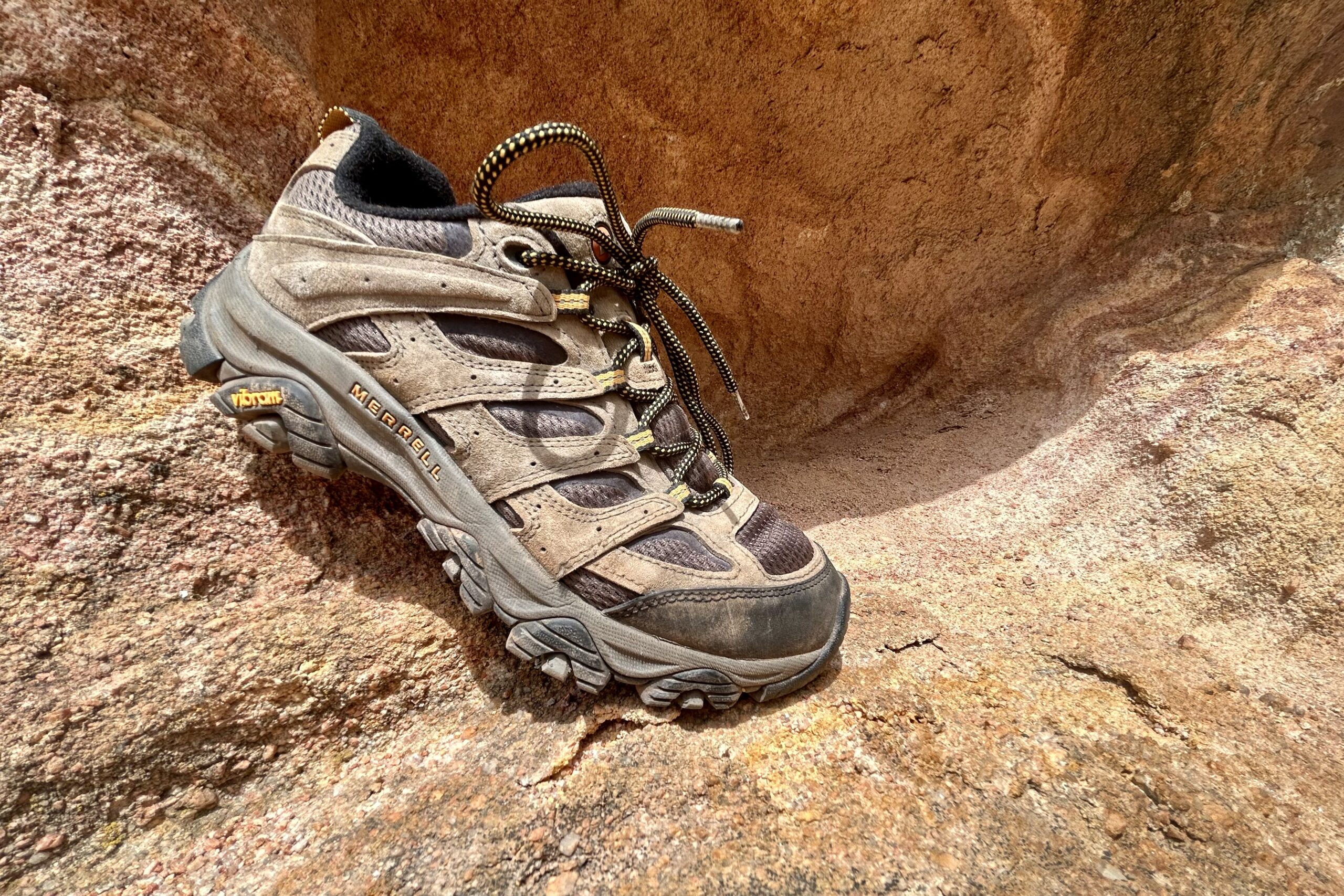
Unlike lightweight trail runners, the Moab feels like a traditional hiking shoe. Its leather-and-mesh upper, thick toe and heel protection, supportive insole, and burly outsole make it a strong choice for day hiking, weekend trips, and hikers who want structure without moving to a full boot.
The main tradeoff is weight and flexibility. The Moab is bulkier than modern trail runners and not our first choice for huge mileage days. But for weekend hikers, warm-weather day hikes, and short backpacking trips, it remains one of the easiest shoes in this guide to recommend.
How We Tested
We put more than 100 miles on the Moab line in Oregon and Washington, and then added more than 250 miles in Colorado and Utah. We evaluated the standard non-waterproof Moab 3 for comfort, traction, durability, ventilation, drying, weight, and everyday trail performance.
Quick Specs
- Best for: Day hiking, weekend hiking, short backpacking trips, value-focused hikers
- Waterproof: No
- Fit: Average; Wide available
- Outsole: Vibram TC5+; 5 mm lugs
- Underfoot protection: Molded nylon arch shank
- Available widths: Standard & Wide
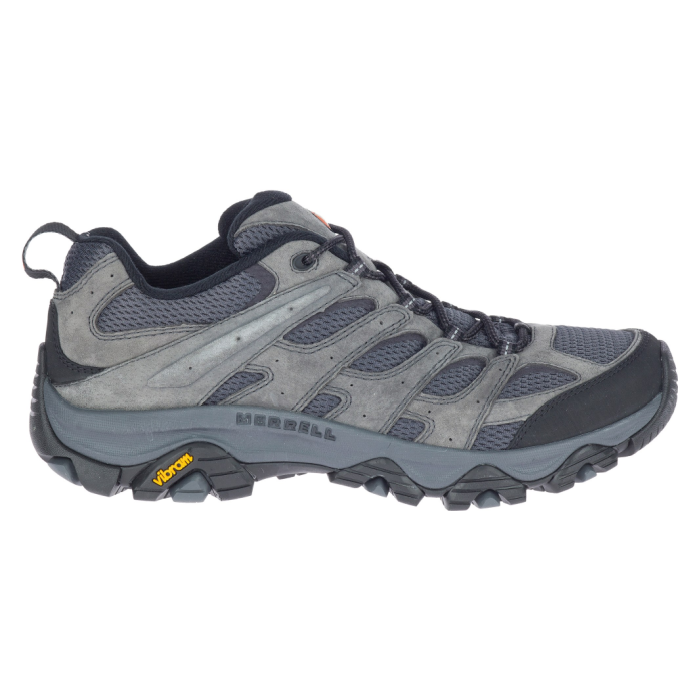
Men’s Merrell Moab 3
Best Budget Hiking Shoes
CleverHiker Rating: 4.3/5.0
Price: $140
Weight (Pair): 1 lb. 9 oz.
Heel-to-Toe Drop: 11.5 mm
Pros
- Excellent value
- Very comfortable
- Little break-in required
- Durable upper and outsole
- Breathable mesh
- Reliable traction
- Protective toe and heel
Cons
- Heavier than trail runners
- Less flexible than trail runners
- Bulky underfoot
- Standard version is not waterproof

Comfort
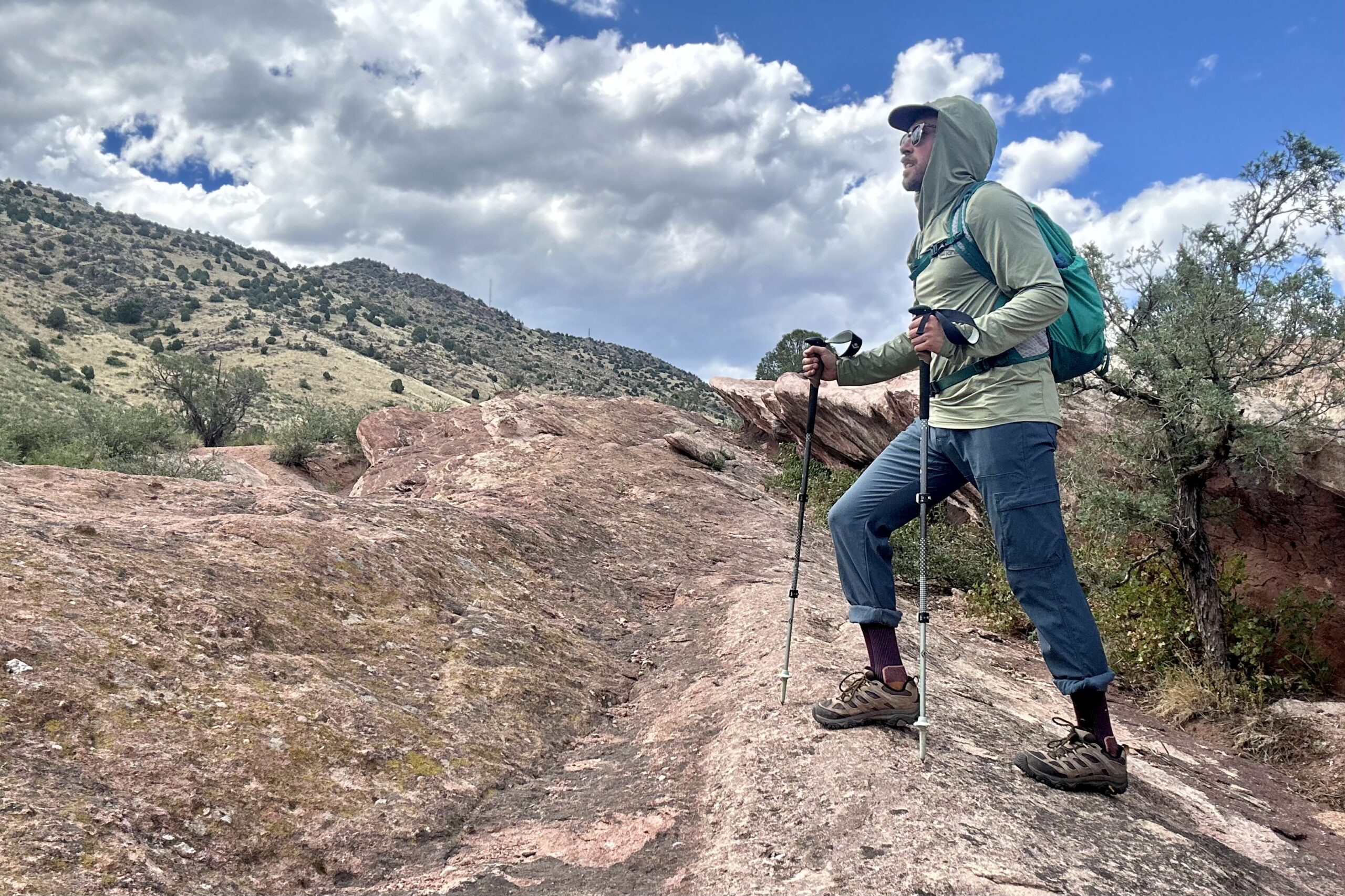
The Moab 3 is one of the most comfortable traditional hiking shoes we tested. The contoured insole, substantial heel cushioning, and supportive midsole create a familiar, stable feel with very little break-in.
The fit and padding make it a strong option for hikers who do not want the thin, close-to-the-ground feel of a trail runner. The tradeoff is that the Moab feels bulkier and less agile than lighter shoes.
Comfort Score: 4.7 / 5.0
Traction
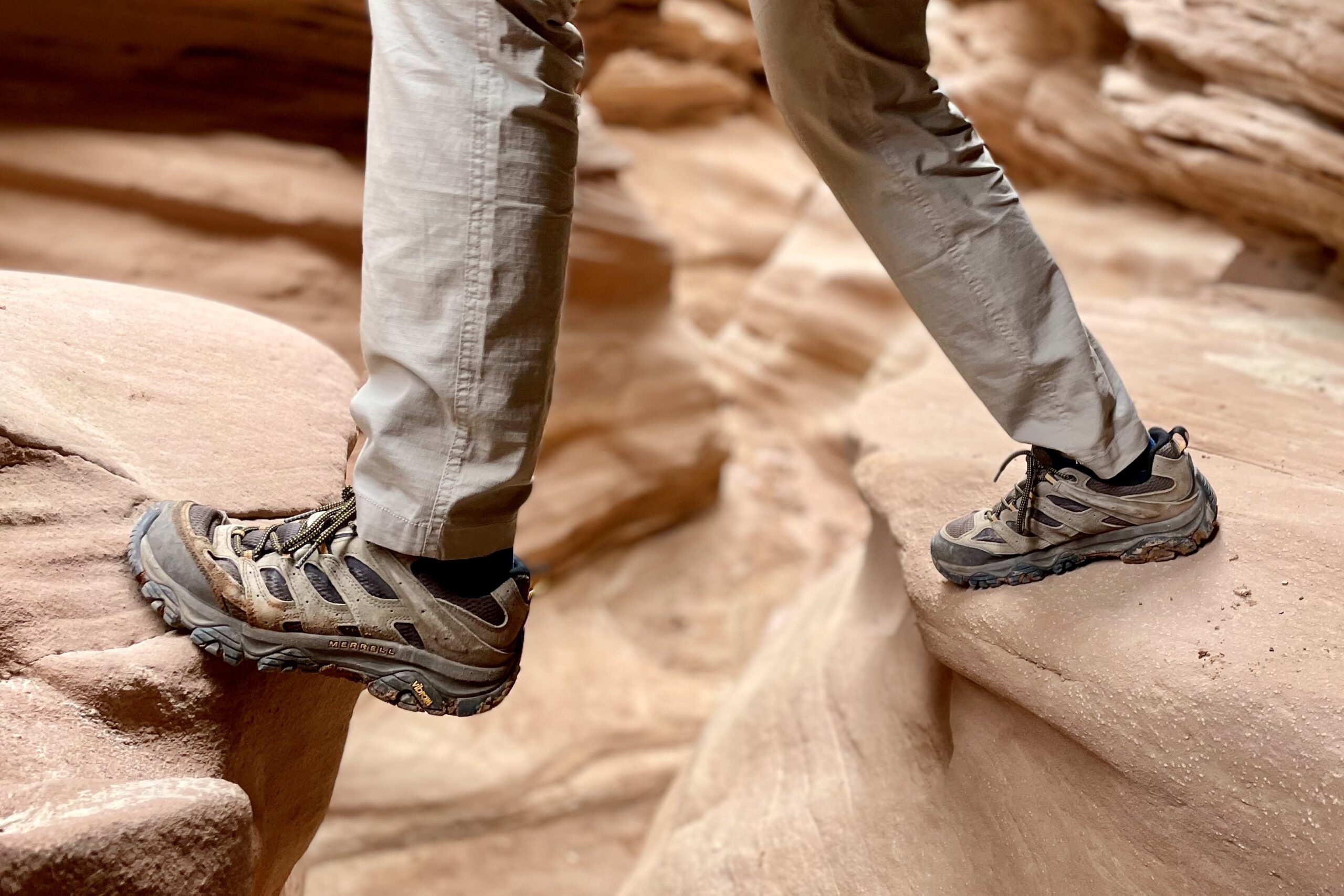
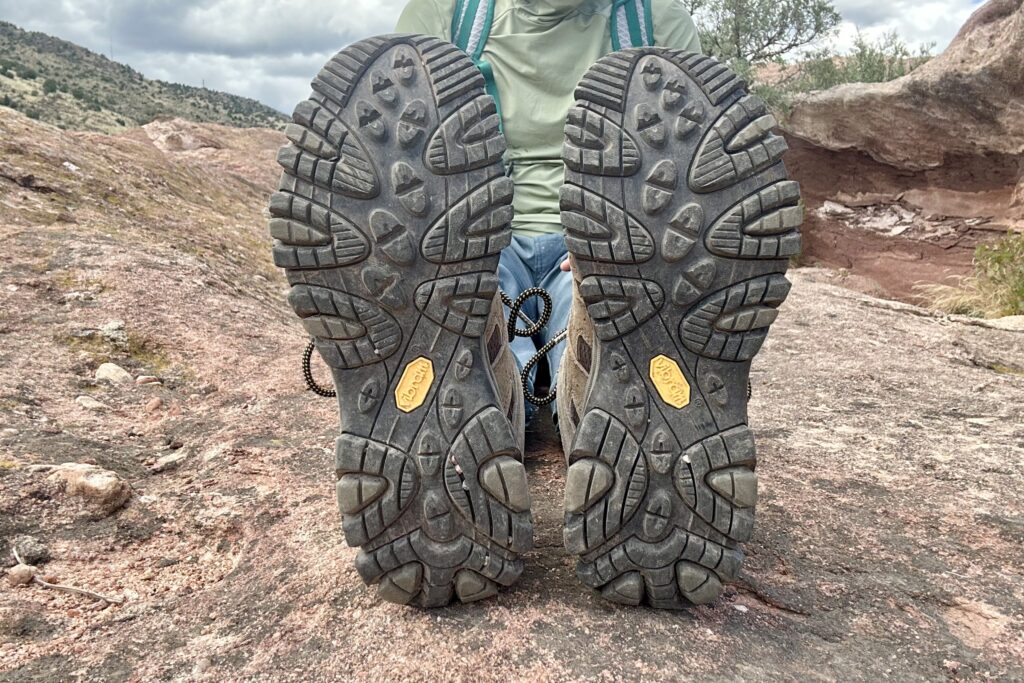
The Vibram outsole provides dependable grip on dirt, rock, roots, and most ordinary trail surfaces. It is a versatile tread pattern rather than an extreme technical outsole, but it performs well across the terrain most day hikers encounter.
The wider, more substantial platform also adds stability compared with lightweight running shoes.
Traction Score: 4.6 / 5.0
Weight
Merrell currently lists the Moab 3 at 14.81 ounces per shoe, or about 1 pound 13.6 ounces per pair. That is heavier than several lightweight options in this guide and noticeably more substantial on long mileage days.
The weight makes sense given the shoe’s leather, padding, and protection, but long-distance hikers focused on efficiency will likely prefer the Peregrine 16, Prodigio 2, or Cascadia 20.
Weight Score: 4.2 / 5.0
Durability
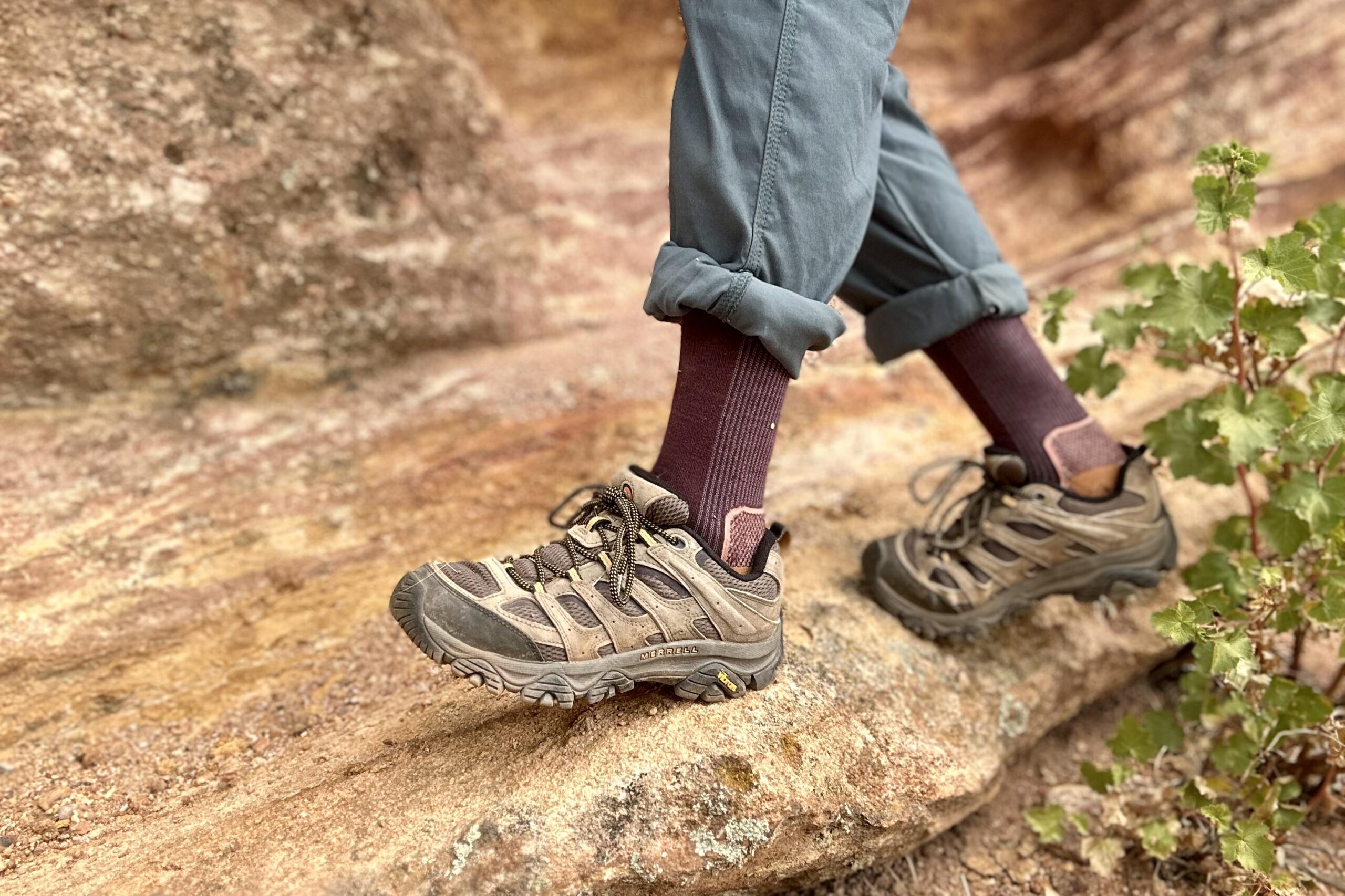
Leather, mesh, protective rubber, and a substantial outsole give the Moab 3 better durability than most trail runners. The toe and heel guards protect high-wear areas, and the upper is built for repeated hiking use.
That rugged construction is one of the reasons the Moab remains such a strong value: it is inexpensive relative to much of this category without feeling disposable.
Durability Score: 4.3 / 5.0
Weather Resistance
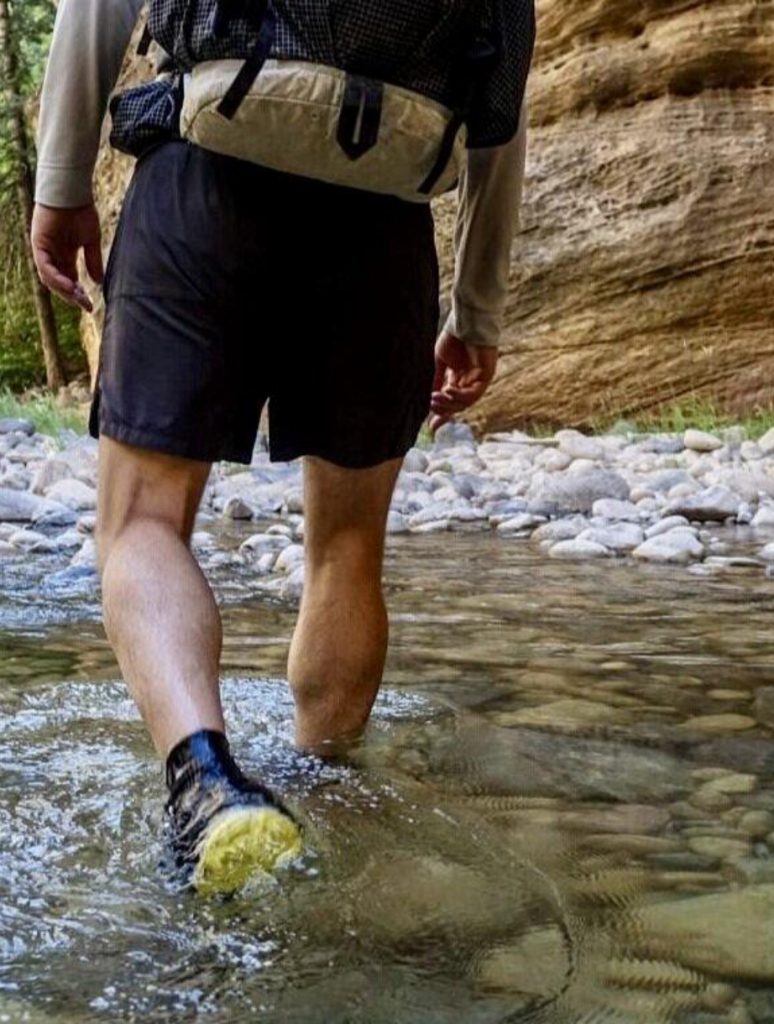
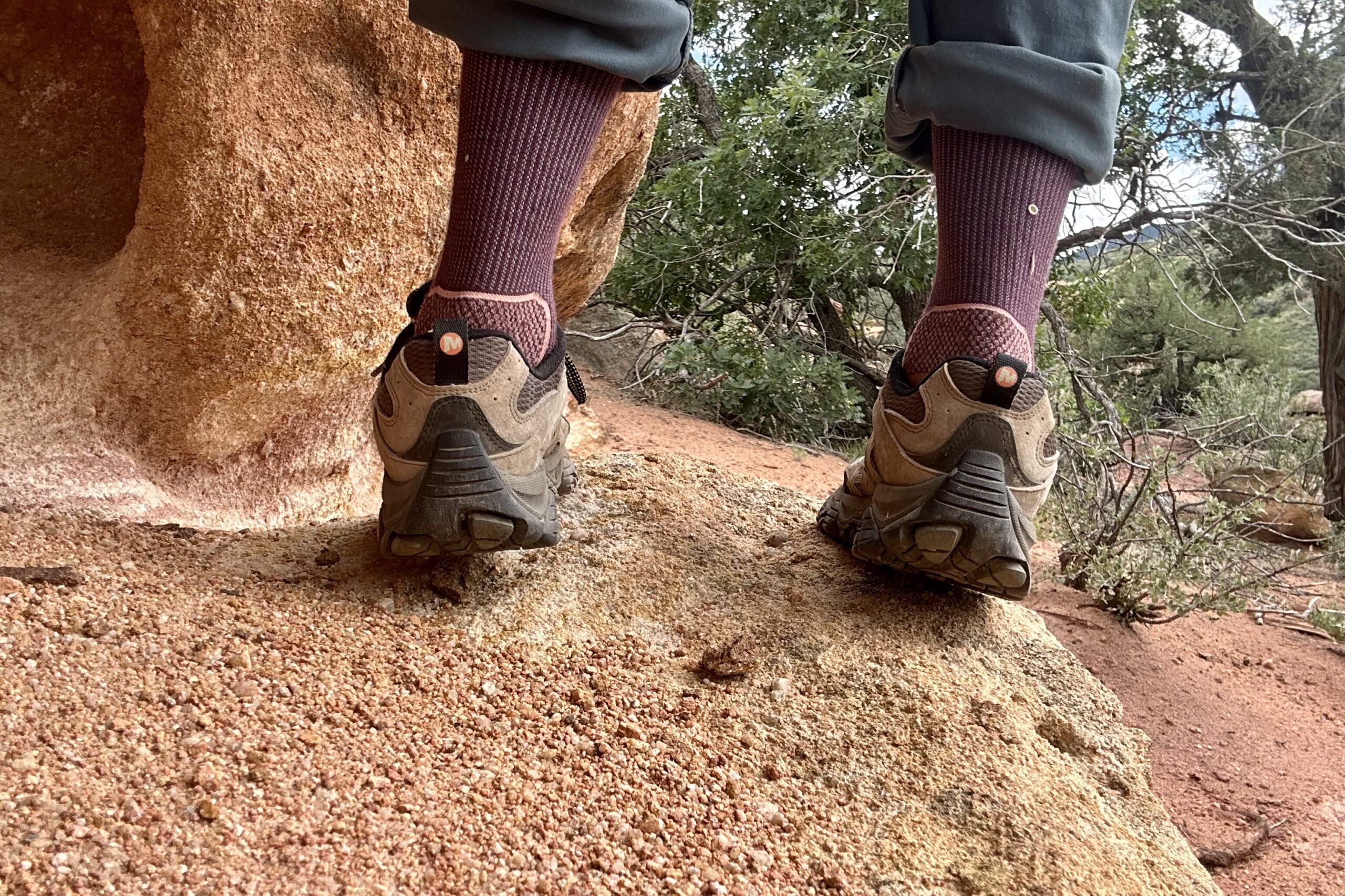
The standard Moab 3 is not waterproof. Its mesh allows water in quickly when submerged, but that same construction ventilates well and dries reasonably fast in warm conditions.
We prefer this non-waterproof version for warm weather because it breathes much better than the waterproof alternatives. Hikers who spend a lot of time in snow, mud, or sustained rain should choose a waterproof model instead.
Weather Resistance Score: 4.3 / 5.0
Should You Buy the Merrell Moab 3?
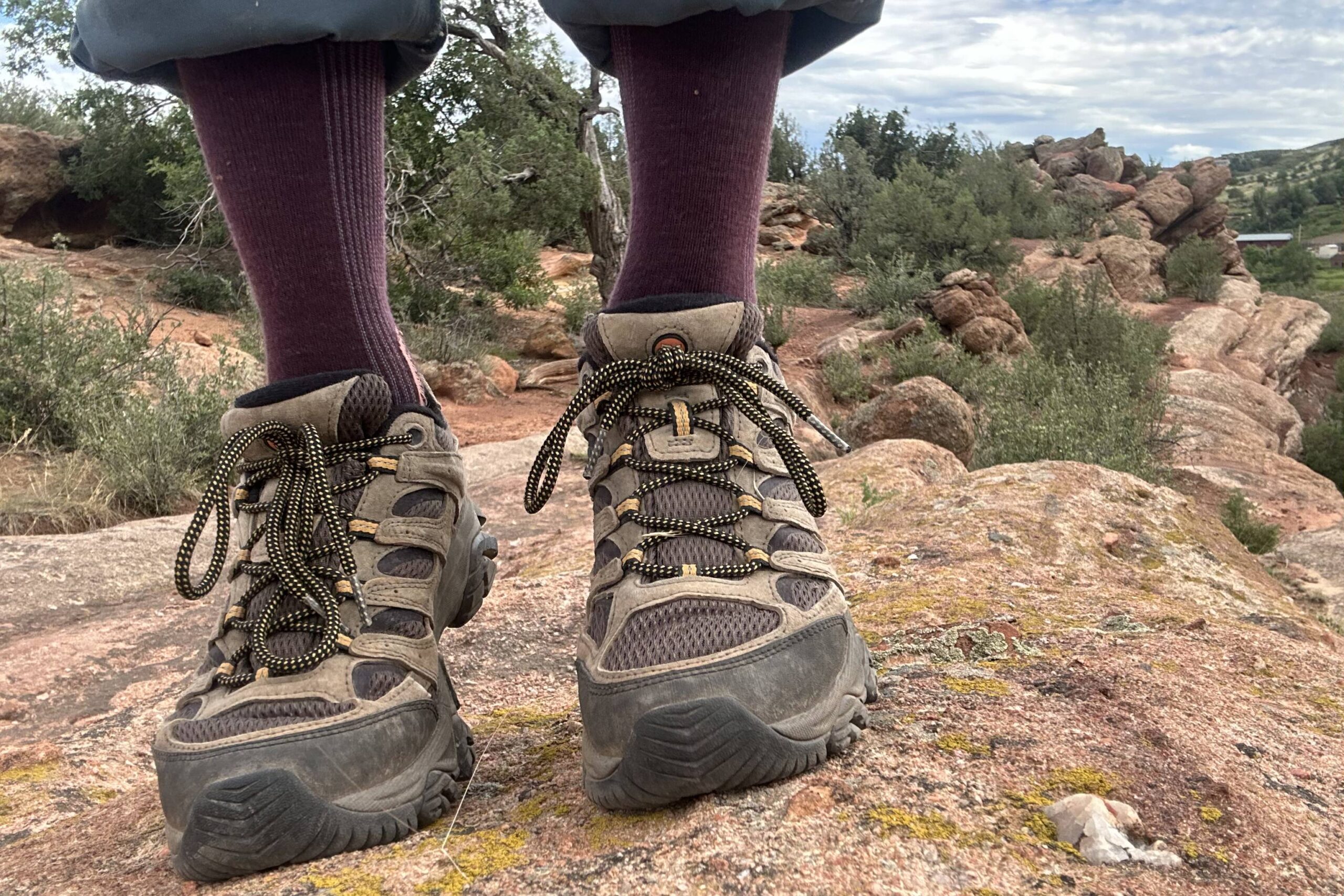
Yes, if you want a comfortable, durable hiking shoe at a strong value. It is particularly well suited to day hikers, weekend hikers, and people who prefer the supportive feel of traditional footwear. Long-distance hikers and ultralight backpackers may prefer something lighter.
What Other Hiking Shoes Should You Consider?
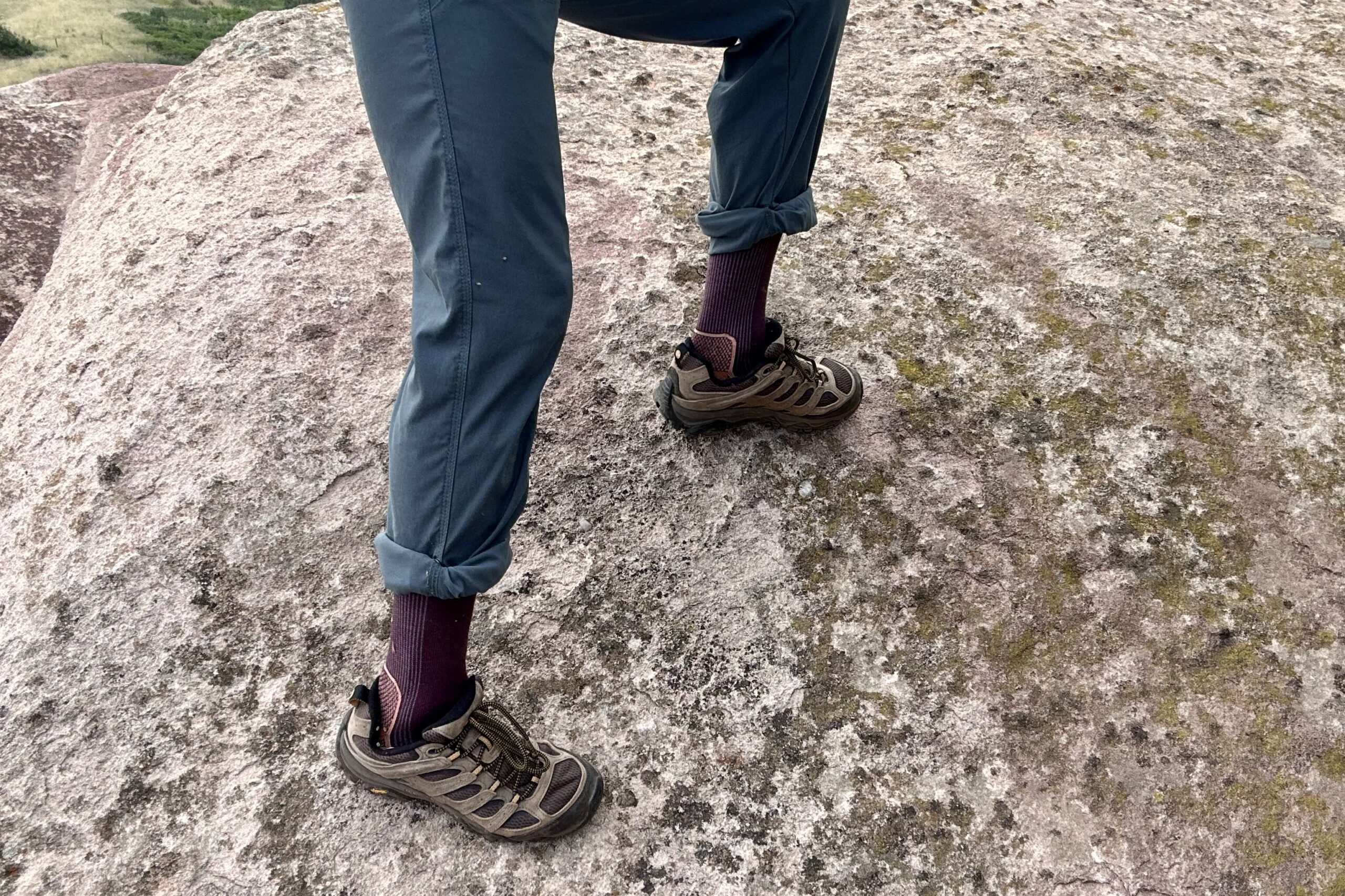
If you’re looking for something different, please browse our guides to the Best Hiking Shoes for Men and Best Trail Running Shoes for Men for alternatives like these:
Saucony Peregrine 16 Review: Choose the Peregrine 16 if you want much lower weight, better flexibility, and a faster trail-runner feel. It is far more breathable and efficient over long distances than the Moab, while still offering excellent traction. The Moab wins for traditional support and durability; the Peregrine is the better match for lightweight hikers and backpackers.
HOKA Anacapa 2 Low GTX Review: Pick the Anacapa 2 Low GTX if waterproofing and cushioning are higher priorities. It is pricier and similarly heavy, but its GORE-TEX liner and soft rockered ride make it better suited to wet three-season hiking. The Moab remains the stronger value for dry-weather day hiking and hikers who want a classic, supportive feel.
La Sportiva Spire GTX Review: Consider the Spire GTX if you need a much more technical, durable, and weather-resistant shoe. It is stiffer, narrower, and a significantly larger investment, but its traction, waterproofing, and long-term durability are better suited to rugged backpacking and alpine routes. The Moab is easier and less costly for everyday hiking.