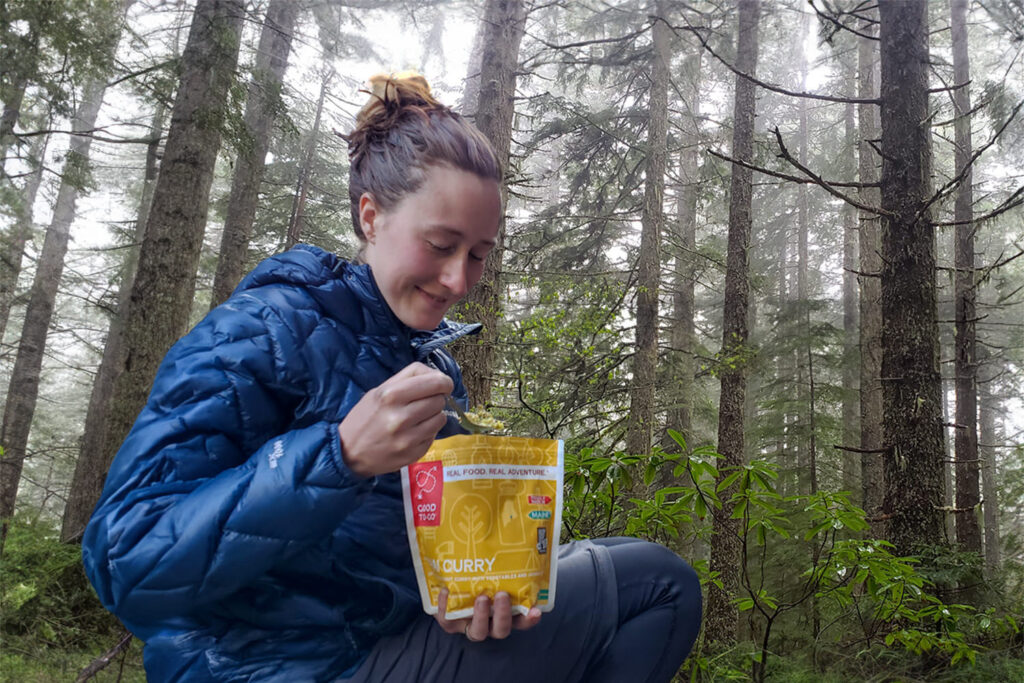


Our guide to the best vegetarian and vegan backpacking meals will delight the hungry hiker who doesn’t want to sacrifice their nutrition for a meal in the woods. We put on our fancy food critic pants and got picky about flavor, variety, calories, texture and value. If you’re sick of eating vegetarian ramen every night, we’re here to tell you that it’s time to spice up your food bag.
And for more backpacking meal info, check out some of our other food guides:

#1. Best Dehydrated Vegetarian & Vegan Meal Overall
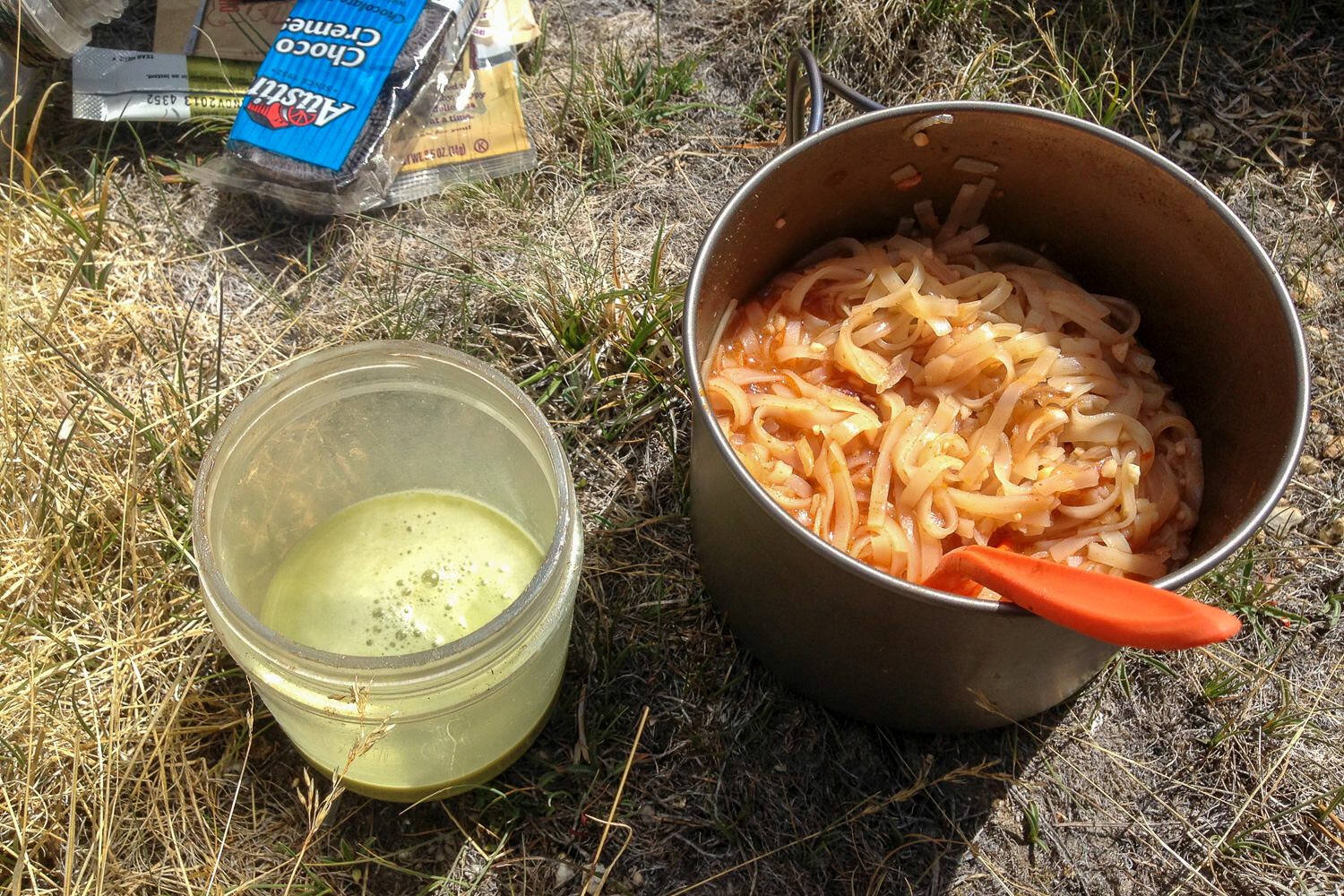
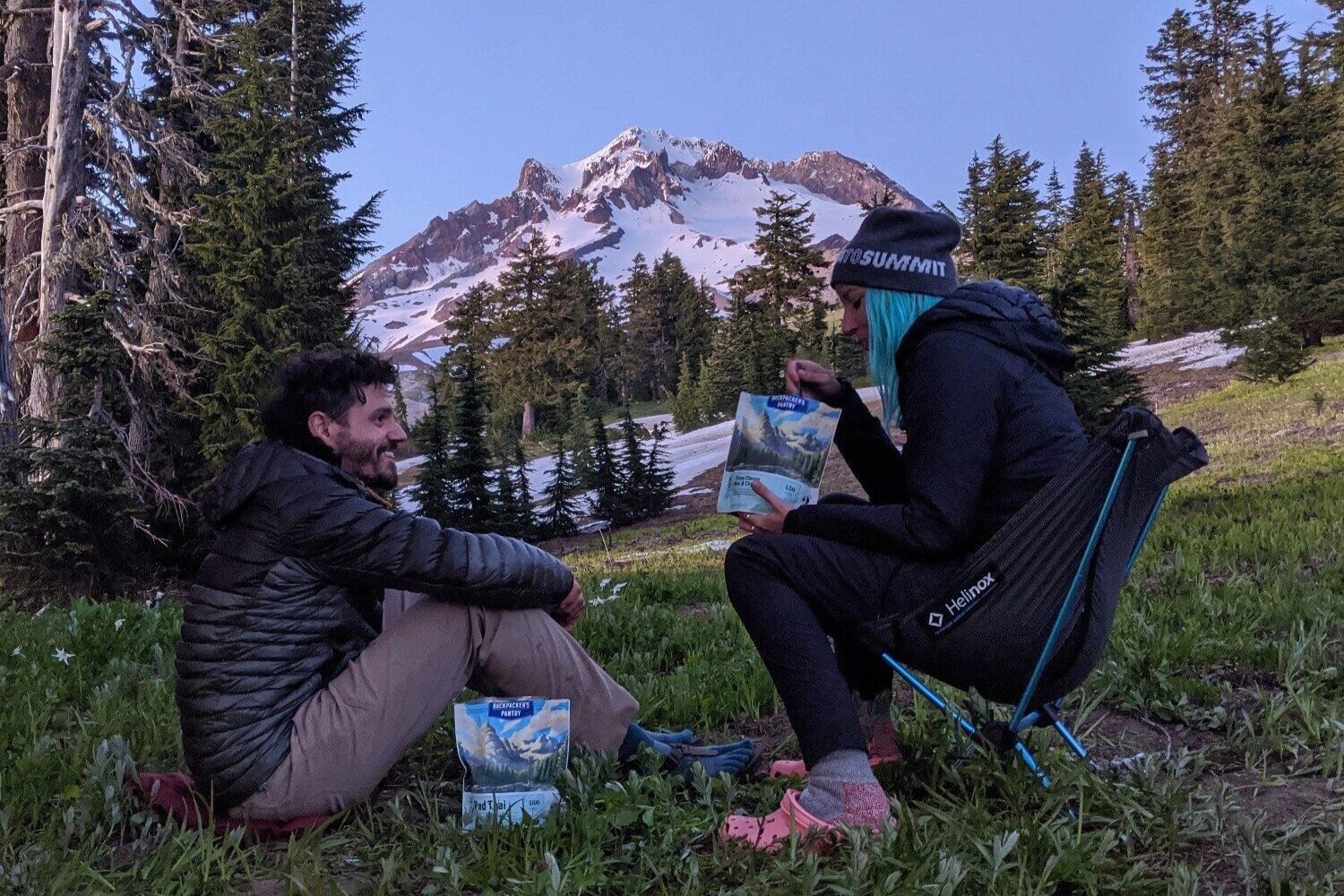
The Backpacker’s Pantry Pad Thai is a staff favorite for its calories, flavor, and satisfying peanut crunch. With 23g of protein and 730 calories per pouch, we generally house one per person unless we are serving an appetizer or dessert, and then split it between two people.
Quick Picks for Vegan & Vegetarian Backpacking Meals
Check out this quick list of our favorite vegan/vegetarian meals, or continue scrolling to see our full list.
Best Vegan Breakfast Overall: Nomad Nutrition – Cali Breakfast Bowl
Best Vegetarian Breakfast Overall: Backpacker’s Pantry – Summit Breakfast Scramble
Best Vegan Dinner Overall: Backpacker’s Pantry – Pad Thai
Best Vegetarian Meal Overall: AlpineAire – Wild Mushroom Fettuccine Alfredo
Most Calories in a Vegan Pouch: Peak Refuel – Butternut Dal Bhat (870 cal)
Most Calories in a Vegetarian Pouch: Trailtopia – Pesto Pasta w/ Hemp Protein (840 cal)
Best Chocolate Dessert: Backpacker’s Pantry – Dark Chocolate Cheesecake
Best Fruity Dessert: Trailtopia – Triple Berry Crisp
Best Protein-Rich Meal: Farm to Summit – 3 Bean Chili & Cornbread (39g protein)
Best Comfort Meal: Peak Refuel – 3 Bean Chili Mac
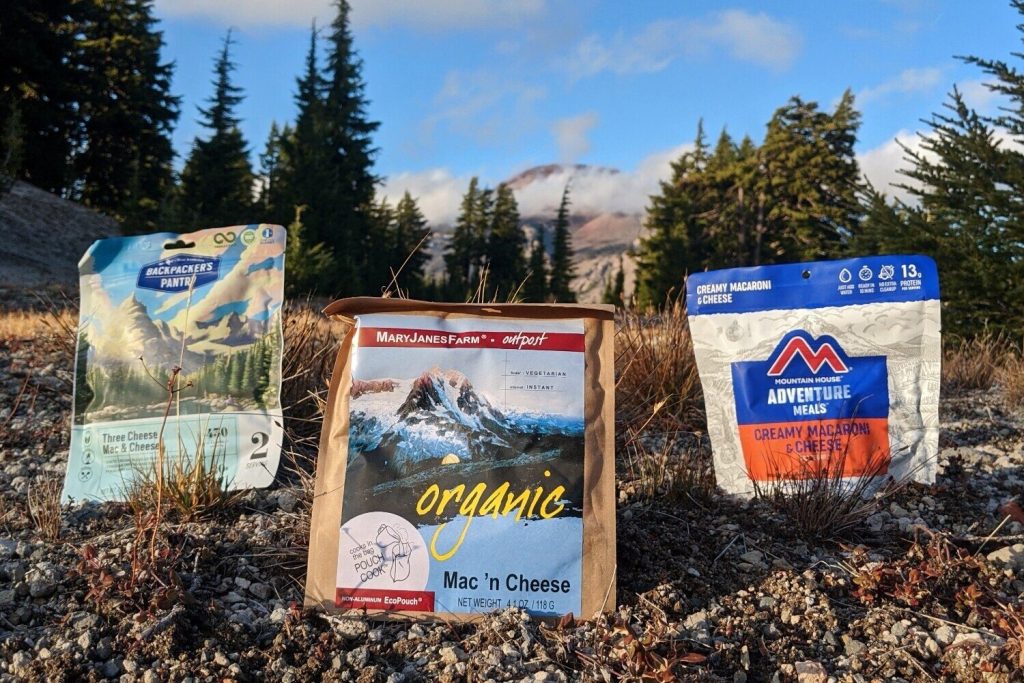
Best Budget Dinner: Mountain House – Creamy Macaroni & Cheese
Best When Craving Veggies: GOOD TO-GO Carrot Ginger Power Bowl
Best For Spice Lovers: Nomad Nutrition – Kathmandu Curry
Best Vegan Mac & Cheese: Daiya – GF Mac n “Cheese”
Best Veg Mac & Cheese: Farm to Summit – Green Chile Mac
Best Vegan & Veg Backpacking Meals
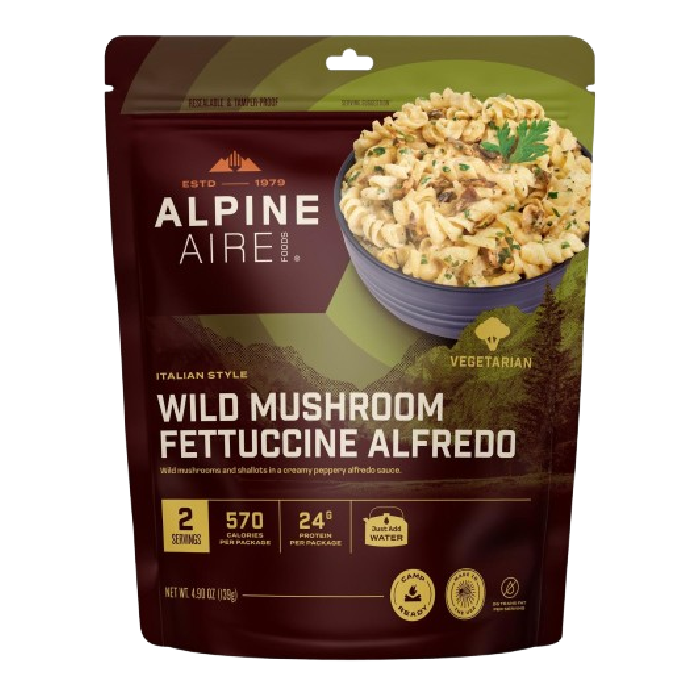
Alpineaire
Best Overall Veggie Dinner
Price Range: $7-16
Avg. Rehydrate Time: 11 min
Top Pick: Wild Mushroom Fettuccine Alfredo
Pros
- Flavorful
- Unique selection
Cons
- Would like more calories per pouch
- Some sauces can be grainy
AlpineAire’s Wild Mushroom Fettuccine offers rich, creamy flavor, and a satisfying amount of calories (most of their pouches are 500-600). The Mexican-Style Veggie Bowl is a spicy, zesty pouch. We have yet to venture into other entrees, so comment if you have a favorite we should try!
5-stars: Great
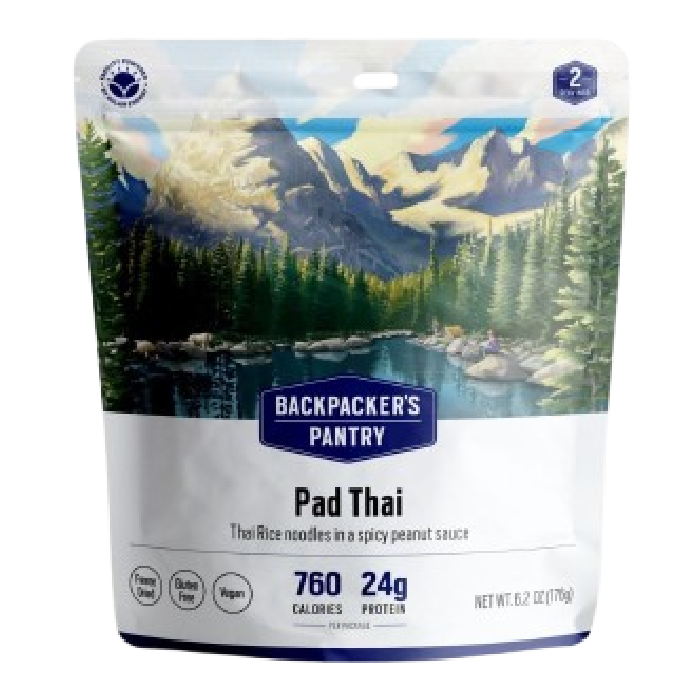
Backpacker’s Pantry
Best Selection
Price Range: $4-13
Avg. Rehydrate Time: 15 min
Top Pick: Pad Thai
Pros
- Accommodates dietary needs
- Global cuisine varieties
- Good flavor
- Good price per calorie value
Cons
- Not fans of the mango sticky rice dinner
- Some meals need more doctoring than others
- Occasionally inconsistent texture
- One serving pouches can be too little
We really enjoy Backpacker’s Pantry meals. They offer a variety of tasty vegan, vegetarian, and meat options and are among the less expensive brands. BP meals are best for someone who likes variety – they span Thai, Indian, US Southwestern, Italian, and classic American cuisines. They aren’t the most filling meals on this list, but one pouch is plenty for the average hiker.
5-stars: Great
- Pad Thai (vegan, also available with chicken)
- Three Cheese Mac & Cheese
- Cuban Coconut Rice & Black Beans (GF)
- Summit Breakfast Scramble (GF)
- Three Bean Veggie Stew (vegan, GF)
- Dessert – Blueberry Peach Crisp (GF)
- Dessert – Dark Chocolate Cheesecake
4-stars: Solid
- Kathmandu Curry (vegan, GF)
- Three Sisters Southwestern Quinoa & Beans (vegan, GF)
- Chana Masala (vegan, GF)
- Mushroom Stroganoff
- Wild West Chili & Beans
- Granola w/ Milk & Organic Blueberries
- Dessert – Creme Brulee (GF)
3-stars: Good (being hungry helps)
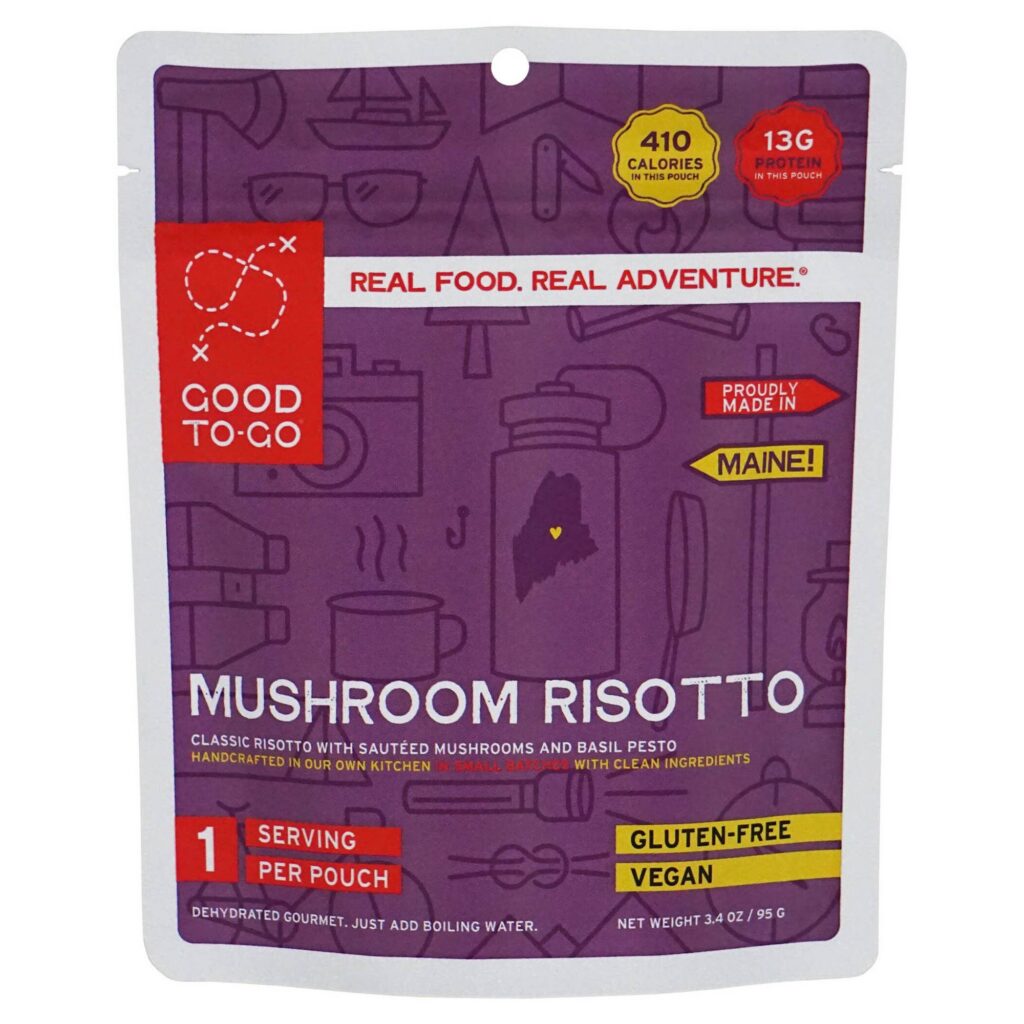
GOOD TO-GO
Most Nutritional and Wholesome
Price Range: $7-11
Avg. Rehydrate Time: 18 min
Top Pick: Mushroom Risotto
Pros
- Flavorful
- Not overprocessed
- Cold-soak options
- Lightweight packaging
Cons
- Longer rehydration times can be hard to keep food hot
- Smaller selection
- 2 year shelf-life
GOOD TO-GO is a chef-forward Maine brand that we lean on when we want really simple, clean meals packed with vegetables and whole grains. They do a great job of making us feel like we aren’t sacrificing our nutrition for the views or the adventure. At around 400 calories, the meals don’t claim to be 2 servings, which we appreciate. We often add some vegetarian protein to boost the meal. Their mushroom risotto has our heart.
5-stars: Great
- Herbed Mushroom Risotto (vegan, GF)
- Indian Vegetable Korma (GF)
- Cuban Rice Bowl (GF)
- Carrot Ginger Power Bowl (vegan, GF)
4-stars: Solid
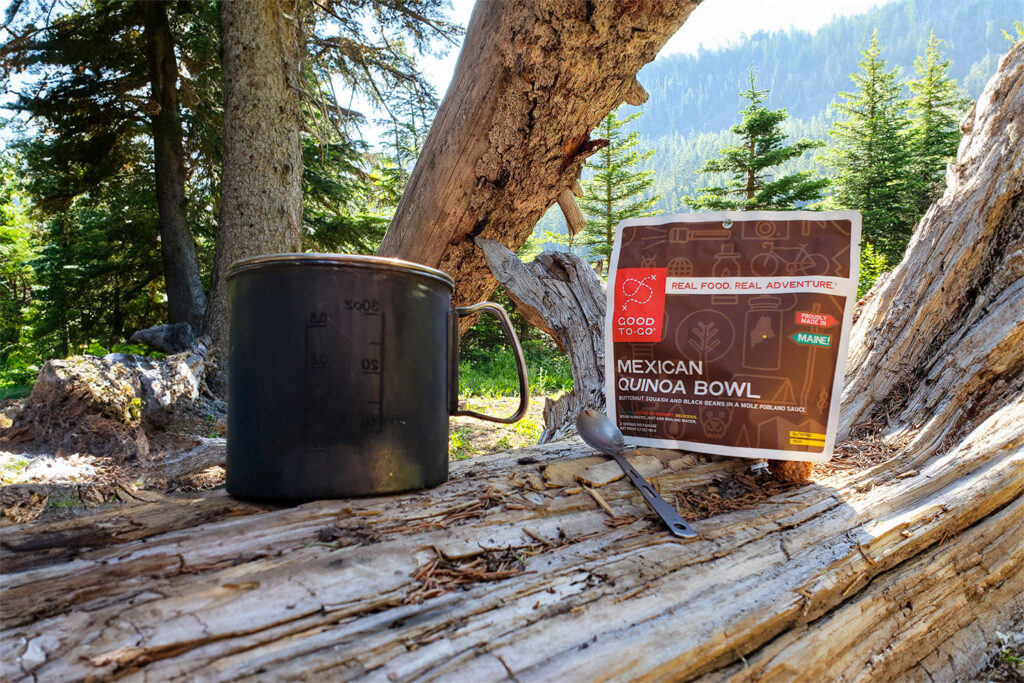
- Mexican Quinoa Bowl (vegan, GF)
- Classic Marinara w/ Penne (GF)
3-stars: Good (being hungry helps)
- Breakfast Hash (GF)
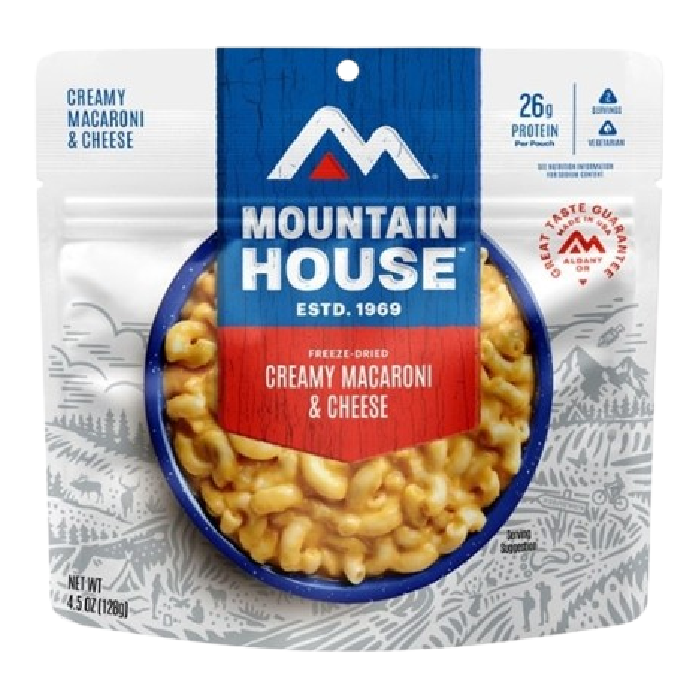
Mountain House
Best for Budget Meals
Price Range: $8-13
Avg. Rehydrate Time: 10 min
Top Pick: Creamy Macaroni & Cheese
Pros
- Hearty
- Comforting
- Freeze-dried = fast rehydration
- Good value per calorie
Cons
- Low on veggies
- Some meals don't rehydrate evenly
- Salty
- Not vegetarian/vegan focused brand
Mountain House isn’t the most veggie-packed of meals, but we eat these nearly every backpacking trip because they rehydrate quickly and are a consistent, filling, and comforting option when we are far from a proper kitchen. Our staff recounts several ferocious hiker-hunger moments saved by MH. It’s also what saves us from total despair when it’s storming, and all we want is a warm, cozy comfort meal that takes the edge off a wet, cold camp.
5-stars: Great
4-stars: Solid
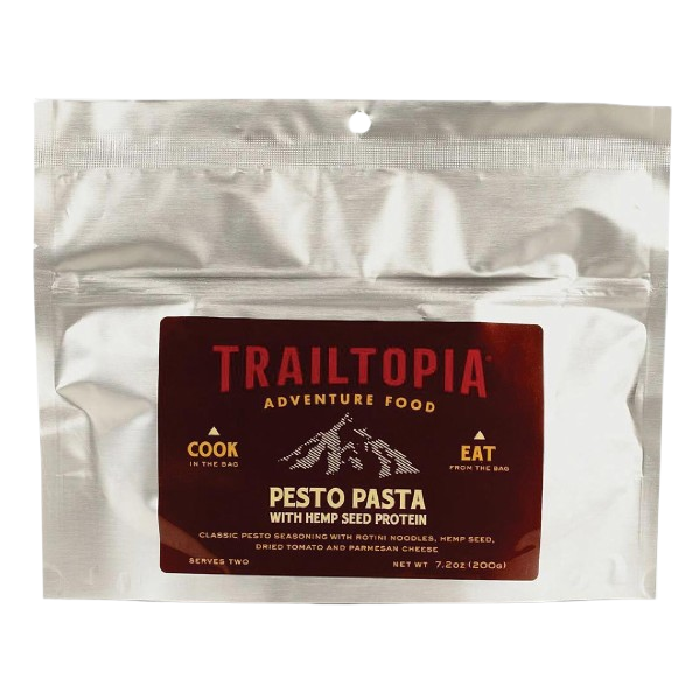
Trailtopia
Solid price per calorie
Price Range: $4-13
Avg. Rehydrate Time: 10 min
Top Pick: Pesto Pasta with Hemp Protein
Pros
- Price per calorie
- Desserts
- Solid flavor and texture
Cons
- Some hit or miss texture
- Bring hot sauce
When we want dinner AND dessert, Trailtopia is where we land. The pesto pasta has a whopping 840 calories in one pouch at under $12. That’s one of the better deals out there in terms of bang for your buck. If rehydrating gets a little weird, have some instant mashed potatoes on hand or a soup packet to take deal with the extra liquid.
5-stars: Great
- Pesto Pasta
- Apple Crisp (GF)
- Triple Berry Crisp (GF)
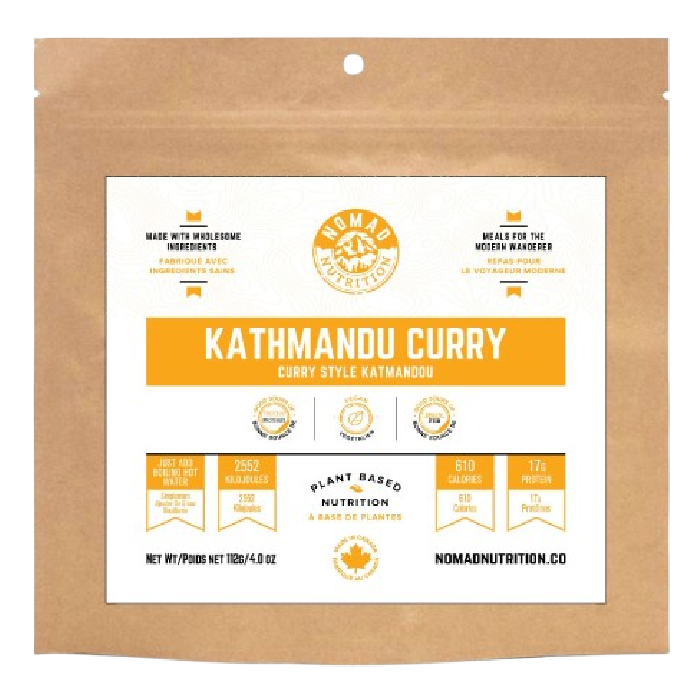
Nomad Nutrition
Best for Plant-Based Meals
Price Range: $13-15
Avg. Rehydrate Time: 15 min
Top Pick: Katmandu Curry
Pros
- Nutrient-dense
- Works with most dietary restrictions
- Flavorful
- Impressive calories per package
Cons
- Premium price per calorie
Despite few of the CleverHiker staff being vegan, we still get down on Nomad Nutrition, a 100% vegan backpacking meal company. We like that the flavors and the easy-on-the-tummy ingredients, and that their REVdry process retains more nutrients than traditional freeze-drying and dehydrating. We will often top these with some extra protein or crunchies to dress them up a touch.
5-stars: Great
- Katmandu Curry (GF)
- Cali Breakfast Bowl (GF)
- Irish Shepherd’s Pie (GF)
4-stars: Solid
3-stars: Good
- Caribbean Curry (GF)
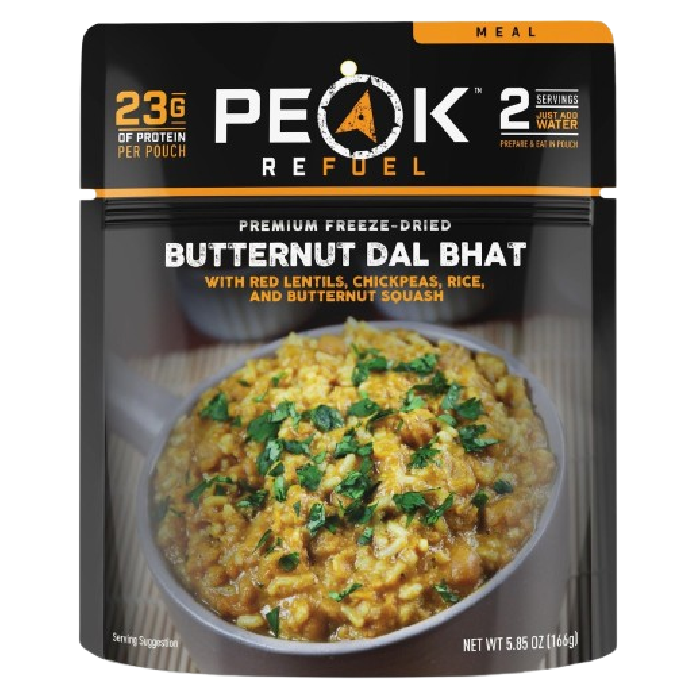
Peak Refuel
Best for High Protein and Calories
Price Range: $8-16
Avg. Rehydrate Time: 10 min
Top Pick: Butternut Dal Bhat
Pros
- Large servings (~800 calories per pouch)
- Doesn't skimp on protein
- Quick rehydration
- Great calorie-to-weight ratio
Cons
- Price
- Would like more veggies
- Can be too much food for lightweight solo backpacker
Peak Refuel almost always has a night on our backpacking trips, and it tends to be saved for when the terrain starts to get burly and the mileage stacks up. We like them for when we just want to feel FULL after a big day (or a few big days). The 2-serving pouches are around 800 calories each, with a great calorie-to-weight ratio, so they fit our ultralight approach to food. The vegan Butternut Dal Bhat packs 24 grams of protein and 920 calories in one pouch!
5-stars: Great
4-stars: Solid
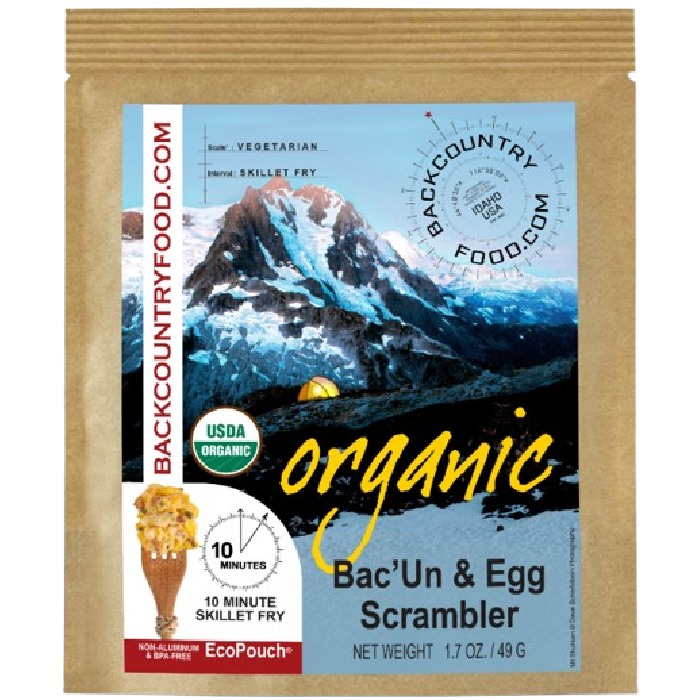
MaryJanesFarm
Best Organic Meals
Price Range: $9-15
Avg. Rehydrate Time: 10 min
Top Pick: Bac’un & Egg Scrambler
Pros
- Bulk buying options
- Organic ingredients
- Great burrito/wrap fillings
- Flavorful
Cons
- Beans, beans, beans
- Smaller portions
- Lightweight packaging isn't the most durable
Praise be, eating right and being in the backcountry isn’t mutually exclusive with MaryJanesFarm. We appreciate that MaryJanesFarm delivers real, organic food to backpackers. Their eggs are one of the best in the game. We also lean on this brand for its bulk packaging options for longer expeditions, group meals, and thru-hikes. Read the instructions first; not all of them are pouch meals.
5-stars: Great
- Organic Bac’un & Egg Scrambler (V, GF)
- Organic Bare Burrito (GF)
4-stars: Solid
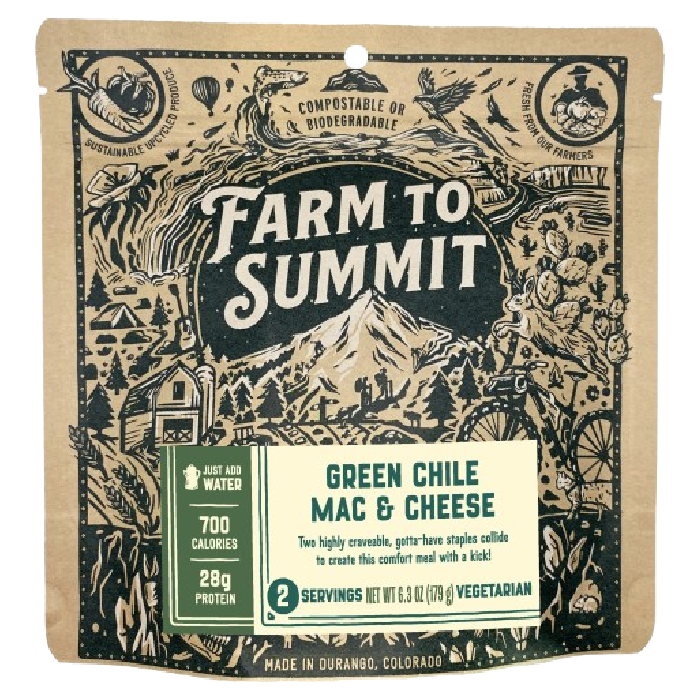
Farm to Summit
Best Mac & Cheese
Price Range: $9-16
Avg. Rehydrate Time: 15 min
Top Pick: Green Chile Mac & Cheese
Pros
- Veggie forward, low processed
- Cool business model
- Tasty
- Impressive calories per package
Cons
- Will crave it in the frontcountry
- Fewer entree options
We think about Farm to Summit’s Green Chile Mac & Cheese more often than we’d like to admit. Is it the only reason we are backpacking into the wilderness? Perhaps. With 700 calories and 28g protein, that meal can fuel big days, and the bold flavor and near-perfect texture don’t disappoint. Its business model also tastes good; this Durango, Colorado, company focuses on sustainability by sourcing farm “seconds.” That’s a nicer way of saying they use the ugly veggies that won’t make it to the grocery store shelves. They don’t have a ton of options, but what they have is making my mouth water right now.
5-stars: Great
4-stars: Solid
- Thai Carrot Slaw (V, GF)
- Three Bean Chili & Cornbread (V)
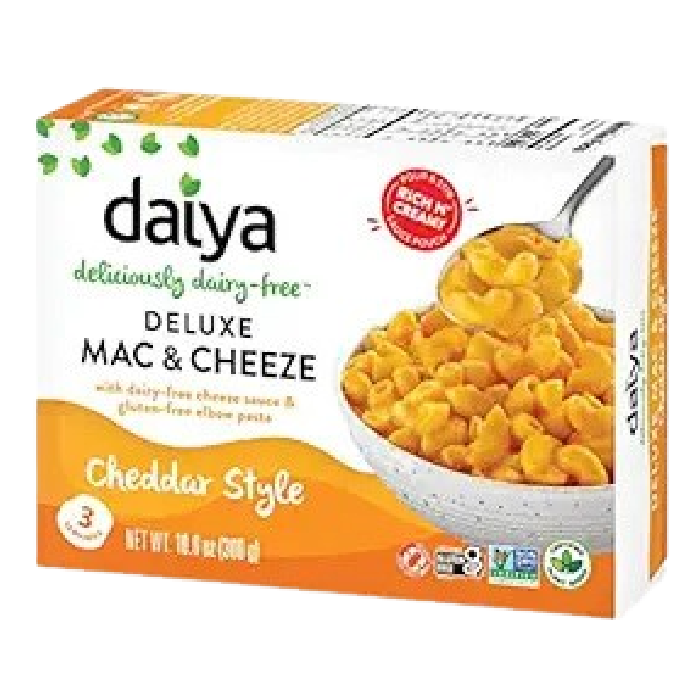
Daiya Mac & Cheese
Best Vegan Mac & Cheese
Price Range: $9
Avg. Rehydrate Time: n/a
Top Pick: Mac & Cheese
Pros
- Creamy texture
- High in calories (880 per package)
Cons
- Weight
- No pouch cooking = more fuel
We had this on the John Muir Trail and ate it on the first night, mostly because we were super curious and we didn’t want to keep hauling the weight (the non-dairy cheese is a sauce pouch). If you aren’t vegan, then this won’t fool you into thinking it’s dairy cheese. If you are, then the texture will please, and the vegan butter flavor will be familiar. It has a 7 min boil time, which isn’t bad and it’s better to go under than over with GF pasta.
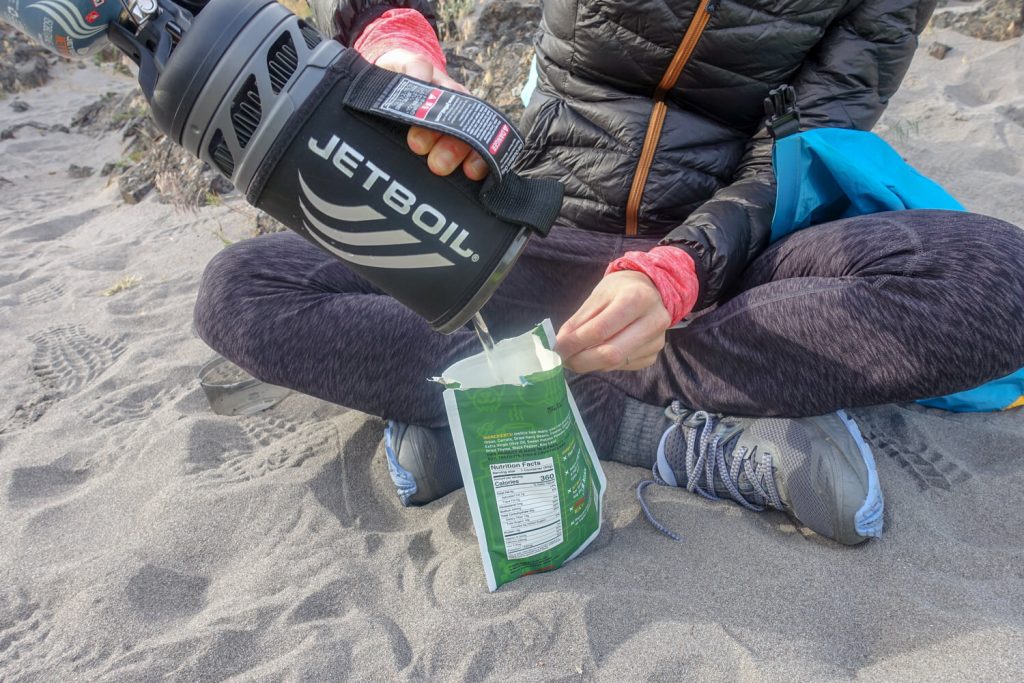
Why Trust Cleverhiker?
We’ve taste-tested each more than 150 vegan and vegetarian backpacker meals over the course of our 20,000 trail miles. We were all over the place with each meal, so there are some variables to temperatures and elevations that impact the rehydrating process, but for the most part, we got a good feel for what nourishes, what made a meal tasty, and what was easy on the catholes.
Whenever possible, we had our backpacking partners and friends taste-test as well, so our ratings wouldn’t be heavily swayed by personal taste.
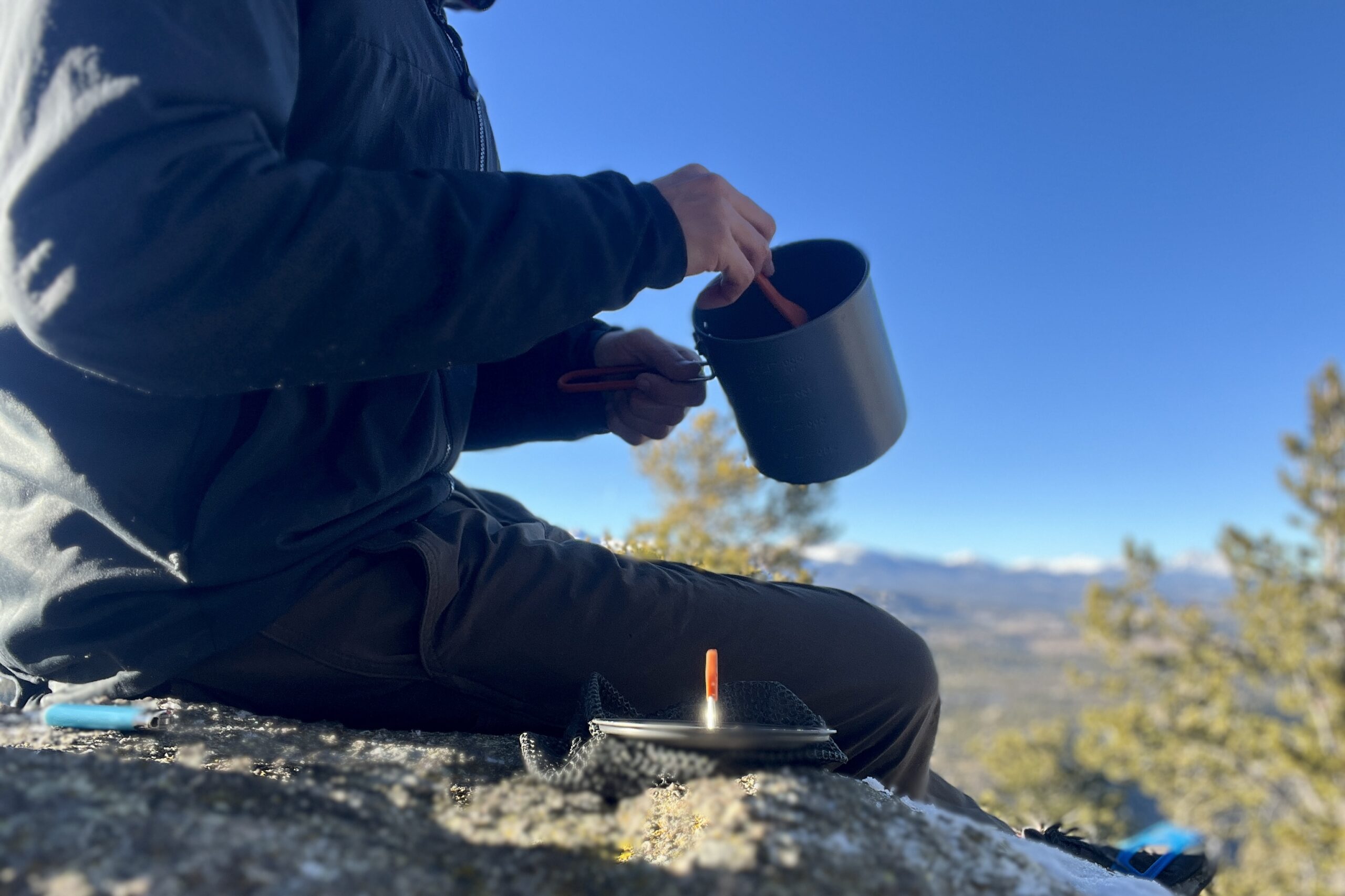
How To Choose a Vegetarian or Vegan Backpacking Meal
More and more consumers are making food purchases that address common food allergens and nutrition concerns in commercially packaged food. Naturally, the brands are listening, and it’s exciting to see more variety and nutritious options hit the market.
How much do Vegan and Vegetarian Backpacking meals Cost?
Freeze-dried meals are not cheap. Plus, plenty of inexpensive alternatives (instant potatoes, pasta sides, ramen, etc.) exist to put something together yourself.
If you’re spending months thru-hiking, meals like these become a huge (if not the biggest) expense. We pack a mix of DIY, super quick-and-dirty, and commercially made meals. On long trips, dehydrated/freeze-dried meals are a nice treat and save us a night of dishes.
Pro tip: When you buy 8 or more backpacking meals from REI, you save 10%. We usually stock up for the hiking season. You can also save money by purchasing bulk meal kits.
How Many CALORIES are in an OZ or Dehydrated or Freeze-Dried Meals?
Many backpackers choose freeze-dried meals because they’re lightweight. The process of freeze-drying a meal removes 80% of its water weight, while retaining a high level of calorically-dense nutrition.
Most meal pouches range from 500 to 900 calories and weigh 5 to 7 ounces. This puts them in the 100-130 calorie-per-ounce ratio. We always shoot for most of the food in our bag to be above 100 calories per ounce.
What are the PROS & CONS OF FREEZE-DRIED MEALS?
We have come to enjoy bringing freeze-dried meals on trips for their convenience, but there are definite drawbacks. We usually bring a combination of DIY meals and freeze-dried meals to get the best of both worlds. Here are some things to consider with freeze-dried meals if you’re not sure which style is best for you:
Pros:
- You can get them started, then walk away to do other things, like filter more water, while they rehydrate
- You can have a large variety of flavors on your trip
- Most meals cook in their own packaging, so you don’t have to clean a dish
- Most meals are calorie-dense and filling
Cons:
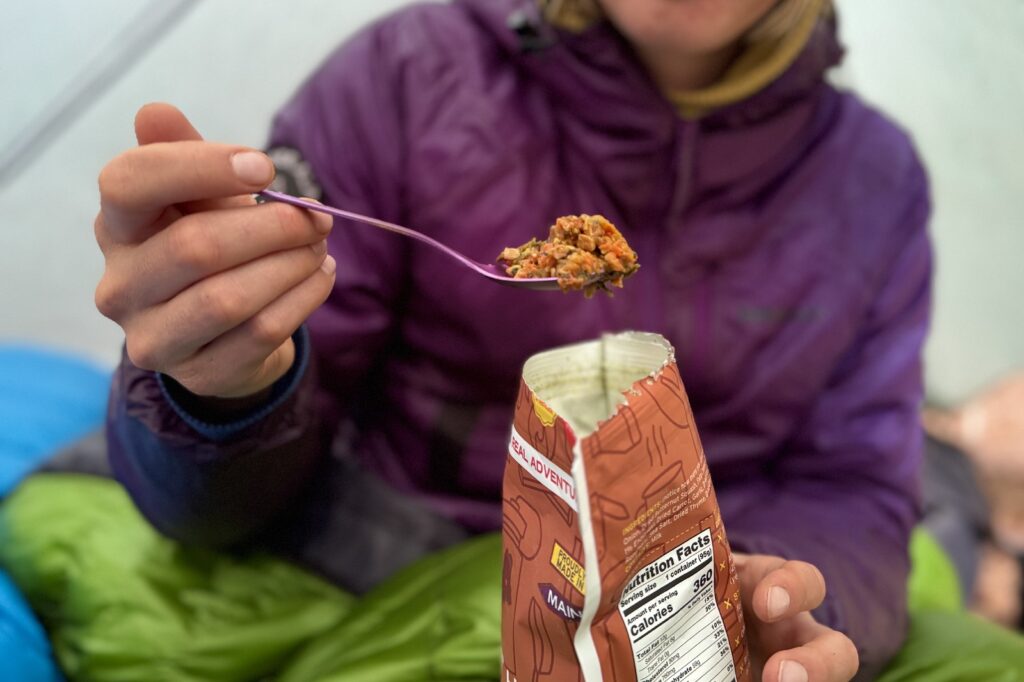
- Convenience comes at a price, and freeze-dried meals almost always cost more than DIY meals (check out the DIY MEALS section below for some money-saving alternatives)
- The air inside the packaging can make freeze-dried meals bulky. This is especially important to consider if you have to pack all of your food in a bear canister.
- Many freeze-dried meals are heavier than DIY meals, especially when you take all the trash you have to carry into account
- Takes longer to cook than many instant meals (like mashed potatoes or ramen)
Essential Add-ons for Vegetarian & Vegan Backpacking Meals
We always bring along a few spices and supplementary staples in case we need to jazz up a meal that sounded a lot better than it tasted.
Vegans & vegetarians may also need to add things like protein and fat to their meals to maintain healthy bodies on trail. Below are some of our favorite supplementary foods and gear items to keep meal-time fun and healthy.
Protiens
- Dehydrated Beans – Beans, beans, beans, the musical fruit…We always pack dehyrated refried beans. They come in handy when a meal is undersized for your hunger or if the meal has too much moisture.
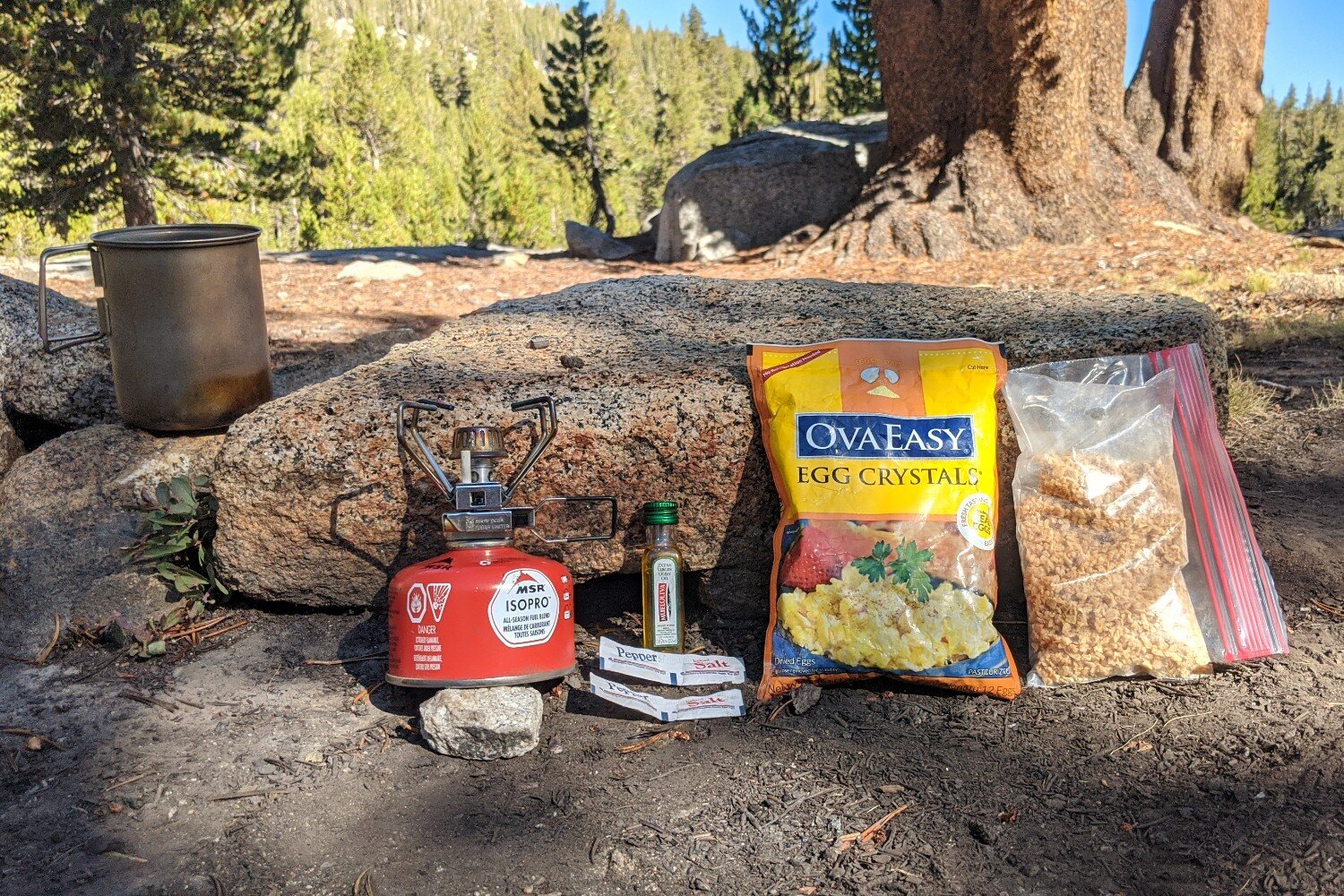
- Ova Easy Egg Crystals – Yep, powdered eggs. Before you scoff, let us just say that if you’ve ever had continental breakfast at a budget hotel, you’ve probably already eaten and enjoyed these. They take some time to make and require some scrubbing after you’re done, but they’re a great way to get some protein without packing much weight. For bonus flavor points, throw in some salt, pepper, and dehydrated veggies or potato chips!
- Textured Vegetable Protein – TVP is an affordable and versatile way to really kick your meals up a notch. It’s great to add to dinners after a long day on the trail when you’ll need some extra protein to help your body recover. It has a meaty texture and easily absorbs the flavor of spices and broths. We really like to throw it in soups and pasta dishes like Mountain House Pasta Primavera.
Fruits & Veggies
- Solely Fruit Jerky– It only takes a few days before we start to crave fresh fruit. Pure jerkies like Solely Fruit are just pressed fruit with nothing added, and they really hit the spot. We usually pack along enough to have one or two everyday to break up into oatmeal or desserts.
- Primal Vegan Jerky – If you haven’t tried these yet, you’re in for a real treat. If you enjoy the flavor of jerky, Primal Jerky is great on its own, but we also like to incorporate it into our freeze-dried meals for a savory upgrade. Try the Texas BBQ flavor in your Macaroni and Cheese or the Thai Peanut flavor in some Thai entrees.
- Karen’s Just Veggies & Just Fruit – We like to use these for DIY meals, but they’re also great to add to freeze-dried pasta and granola meals.
Fats
- Olive oil is a staple we always carry. It can add a buttery flavor to vegan dishes, help keep your digestive system working smoothly, and has a really high calorie-to-ounce ratio.
- Justin’s Nut Butter Packets – These nut butters make for a really high-calorie snack on their own, but we also like to add them to granola and meals for extra flavor.
A Spice Kit
- GoToobs – These things are seriously the coolest. We use them for condiments, sunscreen, and toiletries when we travel. They’re spill-proof, easy to fill, and, best of all, we don’t have to lug around the entire container of mayo anymore.
- GSI Spice Missile – We used to use small individual baggies for all our spices on the trail, but we ran into two major problems. Dirt from our fingers would end up becoming part of our favorite seasoning mix, or the seal would eventually stop working because it became clogged with little granules. The Spice Missile is ultralight, super compact, and allows you to bring six different spices. It’s a luxury item we never hit the trail without.
DIY Meals
For most of our trips, we do a combination of freeze-dried meals and DIY meals. We always look for foods that are quick and easy to make, lightweight, and high in calories.
Below is a list of some of the vegan and vegetarian foods that are quick to cook and are frequently part of our backpacking meal plans.
- Knorr Instant Rice (we like Cheddar Broccoli and Spanish-style)
- Ramen Express Vegetarian Chicken Ramen
- Top Ramen Soy Sauce Flavor
- Annie’s Mac & Cheese
- Idahoan Instant Mashed Potatoes (these are always nice to have on hand for excess water in a rehydrated meal)
- Near East Couscous
- Angel Hair Pasta
- Dehydrated Refried Beans
- Instant soups
- Knorr Sauce Mixes (we like the Pesto)
- Instant Oatmeal
Conclusion
Check out our backpacking meal recipes and dehydration tips for some of our favorite DIY meals! Many of the recipes include meat, but in most cases, you can substitute it with TVP, Primal Vegan Jerky, or dehydrated shiitake mushrooms.
Our best lightweight backpacking food guide also includes useful information on meal planning and ideas for foods that work well on the trail. In the end, you are your best meal planner, and it takes some experimenting to figure out what works best for your style of backpacking and your palate. Bon appetite!