

Bottom Line
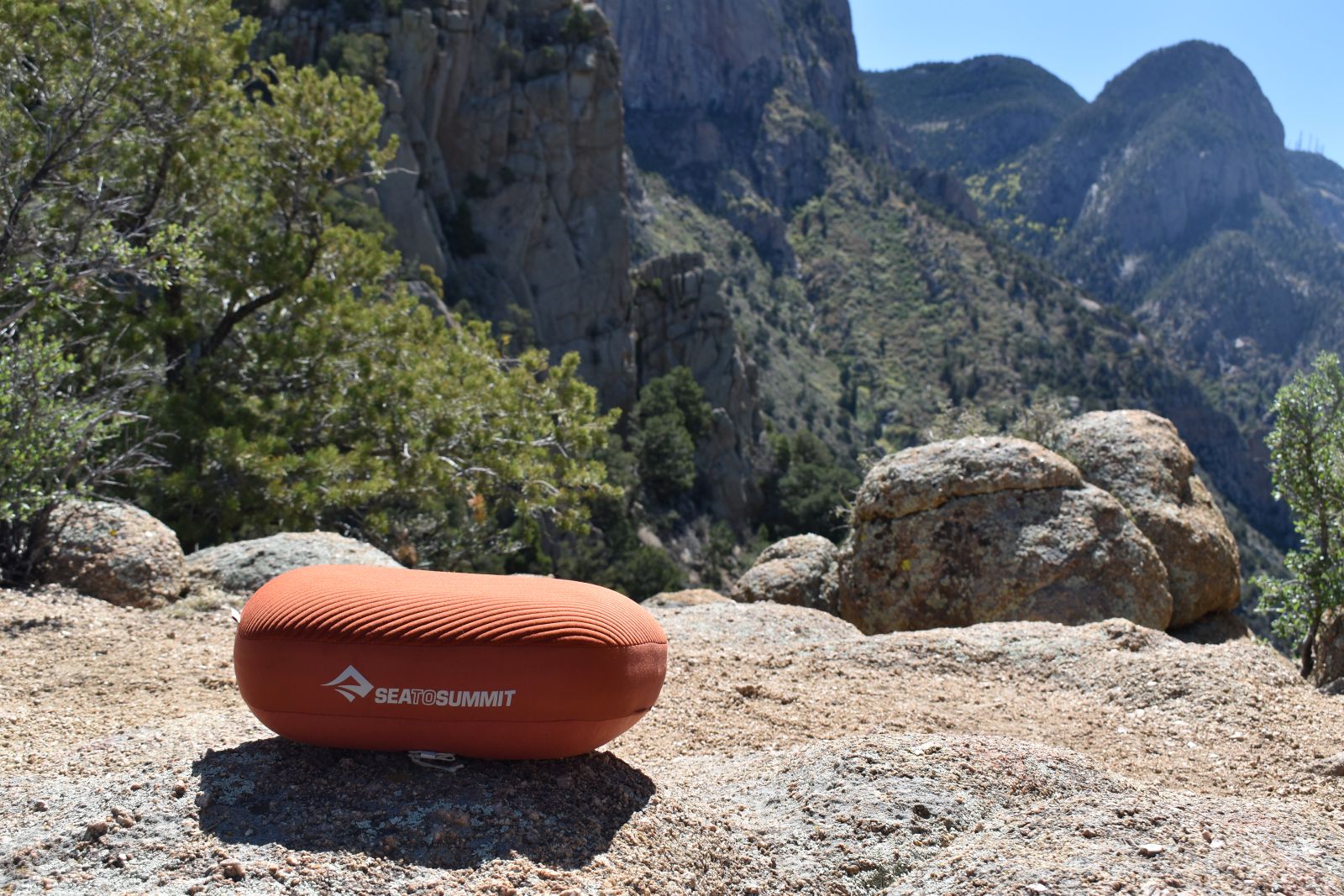
The Sea to Summit Aeros Premium is our first choice for backpackers looking for support without bulk. Its contoured profile wraps comfortably around the neck, and its adjustable air chamber provides substantial loft for side sleepers. It is firmer than a foam pillow, and its compact sleeping surface is less forgiving for restless sleepers.
After more than a decade with versions of this pillow, we still favor the Aeros Premium on backpacking trips. During recent New Mexico comparisons, its neck-hugging shape stood out particularly for side sleeping, while the multifunction valve made it simple to soften a fully inflated bladder. At 3.5 ounces in Regular, it leaves room and weight for other essentials instead of demanding a comfort-first packing decision.
The limitation is feel: even with its newly cushioned top, the Aeros doesn’t feel like the soft memory-foam pillows we prefer at car campsites. Back sleepers wanting a wider surface might be happier with the NEMO Fillo Elite Wide, while hikers seeking down cushioning in a smaller packed package should consider the Sea to Summit Aeros Down. For our overall backpacking balance, the Premium remains the more versatile recommendation.
Backpackers weighing the Aeros Premium against softer or wider models will find our best camping pillows guide useful for narrowing the field.
How We Tested
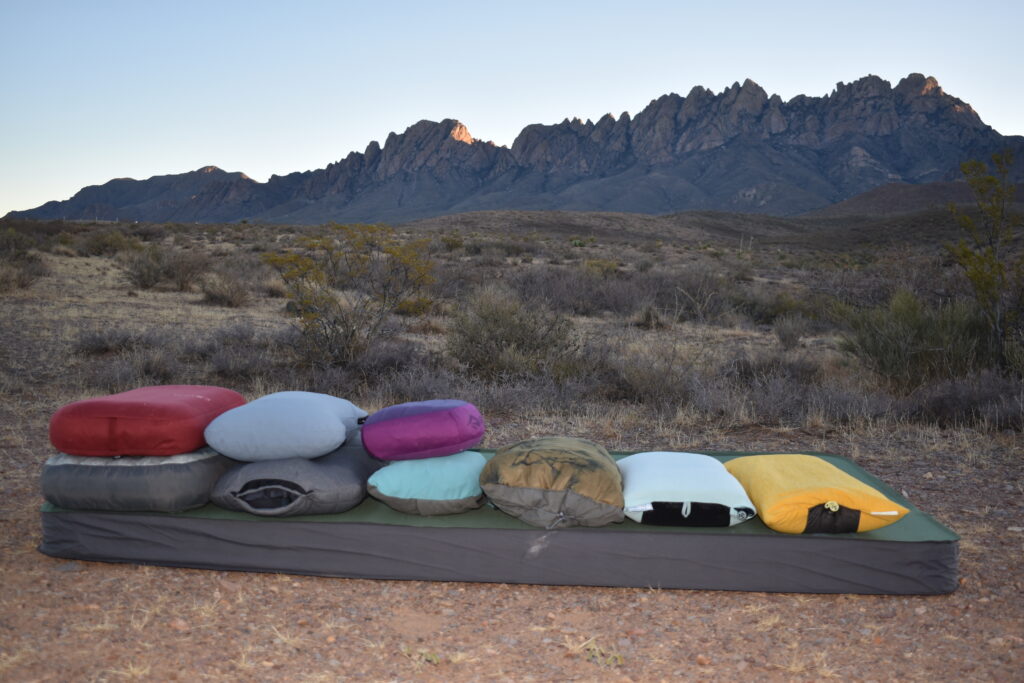
We have used the Aeros Premium since 2015. Recent side-by-side tests with nearly twenty pillows during New Mexico outings evaluated comfort, support, packed size, and valve function.
He has used versions of this pillow in both Australia and the United States, including the updated ribbed-top model. Comparisons over the last 18 months involved nearly twenty camp pillows, with particular attention to the side-sleeping fit of their neck contours. He also brought the Aeros Premium on the Tour du Mont Blanc, where its tiny packed size made it easy to carry between mountain huts.
Quick Specs
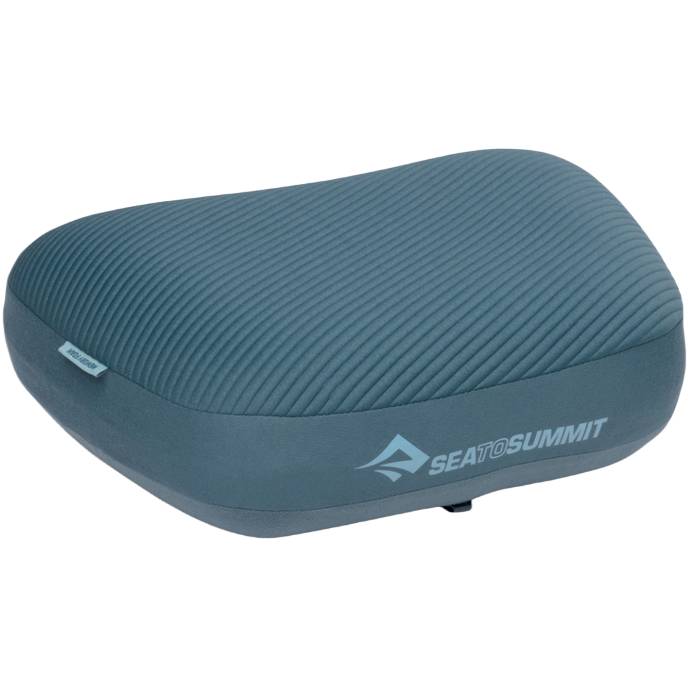
Sea to Summit Aeros Premium
Best Backpacking Pillow Overall
CleverHiker Rating: 4.7/5.0
Price: $55 – $70
Weight: 3.5 oz. (Regular)
Pillow Type: Air
Pros
- Lightweight and very compact
- Curved neck support
- Easy-to-adjust valve
- PillowLock attachment
Cons
- Firm inflatable feel
- Limited sleeping area

Comfort
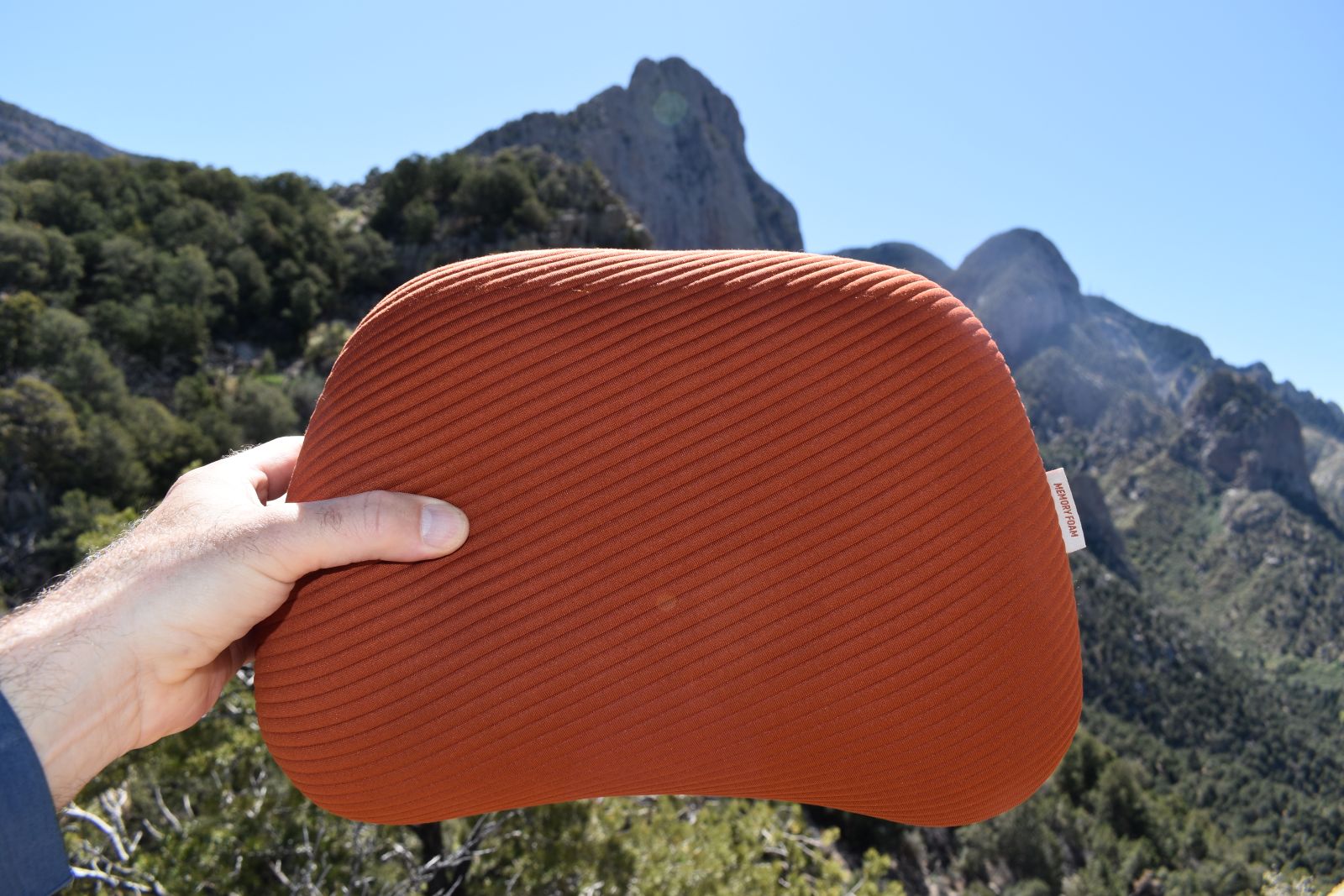
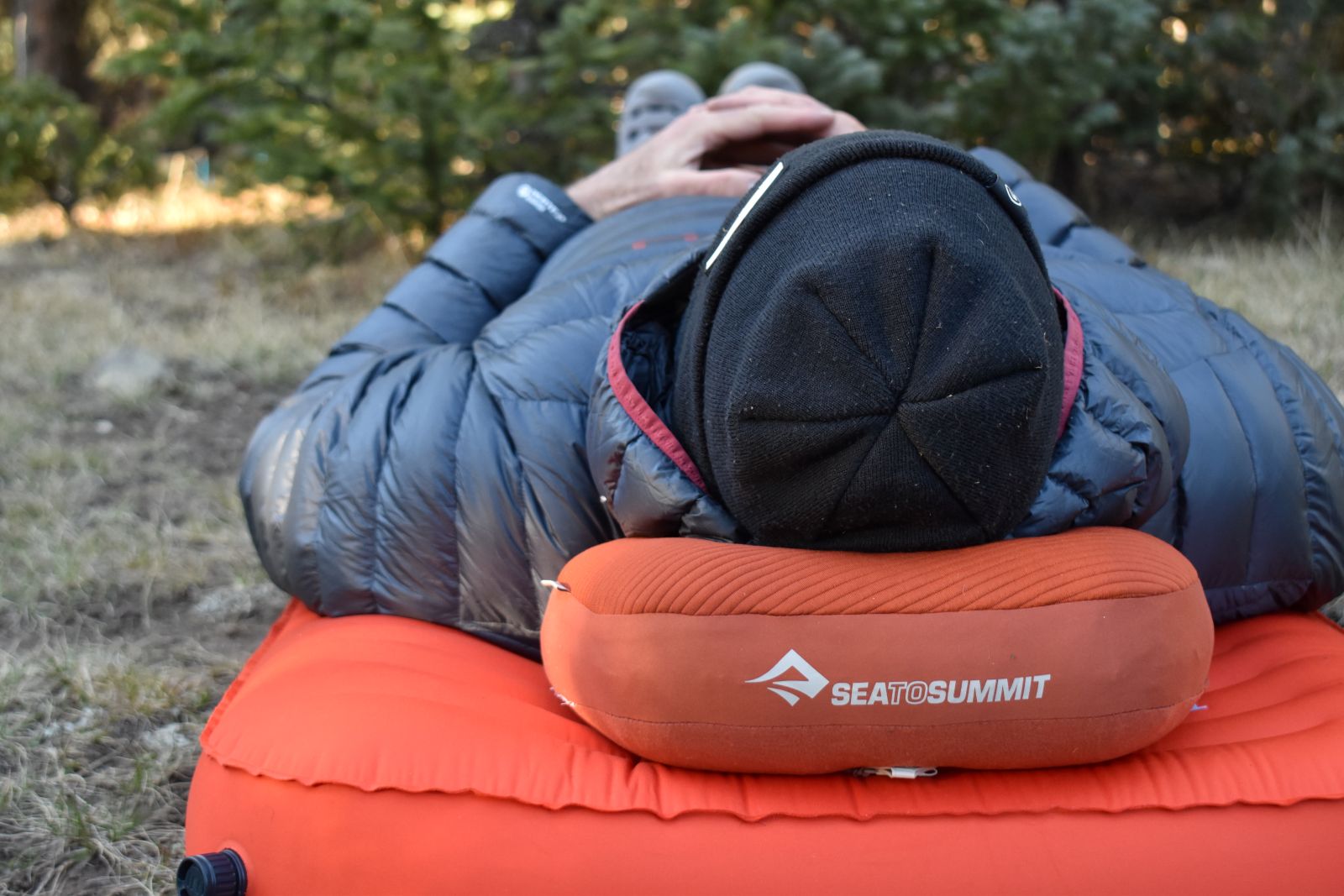
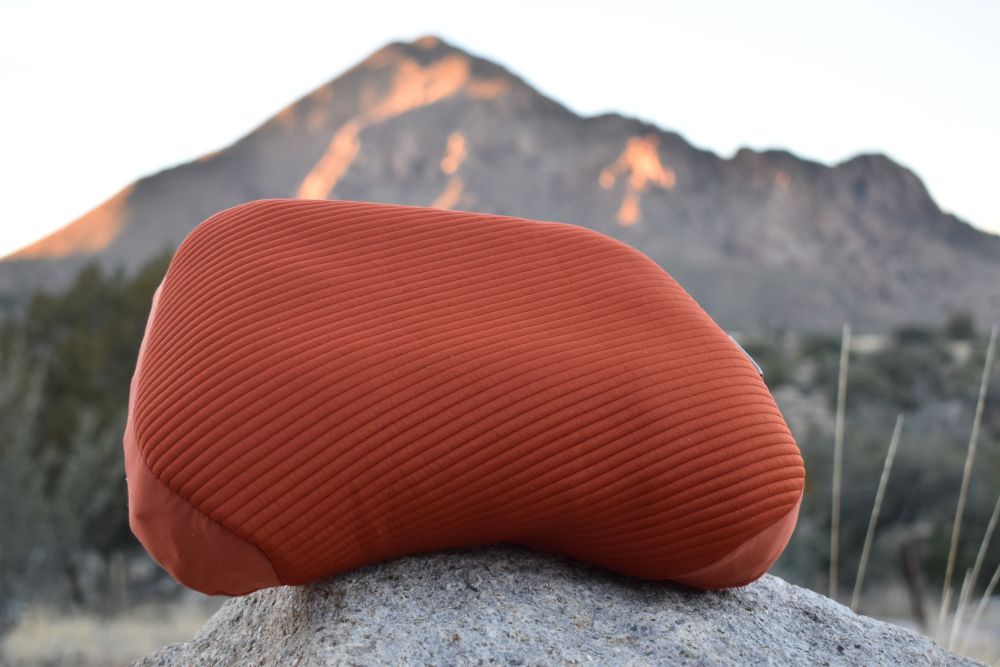
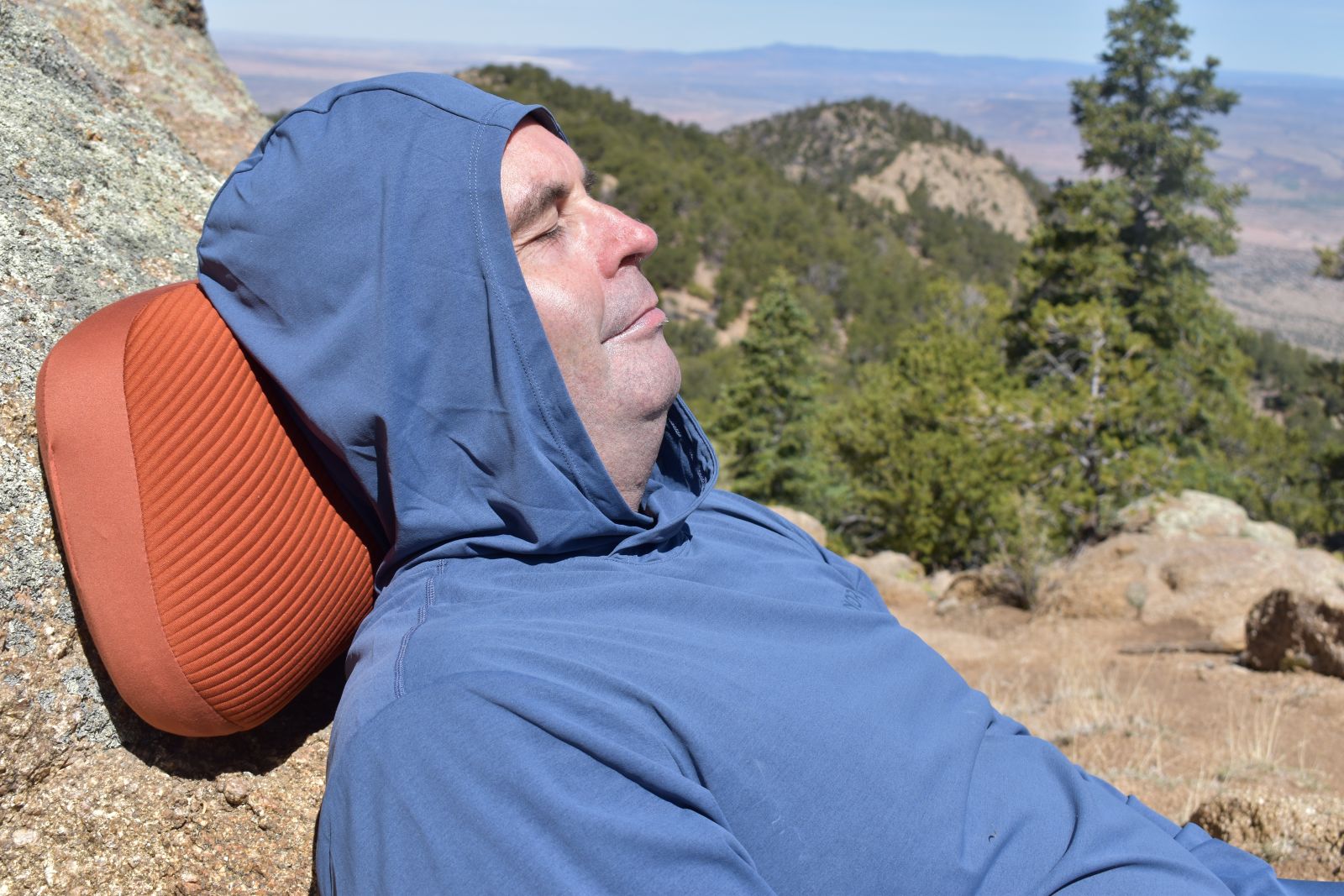
The thin memory-foam layer adds a little cushioning over the air bladder, but this is still a firm inflatable. Our side-sleeping tester liked the curved edge for neck positioning and found it more comfortable than squared-off pillows, although the inflated surface sometimes pressed against his ears.
We have returned to the Aeros Premium over more than a decade of trips, so this is not a verdict based only on a few nights comparing pillows. The newer ribbed top increases cushioning compared with earlier versions, but backpackers who find any pressurized pillow uncomfortable won’t suddenly get a foam-pillow experience. Even with the improvement, the Aeros Premium wins our overall recommendation through its balance rather than plushness alone.
The tradeoff is clearest after a night with a fully inflated bladder: less give at the ear than a foam model, despite the improved padded top. Letting a little air out is the simplest adjustment if comfort matters more than maximum height.
Comfort Score: 4.5/5.0
Weight & Packability
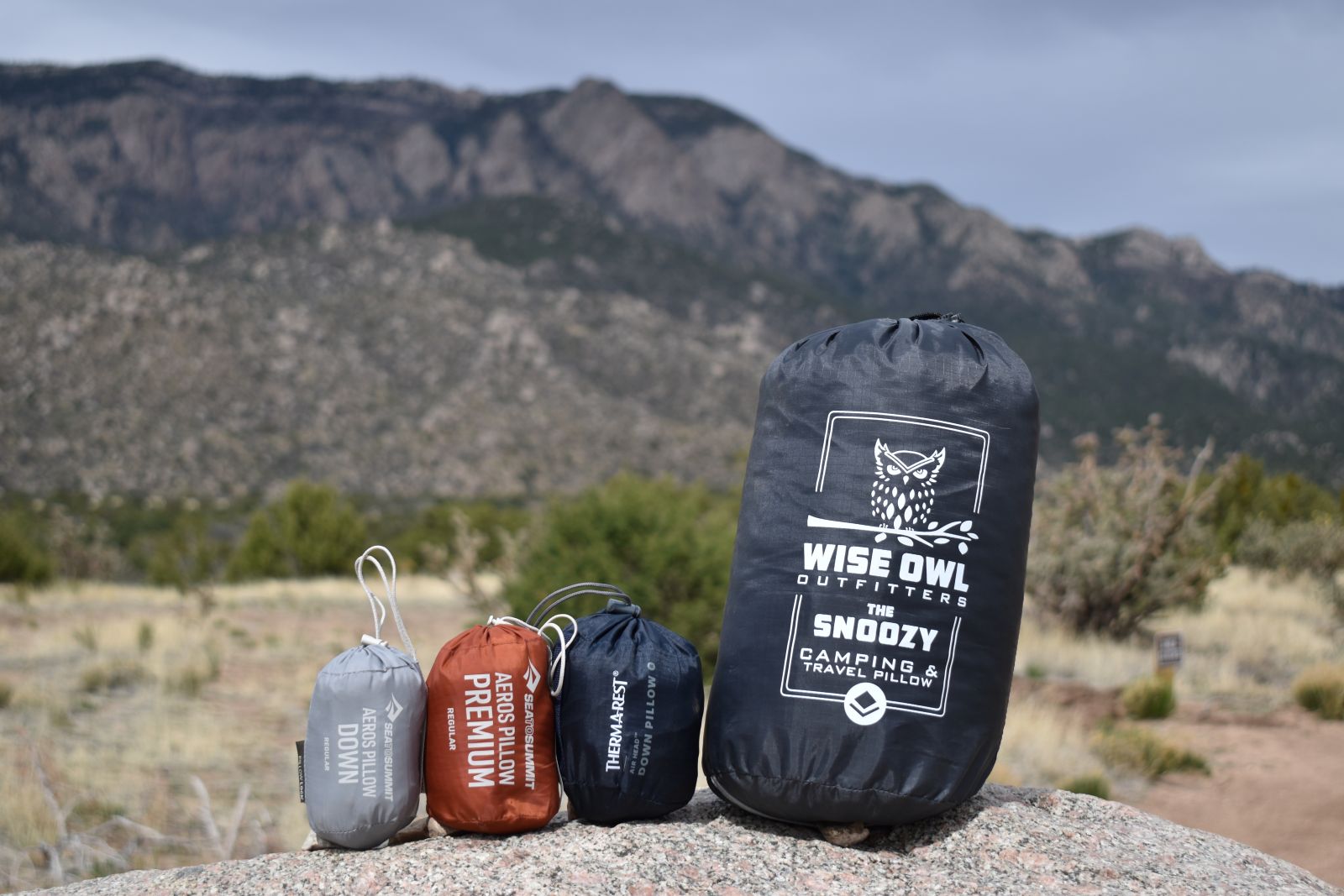
At 3.5 ounces, the Regular pillow packs down to about the size of a large lime. That tiny packed volume and low weight are especially useful for long backpacking trips, unlike the foam pillows we recommend mainly for camping near a car.
Our analyst has brought the Aeros Premium on trips ranging from extended wilderness outings to the Tour du Mont Blanc, where its small stuff sack made it easy to keep on hand even between nights in refuges. At a Continental Divide Trail campsite, four of five hikers in his group had an Aeros Premium, an illustration of its longstanding appeal to pack-conscious travelers. A pillow this small is also easy to keep accessible for breaks.
Unlike bulky foam options, this is a pillow our analyst also carried on hut-to-hut travel, where accommodations supplied bedding. That versatility shows how little burden the rolled-up pillow creates between uses.
Weight & Packability Score: 4.8/5.0
Support
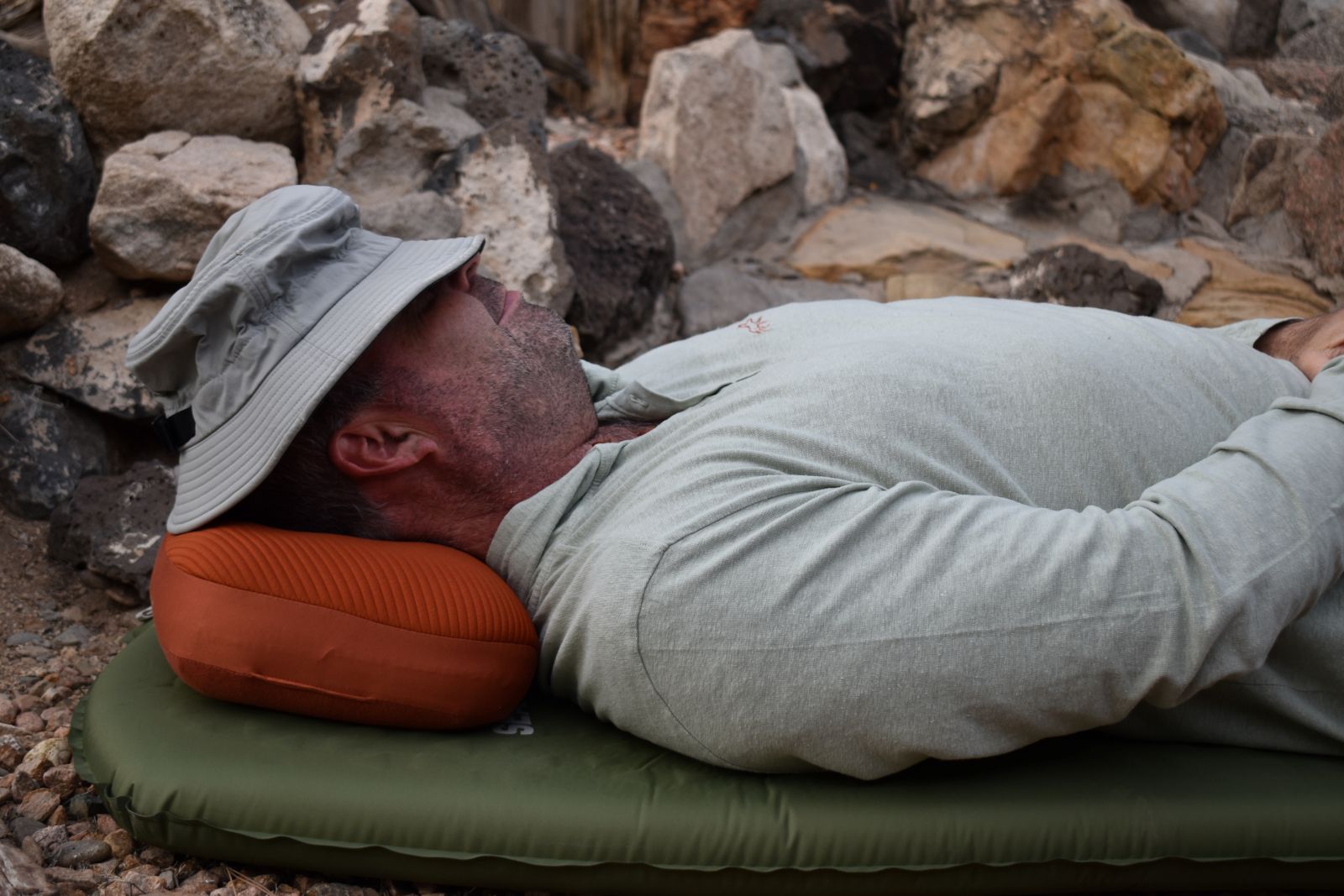
The 4.3-inch-thick Regular model provides convincing head and neck elevation. Its crescent profile follows the shoulders more naturally than rectangular competitors; taller inflatables provide slightly more loft, but few combine this shape with such low weight.
Our continued preference for the Aeros Premium is especially telling because our side-sleeping tests place a premium on keeping the head aligned with the shoulders. The shape is more than decorative: it tucks into the neck and limits gaps between pillow and upper body. Our tests still showed support advantages for some thicker inflatables, so someone who needs the very highest profile may want the Exped Mega Pillow instead.
The curved neck edge is a large part of our preference for this model over rectangular inflatables. A side sleeper should pay at least as much attention to this fit as to maximum published thickness.
Support Score: 4.8/5.0
Ease of Use
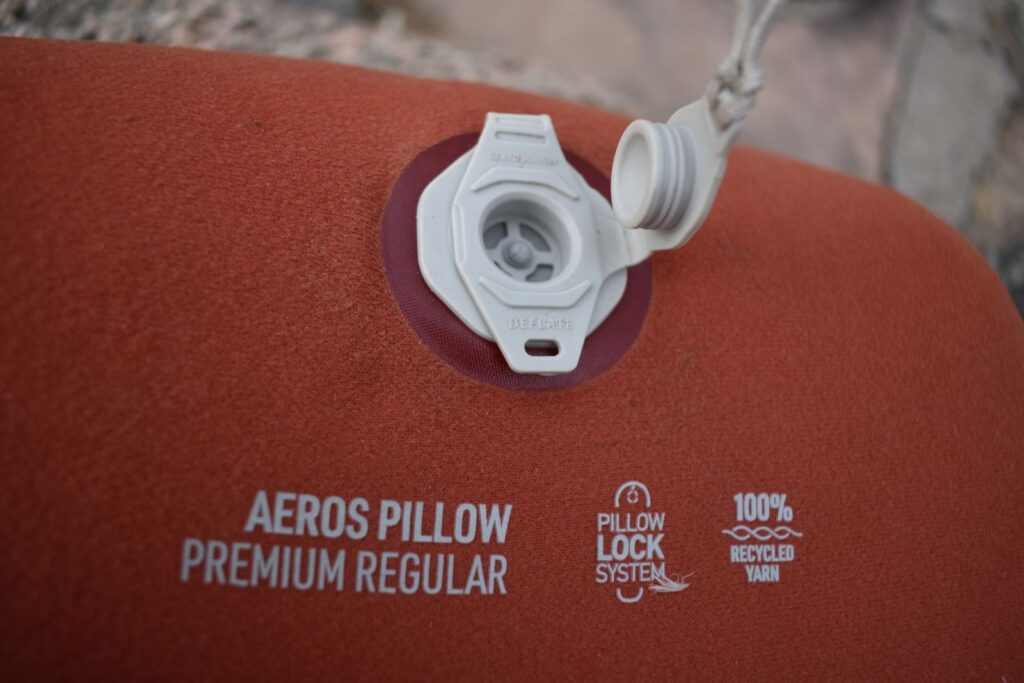
Its multiway valve makes pressure adjustments and fast deflation straightforward, and PillowLock patches help secure the pillow to compatible pads. The separate stuff sack is simple to use.
Inflate the bladder firmly for maximum elevation, then use the valve’s pressure-release feature to soften the top without starting over. That control lets you address a common complaint with air pillows—too much pressure against the ear—while keeping enough height for neck support. The simple one-piece design also avoids the cover and packing complications of hybrid foam-air pillows.
PillowLock tabs are a meaningful addition for campers whose pillows slide off slick pads. That attachment convenience matters more in daily use than decorative fabric or a complicated outer cover.
Ease of Use Score: 4.7/5.0
Should You Buy the Sea to Summit Aeros Premium?
For backpackers who sleep on their sides, the Aeros Premium is a particularly dependable way to get real neck support without surrendering pack space. Its curved edge, 4.3-inch Regular profile, and excellent valve were useful over years of our testing. We would choose it for a multi-day trek where ounces matter and a firm pillow is acceptable.
Don’t buy it expecting a plush, bedroom-like surface or abundant room to move your head. For more softness at similarly low weight, consider the Aeros Down, accepting a less ergonomic rectangular shape. For campers staying near their vehicles, the wide Exped Mega or a compressible foam model may deliver more relaxing comfort. The Aeros Premium remains our overall backpacking favorite because its compromises are manageable on long trails.
What Other Camping Pillows Should You Consider?
NEMO Fillo Elite Wide Ultralight Review: Back sleepers who find the Aeros Premium too narrow should consider the Elite Wide. Its 21-inch-wide platform offers more space for repositioning and a softer jersey cover, but its lower profile is less supportive for side sleepers and its 4.2-ounce weight is higher.
Sea to Summit Aeros Down Review: The Aeros Down is a compelling lighter alternative for backpackers who want down cushioning against their cheek. Its rectangular outline has less neck-hugging curvature, and its sleeping surface is small, so our side-sleeping tester still favored the Aeros Premium’s ergonomic fit.
Hyperlite Stuff Sack Pillow Review: The Stuff Sack is for strict minimalists who would rather repurpose spare clothing than bring an air pillow. It saves gear redundancy but provides less predictable softness and neck elevation than the adjustable Aeros Premium.