

Bottom Line
The Rab Evolute Hoody (men’s / women’s) uses an innovative fabric layering system to deliver exceptional heat retention abilities while keeping the jacket’s weight low. Thoughtful features, such as a zippered hood that covers the chin, only add to the experience.
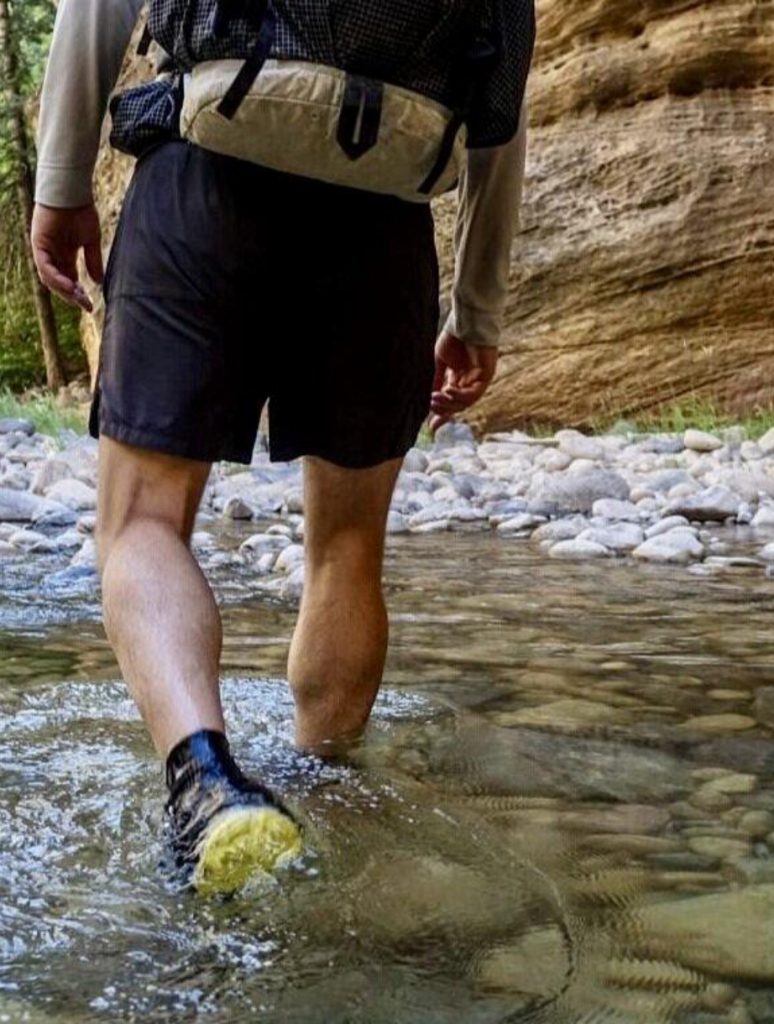
We tested this on a backpacking trip in the mountains of Pennsylvania, where we really appreciated the fleece’s ability to keep warm air close to our torsos while remaining breathable. The jacket withstood our durability tests and has held up wonderfully after multiple washes.
It has one of the slickest designs of all of our favorite fleece jackets.
Quick Specs
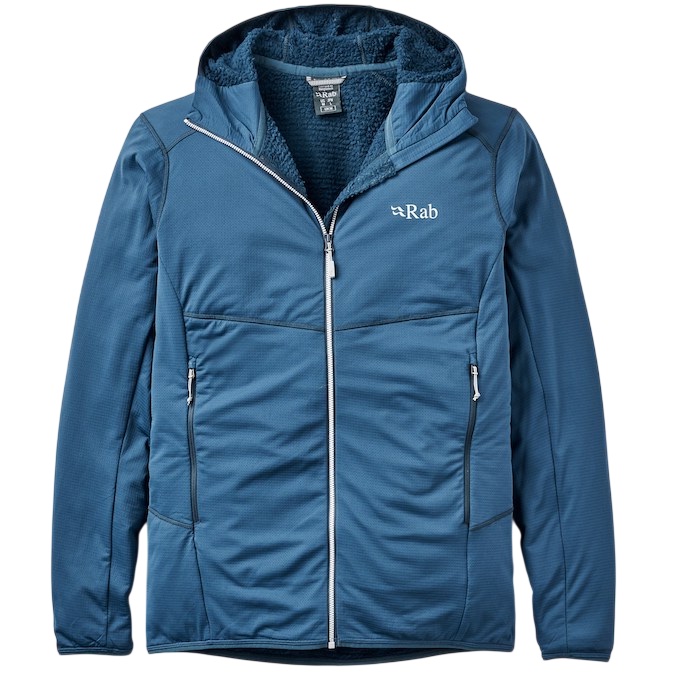
Rab Evolute Hoody
Best Designed Insulated Fleece
CleverHiker Rating: 4.5/5.0
Price: $165
Measured Weight: 1 lb. 12 oz.(Men’s M)
Pros
- Great heat retention ability and moisture control
- Comfortable hood that zips around the chin
- Excellent fit around the arms, chest, torso, and back
- Zippered side pockets
Cons
- No thumb holes
- Elastic binding on the ends of the sleeves can be hard to get over a watch
Warmth
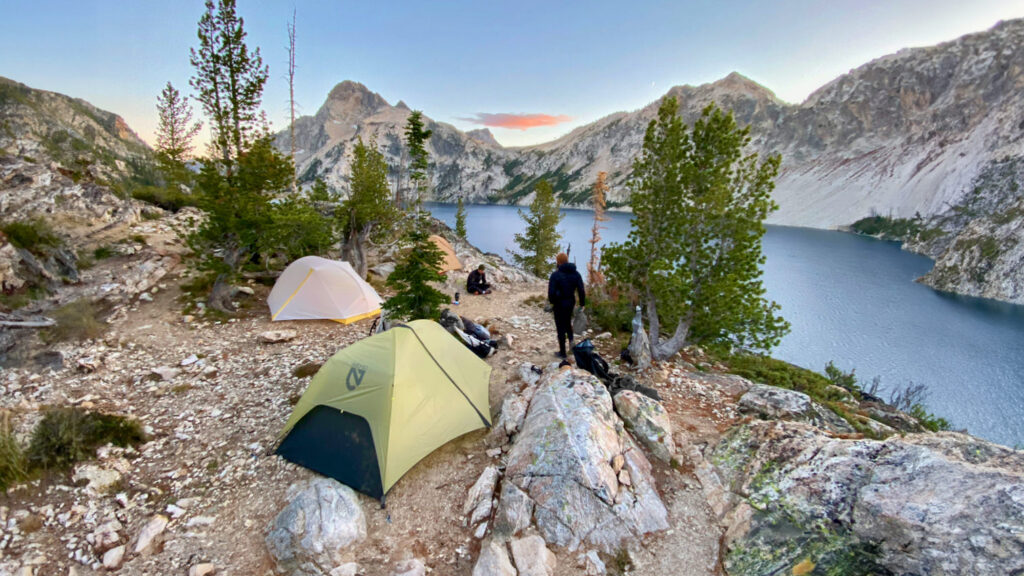
While daytime temperatures in April on Pennsylvania’s Laurel Highlands Trail consistently reached the upper 70s, evening and nighttime temperatures dropped into the 30s. Because of this, we were very interested in how this jacket retained heat at night. But also how quickly we could dump the heat in the morning as the sun started to heat me up.
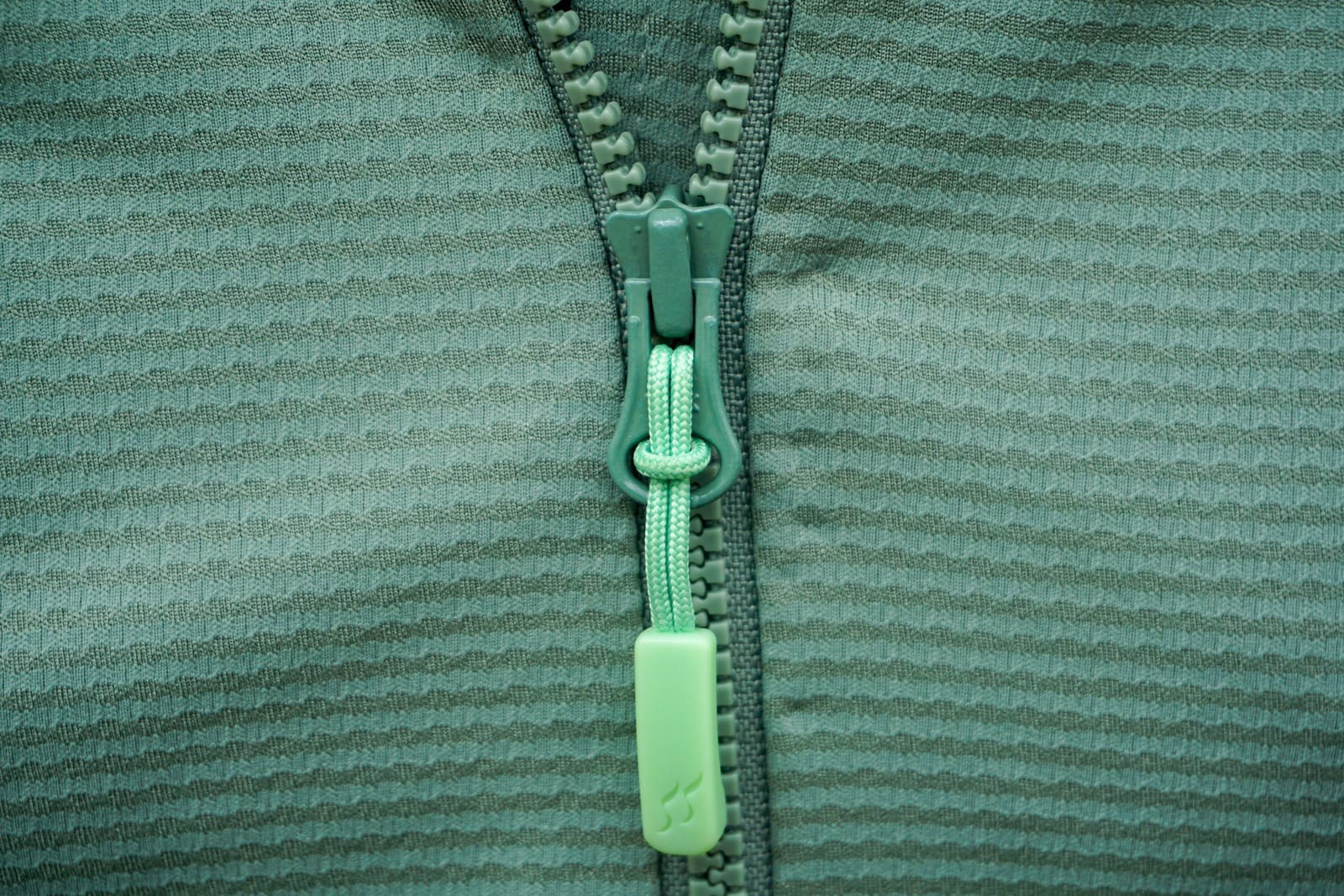
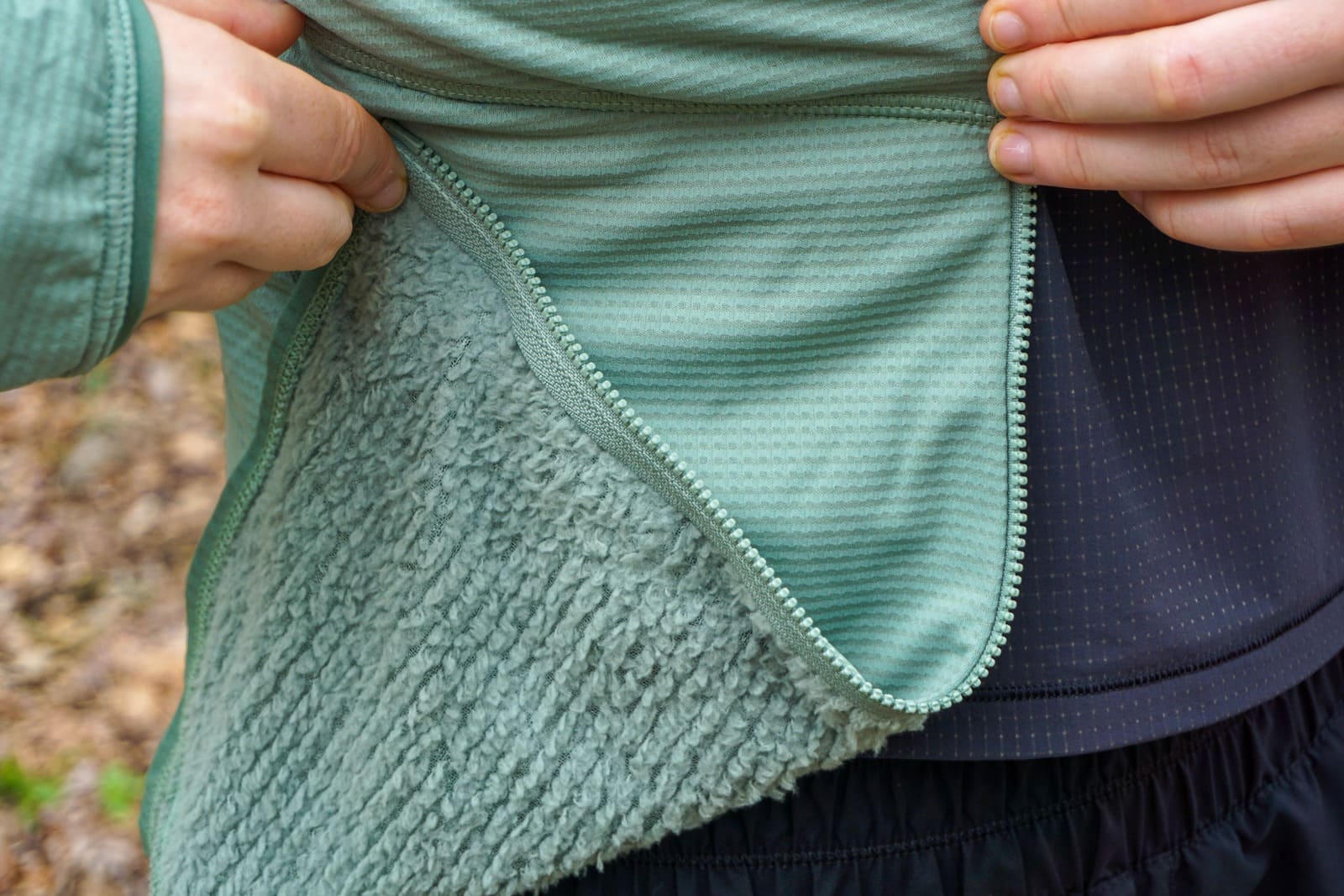
This jacket is unique in that it has a PrimaLoft Evolve Active Insulation interior, with a more durable exterior to help withstand snags and absorb any snags or abrasion. This insulated interior looks like little tufts of fleece with spaces between them, not unlike the popular Alpha Direct fabric.
The resulting heat retention impressed us significantly. The PrimaLoft did a fantastic job trapping our body heat against our torsos. And thanks to the outer layer, a light wind didn’t blow all that heat away. This insulation layer extends up into the hood, which we also found to keep us warm at night without needing to wear a hat. However, the tufted insulation sitting against the skin gave a level of breathability that a thicker jacket may lack.
Each morning, once the sun started to rise, we didn’t need to rush to shed our layers. We could remove it once we felt suitably warm, and we never felt soggy or sweat-laden by wearing the jacket for a few extra minutes. And if we still wanted coverage on our arms, the jacket’s full zip let us get extra airflow and dump even more heat if needed.
Understanding the science behind this fabric pairing also helps you understand the excellent heat retention. The open spaces between the tufts of insulation allow your body heat to quickly radiate into the jacket and become trapped in the empty air gaps. Dead air is a great insulator.
But, in order to stay dead air, you can’t let a gust of wind come in and blow everything away. The outer shell, made from single-jersey knit, is lightweight and naturally breathable, yet tightly woven enough to act as a barrier, keeping all that warm, still air trapped near the surface of your skin.
Comfort
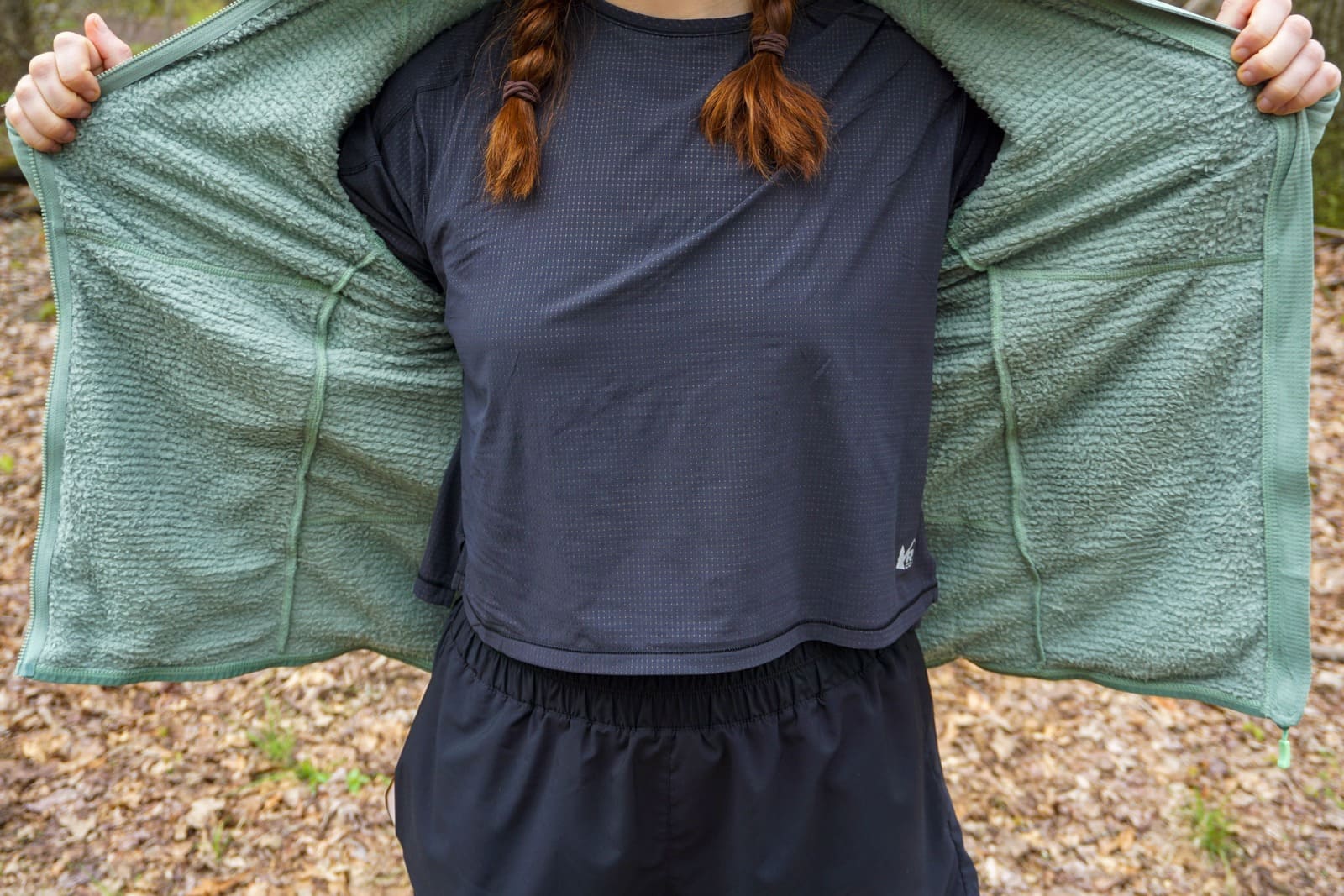
This jacket is quite comfortable when paired with a sun hoodie or a similar long-sleeved baselayer. When we tried to use this jacket as a standalone, we found the insulation tufts felt odd against our skin once we started to sweat.
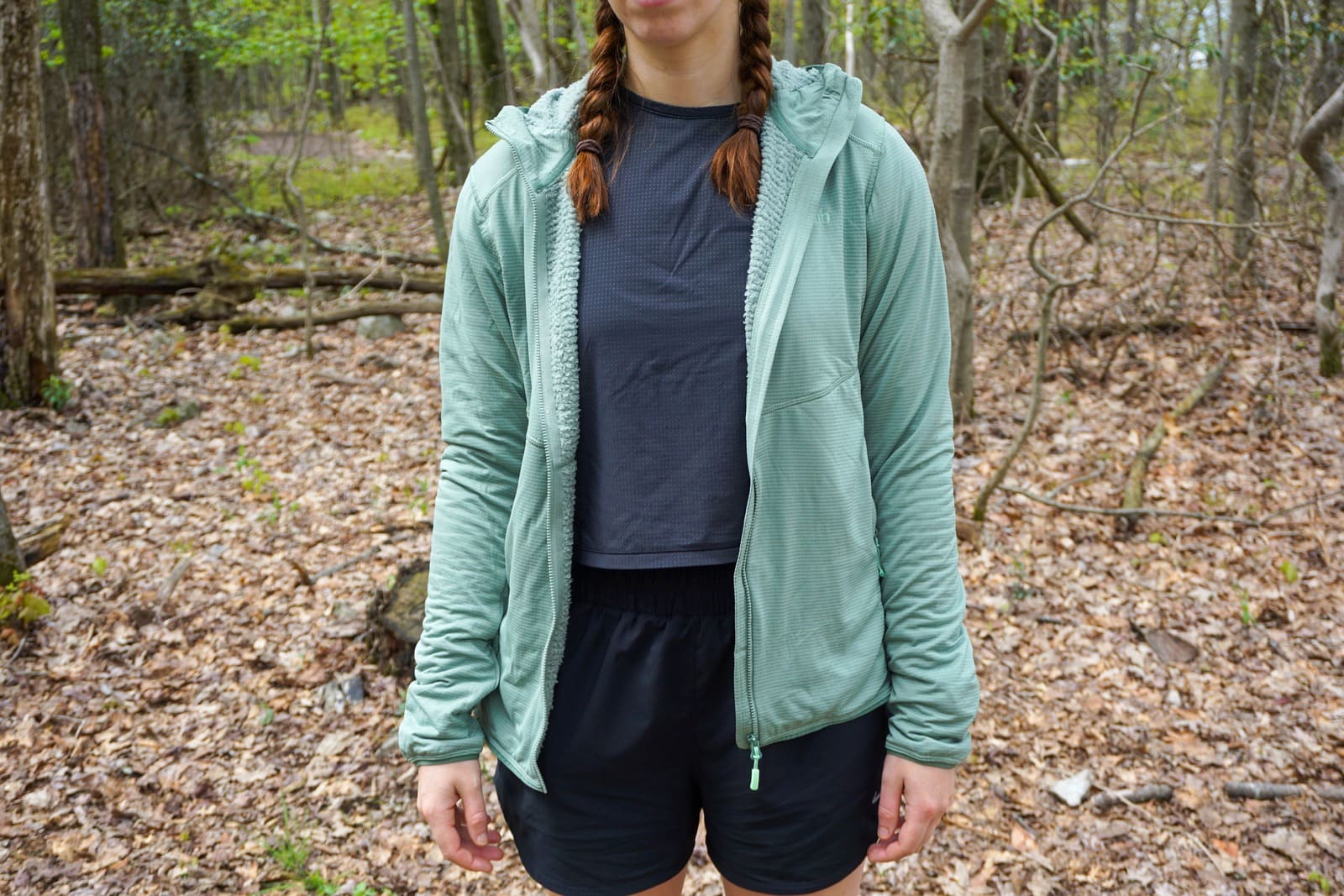
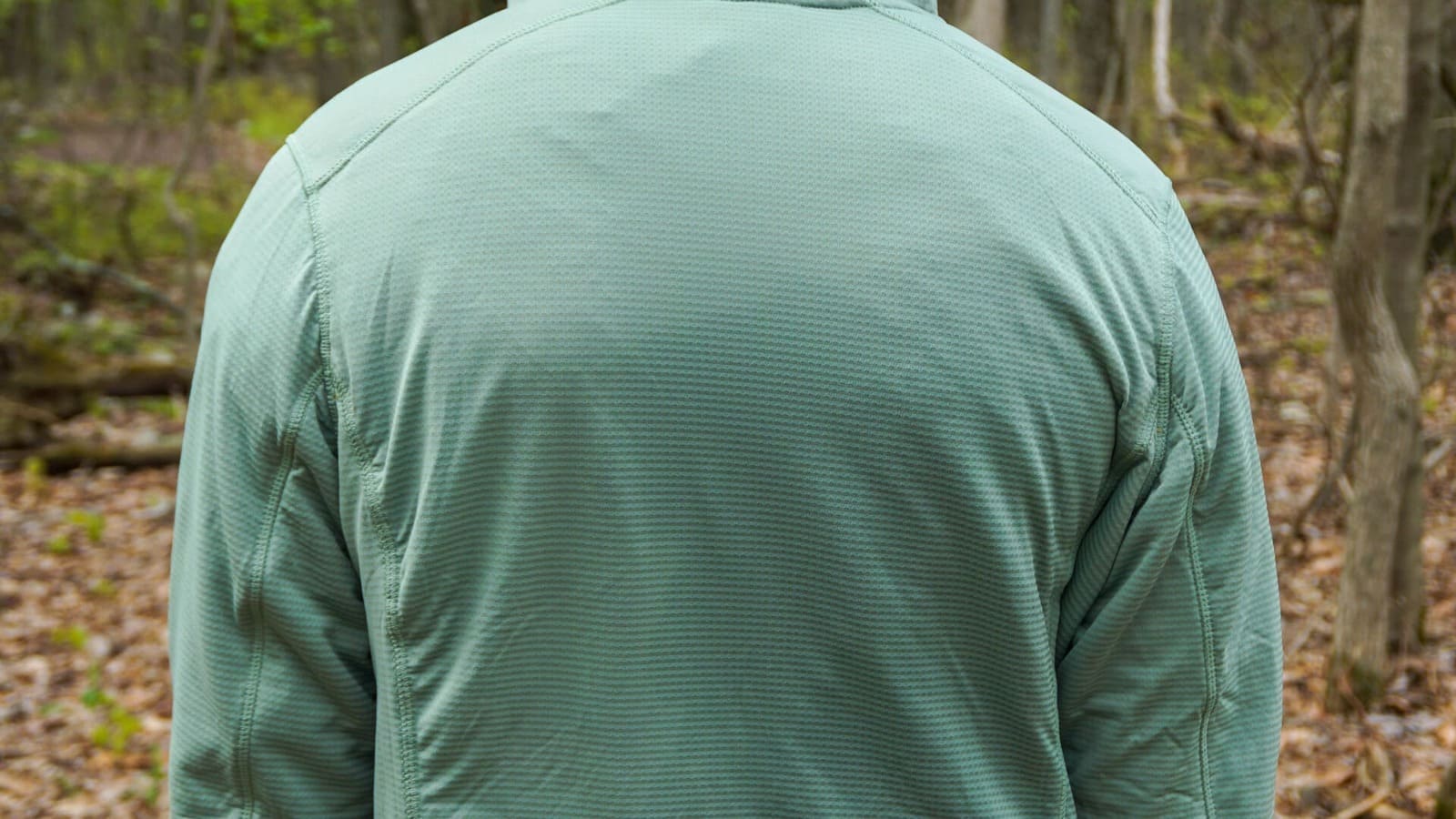
Once layered appropriately, it’s clear how thoughtfully designed the seams and fit of this jacket are. The cut manages to toe the perfect line between fitted without being too tight across the torso, arms, and back. The jacket lacks any odd seams across the back that may cause discomfort when rubbing against a pack.
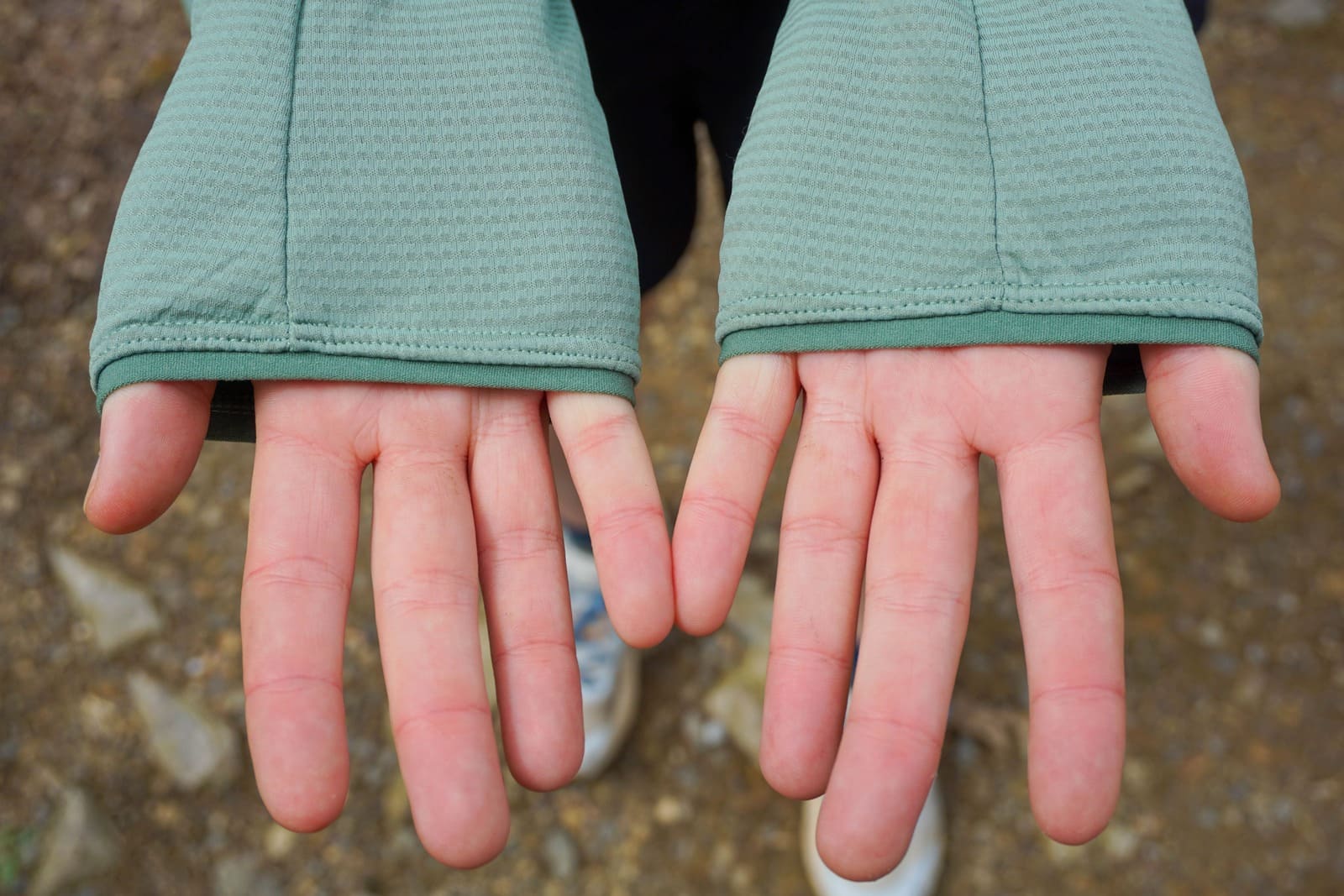
The only note we had about the comfort of this fleece concerns the tightness of the elastics at the ends of the sleeves. They were just tight enough to catch on our smartwatches every time we put the jacket on or took it off.
In the grand scheme of things, this is not a big deal at all, but we did find ourselves wishing they had opted for thumbholes rather than elastic to keep the jacket from riding up the arm.
Durability
During our backpacking trip in Pennsylvania, we tested the jacket’s durability by intentionally bushwhacking off-trail. We also strapped it to the exterior of our packs during the day to see how it held up to snags.
The interior of the jacket appears to be constructed from a very fragile material, which initially made us skeptical of its durability. However, the jacket’s construction proved us wrong. The outer material is a single jersey that resisted abrasion and snags from tree branches pretty well.
At the end of the day, this is a very light jacket, so significant trauma to the jacket (such as fully impaling it on a tree branch) will break that outer layer. However, we noticed no damage after a few hundred yards of brushing up against twigs and thorny bushes.
Rab layered this outer fabric over the inner insulation in a smart way. In areas that are commonly open while hiking, such as the upper body or collar, a thicker layer of jersey fabric lines the zipper to avoid exposing the more fragile PermaLoft.
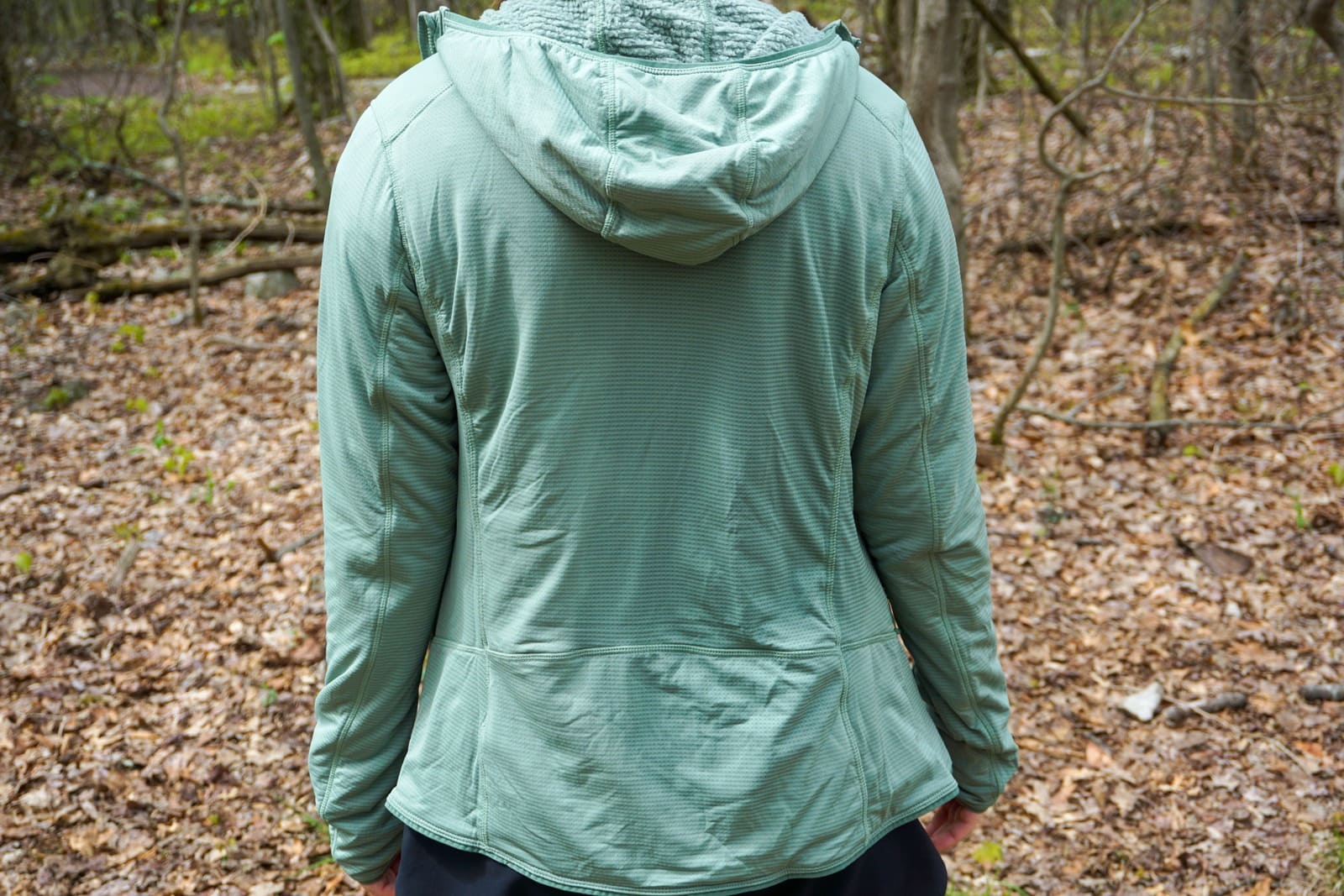
Even the hood is designed to lay against the back, with the exterior fabric showing rather than the inner insulation. It would take some serious effort to find a way to scrape that inner fabric against anything, as long as you’re wearing the fleece.
That said, you do need to be careful not to expose the inner fabric when strapping the jacket to the back of your pack. Once we left some of the insulation exposed while hiking, we noticed it was quite prone to snagging on sticks, twigs, and dirt. Luckily, it didn’t rip. But this jacket is perhaps better stored inside a pack.
Weight
When we consider jacket weights, we like to think in terms of a warmth-to-weight ratio. This jacket in a Women’s Medium weighs 10.3 ounces, which is about the same as a roll of paper towels. When we compare it to other jackets we’ve used of a similar weight, we think this jacket comes out near the top in the contest of warmth-to-weight ratio.
We had no problem compressing the jacket to fit it in our bags. The single-jersey fabric bunches together quite well, and the PrimaLoft insulation all but vanishes under a little pressure.
The majority of the heat retention in this jacket comes from the PrimaLoft, which is absurdly light. As a bonus, the thin jersey outer shell adds almost zero bulk, meaning the jacket remains incredibly light and highly compressible in your pack.
Features
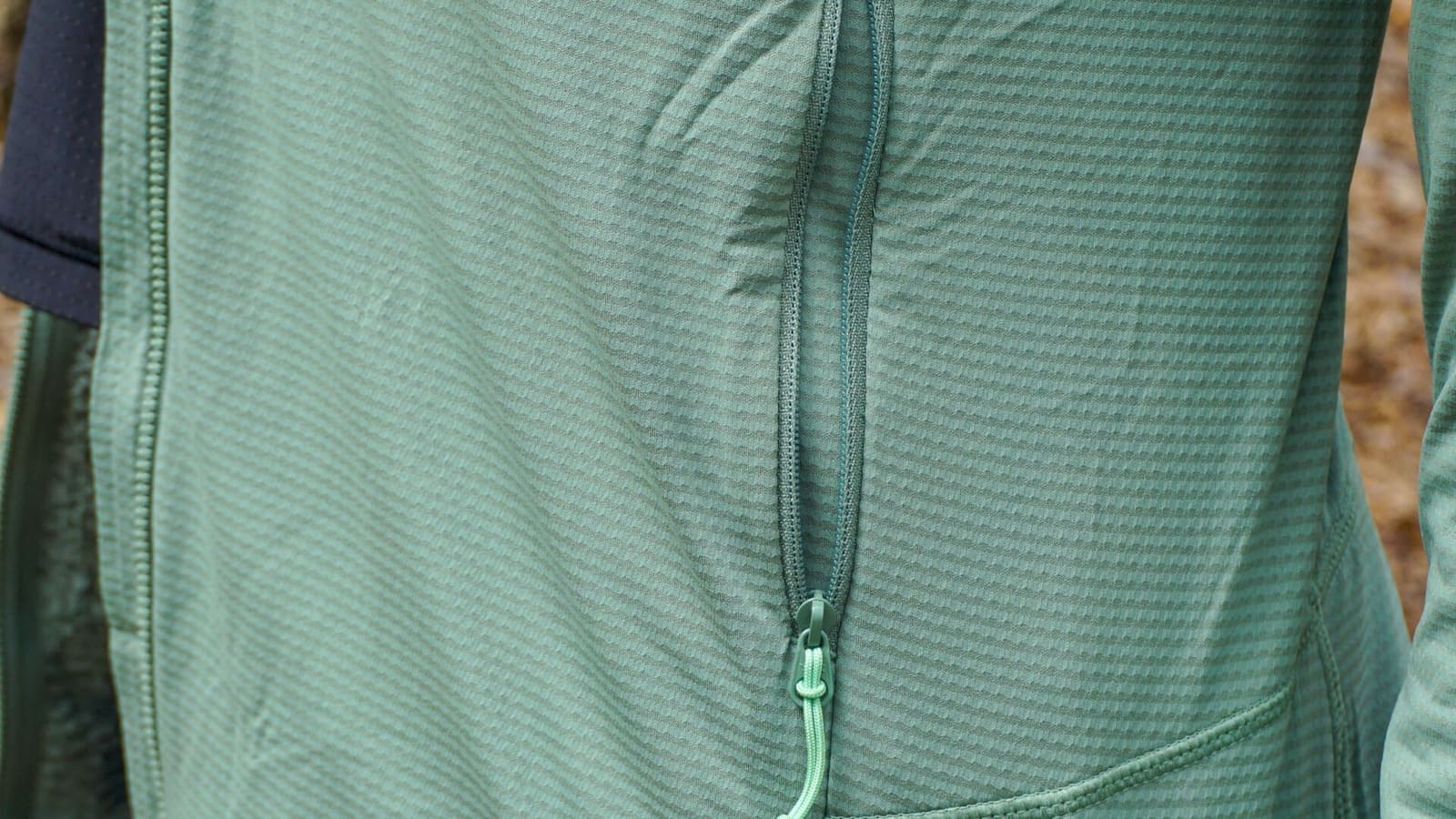
For a jacket weighing under 11 ounces, we’re pleasantly surprised to see two full-sized zippered pockets, a full zipper up the body of the jacket, a hood that zips up to cover the chin, and elastic bindings around the hem and sleeves to prevent the jacket from moving during activity.
All of these features work well. We found we could access the zippered pockets with a pack on and appreciated the security of keeping valuables, like our car keys, in a zippered pocket. As mentioned above, the elastic at the ends of the sleeves gave us a little trouble with our smartwatches, but once we had the jacket on, it was nice to have everything stay in one place.
The real winner for us was the hood. The jacket lacks any cinch cord to fit the hood around your face or prevent it from blowing off. But if you zip the jacket all the way up, it ends up covering your chin and providing a lot of stability to the fit.
The only feature we wanted to see but didn’t was a pair of thumbholes. We think thumbholes here would have done an equally good job of keeping the jacket arms from riding up, but would have eliminated the issue of fitting over a smart watch.
Should You Buy The Rab Evolute Hoody?
When it comes to fleece jackets that provide excellent heat retention without blowing up the scale, this jacket is pretty perfect. We found ourselves loving the fit, the warmth, the breathability, and really nitpicking to find things to criticize.
That said, the price tag is among the highest on our list of best fleeces, at $165. For that reason, we recommend buying this only if the jacket’s benefits are necessary for your sport. Casual hikers or weekend backpackers may not put as much stock in the weight savings. And if that’s the case, we would recommend looking at other fleeces on our list.
However, if you are backpacking for extended periods of time, or really place a lot of value in the warmth-to-weight ratio of a jacket, you’ll be hard-pressed to find a better option than the Rab Evolute.
What Other Fleeces Should You Consider?
If the Rab Evolute Hoody is not quite what you are looking for in a fleece jacket, we have many other recommendations to consider. You can head over to our full best fleece jackets gear guide here for more of our top picks. Also take a look below for some ideas.
Patagonia R1 Air Review: The R1 Air is another highly technical, active midlayer that utilizes a specialized, breathable grid fabric to wick sweat away during high-exertion activities. However, the R1 Air offers a bit more versatility and value, as it performs well as both a standalone trail layer and a casual, everyday layer at a more accessible price point.
Arc’teryx Kyanite Hoodie Review: The Kyanite also provides top-tier warmth and insulation and is built primarily for cold-weather use without sacrificing performance. The Kyanite is better suited for those wanting a more flattering fit, as it has a more tailored silhouette that fits better off the trail.
Marmot AirFleece Performance Review: This jacket also features advanced, breathable, technical fabrics that balance thermal efficiency with airflow during movement. However, the AirFleece offers a fully featured design with an array of functional pockets and thumbholes for convenience and comfort.