

Bottom Line
The Coast Contra LX530 is a budget-friendly everyday carry knife that covers the basics pretty well. It came sharp, opened smoothly one-handed, and the slim all-steel build makes it easy to forget about it in your pocket until you need it.
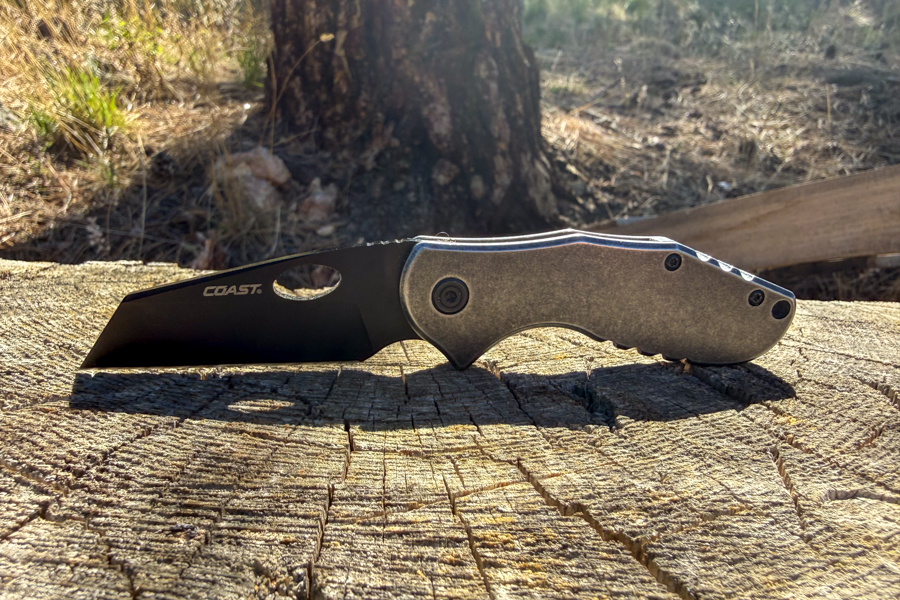
We also like the Wharncliffe blade shape here. It works especially well for the kind of everyday stuff most people actually use a pocket knife for, like opening boxes, cutting cord, and handling smaller, more precise tasks. The black oxide coating is a nice touch, too, especially on a knife at this price.
Of course, there are tradeoffs, and most of them track with the price. The 7Cr17 steel is definitely on the budget end of the spectrum, so it will need sharpening more often than the nicer blades in our lineup. We also had the frame lock fail completely on our test knife after a couple of weeks of regular use. That may have been a one-off, and the knife is still usable, but it is worth mentioning.
We also noticed that after dropping it into sand, the action became noticeably grittier and only improved slightly with a rinse. And while the slim metal handle feels fine in dry conditions, it offers little grip when things get wet or dirty.
Still, for a first pocket knife, a cheap backup, or something you do not mind being a little rough with, the Contra LX530 is a decent option in our lineup of the best pocket knives. You just want to go in with expectations that match the price.
How We Tested
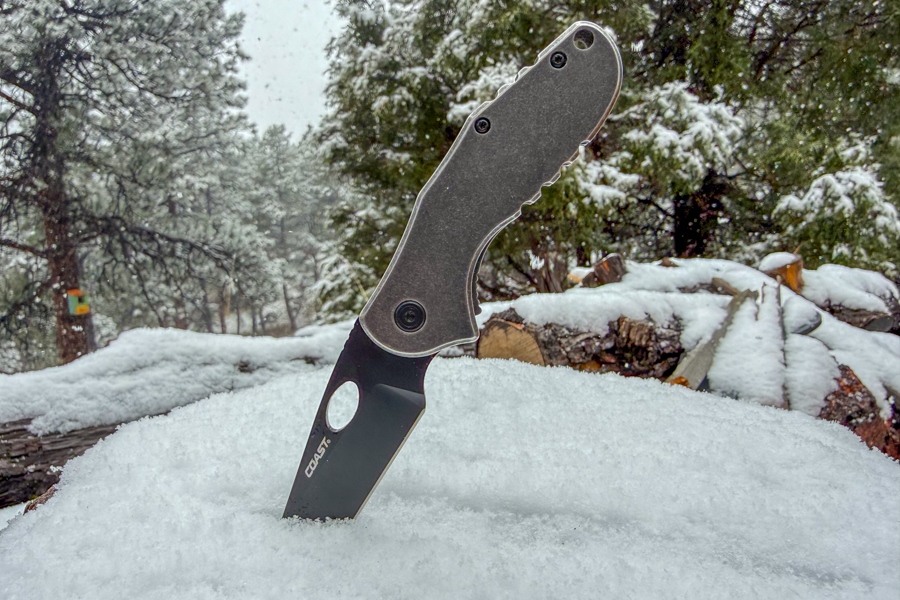
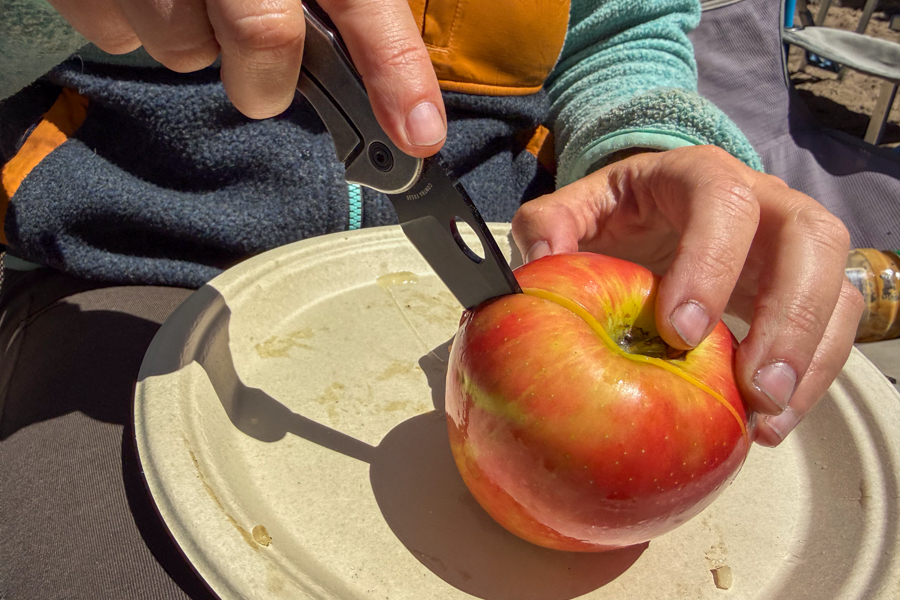
We brought the Coast Contra LX530 on a handful of early-season camping trips, used it for camp cooking by the river in the Colorado Rockies, put it through a truly unnecessary number of cardboard boxes, and eventually dropped it in the sand at Great Sand Dunes National Park, which turned into a pretty useful real-world test. Along the way, we paid attention to how well it held an edge, how reliable the frame lock stayed over time, and how it handled one-handed use through regular everyday tasks.
Quick Specs
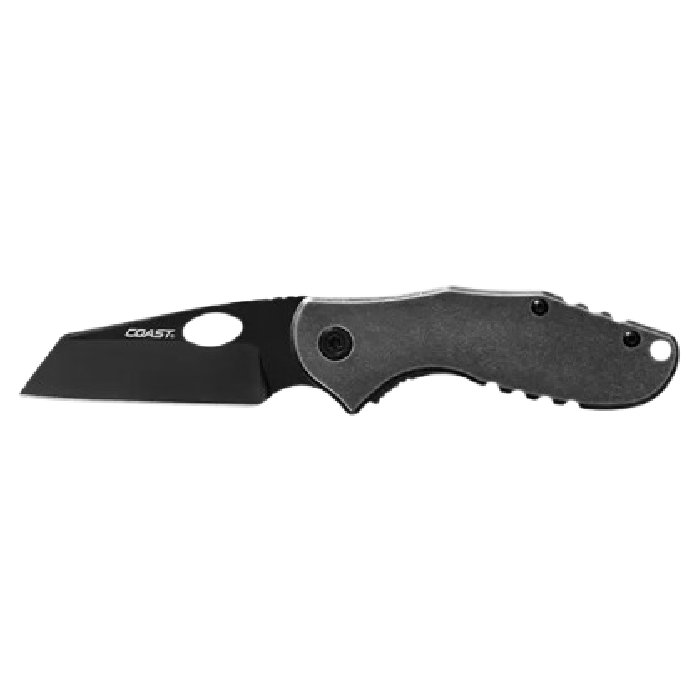
Coast Contra
Best Pocket Knife for Precision Cutting
CleverHiker Rating: 4.2/5.0
Price: $40
Measured Weight: 3.1 oz.
Blade Length: 2.4 in.
Overall Length: 6.3 in.
Blade Material: 7Cr17 Steel
Pros
- Budget friendly
- Arrives sharp
- Slim all-metal design
- Wharncliff blade is great for precision cutting
- Black oxide coating resists minor corrosion
Cons
- Not the best edge retention
- Possible QC issues
- Slippery handle when wet
Build Quality
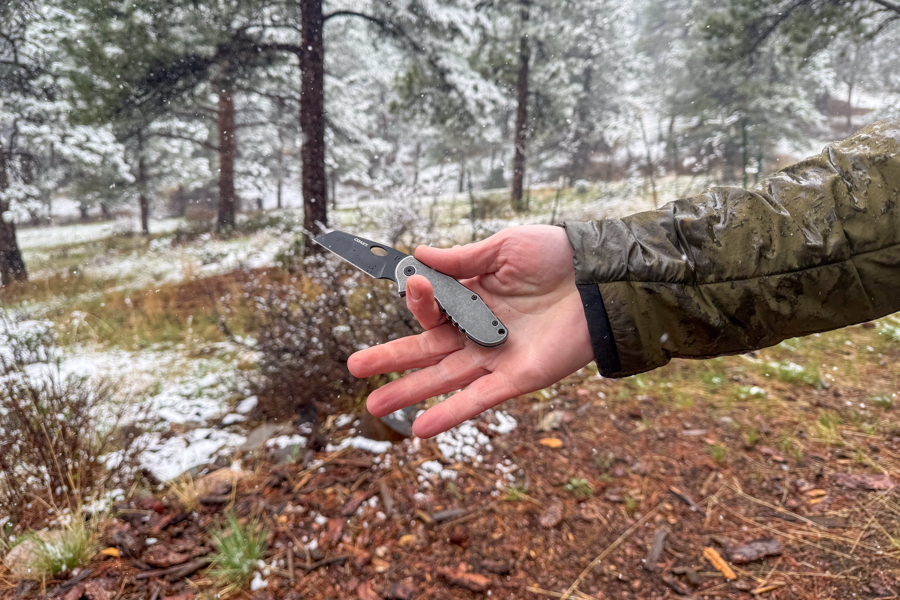
The Contra has an all-steel build with no extra handle scales or soft-touch materials, and that gives it a cleaner, more polished look than you might expect at this price. It feels simple in a good way. Our test knife had no major blade play out of the box, the machining looked clean, and the pocket clip sat flush and carried securely.
That slim all-metal frame is also where the tradeoff shows up. In dry conditions, it feels fine. Once things get wet or dusty, though, it definitely gets harder to handle. That is the main drawback of this design. Overall, the construction feels decent for a budget knife, but we do have to mention that the frame lock on our unit failed after a couple of weeks of regular use. We think that was likely a one-off defect, not something that defines the whole knife, but it still happened, and it is worth knowing.
Blade Retention & Stability
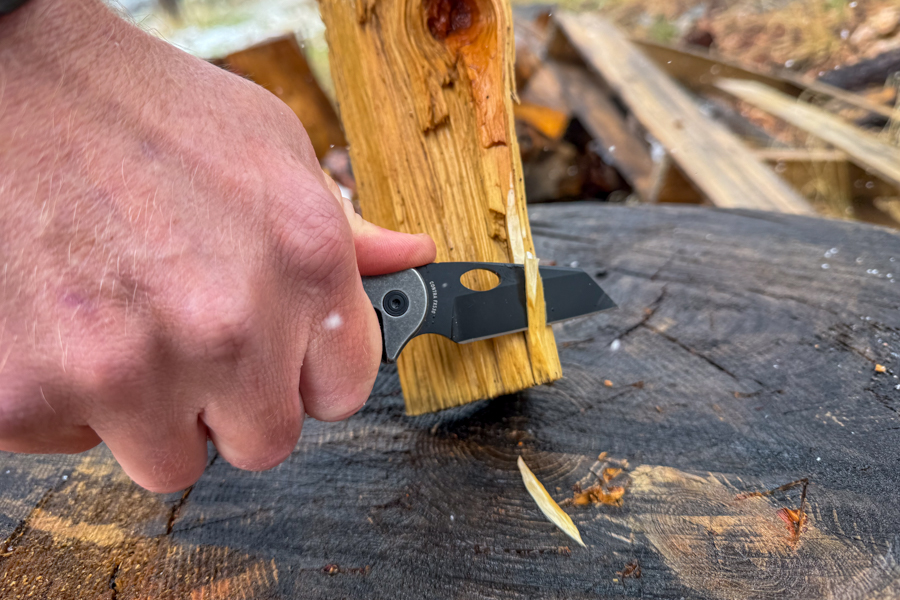
The Contra came sharp out of the box, which is exactly what you want, no matter what a knife costs. The Wharncliffe blade shape works well for the kind of everyday stuff most people actually use a knife for, especially opening boxes, cutting cord, and making controlled, little cuts where you want the tip to feel precise. It also feels sturdier than you might expect at this price. The blade stayed nice and rigid in use, with no wobble or flex during normal cutting.
Where you do start to notice the budget steel is edge retention. The 7Cr17 blade dulled faster than anything else in our lineup, and that became pretty clear over the course of testing. It was not terrible, and it is easy enough to touch up, but it is definitely not the kind of steel that just keeps going and going. If you only use your knife for lighter everyday tasks, it is probably fine. But if you want something that stays sharp for a long stretch without much attention, this is probably not the one.
Ergonomics & Grip
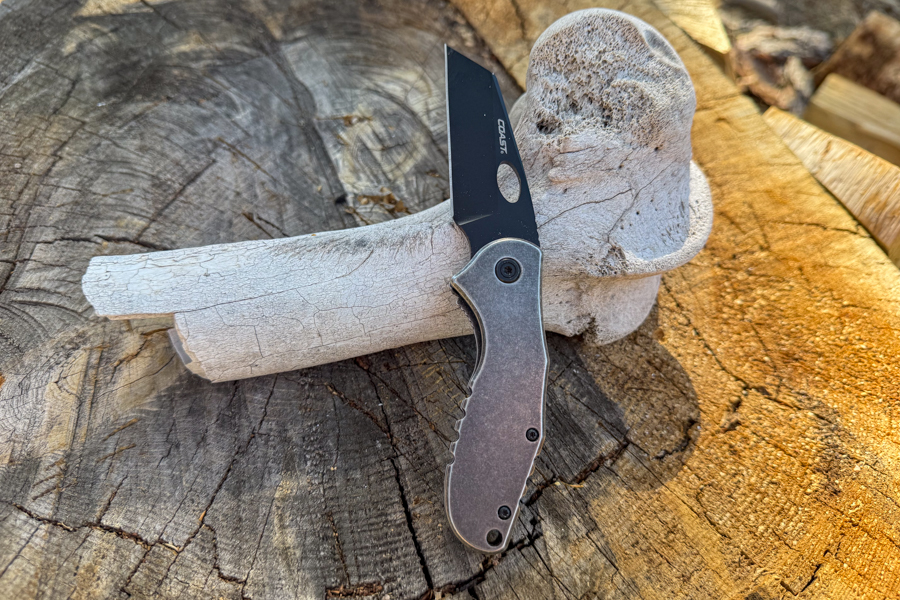
The Contra is compact and comfortable enough for lighter everyday stuff, but the slim all-metal handle definitely has its limits. In dry conditions, it feels great. It is smooth, simple, and easy enough to hang onto for basic cutting tasks. Once things get wet or dusty, though, that handle can get a bit slippery. It also feels a little small and narrow in bigger hands, especially if you are doing more than a quick cut here and there.
The Wharncliffe blade opens with a flipper and worked well one-handed when everything was clean. Closing it one-handed took a little more intention, which is more of a feature of the slim frame-lock design than a real flaw. The bigger issue came after we dropped it in the sand. After that, the action became noticeably grittier and only improved slightly with a rinse. A full teardown and cleaning would probably fix it, but that is also more maintenance than most people buying a knife at this price are likely to want to deal with.
Corrosion Resistance
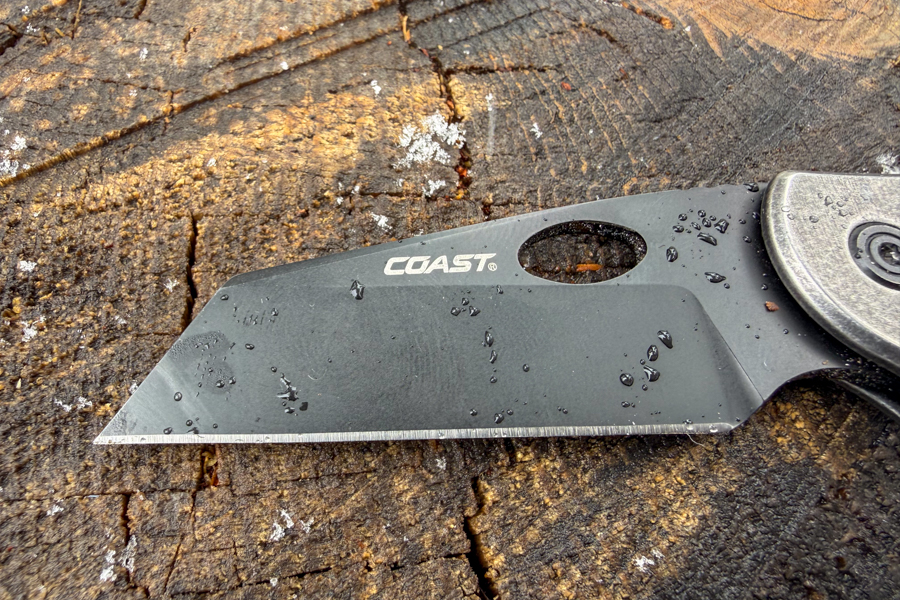
The 7Cr17 steel here did fine in the kind of wet conditions most casual users are likely to throw at it. We carried the Contra at the beach and used it outdoors plenty during testing, and we did not run into any rust or pitting. The black oxide coating helps, too. It adds a little extra protection and does a decent job of hiding small scratches once the knife starts seeing everyday use.
That said, this is still budget steel, and it is not something we would want to get lazy with in consistently wet or salty environments. If your knife tends to end up damp a lot, it is worth wiping it down instead of assuming the coating is going to handle everything for you.
Locking Mechanism
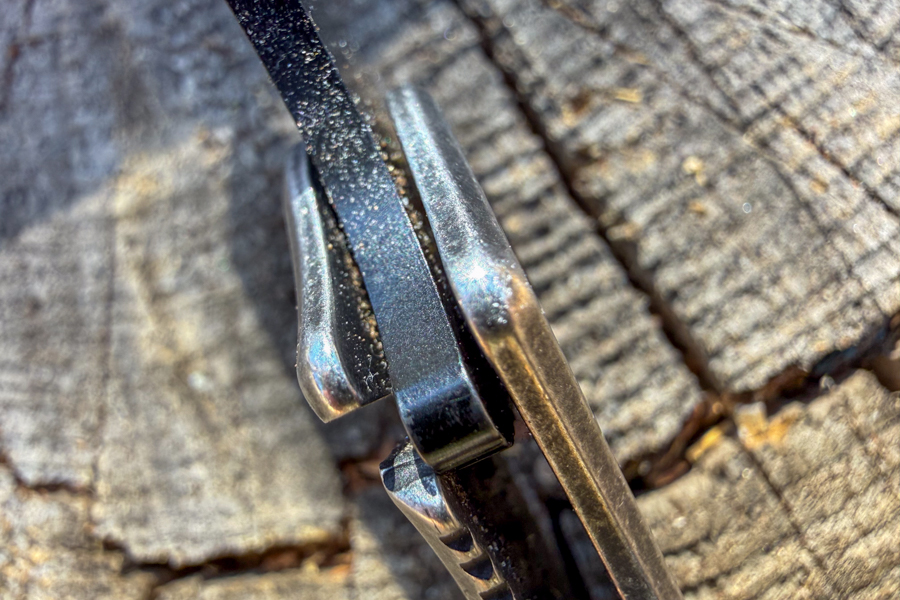
The frame lock on the Contra automatically secures the blade when fully open, using the knife’s steel frame as the locking mechanism. It is a simple, intuitive design: the blade snaps open, the lock engages, and a press of the internal steel arm releases it cleanly.
In our testing, the lock failed completely after a couple of weeks of regular use, meaning the blade could be closed without the release engaging. Or so we thought. After a very thorough cleaning, it seemed to work better, but it was still finicky and unreliable. It’s hard to know if this is a defect or a symptom of dirt and sand causing the issue.
The rest of our testing did not suggest a pattern of poor build quality. That said, a failed lock on a knife you are using for leverage cutting is a real safety concern and the most significant finding from our testing process.
Weight
At 3.68 ounces, the Contra feels a little heavier than it looks. The all-steel build puts a bit more of that weight into the handle, so when the knife is open, it feels slightly handle-heavy compared to some of the better-balanced knives in our lineup. It is not a huge issue, but it is noticeable. That said, in the pocket it still carries just fine. The slim shape keeps it from feeling bulky, even if the weight is a little more noticeable than you might expect from such a small knife.
Should You Buy the Coast Contra Pocket Knife?
If you’re buying your first pocket knife, use it only once in a while, or just want something slim and inexpensive that still feels functional, the Contra is a good place to start. It came sharp, opened smoothly, and carried easily in a pocket. The Wharncliffe blade shape is practical for everyday stuff, and overall, it feels decent for the price.
That said, the tradeoffs are pretty clear. The 7Cr17 steel dulls faster than anything else in our lineup, so you’ll be sharpening it more often. We also had the frame lock fail on our test knife, which we do think was probably a one-off, but it still happened, and that’s not something we can just brush past.
So yes, it works as a budget-friendly starter knife. But if you plan to carry a knife often, use it hard, or rely on it in rougher conditions, it’s worth stepping up to something better.
What Other Pocket Knives Should You Consider?
Opinel No. 8 Review: This is probably the most direct comparison if you want something affordable and simple. The Opinel uses 12C27 Sandvik steel, which holds an edge better than the Contra’s 7Cr17, and the Virobloc lock is about as straightforward and reliable as it gets. It has a totally different look and feel, more classic camp knife than modern EDC, but for the price, it’s a good one to consider.
CRKT Drifter Review: The Drifter is a nice next step up if you are willing to spend a little more. You get better steel, a lock that feels a little more refined, and a handle that is generally easier to live with. If the Contra feels like a decent starting point, the Drifter feels like the version you buy once you know you actually use a knife enough to want something better.
Kershaw Leek Review: The Leek is our top pick overall, and it makes the jump in quality pretty obvious. The assisted opening is fast and easy, the 14C28N steel is a big improvement, and the slim profile keeps it just as easy to carry as the Contra. If you buy the Contra and then realize you are officially a knife person now, the Leek is a very natural upgrade.