Bottom Line
The Katabatic Gear Tarn (men’s / women’s) is a useful ultralight insulating layer for backpackers who want warmth at a manageable price. At 10.6 ounces in a men’s medium, it weighs almost exactly as much as the UL Mountain Hardwear Ghost Whisperer, but costs substantially less. We found the athletic shoulder cut comfortable for overhead movement and liked the adjustable hood, hem, and two internal drop pockets.
The Tarn isn’t trying to be a heavy-duty winter parka. Its 3.6 ounces of down provide respectable warmth for the weight, but we rely on it for three-season backpacking, summer thru-hikes, and as an insulating layer under a shell. We also appreciate feeling unrestricted when moving and grooving.
There are compromises. The Tarn packs down impressively small but doesn’t zip into its own pocket or include a dedicated stuff sack. Its dropped rear hem adds coverage, though the shorter front rides up to expose the stomach when we raise our arms. And while the Pertex Quantum shell and moisture-resistant down offer some insurance against damp weather, the durable water-repellent (DWR) finish didn’t hold up as well as we’d hoped in testing.
For fast-and-light hikers who value low weight, good mobility, and a fair price more than bells and whistles, the Tarn is a strong choice. Its combination of weight, warmth, and price makes it an appealing choice compared with heavier or more expensive options in the rankings.
See how the Tarn compares with lighter three-season puffies in our down jackets gear guide.
How We Tested
We evaluated the men’s Tarn alongside other down jackets in our current lineup, assessing its fit, reach, hood and hem adjustments, pockets, zipper operation, compressibility, and moisture resistance. We also compared its measured 10.6-ounce weight and category rankings with competitors such as the Mountain Hardwear Ghost Whisperer and REI Magma 850 Down Hoodie. These conclusions reflect our hands-on observations and the verified category rankings.
Quick Specs
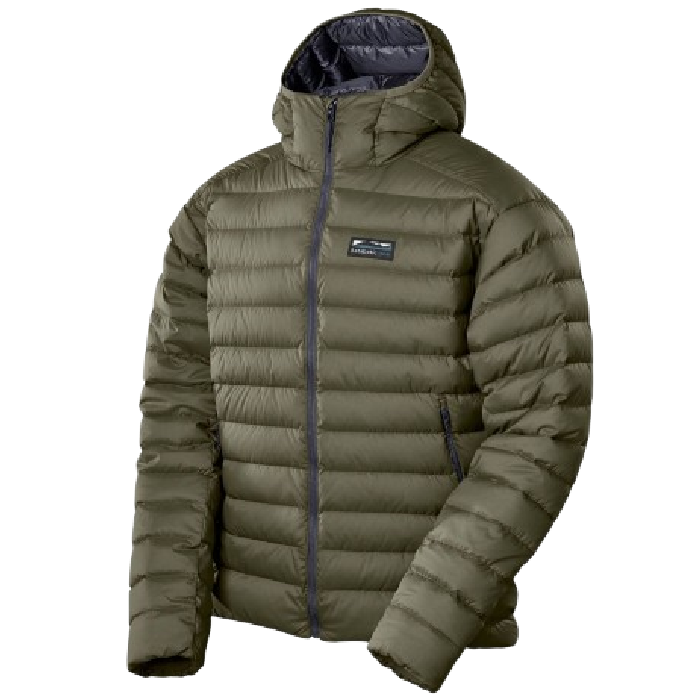
Katabatic Gear Tarn
Best Value Ultralight Down Jacket
CleverHiker Rating: 4.3/5.0
Price: $279
Weight: 10.6 oz. / 9.7 oz.(men’s / women’s)
Fill Power: 850
Fill Weight: 3.7 oz.
Pros
- Excellent warmth-to-weight ratio
- Very lightweight and compressible
- Comfortable, mobility-friendly fit
- Premium 850+ fill-power hydrophobic down
- Adjustable hood and hem
- Useful internal drop pockets
- Good ultralight value
Cons
- Doesn't stow securely in pocket
- Front hem rides up
- DWR finish wears off quickly
- No chest pocket or two-way zipper
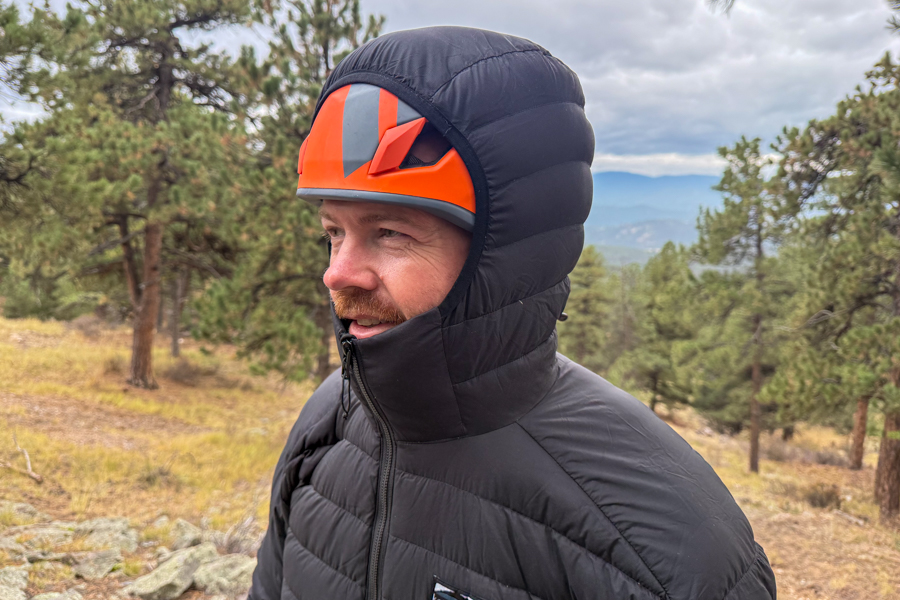
- Poor fit over climbing helmet
- Lightweight zipper can snag

Comfort
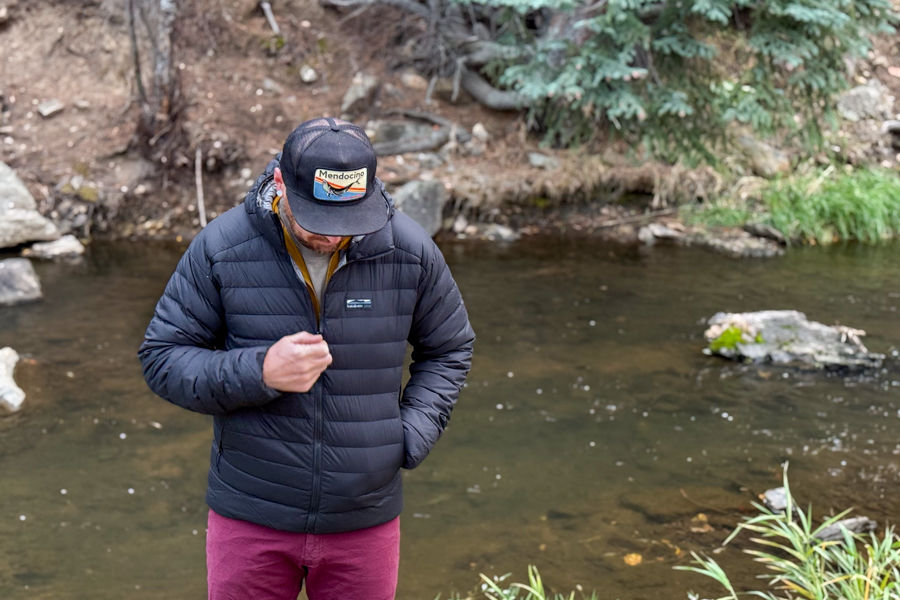
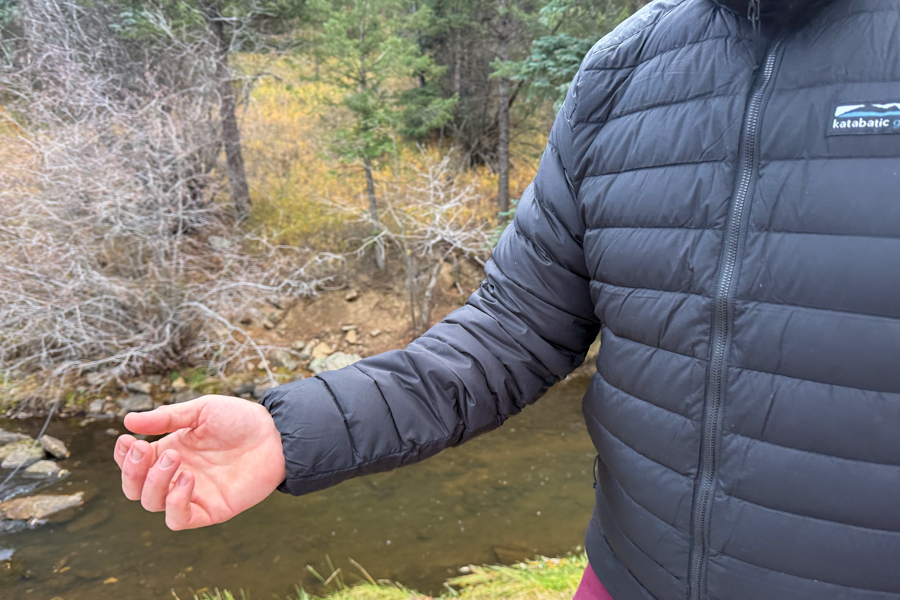
The Tarn was one of the most comfortable jackets in our lineup. The fit felt athletic without restricting movement across the shoulders or through the arms. That’s especially welcome for broad-shouldered hikers and anyone who spends time scrambling or climbing. We could reach and move without feeling the sleeves tug against our arms.
The cuffs are simple and elasticized, but they hit a nice balance: snug enough to stay put without squeezing our wrists. We were also glad the sleeves didn’t droop down over our palms. The hood felt good with no helmet underneath, and we found the rear adjustment effective once we located it. We could stretch the hood over a climbing helmet, but it wasn’t comfortable enough to call it helmet-compatible.
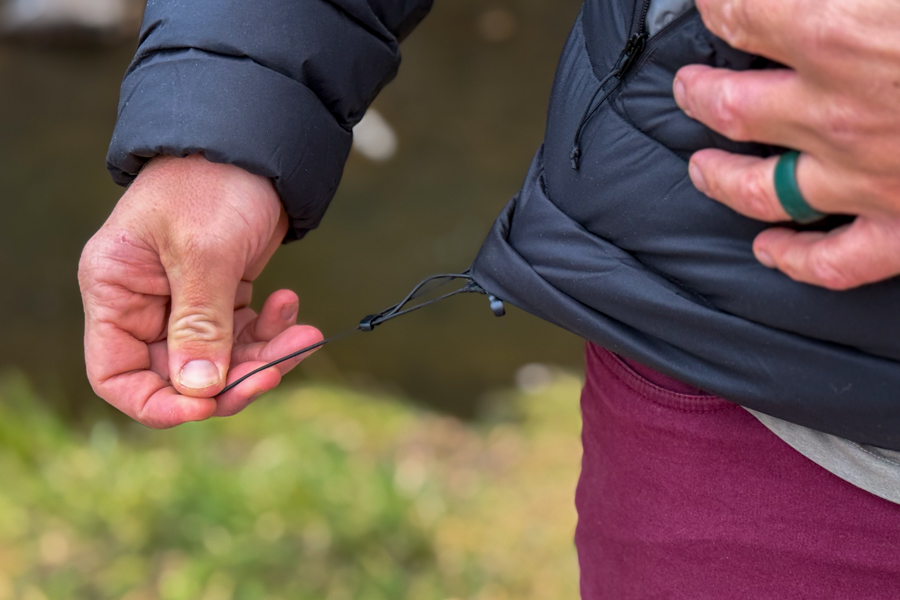
The cut is a little less forgiving at the hem. Katabatic adds extra length in the back, which improves seat coverage, but we wish the front were longer too. The hem has a thin drawcord that takes some fiddling to find and operate, though once adjusted, it cuts the draft and upgrades the experience to comfort+.
For hikers who want a trim, low-bulk insulating layer, this cut makes sense over a thin base or midlayer. People planning to wear heavy insulating layers underneath should pay closer attention to sizing. The Tarn is better treated as one part of a layering system than as a roomy standalone winter coat.
Metric Score: 4.8/5.0
Warmth
With 3.6 ounces of high-fill-power down in a men’s medium, the Tarn offers good warmth for its weight, though it is not intended to replace a heavier winter parka. We preferred it for three-season backpacking, summer thru-hikes, and insulating breaks when carrying a heavier jacket would be unnecessary.
We especially like the Tarn for summer thru-hiking and other three-season trips where a compact puffy can disappear into your pack during the day and come out when activity stops. The adjustable hood and hem help trap heat, while the longer rear cut adds coverage when sitting.
Katabatic uses internal box-wall construction across the hood and shoulders, eliminating through-stitch lines in those areas. That helps reduce cold spots where the jacket meets wind or precipitation, although it doesn’t turn the Tarn into an expedition parka. When temperatures fall sharply or you’re stationary for long stretches, we’d choose a jacket with more insulation.
Metric Score: 4.5/5.0
Weight & Packability
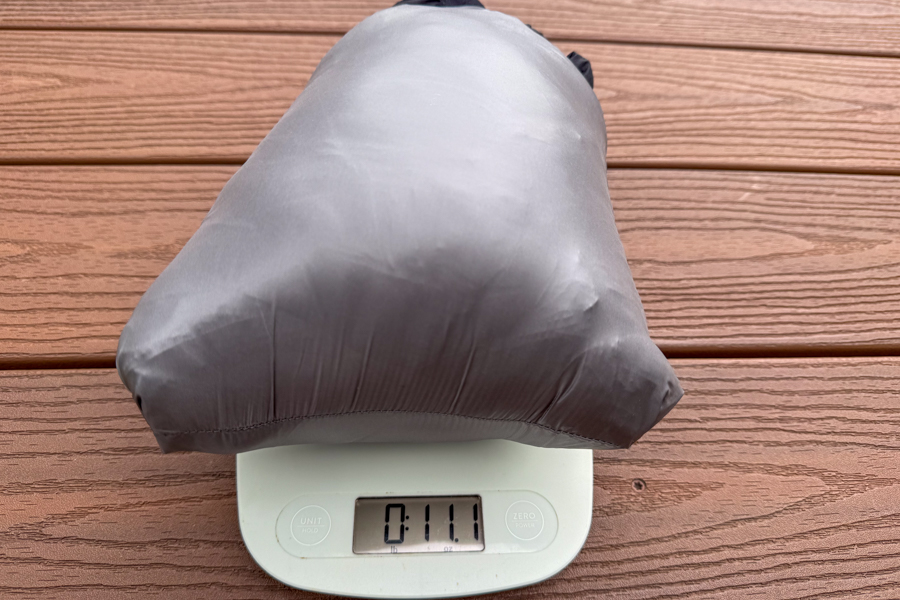
This is where the Tarn makes its strongest case. At 10.6 ounces, it sits among the lightest down jackets we tested, earning a top score for weight and packability. It’s close in weight to the Mountain Hardwear Ghost Whisperer but carries a more approachable price tag.
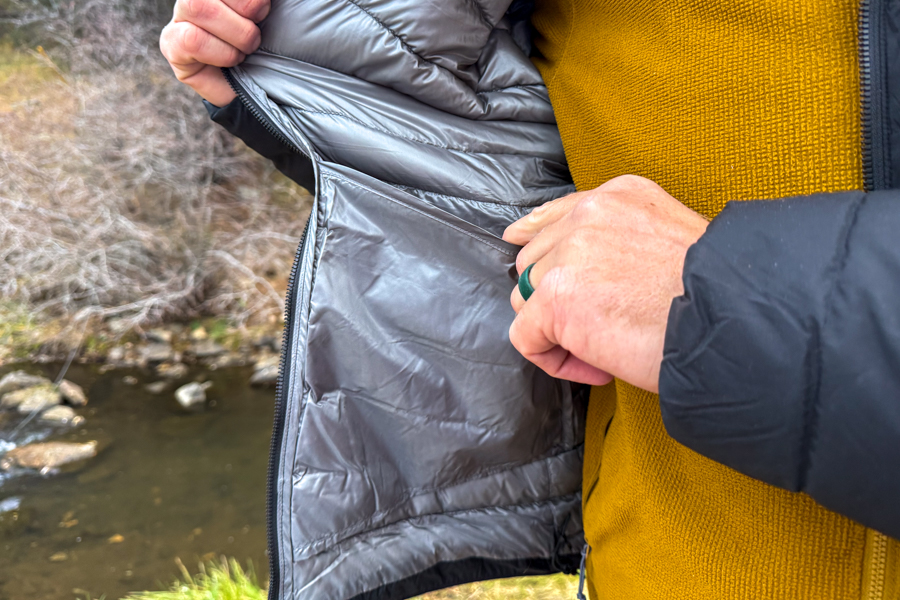
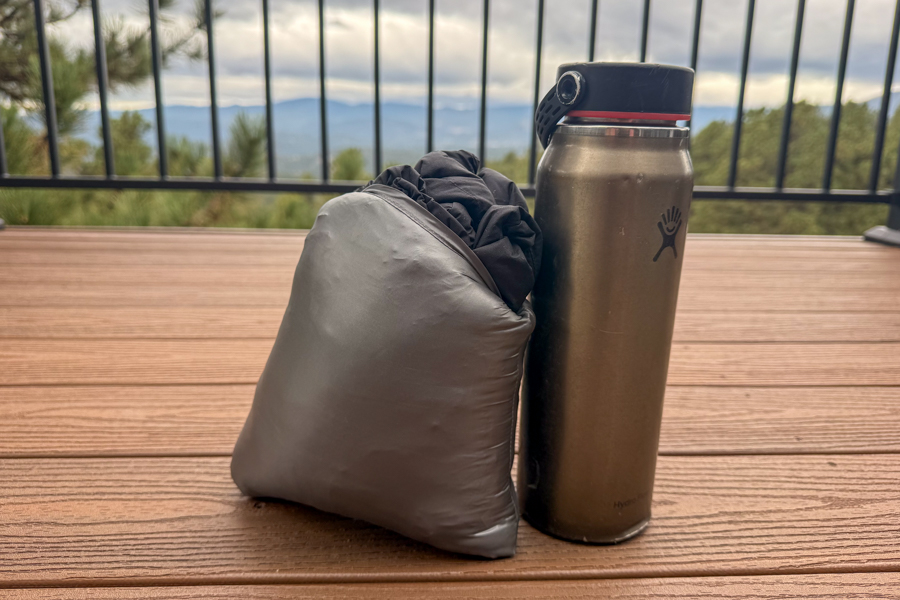
The 850-plus-fill-power insulation compresses easily, and the jacket takes up very little room in a backpack. We were able to tuck it into one of the two roomy internal drop pockets. But there’s no reversible pocket zipper or separate stuff sack to hold it there.
It’s not a big deal, unless you need to clip it to a harness. It’s just an annoying omission on an otherwise excellent backpacking layer. Some would gladly take a few extra grams for a built-in, zippered storage pocket, while most won’t miss it. Still, the actual packed bulk is small enough that this is more a convenience issue than a dealbreaker.
Metric Score: 4.9/5.0
Weather Resistance
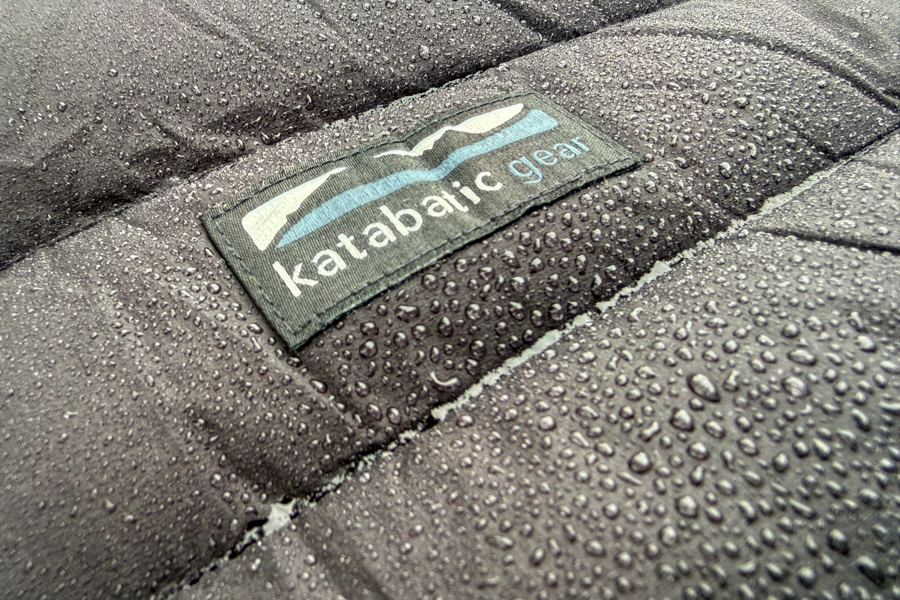
The Tarn offers more moisture protection than an untreated down jacket, but it isn’t waterproof. Katabatic uses a recycled Pertex Quantum shell with a DWR finish and 850-plus-fill-power ExpeDRY down designed to resist moisture and dry faster than untreated down. Box-wall construction on the hood and shoulders also avoids exposed through-stitch lines in those areas.
Those features help with light snow, mist, and brief exposure to damp conditions, which contributes to the Tarn’s strong weather-resistance score. But in our hands-on assessment, the DWR finish seemed to lose effectiveness faster than on some competing jackets. We also noticed that the face fabric showed and held onto dirt readily, making regular cleaning particularly important to maintaining its performance.
Hydrophobic down offers extra protection, not immunity: saturated down still loses loft and insulation. The Tarn belongs under a waterproof shell in sustained rain or wet snow. We wouldn’t depend on it as our only weather layer when the forecast calls for a soaking.
Metric Score: 4.5/5.0
Breathability
Like most lightweight down jackets, the Tarn is designed to hold warmth close to your body rather than vent heat quickly. It scored well for breathability, in line with similar puffies in our test.
We didn’t find it noticeably more breathable than the competition. There’s no two-way front zipper or dedicated venting feature; when you start getting hot, the practical solution is to unzip the jacket or take it off. The low-bulk cut makes it easy to carry until you need insulation again.
That’s a reasonable trade-off for the Tarn’s intended use. We like down for breaks, chilly camps, and lower-output movement, but a breathable fleece or active-insulation layer makes more sense for sustained exertion like uphill hiking.
Metric Score: 4.5/5.0
Should You Buy the Katabatci Gear Tarn Down Jacket?
Choose the Tarn if you want an ultralight down jacket that does the essentials well without pushing into premium-jacket pricing. It combines excellent packability with a comfortable fit, high-quality down, and enough warmth for many three-season backpacking trips. We think it makes especially good sense for summer thru-hikers, fastpackers, and anyone who carries a puffy more often than they wear it.
Look elsewhere if you want a warmer winter jacket, a comfortable helmet-compatible hood, or a built-in pocket that zips around the packed jacket. We’d also bring a waterproof shell any time wet weather is likely. The Tarn’s compromises are real, but at 10.6 ounces and $279, its balance of comfort, performance, and value is hard to ignore.
What Other Down Jackets Should You Consider?
The Tarn is a jacket we expect to see more of in our outdoor rec community. But there are more worthy options from our complete guide to the best down jackets of the year:
REI Magma 850 Down Hoodie Review: The Magma is an appealing alternative if you want a more feature-rich jacket with a pocket that zips shut around the packed puffy. The Tarn is lighter at 10.6 ounces versus the Magma’s 12.5 ounces in our chart, and we preferred the Tarn’s warmth-to-weight value for ounce-conscious trips.
Mountain Hardwear Ghost Whisperer Hoody Review: A close competitor for ultralight hikers. Its 10.7-ounce weight is nearly identical to the Tarn’s, and it earned a slightly higher overall score in our lineup. The Tarn is a practical choice if you’re comfortable giving up some of the Ghost Whisperer’s refinements to get a similarly light insulating layer.
Rab Neutrino Pro Down Jacket Review: Choose the Neutrino Pro if keeping warm in genuinely cold conditions matters more than saving weight. It has far more down fill and scored near the top for warmth in our rankings, but at 19.9 ounces it’s nearly twice the weight of the Tarn.