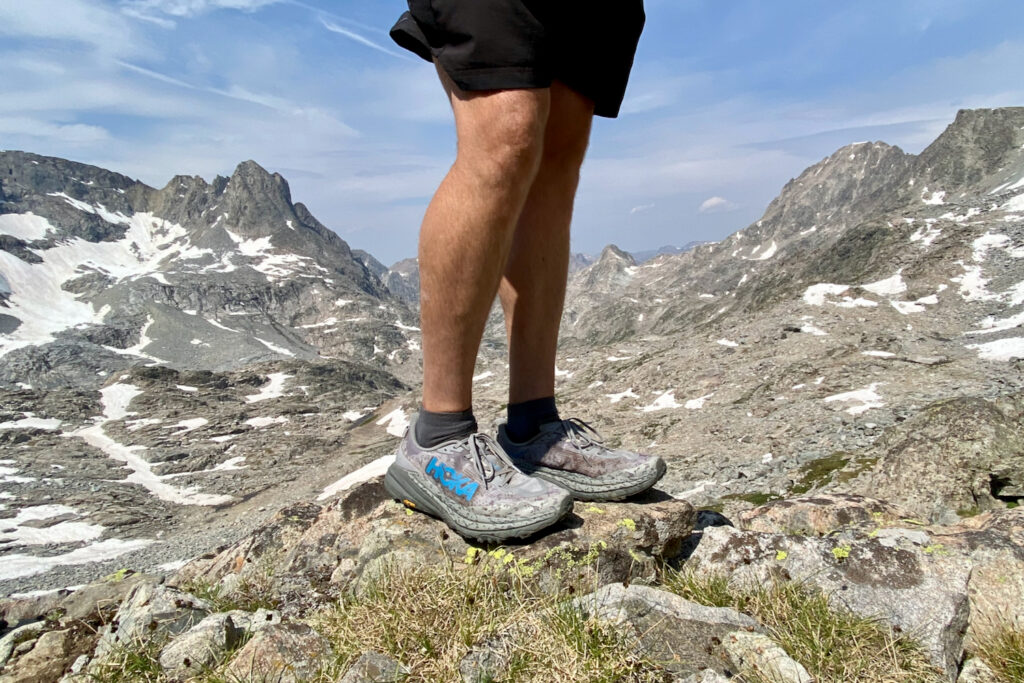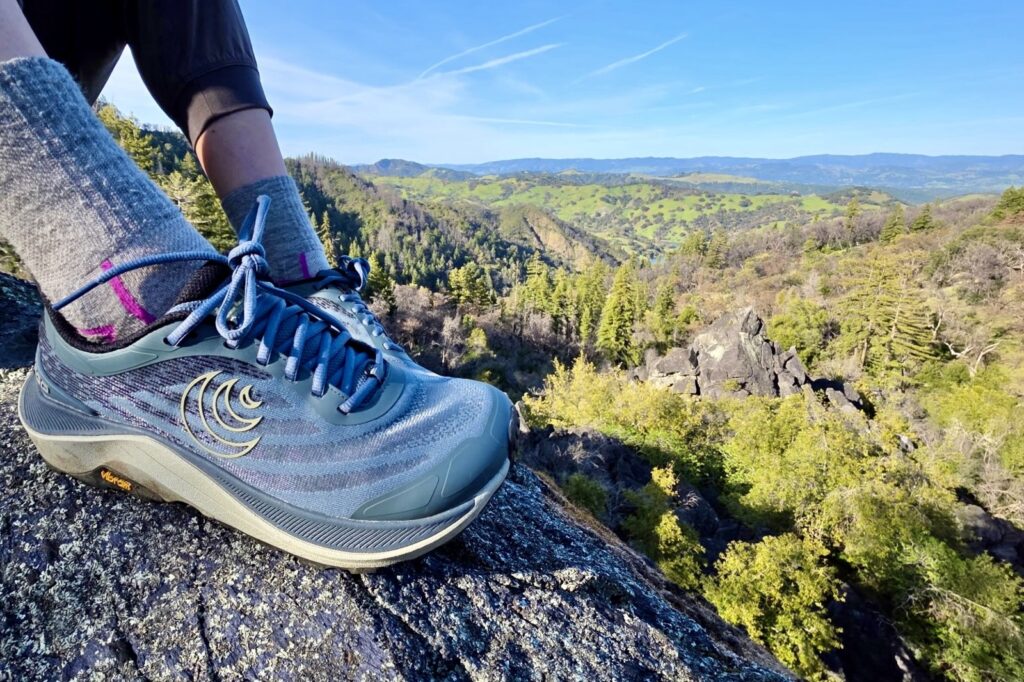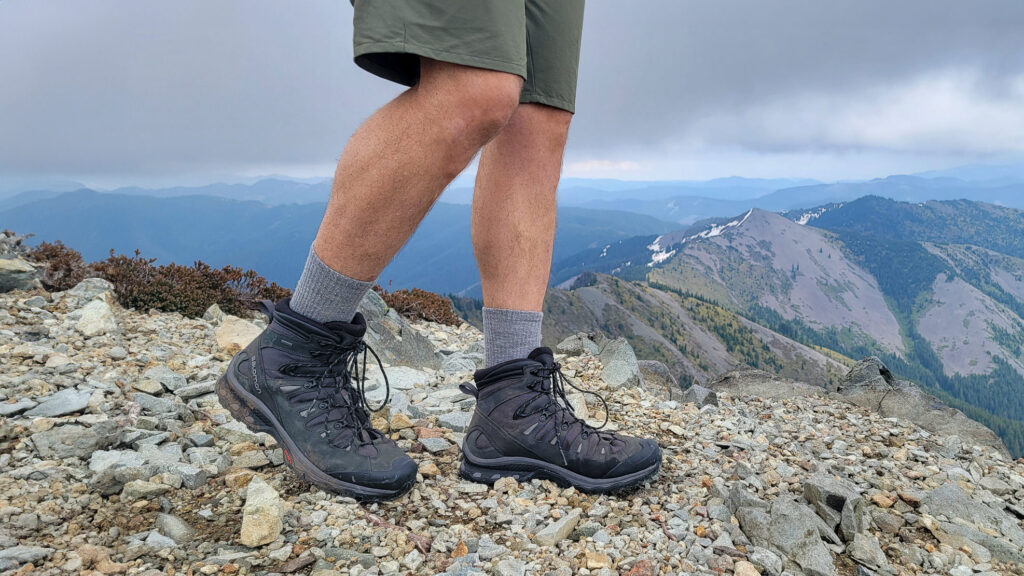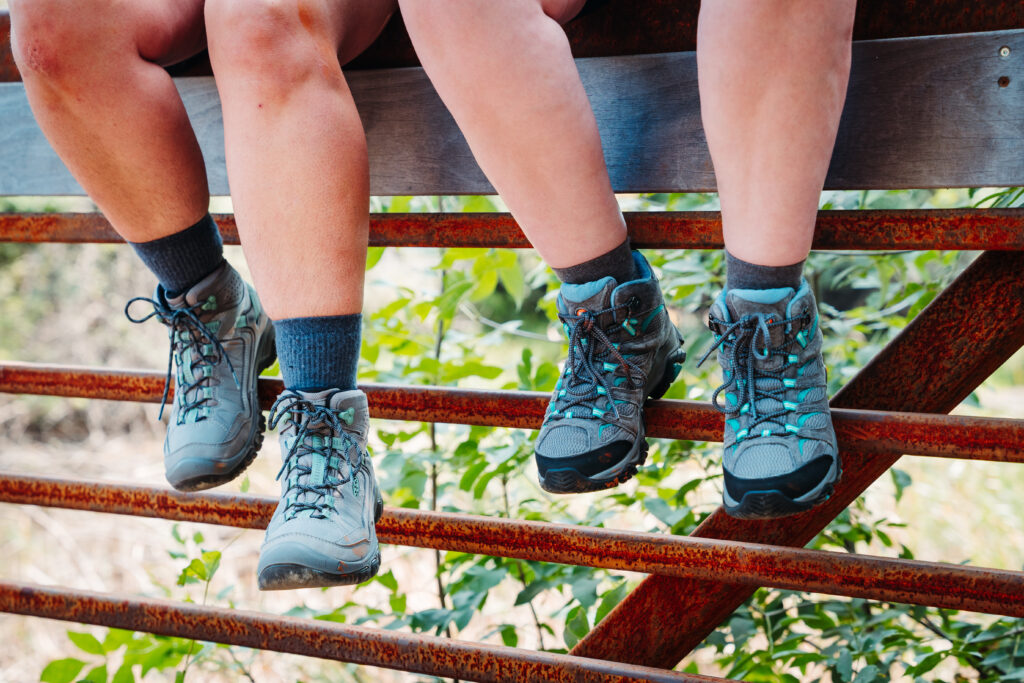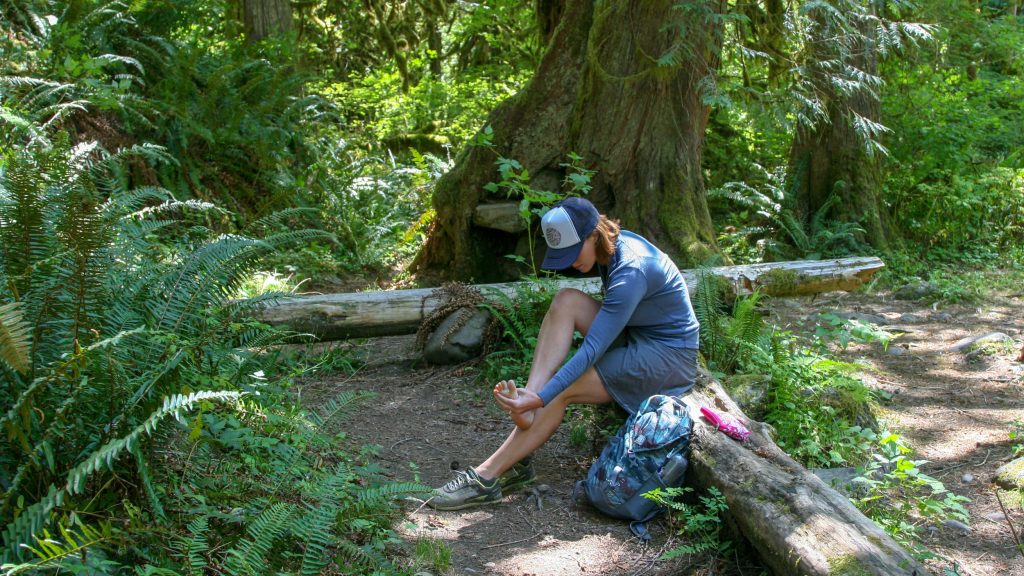



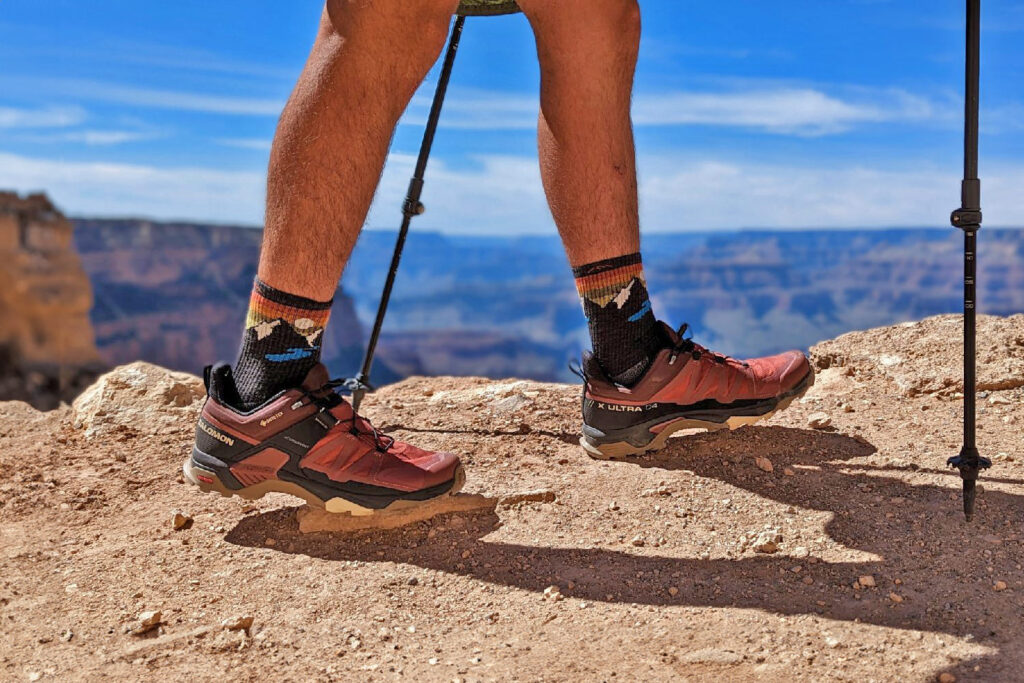
Quality socks make a big difference in keeping your feet comfortable and in good shape on trail. Our team has rigorously tested over 50 pairs of socks on hikes, trail runs, and backpacking trips all over the world to find the best ones for any adventure.
We’ve assessed pairs from Darn Tough, Smartwool, Balega, Feetures, and more based on comfort, warmth, durability, and breathability and dry time. We put every pair of socks through their paces, from dusty desert routes to muddy, misty, high-alpine trails.
And for more info, check out some of our other popular gear guides:

#1. Best Hiking Socks Overall

Quick Picks for Hiking Socks
Get a leg up on the best hiking socks with this quick list, or kick back and scroll down to see our in-depth reviews.
1. Best Hiking Socks Overall: Darn Tough Light Hiker Micro Crew – Men’s / Women’s ($25)
2. Best Full-Cushion Hiking Socks: Darn Tough Hiker Boot Full Cushion – Men’s / Women’s ($30)
3. Best Value Wool Socks: REI Merino Lightweight Hiking Crew ($19)
4. Best Budget No-Show Socks: Balega Hidden Comfort ($17)
5. Best Cold-Weather Running Socks: Swiftwick Pursuit Quarter Crew High ($20)
6. Best Natural Fiber Sock Alternative to Merino Wool: Warrior Alpaca Cushioned Cross-Trainer Crew ($24)
7. Best Compression Socks: Sockwell Circulator – Men’s / Women’s ($33)
8. Best Thick & Warm Mountaineering Socks: Smartwool Mountaineer Classic Crew – Men’s / Women’s ($27)
9. Most Durable Lightweight Socks: Darn Tough COOLMAX Hiker Micro Crew – Men’s / Women’s ($25)
10. Best Durable Socks Designed for Long Backpacking Trips: Farm to Feet Damascus ($23)
11. Best Toe Socks for Hiking: Injinji Trail Midweight Mini-Crew – Men’s / Women’s ($17)
12. Best Socks for Aerobic Activity in Warm Conditions: Feetures Elite Light Cushion Quarter ($19)
13. Best Budget Synthetic Hiking Socks: Wigwam Hiking Outdoor Midweight Crew ($19)
14. Budget-Friendly Merino Hiking Socks: Danish Endurance Classic Hiking Crew 3-Pack ($36)
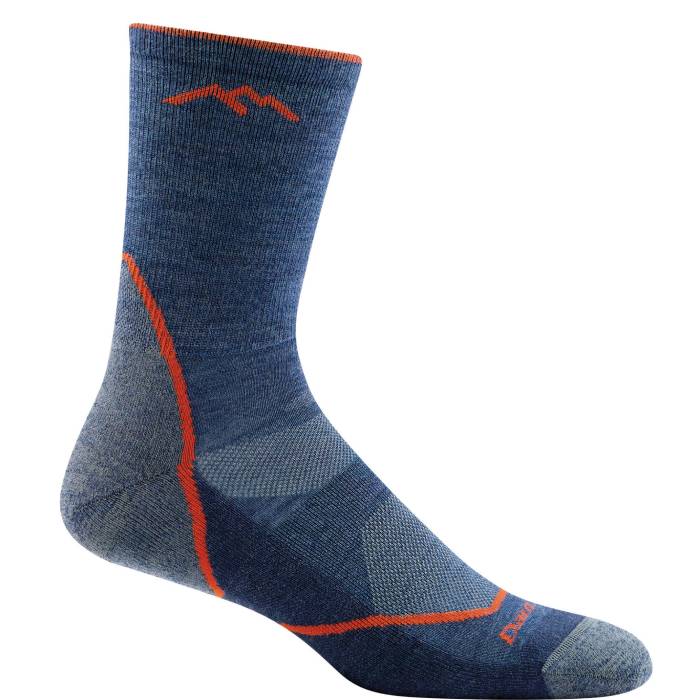
Darn Tough Light Hiker Micro Crew
Best Hiking Socks Overall
CleverHiker Rating: 5.0/5.0
Price: $25
Fabric: 54% nylon, 43% merino wool, 3% Lycra spandex
Height: Crew
Cushioning: Light
Pros
- Durable
- Breathable
- Moisture-wicking
- Odor-resistant
- Comfortable
- Don’t slide down
Cons
- Less padding than others
- Warmer/less breathable than some
The Darn Tough Light Hiker Micro Crews (men’s / women’s) are our number one pick for hiking socks: They’re comfortable, versatile, and built to last. If you’re looking for a stellar all-around sock for everything from day hikes and weekend backpacking trips to the longest thru-hikes in the world, the Hiker Micro Crews are our top choice.
These are the preferred hiking socks of CleverHiker Managing Editor, Ben Applebaum-Bauch. He’s hiked thousands of miles along the PCT, CDT, and several other long trails in the Light Micro Crews, and they’ve never let him down. These socks are built to withstand the toughest conditions for months on end.
For hiking, they cover all the bases. Featuring low-profile seams, awesomely odor-resistant materials, and a snug fit that doesn’t slide down, this pair is a perfect fit.
The Light Micro Crews are comfortable from first try thanks to their very tight weave, which also gives them stellar durability. Though they’re a bit warmer and thicker than minimalist options on this list, we find these socks are still extremely breathable.
Darn Tough socks are a bit expensive but well worth the money since they last trip after trip and are backed up by an unconditional lifetime guarantee.
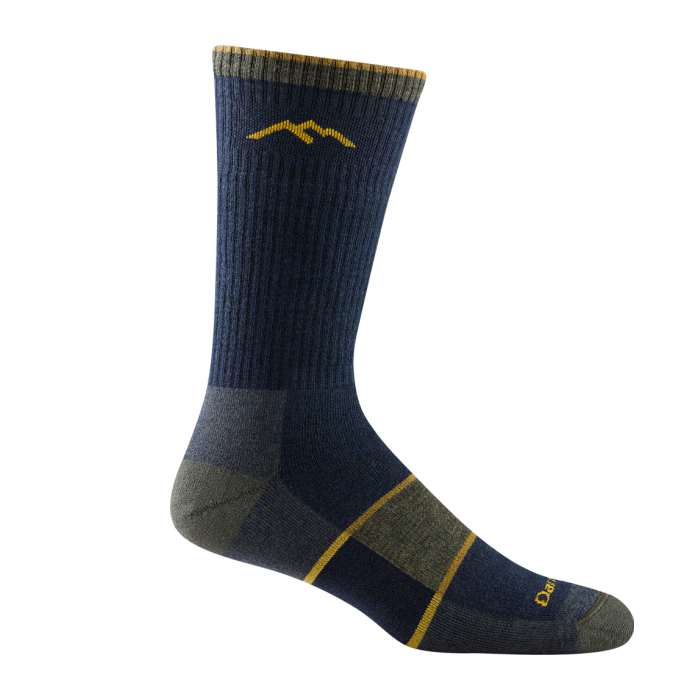
Darn Tough Hiker Boot Full Cushion
Best Full-Cushion Hiking Socks
CleverHiker Rating: 4.9/5.0
Price: $30
Fabric: 66% merino wool, 32% nylon, 2% Lycra spandex
Height: Crew
Cushioning: Heavy
Pros
- Comfortable
- Excellent construction
- Warm
- Soft fabric blend
- Thick cushioning
- Versatile for year-round use
Cons
- Expensive
- A bit bulky and thick
- Too warm for hot days
- Dry slowly once wet
- Less breathable than others
If you want a full-cushion hiking sock to keep you warm on cool weather adventures, look no further than the Darn Tough Hiker Boot Full Cushion socks (men’s / women’s). These are warm, comfy, and cushy socks built for year-round use, from skiing and backpacking to day trips and travel.
CleverHiker Managing Editor, Ben Applebaum-Bauch, has taken the Hiker Boot Full Cushions on thousands of miles of trails including the Oregon Coast Trail and North Country Trail. He loves them as dual-purpose socks for cold-weather hiking and bedtime. Gear Analyst, Ian Krammer, also used the Full Cushions while hiking 25 Colorado 14ers, and they kept him warm and blister-free on windy, cold alpine ridgelines.
The Hiker Boot Full Cushions are strong, thick, and stylish socks built to last (some pairs have lasted us three or more seasons!). They’re versatile as an extra layer anytime the mercury dips during winter hikes and are a great choice for staying warm around the fire, in our sleeping bags, or running errands on overcast days at home.
These are thick, full-cushion socks, so they’re a bit bulkier than others on this list, and they’re one of our last picks for hot summer hikes. That said, we always keep a pair of the Hiker Boot Full Cushions around – they’re so comfy, snug, and durable, you’ll be reaching for them for years.
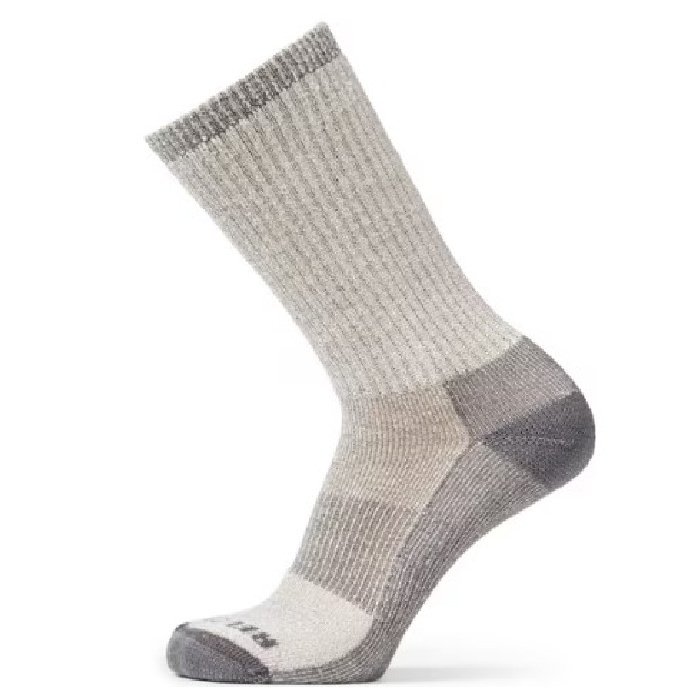
REI Merino Lightweight Hiking Crew
Best Value Wool Socks
CleverHiker Rating: 4.9/5.0
Price: $19
Fabric: 79% merino wool, 20% nylon, 1% Lycra spandex
Height: Crew
Cushioning: Light
Pros
- Good value
- Comfortable
- Breathable
- Moisture-wicking
- Odor-resistant
- Warm
- Durable materials
Cons
- Too warm for summer conditions
- Can slide down with low footwear
The REI Merino Wool Lightweight Hiking Crew Socks are comfy, warm, and an excellent value for outdoor adventures. They’re made with top-quality wool but cost less than those from other leading brands.
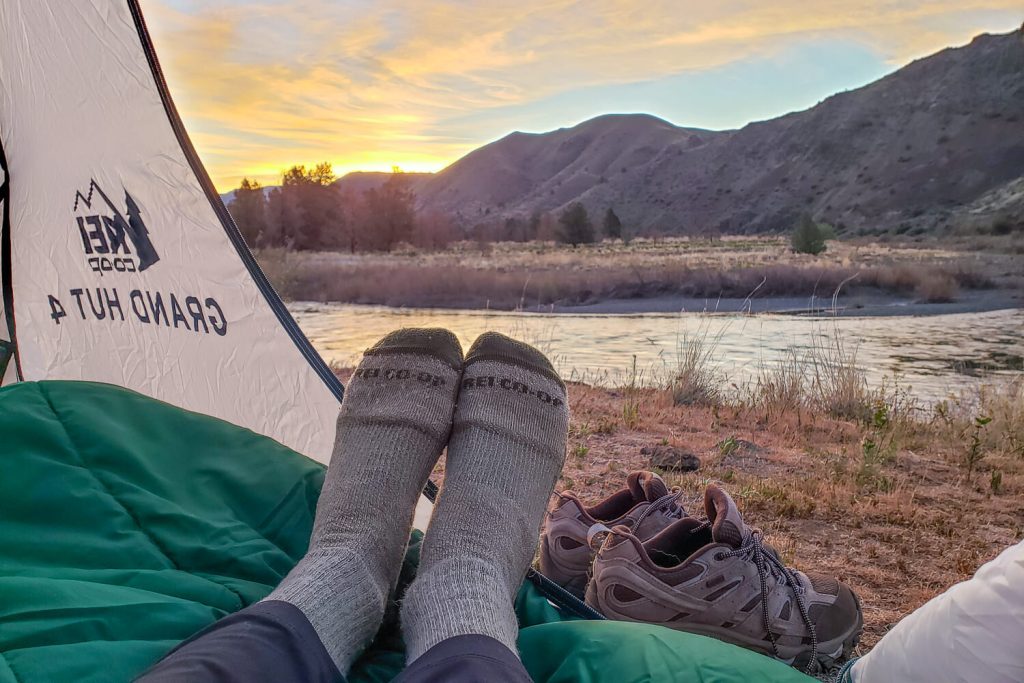
The Hiking Crews have a great balance of padding and breathability, which makes them a cozy and versatile choice for long days on the trail or for wearing as sleep socks on camping and backpacking trips. When temperatures are 55°F and below, the Hiking Crews are one of our go-to pairs.
Our only complaints about this REI model are typical of heavier wool socks: They’re hot for summer conditions, so if you’re spending time in soaring July temperatures, you’ll want to find a lighter option. We’ve found the Hiking Crews stretch out a bit over time, which means they can slide down when worn with low-cut shoes after a dozen uses.
That said, neither of these issues are dealbreakers – these socks are a step ahead of the competition for merino wool. If you’re looking for a comfortable hiking sock without breaking the bank, you can’t go wrong with the Hiking Crews.

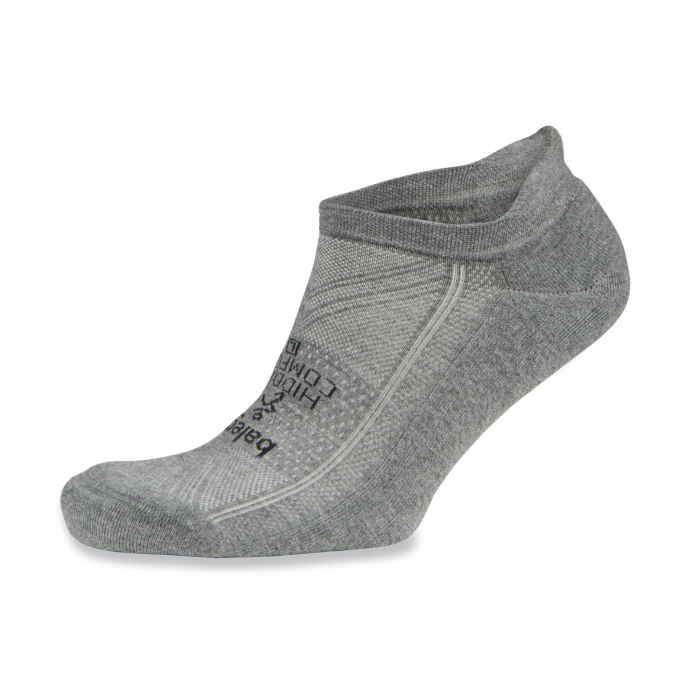
Balega Hidden Comfort
Best Budget No-Show Socks
CleverHiker Rating: 4.8/5.0
Price: $17
Fabric: 100% polyester
Height: No-show
Cushioning: Medium
Pros
- Affordable
- Comfortable
- Don't slide down
- Moisture-wicking
- Breathable
Cons
- Not as durable as some
- Ankle tabs aren't for everyone
Balega’s Hidden Comfort Socks are simple, lightly padded, and some of the most breathable socks we’ve tested. We’re big fans of the cushy ankle tabs that prevent them from bunching up or sliding down while you’re hiking, running, or walking.
The Hidden Comforts are an all-time favorite of Dave Collins, founder of CleverHiker. He’s used these for over seven years of warm-season day hikes and thru-hikes in places like the JMT, Yosemite, the Sawtooths in Idaho, and Banff. These are Dave’s top recommendation for breathable, lightweight socks to pair with trail runners.
The Hidden Comforts are as airy as socks get. Even though they’re 100% polyester, we love how well they breathe, keeping our feet cool and dry on strenuous summer hikes. If you want a synthetic fabric, the low cut and awesome ventilation of the Hidden Comforts will be a game-changer.
The downside of polyester is that it doesn’t last as long as other fibers like nylon or wool blends, so we advise picking up several pairs to get you through a full season of hiking. Also, the very low cut and unique ankle tabs won’t suit everyone’s preferences.
The Hidden Comforts are an excellent, affordable choice as comfortable, low-cut socks for everyday use. Whether you’re repeating your favorite local trail or trekking deep into the backcountry, this Balega model is worth considering.
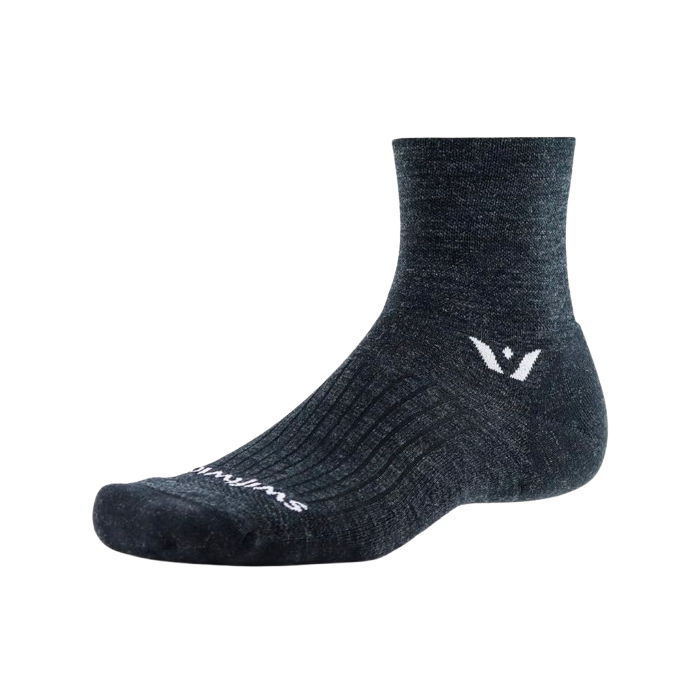
Swiftwick Pursuit Quarter Crew High
Best Cold-Weather Running Socks
CleverHiker Rating: 4.6/5.0
Price: $20
Fabric: 60% merino wool, 36% nylon, 4% spandex
Height: Crew
Cushioning: Medium
Pros
- Durable
- Comfortably snug fit
- No-blister guarantee
- Hold their shape
- Great for trail running in cold temps
Cons
- Compressed fit isn’t ideal for all
- Not warm enough for truly frigid weather
The Swiftwick Pursuit Quarter Crew High is a standout performer, bringing something unique to the merino sock game. Unlike bulkier competitors, these socks nail the balance between warmth and profile, keeping your feet warm enough in cold weather without making your footwear feel cramped. The moderate compression hits just right – snug enough to prevent sliding but not so tight that you feel restricted.
The merino blend is noticeably lighter than other brands, which is fantastic for maintaining shoe fit and comfort during winter runs or Nordic skiing sessions. On the flip side, the thinner construction might impact long-term durability compared to thicker options.
Another downside? We found they aren’t great for warm weather; our feet got pretty toasty above freezing. Still, these socks are perfect for winter running and Nordic skiing when you want warmth with minimal bulk.
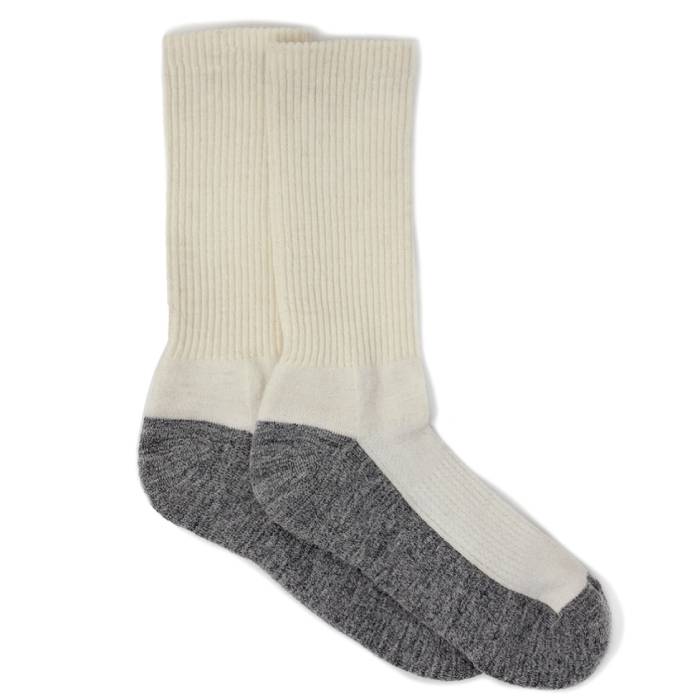
Warrior Alpaca Cushioned Cross-Trainer Crew
Best Natural Fiber Sock Alternative to Merino Wool
CleverHiker Rating: 4.5/5.0
Price: $24
Fabric: 40% baby alpaca, 30% acrylic, 23% nylon, 5% Lurex, 2% spandex
Height: Crew
Cushioning: Medium
Pros
- Super soft
- Comfortable cushion
- Great temperature control
- Alpaca wool is anti-microbial
Cons
- Wool pills and sheds over time
- Not as durable
- Slower to dry
When it comes to hiking socks, merino wool often dominates the conversation, but the Warrior Alpaca Cushioned Cross-Trainer Crew Socks offer a natural alternative to merino that’s comfy enough for everything from hiking to lounging around the house. Similar to merino, alpaca wool is known for being moisture-wicking, antimicrobial, and an excellent insulator – all attributes the Warriors exemplified in testing.
A generous layer of cushioning makes up the entire footbed of the sock, with extra plushness in areas that have more ground contact. The cushioning is not only extremely comfortable but provides protection against blisters. Even after miles of hiking in the Warriors, our feet felt unbothered by any chafing or rubbing.
Alpaca wool has a hollow-fiber structure that traps heat. We wore the Warriors while snowshoeing through deep snow and chilly temperatures in Mammoth Lakes, California. The ample cushioning helped keep our feet warm, while the thinner weave over the top of the foot allowed for increased airflow and breathability to prevent overheating.
Even after several days of hiking without washing the socks, the Warriors did not smell bad, thanks to alpaca wool’s naturally odor-resistant nature. Additionally, alpaca wool doesn’t contain lanolin – a waxy substance found in sheep’s wool that can cause itchiness for those with allergies. Plus, the Warriors are insanely soft – the fuzzy texture felt luxurious for hiking, and they even became a favorite to sleep in on cooler nights.
Our biggest complaint with these socks is that they began to pill and shed after a couple weeks of heavy wear. While neither of these issues caused structural damage to the socks, long-term durability might be impacted.
Don’t let their softness and cozy nature fool you – the Warrior Alpaca Cushioned Cross-Trainer Crew Socks are a practical, versatile option. They can handle miles on the trail and provide a great alternative to merino wool.
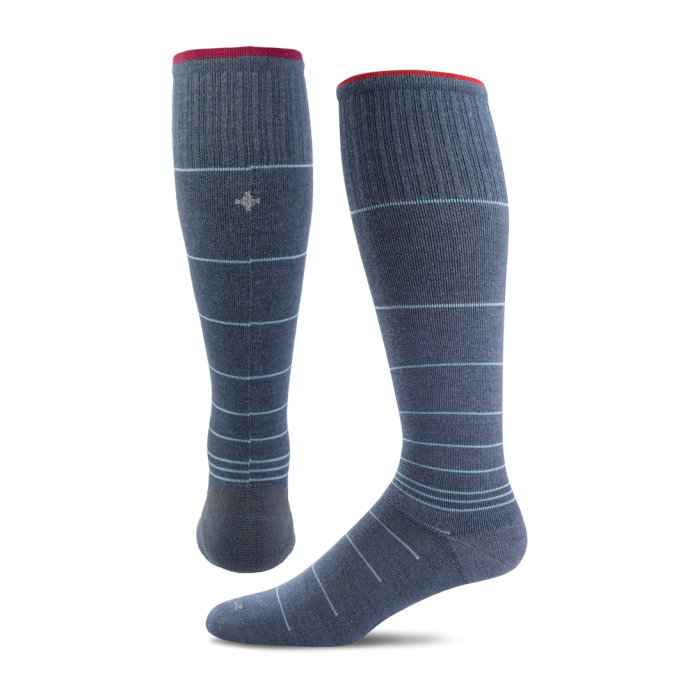
Sockwell Circulator Compression
Best Compression Socks
CleverHiker Rating: 4.5/5.0
Price: $33
Fabric: 32% merino wool, 32% stretch nylon, 31% bamboo rayon, 5% spandex
Height: Knee
Cushioning: Light
Pros
- Comfortable
- Durable
- Moisture-wicking
- Effective compression design
- Versatile for many activities
- Quality construction
- Snug fit with forgiving stretch
Cons
- Expensive
- On/off can be a bit challenging
- Tall sock height isn’t for everyone
The Sockwell Circulator (men’s / women’s) is one of our favorite compression socks. They gently apply pressure to your legs and feet, which can help improve blood circulation, enhance recovery, and minimize swelling.
Gear Analyst, Ian Krammer, used the Circulator socks exclusively while healing after a major foot injury in the mountains. He found they were essential to aid his recovery process, playing a key role in reducing swelling, minimizing foot and leg fatigue, and limiting overall muscle soreness.
This Sockwell model stands out as especially comfy, snug, and durable for long days on the trail. It fits tightly around the foot, ankle, and calf, but the fabric blend is stretchy enough that they feel flexible and breathable. The Circulator’s fabric blend is also impressively long-lasting. In our experience, these socks will last through many dozens of short hikes before needing to be replaced.
Our biggest complaint about the Circulators is their steep price tag. That said, these are exceptionally effective compression socks and worth every penny. If you’re a trail runner, backpacker, long-distance hiker, or weekend warrior who wants to maximize their performance, these are a stellar value for long, tough miles.
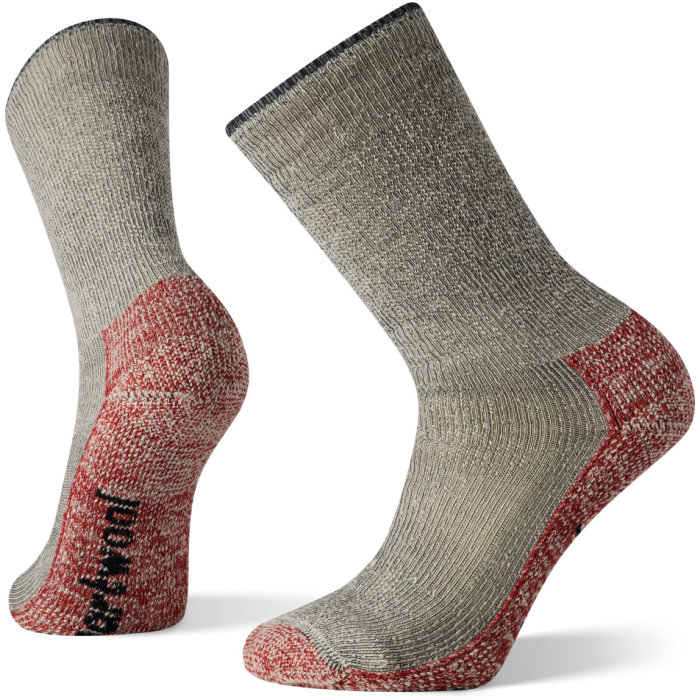
Smartwool Mountaineer Classic Crew
Best Thick & Warm Mountaineering Socks
CleverHiker Rating: 4.4/5.0
Price: $27
Fabric: 74% merino wool, 25% nylon, 1% elastane
Height: Crew
Cushioning: Heavy
Pros
- Durable
- Plush fit
- Very warm
- Odor-resistant
- Don't slide down
- Lightweight
- Durable materials
Cons
- Too much sock for casual users
- Long dry time
The Smartwool Classic Mountaineer socks (men’s / women’s) have 74% merino wool and are like a cozy cabin for your feet in the coldest conditions. The cushioning is seriously plush. Whether you’re tackling snowy peaks or just trying to keep your toes from freezing in your sleeping bag, these socks deliver exceptional warmth and moisture management.
But they’re not without their quirks. The thick construction means they take their sweet time drying out, so you’ll want to pack extras for multi-day adventures. And while their warmth is a godsend in winter, it’s a major drawback in warmer weather.
If you’re heading into cold, wet conditions and want premium comfort and warmth, these socks are worth every penny. Just keep them in your winter rotation and have backup pairs for longer trips. They’re overkill for summer hiking, but they’re absolute champions when the mercury drops.
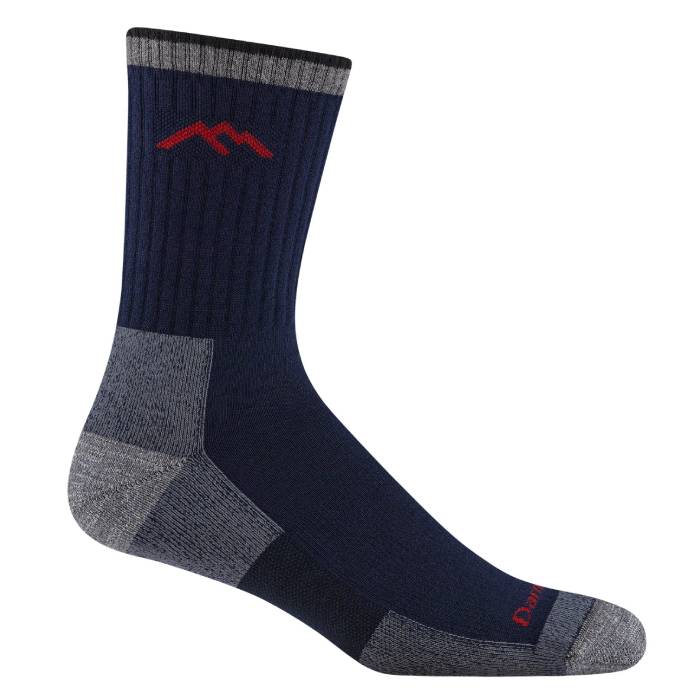
Darn Tough COOLMAX Hiker Micro Crew
Most Durable Lightweight Socks
CleverHiker Rating: 4.4/5.0
Price: $25
Fabric: 37% nylon, 34% COOLMAX polyester, 26% acrylic, 2% Lycra spandex, 1% other fiber
Height: Crew
Cushioning: Medium
Pros
- Very breathable
- Padding placement protects against hot spots and blisters
- Comfortably snug and supportive fit
Cons
- Padding isn’t particularly cushy
- Thinner weave and cushioning aren’t ideal for cooler temps
- Retains odors more than merino options
When you’re pulling long miles on the trail in the heat of summer, the aptly named Darn Tough COOLMAX Hiker Micro Crew (men’s / women’s) will keep your feet well ventilated. The main portion (around the top and arch) features a thinner and lighter synthetic weave to maximize airflow. We wore these socks for steep climbing approaches on warm days in the high desert of Bishop, California. Tackling sustained rocky inclines in full sun, our feet stayed perfectly comfortable, never overheating or growing sweaty.
We also appreciated the socks’ snugness when trudging uphill. The COOLMAX has a close, precise fit, ensuring no slippage underfoot.
Although Darn Tough strips down the padding in these socks to maximize temperature regulation, it’s still considered a medium-cushion sock, with the toe cap and heel being more generously padded. This layer of cushioning was welcome, particularly on rougher and more uneven terrain, helping prevent hot spots and blisters.
These areas of added cushion also help extend the socks’ longevity, targeting the spots most susceptible to wear and tear from friction and rubbing. In our testing, we experienced no threats to the integrity of the socks. If you do happen to run into any issues, they’re backed up by Darn Tough’s lifetime guarantee.
That said, we found the COOLMAX polyester a less ideal choice for winter hikes. We wore these socks for several snowshoeing excursions in Mammoth Lakes, California, and their light weave wasn’t enough to insulate our feet against colder temperatures after a few hours in the snow. However, for warmer conditions or for those whose feet run hot, the Darn Tough COOLMAX Hiker Micro Crew socks offer excellent breathability in a long-lasting package.
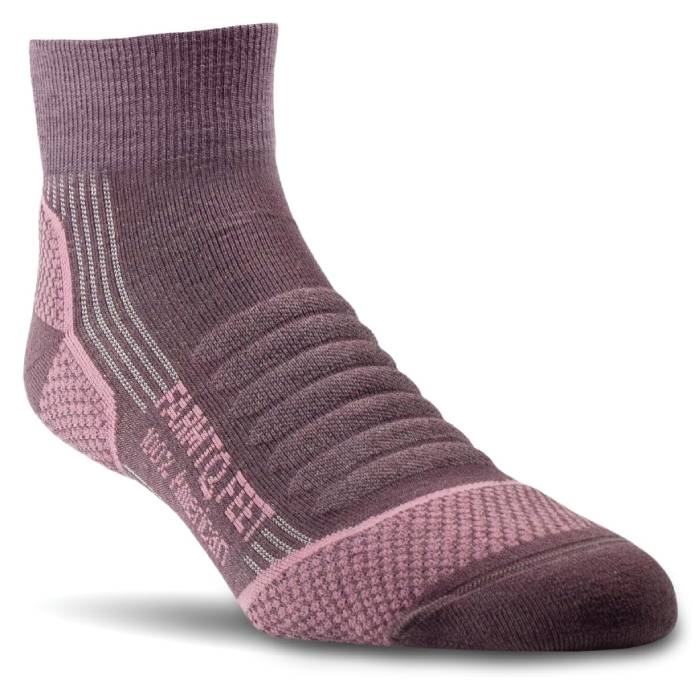
Farm to Feet Damascus
Best Durable Socks for Long Backpacking Trips
CleverHiker Rating: 4.4/5.0
Price: $23
Fabric: 51% merino wool, 45% nylon, 4% Lycra spandex
Height: Quarter
Cushioning: Light
Pros
- Durable
- Lifetime warranty
- Breathable
- Moisture-wicking
- Odor-resistant
- Comfortable
- Don't slide down
Cons
- Padding on top of foot can feel awkward
- Tight fit
The Farm to Feet Damascus socks are created with long-distance hikers in mind. Made in America, this pair is super breathable, doesn’t slip down, and will last for hundreds of miles.
The Damascus socks are impressively durable. Thanks to smooth stitching and top-tier materials, we’ve hiked 14+ hour days in these bad boys for weeks on end and found them just as comfortable, airy, and sturdy as day one. That said, if you do manage to wear them out, we love that they’re guaranteed for life.
Slight compression and unique targeted cushioning in the heel and toe keep the Damascus feeling comfy and light on all sorts of terrain and through long miles. A bit of extra cushioning on top of the instep also helps prevent pain from shoelace pressure, which is especially nice for long, steep descents.
The Damascus socks are tough to beat when it comes to solid construction and comfort. We recommend them for rugged hikes and backpacking trips in trail runners or hiking shoes when minimalist socks aren’t quite enough.
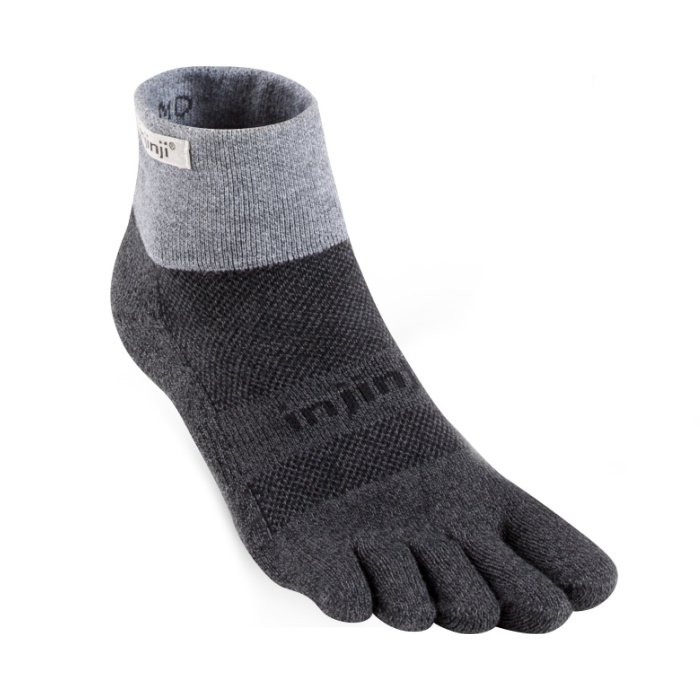
Injinji Trail Midweight Mini-Crew
Best Toe Socks
CleverHiker Rating: 4.3/5.0
Price: $17
Fabric: 58% nylon, 39% COOLMAX polyester, 3% Lycra spandex
Height: Ankle
Cushioning: Medium
Pros
- Helps prevent toe blisters
- Affordable
- Comfortable
- Breathable
- Moisture-wicking
- Durable materials
Cons
- Hold onto odors more than others
- Takes a little longer to put on/take off
- Toe socks take getting used to
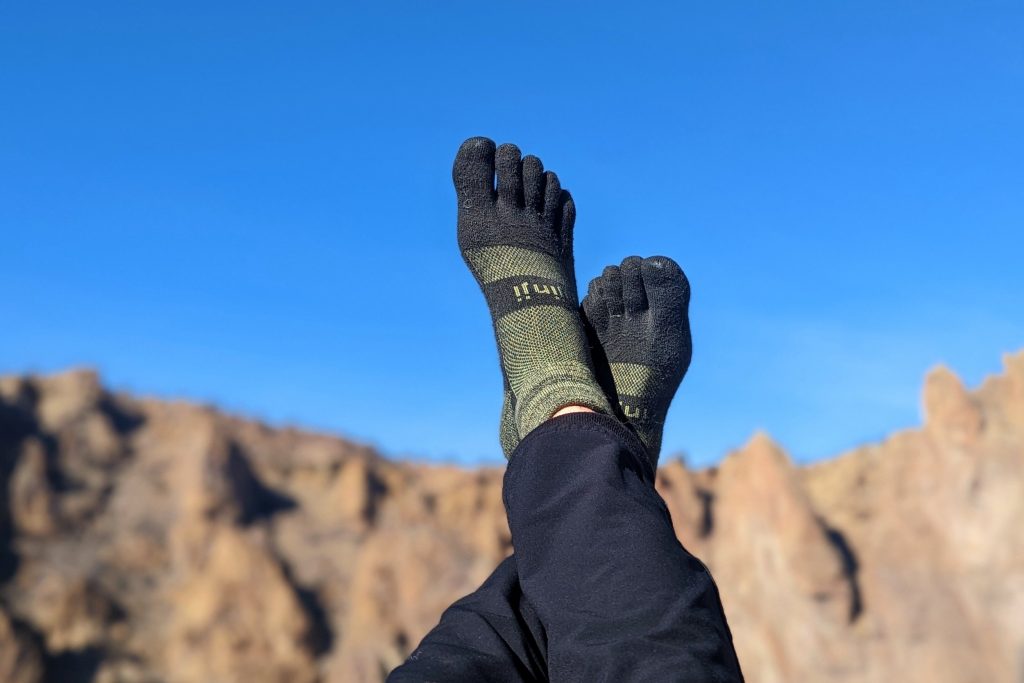
Injinji’s Trail Midweight Mini Crews (men’s / women’s) are some of the most popular toe socks on the market, and we’ve been using them for years. They’re affordable, comfy, highly breathable, and excellent for reducing friction between the toes when wearing low-cut hiking shoes, trail runners, or sandals.
Since each toe is wrapped in wicking fabric, we find they do an exceptional job of keeping our feet dry on the trail and dramatically reducing the chance of hot spots, pain, and blisters. If you’re prone to sweaty feet and tend to do most of your hiking in the summer, the Mini-Crews are an excellent choice for moisture management.
Toe socks may feel strange at first, especially since they take extra time and attention to put on and take off. We’ve also found these ones tend to hold smells a little more readily than others on this list, so you’ll want to hang them to dry outside of your tent or backpack.
However, if you frequently struggle with toe pain from rubbing or excess moisture, we think they’re worth learning to love. Plus, this Injinji model is a bit more durable than other toe socks we’ve tested, so they’ll keep you moving all season long.
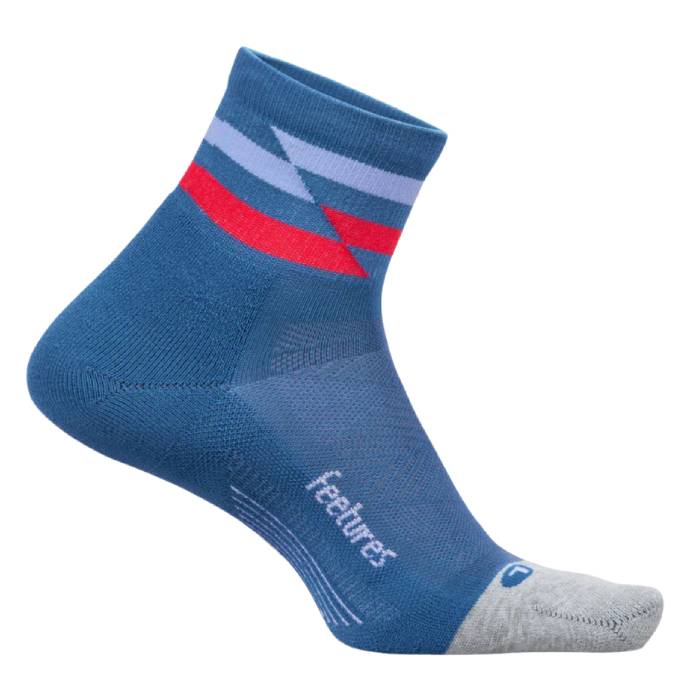
Feetures Elite Light Cushion Quarter
Best Socks for Aerobic Activity in Warm Conditions
CleverHiker Rating: 4.3/5.0
Price: $19
Fabric: 94% nylon, 6% spandex
Height: Quarter
Cushioning: Light
Pros
- Affordable
- Lifetime warranty
- Comfortable
- Moisture-wicking
- Breathable
- Don't slide down
- Smooth-feeling fabric
Cons
- More odor-prone than others
- Lack long-term durability
The Feetures Elite Light Cushion Quarter socks are one of our all-time favorites for summer adventures in trail runners and hiking shoes where breathability and a tight fit are top priorities.
The Elite Lights are thin, stretchy, and fit snugly thanks to substantial compression around the center of the foot and at the ankles. Even after dozens of trail miles, we’ve found they stay smooth and wrinkle-free during activity.
The Elite Lights offer a bit of extra cushioning at the heel and toes. This padding in high-use areas makes them an excellent choice for hikes of any distance.
Like most thin socks, the Elite Lights won’t last as long as thicker, more durable options. We also find they fall a little short when it comes to smell: The synthetic fabric holds onto stink a bit more than natural options like merino, so you may want to hang these to dry outside your tent.
However, when wicking socks are critical, the Elite Lights stand out for their lightweight and highly breathable design. Plus, they come in fun colors to match any style.
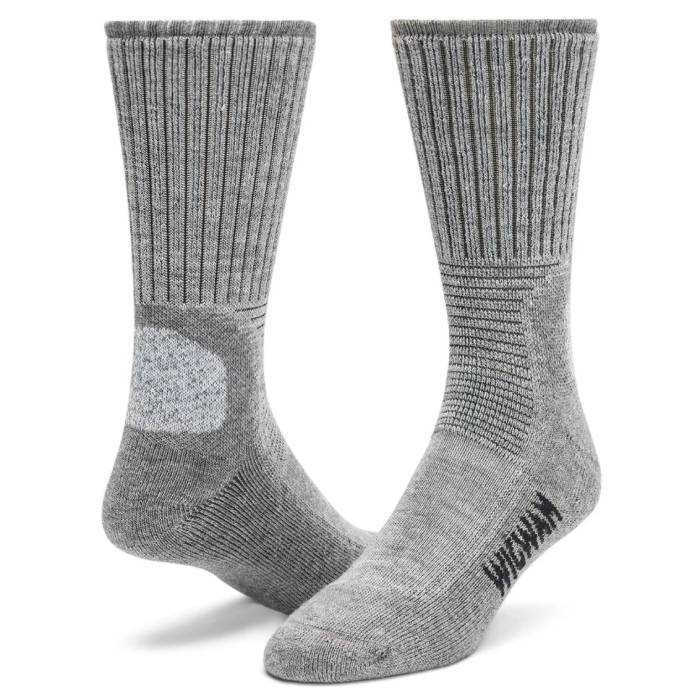
Wigwam Hiking Outdoor Midweight Crew
Best Budget Synthetic Hiking Socks
CleverHiker Rating: 4.2/5.0
Price: $19
Fabric: 31% polypropylene, 28% X2O acrylic, 23% stretch nylon, 14% polyester, 3% wool, 1% spandex (light grey heather)
Height: Crew
Cushioning: Light/medium
Pros
- Affordable
- Comfortable
- Good for warmer weather
- Lightweight
Cons
- Not as form-fitting
- Less durable
- Doesn’t offer the odor prevention of merino wool
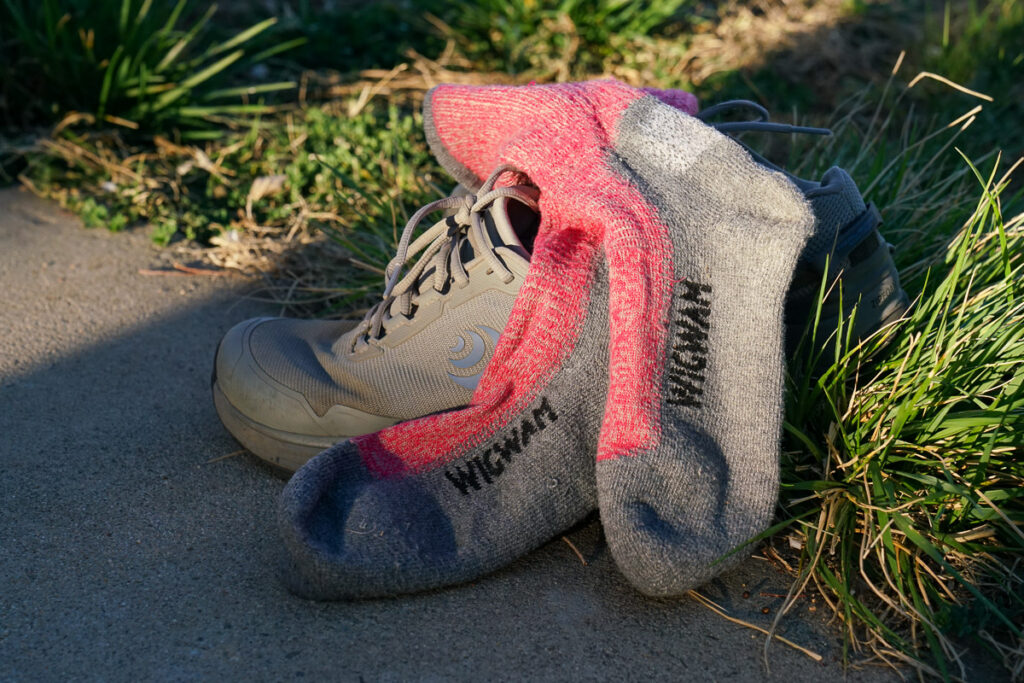
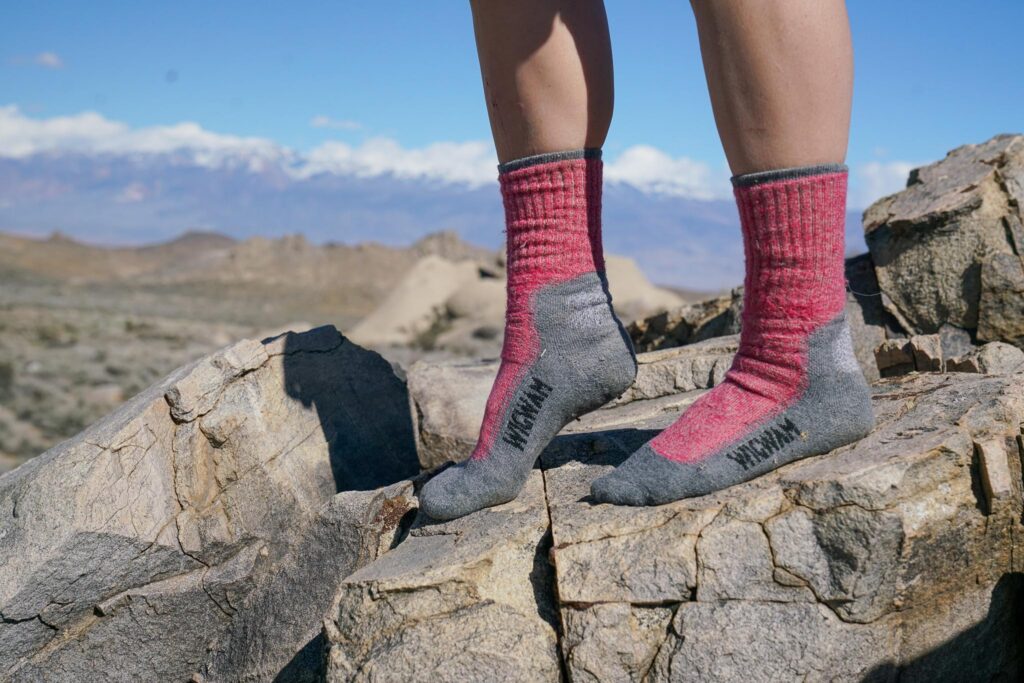
Whether you’re hiking in the summer or traveling to warmer climates, the Wigwam Hiking Outdoor Midweight Crew socks are an excellent, lightweight option that’s easy on the wallet. Made from a mostly synthetic blend, the Wigwams feature a looser weave and targeted cushioning, ensuring the socks never feel too heavy or hot. We appreciated their lightness while hiking on warm, sunny days in the high desert foothills of the Sierra Nevada. The looseness of the weave enabled our feet to breathe, and the thin cushioning underfoot maintained comfort without causing overheating.
However, the looser weave of the Wigwams does stretch over time. These socks have a more relaxed fit than other options, and the lack of tightness means they have a tendency to slide down and slip around underfoot.
Though not as burly as options from Darn Tough, we were impressed by how these socks withstood miles of hiking. Even after long days on the trail, we experienced no hot spots while wearing the Wigwams and did not observe any signs of wear and tear or degradation in the socks’ construction. Particularly for their lower price point, these socks are a durable choice that will last many miles.
Again, the lighter and looser design of these socks may not be ideal for colder temperatures or those in need of a more aggressive fit. But the Wigwam Hiking Outdoor Midweight Crew are a comfortable and affordable pick when your adventures take you to warmer environs.
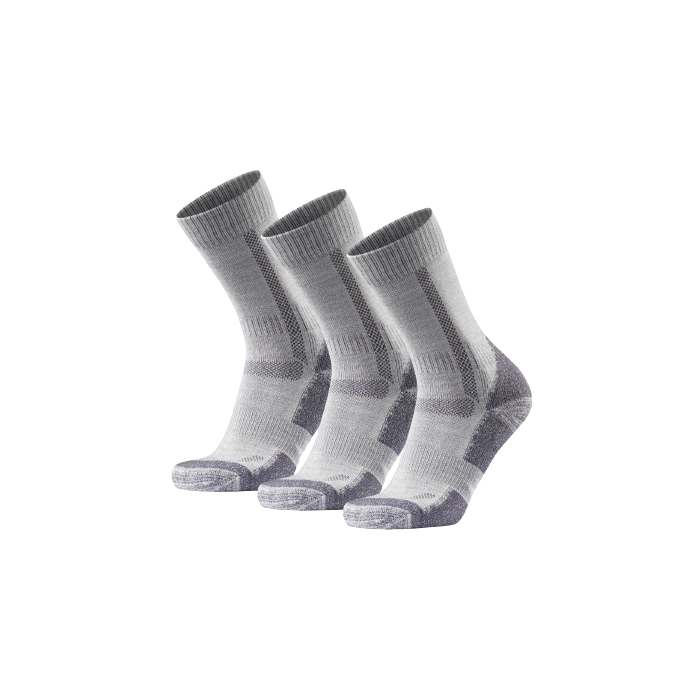
Danish Endurance Classic Hiking Crew 3-Pack
Budget-Friendly Merino Hiking Socks
CleverHiker Rating: 4.1/5.0
Price: $36
Fabric: 38% merino wool, 30% acrylic, 30% polyamide, 2% elastane
Height: Crew
Cushioning: Medium
Pros
- Excellent value
- Versatile for town or trail
- Breathable
- Comfortable cushioning
- Good stretch
- Soft fabric blend
Cons
- Not as warm as others on this list
- Less durable than higher-quality options
- Dry very slowly
- Prone to pilling
The Danish Endurance Classic Hiking Crew 3-Pack is the best bang for your buck when it comes to merino wool socks. If you’re looking for budget-friendly socks tough enough to tackle long miles of backcountry hiking – or just walking the dog to the brewery on a July afternoon – these socks are up to the task.
The Classic Hiking Crews come in a pack of three, but the price per pair makes them an outstanding value. These Danish Endurance socks are a blend of merino with synthetic fibers, which we found to be highly breathable, comfortable, and soft. These socks aren’t only easy on your wallet – they’re stylish, too, with a variety of colorway options and cushioned pads on the top, toes, and heel.
The Classic Hiking Crews aren’t the most durable or warm socks on our list. And due to their synthetic fibers, they soak up more water (and dry much slower) than options with more merino. However, at this price point, we are very impressed with their performance for high-heart-rate activities like short- to medium-length backpacking trips, day hikes with lots of miles, and daily use through the spring, summer, and fall.
Product Comparison Table
| oSort | Product | Price | Fabric | Height | Cushioning | Comfort | Breathability | Warmth | Durability | 0 |
Darn Tough Light Hiker Micro Crew View Men's View Women's 
|
$25 | 54% nylon, 43% merino wool, 3% Lycra spandex | Crew | Light | 5.0 | 4.8 | 4.4 | 4.9 | 1 |
Darn Tough Hiker Boot Full Cushion View Men's View Women's
|
$30 | 66% merino wool, 32% nylon, 2% Lycra spandex | Crew | Heavy | 5.0 | 4.4 | 4.6 | 5.0 | 2 |
REI Merino Lightweight Hiking Crew View at REI 
|
$19 | 79% merino wool, 20% nylon, 1% Lycra spandex | Crew | Light | 4.9 | 5.0 | 4.3 | 4.4 | 3 |
Balega Hidden Comfort View at REI View at Amazon
|
$17 | 100% polyester | No-show | Medium | 4.8 | 4.9 | 4.0 | 3.9 | 4 |
Swiftwick Pursuit Quarter Crew High View at Amazon View at Swiftwick |
$20 | 60% merino wool, 36% nylon, 4% spandex | Crew | Medium | 4.7 | 4.9 | 4.5 | 4.8 | 5 |
Warrior Alpaca Cushioned Cross-Trainer Crew View at Amazon View at Warrior Alpaca |
$24 | 40% baby alpaca, 30% acrylic, 23% nylon, 5% Lurex, 2% spandex | Crew | Medium | 5.0 | 4.4 | 4.5 | 4.1 | 6 |
Sockwell Circulator Compression View Men's View Women's |
$33 | 32% merino wool, 32% stretch nylon, 31% bamboo rayon, 5% spandex | Knee | Light | 4.6 | 4.6 | 4.4 | 4.2 | 7 |
Smartwool Mountaineer Classic Crew View Men's View Women's |
$27 | 74% merino wool, 25% nylon, 1% elastane | Crew | Heavy | 4.9 | 4.4 | 4.4 | 4.6 | 8 |
Darn Tough COOLMAX Hiker Micro Crew View Men's View Women's |
$25 | 37% nylon, 34% COOLMAX polyester, 26% acrylic, 2% Lycra spandex, 1% other fiber | Crew | Medium | 4.5 | 4.5 | 4.3 | 4.5 | 9 |
Farm to Feet Damascus View at Amazon View at Farm to Feet |
$23 | 51% merino wool, 45% nylon, 4% Lycra spandex | Quarter | Light | 4.4 | 4.7 | 4.4 | 4.7 | 10 |
Injinji Trail Midweight Mini-Crew View Men's View Women's |
$17 | 58% nylon, 39% COOLMAX polyester, 3% Lycra spandex | Ankle | Medium | 4.5 | 4.4 | 4.2 | 4.1 | 11 |
Feetures Elite Light Cushion Quarter View at Amazon View at Feetures
|
$19 | 94% nylon, 6% spandex | Quarter | Light | 4.3 | 4.9 | 4.0 | 4.1 | 12 |
Wigwam Hiking Outdoor Midweight Crew View at Amazon View at Wigwam |
$19 | 31% polypropylene, 28% X2O acrylic, 23% stretch nylon, 14% polyester, 3% wool, 1% spandex (light grey heather) | Crew | Light/medium | 4.1 | 4.4 | 4.2 | 4.4 | 13 |
Danish Endurance Classic Hiking Crew 3-Pack View at Amazon View at Danish Edurance |
$36 | 38% merino wool, 30% acrylic, 30% polyamide, 2% elastane | Crew | Medium | 4.2 | 4.5 | 4.1 | 4.2 |
|---|
Analysis & Results
In this section, we put our best foot forward and discuss which socks score the highest when it comes to comfort, warmth, breathability and dry time, and durability.
Which hiking socks are the best value?
When we consider the value of a pair of socks, we’re looking beyond just their price. A quality pair of socks is an investment in durability, quality, and comfort that makes your time on the trail feel agile, fast, and pain-free.
We highly recommend the Darn Tough Hiker Boot Full Cushion socks. Sure, they’re a bit more expensive, but these thick, warm, full-cushion socks are made from the highest-quality merino wool that naturally wicks moisture and reduces odors. These socks offer plush comfort and impact absorption on rugged terrain. And these fit exceptionally well thanks to the fine-gauge knitting, which provides a snug, non-slip fit without bunching, reducing friction and hot spots. Plus, Darn Tough socks are backed by a lifetime warranty, making them an awesome investment for a lifetime of hiking.
The Balega Hidden Comfort Socks also punch above their price point thanks to their great breathability and soft cushioning that keeps your feet comfy throughout long days on the trail. Our team has hiked and run in these for years, and they deliver dependable comfort without the higher price tag of other performance socks.
The Wigwam Hiking Outdoor Midweight Crews offer solid on-trail comfort and breathability at a price that’s noticeably lower than many competitors. Despite their budget-friendly price tag, they hold up well over miles of use, making them a reliable choice for hikers who don’t mind a looser fit and primarily hike in warmer weather.
What are the most comfortable hiking socks?
Our top choices for comfortable, light-cushioned socks are the Darn Tough Light Hiker Micro Crew and REI Merino Hiking Crew. Both are merino wool blends that offer exceptional moisture-wicking properties and natural odor resistance – meaning when the weather is hot and your feet get sweaty, these socks will keep your feet happy. Each model features lightly cushioned soles and seamless toe closures to minimize friction and prevent blisters or rubbing during long treks. The Darn Tough Light Hiker Micro Crew is one of the most comfy pairs we tested due to the soft but strong reinforced heel and toe.
The most comfortable full-cushioned socks in our guide are the Darn Tough Hiker Boot Full Cushion. They offer substantial padding but are reasonably lightweight and low-profile, making them versatile for different conditions while staying super comfy.
The Balega Hidden Comfort socks are another standout. Their plush underfoot cushioning is perfect for hikers who prioritize softness and support. Despite the luxurious feel, these socks manage to stay lightweight and breathable, making them great for shorter hikes or hot weather. They also have a snug fit that stays in place and eliminates that pesky mid-hike bunching or slipping.
What are the warmest hiking socks?
The Darn Tough Hiker Boot Full Cushion is a noteworthy choice for warmth. They’re less padded and less insulated than mountaineering options but strike a better balance between warmth and versatility, with full cushioning that provides significant insulation without the size, weight, and height of mountaineering socks, making them suitable for a wider range of hiking conditions. They are a stellar choice when the temperatures swing from freezing to 70°F.
Similarly, the Warrior Alpaca Cushioned Cross-Trainer Crew is a cozy option for cooler temperatures. The alpaca wool blend is super soft, and a thick layer of cushioning along the sole keeps your feet toasty. The hollow structure of alpaca wool fibers is meant to retain heat, making it a particularly great natural insulator. Importantly, these socks also dry quickly and wick moisture effectively, ensuring that your feet don’t grow damp and clammy.
Featuring a healthy dose of merino wool and generous cushioning, the Smartwool Mountaineer Classic Crew stands out as the warmest design on our list. These socks deliver exceptional insulation for cold, high-altitude adventures with their dense fabric that traps heat inside boots and shoes, keeping your feet warm through frigid alpine days and long nights at camp.
Which hiking socks dry the fastest?
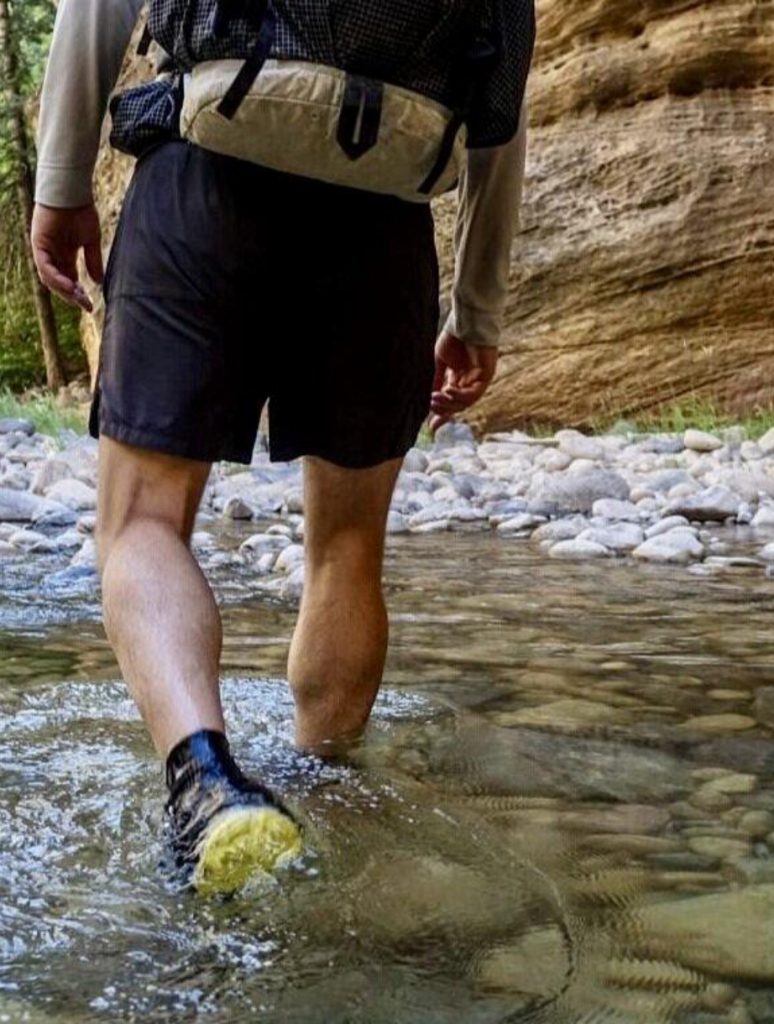
Thinner socks with performance designs are the most breathable and fastest-drying socks for hiking. The top half of the rankings include the Darn Tough Light Hiker Micro Crew, Farm to Feet Damascus, and Sockwell Circulator. Each model prioritizes breathability and quick drying times thanks to high-quality materials and innovative design features. They use blends of natural and synthetic fibers to make for very effective moisture management – and rapid evaporation – that will keep your feet dry and comfortable, whether you’re hiking through the hottest part of the day and your feet are sweating, or you accidentally step in the water during a creek crossing. Each of these socks includes features like seamless construction and targeted ventilation zones to enhance airflow and reduce moisture buildup.
Darn Tough and Farm to Feet utilize natural merino wool combined with synthetic fibers to promote excellent moisture-wicking. The Sockwell Circulator uses an advanced merino/synthetic blend for a tailored fit and unrivaled breathability. If your top priority is a short dry time and plenty of ventilation, all of these models will keep your feet cool, dry, and comfortable on the trail.
Rounding out our picks, the Swiftwick Pursuit excels in both breathability and dry time, blending merino wool with synthetic fibers for maximum performance. The material actively pulls moisture away from your feet and disperses it, allowing the socks to dry quickly, even after creek crossings or rainy hikes. They also feature vented panels that promote airflow for cool and comfy feet all day. Despite being lightweight and breathable, they still provide a snug, secure fit that helps prevent blisters.
Which hiking socks are the most durable?
The Darn Tough Hiker Boot Full Cushion socks are legendary for their durability. Made with a high-density merino wool blend, these socks are designed to withstand heavy use without thinning, tearing, or losing their shape. After hundreds of tough trail miles, these socks never let us down. The full cushioning provides extra comfort while also adding to the sock’s resilience.
Though they are not nearly as burly as regular hiking socks (because they aren’t meant to be), the Feetures Elite exceeded expectations. Thin, sports-focused socks aren’t always the most durable, but this ankle-height model is the exception. They use a blend of synthetic fibers that make them strong and resilient. The snug fit reduces friction and wear, and the seamless toe and targeted compression zones help them last for years by minimizing the risk of fabric breakdown over time.
We highly recommend the Farm to Feet Damascus for their excellent durability as well. Using a nearly 50/50 blend of merino wool and nylon, these socks are extra strong but still stretchy and snug. Their reinforced high-impact zones withstand the rigors of hiking and backpacking, and they hold up incredibly well after countless wash cycles.
How to Choose Hiking Socks
What kind of cushioning should I get?
Cushioning affects durability, comfort, and warmth. Light cushion socks are best for running or hiking in low-cut shoes. We typically prefer them because they dry quickly and breathe well, but they’re not as durable as other socks.
Socks with light cushioning are relatively thin and have a good balance of breathability, moisture-wicking, comfort, and durability.
Medium cushion socks are good for hiking in average to cold weather. They can be well padded in the heel and ball of the foot to protect your feet from impact.
Socks with heavy cushioning are the thickest and warmest. Many hikers find them too bulky and hot for backpacking, but they’re great for warmth at camp or while winter hiking and mountaineering.
Are wool socks better than nylon?
Socks made with polyester, nylon, and other synthetic fabrics are breathable, moisture-wicking, and quick-drying, so they’re great for hiking. They also tend to be a bit more durable than natural fibers, though they can pill and hold onto odors more.
Wool is a naturally odor-resistant fiber that’s excellent for managing moisture, controlling odor, and keeping you warm when wet. Merino wool is the cream of the crop, a natural fiber from merino sheep known for its warmth, softness, and moisture-wicking properties. It’s used often in socks because it works exceptionally well when blended with synthetic fibers like nylon or polyester that make it even more durable, stretchy, and comfy.
Cotton collects and holds onto moisture, which can lead to blisters (check out our How to Prevent and Treat Blisters post for more info). We don’t recommend socks with any cotton content for hiking – but they’re inexpensive and comfortable for everyday use.
What is the best height for hiking socks?
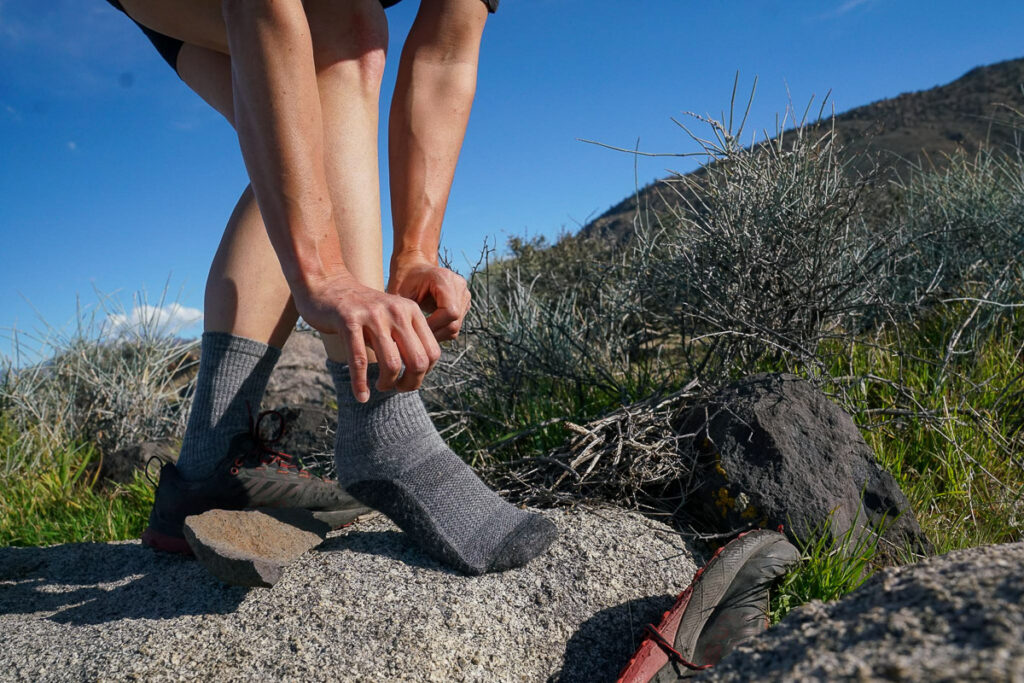
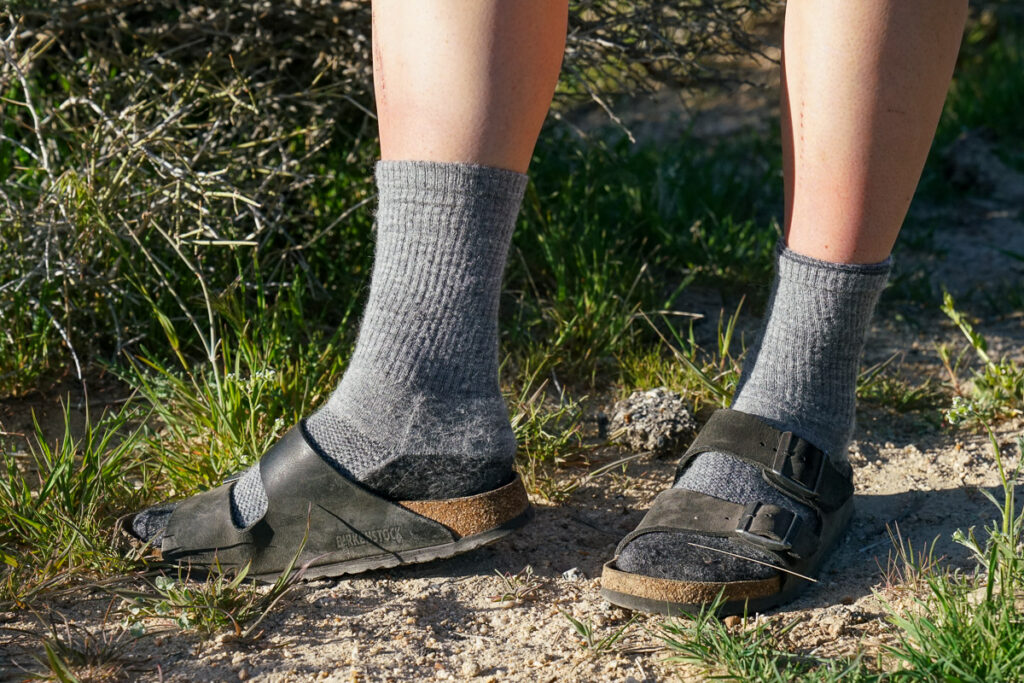
Sock height comes down to personal preference, which is why most of the socks on this list come in a variety of heights. No-show and quarter socks come to the ankle and are most compatible with trail runners or low-cut hiking shoes. They’re stylish when wearing shorts and offer the best airflow. But they leave your ankle exposed to heel clipping, can easily collect debris, and need to be pulled up periodically.
Crew socks come up to about mid-calf and work well with almost all footwear, including boots. They tend to stay up and keep debris out better, as well as offer some protection to your ankles. Knee socks and crew socks will feel warmer and are easier to overheat in, but you’re guaranteed a cool sock tan if you wear them all summer.
Do I need sock liners?
Sock liners are ultralight, ultra-thin socks often worn underneath thicker hiking socks to prevent blisters and add a bit of comfort. They effectively reduce friction by hugging your foot and providing a smooth surface for socks to glide across. In hot weather, they can help manage moisture by wicking sweat and preventing blisters. In cool weather, sock liners add a bit of comfort and warmth.
That said, none of the CleverHiker team uses sock liners. Sock liners are a bit of an “old school” move: They were the best way to prevent blisters when wearing classic, heavy leather boots that were popular from the 70s until the 2000s. Blisters were common with heavy footwear that was slow to break in, and sock liners were a great solution to reduce friction.
However, most modern hikers – from novice day hikers to seasoned thru-hikers – tend to hike exclusively in lightweight shoes or trail runners paired with breathable socks. That means issues with blisters are dramatically reduced. But, when blisters do become an issue, we stop and treat individual hot spots with tape, lube, or bandages. A sock liner is still a viable choice if you’re logging serious miles and want to prevent blisters, need a bit of extra cushion, or are breaking in new footwear and want some added protection.
How should hiking socks fit?
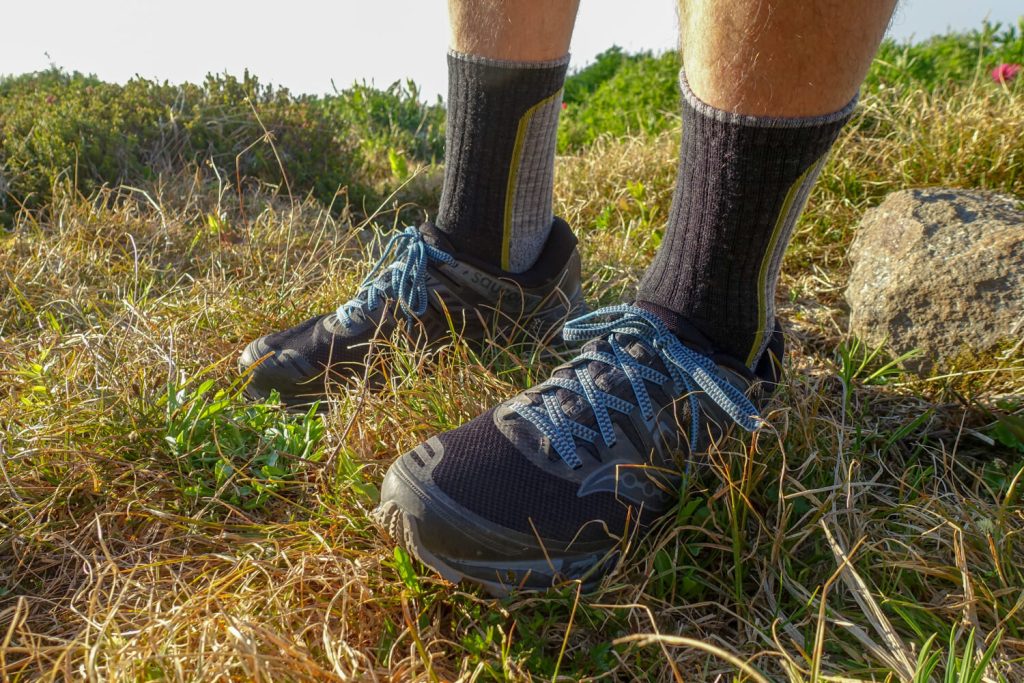
Your socks should fit just right: not too tight but not too loose. We recommend trying at least a few sizes of new socks whenever possible to account for differences in stretch, stitching, and sizing that vary from brand to brand and year to year. Be sure to try your new hiking socks on with the specific pair of hiking boots or shoes you plan to wear on the trail, and account for wiggle room and comfort.
Light compression and a snug fit aid in your socks’ ability to effectively wick moisture, breathe, and stay wrinkle-free. Conversely, socks that are too tight can restrict blood flow and limit your toes’ range of movement. While this mostly comes down to personal preference, we recommend choosing socks that fit a bit tighter than a little too big to prevent hot spots and blisters.
How do I clean my hiking socks?
The key when it comes to washing your hiking socks: Keep the temperature low – or air dry them. While socks made of nylon and polyester can handle the heat, pairs with high merino wool content are likely to shrink in a hot dryer. For the best results, follow the manufacturer’s instructions for washing and drying your socks to maintain their cushion and avoid miniaturizing them.
We recommend washing wool products inside-out on a cool or lukewarm washing machine setting with gentle detergent, then air-drying them on a clothesline or flat surface. If you’re in a hurry, the next best thing is to tumble-dry your wool socks on low. If you treat them with a bit of care and patience, your hiking socks should last for a long time.
How to avoid losing hiking socks in the dryer
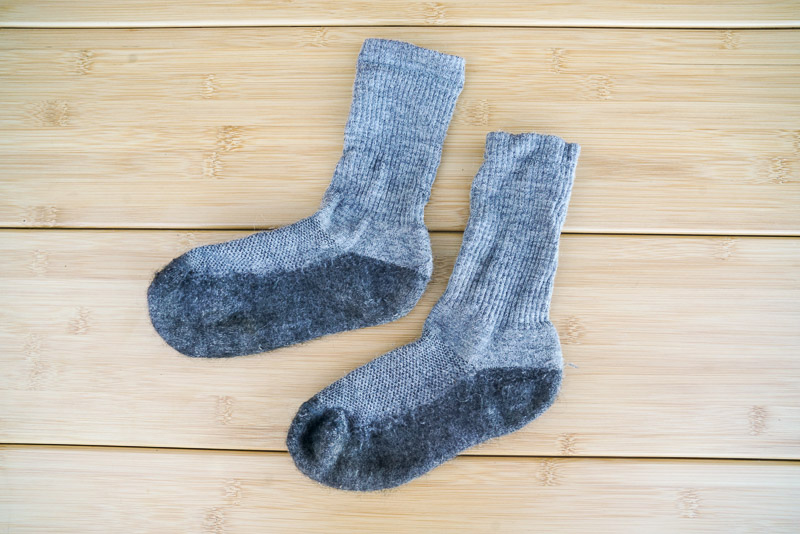
It’s a huge bummer to have a pile of single expensive hiking socks, but we all know how easy it is to lose track of them. Consider using an inexpensive, small mesh laundry bag as your sock-specific hamper, and just toss the laundry bag into the wash when it’s full. Soapy water will get through the bag, and the socks will get clean without going missing.
Why Trust CleverHiker
With over 1,000 days on trail and thousands of miles behind us, the CleverHiker team has trekked in all possible weather conditions to determine the best socks for hiking. Gear Analyst Marion Tucker brings extensive experience hiking in California’s Eastern Sierra, testing socks over countless miles in the wintery high-elevation climate of Mammoth Lakes and the sunny high desert of Bishop, California.
Joining her is Ian Krammer, with two decades of experience exploring Colorado’s most challenging routes and biggest mountains while evaluating a wide range of socks to identify the best ones for every use case. With a strong foundation in qualitative research and a deep understanding of outdoor gear, Ian’s rigorous standards guarantee that only the best socks make it onto our guide.
Testing Methodology
We assess each pair of socks based on four criteria: comfort, warmth, breathability and dry time, and durability. Our team spent 100 days in every pair of socks across different terrain and conditions, from the hottest and driest to the coldest and wettest to find the top performers.
How do we assess comfort?
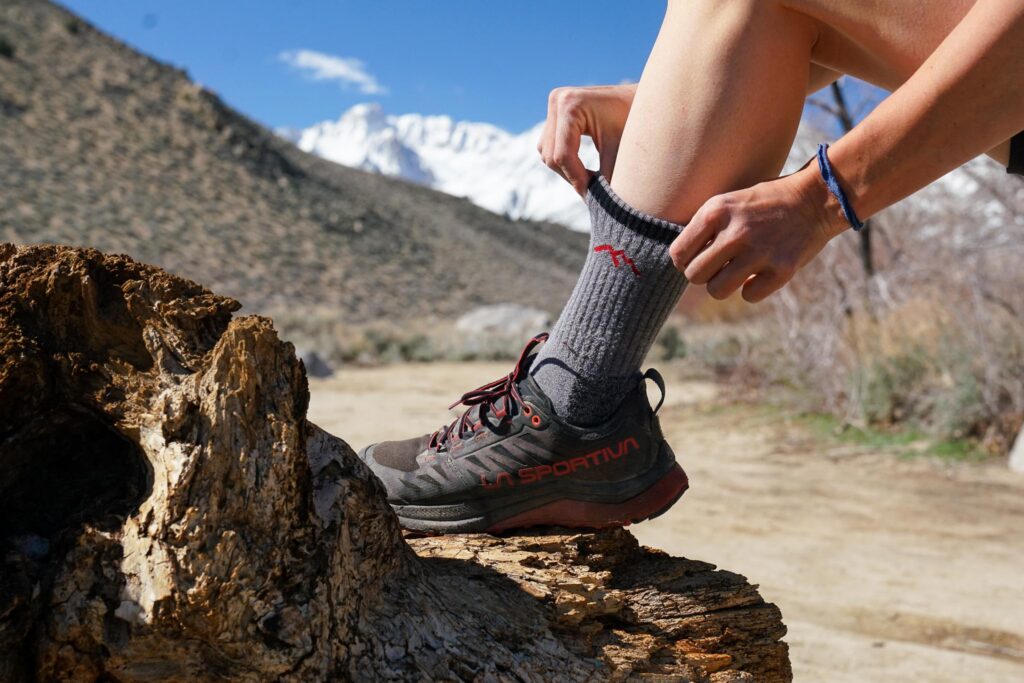
We evaluate socks for comfort while we’re hiking, trail running, and beyond, wearing them during downpours and sizzling-hot summer days to understand how they feel during extended wear. When we’re evaluating hiking socks for comfort, we first look at the material composition – merino wool blends, for example, offer stellar moisture-wicking properties, temperature regulation, and natural softness.
Cushioning is another vital piece, so we prioritize socks with strategically placed padding in areas like the heel and ball of the foot to provide support and reduce impact mile after mile. Comfort is also dependent on fit since a well-fitted sock prevents blisters and hot spots by minimizing friction and staying in place. The top socks in this category also use seamless constructions and prioritize a snug arch that supports the foot and conforms well to your foot’s shape to prevent irritation.
How do we assess warmth?
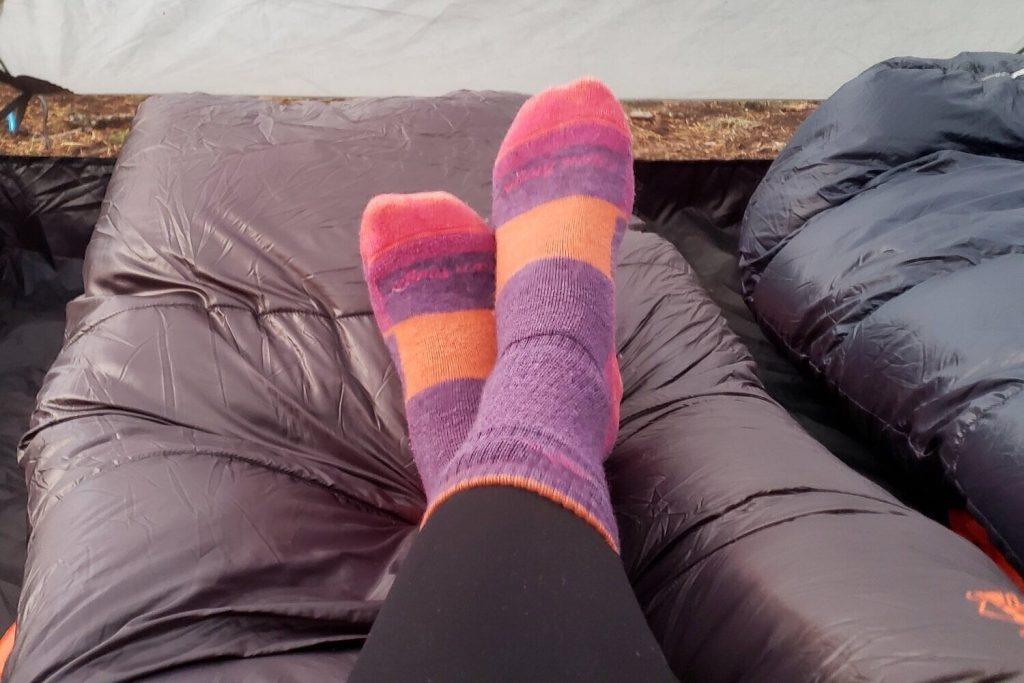
We assess warmth by taking these socks for a spin in wet, cool, and frigid temps and sleeping in them on cold nights. By monitoring our comfort level and toe circulation, we determined their effectiveness in keeping feet warm in chilly environments, especially during breaks or rest periods on the trail.
We look at the material composition, with natural fibers like merino wool, alpaca wool, and silk generally excelling for temperature regulation, odor resistance, and warmth. The top performers for warmth are typically a blend of synthetic and natural fibers. We consider the thickness and density of the socks since heavier, more cushioned models provide better insulation against the cold.
The fit of the sock is important, as well. A snug fit prevents cold air from entering and ensures that you’ll retain heat (so long as it’s not too tight). Moisture management is also essential – wet feet quickly become cold feet, so blends that wick sweat and keep feet dry are crucial. Additionally, features like reinforced toes and padded heels add extra layers of warmth where it’s needed most.
How do we assess breathability?
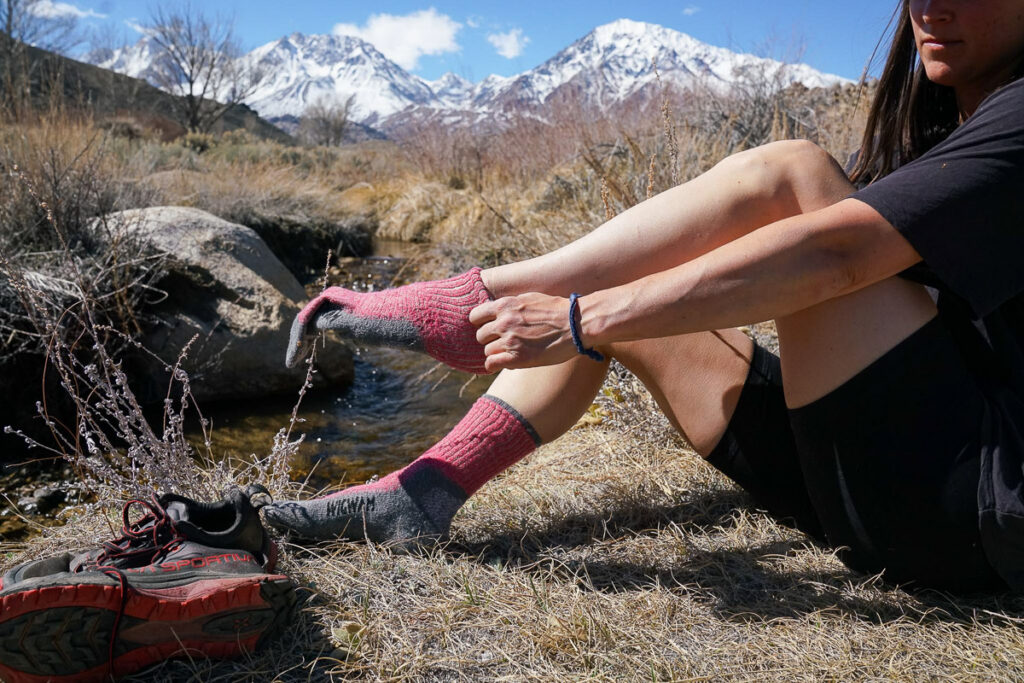
We test breathability by wearing the socks during strenuous activities to gauge how effectively they allow air circulation and moisture-wicking. We look at whether the socks keep our feet dry and cool when hiking in challenging terrain. We also note how long it takes each pair to dry out once they have gotten soaked on the trail either via sweat, precipitation, or a water crossing. Timing the drying process allows us to gauge discomfort and blister potential during prolonged hikes.
We consider elements like mesh panels and strategic knit patterns to figure out their impact on airflow and ventilation around the foot. Socks with superior ventilation allow for better air circulation, reducing the likelihood of moisture accumulation.
What do we look at for durability?
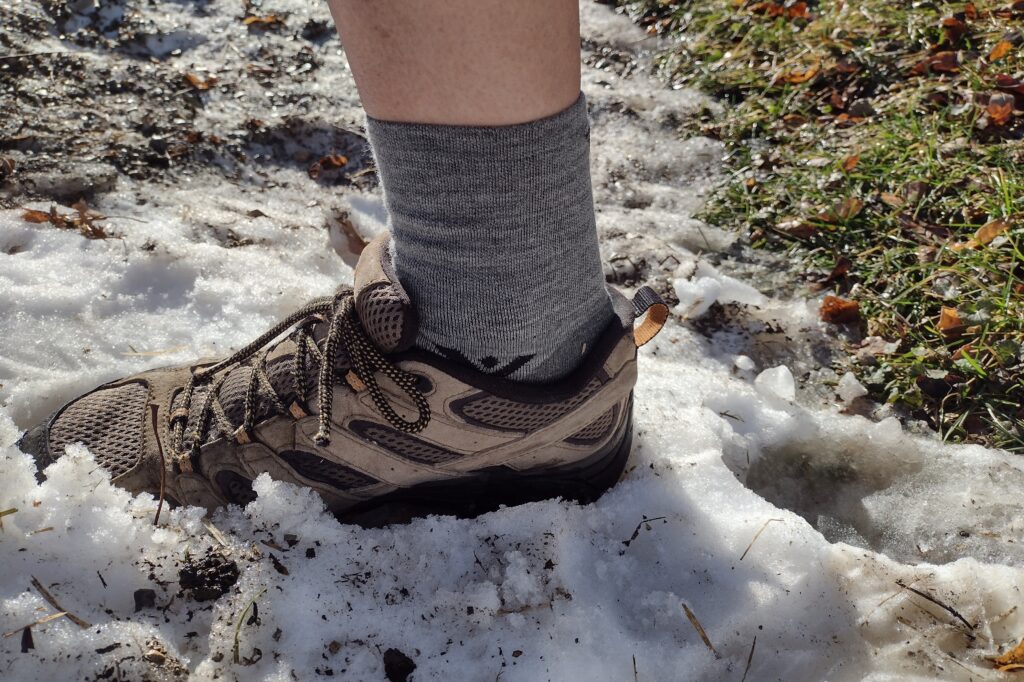
We test for durability by wearing socks for hundreds of miles over dozens of days on the trail – whether backpacking, hiking, or running – to see how different models withstand friction and repeated use over time. We look at the material composition, with the best of the best made from high-quality fibers like merino wool, nylon, or polyester blends that make for strong, long-lasting socks. We also evaluate seams, prioritizing socks with strong, flat seams that are less prone to rubbing and wear. We also assess how resistant socks are to repeated wash and dry cycles, which can begin to break socks down after multiple washes and cause pilling and shrinkage.
Conclusion
We hope this guide helps you find the best hiking socks for your needs. Choosing socks based on comfort, warmth, durability, and breathability will only make you feel more confident on your next hike. With the right socks, you can put your best foot forward on the trails.