

Bottom Line
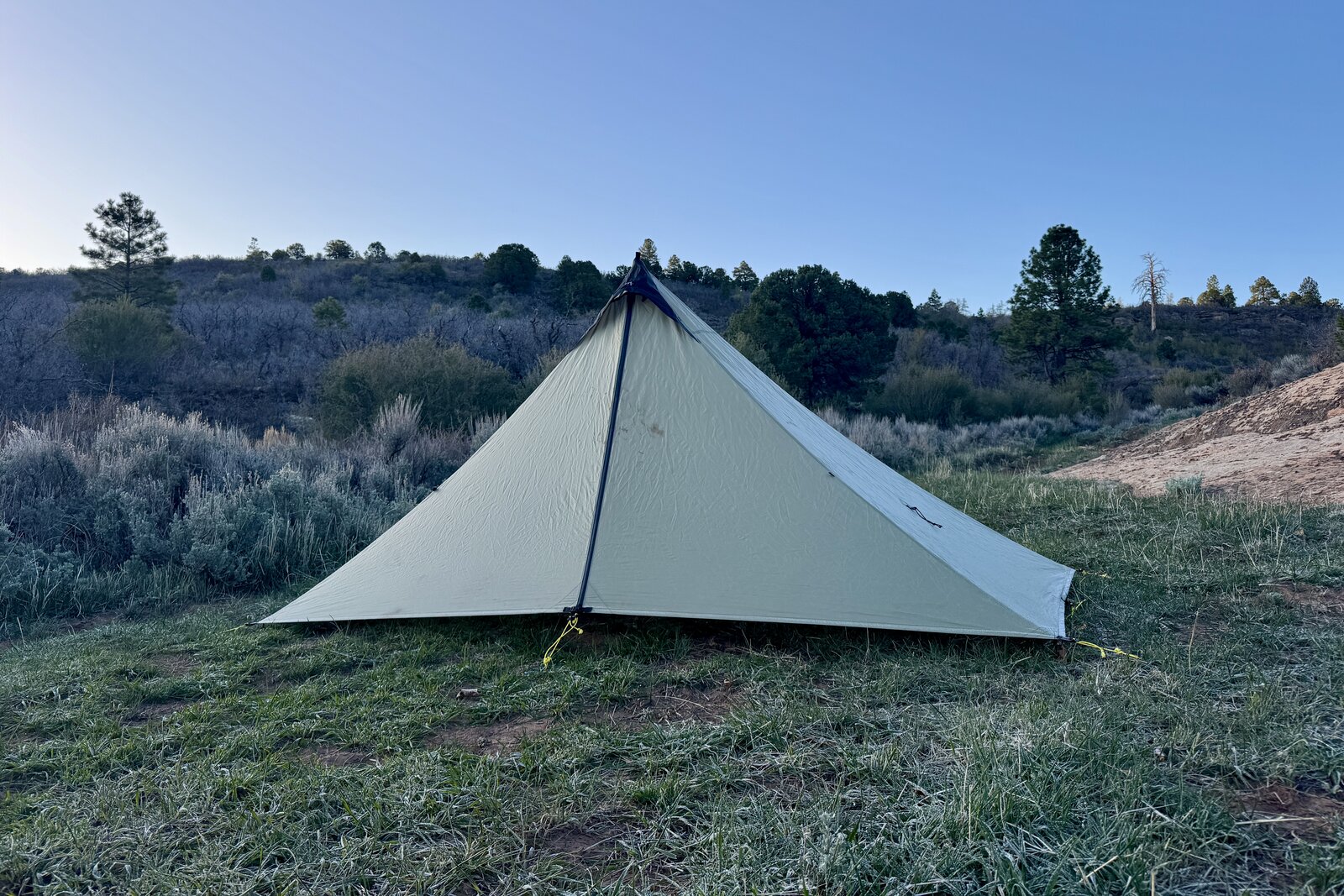
The Mountain Laurel Designs SoloMid XL is one of our favorite budget tents for serious ultralight backpackers and thru-hikers. This tent is incredibly light, weighing about a pound without any accessories and a pound and a half with tent stakes, guylines, and the pole extender. It is small and easy to stuff anywhere in a backpack, making it a great choice for those low on space or using low-volume backpacks.
Even though the SoloMid is certainly a one-person shelter, we were surprised to find that there is a ton of floor space. We were even able to comfortably share this tent with a large dog and all of our gear on a backpacking trip in the Petrified Forest. Because of the simple design, this tent does require a bit more skill to use successfully. It is fast to set up, but the pitch can be finicky, and care is needed to avoid waking up in a puddle on wet nights.
Overall, the SoloMid is subject to many of the benefits and drawbacks of a pyramid-style tent. With care and practice, this tent is an absolute steal for experienced ultralight backpackers trying to save money to spend on their next adventure.
How We Tested
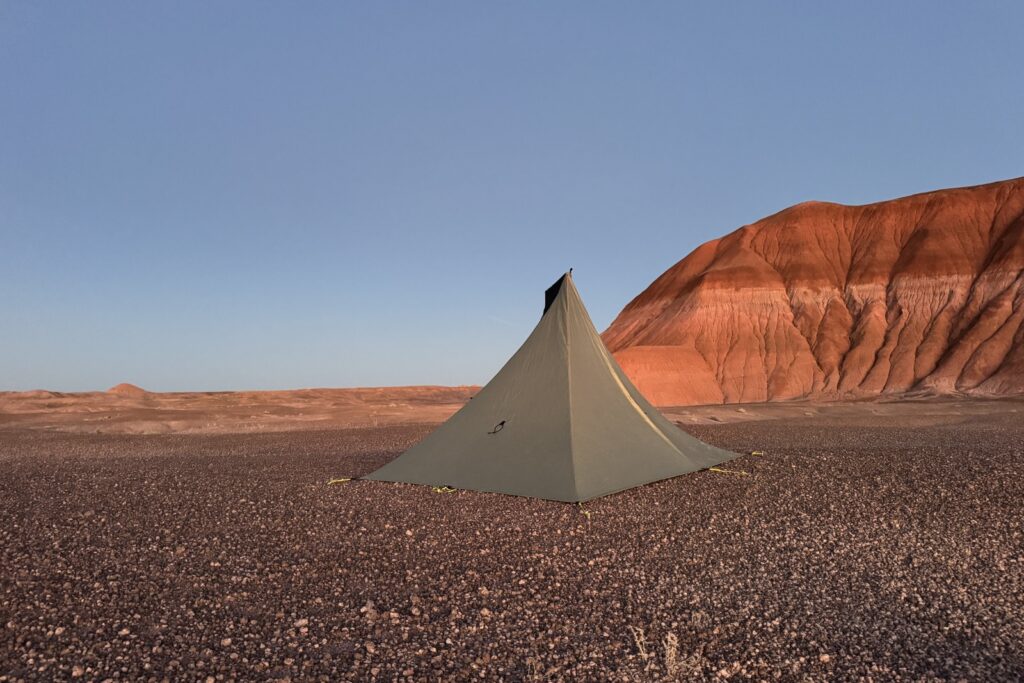
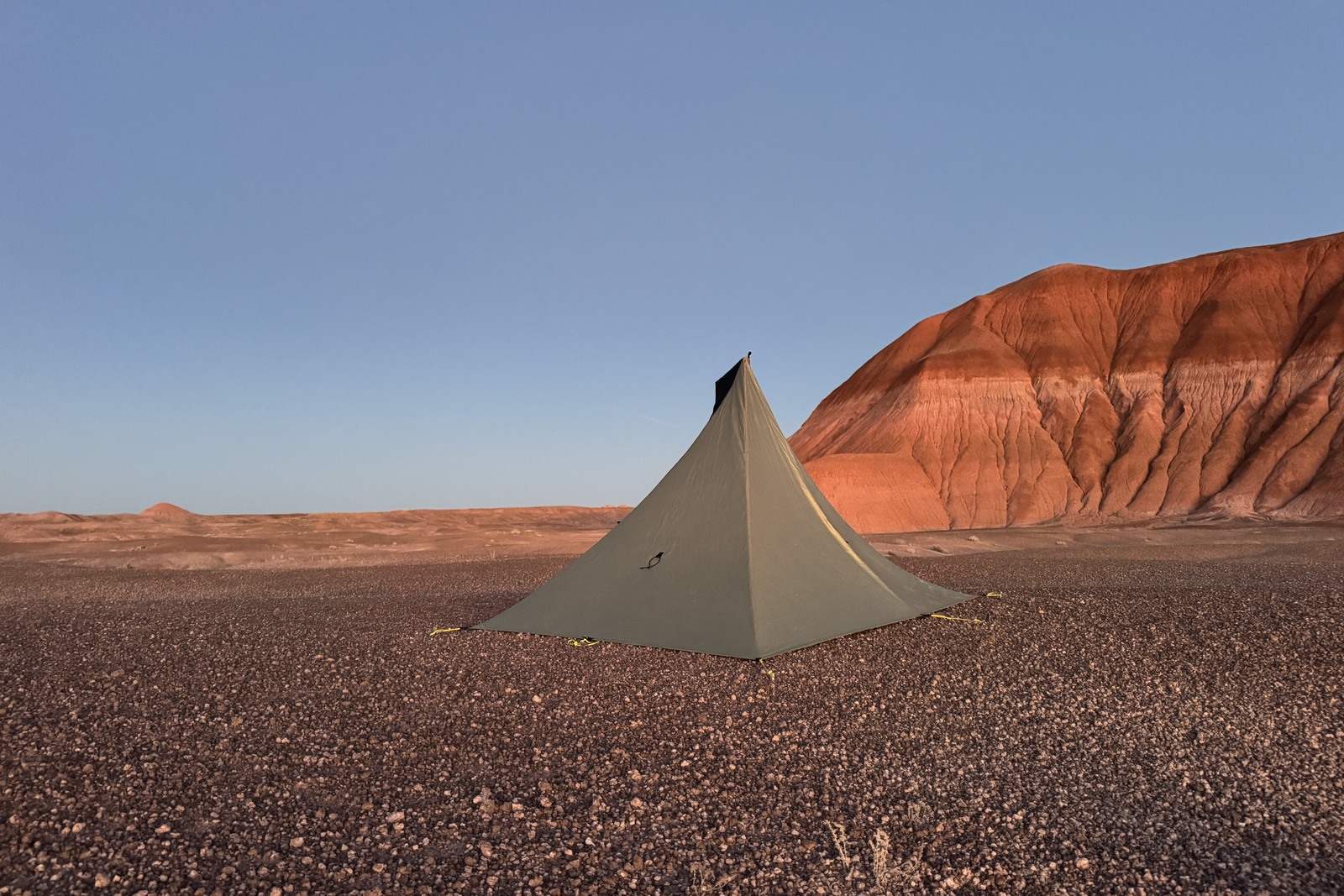
We tested the Mountain Laurel Designs SoloMid XL on backpacking trips in Petrified Forest National Park and in the canyon country of southeastern Utah. Conditions were dry, and the nature of camping out in the badlands is very little protection from wind. We shared the tent with a German Shepherd and a small terrier.
Quick Specs
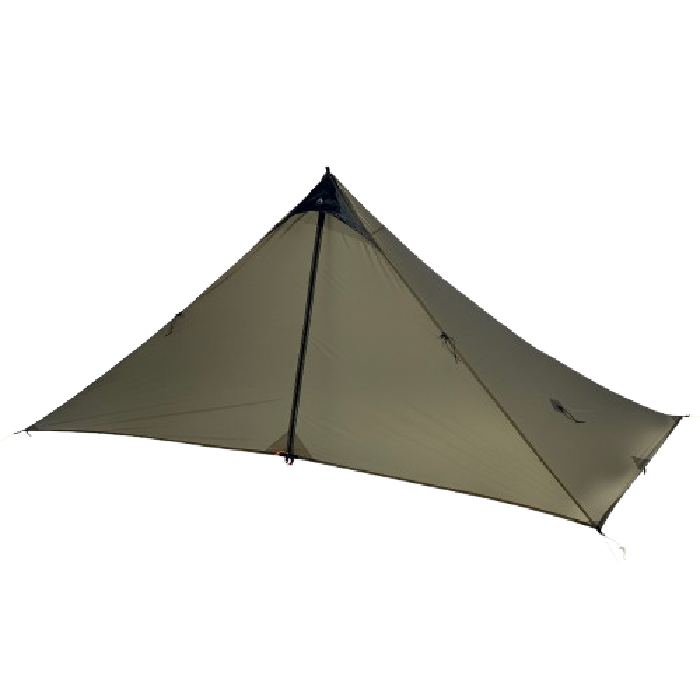
Mountain Laurel Designs SOLOMID XL
Best Ultralight Budget Tent
CleverHiker Rating: 4.4/5.0
Price: $275-295
Weight: 1 lb. 1.2 oz.
Dimensions (LxWxH): 9.2 x 4.2 x 4.4 – 38.2 sq ft
Type: Non-Freestanding
Pros
- Ultralight
- Extremely packable
- Excellent wind stability
- Durable
- Large footprint
- Great weight-to-cost ration
- Fast setup (with practice)
Cons
- Learning curve to setup
- Floorless design risks flooding
- Not great for beginners
- Seam sealing costs extra
- Zipper stress over time

Comfort
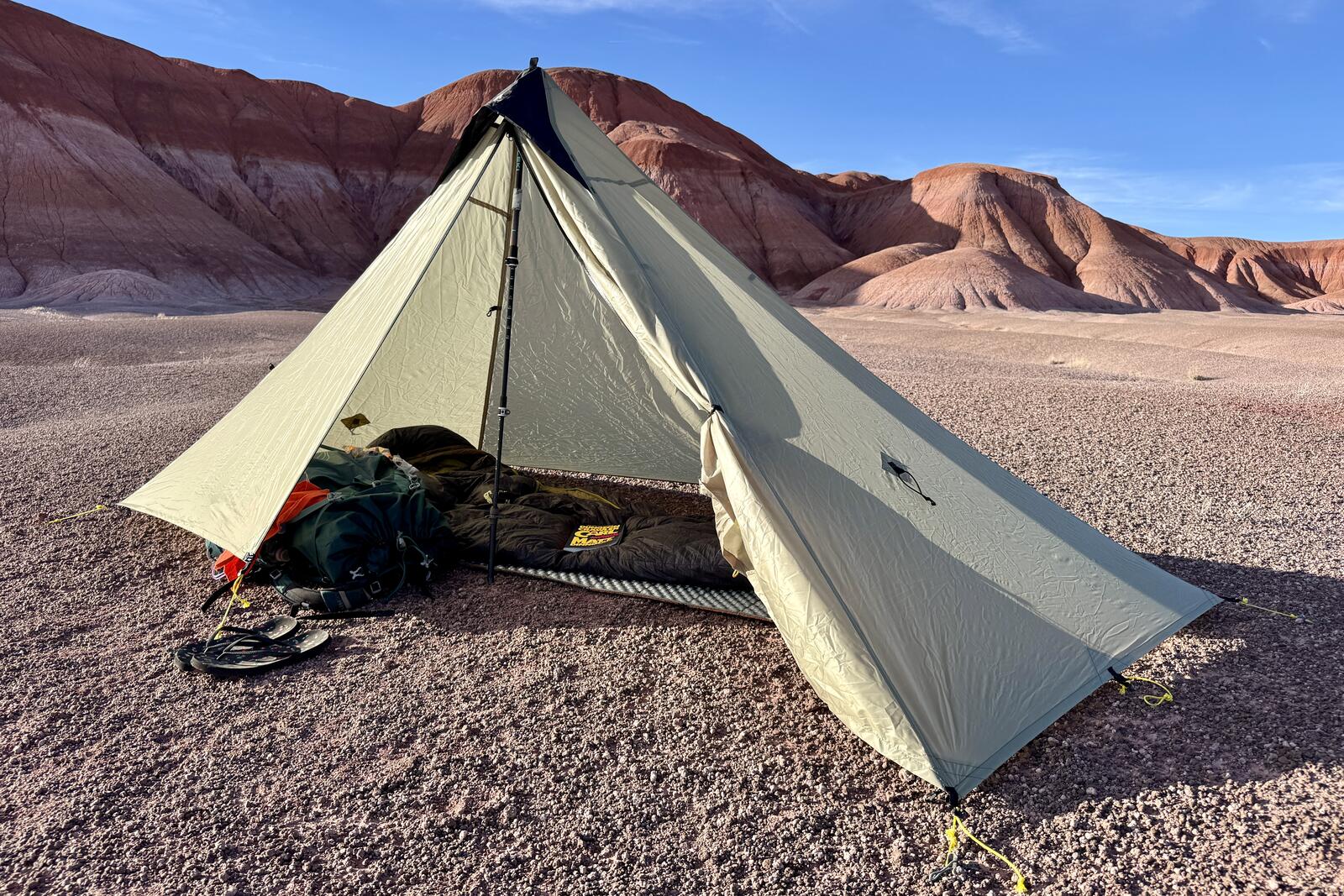
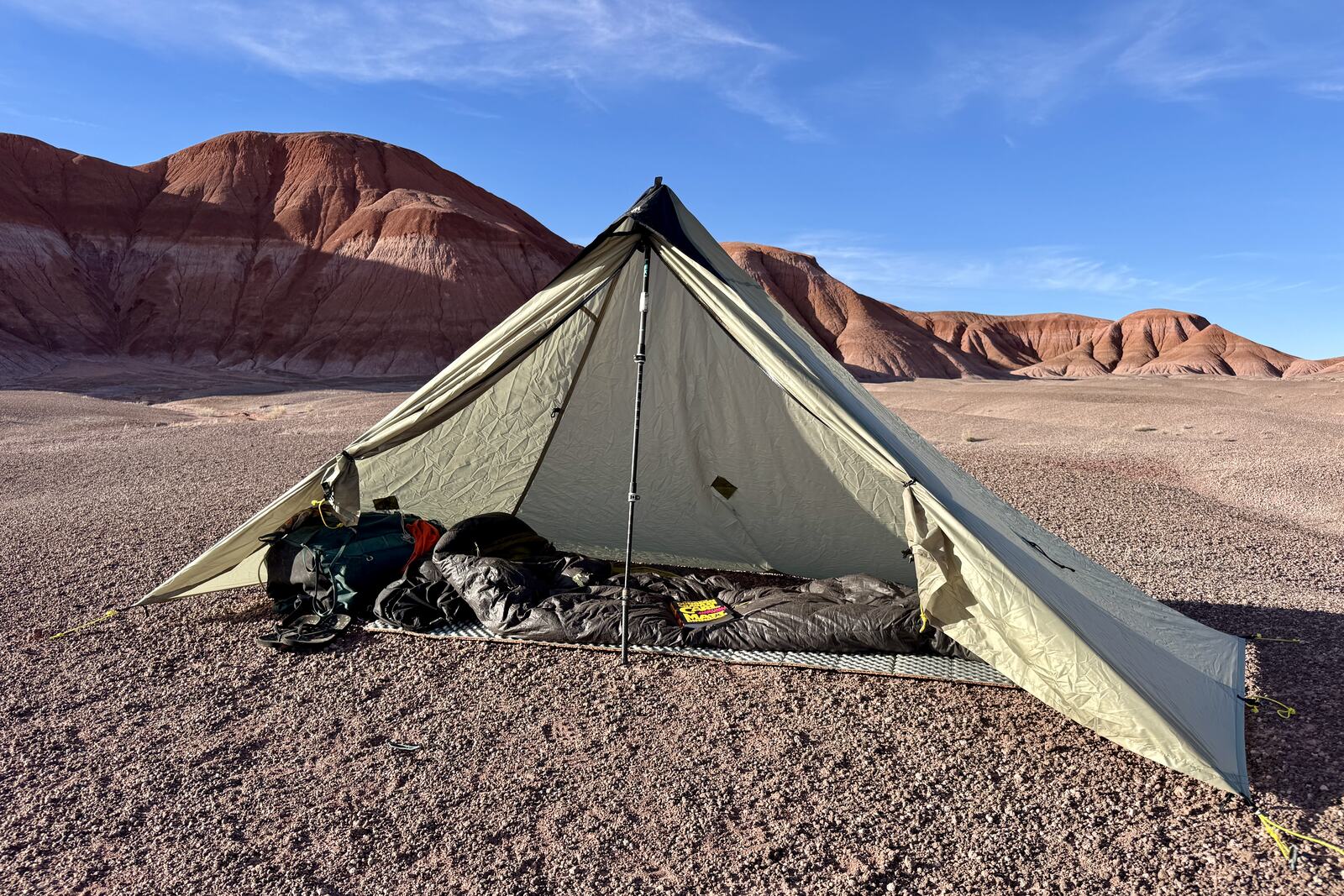
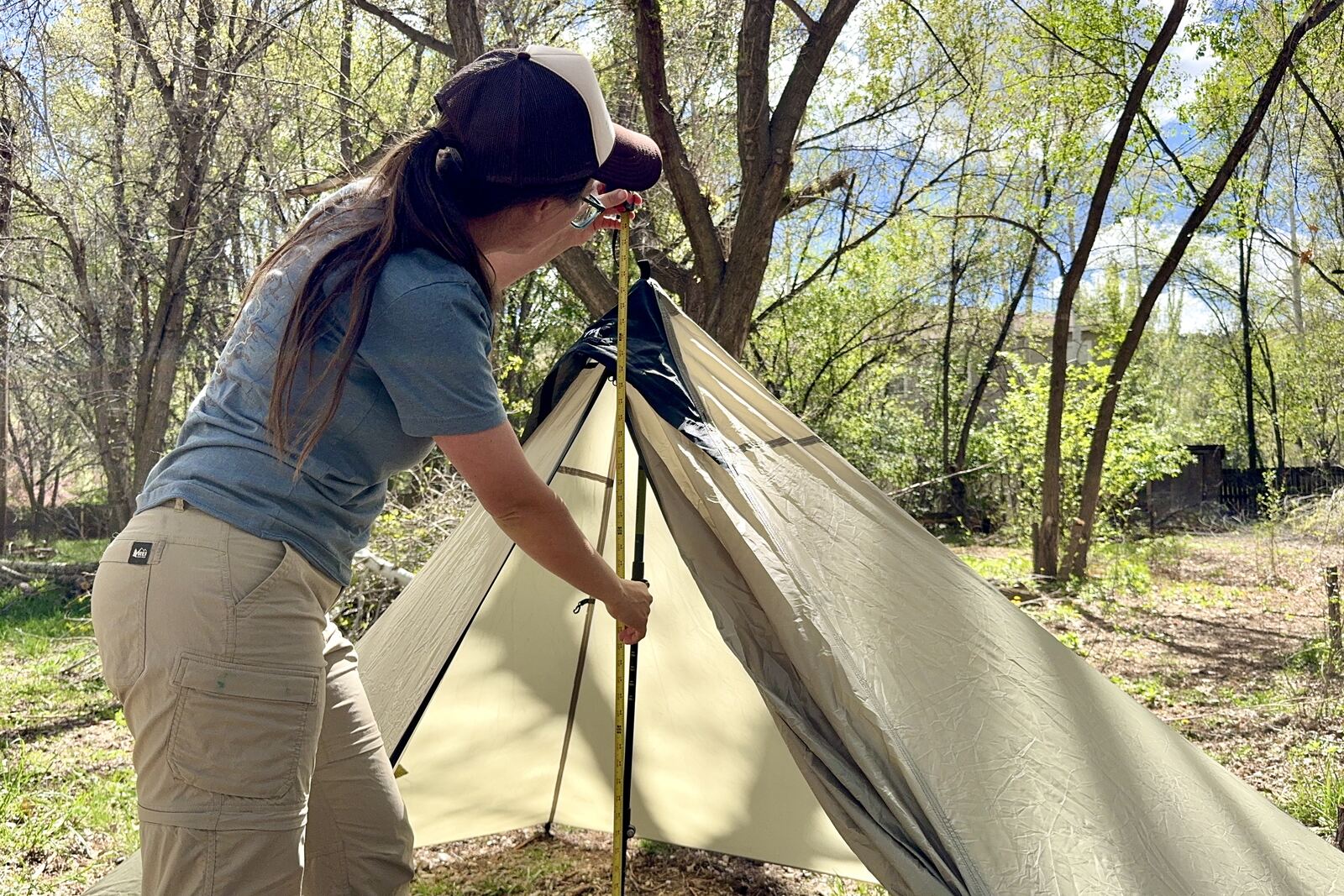
Even though the Mountain Laurel Designs SoloMid XL has a huge footprint, its sloped walls result in a tent only suitable for one person. Part of the testing process involved measuring the floor dimensions to calculate the total footprint area. When we did this for the MLD SoloMid, we were surprised to find that it was larger than many of the two-person tents in our lineup. We even re-measured it!
Sure enough, the floor space is huge, and we were able to fit an average-sized adult, gear, a German Shepherd Dog, and a small terrier inside this tent comfortably. That said, between the center pole and sloped walls, the SoloMid is certainly a one-person tent. The good news is that with over four feet of peak height, there is plenty of room to sit up in the middle of the tent.
From a door standpoint, either one or both doors can be opened to increase living space. This also provides options when getting in and out of the tent. Aside from this, the SoloMid is an ultralight tent with a streamlined design, so its features, such as pockets, are limited. Buyers may choose to purchase add-ons such as attachable floors and inner nets, but this will increase the overall weight and price of the tent.
Weather Resistance
The fabric of the Mountain Laurel Designs SoloMid XL is waterproof, but buyers should beware that seam sealing costs extra, and no floor will require close attention to campsite selection. Like many ultralight brands, MLD offers a range of customization, including whether or not their tents come seam-sealed. Those who do not choose to pay extra for this option will need to purchase the supplies and spend an hour or so doing it themselves.
We opted to test the seam-sealed version of this tent, and because the weather was dry on our backpacking trip at Petrified Forest, we tested the weather resistance by spraying the MLD tent with a hose for a few minutes. We specifically targeted the seams to see how they would hold up. Once we concluded the test, we found that the inside of the fabric was completely dry.
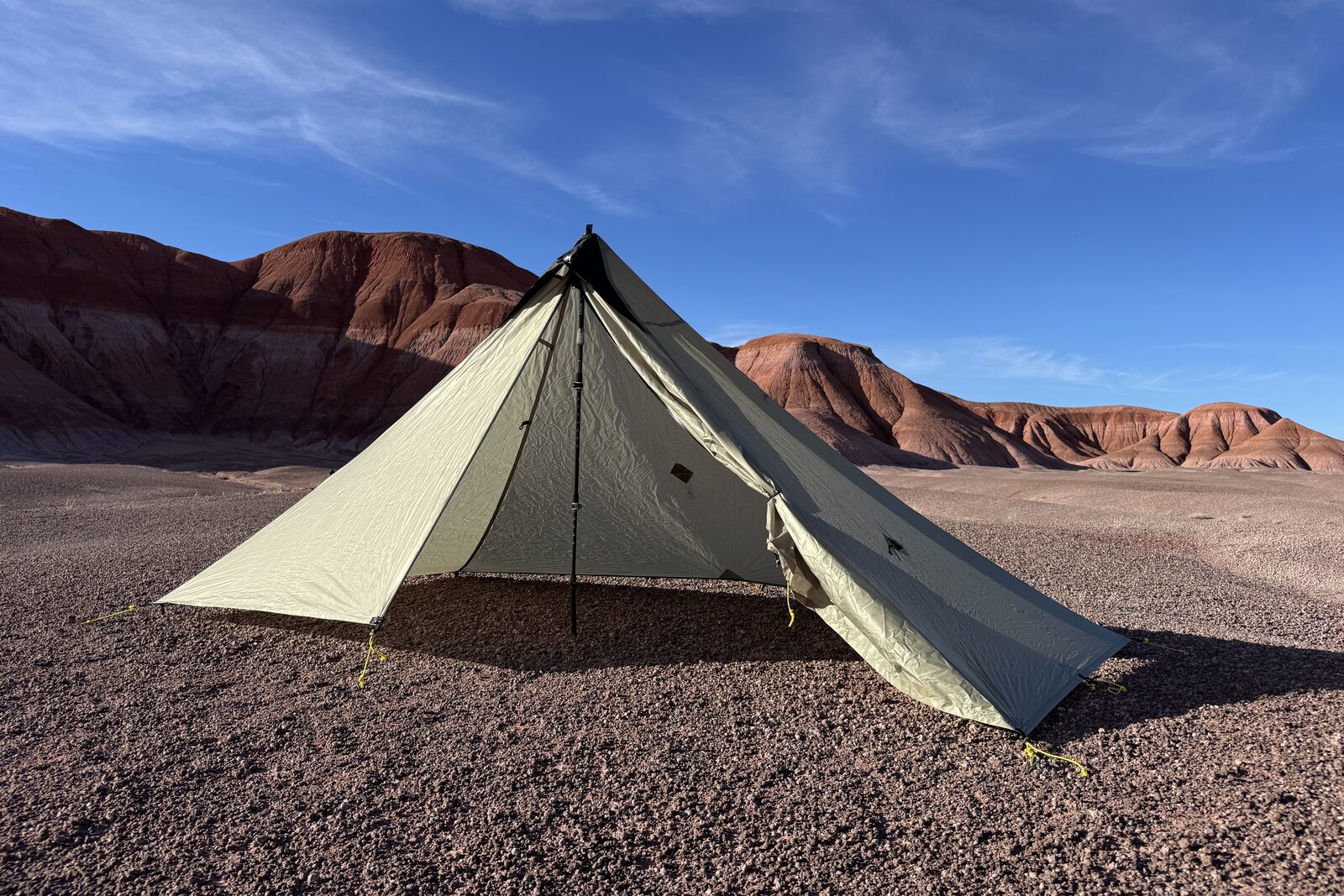
We feel confident that with proper seam sealing, users will stay dry from above. However, as a floorless tent, it is important to be aware of the risks of flooding. Campsite selection is crucial to ensure that a pleasant night of camping doesn’t end in a puddle. We do like that the edges of this shelter naturally pitch low to the ground, which helps to reduce splashback from rebounding raindrops. Finally, the pyramid-shaped design naturally stands up well to wind. That said, even though the risk of collapse is low, we were smacked in the face for several hours when camping in the badlands by the flapping fabric.
Durability
High-quality materials, a simple design, and the lack of a floor make for a durable design with the Mountain Laurel Designs SoloMid XL. The main thing users need to be aware of is zipper care. Even though Silpoly weighs a bit more, we prefer it over DCF for long-term durability. DCF tends to develop small holes when the strands get caught and pulled. Silpoly can still get small holes, but we find it happens less often.
Another huge advantage of this style of tent is the lack of a floor. This requires a higher degree of skill when avoiding flooding, but the benefit is that there is no need to worry about ruining the bottom of the tent. Campsites that have a large rock in an awkward spot are much more usable with a tent like the SoloMid because there is no floor to puncture. The mid shape of this tent also results in a very strong structure that will shed snow without collapsing and hold up to high winds.
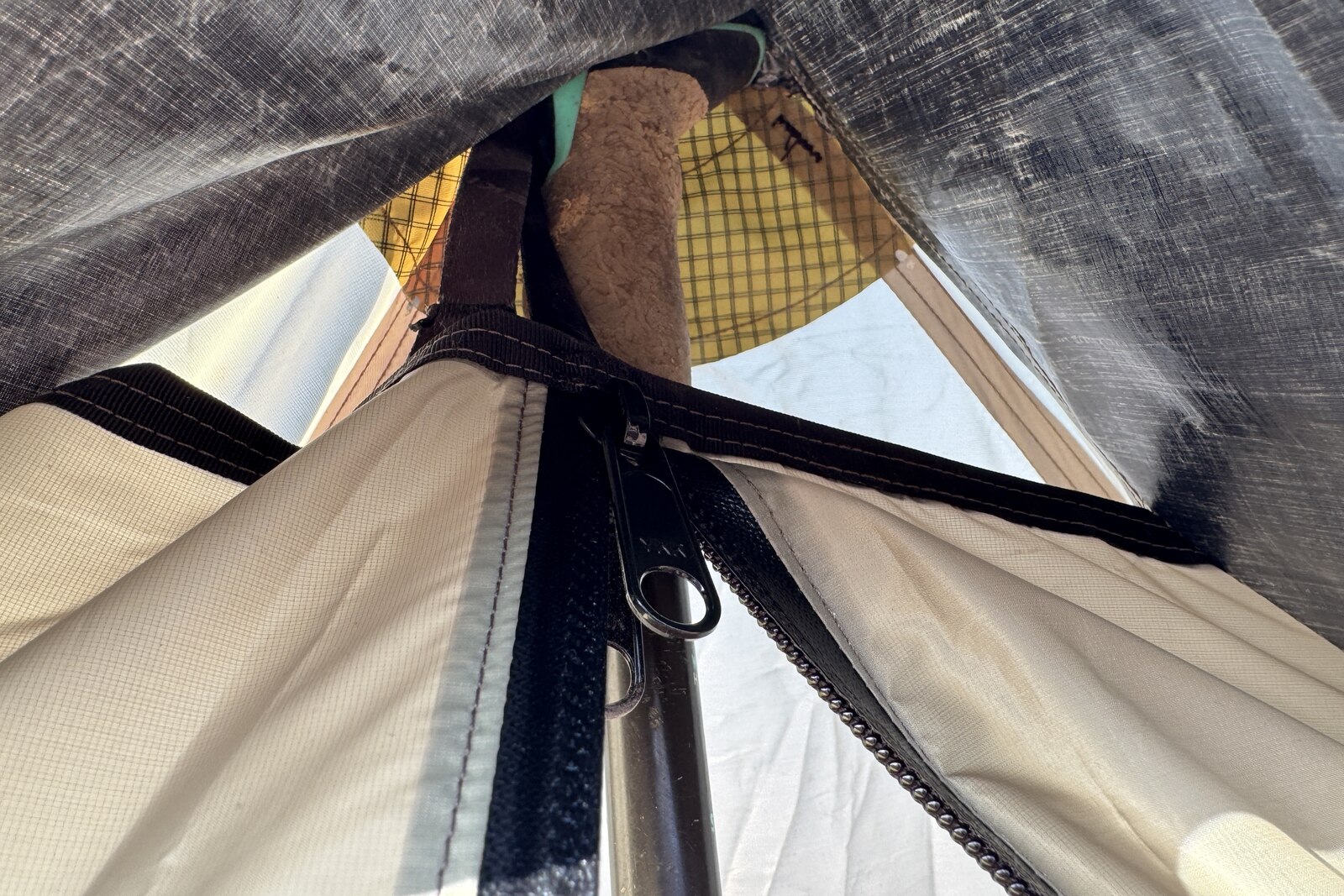
The biggest downside to tents like the SoloMid is the amount of stress on the zipper. Because it is a non-freestanding tent, there is a lot of tension needed to keep it upright. This pulls on the zipper, which can lead to extra wear and tear over time. Zippers are already the first part of any gear to wear out, and this is especially true with a pyramid tent. We do like that there is a buckle at the bottom to reduce stress on the zipper, but we would suggest that anyone who uses this tent treat the zipper with care to extend the life of the SoloMid.
Portability
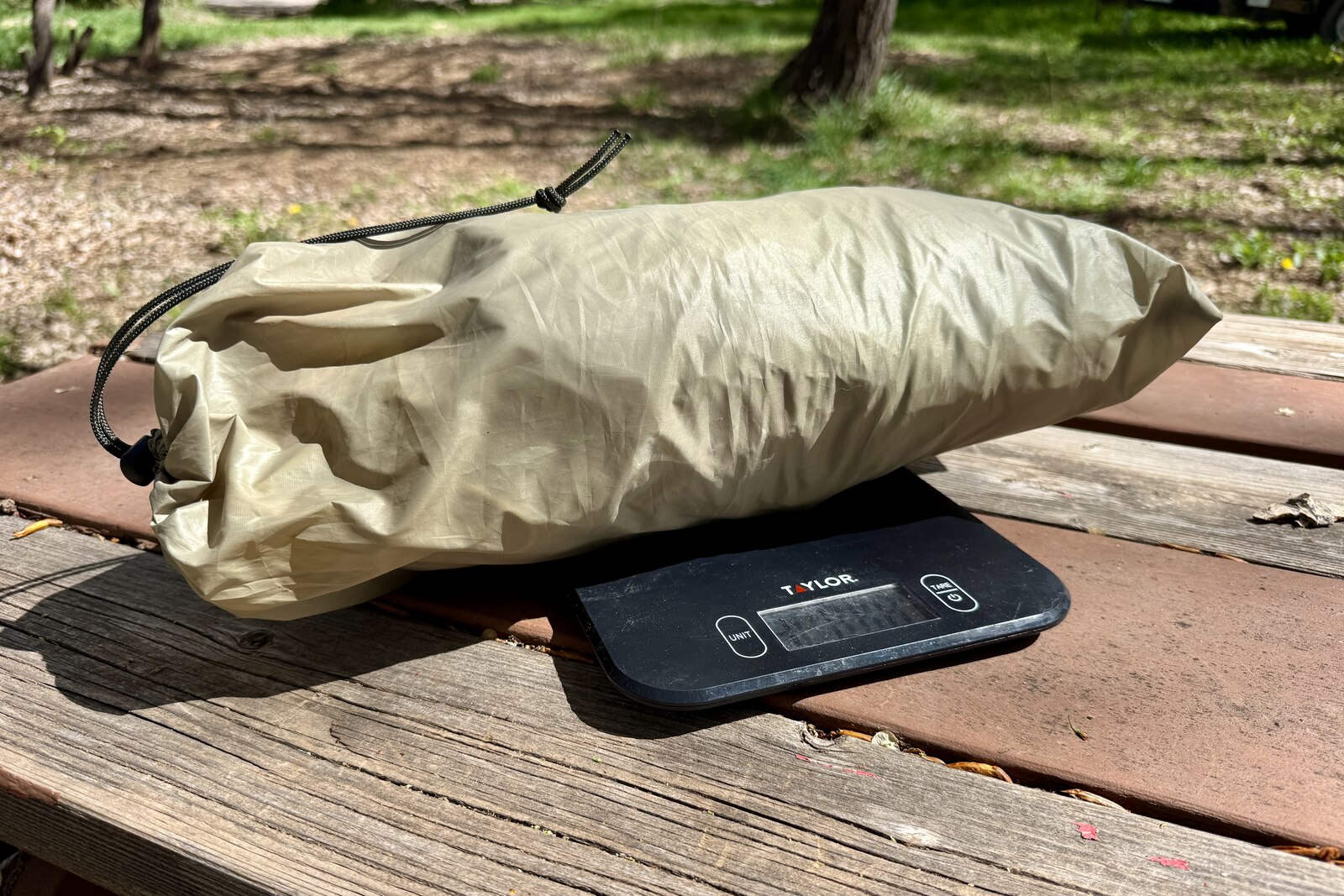
Another huge benefit to the simple, streamlined design of the Mountain Laurel Designs SoloMid XL is how easy it is to pack. No poles and no inner bathtub mean one less thing to carry. When we weighed the MLD SoloMid on our scale, it came in at just 1 lb and 7 ounces with tent stakes and pole extender in the storage bag. This is incredibly light, even compared to shelters that cost hundreds of dollars more than the SoloMid. The weight-to-price ratio of this tent makes it a compelling choice for ultralight backpackers.
Unsurprisingly, we also found that the SoloMid packs down really small. This makes it easy to stuff in any pocket of a backpack. We found this to be useful on our trip to Petrified Forest, as we had to carry all of our water for the entire trip. We were able to stuff the SoloMid into some creative locations, leaving room for the extra water at the beginning of the trip. We used the stuff bag on this trip, but because the SoloMid doesn’t include very many pieces, it is incredibly easy to just shove the tent loose into a pocket. Using a trekking pole instead of dedicated poles also reduces the number of “things” to carry. Overall, weight and portability are very strong areas for the MLD SoloMid.
Ease of Use
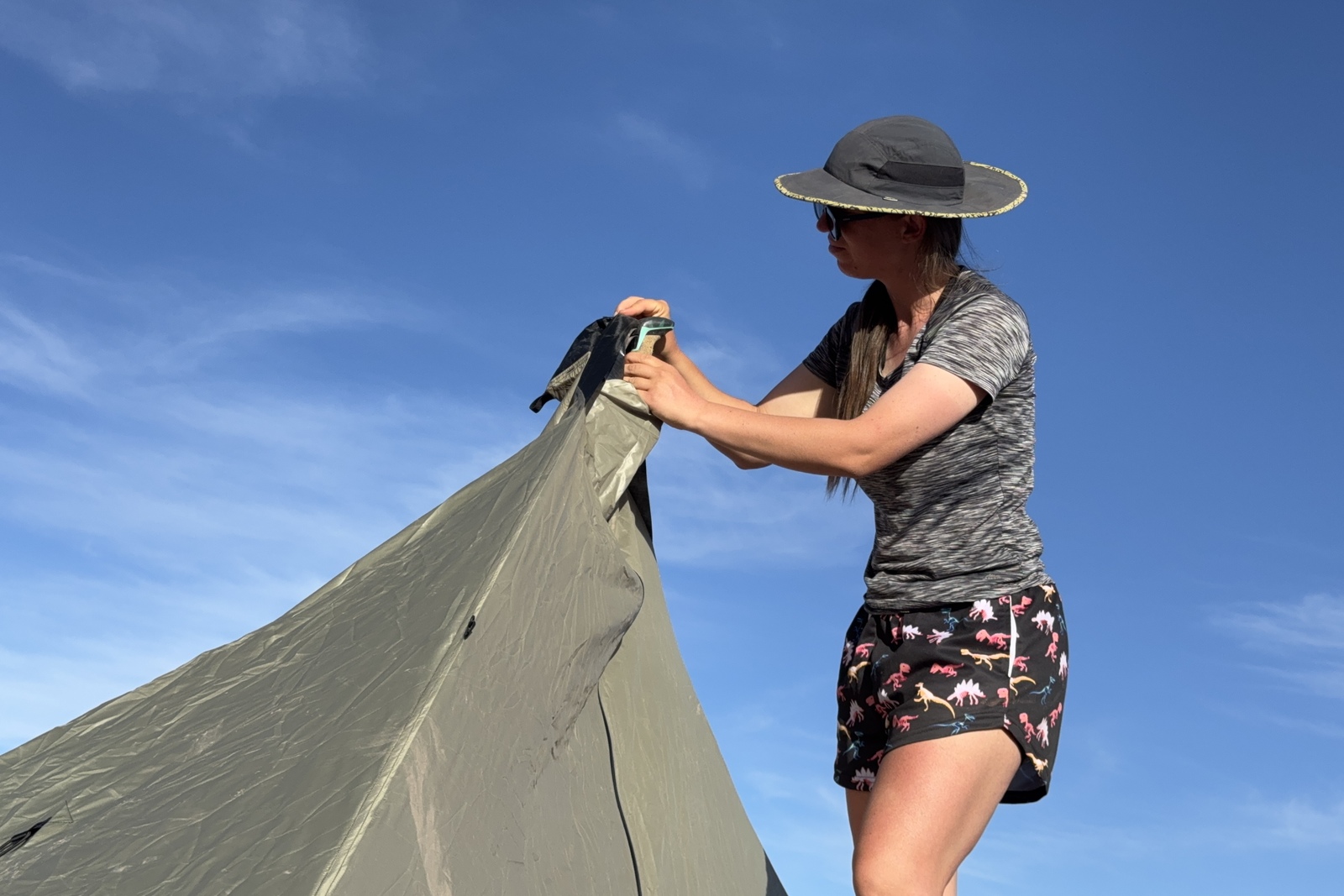
The Mountain Laurel Designs SoloMid XL is very fast to set up due to its simple design, but it also requires practice to get a good pitch. When we timed how long it took to set it up, it took us about two and a half minutes.
That said, one issue with many mid-style shelters is learning how to tension the corners and angle the center pole to get a good pitch on the corners. Oftentimes, what happens is if the corners are staked out as a parallelogram instead of as a rectangle, one or two of the corners will be curved, and the other two will be very sharp. This changes the amount of headspace inside the tent. It takes practice to get it right, and even then, it can depend on the cut of the individual tent and the day.
As mentioned in other sections, users also need to be much more aware of where they are pitching the tent. Just slapping it down anywhere can result in an unpleasant night if it rains. Choosing a campsite that is not in a depression is very important to avoid flooding. Likewise, campsite selection also plays a huge role in avoiding condensation on the inside of this single-wall tent.
We appreciate that the MLD SoloMid is very adjustable to the user’s needs, but it can also make the initial use time-consuming. If extra isn’t paid for seam sealing, that will need to happen before the first trip. We also had to spend an extra 10-15 minutes measuring out, cutting, and threading the guylines the first time we used the SoloMid. This is a one-time thing, but still something to consider, particularly for beginner backpackers. In conclusion, the SoloMid is very fast to set up for experienced backpackers, but is not the most beginner-friendly due to the more complicated pitch and consideration needed with campsite selection.
Should You Buy the Mountain Laurel Designs SoloMid XL?
We love that the Mountain Laurel Designs SoloMid XL is incredibly lightweight, fast to set up, and durable compared with a much more affordable price tag than its ultralight competitors. That makes the SoloMid an incredible choice for ultralight enthusiasts who are looking to save money on their next thru-hike.
That said, the SoloMid offers a very different experience from more traditional shelters and will likely not be the best choice for beginner backpackers. It also will not be suitable for anyone hiking with a partner.
What Other Budget Tents Should You Consider?
If the Mountain Laurel Designs SoloMid XL is a bit too ultralight and minimalist, we have tested plenty of other budget tents that we recommend checking out.
Six Moon Designs Skyscape Scout I Review: Weighing about a pound more than the SoloMid, the Skyscape Scout also offers more protection from the elements via a bathtub and bug net. This tent is a good compromise between the benefits of an ultralight shelter and the comfort of a traditional design.
Six Moon Designs Lunar Duo Outfitter Review: For an ultralight tent for two, the Lunar Duo provides a hybrid double-walled experience. It has plenty of space inside and also uses trekking poles to save weight.
River Country Trekker Tent 2V Review: Beginners looking for a light tent on a budget should consider the Trekker 2V. Even though it is a trekking pole tent, the pitch is easy to set up and the fully enclosed design makes it easy to choose a campsite.