
Bottom Line
The NEMO Dagger OSMO 2 is our favorite crossover tent for backpackers who want enough comfort for relaxed weekends and car camping without giving up a genuinely trail-worthy design.
Its rectangular floor, near-vertical walls, generous vestibules, and freestanding pole structure give two people far more usable room than most lighter tents. The OSMO fly also resists the wet-weather sag that is common with traditional silnylon.
The main tradeoff is weight. At a CleverHiker-measured 3 pounds, 15 ounces packed, the Dagger is much heavier than the Tiger Wall, Hornet, X-Mid, Unbound, or Duplex. If comfort and versatility matter more than an ultralight base weight, that penalty is easy to justify.

How We Tested
We evaluated the current Dagger OSMO 2 within our backpacking-tent category testing, focusing on two-person livability, packed weight, weather protection, setup, and durability. We also compared it directly with the Copper Spur, Hubba Hubba LT, and budget freestanding tents.
Quick Specs
- Best for: Backpacking and car-camping crossover use
- Floor area: 30.6 sq. ft.
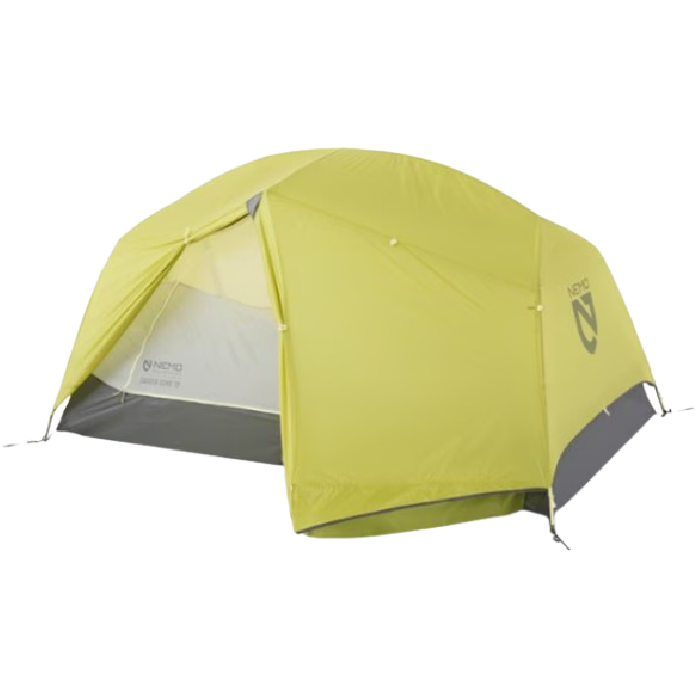
NEMO Dagger OSMO 2
Best Car & Backpacking Crossover Tent
CleverHiker Rating: 4.6/5.0
Price: $600
Packed Weight: 3 lb. 15 oz.
Dimensions (LxWxH): 88 x 50 x 43 in.
Type: Freestanding
Pros
- Spacious with large vestibules
- Freestanding design is quick and easy to set up
- Durable
- High-quality materials and construction
- Highly weather resistant
Cons
- Expensive
- Heavy

Comfort
Comfort is where the Dagger OSMO 2 separates itself from lighter two-person tents. Its rectangular 30.6-square-foot floor, nearly vertical walls, and 43-inch peak give two adults enough room to sit up, change clothes, and use the shelter without constantly working around one another. The generous length is also a welcome feature for taller sleepers.
The vestibules are unusually useful because they provide substantial protected space outside the sleeping area. NEMO’s gear-storage details, including light-diffusing pockets and the vestibule storage tub, make wet or muddy trips easier to manage by keeping small items organized and dirty gear off the tent floor. Two large doors mean each person has an independent entry and exit.
All of that livability comes with extra material and structure. The Dagger is not as airy or weight-efficient as a Hornet, Tiger Wall, or trekking-pole shelter, but those lighter tents also do not provide the same combination of floor shape, vestibule volume, and interior usability. For pairs who actually spend time hanging out in their tent, the Dagger’s extra ounces translate into noticeable comfort.
The Dagger’s comfort advantage is most obvious for two people. Its rectangular floor, vertical sidewalls, and large vestibules give partners more room for wide pads and bulky gear than many lighter shelters. That extra volume makes the tent feel relaxed rather than merely adequate, which is why it works so well for backpackers who prioritize camp comfort.
Comfort Score: 4.7 / 5.0

Weight & Packability
At a CleverHiker-measured 3 pounds, 15 ounces, the Dagger OSMO 2 sits firmly in crossover territory rather than the ultralight class. Split between two hikers, the load is very manageable for short and moderate backpacking trips, especially when both people value interior room. Car campers also benefit because the weight penalty buys a much more comfortable and substantial shelter.
The packed package is bulkier than the 2-to-3-pound tents in this guide, but it is still reasonable for a modern backpacking pack. Dividing the poles, fly, and body between partners is the most efficient way to carry it. Solo hikers will generally be happier with a lighter shelter unless the Dagger’s roomy interior is worth a large weight premium.
The key is to judge the Dagger against tents with similar livability and weather protection rather than against minimalist shelters. Its weight supports larger vestibules, robust fabrics, a sturdy freestanding pole system, and a broad rectangular floor. Long-distance hikers focused on mileage can save well over a pound elsewhere, but weekend backpackers may prefer the comfort.
The Dagger is heavier than the ultralight leaders, but the weight is buying real structure, floor area, and storage rather than unnecessary bulk. Splitting poles and soft goods between two hikers makes the load more reasonable. Solo hikers or high-mileage users have lighter choices, while pairs who value comfort can justify the additional weight more easily.
Weight & Packability Score: 4.0 / 5.0

Weather Resistance
The Dagger OSMO 2 is one of the stronger weather performers among roomy freestanding backpacking tents. Its OSMO fly resists the stretch and sag that can affect conventional silnylon after hours of rain, while pre-bent aluminum poles give the canopy useful structure in gusty weather. Multiple guy-out points let you reinforce the pitch when exposed campsites or a rough forecast call for it.
Large vestibules provide protected storage so wet packs and footwear do not have to come inside the sleeping area. The fly’s venting system can stay partially open in rain, helping move humid air without exposing the interior. NEMO’s vestibule tub is especially useful on muddy ground because it creates a dry zone for smaller gear.
A few details keep the Dagger from being perfect in storms. The fly-door arrangement can hang close to the entrance, so getting in and out during heavy rain requires some care, and larger vents would improve condensation management in humid conditions. Still, the overall combination of fabric, structure, and coverage makes it a reliable three-season shelter.
OSMO fabric, a full-coverage fly, a stable freestanding frame, and useful ventilation give the Dagger strong three-season weather performance. The fly’s reduced wet-weather sag helps preserve space and tension during extended rain. The shelter is not a four-season design, but its structure provides a reassuring margin for backpackers who encounter regular mountain storms.
Weather Resistance Score: 4.6 / 5.0

Ease of Setup
The Dagger’s fully freestanding architecture makes it quick and forgiving to pitch. The layout is symmetrical enough that orientation is easy to understand, and color-coded components reduce the odds of attaching the fly or poles incorrectly. For most users, it takes only a few minutes to move from packed tent to a secure shelter.
Because the body stands on its own, you can reposition the tent before staking it down if the first site is lumpy or poorly oriented. That is especially helpful in developed camps or rocky areas where the best stake positions are not obvious. Clips and attachment points are sturdy and uncomplicated, so there are few fussy steps once the pole set is assembled.
Bad-weather setup takes a little longer because the tent performs best when the vestibules and extra guy points are tensioned properly. Even then, the underlying pitch remains simpler than a trekking-pole shelter that depends on precise corner geometry. Beginners who want a roomy tent without a steep learning curve should find the Dagger very approachable.
The Dagger’s freestanding architecture makes it forgiving on imperfect campsites. Color coding and familiar pole geometry keep assembly intuitive, and the completed shelter can be repositioned before staking the vestibules. That flexibility is useful when roots, rocks, or uneven ground force small adjustments after the tent is already standing.
Ease of Setup Score: 4.7 / 5.0

Durability
The Dagger OSMO 2 is built more substantially than many tents aimed at cutting every possible ounce. Its ripstop OSMO fabric, sturdy zippers, dependable clips, aluminum pole structure, and robust stakes all feel designed for repeated use rather than occasional careful handling. That extra material is a major reason the tent performs so well as a crossover model.
The OSMO fabric also helps durability by resisting excessive stretch and maintaining waterproof performance over repeated wet trips. Compared with the thinnest ultralight tents, the floor and fly tolerate everyday abrasion and rougher campsite use with more confidence. We still recommend sensible site selection, but the Dagger does not demand the same level of babying as a 15-denier shelter.
The tradeoff is straightforward: durability costs weight and money. Backpackers who only care about the lightest possible shelter may not value the added material, while frequent campers often will. For people who want one tent to handle both backcountry trips and regular frontcountry use, the Dagger’s construction is a meaningful advantage.
The Dagger uses a more substantial construction package than many ultralight tents, with sturdy poles, reliable clips, and durable fabrics that tolerate repeated use well. It still benefits from normal campsite care, but owners do not need to baby it like the thinnest minimalist shelters. That durability helps explain why the weight remains acceptable for many two-person teams.
Durability Score: 4.5 / 5.0

Should You Buy the NEMO Dagger OSMO 2?
Buy the Dagger OSMO 2 if you want generous two-person space, excellent weather protection, and an easy freestanding pitch—and you are willing to carry extra weight for those benefits.
Skip it if you routinely hike big-mile days and prioritize low pack weight above camp comfort.

What Other Backpacking Tents Should You Consider?
Big Agnes Copper Spur UL2 Review: The Copper Spur UL2 is the better all-around option for backpackers who want similar freestanding convenience at a substantially lower weight. It remains very comfortable for two and offers excellent storage, but it gives up some of the Dagger’s cavernous vestibule space and burly crossover feel. Choose the Copper Spur for mileage and versatility; choose the Dagger for room and durability.
MSR Hubba Hubba LT 2 Review: The Hubba Hubba LT 2 is another sturdy freestanding tent with strong weather performance and an easy rectangular sleeping area. It comes in lighter than the Dagger while retaining a very dependable pole structure and good interior organization. The Dagger is more crossover-oriented and roomier, while the Hubba Hubba LT is the better fit for pairs who hike farther.
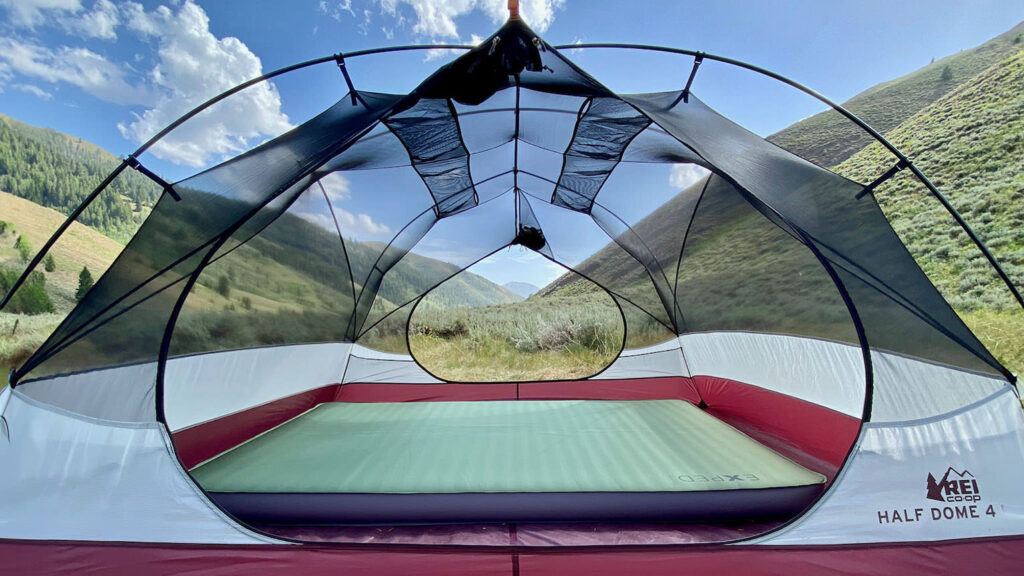
REI Half Dome 2 Plus Review: The Half Dome 2 Plus costs far less and provides even more floor width and overall sleeping space. It is also much heavier and bulkier, so it works best for short backpacking trips, split carries, and car camping. If value and room matter most, the Half Dome is compelling; if you want a more refined trail package, the Dagger is easier to carry.
More NEMO Dagger OSMO 2 Photos

The interior of the NEMO Dagger Osmo 2 is incredibly spacious. – Photo Credit: Ian Krammer (CleverHiker.com)

The hubbed aluminum pole system is easy to set up and durable in rough weather. – Photo Credit: Ian Krammer (CleverHiker.com)

The NEMO Dagger Osmo 2 is equally at home in the backcountry and the frontcountry. – Photo Credit: Ian Krammer (CleverHiker.com)

There’s a ton of space for storage in the vestibules of the NEMO Dagger Osmo 2. – Photo Credit: Ian Krammer (CleverHiker.com)

the triangular door is easy to open with one hand. – photo credit: casey handley (cleverhiker.com)

Engineered for comfort, durability, and efficiency, the Dagger hits the nail on the head for most of our must-haves in a backpacking tent. – photo credit: heather eldridge (cleverhiker.com)

The SYMMETRICAL layout and color-coded poles and clips make the NEMO Dagger Osmo 2 easy to set up. – Photo Credit: Ian Krammer (CleverHiker.com)

The high-performance rainfly provides an added layer of protection, ensuring you stay dry even in torrential downpours. – Photo Credit: Ian Krammer (CleverHiker.com)

Durable zippers meet at the corner of the doors so you can open them with one hand easily. – Photo Credit: Ian Krammer (CleverHiker.com)

The Dagger OSMO 2 packs down compactly, making it a solid choice for space-conscious backpackers. – Photo Credit: Ian Krammer (CleverHiker.com)

The Dagger’s user-friendly design directly translates to a fast and efficient setup, so you can focus on exploring instead of struggling with your gear. – Photo Credit: Ian Krammer (CleverHiker.com)

Stash your small and medium items in any of the various pockets that are easy to reach. – Photo Credit: Ian Krammer (CleverHiker.com)

The light-yellow fabric of the Nightlight Pocket diffuses your headlamp beam into a soft light that’s helpful on dark nights.- Photo Credit: Ian Krammer (CleverHiker.com)

Two enormous interior and rainfly doors make exiting and entering this tent as easy as it gets. – Photo Credit: Ian Krammer (CleverHiker.com)

Unique clip systems make the Dagger fast and easy to pitch, even for beginners. – Photo Credit: Ian Krammer (CleverHiker.com)

The simple rainfly clip system attaches to the brow pole easily and stays put in torrential rain and high winds. – Photo Credit: Ian Krammer (CleverHiker.com)

The tent clips directly onto the brow pole with a rounded hub system that is flexible but strong in gusts. – Photo Credit: Ian Krammer (CleverHiker.com)

The unique rainfly clips attach directly to both the brow pole and the mesh interior for added reliability. – Photo Credit: Ian Krammer (CleverHiker.com)

We’re big fans of the hook and pully tiebacks on the rainfly and interior doors. – Photo Credit: Ian Krammer (CleverHiker.com)

NEMO’s top-quality components like clips and hooks offer druability that will last for years. – Photo Credit: Ian Krammer (CleverHiker.com)

With its generous headroom and two-person width, the Dagger OSMO 2 provides ample space for a cozy night of sleep. – Photo Credit: Ian Krammer (CleverHiker.com)

The large footprint of the Dagger offers excellent livability with plenty of storage. – Photo Credit: Ian Krammer (CleverHiker.com)