Bottom Line
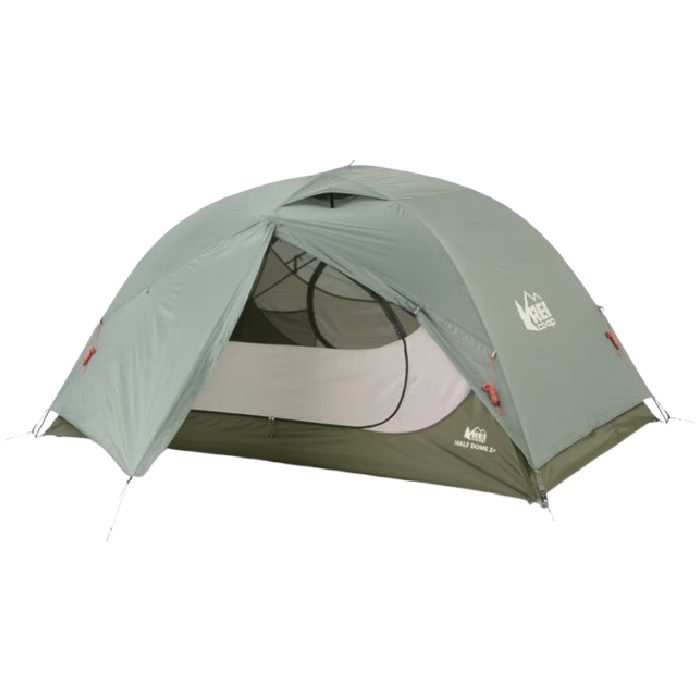
The REI Half Dome 2 Plus is our Best Budget Backpacking Tent because it delivers exceptional space, comfort, durability, weather protection, and easy setup for $369; the cheaper Trailmade 2 remains our Most Affordable pick.
Its 35.8-square-foot floor is the largest in our current lineup, and the 56-inch width makes it easy to use two wide sleeping pads without feeling crowded. The included footprint and thick floor fabric also make it unusually durable.
The penalty is weight: our packed measurement is 6 pounds, 3.6 ounces including the footprint. We recommend it most for couples who can split the load, beginners, short-to-moderate backpacking trips, and people who want one roomy tent for both backcountry and frontcountry use.
How We Tested
We evaluated the current Half Dome 2 Plus within our backpacking-tent lineup for two-person comfort, measured packed weight, weather resistance, setup, and durability. We compare it most directly with the Trailmade and Dagger as crossover-oriented shelters.
Quick Specs
- Best for: Budget-focused pairs who prioritize comfort and durability
- Floor area: 35.8 sq. ft.
REI Half Dome 2 Plus
Best Budget Backpacking Tent
CleverHiker Rating: 4.4/5.0
Price: $369
Packed Weight: 6 lb. 3.6 oz. including footprint
Dimensions (LxWxH): 92 x 56 x 42 in.
Type: Freestanding
Pros
- Good value
- Very roomy interior
- Durable
- Quick and easy setup
- Footprint included
Cons
- Heavy
- Bulky


Comfort
Comfort is the Half Dome 2 Plus’s defining strength. The current 92-by-56-inch floor provides 35.8 square feet of space, and the 42-inch peak plus hubbed ridge-pole architecture keeps the upper walls far more vertical than a basic dome. Two adults can use wide pads and still have breathing room around the edges.
Interior storage is generous enough to keep small items off the sleeping surface. Sidewall and overhead pockets give each person convenient places for headlamps, phones, layers, and other essentials, while two large doors prevent the awkward climbing-over-your-partner routine. The dual vestibules add covered space for shoes and wet gear.
The Half Dome is one of the few two-person tents in our lineup that truly feels designed around two people rather than one person plus a guest. That makes it excellent for couples, a hiker with a dog, or anyone who expects to spend time inside during bad weather. Its comfort score is high because the penalty for all this space is mostly carried on your back, not felt at camp.
That generous footprint is the main reason to accept the Half Dome’s extra weight. Two people can use wider sleeping pads, keep more gear inside, and sit up without feeling squeezed against sharply sloping walls. For hikers who value a roomy camp experience more than a low base weight, the added floor width and familiar two-door layout make the tent especially easy to live with.
Comfort Score: 4.9 / 5.0

Weight & Packability
At a CleverHiker-measured 6 pounds, 3.6 ounces including the footprint, the Half Dome 2 Plus is the heaviest tent in this backpacking lineup. It is much closer to a car-camping shelter than an ultralight tent, and carrying the complete package solo on a long trip will feel punishing. We strongly prefer splitting the components between two people.
The thick fabrics, substantial hubbed pole system, large floor, and included footprint explain the weight. The stuff sack compresses the bundle as much as it reasonably can, but the package still fits best in a larger backpack or divided between partners. This is not the tent to choose if you are trying to shrink a 40-liter thru-hiking kit.
For short-to-moderate trips, the equation changes. Two people can divide the load and each carry a manageable share while enjoying far more room at camp than most lighter tents provide. The Half Dome makes sense when comfort and price matter enough to accept a major weight penalty.
The packed weight makes the Half Dome a poor fit for hikers focused on mileage or ultralight loadouts, but it is easier to justify when the load is split between two people. The included footprint also means the published package includes an item many lighter tents sell separately. Even so, its bulk remains one of the clearest compromises in this category.
Weight & Packability Score: 3.5 / 5.0

Weather Resistance
The Half Dome 2 Plus is built with substantial weather-protection materials, including a full rainfly, high bathtub floor, and reinforced fabric package. Its current construction uses much heavier materials than most ultralight tents, which gives the fly and floor a reassuring feel in sustained rain. Seam sealing and waterproof coatings complete the system.
The strong hubbed aluminum pole structure and integrated ridge bar add rigidity in wind. Multiple guy points let you brace the tent when the forecast calls for exposed or stormy conditions, and the broad footprint remains stable once fully anchored. The generous fly coverage also protects the large interior and vestibules from splash.
Ventilation benefits from the mesh canopy, dual doors, and dedicated fly vents. Because the tent is large, careful tensioning still matters so the fly stays clear of the inner in wet weather. Overall, the Half Dome’s weather confidence is a major reason it works so well as a crossover shelter.
The heavier structure contributes to a reassuring feel in ordinary three-season storms. A full-coverage fly and substantial bathtub floor provide straightforward rain protection, and the freestanding frame maintains useful interior separation from wet fabric. It is still a backpacking tent rather than a four-season shelter, but its weight and materials buy a larger margin than most ultralight designs.
Weather Resistance Score: 4.7 / 5.0
Ease of Setup
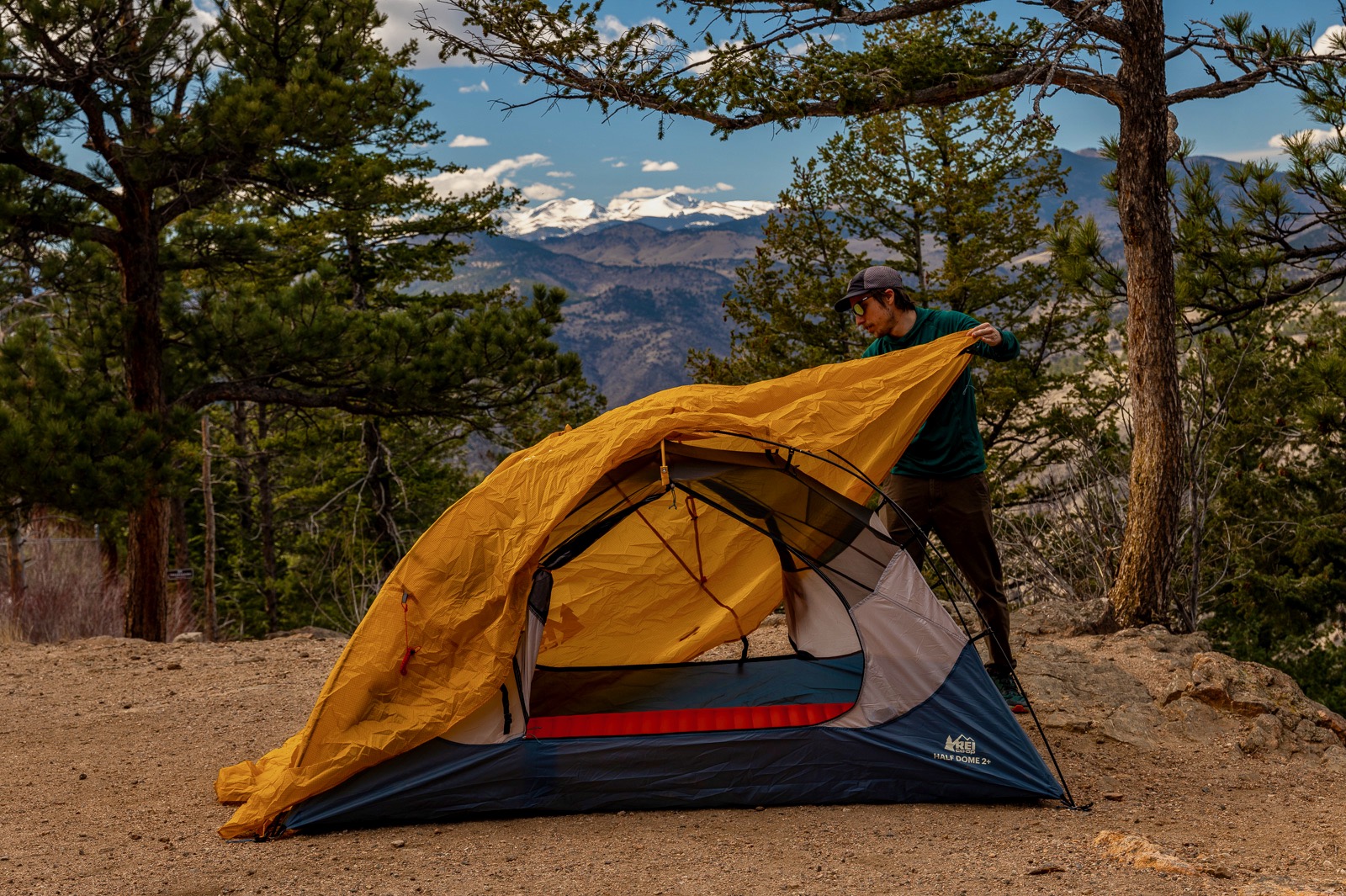
The Half Dome 2 Plus combines a large, sturdy structure with a surprisingly simple pitch. The hubbed pole set is color-coded and effectively non-directional, the inner clips on quickly, and the fly is easy to orient once the doors are aligned. Most users can have the tent standing securely within a few minutes.
Freestanding architecture makes the tent forgiving on imperfect sites. You can pick it up and shift it after assembly, shake out debris, or rotate the doors toward a better view before committing to stakes. That flexibility is especially useful for beginners who may not recognize the best orientation before they start pitching.
The only real downside is handling a large, heavy tent body and pole set compared with minimalist shelters. There are more square feet of fabric to spread out and pack away, but the actual sequence is straightforward. For the amount of interior space you get, setup is exceptionally easy.
For newer backpackers, that simplicity has real value. The tent does not require careful trekking-pole height, unusual stake geometry, or a perfectly rectangular footprint to stand correctly. You can assemble it, move it to the best patch of ground, and then finish the stakeout, which reduces frustration on crowded or awkward campsites.
Ease of Setup Score: 4.8 / 5.0

Durability
The Half Dome 2 Plus is one of the most durable shelters in our backpacking category. Heavy floor and canopy fabrics, a strong hubbed aluminum pole set, robust grommets, and proven hardware tolerate abrasion and everyday mistakes far better than ultralight materials. The included footprint gives the already substantial floor another layer of protection.
This construction is particularly useful for rocky campsites, frequent frontcountry use, dogs, and newer campers who may not treat a tent as delicately as a thru-hiker would. Reinforced stress points and substantial stakes further reduce the sense that every rough campsite is a threat. It is the kind of shelter we expect to last for many seasons with basic care.
Again, the cost of this durability is weight and bulk. There are lighter tents that will also last a long time in careful hands, but few offer this much margin for rough use at a comparable price. The Half Dome is a strong value for buyers who would rather carry more than replace gear sooner.
That durability is one of the strongest arguments for the Half Dome if you expect frequent use, shared gear, or less-than-perfect campsites. Its materials and hardware tolerate more routine abuse than ultralight shelters, and the included footprint adds another layer of floor protection. The tradeoff is obvious on the scale, but the tent asks for less delicate handling.
Durability Score: 4.8 / 5.0

Should You Buy the REI Half Dome 2 Plus?
Buy the Half Dome 2 Plus if you want maximum two-person comfort and durability at a reasonable price and do not mind carrying a heavy tent.
Choose the Trailmade if cost is the overriding concern, or a premium tent if you expect to hike long distances regularly.

What Other Backpacking Tents Should You Consider?
REI Trailmade 2 Review: The Trailmade 2 is cheaper, a little lighter, and even simpler in construction. It gives up a lot of the Half Dome’s headroom, interior storage, and two-person comfort because it lacks the same ridge-pole architecture. Choose the Trailmade for the lowest entry price; choose the Half Dome when livability is worth the extra money and weight.
NEMO Dagger OSMO 2 Review: The Dagger OSMO 2 is a much lighter premium crossover option with excellent room, huge vestibules, and refined weather-resistant materials. It costs substantially more, but it is far easier to carry on regular backpacking trips. The Half Dome wins on value and maximum floor width, while the Dagger offers a better trail-to-camp balance.
Big Agnes Copper Spur UL2 Review: The Copper Spur UL2 is dramatically lighter and more trail-focused while staying fully freestanding and very comfortable. It costs more and does not match the Half Dome’s massive 56-inch width, but it is a far better choice for high-mileage backpacking. The Half Dome is the budget comfort specialist; the Copper Spur is the premium all-arounder.
More REI Half Dome 2 Plus Photos

The tent’s symmetrical design means it doesn’t matter which way the fly goes. – Photo Credit: Colin McKinley (CleverHIker.com)

The Classic metal grommet attachments are super durable. – Photo Credit: Colin McKinley (CleverHIker.com)

The half dome features a hubbed pole design for extra durability and rigidity. – Photo Credit: Colin McKinley (CleverHIker.com)

The door tie back design is tried and true. – Photo Credit: Brett Kretzer (CleverHIker.com)

The Half Dome features two bottom pockets, along with several others. – Photo Credit: Brett Kretzer (CleverHIker.com)

The top pockets are perfect for stashing smaller items and headlamps. – Photo Credit: Brett Kretzer (CleverHIker.com)

The Half Dome isn’t known for its light weight, but it’s reasonably packable. – Photo Credit: Brett Kretzer (CleverHIker.com)

The top load cary bag makes packing up a bit easier. – Photo Credit: Ben Dawson (CleverHiker.com)