

Bottom Line
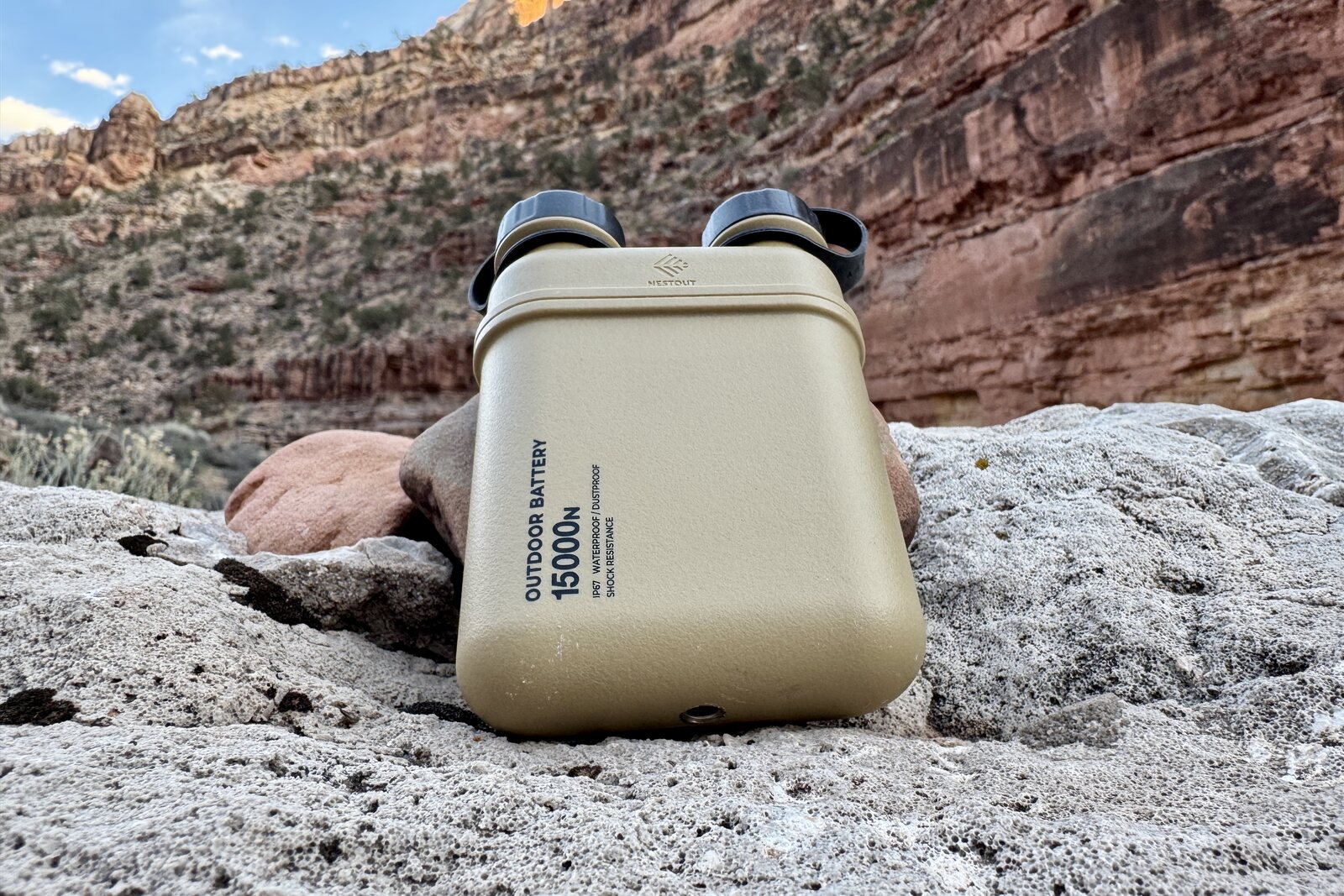
The Nestout 15000 mAh power bank is a great choice for adventurers who want an extremely durable, cold-capable design they can trust. During testing, one thing became apparent quickly: This power bank is built to handle the elements. We were thrilled to see that the Nestout comes with IP6X/IPX7 ratings, offering trustworthy protection against water and dust. It also features attachment points for Nestout accessories like camp lighting.
As far as drawbacks go, the Nestout performed poorly in our efficiency test. It’s also rather heavy and bulky, which isn’t great news for minimalist backpackers and other weight- and space-conscious outdoor-goers. Overall, the Nestout is a trustworthy option for tough conditions but likely overkill for casual users.
How We Tested
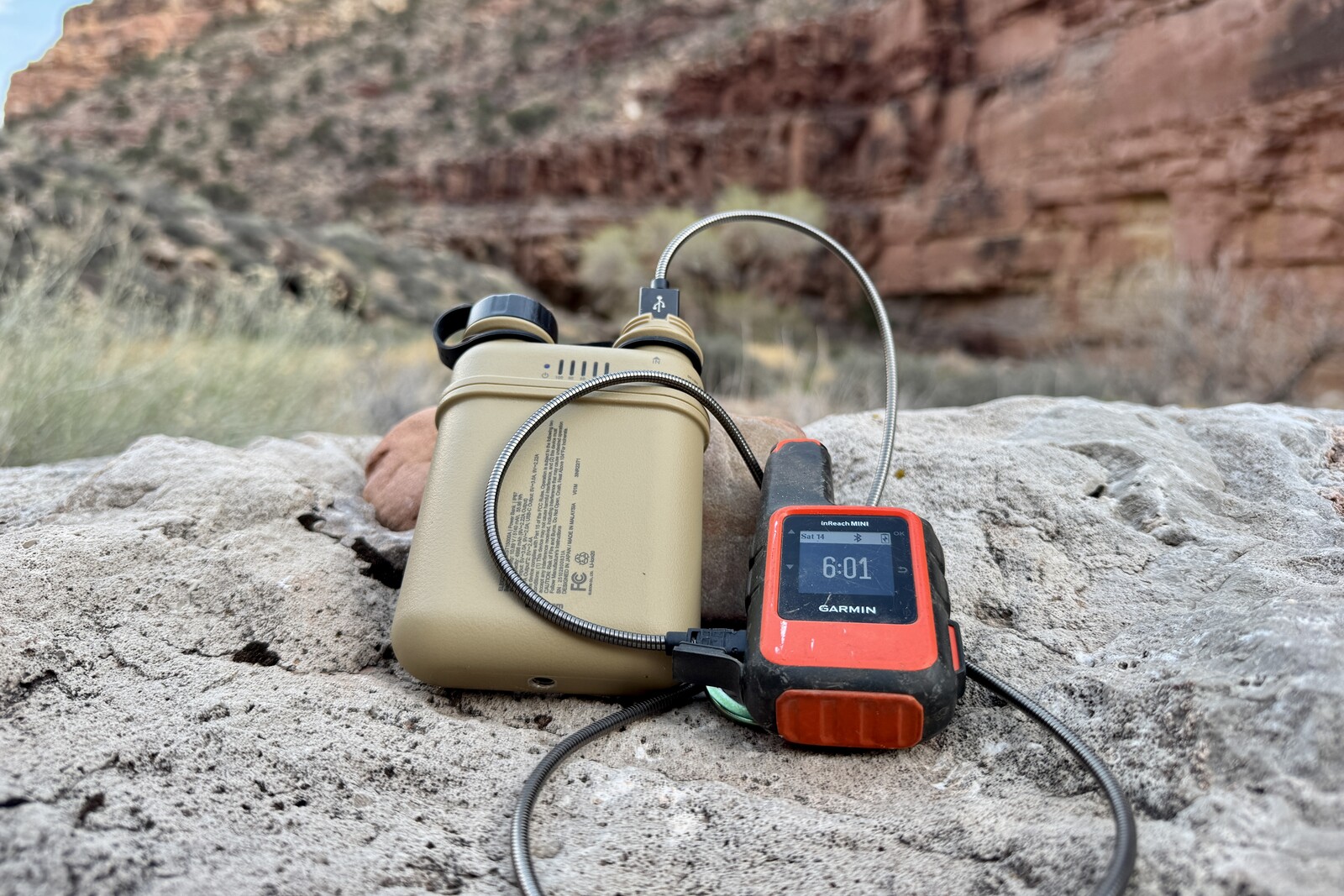
We primarily used the Nestout 15000 mAh Power Bank while day hiking around Durango, Colorado, and at home to charge our devices. We also brought it along for a longer spring backpacking trip in the Southwest, as well as a subsequent road trip. We mostly used the Nestout to charge headlamps, phones, and a Garmin inReach.
Quick Specs
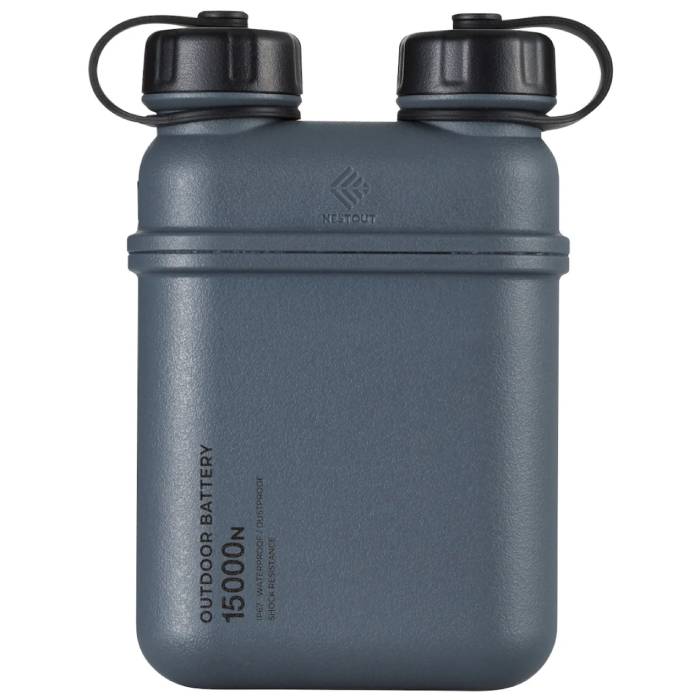
Nestout 15000
Most Durable Power Bank
CleverHiker Rating: 3.8/5.0
Price: $65
Weight: 12.8 oz.
mAh: 15,000
Time to full charge: 5 hrs 1 min
Pros
- Extremely durable
- IP6X/IPX7 ratings inspire confidence in rowdy conditions
- Good cold-weather performance
Cons
- Heavy
- Bulky
- Low efficiency
Efficiency
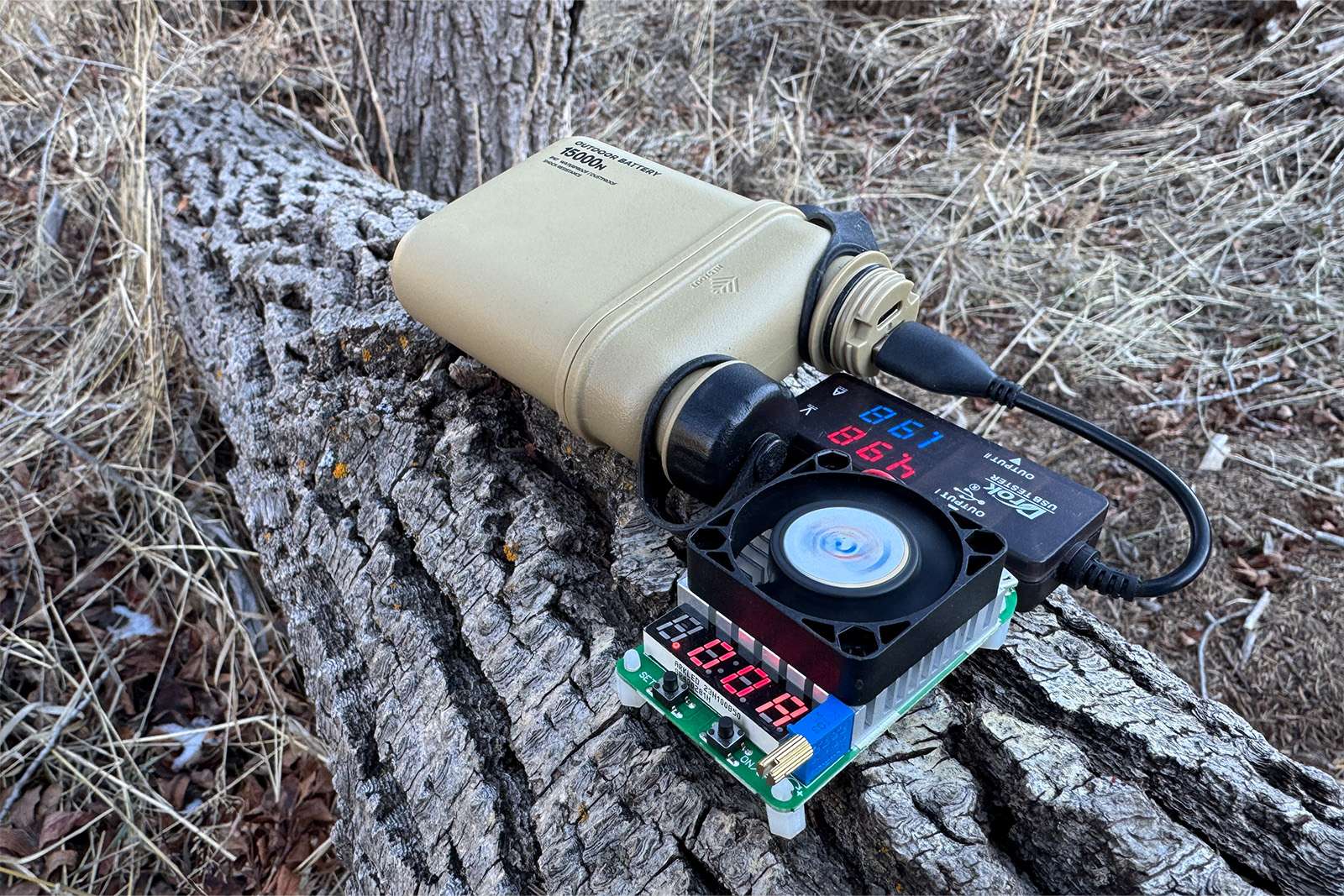
Efficiency is not one of the Nestout 15000’s strengths. We came to that conclusion by using a multimeter and dummy load resistor to calculate the amount of watt-hours available. We then compared that to the listed number of watt-hours on the power bank. It’s normal for actual power to vary from listed power, but the Nestout’s discrepancy (roughly 33%) was significant. When we divided the number of watt-hours by the weight of the bank, it had one of the lowest amounts of power available per gram.
Importantly, we didn’t have an issue with the Nestou’s lack of efficiency when hiking, backpacking, or using it around the house. We were still able to get multiple partial charges out of the device before it died. The Nestout is also one of few power banks to come in a capacity between 10,000 and 20,000 mAh hours, hitting a nice sweet spot.
Weight & Portability
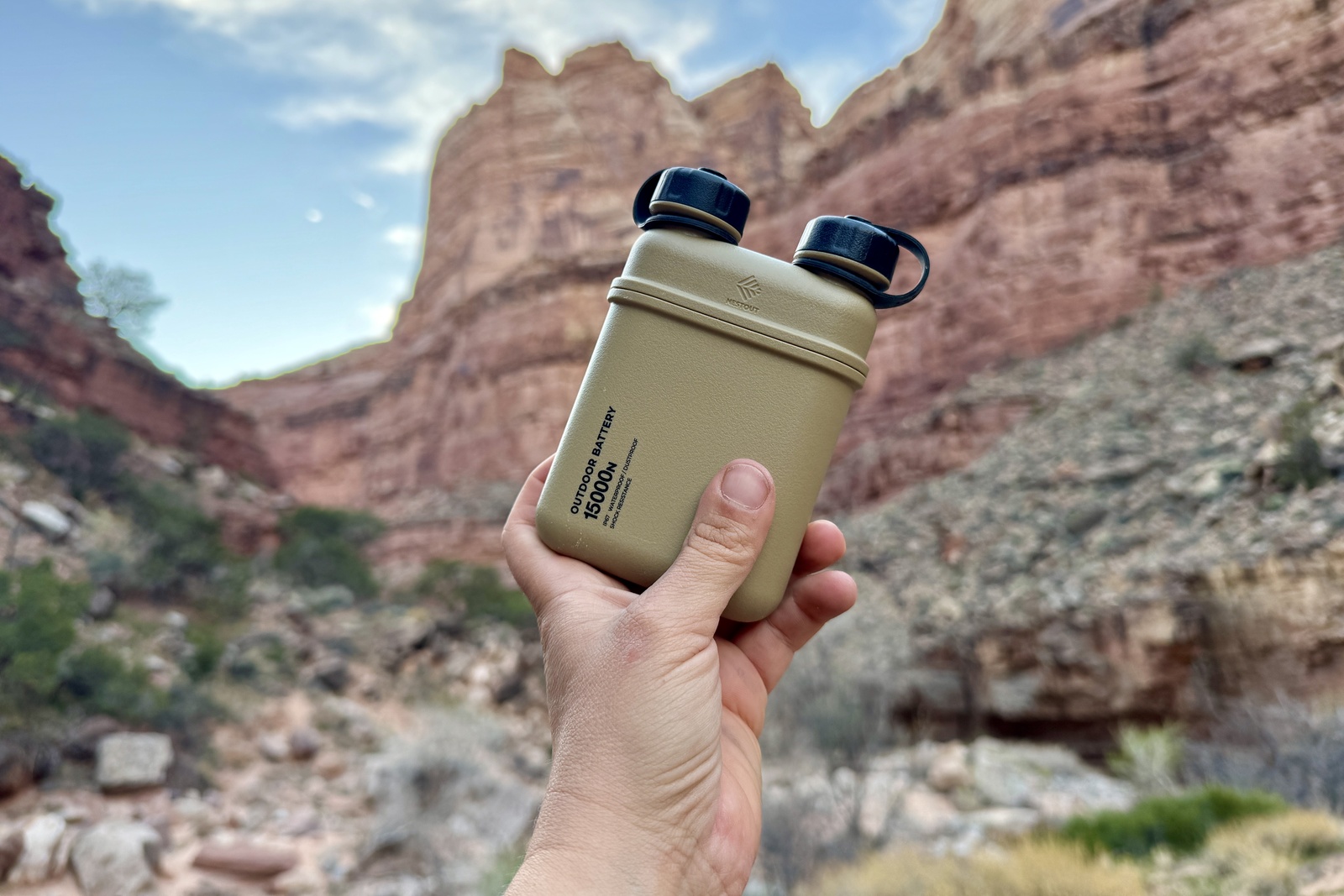
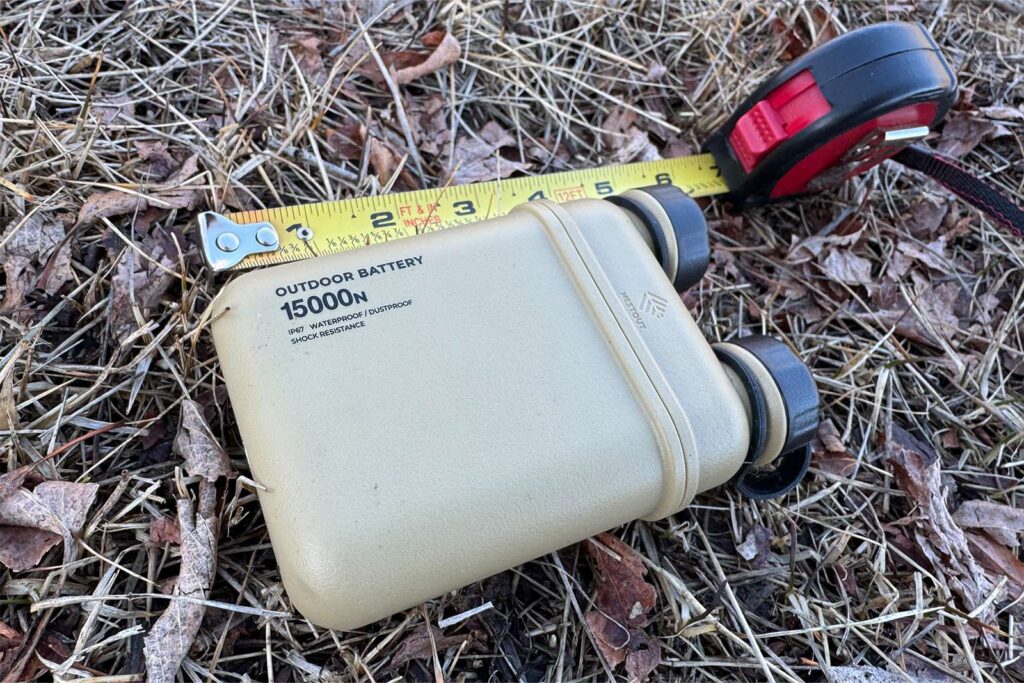
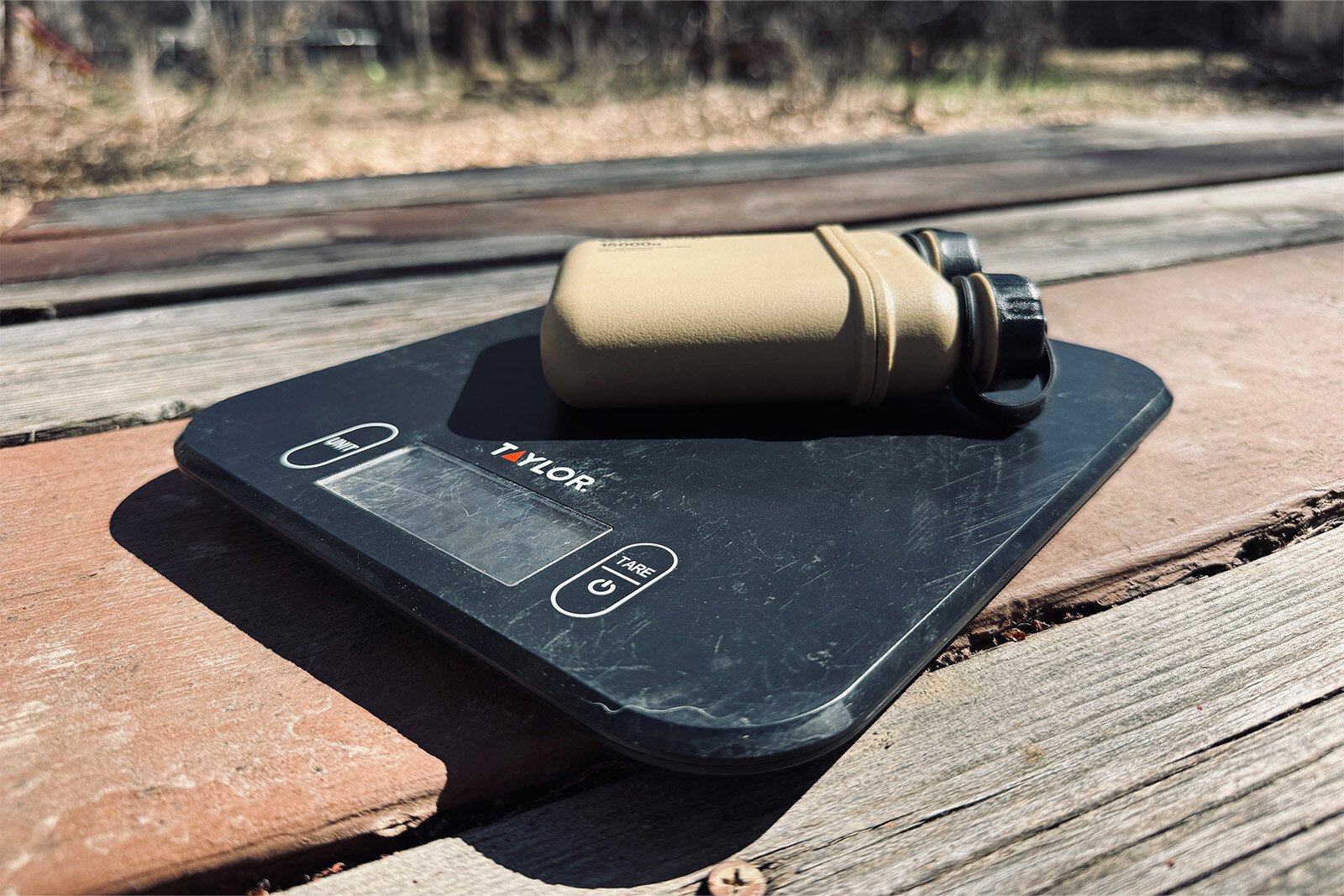
Due to its extensive feature set and incredible durability, the Nestout 15000 mAh Power Bank is not very light or portable. On our kitchen scale, it came in at 12.8 ounces (just below its 12.9-ounce listed weight), making it one of the heaviest options to make our “best of” list. It also ranked near the bottom of our lineup in terms of volume, translating to a good amount of bulk.
As a result, we found the Nestout less convenient than many of the power banks we were testing alongside it. Even compared to some higher-capacity models, it felt clunky to use. It’s too large to fit in many fanny packs and hipbelt pockets.
Durability
The Nestout 15000 mAh Power Bank has IP6X/IPX7 ratings and really shines when it comes to durability. It passed our eight-foot drop test with flying colors and showed no scratches or other cosmetic damage after weeks of use.
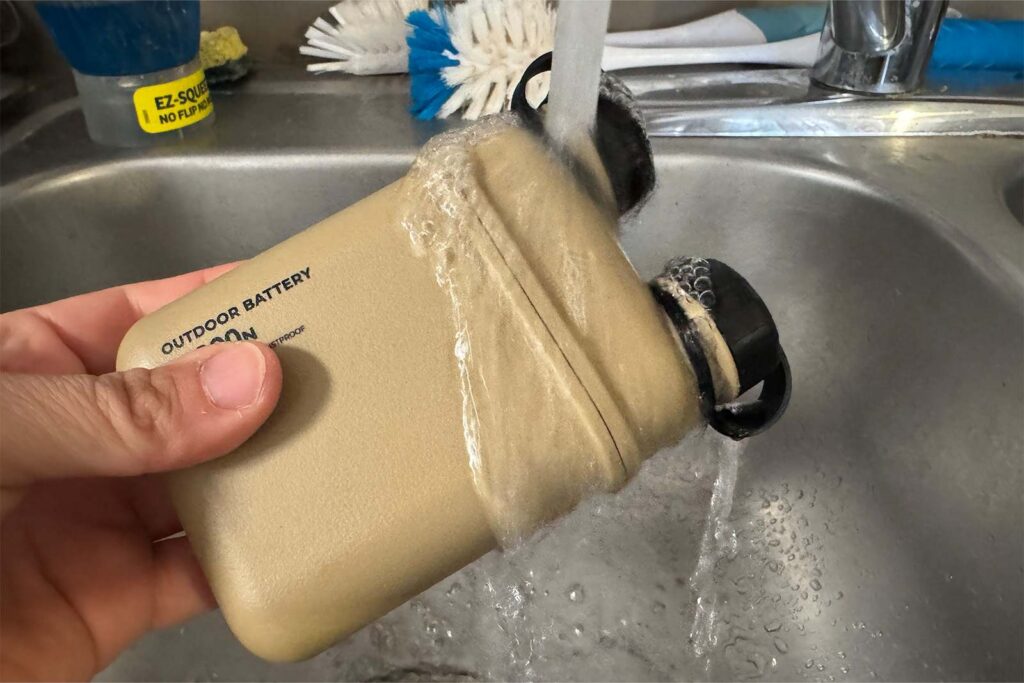
We were initially a bit put off by the cap covers for the input/output ports, which are clunky but critical for protection. Starting with waterproofing, the Nestout has an IPX7 rating, which means it can be submerged in water up to one meter (3.3 feet) deep for up to 30 minutes. Other power banks we tested also have this rating, but the Nestout’s port covers made it the only bank we were willing to douse as part of our testing process. We held it under a flowing sink faucet for several minutes, and it worked flawlessly afterwards.
Unlike many other power banks we tried, the Nestout also has an IP6X rating, which means it’s completely dust-tight. It also includes shock-absorbent cushioning to protect the battery and meets military drop-test standards. In other words, this device is extremely hardwearing and built to last.
Charging Speed
The Nestout 15000 mAh Power Bank took just over five hours to charge using a standard cord and QC 3.0 wall charger, which was a bit below-average in our testing group. To measure charging speed, we used the same wall charger and cord for every power bank to keep things fair and consistent. Then, we used a tablet to record the flashing light indicators. Once the last light stopped flashing, we reviewed the video to determine exactly how long each device took to reach a full charge.
It’s worth noting that our recorded time is longer than Nestout’s listed recharge time (~3 hours and 35 minutes). This discrepancy may be partially due to the charging cord we used, but we do think there was some optimism on their part. Even so, the Nestout’s recharge time was in between the 10,000 mAh and 20,000 mAh banks we tested, which lines up with its capacity. In other words, it’s within the norm.
Features
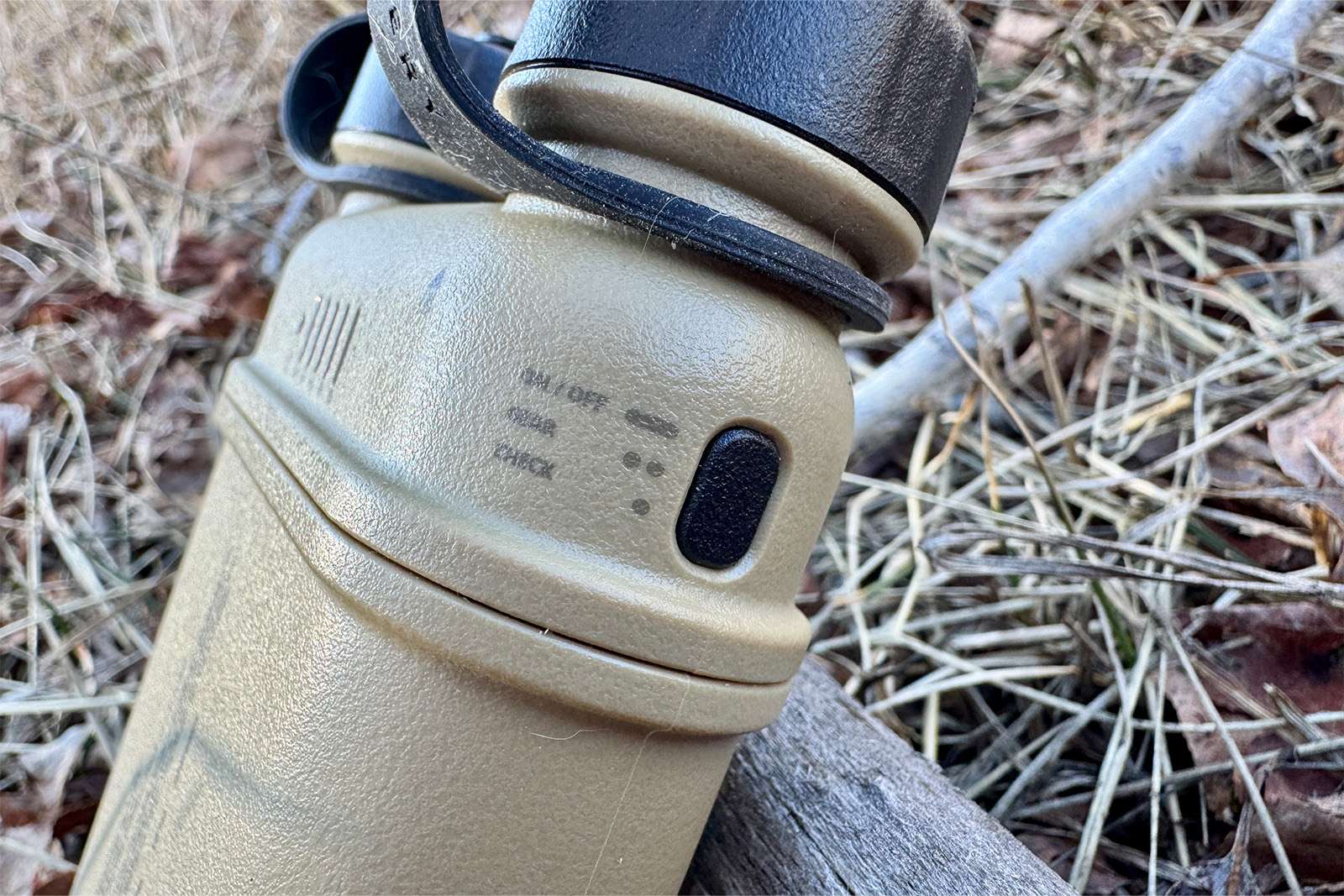
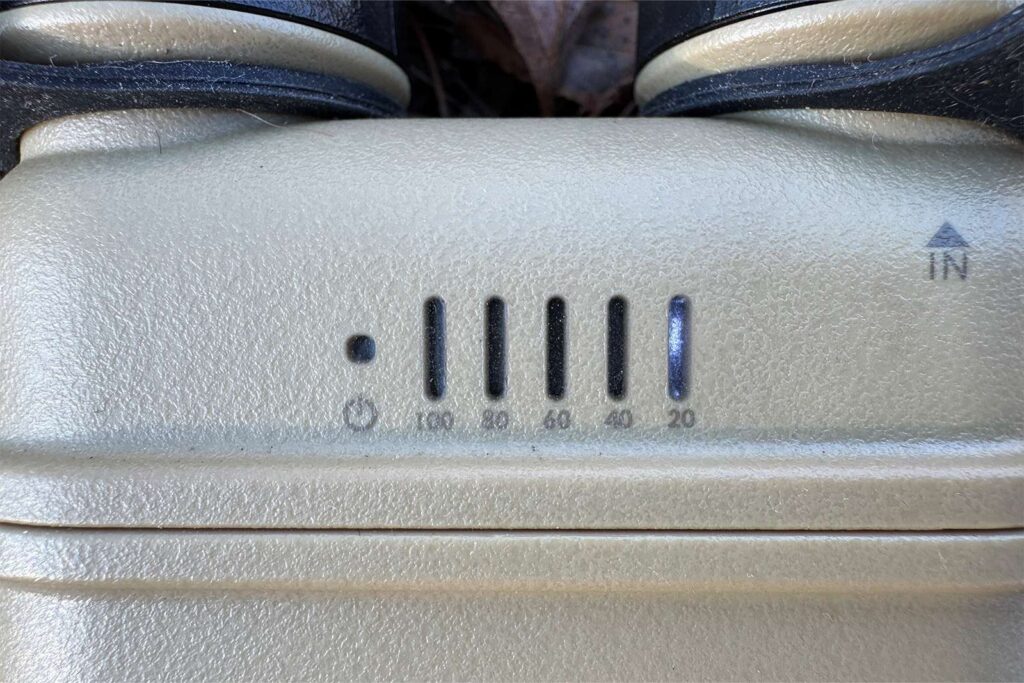
The Nestout 15000 mAh Power Bank comes with most of the basic features we look for plus a couple extras. Pass-through charging is pretty standard, allowing you to charge the bank while simultaneously using it to charge a device. The Nestout has this feature, along with five analog charge indicator bars (most competitors come with four). The power button is easy to use and flush with the bank.
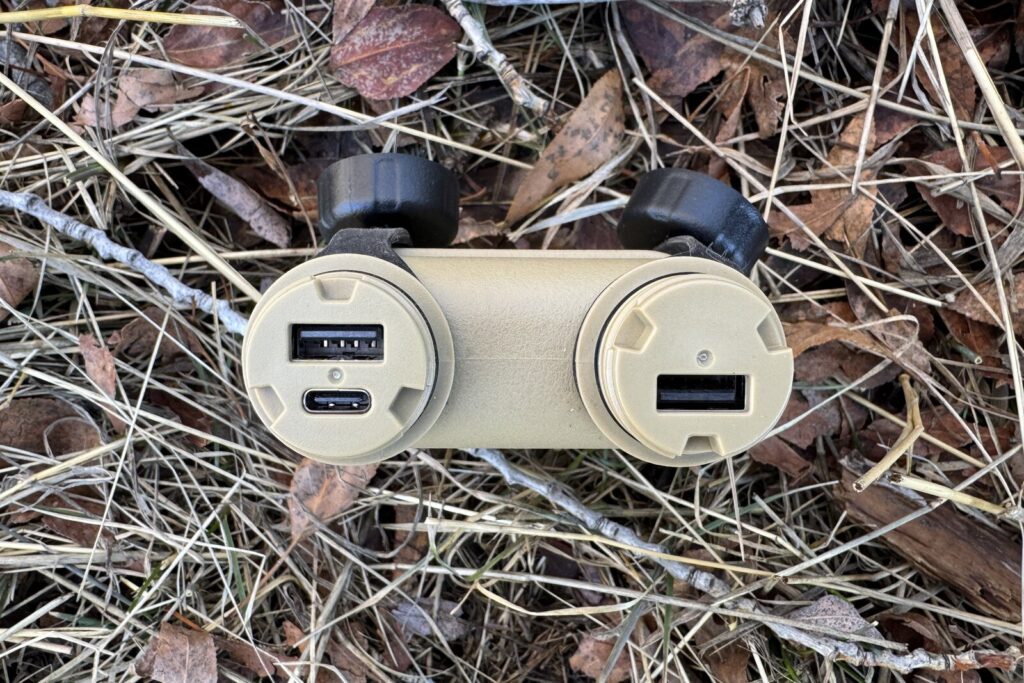
As we mentioned above, the Nestout also comes with cap covers for the ports. These are great for keeping dust and moisture out but can be a little cumbersome at times. Thankfully, they are removable when water and dust aren’t concerns. There’s also threading on the bottom of the bank that allows it to pair with a stand or various light attachments (sold separately). For charging, you get three ports: two USB-A one USB-C.
Cold Efficiency
During our cold-weather simulation, the Nestout 15000 only suffered a 1% reduction in efficiency, which was a solid performance among the power banks we tested. To gauge cold efficiency, we repeated our standard efficiency test inside a fridge, noting any reduction or improvement in available power. Given the Nestout’s performance, we believe it would be a great choice for winter backpacking trips.
Should You Buy the Nestout 15000?
The Nestout 15000 mAh Power Bank is a durable and dependable option for outdoor users who are hard on their gear. Whether you’re trekking deep into a rugged backcountry area or hunkering down on a winter backpacking trip, the Nestout is up to the task with a hardwearing construction and IP ratings for both water submersion and dust. The cap covers add a nice dose of assurance for water crossings or heavy rain.
That said, the Nestout is relatively heavy and bulky, which will deter ounce-counting minimalists like thru-hikers and trail runners. This is largely due to the durable and feature-rich construction, so you’ll want to weigh your priorities before making a decision. It’s also not a standout in efficiency or charging speed, offering middling power per gram compared to other power banks we tested.
What Other Power Banks Should You Consider?
If you’re still on the fence about which power bank to buy, check out the options below, or head to our gear guide to the best power banks for a wider look at the market.
INIU B5 20000 Review: The INIU B5 20000 offers slightly more capacity than the Nestout, as well as better efficiency. It’s also lighter but less durable (the outer coating scratches easily over time) and not rated for dust or submersion.
Anker PowerCore 10K Review: For a dependable option at a lower weight and price point, the Anker PowerCore is a solid alternative. Though not a standout in any one area, it’s a solid all-rounder that’s tough enough to handle regular backcountry use.
INIU B41 10000 Review: If features are important to you, it’s worth considering the B41 10000. Though not as durable as the Nestout, the B41 is lighter, cheaper, and comes well appointed with multiple charging points, a large analog battery indicator, and even a built-in flashlight.