

Bottom Line
The Altra Olympus 6 is our favorite women’s hiking shoe for long-distance treks because it combines Altra’s natural, zero-drop geometry with substantially more protection and durability than the lighter Lone Peak. Its wide toe box gives toes room to spread, while the firmer midsole and broad base protect the foot and reduce fatigue over long miles.
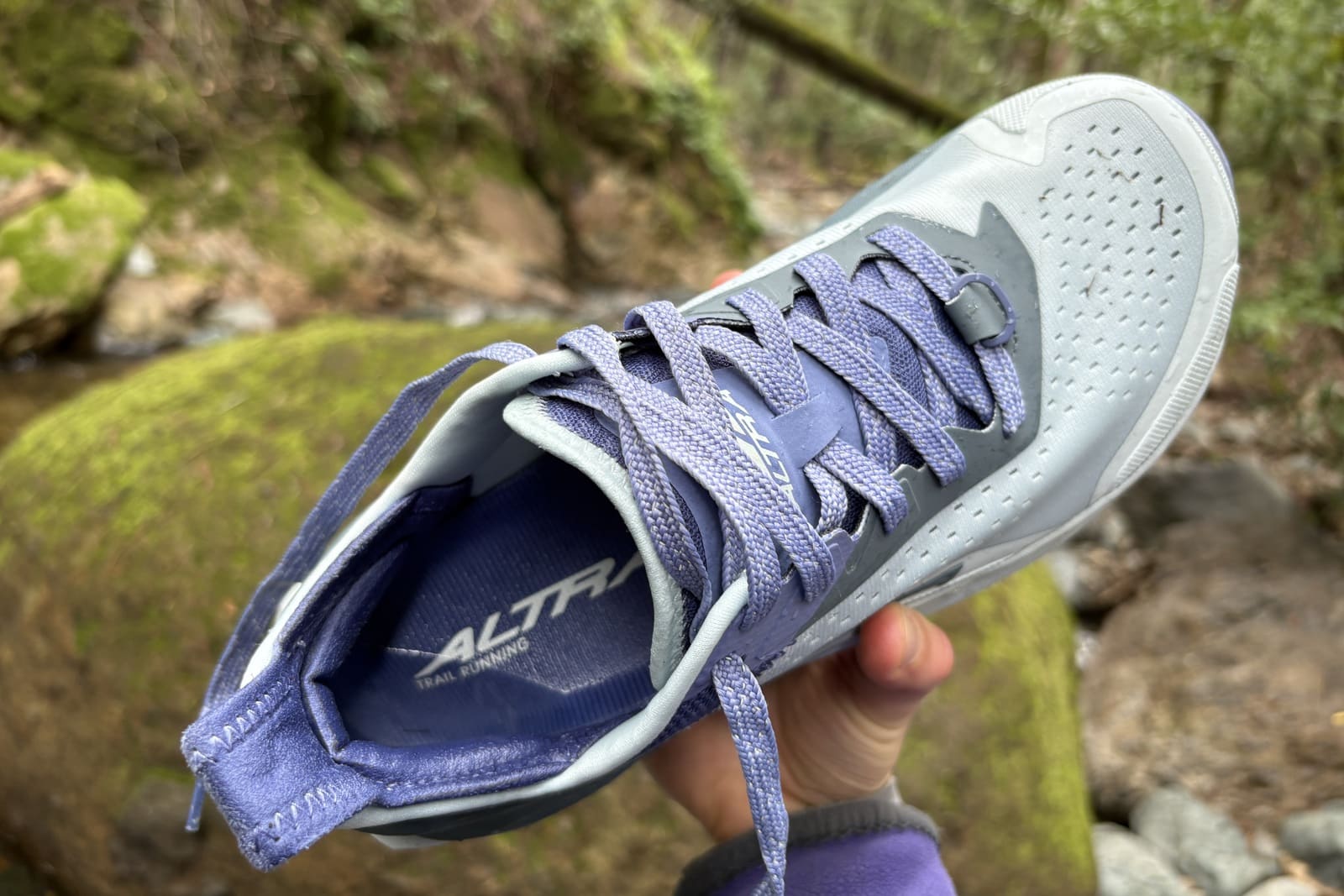
The Olympus is not a minimalist shoe. Its taller stack and broad platform can feel a little clunky, and hikers with narrow heels may need to use the extra eyelets to improve lockdown. We also found the padded Achilles pillow unusual at first, though it became more comfortable after a few miles.
Traction is strong on dry rock, gravel, and mixed terrain, but the outsole is noticeably less secure on wet rock. Weather resistance is another weakness: water enters the breathable upper quickly, and once fully submerged, the shoe does not drain especially well. Still, for dry-condition distance hiking and zero-drop users who want more support than a Lone Peak, the Olympus 6 is one of our top choices.
How We Tested
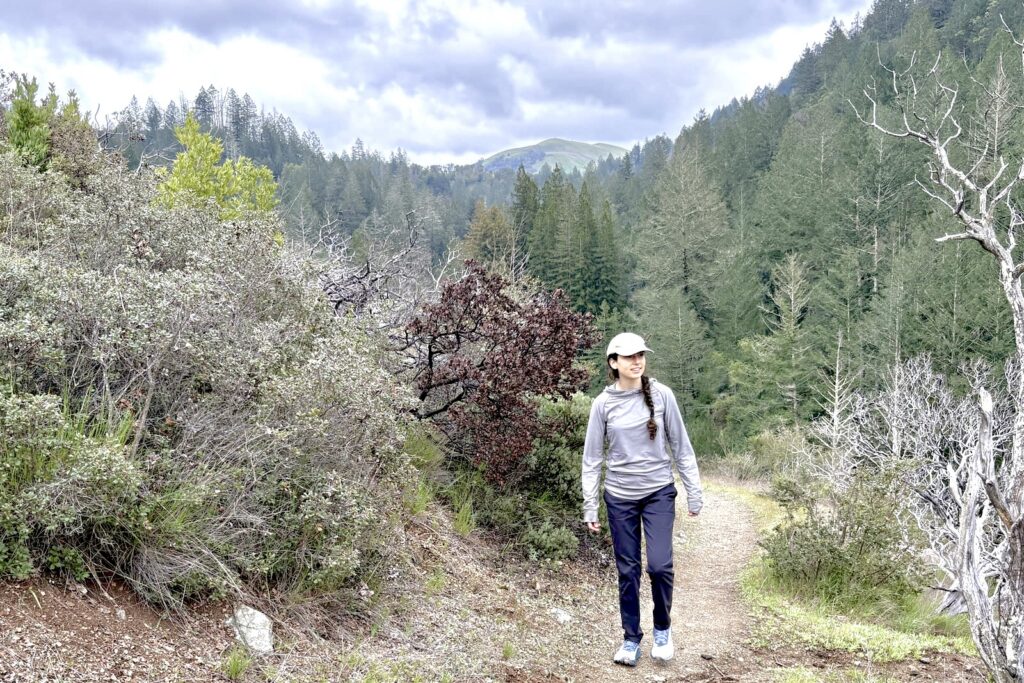
CleverHiker tested the Olympus 6 on northern California trails with rocky terrain, gravel, creek crossings, mixed surfaces, off-camber sections, and long hikes. Our experience with earlier Olympus models also helped us evaluate how the current shoe fits within Altra’s lineup and how it compares with the Lone Peak.
Quick Specs
- Best for: Long-distance hiking, zero-drop users, rocky terrain, wide feet
- Waterproof: No
- Fit: Roomy toe box with a secure midfoot; narrower heels may experience some slip
- Outsole / lug depth: Vibram Megagrip; lug depth not published by Altra
- Rock plate: No
- Available widths: Standard
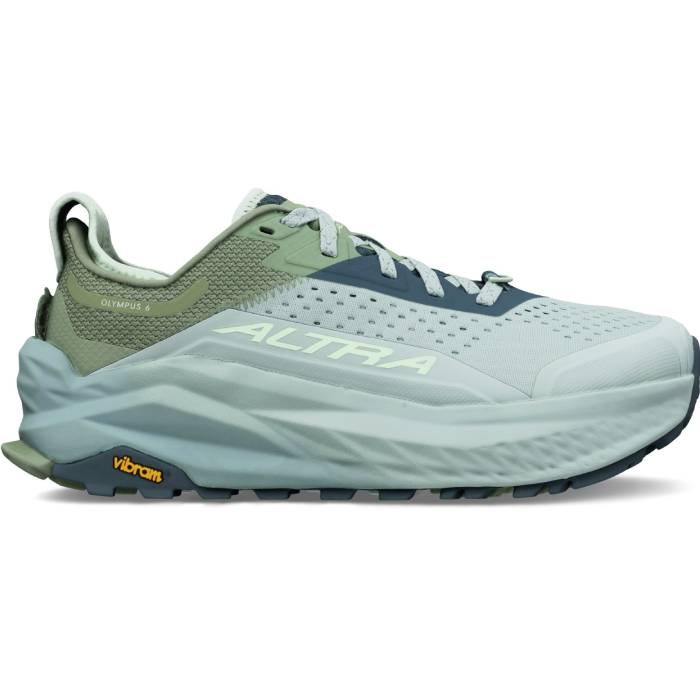
Women’s Altra Olympus 6
Best Hiking Shoes for Long-Distance Treks
CleverHiker Rating: 4.6/5.0
Price: $185
Weight (Pair): 1 lb. 5.9 oz.
Heel-to-Toe Drop: 0 mm
Pros
- Roomy toe box and natural foot shape
- Excellent protection, stability, and durability
- Secure lacing system
- Comfortable out of the box
- Breathable
- Excellent grip on dry terrain
Cons
- Slippery on wet rock
- Narrow heels may experience some slip
- Achilles pillow is polarizing
- Does not drain or dry especially quickly after submersion

Comfort
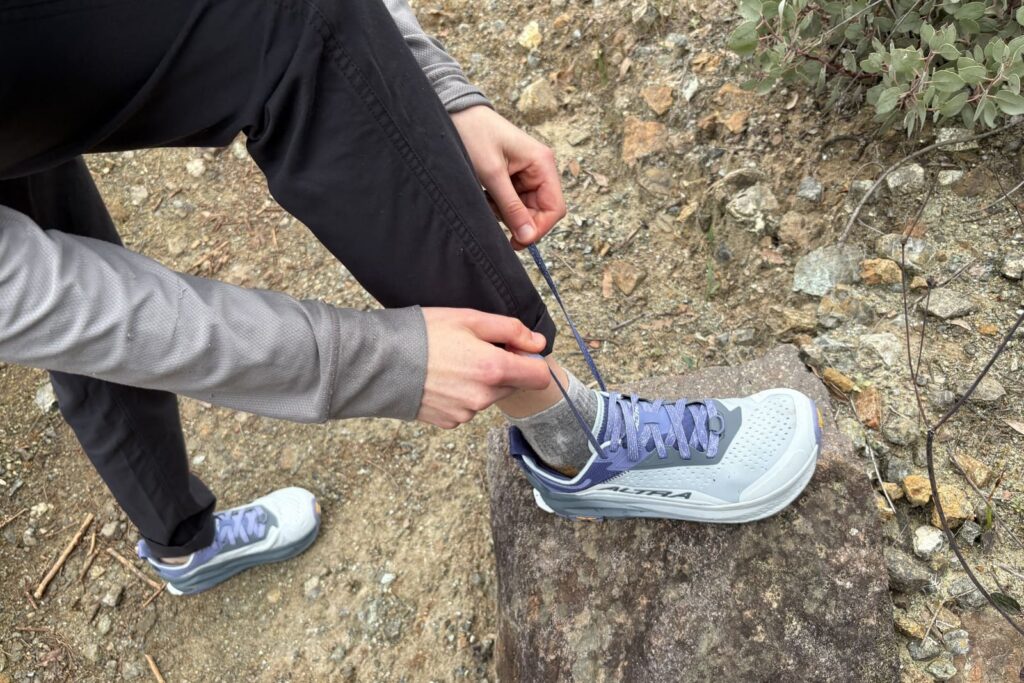
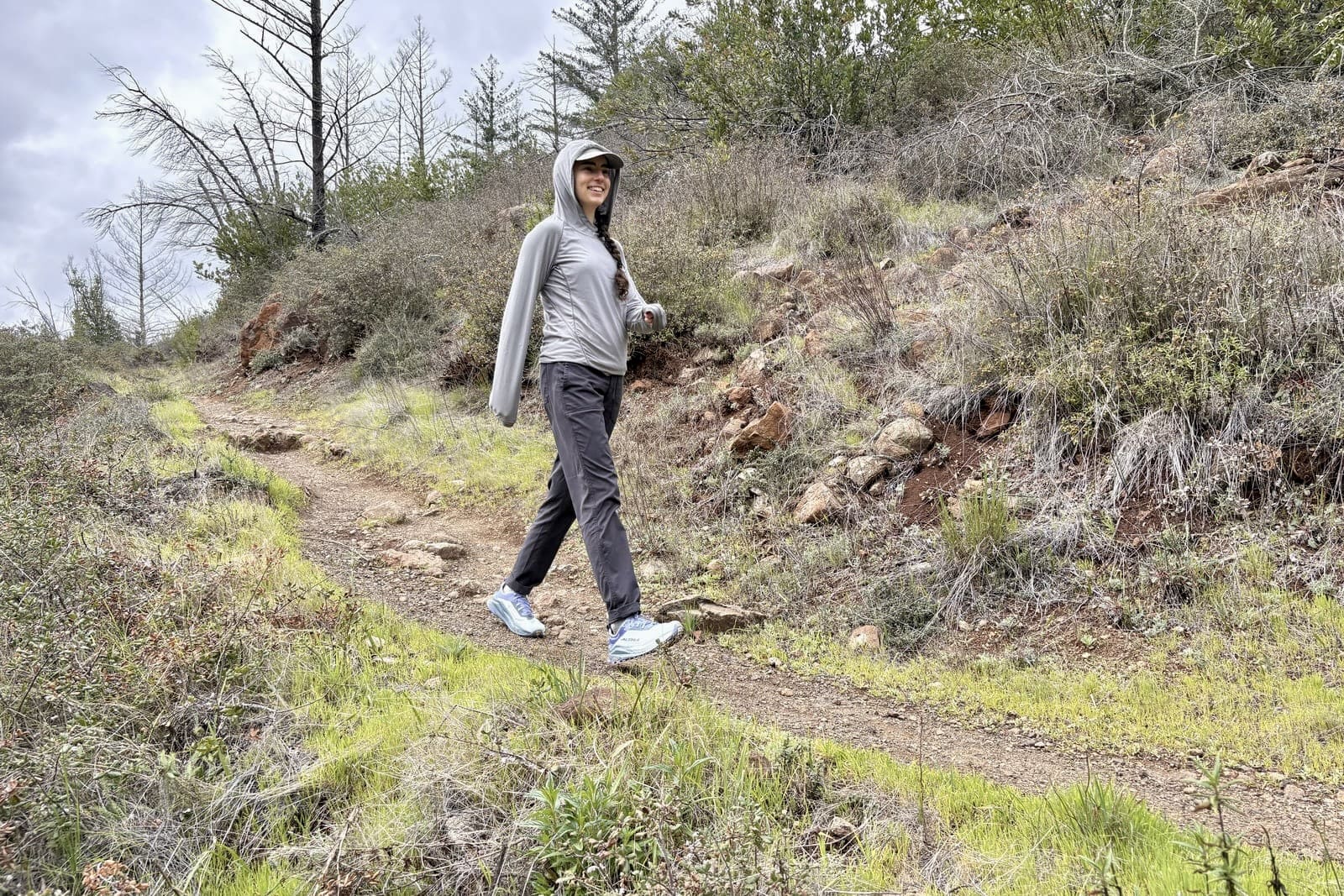
The Olympus 6 feels roomy and protective without squeezing the toes. The wide forefoot encourages natural toe splay, while the lacing system can be tightened effectively through the midfoot for security. Our tester experienced some heel slip and used the extra eyelets to improve lockdown.
The firmer midsole is a major part of the appeal. Rather than feeling soft and unstable, it creates a supportive platform with enough ground feel to stay connected to the trail. The padded Achilles area felt odd at first but became more comfortable after several miles.
Comfort Score: 4.6 / 5.0
Traction
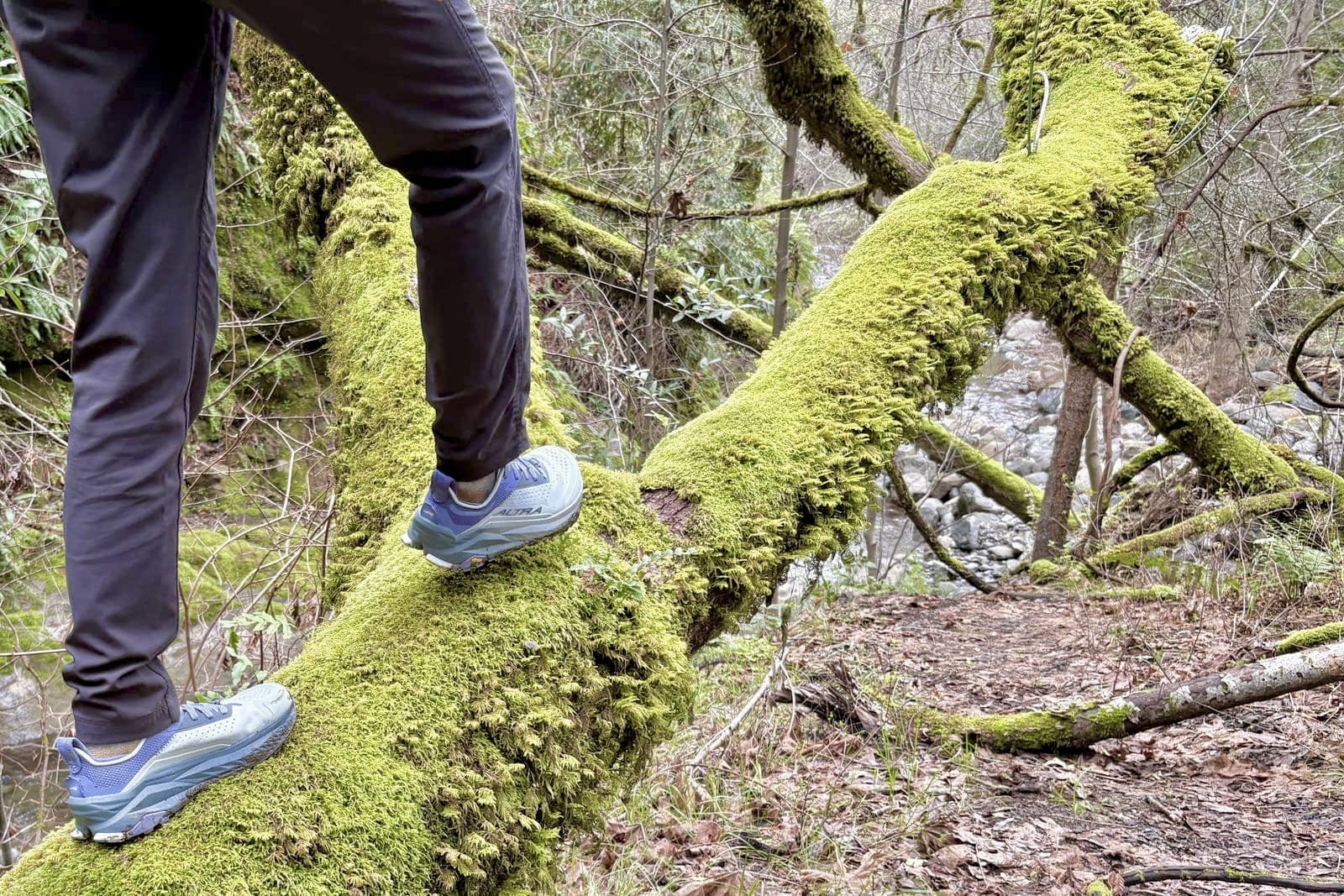
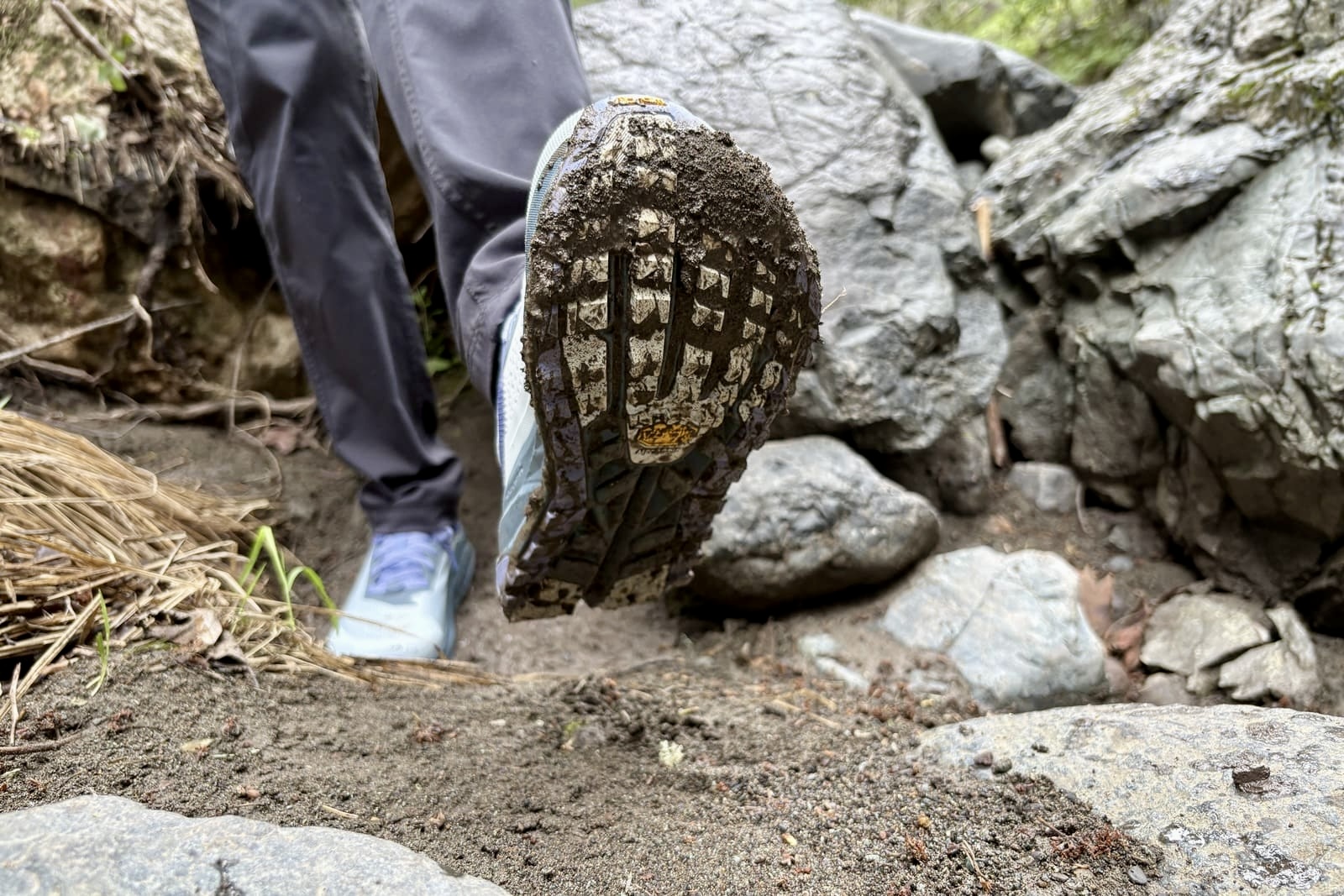
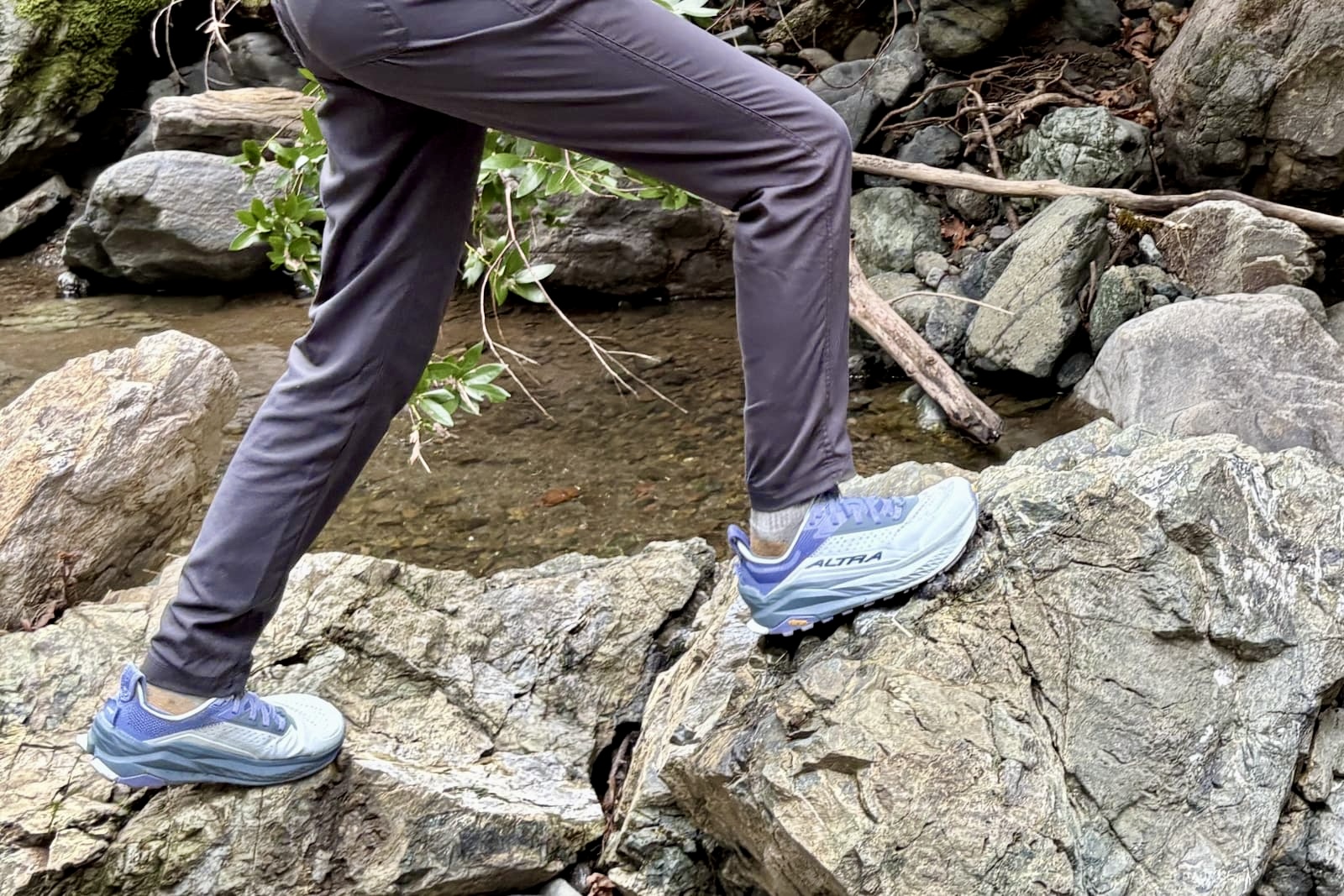
On dry rock, gravel, dirt, and mixed trail, the Olympus 6 grips very well. The outsole inspired confidence on uneven terrain, and mud did not noticeably build up in the tread during our tests.
Wet rock is the clear exception. We experienced reduced grip during creek crossings, so hikers who regularly travel over slick, wet stone should consider a shoe with more dependable wet traction.
Traction Score: 4.7 / 5.0
Weight
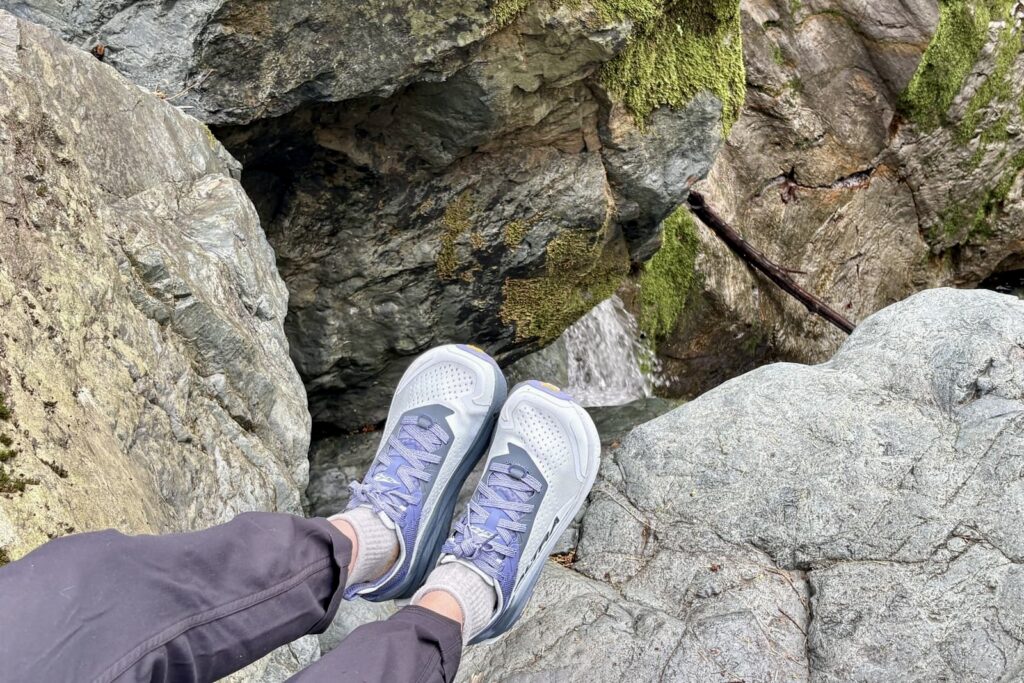
At 1 pound 5.9 ounces per pair, the Olympus 6 is heavier than the trail-runner-style shoes at the top of our list but still relatively light for its amount of cushioning, protection, and outsole coverage.
The shoe feels bulkier than its weight suggests because of the wide base and tall stack. We think that is a worthwhile tradeoff for long-distance hikers who value protection and reduced foot fatigue.
Weight Score: 4.5 / 5.0
Durability
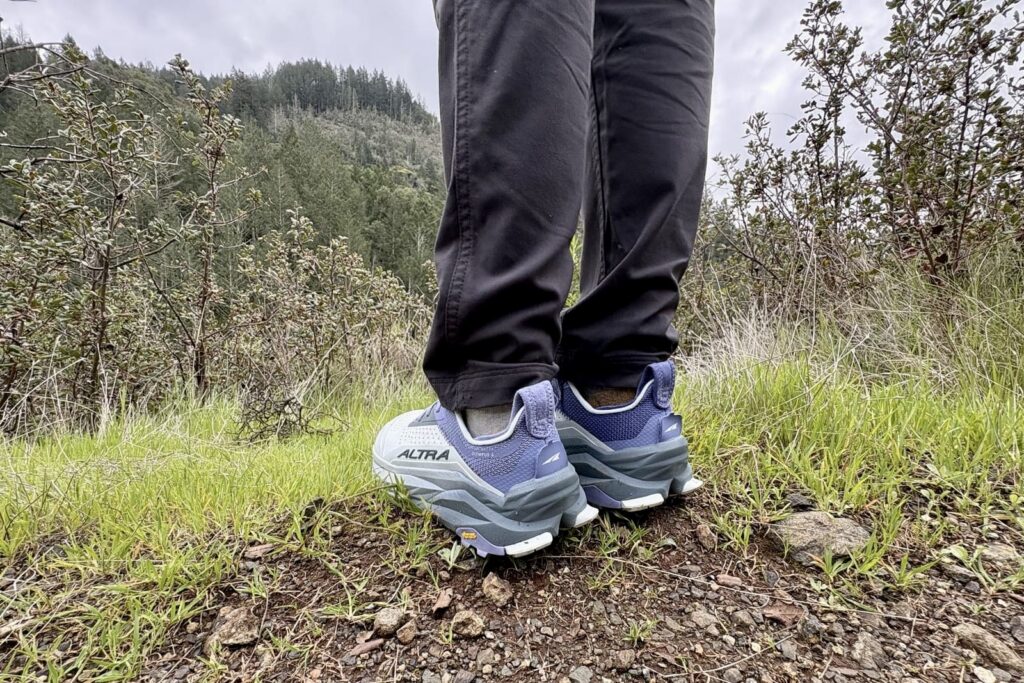
The Olympus 6 performed exceptionally well in our durability testing. The toe protection, outsole, upper, and structural components showed no concerning wear through our field use.
Compared with the Lone Peak, the Olympus feels more substantial and better suited to repeated rocky mileage. The padded heel is one area we would watch over the very long term, but we observed no failure during testing.
Durability Score: 4.8 / 5.0
Weather Resistance
The breathable upper is comfortable in dry and warm conditions, but it offers almost no barrier to water. When our tester slipped during a creek crossing and fully submerged the shoe, water entered immediately.
Drainage was also poor. We could pour standing water out of the shoe afterward, and drying took time in cool conditions. That makes the Olympus better for primarily dry environments than sustained wet weather.
Weather Resistance Score: 3.8 / 5.0
Should You Buy the Altra Olympus 6?
Yes, if you already like zero-drop footwear and want a durable, protective shoe for long-distance hiking. It is particularly well suited to hikers with wider feet who want more cushion and support than the Lone Peak provides.
Avoid it if wet-rock traction, quick drainage, or a narrow secure heel fit are top priorities. New zero-drop users should also transition gradually rather than taking the Olympus straight onto a long trip.
What Other Women’s Hiking Shoes Should You Consider?
Altra Lone Peak 9: Choose the Altra Lone Peak 9 if you want a lighter, lower-profile zero-drop shoe with more ground feel and quicker drying. The Olympus is more protective and durable; the Lone Peak is more nimble.
Topo Ultraventure 4: Consider the Topo Ultraventure 4 if you like a roomy toe box but do not want zero drop. Its 5 mm drop, lower weight, and breathable upper make it an approachable option for everyday trails, though it is not as protective as the Olympus.
HOKA Speedgoat 7: Pick the HOKA Speedgoat 7 if you want a lighter high-cushion trail shoe with excellent traction and a more conventional heel-to-toe drop. It feels springier and quicker, while the Olympus offers a wider natural shape and burlier platform.