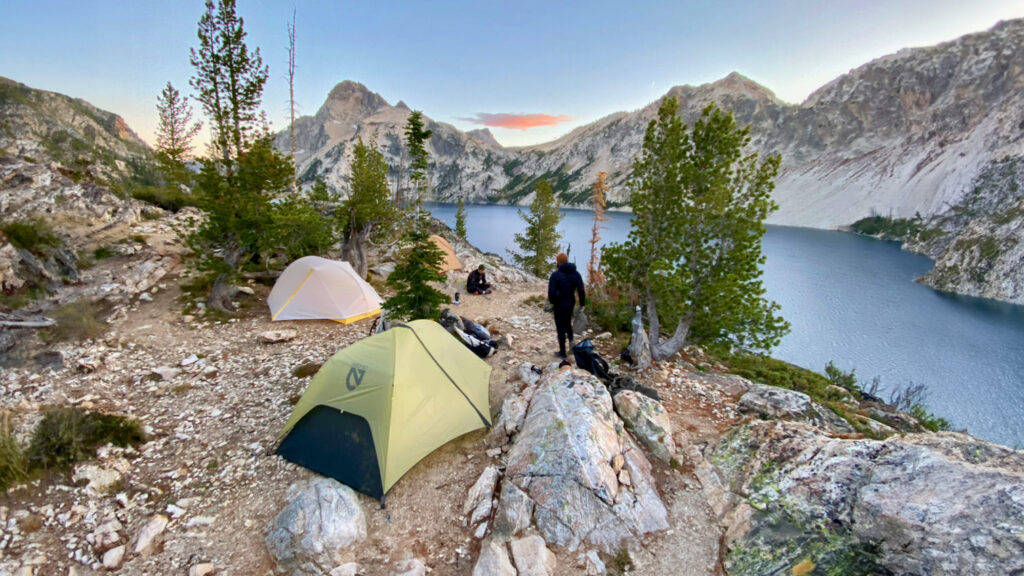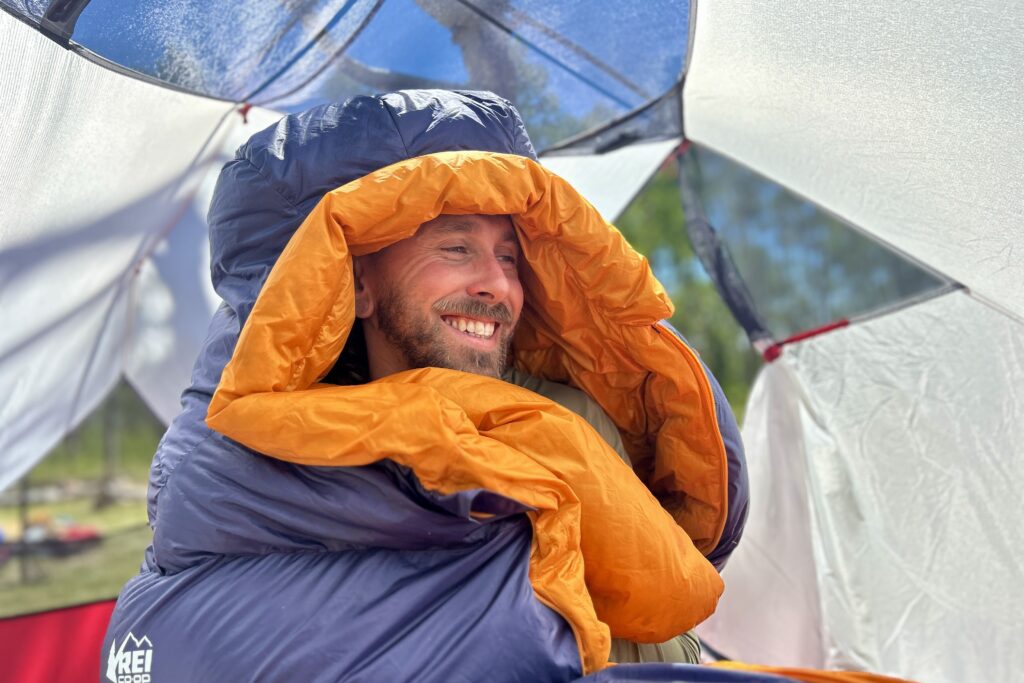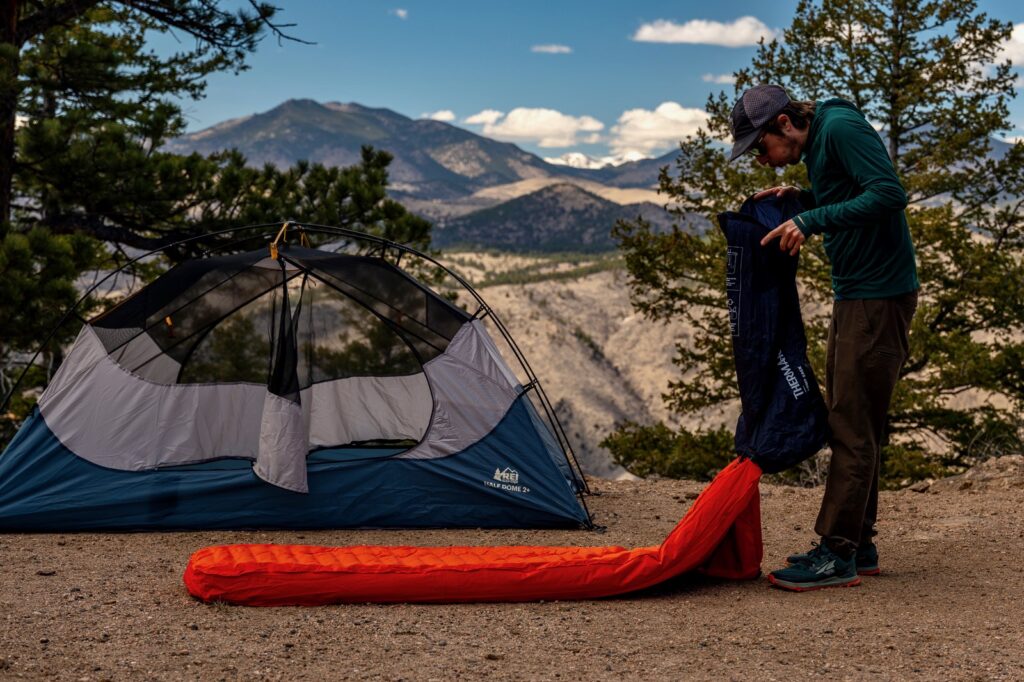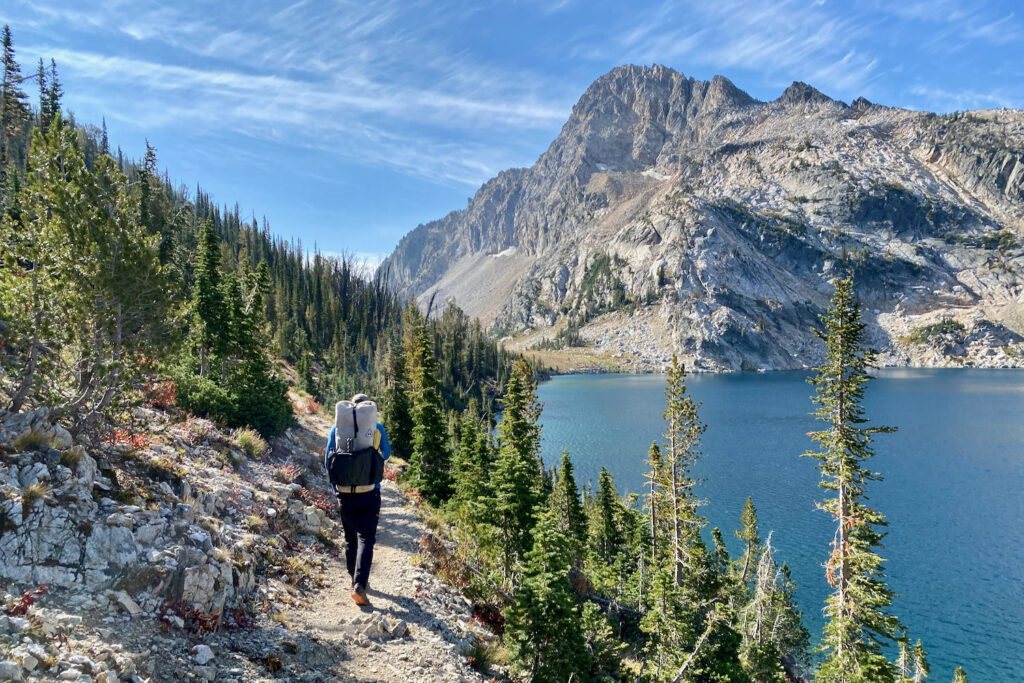

Our favorite backpacking quilts combine low weight with enough insulation, space, and draft control for the nights we actually encounter. But a quilt that’s wonderful during a warm summer hike may be too drafty for a cold sleeper at freezing, and the lightest model isn’t necessarily the most comfortable.
We compared 11 quilts—including two-person designs—using the same dimensions that matter on the trail: warmth, comfort, weight and packability, and features. The result is a ranked field with clear choices for ounce counters, budget-minded hikers, warm-weather campers, and partners who want to share their sleep system.
Editor’s Note: This guide was updated on October 21, 2026 to reflect price changes and additional testing information.
How We Test Backpacking Quilts
We evaluate quilts over extended backpacking use, paying attention to the temperatures in which we actually slept comfortably because warmth depends on the whole sleep system, not just a temperature rating. Our trips have included wet Appalachian Trail nights in the 30s, Arizona desert cowboy camping, western mountain summer routes, and long-distance hikes.
We also look for drafts as a sleeper rolls, assess pad-strap usability, consider footbox ventilation, and compare trail weight, packed volume, and durability tradeoffs. Double quilts receive a separate practical test: whether two sleeping pads and two moving people can maintain coverage through the night.
And for more info, check out some of our other popular gear guides:

#1. Best Backpacking Quilt Overall
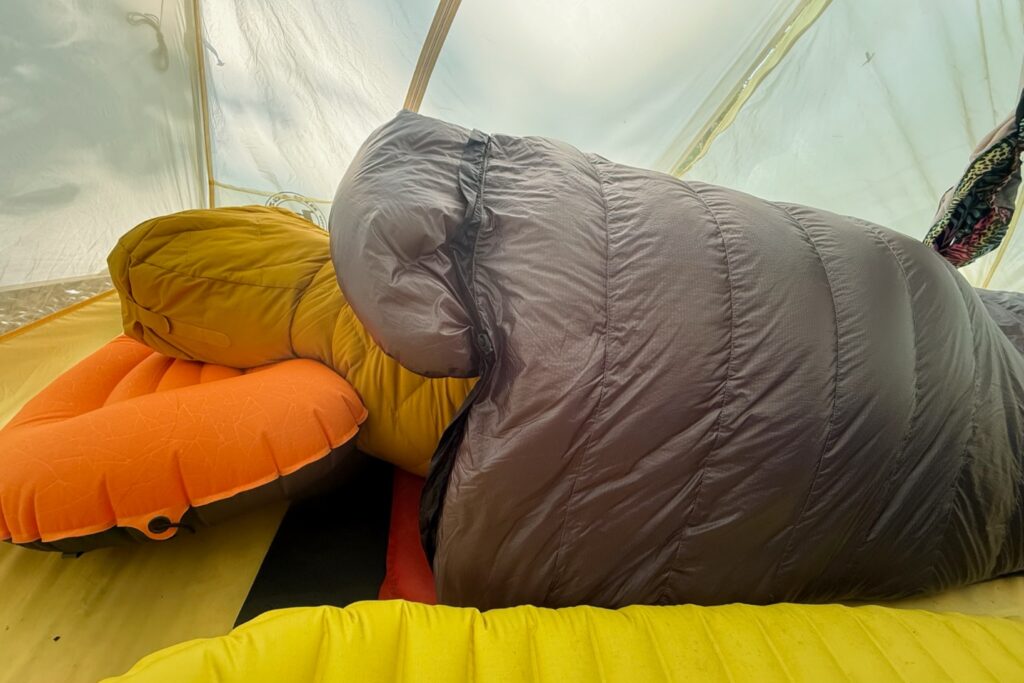
The Western Mountaineering AstraLite’s one-pound weight, strong warmth results, easy pad attachments, and well-fitted neck closure make it our best overall choice. It’s expensive and deliberately narrow, so hikers who want blanket-like space should look elsewhere.

Quick Picks for Backpacking Quilts
Check out this quick list of the best backpacking quilts, or continue scrolling to see our full list of favorites with in-depth reviews.
Editor’s Note: Prices vary by level of customization.
1. Best Backpacking Quilt Overall: Western Mountaineering AstraLite ($550)
2. Warmest Ultralight Backpacking Quilt: Hyperlite 20-Degree Quilt ($530)
3. Best Budget Backpacking Quilt: Enlightened Equipment Revelation 20 ($390)
4. Best Ultralight Backpacking Quilt for Warm Weather: REI Magma 30 Down Trail Quilt ($329)
5. Best Ultralight Stock Backpacking Quilt: Zpacks Classic 20 ($469)
6. Best Ultralight Two-Person Backpacking Quilt: Zpacks 20F Twin Quilt ($579)
7. Versatile & Warm Quilt/Sleeping Bag Hybrid: Loco Libre Operator Series Ghost Pepper 20 ($352)
8. Ultralight Backpacking Quilt for Warm Weather: UGQ Bandit 20 ($335)
9. More Affordable than Similarly Warm Backpacking Quilts: Hammock Gear Burrow 20 ($240)
10. High-Quality Introductory Quilt: Katabatic Flex 22 ($409)
11. Excellent Quality Backpacking Quilt for Two with Premium Details: Enlightened Equipment Accomplice 20 ($605)
Western Mountaineering AstraLite
Best Backpacking Quilt Overall
CleverHiker Rating: 4.7/5.0
Price: $550
Weight: 1 lb.
Fill Power: 850
Pros
- Excellent warmth-to-weight ratio
- Extremely light and packable
- Effective neck baffle and pad attachments
- Secure sewn footbox
- Ultralight at exactly one pound
- Simple pad straps
- Contoured neck baffle
Cons
- Premium price
- Slim cut is less accommodating of restless sleepers
- High purchase price
- Slim cut may feel restrictive
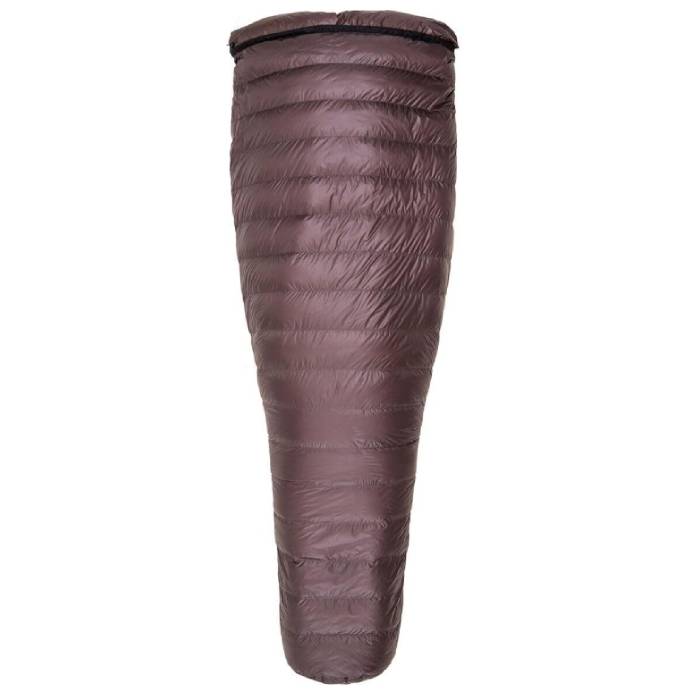
After roughly 150 backcountry nights, we still reach for the Western Mountaineering AstraLite when a compact three-season system needs dependable insulation. It combines a one-pound weight with a sewn footbox, a contoured neck baffle, and attachments that kept the quilt anchored as we shifted on a wet Appalachian Trail trip with temperatures in the 30s.
This is not a roomy quilt, nor is it the economical choice at $550+. The narrow profile helps conserve ounces and heat, but restless sleepers may prefer the customizable Enlightened Equipment Revelation 20. Hikers who want exceptionally low weight without giving up our strongest cold-night results have a clear reason to choose the AstraLite over the similarly priced Hyperlite 20-Degree Quilt.
The closure system is a significant part of that performance, not just a list of included accessories. We found the pad straps easy to adjust, and even our restless sleepers stayed covered without repeated nighttime corrections. That is an advantage over quilts that save a little weight but need more attention to manage drafts.
The standard length fit our testers up to six feet tall, while taller hikers should choose the long version. Beyond length, there is little to customize, so buyers who want extra width, color choices, or a fully opening summer blanket will have to look elsewhere. That constraint makes the AstraLite a more decisive purchase for hikers whose priorities already match its warmth-first design.


Hyperlite Mountain Gear 20-Degree Quilt
Warmest Ultralight Backpacking Quilt
CleverHiker Rating: 4.5/5.0
Price: $530
Weight: 1 lb. 1.1 oz.
Fill Power: 1000
Pros
- Warm for the weight
- 1000-fill down
- Easy-to-adjust pad straps
- Compact packed size
Cons
- Expensive
- Limited customization
During damp spring nights along the Appalachian Trail in New York, the Hyperlite Mountain Gear 20-Degree Quilt‘s lofty insulation, closed footbox, and simple pad attachments provided reassuring warmth in the upper 30s. With 1000-fill down and a weight just over a pound, it packs surprisingly small for the coverage we experienced.
A generous footbox doesn’t mean generous shoulder room: the sharply tapered shape can feel restrictive, and buyers can primarily choose length rather than a broad menu of dimensions. The AstraLite undercuts its weight by 1.1 ounces at nearly the same price; the HMG is worth considering when its three length options and footbox shape offer the better fit.
The sewn footbox was notably roomy despite the quilt’s narrow profile, allowing our feet to stay enclosed without the opening that adjustable designs can leave behind. Its pad straps were also quick to clip and adjust when shifting positions, an especially useful combination during the upper-30s nights on our New York Appalachian Trail test.
The permanent footbox is less appealing when summer heat calls for opening the quilt flat, and the trim upper-body cut won’t suit everyone. At this price, we would choose it for its simple, effective cold-weather system rather than expecting the adaptability of a heavily customized quilt.

Enlightened Equipment Revelation 20
Best Budget Backpacking Quilt
CleverHiker Rating: 4.5/5.0
Price: $390
Weight: 1 lb. 6.5 oz.
Fill Power: 850 or 950
Pros
- Opens fully into a blanket
- Good value for quality
- Customizable sizing
- Includes pad connectors
Cons
- 20-degree model may be insufficient for cold sleepers below freezing
- Custom orders take time
The Enlightened Equipment Revelation 20 can open completely into a blanket, making it versatile across a wide range of backpacking conditions. We have relied on it for years, from chilly alpine trips to warmer desert nights, and its adjustable footbox lets us switch from enclosed sleeping to unrestricted ventilation. The temperature range in our field use illustrates why this design has lasted in our kit: it worked from high-country outings around Glacier National Park to much warmer nights in Death Valley.
Unlike the two premium one-pound quilts ahead of it, the $390 Revelation is aimed at shoppers balancing cost, fit options, and versatility rather than the lightest possible carry. Its 20-degree version can be practical near freezing for many sleepers, but we advise cold-prone hikers to consider a warmer configuration. Customized length and width are welcome advantages, provided there’s enough time before departure for the order to arrive.
Fit choices are worth thinking through before ordering. Someone who gets chilled by exposed quilt edges may benefit from more length and width for full coverage; the tradeoff is extra fabric and weight. If a completely enclosed footbox is more important than ventilation, the related Enigma is the more appropriate Enlightened Equipment design. Custom orders also require planning ahead, unlike an off-the-shelf summer quilt.


REI Magma 30 Down Trail Quilt
Best Ultralight Backpacking Quilt for Warm Weather
CleverHiker Rating: 4.5/5.0
Price: $329
Weight: 1 lb. 4.3 oz.
Fill Power: 850
Pros
- Wide cut
- Good warm-weather value
- Packable
- Opens flat
- No upcharge for larger sizing
Cons
- Not well suited to cold nights
- Thin fabric calls for care
The REI Magma 30 Down Trail Quilt is our summer specialist, not a substitute for a warmer shoulder-season quilt. Its tested 1 lb. 4.3 oz. build takes up little room, yet the standard 58.5-inch width is notably more accommodating than many narrowly cut alternatives, especially for sleepers who turn or spread out.
REI’s newer zipper-and-cinch footbox turns the quilt into an open blanket when the night stays warm. At $329 with no premium for larger sizes, it can be an easier purchase than waiting for custom gear. We favor it for lows in the 40s and above; the Revelation makes more sense when a hiker needs more protection around freezing.
Our warm-weather experience includes a strenuous trip in Wyoming’s Wind River Range, where the quilt provided the insulation we wanted without filling the pack. That context matters: the Magma wins on ventilation, roomy dimensions, and practical summer warmth, not on the ability to replace a dedicated cold-weather sleep system.
The adjustable footbox is a meaningful improvement over the earlier sewn version because it can release heat when nighttime temperatures remain high. Hikers who want even more space can select a wider size, while those purchasing for an imminent trip avoid the delay associated with custom ordering. The thin shell warrants care, but for a warm-weather specialist its combination of immediate availability, fit, and weight is difficult to overlook.
Zpacks Classic 20
Best Ultralight Stock Backpacking Quilt
CleverHiker Rating: 4.3/5.0
Price: $469
Weight: 1 lb. 2.8 oz.
Fill Power: 900
Pros
- Very lightweight
- Highly packable
- Strong warmth-to-weight balance
- Responsible Down Standard (RDS) certified
Cons
- High price
- Delicate materials
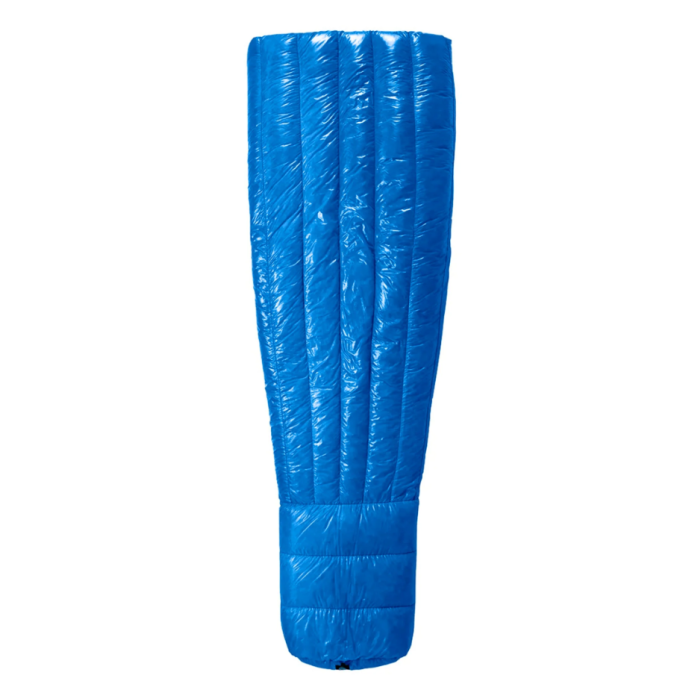
The Zpacks Classic 20 behaves more like a hoodless sleeping bag than a quilt with an entirely openable footbox. Its three-quarter zipper and closed foot section give feet consistent coverage, while the 900-fill insulation and minimal shell keep the trail weight to 1 lb. 2.8 oz. Our team has used it for more than 100 nights, including long-distance hiking.
Warm sleepers found it useful near freezing, but cold-prone hikers should not extrapolate those results into substantially colder weather. The fragile materials require care around campsite debris. For someone whose top priority is packing a small, light system with a familiar enclosed foot section, it’s a compelling stock option; summer campers who want blanket freedom may be happier with the Magma.
Durability deserves special attention with the Classic’s minimalist shell and hardware. We have kept ours performing well over years by clearing sharp debris before setup and storing it uncompressed between trips; those habits are part of the price of owning such light equipment. The included DCF stuff sack helps with trail packing but does not make the fabric itself rugged.
Our testing included a Colorado Trail thru-hike and many nights around freezing, with the insulation continuing to perform after extensive use. Warm sleepers may find the 20-degree version sufficient around that point; hikers who repeatedly sleep cold in the low 30s should consider the warmer 10-degree build. The combination of low weight and an enclosed footbox is compelling, but not a replacement for evaluating your own temperature needs.

Zpacks 20F Twin Quilt
Best Ultralight Two-Person Backpacking Quilt
CleverHiker Rating: 3.9/5.0
Price: $579
Weight: 1 lb. 11.9 oz.
Fill Power: 900
Pros
- Very low shared weight
- Warmth-to-weight performance
- Value compared with two separate premium quilts
Cons
- No pad straps
- No neck baffle
The Zpacks 20F Twin Quilt provides just 1 lb. 11.9 oz. of shared insulation for two hikers, a striking advantage over carrying independent sleep systems. Its sewn footbox helps maintain coverage at the feet, and the $579 price can be attractive next to purchasing two premium solo models.
The missing pad straps and neck baffle are consequential tradeoffs, not just minimalist styling. On a spring Appalachian Trail trip, our testers had to shift their sleeping pads back together after they separated. Couples who sleep cooperatively and care most about their combined weight should try this system on a low-stakes trip; the heavier Enlightened Equipment Accomplice 20 includes connectors for partners who want more control over gaps.
The important calculation is not simply half the weight per person. Sharing one quilt reduces duplicate shell fabric and insulation, but the benefit depends on both partners maintaining the coverage together. For people who turn independently or tug the bedding in opposite directions, the resulting drafts can outweigh any theoretical savings.

Loco Libre Operator Series Ghost Pepper 20
Versatile & Warm Quilt/Sleeping Bag Hybrid
CleverHiker Rating: 3.8/5.0
Price: $352
Weight: 1 lb. 5.5 oz.
Fill Power: 950
Pros
- Lofty insulation
- Chevron baffles
- Size customization
Cons
- Complex ordering choices
- Less warm than some alternatives
- Pad strap attachments can be fiddly to adjust
Chevron baffles make the Loco Libre Operator Series Ghost Pepper 20 distinctive: they reduce down shifting as we turn, helping maintain insulation around the torso. Our 950-fill quilt weighed 1 lb. 5.5 oz. and kept cold-sleeping testers comfortable in the 30s, though we would not count on the nominal 20-degree number for a low of 20°F.
Loco Libre offers optional Dee Ring Pad Attachments, which we used, but their clips were fiddly to manage at night. A sewn Hot Box footbox is a feature of the regular Ghost Pepper rather than this simplified Operator Series. The ~$350 quilt fits a shopper who prioritizes baffle stability and configurable sizing; the Revelation provides an easier warm-weather blanket mode and a simpler overall recommendation.
Ordering decisions matter unusually much here. Our 950-fill quilt balances high loft and a 1 lb. 5.5 oz. weight; other fill options can change the warmth-to-weight balance. We liked the baffle layout because maintaining down over the torso reduces the need to redistribute insulation during the night. The separately selectable pad attachments help manage drafts, but the clips made cold-night adjustment less convenient in our test.
More: Loco Libre Operator Series Ghost Pepper 20 Full Review

UGQ Bandit 20
Ultralight Backpacking Quilt for Warm Weather
CleverHiker Rating: 3.5/5.0
Price: $335
Weight: 1 lb. 6.3 oz.
Fill Power: 850 or 950
Pros
- Customizable sizing and design
- Comfortable in mild weather
- Low weight
Cons
- Underperformed its stated temperature rating in our tests
- Not a strong option for freezing nights
The UGQ Bandit 20‘s strongest draw is choice: buyers can specify dimensions, fabrics, colors, and insulation details for a quilt that feels plush in milder conditions. Field testing in the coastal Pacific Northwest exposed a more important limitation—our experience did not support depending on the 20-degree version on freezing nights.
That result moves the Bandit below several similarly priced alternatives despite its impressive order menu. If you know exactly which details you want and mostly camp in summer temperatures, this customization may still make sense. The stock Magma is easier to buy for warm trips, while the Revelation offers a more tested balance of variable-night adaptability and cost.
Our coastal Pacific Northwest trips revealed a gap between the Bandit’s plush comfort and its performance on colder nights. We liked the fluffy feel on mild nights, and the quilt carried without much burden, yet those positives didn’t erase our reservations about taking the 20-degree build into freezing conditions. That is why we see it as a warm-weather choice rather than ranking it with the strongest cold-night performers.
The selection process can reward experienced buyers who know their preferred dimensions and closures, but it’s a lot to sort through for someone buying a first quilt. UGQ offers upgrades such as a neckline draft collar for additional coverage; opting for higher-fill down can also change weight and packed bulk. Neither option should be assumed to correct the temperature limitation we observed without further testing.

Hammock Gear Burrow 20
More Affordable than Similarly Warm Backpacking Quilts
CleverHiker Rating: 3.3/5.0
Price: $240
Weight: 1 lb. 9.1 oz.
Fill Power: 850 or 950
Pros
- Competitive price
- Warm insulation
- Durable fabric choices
- Straightforward customization
Cons
- Heavier than leading ultralight quilts
- Bulkier packing
When cost and reliable insulation matter more than shaving every ounce, the $240 Hammock Gear Burrow 20 stands out. For an Arizona Trail test, we selected tough 20-denier fabric that suited rocky desert camps, and its straightforward length, width, and footbox choices let us prioritize durability without a complicated customization process.
At 1 lb. 9.1 oz., the Burrow weighs significantly more than the premium ultralight leaders. The added bulk is easiest to justify when rough camping and a limited budget guide the decision. A sewn footbox and optional extra down fill can improve a cold-prone sleeper’s setup.
Our Arizona Trail experience is useful for understanding its durability advantage. The 20-denier nylon taffeta we selected on both sides tolerated the kind of rocky, exposed cowboy camping where ultrathin shells demand extra caution. That fabric choice carries weight and volume penalties, but the trade is more defensible for hikers who regularly sleep on rough ground.

Katabatic Flex 22
High-Quality Introductory Quilt
CleverHiker Rating: 3.0/5.0
Price: $409
Weight: 1 lb. 7.9 oz.
Fill Power: 850 or 900
Pros
- Useful pad attachment
- Opens like a blanket
- Moisture-resistant down option
Cons
- Heavy for its price
- Down can shift in continuous baffles
A highly usable attachment system, ExpeDRY-treated down, and the ability to open flat distinguish the Katabatic Flex 22 for hikers who value accessories and wet-weather versatility. The blanket mode can be especially pleasant when nights are warmer than expected, and included connectors reduce the work of selecting compatible extras.
Its 1 lb. 7.9 oz. weight and $409 cost weaken the value case against both the Revelation and the markedly lighter (but pricier) AstraLite. Continuous baffles also allow down to move away from where insulation is needed. Choose the Flex when the attachments and treated down are meaningful priorities, not simply because it is labeled a premium quilt.
The included pad attachment system, storage bag, and stuff sack are practical advantages because they’re ready to use without an accessory search. We also value the ExpeDRY treatment for damp trips: it is designed to retain loft when exposed to moisture and dry more quickly, making it a more relevant benefit in wet climates than in dry summer camps.
Its horizontal continuous baffles permit down to be shifted deliberately, but also allow insulation to migrate when sleepers move. That matters less for someone who stays relatively still than for an active sleeper who wakes to cold patches. The internal stash pocket is another thoughtful detail, although none of these features entirely offsets the weight and price disadvantages for a backpacker primarily focused on ounces.

Enlightened Equipment Accomplice 20
Excellent Quality Backpacking Quilt for Two with Premium Details
CleverHiker Rating: 2.9/5.0
Price: $605
Weight: 2 lb. 5 oz.
Fill Power: 850 or 950
Pros
- Shared sleep system
- Included pad connectors
- Configuration choices
Cons
- Expensive
- Can expose drafts when pads separate
- Bulkier single item
The Enlightened Equipment Accomplice 20 puts more emphasis on controlling a shared sleep system than the ultralight Zpacks Twin, making it a potential solution for partners who sleep at similar temperatures. Its included pad connectors help address the draft pathway between mats, while stock and customizable ordering paths accommodate different planning needs.
At $605+ and 2 lb. 5 oz., the quilt is bulky as one item even though the weight is shared by two people. The Twin makes a stronger argument for minimum combined carry weight; two independent quilts make more sense when partners need different ventilation or sleep schedules. We recommend trialing any shared setup before taking it on a long, cold trip.
There is a useful packing distinction between total weight and how that weight is carried. One person can pack the shared quilt while the other carries the shelter, but the Accomplice remains a large single item in an ultralight pack. It makes less sense as a solo-trip purchase and may be more convenient for partners who regularly camp together, including on frontcountry trips.
The included connectors are worth using because a gap between sleeping pads can turn into a cold channel even under generous shared insulation. We recommend trying the setup at home or on an easy overnight to learn how both sleepers move and whether the arrangement maintains coverage. A ready-to-ship version is available, while custom configuration offers more choices for couples who can accommodate the ordering time.

Product Comparison Table
| oSort | Product | Price | Weight | Fill Power | Warmth | Comfort | Weight & Packability | Features | 0 |
Western Mountaineering AstraLite View at Amazon View at Backcountry 
|
$550 | 1 lb. | 850 | 5.0 | 4.7 | 5.0 | 4.4 | 1 |
Hyperlite Mountain Gear 20-Degree Quilt View at Hyperlite Mountain Gear View at Garage Grown Gear
|
$530 | 1 lb. 1.1 oz. | 1000 | 5.0 | 4.8 | 4.5 | 4.4 | 2 |
Enlightened Equipment Revelation 20 View at Enlightened Equipment 
|
$390 | 1 lb. 6.5 oz. | 850 or 950 | 4.0 | 4.5 | 4.3 | 4.5 | 3 |
REI Magma 30 Down Trail Quilt View at REI
|
$329 | 1 lb. 4.3 oz. | 850 | 3.3 | 4.5 | 4.5 | 4.2 | 4 |
Zpacks Classic 20 View at Zpacks |
$469 | 1 lb. 2.8 oz. | 900 | 4.3 | 4.0 | 4.3 | 4.3 | 5 |
Zpacks 20F Twin Quilt View at Zpacks |
$579 | 1 lb. 11.9 oz. | 900 | 4.3 | 4.0 | 4.8 | 3.0 | 6 |
Loco Libre Operator Series Ghost Pepper 20 View at Loco Libre Gear |
$352 | 1 lb. 5.5 oz. | 950 | 4.0 | 4.3 | 3.0 | 4.5 | 7 |
UGQ Bandit 20 View at UGQ |
$335 | 1 lb. 6.3 oz. | 850 or 950 | 2.0 | 3.1 | 3.0 | 4.0 | 8 |
Hammock Gear Burrow 20 View at Hammock Gear
|
$240 | 1 lb. 9.1 oz. | 850 or 950 | 4.0 | 3.5 | 3.2 | 3.3 | 9 |
Katabatic Flex 22 View at Katabatic Gear |
$409 | 1 lb. 7.9 oz. | 850 or 900 | 4.0 | 3.5 | 3.0 | 3.0 | 10 |
Enlightened Equipment Accomplice 20 View at Enlightened Equipment |
$605 | 2 lb. 5 oz. | 850 or 950 | 2.7 | 3.0 | 2.0 | 3.7 |
|---|

Analysis & Results
Which Backpacking Quilts Offer the Best Value?
Value depends on the conditions a quilt can serve, not simply the lowest number on its price tag. The Hammock Gear Burrow is the clearest low-cost option for someone willing to carry a tougher, heavier build; the REI Magma Trail 30 costs more but provides a lighter and roomier solution for reliably warm nights. Neither is a straight substitute for a cold-weather specialist.
The Enlightened Equipment Revelation occupies an important middle ground: customizable fit and blanket-style ventilation for $390. If those features cover most of your trips, paying a premium for the AstraLite or Hyperlite may not improve the nights you actually spend outside. The Loco Libre offers lofty insulation and distinctive baffles near the Revelation’s price, but buyers must pay close attention to the exact ordered configuration.
Which Quilts Performed Best for Warmth?
Our strongest cold-night evidence comes from the Western Mountaineering AstraLite and Hyperlite Mountain Gear 20-Degree Quilt, which combined loft with dependable draft control on wet Appalachian Trail outings in the 30s. The Zpacks Classic has kept warm sleepers comfortable near freezing, but its hybrid construction does not make it a universal cold-sleeper solution.
The Revelation and Burrow offer more flexibility at less money: one vents exceptionally well, while the other can be configured with an enclosed footbox and additional insulation. The Katabatic Flex’s continuous baffles permit fill movement, and our UGQ Bandit results caution against treating its 20-degree number as a reliable freezing-night promise. For the two-person Twin and Accomplice, the seal between neighboring pads can become as important as the down overhead.

Which Quilts Are the Most Comfortable?
A close cut prevents excess fabric and drafts but can restrict people who turn frequently. The AstraLite and Hyperlite sit at this efficient, slender end of the spectrum; the REI Magma stands apart with its generous 58.5-inch standard width and no extra sizing charge. The Revelation’s customizable length and width allow fit-sensitive shoppers to aim between those extremes.
The Loco Libre’s chevron baffles resist down shifting, while the Bandit’s plush feel and varied sizing choices suit milder-weather campers who want a personalized fit. The Flex opens into a blanket, though fill movement deserves consideration. Two-person quilts have an altogether different comfort question: whether both sleepers can move and vent without disturbing the other.

Which Quilts Save the Most Weight & Pack Space?
At exactly one pound, the AstraLite sets the weight benchmark for the tested solo field; Hyperlite follows closely at 1 lb. 1.1 oz., and the Zpacks Classic remains a compelling lightweight hybrid at 1 lb. 2.8 oz. The Magma keeps warm-weather kits small without the premium-price burden of these models, while the Revelation trades several ounces for a configurable blanket design.
The Burrow and Flex are less competitive when minimum backpack volume is the objective, although durable shell choices and accessories explain part of the burden. The Twin’s 1 lb. 11.9 oz. total is exceptional for two people; the Accomplice’s 2 lb. 5 oz. is still a shared weight, but packing a bulky single quilt is a separate challenge.
Which Features Make the Biggest Difference?
The most valuable features make a practical difference after midnight. Simple pad attachments and contoured neck closures helped the AstraLite and Hyperlite limit drafts; the Revelation and Magma open fully for warm-night ventilation. The Classic’s enclosed footbox takes a different approach, keeping feet covered while sacrificing full-blanket flexibility.
The Loco Libre’s optional Dee Ring attachments worked in our test but were fiddly to clip, and its chevron baffles are more compelling than extra customization for its own sake. The Flex adds treated down and useful attachments, while the Bandit’s broad order menu can overwhelm buyers who aren’t sure what they need. The Twin deliberately omits straps and a neck baffle; the Accomplice includes connectors but pays a considerable weight penalty.

How to Choose a Backpacking Quilt
What Temperature Rating Do I Need?
Treat temperature ratings as starting points, not promises. Your sleeping pad, metabolism, clothing, exposure, and whether drafts develop at the neck or footbox all affect how warm you’ll feel. Cold sleepers and people expecting freezing nights should build in a wider margin than someone camping only in summer.

Should I Choose a Sewn or Adjustable Footbox?
A sewn footbox reduces openings at the feet and is well suited to colder trips. An adjustable zipper-and-cinch footbox is more useful when conditions vary or you want to spread a quilt over yourself like a blanket. Decide based on how often you actually need warm-weather ventilation.

How Wide Should My Quilt Be?
Enough width to stay covered when you roll matters more than saving the last ounce. Side sleepers, restless sleepers, and hikers with broad shoulders may benefit from a wider cut. A closer fit can help control drafts if it matches your sleeping style.

Do Pad Straps and Neck Baffles Matter?
A quilt doesn’t wrap underneath you like a conventional sleeping bag, so its attachment system plays a direct role in warmth. Well-positioned straps hold the edges near the sleeping pad without preventing normal movement. A contoured neck baffle can reduce the cool air entering above the shoulders.

Can Two People Share One Quilt?
Sharing can save fabric, weight, and cost when both sleepers want similar warmth and move cooperatively. It also creates a risk of shifting mats and openings between sleepers. Try the setup close to home before depending on it in cold or remote conditions.

Should I Prioritize Fill Power or Durability?
Higher fill power can deliver loft with less down mass, but it doesn’t automatically guarantee a warmer or better-fitting quilt. Compare real total weight, shell fabric, closures, and the field results available for the exact configuration. Tougher fabric is often worth some extra ounces when you regularly sleep on rough ground.

Why Trust CleverHiker?
We use the gear on real backpacking trips and keep notes on comfort, weather, weight, and failures rather than relying on catalog specifications alone. Our recommendations reflect how each quilt’s warmth, fit, weight, and features performed on backpacking trips.

Testing Methodology
We compare warmth, comfort, packability, and features as quilts respond to movement, ventilation, and changing sleeping positions. Price and weight help show which tradeoffs are worthwhile for different trips.
How Do We Test Warmth?
We sleep in each quilt across a range of overnight conditions and consider the temperatures at which our testers actually stayed comfortable, rather than taking the advertised rating at face value. We note when extra clothing, a warmer pad, or a different closure setup is needed. Temperature tolerance varies by sleeper, so we distinguish warm and cold sleepers’ experiences when the evidence supports it.
We also watch for heat loss at the neck, footbox, and open edges as we change positions. Pad straps, draft collars, baffle orientation, down distribution, and the ability to cinch openings all affect whether a quilt keeps insulation over the body. A quilt that feels warm while lying still may perform differently after a night of turning.
How Do We Test Comfort?
We assess how each quilt feels through an entire night, not just when we first climb inside. Our testers sleep on their backs and sides, turn over, and adjust the quilt to evaluate shoulder and hip coverage, foot room, lining feel, and how securely the edges stay in place. For double quilts, we also pay attention to whether two sleepers can move without tugging the shared cover off each other.
Dimensions alone do not tell the whole story. We consider the shape of the taper, how a sewn or adjustable footbox affects sleeping positions, and whether pad attachments restrict movement or prevent drafts. We also account for sizing options that may help a restless or broader-shouldered sleeper get better coverage.
How Do We Measure Weight & Packability?
We compare each quilt’s stated or verified weight in the configuration being reviewed, including the effect of dimensions, fill choices, and optional hardware when relevant. Weight matters most in context: a lighter model is not necessarily better if it needs added layers or compromises warmth on the trips it is meant to handle.
We also assess how readily each quilt compresses and fits into a typical backpacking load. Fill power, fabric thickness, packed bulk, and included storage accessories can all affect daily packing. For two-person models, we evaluate the total shared weight and the practical challenge of fitting one larger bundle into a partner’s pack.
How Do We Evaluate Features?
We use each quilt’s closures and accessories repeatedly in camp and during the night. That includes pad-attachment straps or clips, neck cinches, draft collars, footbox zippers and drawcords, storage bags, and useful customization options. We pay attention to whether adjustments can be made easily in the dark and whether a feature solves a real problem or merely adds complexity.
Our comparisons also consider fabric durability, moisture-conscious down treatments, availability, and the consequences of choosing a stock versus made-to-order configuration. We judge features by how reliably they improve warmth, convenience, and versatility, not simply by how many extras a quilt includes.

Conclusion
The right quilt is the one whose warmth, fit, and closure design match your usual overnight conditions. Before buying, identify the lowest temperatures you regularly encounter, how much room you need to turn, and whether you prefer a fixed footbox or blanket-like flexibility.
After that, compare the complete configuration’s weight and price—not only a headline temperature rating or fill-power number. A dependable night’s sleep is worth more than a few saved ounces if a too-narrow or draft-prone design keeps waking you up.