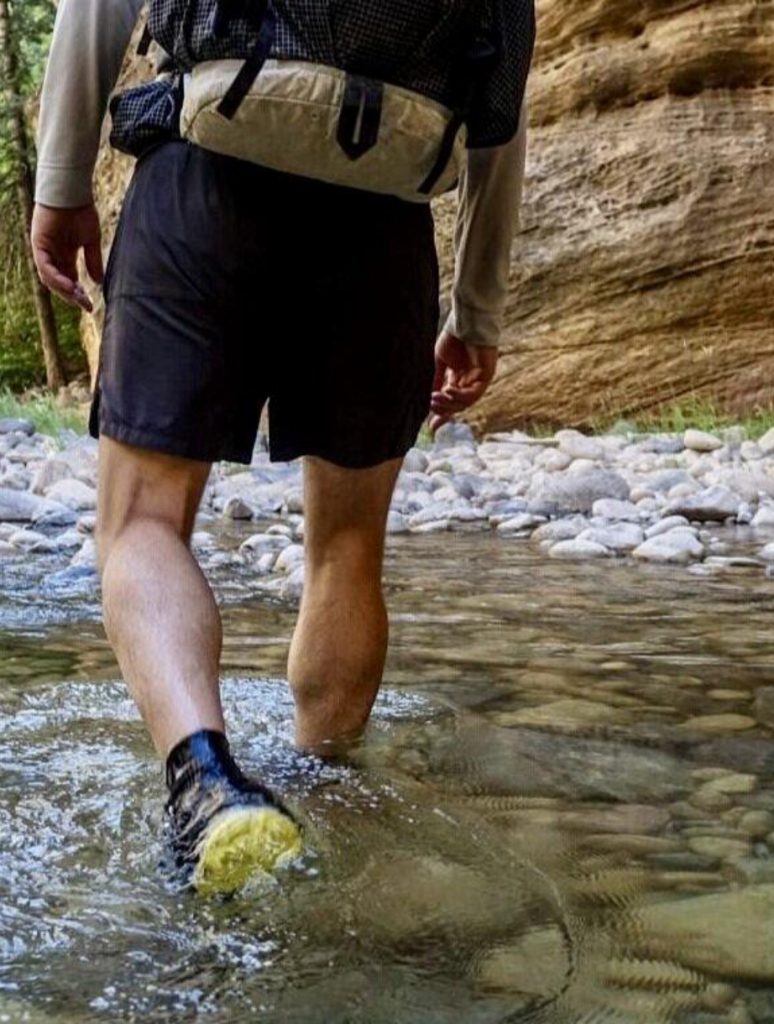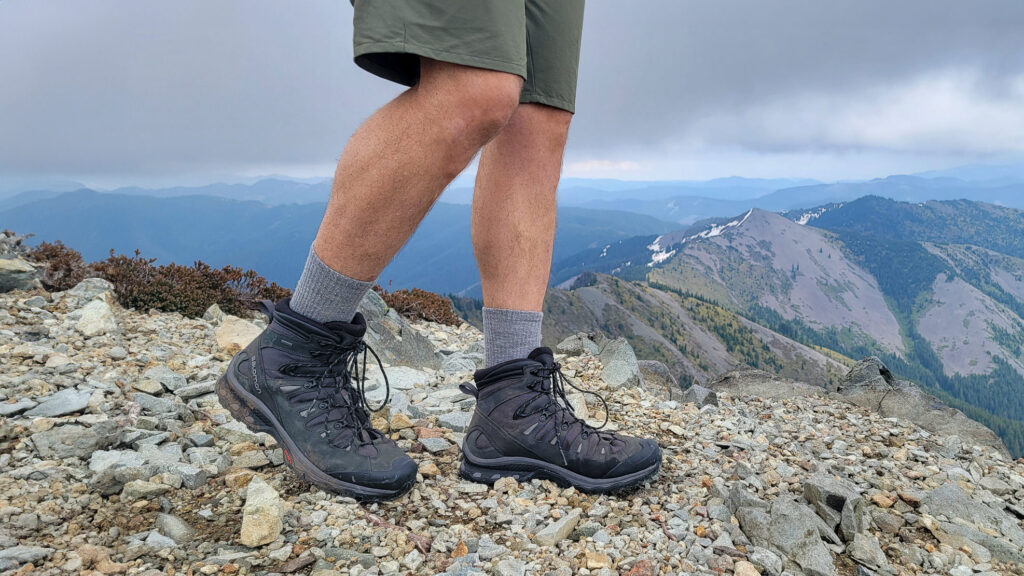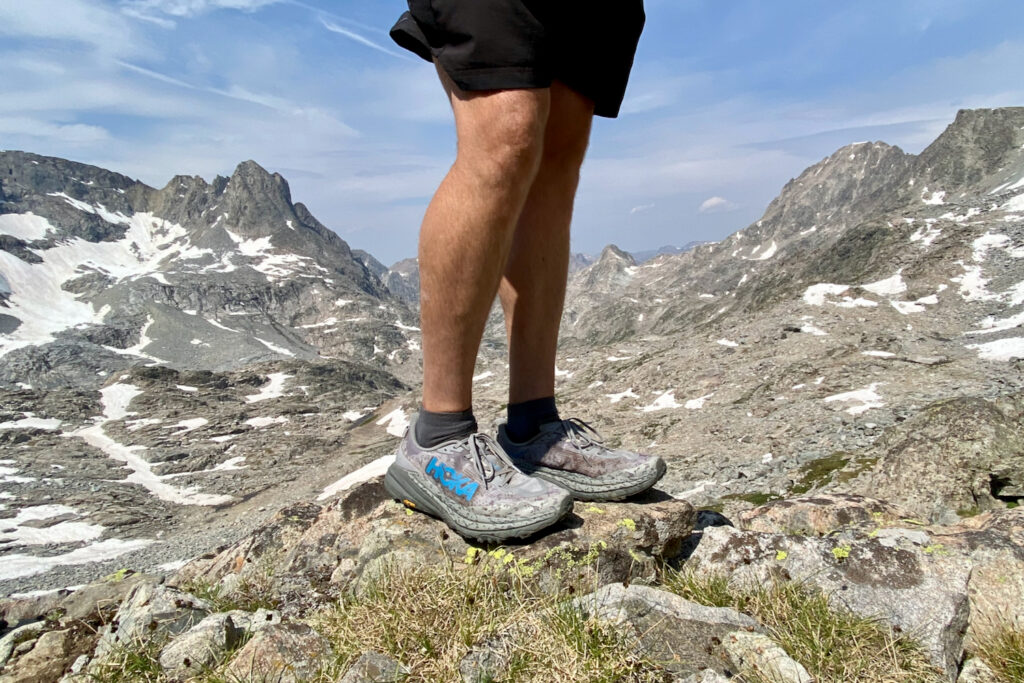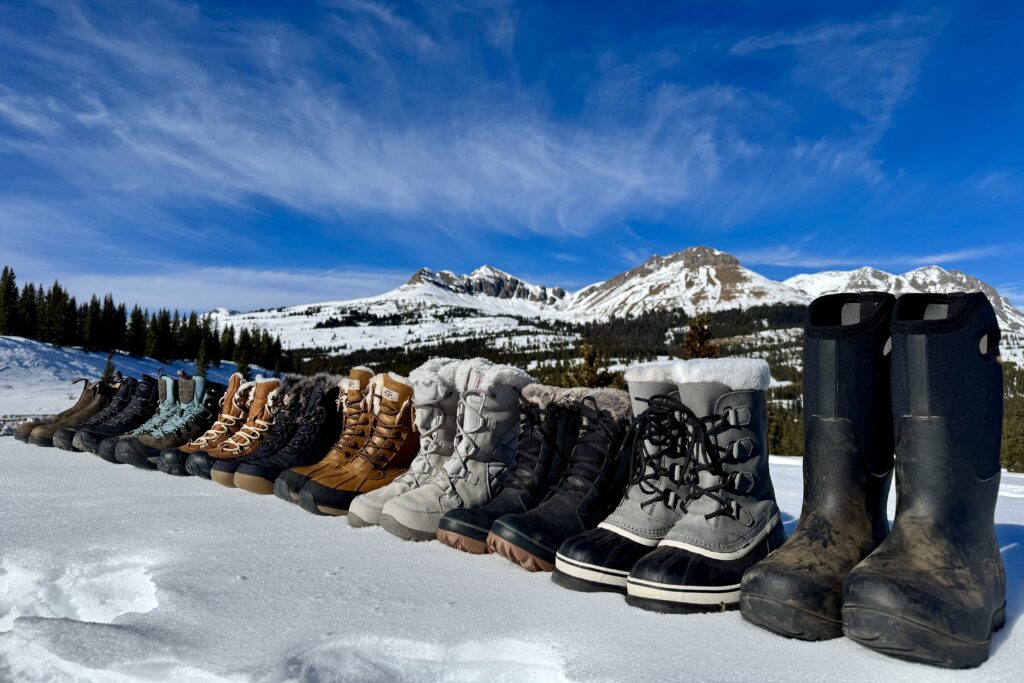



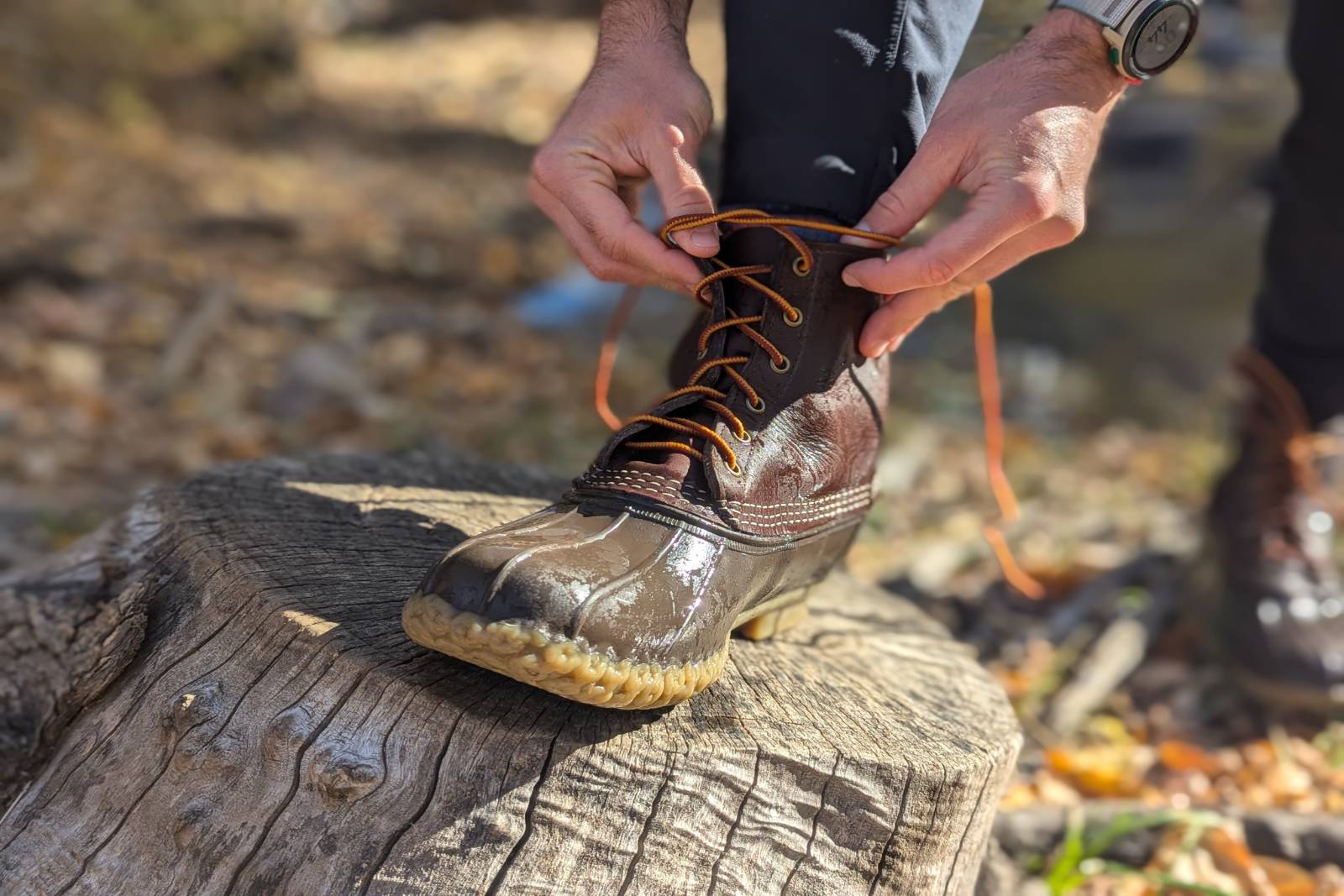
After researching dozens of highly rated men’s rain boots and testing more than 30, we’ve narrowed it down to the 13 best designs on the market. Our top picks cover the full gamut, from ultra-protective, insulated designs for the coldest and wettest weather to stylish ankle-height boots that wear well around town.
Editor’s Note: We updated this guide on August 3, 2026, to ensure all prices and product specifications were accurate. We also revamped our section on How to Choose Rain Boots.
How We Test Men’s Rain Boots
We’ve spent hundreds of days wading through puddles, slogging through muddy fields, and trekking on snowy trails to find the most capable rain boots from BOGS, Kamik, Muck Boot, XTRATUF, L.L. Bean, and more. We put each pair below through its paces in southern Minnesota, Wisconsin’s Chequamegon-Nicolet National Forest, and Colorado’s Front Range to evaluate their weather resistance, comfort, traction, warmth, and durability.
And for more info, check out some of our other most popular gear guides:

#1. Best Men’s Rain Boots Overall
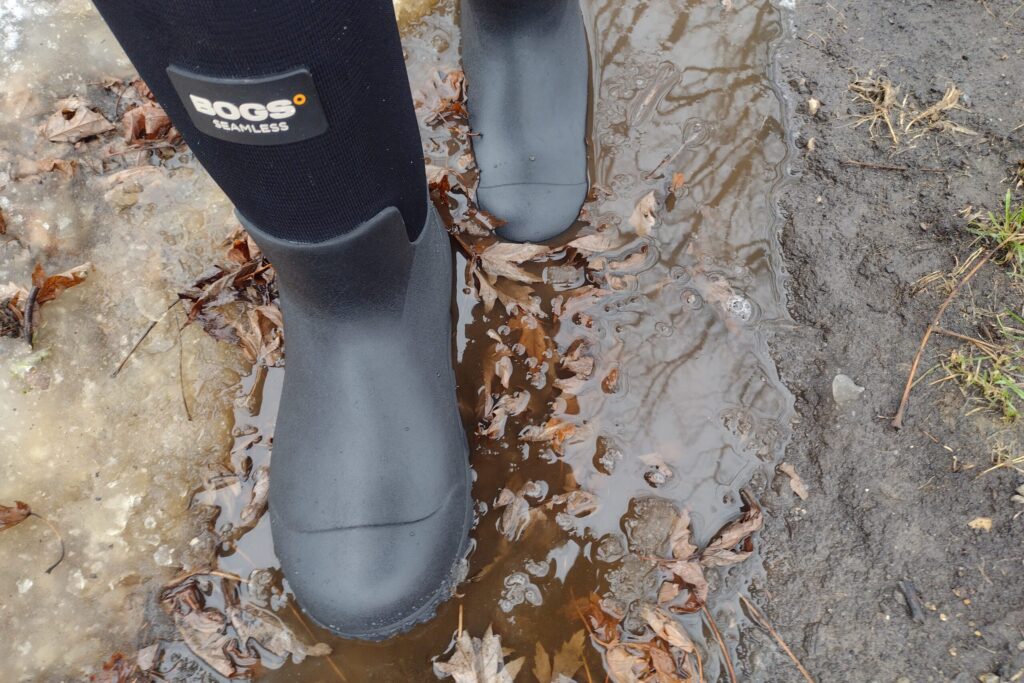
The BOGS Workman is the whole package: rugged, comfortable, grippy, and warm. We tested the Workman throughout a soggy Minnesota winter and came away impressed by its all-around protection – great for long days working outside.
Quick Picks for Men’s Rain Shoes
Check out this quick list of our favorites if you’re in a hurry, or continue scrolling to see our full list with in-depth reviews.
1. Best Rain Boots Overall: BOGS Workman ($185)
2. Best Heavy-Duty Work Boots: BOGS Bozeman Mid Insulated ($180)
3. Best Cold-Weather Boots: Kamik Forester ($70)
4. Best Bad-Weather Boots: The Original Muck Boot Company Wetland ($165)
5. Best Duck Boot Mid: L.L. Bean 8” Bean Boots ($150)
6. Best Insulated Waterproof Boots: BOGS Classic Seamless Tall ($150)
7. Best Deck Boots: XTRATUF Ankle Deck Boot ($115 – $125)
8. Most Durable Rain Boots: BOGS Classic High ($135)
9. Best Puddle-Jumper Boots: XTRATUF 15” Legacy Boot ($160)
10. Best Performance-Ready Ankle Boots: Grundens Deviation 6″ ($145 – $150)
11. Best Around-Town Rain Boots: Huk Rogue Wave ($110 – $120)
12. Best Casual Rain Boots: Blundstone Original Chelsea ($210 – $215)
13. Best Budget Rain Boots: Baffin Enduro ($65)
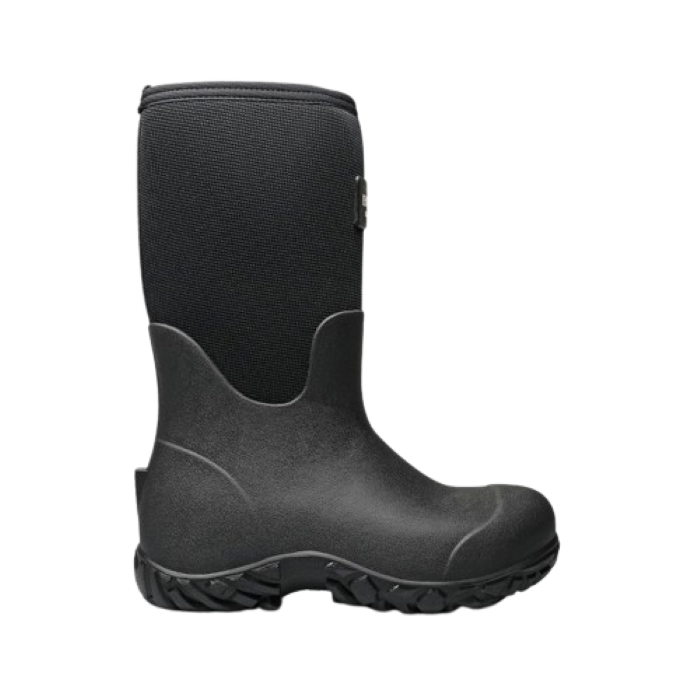
BOGS Workman
Best Rain Boots Overall
CleverHiker Rating: 4.8/5.0
Price: $185
Weight (Pair): 4 lb. 3.7 oz.
Height: 15 in.
Insulated: Yes
Pros
- Designed for heavy-duty work
- Excellent durability
- Reinforced in high-wear areas
- Comfortable fit
- Good traction
Cons
- Heavy and bulky
- Expensive
- Can be too warm in mild temperatures
- May feel too stiff for some
The BOGS Workman boots are our top pick for their deft balance of durability, comfort, and functionality in harsh conditions. The rugged construction with reinforcements in high-wear areas makes them well suited for everything from heavy snow to muddy spring trails. These boots ranked highly in key performance areas including warmth, traction, and weather protection, making them a dependable choice for year-round use.
One of the most impressive features is their modular insole setup, which allows for a customizable fit that accommodates various foot shapes. Paired with a heel-locking collar, the boots provide a secure yet comfortable feel, even during long days of wear. Despite their heavy-duty design, the Workmans are surprisingly lightweight – a game-changer for minimizing fatigue.
Traction is another area where these boots excel. The outsoles grip reliably on slippery surfaces, ensuring stability whether you’re navigating icy sidewalks or muddy chores at home. The boots also deliver on warmth, keeping your feet cozy in subzero temperatures without sacrificing breathability.
Some users find them a bit stiff during the break-in period, and their bulkier profile may not appeal to everyone. Additionally, they’re on the pricier side, but their exceptional durability ensures you’ll get plenty of wear for your investment.
More: BOGS Workman Full Review
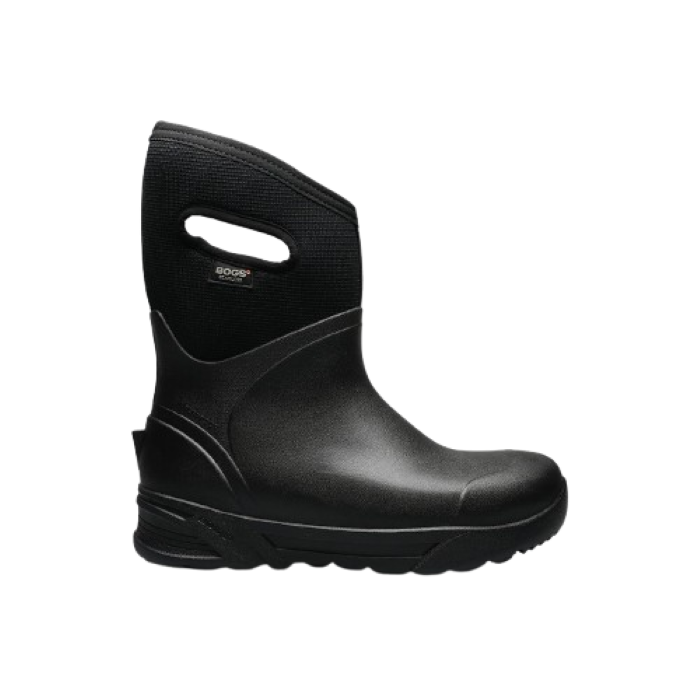
BOGS Bozeman Mid Insulated
Best Heavy-Duty Work Boots
CleverHiker Rating: 4.7/5.0
Price: $180
Weight (Pair): 3 lb. 5.3 oz.
Height: 11 in.
Insulated: Yes
Pros
- Mid-height design lends versatility
- Good insulation for moderate cold
- Comfortable for extended outdoor use
- Lighter than full-height boots
Cons
- Less protective than high-cut boots
- Can be too warm in mild temperatures
- Bulky
- Not ideal for extreme weather or rugged terrain
The BOGS Bozeman Mid boot is a solid choice for comfort, durability, and weather protection. With a mid-height design, these boots offer better freedom of movement than high-cut options, making them ideal for moderate cold and varied activities. The lightweight construction reduces fatigue without compromising on durability.
Equipped with 7-millimeter Neo-Tech waterproof insulation, the Bozeman Mid keeps feet warm and dry in the wettest of conditions. The lining expertly manages moisture, evaporating sweat to maintain comfort all day. The EVA footbed provides good arch support and lends a natural fit.
Another standout feature is the self-cleaning BioGrip outsole, a debris- and slip-resistant compound that offers great traction and holds up well over time.
Though lighter and more flexible than full-height boots, the Bozeman Mids sacrifice some protection in extreme conditions. Some may find them bulky, and the styling is more functional than fashionable. But small gripes aside, they are a high-quality pair of rain boots that thoughtfully balances weight and performance.
Editor’s Note: Our review linked below covers the original Bozeman Mid, but BOGS has since released the Bozeman II Mid. We will update our coverage once we’ve had a chance to test the latest version.
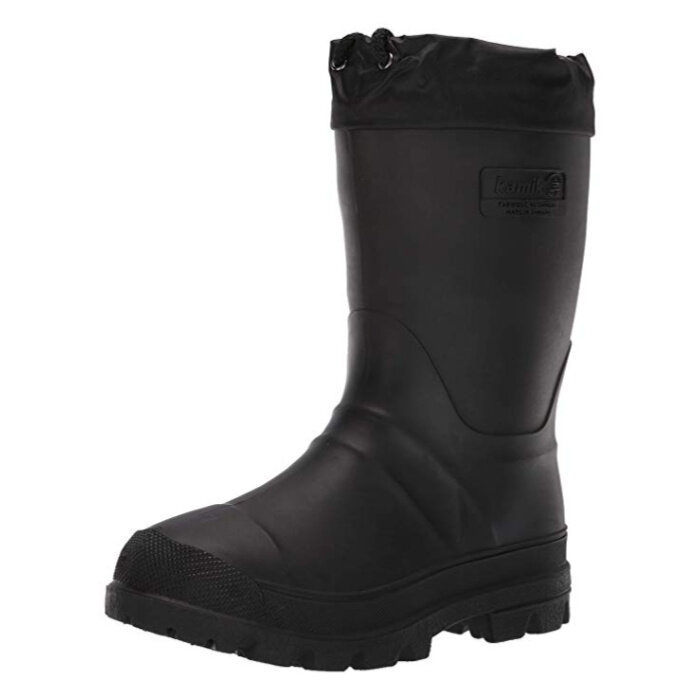
Kamik Forester
Best Cold-Weather Boots
CleverHiker Rating: 4.6/5.0
Price: $70
Weight (Pair): 4 lb. 8.2 oz.
Height: 13.8 in.
Insulated: Yes
Pros
- Affordable
- Good height for splash/muck protection
- Warm and comfortable
- Long-lasting
- Slip-on convenience
- Easy to clean
- Cinchable collar
Cons
- Bulky
- Heavy
- Loose-fitting (clunky for long walks)
The Kamik Forester boots stand out for their exceptional value and reliable performance. These versatile boots shine in challenging conditions, proving their worth in mud, rain, and snowy environments alike.
We love the practical cinch collar, which functions as an integrated gaiter that blocks snow from infiltrating the boot when you’re trudging through deep drifts. The boots also score high marks for convenience with an easy-to-slip-on design that’s great for frequent transitions throughout the day.
However, the substantial bulk and weight may prove tiresome during extended wear. And although the construction is solid, overall quality doesn’t quite match up to higher-end competitors. Some users might notice this difference in durability and refinement over time.
Despite these minor drawbacks, the Forester boots are a compelling choice for dependable, budget-conscious winter footwear. They excel in keeping feet warm and dry in harsh conditions, making them particularly appealing for outdoor work and casual winter activities.

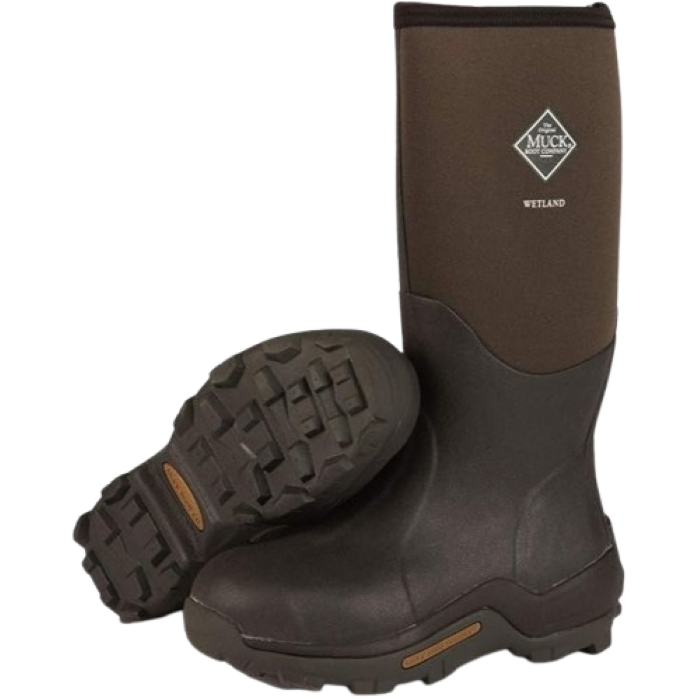
The Original Muck Boot Company Wetland
Best Bad-Weather Boots
CleverHiker Rating: 4.6/5.0
Price: $165
Weight (Pair): 2 lb. 12 oz.
Height: 17 in.
Insulated: Yes
Pros
- Ideal for swamps, marshes, and wetlands
- Excellent water resistance
- Comfortable for extended wear
- Good traction
- Breathable
Cons
- Relatively expensive
- Not the best insulation
- May be too warm for moderate temps
- Less durable than heavy-duty work boots
- Specialized design limits versatility
The Original Muck Boot Company Wetland is a go-to option for those who frequently find themselves in wet, marshy environments. Purpose-built with water resistance in mind, these boots offer stellar protection from water, mud, and muck, keeping your feet dry and comfortable throughout the day. The lightweight and flexible construction makes them a breeze to wear, and traction is solid, providing consistent stability.
Comfort is another clear highlight, including a cushioned footbed and breathable interior that keep your feet feeling fresh even in warmer or more humid conditions. These boots are built with the kind of durability needed for outdoor adventures, although they aren’t designed for heavy-duty work.
Although they perform admirably in wet environments, they lack the insulation necessary for extreme cold. On the flip side, they also can feel too warm during milder temperatures. Finally, the Wetland boots come with a higher price tag, which may be a consideration for those on a budget.
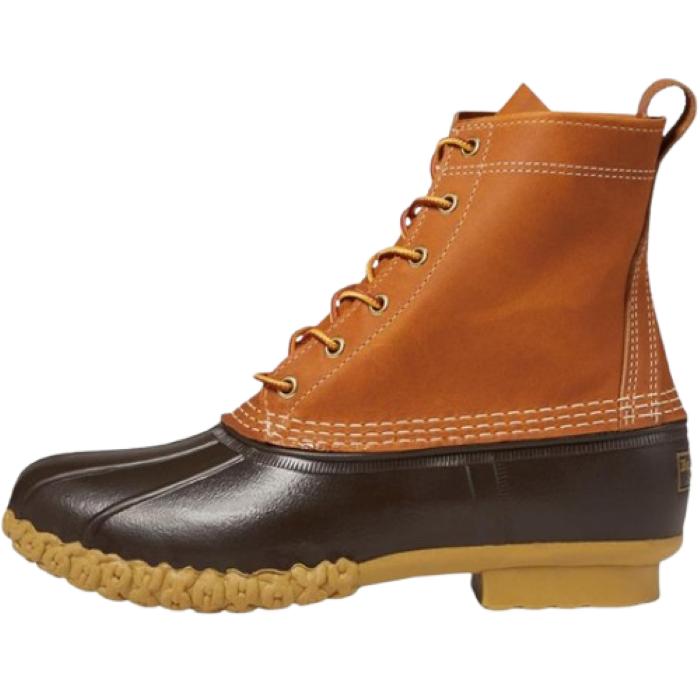
L.L. Bean 8″ Bean Boots
Best Duck Boot Mid
CleverHiker Rating: 4.6/5.0
Price: $150
Weight (Pair): 3 lb. 6 oz.
Height: 8 in.
Insulated: No
Pros
- Stylish to wear around town
- Comfortable
- Adjustable lace fit
- Flexible enough for driving and casual wear
- Versatile
Cons
- Not the best heavy-duty option
- Short height limits weather protection
- Leather needs time to break in
The L.L. Bean 8” Bean Boots are a fashionable and comfy pair of rain boots that are well suited for local trails and casual winter use around town. The leather upper and lacing system allow for an adjustable fit. The rubber bottom is highly durable and weather-resistant, and the custom outsole sports excellent traction on a variety of terrain.
As far as mid-rise duck boots go, the Bean Boots are top-of-the-line and thoughtfully designed with a strong attention to detail. Manufactured in Maine by the legendary company that’s been handcrafting boots since 1912, you can be sure you’re getting high-end quality and an industry-leading return policy.
Though the L.L. Bean 8” Bean Boots are great for leisurely outings or daily wear, they’re not the best choice for extreme weather or intense outdoor activities. However, if you’re looking for a boot that offers both style and warmth for moderate cold and wet conditions, these sure do deliver.

BOGS Classic Seamless Tall
Best Insulated Waterproof Boots
CleverHiker Rating: 4.6/5.0
Price: $150
Weight (Pair): 4 lb. 9.6 oz.
Height: 15 in.
Insulated: Yes
Pros
- Good height for splash/muck protection
- Warm
- Comfortable
- Durable
- Easy to clean
- Slip-on
Cons
- Bulky
- Loose fit
- Too clunky for long walks
- Can be too warm
The BOGS Classic Seamless Tall excels in wet, muddy, and snowy environments. With their slip-on design, these boots are quick to put on and take off. Whether you’re trudging through deep puddles, navigating snowdrifts, or hiking on slippery trails, the fully waterproof construction ensures your feet stay dry.
In addition, the 5.5-millimeter Neo-Tech insulation offers impressive warmth without causing overheating during moderate activity. The cushioned interior makes these winter boots incredibly comfortable for short- to medium-duration activity.
As its name suggests, the Classic Seamless Tall sports a one-piece, seamless rubber upper that that eliminates potential leakage. BOGS also managed to keep weight pretty reasonable. Though they are on the heavier end, these boots offer good maneuverability and all-day comfort.
Combined with BOGS’ proven track record for durability, the Classic Seamless Tall boots are an absolute workhorse.
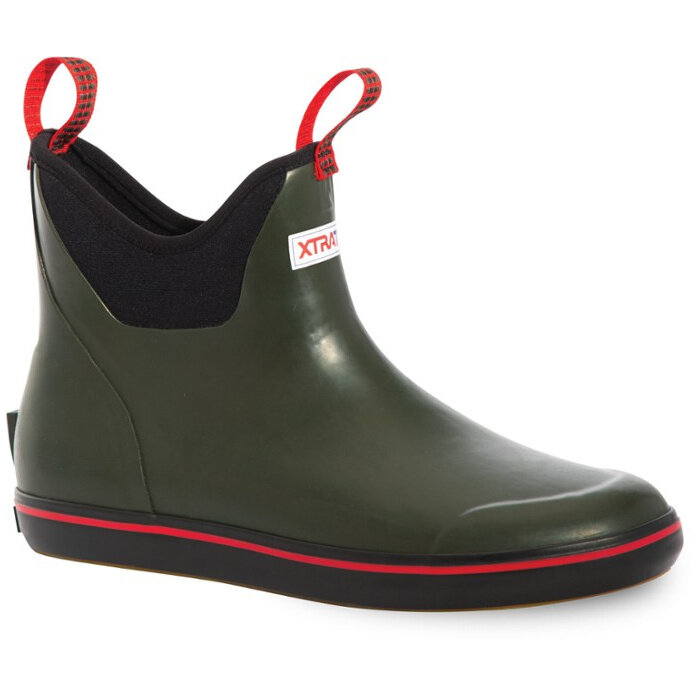
XTRATUF Ankle Deck Boot
Best Deck Boots
CleverHiker Rating: 4.5/5.0
Price: $115 – $125
Weight (Pair): 3 lb. 2.6 oz.
Height: 6 in.
Insulated: No
Pros
- Comfortable
- Lightweight
- Slip-on
- Durable
- Easy to clean
- Antimicrobial lining
Cons
- Heavy
- Minimal traction
- Short height limits weatherproofing
- No arch support
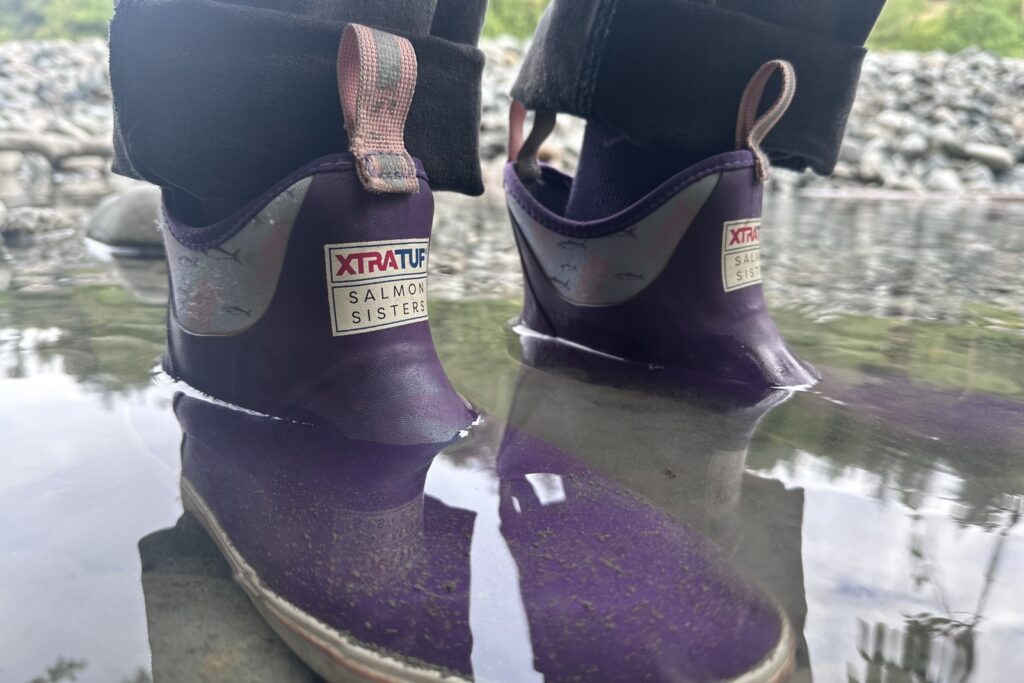
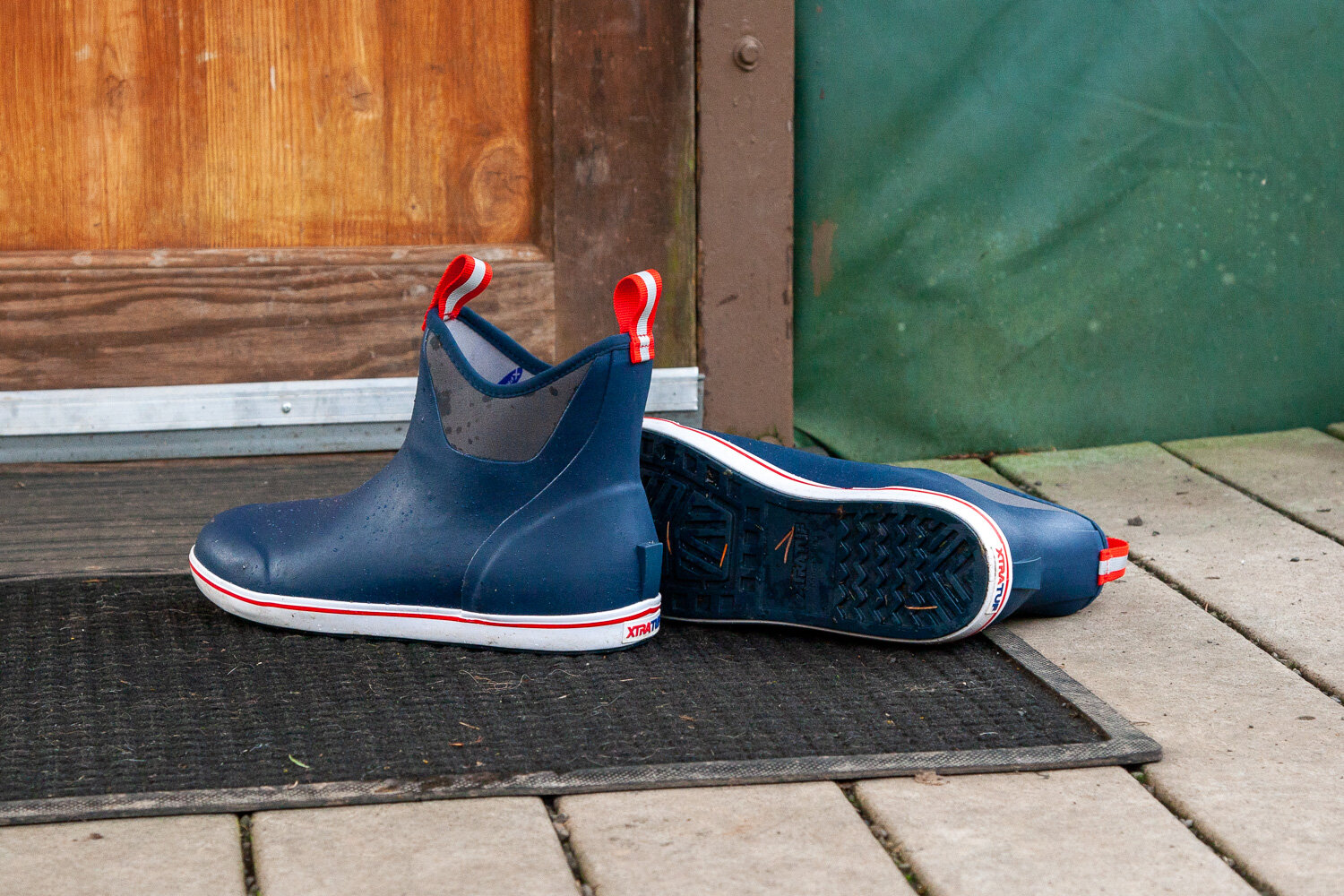
The XTRATUF Ankle Deck Boot is a no-nonsense, practical choice for anyone who spends time in wet, muddy, or slippery environments. Designed with mobility in mind, these boots offer excellent water protection without the bulk of taller options. The ankle-height design allows for flexibility and comfort during a wide range of activities, particularly in warmer weather.
For those who need a bit more warmth or coverage, the Deck Boots are easy to pair with thick socks or rain pants, allowing you to adapt to different conditions. The slip-resistant outsole promotes solid grip on wet surfaces, although it’s not aggressive enough for hiking over any sort of technical terrain.
XTRATUF boots are widely trusted for their performance in demanding conditions, and the Ankle Deck Boot lives up to that reputation. Though they lack the protection of their taller counterparts, they provide a practical, lightweight alternative for those who don’t need full coverage.
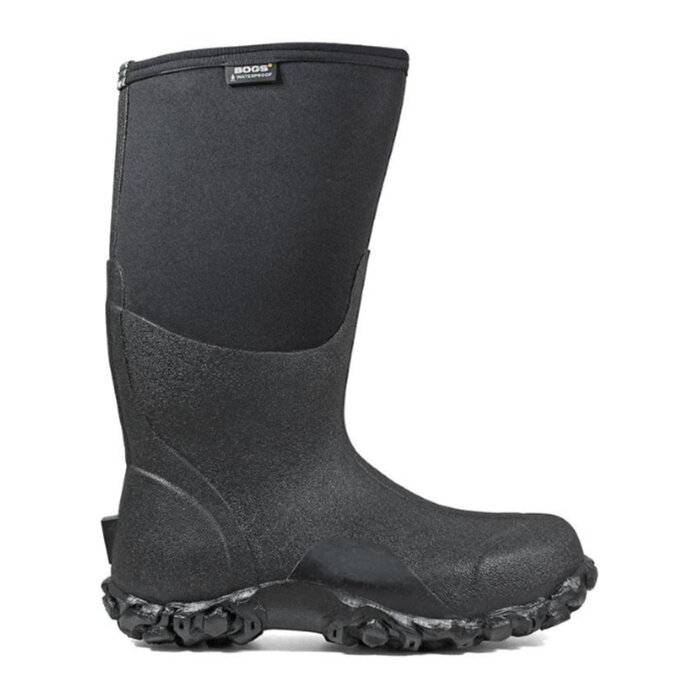
BOGS Classic High
Most Durable Rain Boots
CleverHiker Rating: 4.5/5.0
Price: $135
Weight (Pair): 5 lb.
Height: 15 in.
Insulated: Yes
Pros
- Good height for splash/muck protection
- Warm
- Comfortable
- Durable
- Slip-on
- Easy to clean
Cons
- Heavy
- Bulky
- Loose-fitting (clunky for long walks)
The BOGS Classic High is – true to its name – a classic. Similar to the Classic Seamless Tall boots, the Classic High is easy to get on and off, well insulated without being overwhelming, and very reliable when the going gets wet.
The 7-millimeter Neo-Tech insulation and EVA footbed lend a cozy, foot-hugging feel. These boots are plenty warm for winter conditions but breathable enough for milder days.
The Classic High is among the heaviest rain boots we tested, and the heft and bulk are noticeable on long walks and extended outdoor outings. Even so, the boots are more flexible and less clunky than expected for such a burly, high-cut design. Speaking of burly, these boots are built to last and can handle the toughest conditions without showing much wear.
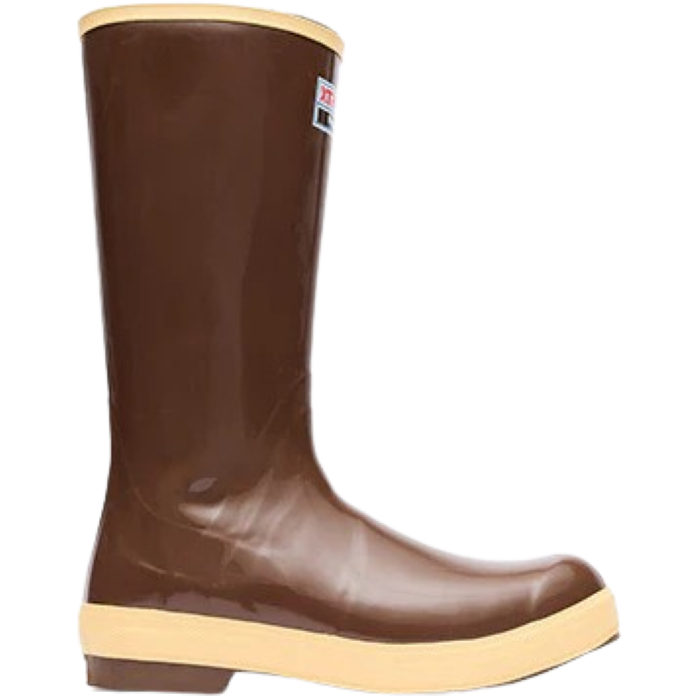
XTRATUF 15″ Legacy Boot
Best Puddle-Jumper Boots
CleverHiker Rating: 4.5/5.0
Price: $160
Weight (Pair): 5 lb. 2.4 oz.
Height: 15 in.
Insulated: No
Pros
- Good option for heavy-duty work
- Comfortable and flexible for a tall boot
- Great for squatting and bending
- Excellent traction on slick surfaces
Cons
- Heavy
- Cold spots near the toes
- Divisive styling and harsh branding
The XTRATUF 15” Legacy is a protective and fully waterproof boot tailor-made for challenging conditions. With excellent traction and grip on slick surfaces, a corrosion-resistant and flexible neoprene design, and built-in foam arch support, the Legacy is versatile and capable for a range of uses and environments.
Designed with the commercial fishing industry in mind, the 15” Legacy Boot is extremely durable and reliably waterproof. These boots are a great value for folks who expect to get wet and dirty – and who want plenty of assurance that their feet will stay dry and warm.
If you’re looking for winter-ready warmth, be sure to check out the insulated variation of this boot (for an added fee) or one of the other insulated options on our list. The uninsulated version here is a better bet for rainy weather than winter storms.
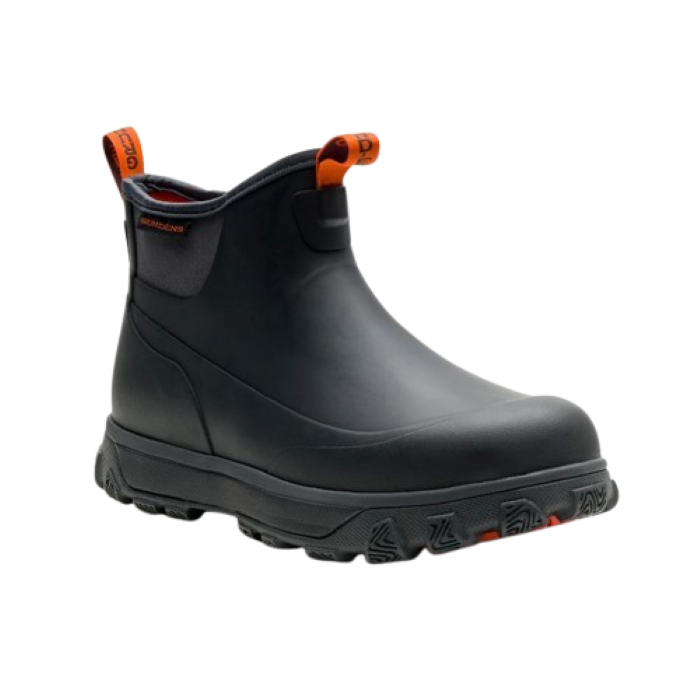
Grundens Deviation 6″ Ankle Boot
Best Performance-Ready Ankle Boots
CleverHiker Rating: 4.3/5.0
Price: $145 – $150
Weight (Pair): 1 lb. 14.4 oz.
Height: 6 in.
Insulated: No
Pros
- Made for demanding environments like fishing and boating
- Superior water resistance
- Excellent mobility and flexibility
- Lightweight and comfortable
- Solid grip on slippery surfaces
- Dries quickly
Cons
- Expensive
- Lacks full leg protection
- Specialized design is overkill everyday wear
The Grundens 6″ Deviation Ankle Boot is purpose-built for anglers and maritime enthusiasts who need a reliable, performance-driven boot that can handle sloppy environments. The Deviation is adept at inspiring confidence on wet decks and slippery surfaces while also shedding mud and debris to maintain that bite. The ankle height offers great mobility, too – helpful for quick movements on boats or around water.
The boot’s thicker insole provides good shock resistance, ensuring your feet stay comfortable even after long hours on hard surfaces. Additionally, the anti-odor HeiQ Pure liner does a good job fending off stink – no small task when you’re dealing with a lot of moisture.
The Deviation is designed with function in mind, and its specialized design makes it poorly suited for everyday use. The ankle height doesn’t provide full leg protection, and the overall aesthetic may be too technical for some. The Deviation also comes at a bit of a premium compared to other ankle-height rain boots.
At the end of the day, the Deviation 6″ Ankle Boot is an excellent choice for anglers or anyone working around water. It combines all-day comfort, long-lasting durability, and superior traction in a lightweight package.
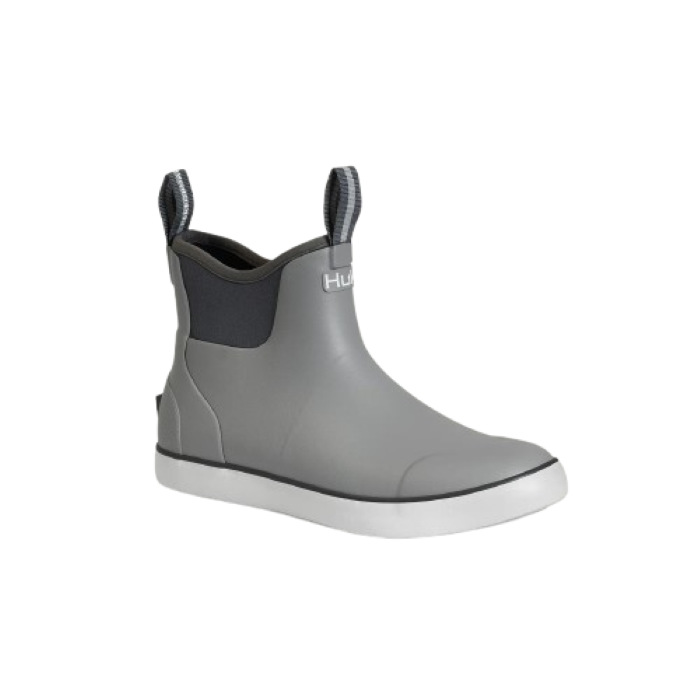
Huk Rogue Wave
Best Around-Town Rain Boots
CleverHiker Rating: 4.3/5.0
Price: $110 – $120
Weight (Pair): 3 lb.
Height: 6 in.
Insulated: No
Pros
- Lightweight
- Superior waterproofing
- Great grip on boat decks and docks
- Clean, modern aesthetic
Cons
- Higher price
- Lack of insulation
- Not built for heavy-duty performance
The Huk Rogue Wave is one of the best everyday rain boots we’ve tested, offering a near-perfect balance of performance and comfort. We love the snug fit that wraps around your foot without feeling overly tight. The cushioning is superb, as well, providing excellent support throughout long days on your feet.
The Rogue Wave also stands out for its traction, providing remarkable grip on wet, slippery surfaces. Whether you’re stepping onto a wet deck or slogging through puddles, these boots inspire a lot of confidence. In addition to their great performance, the Rogue Wave comes in a nice assortment of stylish colorways and designs, and they are quick to slip on and off as the weather changes.
That said, they’re not the best option for extreme cold, as they lack the thick insulation needed for frigid temperatures. And though durability is decent, the Rogue Wave may not hold up as well over time compared to more rugged, heavy-duty designs that are built for working outdoors.
Still, this is a top-tier option for those looking for a reliable, comfortable, and stylish daily driver.
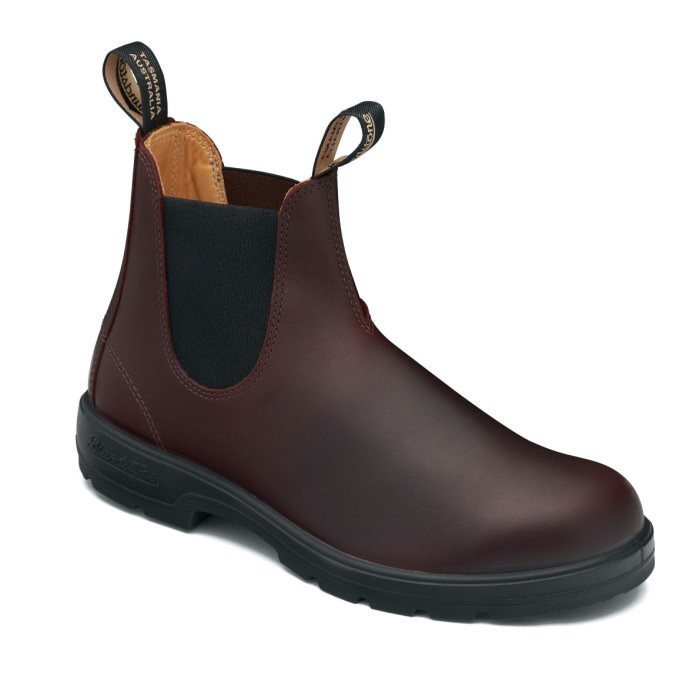
Blundstone Original Chelsea
Best Casual Rain Boots
CleverHiker Rating: 4.2/5.0
Price: $210 – $215
Weight (Pair): 3 lb.
Height: 6 in.
Insulated: No
Pros
- Stylish
- Lightweight and low-profile
- Comfortable
- Durable
- Slip-on
- Versatile
Cons
- Expensive
- Thick socks required to be winter-ready
- Only water-resistant
- Leather requires some care to maintain
The Blundstone Original Chelsea is a versatile, durable, and stylish boot that works equally well in urban and outdoor settings. With its slip-on design, the Original Chelsea offers easy wearability without compromising on performance.
The leather upper lends a classic, sleek look and holds up well to the rigors of everyday use. At the same time, the boots are light enough that they’re not a burden to wear all day, whether you’re commuting to and from the office or working outside in the garden.
Comfort is a hallmark of the design, including a cushioned footbed that offers good shock absorption and support. The elastic sides allow for easy on and off, and the flexible build ensures a secure fit without feeling too tight. The slip-resistant outsole offers solid traction on a variety of surfaces, inspiring confidence in both wet and dry conditions.
Though the Original Chelsea excels as an everyday boot, it’s not the best option for any sort of extreme or extended inclement weather. It lacks the insulation needed for cold climates and offers limited protection against heavy rain or snow.
In the end, the Original Chelsea is a relatively steep investment and less weather-ready than most alternatives here. However, it’s water-resistant enough to make our list of rain boots – and especially appealing if you live in a milder climate that doesn’t see a ton of moisture (like Colorado or California).
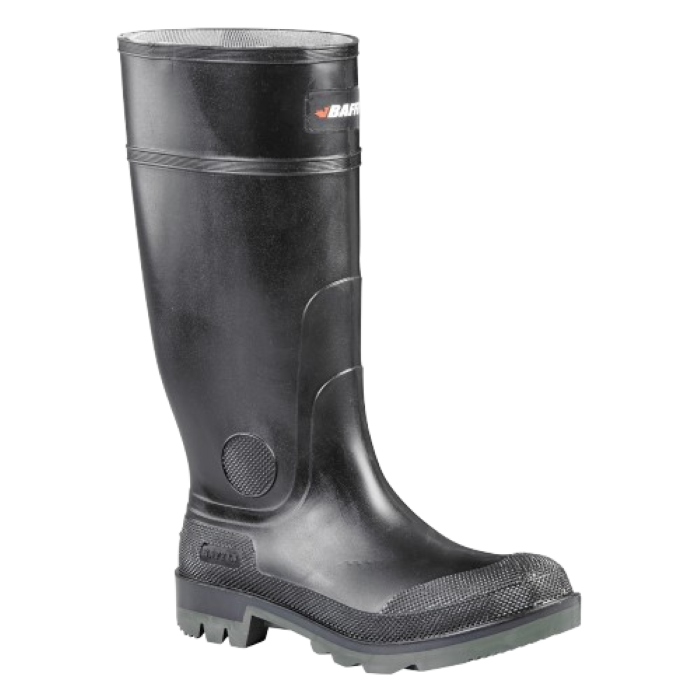
Baffin Enduro Boots
Best Budget Rain Boots
CleverHiker Rating: 4.1/5.0
Price: $65
Weight (Pair): 4 lb. 5.4 oz.
Height: 16 in.
Insulated: No
Pros
- Affordable
- Waterproof
- Available in a steel-toed version
Cons
- On the heavier end
- Roomy fit
- Poor traction on slick surfaces
The Baffin Enduro is a wallet-friendly rain boot ready to tackle muddy and rocky environments. These boots feature the brand’s highest level of waterproofing, providing solid assurance in sloppy conditions. Their taller collar offers great protection, and the roomy fit easily accommodates thick socks or tucked-in pant legs.
The Enduro has a just-right level of warmth for spring and mild winter conditions. As for traction, the boots are reliable on rocks and in mud but suffer on slippery surfaces. If you anticipate navigating a lot of stream beds, slick boulders, or icy walkways, we’d point you elsewhere.
The Enduro’s roomier fit – though great for layering and ventilation – makes the boots feel clunky for hiking and other higher-exertion activities. We wouldn’t recommend them for any sort of serious outdoor use.
But if you stick within their wheelhouse, the Baffin Enduro is a well-rounded budget buy that should get the job done in most situations.
Product Comparison Table
| oSort | Product | Price | Weight (Pair) | Height | Insulated | Weather Resistance | Comfort | Traction | Warmth | Durability | 0 |
BOGS Workman View at Amazon View at BOGS |
$185 | 4 lb. 3.7 oz. | 15 in. | Yes | 4.9 | 4.9 | 4.8 | 4.8 | 4.7 | 1 |
BOGS Bozeman Mid Insulated View at Amazon |
$180 | 3 lb. 5.3 oz. | 11 in. | Yes | 4.9 | 4.9 | 4.7 | 4.6 | 4.8 | 2 |
Kamik Forester View at Amazon View at Cabela's |
$70 | 4 lb. 8.2 oz. | 13.8 in. | Yes | 4.6 | 4.6 | 4.6 | 4.5 | 4.5 | 3 |
The Original Muck Boot Company Wetland View at Amazon View at Muck Boot |
$165 | 2 lb. 12 oz. | 17 in. | Yes | 4.7 | 4.7 | 4.8 | 4.7 | 4.3 | 4 |
L.L. Bean 8″ Bean Boots View at L.L. Bean |
$150 | 3 lb. 6 oz. | 8 in. | No | 4.4 | 4.6 | 4.5 | 4.4 | 4.3 | 5 |
BOGS Classic Seamless Tall View at REI View at Amazon |
$150 | 4 lb. 9.6 oz. | 15 in. | Yes | 4.5 | 4.3 | 4.5 | 4.6 | 4.5 | 6 |
XTRATUF Ankle Deck Boot View at REI View at Amazon |
$115 – $125 | 3 lb. 2.6 oz. | 6 in. | No | 4.1 | 4.1 | 4.2 | 3.9 | 3.9 | 7 |
BOGS Classic High View at Amazon |
$135 | 5 lb. | 15 in. | Yes | 4.8 | 4.3 | 4.5 | 4.5 | 4.5 | 8 |
XTRATUF 15″ Legacy Boot View at Amazon View at Cabela's |
$160 | 5 lb. 2.4 oz. | 15 in. | No | 4.6 | 4.0 | 4.6 | 4.2 | 4.5 | 9 |
Grundens Deviation 6″ Ankle Boot View at Amazon View at Grundens |
$145 – $150 | 1 lb. 14.4 oz. | 6 in. | No | 4.3 | 4.4 | 4.8 | 4.1 | 3.7 | 10 |
Huk Rogue Wave View at Amazon View at Cabela's |
$110 – $120 | 3 lb. | 6 in. | No | 4.5 | 4.4 | 4.4 | 4.1 | 3.8 | 11 |
Blundstone Original Chelsea View at REI View at Amazon |
$210 – $215 | 3 lb. | 6 in. | No | 4.2 | 4.2 | 4.5 | 3.9 | 3.8 | 12 |
Baffin Enduro Boots View at Baffin |
$65 | 4 lb. 5.4 oz. | 16 in. | No | 3.5 | 3.9 | 3.9 | 4.2 | 4.2 |
|---|
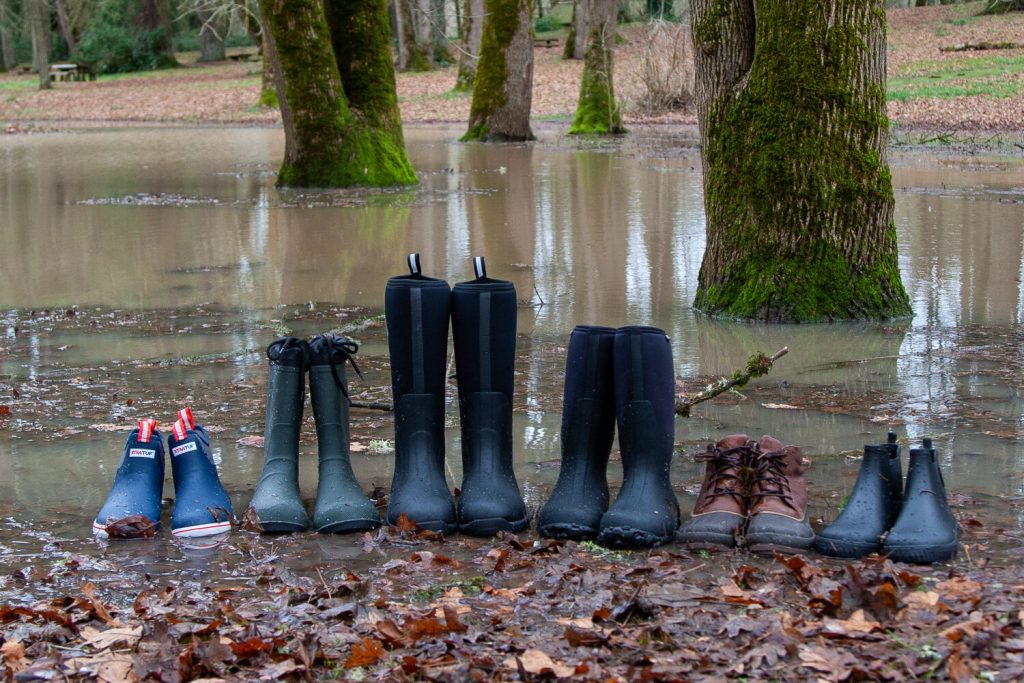
Analysis & Results
Which Men’s Rain Boots are the Best Value?
The two most affordable boots on our list, the Baffin Enduro and Kamik Forester, offer exceptional value for those seeking reliable, budget-friendly footwear for wet and snowy conditions. Though they may not have the advanced features or premium materials of higher-end boots, they’re an affordable and practical choice for those who need functional, no-frills rain boots that can handle inclement conditions.
Stepping up in cost, the XTRATUF Ankle Deck Boot offers strong all-around performance for the price. Though it lacks the protection of full-height designs, it boasts excellent water protection in a much lighter and lower-profile package.
Spending up for one of our top picks like the BOGS Workman, BOGS Bozeman Mid Insulated, or Muck Boot Wetland will get you a sizable performance jump. All of these boots are high-quality, heavy-duty insulated options for the worst weather. The Workman and Wetland are tall and highly protective, while the Bozeman Mid prioritizes mobility but still holds its own in inclement conditions.
Which Rain Boots are the Most Weather-Resistant?
The BOGS Workman and BOGS Classic High boots are top-of-the-line options with full waterproofing and generous protection. In addition to boasting quality materials that effectively seal out moisture, they are high-riding at 15 inches, ensuring most of your legs are covered.
The BOGS Bozeman Mid Insulated also scored high in weather resistance despite featuring a lower height (11 in.) than the Workman and Classic High boots. In our testing, we found them great for navigating sloppy trails and light snow.
The Original Muck Boot Company Wetland isn’t far behind. Purpose-built with water resistance in mind, these boots offer exceptional protection from water, mud, and muck (which comes as little surprise given their name).
In addition to being a very strong value, the Kamik Forester stands out for its excellent water resistance. It’s well suited for wet, marshy environments thanks to its 13.8-inch height and cinch collar that functions as an integrated gaiter.
Which Rain Boots are the Most Comfortable?
For superior all-day comfort, we were big fans of the BOGS Workman and BOGS Bozeman Mid Insulated. The Workman’s modular insole allows for a customizable fit that accommodates various foot shapes. The boots also feature a heel-locking collar for a secure fit and a relatively lightweight design that minimizes fatigue.
The Bozeman Mid Insulated features a mid-height design that offers better mobility than high-cut options. The boots are also lightweight, effective at managing moisture, and boast an EVA footbed that provides good arch support.
Another boot worth calling out is The Original Muck Boot Company Wetland. Though extended walks were a bit awkward due to the boot’s 17-inch height, we had no complaints standing around for extended periods, squatting, or working outside all day.
The Kamik Forester also proved highly comfortable. The boots are easy to slip on and off, offer solid warmth for keeping your feet cozy in winter conditions, and boast a snug (but not restrictive) fit. For the price, you’d be hard-pressed to find an easier-wearing boot.
Last but not least, the L.L. Bean 8” Bean Boots are a classic comfort pick. The leather upper is supple and conforms nicely to your feet over time, and the lacing system makes it easy to dial in a great fit. The shorter cut is great for driving, walking around town, and even casual bike rides.
Which Rain Boots Have the Best Traction?
For confidence-inspiring traction, the BOGS Workman again came out on top. The BioGrip outsole grips reliably on slippery surfaces from ice to mud. The aggressive tread is overbuilt for walking on flat, solid ground, but it’s invaluable when the going gets wet and slick.
The Original Muck Boot Company Wetland also performed well in our traction tests. The durable rubber outsole held its own in wet, slippery conditions that caused some other boots to falter.
The Grundens Deviation 6″ Ankle Boot is purpose-built for inspiring confidence on slick boat decks. The tread sheds mud and debris well to maintain its grip, although it’s not aggressive enough for hiking or winter sports. The XTRATUF Ankle Deck and Huk Rouge Wave are similarly built and intentioned, although the Deviation provided the most confidence-inspiring traction of the deck-ready trio.
Which Rain Boots are the Warmest?
The BOGS Workman thrives in cold weather. The rubber build and 7-millimeter Neo-Tech insulation are designed to keep your feet toasty well below freezing. Our northern Wisconsin tester was happy to have these boots when the mercury plunged to -25 degrees Fahrenheit, with wind chill around double that.
The Original Muck Boot Company Wetland performed well in temperatures around freezing. The 5-millimeter neoprene insulation and moisture-wicking lining help regulate temperature. However, the Wetland boots aren’t designed for extreme cold, and we wouldn’t rely on them in truly frigid weather.
The BOGS Bozeman Mid Insulated and BOGS Classic Seamless Tall also provide solid warmth in most winter conditions. The Bozeman Mid Insulated features 7-millimeter Neo-Tech insulation (the same as the Workman), while the Classic Seamless Tall uses a 5.5-millimeter Neo-Tech variation. Both boots are reliable winter companion in most parts of the U.S.
Which Rain Boots are the Most Durable?
Our field tests didn’t reveal big durability concerns with the men’s rain boots we reviewed. However, BOGS designs as a whole really impressed us, with all of their designs holding up extremely well to rough use. The Bozeman Mid Insulated, Workman, Classic Seamless Tall, and Classic High all scored very high in our rankings.
BOGS boots aside, we were pleasantly surprised by the durability of the Kamik Forester. Despite being very affordable, the Forester boots are made with high-quality, sturdy materials that should hold up to multiple seasons of use.
Finally, the XTRATUF 15″ Legacy Boot is made with commercial fishermen in mind, so it’s no surprise that it’s extremely tough. We had zero durability concerns about the Legacy Boot throughout testing – everything from the upper to the outsole inspires confidence.
How to Choose Rain Boots
How Much Should You Spend on a Pair of Rain Boots?
A more affordable pair of rain boots may perform well for casual wear in light rain but can lack durability, comfort, or warmth for extended use or in harsher conditions. On the other hand, premium boots (around $180 to $200+) often offer better insulation, waterproofing, and longevity, making them a good investment for those needing high-performance boots for outdoor activities.
Mid-range options (around $110 to $175) typically strike a good balance for most users, including solid features – like durable waterproofing and moderate insulation – at a reasonable price point. When considering value, it’s important to think about how frequently you’ll use the boots and in what conditions. If you only need them for occasional use, an affordable pair may be sufficient. But if you’re braving heavy rain, snow, or cold weather regularly, investing in a higher-end pair may be worthwhile.

How Much Warmth Do You Need in a Rain Boot?
Rain boots are primarily designed to keep your feet dry, but warmth becomes an important factor when you’re wearing them in colder weather. Many rain boots offer some insulation, often through materials like neoprene or specialized liners that help retain heat in wet, cold conditions.
At the upper end of the warmth scale are boots with 7-millimeter (or thicker) liners that boast ratings into the negative degrees Fahrenheit. Most manufacturer claims are at least modestly inflated, but it varies by brand. If winter is truly frigid where you live – think places like the Midwest that often see multiple days in the negative double digits – boots with thicker insulation are a good bet.
If winters are pretty mild in your neck of the woods, you may want to opt for a moderately insulated boot. Look for thinner (5- to 6-millimeter) liners and less extreme warmth ratings.
Finally, if you’re just looking for rain boots to keep your feet dry rather than warm, an uninsulated boot will get the job done. You can expect better breathability and comfort since you won’t have to worry as much about overheating. Uninsulated rain boots will still offer some level of warmth since they are generally not well ventilated. And if the mercury drops unexpectedly, a good pair of socks can go a long way.

What’s the Ideal Height for Rain Boots?
Rain boots come in various heights, from designs that barely cover the ankle to full-coverage options that protect everything below the knee. The ideal height will largely depend on your intended use(s) and typical climate. If you spend a lot of time wading through deep mud, muck, or snow, a taller boot (around 14 to 17 inches) will offer the reliable protection.
On the flip side, ankle-height designs (around 6 inches) are popular for everyday wear and light outdoor use in areas that don’t see a ton of moisture. Many deck-ready boots are ankle-height, as well. They are much easier to move in due to their lower-profile form factor and lighter weight. Plus, you can always add a pair of gaiters or rain pants overtop for added protection when the skies really open up.
Finally, boots that fall in the middle (around 8 to 11 inches) offer a nice compromise. They are generally lighter and easier to walk in than their full-height counterparts while offering better protection than ankle-height designs. Though less popular overall, this category strikes a nice middle ground for folks who want to balance mobility and coverage.
Which Type of Tread is Best for Traction?
Traction is critical when walking on slippery surfaces, whether you’re dealing with wet pavement, mud, or snow. However, tread patterns can differ considerably between boots and significantly impact overall performance.
Hiking-ready designs have more aggressive lug patterns, often featuring multi-directional lugs for biting into uneven surfaces. Those designed for navigating slick boat decks, on the other hand, often have smoother soles with shallower lugs to maximize ground contact. Wider spacing between lugs is good for shedding mud and other debris that can otherwise cake up and weigh down your boots.
At the end of the day, the ideal lug pattern will depend on how you plan to use your boots. If you do a lot of walking on trails, a more aggressive tread pattern will likely suit you better than a smoother one. If your primary use will be on a boat, the opposite will be true.
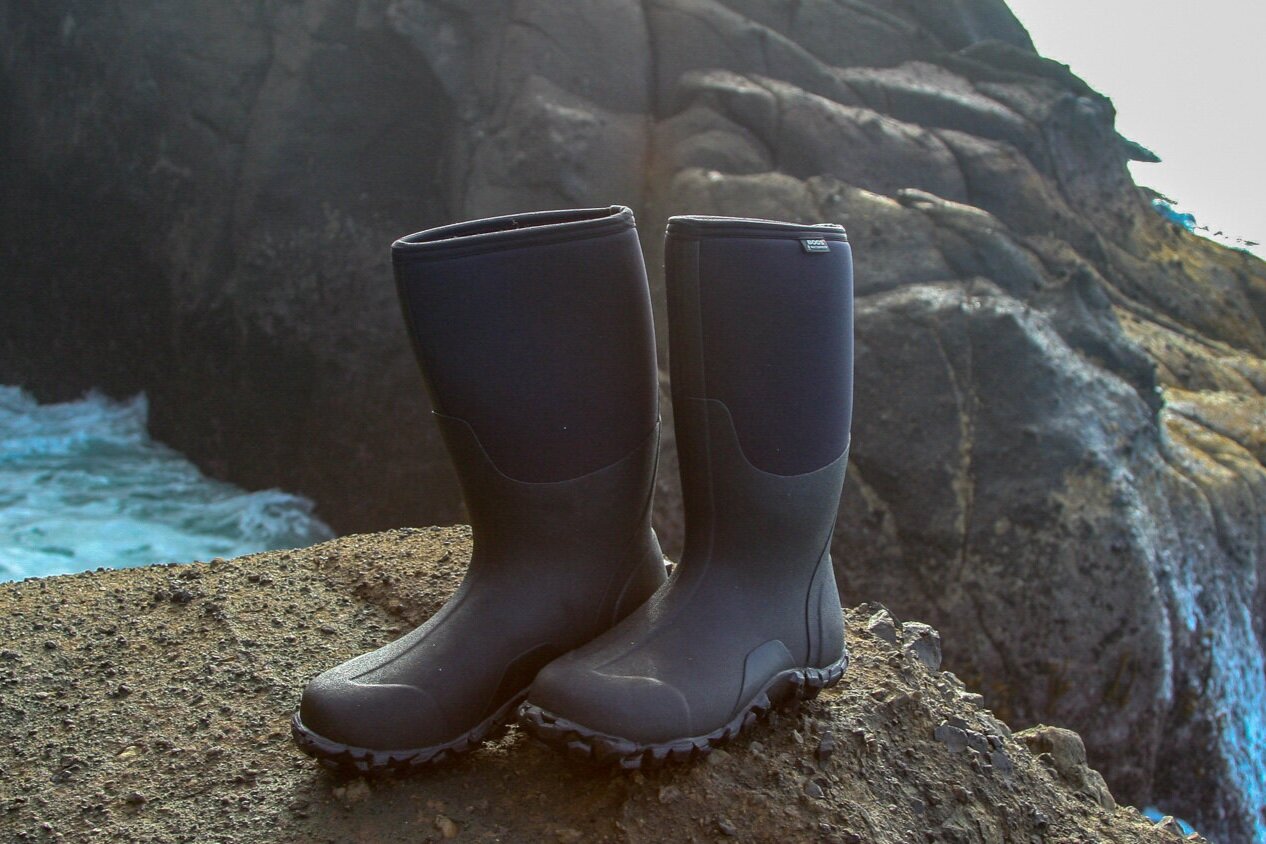
Why Trust CleverHiker
Gear analyst Steve Johnson spent countless hours traversing wet and wild terrain to ensure every pair of boots he tested holds up against the harshest conditions. Steve’s experience in the field gives him unparalleled insight into what makes a pair of rain pants truly exceptional.
Gear analyst Ian Atkinson loves the excitement of a good storm and enjoys getting outside no matter the conditions. Testing boots is right in his wheelhouse. Utilizing his background in outdoor product development and strong eye for detail, no stone is left unturned. With the playground of Colorado for testing and Ian’s extensive knowledge of the outdoors, every product that touches his hands (or feet) gets a thorough, rough-and-tumble go of things.
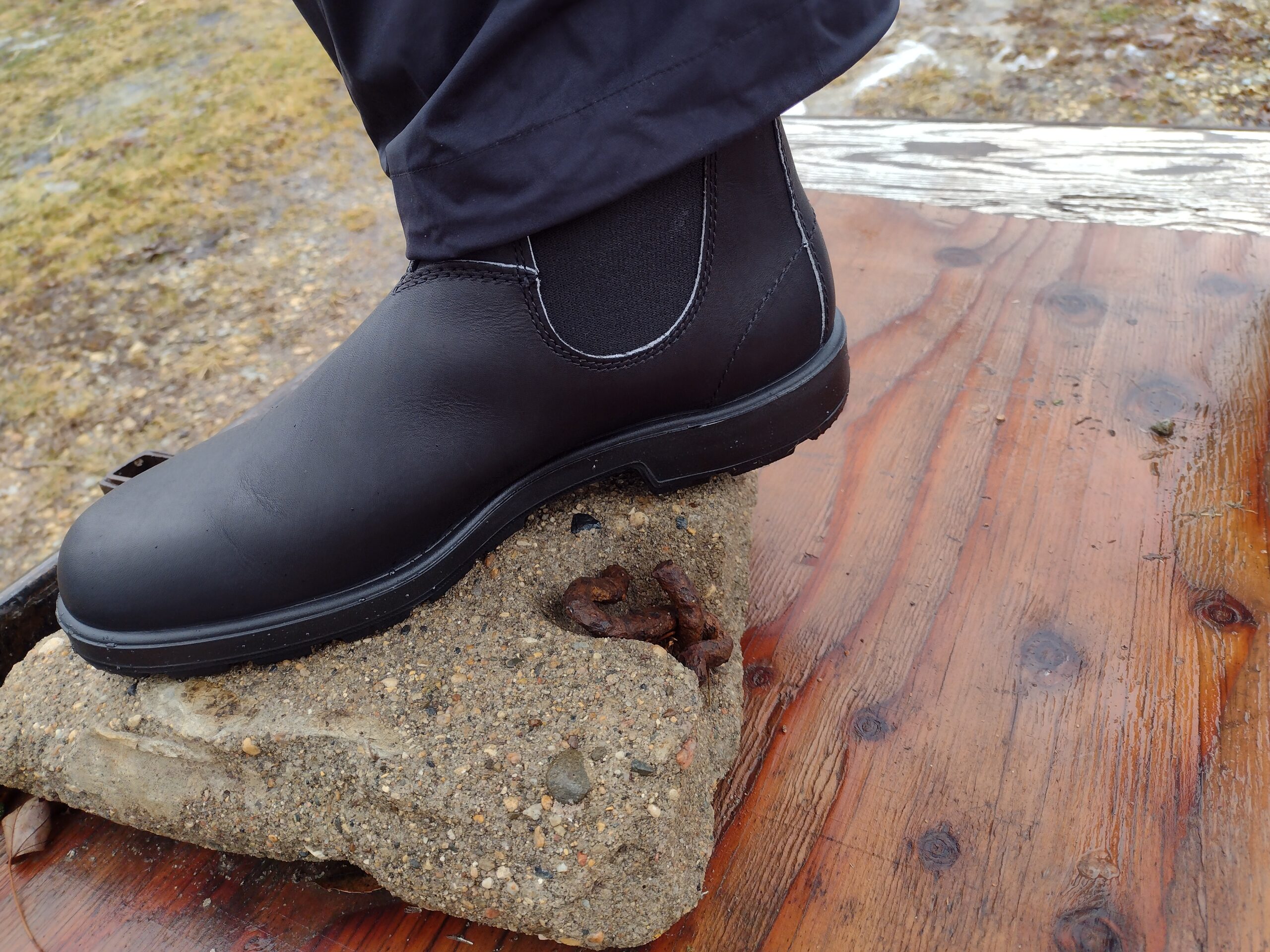
Testing Methodology
How Do We Measure Weather Resistance?
To test weather resistance, we subjected each pair of rain boots to heavy rain, standing water, and deep puddles to evaluate their ability to keep feet completely dry. We also assessed their performance in snowy conditions by wearing them in slush, wet snow, and icy patches, monitoring their capacity to block moisture and retain warmth.
We put each pair through prolonged exposure to rain and snow to observe how well they repelled moisture over time and whether they showed signs of water seepage or material failure. We also tested their resistance to extreme weather by submerging them in standing water for extended periods to gauge how each boot could handle real-world conditions without compromising on comfort or performance.
How Do We Test Comfort?
To test comfort, we wore each pair of boots for extended periods during various activities, including walking, standing, and working long hours outside on a farm. We evaluated cushioning by noting how well the insoles supported our feet during long days and whether any pressure points or discomfort developed.
We also evaluated flexibility by walking on uneven terrain, squatting, lunging, and kneeling to see how the boots adapted to natural movements and how they might perform in a work-related environment. Additionally, we tested breathability by wearing them in warmer conditions to see if they prevented overheating.
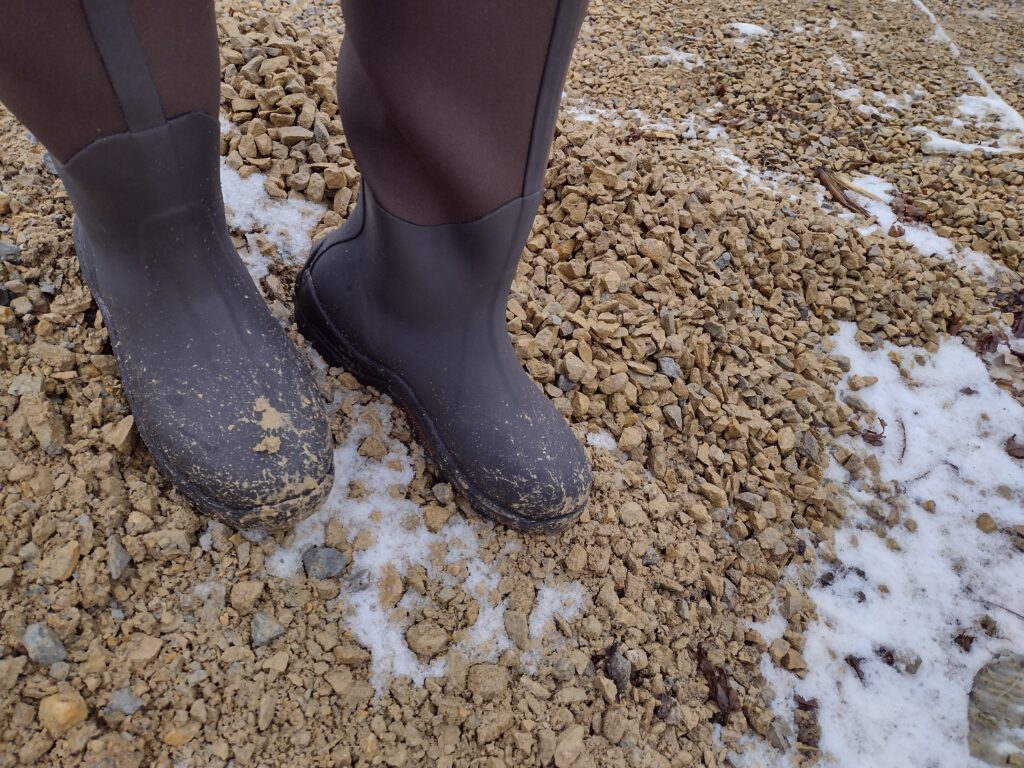
How Do We Evaluate Traction?
To test traction, we evaluated each pair of boots on slippery and uneven surfaces, including wet pavement, muddy trails, icy walkways, and slick river rocks. We assessed how well the soles gripped the ground when walking uphill, descending slopes, and making sharp turns.
We paid special attention to stability on wet and icy patches, where loss of grip is most common. We also tested performance in deep mud and slush to see if the tread effectively shed debris or clogged easily.
How Do We Gauge Warmth?
To test warmth, we wore each pair of boots in cold conditions, including sub-freezing temperatures and icy environments. We monitored how well the boots insulated our feet during extended periods of standing in a snowmelt-fed stream and walking in the cold.
To assess heat retention, we wore them with both thick and thin socks, noting any differences in performance. We also subjected boots to slushy and wet snow to ensure they maintained warmth even when exposed to moisture. Finally, we checked for cold spots, drafts, or inadequate insulation around critical areas like the toes and ankles to evaluate how effectively each pair of boots kept feet warm and comfortable during prolonged exposure to winter weather.
How Do We Measure Durability?
After putting each boot through its paces in the tests above, we took a close look at how each pair was holding up. We checked for loose or torn seams, lug wear, tears or snags along the upper, and other signs of deterioration. We paid particularly close attention to high-wear areas like the toe cap and outsole.
Rain boots in general are a pretty hardwearing group, but some boots were clearly made with a closer attention to detail than others. We looked closely at seams, outsole compounds, and other components to get an idea of how well each boot was constructed. We also took into account any maintenance required over time (such as re-treating leather uppers for waterproofing).
Conclusion
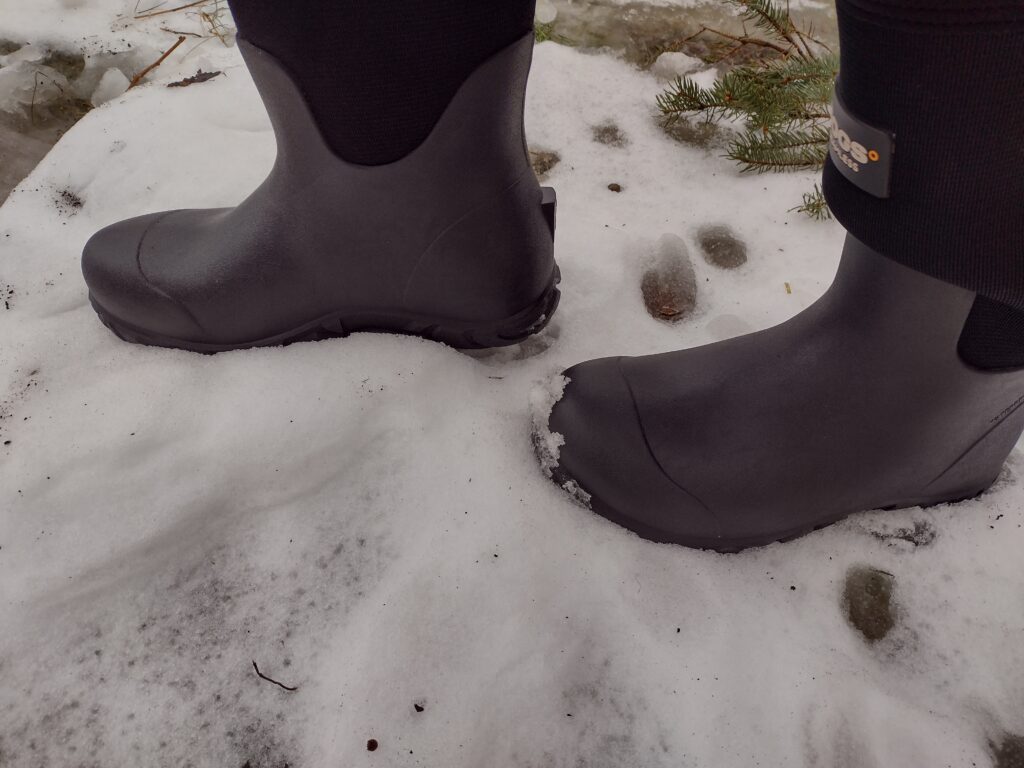
Our favorite rain boots deftly balance weather resistance, comfort, traction, and durability. Many of them are warm, too, broadening their appeal for year-round use. The most protective designs are around 15 to 17 inches tall, while ankle-height boots are popular for wearing casually or on slick boat decks (especially when paired with waterproof pants or gaiters). We hope this guide has helped you narrow down your choices to dial in the perfect pair of rain boots.