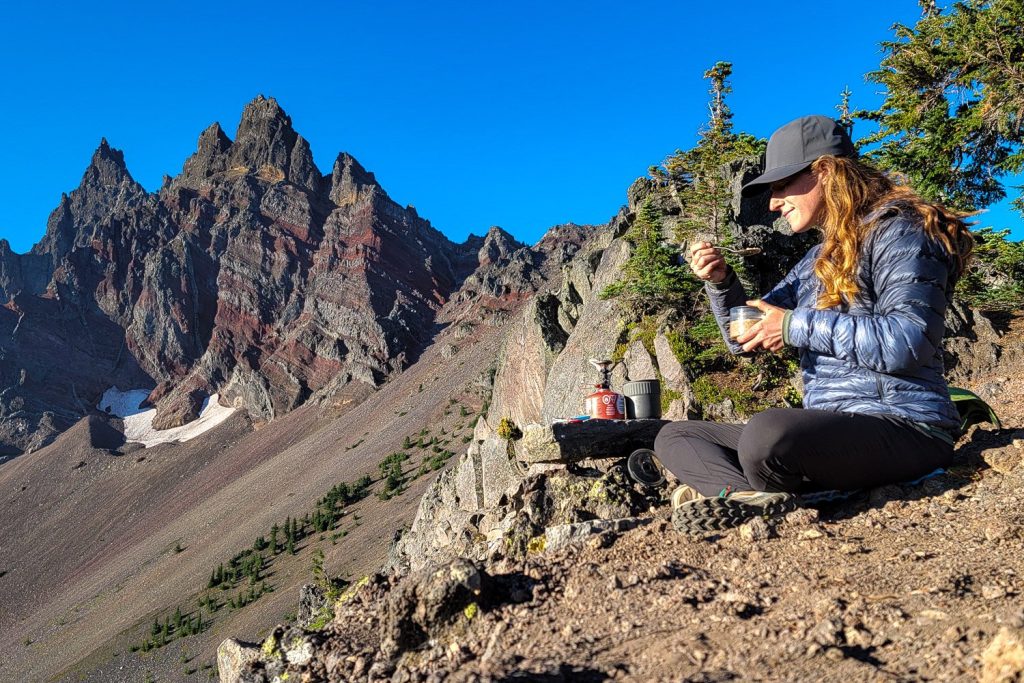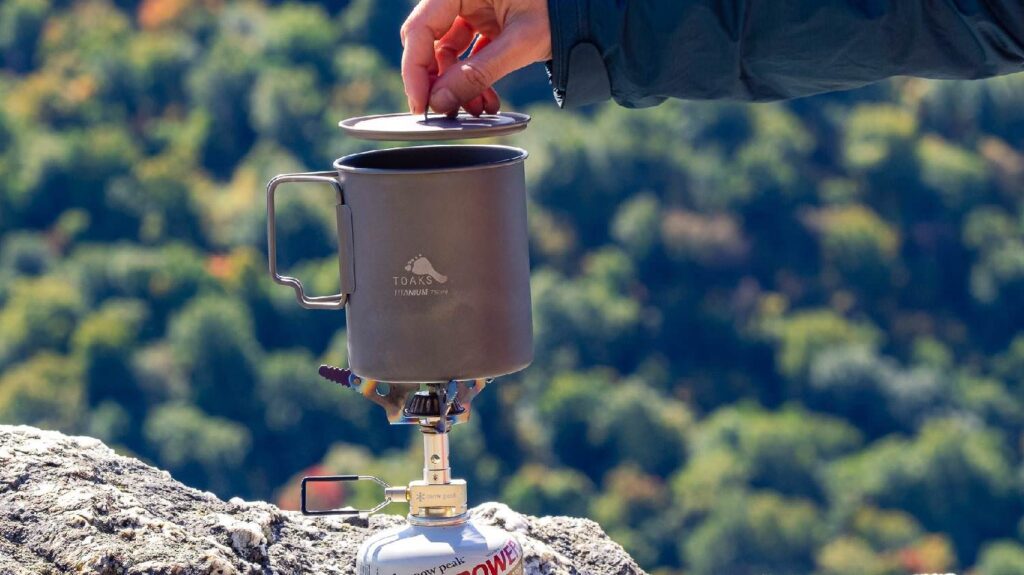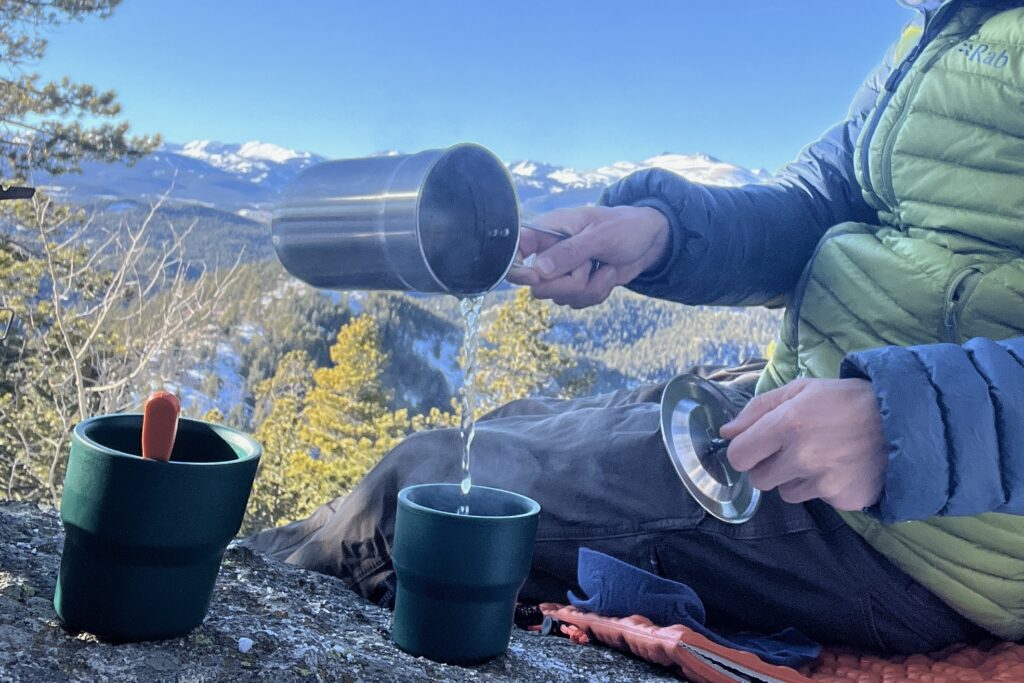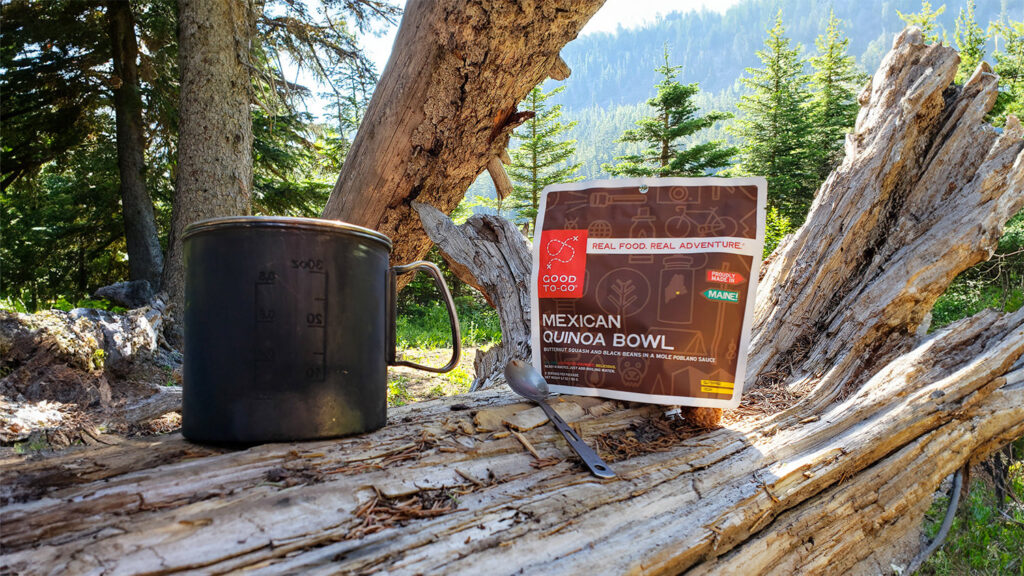


Sometimes the best backpacking meals are the easiest ones. For that measure alone, dehydrated and freeze-dried meals are the best. They are essentially zero-prep: add boiled water and wait a few minutes. These brands have worked their recipes over to be more than just calories; they are downright tasty and flavorful. The tradeoff for the convenience and ease is usually price and texture. Dehydrated meals cost more per calorie than assembling your own entrees or dehydrating your own meals.
For ideas on making your own backpacking meals, check out our Lightweight Backpacking Food Guide. And if you fancy yourself an outdoor gourmand, we have Backpacking Meal Recipes & Food Dehydration Tips as well.

#1. Best Dehydrated Backpacking Meal Overall
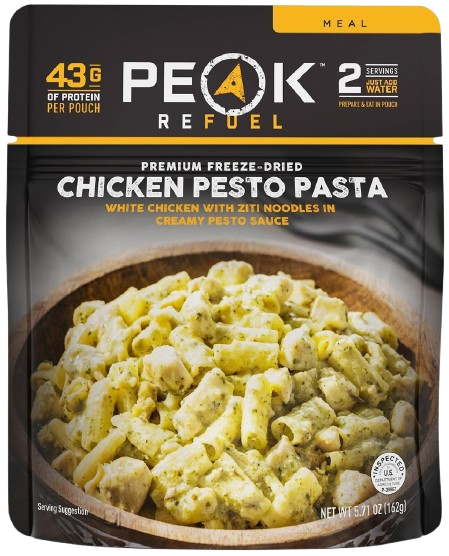
Peak Refuel Chicken Pesto is satisfying and packed with replenishing ingredients. We’ve eaten this for 50 dinners in the backcountry, and it’s still our favorite after all that time.
Quick Picks
Every pouch was evaluated for flavor, texture, and overall “yum.” We also factored in rehydration time, price per calorie, ingredient quality, dietary accommodations, and variety of cuisines. We regularly update this list every time we stuff our faces in the backcountry.
Best Breakfast Overall: Mountain House Breakfast Skillet
Best Dinner Overall: Peak Refuel Chicken Pesto
Most Calories in a Pouch: Peak Refuel Biscuits & Gravy (1100 cal)
Best Cold-Soak Meal: Packit Gourmet Southwest Corn & Black Bean Salad
Best Chocolate Dessert: Backpacker’s Pantry Dark Chocolate Cheesecake
Best Fruity Dessert: Trailtopia Triple Berry Crisp
Best When Craving Veggies: Farm to Summit Thai Red Curry
Best Protein-Rich Meal: Peak Refuel Chicken Alfredo Pasta (53g protein)
Best Comfort Meal: Packit Gourmet Dottie’s Chicken & Dumplings
Best Budget Dinner: Mountain House Chili Mac with Beef
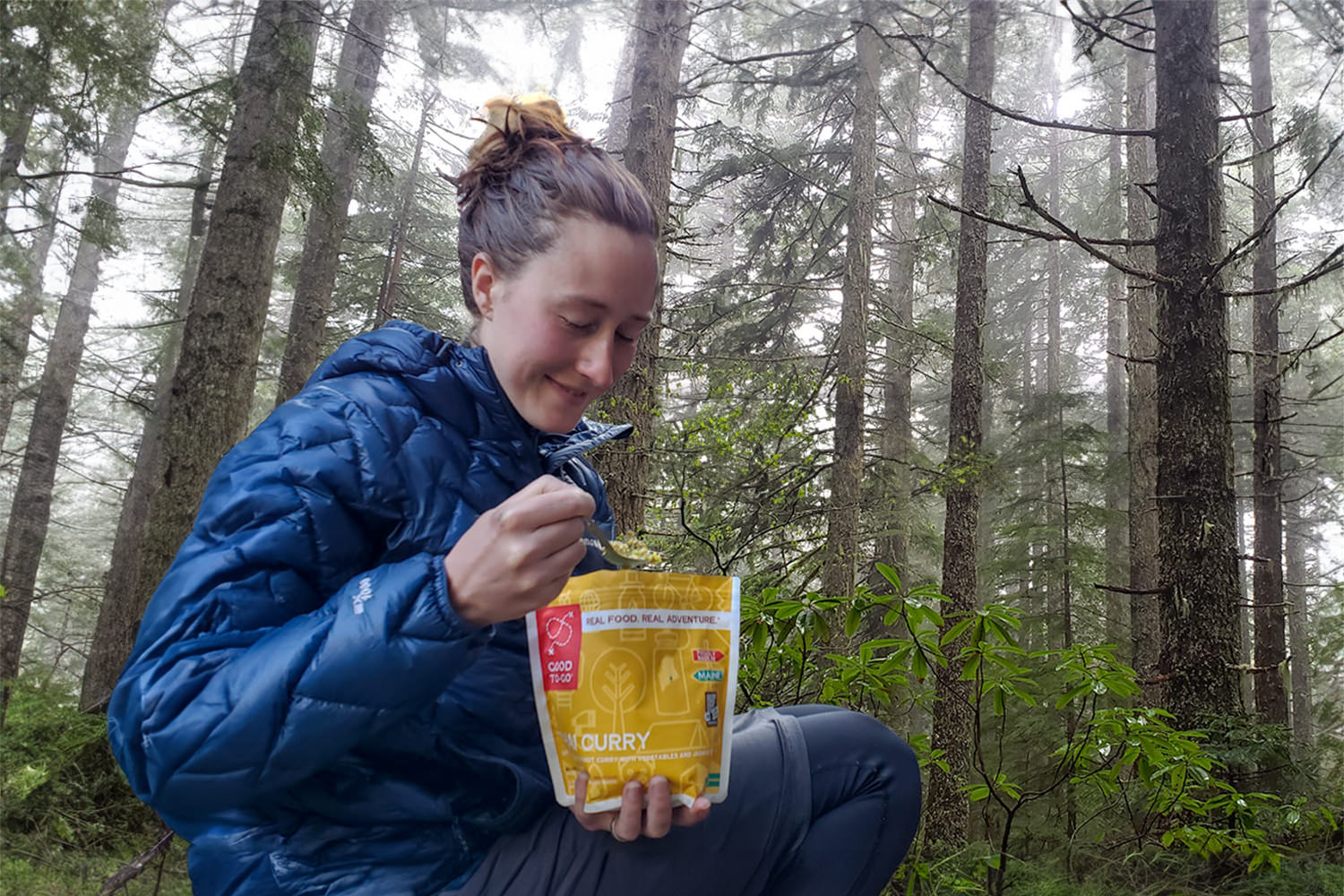
Best Real-Food Texture: GOOD TO-GO Thai Curry
Best For Spice Lovers: Nomad Nutrition Kathmandu Curry
Best Mac & Cheese: Farm to Summit Green Chile Mac
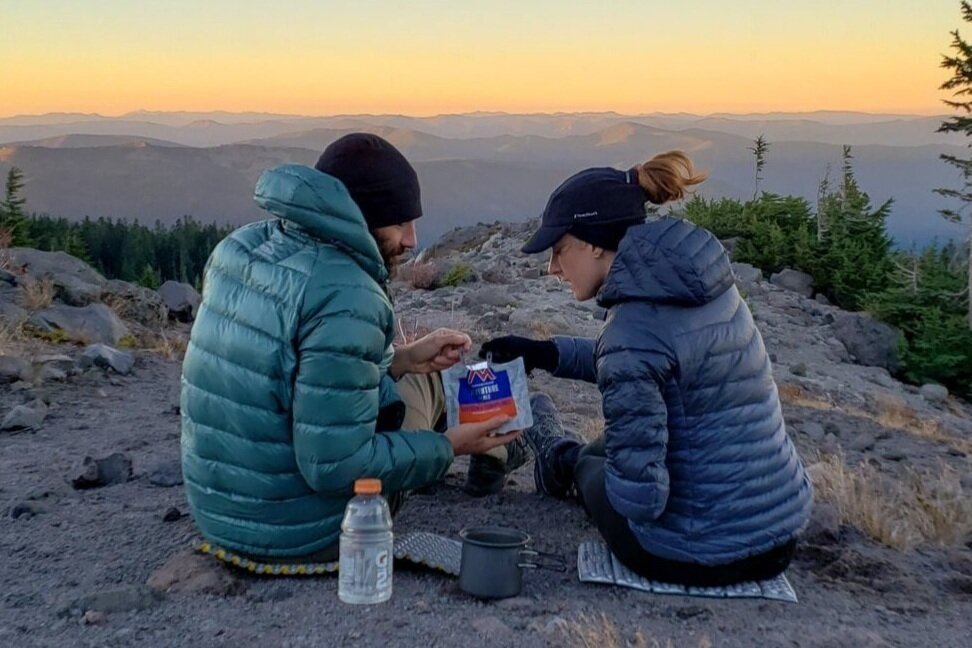
Best Backpacking Meal Brands
V = Vegetarian, GF = Gluten free, DF = Dairy free
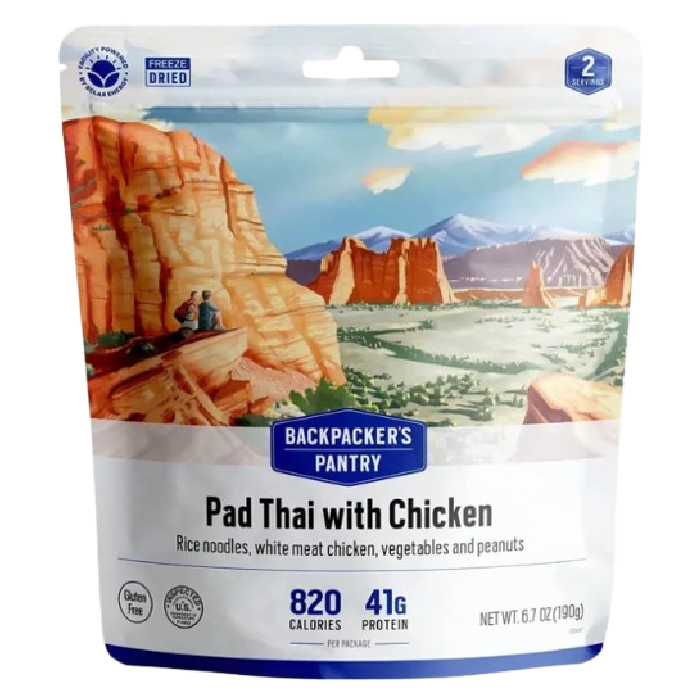
Backpacker’s Pantry
Best Selection
Price Range: $4-13
Avg. Rehydrate Time: 15 min
Top Pick: Pad Thai
Pros
- Meal kits available
- Accommodates dietary needs
- Global cuisine varieties
- Good flavor
- High price per calorie value
Cons
- Not fans of the mango sticky rice dinner
- Some meals need more doctoring than others
- Occasionally inconsistent texture
We really enjoy Backpacker’s Pantry meals. They offer a variety of tasty vegan, vegetarian, and meat options and are among the less expensive brands. BP meals are best for someone who likes variety – they span Thai, Indian, US Southwestern, Italian, and classic American cuisines. They aren’t the most filling meals on this list, but one pouch is plenty for the average hiker.
5-stars: Great
- Pad Thai with Chicken (also available in V, GF)
- Three Cheese Mac & Cheese (V)
- Cuban Coconut Rice & Black Beans (V, GF)
- Summit Breakfast Scramble (GF)
- Three Bean Veggie Stew (V, GF)
- Dessert – Blueberry Peach Crisp (GF)
- Dessert – Dark Chocolate Cheesecake
4-stars: Solid
- Kathmandu Curry (V, GF)
- Three Sisters Southwestern Quinoa & Beans (V, GF)
- Fettuccini Alfredo w/ Chicken
- Chana Masala (V, GF)
- Mushroom Stroganoff (V)
- Wild West Chili & Beans (V)
- Granola w/ Milk & Organic Blueberries (V)
- Dessert – Creme Brulee (GF)
3-stars: Good (being hungry helps)
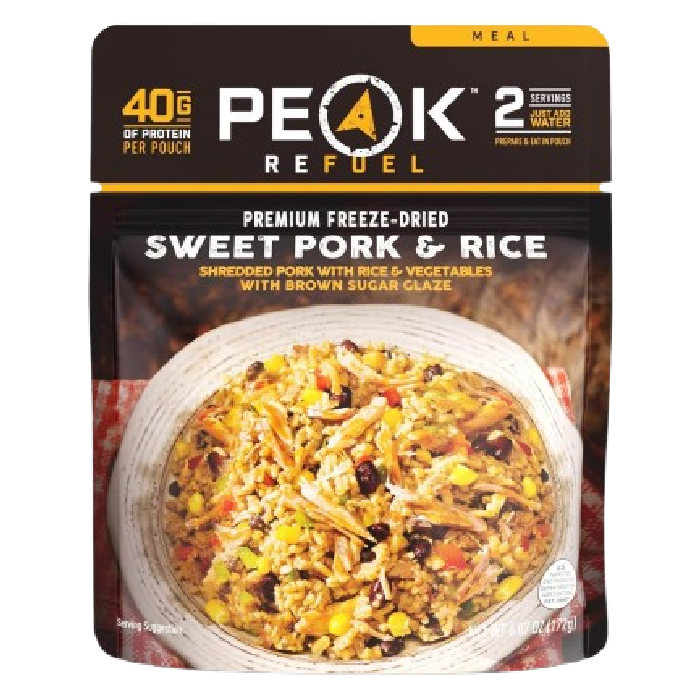
Peak Refuel
Best for High Protein and Calories
Price Range: $8-16
Avg. Rehydrate Time: 10 min
Top Pick: Sweet Pork & Rice
Pros
- Large servings (~800 calories per pouch)
- Doesn't skimp on protein
- Quick rehydration
- Great calorie-to-weight ratio
- Lots of meat options (including game)
Cons
- Price
- Would like more veggies
- Can be too much food for lightweight solo backpacker
Peak Refuel almost always has a night on our backpacking trips, and it tends to be saved for when the terrain starts to get burly and the mileage stacks up. We like them for when we just want to feel FULL after a big day (or a few big days). The 2-serving pouches are around 800 calories each, with a great calorie-to-weight ratio, so they fit our ultralight approach to food. The vegan Butternut Dal Bhat packs 23 grams of protein and 870 calories in one pouch!
5-stars: Great
- Sweet Pork and Rice (GF)
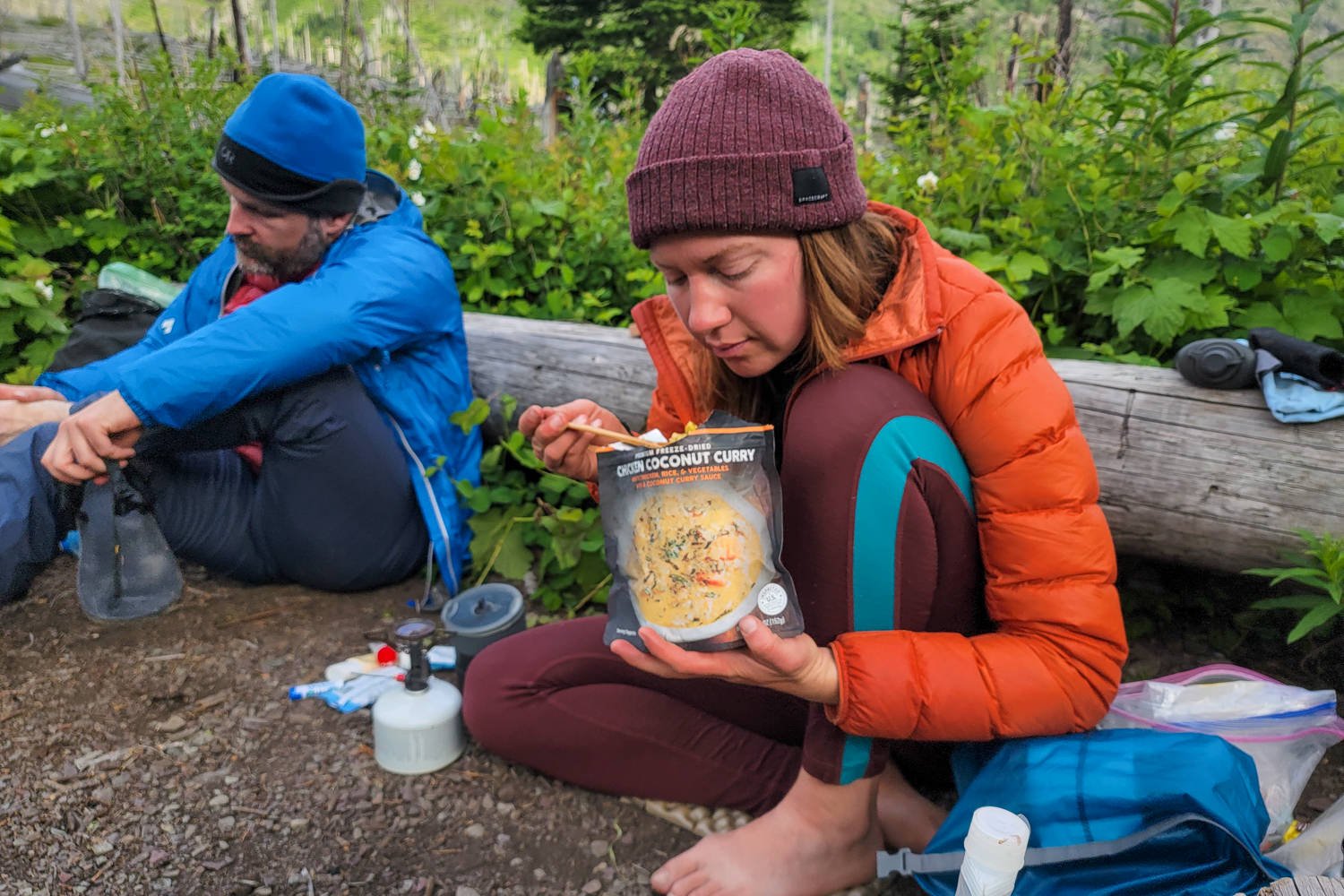
- Thai Chicken Coconut Curry (GF)
- Butternut Dal Bhat (vegan)
- Brownies
4-stars: Solid
3-stars: Good (being hungry helps)
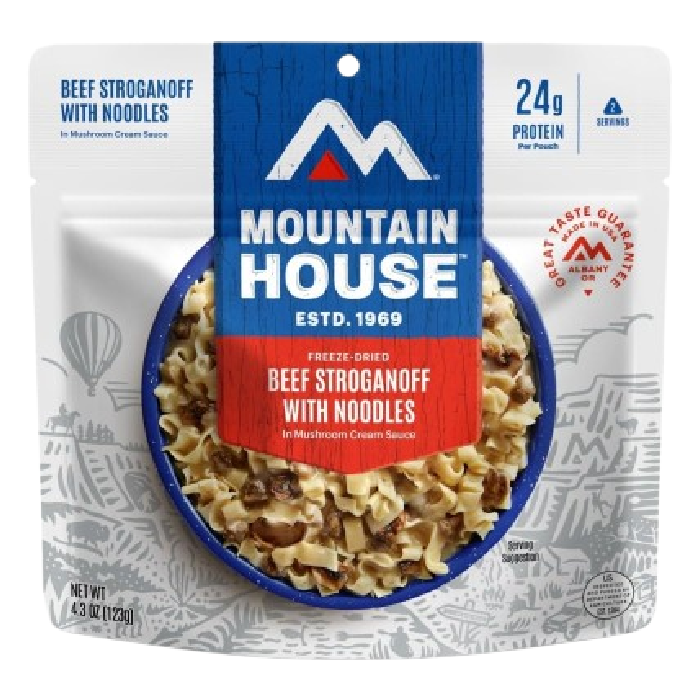
Mountain House
Best for Comfort Meals
Price Range: $8-13
Avg. Rehydrate Time: 10 min
Top Pick: Beef Stroganoff
Pros
- Hearty
- Comforting
- Freeze-dried = fast rehydration
- Good value
Cons
- Low on veggies
- Some meals don't rehydrate evenly
- Salty
Mountain House isn’t the most veggie-packed of meals, but we eat these nearly every backpacking trip because they rehydrate quickly and are a consistent, filling, and comforting option when we are far from a proper kitchen. Our staff recounts several ferocious hiker-hunger moments saved by MH. It’s also what saves us from total despair when it’s storming, and all we want is a warm, cozy comfort meal that takes the edge off a wet, cold camp.
5-stars: Great
- Beef Stroganoff
- Chicken & Dumplings
- Chili Mac w/ Beef
- Creamy Macaroni & Cheese (V)
- Biscuits & Gravy
- Lasagna w/ Meat Sauce
- Pasta Primavera (V)
- Veggie Chorizo Breakfast Scramble (V, GF)
4-stars: Solid
- Breakfast Skillet (GF)
- Granola w/ Milk and Blueberries
- Homestyle Chicken Noodle Casserole
- Chicken & Mashed Potatoes (GF)
- Chicken Fajita Bowl (GF, DF)
- Spaghetti w/ Meat Sauce
- Chicken Tikka Masala (GF)
3-stars: Good (being hungry helps)
- Chicken Teriyaki w/ Rice (GF, DF)
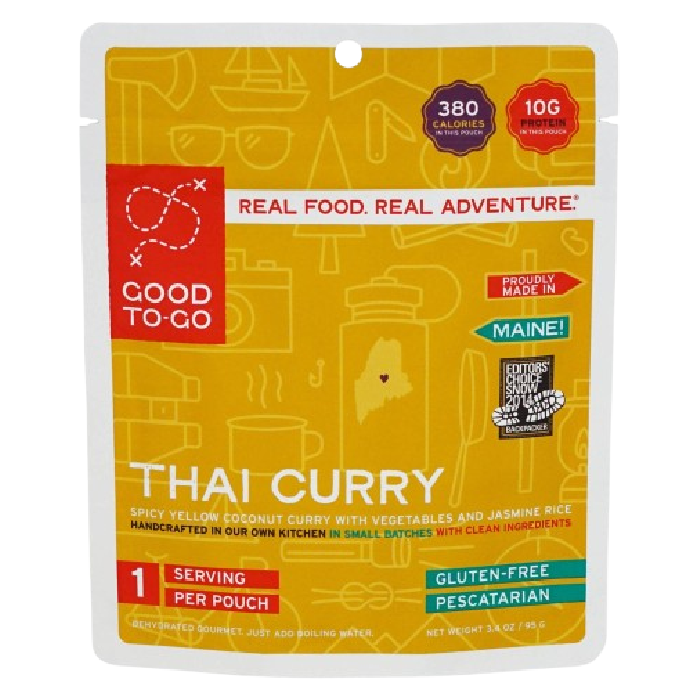
GOOD TO-GO
Most Nutritional and Wholesome
Price Range: $7-11
Avg. Rehydrate Time: 18 min
Top Pick: Thai Curry
Pros
- Flavorful
- Not overprocessed
- Cold-soak options
- Lightweight packaging
Cons
- Longer rehydration times can be hard to keep food hot
- Few meat options
- Smaller selection
- 2 year shelf-life
GOOD TO-GO is a chef-forward Maine brand that we lean on when we want really simple, clean meals packed with vegetables and whole grains. They do a great job of making us feel like we aren’t sacrificing our nutrition for the views or the adventure. At around 400 calories, the meals don’t claim to be 2 servings, which we appreciate. We often add some protein to literally “beef” it up. Their mushroom risotto hooked us after we topped it with a lake trout (don’t worry, we had permits).
5-stars: Great
- Thai Curry (GF)
- Indian Vegetable Korma (GF)
- Cuban Rice Bowl (V, GF)
- Chicken Pho (GF)
4-stars: Solid
- White Bean & Chicken Chili (GF)
- Mexican Quinoa Bowl (V, GF)
- Classic Marinara w/ Penne (V, GF)
3-stars: Good (being hungry helps)
- Breakfast Hash (V, GF)
- Herbed Mushroom Risotto (V, GF)
- Pad Thai (GF)
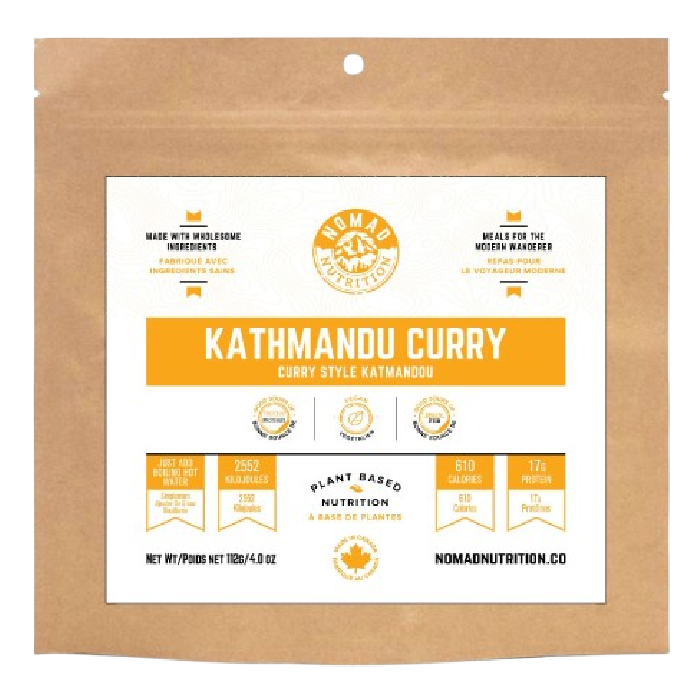
Nomad Nutrition
Best for Plant-Based Meals
Price Range: $13-15
Avg. Rehydrate Time: 15 min
Top Pick: Katmandu Curry
Pros
- Nutrient-dense
- Works with most dietary restrictions
- Flavorful
- Impressive calories per package
Cons
- Premium price per calorie
Despite few of the CleverHiker staff being vegan, we still get down on Nomad Nutrition, a 100% vegan backpacking meal company. We like that the flavors and the easy-on-the-tummy ingredients, and that their REVdry process retains more nutrients than traditional freeze-drying and dehydrating. We will often top these with some extra protein or crunchies to dress them up a touch.
5-stars: Great
- Katmandu Curry (GF)
- Cali Breakfast Bowl (GF)
- Irish Shepherd’s Pie (GF)
4-stars: Solid
3-stars: Good
- Caribbean Curry (GF)
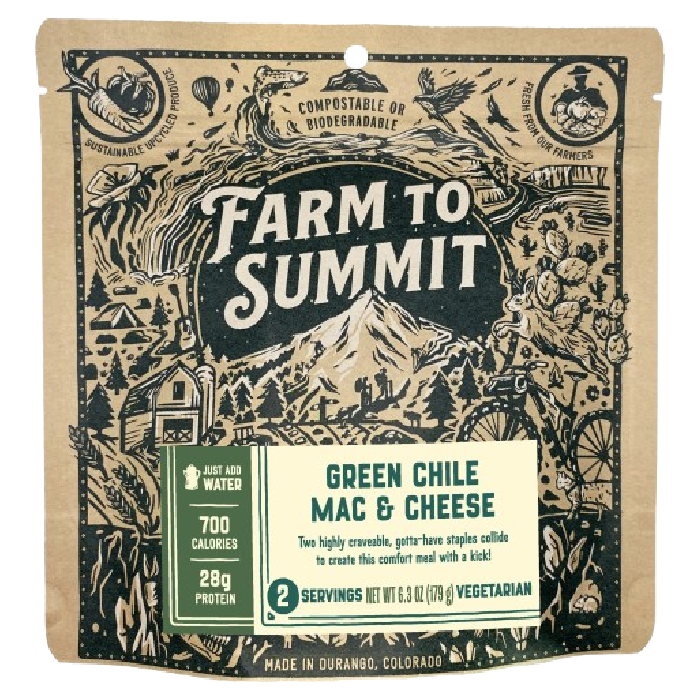
Farm to Summit
Best Mac & Cheese
Price Range: $9-16
Avg. Rehydrate Time: 15 min
Top Pick: Green Chile Mac & Cheese
Pros
- Veggie forward, low processed
- Cool business model
- Tasty
- Impressive calories per package
Cons
- Carnivores will want to supplement
- Will crave it in the frontcountry
- Fewer entree options
We think about Farm to Summit’s Green Chile Mac & Cheese more often than we’d like to admit. Is it the only reason we are backpacking into the wilderness? Perhaps. With 700 calories and 28g protein, that meal can fuel big days, and the bold flavor and near-perfect texture don’t disappoint. Its business model also tastes good; this Durango, Colorado, company focuses on sustainability by sourcing farm “seconds.” That’s a nicer way of saying they use the ugly veggies that won’t make it to the grocery store shelves. They don’t have a ton of options, but what they have is making my mouth water right now.
5-stars: Great
4-stars: Solid
- Thai Carrot Slaw (V, GF)
- Three Bean Chili & Cornbread (V)
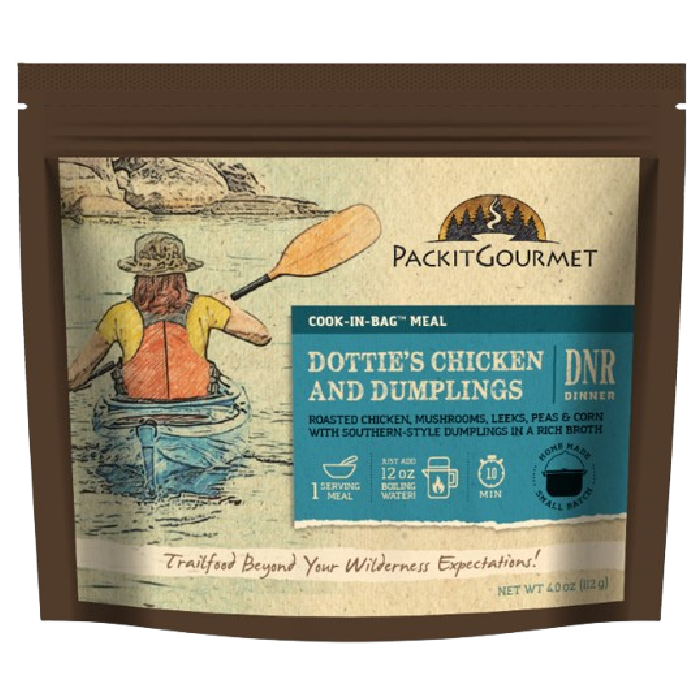
Packit Gourmet
Best for Wraps & Burritos
Price Range: $7-15
Avg. Rehydrate Time: 10 min
Top Pick: Dottie’s Chicken & Dumplings
Pros
- Delicious homestyle meals
- Lots of cold-soak options
- Great burrito/wrap fillings
- High in protein
- Dehydrated ingredients available for DIY meals
Cons
- High price per calorie
- Some long cold-soak times
- Hard to keep meal hot without insulating
The Guy Fieri in us loves Packit’s flavorful Southwest and Texas-style meals. We especially lean on this brand when we get tired of spooning bagged mush and want a burrito/wrap to switch things up. Their calorie counts per pouch vary widely, so look before assuming it will fill the belly. For example, Chicken & Dumplings has 390 calories, but Texas Chili has 650 (both are single servings).
5-stars: Great
- Dottie’s Chicken & Dumplings
- Texas State Fair Beef Chili (GF)
- Santa Fe Corn Pudding (V)
- Dessert – Banana Puddin’
4-stars: Solid
MaryJanesFarm
Best Organic Meals
Price Range: $9-15
Avg. Rehydrate Time: 10 min
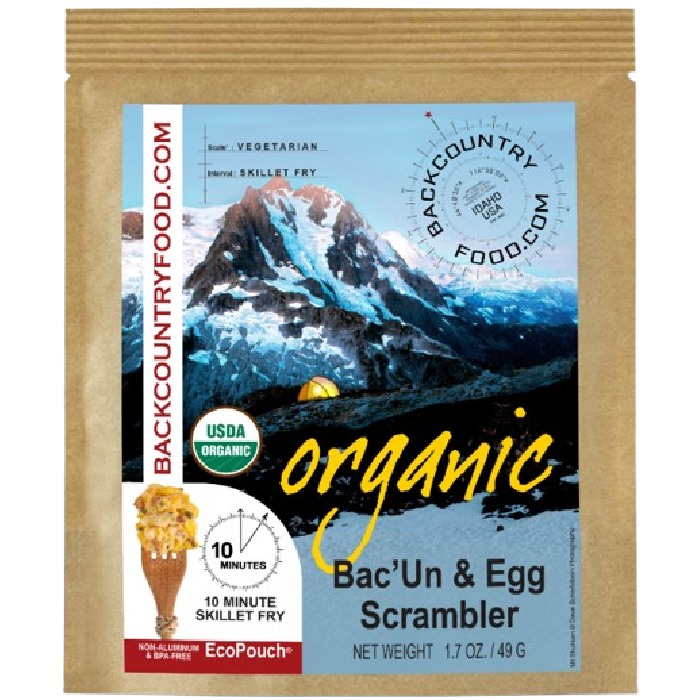
Top Pick: Bac’un & Egg Scrambler
Pros
- Bulk buying options
- Organic ingredients
- Great burrito/wrap fillings
- Flavorful
Cons
- Beans, beans, beans
- Smaller portions
- Lightweight packaging isn't the most durable
Praise be, eating right and being in the backcountry isn’t mutually exclusive with MaryJanesFarm. We appreciate that MaryJanesFarm delivers real, organic food to backpackers. Their eggs are one of the best in the game. We also lean on this brand for its bulk packaging options for longer expeditions, group meals, and thru-hikes. Read the instructions first; not all of them are pouch meals.
5-stars: Great
- Organic Bac’un & Egg Scrambler (V, GF)
- Organic Bare Burrito (V, GF)
- Organic Shepherd’s Meat Pie (GF)
4-stars: Solid
Alpineaire
Price Range: $7-16
Avg. Rehydrate Time: 11 min
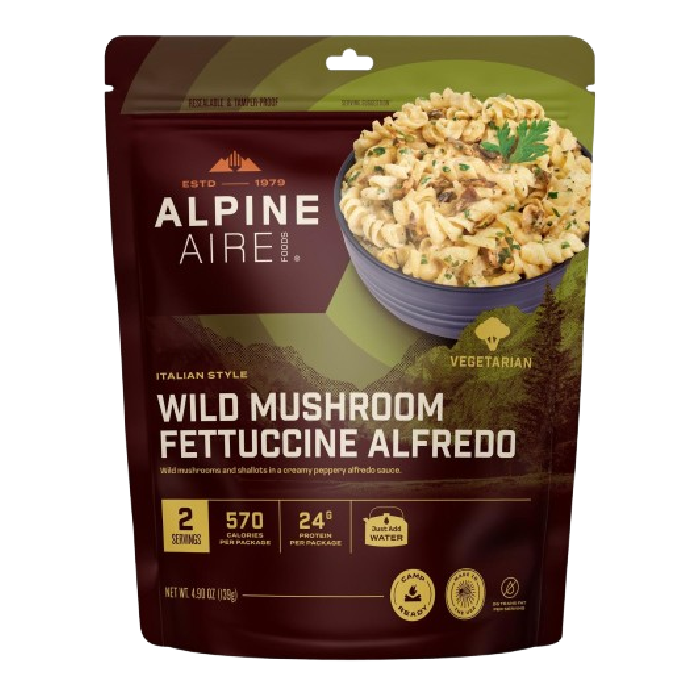
Top Pick: Wild Mushroom Fettuccine Alfredo
Pros
- Flavorful
- Unique selection
Cons
- Would like more calories per pouch
- Some sauces can be grainy
AlpineAire’s Wild Mushroom Fettuccine offers rich, creamy flavor, and a satisfying amount of calories (most pouches are 500-600). The Jambalaya is a welcome change from most spicy pouches, which seem to always be Thai- or Indian-oriented. We have yet to venture into other entrees, so comment if you have a favorite we should try!
5-stars: Great
Trailtopia
Solid price per calorie
Price Range: $4-13
Avg. Rehydrate Time: 10 min
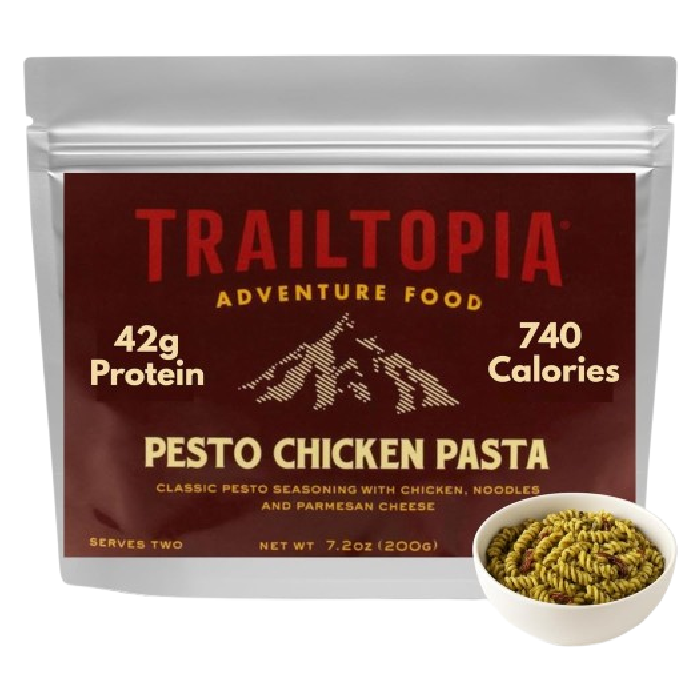
Top Pick: Chicken Pesto
Pros
- Price per calorie
- Desserts
- Solid flavor and texture
Cons
- Some hit or miss
- Bring hot sauce
When we want dinner AND dessert, Trailtopia is where we land. For whatever reason, we crave broccoli in the backcountry, and Trailtopia delivers.
5-stars: Great
- Chicken Pesto
- Cashew Curry (GF)
- Chicken and Broccoli Ramen (GF)
- Apple Crisp (GF)
- Triple Berry Crisp (GF)
Why Trust CleverHiker?
Our team of hungry testers has chowed down on over 2,000 boil-in-a-bag meals over the years, and we definitely have our favorites. While food preferences can be highly subjective, our results are based on taste tests collected from many backpacking buddies and CleverHiker staff.
We tried popular brands such as Backpacker’s Pantry, Mountain House, PEAK, Good-To-Go, and smaller cottage brands like Farm to Summit, Pinnacle, and Nomad Nutrition based on caloric density, ease of preparation, taste, and packaging.
How to Choose A Dehydrated Backpacking Meal
It can be as simple as selecting a meal from a menu or as complex as an Olympian’s nutrition plan. The key is to estimate how much energy you’ll expend each day, so the meal is adequate for the adventure you are trying to fuel.
What’s a good Calorie-TO-WEIGHT RATIO?
Dehydrated and freeze-dried backpacking meals are generally calorically dense and relatively lightweight. Freeze-drying a meal reduces its water content by 80% while retaining a high level of calories and nutrients.
Most meal pouches range from 500 to 900 calories and weigh 5 to 9 ounces. This puts them in the 100-130 calorie-per-ounce ratio, which isn’t spectacular. For reference, peanut butter is about 170 calories per ounce. But our tummies and catholes can’t handle a strict nut butter diet, so the variety and nutrition are well worth it.
One drawback is that, while lightweight, they aren’t always compact. Freeze-dried meals can require much more storage space than an equivalent homemade meal in a Ziploc bag. This can be especially limiting if you are carrying a hard-sided food storage system (i.e. a bear can).
Some hikers poke a tiny pinhole at the top of each bag to vent air and compress the pouches for carrying. This is fine, but the hole can unintentionally enlarge, and spice powder can puff onto other gear (and create odors that attract animals).
We’ve gone as far as removing each meal from its pouch and transferring it to Ziploc bags. Then we take one or two in their original packaged pouches with us and reuse them until they get a little too gross (usually 2-3 meals). This generally only works with the heavy-duty/aluminum pouches.
ARE dehydrated meals NUTRITIOUS?
Freeze-drying can retain up to 90% of nutrients, but the product will weigh only 20% of its original weight. That said, some freeze-dried meals are high in sodium and contain some highly processed ingredients. We’d put them into the “sorta nutritious” camp, but if you compare them to the most popular alternatives – ramen, instant potatoes, and pasta sides – they start to look pretty dang healthy (and tasty too!).
The smaller brands, such as Mary Janes Organic and Good To-Go, use whole ingredients for those who want to limit ultra-processed ingredients.
How Much Time Do Dehydrated Backpacking Meals Save?
These pouches are almost universally faster and easier to prepare than homemade hot trail meals. The mental load of meal planning can be a lot, so the time saved in just picking a complete meal is worth a lot.
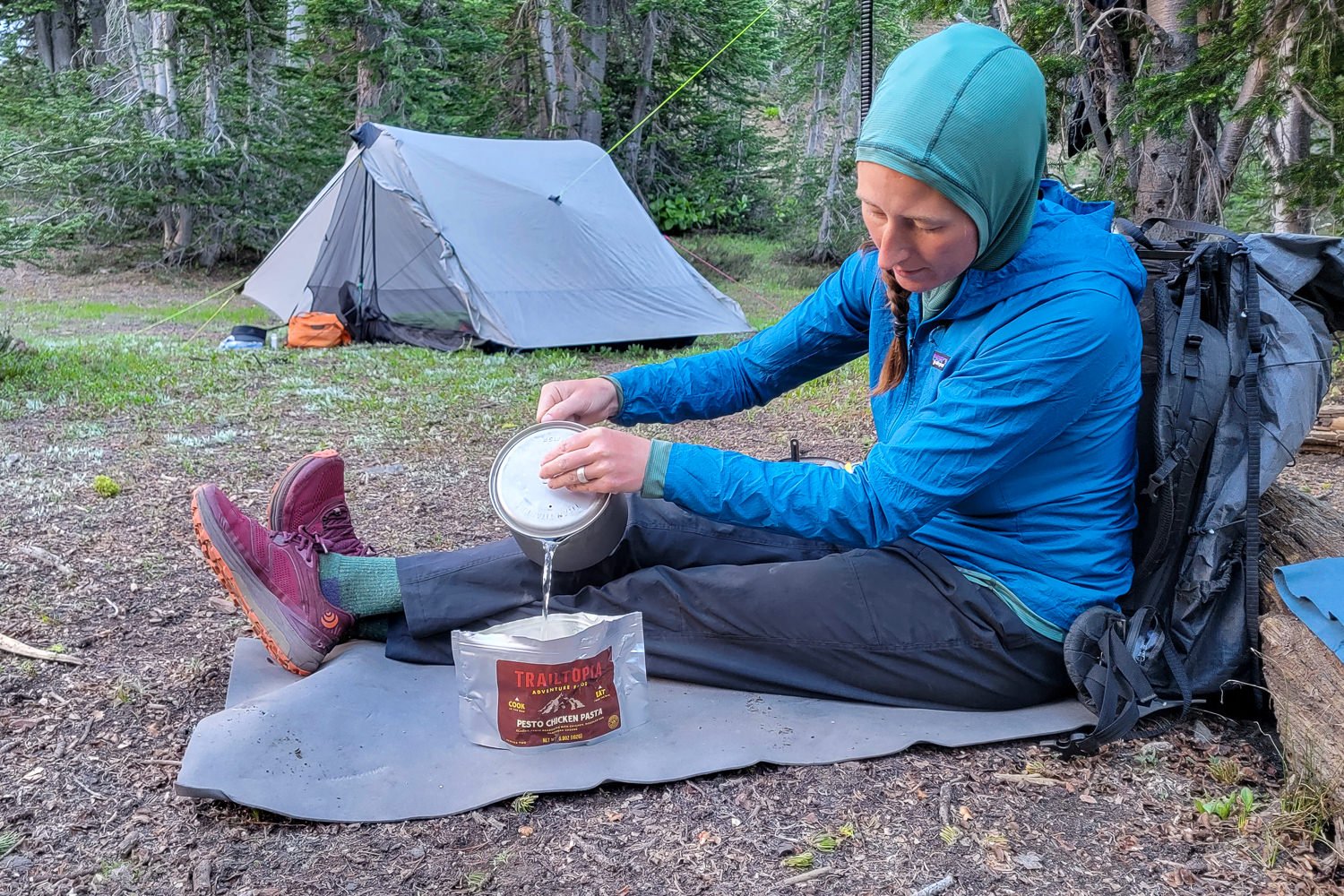
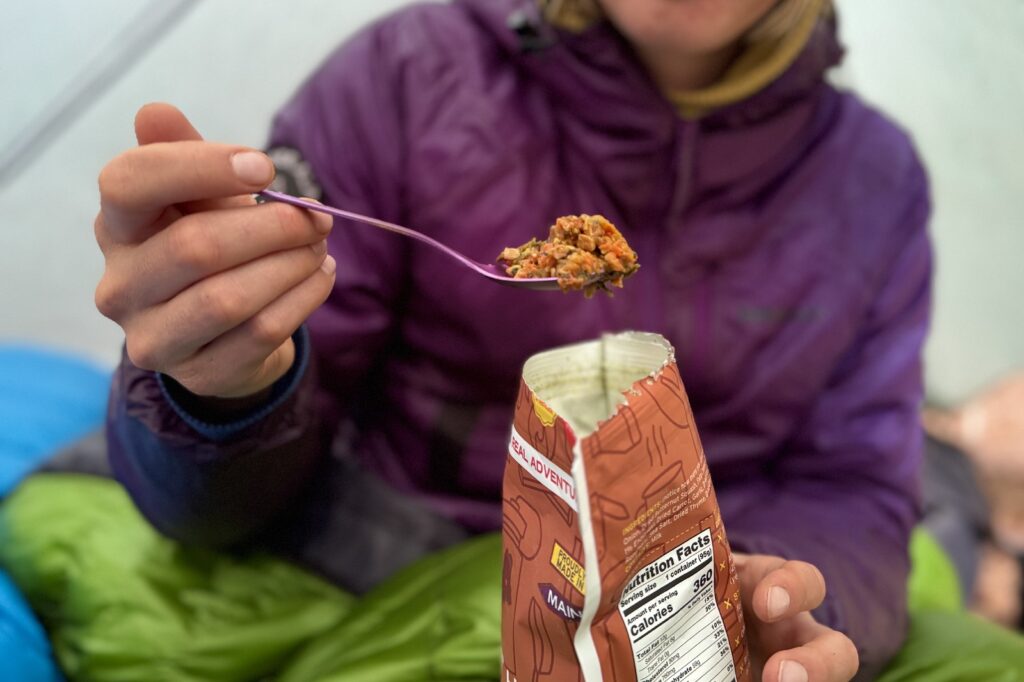
Once you’re on the trail, boiling takes just a few minutes, and rehydration is roughly the time it takes to pitch the tent and inflate a sleeping pad. So dinner can be soaking while you unpack. Boil water, tear open the pouch (remove the silica packet), pour in the water, seal it, wrap it in an insulating material or tuck it against your belly while you wait, and enjoy! Plus, there’s zero cleanup! Not cleaning a pot at the end of a long day can make a big difference.
That said, always read the cooking instructions when trying a new brand to ensure the pouch is meant to handle on boiled water and is cook-safe.
How Much do Backpacking meals cost?
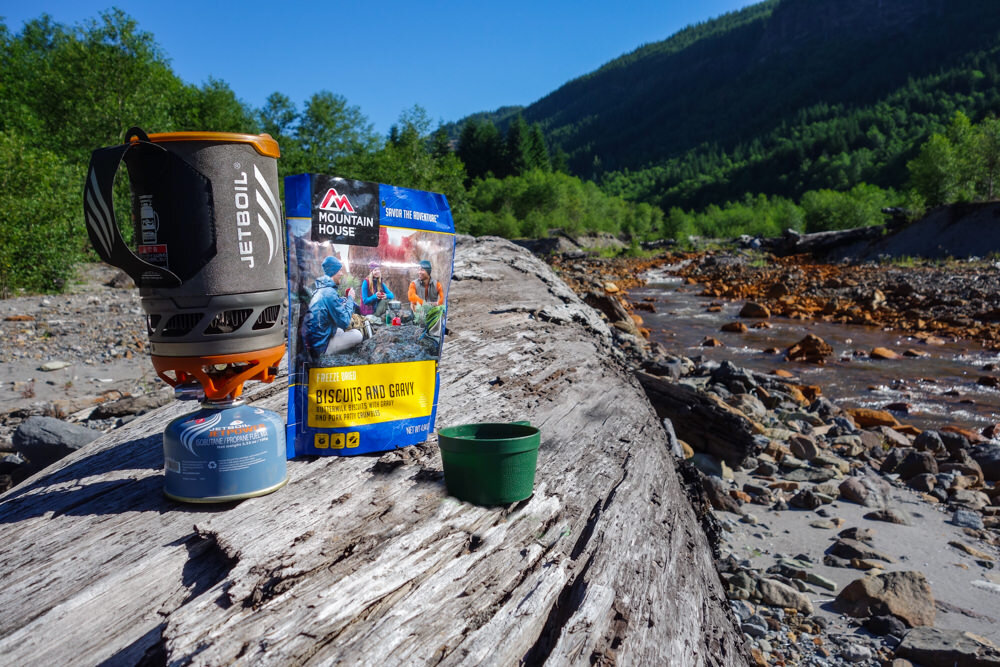
Freeze-dried meals are not cheap, especially considering inexpensive alternatives (powdered mashed potatoes, pasta sides, ramen, etc.). Freeze-dried and dehydrated meals run about 20–70 calories per dollar. Compare that to something highly processed and cheap, like Top Ramen, which is about 1,100–1,500 calories per dollar. The tradeoff is that cheap diy meals lack the convenience, taste, and nutrition that make premium pouches worth carrying.
If you’re spending months on the trail, thru-hiking, meals like these will be one of the biggest expenses, so thru-hikers often forego this route, or limit them to “treat-yo-self” nights.
But for the casual backpacker, meals like this can provide significant value, convenience, and enjoyment.
Pro Tip: REI has a discount when you buy 8 or more backpacking meals.