

Bottom Line
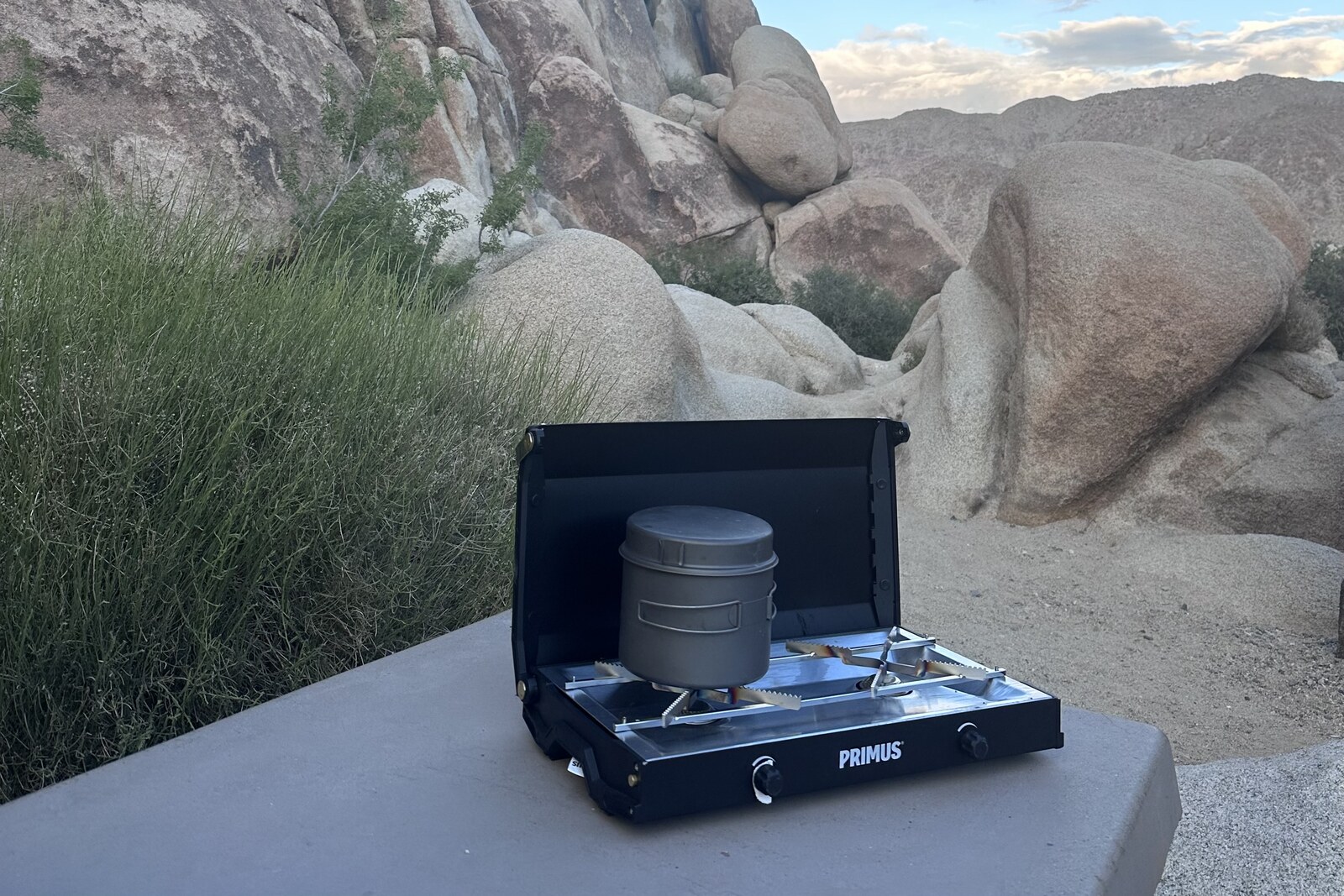
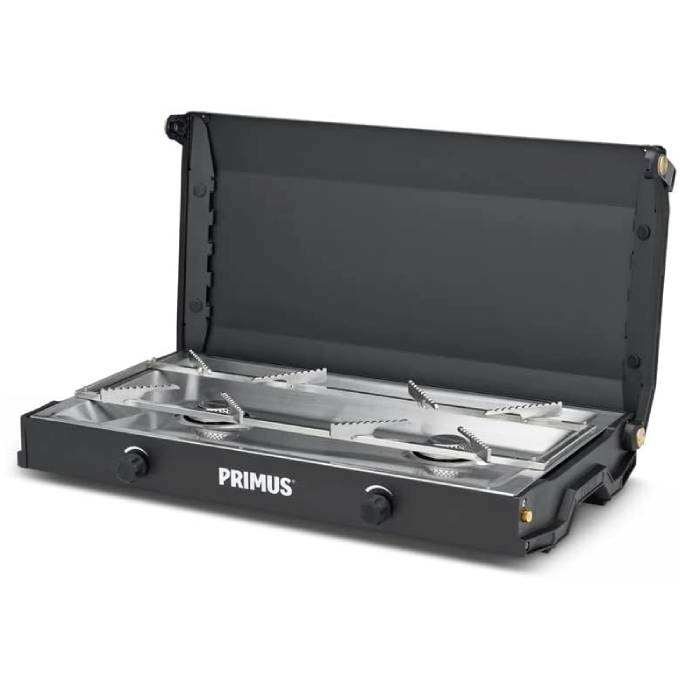
Of all the tabletop double-burner stoves we tested, the Primus Kinjia is the most compact. Constructed with die-cast aluminum and stainless steel, the Kinjia has an attractive yet durable design. Its wooden handle makes transporting it from your trunk to the picnic table a breeze. The thin profile makes it easy to stow for those with limited car or storage space.
The Kinjia’s cooking ability is totally adequate, though not quite as impressive as some of the other stoves we tested. Simple meals like sautéed veggies and pasta were easy to cook, and the Kinjia simmered rice fairly well. Its smaller burners made it difficult to fry pancakes evenly. Unprotected by windscreens, the burners also struggled to maintain heat while cooking on windy days in Red Rock Canyon, Nevada, and the Eastern Sierra.
Those cooking elaborate meals for a family or group may prefer a stove with a bit more power and cooking chops. For that, you’ll find plenty of options in our gear guide to the best camping stoves. But for car campers who want a functional and attractive double burner that doesn’t take up much space, the Primus Kinjia is a solid choice.
How We Tested
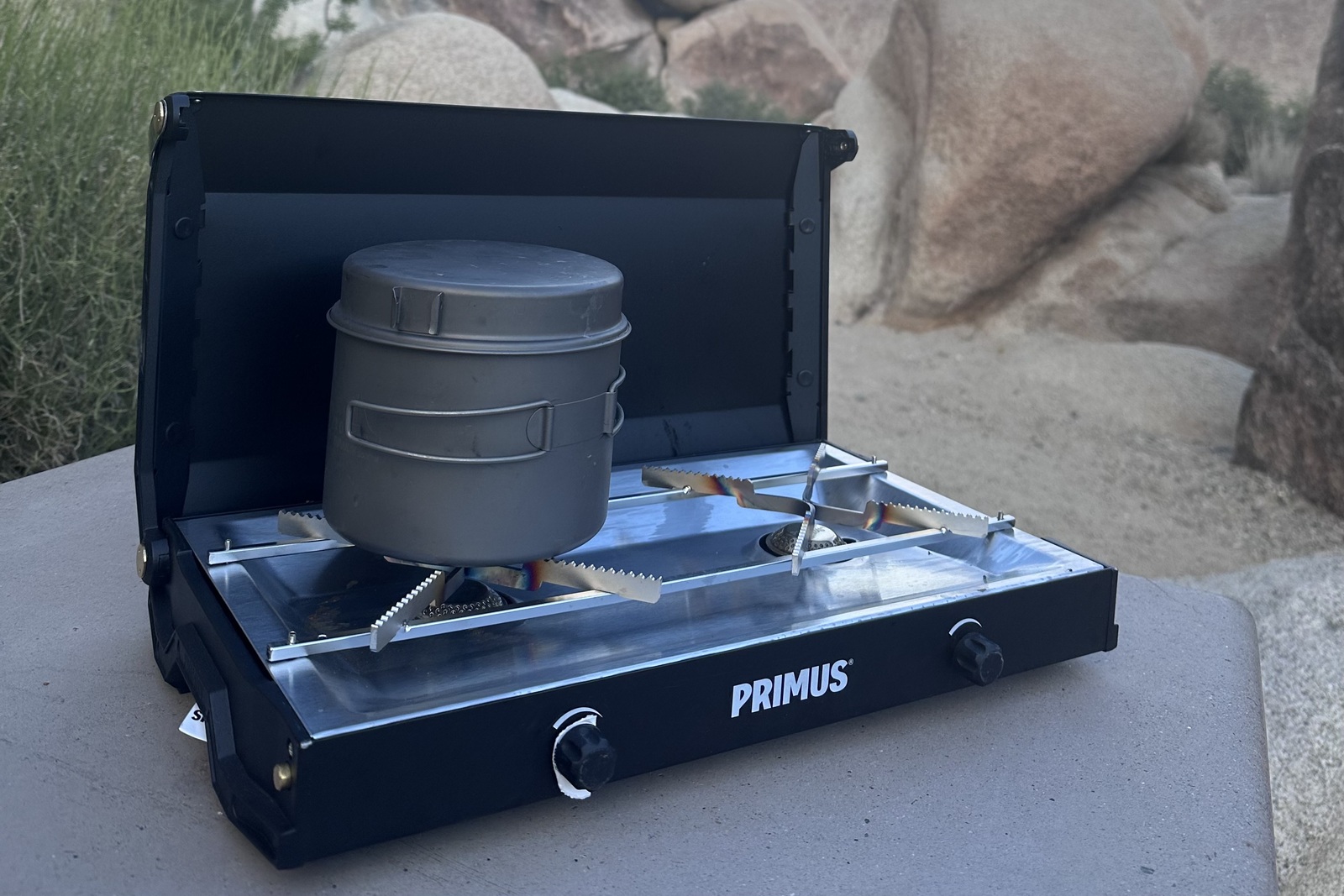
We tested the Primus Kinjia over the course of six weeks while camping in Joshua Tree National Park, Red Rock Canyon Conservation Area, and the Eastern Sierra. Taking advantage of both burners, we simmered rice, fried pancakes, sautéed veggies, and boiled water to make coffee and cook pasta. While car camping with the Kinjia, we experienced winds up to 40 miles per hour and temperatures down to the 50s Fahrenheit.
Quick Specs
Primus Kinjia
Most Aesthetic & Functional Camp Stove
CleverHiker Rating: 4.2/5.0
Price: $240
Weight: 8 lb. 2.5 oz.
Boil Time: 5:56
Fuel Efficiency: 1.2 oz.
Number of Burners: 2
BTUs (per burner): 10,200
Fuel Type: Propane and butane
Pros
- Sleek and packable
- Intuitive design
- Wooden handle makes it easy to carry
Cons
- High price tag
- No windscreens
- No auto-ignition
Power
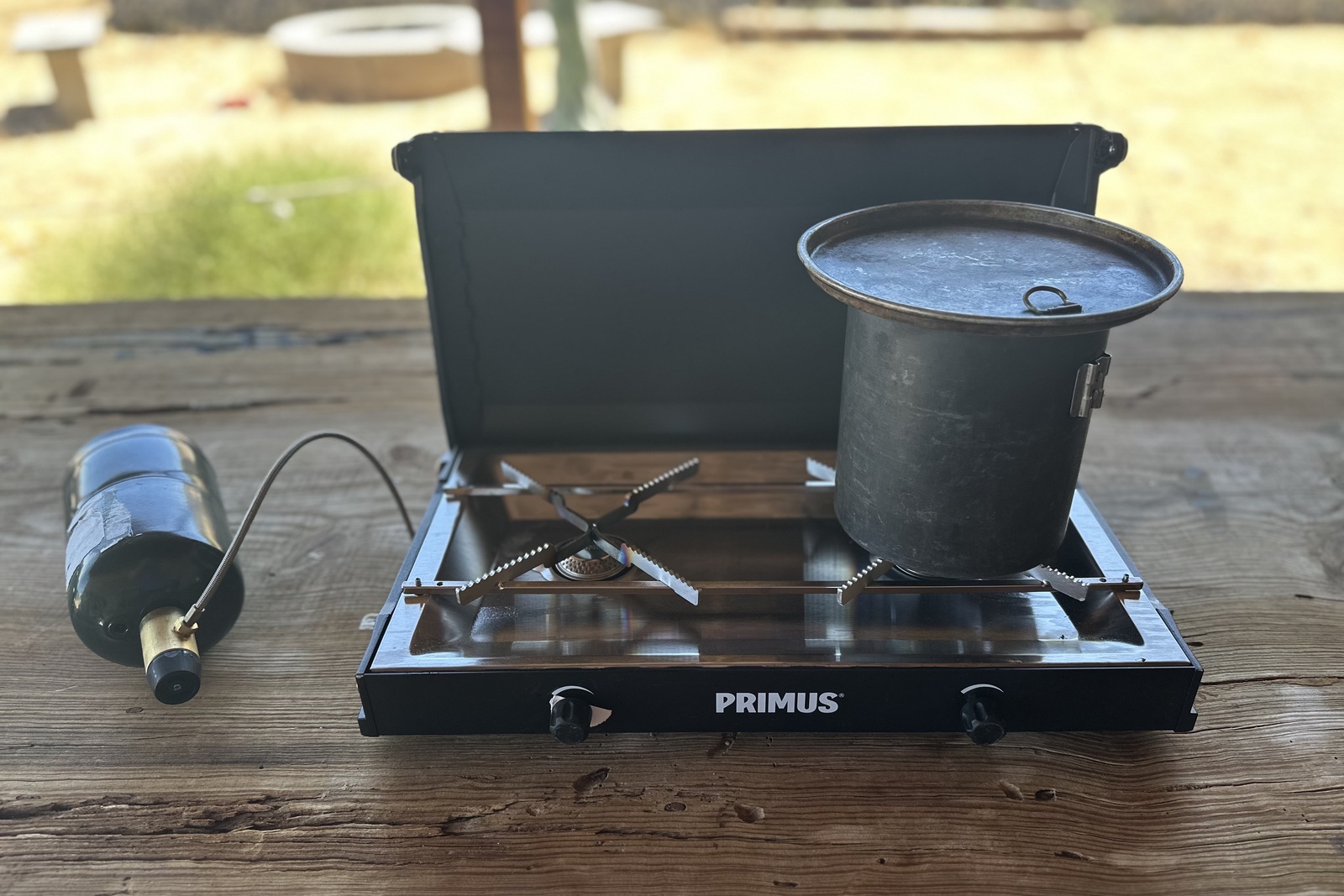
In normal weather conditions, the Primus Kinjia produces plenty of power. During our water boil test, the Primus Kinjia brought a liter of water to a rolling boil in just under 6 minutes, which put it in the top four contenders. Each of its burners generates 10,200 BTUs, which is more than most of the single-burner stoves we tested and average among other double burners.
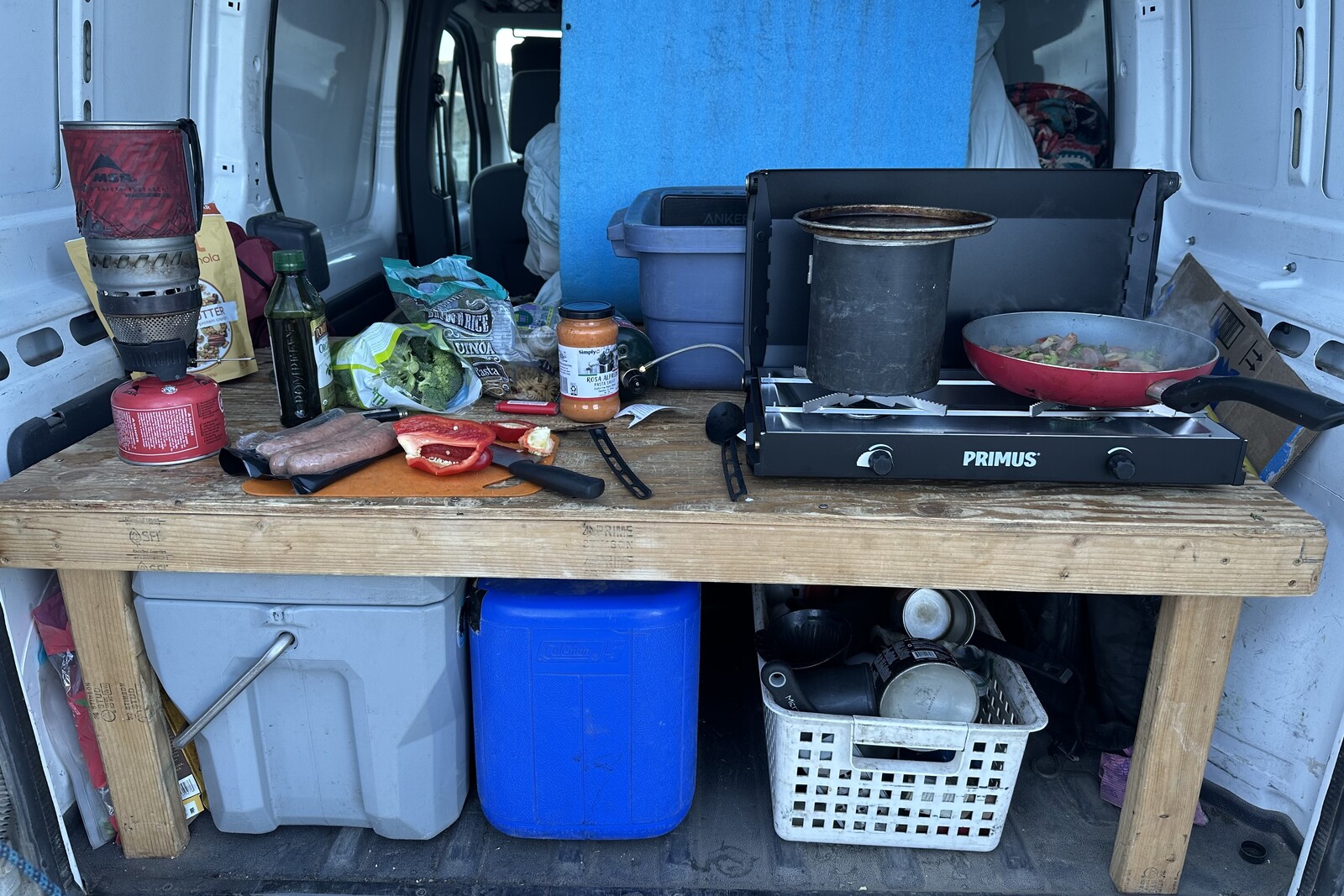
When the wind started howling, the Kinjia’s lack of windscreens became quickly apparent. Both times we tried to cook on the Kinjia during gusty weather, the burners couldn’t maintain enough heat to sauté veggies or cook pasta in a reasonable time. We resorted to moving the stove inside our van to finish cooking, rather than using the picnic table at camp.
Efficiency
The Kinjia is average to below-average when it comes to fuel efficiency. Using just over an ounce of fuel to boil a liter of water, it was slightly less efficient than most of the stoves we tested. We did notice that the fuel bottle tended to release more propane than usual in the process of attaching it to the Kinjia’s fuel line. This may have impacted the stove’s overall efficiency score.
Cooking Ability
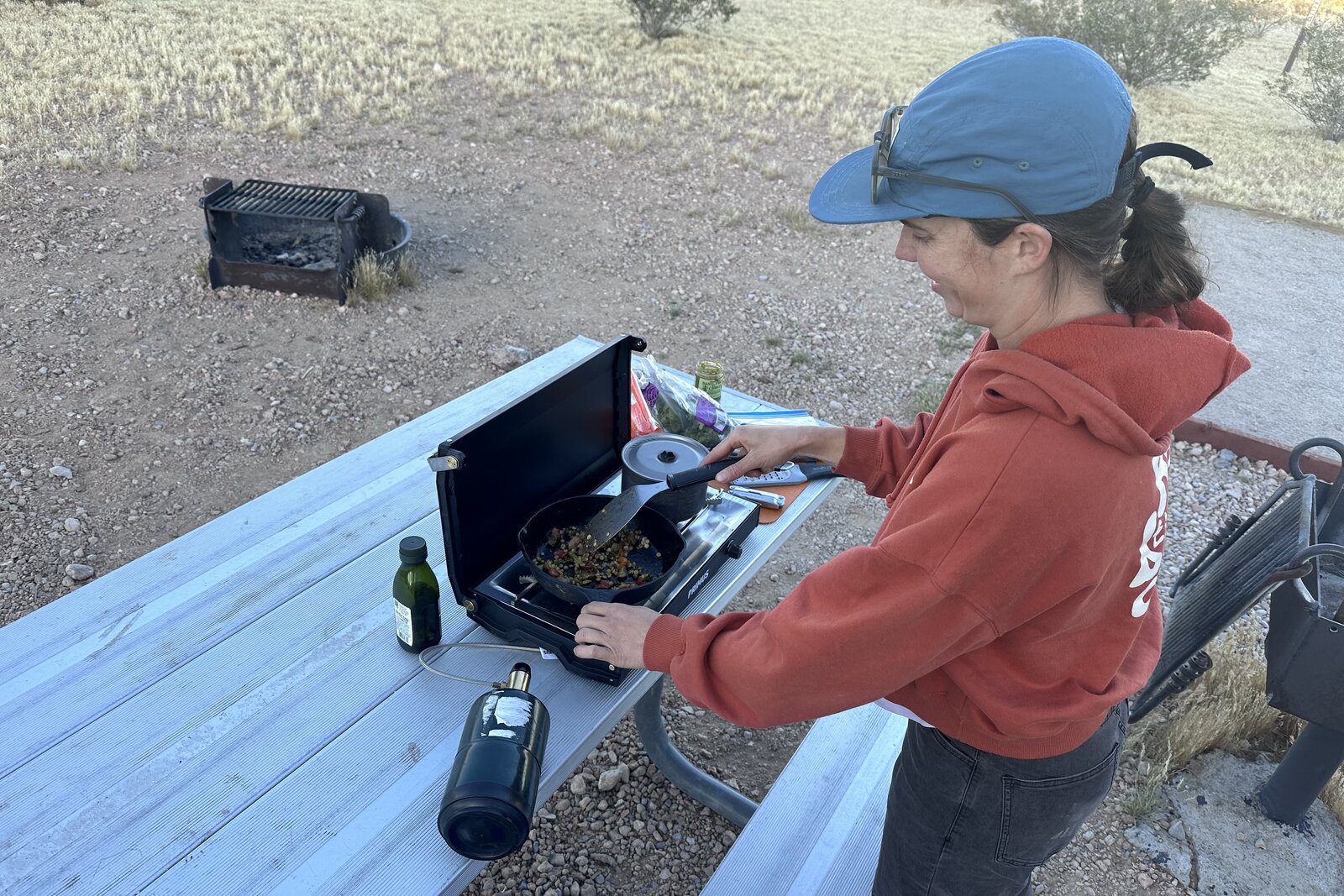
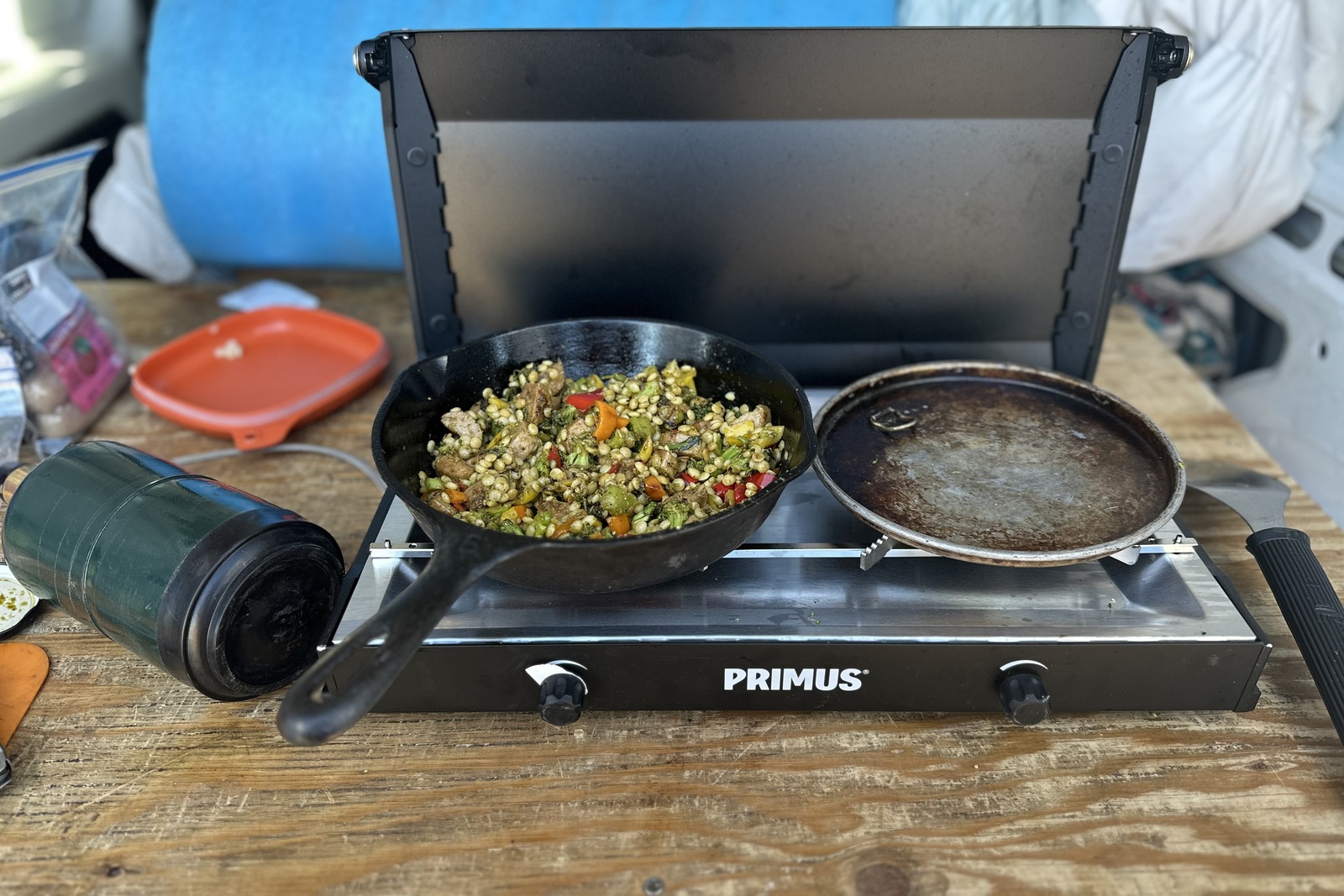
We would describe the Kinjia’s cooking ability as perfectly functional. With two burners and decent power output, it’s easy to make a variety of simple camp meals in normal weather conditions. We tested the Kinjia’s simmer control by cooking rice, which turned out pretty fluffy. We easily whipped up pasta, sautéed veggies and chicken sausage, and prepared couscous while camping out of our vehicle.
Due to its comparatively small burners, the Kinjia had a hard time evenly cooking pancakes. With two pancakes in a pan, the half of each pancake that was closest to the burner became dark brown, while the rest was still raw. The Kinjia is also thinner than some of the other stoves, which means that pots and pans sit closer to the burners. This makes it easy to accidentally burn more finicky food items like pancakes or eggs.
Portability
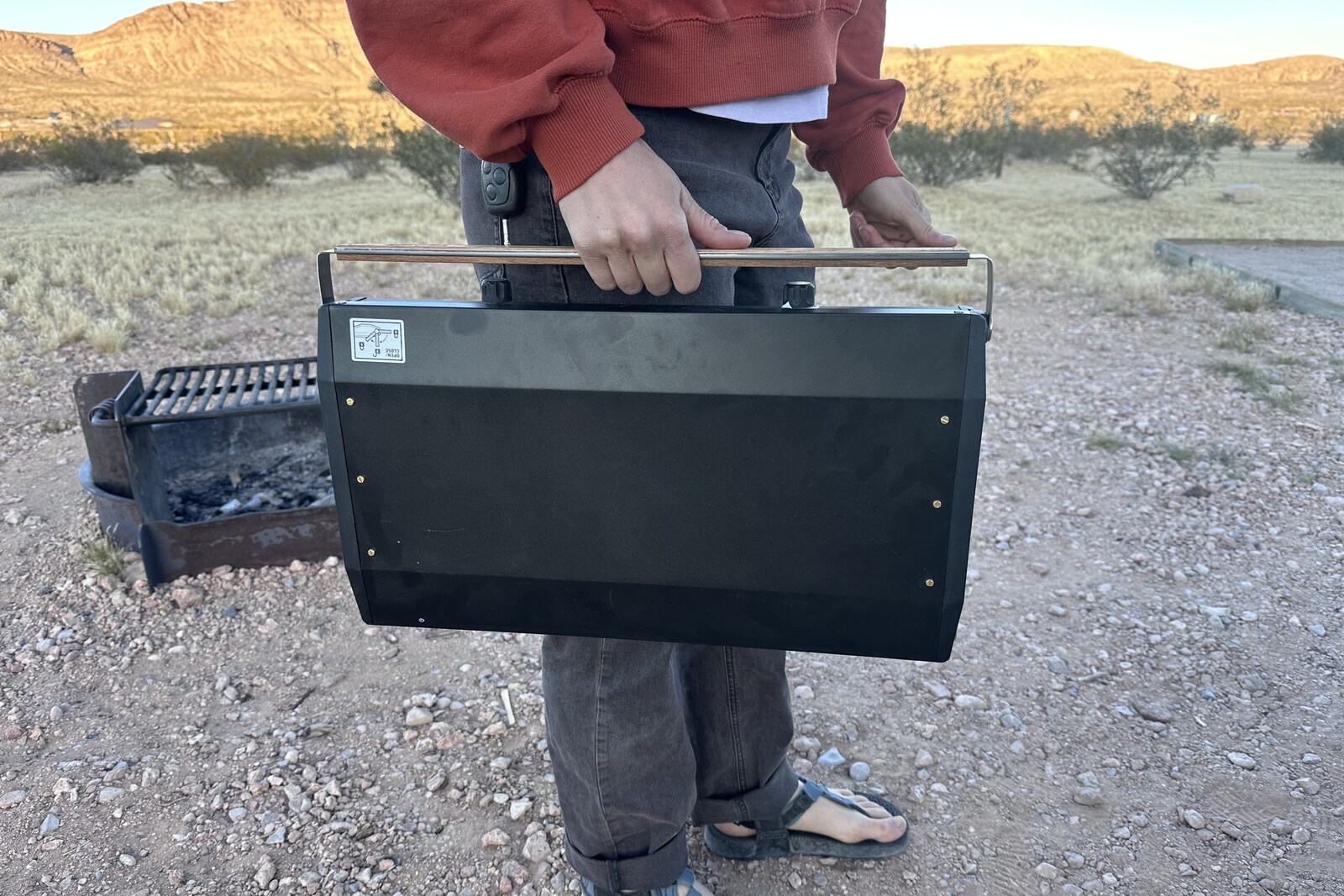
Portability is where the Kinjia shines. At 8 pounds, 2.5 ounces, it’s lighter than most of the other traditional double-burner stoves we tested. Its compact design makes it easy to stow between other camping gear, food bins, and coolers. We could even slide it underneath a car seat for storage.
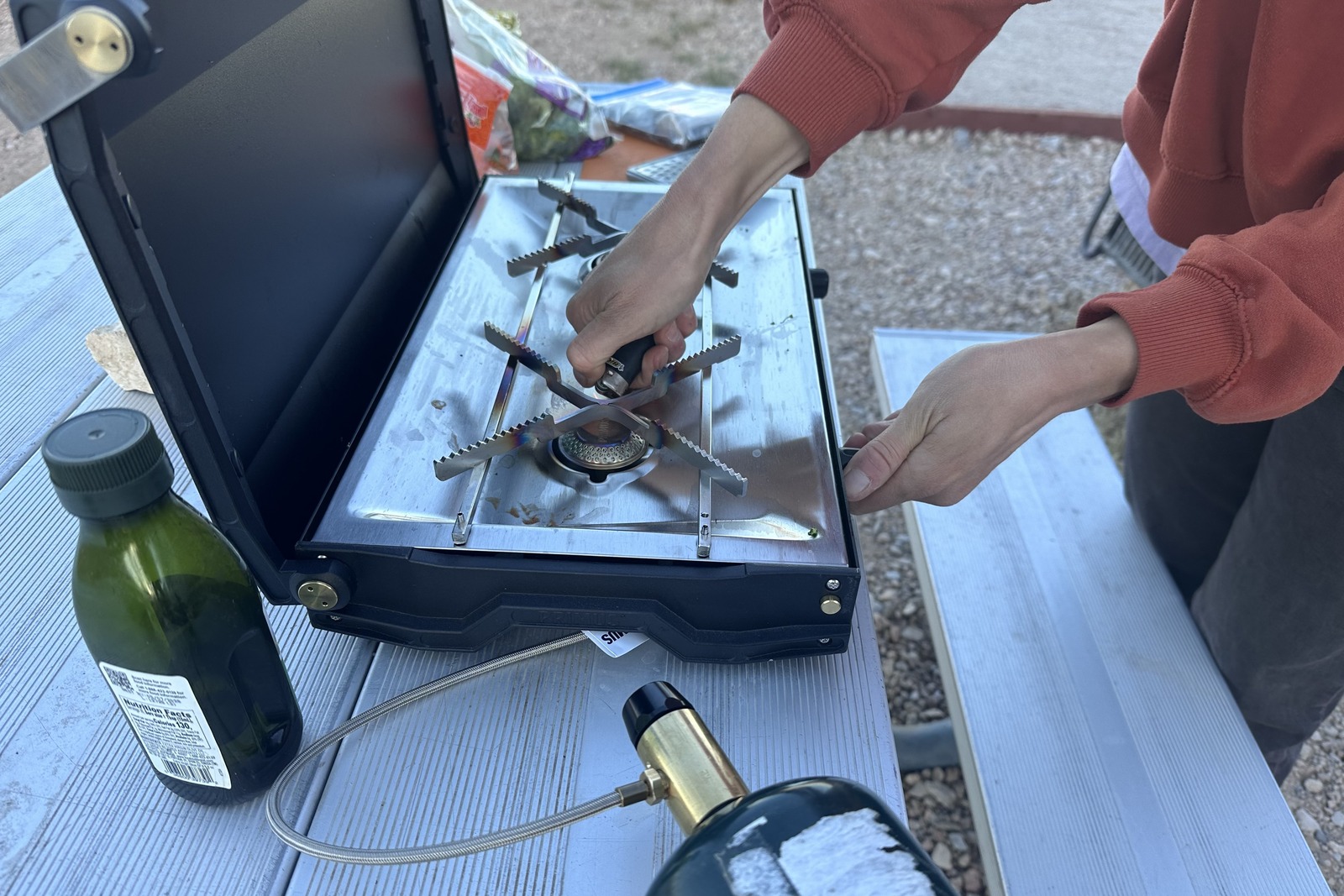
The wooden handle includes a locking mechanism that secures the stove during transport. We also like how the fuel line stashes in a small pocket underneath the stove. For one or two people camping out of a smaller vehicle, the Primus Kinjia is a sleek, low-profile option that won’t take up too much space.
Ease of Use
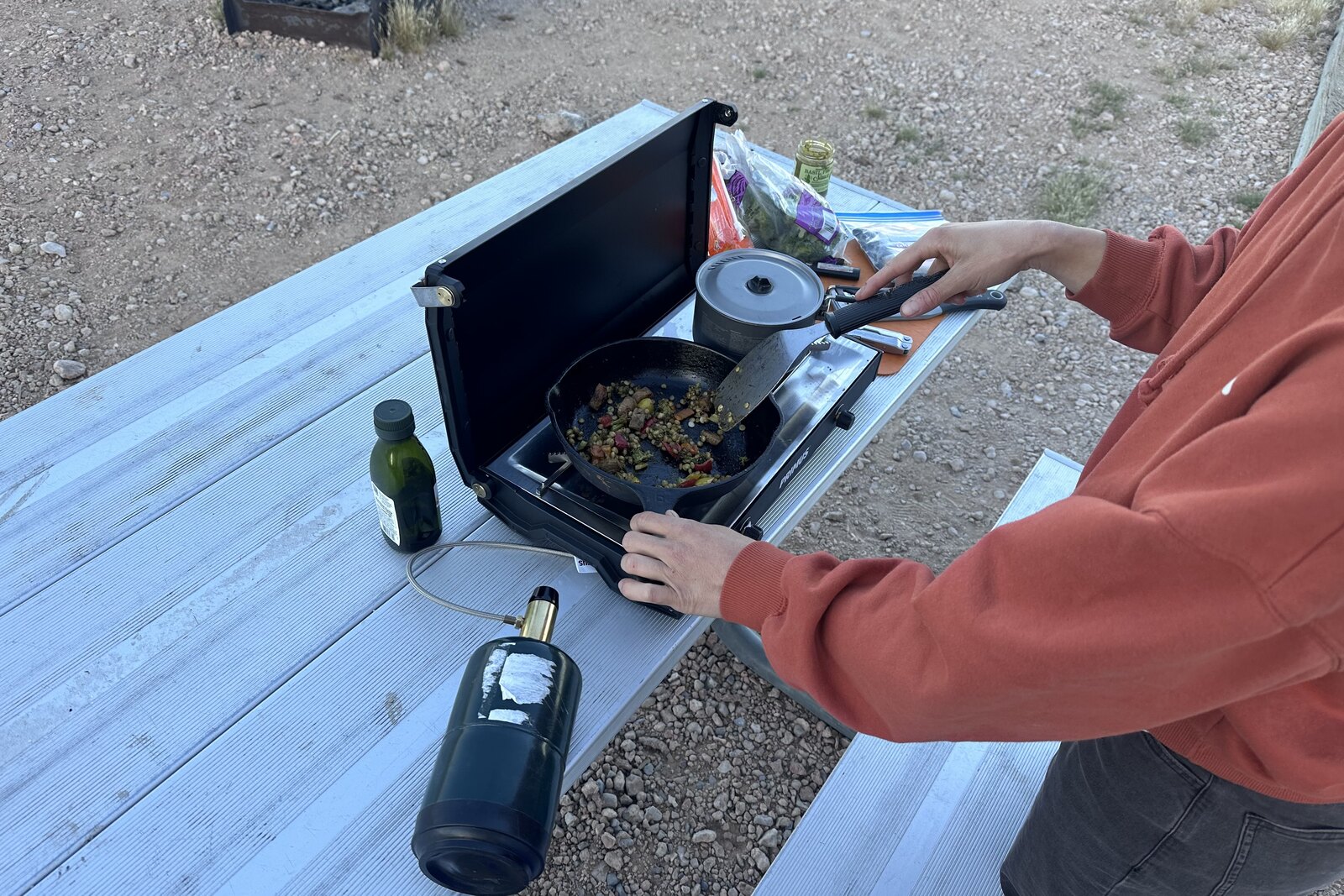
The Primus Kinjia’s design doesn’t diverge drastically from the rest of the double burners we tested, making it pretty intuitive to set up and use. We didn’t have to look at any directions to figure out how to set it up and turn it on. We like how the fuel line stays connected to the stove, so you only have to screw on the fuel bottle. It’s possible to use either propane or butane with the Kinjia, which is helpful if you’re traveling in areas with limited camping supplies.
There is no auto-ignitor, so a lighter or matches are mandatory to get the stove going. As we mentioned above, there are also no windscreens, which does make it harder to use the stove in adverse weather conditions.
Should You Buy the Primus Kinjia?
Campers with limited storage space will appreciate this low-profile and attractive double-burner camp stove. It’s thin and compact, making it easy to stow under a car seat. The setup is intuitive, and the design is easy to use for beginners.
Camp chefs who enjoy concocting complex feasts may want a stove with larger burners and better heat control. Also, those who find themselves in notoriously windy areas – like deserts in the Southwest – may bemoan the Kinjia’s lack of screens when the wind is howling.
The Primus Kinjia is on the higher end of the cost spectrum, but we expect this stove to be fairly durable and long-lasting. Its high-quality design is constructed with die-cast aluminum and stainless steel.
What Other Camp Stoves Should You Consider?
To dial in your perfect camp kitchen, check out the rest of the options in our gear guide to the best camping stoves.
Snow Peak Home & Camp Burner Review: If packability is your biggest priority, the Home & Camp Burner is hard to beat – it’s even small enough for air travel. Importantly, the Snow Peak’s burners still pack a real punch, boiling a liter of water in just over 5 minutes (around a minute faster than the Kinjia). It also maintains excellent simmer control to cook a perfect pot of rice.
Jetboil Genesis Basecamp System Review: For a complete cooking system, the Genesis Basecamp’s packability is hard to beat. The two burners fold into one another, and the whole stove nests into the included pot and pan. The Genesis boils water relatively quickly, though it struggles to simmer and cook evenly.
Coleman Classic 2-Burner Review: If you can’t stomach the Kinjia’s price tag, the Coleman Classic is a more affordable double-burner stove. It’s just a tad larger and heavier than the Kinjia. Though a little less powerful than the Primus (and most other double-burner options), the Classic is reliable and easy to use. Windscreens and slightly larger burners help it maintain heat better than the Kinjia.