

Bottom Line
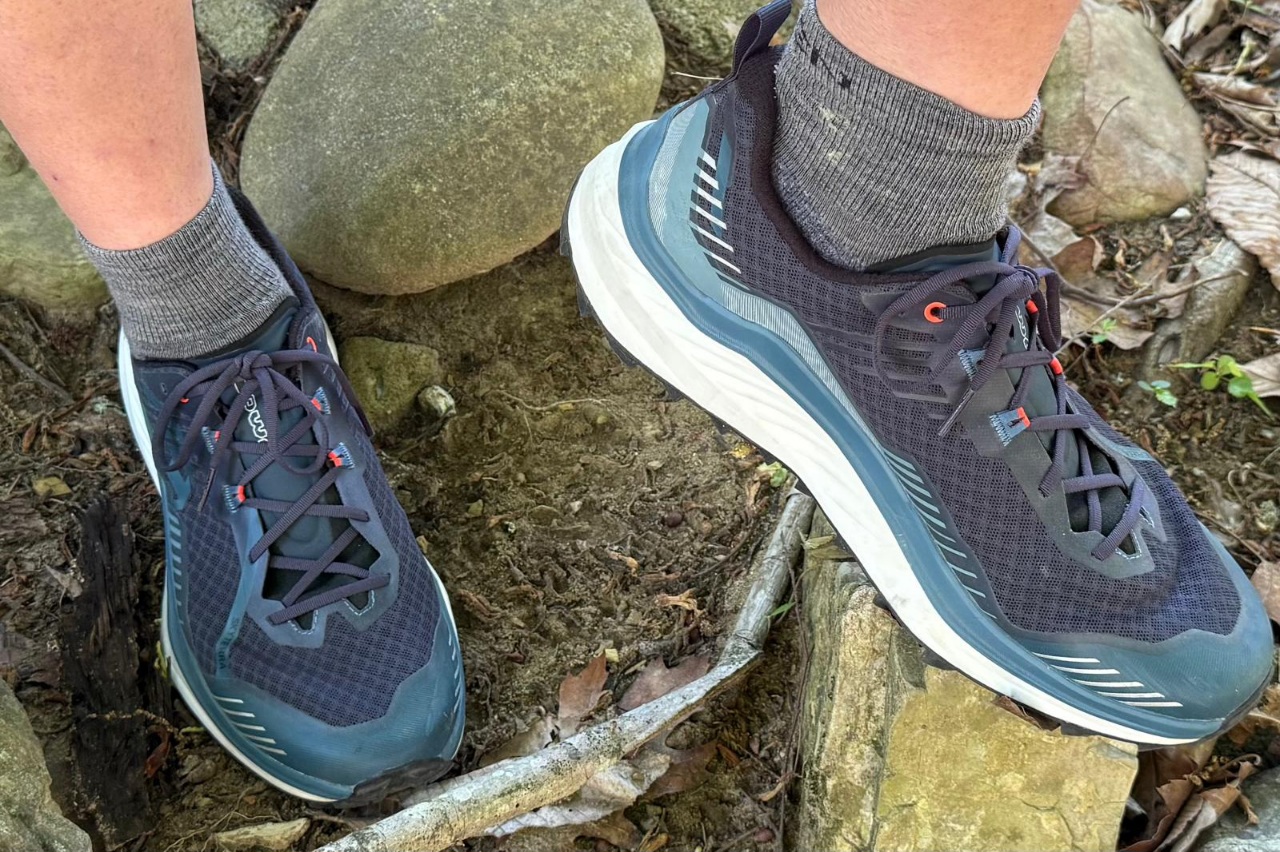
The Lowa Skyterra stands out in our lineup of the best women’s trail runners for its durability and responsive cushioning during our testing on a wide variety of terrains and locations. We ran in it on everything from Midwestern dirt roads to the gravel Creeper Trail in Virginia and from New York City’s Central Park to the rugged mountains of Norway. Although we encountered some fit issues, the Skyterra delivered solid performance everywhere we took it.
The thick cushioning offered excellent comfort and responsiveness, helping us avoid fatigue after long days. The traction is adequate, though we wish the lugs were more aggressive for the most challenging terrain we venture into. We are most impressed by the upper’s durability, which shows minimal wear even after clearing 100 miles.
Despite these positives, we struggled with sizing; even when sizing down, it felt too roomy in some areas and too tight in others. Those with low-volume feet may struggle to find a secure fit in this shoe. Some shoes we don’t fret about buying online, but this isn’t one of them.
How We Tested
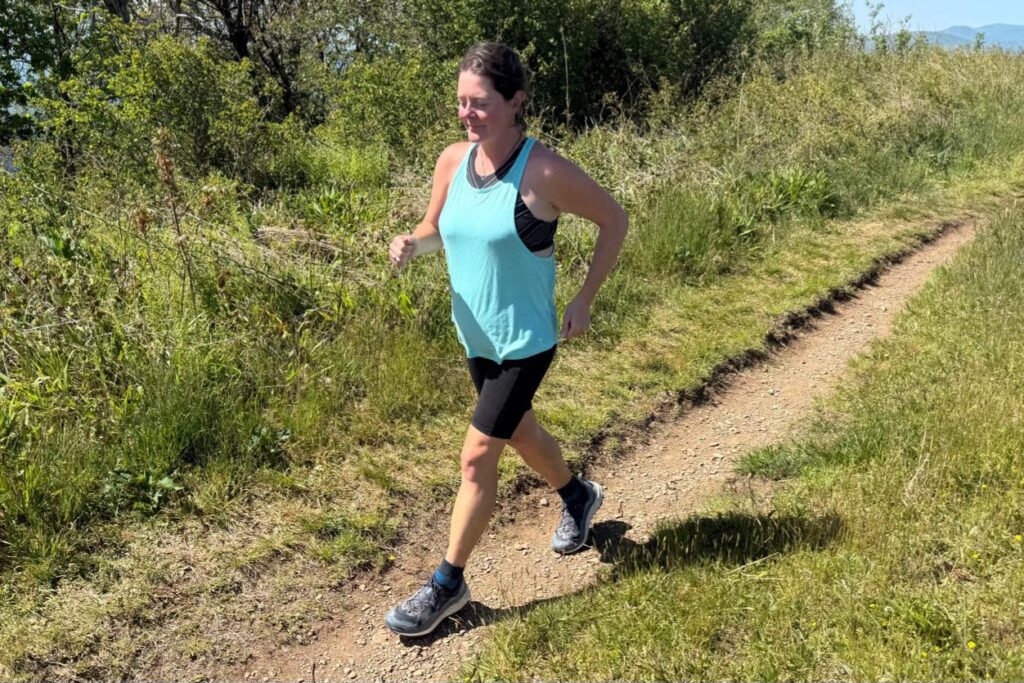
Over multiple months of testing, we put the Lowa Skyterra through its paces. We ran on smooth dirt roads in rural Michigan during cool weather as we recovered from a long effort on the Pacific Crest Trail. From there, we traveled to the mid-Atlantic, where we logged many miles on southern Virginia’s famous Creeper Trail during a week-long work event. The weather was warm, but not stifling.
Work took us to New York City next, where we found these trail shoes to transition easily to the hardpack trails of Manhattan’s Central Park, where we ran loops in between work and sightseeing during a sweltering heatwave that spiked both the mercury and the humidity.
From there, our testers took the Lowa Skyterra to Norway to tackle the notoriously challenging, wet, and rugged Massive 350, which ranged from high-alpine plateaus to rocky mountain peaks and glaciated terrain.
Quick Specs
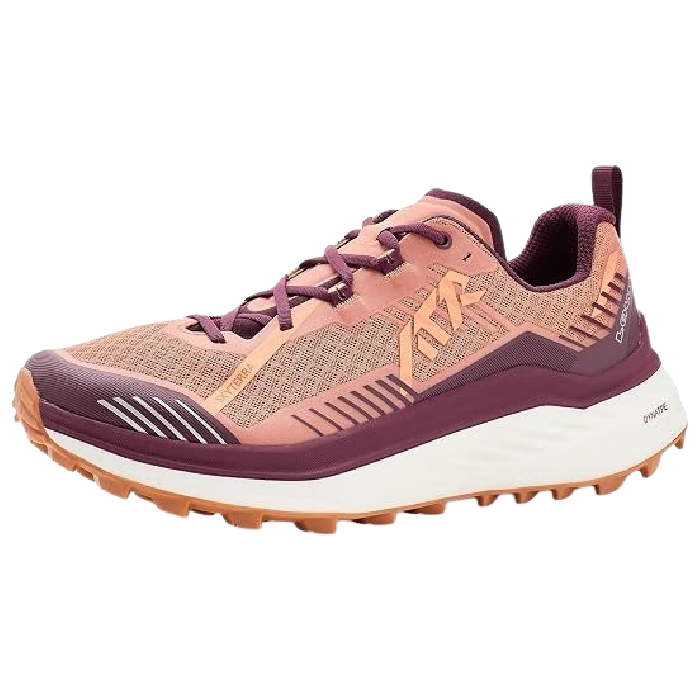
Women’s Lowa Skyterra
Most Durable
CleverHiker Rating: 3.6/5.0
Price: $170
Weight (Pair): n/a
Heel-to-Toe Drop: 6 mm
Cushioning: Maximum
Best For: Trail
Pros
- Durable upper
- Thick cushion
- Responsive
Cons
- Sizing is off
- Toe box is narrow, even in wide
- Price (often on sale though)
Traction
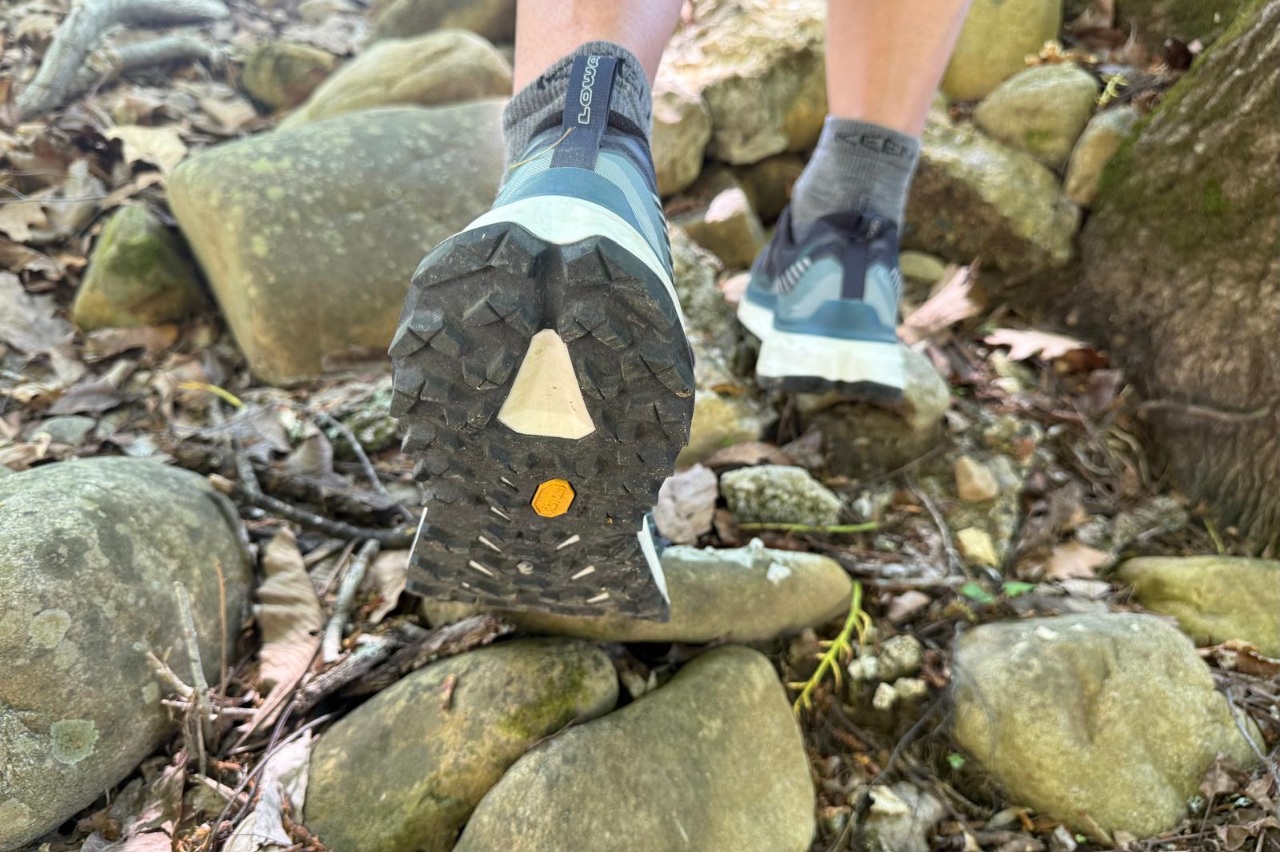
Overall, we find the traction on the Lowa Skyterra to be solid on a wide variety of surfaces. The DYNATPE outsole was grippy on smoother surfaces, including rock and pavement, while the lugs bit into softer strata including mud and dirt.
We aren’t wowed by the traction, but we aren’t underwhelmed either. The Lowa Skyterra definitely excels on certain types of trails more than others. On less-technical surfaces such as dirt roads, gravel paths, and urban trails, we had plenty of grip and only nominal slippage (when we were on wet pavement). The Lowa Skyterra also handled the scrambly bits we did in Norway confidently.
However, the more rugged things got underfoot, the less control we seemed to have. We noticed loss of traction in deep mud or on steep, wet trails. While the traction was adequate, we would probably choose a different option for technical or rugged trails in the future.
Comfort
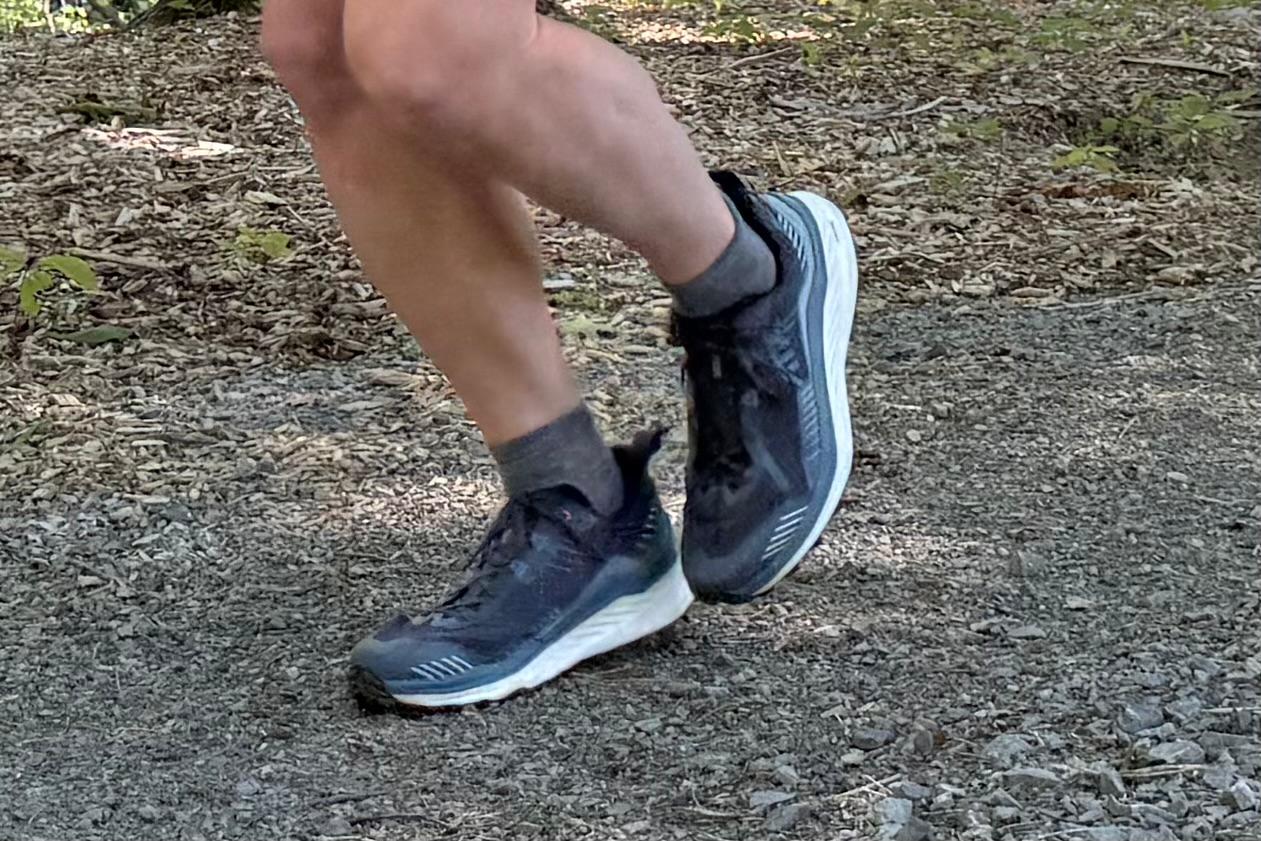
The Lowa Skyterra was the most problematic fit of the shoes we tested this year. It took 3 tries to find the correct size, which was a full size smaller than our normal one. For someone who trail runs and burns through shoes as we do, this was a little odd (we know our feet and shoe sizes very well at this point).
Even then, the shoes run long, even though they fit in the midfoot and heel. Given these issues, those with wide or high-volume feet can probably find a good fit if they are willing to try a few sizes. The toe box is roomy, and the midfoot is also generous. Our lower-volume testers have to crank down the lacing to get a secure fit. Those with narrower heels may find the cup a bit sloppy, but we don’t get any chafing or blisters.
Additionally, the Skyterra feels rather boxy and clunky, which we’ll discuss in more detail below. However, after a break-in period, they conformed more to our feet and feel more comfortable than when we first put them on. The midsole foam is quite firm, which some runners may not like.
Weight
There is no listed weight for these shoes. They felt heavier than average.
Durability
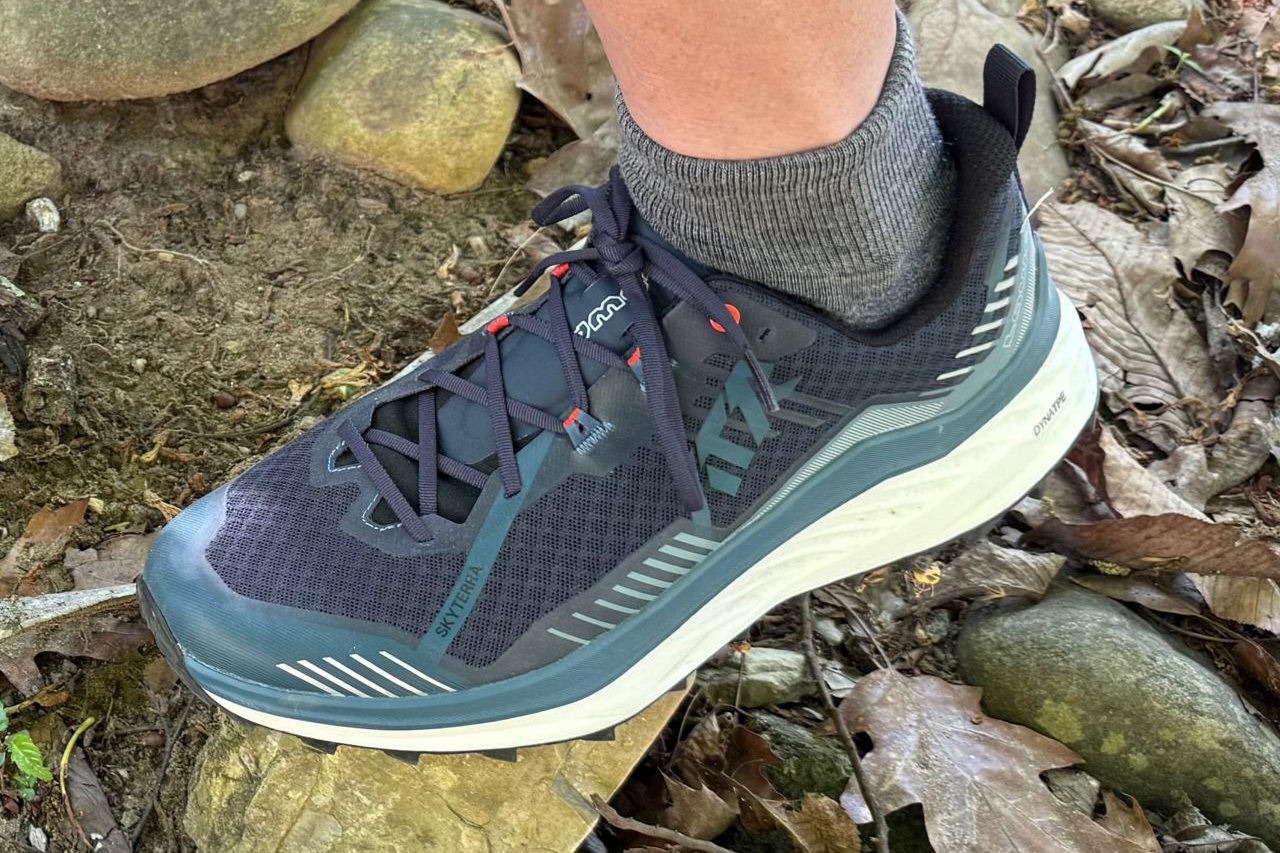
Our testers are quite pleased with the durability of the Lowa Skyterras. Even after a hundred miles of use they barely show any signs of wear or midsole compression. The upper is amply reinforced in high-wear areas, meaning it resists abrasion better than most. There is a high-coverage toe rand that not only protects our toes but also protects the front of the upper from snags on stubs and roots.
The only place we really notice a durability issue is around the eyelets on the lacing. It seems as though the welded plastic layer began delaminating after about 50 miles. While this doesn’t impact performance, it could indicate a potential issue with all reinforcement layers throughout the shoe.
Overall, the Lowa Skyterra was the most durable shoe we tested, and runners should get a lot of miles out of them. Given their steep price point, that is a very important consideration because without this type of durability they would not be a very good value.
Breathability
Despite the large number of reinforcement overlays, the Lowa Skyterra is still quite breathable. The mesh upper wicks moisture away from the feet well and allows for good airflow. However, the amount of reinforced overlays does diminish the overall breathability to some extent. We found that the Skyterra couldn’t keep up with our sweat rate during sweltering runs in Central Park when the humidity was high.
Additionally, when tromping across the highly saturated plateau of Norway’s Hangaravidda National Park, the shoes absorbed water and were incredibly slow to dry, meaning our feet were wet for days.
Runners who frequently cross a lot of fords, or run in very wet or humid conditions, may not find these shoes to be adequate. However, those who train in dry, temperate conditions will find that the Skyterra manages moisture effectively.
Responsiveness
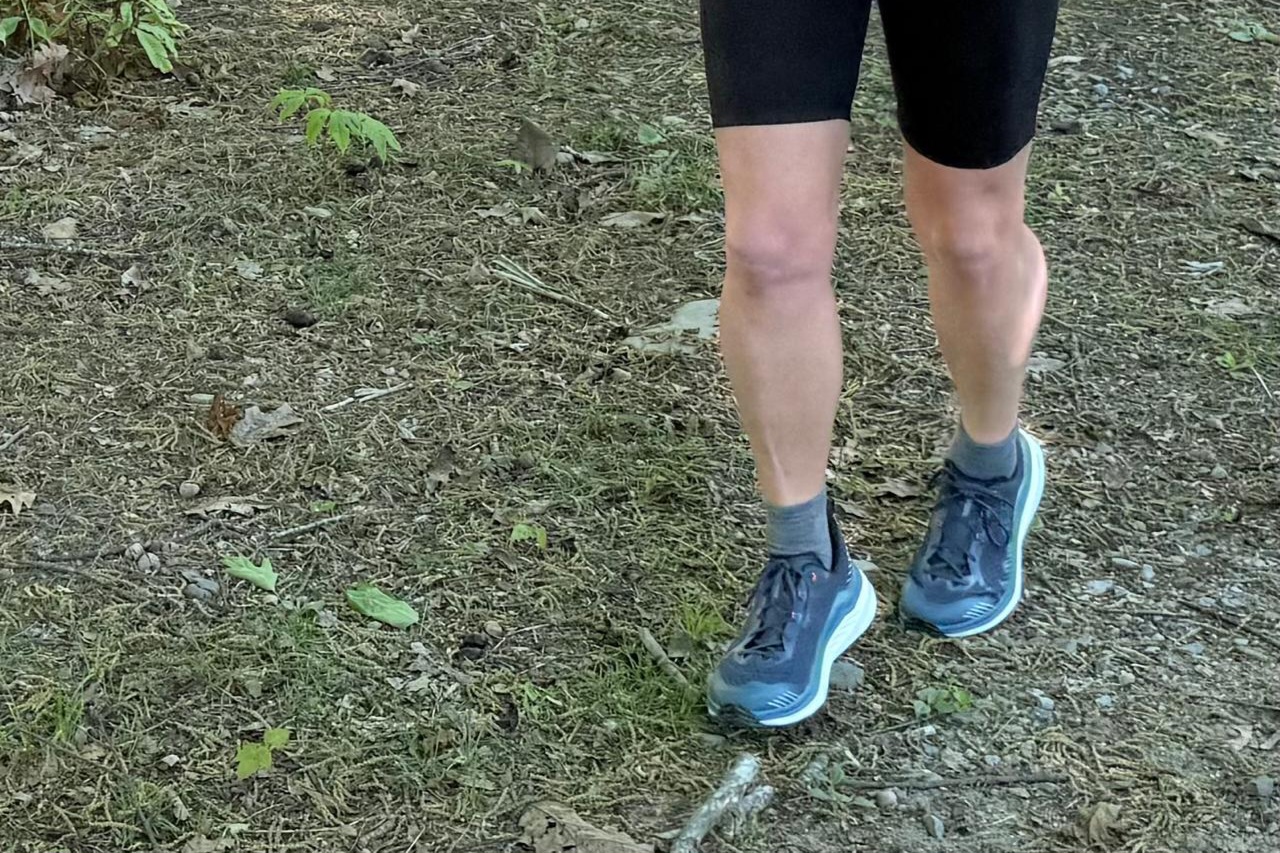
Our testers found that responsiveness was the Lowa Skyterra’s strong suit. The firmer-than-average foam offered excellent energy return, especially on harder and more compact running surfaces. On long days running the Creeper Trail and loops around Central Park, the rebound was noticeable, and our feet stayed fresh.
This was ideal on Norway’s Massive 350 Trail when we were logging big days with a heavy pack on rugged terrain. Even at the end of the day, our feet were not beat up, and we never had that lead-brick feeling you sometimes get after 10 straight hours of hiking.
Our only issue with the thick, firm foam was that it really disconnected us from the ground and we felt a bit clumsy and clunky on technical terrain. While this wasn’t an issue on smoother surfaces, we were turned off by the boxy feel when agility was required.
Should You Buy the Women’s Lowa Skyterra?
The Lowa Skyterra is a solid choice for runners who prioritize responsiveness and thick, firm cushion. Those who run primarily on smooth singletrack, fire roads, gravel paths, and the like will find these to be a high-performance shoe with just the right amount of traction. However, those who prefer to have more ground feel or softer foam may want to look elsewhere.
Additionally, while the Lowa Skyterra is a reasonably breathable shoe, the overlays and slow-drying padding make it less ideal for runners who train regularly in wet or humid conditions. The Skyterra comes at a higher-than-average price point, but that should be offset by the cost per run in this highly durable shoe.
Runners with wide or high-volume feet may find this shoe a great choice; however, finding the right fit can be tricky. Our testers had to try on multiple pairs to get it right and ended up in a size smaller than we normally wear. Those who can’t try on several sizes may want to stick with a brand that fits more true to size.

What Other Women’s Trail Runners Should You Consider?
If the Lowa Skyterra isn’t for you, check out these similar trail runners that handle rugged trails and offer excellent durability.
HOKA Challenger 8 Review: This Editor’s Pick top choice is a great alternative. If you’re looking for a highly responsive, nimble trail runner with excellent trail traction and maximum cushion these shoes are a perennial favorite on trail.
Topo Athletic Traverse Review: An Editor’s Pick, this trail shoe is ideal for technical terrain, offering aggressive traction and exceptional cushioning with a wide toe box and hiking forward design.
Topo Athletic Terraventure 5 Review: Looking for a Vibram grip with moderate cushion and slightly less roomy fit without compromising toe space? These Budget Buy winners will take you from dry trails to muddy conditions with ease without breaking the bank.