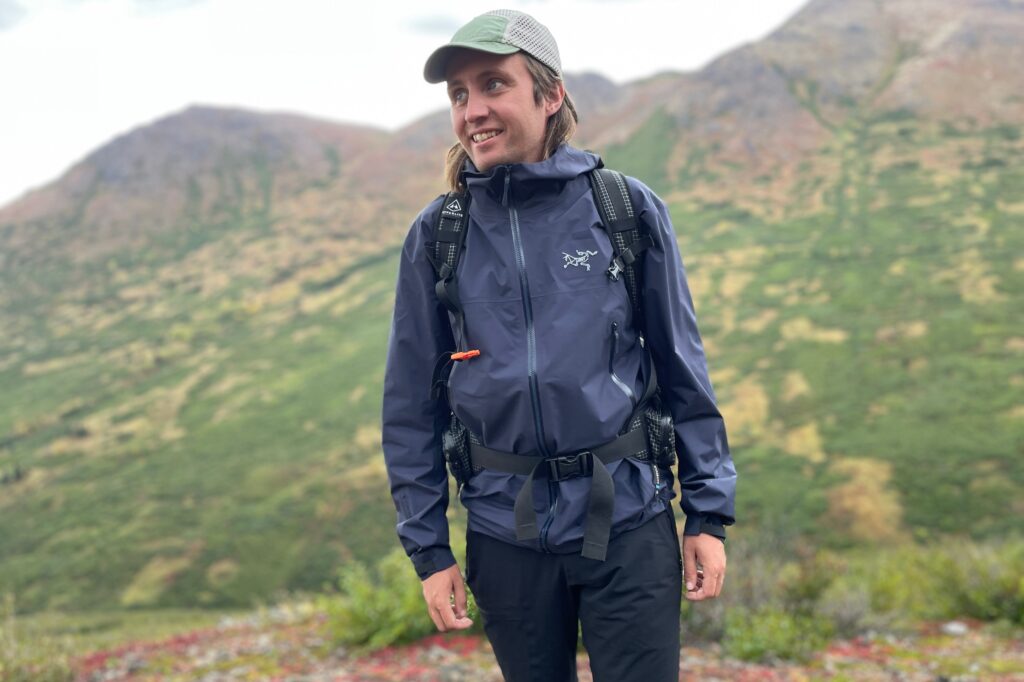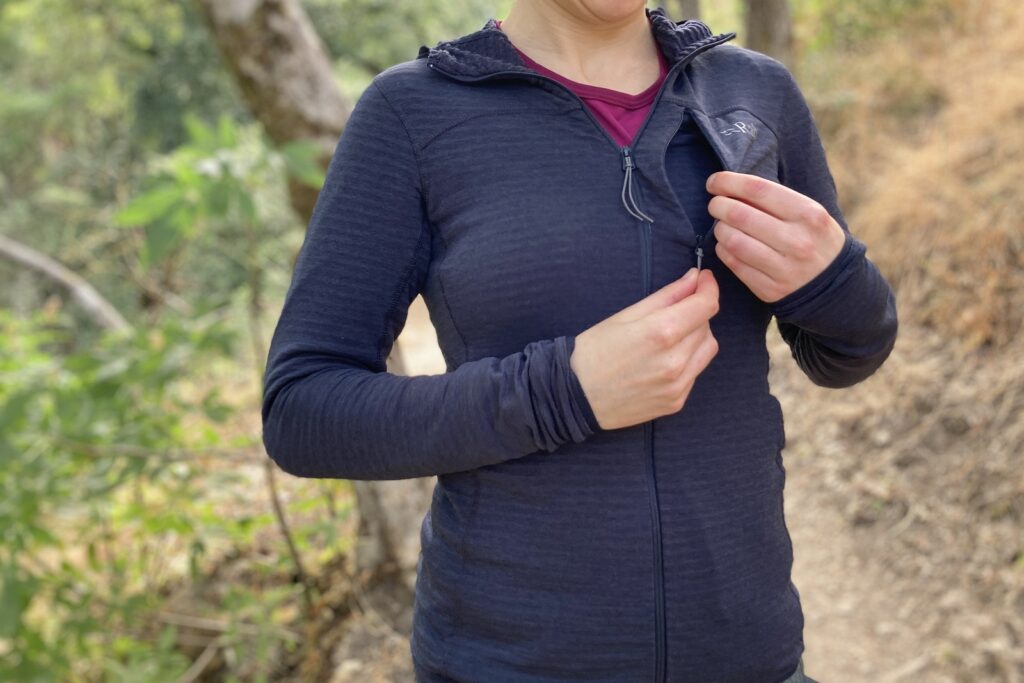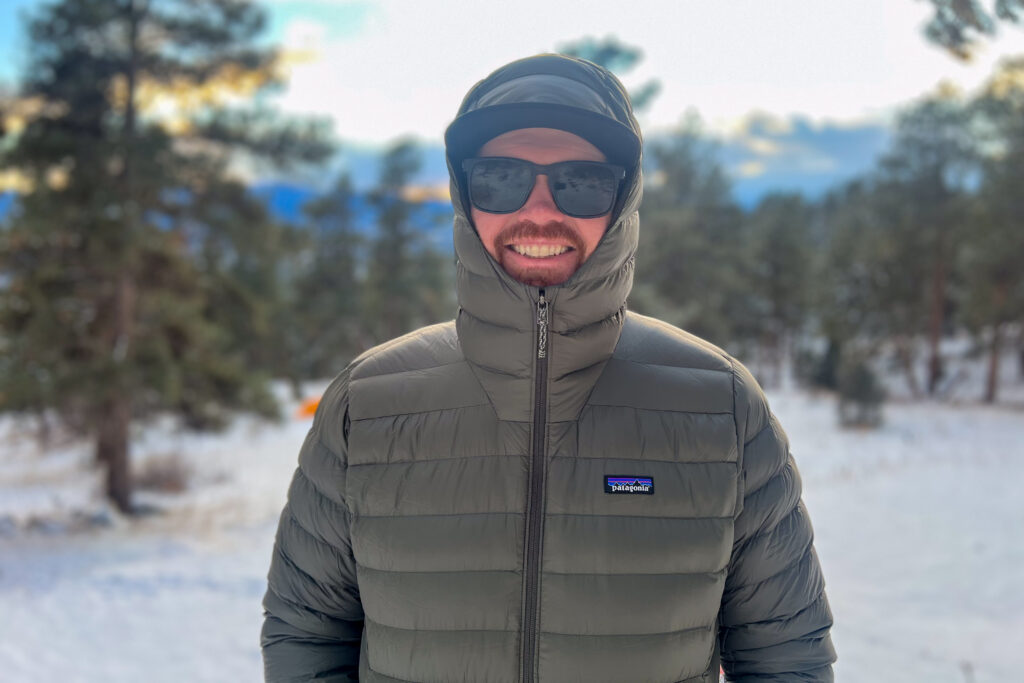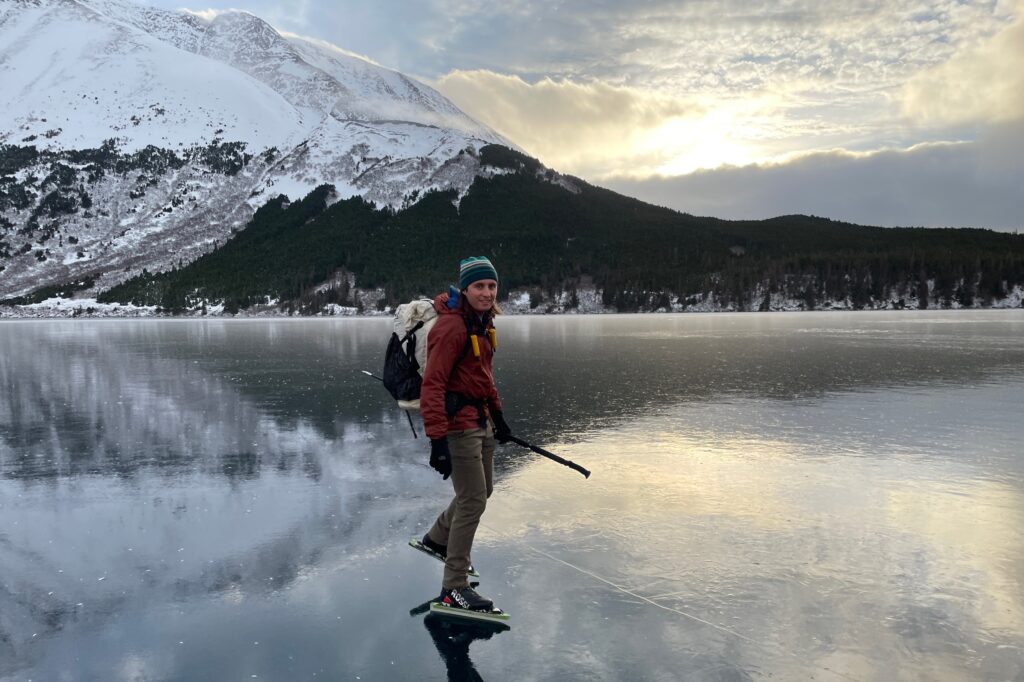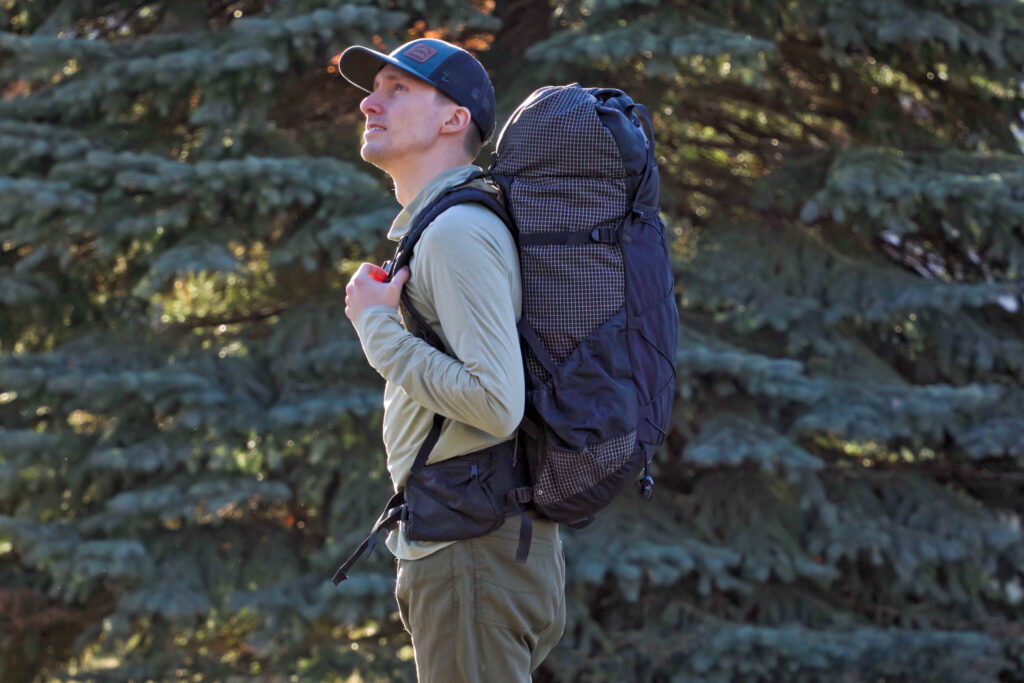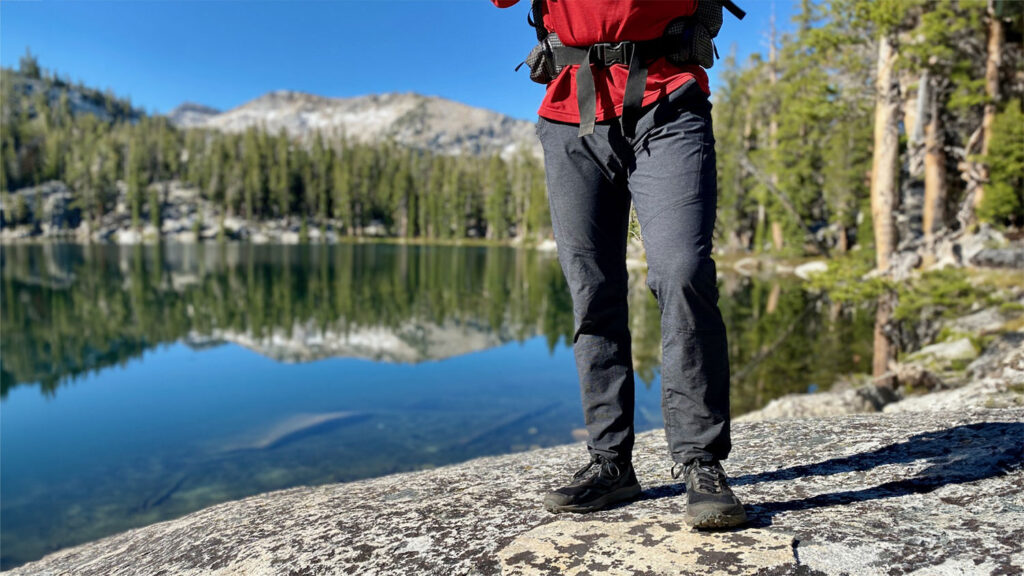



The CleverHiker team researched 30 sets of baselayers for this guide and tested the most promising options from Smartwool, Patagonia, Arc’teryx, REI, Icebreaker, Outdoor Research, and more.
Editor’s Note: We last updated this guide on November 18, 2026, to include two new additions on our list: the REI Merino 185 and Ridge Merino Aspect Midweight.
How We Test Base Layers
For this guide, we tested the best baselayers side by side to rank their comfort, moisture control, warmth, and features. After thousands of days and nights on trail, we know which ones are the warmest, lightest, most breathable, most comfortable, and most versatile for a range of uses.
For more info, check out some of our other most popular gear guides:

#1. Best Base layer Overall

Quick Picks for Base Layers
Check out this quick list of the best base layers, or continue scrolling to see our full list of favorites with in-depth reviews.
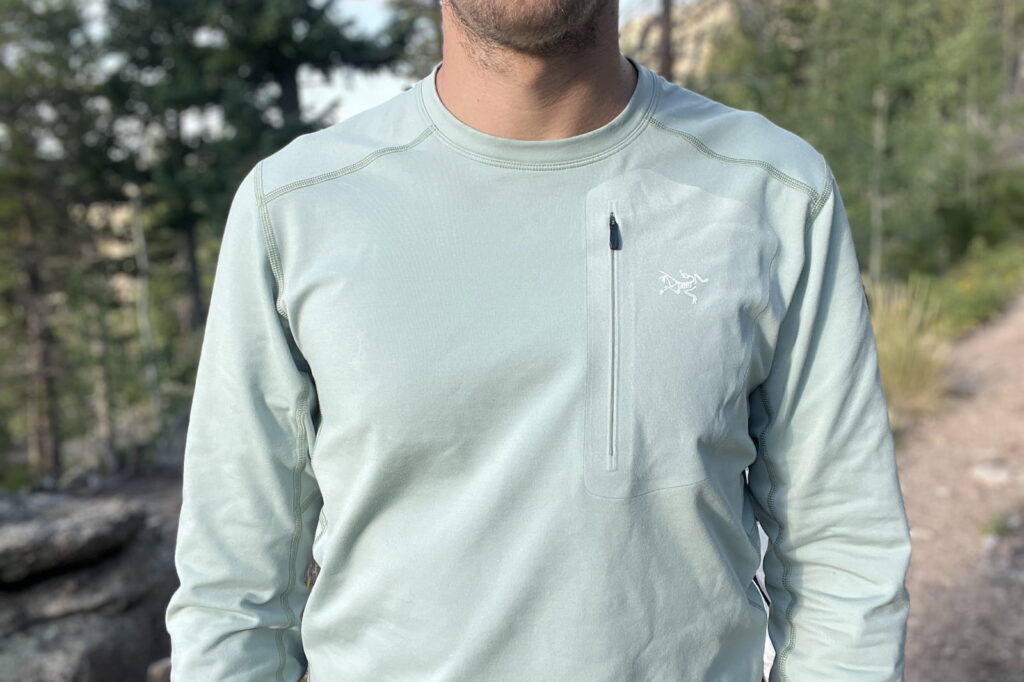
1. Best Base Layer Overall: Arc’teryx Rho LT Crew – Men’s / Women’s ($100)
2. Best Budget Base Layer: REI Midweight Half-Zip – Men’s / Women’s ($70)
3. Breathable Cold-Weather Base Layer: Smartwool Intraknit Thermal – Men’s / Women’s ($150)
4. Breathable Midweight Base Layer: Patagonia Capilene Midweight Crew – Men’s / Women’s ($95)
5. Versatile Wool Base Layer: Icebreaker Merino 200 Oasis – Men’s / Women’s ($120)
6. Best Warmth-to-Weight Ratio: Ortovox 185 Rock’N’Wool – Men’s / Women’s ($130)
7. Warmest Wool Base Layer: Smartwool Classic Thermal – Men’s / Women’s ($125)
8. Best Lightweight Wool Base Layer: Smartwool Classic All-Season – Men’s / Women’s ($100)
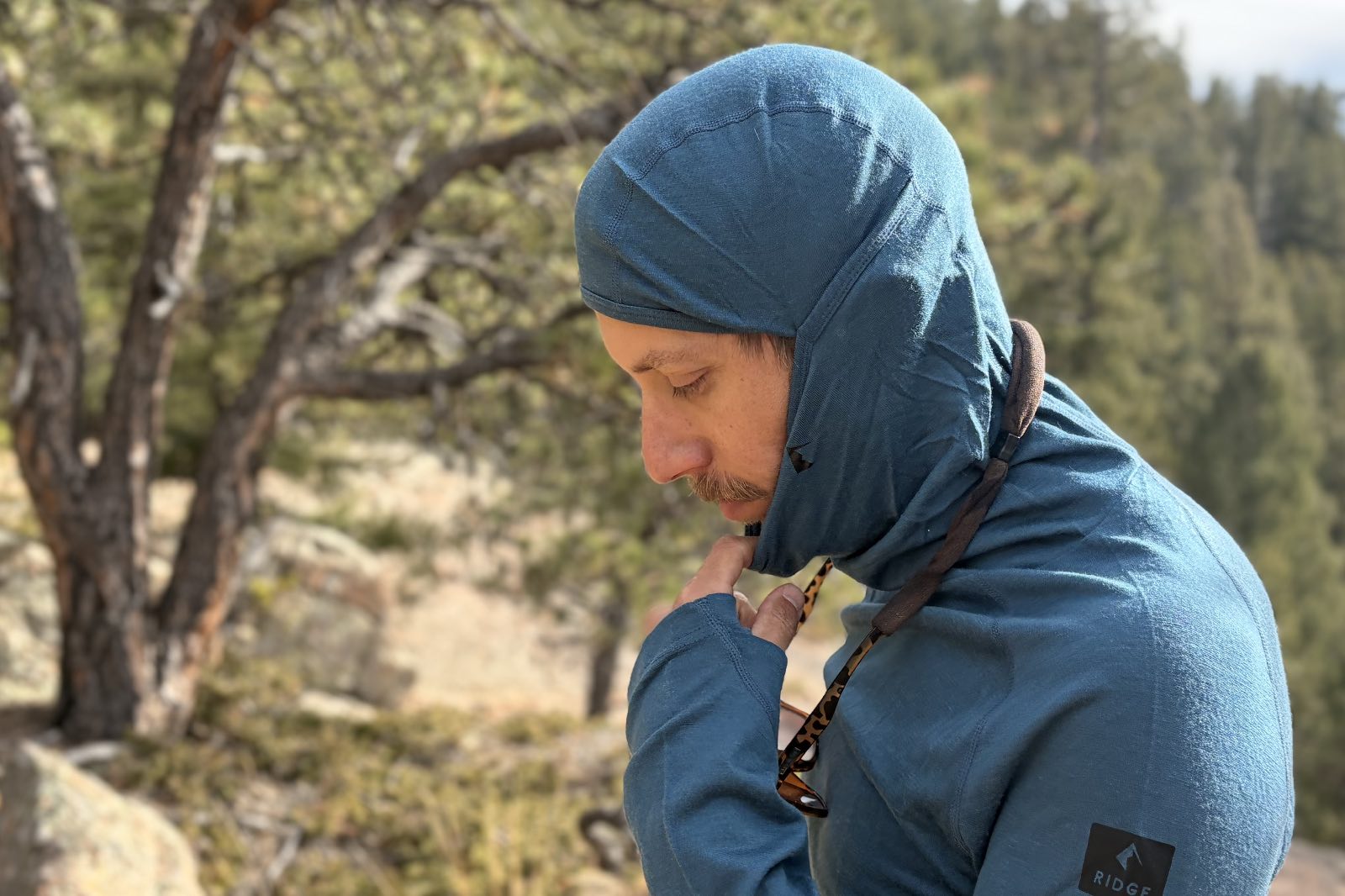
9. Best Hooded Cold-Weather Base Layer: Ridge Merino Aspect Midweight Balaclava Hood ($95)
10. Best Value Four-Season Merino Base Layer: REI Merino 185 Long-Sleeve Crew – Men’s / Women’s ($85)
11. Most Affordable Base Layer: Helly Hansen LIFA Stripe Crew – Men’s / Women’s ($50)
Arc’teryx Rho LT Crew / Rho Crew LS
Best Base Layer Overall
CleverHiker Rating: 4.9/5.0
Price: $100
Measured Weight: 7.6 oz.
Fabric/Weight: Midweight polyester & elastane
Pros
- Warm
- Ultra comfortable
- Excellent moisture management
- Breast pocket
Cons
- Too warm for some uses
- Pricey
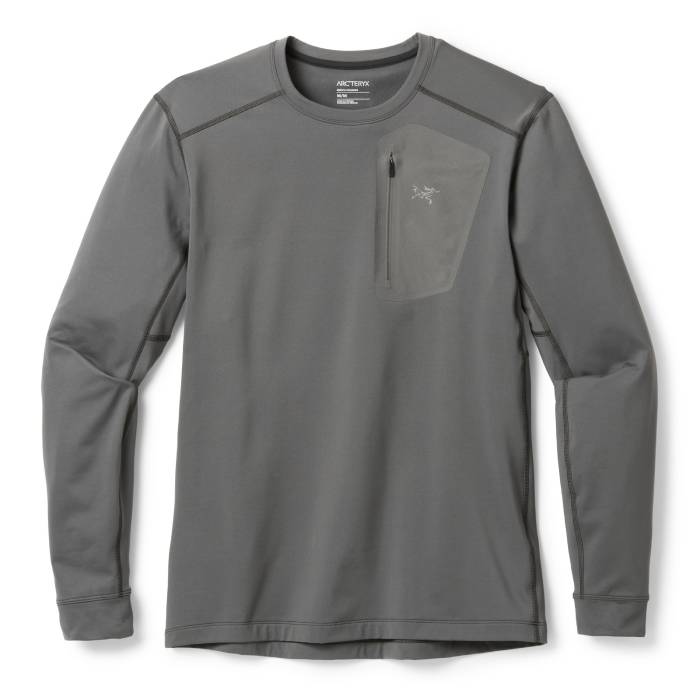
The Arc’teryx Rho LT Crew (men’s / women’s) is our go-to for cold-weather pursuits. Made from brushed polyester fleece, it feels luxuriously soft against the skin, with a carefully tailored fit that balances snugness and relaxation. The articulated construction and stretchy fabric improve mobility, and the elastic wrists and classic crew neck add simplicity, durability, and easy layering.
Where the Rho LT Crew truly excels is in moisture management. It isn’t the most breathable choice, but it wicks moisture quickly and dries faster than many competitors. Its fibers easily spread moisture to the outside for efficient evaporation and dry surprisingly fast for a thick layer. Even when damp, it retains warmth remarkably well.
For you ultralight enthusiasts, the Rho LT Crew offers one of the best warmth-to-weight ratios we’ve seen. It remains minimal in features – no hood, zippers, or thumb loops – except for a small zippered chest pocket (or arm pocket for women) for tiny essentials.
For serious cold-weather adventurers, the Rho LT Crew is a smart investment. It’s perfect for cold, damp conditions. It’s too warm for mild climates, but it performs exceptionally well in alpine environments, during the shoulder seasons, or as part of a winter layering system. Although it’s priced higher than some, the performance and comfort it offers make it a strong choice for ultralighters, winter explorers, or anyone who runs cold.
REI Midweight Half-Zip
Best Budget Base Layer
CleverHiker Rating: 4.8/5.0
Price: $70
Measured Weight: 9.8 oz.
Fabric/Weight: Midweight polyester & spandex
Pros
- Affordable
- Durable
- Warm
- Comfortable
- Versatile
- Thumbholes
Cons
- Not odor-resistant
- Heavier than most
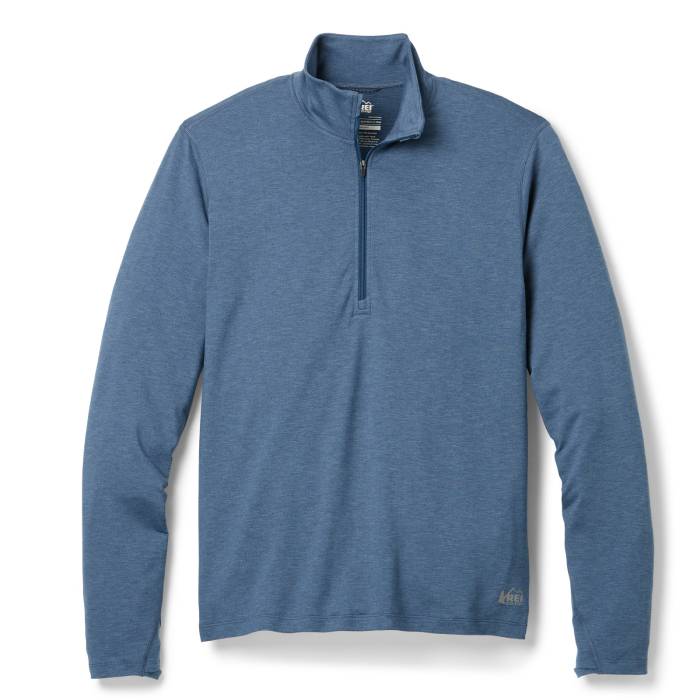
Sometimes, you come across a budget option that performs just as well as higher-end items, which is certainly true with REI’s Midweight Half-Zip (men’s / women’s). This base layer is warm, durable, and comfy against the skin, and it’s become a staple in our layering system.
It’s on the heavy side compared to others here, so we tend to only take it out in colder temperatures when we know we’ll be wearing it for most of our time outside. That said, the weight is still reasonable for packing it as a just-in-case item if you’re the type who likes to have an extra layer for sleeping on chilly nights. The zipper and fit make it a supremely layerable option that can be used as either a warm base layer or a lightweight mid-layer.
Although the zipper allows you to dump some heat when you get a little steamy, this base layer isn’t as breathable or moisture-wicking as wool, so we wouldn’t recommend it as the best option for high-output activities. It also isn’t odor-resistant or coated with any antimicrobial treatment, so it’s best suited for short hikes or chilling at camp.
This top is durable enough for many seasons of use, making the already approachable price tag even more appealing. Its multi-season capability will fill in all the gaps where your lightweight and heavyweight base layers are lacking. If you’re in need of something warm, versatile, and well-built on a budget, this is our pick.

Smartwool Intraknit Thermal Merino Crew
Breathable Cold-Weather Base Layer
CleverHiker Rating: 4.7/5.0
Price: $150
Measured Weight: 7.3 oz.
Fabric/Weight: Midweight merino wool, polyester, & elastane
Pros
- High-tech
- Breathable
- Warm
- Comfortable
Cons
- Expensive
- Not durable
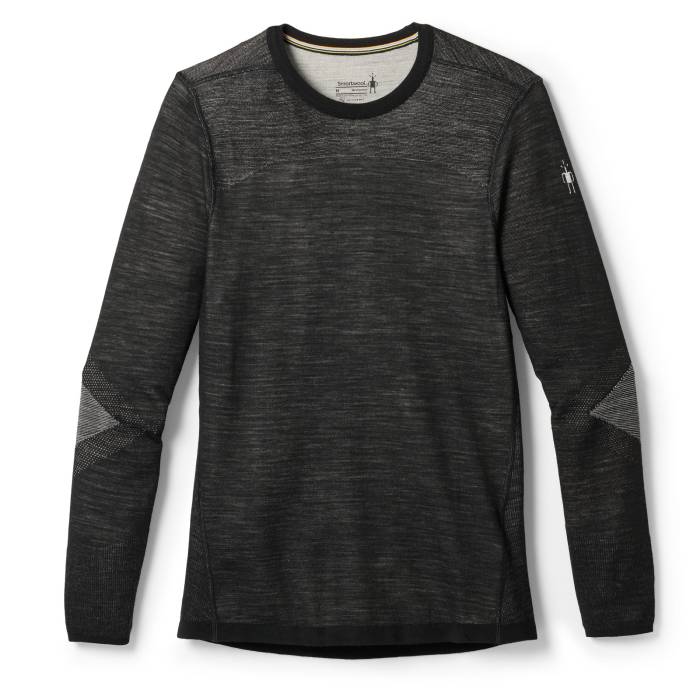
The Smartwool Intraknit Thermal (men’s / women’s) is a high-performance winter base layer ideal for active adventures. The innovative design allows exceptional mobility, breathability, and thermal regulation during intense cold-weather pursuits.
The cornerstone of the Intraknit Thermal’s performance is its unique knit structure, which balances warmth and breathability through strategically placed mesh zones. Unlike traditional base layers that compromise between heat retention and ventilation, this layer makes no such concessions.
The merino wool and polyester blend provides natural odor resistance and moisture-wicking properties that keep you dry during high-output activities. We were particularly impressed by its warmth-to-weight ratio, which achieves some of the highest thermal efficiency of any layer we’ve tested. The slim, athletic fit, 3D mapping, and unique knit structures in the elbows, wrists, forearms, shoulders, and waist allow excellent mobility without constriction.
Despite its premium price point, the Intraknit Thermal isn’t trying to be a do-it-all base layer. It specializes in high-intensity winter activities, from trail running to winter hiking. Though it may not be the most durable layer, it absolutely excels in its intended environment.
For the active adventurer who refuses to let cold temperatures limit their outdoor pursuits, this is a great base layer that can go the distance.
Patagonia Capilene Midweight Crew
Breathable Midweight Base Layer
CleverHiker Rating: 4.6/5.0
Price: $95
Measured Weight: 6.2 oz.
Fabric/Weight: Midweight polyester
Pros
- Affordable
- Durable
- Comfortable
- Easy to layer
Cons
- Not as warm or odor-resistant as wool
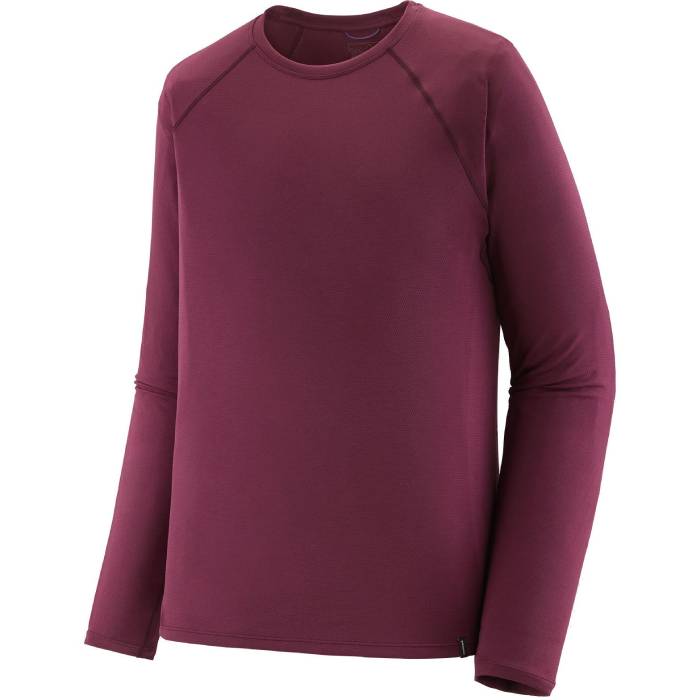
The Patagonia Capilene Midweight (men’s / women’s) is a durable and comfortable base layer top that’s quite a steal at its price point. We’ve used this top for multiple thru-hikes, and it’s still going strong nearly a decade later.
Patagonia’s proprietary Capilene blend is the softest, stretchiest, and best at wicking moisture of all the synthetic materials we’ve tested. Though it doesn’t trap heat quite as efficiently as some wool base layers, the Capilene Midweight top is still highly versatile and easy to layer. It lays flat under mid-layers and doesn’t tend to bunch up with lots of movement. The fully gusseted underarms and stretchy fabric move with you and provide full mobility. We also appreciate the minimalist thumb loops, which help keep the sleeves in place when layering or delayering.
Compared to wool, the Capilene Midweight’s recycled polyester is more durable, stretchier, and packs down smaller. Although it’s not as antimicrobial as wool, Patagonia’s HeiQ Fresh odor control treatment does a good job of masking smells.
This top hits the sweet spot between warmth and breathability, making it a practical option all year round. During the shoulder seasons, we often hike in this shirt by itself since it’s breathable and provides just the right amount of insulation for temperatures above freezing.
Icebreaker Merino 200 Oasis Long-Sleeve Crew
Versatile Wool Base Layer
CleverHiker Rating: 4.5/5.0
Price: $120
Measured Weight: 7.6 oz.
Fabric/Weight: Midweight merino wool
Pros
- Odor-resistant
- Comfortable
- Breathable
- Packs down small
- Versatile
- Moisture-wicking
Cons
- A little pricey
- Not as durable as some
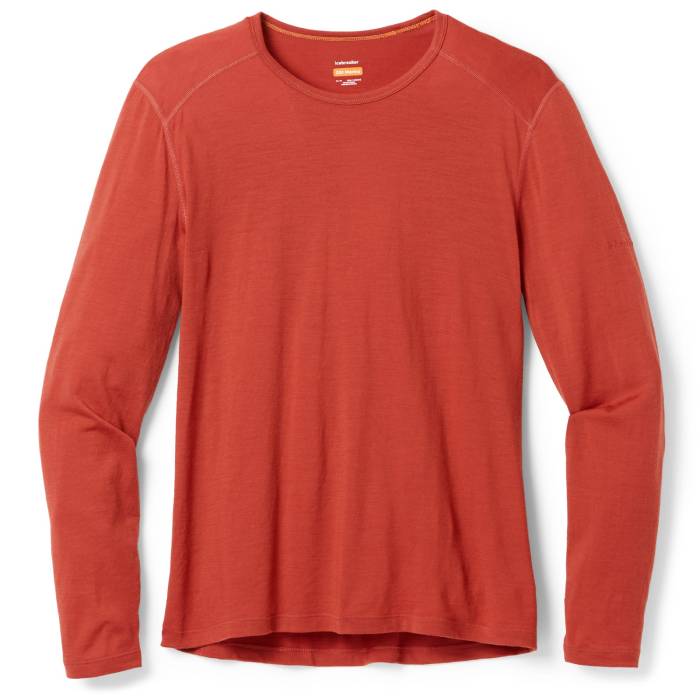
The Icebreaker Merino 200 Oasis (men’s / women’s) was our choice as a hiking and sleeping base layer over 500 miles on the Colorado Trail. It’s versatile, made from 100% merino wool, and a touch warmer and more comfortable than comparable options. This top does a great job filling the gap between ultralight wool base layers and medium to heavy base and mid-layers.
This fabric weight is 200g/m2, adding a little more warmth than similar base layers while sacrificing a hair of breathability and drying time. However, because of merino wool’s natural moisture wicking, sweat is quickly dispersed to the outer layers of the fabric to avoid evaporative cooling. The added bonus of naturally odor-resistant wool makes it ideal for multi-day trips with lots of activity.
Wool is known to be less durable than synthetic materials, but the slightly heavier fabric weight of the Merino 200 Oasis will last a bit longer than thinner wool options.
The wool feels soft against the skin, and the flatlock seams aren’t perceivable at all. We did notice a little bit of scrunching when we layered the top and moved around, but it was minor and certainly not a dealbreaker.
The Merino 200 Oasis features a comfortable fit with gusseted underarms for added mobility and a slightly looser crew neck. Icebreaker provides ample colorways, but its pajama-like appearance isn’t the best option for casual wear.
Ortovox 185 Rock’N’Wool Long Sleeve
Best Warmth-to-Weight Ratio
CleverHiker Rating: 4.5/5.0
Price: $130
Measured Weight: 6.6 oz.
Fabric/Weight: Midweight merino wool
Pros
- Excellent warmth-to-weight ratio
- Odor-resistant
- Athletic fit
- Moisture-wicking
Cons
- Style might not appeal to some
- Tends to bunch up
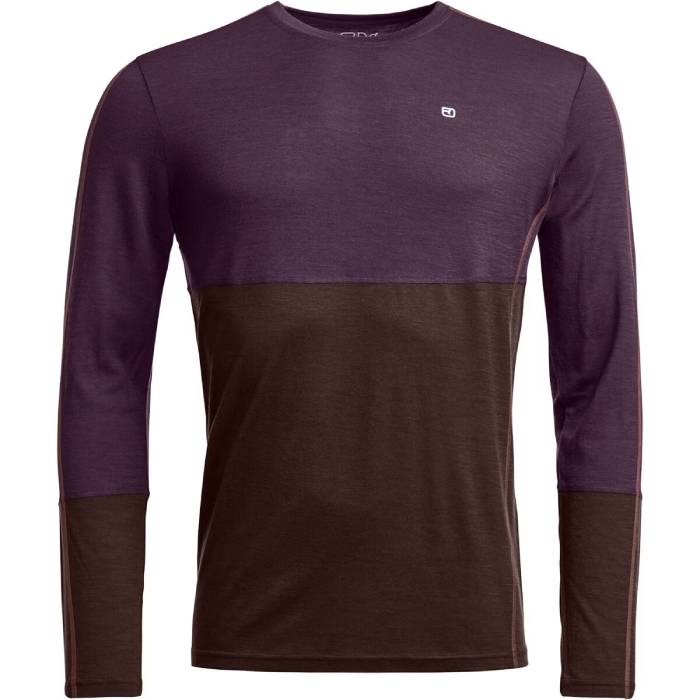
If you’re looking for something that will keep you warm without weighing down your pack, the Ortovox 185 Rock’N’Wool (men’s / women’s) deftly balances warmth and weight. At 6.6 ounces, it falls in the lightweight base layer category, but its warmth performs like a midweight base layer.
The merino wool, which can be itchy on some garments, is actually remarkably smooth on this layer. The fine inner material feels soft against the skin, and the snug fit feels like a cozy hug. Because of its athletic fit, this top can sometimes bunch up underneath other fitted layers during heavy activity.
This top benefits from all of merino wool’s natural characteristics of excellent moisture wicking, temperature regulation, and odor resistance. It’s a great choice for winter camping when you’ll be wearing the same base layer for days on end without changing. Due to its thickness, it’s not quite as breathable as other wool base layers and won’t pack down as small as synthetic tops.
The Rock’N’Wool comes in four colors, two of which feature a split, asymmetrical design that is meant to signify the multi-faceted nature of all your outdoor adventures. While the designs are unique, they don’t scream casual wear and might not be appealing for everyone and every occasion.
Although it’s a little pricier, we think the Ortovox 185 Rock’N’Wool base layer is one of the most versatile options on our list, making it worth every penny.
Smartwool Classic Thermal Crew
Warmest Wool Base Layer
CleverHiker Rating: 4.4/5.0
Price: $125
Measured Weight: 10.3 oz.
Fabric/Weight: Midweight merino wool
Pros
- Warm
- Lots of color options
- Soft
- Odor-resistant
- Great moisture wicking
Cons
- Expensive
- Not as versatile as others
- Not the most breathable
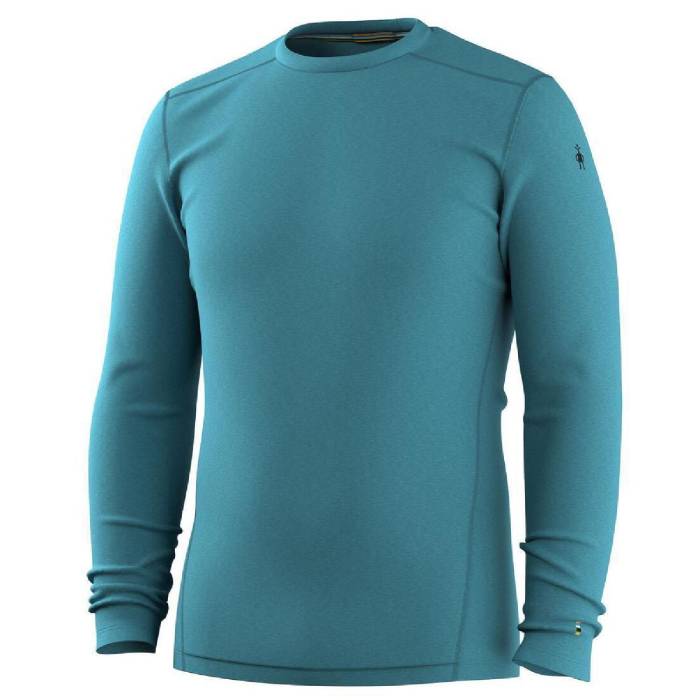
The Smartwool Classic Thermal (men’s / women’s) is a warm and cozy base layer ideal for fall to spring. The Thermal is just the right thickness to help you thermoregulate in chilly fall and winter conditions. It is also available in a quarter-zip option with the added ability to dump excess heat buildup.
As a 100%-merino wool base layer, the Thermal does an excellent job at wicking away moisture. Though it wasn’t the fastest-drying material of all the layers we tested, the wool still insulates when it is wet and quickly wicks moisture away from your skin so your core can stay warm. The wool is also naturally odor-resistant, which makes it ideal for multi-day trips.
Although it performs best in colder months, the Thermal can be used as a base layer or a mid-layer. The Interlock-knit wool is soft against the skin, and the flatlock seams are not noticeable. As a mid-layer, the shirt has enough extra fabric to be worn over a tighter-fitting base layer.
We give this top a lot of style points. The relaxed fit looks great as a standalone layer for lounging at camp or casual après. It’s not the cheapest option, but its solid construction and premium fabrics make it well worth it.
Smartwool Classic All-Season Crew
Best Lightweight Wool Base Layer
CleverHiker Rating: 4.4/5.0
Price: $100
Measured Weight: 6.5 oz.
Fabric/Weight: Lightweight merino wool & nylon
Pros
- Odor-resistant
- Breathable
- Dries quickly
- Good warmth-to-weight ratio
Cons
- Lightweight material doesn't last as long
- A little itchy at first
- Noticeable seams
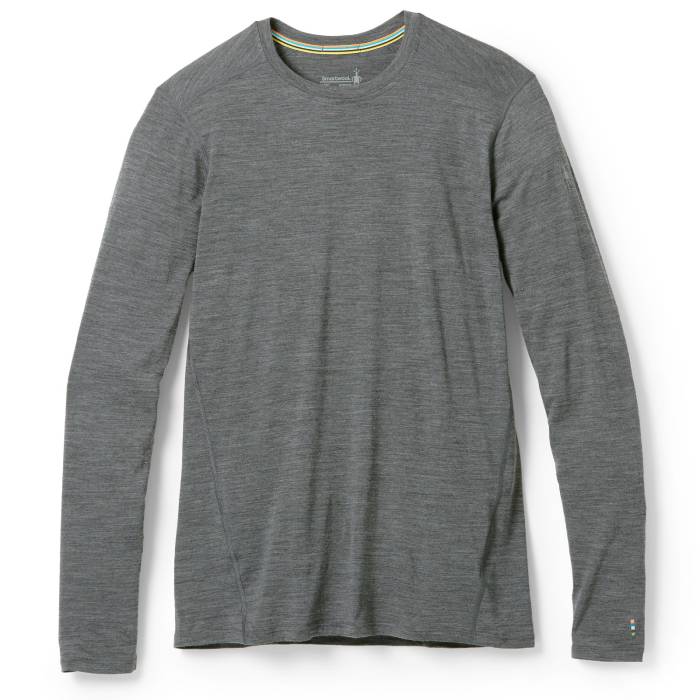
The Smartwool Classic All-Season (men’s / women’s) is one of our favorites all year round. We found it is the right thermal weight for most summer camping trips. It’s thin and breathable for when the sun is out but also a cozy base layer for cool nights in the 50s. During our dry speed tests, this top performed among the best. It even dried out quicker than some 100%-merino layers.
The fabric is an 88% merino wool and 12% nylon blend that weaves in the advantages of both natural and synthetic fibers. The naturally odor-resistant wool sits against your skin, wicking moisture away and helping with fast dry times, while the nylon core adds durability and elasticity. While the fabric is drying, the insulating wool keeps you warm even when the top is a little wet.
We like the relaxed fit of the Classic All-Season, but we found it to be a little itchier than some of the other layers we tested. The seams are a bit noticeable against the skin as well, and it can tend to bunch up under lots of layers during increased activity. However, the pajama-like fit is comforting and makes this layer a great option for sleeping or hanging in camp.
For ultralight backpacking, this is a great lightweight top. It’s warm at night, breathes well, and is only 6.5 ounces. Though the thin material is a little less durable in the long run, and some of the lighter women’s colors are semi-see-through, this is still an excellent option for cool (but not cold) summer backpacking trips.
Ridge Merino Aspect Midweight Balaclava Hood
Best Hooded Cold-Weather Base Layer
CleverHiker Rating: 4.3/5.0
Price: $95
Measured Weight: 8.3 oz.
Fabric/Weight: Midweight merino wool & nylon
Pros
- Integrated hood and balaclava trap warmth without neck drafts
- Soft, itch-free merino-nylon blend
- Long torso stays securely tucked
- Flat seams eliminate chafing under pack straps
- Doubles as an all-in-one sleep layer
- Thumb loops anchor sleeves during layering
Cons
- Average wicking speed
- Too warm for summer or mild weather
- Trim fit isn't ideal for standalone or casual wear
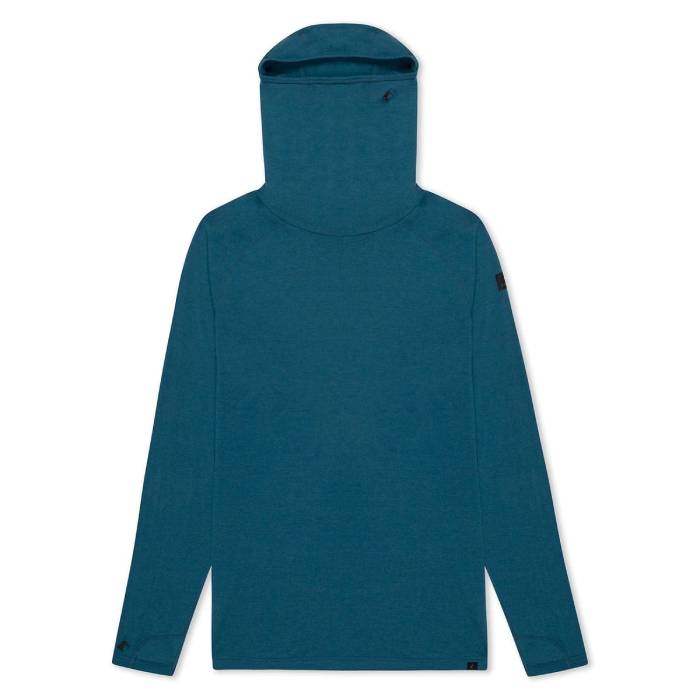
The Ridge Merino Aspect Midweight Balaclava Hood is a cold-weather specialist for hikers, skiers, and backpackers who want more coverage than a standard crew neck provides. Its integrated hood and balaclava help seal out drafts around the head and neck, reducing the need to carry a separate beanie or neck gaiter. In our testing, the close-fitting face covering stayed secure without feeling restrictive.
The 84% merino wool and 16% nylon fabric is noticeably soft and doesn’t have the scratchiness we sometimes experience with pure merino. The trim cut and extra-long torso also stay tucked under other layers, while thumb loops help keep the sleeves in place. We especially like these details for long days in a winter layering system, although anyone who prefers a relaxed standalone shirt may find the fit too close.
The Aspect weighed 8.3 ounces on our scale. In our controlled moisture-wicking comparison, its wetted area spread about 31% after 20 minutes, trailing the REI Merino 185. It still manages moisture adequately for moderate activity, but the heavier knit and built-in head coverage make it less comfortable on warm, high-output days.
This is one of the more versatile base layers for cold conditions: It works for ski days, shoulder-season hikes, and sleeping at camp without an extra neck gaiter. For warmer-weather backpacking or a looser everyday fit, we’d choose a simpler, lighter crew-neck top instead.
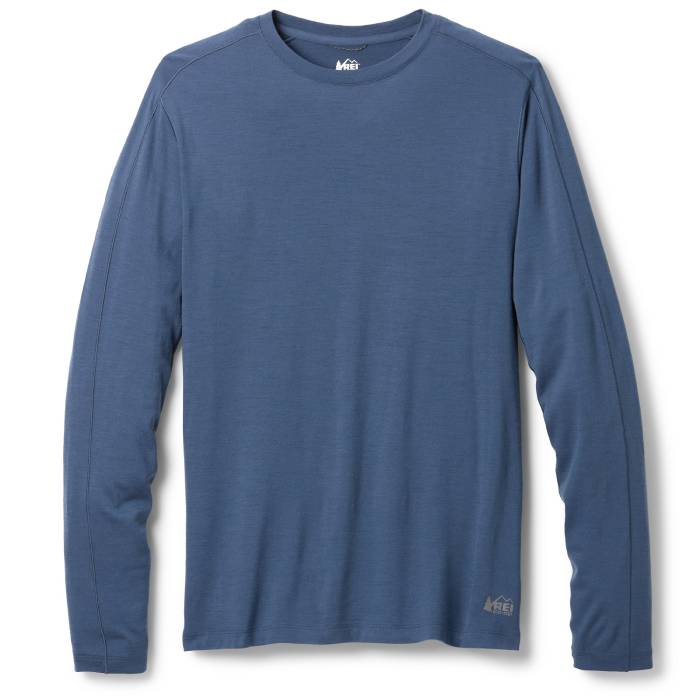
REI Merino 185 Long-Sleeve Crew
Best Value Four-Season Merino Base Layer
CleverHiker Rating: 4.2/5.0
Price: $85
Measured Weight: 6.8 oz.
Fabric/Weight: Midweight merino wool
Pros
- Excellent moisture wicking prevents post-hike chills
- Lightweight build offers true four-season versatility
- Relaxed fit works well under layers or on its own
- Naturally odor-resistant
- Great value at under $100
Cons
- Initial wool itch softens slightly after multiple washes but never fully disappears
- No thumb loops, zippers, or pockets
- Seams bump out slightly, though we never felt them chafe
The REI Merino 185 Long-Sleeve Crew (men’s / women’s) delivers a practical combination of year-round versatility, moisture management, and value. Made from 100% merino wool, it’s warm enough to be useful in a winter layering system without being so thick it feels out of place on a cool summer night. We measured it at just 6.8 ounces, making it an easy layer to carry on backpacking trips.
Its moisture management impressed us most. In our controlled spray-bottle test, the wetted area expanded 25% after 10 minutes and about 37.5% after 20 minutes – faster than the Ridge Merino Aspect – and the REI shirt also dried slightly quicker. That effective wicking helps disperse sweat and reduce the clammy feeling that follows a hard climb.
The relaxed cut is comfortable enough to wear as a standalone camp shirt and easy to layer under a fleece or puffy jacket. We noticed some of the familiar wool itch when the shirt was new, although the seams didn’t cause discomfort during our hikes or nights at camp. It has a straightforward crew neck without thumb loops, a hood, pockets, or a venting zipper.
For hikers who want one natural-fiber top that works through most of the year, the Merino 185 is a strong value. It isn’t as warm as the heaviest winter layers or as feature-rich as a hooded design, but its easy fit, odor resistance, and dependable wicking make it a useful all-around choice.
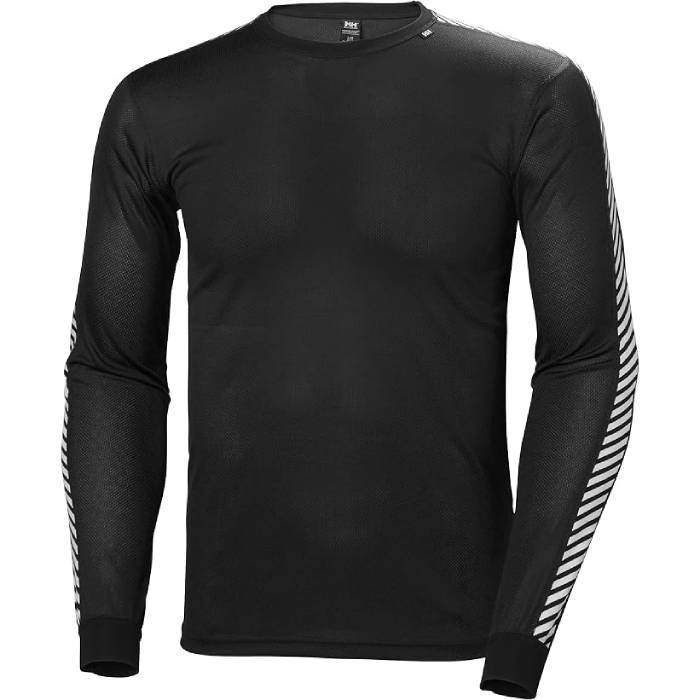
Helly Hansen LIFA Stripe Crew
Most Affordable Base Layer
CleverHiker Rating: 4.1/5.0
Price: $50
Measured Weight: 4.8 oz.
Fabric/Weight: Lightweight polypropylene
Pros
- Ultralight
- Very breathable
- Athletic fit
- Affordable
- Quick-drying
Cons
- Not odor-resistant
- Not as warm as others
- Lacking in versatility
The Helly Hansen LIFA Stripe Crew (men’s / women’s) is the most affordable, most breathable, and second-lightest base layer we tested. Helly Hansen’s proprietary LIFA material excels at moisture wicking and dries very quickly, making it a great choice for high-output activities. The fully synthetic material is also very stretchy, so the fabric moves with you when you’re on the go.
This top features a low-profile, athletic fit that does run a bit small. We recommend sizing up one size with this base layer. It’s also not as warm as others on our list, but the fit and flatlock seams make it comfortable for layering under other clothing. It’s also designed with flat, fitted cuffs that work nicely under gloves.
The LIFA Crew is optimal for trail running, backpacking, and cross-country skiing since it has just the right amount of insulation for active days. It’s one of the lightest base layers we tested, which is great news for ultralight objectives. We love it for brisk mornings on trail as much as cozying up for dinner and a sunset. If you get it sweaty, it dries quickly enough to be a warm shirt to sleep in as well. However, the synthetic material doesn’t have the natural odor-resistant qualities of wool, so it will start to stink over time.
The racing stripes on the sleeves are a unique look, and it might not be everyone’s cup of tea. We wouldn’t call it the most stylish standalone base layer, but this isn’t a dealbreaker for us since it’s activewear and will usually be under another layer.

Product Comparison Table
| oSort | Product | Price | Measured Weight | Fabric/Weight | Comfort | Moisture Control | Warmth | Features & Versatility | 0 |
Arc’teryx Rho LT Crew / Rho Crew LS View Men's View Women's 
|
$100 | 7.6 oz. | Midweight polyester & elastane | 5.0 | 4.8 | 4.9 | 4.5 | 1 |
REI Midweight Half-Zip View Men's View Women's 
|
$70 | 9.8 oz. | Midweight polyester & spandex | 4.6 | 4.5 | 4.8 | 4.8 | 2 |
Smartwool Intraknit Thermal Merino Crew View Men's View Women's
|
$150 | 7.3 oz. | Midweight merino wool, polyester, & elastane | 4.7 | 4.7 | 4.8 | 4.5 | 3 |
Patagonia Capilene Midweight Crew View Men's View Women's |
$95 | 6.2 oz. | Midweight polyester | 4.4 | 4.6 | 4.3 | 4.5 | 4 |
Icebreaker Merino 200 Oasis Long-Sleeve Crew View Men's View Women's |
$120 | 7.6 oz. | Midweight merino wool | 4.4 | 4.7 | 4.4 | 4.3 | 5 |
Ortovox 185 Rock’N’Wool Long Sleeve View Men's View Women's |
$130 | 6.6 oz. | Midweight merino wool | 4.6 | 4.4 | 4.7 | 4.2 | 6 |
Smartwool Classic Thermal Crew View Men's View Women's |
$125 | 10.3 oz. | Midweight merino wool | 4.3 | 4.7 | 4.9 | 4.1 | 7 |
Smartwool Classic All-Season Crew View Men's View Women's |
$100 | 6.5 oz. | Lightweight merino wool & nylon | 4.2 | 4.7 | 4.2 | 4.3 | 8 |
Ridge Merino Aspect Midweight Balaclava Hood View at Ridge Merino |
$95 | 8.3 oz. | Midweight merino wool & nylon | 4.5 | 4.0 | 4.5 | 4.4 | 9 |
REI Merino 185 Long-Sleeve Crew View Men's View Women's |
$85 | 6.8 oz. | Midweight merino wool | 4.1 | 4.6 | 4.2 | 4.4 | 10 |
Helly Hansen LIFA Stripe Crew View Men's View Women's
|
$50 | 4.8 oz. | Lightweight polypropylene | 3.9 | 4.8 | 4.1 | 3.9 |
|---|
Analysis & Results
Which Base Layer Is the Best value?
It can seem unfair to compare base layers side by side given the different needs of each activity, but comparing overall performance with price gives us a useful sense of value.
The REI Midweight Half-Zip remains a standout budget buy for its combination of warmth, versatility, and a low price. For those who prefer natural fibers, the REI Merino 185 Long-Sleeve Crew makes a strong case at $85. It offers 100% merino wool, excellent moisture management, and useful warmth across all four seasons. It also costs less than the Smartwool Classic All-Season while delivering more warmth in our testing.
The Helly Hansen LIFA Stripe remains the least expensive option, but its thin synthetic fabric is better suited to a narrower range of uses.
Not far behind in terms of overall value is the Arc’teryx Rho LT Crew. This base layer is surprisingly affordable for Arc’teryx, delivering top-tier performance at a mid-range price.
What’s the Most Comfortable Base Layer?
With Arc’teryx’s reputation for supremely comfortable activewear, it’s no surprise that the Rho LT Crew earned our top comfort score. Its soft, brushed fleece and carefully tailored fit are hard to match.
Among wool options, the Ridge Merino Aspect is especially comfortable under multiple layers. Its soft merino-nylon blend avoids the usual wool itch, while the long, close-fitting torso and snug, non-constricting hood stay put during movement.
We also like the Smartwool Intraknit Thermal for its movement-friendly 3D mapping design. By comparison, the REI Merino 185 has a relaxed cut that works better as a standalone shirt, though its 100% wool fabric can feel a little itchy at first.
Two similarly ranked base layers that are worth noting for different reasons are the REI Midweight Half-Zip and Ortovox 185 Rock’N’Wool. The REI Midweight Half-Zip is the most comparable to the Arc’teryx in softness while also providing excellent layerability. The Ortovox 185 Rock’N’Wool is one of the softest pure wool layers we’ve tested.
Which Base Layer Manages Moisture Best?
Being trapped in a soggy base layer all day can be a very uncomfortable and even dangerous scenario, which is why moisture management is such an important quality in activewear. The three main ways fabric manages moisture are through wicking, drying time, and breathability.
Synthetic fibers often strike the best balance of these characteristics, which helps explain the strong performances of the Arc’teryx Rho LT Crew and Helly Hansen LIFA Stripe Crew.
The Rho LT is best for frigid winter adventures where insulation is crucial and sweating is inevitable. It won’t lose all of its water weight the quickest, but it will wick moisture away from your skin extremely efficiently to leave you feeling dry and warm even when you’re breaking a sweat.
The LIFA Stripe is the most breathable and quickest-drying layer we tested, and therefore the best option for mitigating the chill on a fall run or an alpine start summit mission. The REI Merino 185 shows that pure wool can manage moisture exceptionally well, too. It scored highly in our testing.
The Ridge Merino Aspect’s thicker knit and 16% nylon blend offer average moisture management rather than class-leading wicking, making it more appropriate for cooler, steadier efforts. The Smartwool Classic All-Season, Classic Thermal, Intraknit Thermal, and Icebreaker Merino 200 Oasis remain solid wool alternatives, with the added benefit of natural odor resistance for multi-day trips.
Which Base Layer Is the Warmest?
The Arc’teryx Rho LT Crew and Smartwool Classic Thermal are two of the warmest base layers on our list. The Rho LT’s moisture-wicking synthetic fabric helps keep us warm by staying dry, while its brushed fleece supplies substantial insulation. The Classic Thermal uses thick wool and a snug fit for reliable thermoregulation.
The Smartwool Intraknit Thermal and REI Midweight Half-Zip are also strong cold-weather choices. The Intraknit blends wool with polyester and elastane for stretch and breathability, while the Midweight Half-Zip adds neck coverage and a zipper for venting.
The Ridge Merino Aspect approaches warmth differently: Its midweight wool blend is fairly warm on its own, but pulling up the fitted hood and built-in balaclava noticeably reduces drafts around the head and neck. That extra coverage makes it particularly useful for winter hikes and sleeping at camp, though it can be too much for mild-weather activity.
Next to the Arc’teryx Rho LT, the 6.6-ounce Ortovox 185 Merino Rock’N’Wool showed one of the best warmth-to-weight ratios in our testing. The REI Merino 185, at 6.8 ounces, offers a different balance: more warmth than the Smartwool Classic All-Season at nearly the same weight but with less insulation than our cold-weather leaders. It’s a practical middle ground for hikers who want one wool base layer to handle both cool summer nights and winter layering.
Which Base Layer Is the Most Feature-Rich & Versatile?
We recognize that having a different base layer for each situation can get expensive, so we’ve rated each one’s versatility to find out which works best for multiple uses.
For seasonal versatility, the REI Midweight Half-Zip is one of our most adaptable choices. It’s substantial enough for winter layering, and its zippered neck allows some temperature control when conditions warm up. The REI Merino 185 is another excellent all-rounder, trading the zipper and extra warmth for a lighter, simpler crew neck that works well on cool summer evenings, during the shoulder seasons, and under winter insulation. Its loose fit also makes it easy to wear on its own at camp.
The Patagonia Capilene Midweight Crew, Arc’teryx Rho LT Crew, and Smartwool Intraknit Thermal also offer excellent multi-season versatility. For cold-weather use, the Ridge Merino Aspect stands apart with thumb loops, a long tuckable hem, and an integrated hood and balaclava that can replace separate head and neck layers. Those extras make it especially convenient for skiing and chilly backpacking nights, but its snug, warmer design is less useful in summer than a straightforward crew neck.

How to Choose a Base Layer
Choosing the best base layer depends on how you plan to use it. Will you be ski touring during a multi-day hut trip or going on a chill fall backpacking trip full of leisure activities? Or maybe you’re heading out on a hunting trip where you’ll be hunkered down in a blind for hours at a time. Each scenario requires something different from your next-to-skin layer.
What’s the Best Material for a Base layer?
A base layer’s material can be a good indicator of how it will perform in various conditions. Below we detail some pros and cons of the most common base layer materials.
Wool
Wool tends to be more expensive than synthetic base layers, but it also has the best balance of heat efficiency, odor control, and moisture-wicking capability. Wool layers may not last as long as synthetics. They also tend to pill after washing and hold onto lint and pet hair. That said, if you follow the recommended care instructions, you should still get plenty of use out of your wool clothing.
Synthetics
Synthetic fabrics like polyester or nylon are durable, quick-drying, and excellent at wicking moisture. We prefer synthetic shirts for their faster drying times and more affordable prices. Synthetic layers don’t insulate as well as wool and need extra treatment to be anti-microbial. Still, they are much easier to care for and shouldn’t need replacing for many years.
Blends
Fabric blends with varying amounts of wool and synthetic fibers offer the best of both worlds. Synthetics are often added to improve wool’s elasticity and durability while keeping its natural benefits like odor resistance and thermoregulation.

How Important Is Moisture Management & What Characteristics Play a Role?
While a thick wool base layer does an excellent job at keeping you warm, if it doesn’t manage moisture effectively, you could still risk going into hypothermia if it gets wet. In other words, moisture is harmful, and you should choose the layer that will keep you warm and dry based on the activities and conditions you expect.
Drying Time
Clearly, dry layers are the warmest and most comfortable, making drying time arguably the most important aspect of moisture management. However, when moisture gets trapped, it’s difficult or impossible for a base layer to dry completely, which is when other methods of moisture management become crucial.
Moisture Wicking
Moisture-wicking fibers quickly draw moisture away from your skin and toward the outer layers of fabric where it can evaporate. Polyester does an excellent job at this. The best moisture-wicking layers will feel dry on the inside even while they look soaked on the outside. This is an effective feature when an insulating layer and shell trap moisture pockets, preventing them from escaping.
Breathability
This one is a double-edged sword. On one hand, a breathable layer lets wind pass through the fabric to help with drying, while moisture can escape more easily. On the other hand, wind combined with moisture creates a chilling effect, just like your air conditioning unit at home. Breathability works best for active layers when you want to reduce the crispness in the air but don’t mind a little chill when you pause.
Why Trust CleverHiker
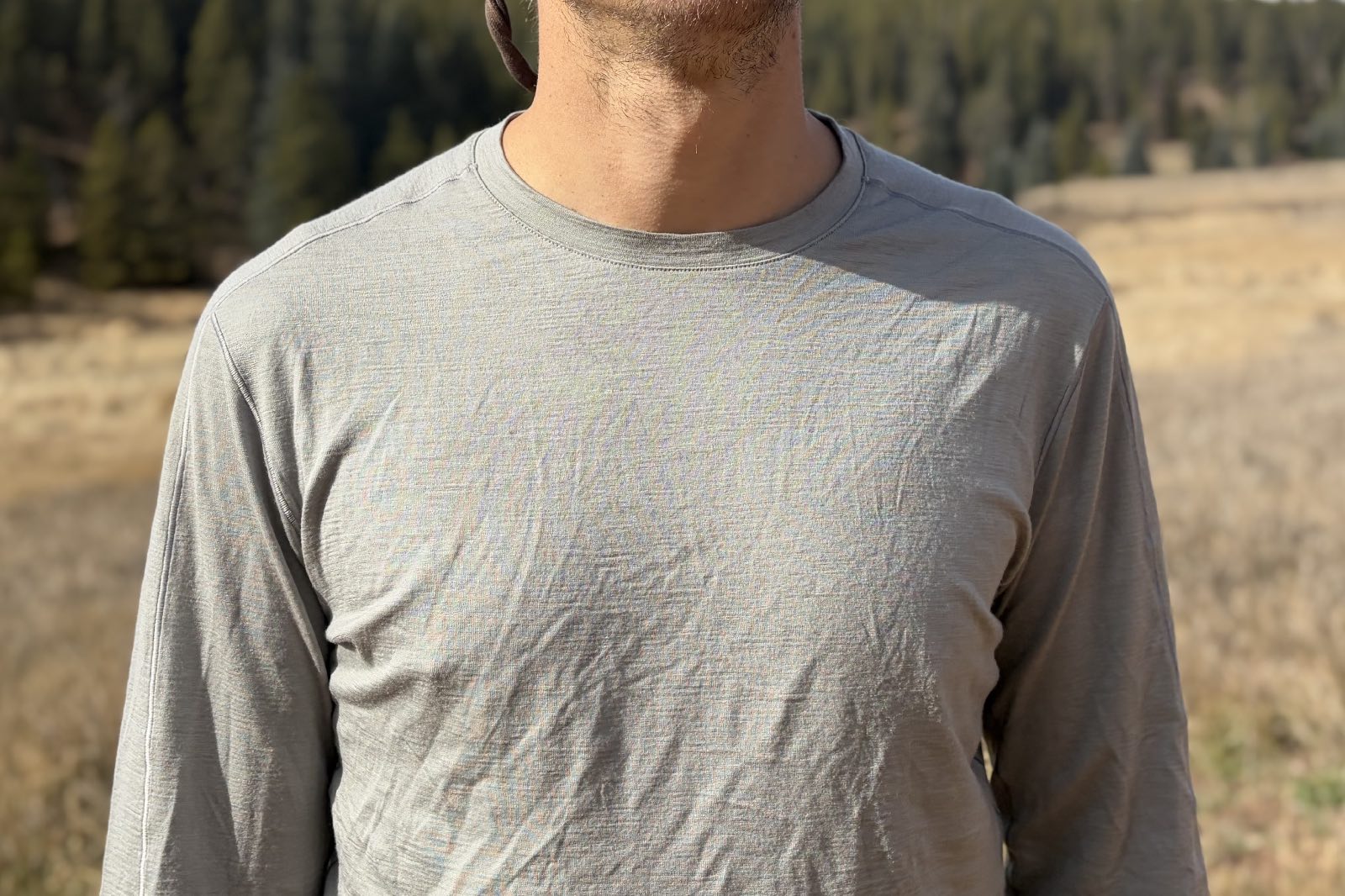
Gear Analyst Brett Kretzer is an avid thru-hiker, rock climber, and snowboarder. He’s put a multitude of base layers to the test throughout thousands of miles on trail, including thru-hikes of the GR11, Colorado Trail, Long Trail, Wonderland Trail, and more. He’s logged hundreds of days in the mountains on skis and has a few seasons of backcountry splitboarding under his belt, too.

Testing Methodology
Our team of backcountry experts thoroughly tests each base layer in a wide range of scenarios to determine the most comfortable, versatile, breathable, warmest, and even the most stylish. We combine this practical experience with our expert industry knowledge and testing in a controlled environment.
How Do We Assess Comfort?
We regard comfort as the most important metric because if it isn’t comfortable, you won’t wear it. While it’s inherently a subjective experience, we do our best to gauge a layer’s overall comfort in ways that everyone can understand.
We wear the layer against bare skin and underneath and on top of other pieces. We note whether it feels soft or itchy, if the seams are noticeable, and if it lays flat. We then wear it as part of a complete layering system and perform some twists, a little yoga – anything to make it bunch up. All these observations combine into a comprehensive comfort score that reflects its performance in real-world conditions.
How Do We Test Moisture Management?
Moisture management is essential in a base layer because staying dry directly affects comfort, warmth, and performance. We assess this using three key factors: moisture-wicking, drying time, and breathability.
To test wicking, we sprayed water onto each fabric and measured how quickly the wet area spread — a good indicator of how well sweat is pulled away from the skin. For drying time, we weighed the water-saturated layers at set intervals to track how fast they lost moisture. Faster drying helps prevent the chill that can result from damp layers. Breathability was judged through active wear — noting how breathable each base layer felt and how easily it released water vapor.
How Do We Evaluate Warmth?
Warmth can be a tricky quality to assess in base layers because the environment is always changing, making controlled tests nearly impossible. As a result, most of our understanding of warmth comes from hours of real-world experience. We ski, hike, climb, lounge – anything to spend more time in each base layer.
Besides firsthand experience, product specifications also help determine warmth reliably. For instance, heavier fabrics are generally warmer than lighter ones, and materials like wool are naturally warmer than synthetics. We consider all these factors when rating each base layer’s warmth.
How Do We Assess Features & Versatility?
No base layer can do it all. Some excel at high-output activities, while others are better suited for hunkering down over a fishing hole. However, it’s definitely easier on the wallet when a piece of gear is more than a one-trick pony.
Many factors contribute to a layer’s versatility: How many seasons it’s suitable for, whether it can serve as a mid-layer, and if it has handy features like a neck zipper, pockets, thumbholes, or a hood. You’re much more likely to reach for a base layer often if it’s convenient to use and easy to incorporate into your layering system.

Conclusion
Whether you’re packing for a glamping trip or preparing for an intense ski-mountaineering expedition, choosing the right base layer for the task at hand can make or break your experience. Depending on the situation, you might need warmth over breathability or versatility over comfort. Whatever the case, layering is truly an art. We hope we’ve provided valuable guidance and clarity to help you choose the perfect layers for all of your outdoor adventures.