

Whether you’re heading out for a day hike or setting off on a multi-day backpacking trip, rain doesn’t have to sully the experience. We are sharing some hard-earned tips and tricks that make a wet hike just a little more enjoyable. You may not be able to control the forecast, but you can absolutely control what you pack, and that preparation makes all the difference.
1. Dress In Layers
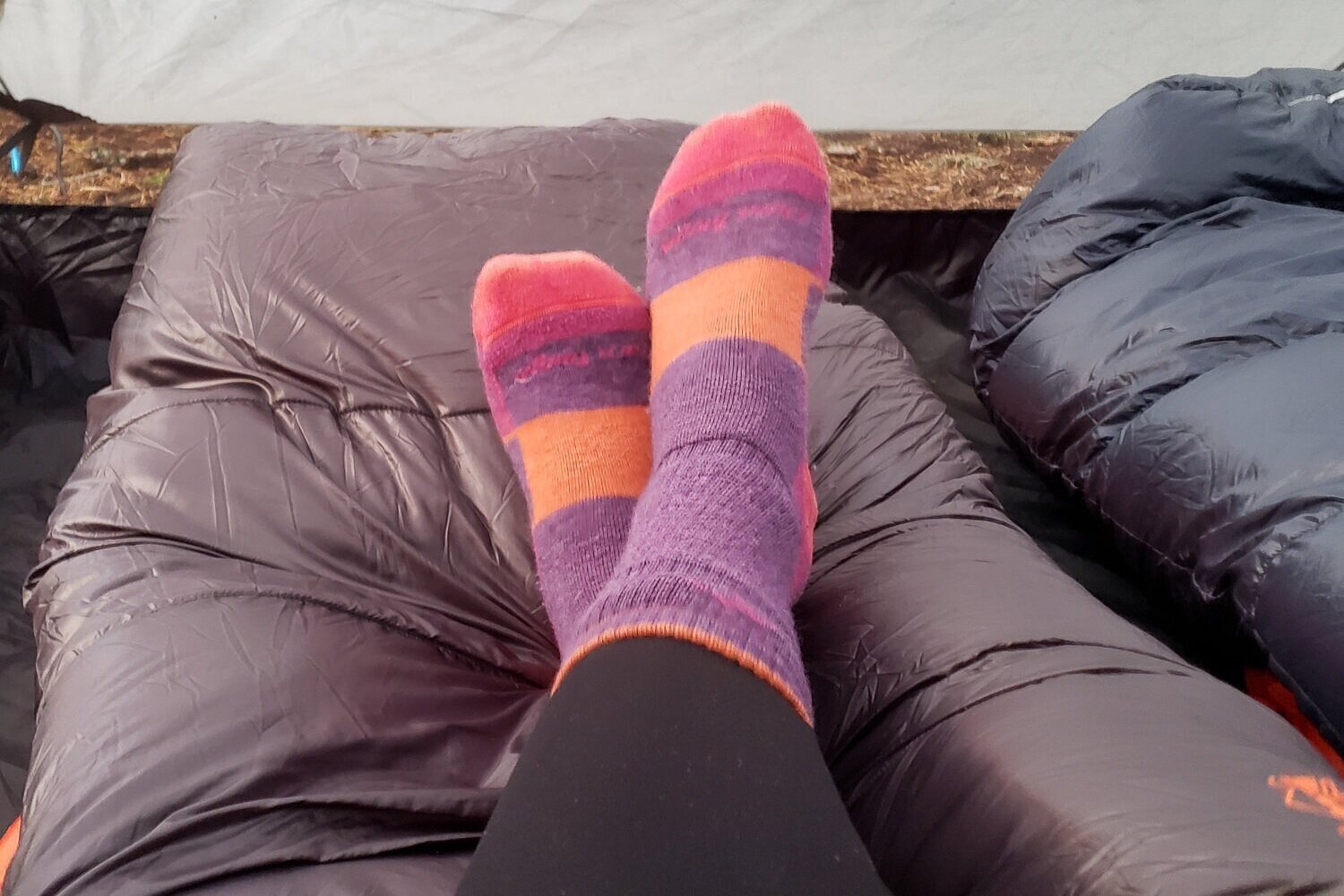
Layers allow you to thermoregulate more effectively, even when it’s wet. Make sure your rain jacket is sized to fit over a base layer and a down puffy and/or fleece. Having enough room will ensure you stay warm and comfortable when it’s wet and cold, whether you are on the move or hanging out at camp.
Similarly, it’s easy to overheat with a rain jacket. Even the most breathable waterproof layer will trap sweat. Some jackets have pit vents for ventilation, and some materials are more breathable than others.
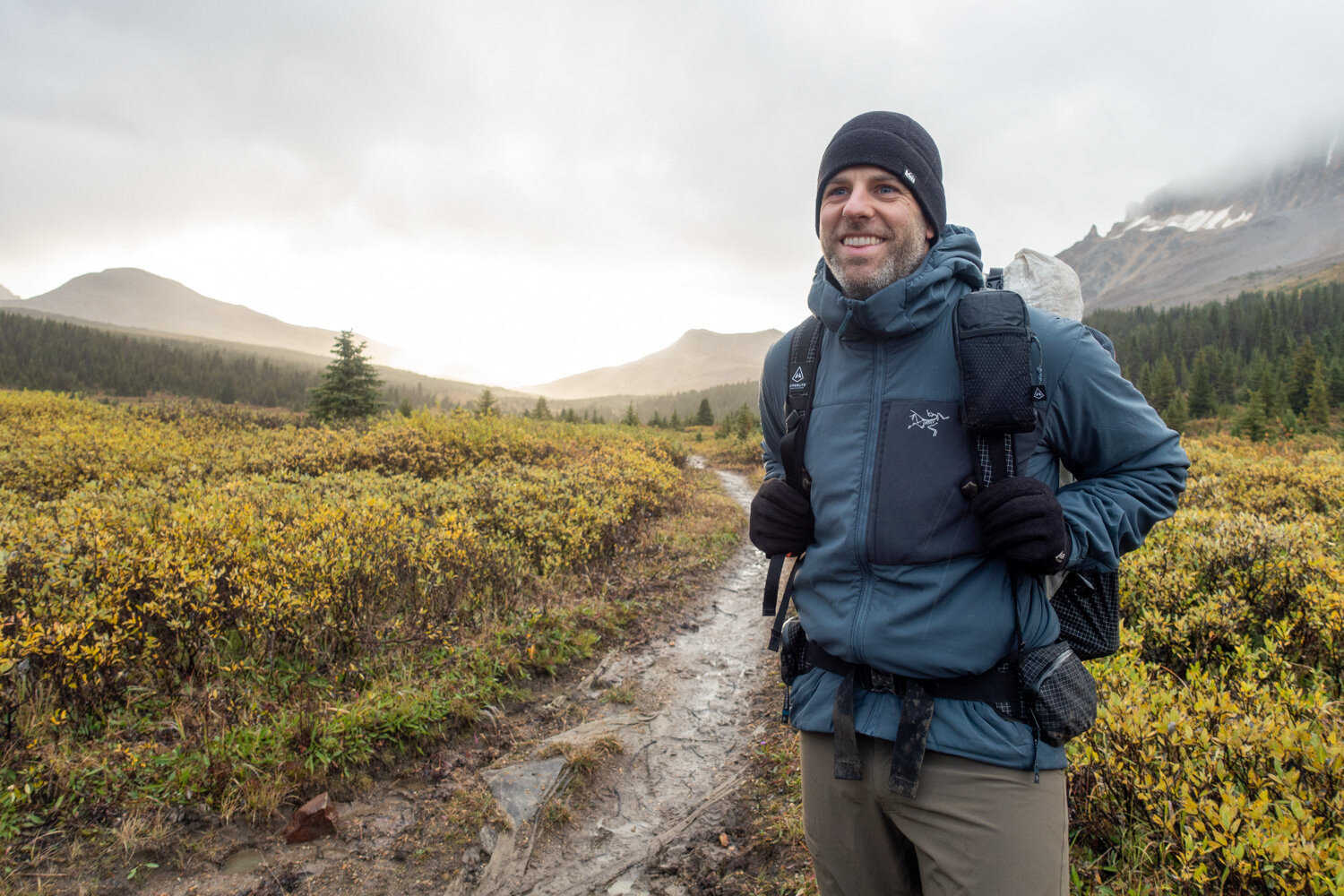
What is the perfect rainy-day layering system?
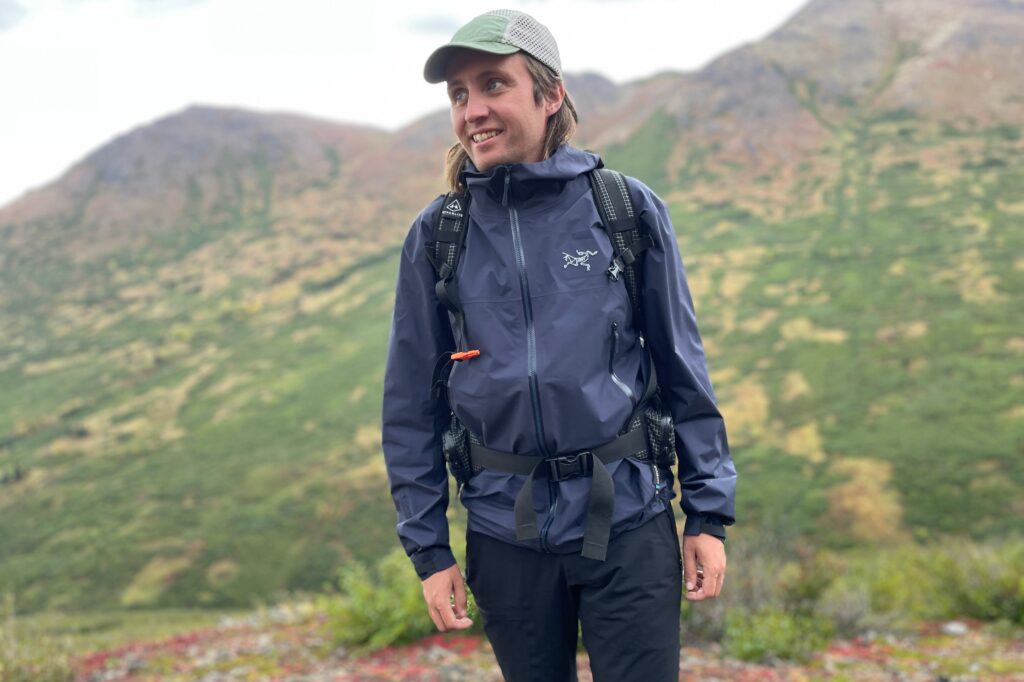
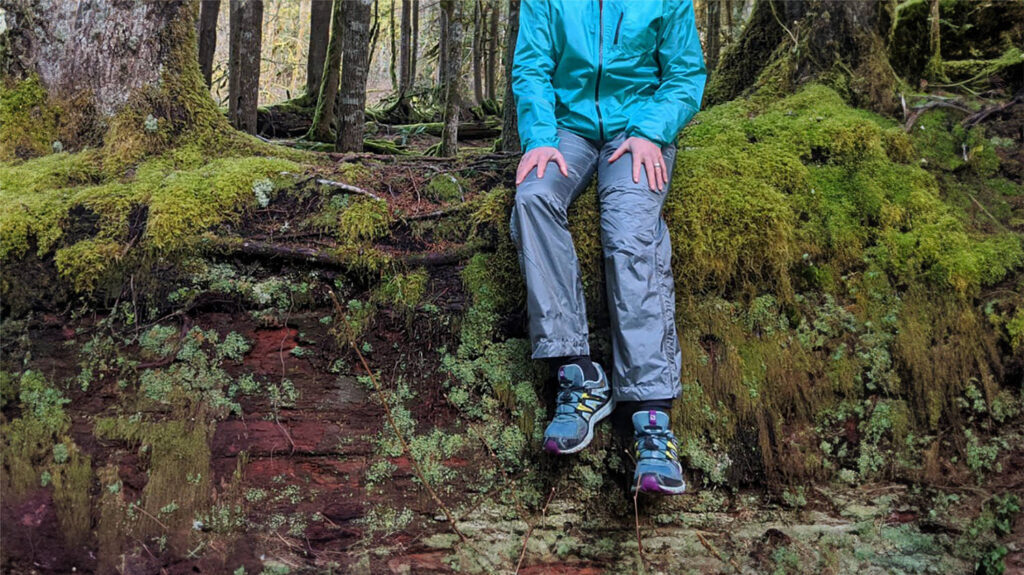
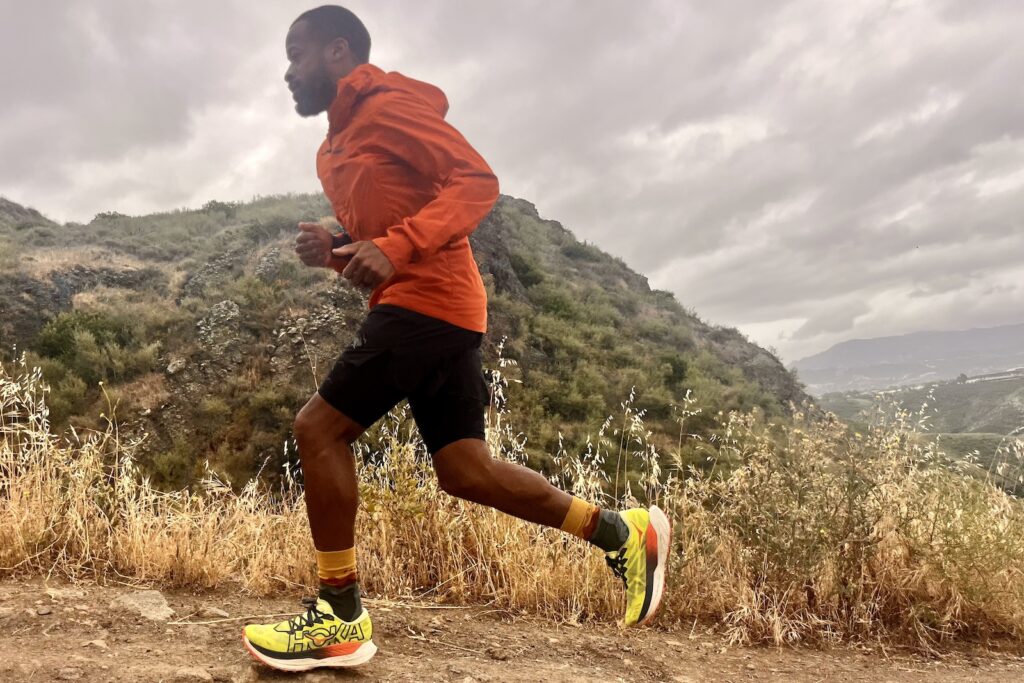
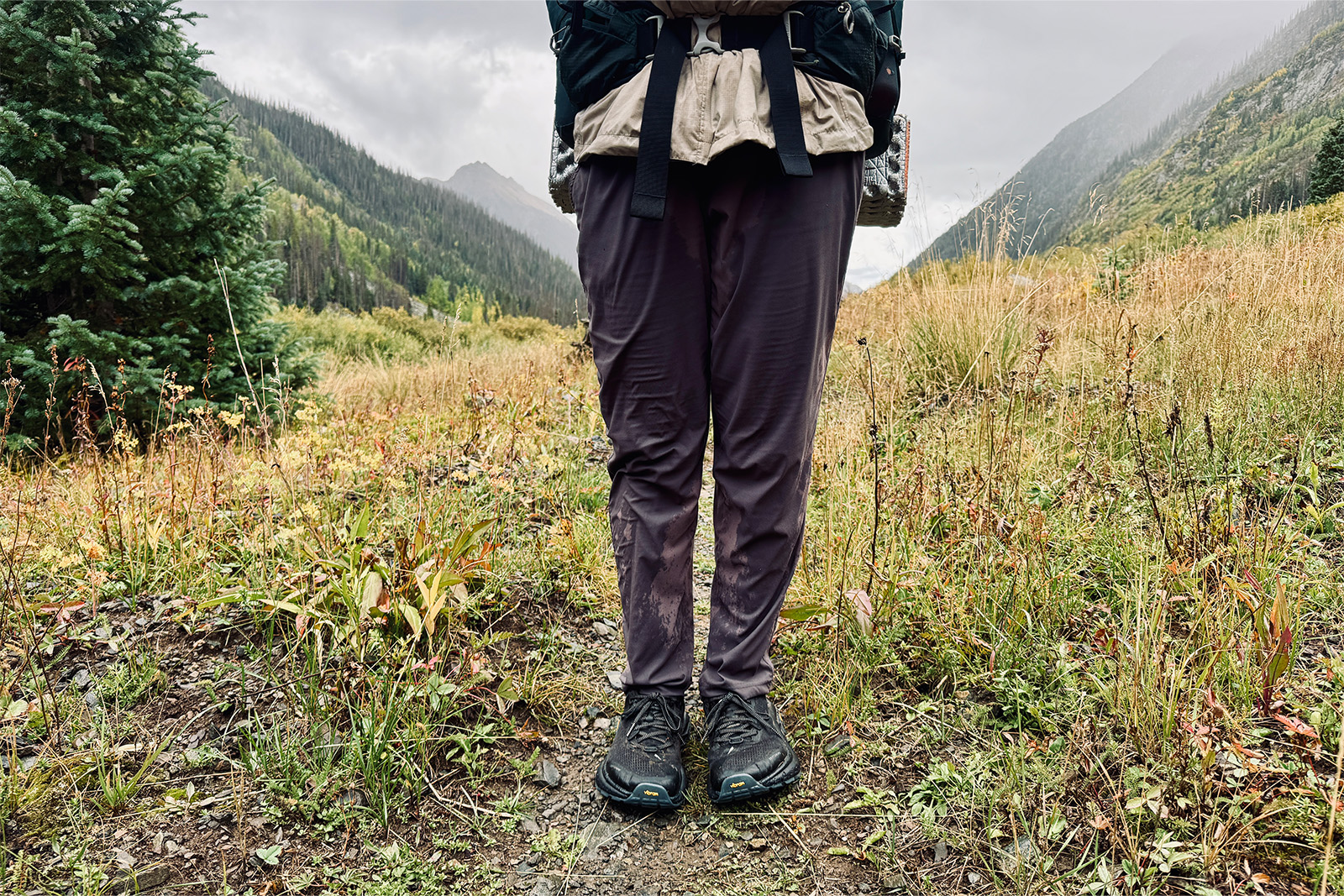
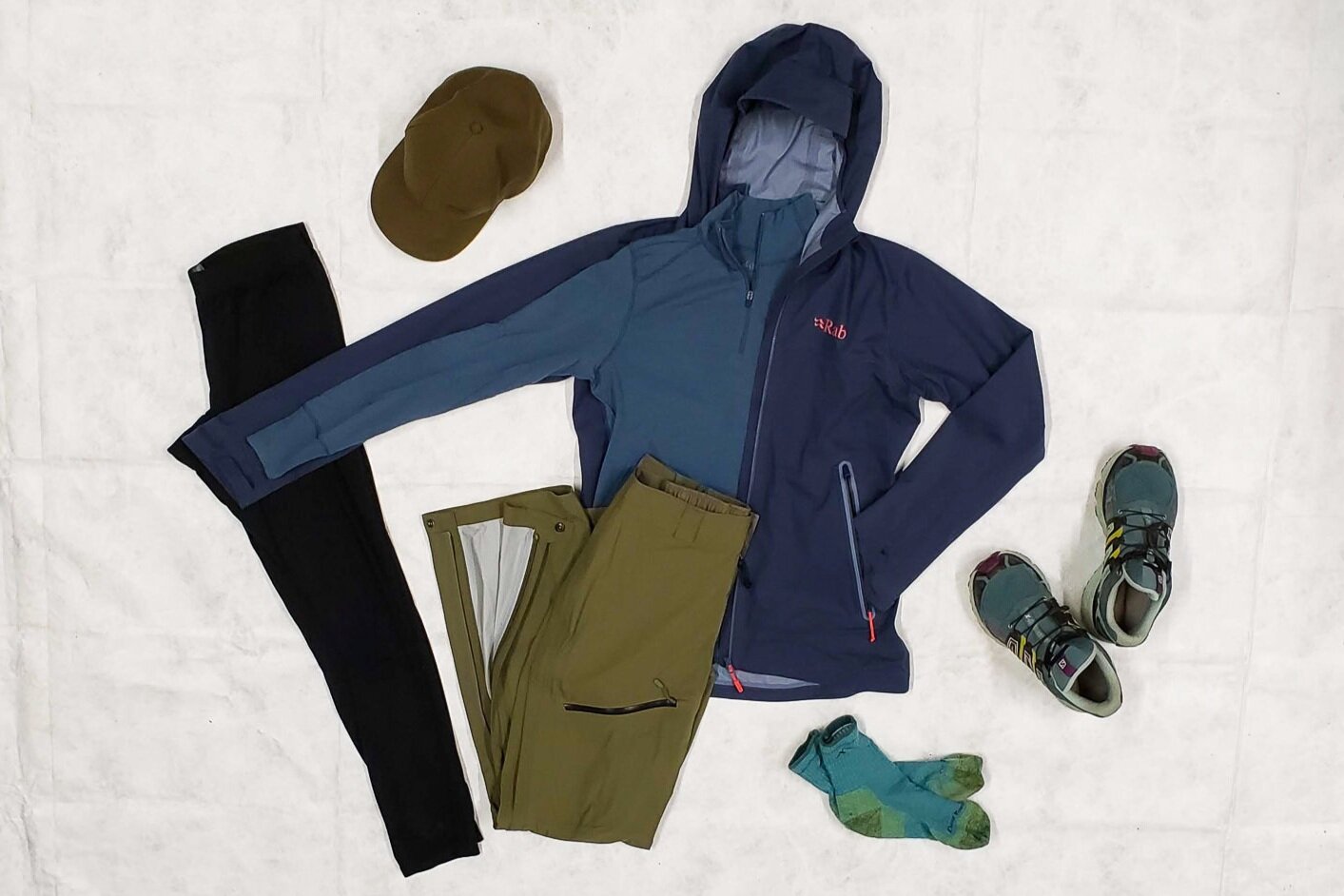
- Summer: Running shorts or hiking pants, a lightweight synthetic t-shirt, a lightweight rain jacket, rain pants (unless the weather is really warm), and a baseball/trucker hat to protect your face from drips.
- Fall, winter, and spring: Hiking pants, a long-sleeve base layer, rain jacket, rain pants, and a baseball/trucker hat. Depending on how wet/cold it is, we also often bring a warm beanie, a fleece pullover, and gloves.
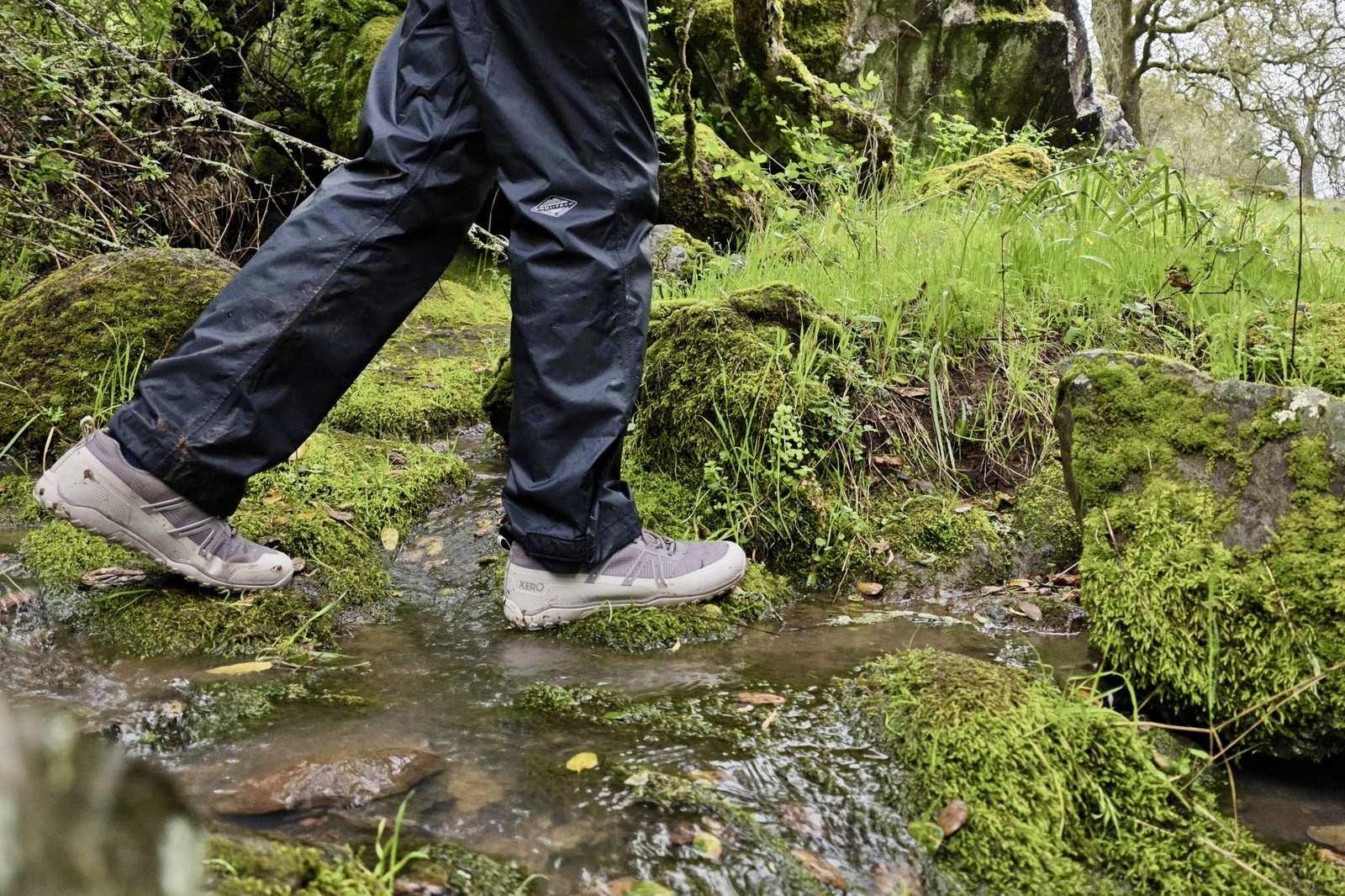
- Camp clothing essentials for backpacking: We always pack a down jacket, a pair of base layer pants, a warm hat, and a pair of cozy socks (stored inside our sleeping bag) for use in camp and for sleeping.
2. Choose The Right Fabrics
Warm, humid weather means moisture coming from both sweat on the inside of your clothing and precipitation on the outside. For that double-whammy reason, it’s really essential to wear clothing that dries quickly.
Synthetic fabrics, like polyester and nylon, wick moisture away from the skin and are generally durable and affordable. Natural fibers, like wool, keep you warm even when wet, are naturally antimicrobial, and help minimize odors over a longer trip.
Avoid cotton. It stays wet for too long and holds moisture against the skin, which draws away your body heat much faster and can lead to hypothermia (even in the summer). It can also cause chafing and blisters when it gets wet and you’re on the move.
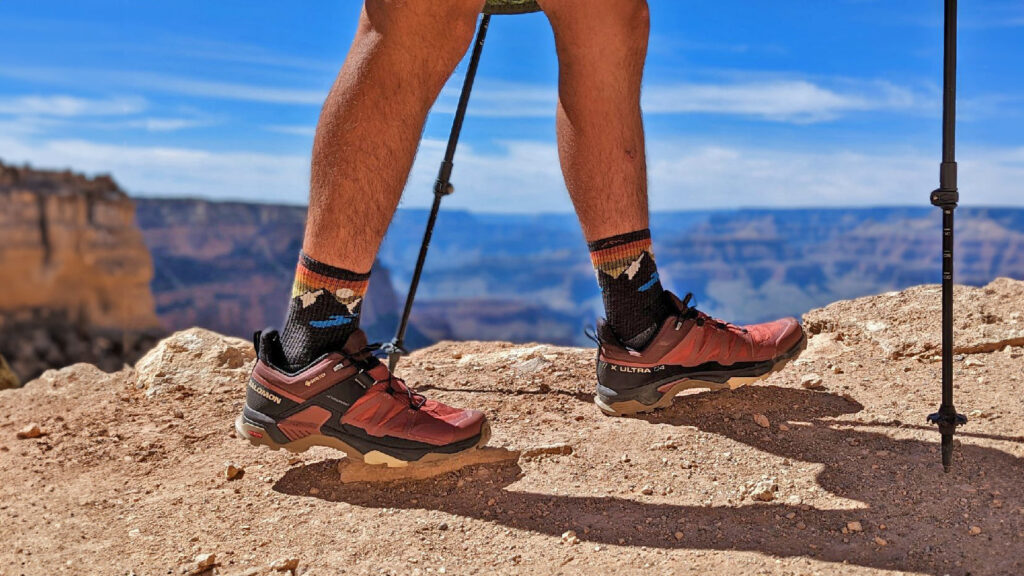
3. Choose Footwear Wisely
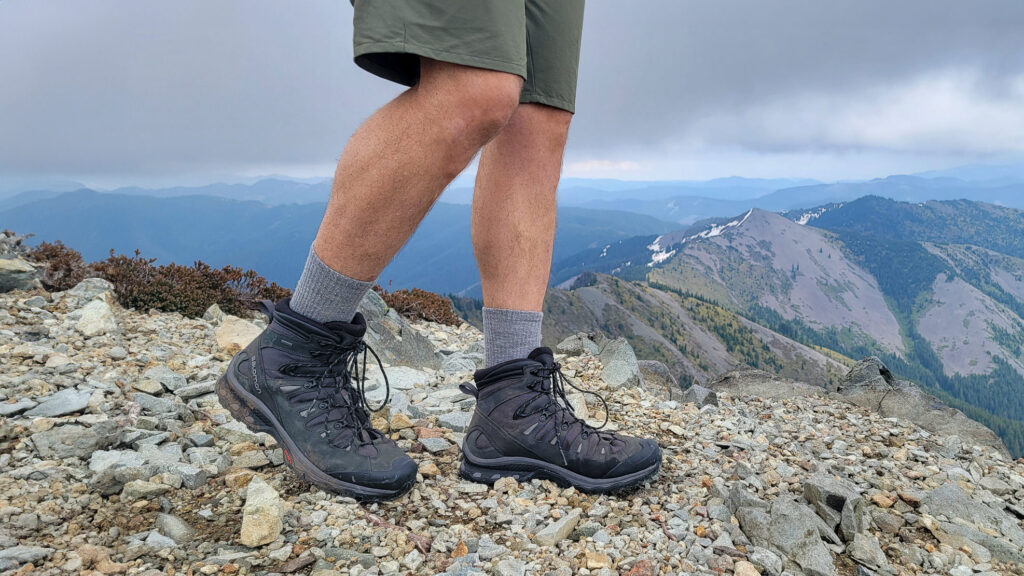
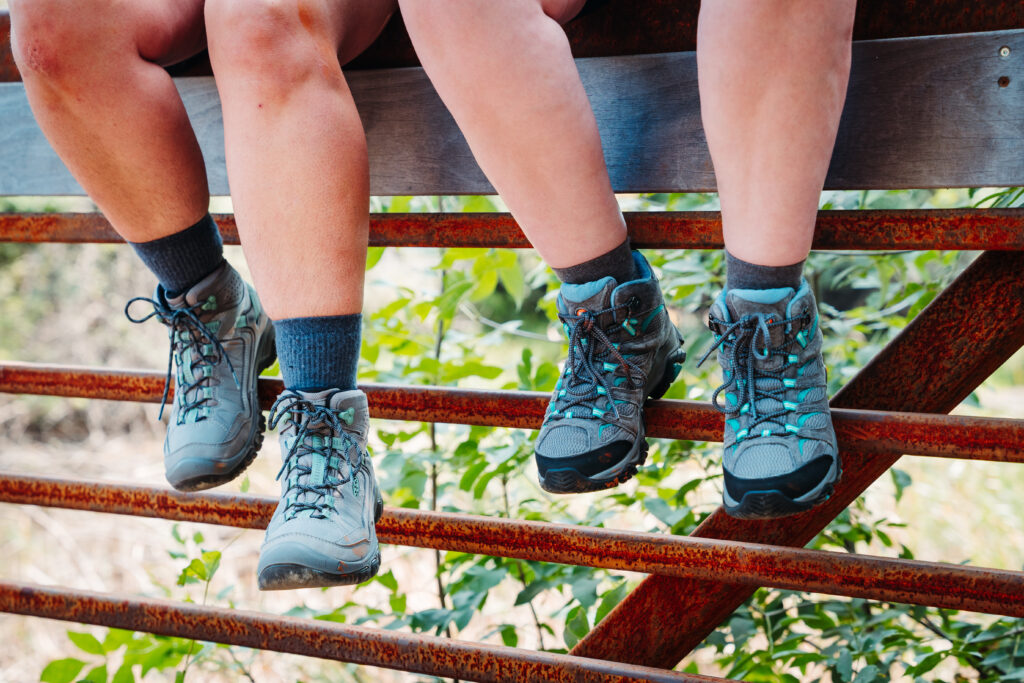
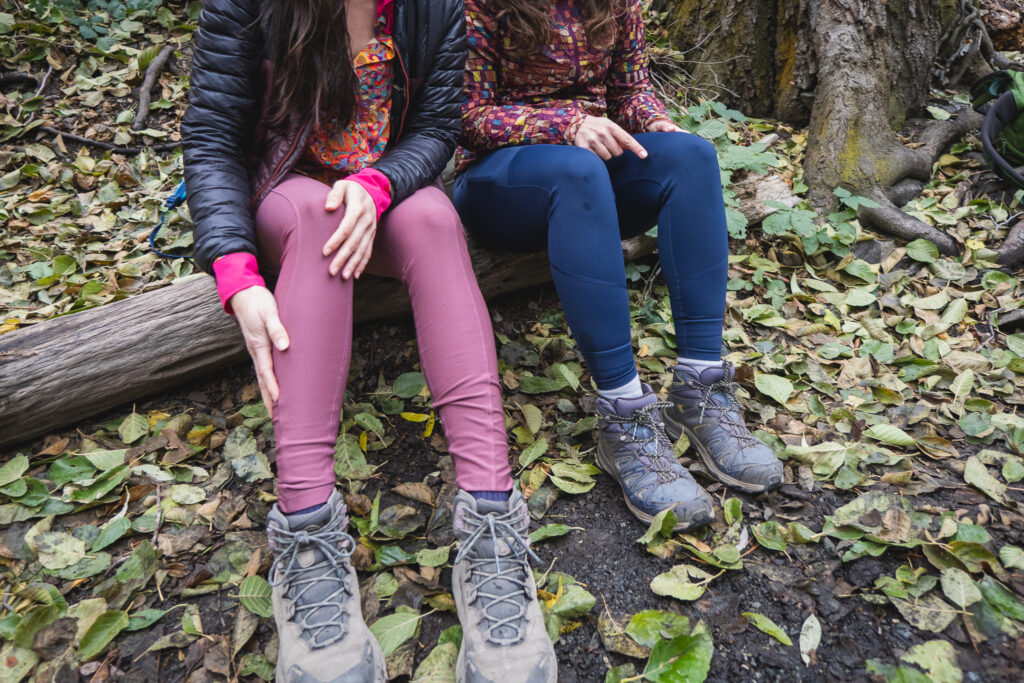
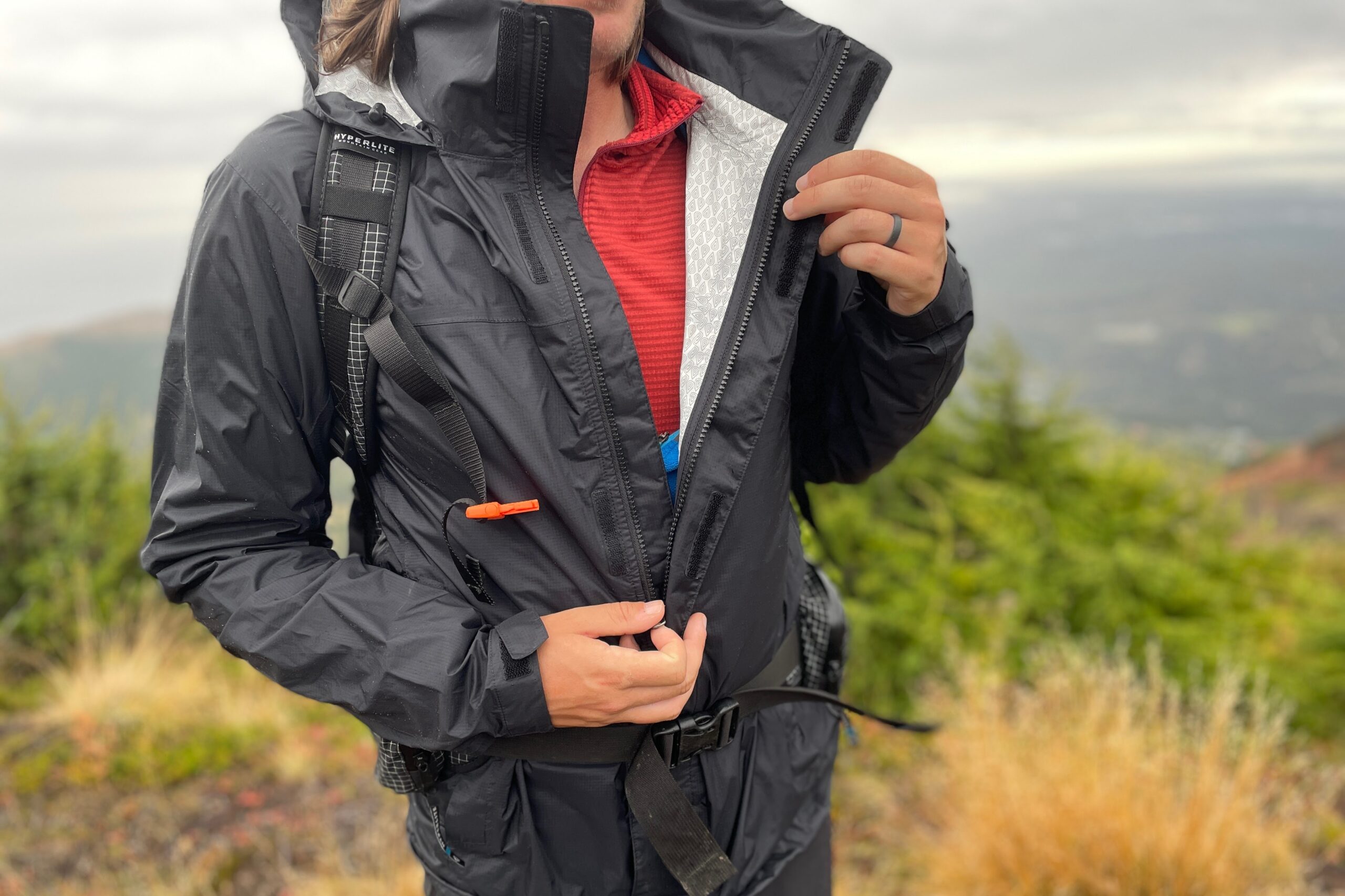
Waterproof shoes and boots are warmer and can be much more comfortable for wet day hikes, especially during cool seasons like fall, winter, and spring. That said, waterproof shoes don’t breathe as well, and they tend to dry slowly once they get wet.
If you choose waterproof footwear for a multi-day backpacking trip, consider bringing lightweight camp shoes to wear during water crossings.
If you opt for non-waterproof footwear for rainy trips, wear wool socks to keep your feet warm, prepare to keep moving when you’re cold, and always bring an extra pair of thick socks to change into at the end of the day.
4. Invest In Good Socks
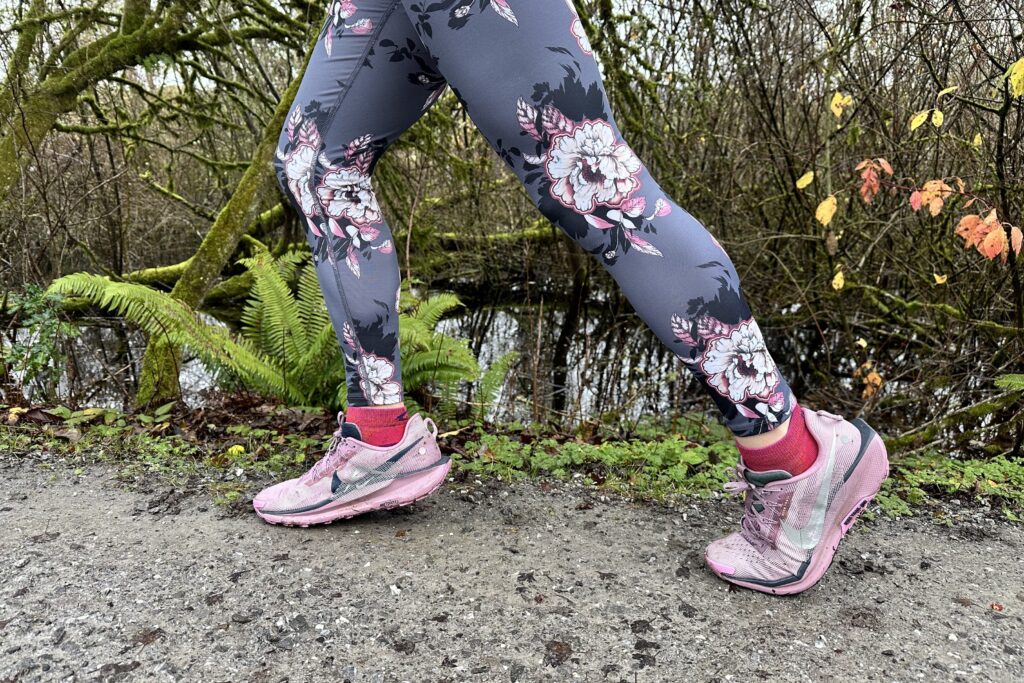
High-quality hiking socks make a world of difference in how well your feet hold up in wet conditions. Synthetic or wool socks help keep your feet as dry and comfortable as possible when you’re on the move. We usually bring two pairs of thin or medium-weight socks to cycle between while hiking and a pair of warmer socks reserved for camp.
If you prefer non-waterproof shoes, waterproof socks are an option to help keep you warmer and drier. We only recommend waterproof socks for short outings, though, since your feet may overheat in them and they aren’t easy to reuse for multiple days without washing.
5. Use A Backpack Liner
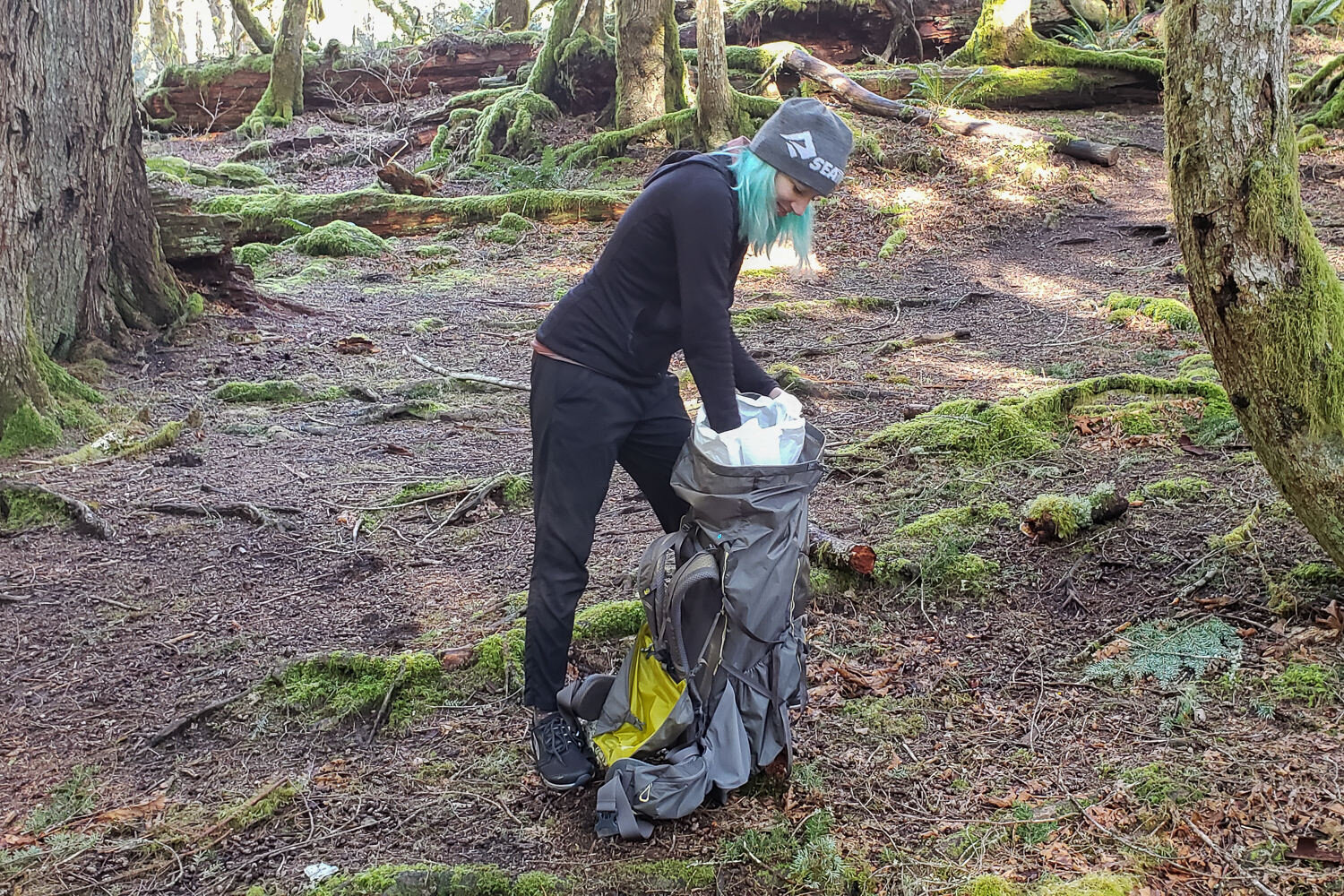
Most backpacks aren’t waterproof, so your stuff needs protection from the elements if the rain persists beyond the intermittent sprinkle. Pack covers go over the outside of a backpack, and pack liners go inside and function as a large dry bag. We find that pack covers leave too much of your backpack exposed and tend to pool and channel water toward uncovered areas, leading to seepage. They need to be well fitted and periodically shaken to reduce pooling.
Bottom line: pack covers aren’t foolproof for keeping gear dry. On the other hand, liners are essentially plastic trash bags, so they are 100% waterproof (assuming they are rolled closed well and don’t have any holes). Your pack will get wet, but your gear will not. For really important items like your sleeping bag and sensitive electronics, we like to use a waterproof stuff sack.
Opt for a Waterproof backpack
Most of the best trail-worthy backpacks and daypacks are constructed with a weather-resistant material. However, zippers, seams, and stitching are vulnerable points of entry for moisture to sneak in, and DWR-treated fabrics will lose their repellency over time.
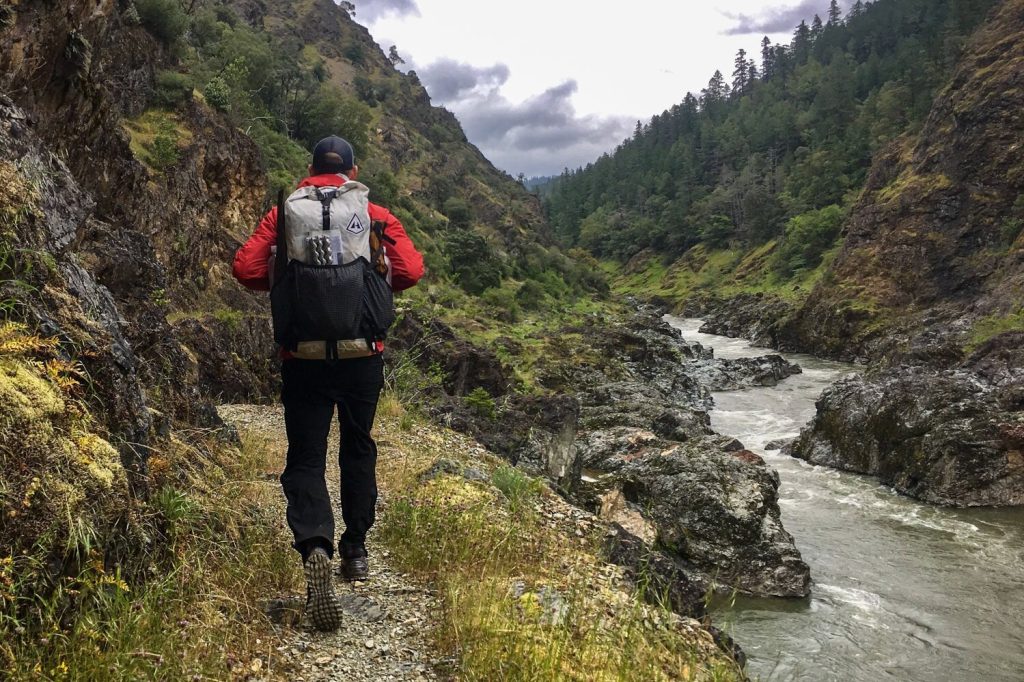
For the ultimate weatherproof pack, we love the HMG Southwest backpack. It’s great for multi-day trips in wet conditions because the DCF fabric and taped seams make it one of the most weather-resistant packs we’ve ever tested. If you pair the Southwest with some of HMG’s waterproof stuff sacks/pods, you’ll have an almost completely waterproof system that’s super lightweight and organized for convenient access.
6. Keep your Rain Gear & Shelter Accessible
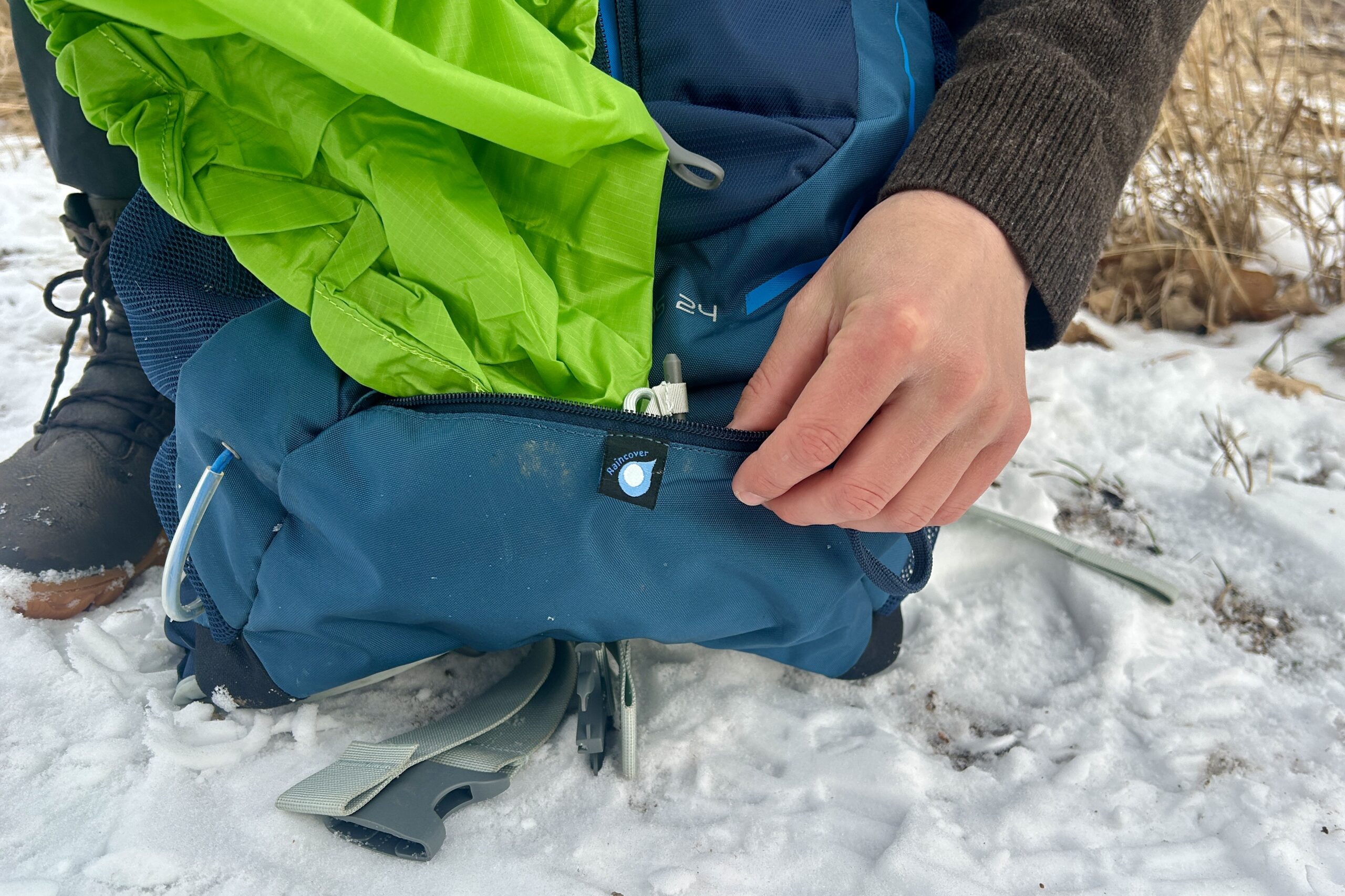
If the sky looks ominous, keep your pack cover, rain jacket, and rain pants somewhere you can access quickly without “yard sale-ing” your dry stuff. We keep our rain gear right at the top of our backpacks or in an exterior pocket so we can easily grab it when we need it.
Some thru-hikers forego rain gear altogether and simply pull over and pitch their tarp or tent and wait for the system to pass over. It saves on weight, but it has its limitations (for instance, if you’re not in a good spot to post up for a while).
If our tent is wet in the morning, we generally shake it out and store it in our backpack, but outside our waterproof backpack liner. That way, we keep our dry gear separate from the soggy tent. If the sun comes out during the day, we take a snack break and spread out the tent so it can dry.
7. Protect Important Items
When it comes to backpacking, it’s especially important to keep your gear dry in wet conditions since dry clothing, a sleeping bag, and your electronics are your insurance in the backcountry.
Use redundant systems (e.g., a pack liner and a waterproof stuff sack), and reserve some clothing exclusively for inside your tent. That way, you have a completely dry setup that lets you sleep comfortably and safely.
This often means you’ll have to start the next day by putting on cold, wet clothing and shoes from the day before, but don’t worry, you’ll warm up quickly once you get moving. Wearing damp clothing is a great way to speed up their drying time. As uncomfortable as that can feel, we promise it is better to have dry clothing when it’s time to crawl inside your tent again in the evening.

8. Use Opportunities To Dry Out
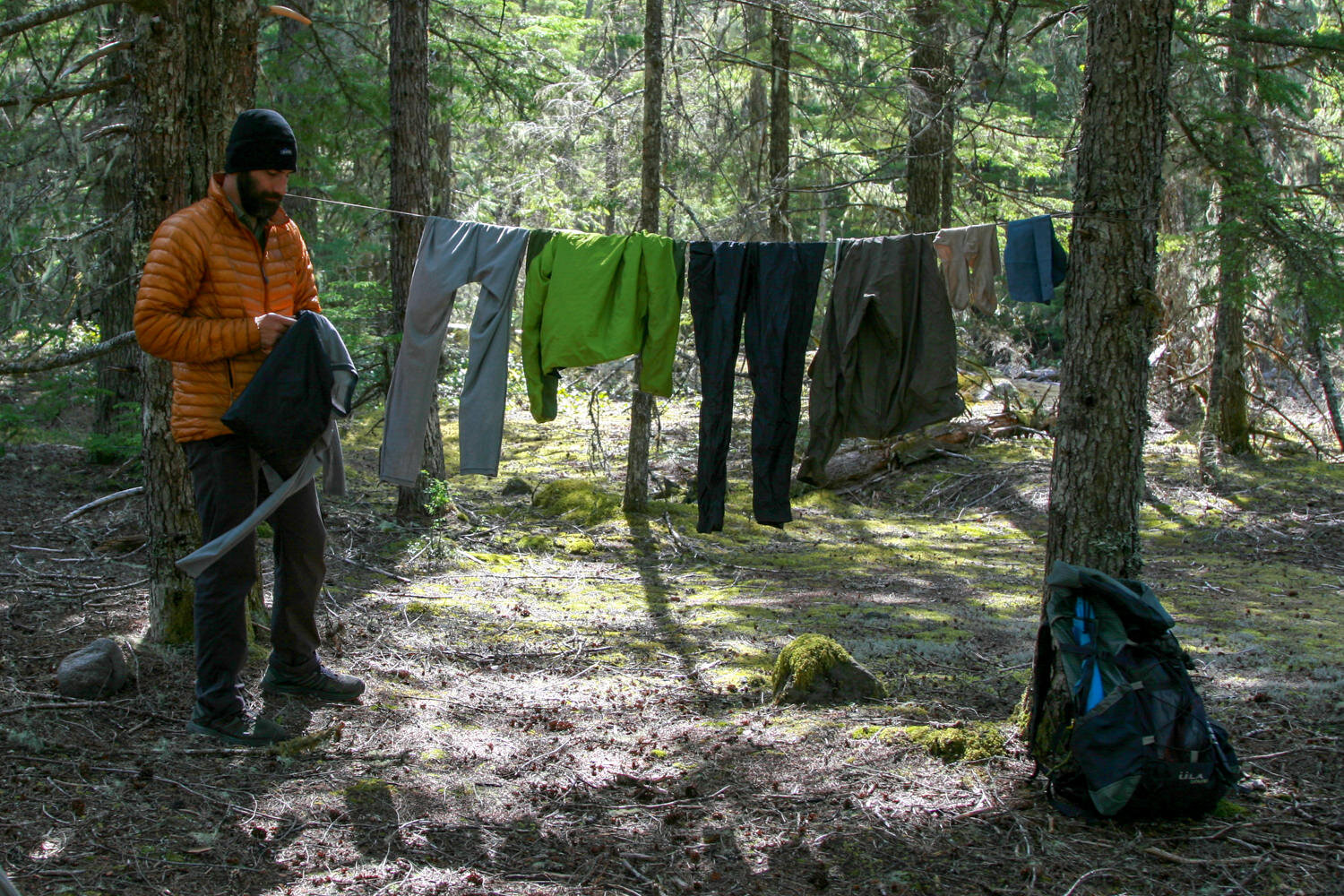
Something’s bound to get damp on multi-day trips in the rain, even if you try your best to avoid it. After all, you have to open your bag eventually. Fortunately, most outdoor clothing and gear are made to dry quickly.
We usually bring a large safety pin to attach wet socks to the outside of our backpacks so they can dry, or at least air out, as we hike. We also pull damp gear out of our backpacks to dry if the sun comes out during breaks or mealtimes.
Even a few minutes of direct sunlight helps a lot (and water is heavy, so it reduces weight too if you still have more miles to hike). It’s also a good idea to let your feet dry out at night and, if possible, once or twice during the day, to avoid blisters.
Natural rain shelters are out there, too. Some storms come and go quickly, and we just hunkered down under fallen trees/root balls, caves/outcroppings, and tree canopies.
9. Bring An Umbrella
Though it is one of the first things that come to mind for rain protection in the frontcountry, umbrellas are more common in the backcountry for shade in desert conditions than for stormy conditions.
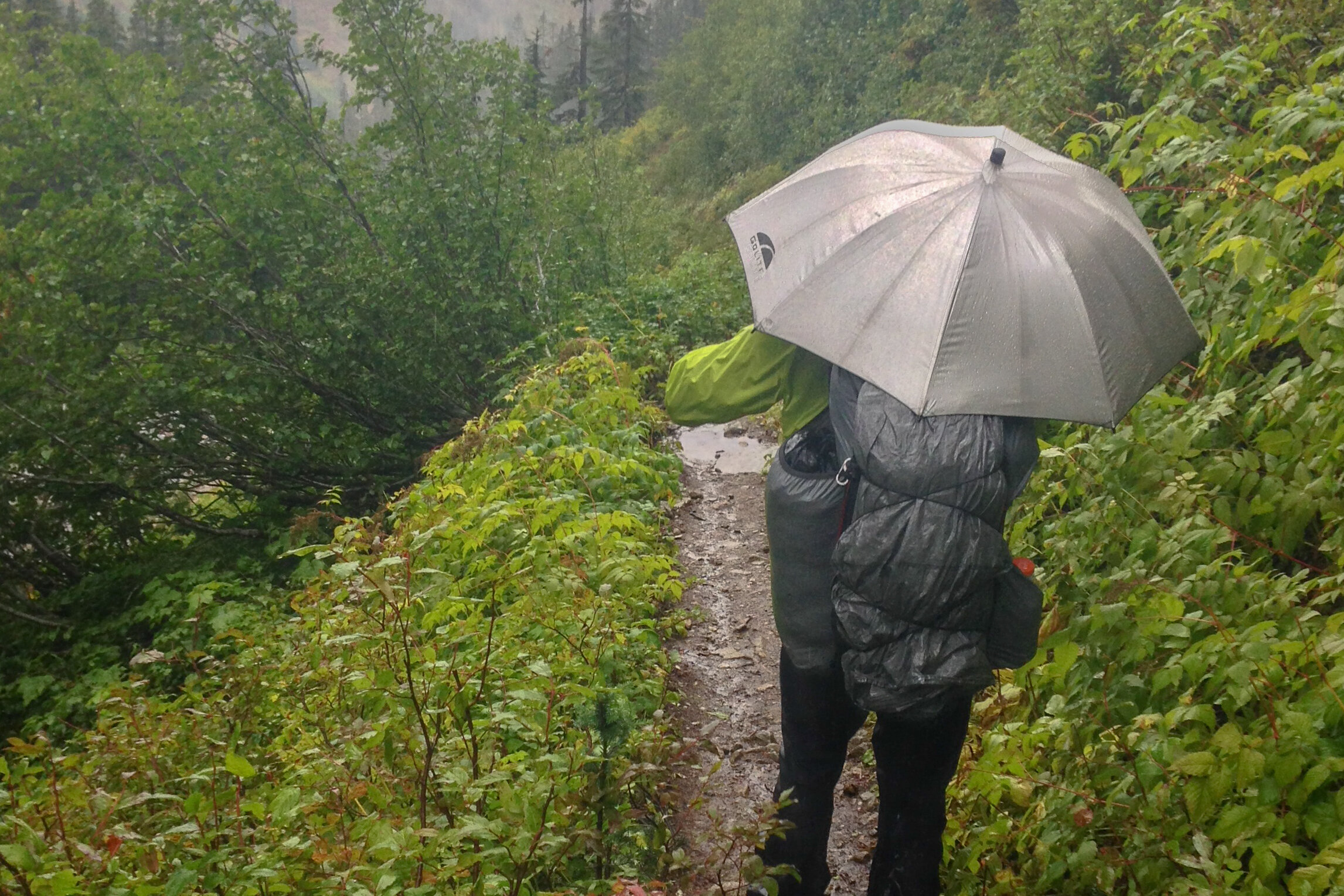
However, a lightweight umbrella like the 8.9-ounce Six Moon Designs Silver Shadow is a piece of gear we would never go without on a thru-hike or guaranteed wet trip. An umbrella is an easy “layer” to take out or stash away while on the move, and it won’t retain body heat like a rain jacket. Seriously, using an umbrella in conjunction with a rain jacket is one of the best gear decisions we’ve ever made.
Though these umbrellas don’t work well in extremely windy conditions and should not replace proper clothing, the technology is improving, and they make hiking in the pouring rain far more comfortable. We strongly recommend trying it to see if it works for you.
10. Have A Positive Attitude
Having a positive outlook and a sense of humor makes hiking in rainy conditions much more enjoyable. It might be a bit uncomfortable at times, but stormy trips are often among the most memorable. As one analyst likes to say, “Embrace the suck.”
An extra dose of enthusiasm will go a long way to lifting your spirits and those of your hiking partners. If you’re struggling to stay warm, keep in mind that you can always adjust your clothing, pick up your hiking pace, take a break to make a hot beverage, have an impromptu dance party, or even set up camp.