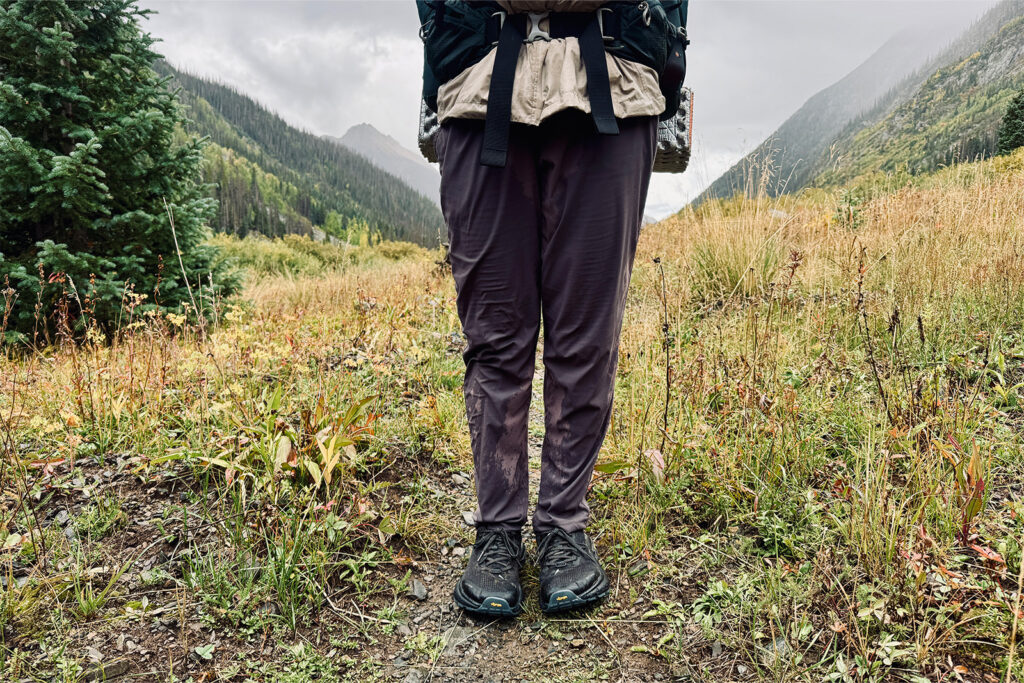


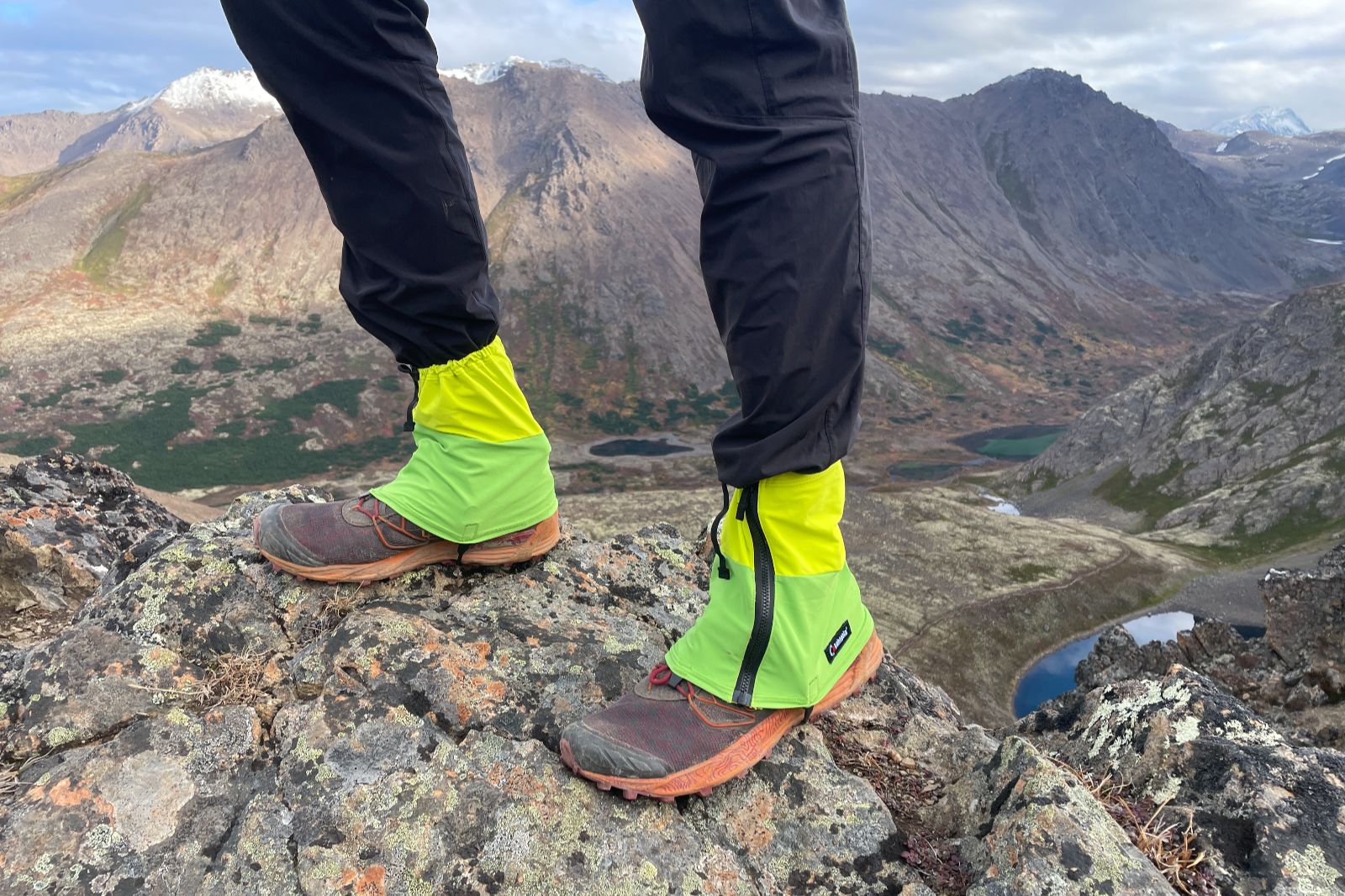
We researched more than 30 gaiters and tested the nine most promising in challenging, rugged Alaska conditions. From streamlined, running-specific designs to full-coverage models for wet and sloppy hikes, our list below covers the full gamut.
Editor’s Note: We updated this guide on September 4, 2026, to ensure the accuracy of product pricing and technical specifications.
How We Test Hiking Gaiters
We tested gaiters from brands like Rab, Kahtoola, Outdoor Research, Salomon, REI and more in Alaska. We exposed them to rugged trails, swamps, scree and boulder fields, and tundra in all sorts of conditions, including thick mud and deep snow. We carefully evaluated each option for comfort, breathability, weather resistance, protection, durability, and ease of use, using our findings to score and rank each design.
And for more info, check out some of our other popular gear guides:

#1. Best Hiking Gaiter Overall
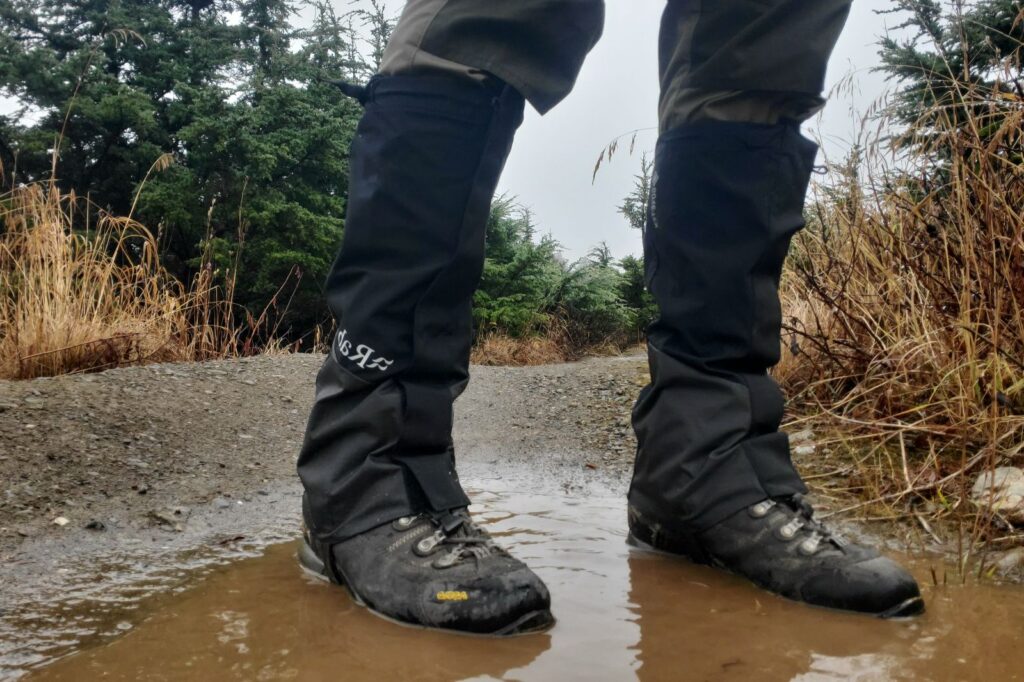
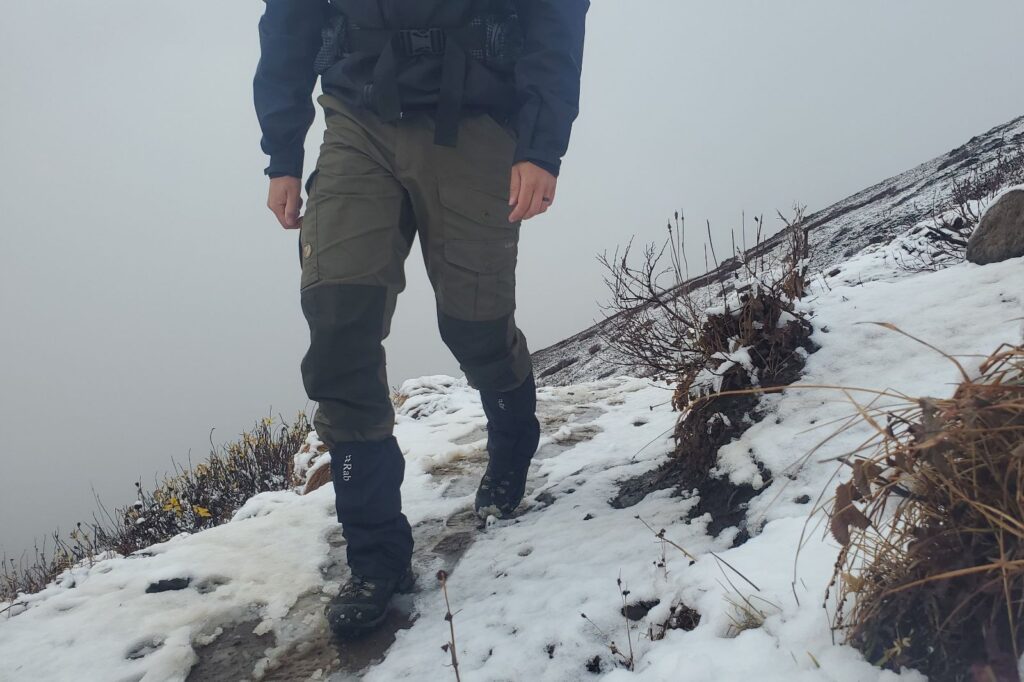
The Rab Latok GORE-TEX is our favorite gaiter for its rugged protection, low weight, and slim profile. After hundreds of miles of soupy and snowy hiking, these gaiters consistently stood out as highly capable, durable, and well rounded.

Quick Picks for Hiking Gaiters
Step into our list of the best models below, and keep scrolling for detailed reviews and firsthand insights from the field.
1. Best Hiking Gaiter Overall: Rab Latok GORE-TEX ($110)
2. Best Mid-Height Gaiter: Kahtoola RENAgaiter Mid ($65)
3. Best Gaiter for Winter: Outdoor Research Crocodile ($110)
4. Best Lightweight Gaiter: Kahtoola INSTAgaiter Mid ($55)
5. Best Mix of Price & Performance: Outdoor Research Rocky Mountain High – Men’s / Women’s ($65)
6. Best Gaiter for Thru-Hiking: Dirty Girl Gaiters ($23)
7. Most Secure & Comfortable Calf Cinch: Rab Trek ($75)
8. Best Running-Specific Gaiter: REI Swiftland ($35)
9. Simplest Attachment System: Salomon Trail Gaiters Low ($40)
Rab Latok GORE-TEX
Best Hiking Gaiter Overall
CleverHiker Rating: 4.7/5.0
Price: $110
Material: 3L GORE-TEX
Weight: 6.5 oz.
Height: Full
Waterproof: Yes
Pros
- Waterproof
- Lightweight
- Easy-to-adjust underfoot loop
- Comfortable knee cinch
- Trim design minimizes bulk
Cons
- Large plastic hook can be hard to slip under laces
- Expensive
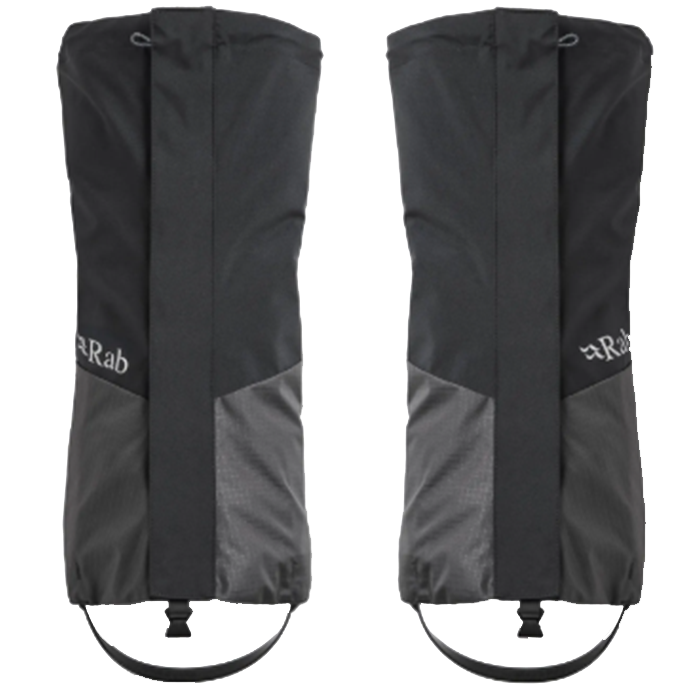
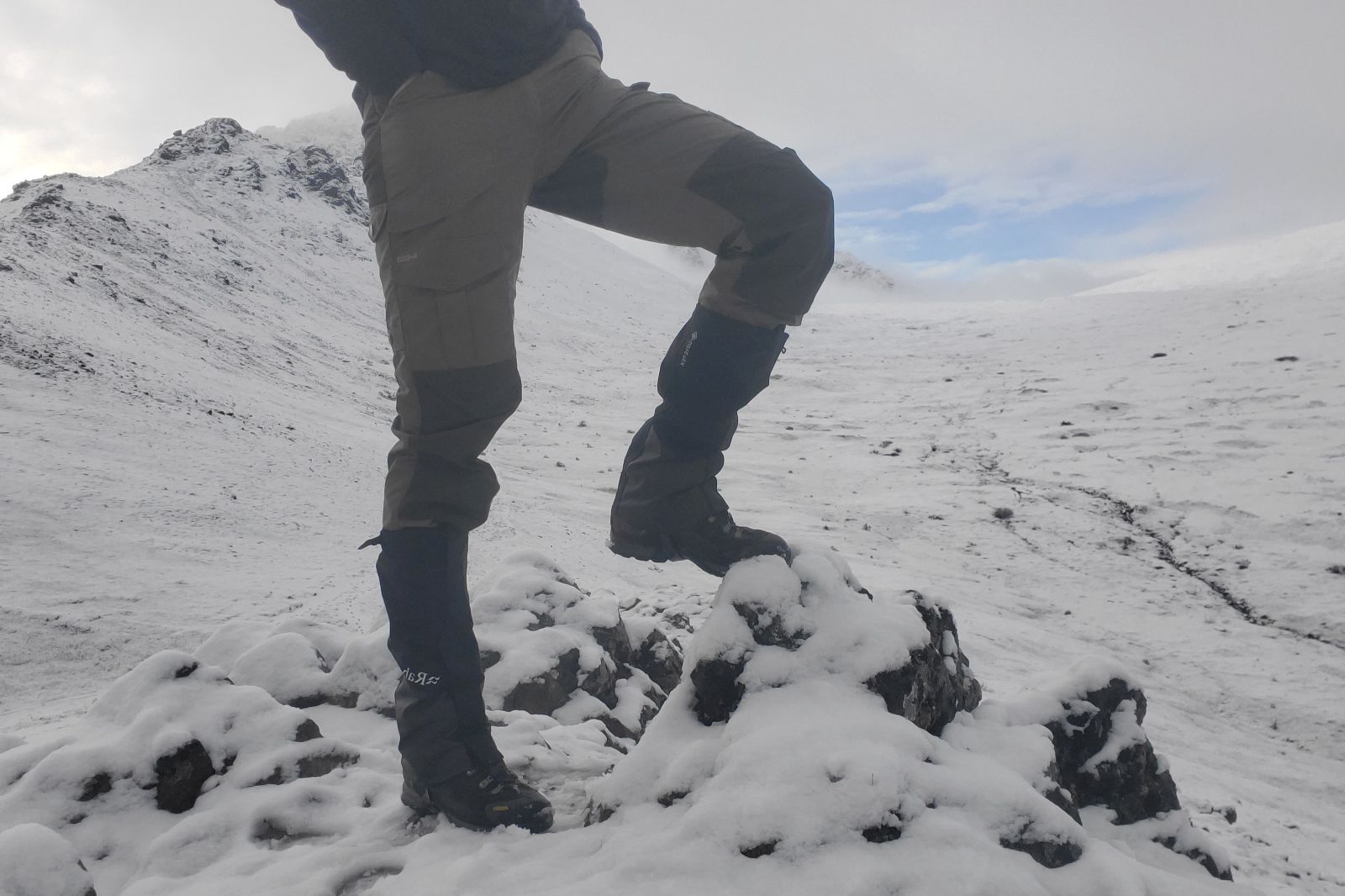
The Rab Latok GORE-TEX earns our top spot for its rugged protection, low weight, and ease of use. Its GORE-TEX construction is lightweight and fully waterproof, making it a favorite for wet conditions. Tested in Alaska’s cold and damp late fall and early winter, the Latok kept us dry and protected no matter the conditions.
The Latok secures with a fairly standard combination of Velcro in the front and a bungee cinch at the top. However, the cinch system stood out because it was comfortable even when tightened down firmly around the calf. It can also be cinched or loosened with one hand, making adjustments quick and easy.
We also liked the simple but durable underfoot strap, which is attached to the gaiter’s body with sturdy Velcro for easily swapping footwear. Our only complaint had to do with the lace hooks, which are made of bulky plastic. This made them harder to secure to laces or a dedicated gaiter loop compared to the smaller metal hooks found on other designs.
Where some waterproof gaiters are bulky with a lot of excess material, the Latok is noticeably slim. This helps keep weight in check, making these gaiters well suited for moving quickly in the mountains. Whether you’re bushwhacking through rain-soaked brush, walking in wet snow, or navigating variable alpine terrain, the Latok is up to the task.
Kahtoola RENAgaiter Mid
Best Mid-Height Gaiter
CleverHiker Rating: 4.6/5.0
Price: $65
Material: 90% stretch-woven nylon, 10% PU blend
Weight: 4.1 oz.
Height: Mid
Waterproof: No
Pros
- Comfortable directly on the skin
- Durable zipper closure
- Lightweight
- Usable with both running shoes and boots
- Breathable
Cons
- Not waterproof
- Stiff underfoot strap
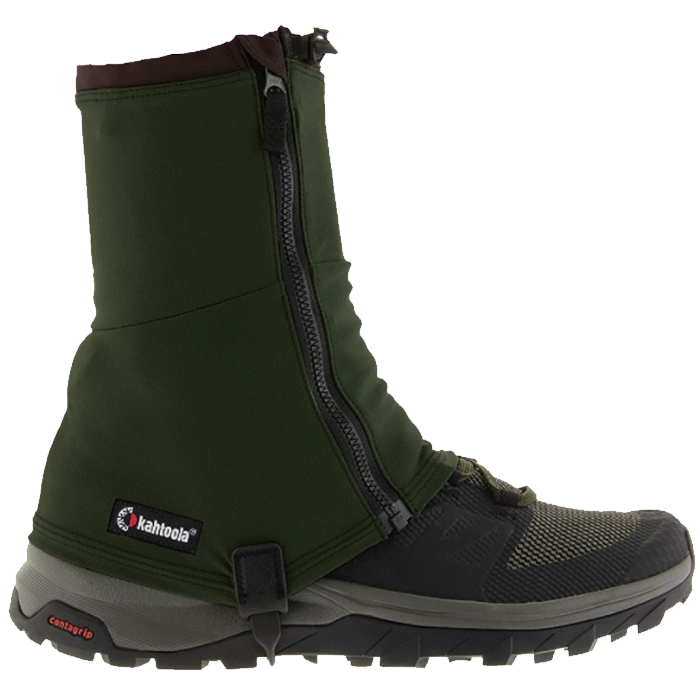
The Kahtoola RENAgaiter Mid is our top choice for a lightweight, mid-height gaiter. We frequently reached for these on minimalist missions that demanded top-notch breathability and comfort.
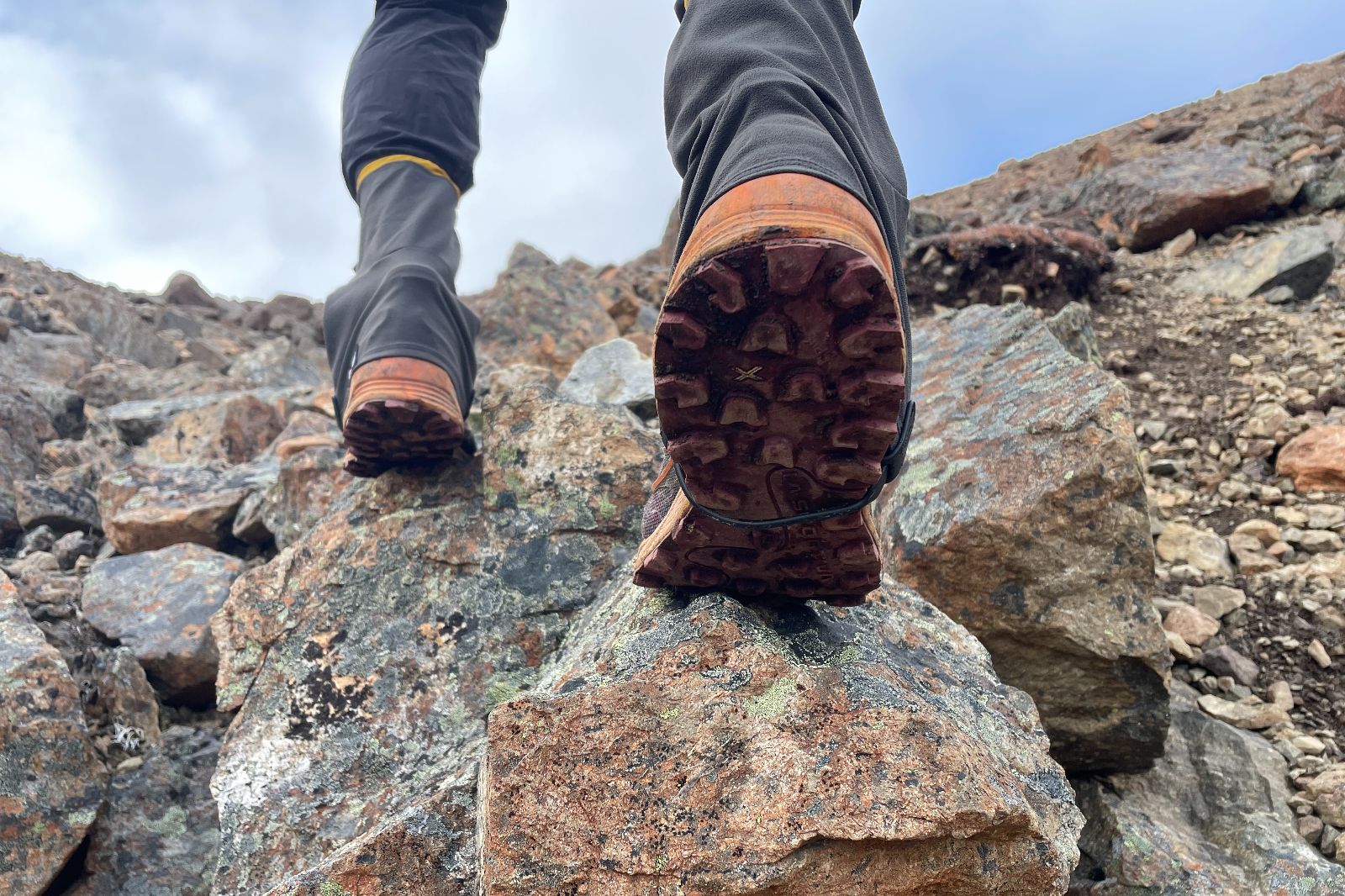
Made of mostly stretch-woven nylon, the RENAgaiter is one of the most comfortable gaiters in our lineup. We wore them directly against our skin while running and experienced no chafing or discomfort. The stretchy material moves with each step, preventing any pulling or sagging.
These are also one of the only designs on our list with a zippered closure system. Featuring a durable YKK zipper, they are much less susceptible to getting clogged with snow and mud compared to designs with Velcro closures. The zipper also makes them very easy to get on and off.
For a lightweight gaiter, the RENAgaiter features one of the sturdiest instep straps in our lineup. Though we appreciated the toughness, the strap is stiff and somewhat uncomfortable. When paired with more minimalist running shoes, we could feel the strap beneath our feet and hear it click against rocks and hard surfaces.
One trade-off to the RENAgaiters’ mid-height style is that they lack the protection needed to keep your legs dry in wet conditions. It’s enough for light bouts of rain or walking through damp brush, but the gaiters will eventually soak through. On the bright side, they are tall enough to completely seal out rocks and debris – great news for fast-and-light hikers and trail runners in particular.
Outdoor Research Crocodile
Best Gaiter for Winter
CleverHiker Rating: 4.6/5.0
Price: $110
Material: 3L GORE-TEX (upper leg), 2L Cordura (foot panel)
Weight: 11.1 oz.
Height: Full
Waterproof: Yes
Pros
- Strong weather resistance
- Very durable
- Warm for cold-weather adventures
Cons
- Heavy
- Bulky
- Runs large
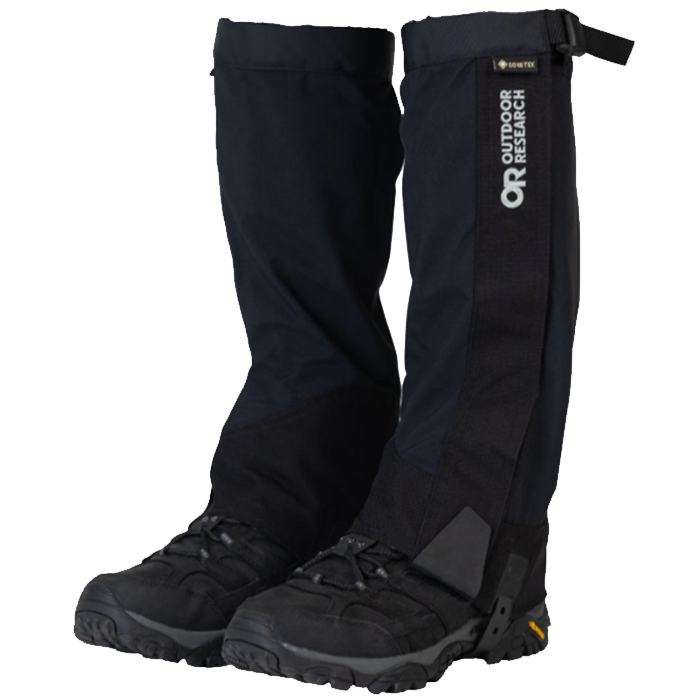
The Outdoor Research Crocodile is an extremely durable gaiter designed for the toughest conditions. Made specifically for mountaineering, the Crocodile offers some of the best weather resistance of any gaiter we tested.
The GORE-TEX upper is extremely weatherproof. During a day hike through early-winter mud and snow in Alaska, the Crocodiles kept our boots completely dry – even when post-holing and bushwhacking through snow-covered brush.
The bottom of the gaiter is made with Cordura, a highly abrasion-resistant material that boosts durability. We were impressed by how well these gaiters stood up to heavy use and expect them to last for many years.
As far as fit goes, the underfoot strap and knee buckle are easy to adjust. However, the gaiters run large, so we recommend sizing down for the best fit. The heavy-duty design also works best with mid-height boots.
In the end, the Crocodiles wouldn’t be our first choice for summer temperatures or fast-and-light missions. But for big winter excursions that demand full coverage and protection, they are a standout.
Kahtoola INSTAgaiter Mid
Best Lightweight Gaiter
CleverHiker Rating: 4.5/5.0
Price: $55
Material: 86% stretch-woven nylon, 14% PU blend
Weight: 2.7 oz.
Height: Mid
Waterproof: No
Pros
- Lightweight
- Breathable
- Easy-to-use zipper closure
- Comfortable next to skin
Cons
- Not waterproof
- Sags down during use
- A lot of loose material around shoes
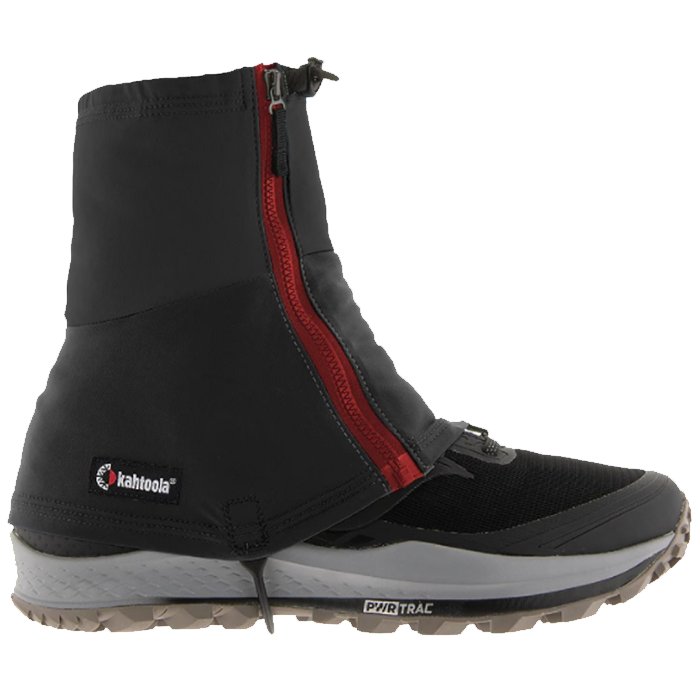
The lightest and most breathable option from Kahtoola, the INSTAgaiter is an excellent choice for anyone wanting to move fast and light while still keeping their feet protected. These gaiters are impressively durable for a minimalist design, making them a longtime favorite among trail runners who frequent rugged terrain.
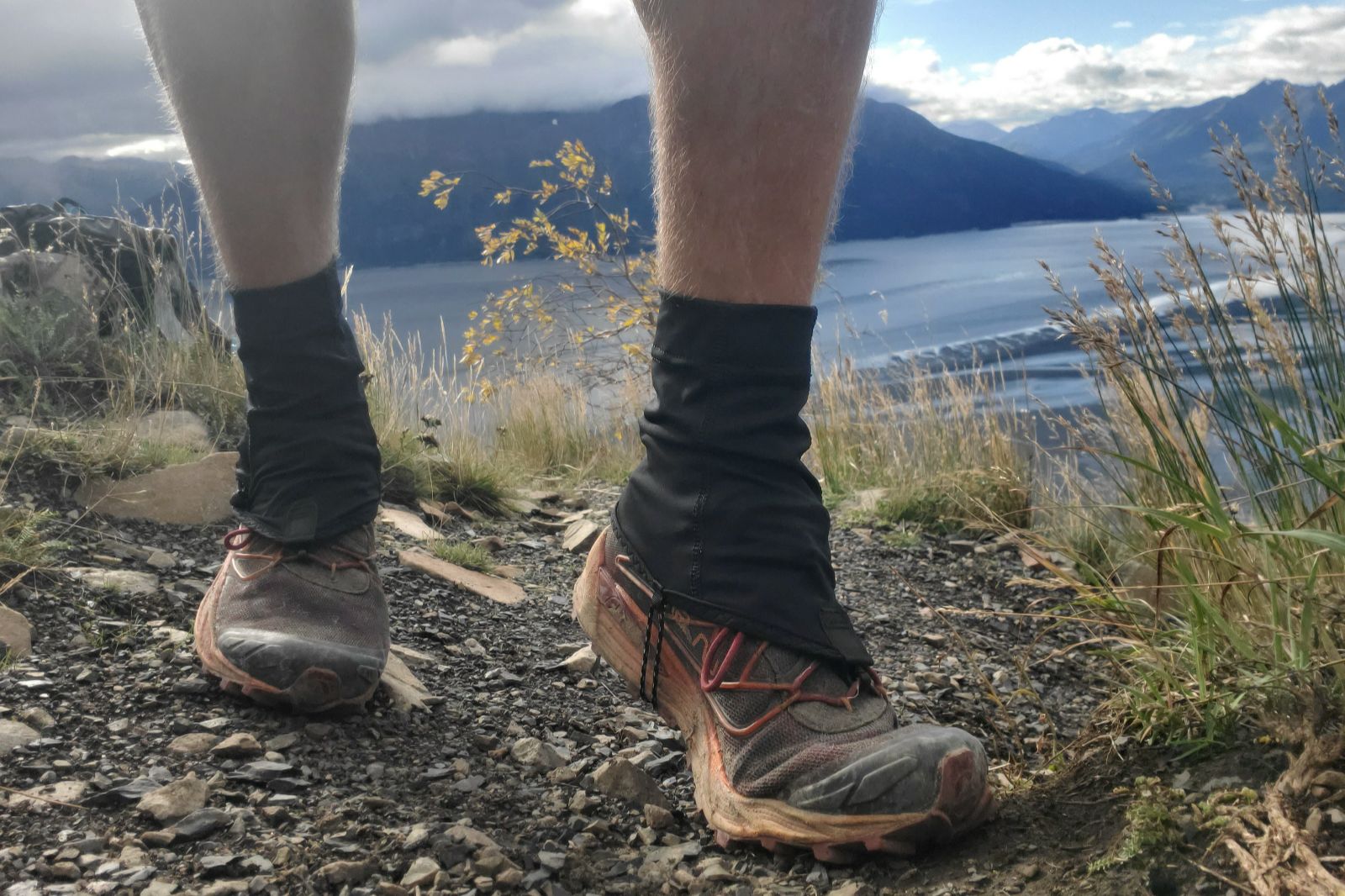
Weighing just 2.7 ounces for the pair in a size L/XL, the INSTAgaiter is featherlight. We frequently reach for these for trail runs in the rugged, scree-filled Chugach Range of Alaska and are consistently impressed by their barely there feel. They do a great job keeping out rocks, twigs, and debris.
However, these are not the gaiters for wading through swamps or post-holing through deep snow. Though treated with a DWR coating, the INSTAgaiters cannot handle much more than light moisture. They allowed water in when fully submerged, making them poorly suited for truly wet conditions.
The stretch-woven nylon construction is soft and comfortable, even directly against the skin. The side zippered closure allows for quick on and off, and the zipper itself is durable and resistant to grit and dust.
Like the RENAgaiter above, the INSTAgaiter features Kahtoola’s beefy DuraLink instep strap, which is backed by a 1,000-mile warranty. The strap leads to some stiffness and bulk underfoot, which is especially noticeable when paired with more minimalist running shoes. Small gripes aside, these are a solid choice for thru-hikers, trail runners, and ultralight enthusiasts looking to keep weight down without sacrificing too much protection.
Outdoor Research Rocky Mountain High
Best Mix of Price & Performance
CleverHiker Rating: 4.5/5.0
Price: $65
Material: Nylon
Weight: 7.8 oz.
Height: Full
Waterproof: No
Pros
- Good value
- Easy to adjust the instep buckle
- Durable
Cons
- Prone to sagging with use
- Not the most weather-resistant
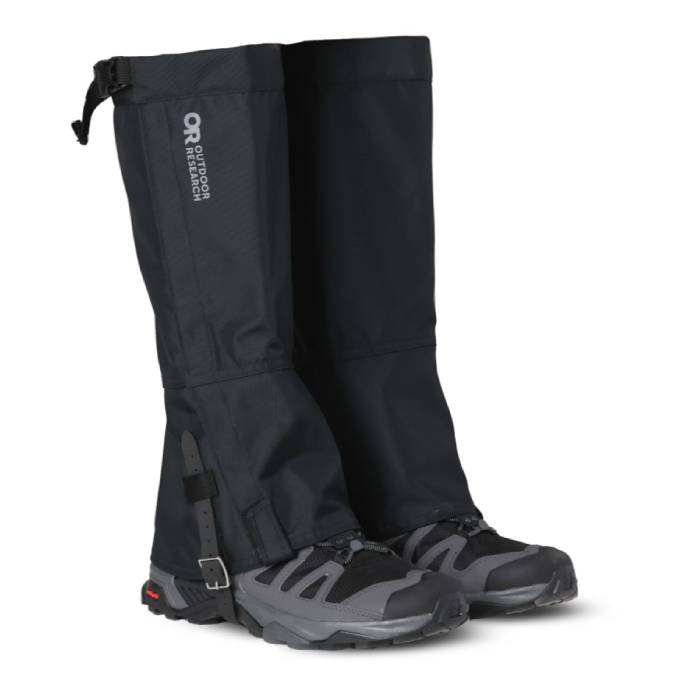
Providing full coverage at a fraction of the cost of other gaiters, the Outdoor Research Rocky Mountain High (men’s / women’s) offers excellent performance at an affordable price. Tested on snowy and muddy hikes in Alaska’s Chugach Range, we were impressed with their durability and ease of use.
Putting on the Rocky Mountain High, it’s immediately clear that they are highly adjustable. They are the only gaiters in our lineup to feature a buckle on both the instep strap and at the knee. Whereas most other gaiters adjust the instep strap inside the gaiter, the Rocky Mountain High does so with a buckle on the outside, making on-the-go adjustments quick and easy. They also have elastic around the bottom edge that keeps them securely around your boot and prevents debris from getting in.
Although not fully waterproof, the Rocky Mountain High’s 420-denier nylon is coated with polyurethane for added assurance in inclement weather. Though we never soaked through these completely, it was clear they held more moisture than fully waterproof models. This caused them to sag after being worn in wet conditions for long periods.
Made with a single layer of material, these might not be as sturdy as other models, but they were still durable enough that we never wore through them or noticed any weaknesses. If you’re looking for full-coverage gaiters without the high price of a more expensive model, check out the Rocky Mountain High.

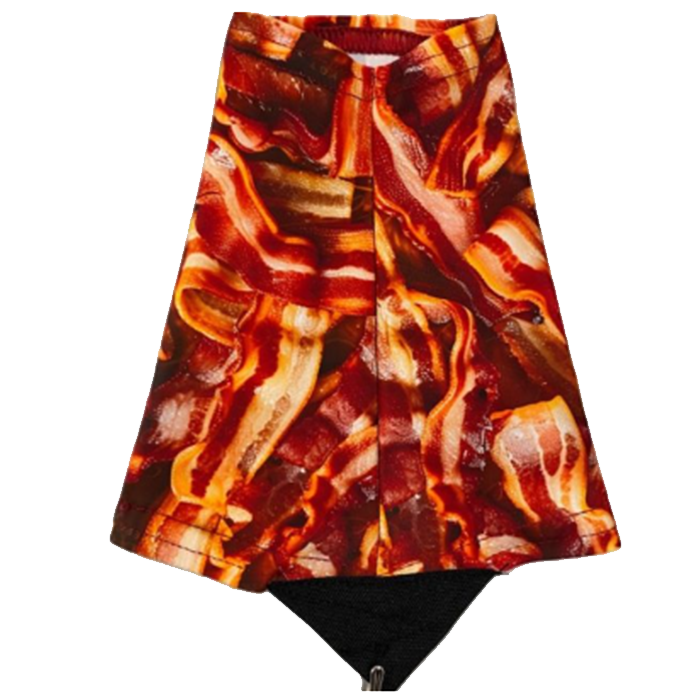
Dirty Girl Gaiters
Best Gaiter for Thru-hiking
CleverHiker Rating: 4.5/5.0
Price: $23
Material: Spandex
Weight: 1.8 oz.
Height: Low
Waterproof: No
Pros
- Ultralight
- Breathable
- Very comfortable
- Affordable
- Comes in fun colors and patterns
Cons
- Not weather-resistant
- Lets in dust
- Requires gluing the Velcro to the heels of your shoes
With a cult following among the thru-hiking community, Dirty Girl Gaiters are a longtime favorite for those spending days, weeks, or even months on the trail. They are truly ultralight and provide just enough protection to keep annoying rocks and twigs out of your shoes, making them well suited for hikers who want something simple yet effective.
The Dirty Girl Gaiters are the cheapest option in our lineup with a straightforward design to match. Made from a spandex material, they are stretchy, soft against the skin, and extremely comfortable to wear. In fact, we wore them for hours at a time and barely noticed they were there.
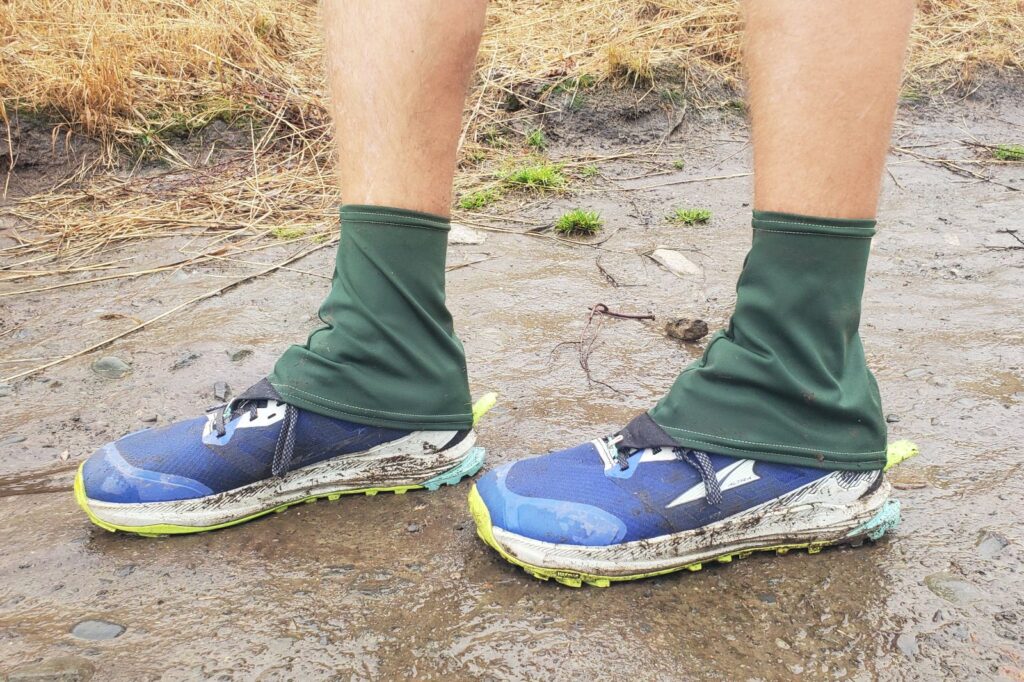
These are great for pairing with shorts because of their breathability, light weight, and comfort. A simple yet effective metal lace hook keeps them securely in place at the front, and a Velcro tab attaches the heel. However, they do require gluing Velcro to the heels of your shoes (stick-on tabs included) to keep them in place.
Though highly breathable, these gaiters are not very weather-resistant. They’re suitable for mist or light dew, but you can’t rely on them to keep you dry in heavy rain. They also keep out large debris, but on especially dusty trails, we noticed our ankles getting dirty from dust and fine grit that seeped through.
Available in dozens of different colors and patterns, the Dirty Girl Gaiters are a fun, creative, and simple way to keep your feet protected during long days on the trail. Their budget-friendly price tag is the cherry on top.
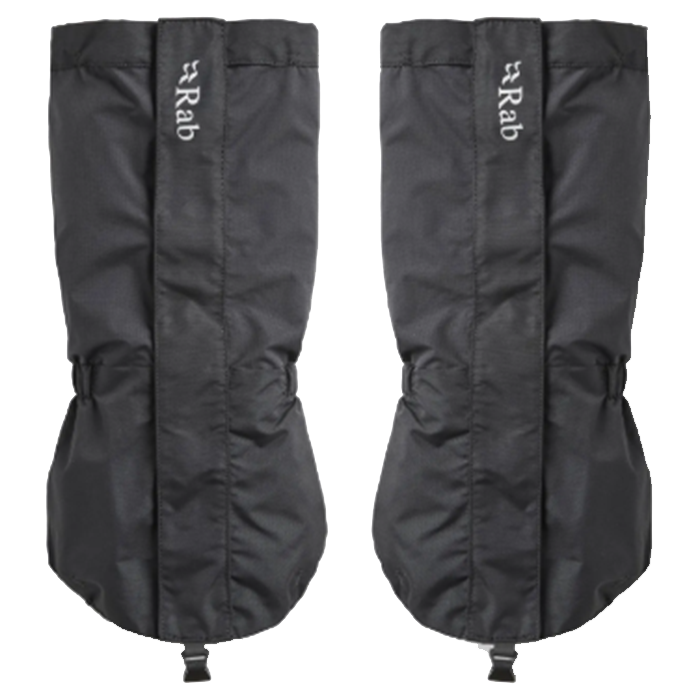
Rab Trek
Most Secure & Comfortable Calf Cinch
CleverHiker Rating: 4.4/5.0
Price: $75
Material: Ripstop nylon
Weight: 6.1 oz.
Height: Full
Waterproof: No
Pros
- Relatively light but durable
- Comfortable cinch system
- Sturdy instep strap
Cons
- Bulky
- Not waterproof
- Sags with use
The Rab Trek gaiters are a simple, no-nonsense design – great for hikers seeking reliable performance without unnecessary extras. Featuring a comfortable, easy-to-use closure system, they are very easy to adjust, even with one hand or while wearing gloves.
The Treks feature a rubber-coated instep strap, a front Velcro closure, and a well-executed knee cinch. The knee cinch is one of the more comfortable systems we’ve used, even when tightened around the calf.
An elastic band around the ankle tries to keep these gaiters close-fitting, but we experienced excess material that led to a loose and baggy feel. Despite tightening the cinch at the top, they still felt floppy and began to sag while hiking.
Although not fully waterproof, they are decently weather-resistant and plenty durable for day trips and shorter hikes that don’t warrant a heavy-duty option. After a long outing in the snow, we could see the material had absorbed some water, but it still prevented our feet from getting totally soaked.
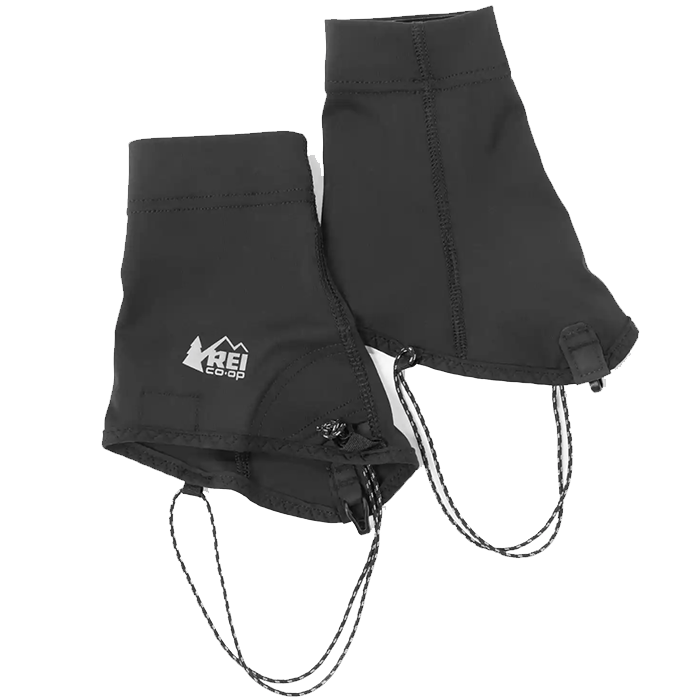
REI Swiftland
Best Running-Specific Gaiter
CleverHiker Rating: 4.3/5.0
Price: $35
Material: 76% polyester, 24% spandex
Weight: 2.2 oz.
Height: Low
Waterproof: No
Pros
- Lightweight
- Affordable
- Replaceable instep strap
- Anti-slip silicone grip to prevent slouch
Cons
- Subpar durability
- Not weather-resistant
The REI Swiftland Running Gaiters are designed specifically for trail running. They are lightweight and breathable, making it easy to move quickly on the trail and worry less about rocks entering your shoes. They have enough elasticity to be used with low-volume boots, although they are designed to be paired with trail running shoes.
Secured with a lace hook and Velcro heel, the attachment system is simple but effective. One unique inclusion is the silicone band around the ankle, which acts as an anti-slip grip to keep them from sagging. Though effective, we found they sometimes tugged uncomfortably on our leg hair.
The main drawback to these gaiters is their limited durability – especially the instep strap. Made with a 2-millimeter cord, the strap wore through very quickly, showing thinning and wear after only a few uses on sharp rocks. The gaiters do come with replacement cord, but we would prefer a slightly more durable design for better long-term performance.
If you’re looking for a lightweight gaiter for occasional use on non-technical terrain, the Swiftland is an affordable option. We hesitate to take these on longer trips because they tend to fail, but they are suitable for local trail runs and close-to-home adventures.
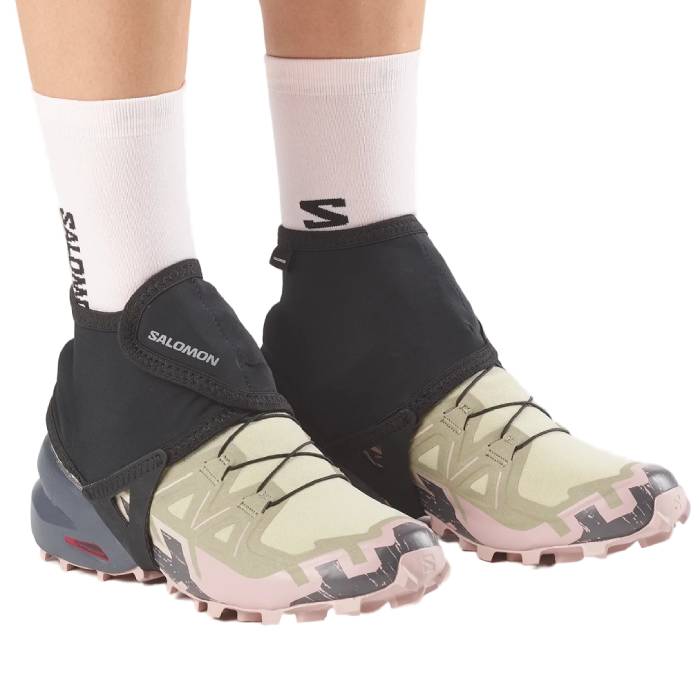
Salomon Trail Gaiter Low
Simplest Attachment System
CleverHiker Rating: 3.8/5.0
Price: $40
Material: 78% polyamide, 22% elastane
Weight: 4 oz.
Height: Low
Waterproof: No
Pros
- Lightweight
- Easy to use
- Breathable
Cons
- Lets in rocks
- Instep strap slips off on steep terrain
- Limited durability
The Salomon Trail Gaiters Low have one of the simplest designs among the gaiters we tested. Just loop the instep strap under the heel, secure the Velcro in the front, and hit the trail.
Although the Velcro closure is secure, these gaiters run large. We recommend sizing down for a more secure fit. We tested them on alpine scrambles in the Chugach Range’s notoriously crumbly rock and were disappointed to find they let in a lot of debris. Additionally, the instep strap slipped up and slid off repeatedly as we ran down a 1,500-foot scree slope.
The simple design also comes with trade-offs in durability. After only a few uses, our pair showed serious signs of wear with cuts and abrasions from sharp rocks. As a result, we feel they are best suited for well-trodden trails with minimal exposure to abrasive surfaces.
Though they don’t offer enough protection for long days, the Trail Gaiters Low are lightweight and breathable for quick runs on local trails.
Product Comparison Table
| oSort | Product | Price | Material | Weight | Height | Waterproof | Attachment Method | Comfort | Breathability | Weather Resistance | Durability | Ease of Use | 0 |
Rab Latok GORE-TEX View at Amazon View at Rab 
|
$110 | 3L GORE-TEX | 6.5 oz. | Full | Yes | Hook-and-loop, lace hook, knee cinch | 4.6 | 4.6 | 4.8 | 4.7 | 4.6 | 1 |
Kahtoola RENAgaiter Mid View at REI View at Amazon
|
$65 | 90% stretch-woven nylon, 10% PU blend | 4.1 oz. | Mid | No | Zipper, lace hook | 4.7 | 4.5 | 4.5 | 4.5 | 4.6 | 2 |
Outdoor Research Crocodile View at REI View at Amazon |
$110 | 3L GORE-TEX (upper leg), 2L Cordura (foot panel) | 11.1 oz. | Full | Yes | Lace hook, hook-and-loop, ankle & knee buckle | 4.4 | 4.4 | 4.8 | 4.8 | 4.5 | 3 |
Kahtoola INSTAgaiter Mid View at REI View at Amazon |
$55 | 86% stretch-woven nylon, 14% PU blend | 2.7 oz. | Mid | No | Zipper, lace hook | 4.6 | 4.5 | 4.4 | 4.4 | 4.6 | 4 |
Outdoor Research Rocky Mountain High View Men's View Women's 
|
$65 | Nylon | 7.8 oz. | Full | No | Lace hook, hook-and-loop, ankle & knee buckle | 4.5 | 4.4 | 4.5 | 4.5 | 4.6 | 5 |
Dirty Girl Gaiters View at Dirty Girl Gaiters
|
$23 | Spandex | 1.8 oz. | Low | No | Velcro heel, lace hook | 4.8 | 4.8 | 4.0 | 4.2 | 4.6 | 6 |
Rab Trek View at Rab View at Amazon |
$75 | Ripstop nylon | 6.1 oz. | Full | No | Hook-and-loop, lace hook, knee cinch | 4.4 | 4.4 | 4.4 | 4.4 | 4.5 | 7 |
REI Swiftland View at REI |
$35 | 76% polyester, 24% spandex | 2.2 oz. | Low | No | Lace hook, Velcro heel | 4.4 | 4.4 | 4.2 | 3.9 | 4.5 | 8 |
Salomon Trail Gaiter Low View at Amazon View at Salomon |
$40 | 78% polyamide, 22% elastane | 4 oz. | Low | No | Hook-and-loop | 4.1 | 4.2 | 3.8 | 3.7 | 4.4 |
|---|
Analysis & Results
Which Hiking Gaiters are the Best Value?
A high-value item offers a good balance between performance and affordability. Though the lowest-priced option might suit those on a tight budget, it’s disappointing if it doesn’t last or perform as well as a slightly more expensive alternative. Sometimes, spending a little more can lead to getting a better, longer-lasting product.
With that in mind, the Outdoor Research Rocky Mountain High offers excellent performance at a reasonable price point. For around half the cost of our top pick, the Rab Latok GORE-TEX, the Rocky Mountain High provides full coverage, excellent durability, and sufficient weather resistance for most outings. They are easy to use and kept us dry in mud, snow, and rain.
For an ultralight and streamlined option, the Dirty Girl Gaiters are the undisputed queens of the trail. Long loved by thru-hikers, these gaiters’ simple spandex construction is soft and comfortable against the skin and keeps out all but the finest dust. They are cheap and come in dozens of fun colors and patterns, which only adds to all-around appeal.
The Kahtoola RENAgaiter Mid is another solid value. They fall about mid-pick in terms of price but offer excellent all-around performance. They are comfortable, lightweight, reasonably durable, and feauture one of the sturdiest instep straps in our lineup.
Which Hiking Gaiters are the Most Comfortable?
When you’re spending day after day on the trail, the last thing you want is to worry about your gaiters chafing your legs. We prefer gaiters that are soft against the skin, stretchy, easy to move in, and secure without causing restriction or discomfort.
Forgoing all cinches and buckles, the Dirty Girl Gaiters use a soft and comfortable spandex material. These are our top choice for pairing with shorts because they are supple and stretchy enough to accommodate different shoes and leg sizes. They are also feathery light, making them easy forget about while you’re hiking.
The Kahtoola RENAgaiter Mid is also supremely comfortable. The stretch-woven nylon fabric is highly elastic and feels soft against the skin. The material stretches and moves with each step, preventing any restriction, and the top drawcord can be tightened snugly without impacting circulation. We loved these for pairing with trail runners and shorts.
The Rab Latok GORE-TEX was the most comfortable full-coverage gaiter we tested. Lightweight and trim, they minimize the bagginess that often plagues full-coverage designs. The Latok also features a comfortable calf-cinch system. Whether worn with pants or bare legs, the gaiters remained comfortable and free of pressure points.
Which Hiking Gaiters are the Most Breathable?
Whether we’re hiking slowly or running uphill, our favorite gaiters are the ones that dump excess heat and feel almost invisible underfoot.
The Dirty Girl Gaiters top our list for breathability. They have a low profile, leaving much of your leg exposed. The spandex construction is thin and airy, allowing air to pass through. These are an excellent choice for dry climates or hot days on the trail.
The Rab Latok GORE-TEX is another well-ventilated choice. Their simple construction and high-performance, 3-layer GORE-TEX fabric vents moisture without letting water in. Even during high-output climbs and long approaches, they kept our legs dry and comfortable.
Other mid-height options like the Kahtoola RENAgaiter Mid and INSTAgaiter Mid are excellent options for those moving quickly who want both protection and breathability. The lightweight nylon designs are airy, and we never felt hot or clammy wearing them.
Which Hiking Gaiters have the Best Weather Resistance?
The Rab Latok GORE-TEX leads the pack with an effective mix of weight and protection. Built with trusty GORE-TEX, it’s a favorite for treks through swamps and snow. It’s not excessively heavy for the level of coverage and protection, unlike some of the more serious designs on our list.
The Outdoor Research Crocodile tied for first place and is a great match for cold and snowy adventures. It features a 3-layer GORE-TEX construction that’s fully waterproof, plus a 2-layer Cordura foot panel for added durability. Designed for mountaineering, the Crocodile is our top pick for snowy peaks and extended post-holding. The downside is that they are overkill for mild conditions and best suited for pairing with equally burly boots.
For a lower-profile gaiter that works well with trail runners, the Kahtoola RENAgaiter Mid provides solid protection from rocks and debris. It features a slightly thicker fabric, offering some cushion when navigating unstable terrain. Though they won’t keep your shoes dry if you step into a creek or swamp, they provide sufficient coverage for trail debris, shallow puddles, and snow patches.
Which Hiking Gaiters are the Most Durable?
Gaiters need to be extremely durable since they are in frequent contact with the ground and often get scraped by sharp objects as well as equipment like traction devices.
For use with crampons, snowshoes, or traction devices, we reach for the Outdoor Research Crocodile. The only gaiter in our lineup with a Cordura-reinforced foot panel, it offers the utmost in durability and has never let us down, even in the toughest trail conditions.
Following closely behind is the Rab Latox GORE-TEX. Its burly straps and buckles give the attachment points extra strength for heavy use, and Rab’s construction quality and attention to detail are tough to beat. Our pair has held up flawlessly to hundreds of miles of soupy and snowy hiking.
Among the lighter gaiters that made our list, the Kahtoola RENAgaiter stood out. The instep strap is especially durable – it’s made with Kahtoola’s DuraLink system that’s easy to replace and backed by a 1,000-mile warranty. A rock guard protects the connection point between the strap and gaiter, which is a common weak spot in lightweight designs. Even after descending 2,000-foot scree slopes, our RENAgaiters showed no signs of wear.
Which Hiking Gaiters are the Easiest to Use?
For such a small item, some gaiters can be puzzlingly complex. We prefer straightforward gaiters with intuitive adjustment systems that are easy to tweak on the move.
The Rab Latok GORE-TEX fits this description. It features a top cinch that’s easy to tighten or loosen with one hand, even while wearing gloves. Paired with a Velcro-adjustable instep strap, the Latok is simple yet effective.
The Kahtoola RENAgaiter Mid is a close second thanks to its smooth YKK zipper, which makes the on / off process quick and hassle-free. Unlike Velcro designs that can clog with mud or snow, this zipper system stays clean and functional, making these gaiters a breeze to use in any conditions – no fumbling with straps required.
The Outdoor Research Rocky Mountain High is the only gaiter in our lineup with two buckles: one at the knee and one for the instep strap. The instep strap buckles greatly improve ease of use. Whereas other designs require removing the gaiter to adjust the instep strap, the OR’s buckle allows you to loosen or tighten the gaiters without taking them off.
For gaiters that eschew straps, buckles, and toggles altogether, the Dirty Girl Gaiters and Salomon Trail Gaiters Low are two of the simplest designs out there. Both options are very straightforward to use and offer adequate performance on well-trodden trails.
How to Choose Hiking Gaiters
Do I Need Low, Mid-Height, or Tall Gaiters?
The first step in choosing a gaiter is matching it to your footwear. Gaiters vary widely in their attachment methods, height, and closure systems, and some are better suited for certain types of footwear than others.
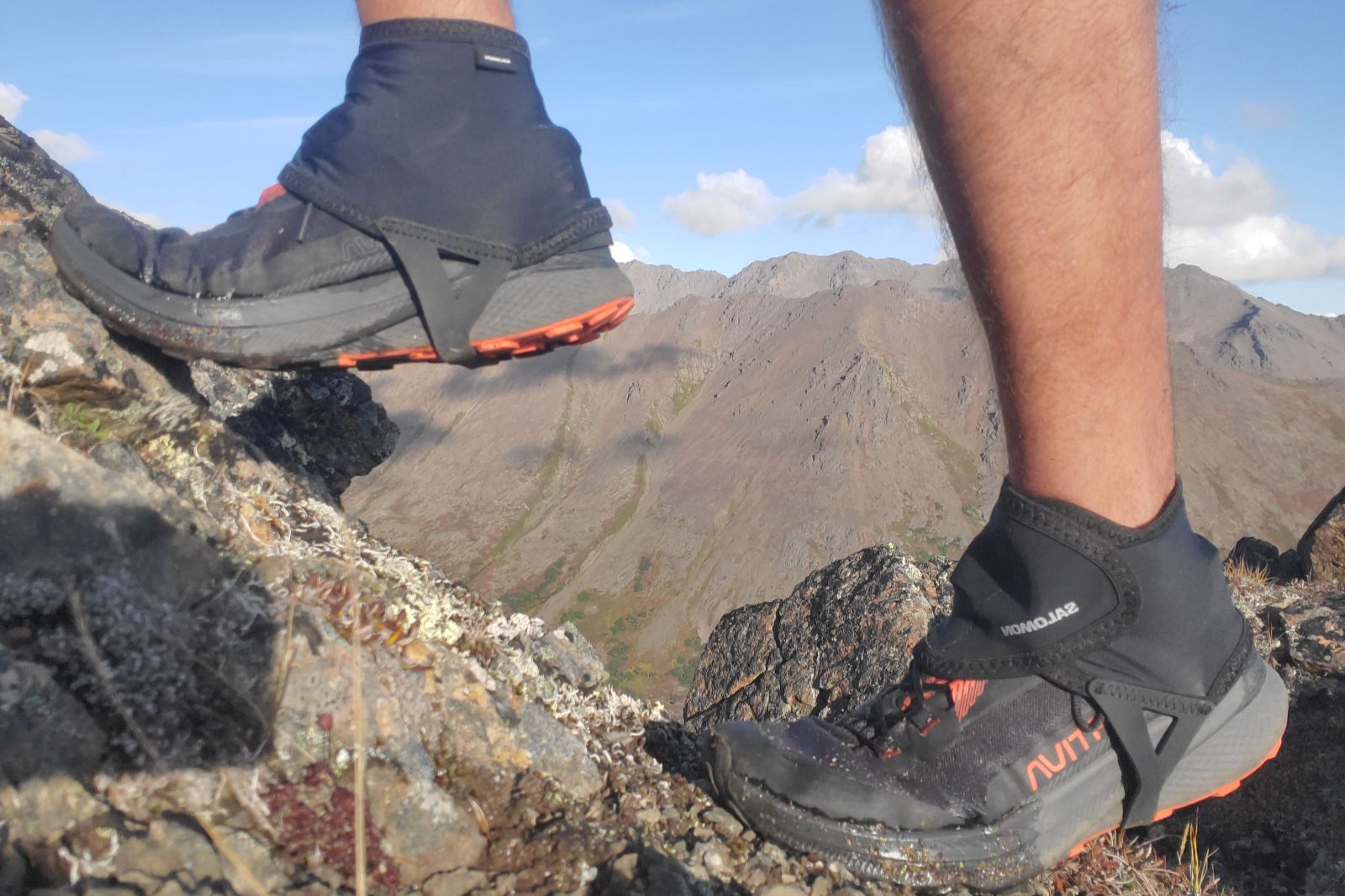
If you’re trail running or fastpacking, your best bet is low gaiters made from a lightweight, breathable fabric. These ankle-high designs focus on keeping out pebbles, grit, and light debris without adding bulk or excess material that can lead to overheating. They’re designed to pair with trail runners and low-top hiking shoes, often featuring hook-and-loop (Velcro) attachments that don’t need an underfoot strap.
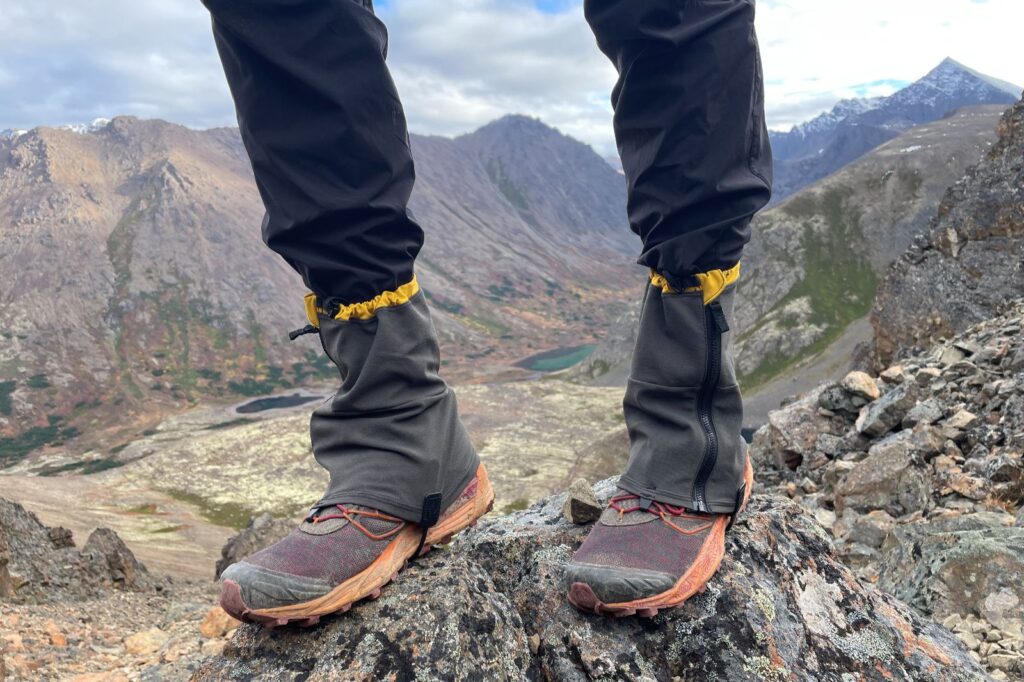
For day hiking or backpacking, a mid-height gaiter provides more balanced protection. These usually reach the lower leg, blocking out debris and mud. They work best with hiking shoes or mid-cut boots. Look for models with a secure lace hook, an adjustable strap around the instep, and a snug but stretchy closure. These features help prevent slipping down the calf and ensure a good seal.
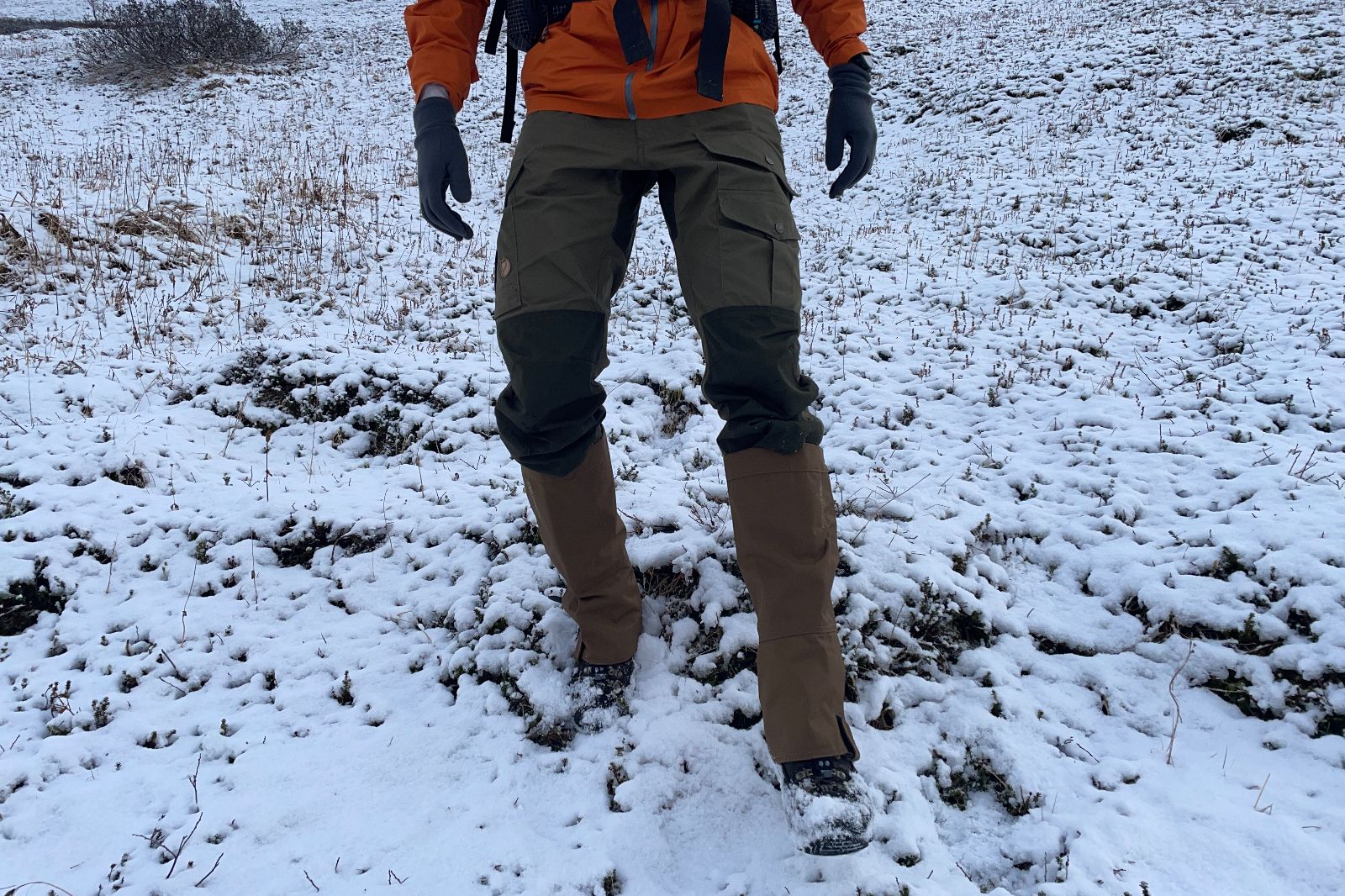
If you’re planning on mountaineering, snowshoeing, or winter hiking with heavy-duty boots, choose a full-height gaiter. These models are made from sturdy waterproof-breathable fabrics such as GORE-TEX and designed to fit over larger boots. The taller height provides protection from snow and ice, while heavy-duty straps and reinforced insteps resist abrasion from crampons and rough terrain.
How Much Do Durability & Weather Resistance Matter for Hiking Gaiters?
The answer to this question largely depends on where and when you do most of your hiking. If you frequent hot, dry trails and care more about debris coverage than water protection, choosing a low gaiter that’s breathable and lightweight is a good bet. In warm weather, waterproof materials can trap heat, leading to clamminess and friction-related issues, so look for designs labeled as water-resistant rather than fully waterproof.
For muddy or rainy trails, waterproof gaiters are essential. Look for models made with GORE-TEX or other air-permeable membranes that seal out moisture while still allowing for ventilation. Though mid-height gaiters offer good protection from rocks and debris, they often don’t provide full waterproofing. They may be enough for light moisture and for moving quickly through wet areas, but we recommend a full-coverage option for extended trips in inclement conditions.
For snow, bushwhacking, and general alpine use, durability and height should be priorities. Look for tall cuffs to seal out moisture and debris, abrasion-resistant materials, and reinforcements in high-wear areas like the ankles and instep. Replaceable underfoot straps are also worth considering. Snagging by crampons, traction devices, snowshoes, branches, and rocks can quickly tear apart gaiters.
How Do Hiking Gaiters Attach to my Shoes?
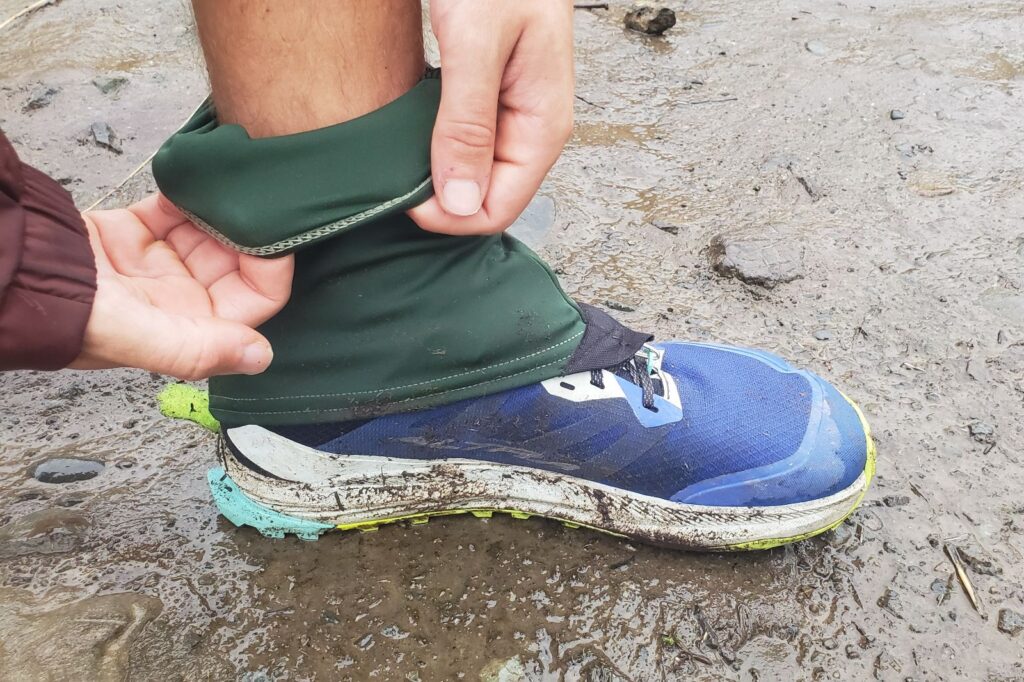
Attachment systems vary between designs and largely depend on the gaiter’s intended use. Starting at the bottom, an instep strap secures the gaiter underneath your shoe or boot. It runs under the sole of your footwear and often features a drawcord, buckle, or other adjustment method for tweaking the fit to minimize unwanted play.
Other features to look out for are lace hooks, hook-and-loop/Velcro closures, zippered openings, and cinches at the ankle and / or knee. Some designs feature multiple points of adjustability, while others are intentionally streamlined to minimize weight and bulk.
In general, taller gaiters offer more fit customizability due to the added material, which needs to be secured in order to stay out of your way while hiking. On the flip side, low-profile options designed for trail running or thru-hiking often feature just one or two attachment points since there is less fabric to flop around.
Why Trust CleverHiker
Our lead tester and gear analyst for this guide, Miles Knotek, is based in Alaska and therefore no stranger to harsh, rugged conditions. Covering over 2,000 trail miles each year – on foot, skis, snowshoes, or ice stakes – Miles is a seasoned backcountry explorer who regularly faces some of the toughest weather and terrain in the country. Whether he’s post-holing for miles in the alpine or slogging through swamps and brush, Miles understands the importance of having the right gear for the conditions.
Testing Methodology
How Do We Assess Comfort?
First impressions matter, so we start by considering how the gaiters feel against our legs. Are they stiff and rough or soft and supple? How well do they fit, and how do they feel when we’re moving? We wore each gaiter both on its own and with pants underneath, and then we hit the trail for several miles to see how it felt in use. We made note of any discomfort, rubbing, sagging, or restriction to movement.
How Do We Evaluate Breathability?
Breathability refers to a material’s ability to release heat and wick moisture. We evaluated breathability by hiking in each gaiter at both low and high exertion levels, looking for any sweat buildup or signs of overheating. We hiked for a continuous five miles with each pair at different paces to get a clear understanding of how well air flows through the fabric.
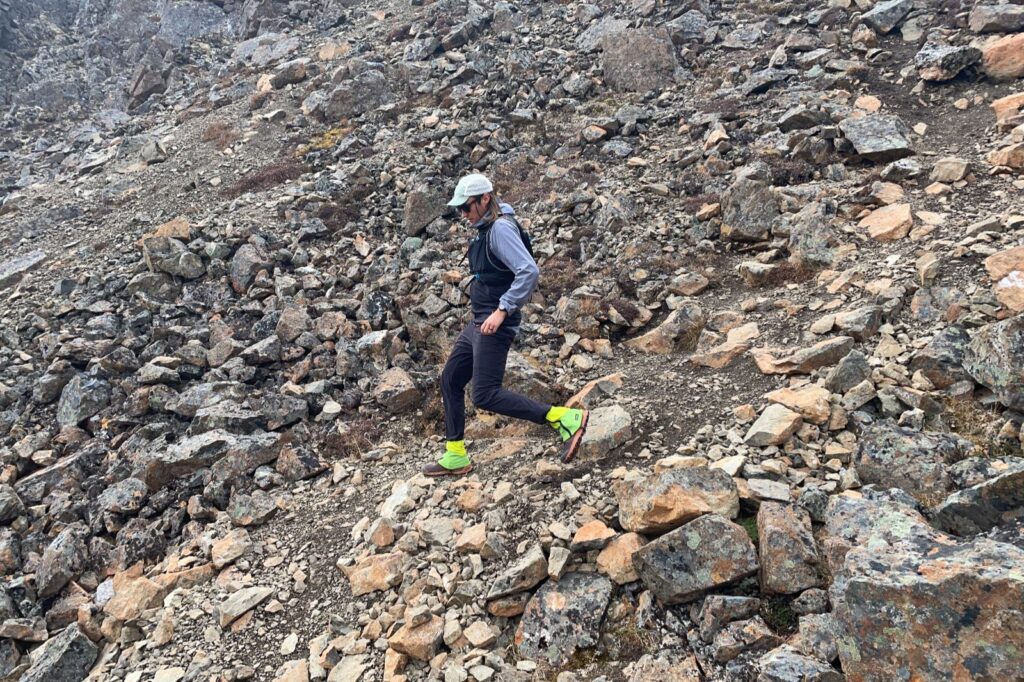
How Do We Test Weather Resistance?
Weather resistance refers to a gaiter’s ability to seal out debris and shield your footwear from the elements. We tested each gaiter in varied weather conditions for at least an hour. We deliberately wore them through ankle-deep water to observe any water or debris creeping its way inside. Afterward, we closely evaluate our socks and pants for signs of staining or wetting out.
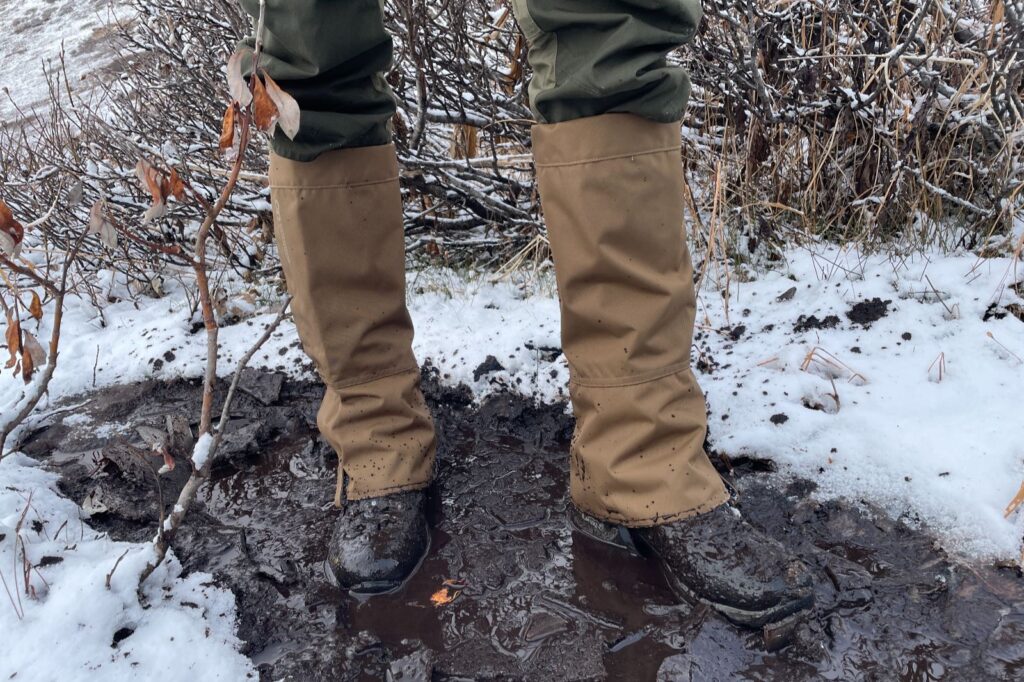
How Do We Gauge Durability?
Our durability tests focused on extended, frequent exposure to rough conditions and terrain. We tested each pair for over a month, wearing them multiple times to gauge their longevity. We exposed them to trails, alpine tundra, and sharp rocks to see how different terrain affected their performance. At the end of our testing period, we closely evaluated each pair for signs of damage like tears, snags, fraying, broken straps, zipper failures, and staining.
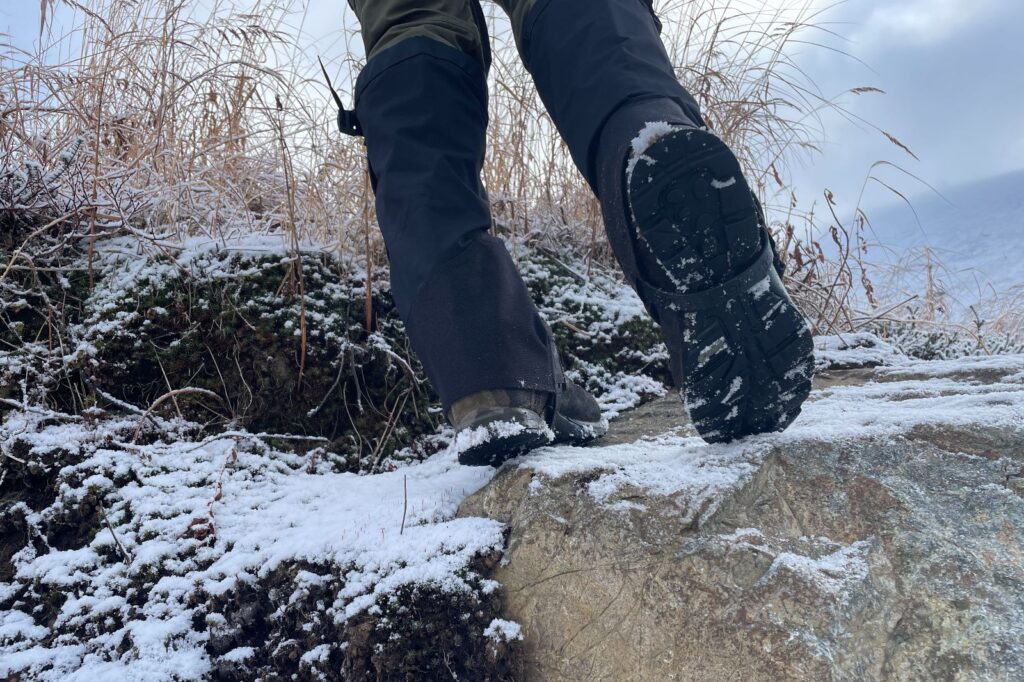
How Do We Assess Ease of Use?
Ease of use refers to how quickly and easily a user can put on, adjust, and remove gaiters in real-world conditions. We tested this by donning, tweaking, and doffing each pair of gaiters in the field. We awarded more points to gaiters that were easy to operate with one hand and when wearing gloves.
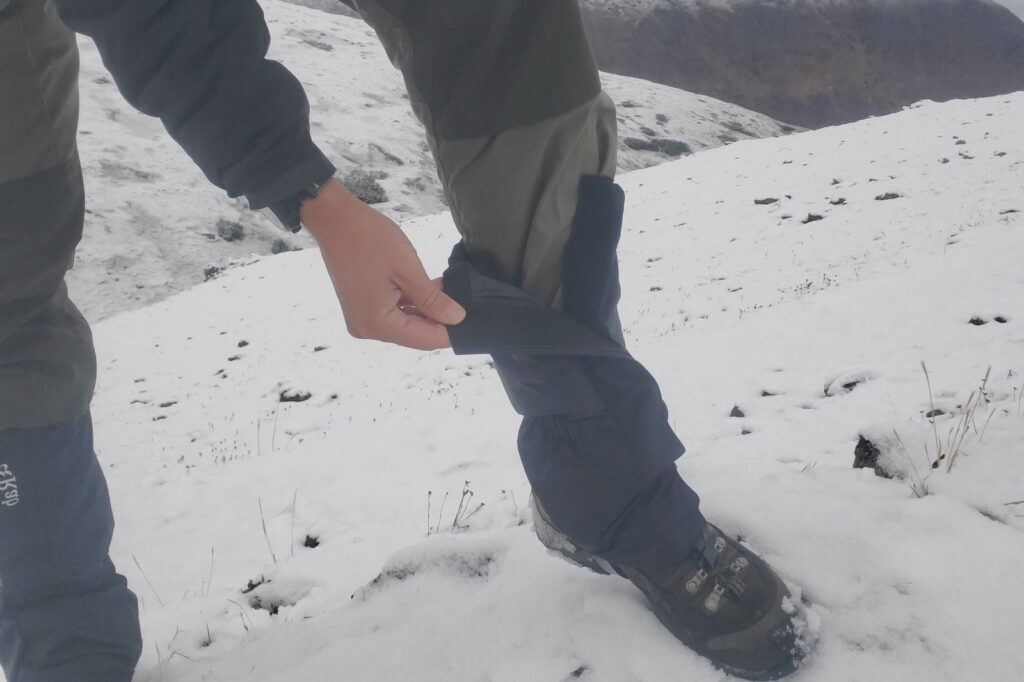
Conclusion
Our favorite gaiters effectively balance coverage, weight, and weather resistance. They are comfortable and breathable enough to forget about during long days on the trail but sturdy enough to endure rocky terrain and exposure to sharp equipment. Low-height gaiters make sense for trail runners and thru-hikers looking to seal out debris on well-trodden trails, while full-coverage waterproof designs are best suited for mountaineering objectives, swampy hikes, and post-holing through deep snow. We hope this guide has led you one step closer to choosing your ideal pair of gaiters!