
Bottom Line
The Cotopaxi Batac 16L is an ultralight, colorful, highly packable bag that works best for travel, town use, and casual outdoor adventures. At only 12 ounces, it is the easiest pack in our daypack field to stash inside luggage or another bag.
Its organization is simple but effective for small essentials, and the wide mesh straps are comfortable with light loads. The one-of-a-kind Del Día colorways also give it a distinctive look that many utility-focused hiking packs lack.
It is not a serious hiking daypack. There is no frame or load-bearing hipbelt, no hydration hose port, minimal padding, and limited ventilation. Carry it light and simple; choose a dedicated hiking pack for long, technical, or gear-heavy days. For more options, see our best hiking daypacks guide.
How We Tested
CleverHiker Gear Analyst Abigail Taylor tested the Batac 16L on mellow hikes along the Boise River and Greenbelt, as an airport personal item, and as a stashable pack carried inside a dry bag while paddling. We used it both lightly loaded and with wet gear to evaluate how the frameless body, mesh straps, simple pockets, bottle storage, and highly compressible construction perform across travel and casual outdoor use.
Quick Specs
- Best for: Travel and casual outdoor use
- Material: 100% deadstock nylon and polyester
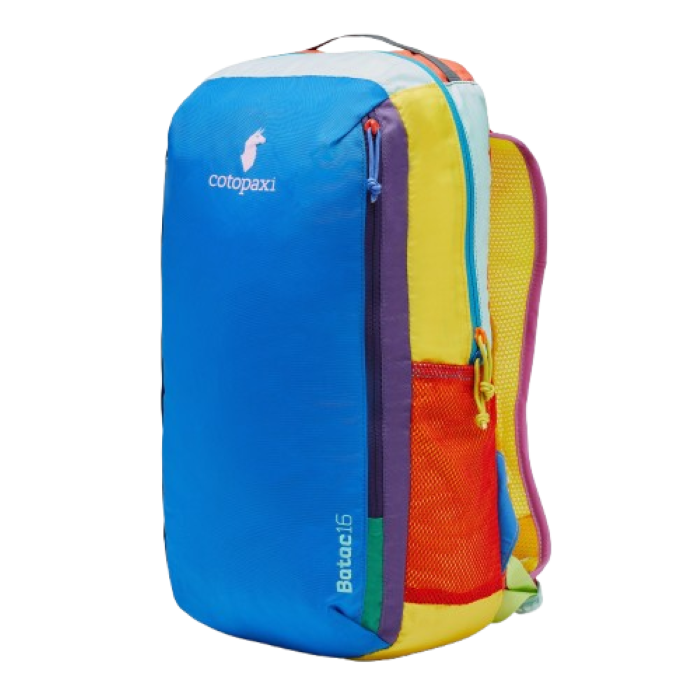
Cotopaxi Batac 16L
Colorful Casual Daypack
CleverHiker Rating: 3.6/5.0
Price: $70
Weight: 12 oz.
Capacity: 16 L
Frame: None
Pros
- Lightweight and packable
- Wide, breathable mesh straps
- Casual design
- One-of-a-kind colorways
Cons
- Not reservoir-compatible
- Minimal padding
- Not well ventilated or hardwearing
- No load support
- More casual than hiking-focused

Comfort
The Batac can feel comfortable with a very light load because the pack itself weighs almost nothing and the shoulder straps are broad enough to spread modest pressure. For travel and short walks, that simplicity is pleasant.
There is very little padding or back-panel structure, however, so the contents of the bag influence how it feels against the body. Ventilation is also limited because the soft rear panel rests directly on the back.
As load weight rises, comfort falls quickly. The Batac is at its best with clothing, snacks, and other low-density essentials rather than liters of water or heavy technical gear.
The wide mesh shoulder straps distribute a light load better than their minimal padding suggests, and the adjustable sternum strap adds enough stability for walking or biking. With no padded hipbelt and limited contact against the back, the Batac also feels open and airy on hot days when it is carrying soft, lightweight gear.
Comfort drops quickly with hard or oddly shaped contents. During a post-paddle hike with wet gear, careful packing was necessary to prevent pressure points because there is no frame or back padding between the load and the body. Weight can also sway more without a hipbelt. The Batac is comfortable for short, soft-load adventures; it is not designed to stay comfortable through heavy or technical all-day use.
Comfort Score: 3.6 / 5.0

Organization
For a simple 16-liter pack, the Batac provides enough separation for everyday use. Small internal storage and exterior pockets help keep travel items, snacks, and small accessories from becoming a single pile.
The layout works better for casual carry than for technical hiking. There is no dedicated hydration hose route, and the bottle and quick-access options are less secure and less specialized than those on trail-focused competitors.
That said, simple organization pairs well with the pack’s intended role: a light, stashable bag that can transition from airport to town to short hike without feeling overbuilt.
A roomy U-shaped main opening makes the Batac easy to load, and a top mesh pocket keeps keys or a headlamp from disappearing into the main compartment. A front zippered pocket adds basic separation, while an internal stash sleeve can hold a map, notebook, or thin layer and provides a small amount of pseudo-structure against the back.
The limitations become obvious when the bag is full. Without a frame, it collapses open during packing and gear can spill out unless the bag is supported. The side mesh pockets are tight and work best with slim bottles, and the exterior gear loops offer only basic clip-on utility. This is enough organization for casual travel and light hikes, not a technical storage system.
Organization Score: 4.1 / 5.0

Support
Support is the Batac’s biggest limitation. The pack is completely frameless and has no load-bearing hipbelt, so all meaningful weight hangs from the shoulder straps. There is also little structure to prevent a dense load from shifting or pressing into the back.
We noticed that limitation most when carrying heavier or wet gear. The bag can physically hold more than is comfortable to carry, which makes disciplined packing important.
For serious hiking, even the lightweight REI Flash 22 provides a more trail-oriented carry. The Batac is best when support is simply not required.
There is no frame, padded hipbelt, or structured back panel, so the Batac offers almost no traditional load support. The shoulder straps and sternum strap are responsible for controlling the entire load. With a few soft layers, snacks, and a bottle, that simplicity is acceptable and helps keep the bag feeling unobtrusive.
Once weight or density increases, the lack of structure is hard to ignore. A wet 15-liter dry bag and other post-paddle gear caused the contents to shift and created pressure points that required repacking. The Batac can physically carry more than is comfortable. For regular hiking with water and equipment, a framesheet or even a more substantial frameless hiking harness provides better control.
Support Score: 3.0 / 5.0

Weight & Packability
At 12 ounces, the Batac is the lightest and most packable product in our current daypack field. Its frameless body folds and rolls easily, making it ideal as a spare bag inside a suitcase, dry bag, or larger backpack.
The 16-liter capacity also keeps the packed bundle small. We found it especially convenient for travel days when a full-size hiking pack would be excessive.
This category-leading packability comes directly from removing structure, padding, and technical hardware. Buyers should choose it because they want those omissions, not in spite of them. For a light secondary bag, that tradeoff is excellent; for serious hiking, it is limiting.
At roughly 12 ounces, the Batac is one of the lightest daypacks we tested and is exceptionally easy to stash. We repeatedly rolled or stuffed it into luggage and dry bags, and the soft frameless body returned to shape without issue. That makes it particularly useful as a secondary travel bag when space and weight are limited.
There is no compression system once the pack is in use. With a partial load, the body can feel loose or floppy because exterior straps cannot cinch the contents closer together. That is the other side of its packability advantage: removing frames, padding, and compression hardware saves weight and storage space, but it also reduces load control on the trail.
Weight & Packability Score: 5.0 / 5.0

Should You Buy the Cotopaxi Batac 16L?
Buy it if you want a fun, ultralight travel or everyday pack that can handle occasional easy hikes. Do not choose it as your primary hiking daypack if you need hydration compatibility, load support, durable technical storage, or comfort with heavier gear.

What Other Daypacks Should You Consider?
REI Flash 22 Review: The Flash 22 is similarly packable but much more hiking-focused. It offers more capacity, a removable sit pad, hydration compatibility, and a layout that works better for a normal trail kit. The Batac is lighter, more colorful, and easier to treat as a casual travel bag. If you expect to hike regularly rather than occasionally, the Flash is the stronger minimalist choice.
Osprey Daylite Plus Review: The Daylite Plus is a better option if you want one bag for commuting, travel, and casual hiking but need more structure and everyday organization. Its hydration sleeve doubles as laptop storage, and the shoulder harness handles moderate loads better than the Batac’s minimal construction. The Batac is lighter and packs smaller. Choose Cotopaxi for stashability; choose Osprey for broader day-to-day usefulness.
Osprey Sportlite 20 Review: The Sportlite is the affordable step up when you want a pack that is genuinely designed for hiking. Its ventilated back panel, framesheet, bottle storage, and trail-oriented organization provide much better comfort and control with water and gear. The Batac remains lighter and easier to pack for travel. For regular hiking, though, the Sportlite’s extra structure is worth the modest increase in weight.