

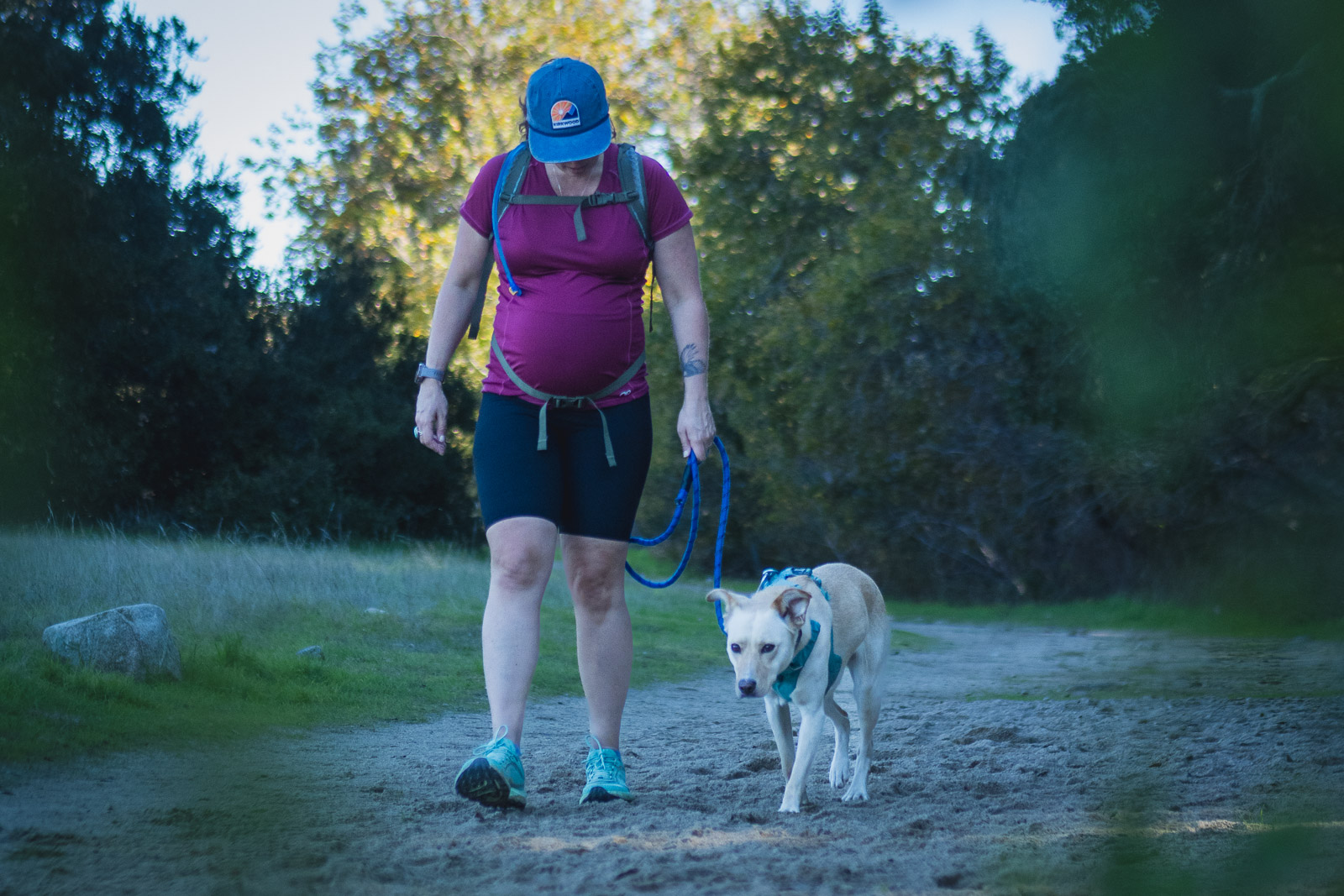
When I first saw the plus sign on a pregnancy test, I was mostly shocked and scared. Also, I was excited that something I didn’t think could happen for me was happening. Then, my mind quickly wandered to my already planned backpacking trips in Grand Teton and Yosemite National Park. What will it be like? Will I still be able to do it? What changes should I make to our plans and to what’s in my pack?
Whether you’re pregnant, are the adventure partner or friend of a pregnant person, or contemplating what that would look like in your future, most of us don’t know the answers to these questions straight away. If doing your normal three-mile loop feels like Everest, that’s okay! Every pregnancy is different, and some will prefer dog walks and car camping over uphill hikes and backpacking.
But, if you’re curious and find you have a little bit of energy left after all the other bodybuilding you’re doing from the office or the couch, we have a few learnings to help keep things a twinge less intimidating and a tad more comfortable.
1. use A Hydration Bladder With A Straw
This might not seem like the most important adjustment to your hiking/backpacking setup, but every doctor and nurse I’ve spoken to, and every book I’ve read, has referenced dehydration. It’s a potential cause of numerous pregnancy symptoms, and it is a common symptom on its own (WebMD).
During my first trimester, it felt like no matter how much water I drank, I couldn’t stymie the dry mouth feeling, even while working at my desk or sleeping at night. While on a hike, add sweating, moving your body, maybe hiking uphill or backpacking at higher elevations, and you’re bound to see an increase in thirst.
Over the past few years, my partner and I have preferred to use a Nalgene, or other reusable bottles, that we can easily refill throughout our days while backpacking. This allowed us to carry less weight from water. However, I learned on the first few treks of my pregnancy that the frequency I needed to stop and drink water was often, annoyingly often. Since I changed to the hydration bladder, I’ve been happier, more comfortable, and more confident in my ability to keep going.
In addition, I’d recommend carrying electrolyte tablets. I would fill my coffee mug with filtered water and an LMNT packet during our lunch break, or once we got to camp, while backpacking. (I would not recommend adding the electrolyte mixes to your hydration bladder, as it is a pain to clean the flavor out for good.) If you’re on a day hike, consider keeping a water bottle in your car with some added electrolytes so it’s waiting for you when you return extra parched.
2. Pack All The Snacks, Especially Salty Ones
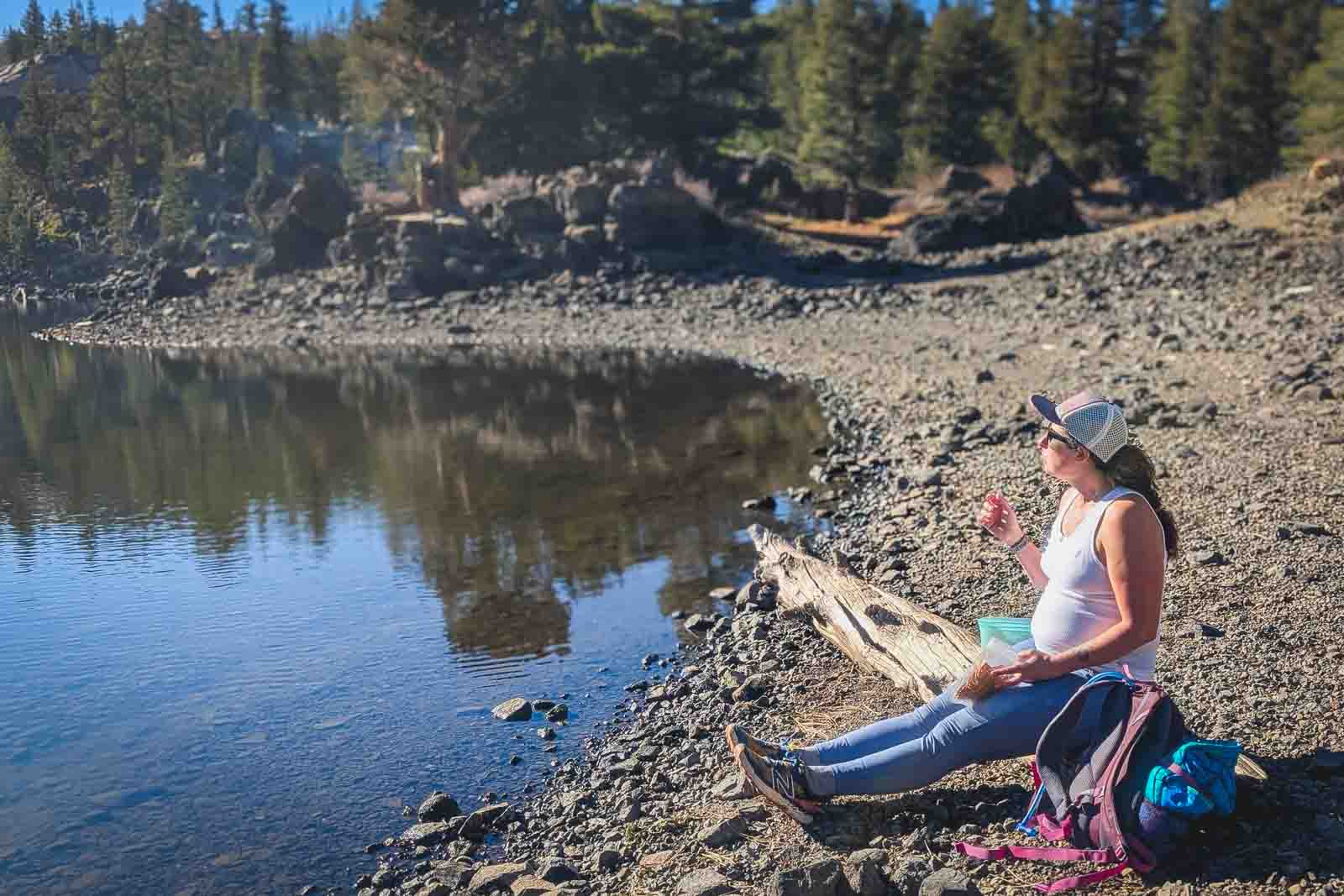
Hunger should be as synonymous with pregnancy as morning sickness. For me, my first real sign I was pregnant was waking up starving in the middle of the night. There were a few occasions during the first trimester when I even kept a Larabar next to me while sleeping so that I wouldn’t have to crawl out of bed and find something to eat. My husband joked that he kept hearing a mouse nibbling in the middle of the night. I did this in the frontcountry and in the backcountry (while always being mindful of bear safety regulations).
But snacks aren’t just needed during the cold, dark hours. However many snacks you usually pack for a backpacking weekend, or a day hike, you should double that, at least. Also, you might find that different types of snacks are more enticing and easier to consume, or more nutritionally beneficial.
High-protein snacks are always smart because pregnant people need more protein and calories than when not growing another human’s organs. I personally found myself wanting salty snacks more than anything. Cheezits, pretzels, and salty cashews are a few of my favorites. I’ve heard from others that they craved more sweets, and research shows that there is a wide variety of common cravings (Flo Health, PubMed). Either way, experiment and bring extra. You’re going to need it!
3. Listen Inward. Slow Down. Take Breaks.
As your uterus and the fetus grow larger, other organs are pushed around, including your lungs and bladder. In addition to having less space for the lungs, there is an increase in the hormone progesterone. There is also an increased volume of blood in the body that makes one’s organs work harder. Lastly, the pregnant parent and baby are sharing oxygen supplies. All of these make breathing while moving or talking more challenging (Healthline.com).
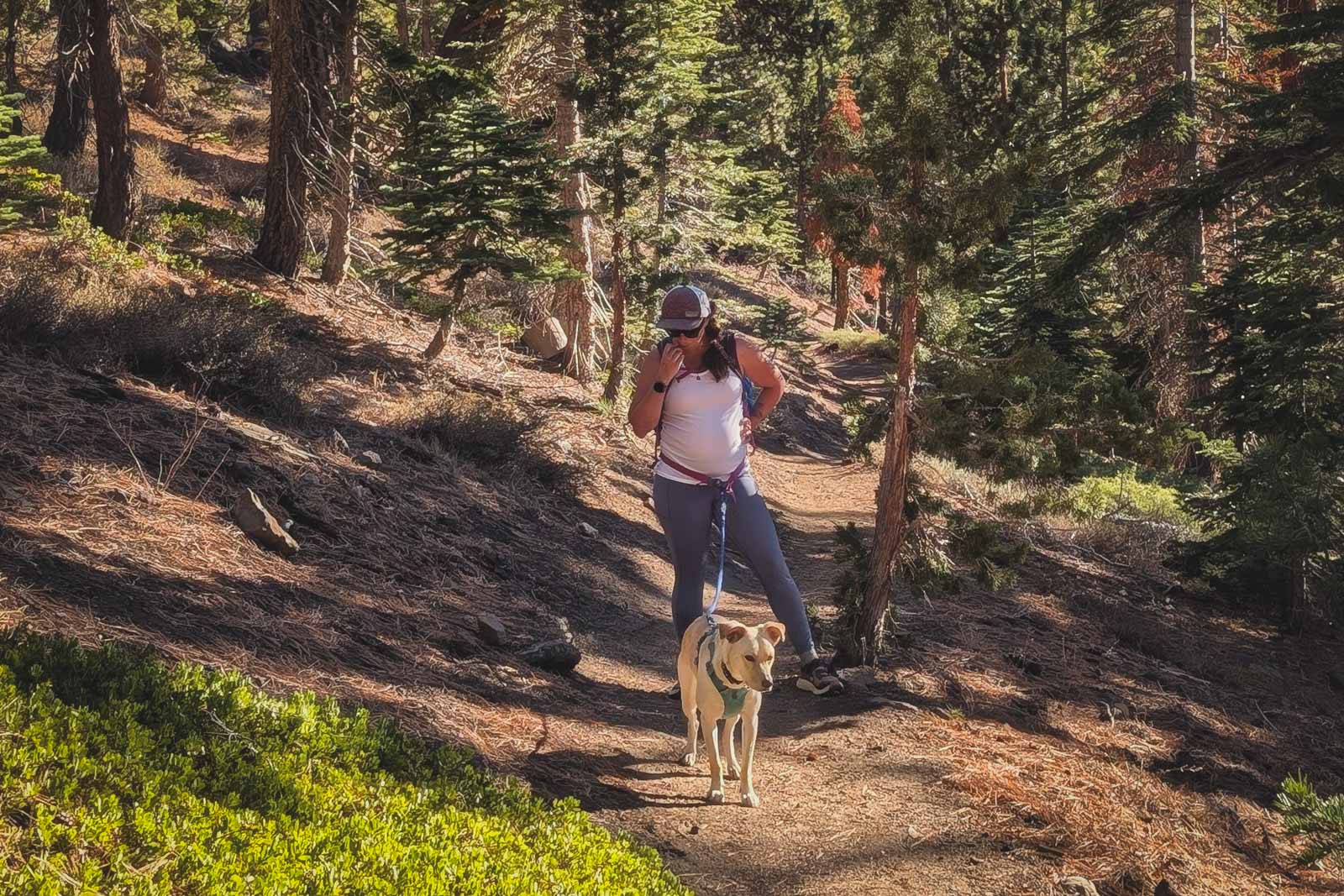
So, be ready for, and make sure to add in, a lot more breaks while on the trail. You can stop just to catch your breath, or use these breaks to enjoy a snack, drink water, adjust your clothing, rub your belly, or sit and rest your body, all of which give you some space to breathe.
Moreover, people who are pregnant tend to feel pressure on their bladder more often, which means more breaks to dash off into the woods to squat. Due to this, a Kula Cloth, or other pee rag, is highly recommended to make bathroom breaks quicker, more hygienic, and following leave no trace principles, “for anybody who squats when they pee (or uses a pee-funnel).”
4. Plan For Lower Mileage & Elevation And/Or Longer Time On The Trail
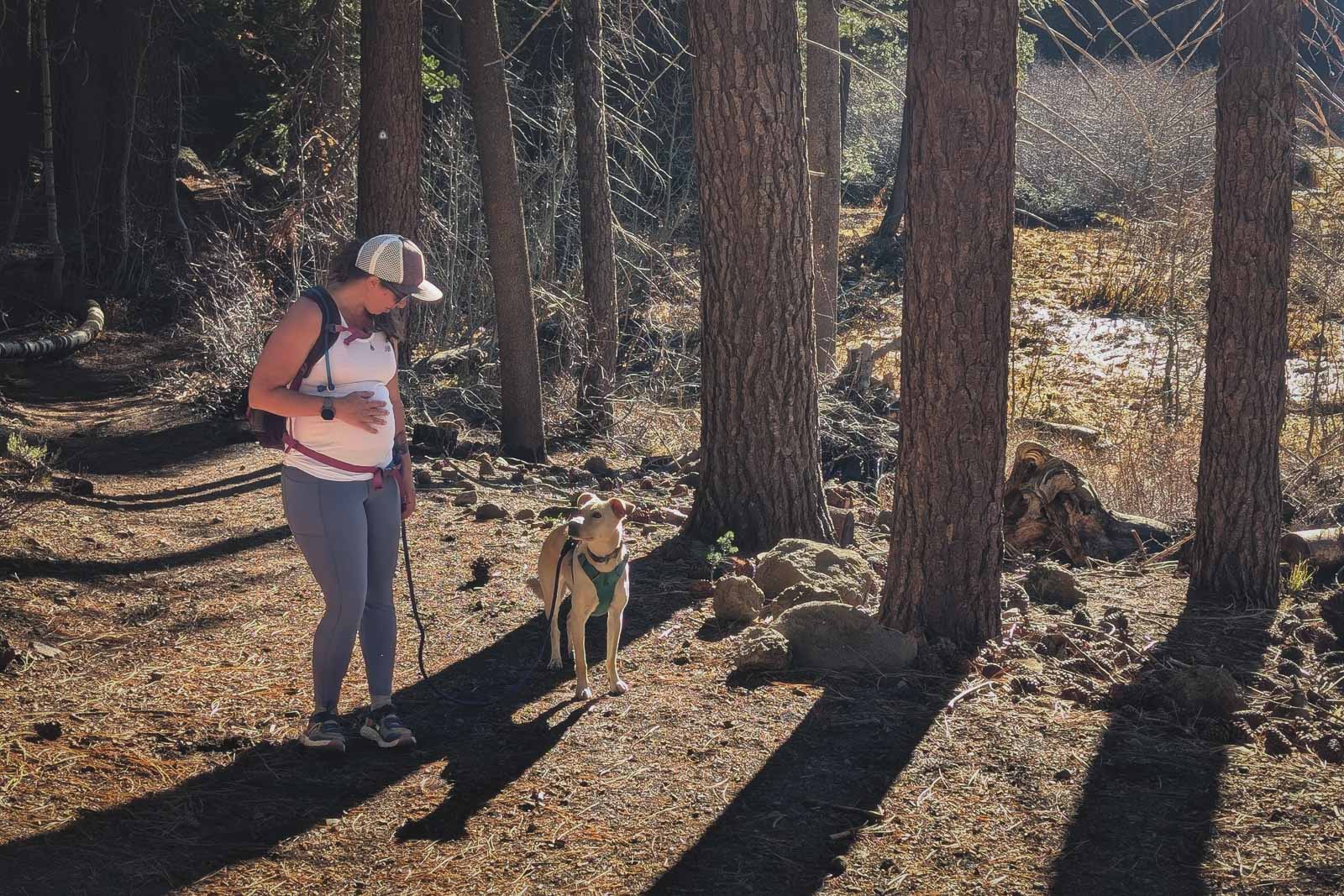
Another reason one might find themselves moving at a slower pace is from carrying extra weight, primarily in the uterus. Personally, I have also been intentionally hiking more slowly because I tend to trip and fall. I have adopted a no-fall mentality, so I take more gentle and cautious steps.
Regarding total mileage, I’ve been lucky enough during my pregnancy to knock out the miles I wanted or hike to the pristine and remote alpine lakes that I sought. But, they did take much longer to complete than they would have in the past. Also, I intentionally chose trails with fewer miles or less elevation gain, especially when other pregnancy symptoms (like headaches) were rampant. For those living at lower elevations, consider the additional effects of elevation change, since many of those symptoms are similar to common pregnancy symptoms (BabyCenter).
I’d also encourage people to try and be okay with canceling or modifying plans. Years before I even considered becoming a parent, I read quite a few articles from people sharing how uncomfortable it is to backpack while pregnant, so I thought it wouldn’t be possible. However, I’ve learned that for some, it can be feasible, and even enjoyable, when we make adjustments in expectations and goals.
5. Choose Adventure Partners Wisely
For me, the best way for us to be okay with a change in plans is to surround ourselves with people who are also happy to slow down, cancel, or spend a few more hours on the trail than usual. It reminds me of choosing partners for backcountry skiing — you want people you feel comfortable with, can trust, and who are okay with turning around in the name of safety.
My hiking and backpacking partners throughout pregnancy have been the friends who prefer to slow down, take photographs, enjoy snacks by the lake, admire the views, are never in a rush to get back home, and are out there on the trail with me to spend time together, not bag miles or peaks. And even if you think they are already owning this type of vibe, it’s always good to set expectations up front with something like, “I’m not sure how far I will make it today,” or, “What time do you want to get back to the trailhead?”
6. Modify Your Equipment
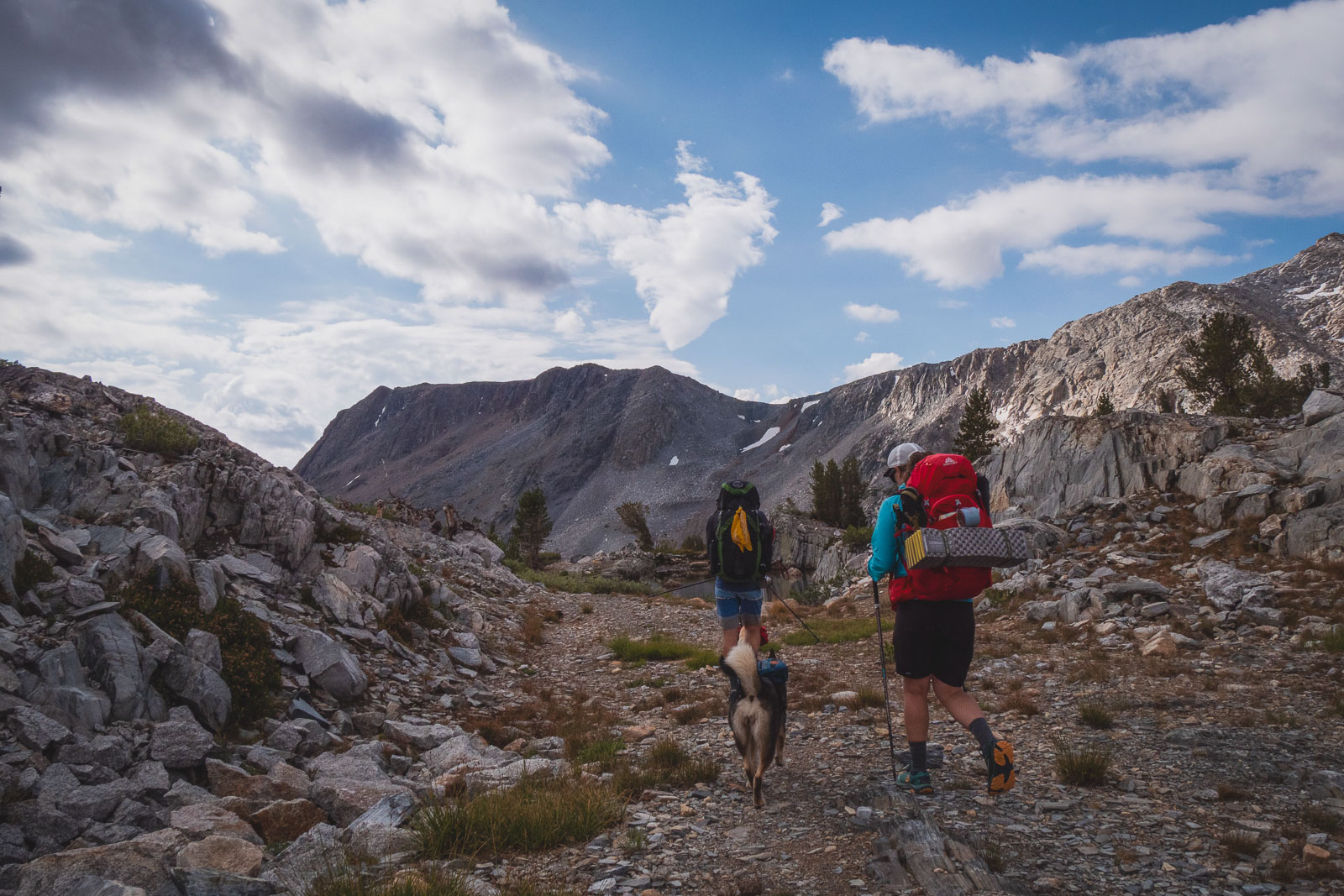
The first adjustment will be where you place your hip belt on your midsection. For me, when I’m not pregnant, I wear mine higher up, at the very tip of my hips, near my belly button. But even in the early weeks of pregnancy, I needed to adjust the hip belt low, under my belly. As your uterus and the fetus grow, this becomes more obvious, but it’s helpful and important even in those early days.
It’s a similar positioning to how you will need to wear a seatbelt in the car or on a plane (ACOG). I adjusted the height of my shoulder straps on my rucksack in order to accommodate tightening the waist strap lower down on my hips. Many higher volume packs have a velcro feature to make this easier.
Also, you might opt for a lower-capacity pack (than you would typically use for overnights), a newer pack, or simply one that fits your body more comfortably. Alternatively, for day trips, you might prefer a higher-capacity pack so that you can fit in more snacks, water, and layers.
In addition, if you’re not already hiking with poles, now is a good time to adopt these handy tools for weight distribution and balance. They’re also a great workout for your arms! Other considerations include modifying your sleeping pad to a thicker, slightly more luxurious option, or adding a camp chair to the kit (and it’s okay to ask a trail partner to pack it in for you).
7. Allow Others To Help Carry The Load
If you’re like me, you might take pride in being the person on the trail who carries an equal load to their partner. However, now is a great time to indulge in the pampering experience of letting your friends carry more, or all, of the shared gear.
Typically, my partner and I split the load of the tent, stove, fuel, and food, but as I got further along in my pregnancy, I was happy to let them carry as much as they could fit in their bag. Not only is the person who is pregnant likely already carrying extra weight than they are used to (due to uterus growth, the fetus itself, water retention, and more), but they also might be experiencing more difficult breathing, constant acid reflux, excessive bloating, nonstop flatulance, excruciating headaches, extra sweating, plus needing to wear their pack differently, and maybe wearing different clothes. We are already carrying a lot – the less physical weight on our backs, the better.
8. Be Prepared To Adjust Clothing Choices Each Week
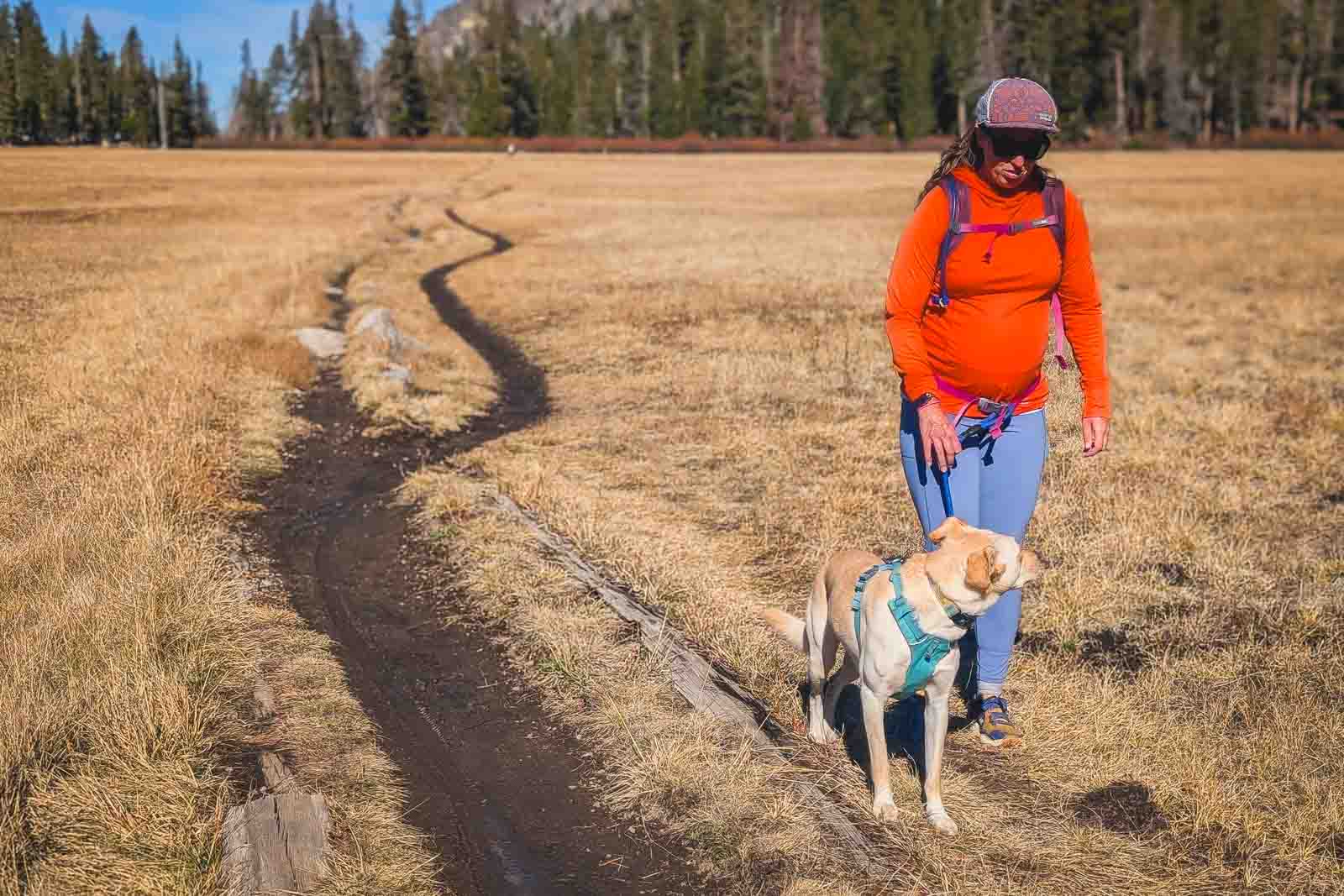
As the uterus and fetus grow, a pregnant person’s clothing will fit differently every week. What might have been comfortable on the last trail day might no longer be the best choice. On my first backpacking trip, about six weeks into pregnancy, I was still able to wear my favorite hiking shorts (since they have a stretchy, leggings-type waistband). On my second backpacking trip, I wore the same brand and model of shorts, but in a larger size. Since then, on almost all my hikes and walks, I have worn either my stretchiest, softest hiking leggings (Women’s Patagonia Maipo 7/8 Stash Hiking Leggings, sizing up midway in the second trimester) or my maternity bike-style shorts.
In terms of tops, in the first trimester, when my bump looked more like I ate a big burrito for lunch than an actual baby, I wore my baggy (I’d already sized up) button-up Party Shirt, or a similar thrift-store score. But as the bump grew, I preferred tops that were close to the skin and stretched with the belly. I found less chafing with this wardrobe update. My Outdoor Research (OR) Echo T-Shirts, or layering the OR Echo Sun Hoodie with a long stretchy tank top underneath, are my go-to choices now, toward the end of the second trimester. (Note: I already had sized up on these tops, so they were able to stretch over my belly). Most pregnancy books and friends warn about foot swelling, so you may need to adjust your sock and shoe choices.
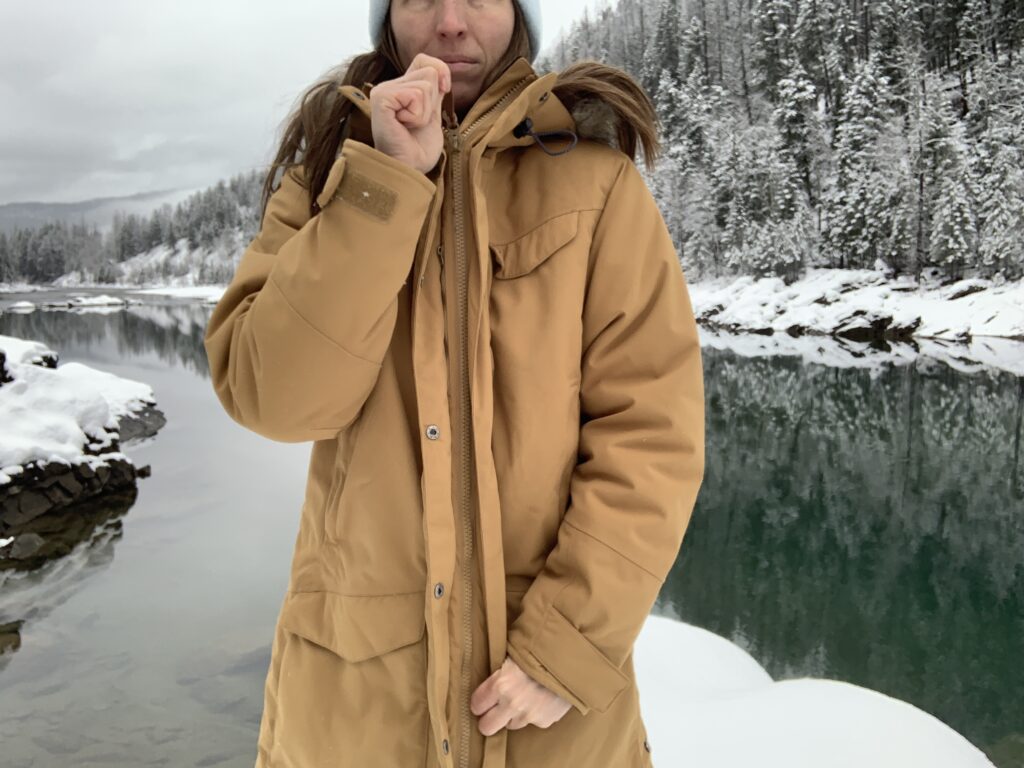
If you’re navigating the trails during colder and/or snowy months, consider borrowing clothes from a partner or friend who wears larger sizes or shopping at a local consignment store or second-hand online marketplace. Layering, from tank tops to wicking layers, through outer shells, is going to be key. You also might find that you need less warmth than before because people who are pregnant tend to run hotter.
9. Utilize Wet Wipes And Baby Powder
I learned the hard way how much more one can sweat while pregnant. (A 16-mile day hike ended with an uncomfortable shower and scorching surprise sores popping up in all kinds of nooks and crannies.) Due to hormones, we get overheated more often, and we secrete more sweat (Cleveland Clinic). To stay clean, wet wipes are super helpful on overnights or long days. Keep in mind that this chaffing might occur in areas that have never rubbed before, like under breasts, or between the cheeks, or even more intensely under your shoulder straps. Baby powder, or a runner’s glide gel, can help.
10. Remember Your ‘Why’ And Lean Into It
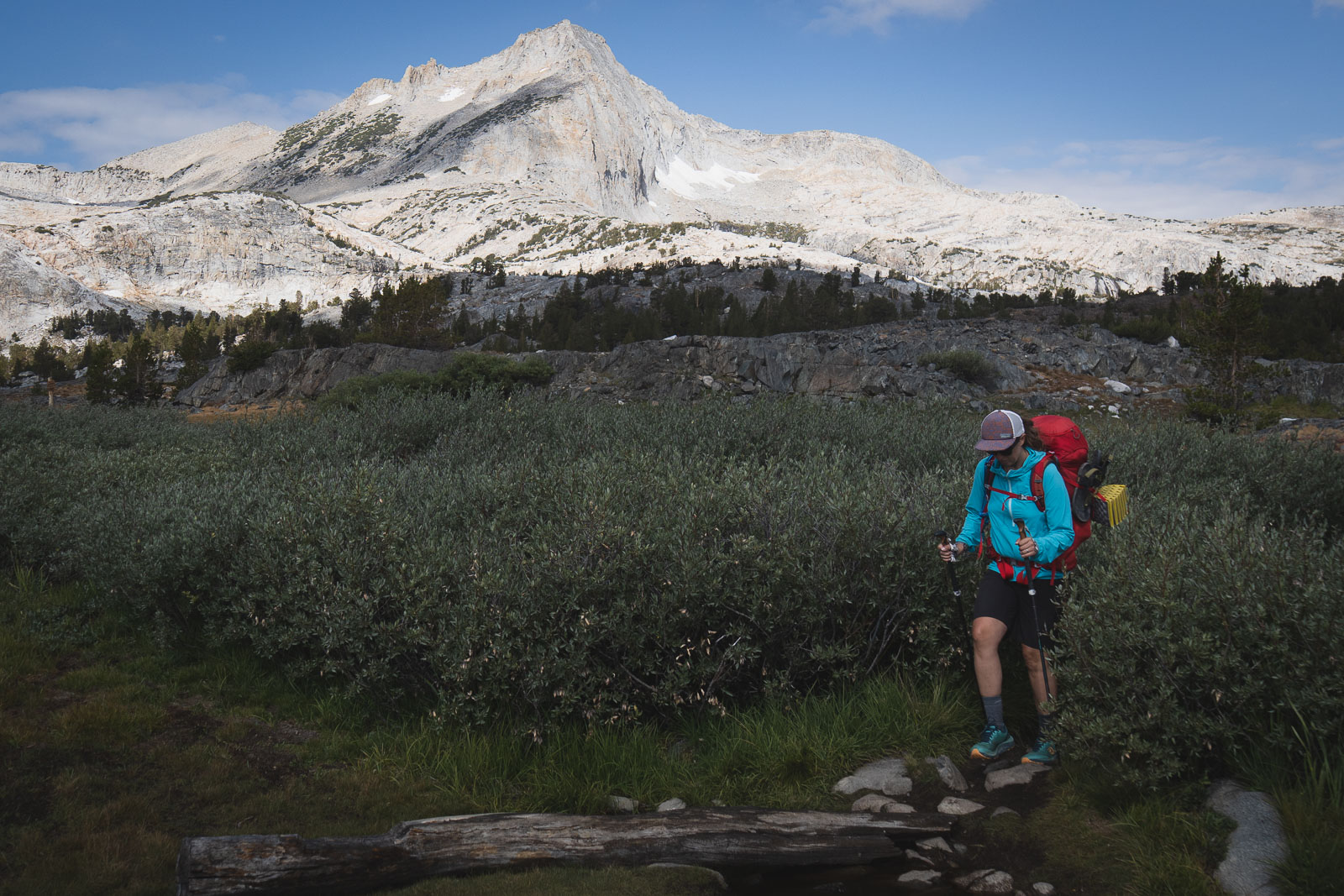
I’ll never forget a middle-of-the-night pee break during a backpacking trip at the very beginning of my second trimester. We chose an area where we could hike one to three miles to camp, and the elevation gain was minimal. Although I had a gnarly headache on the hike in, and we were caught in the worst hail and thunder storm I’d ever navigated while camping, it was all worth it for the quiet and the stunning scenery. That night, the Milky Way was bright and dense, filling a full 180-degree strip of the sky.
Whether you’re out there for time with friends, a remote break from tech, or a swim in an alpine lake, with a few adjustments to gear, plans, and expectations, we can make it happen and do it fairly comfortably. Maybe not as comfortably as when not pregnant, but the pain might be worth the gain to allow a person who is pregnant to feel a little more like themselves for a few minutes or miles.
On the hike out from that same trip, we passed a dad with his maybe eight-year-old daughter, heading towards the mountains and the lakes. I smiled, thinking, “That’s our future,” and it will have its own set of challenges, whys, and highlights that we can’t even imagine yet.