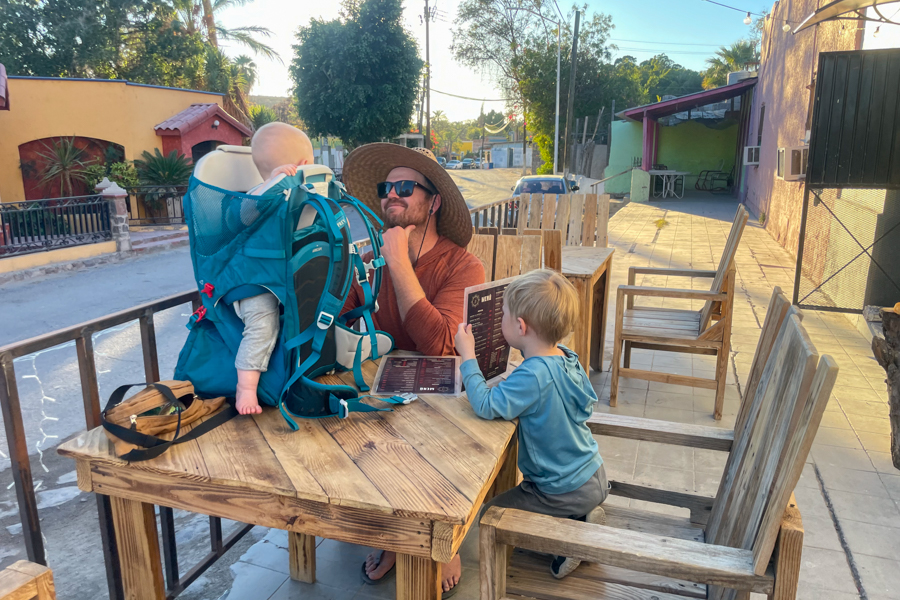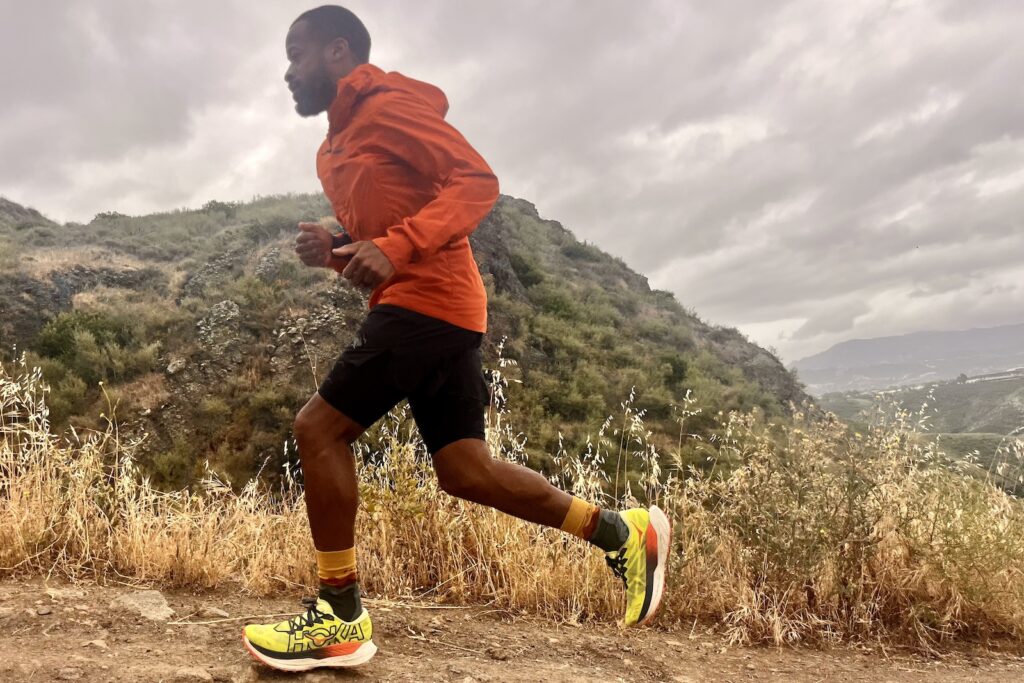


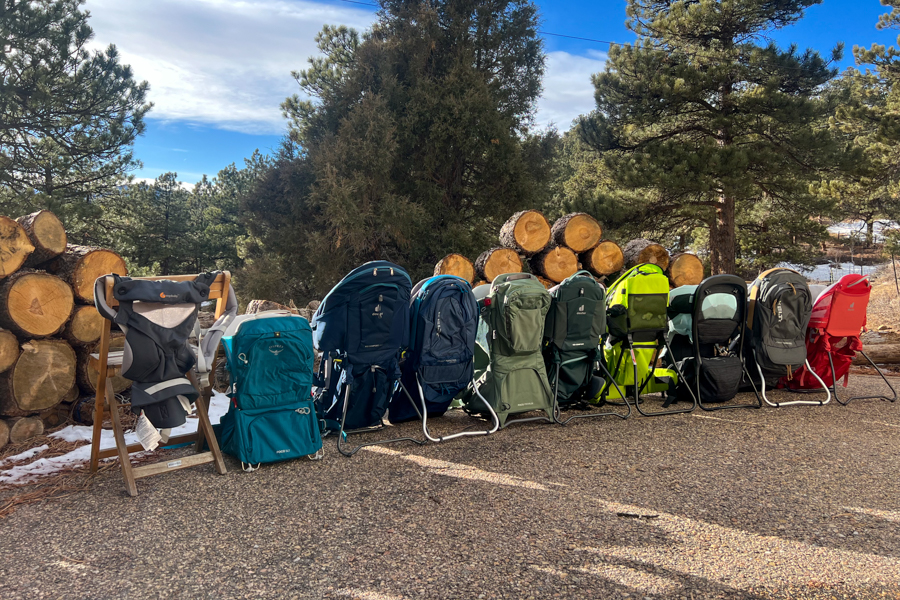
For this guide, we researched more than 30 baby backpack carriers and tested over a dozen standouts. Our list of 10 carriers below covers the full gamut, from minimalist soft carriers to feature-packed framed packs for gear-intensive hikes and overnights.
Editor’s Note: We updated this guide on August 27, 2026, to ensure all prices and product specifications were accurate. We also added details on How We Test Baby Backpack Carriers.
How We Test Baby Backpack Carriers
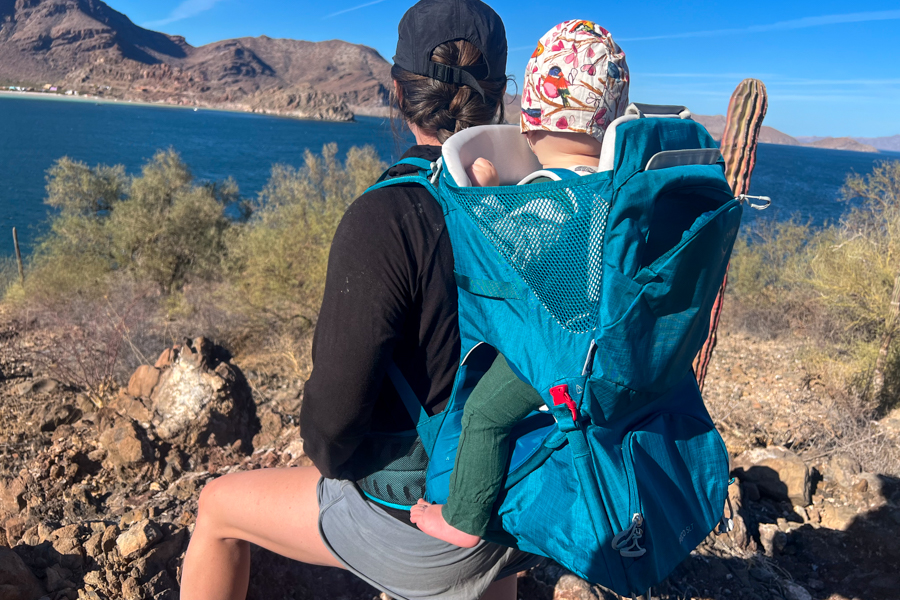
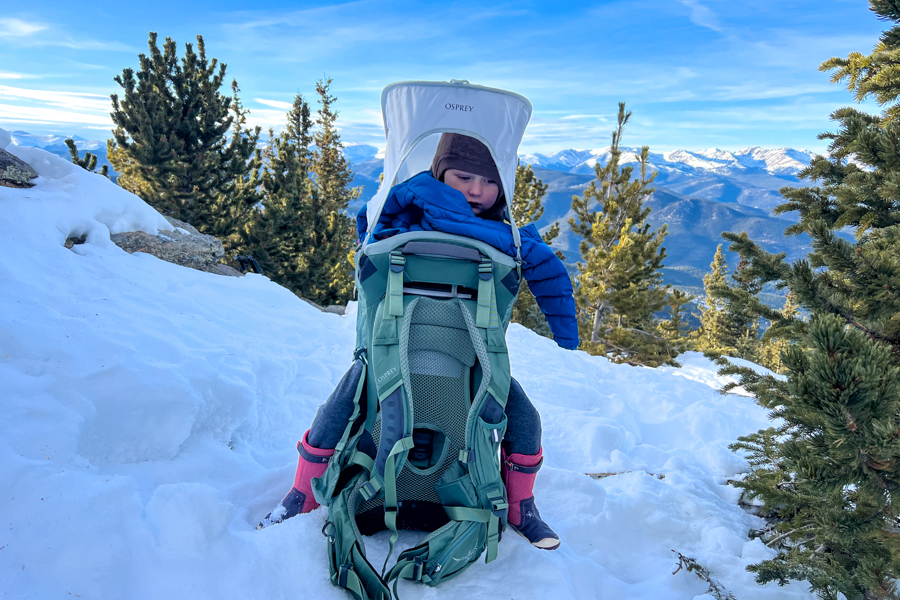
Over two years of testing, we logged more than 500 miles with babies and toddlers from seven months to four years old. We tested carriers from Osprey, Deuter, Kelty, Thule, and more on snowy Colorado trails, desert hikes in Baja California Sur, neighborhood walks, grocery runs, and road trips. To earn a spot on our list, each pack had to score high in our key testing metrics: comfort, features, durability, storage, organization, and weight.
And for more info, check out some of our other popular gear guides:

#1. Best Baby Backpack Carrier Overall
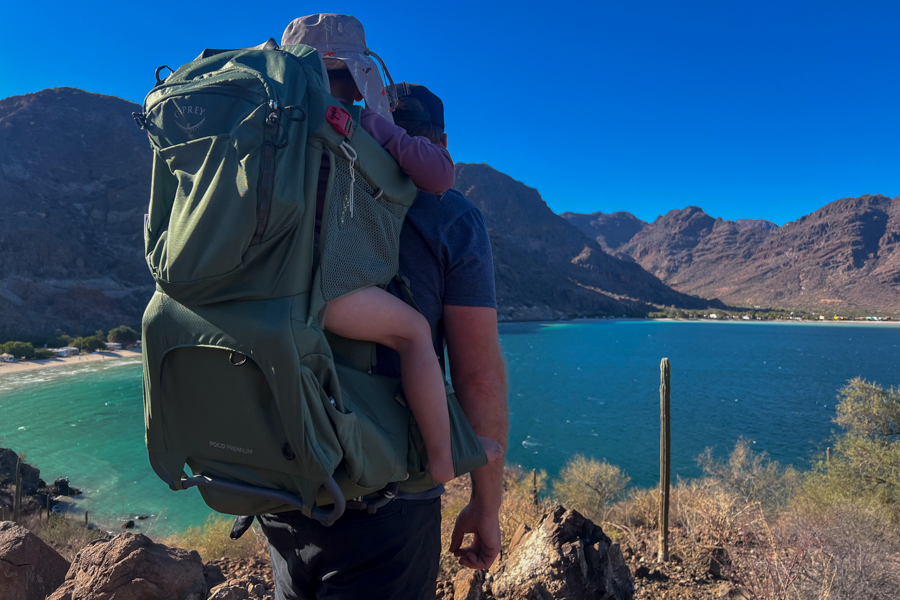
The Osprey Poco Premium Child Carrier earns our top spot for its impressive comfort for both caregiver and child, generous storage, and trail-ready features. After testing baby backpack carriers across more than 500 miles, it stood out as the most complete and confidence-inspiring option.

Quick Picks for Baby Backpack Carriers
Check out this quick list of our favorites if you’re in a hurry, or continue scrolling to see our full list with in-depth reviews.
1. Best Baby Backpack Carrier Overall: Osprey Poco Premium ($450)
2. Best Baby Backpack Carrier Runner-Up: Deuter Kid Comfort ($330)
3. Easiest-to-Adjust Baby Backpack Carrier: Kelty Journey PerfectFIT Elite ($400)
4. Most Ergonomic Baby Backpack Carrier: Thule Sapling ($400)
5. Best Soft Carrier for Hiking: Osprey Poco Soft Child Carrier ($160)
6. Best Baby Carrier with a Women’s-Specific Fit: Deuter Kid Comfort Active SL ($280)
7. Best Lightweight Baby Backpack Carrier: Osprey Poco SLT ($280)
8. Most Well-Rounded Baby Backpack Carrier: Kelty Journey PerfectFIT Signature ($370)
9. Most Comfortable for Tall Children: Deuter Kid Comfort Pro ($390)
10. Best Features at a Budget Price: Luvdbaby Toddler Carrier Backpack ($222)
Osprey Poco Premium
Best Baby Backpack Carrier Overall
CleverHiker Rating: 4.8/5.0
Price: $450
Weight: 8 lb. 5.4 oz.
Volume: 36 L
Max Carry Weight: 48.5 lb.
Pros
- Massive carrying capacity
- Loaded with features
- Vents well for carrier and passenger
- Washable five-point harness
- Adjustable fit
Cons
- On the heavier side
- One of the pricier options
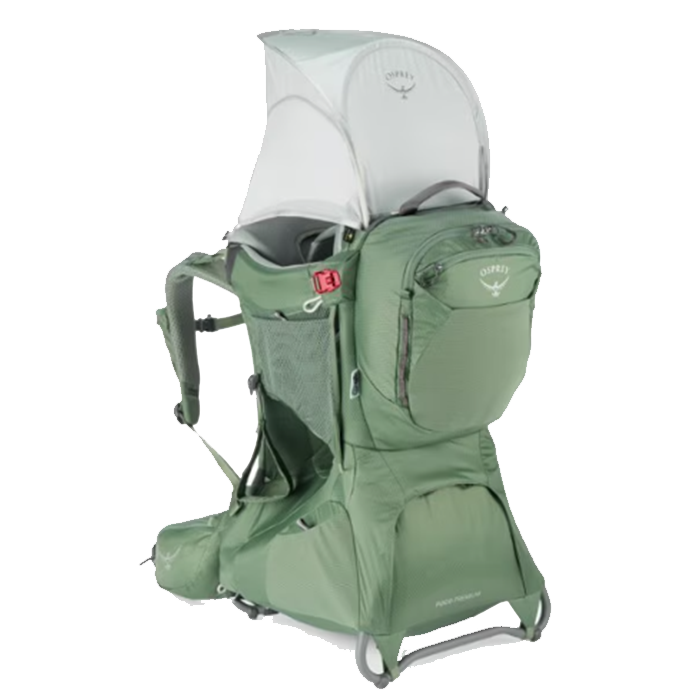
The Osprey Poco Premium is the ultimate child carrier for families seeking top-tier comfort, storage, and functionality for extended adventures. Featuring a cozy child cockpit, an impressive 36 liters of storage capacity, and premium extras like an integrated sunshade, the Poco Premium is well equipped for long trail days, gear-heavy winter excursions, and even overnight trips.
We found the Poco Premium to be comfortable for both caregivers and little ones. Osprey’s adjustable suspension system, cushioned shoulder straps, and supportive hipbelt distribute weight effectively, relieving strain on the caregiver’s back even during all-day hikes. For the child, the padded seat and adjustable stirrups keep them happy and comfortable, and a removable, washable chin pad provides a cozy place to rest their head.
Despite weighing 8 pounds, 5.4 ounces, the pack carries remarkably well with no pressure points or areas of discomfort. Storage is another area where the Poco Premium excels, offering 36 liters of space that helps keep all your essentials organized and accessible.
Although the Poco Premium is the heaviest and most expensive carrier in Osprey’s lineup, its premium features, durability, and versatility justify the investment. It’s overbuilt for shorter or more casual outings, but those who plan to utilize the capacity and features will find a lot to love.
Deuter Kid Comfort
Best Baby Backpack Carrier Runner-Up
CleverHiker Rating: 4.7/5.0
Price: $330
Weight: 7 lb. 1.9 oz.
Volume: 14 L
Max Carry Weight: 53 lb.
Pros
- Included sunshade and footrests
- Easily adjustable
- Comfortable for the caregiver and child
- Made without PFAS
- Easy side entry for child
Cons
- Sunshade offers limited protection
- Kickstand can be hard to flip in and out
- Premium price point
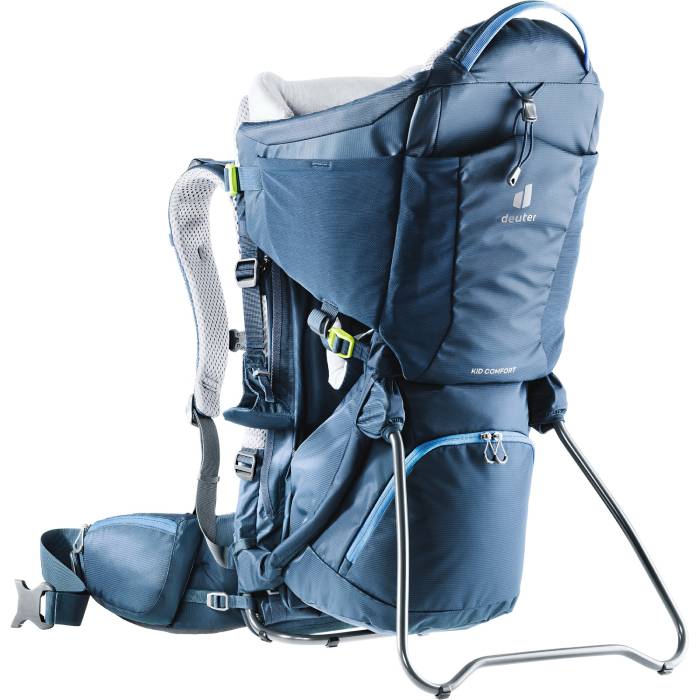
The Deuter Kid Comfort is an excellent all-around child carrier, offering top-tier comfort and durability in a thoughtful package. It’s a standout everyday carrier that transitions seamlessly for after-work hikes or weekend adventures.
The padded shoulder straps, adjustable VariSlide system, and ventilated Aircomfort back panel make it one of the most comfortable carriers we tested, even on longer hikes. Our analysts found that it easily adapts to various body types, allowing parents of different heights to share carrying duties.
For passengers, the ergonomic cockpit provides a cozy ride with a well-padded seat, adjustable foot stirrups, and a plush chin pad. The included sunshade is a thoughtful addition on sunny days, though we’d appreciate improved side coverage in future models. Nevertheless, the Kid Comfort ensures little ones remain secure and happy on the trail.
Storage is fairly modest but thoughtfully laid out. With 14 liters spread across multiple compartments, the Kid Comfort has enough room for day hikes and shorter trail days without feeling overly bulky. Though far from the biggest cargo capacity in our lineup, the organization layout is practical, and the included hydration sleeve makes it easy to carry a reservoir to keep water accessible on the move.
At just over 7 pounds, the Kid Comfort isn’t the lightest carrier, but its weight feels reasonable given the sturdy build and premium features. It’s a durable and reliable option that has withstood rigorous testing, from rugged Colorado trails to everyday use around town.
Kelty Journey PerfectFIT Elite
Easiest-to-Adjust Baby Backpack Carrier
CleverHiker Rating: 4.6/5.0
Price: $400
Weight: 7 lb. 6.5 oz.
Volume: 26 L
Max Carry Weight: 48.5 lb.
Pros
- Packed with features
- Designed with parents in mind
- Loads of storage
- Comfort-focused feature set
- Easily adjustable
Cons
- Harness could be easier to clip
- Back panel doesn’t ventilate well
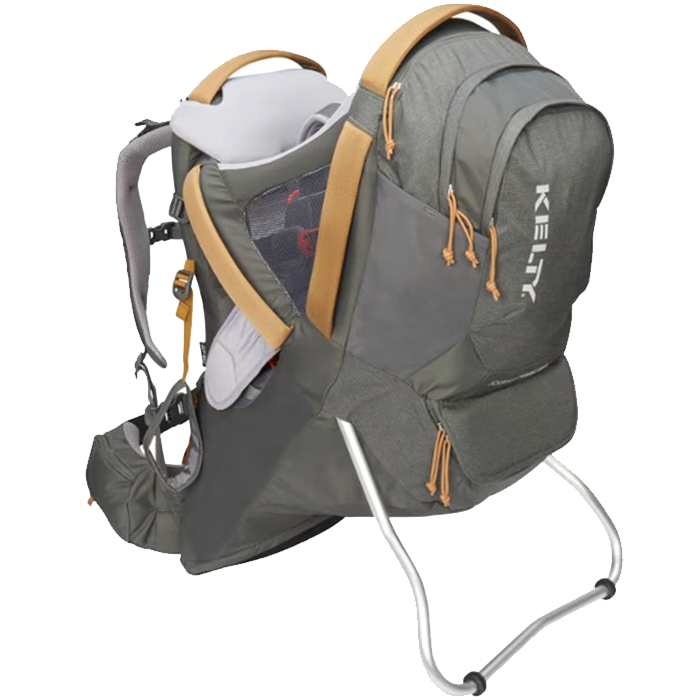
Kelty’s premium child carrier, the Journey PerfectFIT Elite, scored high marks for its versatility, comfort, and thoughtful features. This carrier truly feels like it was designed by parents for parents. Combining Kelty’s signature PerfectFIT adjustment system with ample storage and family-friendly features, this pack is an excellent choice for hikes and outdoor adventurers.
For parents, the PerfectFIT Elite stands out for its intuitive adjustment system, padded shoulder straps, and supportive hipbelt. These features help evenly distribute the weight for a comfortable carry, even on extended hikes. This is the only pack we’ve tested that allows you to adjust the torso length while wearing the carrier, which is very handy for splitting carrying duties with a partner.
We found the padded child cockpit equally impressive, with features like adjustable stirrups, a cozy chin guard, and an integrated sunshade to keep little ones relaxed and protected on the trail. We were also impressed by the carrier’s overall storage. In addition to a spacious 26-liter capacity, the PerfectFIT Elite includes practical touches like a lined bottom pocket for easy cleanup, side mesh pockets for water bottles, and a dedicated hydration sleeve.
Although it’s not the lightest carrier available, the balance of features and durability makes it a solid choice for families who prioritize practicality and comfort over minimalism.
Thule Sapling
Most Ergonomic Baby Backpack Carrier
CleverHiker Rating: 4.5/5.0
Price: $400
Weight: 8 lb. 6.4 oz.
Volume: 22 L
Max Carry Weight: 48.5 lb.
Pros
- Seat keeps kids' legs in the “M” position
- Decent features
- Kickstand doesn’t interfere with storage
- Good adjustability
- Removable and washable drool pad and seat
- Carries weight well
Cons
- No obvious water bottle pocket or hydration pack sleeve
- No dedicated sunshade pocket
- One of the more expensive options
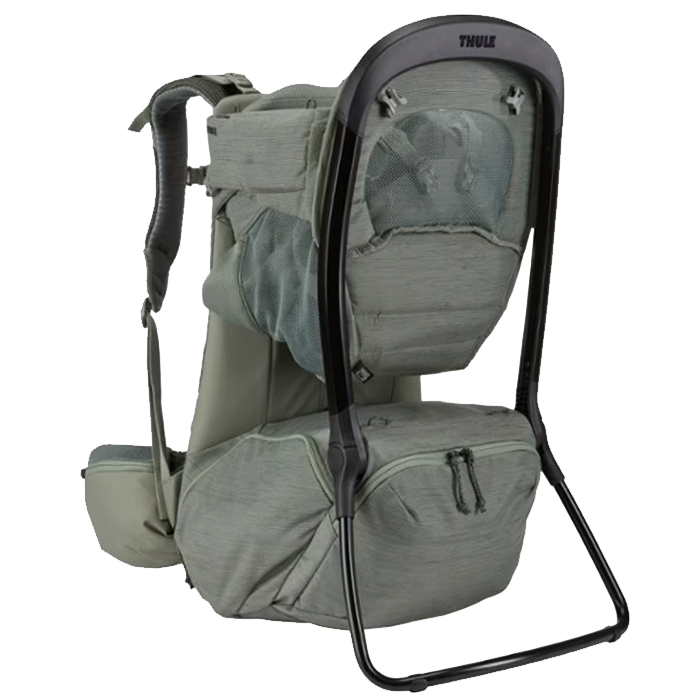
When we received our Thule Sapling for testing, it seemed a little overbuilt and lacking in finesse. As it turns out, we were dead wrong. The Sapling is a well-engineered, fully featured pack with excellent comfort, adjustability, and durability for caregivers and kids on all-day hiking adventures.
The unique ErgoRide seat design keeps children’s legs in the ergonomic “M” position, providing optimal support and comfort even on long outings. And the adjustable suspension system ensures a secure and customized fit for caregivers of various sizes.
We found the Sapling quite comfortable for both child and carrier. The ErgoRide seat eliminates the need for stirrups by fully supporting the child’s legs and hips in a healthy position, while the ventilated back panel keeps little ones cool. For caregivers, the padded shoulder straps, supportive hipbelt, and easily adjustable torso make it easy to share carrying duties and keep weight distribution in check.
The Sapling’s features are thoughtful but could benefit from some refinement. The 22-liter storage capacity is sufficient for most day trips, and dual access points make loading and unloading quick and easy. However, the absence of a dedicated water bottle pocket, hydration sleeve, and sunshade storage compartment is somewhat inconvenient. Additionally, the included sunshade – though functional – provides less coverage than competitors.
Weighing in at around 8.5 pounds, the Sapling is heavy but strikes a respectable balance between weight and durability. Thule has a reputation for quality, and we expect the Sapling’s thick nylon construction and reliable zippers to withstand years of rugged trail adventures.
Osprey Poco Soft
Best Soft Carrier for Hiking
CleverHiker Rating: 4.5/5.0
Price: $160
Weight: 1 lb. 10.9 oz.
Volume: 0 L
Max Carry Weight: 33 lb.
Pros
- Hipbelt is supportive and has storage
- Very lightweight and breathable
- Offers three carrying positions
Cons
- Lacking meaningful storage
- Not hydration-compatible
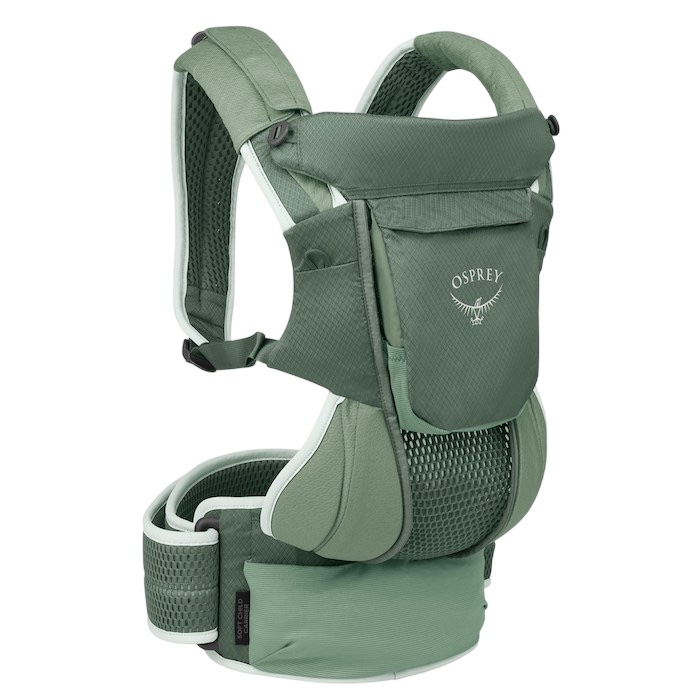
The Osprey Poco Soft child carrier brings Osprey’s trail-savvy design to the soft carrier category, pairing a frameless, highly packable build with the kind of support we rarely see in this style. At just 1 pound, 10.9 ounces, it’s the lightest carrier in our lineup by a wide margin.
Unlike many soft carriers, the Poco Soft includes a structured hipbelt that actually transfers weight to the hips instead of dumping it all onto the shoulders. This makes a noticeable difference on longer carries and gives the carrier a more capable feel than its low weight would suggest.
We tested the Poco Soft with kids ranging from newborn to toddler, including one of our little gear analysts near the 33-pound weight limit, and it performed well across all three carry positions. Face-in worked well for newborns, face-out was useful for curious infants, and the back carry was comfortable and secure for older kids.
We also appreciated the UPF 50 sunshade and 3D mesh seat, which did a good job keeping kids comfortable during warm-weather testing. After months of foothill hikes, road trips, and daily use, the high-tenacity ripstop nylon showed no meaningful wear. And the fact that the whole carrier can go in the wash is a big plus.
Storage is the Poco Soft’s biggest limitation. There is one front hipbelt pocket for a phone or a few small essentials but not much else. For anything beyond a short hike or quick errand, you will want to pair it with a daypack. We also found that getting a child into the back carry position is easier with a second adult until you get the process dialed.
Still, for families who want Osprey quality, real hip support, and easy packability, the Poco Soft is an excellent option. It is not meant to replace a framed carrier for long or gear-heavy trail days, but for the walks, travel, and shorter hikes that make up most family adventures, it’s worth a look.

Deuter Kid Comfort Active SL
Best Baby Carrier with a Women’s-Specific Fit
CleverHiker Rating: 4.4/5.0
Price: $280
Weight: 5 lb. 13.5 oz.
Volume: 12 L
Max Carry Weight: 53 lb.
Pros
- Smart features
- Women’s-specific fit
- Lightweight and breathable
- Included footrest stirrups and plush chin guard
Cons
- No sunshade or hydration compatibility
- Not much storage
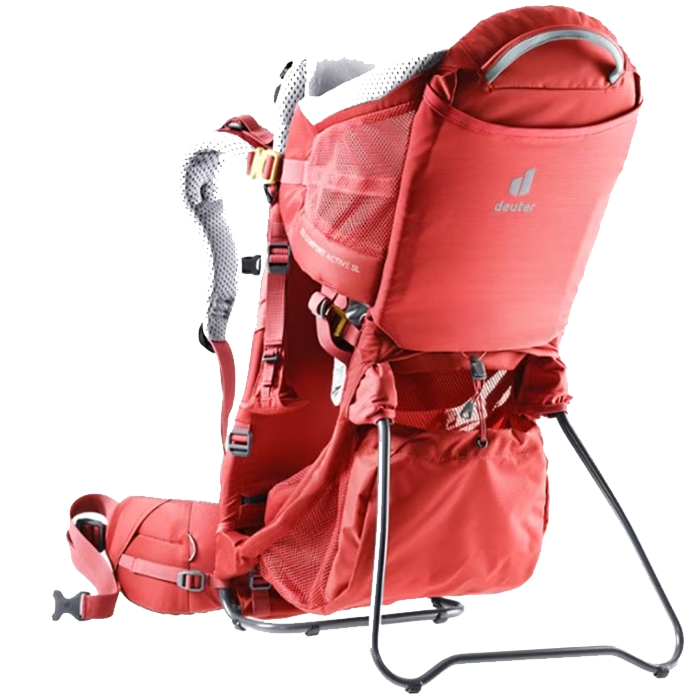
The Deuter Kid Comfort Active SL is a lightweight, women’s-specific child carrier designed for parents who prioritize comfort, simplicity, and a snug fit for smaller frames. Featuring a shorter back length and narrower shoulder straps, the Active SL caters specifically to petite wearers, making it an excellent choice for moms and smaller caregivers.
Weighing just 5 pounds, 13.5 ounces, the Active SL is one of the lightest framed carriers we tested, making it easy to manage on longer treks or steep trails. The Lite Aircontact back system provides excellent airflow, helping keep caregivers cool and comfortable even during warm hikes. Although it lacks the stability of heavier models, it’s a reliable choice for those carrying smaller kids or taking on shorter adventures.
The minimalist design prioritizes essentials over unnecessary features. It includes a few well-placed pockets, such as zippered hipbelt compartments and a rear storage area, though overall capacity is limited compared to many other options here. Additionally, the pack is not hydration-compatible. Most notably, there is no easily accessible water bottle pocket, which our gear analysts found somewhat frustrating on the trail.
Trade-offs aside, the Kid Comfort Active SL is an excellent option for families seeking a straightforward, lightweight child carrier. Its women’s-specific fit, superior ventilation, and manageable weight make it well suited for local trails and outings that don’t warrant packing the kitchen sink.
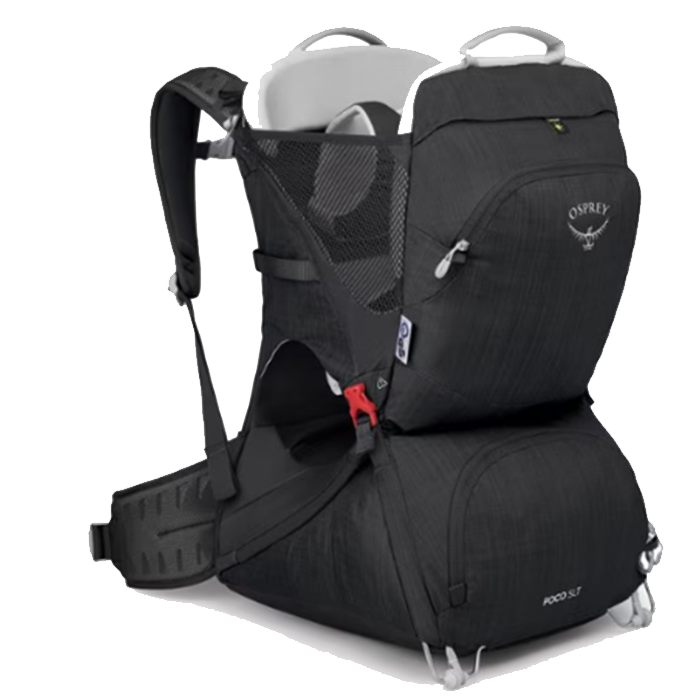
Osprey Poco SLT
Best Lightweight Baby Backpack Carrier
CleverHiker Rating: 4.3/5.0
Price: $280
Weight: 4 lb. 11.5 oz.
Volume: 22 L
Max Carry Weight: 48.5 lb.
Pros
- Ultralight and packable yet sturdy
- Carries weight well
- Slim design works well in tight spaces
- Budget-friendly
Cons
- Not the most feature-rich
- Not as comfortable for long hikes
- Nowhere to stow a sunshade (sold separately)
The Osprey Poco SLT stands out for parents seeking a lightweight and easy-to-pack child carrier. Weighing in at just under 5 pounds, it is the lightest framed carrier we tested, making it a breeze for quick hikes, road trips, or even errands around town. Its foldable frame is a game-changer for families managing limited storage space or trying to fit everything into a packed car.
In terms of comfort, the Poco SLT features a simple yet effective design. The AirScape suspension system offers decent padding and ventilation, and the adjustable back panel accommodates parents of varying heights. The cockpit offers a cozy and secure space for children, featuring Osprey’s reliable Double Halo harness. Although it lacks foot stirrups, we found the seat sufficiently supportive for shorter outings.
This carrier prioritizes the essentials. With 22 liters of storage, there’s enough space for diapers, snacks, and a jacket, and the water bladder sleeve is a nice touch for staying hydrated on the go. However, it omits extras like an integrated sunshade and hipbelt pockets, which is fine on casual adventures but could be a dealbreaker for longer treks. We’d also appreciate an additional pocket for a small water bottle or easy-to-reach snacks.
Durability isn’t a concern here. Built with sturdy, 210-denier nylon and a dependable stainless steel frame, the Poco SLT effortlessly handled rugged desert trails, long road trips, and daily wear during our testing.
If you’re looking for a lightweight, travel-friendly carrier suitable for shorter hikes and everyday use, the Osprey Poco SLT fits the bill. It’s not feature-packed, but it delivers where it matters: comfort, portability, and ease of use.
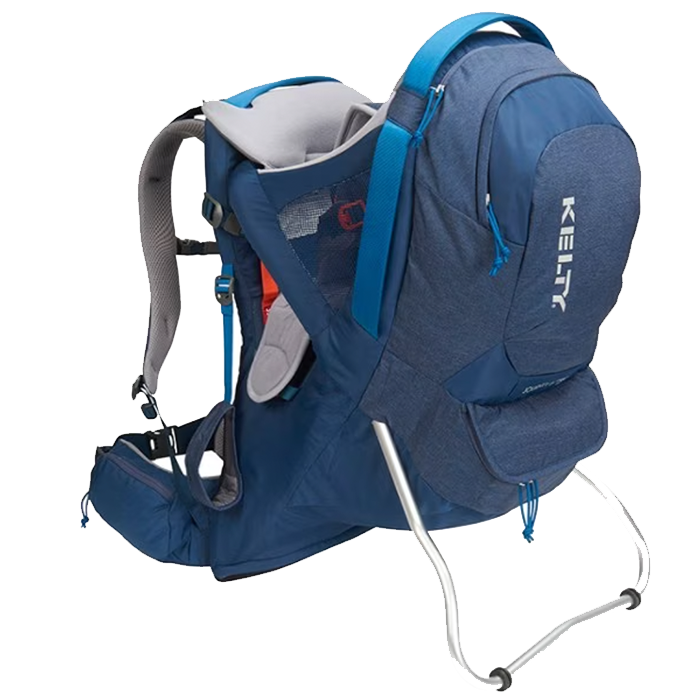
Kelty Journey PerfectFIT Signature
Most Well-Rounded Baby Backpack Carrier
CleverHiker Rating: 4.3/5.0
Price: $370
Weight: 6 lb. 9.5 oz.
Volume: 26 L
Max Carry Weight: 48.5 lb.
Pros
- Fully featured and easy to adjust
- Multiple handles for easy lifting
- Lightweight and comfy design
- Overall good versatility and thoughtful design
Cons
- Harness could be easier to clip
- Average back ventilation
- Sunshade doesn’t work for taller kids
The Kelty Journey PerfectFIT Signature is a versatile, thoughtfully designed child carrier that strikes a solid balance of comfort, features, and value. The namesake PerfectFIT torso adjustment system allows parents of different sizes to dial in a good fit.
Similar to Kelty’s top-end Journey PerfectFIT Elite, this carrier excels in comfort. The padded shoulder straps and hipbelt evenly distribute weight, ensuring comfort during longer hikes. For kids, the cozy cockpit, adjustable foot stirrups, and included sunshade provide a snug and enjoyable ride. Although we wish the sunshade offered a bit more headroom for taller kids, it remains a valuable addition for keeping little ones protected.
The storage setup stands out for its 26 liters of space across various compartments. There’s ample room for essentials like snacks, diapers, and an extra layer. We also appreciated the clever zippered hipbelt pocket that can serve as a water bottle holder – a small yet practical feature for staying hydrated on the go.
Durability is up to snuff, too. The robust polyester fabric and strong stitching performed well during our daily testing and hikes on rugged trails. At 6 pounds, 9.5 ounces, it’s not ultralight, but it’s one of the lighter framed packs we tested and entirely manageable given its sturdy build and generous feature set.
If you’re seeking a dependable carrier with clear intention behind the design – and don’t quite need top-end features – the Journey PerfectFIT Signature is a very solid choice.
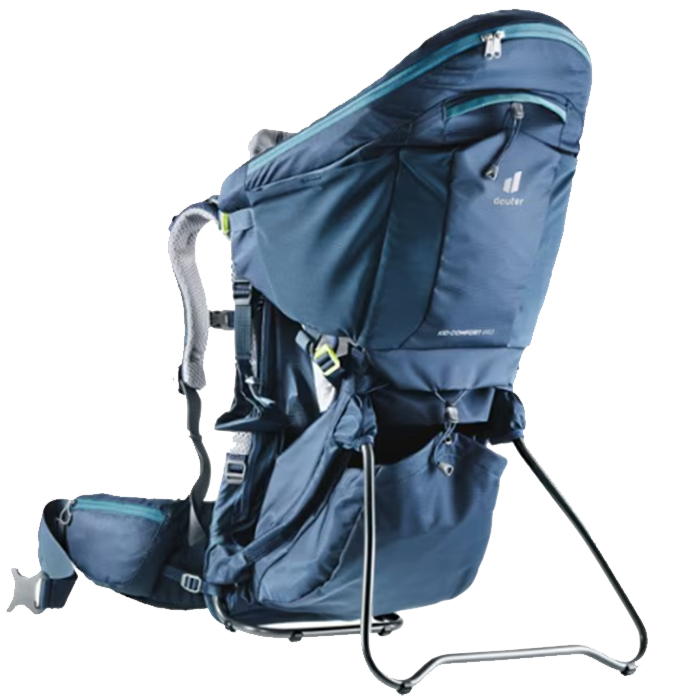
Deuter Kid Comfort Pro
Most Comfortable for Tall Children
CleverHiker Rating: 4.3/5.0
Price: $390
Weight: 7 lb. 13.2 oz.
Volume: 22 L
Max Carry Weight: 53 lb.
Pros
- Loads of features
- Integrated sunshade
- Includes a separate daypack
- Hydration-compatible
- Comfortable for baby
Cons
- One of the pricier models
- Awkward height
The Kid Comfort Pro is the most feature-rich child carrier in Deuter’s lineup – great for families who value comfort, durability, and versatility for longer adventures. From its ergonomic design to thoughtful features like an integrated sunshade and detachable daypack, the Kid Comfort Pro delivers a premium experience for both caregiver and child.
Comfort is a major highlight of the design, with the VariSlide back-length adjustment system providing a customized fit for adults of different sizes. The Aircomfort back panel maximizes ventilation, keeping the wearer comfortable during strenuous hikes, while the pivoting hip fins enhance mobility. For little ones, the plush cockpit and tall, cushioned headrest ensure a cozy and secure ride, even during naps.
The Kid Comfort Pro’s thoughtful features truly set it apart. The built-in sunshade is a great addition – it’s the only option in the Kid Comfort line that incorporates the sunshade into the design. The shade is quick to deploy and offers decent protection on sunny days, though we’d like to see better side coverage.
Though a rain cover is available for purchase, we believe it should be included at this price point. On the bright side, the detachable daypack is a handy bonus for quick side trips, although it may see limited use on shorter outings. With adjustable footrests and ample storage, this pack is well equipped to handle a wide range of family adventures.
At 7 pounds, 13.2 ounces, the Kid Comfort Pro is relatively heavy, but its high-quality construction and extensive features help justify the heft. The 210-denier nylon fabric effectively withstands abrasion, and the pack’s reinforced stitching and sturdy frame feel built to last.
If you’re seeking a premium child carrier built for all-day comfort and long-lasting durability, the Kid Comfort Pro is an standout choice. It’s a sizable investment but a worthwhile splurge for families who get out a lot.
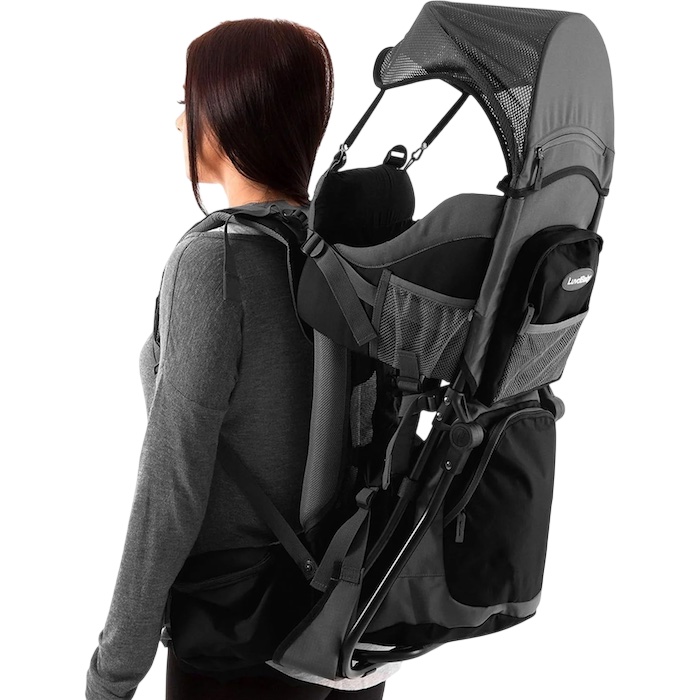
Luvdbaby Toddler Carrier Backpack
Best Features at a Budget Price
CleverHiker Rating: 4.0/5.0
Price: $222
Weight: 6 lb. 0.6 oz.
Volume: 5 L
Max Carry Weight: 40 lb.
Pros
- Budget-friendly
- Includes stirrups, a sunshade, and a rain cover
- Not too heavy
- Foil-lined pocket keeps items warm or cold
Cons
- Lower-quality materials
- Zippers snag easily
- Not the most comfortable
The Luvdbaby Toddler Carrier Backpack comes with more included accessories than most carriers in its class. You get a deployable sunshade, a rain cover that stows in the main compartment, a foldable diaper changing pad, an insulated pocket, dual hipbelt pockets, and two side mesh pockets. For families who want a feature-rich carrier without spending a small fortune, it checks a lot of boxes right out of the gate.
In testing, caregiver comfort was decent for shorter day hikes and around-town use. The padded hipbelt does a decent job supporting weight, the load lifters help pull the carrier in close, and the Velcro-adjustable torso panel offers a surprisingly wide fit range.
That said, the thick padding tends to trap heat, and the shoulder straps are lacking in support compared to more polished competitors. These aren’t huge concerns with a lighter child, but the drop in comfort becomes obvious with a heavier toddler.
Our biggest concern was child comfort. Our little gear analysts were clearly uncomfortable in the seat during multiple test sessions, and the cockpit did not reliably support an ergonomic “M” position without the stirrups deployed. Since kids do not always keep their feet where you want them, that solution only goes so far. We also found the harness clip frustratingly hard to reach once a child was loaded.
Durability raised some concerns, as well. The zippers snagged often, and the plastic kickstand hubs felt flimsier than we’d like, even though both made it through testing intact.
At just over 6 pounds, the Luvdbaby feels lighter than many similarly appointed models. With just 5 liters of storage, though, it is best suited for shorter hikes and quick family adventures. For budget-conscious families with younger, lighter kids, it can be a workable option. For frequent hiking, heavier toddlers, or long-term use, we think it’s worth stepping up to a more refined option.
Product Comparison Table
| oSort | Product | Price | Weight | Volume | Max Carry Weight | Comfort | Features | Durability | Storage Capacity | Weight Score | 0 |
Osprey Poco Premium View at REI View at Amazon 
|
$450 | 8 lb. 5.4 oz. | 36 L | 48.5 lb. | 4.7 | 4.9 | 4.9 | 4.9 | 3.8 | 1 |
Deuter Kid Comfort View at REI View at Amazon
|
$330 | 7 lb. 1.9 oz. | 14 L | 53 lb. | 4.7 | 4.7 | 4.7 | 4.1 | 4.2 | 2 |
Kelty Journey PerfectFIT Elite View at REI View at Amazon
|
$400 | 7 lb. 6.5 oz. | 26 L | 48.5 lb. | 4.8 | 4.9 | 4.6 | 4.9 | 4.2 | 3 |
Thule Sapling View at REI View at Amazon |
$400 | 8 lb. 6.4 oz. | 22 L | 48.5 lb. | 4.5 | 4.2 | 4.8 | 4.2 | 4.3 | 4 |
Osprey Poco Soft View at REI View at Amazon 
|
$160 | 1 lb. 10.9 oz. | 0 L | 33 lb. | 4.6 | 4.2 | 4.6 | 3.8 | 4.9 | 5 |
Deuter Kid Comfort Active SL View at REI View at Amazon |
$280 | 5 lb. 13.5 oz. | 12 L | 53 lb. | 4.4 | 4.3 | 4.7 | 4.0 | 4.5 | 6 |
Osprey Poco SLT View at REI View at Amazon
|
$280 | 4 lb. 11.5 oz. | 22 L | 48.5 lb. | 4.6 | 4.1 | 4.7 | 4.2 | 4.7 | 7 |
Kelty Journey PerfectFIT Signature View at REI View at Amazon |
$370 | 6 lb. 9.5 oz. | 26 L | 48.5 lb. | 4.6 | 4.7 | 4.6 | 4.8 | 4.4 | 8 |
Deuter Kid Comfort Pro View at REI View at Amazon |
$390 | 7 lb. 13.2 oz. | 22 L | 53 lb. | 4.7 | 4.8 | 4.7 | 4.4 | 4.2 | 9 |
Luvdbaby Toddler Carrier Backpack View at Amazon View at Luvdbaby |
$222 | 6 lb. 0.6 oz. | 5 L | 40 lb. | 3.8 | 4.1 | 3.8 | 4.2 | 4.4 |
|---|
Analysis & Results
Which Baby Backpack Carrier is the Best Value?
Value is about more than just cost. We look for designs that strike an effective balance between performance and price, taking into consideration things like comfort, features, durability, and overall build quality.
For families who hike often and want a carrier that can go the distance, the Osprey Poco Premium stands out as one of the strongest values in the lineup. It is a bigger upfront investment, but the class-leading comfort, thoughtful organization, and confidence-inspiring build quality make it easy to justify for frequent trail use.
The Deuter Kid Comfort and Kelty Journey PerfectFIT Elite also earn high marks here. Both offer excellent comfort and practical design details that make them feel worth the money for families who plan to use a carrier regularly.
For those shopping at a more moderate price point, the Osprey Poco SLT is one of the most appealing options. It keeps weight low, trims down the feature set in smart ways, and still delivers the quality and reliability we expect from Osprey.
The Osprey Poco Soft is another standout for value, especially for parents who want something highly packable and lighter than a framed carrier. It does not offer much storage, but the supportive hipbelt, included sunshade, and excellent comfort make it feel more trail-ready than many other soft carriers.
At the budget end, the Luvdbaby Toddler Carrier Backpack makes a strong case on paper. It includes a surprising number of features for the price, including a sunshade, a rain cover, a diaper-changing pad, and insulated storage. It does make compromises in child comfort and long-term durability, but it’s a fine option for infrequent use and less intensive outings.
Which Baby Backpack Carrier is the Most Comfortable?
Comfort is one of the most important factors in any baby backpack carrier. The best models in our lineup stood out by making life easier for both caregiver and child.
The Deuter Kid Comfort continues to set the bar here. Its plush padding, ergonomic suspension, and supportive child cockpit made it one of the most consistently comfortable carriers we tested. It handled everything from short hikes to longer trail days with ease.
The Kelty Journey PerfectFIT Elite and Journey PerfectFIT Signature also impressed us. Kelty’s torso adjustment system is among the easiest to use, making it simple to fine-tune the fit for different caregivers. Combined with well-padded shoulder straps and hipbelts, both models distribute weight effectively and feel comfortable over moderate to long distances.
The Osprey Poco Premium deserves a mention here, as well. Its suspension system and padded carry components do an excellent job managing heavier loads, and it stayed comfortable even when packed for bigger trail days.
Among the lighter options, the Osprey Poco Soft is especially noteworthy. Soft carriers rarely offer much hip support, but this one does a surprisingly good job transferring weight off the shoulders. This gives it a more supportive feel than many frameless models, especially for short to moderate hikes.
The Osprey Poco SLT also performs well for a streamlined carrier. However, it does not offer the same plushness or long-haul comfort as premium framed options.
Which Baby Backpack Carrier has the Best Features?
When it comes to features, premium framed carriers lead the pack. The Deuter Kid Comfort Pro and Osprey Poco Premium offer the most complete, trail-ready packages in the lineup, with integrated sunshades, hydration compatibility, generous storage, and thoughtful layouts that make them especially useful for long hikes and all-day family adventures. The Kid Comfort Pro even includes a detachable daypack.
The Kelty Journey PerfectFIT Elite and Journey PerfectFIT Signature also bring a lot to the table. Their built-in sunshades, adjustable foot stirrups, and multiple grab handles make them especially user-friendly, and they strike a nice balance between on-trail convenience and everyday functionality. These carriers are packed with practical details that make a real difference when loading kids, adjusting fit, or managing gear during a hike.
The Osprey Poco Soft takes a different approach. It is not loaded with pockets or storage, but it does include a deployable UPF 50 sunshade, a supportive hipbelt, and three carry positions, which is a strong feature set for a soft carrier.
The Luvdbaby Toddler Carrier Backpack also looks impressive on paper. It boasts a deployable sunshade, rain cover, diaper-changing pad, insulated pocket, and multiple accessory pockets. Some of these feel less refined in practice than they do on a spec sheet, but the overall feature set is generous given the pack’s budget-friendly price.
Meanwhile, lightweight models like the Osprey Poco SLT and Deuter Kid Comfort Active SL keep things more minimalist. They trade extra features for lower weights and simpler designs, which will appeal to families who care more about portability than bells and whistles.
Which Baby Backpack Carrier is the Most Durable?
Durability was generally strong across this category, especially among the more established brands.
The Osprey Poco Premium, Deuter Kid Comfort, Deuter Kid Comfort Pro, and Thule Sapling stood out as the most confidence-inspiring carriers over the long haul. These models combine sturdy aluminum frames, durable fabrics, strong stitching, and well-executed hardware that held up well to rough outdoor use. Even after scraping against rocks, brushing through sharp vegetation, and repeated loading and unloading, they showed very little wear.
The Kelty Journey PerfectFIT Elite and Journey PerfectFIT Signature also performed well. They lack a little of the all-out toughness of the packs mentioned above, but their materials and construction held up well to regular use and felt dependable enough for families who hike often.
The Osprey Poco Soft also made a strong impression. Its 210-denier, high-tenacity ripstop nylon build held up well over months of hiking, travel, and everyday use. For a soft carrier, it feels especially well made, and it reflects the same attention to detail as Osprey’s more premium carriers.
Which Baby Backpack Carrier has the Best Weight-to-Performance Balance?
Weight matters a lot in this category because you are never just carrying the pack – you are also carrying a child, water, snacks, layers, and whatever treasures your little one picks up along the way. The best carriers strike an effective balance between weight and support to stay comfortable when fully loaded.
Among the lightest options, the Osprey Poco Soft and Deuter Kid Comfort Active SL stand out. The Poco Soft is especially impressive because it’s extremely light while still offering meaningful hip support, which is rare in a soft carrier. This makes it a great option for families who want something compact and travel-friendly without giving up too much trail performance. The Active SL is also a strong, lightweight option for smaller-framed caregivers.
Among framed carriers, the Osprey Poco SLT does an excellent job balancing low weight with trail-readiness. It trims the feature set enough to stay lighter than most premium framed models but still feels supportive and capable for short to moderate hikes.
The Luvdbaby Toddler Carrier Backpack also deserves a mention here. At just over 6 pounds, it lands toward the lower end of average among framed carriers and is lighter than many feature-rich competitors. We did experience a drop in comfort with heavier toddlers, but the carrier is workable for lighter children.
Heavier designs like the Osprey Poco Premium and Deuter Kid Comfort Pro ask more from the caregiver on the scale, but they earn it back with better comfort, more storage, and stronger overall support. For families heading out on longer hikes or carrying bigger kids, those trade-offs often make sense.
Which Baby Backpack Carrier has the Best Storage & Organization?
Storage and organization vary a lot across baby backpack carriers, and the best choice depends on how much gear your family likes to bring.
The Osprey Poco Premium remains the clear leader for maximum cargo space. With 36 liters of storage, it has room for extra layers, diapers, snacks, water, and the assortment of extras that seem to multiply when hiking with kids. Multiple compartments, mesh pockets, and hipbelt storage make it easy to stay organized and keep key items close at hand.
The Kelty Journey PerfectFIT Elite also offers a generous capacity and organization layout. With 26 liters of space and a practical pocket layout, it gives families enough room for longer trail days without feeling overwhelmingly large.
The Deuter Kid Comfort is more modest at 14 liters, but the layout is thoughtful and functional with enough space for day hikes and shorter trail days. It does not carry as much as the Osprey or Kelty, but it uses its available space well.
The Osprey Poco SLT keeps things relatively streamlined with 22 liters of capacity. It works well for lighter day-hiking needs, though its simpler organization means it is not quite as versatile as the larger framed packs.
How to Choose a Baby Backpack Carrier
What Makes a Baby Backpack Carrier Comfortable for Both Caregiver & Child?
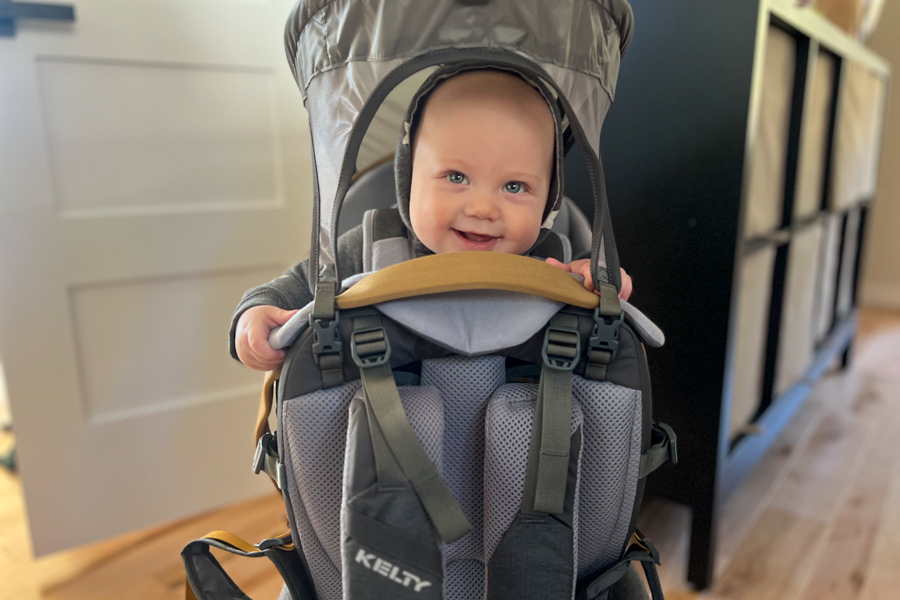
Comfort is undoubtedly a top priority when selecting a baby carrier, especially for longer hikes. Caregivers should look for padded shoulder straps, wide hipbelts, and adjustable suspension systems to evenly distribute weight and minimize strain. Adjustable torso lengths are particularly crucial if multiple caregivers intend to share carrying duties.
For children, consider padded cockpits, adjustable stirrups, and ergonomic seating. Additional features such as chin pads and built-in headrests offer extra comfort for napping kids. Built-in sunshades, though not directly related to comfort, can go a long way toward keeping your child happy and protected while you hike. Lightweight models often compromise on padding and support, so consider your comfort needs alongside the planned length and type of outings.
How Much Should a Baby Backpack Carrier Weigh?
Weight is a crucial factor, especially for parents planning longer hikes or carrying older children. Ultralight carriers (less than 3 pounds) are easier to manage and pack but may lack certain features. Capacity is often limited, and you can expect less support and padding overall since these carriers are not designed to carry a lot of weight.
Stepping up to a carrier in the 5- to 6-pound range will get you additional capacity, more features, and improved carrying comfort. We consider this a sweet spot in the baby backpack carrier market, with designs in this range striking a nice balance between weight savings and overall functionality. If you get outside relatively often but still want to keep weight and bulk in check, this is a good place to look.
Heavier models (7+ pounds) offer the utmost in storage, features, and padding but can feel cumbersome during short outings. If you’re planning extended adventures (including overnight trips) or carrying heavier loads, the extra weight and bulk could be worth it. However, for day-to-day use, we generally prefer something a little lighter and easier to manage.
How Much Storage Do You Need in a Baby Backpack Carrier?
Baby backpack carriers come in lots of sizes, and it’s important to think about your needs and preferences when deciding which capacity is right for you. At the upper end of the range are packs with 25 to 35 liters of capacity and tons of pockets. These feature-rich designs often include trimmings like built-in sunshades, drool pads, dedicated water bottle or reservoir storage, hipbelt pockets, and more. They are typically quite heavy and bulky, but folks who do a lot of hiking may find that trade-off worth it.
If you mostly stick close to home and don’t stay out for long, a streamlined design with limited capacity (0 to 10 liters) and just a few pockets may get the job done. Don’t expect a ton of support or features here – these packs generally stick to the basics but are perfectly workable for short outings and lighter children.
For a nice middle ground, packs with around 15 to 20 liters of capacity often strike a good balance. Many of the packs we’ve tested in this range have adequate storage for day hikes and enough built-in features to keep both the carrier and child happy.
Regardless which capacity you choose, look for features such as zippered compartments, mesh pockets, and hydration compatibility to meet your needs. Additionally, consider whether the storage is accessible while you are wearing the carrier. It can be inconvenient to constantly take the carrier off to access items in the pockets.
Which Features Should You Look For in a Baby Backpack Carrier?
Premium features can make a significant difference on the trail. Built-in sunshades and rain covers protect your child from the elements, while hydration sleeves and easy-to-access pockets add convenience. Foot stirrups might seem trivial, but in our experience, they vastly improve comfort for passengers and are a must on longer adventures. Some carriers include removable daypacks or dual-access entry for loading and unloading children.
In the end, there’s no perfect feature set for everyone – it will depend on your unique needs and preferences. Keep in mind that additional features can increase both cost and weight, so it’s important not to go overboard. Think about your hiking style and all the things you generally pack for the trail, and look for designs that can accommodate those items without a ton of extras you won’t use.
Which Materials are Best for Durability in a Baby Backpack Carrier?
Carriers made from tough materials such as ripstop nylon or polyester are best suited for enduring rugged terrain and regular use. Fabric thickness is measured in denier (often abbreviated “D”), with higher numbers indicating better tear and abrasion resistance. Many high-quality baby carriers feature body fabrics in the 200- to 300-denier range, with thicker reinforcements (400D to 500D) in high-wear areas like the base.
Sturdy aluminum frames deliver crucial stability and support, while reinforced stitching improves long-term reliability. Other things to look out for include large buckles, smooth-operating zippers, and PFAS-free DWR coatings that will repel light moisture without the use of harmful “forever chemicals.”
What are Your Family’s Specific Needs?
Every family has unique needs. Consider your child’s age, size, and temperament when selecting a carrier. Younger children may benefit from soft-sided carriers, while older toddlers require a structured pack with ample support. Similarly, assess your typical adventures – do you need a lightweight carrier for short walks, or would you be better served by a feature-rich model for extended hikes or overnights?
We strongly recommend testing the carrier with your child before making a purchase. Comfort and fit can vary greatly, and a hands-on trial is the best way to ensure everyone remains happy on the trail.
Why Trust CleverHiker
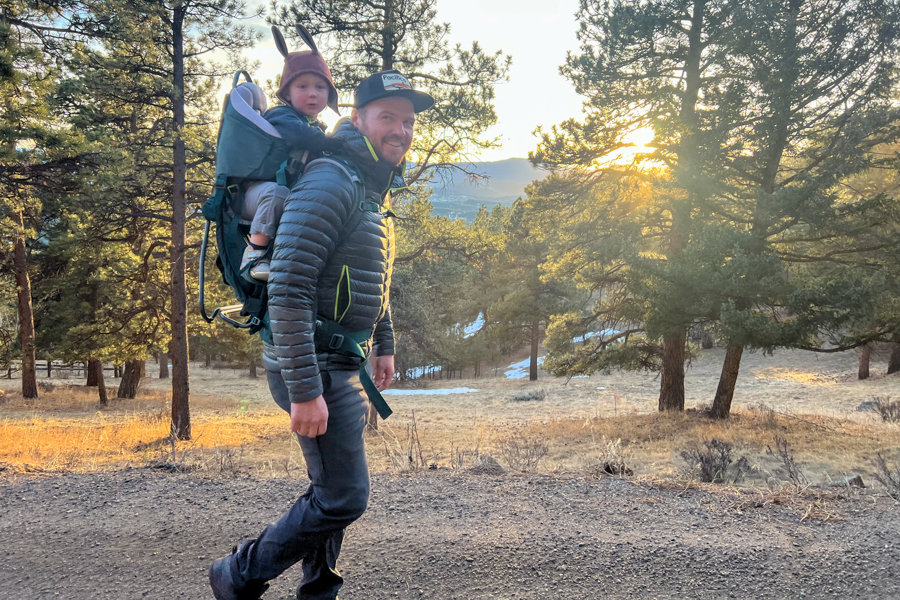
Our lead testers for baby backpack carriers, Ben and Roxy Dawson, are experienced outdoor enthusiasts and parents who’ve logged thousands of miles on trails worldwide with kids on their backs. They authored three guidebooks, two of which involved bringing along their toddler while they canvassed Glacier National Park and traveled all over the state of Wyoming. Ben and Roxy tested baby carriers across beaches, deserts, forests, and snowy mountains to ensure they meet the demands of real-life adventures.
Testing Methodology
How Do We Evaluate Comfort?
Comfort is arguably the most important consideration for a baby carrier, and we assessed it for both the wearer and the child. For caregivers, we looked for well-padded shoulder straps, supportive hipbelts, and ventilated back panels. Packs that distributed weight evenly, minimized pressure points, and kept us cool and comfortable earned higher marks.
For children, we evaluated the cockpit design, leg support, and overall ergonomics. We awarded points to carriers that kept our kids in a comfortable, secure position. We put each carrier through its paces during hikes and everyday use to ensure we got an accurate picture of all-around comfort.
How Do We Assess Features?
We evaluated essential features as well as premium extras for overall functionality and ease of use. These included integrated sunshades, hydration sleeves, torso adjustment systems, and child-focused elements such as stirrups and chin pads (among others).
We assessed each carrier for adjustability to ensure it could accommodate different caregivers comfortably, since many parents like to split shuttling duties. We considered convenience and practicality when evaluating each feature (e.g., how quickly sunshades could be deployed and whether they provided sufficient coverage). Carriers with thoughtful, user-friendly features that enhanced the experiences of both caregivers and children earned higher marks in this category.
How Do We Gauge Durability?
We assessed durability by exposing carriers to rugged trails, continuous loading and unloading, and normal wear and tear. We checked for signs of fraying, buckle or strap failures under stress, and overall material quality. We scraped carriers against rocks, dragged them through pokey brush, and generally put them through the wringer whenever possible to get an accurate idea of longevity and trail-worthinesss.
How Do We Test Storage & Organization?
We assessed storage and organization by packing each carrier with essentials like diapers, snacks, water bottles, jackets, and sunscreen. Accessibility was a key factor in our rankings – packs that kept essential items secure and within arm’s reach scored higher.
We also examined how well each carrier balanced storage capacity with convenience, favoring carriers that offered thoughtful layouts and smart organization features. Those with strategically placed compartments and user-friendly pockets earned higher marks.
How Do We Measure Weight?
Weight is a critical consideration for parents carrying both a child and gear over long distances. We weighed each carrier on our scale at home and assessed how its weight impacted overall usability. We evaluated lightweight models for stability and comfort, ensuring they didn’t sacrifice support. For heavier carriers, we judged whether their extra features justified the added bulk.
On extended hikes, we noted how each pack’s weight affected our overall experience. Carriers that deftly balanced weight, functionality, and all-day comfort scored highest in this category.
Conclusion
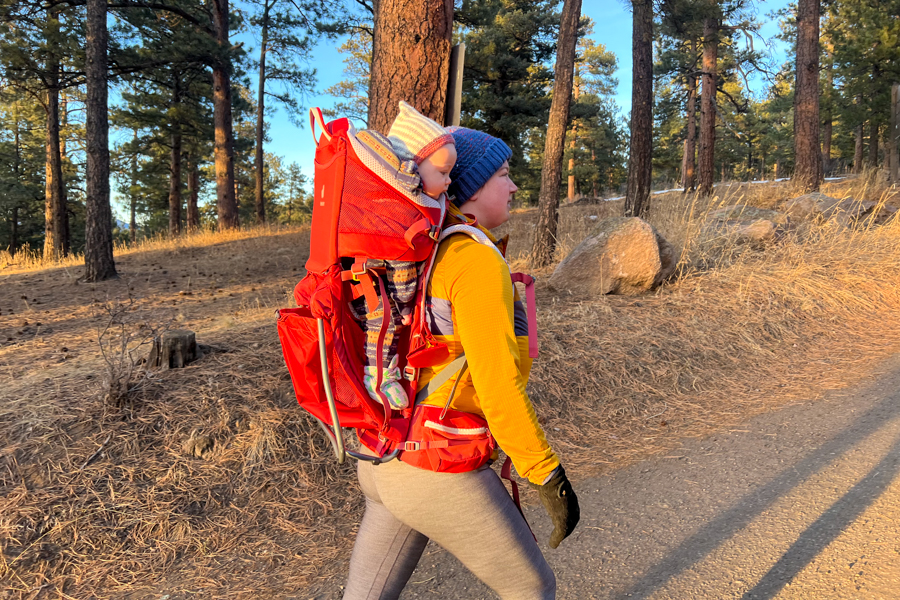
The best baby backpack carriers are comfortable for both caregiver and child, durable enough to withstand outdoor adventures and daily use, and well equipped to stash essentials like water, snacks, and diapers. If you spend a lot of time outside – including the occasional overnight – a large and feature-rich carrier is likely your best bet. For short hikes on local trails, a minimalist design could get the job done in a much lighter and lower-profile package. We hope this guide has helped steer you toward the best carrier for your family’s needs. Happy hiking!