


In this guide, we’ve reviewed the top hydration packs, considering key metrics such as weight, comfort, compartments, hydration bladder functionality, waterproofing, and durability.
Our gear analysts tested each pack in real-world conditions — including hikes from Washington to California — to provide honest, hands-on insights. Our detailed reviews highlight the best options for a variety of outdoor activities, from lightweight, minimalist packs to packs with extensive storage and high durability. Whatever your next adventure is, this guide will help you find the perfect hydration pack.
For more info, check out some of our other most popular gear guides:

Quick Picks for Hydration Packs
Look through this quick list of the best hiking shoes, or continue scrolling to see our full list of favorites with in-depth reviews.
Best Hydration Pack Overall: Gregory Citro 24 H2O – Men’s / Juno 24 H2O – Women’s ($170)
Best Bladder: Gregory Inertia 18 – Men’s / Gregory Swift 16 H2O – Women’s ($110)
Best Small Hydration Pack: CamelBak M.U.L.E. 12 – Men’s / CamelBak M.U.L.E. 12 – Women’s ($130)
Best Mid-Size Hydration Pack: CamelBak Cloud Walker 18 ($99)
Best Large Volume Hydration Pack: Osprey Manta 24 – Men’s / Mira 24 – Women’s ($200)
Best Hydration Pack for Organization: CamelBak HAWG Pro 20 ($170)
Best Hydration Pack for Short Adventures: Osprey Raven 14 – Women’s / Osprey Raptor 14 – Men’s ($180)
Best Budget Hydration Pack: TETON Sports Oasis 18 ($50)
Best Budget Minimalist Hydration Pack: Deuter Speed Lite 13 ($60)
What’s new
The Clever Hiker team has been running and hiking with all the most exciting new hydration packs on the market and comparing them against our go-tos.
- We added the Deuter Speed Lite 13L as another wallet-friendly light hydration pack, along with two CamelBaks: the MULE 12 and HAWG Pro 20.
- We added the CamelBak Cloud Walker 18 as an excellent mid-priced, mid-sized hydration pack to consider for your next adventure.
- The Osprey Raven 14/Raptor 14 is designed specifically for mountain bikers, but also works great for casual day hikes.
- The Osprey Mira 24/Manta 24 underwent an update and remains one of our top picks for a large-volume hydration pack.
Hydration Packs Overall Testing Scores
View full testing results in our product comparison table and analysis & results section.
Gregory Citro 24 H2O / Juno 24 H2O
Best Hydration Pack Overall
CleverHiker Rating: 4.8/5.0
Price: $180
Capacity: 24L
Weight: 2 lb. 0.3 oz. / 1 lb. 14.9 oz.(Citro/Juno)
Pros
- Lightweight for the size
- Great hydration system
- Comfortable fit for most body sizes
- Spacious internal compartment
- Pockets for small items like phones, snacks, and keys
- Secure magnetic hydration hose clip
Cons
- Only one size available
- Not fully waterproof
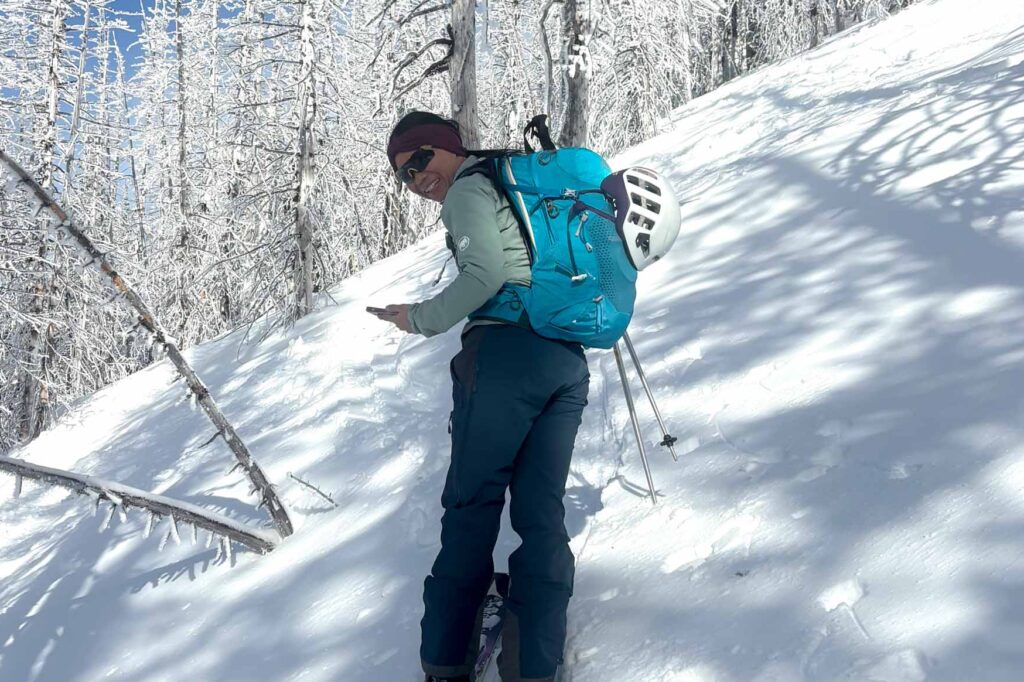
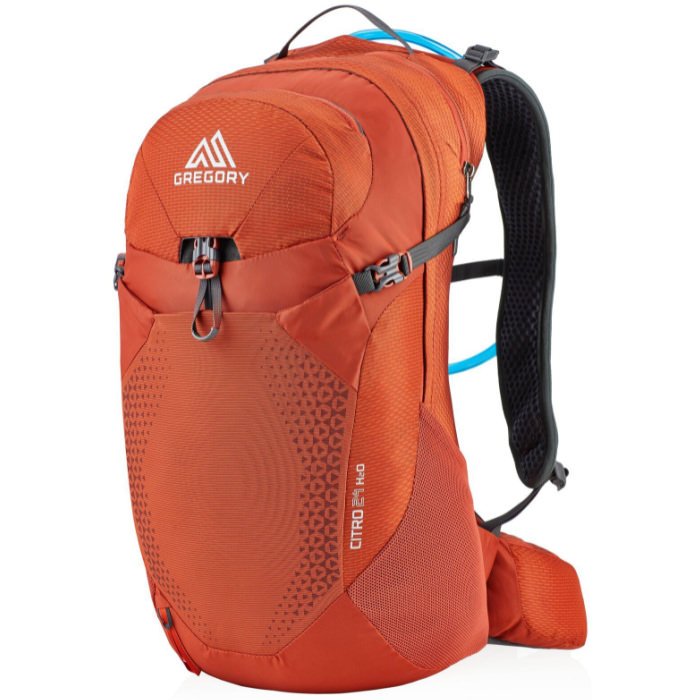
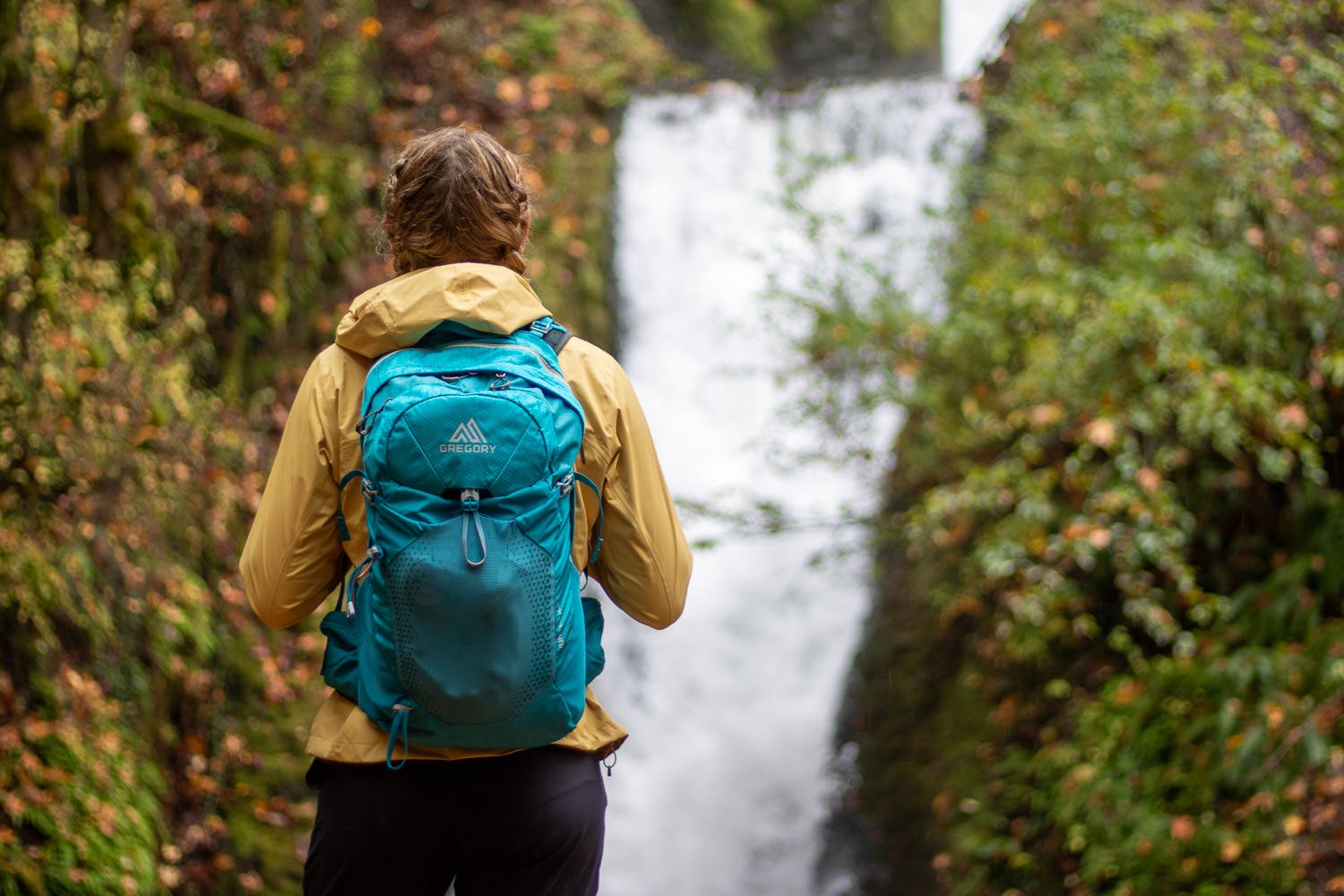
The Gregory Juno 24 Hydration Pack (and men’s Citro 24)excels in comfort, fit, and hydration performance, making it an excellent choice for day hikers, trail runners, and outdoor enthusiasts. We brought this pack on a winter hike out to Skyline Lake at Washington’s Stevens Pass. Its lightweight build, breathable back panel, and adjustable shoulder straps ensure a comfortable fit, even when fully loaded.
The pack’s hydration system is user-friendly, featuring a leak-proof bladder and a strong magnet clip that keeps the hose in place. The ample storage, including deep hip pockets and a keychain hook, makes it easy to access essentials like snacks, phones, and small gear.
However, the pack may not suit those needing extensive storage or a more customizable fit, as its single size might not accommodate all body types comfortably. Additionally, the outer mesh material could wear down over time with heavy use.
Overall, the Juno 24 provides excellent value for anyone seeking a reliable, lightweight hydration pack for short outdoor adventures and moderate hikes.
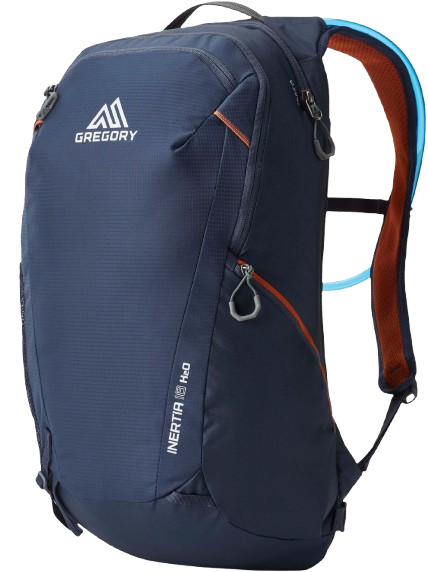
Gregory Swift 16 / Inertia 18 H2O
Hydration Pack with the Best Bladder
CleverHiker Rating: 4.7/5.0
Price: $120
Weight: 1 lb. 2.7 oz. / 1 lb. 0.6 oz.(Swift/Inertia)
Capacity: 16L/18L
Pros
- Compact design and lightweight
- Top and side compartments for organization
- Easy to use bladder
- Great for light loads
- Specific hydration reservoir compartment
Cons
- No padded hip belt
- Limited internal volume
The Gregory Swift 16 H2O (and men’s Inertia 16 H2O) excels as a lightweight, compact hydration pack, perfect for short hikes or biking. We took this pack snowshoeing around Lake Keechelus in the Cascade Mountains. It offers a comfortable fit for light loads with a well-distributed weight that minimizes fatigue. The hydration system is efficient. The sturdy bladder and ergonomic pan handle both support easy hydration on the go. The pack’s 16-liter capacity provides enough space for essentials. Although it’s best suited for minimal gear due to its smaller compartments and limited storage.
The pack is durable overall, but the mesh material on the shoulder straps and back may not be robust enough for extended wear. It lacks a padded hip belt and adjustable shoulder straps, which can affect comfort during longer outings.
Overall, the Swift 16 offers great value for those seeking a no-frills, efficient pack for short adventures. It’s ideal for active individuals who prioritize comfort and simplicity.
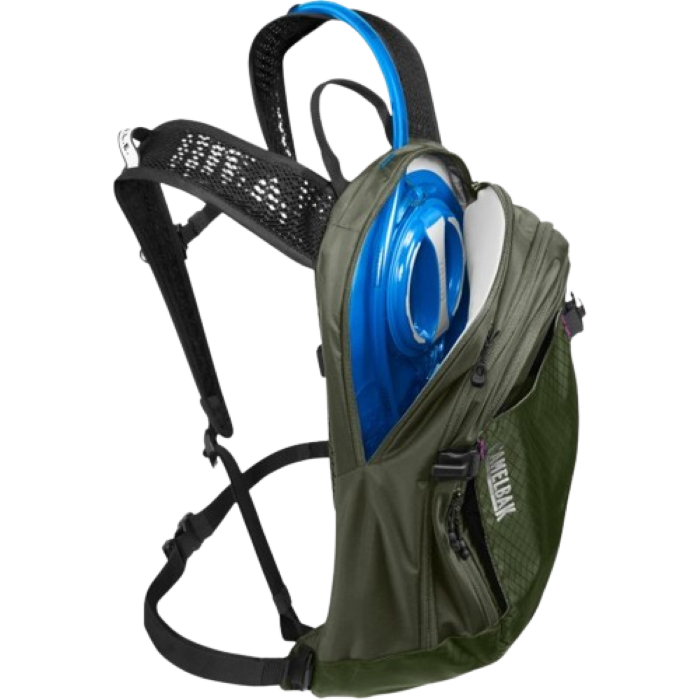
Camelbak M.U.L.E. 12
Best Small Hydration Pack
CleverHiker Rating: 4.5/5.0
Price: $142
Weight: 1 lb. 11.5 oz.
Capacity: 12L
Pros
- Slim and lightweight
- Easy-fill hydration bladder
- Convenient top pouch for small items
- Deep and roomy compartment
Cons
- Limited hip belt support
- Limited sizing
The CamelBak M.U.L.E. 12 (men’s / women’s) Hydration Pack excels in its lightweight design, offering an efficient, compact solution for short hikes or active adventures, like the short winter hike we did with it up to Source Lake at Washington’s Snoqualmie Pass. Its hydration system is user-friendly, with a large mouth for easy filling and a secure hose attachment. However, the short handle makes it harder to fill the bladder. Plus, there isn’t a hook to hang the bladder inside the pack, so it tends to slosh around. Additionally, the magnet for the hose tip gets easily knocked off.
The pack’s top pocket is deep and well-placed for easy access to small items, and its durable fabric ensures long-lasting use in moderate conditions. It also offers good weight distribution, keeping the load close to the body. If carrying lighter loads, this pack is great. However, with heavier loads, the hip belt isn’t supportive since it is only a strap. The shoulder padding is minimal, which might reduce comfort over a longer hike.
Overall, for those seeking a lightweight, efficient pack for short, fast-paced adventures, the M.U.L.E. 12 offers great value but may not be the best choice for extended trips or heavy-weight use.
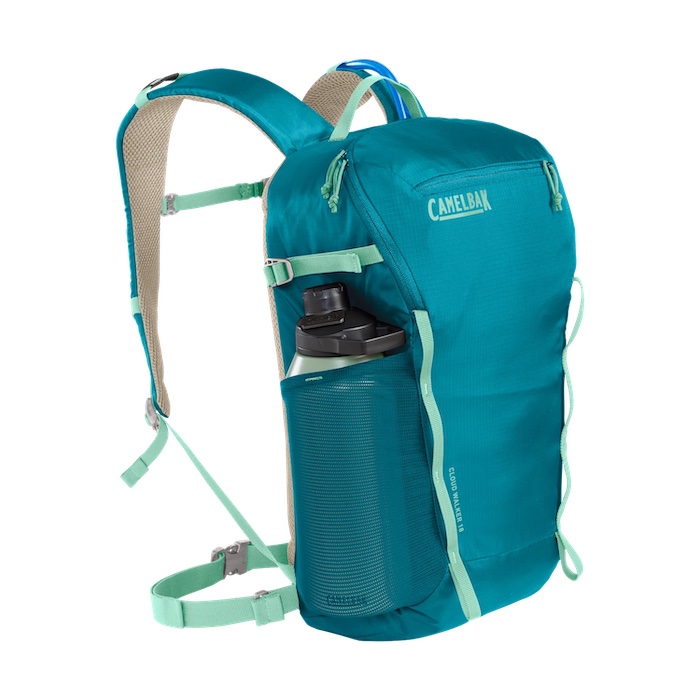
CamelBak Cloud Walker 18
Best Mid-Size Hydration Pack
CleverHiker Rating: 4.4/5.0
Price: $99
Capacity: 18L
Weight: 1 lb. 1.6 oz.
Pros
- An excellent, lightweight and minimalistic hiking day pack
- Good weather-resistance and dries quickly
- Comfortable shoulders and padded back panel
- Large opening on the hydration bladder
- Hydration tube stores on the shoulder rather than chest strap magnet
Cons
- Unisex pack, so the fit isn't as dialed, particularly for women
- Hipbelt doesn't offer a ton of support
- Less organizational and pocket variety
- Design of the bladder makes dumping out all water difficult
The CamelBak Cloud Walker 18 is a lightweight, simple, water-resistant, minimalist, and unisex hydration pack that offers a smaller-volume pack for shorter day adventures. While it lacks women’s-specific features, such as a thicker, more supportive hipbelt and more robust construction, it comes at a reasonable price for its light weight. We wouldn’t want to carry heavy loads in this pack due to the lack of support features, like an improved hipbelt, that would better distribute the weight. However, for shorter adventures with a smaller pack, we likely will only be carrying bare essentials, water, and perhaps an extra layer.
We love the CamelBak hydration system for the large opening (making cleaning and air drying easy) and the shorter tube that connects down our shoulder instead of attaching to our chest strap with a magnet. We find that magnetic attachments often fail, leaving the hydration tube dangling and getting in the way of our arms.
We thoroughly tested the Cloud Walker side-by-side with other models in our lineup while hiking in regional parks in California’s Sonoma County. We tested its breathability and comfort in warmer temperatures, and mimicked rainfall by pouring water over the pack for over 30 seconds. And we compared different hydration systems from other top-tier brands, such as Osprey, Gregory, and Deuter.
Overall, we find this pack to be an excellent value for someone looking for a small, simple hydration system for shorter adventures. Only those needing a women’s-specific fit, a more supportive hipbelt, and a wider variety of pockets may want to continue reviewing our gear guide to the best hydration packs.
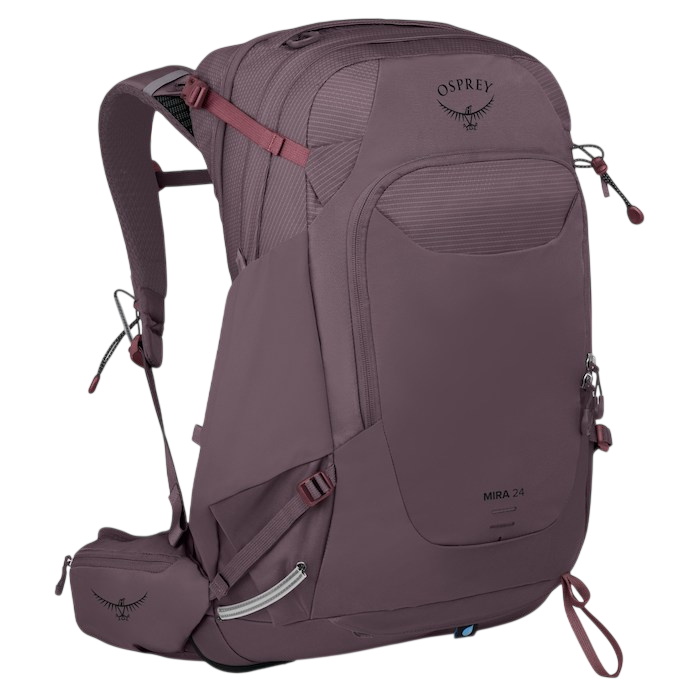
Osprey Manta 24 / Mira 24
Best Large Volume Hydration Pack
CleverHiker Rating: 4.4/5.0
Price: $220
Capacity: 24L/24L
Weight: 3 lb. 6.4 oz. / 3 lb. 4.5 oz.(Manta/Mira)
Pros
- Plenty of compartments
- Spacious internal volume
- Padded shoulders and hip belt
- Great for light rainy hikes
- Quick access hip pockets
- Highly durable bladder and construction
Cons
- On the heavy and expensive side
- Hydration bladder more difficult to use and clean
- Torso Ladder Adjuster hits shoulder blades awkwardly depending on body type
The Osprey Mira 24 Hydration Pack (and men’s Mantra 24)offers solid performance for day hikes and short outdoor trips, providing a well-balanced mix of pockets, hydration capacity, and durability. This updated version features a highly ventilated AirSpeed suspension system with a ladder torso adjuster and a new Hydraulics reservoir. However, depending on your body dimensions, we found the ladder design to hit the back of our shoulder blades awkwardly, causing some discomfort.
The pack excels in weight distribution, keeping the load close to the body, which helps with comfort even when fully loaded. Its adjustable fit and breathable back panel enhance comfort, though it may feel bulky and heavy for smaller users or those looking for a minimalist design. The hip pockets are a standout feature, providing easy access to snacks and small essentials. However, the main compartment can be challenging to access when the pack is fully loaded.
The hydration bladder system works well, with a secure hose attachment and easy-to-use closure. Though some may find the magnet clip weak and difficult to use, and the bladder opening a bit too small for effective cleaning. It offers good weather resistance with a rain cover, but the pack is not fully waterproof.
Those looking for lighter, simpler packs might find them bulky and too heavy, and be better off with another from our best hydration packs guide. Overall, the Osprey Mira 24 provides excellent value for hikers seeking a well-organized and durable daypack.
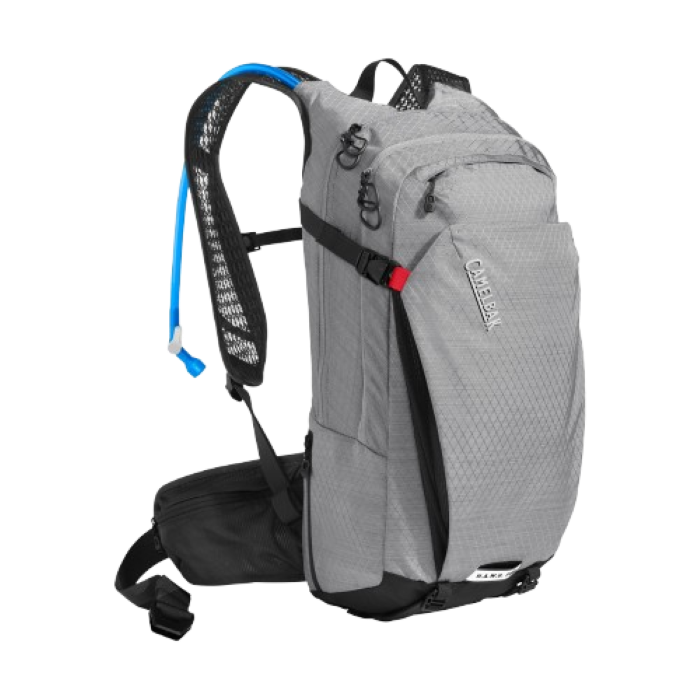
Camelbak H.A.W.G. Pro 20
Best Pack for Organization
CleverHiker Rating: 4.3/5.0
Price: $170
Weight: 2 lb. 13.5 oz.
Capacity: 17L
Pros
- Compact design
- Plenty of organization
- Comfortable hip belt
- Easy hydration access
Cons
- No adjustable frame
- Limited support in shoulder strap
- On the heavier side
The CamelBak HAWG Pro 20 100 oz excels in its compact, well-organized design while still offering ample storage and hydration for day hikes, short bike rides, and outdoor adventures. The 100 oz hydration bladder is easy to fill and offers convenient access through the side-entry system with a magnetic hose clip to keep everything in place. The pack’s durable fabric and breathable back panel ensure comfort and resilience during your activities.
However, it lacks an adjustable frame and has minimal shoulder strap padding, which can affect comfort with heavier loads. Additionally, the zippers aren’t fully waterproof, and the top pocket is somewhat shallow for bulky items.
For those seeking a practical, durable pack for short day trips or light gear, the HAWG Pro provides excellent value. It may not be the best choice for ultralight objectives, but it’s a great fit for hikers and cyclists who prioritize organization and hydration.
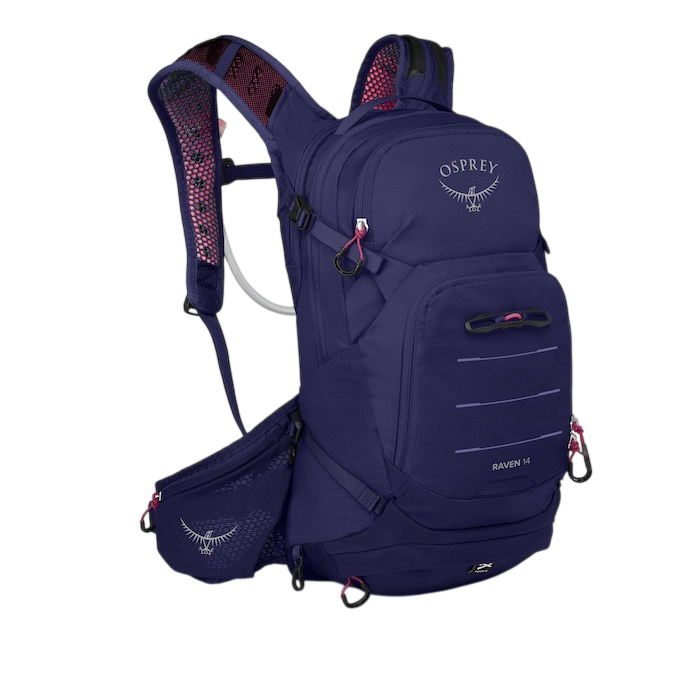
Osprey Raven 14 / Raptor 14
Best Hydration Pack for Short Adventures
CleverHiker Rating: 4.1/5.0
Price: $180
Capacity: 14L/14L
Weight: 1 lb. 14.4 oz. / 2 lb. 0.1 oz.(Raven/Raptor)
Pros
- Excellent durability
- Top-notch organization and a variety of compartments
- Specialized for biking with a helmet attachment and tool bag
- Good comfort
Cons
- Absorbs water fairly quickly and has a long dry time
- Heavier pack for the small volume
- The bladder has a small opening, making it tough to clean and dry
The Osprey Raven 14 / Raptor 14 is a great choice for shorter adventures that don’t require as much gear or water. Its durability and diversity of compartments are unmatched, making it perfect for the adventurer who prioritizes organization, longevity, and features. However, for those in search of an ultralight pack, waterproof or quick-drying materials, and extra space for layers, water, and additional gear, the Raven 14 may not be the best pick for you.
While we didn’t test this pack on a mountain bike, we did take it on day hikes in Northern California, analyzing its fit, comfort, durability, water resistance, and features while on trail. This pack comes in two gender-specific designs — the Raven 14 for women and the Osprey Raptor 14 for men. Both models offer the same robust construction, pocket variety, and dependable hydration system, but with slightly different torsos and shoulder designs to better complement male and female anatomies.
Overall, if weight, waterproofness, dry time, and ease of cleaning the hydration bladder aren’t your top concerns when picking a pack, then the Raven 14 will surely impress. For other hydration pack suggestions, check out our full gear guide for the best hydration packs.
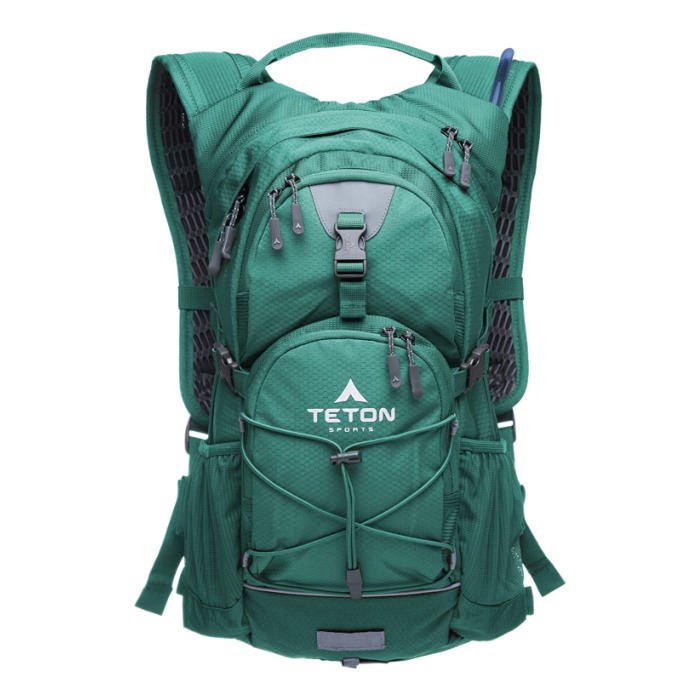
TETON Sports Oasis 18
Very Affordable Hydration Pack
CleverHiker Rating: 4.2/5.0
Price: $50
Capacity: 18L
Weight: 2 lb.
Pros
- Affordable
- Spacious main compartment
- Rain cover
- Multiple compartments for organization
Cons
- Bulky
- Not easy to use
- Flimsy hydration bladder
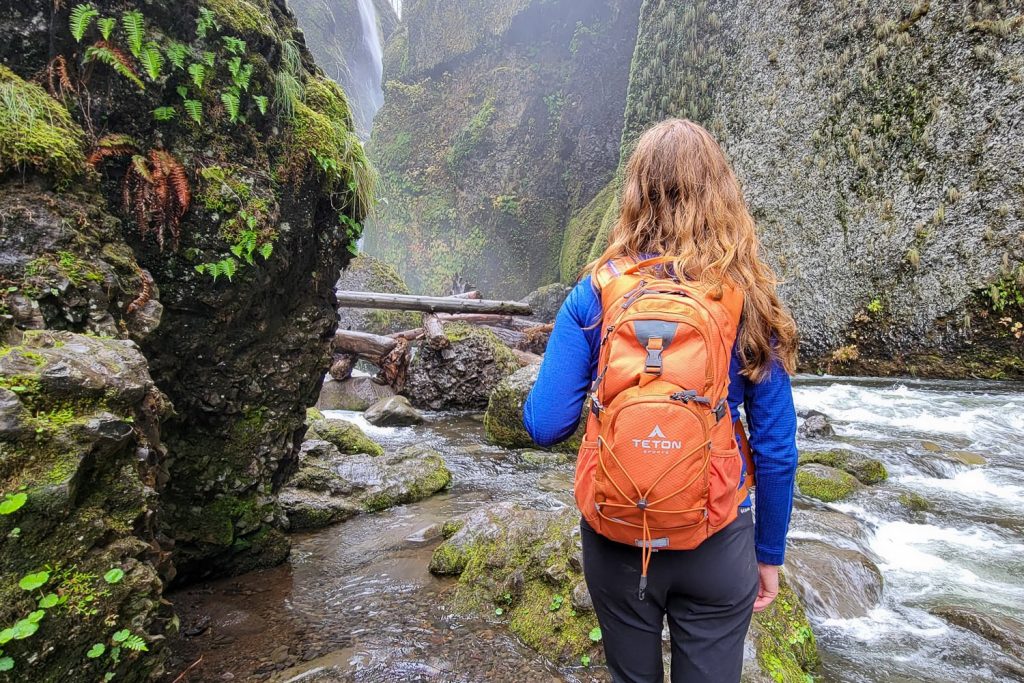
The Teton Oasis 18L hydration pack excels in durability and waterproofing, making it a solid choice for short hikes or outdoor activities in various weather conditions. We brought this pack on a local hike at Carkeek Park in Seattle. We like how the rain cover and waterproof design protect gear from wet conditions, and its thick fabric and strong materials ensure longevity. The pack offers good compartmentalization with multiple pockets.
However, its lack of a hip pocket and somewhat disorganized interior can make it difficult to access smaller items quickly. The hydration bladder is functional but lacks a handle and features a difficult-to-use Velcro attachment, which could be a frustration for some users.
While the pack is a bit bulky for its size and feels heavy when loaded, it provides ample space and good comfort for short trips. It’s not ideal for users seeking a lightweight or minimalist option. Overall, though, it’s a great choice for those prioritizing weather resistance and durability over ultra-light design.
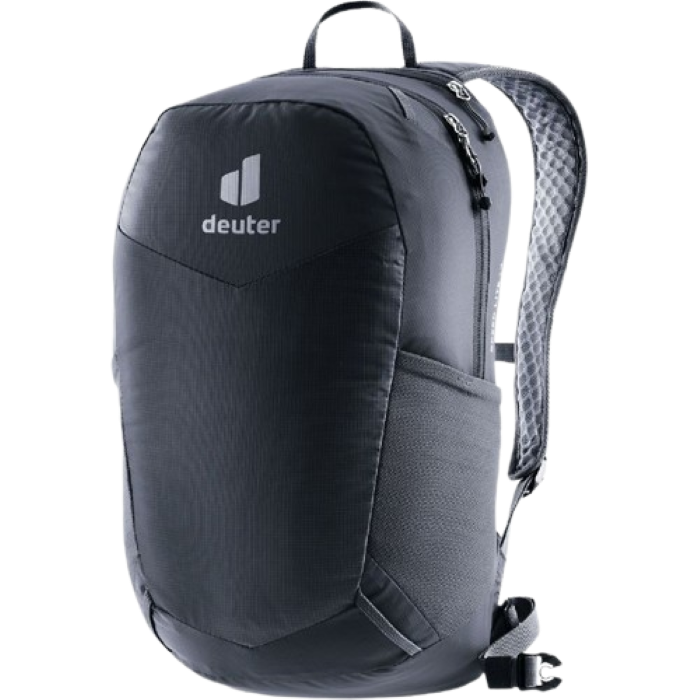
Deuter Speed Lite 13
Best Budget Minimalist Hydration Pack
CleverHiker Rating: 4.1/5.0
Price: $60
Weight: 13.8 oz.
Capacity: 13L
Pros
- Simple design
- Extremely lightweight
- Convenient top pouch for small items
- Deep and roomy main compartment
- Great for light loads
Cons
- Bladder not included
- Single main compartment with no organization
The Deuter Speed Lite 13 excels with its lightweight, compact design, making it ideal for short hikes, running, or biking where minimal gear is needed. We took this pack on a hike around Discovery Park in Seattle, and its slim profile and breathable mesh back panel kept us cool and comfortable during this light activity. The deep top pocket with a key hook offers easy access to small essentials, and the main fabric feels durable enough for regular use.
However, the pack’s minimalist design comes with limitations, including a lack of internal organization and small side pockets that can’t accommodate larger water bottles. The lack of hip support and thin shoulder straps doesn’t suit heavier loads, and the absence of a hydration bladder and a rain cover are also drawbacks.
This isn’t the best hydration pack if you need advanced features or heavy-duty durability. However, it remains a solid option for those seeking a budget-friendly, lightweight pack for short adventures and casual day trips.
Product Comparison Table
| oSort | Product | CleverHiker Rating | Price | Capacity | Weight | Comfort & Fit | Hydration System | Compartments | Weather Resistance | Durability | Weight Score | 0 |
Gregory Citro 24 H2O / Juno 24 H2O View Women's View Men's 
|
4.8/5.0 | $180 | 24L | 2 lb. 0.3 oz. / 1 lb. 14.9 oz. (Citro/Juno) | 5.0 | 4.9 | 4.8 | 4.7 | 4.8 | 4.7 | 1 |
Gregory Swift 16 / Inertia 18 H2O View Women's View Men's
|
4.7/5.0 | $120 | 16L/18L | 1 lb. 2.7 oz. / 1 lb. 0.6 oz. (Swift/Inertia) | 4.6 | 5.0 | 4.5 | 4.7 | 4.8 | 4.8 | 2 |
Camelbak M.U.L.E. 12 View Men's View Women's |
4.5/5.0 | $142 | 12L | 1 lb. 11.5 oz. | 4.2 | 4.5 | 4.6 | 4.7 | 4.7 | 4.5 | 3 |
CamelBak Cloud Walker 18 View at REI View at Amazon 
|
4.4/5.0 | $99 | 18L | 1 lb. 1.6 oz. | 4.0 | 4.4 | 3.9 | 4.7 | 4.4 | 4.8 | 4 |
Osprey Manta 24 / Mira 24 View Men's View Women's |
4.4/5.0 | $220 | 24L/24L | 3 lb. 6.4 oz. / 3 lb. 4.5 oz. (Manta/Mira) | 3.9 | 4.3 | 4.8 | 4.8 | 4.8 | 3.8 | 5 |
Camelbak H.A.W.G. Pro 20 View at Amazon |
4.3/5.0 | $170 | 17L | 2 lb. 13.5 oz. | 4.1 | 4.2 | 4.7 | 4.7 | 4.7 | 3.5 | 6 |
Osprey Raven 14 / Raptor 14 View Women's View Men's |
4.1/5.0 | $180 | 14L/14L | 1 lb. 14.4 oz. / 2 lb. 0.1 oz. (Raven/Raptor) | 4.2 | 3.9 | 4.2 | 3.8 | 4.8 | 3.8 | 7 |
TETON Sports Oasis 18 View at Amazon |
4.2/5.0 | $50 | 18L | 2 lb. | 3.8 | 3.2 | 4.3 | 4.9 | 4.6 | 4.4 | 8 |
Deuter Speed Lite 13 View at Amazon
|
4.1/5.0 | $60 | 13L | 13.8 oz. | 4.8 | 3.4 | 4.0 | 4.1 | 3.0 | 5.0 |
|---|
How We Test & Methodology
At CleverHiker, we take a hands-on, real-world approach to gear testing to ensure our reviews are both thorough and reliable. We tested each hydration pack on a variety of hikes from Washington to California. Our goal was to evaluate key metrics that matter most to outdoor enthusiasts: weight, comfort and fit, compartments, hydration system, waterproofing, and durability.
We examined how each pack performed when fully loaded, how it felt over time, and how easy it was to access important gear. We tested the hydration systems by filling, using, and cleaning the bladders to assess their performance and leak resistance. To assess waterproofing, we simulated rainy conditions to see how each pack held up in wet weather.
By evaluating these packs under the conditions they’re built for, we at CleverHiker provide you with honest, practical comparisons to help you choose the best hydration pack for your next adventure.
COMFORT & FIT
Comfort might be the single most important aspect of buying a hydration pack. We assessed comfort and fit by wearing each hydration pack during a variety of hikes, ranging from quick walks to longer, more strenuous treks. We focused on how well each pack distributed weight, the adjustability of straps, and overall body fit.
For packs with adjustable features like shoulder straps, hip belts, and torso length, we tested their flexibility to accommodate different body types. We also paid attention to how each pack felt when loaded, especially over longer distances. We prioritized comfort when evaluating how the packs prevented soreness, rubbing, or discomfort during extended use. This hands-on approach helped us determine which packs offer the best, most comfortable fit for a wide range of hikers.

HYDRATION SYSTEM
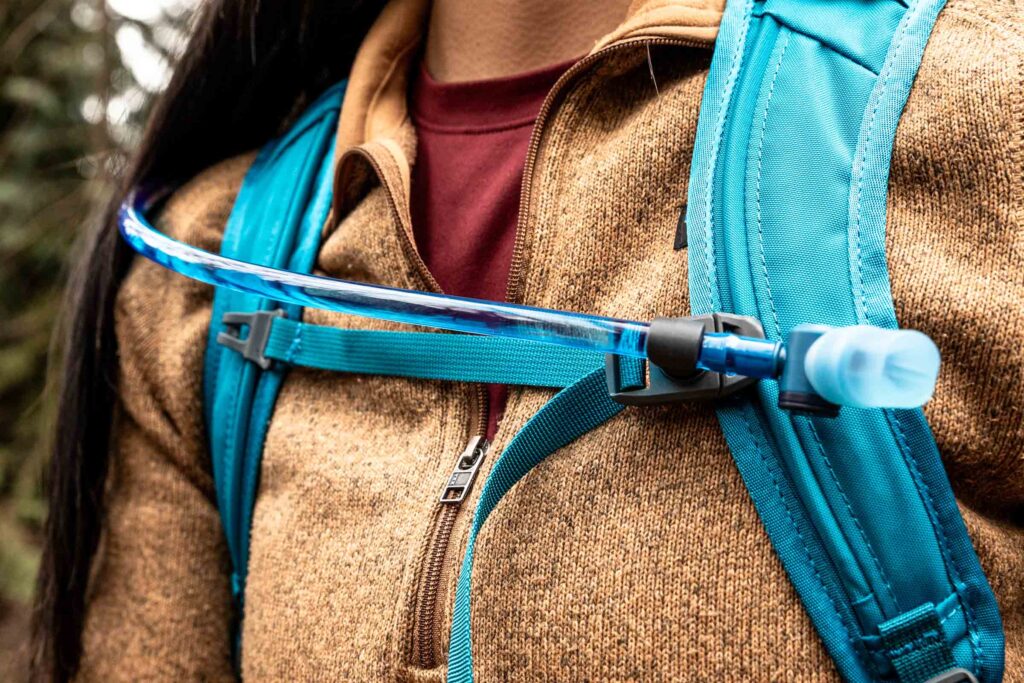
We assessed each hydration system by testing ease of use, leak prevention, and overall functionality. We filled the bladders to capacity, checked their fit within the packs, and evaluated how easy it was to attach and detach hoses. We paid special attention to bladder features like mouth openings, seals, and any added design elements, such as magnets to clip the hose or types of handles designed to make filling the bladders more ergonomic.
We also tested the bladders in motion, assessing how well the water flow functioned during hikes and ensuring there were no leaks or discomfort when drinking. Overall, we prioritized hydration systems that were reliable and user-friendly in all conditions.
COMPARTMENTS
We evaluated the compartments by testing their organization, accessibility, and overall functionality during hikes. We focused on how easy it was to access both small and larger items, from snacks and phones to water bottles. We assessed the number of compartments and their arrangement, noting whether they provided sufficient organization without being overly complicated.
We looked at hip belt pockets, side pockets for water bottles, top pockets for phones and snacks, and whether there was an additional compartment for the water bladder. Ultimately, we looked for packs that offered convenient, well-organized storage for all essentials.
WEATHER RESISTANCE
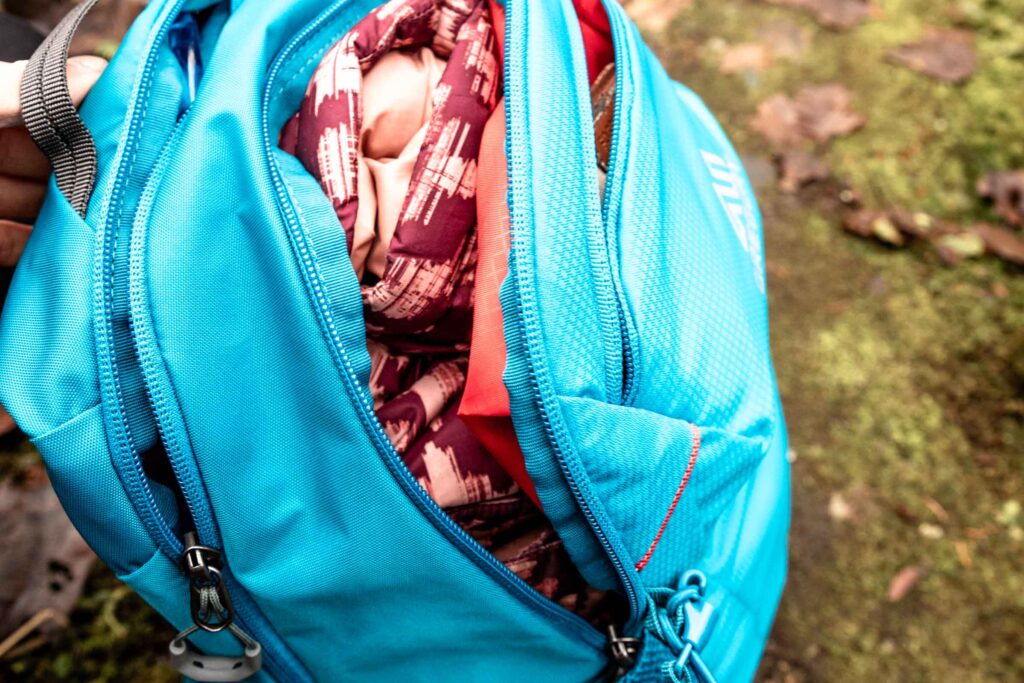
At CleverHiker, we assessed waterproofing by simulating real-world conditions, testing each pack under various environmental stressors. We ran water directly over each pack for at least 30 seconds to see how it handled exposure to heavy rain. We focused on the performance of zippers, seams, and the pack’s overall material, checking for areas where water might seep through.
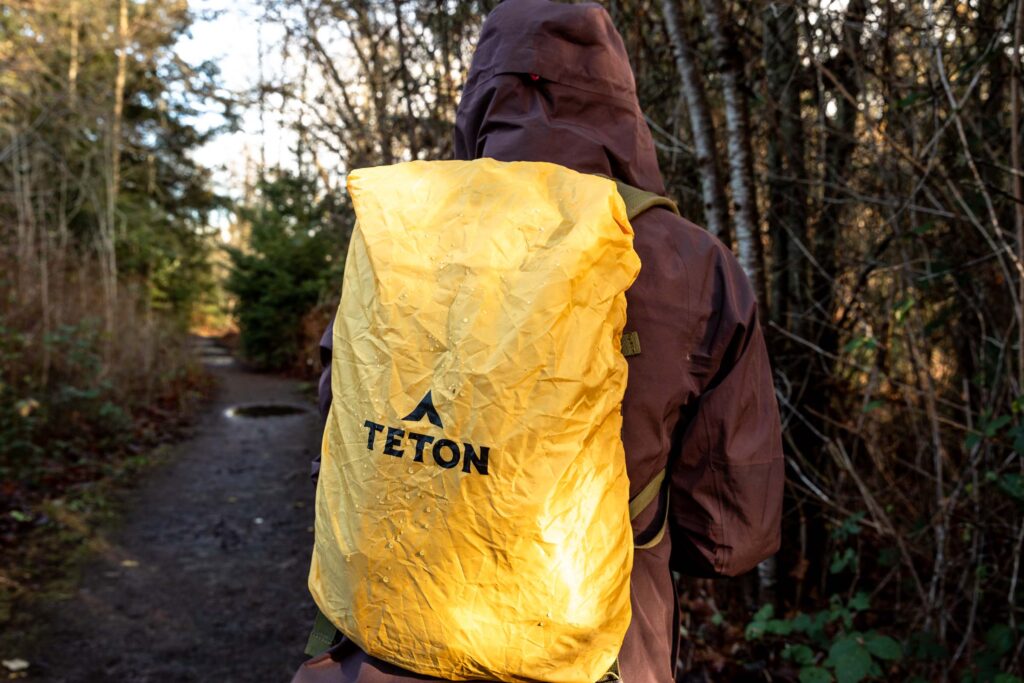
We also tested any built-in rain covers to see how effective they were in keeping gear dry. Packs with waterproof coatings, well-sealed zippers, or integrated rain covers earned high marks, while those with weaker protection — especially in the hydration system — received lower scores for keeping contents dry.
DURABILITY
We assessed durability by examining each pack’s materials, stitching, zippers, and overall construction. We subjected the packs to rough terrain and simulated rough handling – like using the pack in a rush. We checked how the fabric held up against abrasion, how the zippers performed under pressure, and how well straps and buckles stayed intact after multiple adjustments.
We also evaluated how the pack’s design and structure contributed to its longevity. Packs made from robust fabrics like high-denier nylon and those with reinforced stitching and durable zippers earned higher ratings, while flimsy materials or weak points led to lower durability scores.
WEIGHT
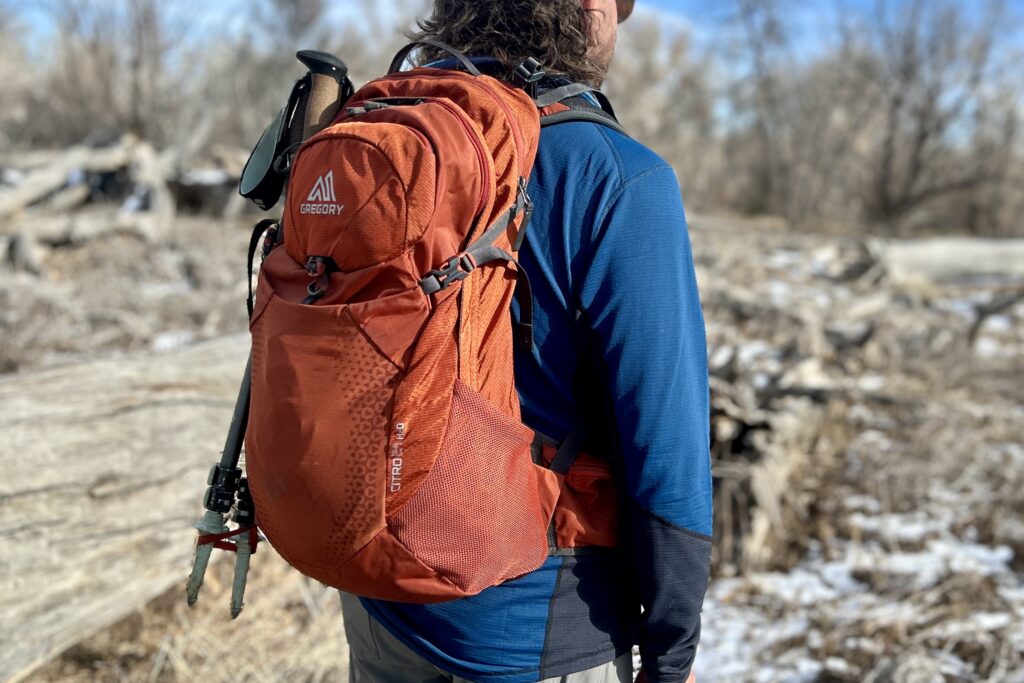
Weight is often associated with comfort and fit, but we decided to include it as a separate category. We evaluated each pack’s weight-to-volume ratio to determine how efficiently it carried its capacity. Packs that were lightweight yet offered ample storage stood out for balancing the need for durability and space without adding unnecessary bulk.
We also considered how the pack handled when filled, noting whether it felt overly heavy for its size or offered an efficient amount of storage without feeling cumbersome. Packs with a good weight-to-volume ratio provided more utility and comfort for the weight they carried, making them a better choice for long treks and fast hikes alike.
Why Trust CleverHiker
At CleverHiker, we know how challenging it can be to find reliable gear advice, which is why we created this platform. We’re passionate about outdoor adventure, and we take our guides seriously. Our recommendations are 100% independent, based on hands-on experience, and backed by extensive testing. Gear Analyst Cherlyn Eliza has hiked over 3,000 miles in Washington state alone, while Gear Analyst Emily Parnay has hiked all over California and Colorado. The packs were tested in state and regional parks and other public lands, and in rainy and snowy conditions in the Cascade Mountains.
Both of these gear analysts know what it’s like to hike in downpours and inclement weather, under snowfall, and in the hot summer sun. Their outdoor experience gives them insight into all the key aspects to look for in a hydration pack when you’re on the go, whether for a short hike or a longer expedition.
Analysis & Results
VALUE
At CleverHiker, we know that value is a major factor in deciding which equipment to buy to get the most out of your money. The Gregory Inertia 18 H20 is the best on the market for a low-cost, highly effective hydration pack. It’s got plenty of space for a day pack without being too bulky or overdone. Its hydration system is among the best, and it comes at a lower cost than other Gregory models, such as the Gregory Juno/Citro 24 H2O, which offer a little more compartment space for the extra value.
Another good contender beyond the Gregory packs is the CamelBak M.U.L.E. 12 Hydration Pack. It’s got plenty of compartment organization and is a little less bulky and heavy than the CamelBak HAWG Pro 20.
COMFORT & FIT
When it comes to comfort and fit, a hydration pack needs to distribute weight effectively, adjust to our body, and feel good on the trail. The most adjustable pack in our lineup is the Osprey Mira 24/Mantra 24, which offers customizable torso length and adjustable shoulder straps and hipbelt to accommodate varying body types. While the torso adjuster’s ladder design didn’t sit as comfortably on our shoulders, others may find it a better fit depending on their body type. For short, fast adventures, the CamelBak M.U.L.E. 12 Hydration Pack is a top choice. The Deuter Speed Lite 13 is a great second option for those looking for a smaller hydration pack for shorter adventures.
Ultimately, the Gregory Juno 24/Citro 24 H2O is the winner for comfort. With a breathable back panel, adjustable torso, padded shoulder straps, and a supportive hip belt, it provides the best fit for long-distance hiking with plenty of space for gear.
HYDRATION SYSTEM
When evaluating hydration packs, one of the most important metrics to consider is how well the hydration system works — specifically, the bladder size, ease of use, leak-proof design, and integration with the pack itself. After testing, Gregory packs are clearly the forerunners, offering user-friendly, efficient designs. The Gregory packs use a convenient hook system to hang the bladder in its own compartment, making them stand out. Additionally, the Gregory packs have the strongest magnet to hold the hydration hose in place while hiking. It is difficult to knock it out of its place.
Specifically, the Gregory Inertia 18 H2O stands out for its large bladder and most ergonomic pan handle, which provide maximum support while filling the bladder. The CamelBak M.U.L.E. 12 and CamelBak HAWG Pro 20 also perform well, though marginally less ergonomic than the Gregory packs’ hydration systems.
COMPARTMENTS
When evaluating hydration packs based on their compartments, it’s essential to consider not just the number of pockets, but also how user-friendly and accessible they are. Some packs prioritize storage space and organization, but others focus on simplicity for lighter, faster trips.
The Gregory Juno 24/Citro 24 H2O stands out with its well-organized compartments. It features a deep main compartment for larger gear and well-sized hip pockets that easily accommodate phones and snacks. Another excellent option is the Osprey Mira 24/Mantra 24 and Osprey Raven 14/Raptor 14, which offer a decent number of compartments, including hip pockets and a top pouch for easy access. The Raven/Raptor also includes a helmet attachment specific for mountain bikers. On the other spectrum, the Deuter Speed Lite 13 is more of a minimalist design and offers primarily one compartment with a sleeve for a hydration bladder. It has a small side pocket, so it’s not great for carrying more than just the essentials.
Both the CamelBak M.U.L.E. 12 and CamelBak HAWG Pro 20 offer the most internal pockets for organization. However, due to its slim design, packing bulky items is difficult when the pack is full. As a larger pack, the CamelBak HAWG Pro 20 stands out more than the CamelBak M.U.L.E. 12 with hip pockets and a few more internal pockets.
WATER RESISTANCE
When evaluating the waterproofing capabilities of these hydration packs, it’s important to look at how well each pack prevents water from entering, especially in rainy conditions. Some packs perform excellently in keeping water out, while others provide basic protection. In terms of waterproofing performance, the Osprey Mira 24/Mantra 24 and Teton Oasis 18L stand out as the best options, with strong rain covers, water-resistant fabric, and well-protected hydration systems.
The Gregory Juno 24/Citro 24 H2O and Gregory Sula 16/Salvo 16 H2O provide good water resistance but fall short compared to the Osprey and Teton rain covers. The CamelBak M.U.L.E. 12 and Deuter Speed Lite 13 are adequate for light rain, but they’re not fully waterproof and may struggle in wet conditions. The CamelBak Cloud Walker 18 Hydration Pack doesn’t come with a rain cover, but is very water-resistant and dries fast on trail.
DURABILITY
When evaluating the durability of these hydration packs, it’s essential to consider the quality of the fabrics, zippers, straps, and overall construction. In general, all of the packs feel like they could last years of adventures. The Gregory Swift 16 H2O and Gregory Juno 24/Citro 24 H2O stand out by using 420D High Density Nylon for the bottom of the pack, which allows for even more rough handling. Similarly, the Osprey Mira 24/Mantra 24 and Osprey Raven 14/Raptor 14 use a combo of 210D high-tenacity honeycomb-contrast nylon for the main pack fabric and 420D high-tenacity nylon for the bottom to withstand more rough handling as you set the pack on rocky ground.
Another important part of durability is the zippers. The Osprey packs stand out most for the ease of use of their zippers, thanks to their large zipper pulls. The Gregory packs come in a close second with slightly more potential to snag on itself.
Overall, by a small margin, the Osprey Mira 24/Mantra 24, Gregory Swift 16 H2O, and Gregory Juno/Citro 24 H2O hydration packs stand out amongst all the packs we reviewed.
WEIGHT
When evaluating the weight of these hydration packs, it’s important to consider how each design balances minimalism with functionality. For a minimalist, lightweight option, the Deuter Speed Lite 13 is the best. At just 13.1 ounces, it’s one of the lightest packs on the list, especially for its volume, making it an excellent choice for ultralight hikers or those looking for a minimalist pack for quick, fast-paced trips.
Following up the Deuter is the CamelBak M.U.L.E. 12 and CamelBak Cloud Walker 18 Hydration Pack. For the best balance of weight, storage space, and the number of organizational pockets, the Gregory packs stand out. The Gregory Juno 24/Citro 24 H2O is better for longer day hikes, while the Gregory Inertia 18 H2O is best for shorter day hikes.
How to Choose a Hydration Pack
HYDRATION RESERVOIR CAPACITY
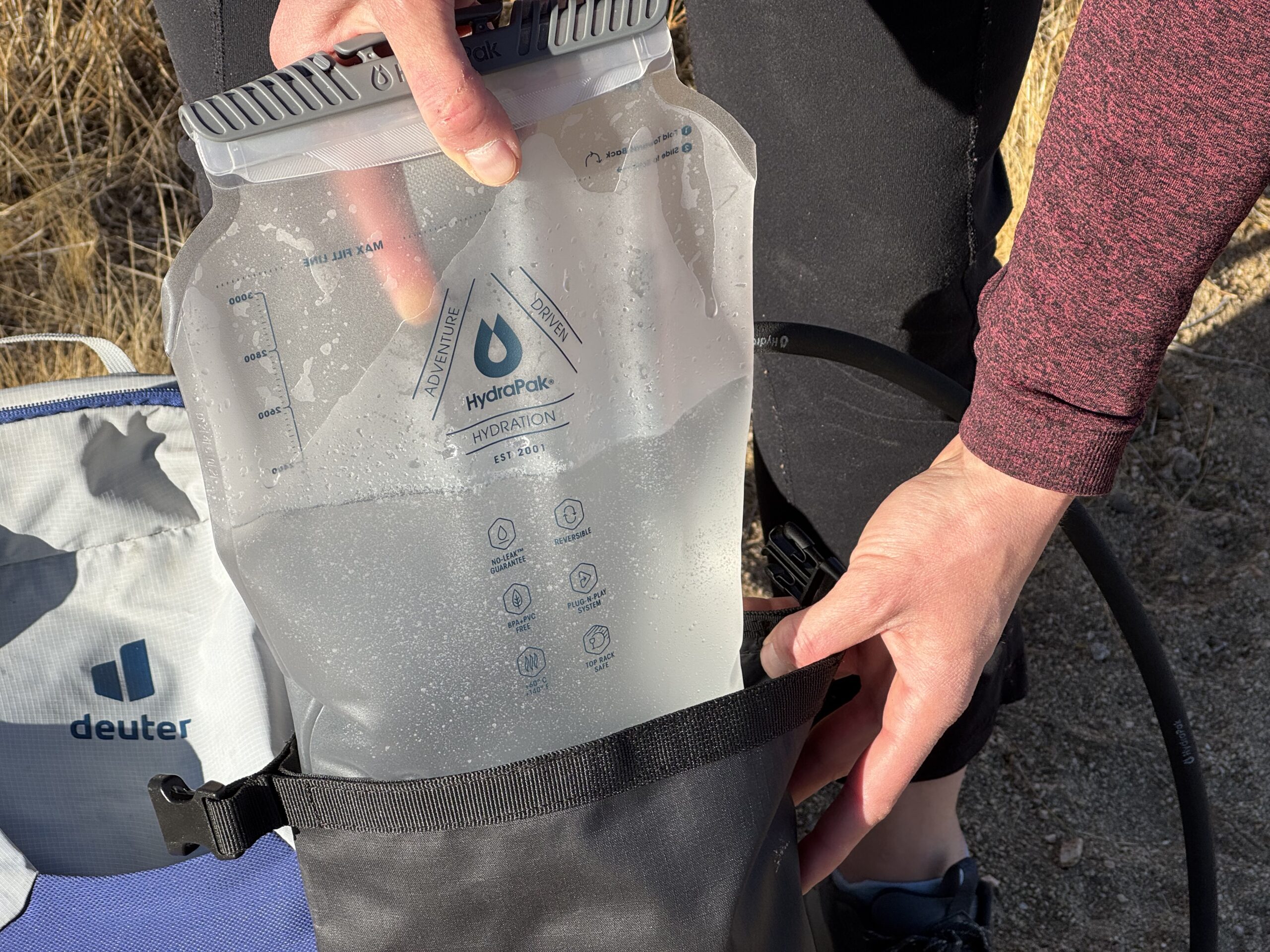
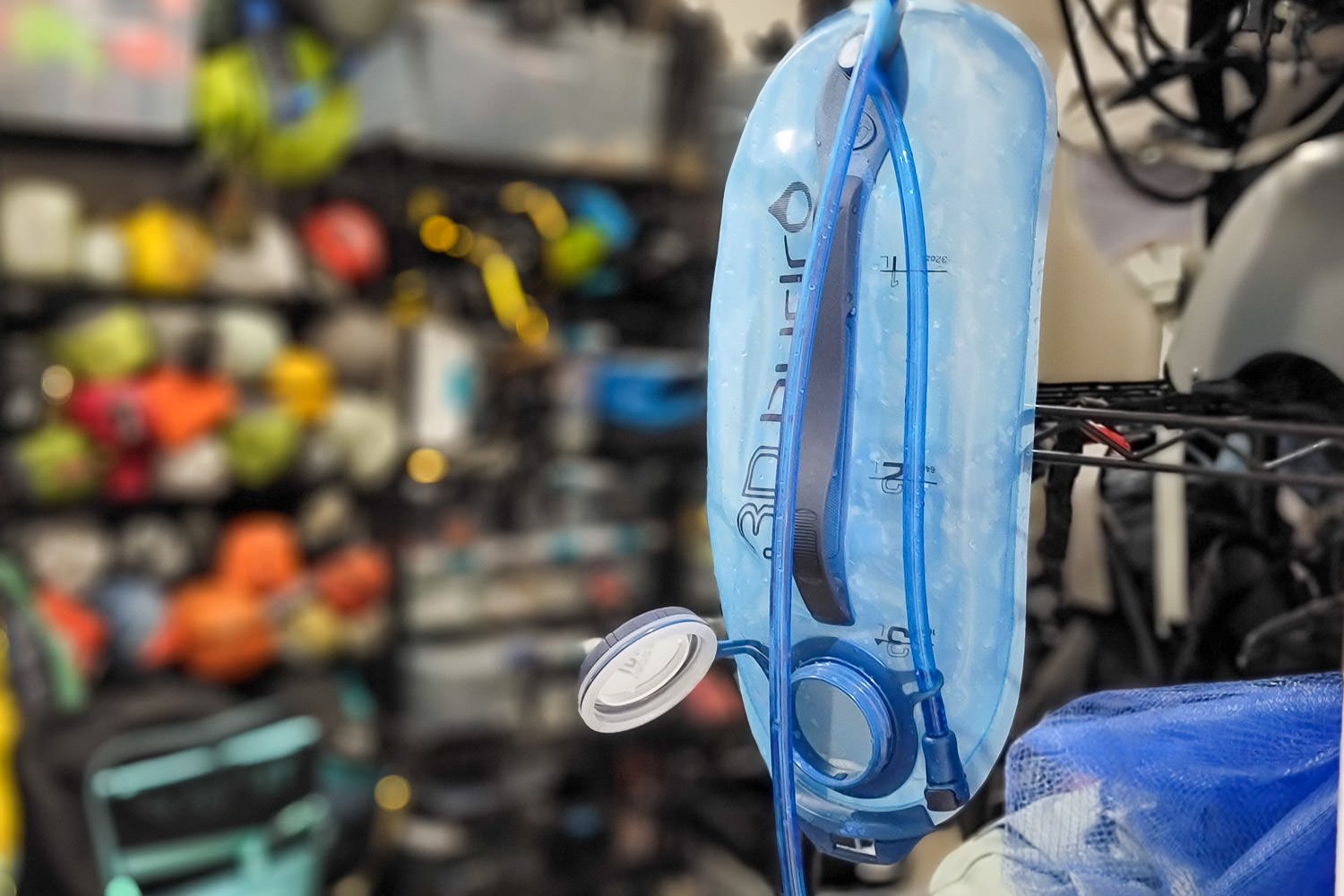
The liquid capacity of a hydration reservoir is usually measured in liters (L), and most hold between 1 and 3 liters. Water is heavy (1 liter weighs approximately 2 pounds), so it’s important to carefully consider how much you’ll actually drink and plan accordingly. It can be nice to have a larger maximum capacity for long days on the trail, but you don’t have to fill your reservoir to the brim if you want to keep your load light. You could also plan to refill along the way if you’re carrying a filter and know there’s a place to do so.
To estimate how much water you’ll need for an outing, a good rule of thumb is to carry half a liter per hour for moderate activity in mild temperatures. You may need to dial this up depending on conditions and personal preferences. Strenuous hiking in high heat may call for 1 liter of water or more per hour.
ORGANIZATION
Many hydration packs feature a large top-loading compartment for storing gear, and many also include additional pockets for organization and easy access to small items. The hydration reservoir itself often sits in its own sleeve against your back, and the drinking tube exits through a port at the top. We tend to prefer backpacks with a front mesh pocket to store items we need often while on the go, like a rain jacket, water filter, or map.
FIT
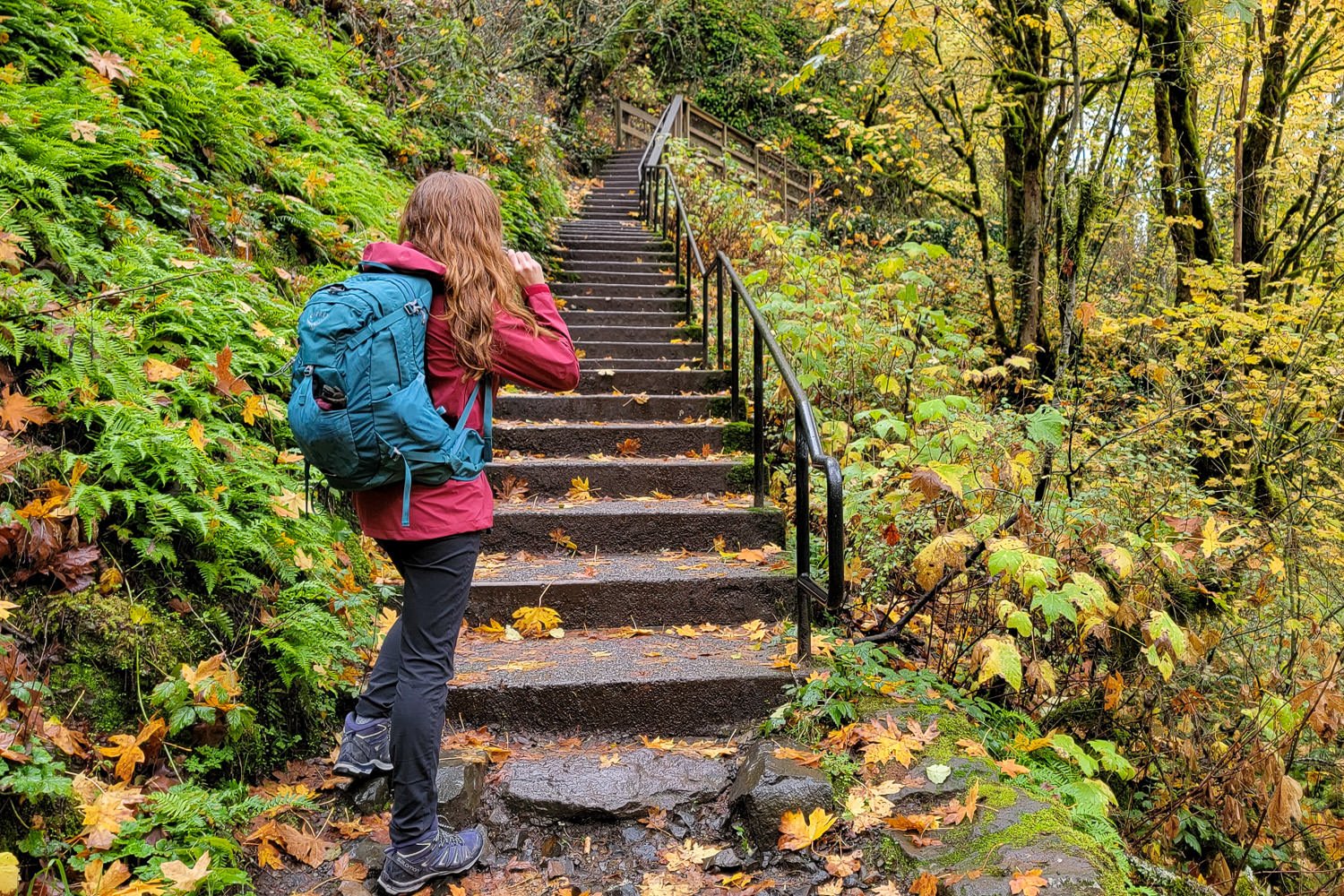
Most hydration packs are one-size-fits-all, which is why there are different models for men and women on framed packs. Some packs have adjustable torso lengths and a hip belt that will comfortably fit a range of sizes. Make sure to try on multiple sizes if you’re on the edge of one size and another, so you can find the correct fit, for your torso length and width, for the most comfortable carry possible.
If you’re buying online, it’s a good idea to measure your torso length and find your hip belt size so you can check the specs before ordering. Check out our How to Find and Fit the Right Backpack video for more details on measuring correctly.
BACK PANEL & VENTILATION
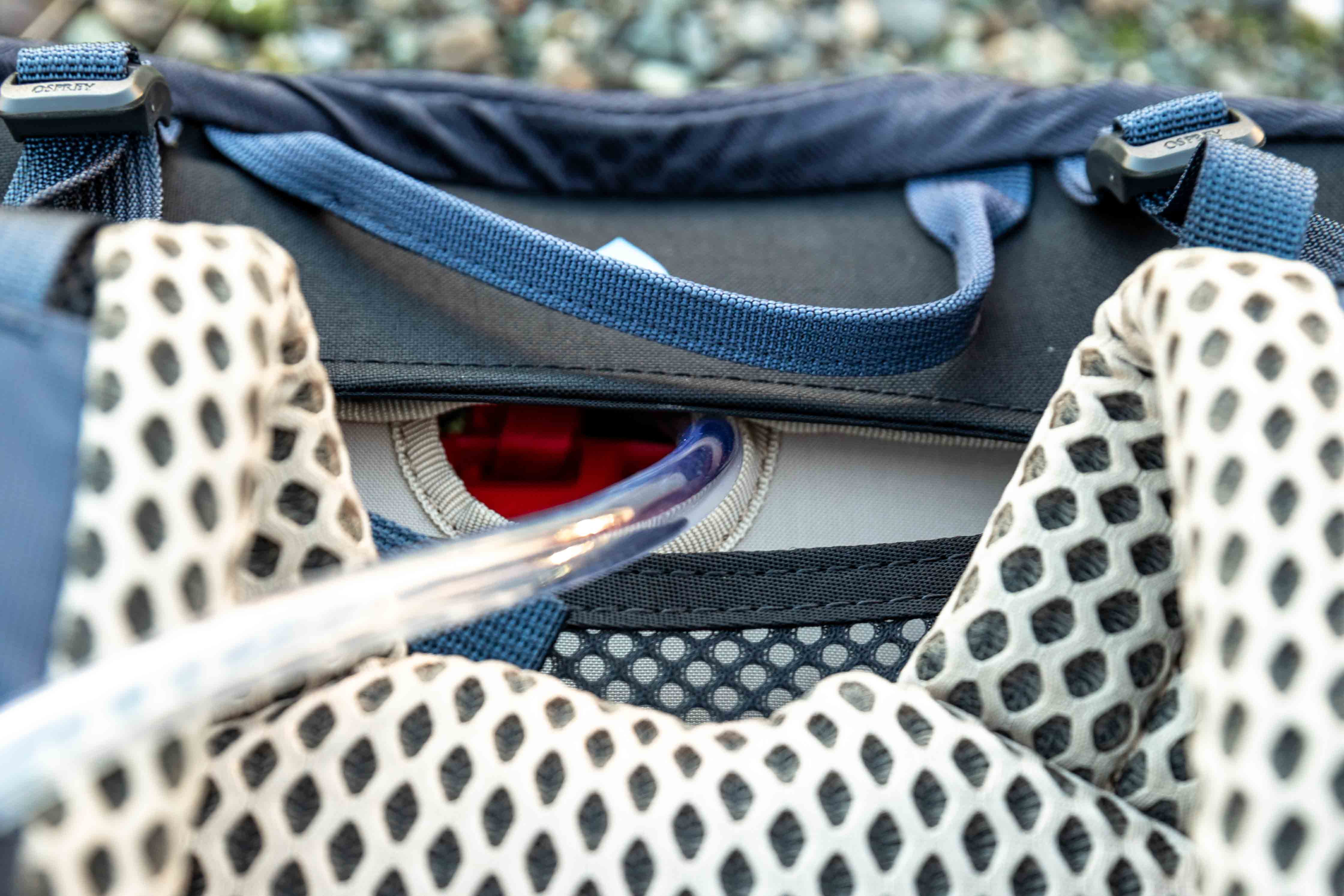
Some hydration packs have a suspended mesh back panel, which allows for more airflow and ventilation so your back can stay cool, or at least air out a bit of that sweat. Our top favorites for packs with cushy yet airy back panels include the Gregory Citro 24/Juno H2O and Osprey Manta 24/Mira 24.
Though the difference is usually minimal (your back will still get sweaty), many hikers find those frame types to be more comfortable. Packs with simple back-panel designs usually incorporate foam padding for comfort and add grooves to improve ventilation. Both designs work well, in our opinion.
HIPBELT
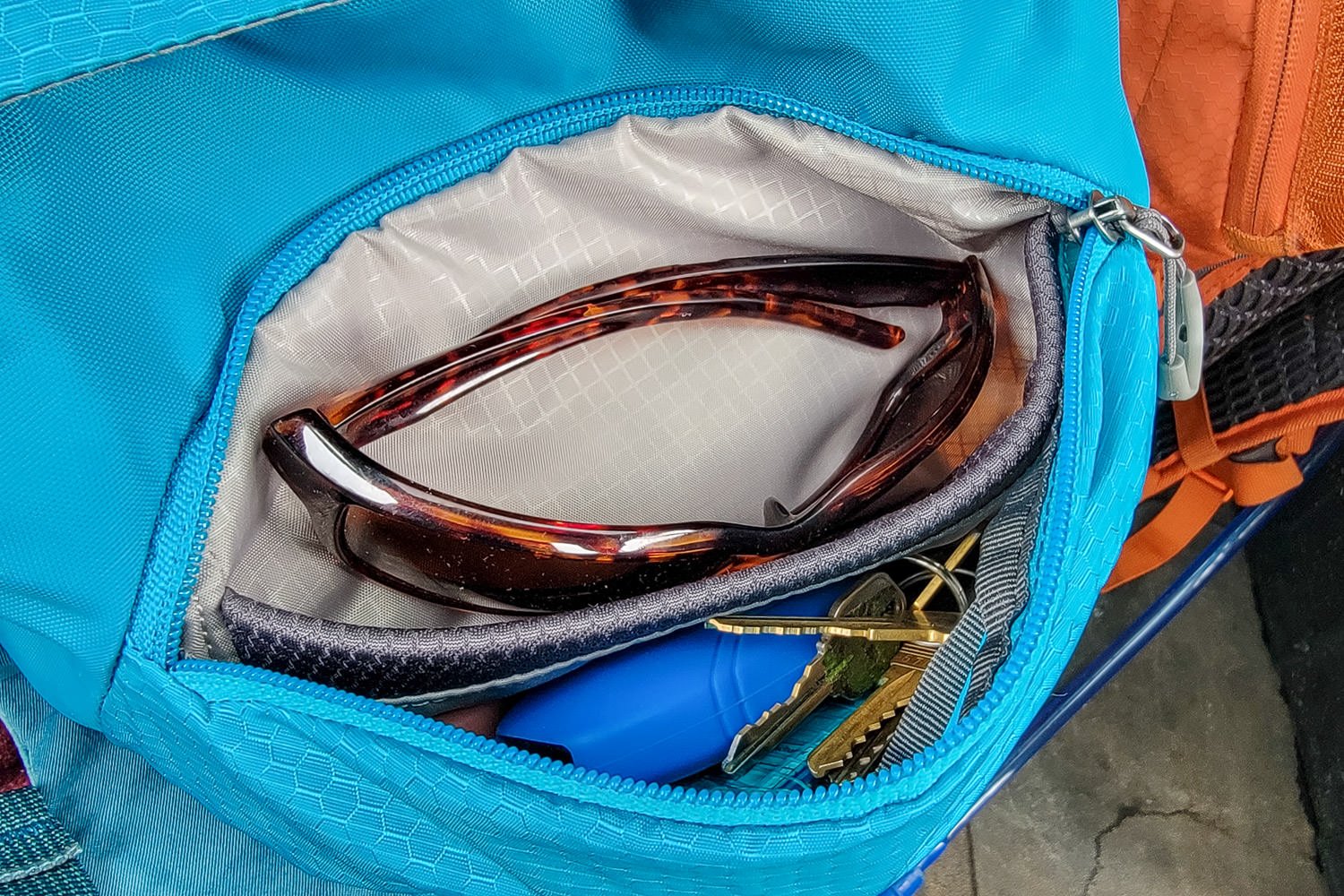
A hipbelt’s primary function is to distribute the weight of your pack to your hips, which helps alleviate strain on your shoulders. Some hip belts have pockets for easy access to items you’ll want readily available (snacks, sunscreen, lip balm, etc.) Unfortunately, we’ve found that most hipbelt pockets on daypacks are a bit tight for a large, modern cell phone. If you take a lot of photos with your phone, you may want to consider adding an aftermarket shoulder pocket to keep it handy and protected.
Minimalist hydration packs generally have a simple strap that adds a small amount of stability or no hip belt at all. For full-day excursions where we’ll be spending a lot of time on the trail, we prefer packs with more structured hip belts.

STERNUM STRAP
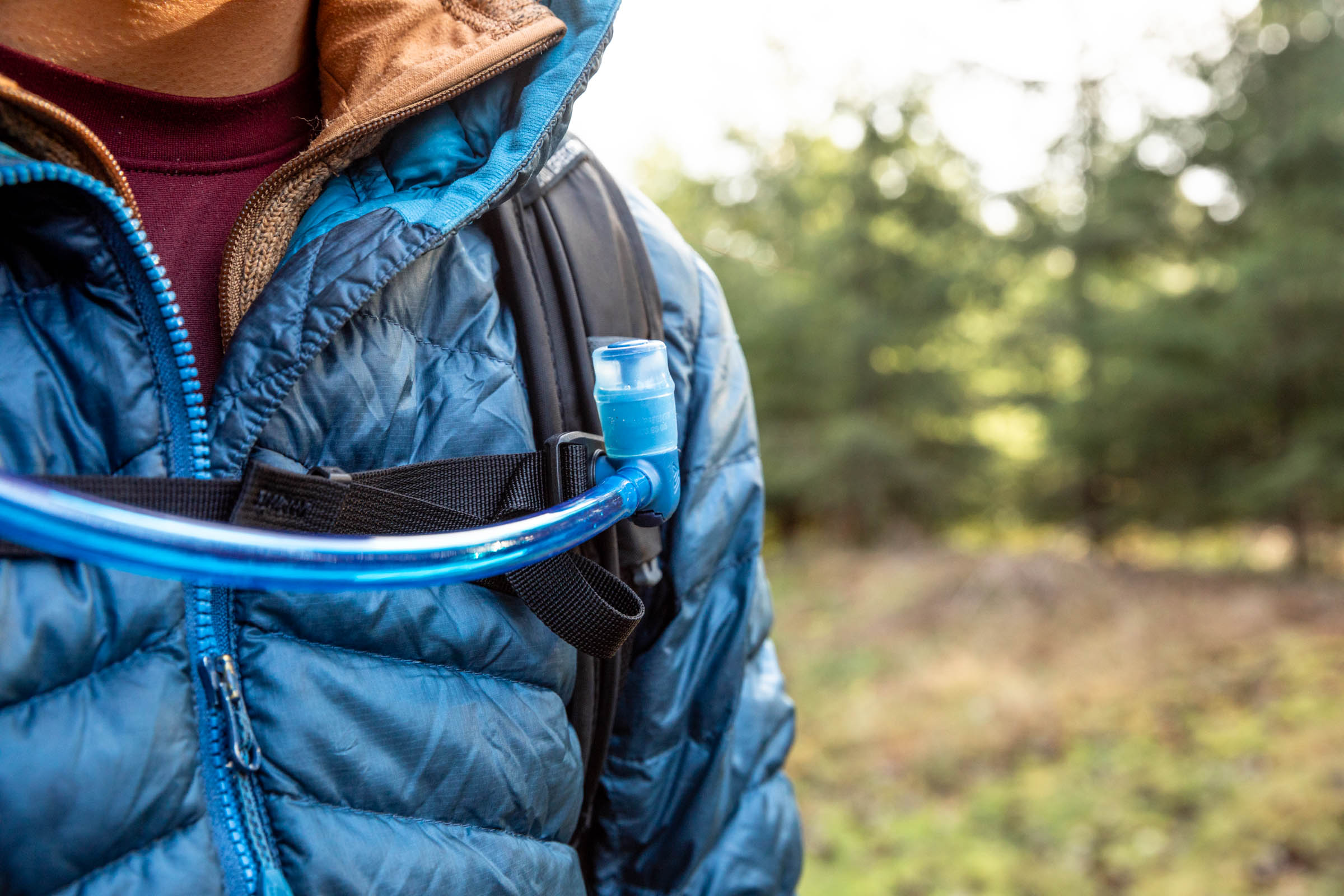
Sternum straps, which clip across your chest, provide a little more load stability and are included on almost all newer hydration packs. Some high-end packs have magnets embedded in the sternum strap that stick to the bite valve of your hydration tube (Gregory Citro 24/ Juno 24 H2O and Osprey Manta 24/ Mira 24). A magnetic bite valve keeps your hydration system within reach at all times and out of the way of your arms.
WATER BOTTLE HOLSTERS
Hydration packs are made to work with hydration reservoir systems, but they often have side pockets to hold water bottles as well. This can be helpful if you need additional storage capacity for long, dry stretches of trail, or if you prefer to filter water using a bottle rather than directly in your reservoir when you need to refill. However, for folks who are fully committed to their reservoirs, those pockets are excellent for fast storage and fast access to jackets, gloves, and poles.
Water bottles can be more convenient in some instances, especially when you want to bring hot drinks or beverages other than water.
WATERPROOFING
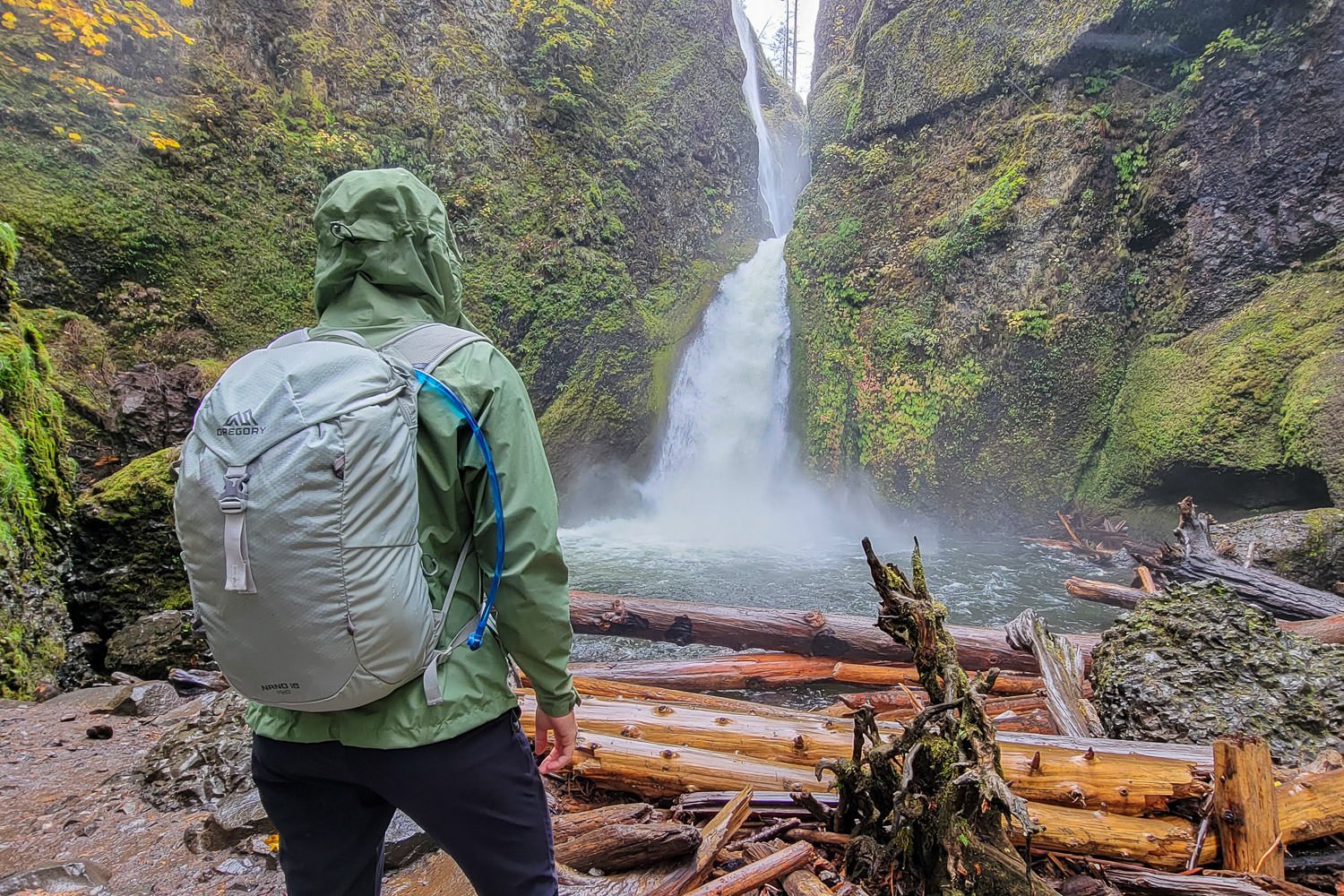
In general, it’s not a good idea to rely on any backpack for full water protection. Some hydration packs come with pack covers, but after enough use in inclement weather, they won’t provide full protection in prolonged rain. We recommend packing your gear in waterproof stuff sacks or Ziploc bags inside your pack. You could also line the inside of your hydration pack with a trash bag to keep everything inside dry.
HYDRATION RESERVOIR CARE
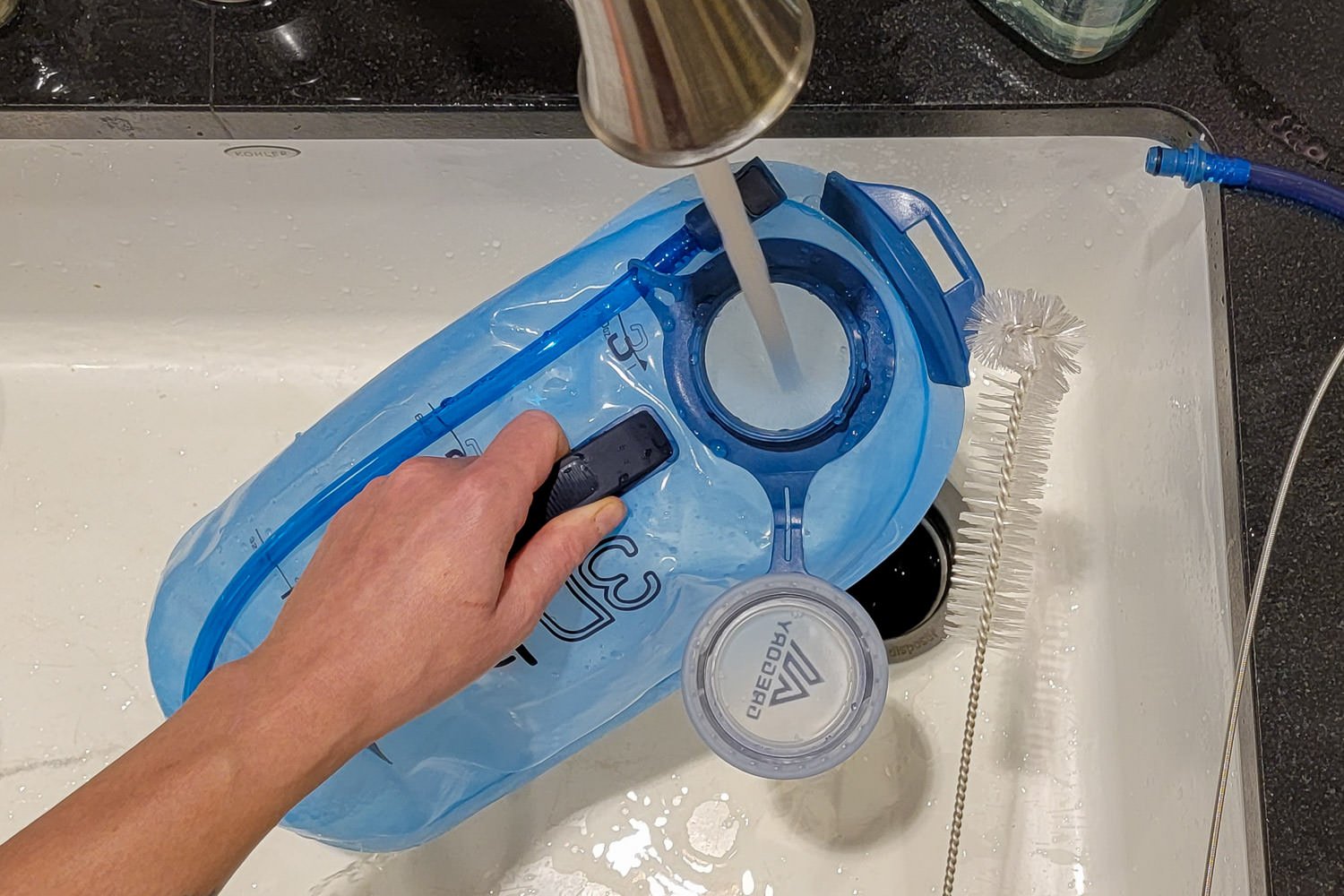
Most hydration reservoirs have polyethylene linings, which retain tastes and odors more easily than polycarbonate. Because of this, we recommend not filling them with anything but water. The best way to maintain any plastic water bottle or bladder is to rinse it out after each use and let it air dry completely.
If funky tastes or odors develop, try filling your reservoir with water, adding 1 tablespoon of bleach and 1 tablespoon of baking soda, and letting it sit overnight. Rinse well and air dry as usual. A cleaning kit (CamelBak / Gregory) specifically made for your hydration reservoir will make maintenance even easier.
Conclusion
At CleverHiker, we take pride in providing thorough, expert-reviewed gear recommendations to help you make informed decisions. The best hydration pack will blend comfort, storage, and durability, making it a reliable companion on the trail. Whether you’re tackling a short day hike or a longer trek, we’re here to guide you to the best option for your needs, ensuring you’re prepared for any adventure.