Bottom Line
The Marmot Tungsten 4 hits a useful middle ground between a backpacking-style tent and a traditional car-camping shelter. It weighs just under eight pounds, pitches quickly, and uses a low-profile structure that performed exceptionally well in wind and rain during our testing.
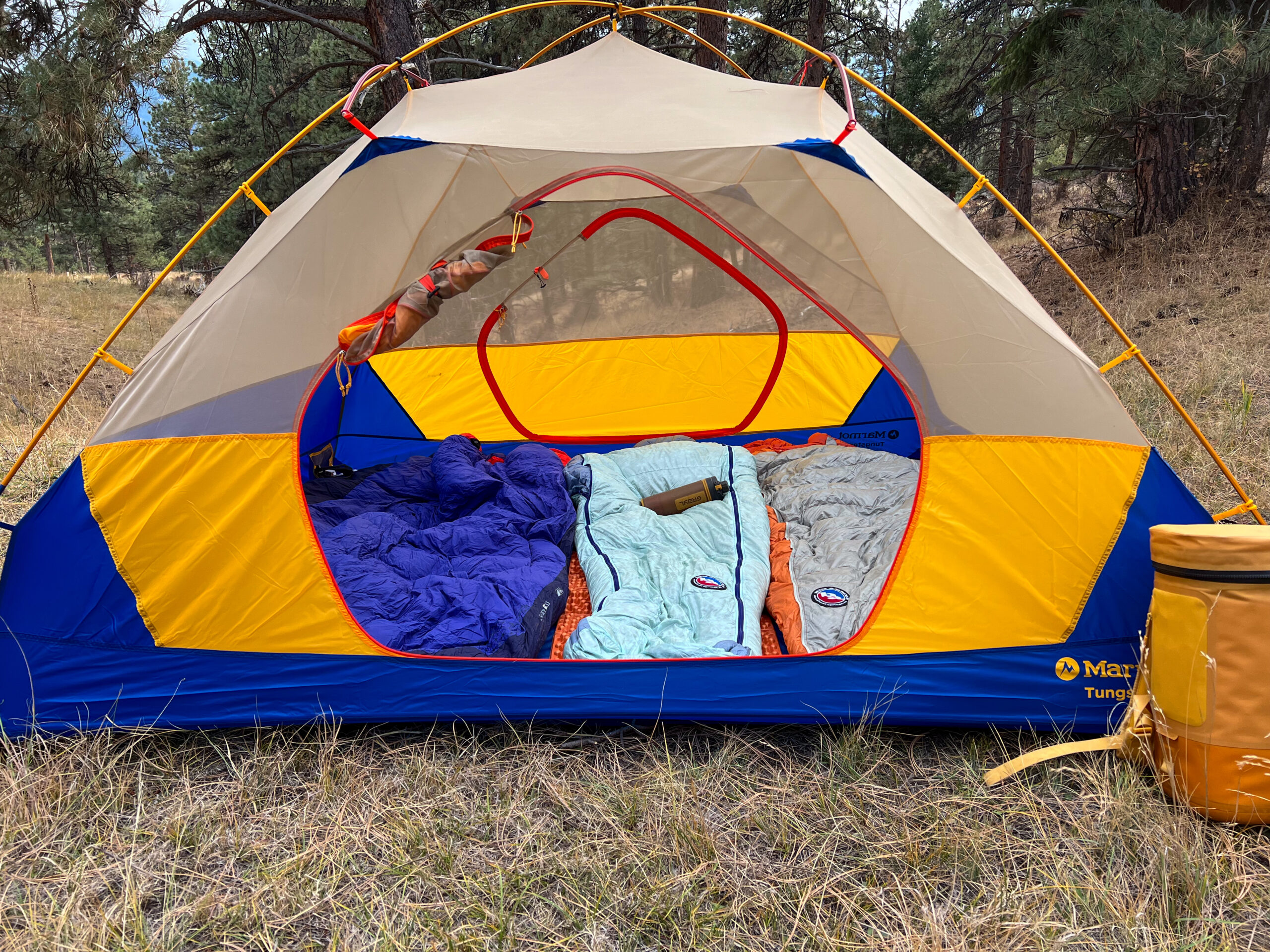
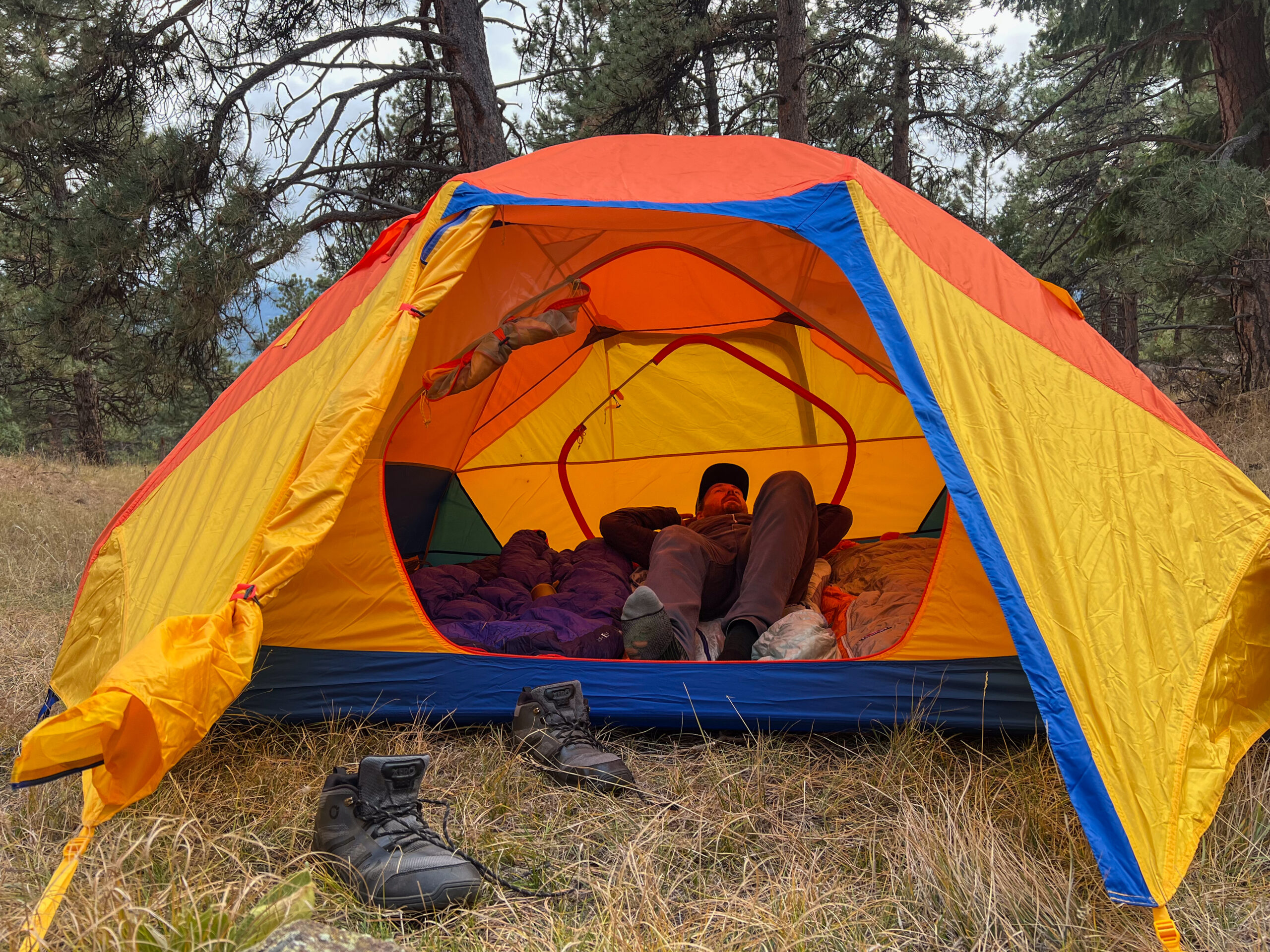
The interior is more spacious than the 53-inch peak height suggests. Two brow poles pull the upper walls outward, so sitting up and moving around feels less cramped than in many low dome tents. We consider it luxurious for two, comfortable for three, and tight for four.
Its weaknesses are mostly in organization and included accessories. There are only a few small pockets, Marmot does not include guylines, and the stake count is not enough to fully secure every point. Those are easy to fix, but they are disappointing on a $449 tent.
How We Tested
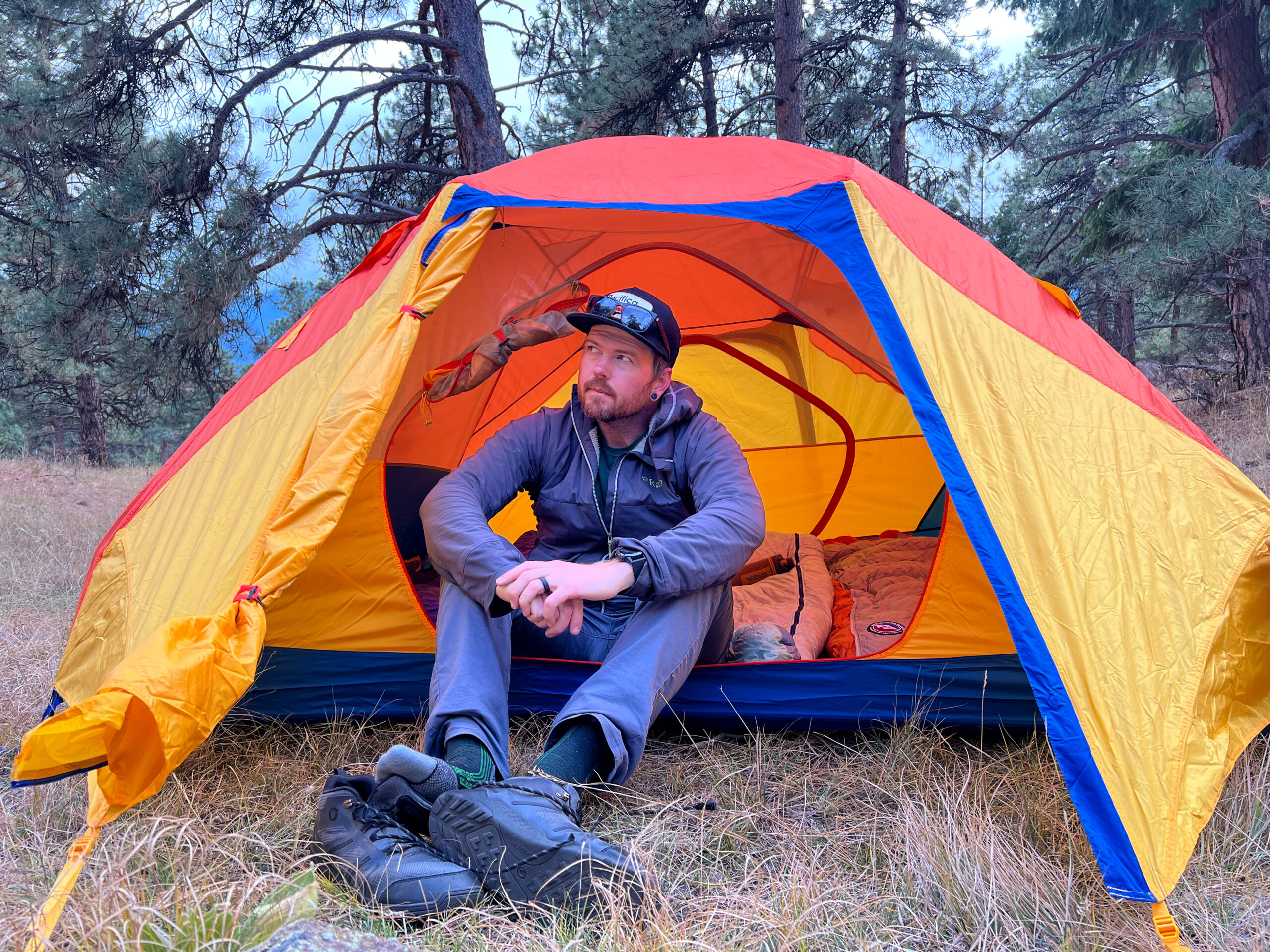
The Tungsten 4 got one of the harsher weather tests in this category. In Colorado mountain camps, CleverHiker gear analyst Ben Dawson combined repeated solo and group setup with a prolonged storm cycle that moved from heavy rain to graupel and snow, along with moderate wind. That gave us unusually strong firsthand evidence on storm protection as well as setup speed, ventilation, durability, interior space, and vestibule use.
Quick Specs
- Capacity: 4-person
- Floor area: 52.7 sq. ft.
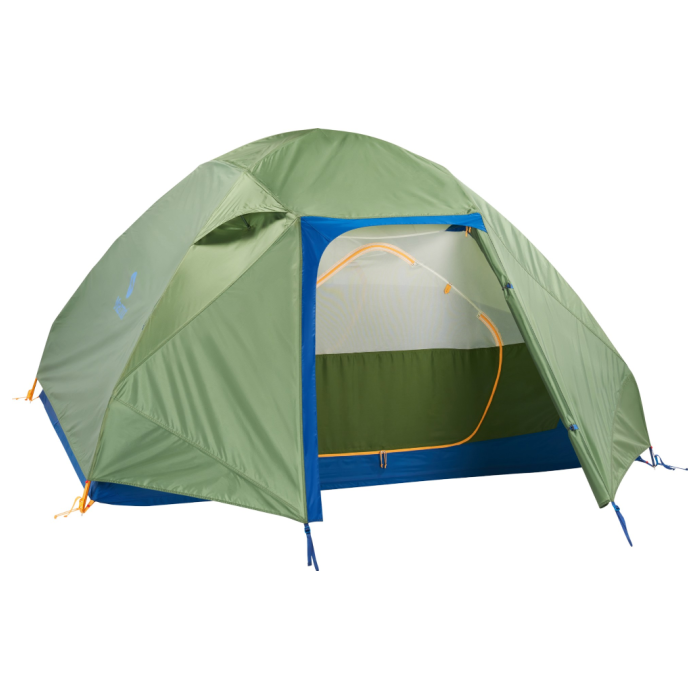
Marmot Tungsten 4
Best Low-Profile, High-Volume Camping Tent
CleverHiker Rating: 4.2/5.0
Price: $449
The size we tested feels: Luxurious for 2, comfortable for 3, tight for 4
Measured Weight: 7 lb. 14 oz.
Dimensions (LxWxH): 93 x 82 x 53 in.
Pros
- Lightweight
- Fast, easy pitch
- Spacious for its height
- Durable materials
- Excellent weather resistance
- Footprint included
Cons
- Low peak height
- Few pockets
- No guylines included
- Not enough stakes included
Spaciousness & Comfort
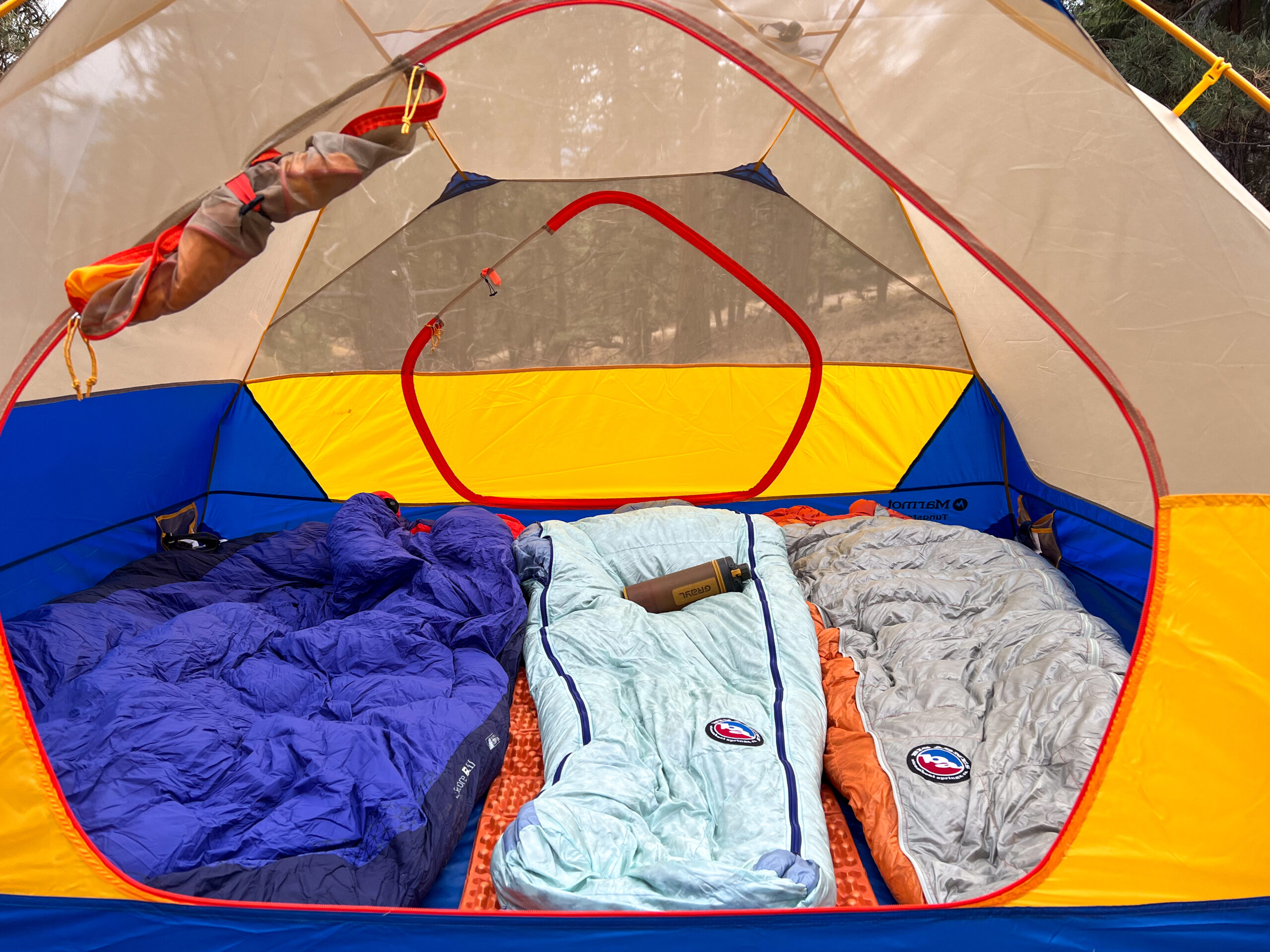
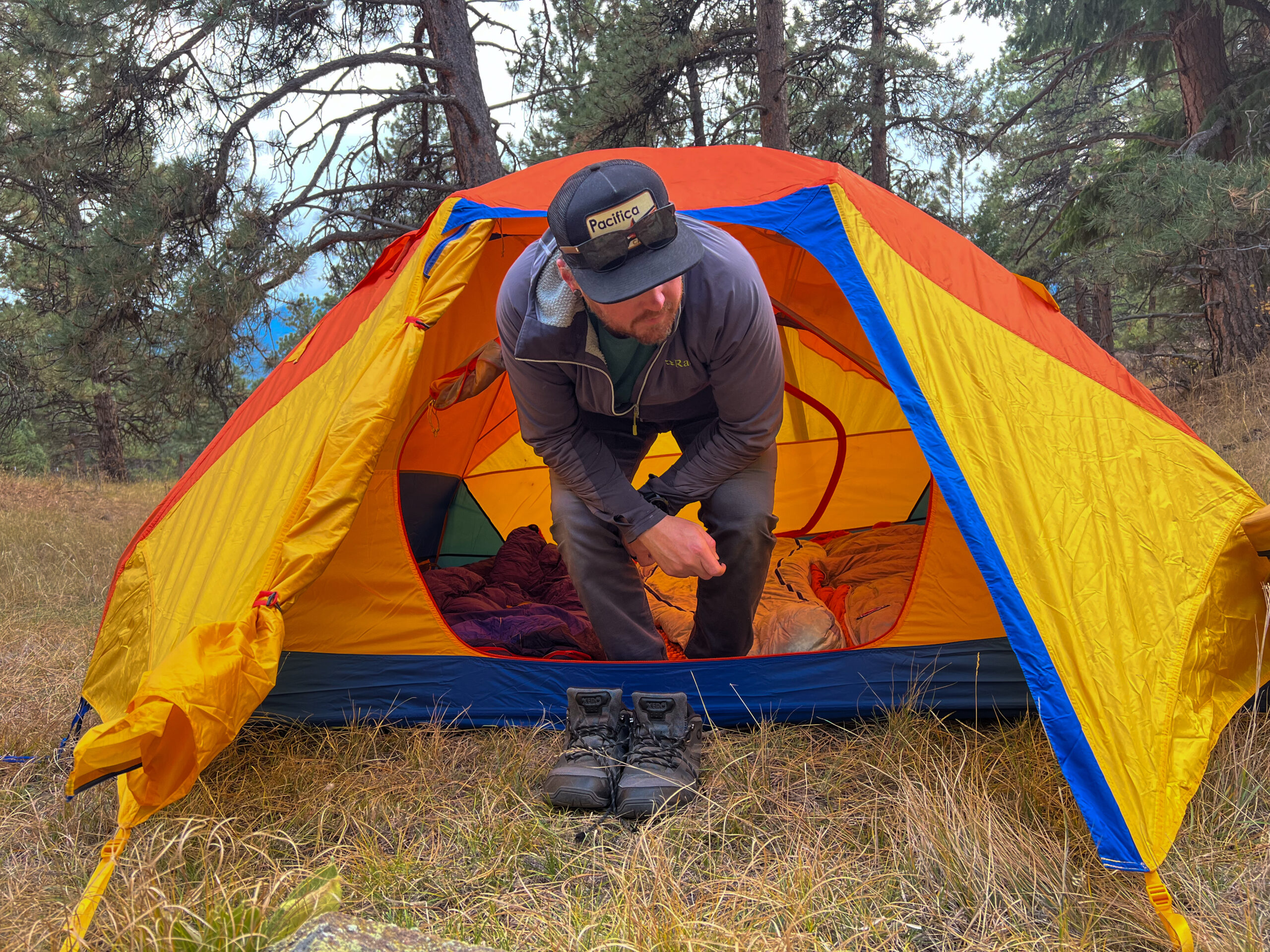
The Tungsten 4 is most comfortable as a two- or three-person shelter, even though four sleepers technically fit. We tested it with two adults and two small children and could make the arrangement work, but there was little spare floor space for gear. Kids may be physically smaller, yet their extra clothing and camp treasures quickly consume the same room an adult would.
The two exterior vestibules are therefore important. Together they add roughly 36 square feet of covered storage, giving occupants somewhere to place shoes, packs, and gear that would otherwise crowd the sleeping area. You do need to leave part of each vestibule clear for entry and exit, so the full square footage is not available as storage.
At 53 inches, the peak height is low by car-camping standards. Most adults will be sitting or kneeling inside rather than standing. Pre-bent poles and brow poles help by pulling the walls outward, so shoulder room is better than the raw height suggests. For two campers, the tent feels pleasantly spacious; for four, the lack of standing room becomes more noticeable.
Mesh in the body provides excellent airflow on dry fly-off nights. With the fly installed and both vestibules zipped, ventilation drops considerably. A kickstand vent and fully tensioned fly improve air movement, but the interior can still feel stuffy.
That comfort profile explains the Tungsten’s crossover appeal. Campers who want a smaller, lower tent that can occasionally be carried farther from the car may like the compromise. Families seeking a roomy place to stand, dress, and spend rainy afternoons should choose a taller frontcountry model.
Comfort Score: 4.1 / 5.0
Ease of Setup
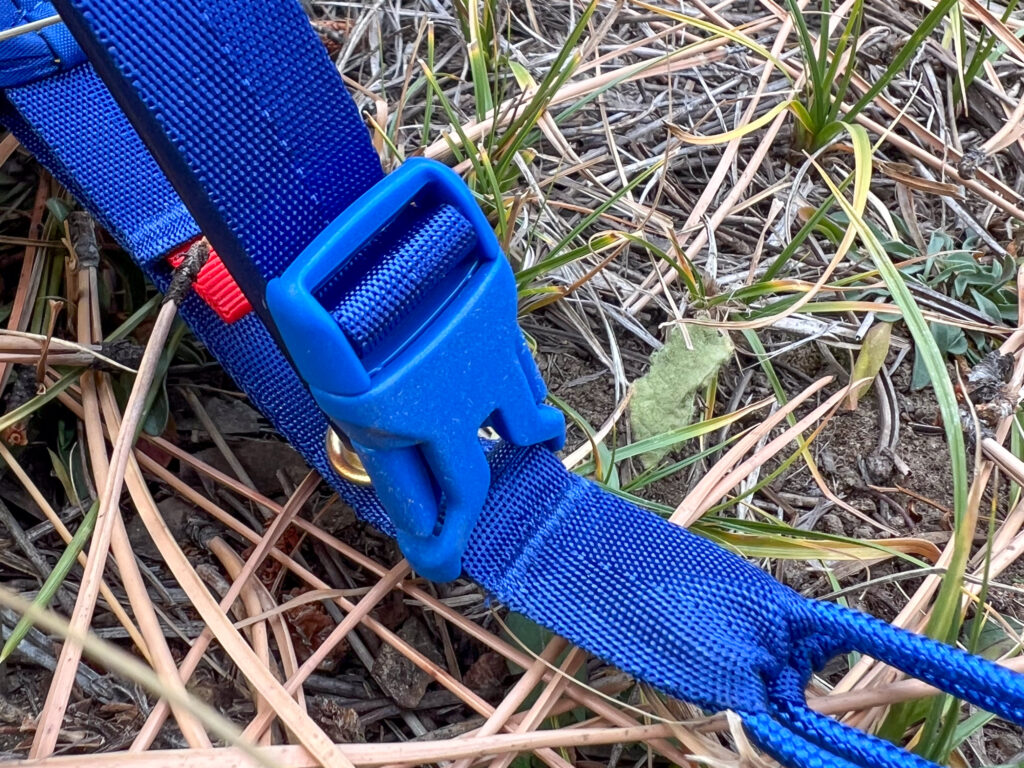
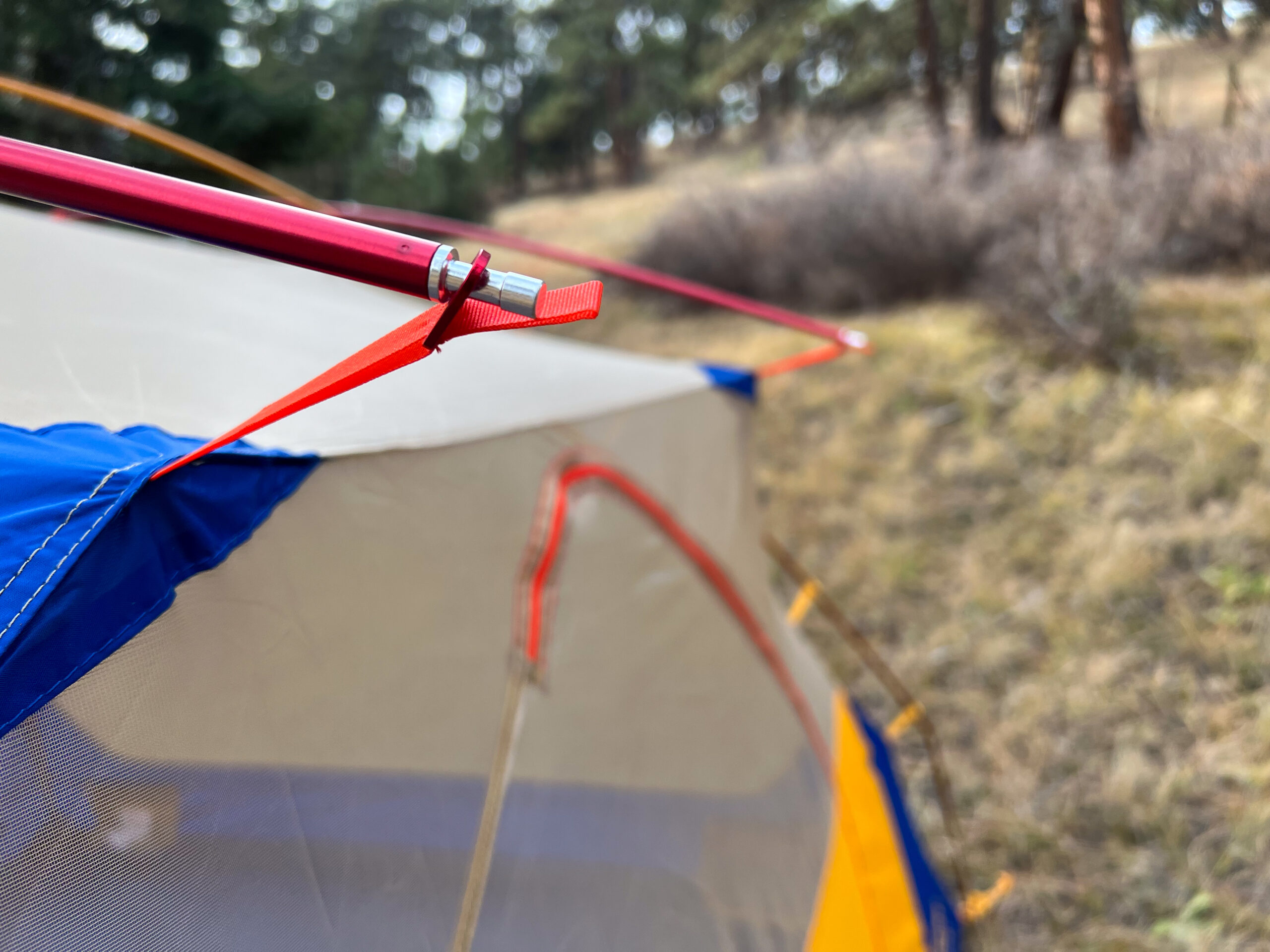
The Tungsten 4 is one of the easiest tents in the category to pitch. In our testing, a solo setup could be completed in under eight minutes once the components were laid out. Color-coded poles and webbing make orientation obvious, and the body uses clips rather than long pole sleeves, so there is less opportunity for a pole to snag in fabric while the structure is being raised.
The hubbed, pre-bent pole system does much of the shaping automatically. Once the corners are connected, the frame takes form quickly and the remaining clips are easy to attach. The lower peak height also helps because the highest attachment point is reachable without stretching or standing on tiptoe.
The rainfly follows the same user-friendly pattern. Color-coded webbing and plastic clips make it simple to align and secure. Unlike the very large flies on six-person family tents, the Tungsten’s fly is manageable for one camper, which matters if you often arrive alone or need to get shelter up quickly.
Packing is similarly uncomplicated. The body and fly fold into a relatively compact bundle, reinforcing the crossover character of the tent. Compared with shelters such as the Base Camp 6, there is simply less fabric and fewer structural components to organize.
We do wish the tent arrived with a complete storm setup kit. Marmot does not include guylines and does not provide enough stakes to secure every point, so an owner preparing for exposed weather needs to add those separately. That omission does not make the basic pitch harder, but it adds a preparation step before the tent is fully ready for rough conditions.
Ease of Setup Score: 4.7 / 5.0
Weather Resistance
The Tungsten 4 was one of the more reassuring low-profile tents in our weather testing. We used it in Colorado through a roughly 36-hour period of heavy rain that shifted into graupel and then snow before conditions cleared. Despite sustained wet weather, the interior stayed dry and we did not experience leakage.
The fly provides broad coverage, and the bathtub-style floor protects areas where the fly does not extend completely to the ground. The low dome shape also reduces the amount of wall exposed to wind compared with tall family tents. In moderate gusts, the Tungsten remained stable and never felt close to structural failure.
A fully guyed pitch is still important. When tensioned, we saw the structure bend inward once or twice in stronger gusts, but it recovered and did not create a serious problem. The frustrating part is that Marmot does not include the guylines or enough stakes needed to use all of the anchor points. Campers headed to windy areas should supply their own before the trip.
Ventilation is the weak side of the weather package. With the fly and vestibule doors closed, airflow is noticeably lower. The kickstand vent helps, and guying the fly away from the body creates more air space, but humid or warm wet conditions can still feel stuffy.
For rain, cold spring weather, and moderate wind, the Tungsten gives us substantial confidence. Its low profile and solid fly coverage make it better suited to exposed three-season conditions than many tall campground tents, as long as owners add the missing guyline hardware.
Weather Resistance Score: 4.7 / 5.0

Durability & Quality
The Tungsten 4 feels like a well-built medium-duty tent rather than an ultralight shelter stretched beyond its intended use. The Velocity HD aluminum poles are heavier than fiberglass but provide better stiffness and long-term confidence. The canopy and fly use ripstop polyester, while the floor is taffeta polyester. Marmot does not publish every fabric denier, but the materials felt substantial in hand and remained in good condition through our test period.
Repeated setup did not reveal problems with the pole joints, seams, or primary zippers. The tent is low enough that wind places less leverage on the frame than it does on a cabin-style shelter, which should also reduce long-term structural stress when the tent is used correctly.
Our main durability watch point is the set of plastic clips that secure the fly to the body. They are exposed to weather and repeated handling, and plastic hardware generally offers less long-term reassurance than metal components. We did not experience a failure, so we treat this as a potential weak point rather than a demonstrated problem.
The included footprint is an important positive. It protects the floor from abrasion and means buyers do not need to budget for another accessory to preserve the tent. For campers who split time between campgrounds and occasional short backpacking-style trips, that durability package is appealing: the Tungsten stays reasonably light while avoiding the delicate feel of many backcountry-first tents.
With basic care, we expect the Tungsten to provide years of three-season use. It is more confidence-inspiring than a budget family tent, even if it is not built as heavily as the burliest dedicated car-camping shelters.
Durability Score: 4.7 / 5.0
Features
The Tungsten 4 has a useful but restrained feature set. Color-coded poles and webbing directly support its fast setup, and the included footprint adds real value because it protects the floor without requiring another purchase. Two vestibules provide substantial external storage and allow occupants to keep wet or bulky gear outside the sleeping space.
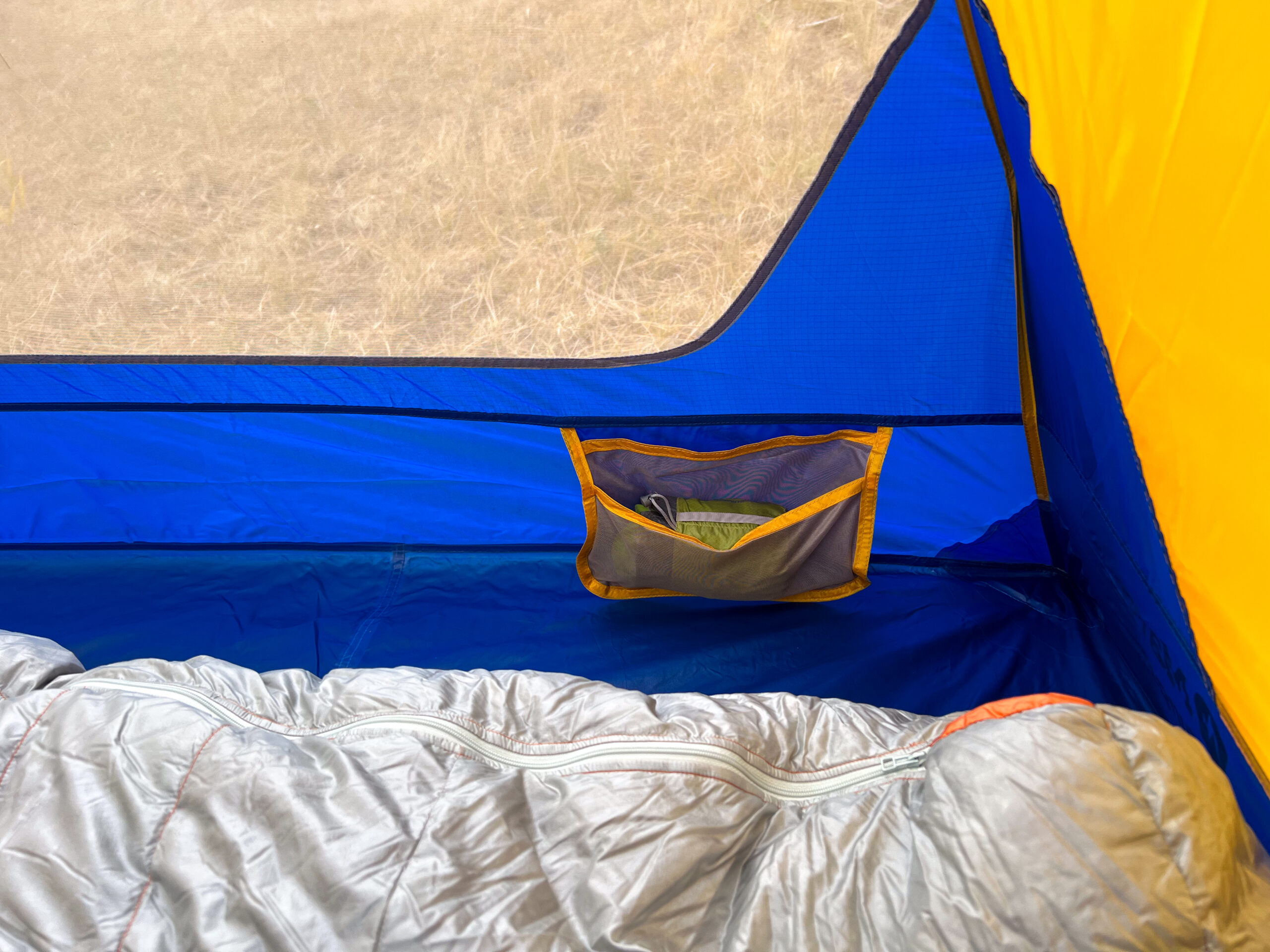
Interior organization is where the design feels underdeveloped. There are four side pockets plus two overhead “Lampshade” pockets, but the side pockets sag when they are loaded with more than small items. During family camping we wanted room for larger essentials such as wipes, extra layers, or electronics, and the available pockets filled quickly.
The overhead Lampshade pockets work well for headlamps because the material diffuses the light into a softer glow. They are much less useful for bulk storage. That makes them a nice lighting feature rather than a solution to the general organization problem.
The rainfly doors roll fully to the side, creating clean entry and exit without loose fabric hanging in the way. The tradeoff is that vestibule geometry is somewhat less storage-efficient than the giant porch designs on larger tents. Still, having two separate covered areas is useful for two or three campers.
The missing guylines and limited stake count are the biggest feature omissions. A weather-capable tent should ideally arrive with the hardware needed to use its anchor points. Overall, the Tungsten’s features support its crossover identity—fast setup, modest packed size, and practical vestibules—while leaving dedicated family organization behind larger frontcountry designs.
Features Score: 4.3 / 5.0
Should You Buy the Marmot Tungsten 4?
Buy the Tungsten if you want a compact, dependable tent for two or three people and care more about storm performance and fast setup than standing room. It is particularly strong for windy or wet destinations.
Choose a taller tent if you spend lots of time inside camp. The Aurora Highrise 4 is much more comfortable for standing, while the Mineral King 3 is lighter and more ventilated for two campers.
What Other Camping Tents Should You Consider?
Mountain Hardwear Mineral King 3 Review: The Mineral King 3 is a better fit for two people who want the Tungsten’s easy setup but care more about ventilation and crossover portability. Its mesh-heavy body feels exceptionally airy on dry nights, and the compact design is easier to move between frontcountry and lighter-duty carry-in camps. The Tungsten offers more room and stronger storm performance, so the Mineral King makes the most sense when low bulk matters more than weather margin.
NEMO Aurora Highrise 4 Review: Campers who want premium materials without spending the trip crouched inside a 53-inch tent should move toward the Aurora Highrise 4. Its 75-inch peak height and steeper walls create a far more comfortable place to change clothes or wait out a slow morning at camp. That extra livability comes with substantially more weight and bulk, so the Tungsten remains the better crossover-style option.
REI Base Camp 6 Review: The Base Camp 6 is the move for a larger family that values storm protection and gear organization more than low weight or quick setup. It brings a full fly, huge doors, two vestibules, and extensive storage that make longer trips easier to manage when weather turns. Compared with the Tungsten, though, it is a major jump in weight, campsite footprint, and pitching complexity.