Bottom Line
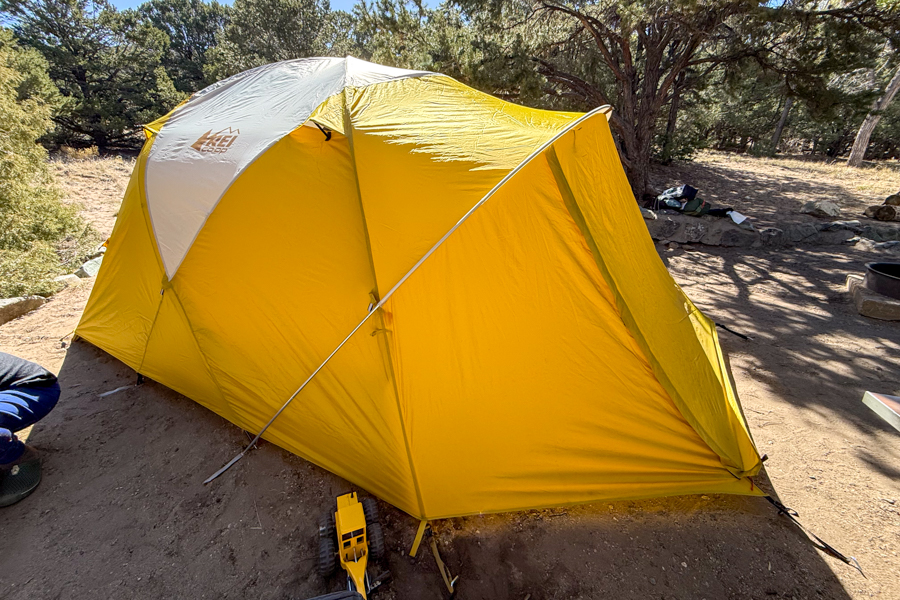
The REI Base Camp 6 is the most weather-focused family tent in our camping lineup. Its full-coverage fly, lower dome profile, taped seams, and pole-sleeve structure create a more protected shelter than most tall six-person designs. We tested it in high winds at Great Sand Dunes National Park, and it held its shape without issue when fully guyed.
Organization is just as important here. Fourteen interior mesh pockets, a mesh attic, and two vestibules totaling about 44 square feet give families a place for nearly everything. On longer trips, that amount of storage makes a real difference because gear can stay sorted instead of accumulating on the floor.
The price for that capability is complexity. Five poles, multiple sleeves, eight stake-out points for the body, and a large fly make this one of the slowest tents in the category to pitch. We also found the aluminum poles more flexible than we expected at this price. If you want a storm-ready family basecamp and do not mind practicing the setup, the Base Camp 6 is a very capable shelter.
How We Tested
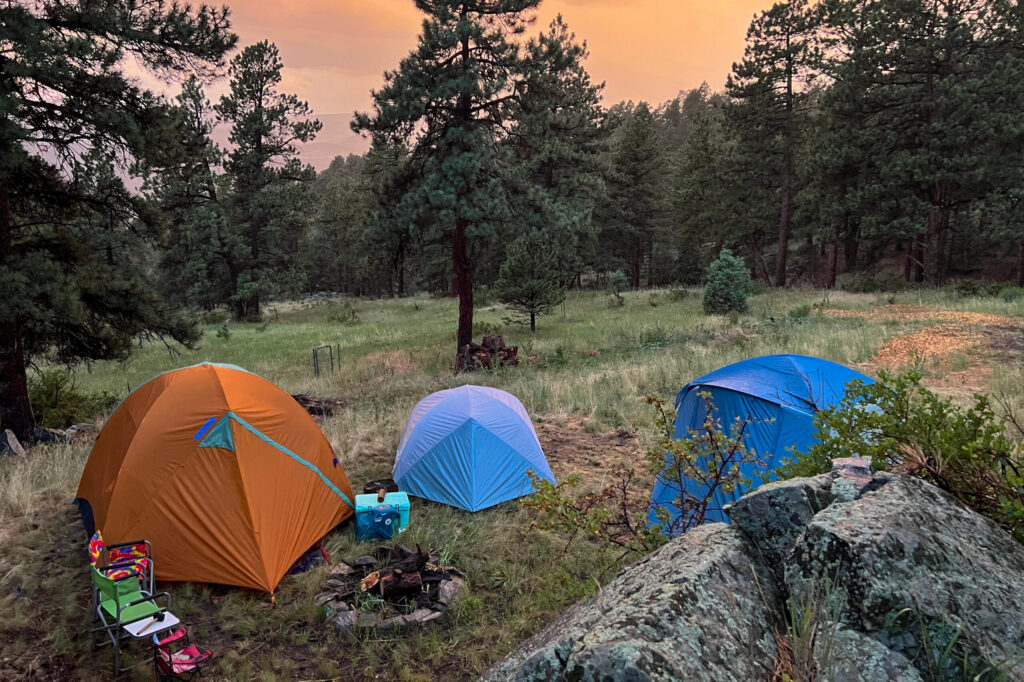
High wind at Great Sand Dunes National Park was one of the more revealing parts of our Base Camp 6 testing. CleverHiker gear analyst Ben Dawson also used the tent with his family at other Colorado campsites, where warm afternoons and cooler evenings gave us a wider temperature range to work with. Repeated setup and breakdown, full use of both vestibules, and ventilation checks with different door and vent configurations rounded out the test.
Quick Specs
- Capacity: 6-person
- Floor area: 84 sq. ft.
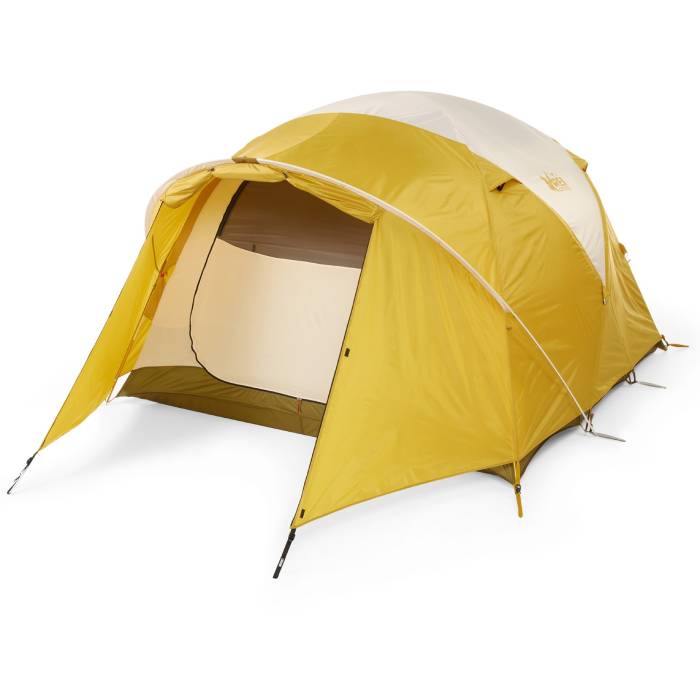
REI Base Camp 6
Best Tent for Internal Storage
CleverHiker Rating: 4.5/5.0
Price: $569
The size we tested feels: Luxurious for 2-3, comfortable for 4-5, tight for 6
Measured Weight: 20 lb. 11.5 oz.
Dimensions (LxWxH): 110 x 110 x 74 in.
Pros
- Exceptional internal storage
- Dual vestibules
- Full-coverage rainfly
- Strong wind performance
- Two large doors
- Excellent vent system
Cons
- Complex setup
- Flexible poles
- Awkward to pack
- Extra stakes needed for full guyout
Spaciousness & Comfort
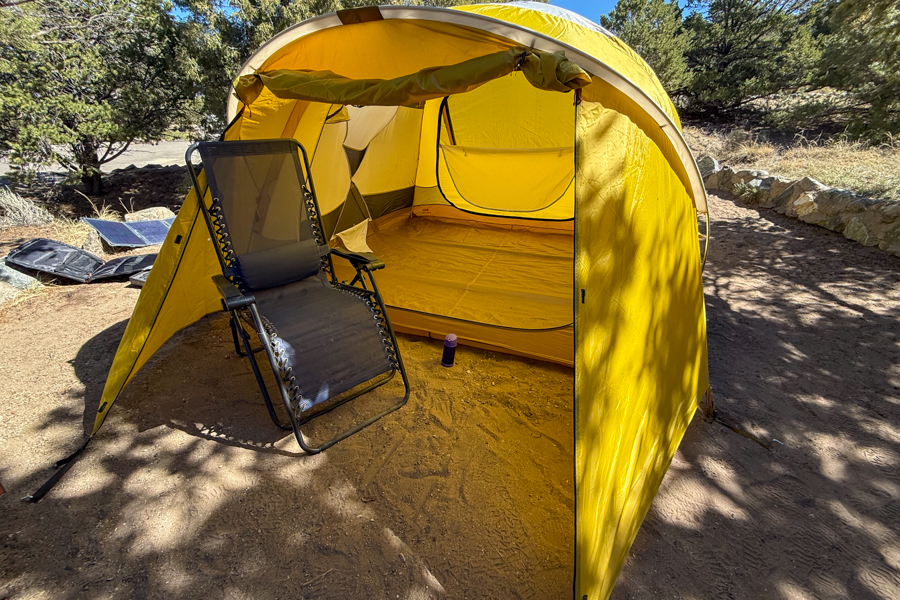
The Base Camp 6 is roomy, but its comfort comes more from floor shape and organization than from unrestricted standing height. The 110-by-110-inch floor provides 84 square feet, enough for a queen air mattress or three wide sleeping pads without making the center feel unusable. We like the square footprint because it is easier to arrange than many long, tunnel-like six-person domes and can fit imperfect campground pads more naturally.
The 74-inch peak sounds extremely tall, but the walls angle inward quickly. Our 6-foot-2 tester could stand near the center with his head close to the roof, yet a step or two toward the side required ducking. It is tall enough to change clothes while standing, but campers who want to walk around fully upright will find the Westward 6 more accommodating.
Storage dramatically improves day-to-day comfort. REI uses much of the wall area for pockets, loops, and an overhead gear loft, so headlamps, layers, kids’ items, and electronics do not have to collect on the floor. Four or five people can therefore use the interior more efficiently than the raw floor dimensions might suggest.
Two very large doors keep traffic flowing and make the shelter feel open when conditions are good. Dual vestibules move additional gear outside while keeping it protected. For a family staying several nights, that organization is a meaningful comfort advantage. The Base Camp is less airy and porch-like than the Westward, but it creates a tidy, secure interior that works especially well when weather keeps everyone closer to the tent.
Comfort Score: 4.7 / 5.0

Ease of Setup
Setup is the Base Camp 6’s clearest drawback. The tent uses five poles, multiple sleeves, eight stake-out points for the body, and a large full-coverage fly. There is nothing inherently confusing once the sequence is learned, but there are more opportunities to route a pole incorrectly or discover that a sleeve is oriented the wrong way than on a simple clipped dome. Our first pitches required noticeably more attention.
The dead-end sleeve design is the part most likely to catch a new owner. Color coding helps identify the correct components, but it does not eliminate the need to work methodically. We strongly recommend a practice pitch at home before relying on this tent for a late arrival or an approaching storm.
A second person helps significantly. We set the Base Camp up in windy conditions at Great Sand Dunes National Park, and managing the five-pole body plus fly made it obvious why a partner is valuable. One person can handle the tent, but the large fly is easier to center and clip when someone is working from the opposite side.
The process improves after a few repetitions, and the same complex structure that slows setup contributes to the tent’s secure feel once fully tensioned. Packing is not especially elegant either; there is a lot of material, and the bundle needs to be rolled deliberately to fit neatly.
This is not a shelter for campers who prioritize a five-minute pitch. It makes more sense for multi-night trips where spending extra time on setup is acceptable in exchange for stronger weather protection, storage, and a well-anchored structure.
Ease of Setup Score: 4.0 / 5.0

Weather Resistance
Weather protection is the Base Camp 6’s strongest reason to choose it over REI’s more open Westward. The full-coverage rainfly, taped seams, lower dome shape, and pole sleeves create a shelter that feels buttoned down when conditions deteriorate. We tested it at Great Sand Dunes National Park, where strong wind put both the structure and our setup process under pressure. Once fully guyed, the tent stayed impressively stable.
The sleeved poles help distribute wind load along the frame, and the lower profile exposes less broad wall area than a cabin-style six-person tent. That does not make the Base Camp immune to gusts, but it gives us more confidence in exposed camps than the partial-fly Westward or budget family models.
Rain coverage is similarly thorough. The fly extends low over the body, and the vestibules create protected entrances so occupants do not have to expose the sleeping area every time the door opens in a storm. Because the tent can be closed up tightly, ventilation becomes especially important. Four roof vents plus two low side vents create multiple paths for air to move even when the doors stay zipped.
The main caveat is hardware completeness. The guylines are not pre-attached, and there are not enough included stakes to secure every guyout point. We recommend adding stakes before trips where wind is expected. We also remain cautious about the very flexible pole behavior we observed. Even with that concern, the Base Camp is our preferred REI option for families who regularly camp through mixed weather and want maximum coverage rather than maximum airflow.
Weather Resistance Score: 4.5 / 5.0

Durability & Quality
The Base Camp 6 is built with the kind of fabrics, seams, and hardware we expect from a high-priced REI family tent, but the pole set keeps us from giving the construction an unqualified endorsement. The body and full-coverage fly feel substantial, the stitching and taped seams are clean, and repeated pitching did not reveal obvious fabric weaknesses. The storage-heavy interior also uses mesh and attachment points that held up normally during family use.
Our concern is how much the aluminum poles flex. Aluminum is generally what we want on a premium tent of this size, yet these poles bent under hand pressure more easily than we expected and showed a lot of movement during setup. They recovered in our testing and the completed structure performed very well in wind once guyed, so we did not experience an actual failure. Still, the amount of flex is notable on a $569 shelter.
That makes proper tensioning more important. The pole sleeves, body stake points, and guylines work together as a system; relying on the frame without anchoring the tent gives the poles more work to do. Campers who take the time to stake and guy the Base Camp correctly are using the design as intended.
The floor and fly are better suited to frequent frontcountry use than the lightweight materials on crossover tents. Zippers and doors also feel robust enough for repeated family traffic. We see the overall durability as good, with the pole behavior remaining the one element we would monitor over long-term ownership. It is a capable, substantial shelter, but buyers should know why that caveat appears in our cons list.
Durability Score: 4.5 / 5.0

Features
The Base Camp 6 is the most organization-focused tent in the current guide. Fourteen interior mesh pockets line the walls, and an overhead gear loft creates another place for light items that would otherwise end up under sleeping bags. That amount of storage is not merely decorative; after a day or two at camp, it keeps headlamps, layers, toiletries, kids’ gear, and electronics separated instead of accumulating in a central pile.
Dual vestibules expand the storage system outside the tent. They provide covered areas for footwear and bulky equipment while also protecting the doors from direct rain. The two main doors are enormous and unzip widely, which makes it easier for several occupants to move through the shelter without crawling over one another. The doors also tuck away cleanly rather than hanging into the entry.
Ventilation is unusually adjustable for such a weather-focused tent. Four roof vents and two lower side vents let warm, moist air escape while drawing cooler air from below. That is especially important because the full-coverage fly seals the shelter more completely than the partial-fly Westward.
Color coding helps with the otherwise complicated setup, and the pole sleeves contribute to wind stability after the tent is tensioned. We wish the guyline and stake kit were more complete, because a tent designed for rougher weather should arrive ready to use every anchor point.
Families who like meticulous organization will get more out of these features than minimalists will. If your camp tends to fill with layers, shoes, toys, and small items, the Base Camp’s storage system is a real differentiator rather than a marketing extra.
Features Score: 4.6 / 5.0

Should You Buy the REI Base Camp 6?
The Base Camp 6 is best for families who camp often, carry a lot of gear, and expect mixed or rough weather. It rewards campers who value protection and organization more than speed.
It is a poor fit for quick overnight stops or anyone who dislikes complicated tent setup. The Wireless 6 is easier and cheaper, while the Westward 6 feels more open and ventilated in fair weather.

What Other Camping Tents Should You Consider?
The North Face Wawona 6 Review: Choose the Wawona 6 if overall livability matters more than having the Base Camp’s extensive storage system. Its giant front vestibule creates a better sheltered living area for chairs, shoes, and wet-weather hanging out, and the pitch is less complicated once you know the layout. The Base Camp is still the stronger organizational tool, but the Wawona feels more like a comfortable place to spend time.
REI Westward 6 Review: The Westward 6 is the better option for warm-weather campers who care about standing comfort and airflow. Its 77-inch peak height and partial-fly design create a brighter, airier interior than the more enclosed Base Camp. The Base Camp gives up some of that fair-weather openness in exchange for a full fly and more confidence when rain lasts for hours instead of minutes.
Kelty Wireless 6 Review: Families who want lots of space but do not need the Base Camp’s storm-focused build can save substantially with the Wireless 6. It costs far less, has a simpler pitching process, and still provides standing height and dual vestibules for normal campground use. The savings come with less durable materials and less weather confidence, so frequent campers or exposed-site users will get more from the Base Camp.