

Bottom Line
The Hyperlite Stuff Sack Pillow works best for backpackers who dislike bringing a dedicated pillow at all. A fleece-lined storage sack turns spare clothing into a place to rest your head, saving gear redundancy at the cost of consistent cushion, predictable neck support, and some fabric noise.
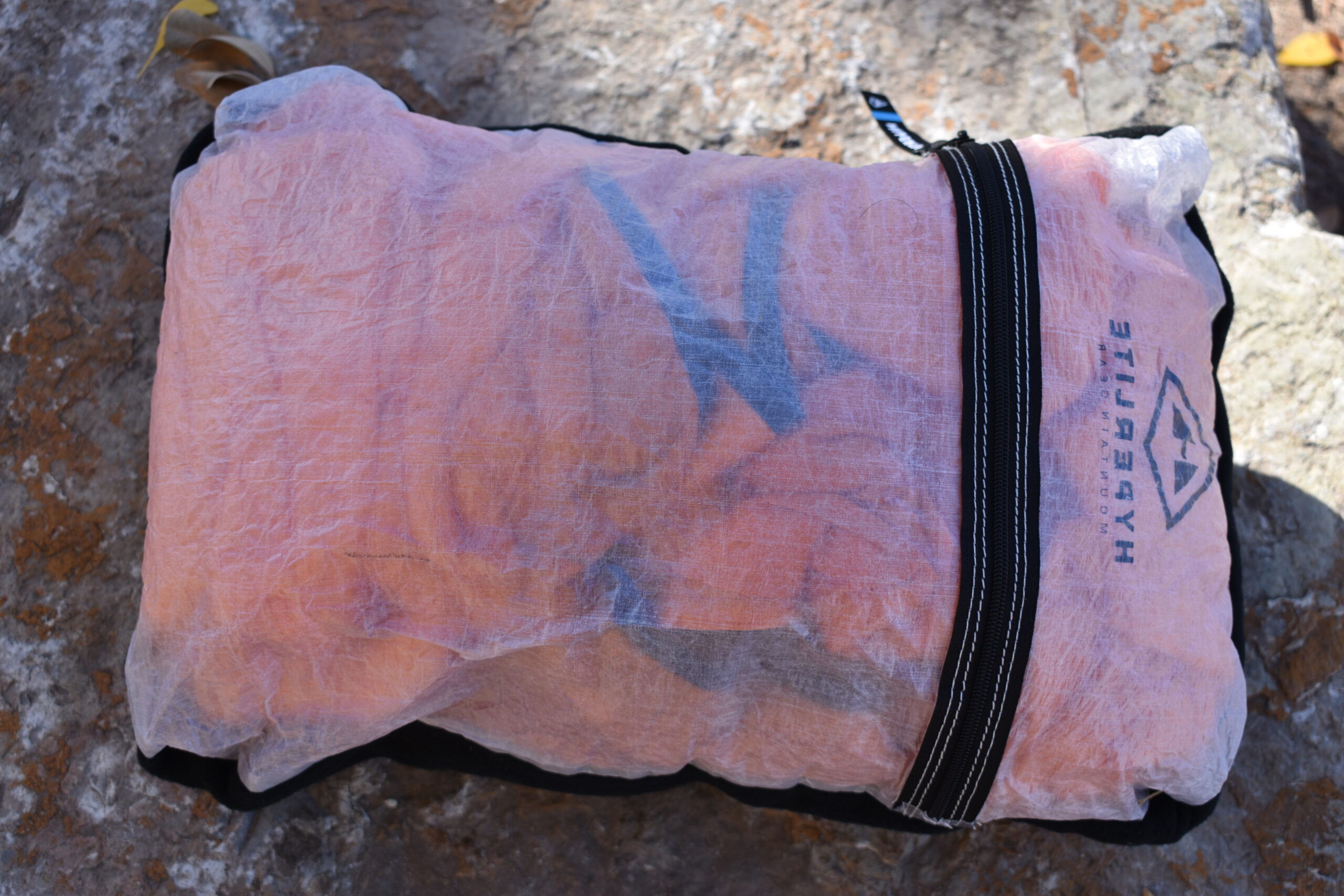
The clever part of Hyperlite’s pillow is that it doesn’t need to occupy a separate role in your pack. During the day it carries spare clothing; at night you turn its fleece-lined interior outward and use those same layers to create a cushion. For hikers who already have extra garments and prize multipurpose gear, that saves carrying a dedicated air bladder or foam pad.
The tradeoff is unusually personal: comfort depends on the amount and softness of spare clothing you have available each night. Our testers found it less even and less supportive than standard pillows, and the crinkly outer fabric could be noisy. Most people will sleep better with a purpose-built inflatable, while dedicated minimalists may appreciate the sack’s weight and storage efficiency.
The alternatives in our best camping pillows guide are worth weighing if consistent cushion matters more to you than replacing a stuff sack.
How We Tested
We took this dual-purpose stuff sack into the Gila Wilderness and on a section of the Continental Divide Trail, changing the clothing fill to evaluate comfort, support, packability, and handling. Our longer-term use also informed our assessment of durability.
We evaluated this storage-and-pillow design beside dedicated inflatables, focusing on how clothing quantity and arrangement changed comfort and support. Its fleece lining, Dyneema composite outer fabric, low weight, and dual-purpose storage function were considered separately from the sleeping feel. The test highlights the very different priorities of a minimalist backpacker versus someone seeking a reliable, adjustable pillow.
Quick Specs
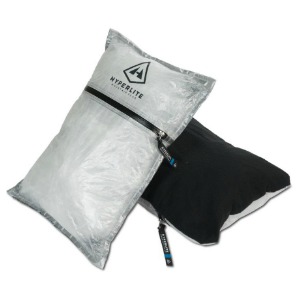
Hyperlite Mountain Gear Stuff Sack Pillow
Best Minimalist Option
CleverHiker Rating: 3.9/5.0
Price: $63
Weight: 1.7 oz.
Pillow Type: Stuff sack
Pros
- Extremely lightweight
- Doubles as gear storage
- Fleece-lined sleeping surface
Cons
- Comfort depends on spare clothing
- No fixed neck support
- Crinkly fabric
- High cost for a stuff sack
Comfort
The fleece lining adds a softer surface than a plain storage sack, but the fill depends on whatever spare clothing is available. Our testing revealed a less even, less predictable feel than purpose-built pillows, especially when clothing bunches up.
Although fleece is gentler against the cheek than the usual crinkly outer storage fabric, the surface still feels only as smooth as the clothes stuffed beneath it. Our testers found that shirts and insulation layers could form uneven lumps; reorganizing them in the sack helped but did not produce the consistency of an inflatable bladder. This limitation is central to its lower comfort ranking.
The fleece lining improves cheek comfort but doesn’t eliminate the lumps that develop when garments are crammed unevenly. Sleepers who value reliable softness should choose an inflatable or foam pillow instead of depending on clothing arrangement.
On a cold Gila Wilderness night near 20°F, we needed an insulated jacket for warmth rather than pillow fill. The remaining clothing provided far less cushion, illustrating how this approach can fail just when good sleep matters most.
Comfort Score: 3.5/5.0

Weight & Packability
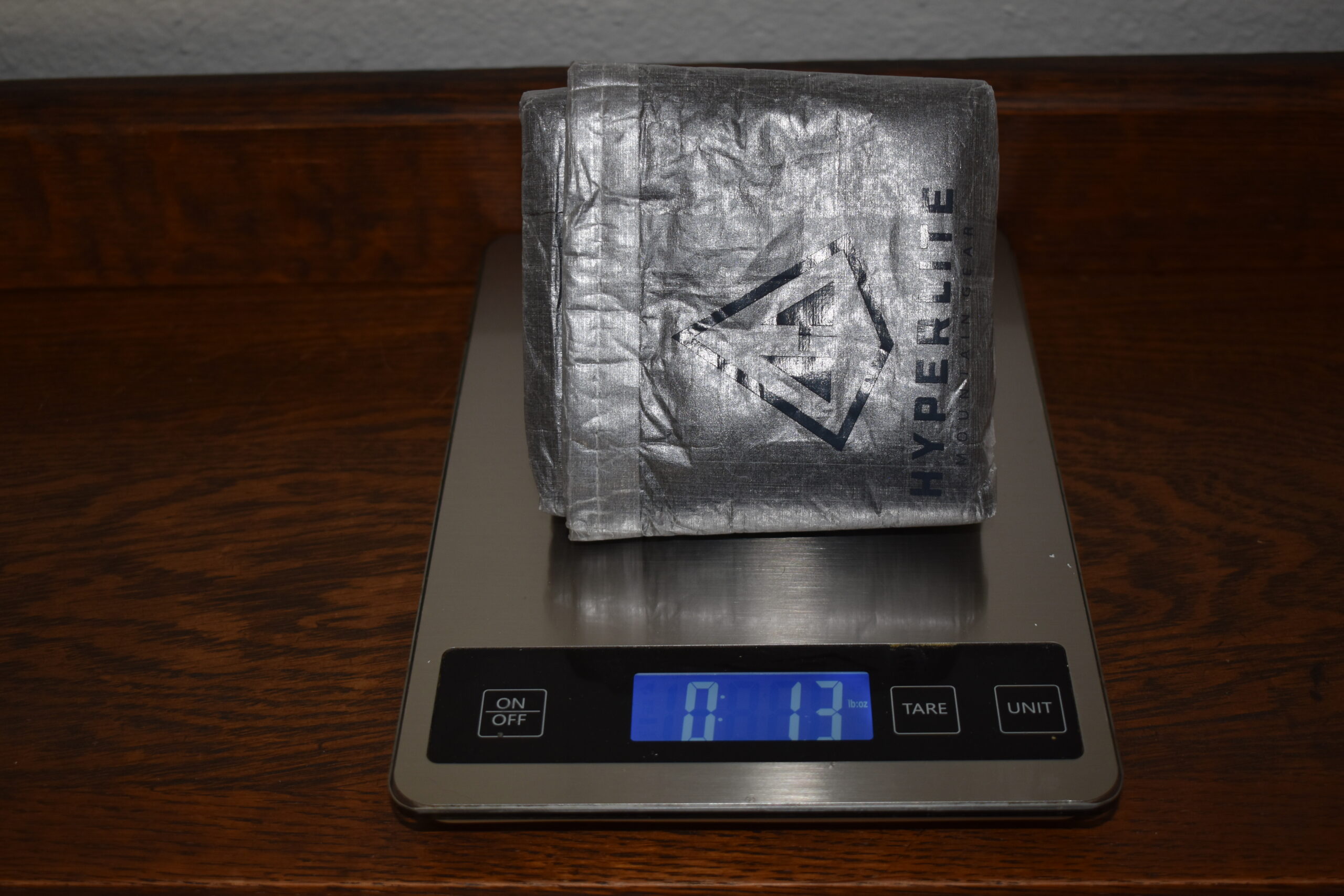
At 1.7 ounces, the sack adds almost negligible weight when it replaces storage gear you already need. It does not demand the extra bundled volume of foam, though clothing used to fill it is then committed to pillow duty at night.
Because the bag replaces storage you might already carry, its 1.7-ounce weight doesn’t tell the entire story of possible savings. Used as both a dry-storage container and a pillow case, it avoids packing a separate dedicated cushion. The benefit is greatest when your kit has spare soft layers each night rather than only the clothes you’re wearing.
The product’s strongest case is not just its very low weight, but the opportunity to replace a separate storage bag. This savings is only real if you need the stuff sack’s storage function anyway.
We used this storage system for nearly 4,000 miles over about seven years. That longer-term record supports its durability as a lightweight gear organizer independently of how much sleeping comfort it creates.
Weight & Packability Score: 5.0/5.0
Support
Support changes with the amount and arrangement of clothing. If you have an extra insulating layer, you can build a reasonable cushion; if you have almost nothing spare, it can feel too low or uneven compared with an inflatable.
Without a controlled air chamber or resilient foam, there is no dependable target height. More clothing can create loft, but the sack can still settle into hollows between garments and leave the neck less aligned. Side sleepers needing firm elevation should lean toward the Sea to Summit Aeros Premium or Aeros Down rather than expect a stuff sack to behave like a real pillow.
The amount and type of spare clothing determine both pillow height and firmness. On minimalist trips where nearly everything is worn to bed, there may be too little unused fabric to support the neck comfortably.
On another Gila outing, a spare puffy jacket created enough fill to support our tester’s neck. When that layer was no longer available, the same sack could not maintain its previous height, reinforcing why the support score is our lowest for this category.
Support Score: 3.0/5.0
Ease of Use
The sack also serves as protective storage during the day, which is its primary practical advantage. At night, transferring clothes into a comfortable shape takes work, and the outer material can crinkle as you move.
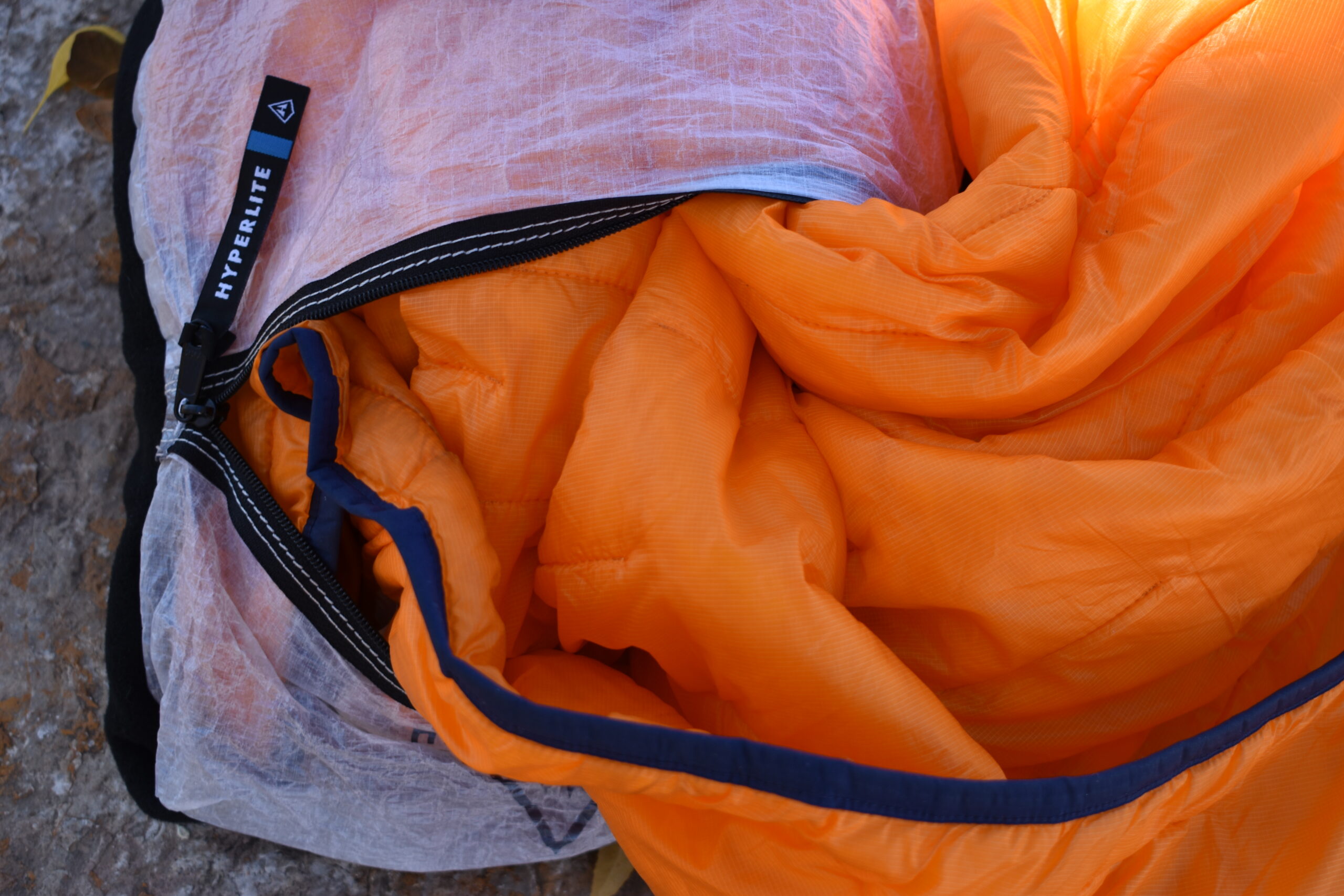
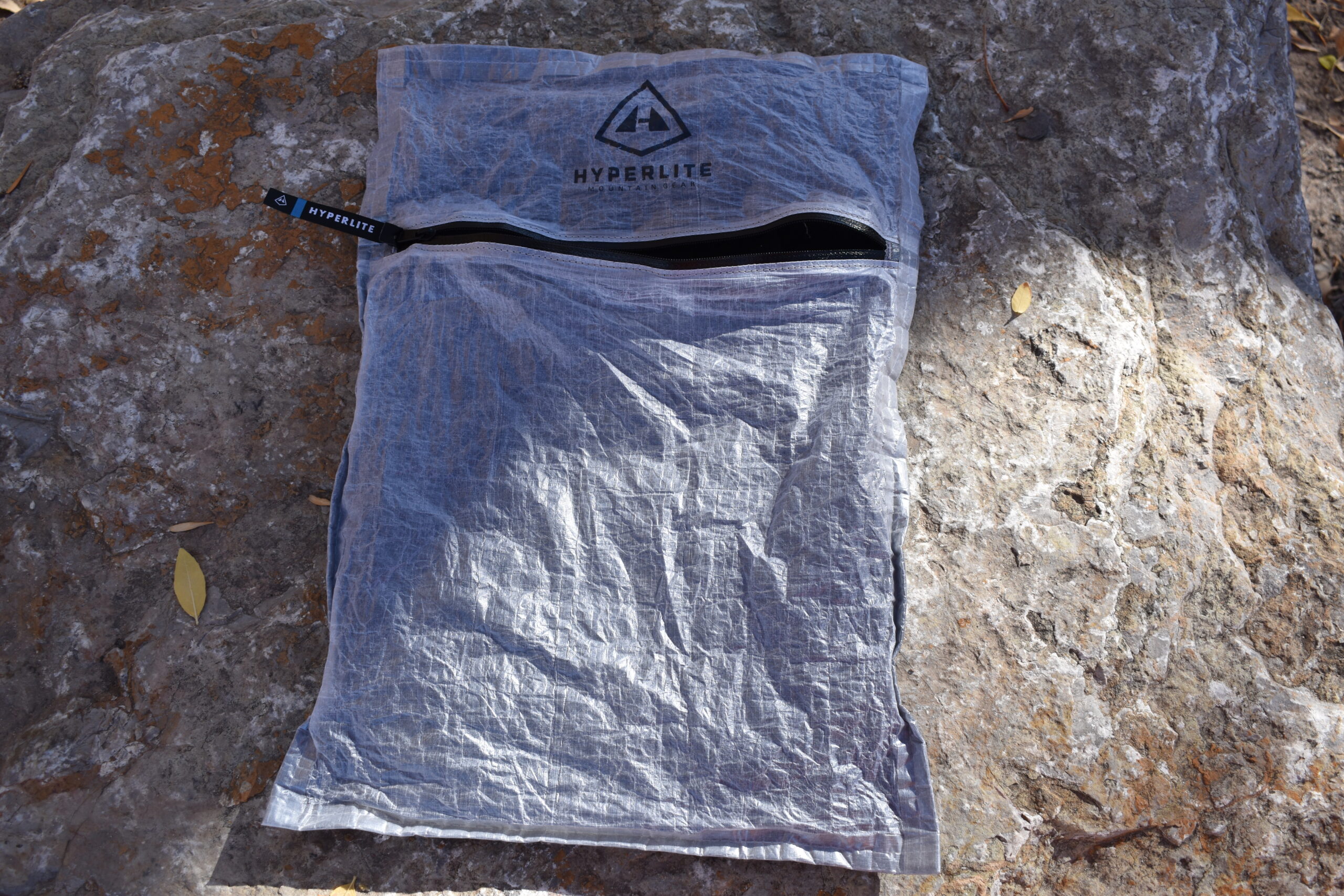
Packing involves moving clothes into the fleece-lined side and shaping them until the top is reasonably even. The exterior Dyneema composite offers sturdy, water-resistant storage characteristics, but the crinkly fabric can make noise as you move during sleep. This is a minimalist tool that demands more nightly arrangement than the simple inflate-and-sleep alternatives.
The bag must be emptied or rearranged at bedtime and repacked in the morning, a recurring chore that traditional pillows avoid. Its crinkly outer shell is another drawback for light sleepers who move frequently.
Its water-resistant zipper and taped seams add value beyond pillow duty, helping protect a spare insulation layer from moisture. Turning it inside out exposes the fleece for nighttime use, then reversing it returns the sack to storage mode.
Ease of Use Score: 4.9/5.0
Should You Buy the Hyperlite Stuff Sack Pillow?
Choose Hyperlite’s Stuff Sack Pillow only if minimizing dedicated gear is a bigger priority than predictable sleep comfort. Its fleece-lined interior is a sensible improvement over resting directly on a crinkly dry bag, and the sack stores clothing by day. For experienced ultralighters who always have spare layers, it can eliminate the need for a separate pillow.
Yet that versatility becomes a weakness if your clothing is damp, in use, or arranged into uncomfortable lumps. Our tests found the resulting support less reliable than an actual inflatable. Side sleepers needing consistent neck elevation should favor the Aeros Premium, while back sleepers seeking a broad soft top may prefer the NEMO Fillo Elite Wide. The stuff-sack concept saves redundancy but asks you to arrange your own cushioning every night.

What Other Camping Pillows Should You Consider?
Sea to Summit Aeros Down Review: The Aeros Down makes sense for backpackers who want consistent cushioning and support without depending on spare clothing. It weighs only 2.5 ounces in Regular, but unlike the Stuff Sack it adds a dedicated piece of gear and needs inflation.
Sea to Summit Aeros Premium Review: The Aeros Premium’s contoured bladder is useful for side sleepers who are tired of reshaping a clothing-filled sack each night. You pay a little more in carried weight and packed volume for far more dependable head and neck elevation.
NEMO Fillo Elite Wide Ultralight Review: Back sleepers who prefer a large, soft fabric surface should look at the Fillo Elite Wide. Its 4.2-ounce weight is still modest, but it cannot double as storage and is much less minimalist than Hyperlite’s sack.