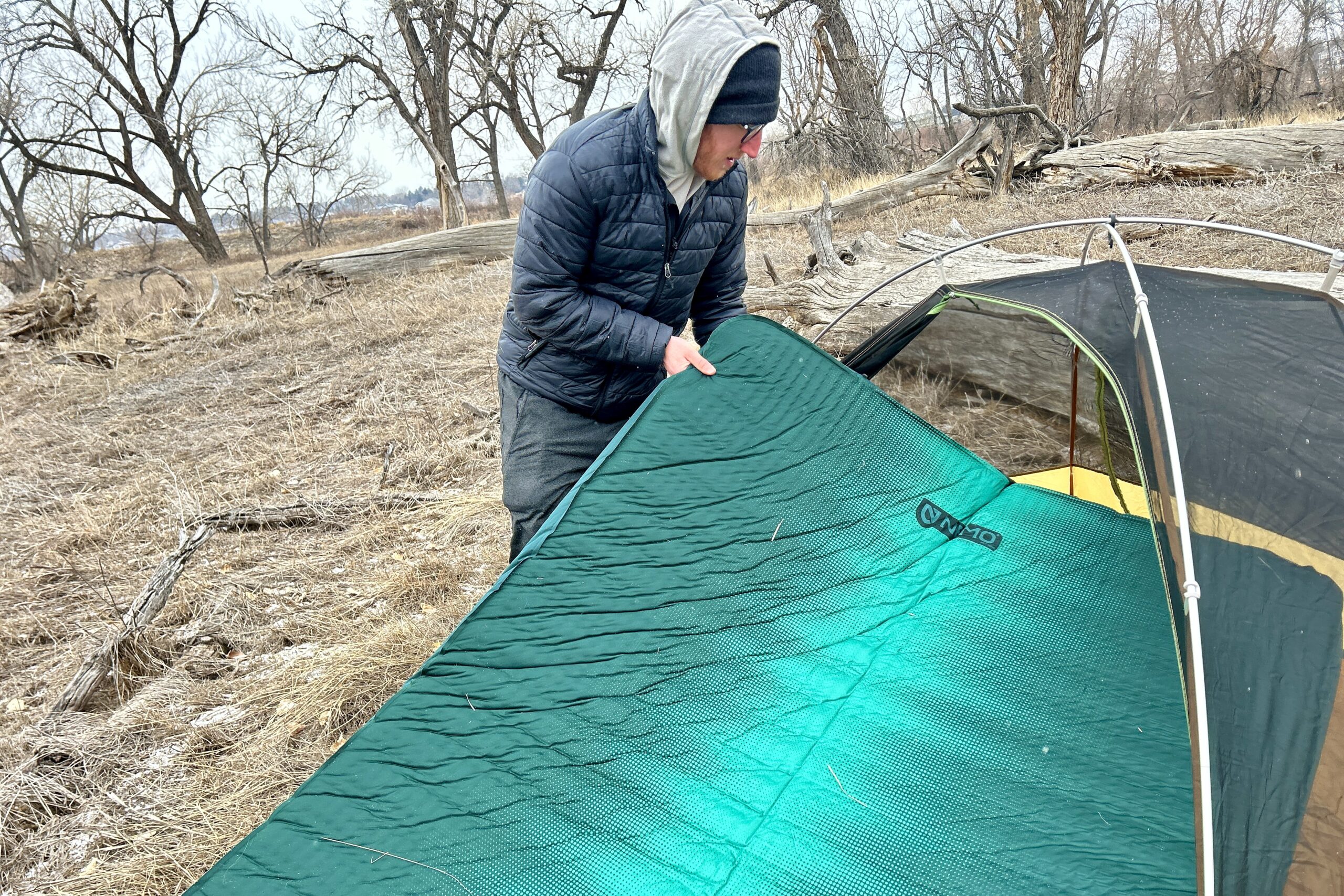

Bottom Line
The NEMO Roamer Double is the camping mattress we especially like for couples and campers sharing a bed with a dog. Our team has spent more than 30 nights on versions of the Roamer and awarded it a slight comfort edge over the Exped MegaMat Duo in a direct comparison. The newer design also improved insulation and portability compared with earlier iterations. There is ample cushioning and fewer of the frustrating shared-bed movements that can disrupt sleep. The caveats are cost and the large volume of air and foam to manage when breaking camp. See the alternatives in our best camping mattresses guide.
How We Tested
Senior Gear Analyst Ian Krammer and the wider team have logged more than 30 nights with Roamer mattresses, including testing with a partner and dog. Our comparisons included competitors like the Exped MegaMat Duo and focused on support, movement transfer, inflation, insulation, and packing.
Quick Specs
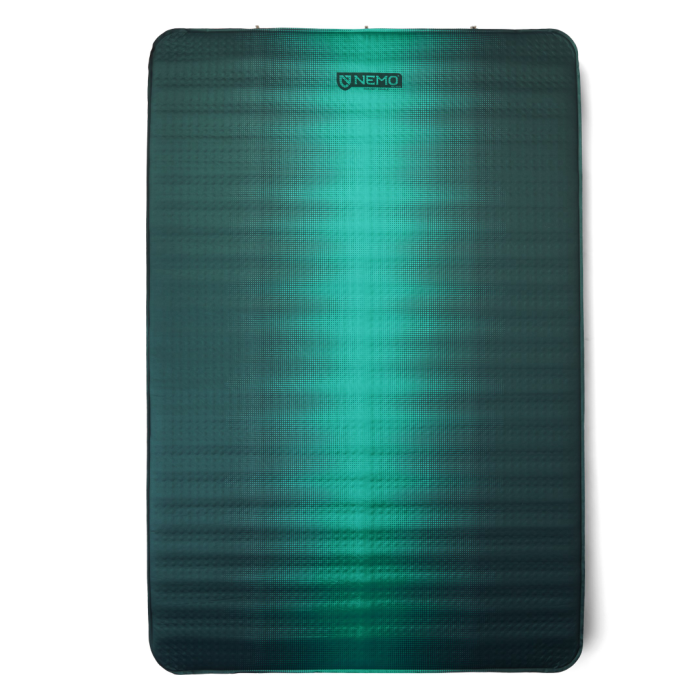
NEMO Roamer Double
Most Luxurious Camping Mattress for Two
CleverHiker Rating: 4.7/5.0
Price: $400
Dimensions (LxWxH): 78 x 52 x 4 in.
Weight: 6 lb. 9 oz.
Style: Self-inflating
R-Value: 7
Pros
- Continuous two-person sleeping area
- Comfortable four-inch support
- Limited partner movement transfer
- Strong insulation
Cons
- High price
- Large packed package
- Slow to fully deflate
Comfort
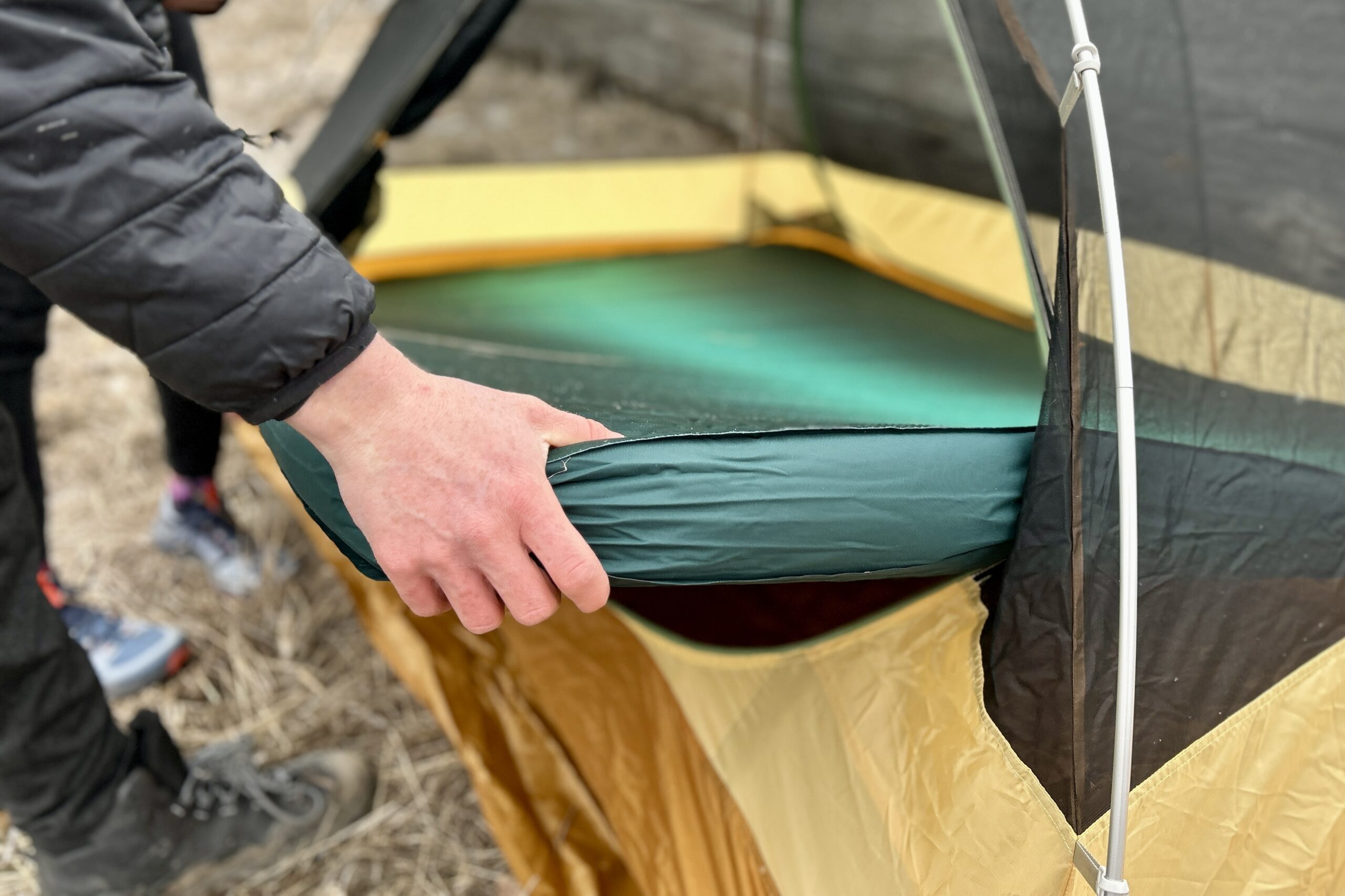
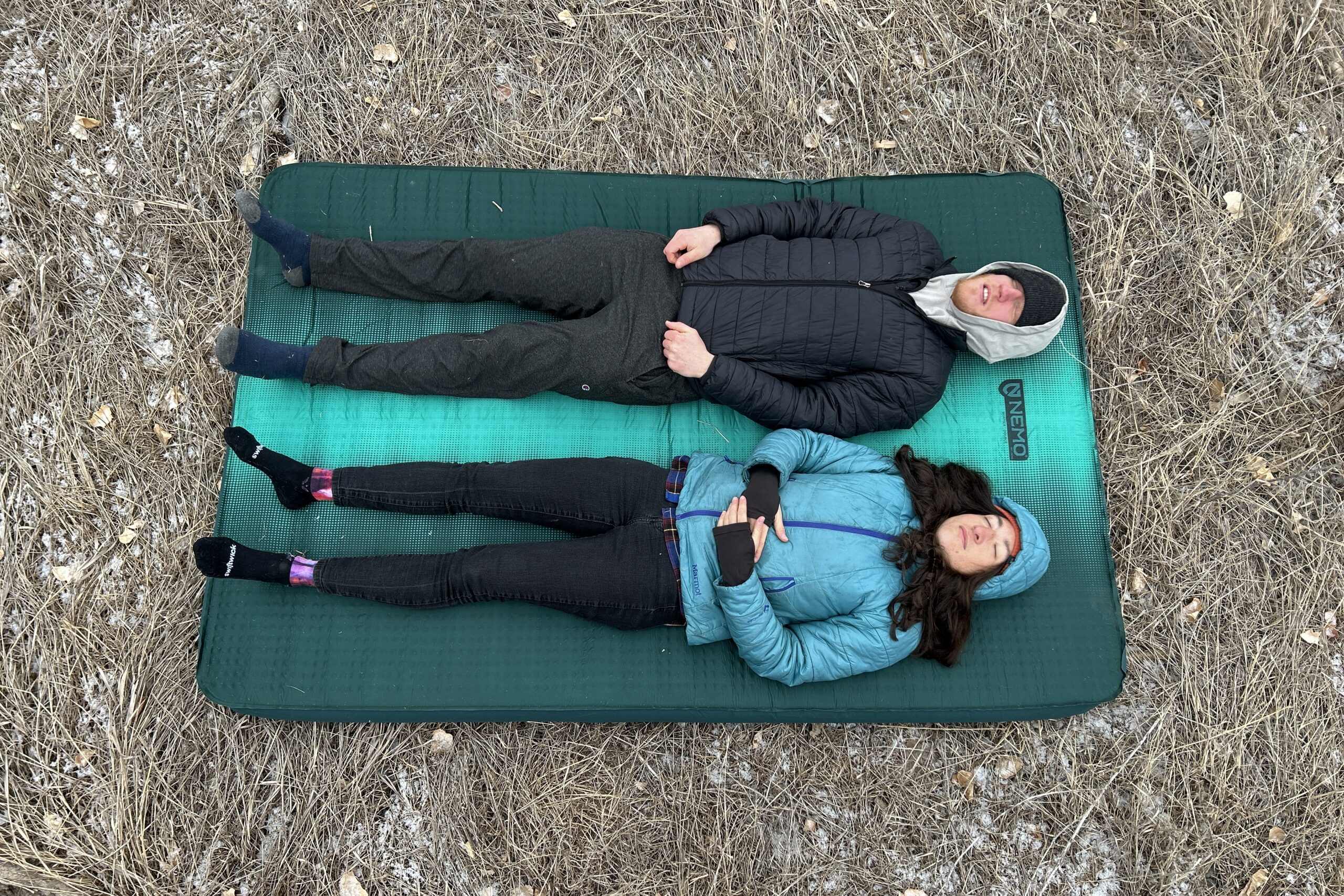
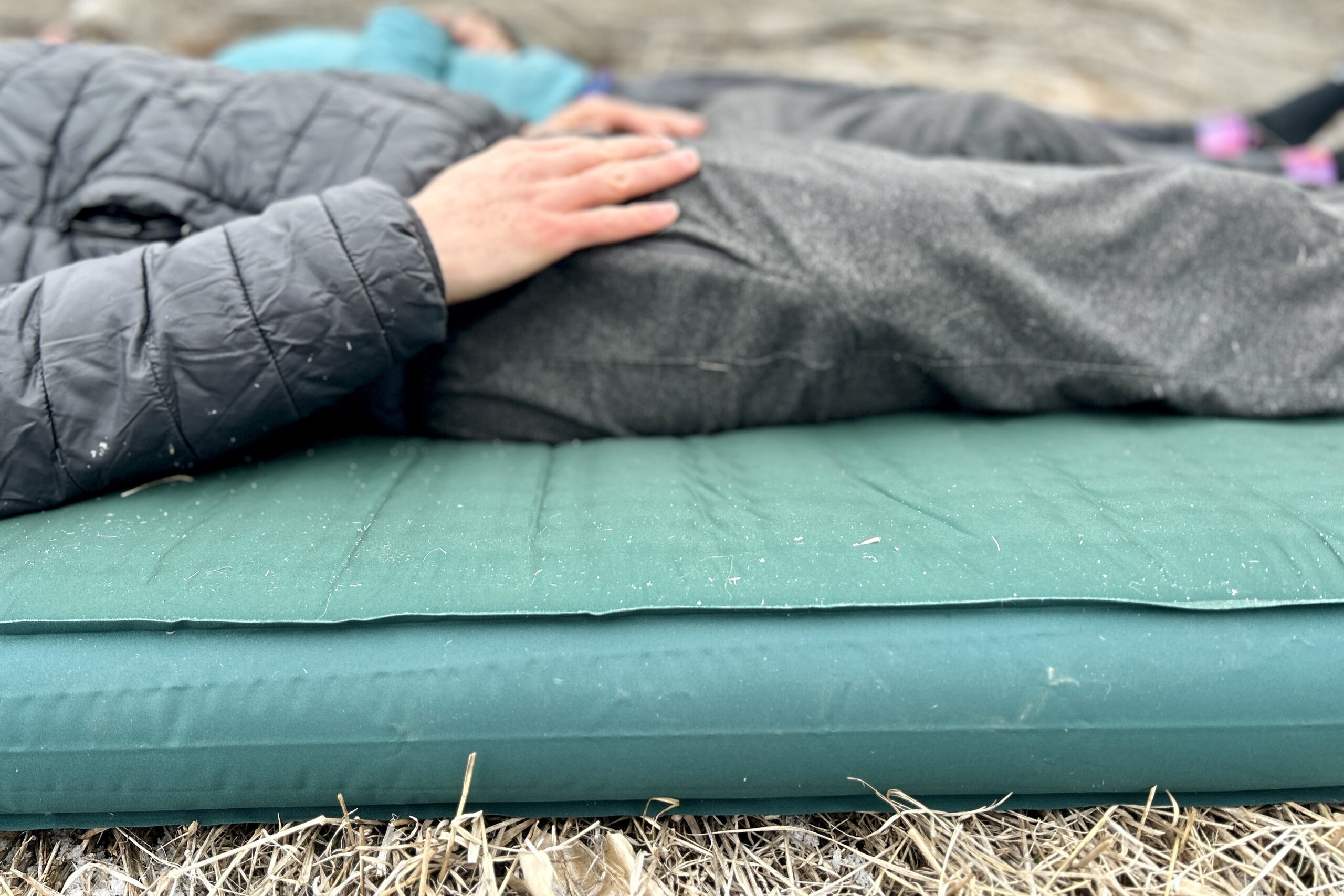
The main question with a double mattress is whether one person’s movement wakes the other. In our testing, the Roamer handled this well, and we slightly preferred its shared-bed feel over the Exped MegaMat Duo. Its wide uninterrupted surface also eliminates the gap that forms between two separate pads. The quiet 75-denier polyester face and short edge seams were comfortable against sleeping clothes during our testing.
Ian’s dog repeatedly moved around on the Roamer without waking him, and its surface showed no damage from dirty paws and nails over dozens of nights. The pad also aligns with NEMO’s Jazz 30 Double sleeping bag and its pad sleeves, a useful option for couples who want their bedding to stay in place. That can matter just as much as loft when partners sleep close together.
The double is not automatically the right choice for everyone. Solo sleepers pay for space they may not use, while two people with different pressure preferences might prefer independent mattresses. But campers seeking a single shared bed have a compelling option here.
Comfort Score: 4.7/5.0
Ease of Use
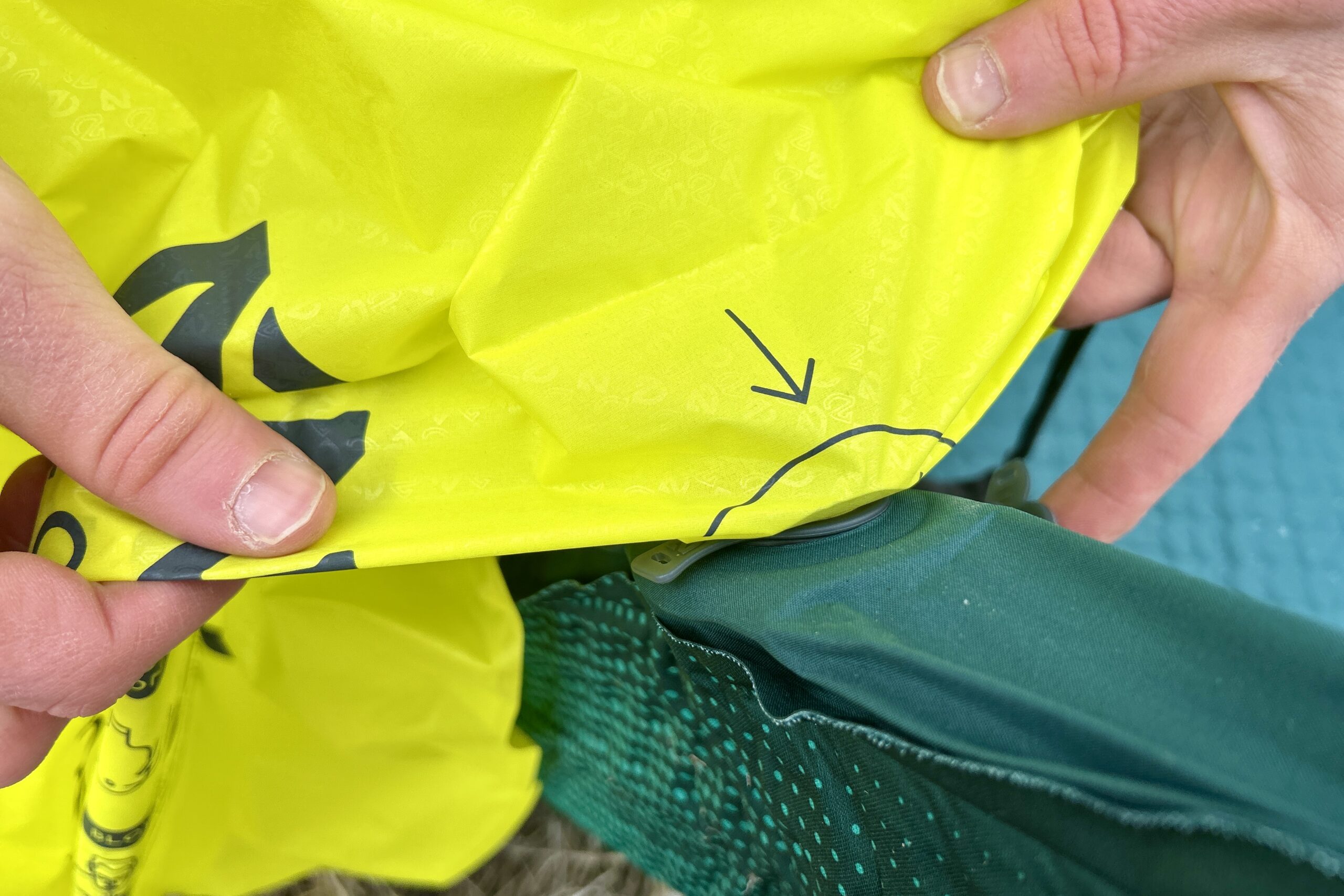
Two valves and the supplied pump sack help inflate this considerable surface area. In field tests, complete passive inflation took approximately 13 minutes, up to five minutes slower than some alternatives. We often used that interval to finish pitching the tent or making camp; the delay was more annoying when weather made speed a priority. The pump sack helps with the final top-off, but its narrow opening takes patience, and the nozzle button permits small firmness corrections.
There is simply more mattress to fill and flatten than with one narrow pad, so setup and breakdown take time. The reduced packed volume of the current generation is welcome. We would not choose it over a pair of small pads solely to speed up camp chores.
Ease of Use Score: 4.6/5.0
Warmth
The current Roamer Double is rated R-7, an increase from the R-6 specification discussed in some of our older testing notes. Ian has used Roamer versions through many cold Utah desert nights around 15°F with an appropriate sleeping bag, so we have firsthand evidence of effective insulation. Those test nights do not by themselves demonstrate a temperature limit for the new R-7 version; they show how the earlier mattress performed in the field.
That substantial insulation supports use well beyond mild summer nights, distinguishing it from uninsulated traditional airbeds. A shared mattress still requires proper bedding and attention to exposure, but the insulating base is one of its strengths.
Warmth Score: 5.0/5.0
Packed Size
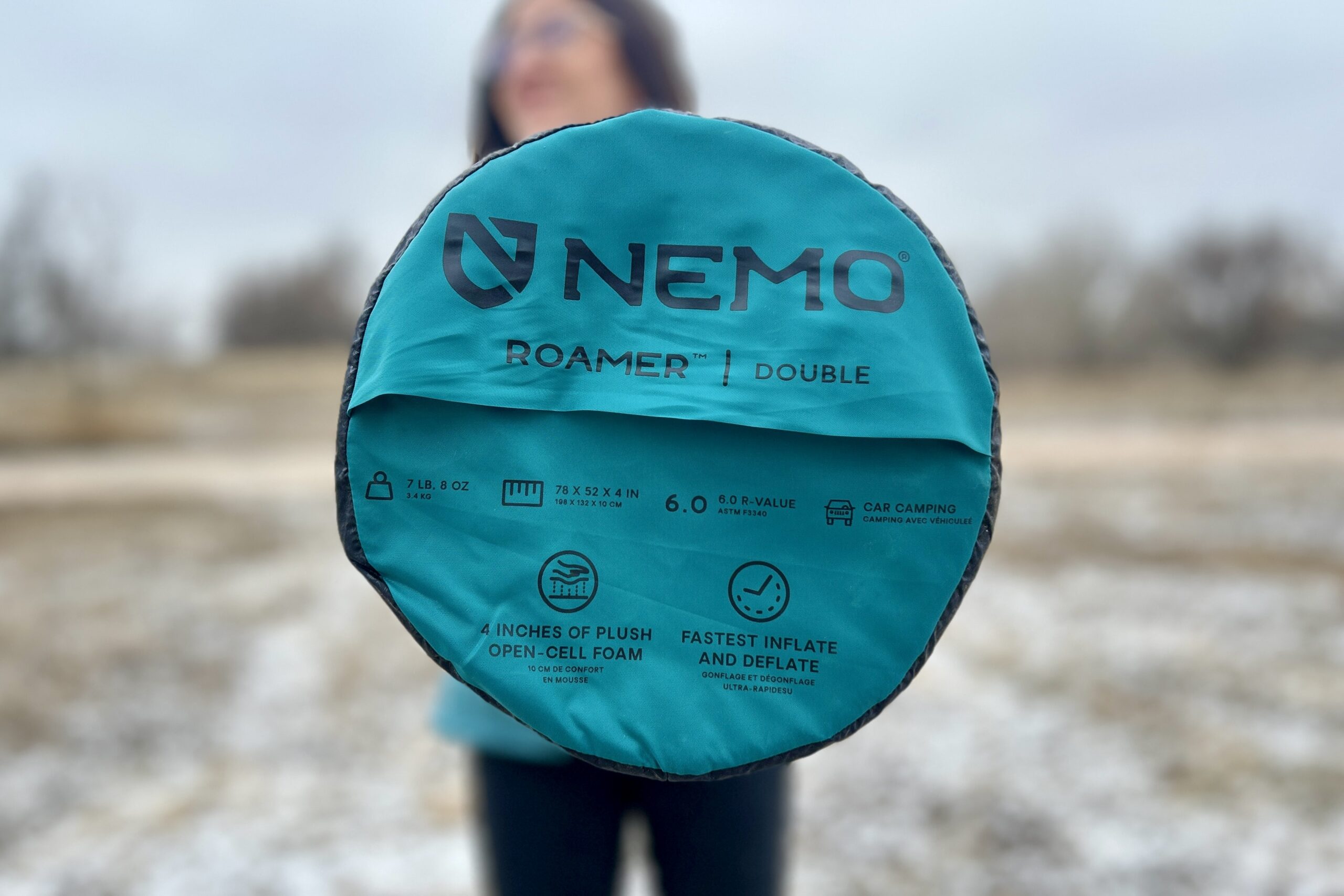
The current ranking sheet gives the updated Roamer Double a 21-by-12-inch packed size and a weight of 6 pounds 9 ounces. Its shorter, wider package is unusually manageable for a shared four-inch bed, especially compared with the much larger Roamer version documented in earlier testing. A dump valve helps expel air, while compression straps and a generous carry sack keep the roll contained.
Those updated specifications are important to distinguish from the previously tested generation, which was measured at about 26 by 11 inches packed and 7 pounds 8 ounces. Neither version belongs on a backpacking trip, but the reduction makes a difference when loading a small vehicle with two people’s gear. Two separate mattresses can still be easier to distribute around irregular cargo spaces, so couples should consider their storage setup as well as the bed’s inflated dimensions.
Packed Size Score: 4.0/5.0
Should You Buy the NEMO Roamer Double?
This is one of our strongest recommendations for partners who camp together regularly and dislike gaps or bounced movement between sleepers. Its comfort justifies the premium for many couples. A solo camper, or a pair needing separate firmness adjustments, should consider single mattresses instead.

What Other Camping Mattresses Should You Consider?
The Roamer Double is our favorite two-person camping mattress, but check out our list of the best camping mattresses for more options:
Exped MegaMat Review: If two campers prefer independent firmness settings, using a pair of Exped MegaMats instead of the Roamer Double is a more flexible sleep arrangement. The MegaMat has a roomy, flat four-inch sleeping area and an R-value of 8.1, but two pads cost more together and leave a seam that the Roamer’s uninterrupted sleeping surface avoids.
HEST Foamy Review: Solo campers who prefer soft, stable foam instead of a shared air-and-foam bed should consider the HEST. Ian’s extended subzero camping tests support its comfort and warmth, and its unroll-and-sleep design eliminates inflation altogether. The price of that simplicity is a 13-pound mattress with a much larger packed footprint, and it cannot accommodate two sleepers on one pad.