
Bottom Line
The Norrona Falketind Dri1 (men’s / women’s) balances low weight, a supple feel, and credible protection for high-country adventures. It proved mobile during scrambling on Cathedral Peak and saw rain and light snow in Alaska, plus windy late-fall conditions in the Sierra.
Its single chest vent offers some airflow but is less effective than pit zips. Short hook-and-loop wrist tabs also make the roomy cuffs harder to seal tightly, and several hours of severe Alaskan downpour eventually exceeded its protection.
For more options, see our Best Rain Jackets guide.
How We Tested
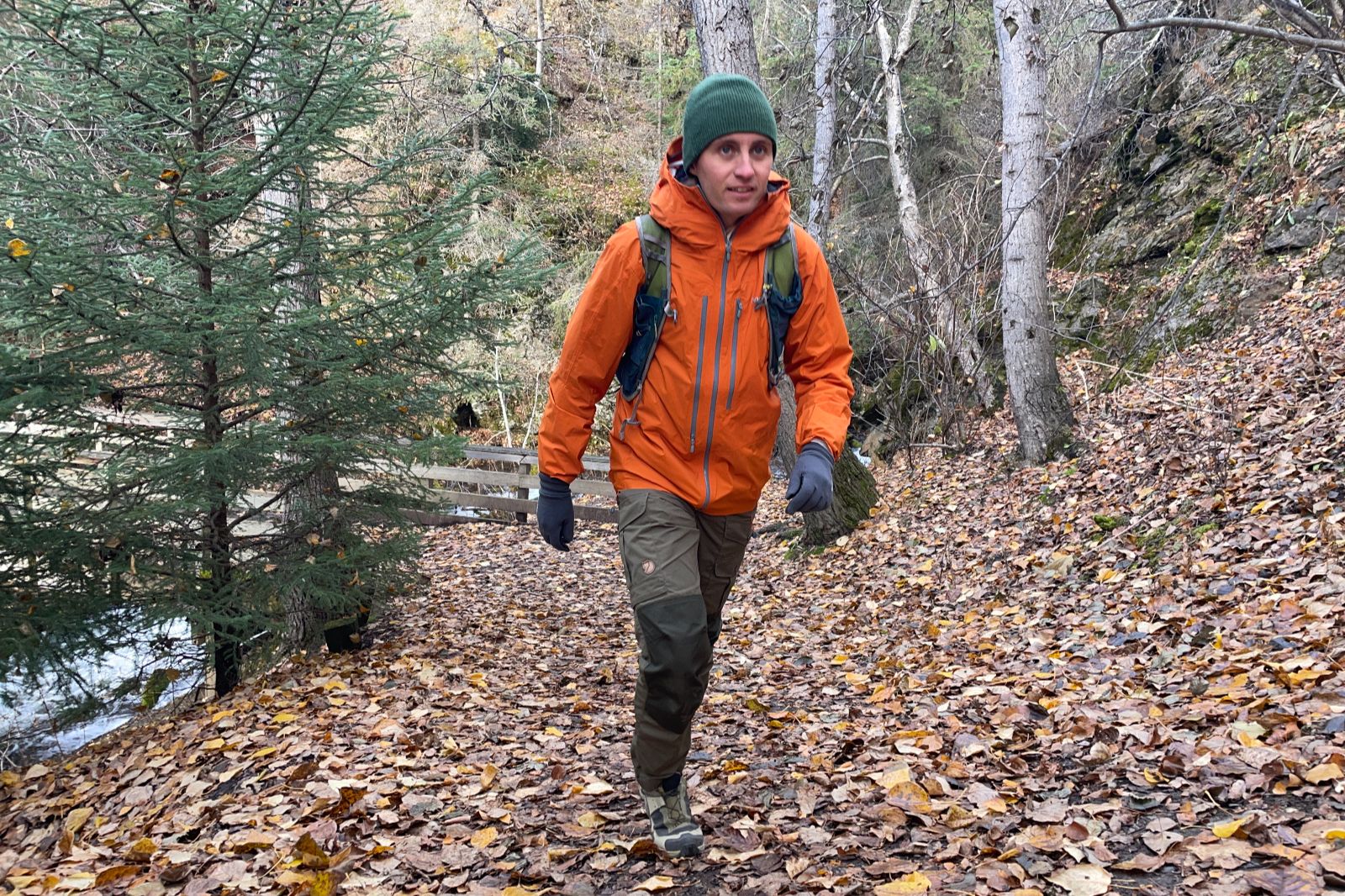
Miles Knotek wore the Falketind Dri1 while scrambling on Cathedral Peak and during exposed outings in Alaska and the Sierra. Testing included windy late-fall weather, rain, and light snow, as well as several hours of heavy precipitation. Our notes address unrestricted reach, the chest vent, wrist adjustments, and where prolonged rain began to overwhelm the shell.
Quick Specs
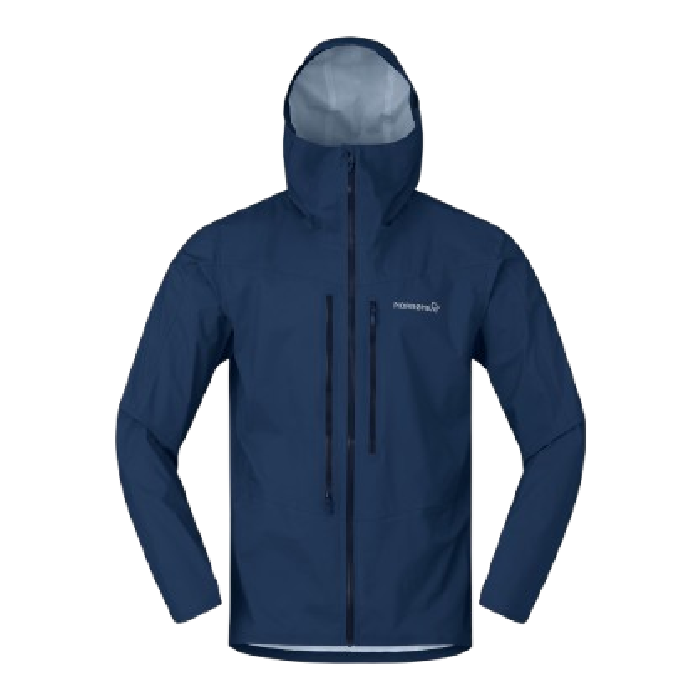
Norrona Falketind Dri1
Best Alpine Excursions Rain Jacket
CleverHiker Rating: 4.5/5.0
Price: $349
Listed Weight: 8.74 oz. / 8.67 oz.(men’s / women’s)
# of Vents: 1
Pros
- Lightweight for alpine scrambling
- Supple, unrestricted movement
- Useful wind and mixed-weather protection
Cons
- One small chest vent
- Cuff adjustments are limited
- Protection has limits in prolonged downpours

Comfort & Mobility
The Falketind’s soft, quiet material feels comfortable over a T-shirt and remains mobile over a base layer or thin fleece. During a Cathedral Peak scramble, Miles reached for holds without restriction. Roomy cuffs are a drawback: the adjustment tabs are only about an inch long and struggle to take up the extra material.
The face fabric was quiet enough to feel comfortable over a T-shirt instead of rustling against skin. It retained freedom of reach with a thin midlayer, making it useful while climbing Cathedral Peak. Roomy wrist openings were harder to close because of the unusually short adjustment tabs.
Comfort & Mobility Score: 4.5/5.0

Weather Resistance
Alaska and Sierra testing included wind, rain, and light snow. The shell protected well through mixed weather but reached its limits after several hours of heavy Alaska rain. That is relevant for users planning prolonged exposed travel.
Miles experienced the sharpest limit in coastal Alaska, where several hours of unusually hard rain eventually penetrated. Less intense precipitation and wind did not present the same problem. That distinction makes the Falketind more attractive for nimble summit days than prolonged exposure in a rainforest.
Weather Resistance Score: 4.5/5.0
Ventilation
One chest vent adds some airflow but is less effective than full pit zips. This is a noticeable limitation on strenuous climbs. Consider a more vented shell if heat regulation matters as much as low weight.
With the chest vent so close to the main zipper, Miles sometimes chose to open the front instead. Even so, the thin material accumulated sweat less rapidly than some competitors on uphill hikes. It is a workable design for active travel, although full pit zips would offer more flexibility.
Ventilation Score: 4.4/5.0

Durability
The extremely light fabric resisted damage during bushwhacking through thick alders in Alaska and brushing against alpine pines in California. Our tester observed no obvious scratches or weakened areas. That firsthand evidence provides more support for durability than the jacket’s paper-thin feel would suggest.
Wearing this jacket through thick alders in Alaska and brushy alpine pines in California did not produce obvious scratches. For a paper-thin piece, those are encouraging firsthand findings. Someone working around abrasive harnesses and rock all day may still prefer the reassurance of reinforced fabric.
Durability Score: 4.4/5.0

Weight
At 8.7 ounces, the Falketind provides high-country protection without the weight of a burly technical shell. That advantage is clearest on fast summit days. Reduced ventilation and lighter construction are the corresponding compromises.
The jacket’s modest mass was valuable during alpine scrambles, trail runs, and ultralight overnights. Although it fits inside its chest pocket, the resulting bundle is larger than the face fabric alone suggests. It still slips into a running vest or daypack without difficulty.
Weight Score: 4.7/5.0

Should You Buy the Norrona Falketind Dri1 Rain Jacket?
The Falketind Dri1 belongs in a pack for nimble summit days where scrambling freedom and a low carried weight take priority. Our testing on Cathedral Peak and during mixed-weather outings supports its appeal to active mountain travelers.
Do not choose it expecting the ventilation or sustained-rain performance of a heavier shell. If you frequently spend hours in driving rain, the trollveggen GORE-TEX Pro Light offers a more protective alpine-oriented alternative, at a much greater price and weight.

What Other Rain Jackets Should You Consider?
See how Norrona’s innovative design stacks up against our other favorites in our best rain jackets gear guide.
Montbell Versalite Review: Long-distance backpackers can save more weight and gain pit zips with the Versalite. The Falketind instead emphasizes a supple fit for active mountain movement.
Norrona trollveggen GORE-TEX Pro Light Review: Climbers expecting extended exposure to severe weather should consider the more protective and durable trollveggen. Its price and mass are much higher than the Falketind’s.
Mountain Hardwear Stretch Ozonic Review: The Stretch Ozonic offers similarly soft, flexible fabric at a lower price. It is a comfortable option for everyday hiking rather than fast-moving alpine objectives.