

Bottom Line
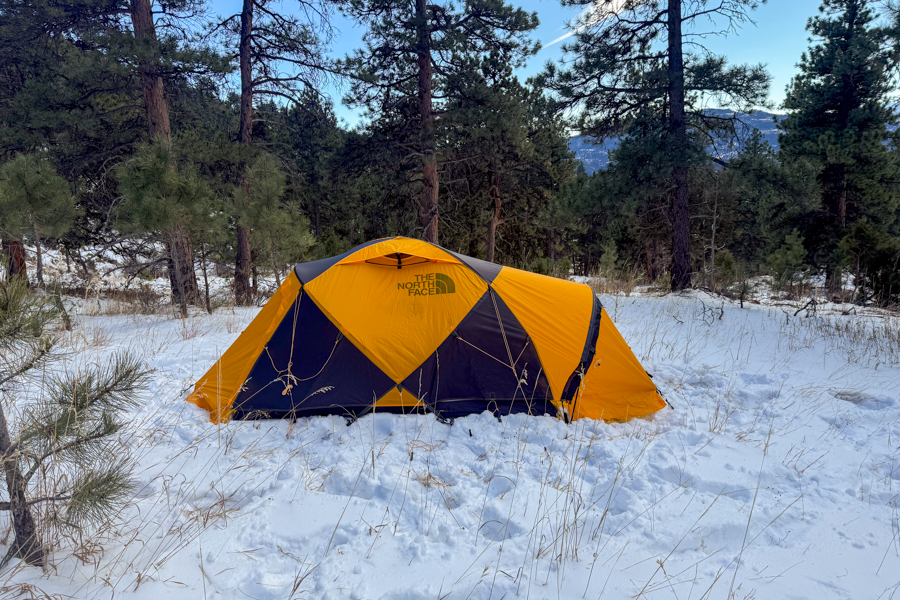
The North Face Mountain 25 is the kind of tent you bring when the forecast looks ugly, and you still need to get some sleep. This tent is a long-time classic but has seen several updates across its lifespan. We tested it through cold days, crazy high winds, snow, and even colder winter nights, and it felt reliably sturdy the whole time.
The updated vents are a noticeable improvement, too; older versions of this tent notoriously struggled with condensation, but we didn’t run into any issues. Inside, it’s comfortable for one and workable for two, especially with the help of the two vestibules.
The trade-off for all that security is weight. This is a heavy tent, and it really works best as a basecamp option rather than something you’d want to haul deep into the backcountry. It’s also not the most versatile shelter in our roundup of the best all-weather tents.
That said, the Mountain 25 still feels like a good value for people who routinely camp in inclement winter conditions. If you need a tent you can trust above treeline, this is a really good option.
How We Tested
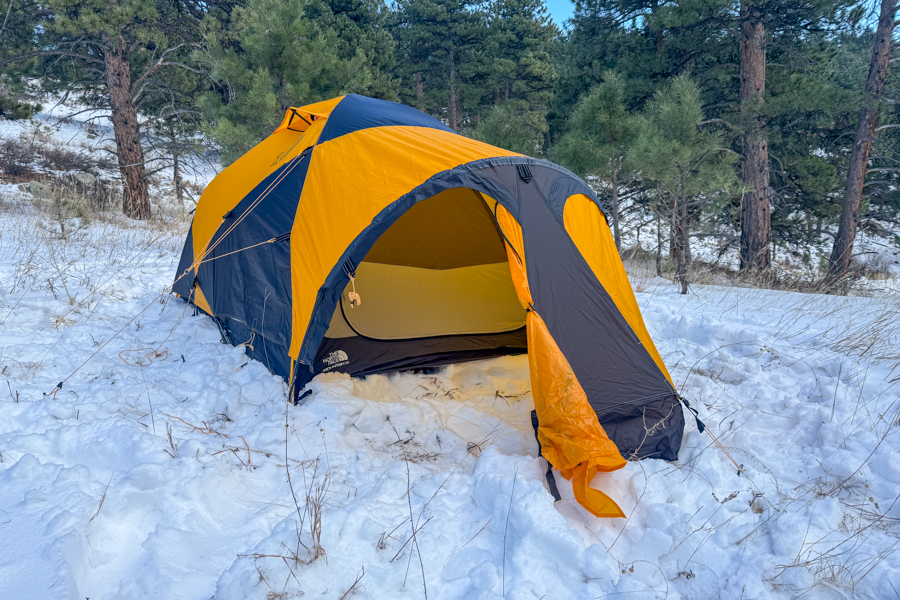
We tested the Mountain 25 on multiple winter trips in Colorado’s Arapaho and White River National Forests, pitching it in fresh snow, subzero nights, and maddeningly high winds. Over several weeks of early- and mid-winter use, we evaluated its warmth, storm readiness, ventilation, and livability in genuinely tough conditions.
Quick Specs
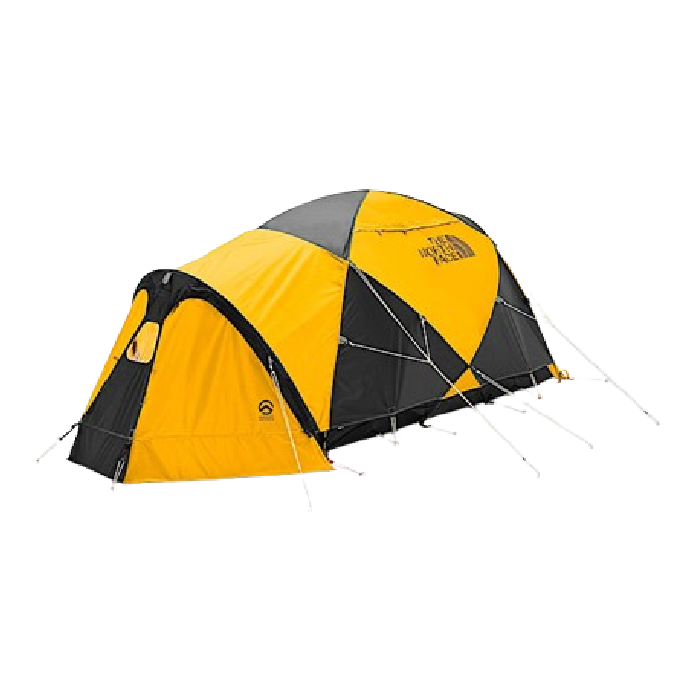
The North Face Mountain 25
Best Basecamp-Style 4-Season Tent
CleverHiker Rating: 4.7/5.0
Price: $760
Weight: 9 lb. 13 oz.
Dimensions (LxWxH): 86 X 54 X 41
Square Footage: 29.3 sf
Pros
- Good ventilation
- Two vestibules
- Storm-worthy
- Good internal storage
- Excellent build quality
- Pre-attached guy lines
Cons
- Weight
- Not the most versatile
- Setup takes some time

Comfort
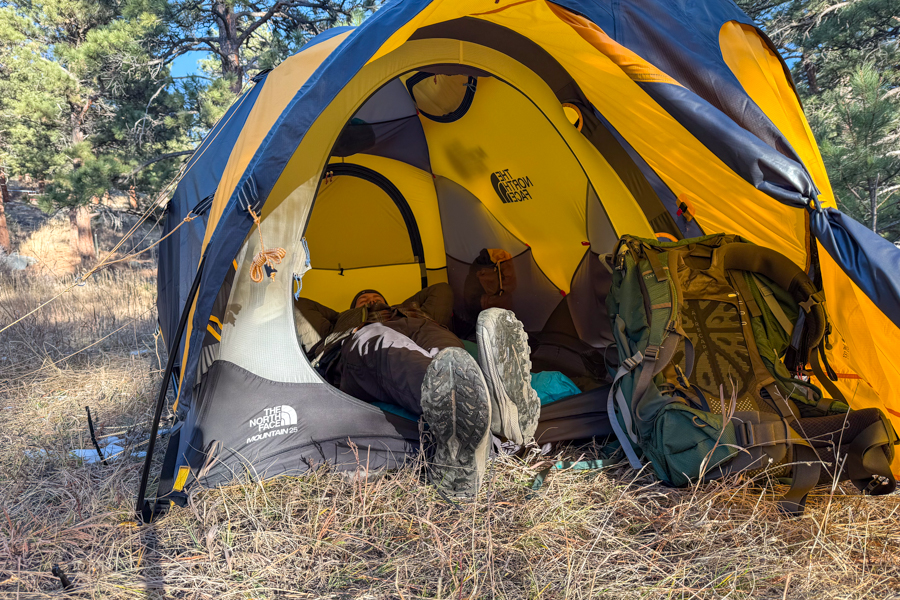
The North Face Mountain 25 is fine for two and luxurious for one, offering enough space to stay organized during winter trips. In a pinch, you could squeeze in a third person or fur baby, but all your gear would need to live outside, and it wouldn’t be ideal for multi-days.
For normal use, the interior feels predictable and easy enough to move around in. You can sit up in the center of the tent to change clothes or sort layers, and the peak height is right in line with most other 4-season domes. That means no standing room, but it is comfortable for sitting upright.
The dual-vestibule layout plays a big role in overall livability. The larger 8-square-foot front vestibule works well for cooking or stashing bulky gear, while the smaller 3-square-foot rear vestibule is great for boots, wet clothing, and items you want kept separate from your sleeping space.
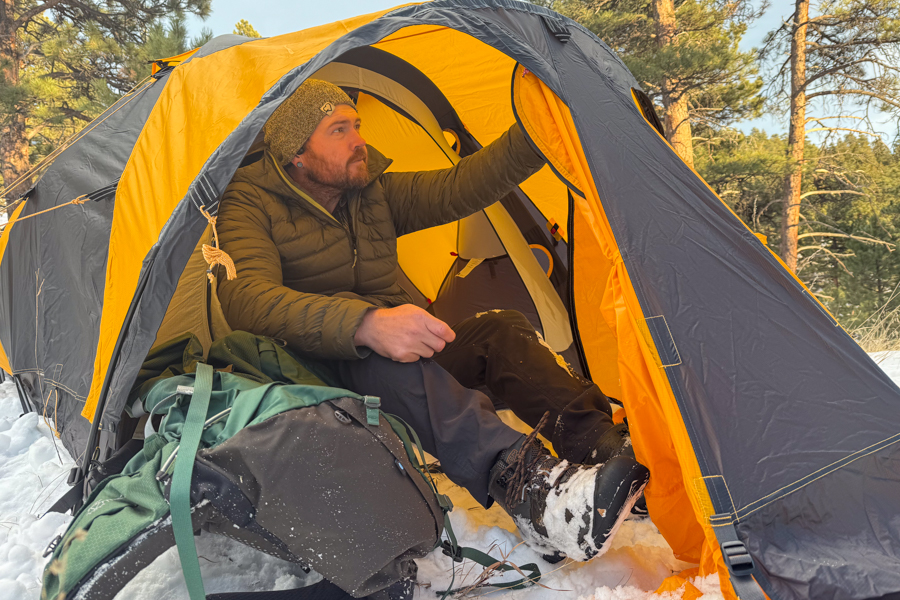
This arrangement keeps the interior surprisingly tidy, even with two people inside. Our 6’2″ gear analyst fit comfortably, with enough length to stretch out and enough headroom to sit up without feeling boxed in.
Airflow also plays a big role in comfort. The updated vents solved a big problem with this tent and help keep moisture from building up overnight, which matters a lot on longer winter trips when condensation can quickly make a tent feel cramped and clammy.
Weight & Packed Size
There’s no way around it: the Mountain 25 is a heavy tent, and it’s not built for fast-and-light missions. This is a true 4-season dome designed primarily as a basecamp shelter, and its 9 lb 13 oz weight reflects its purpose.
Even when you divide the components between two hikers, each person still ends up carrying roughly four and a half pounds. That’s not unmanageable for short approaches, but it’s far from ideal for covering big miles or setting up and tearing down camp every day. We like to tow this in a snowmobile or sled rather than on our backs.
The packed size is similarly bulky. The tent body, fly, and poles use thick, durable materials meant to handle severe wind, deep snow, and repeated exposure, so it naturally takes up more room in a pack than lighter 4-season options. You can compress it a bit with a different stuff sack, but it’s never going to feel compact.
Still, the weight and bulk make sense when you consider what this tent is designed to do. If you need a shelter that provides a safe and reliable home during harsh winter conditions, the Mountain 25 is a great choice. It is not the model we would pick for long winter traverses, but it works well for basecamp-style adventures or trips where durability matters more than distance.
Weather Resistance
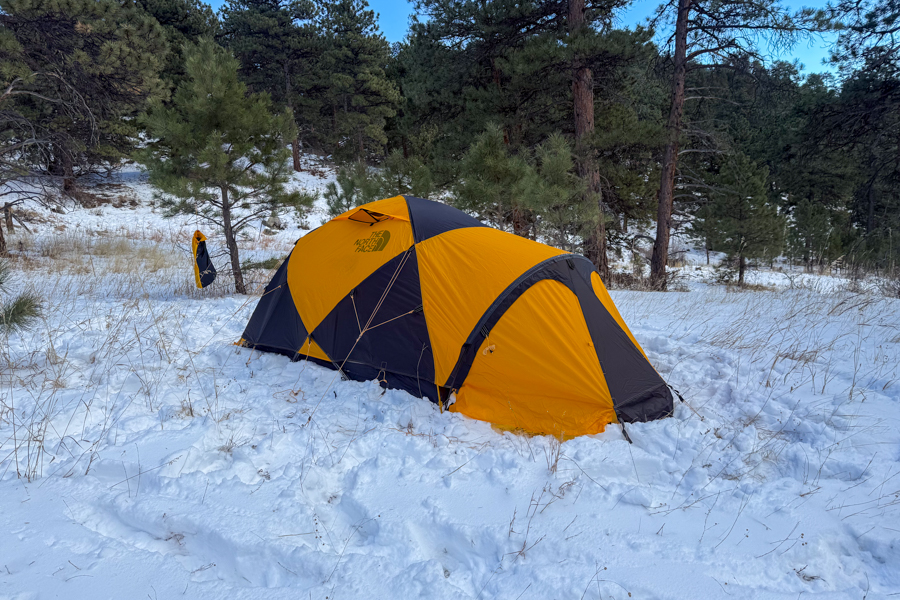
The Mountain 25 has a long-standing reputation for handling truly gnarly weather, and the newest version continues that tradition without missing a beat. In our testing, this tent never flinched. The dome architecture sheds heavy snow efficiently, and the stout pole structure feels solid even when the wind picks up. We had nights with sustained gusts that had us more worried about a tree falling than our tent coming apart.
The fly fabric, floor materials, and seam construction are all highly waterproof, and we loved that it keeps out sideways snow and moisture.
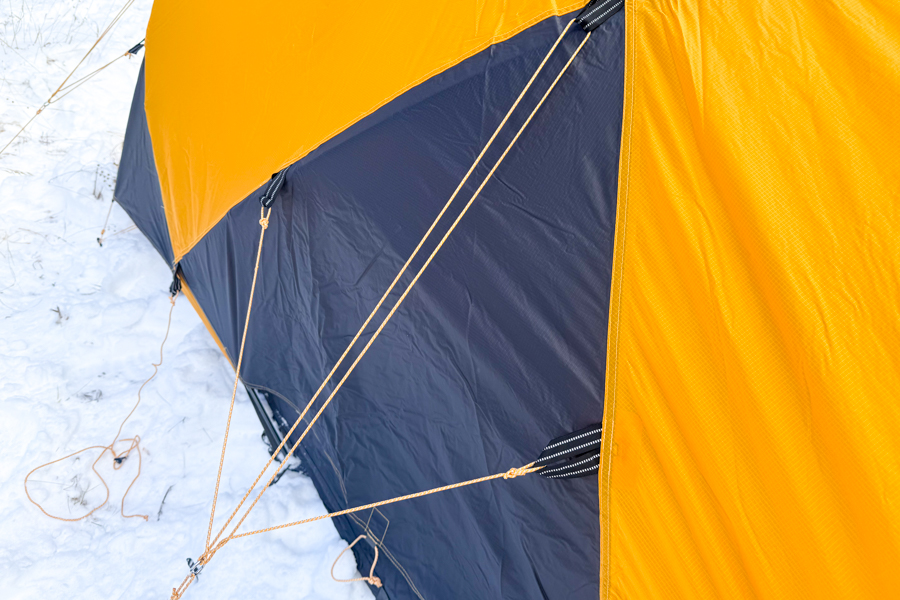
It also has an almost overwhelming number of stake-out and guy-out points, which gives you a lot of flexibility to lock it down securely in exposed terrain. When fully anchored, it creates a very stable and reassuring shelter that feels purpose-built for rough nights above-treeline..
Overall, this is one of the most weather-resistant tents in our entire lineup. It is not the lightest or most modern design, but if your priority is staying protected in serious winter storms, the Mountain 25 delivers top-tier performance that has earned its status as a classic expedition shelter.
Ease of Setup
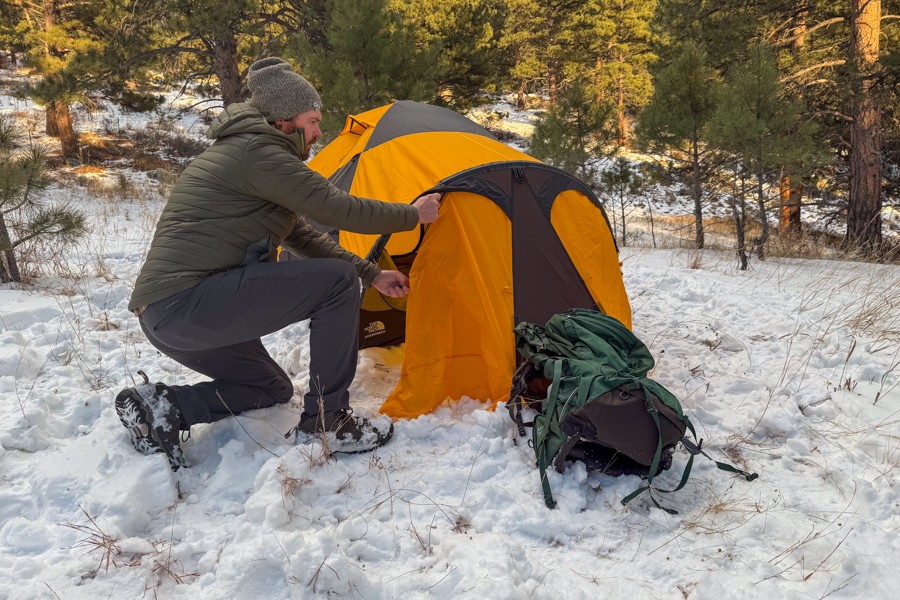
We experienced a bit of a learning curve with this tent, but once we understood the pole structure, it became a manageable one-person setup. The tent uses five poles in total: two that form the primary cross structure, two that complete the main dome, and a brow pole that supports the fly.
Technically, it only needs the brow pole when using the fly, but most people will have the fly on unless the weather is perfect, so expect to use all five pieces in normal winter conditions.
The first pitch took some time as we followed the instructions and sorted out the pole pathways, but the second setup went much more quickly. Once we got a feel for the order of operations, the process became surprisingly intuitive. There is nothing particularly finicky about the design, but it does require patience and a bit of space since the front vestibule extends the footprint.
As with most expedition tents, staking and tensioning take longer than with lighter-duty shelters. There are a lot of stake-out points, and the tent performs best when everything is properly tightened. Bottom line, it is harder to set up than the simpler 4-season models that we’ve tested, but it is absolutely manageable and becomes much easier after the first attempt.
Durability
The Mountain 25 is one of the most durable tents in our entire lineup and has shown zero signs of wear throughout testing. Everything about this shelter feels stout, from the pole structure to the heavy-gauge fabrics to the hardware that holds it all together.
The zippers run smoothly without snagging, the stitching is clean and reinforced in all the right places, and the clips and pole attachments feel strong enough to withstand years of winter use. It is the kind of tent we do not have to baby during normal handling, which is refreshing in a category where many shelters require careful treatment despite their expedition intentions.
That said, basic care still applies. Using the included footprint, clearing away sharp debris, and avoiding unnecessary stress on webbing and tie-down points will help extend the life of the tent. Even so, the overall construction left us feeling confident that it can handle repeated trips into harsh weather without developing premature issues.
The Mountain 25 has earned its reputation for long-term reliability, and our experience matches what many long-time users already know. If you want a tent that can take a beating in real winter conditions, this is a good choice.
Versatility
This tent can be used beyond the winter and shoulder seasons, but it is far from versatile. The Mountain 25 is clearly designed for harsh, cold-weather expeditions. We read user reviews from people who claim to use it in shoulder seasons and even summer, and while that is certainly possible, the conditions would need to be cool and likely high alpine.
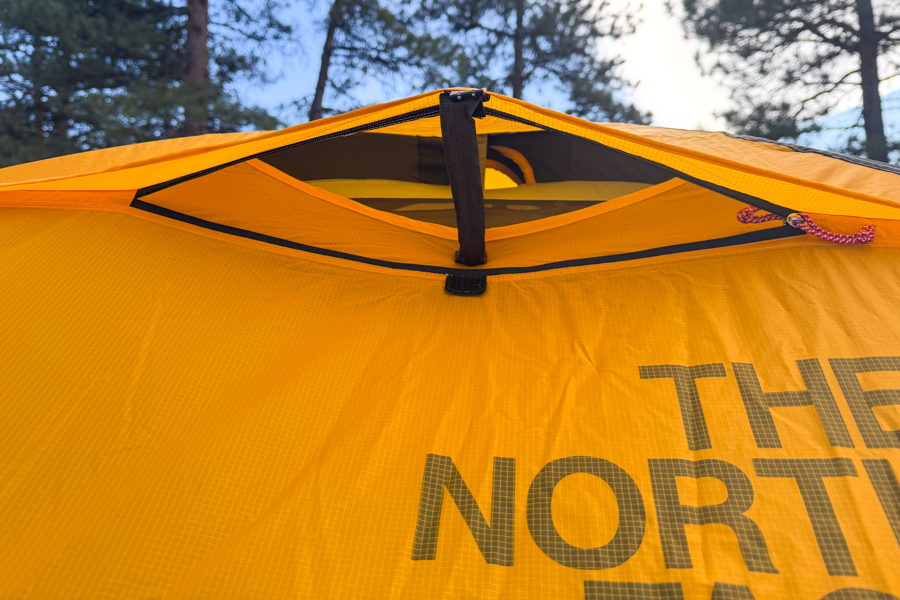
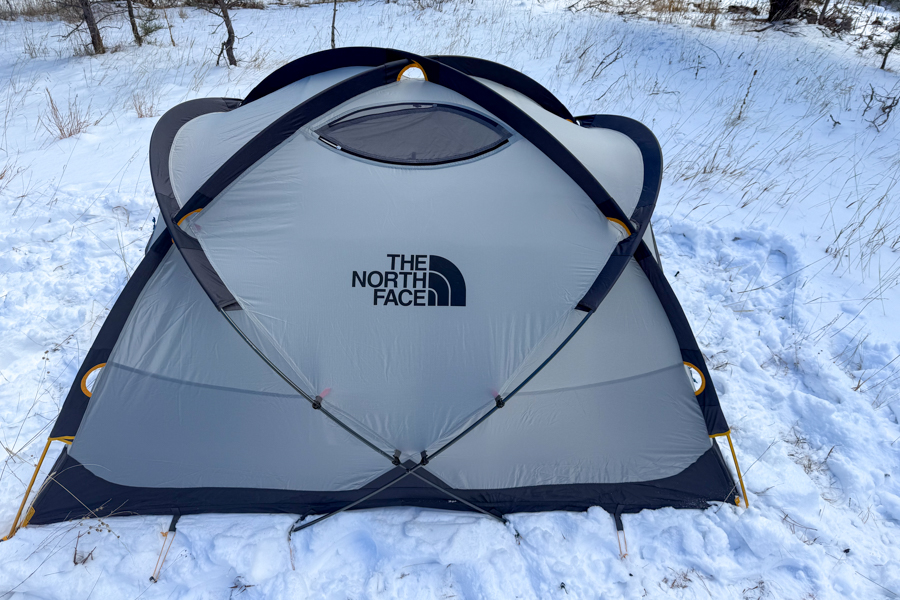
The tent has two mesh windows that provide modest airflow, and the body fabric is water-resistant enough that you can pitch it without the fly if you expect dry weather. These factors make it usable for warmer shoulder-season trips, but it still runs warm and is not a great match for hot environments.
Backpacking with it in non-winter conditions is also possible, though its weight and packed size make it overkill. Plus, we have the luxury of testing tents, so we have lighter options and use those instead.
For anything outside of those environments, it is simply more tent than most people need. Among all the models we tested, this is one of the least versatile because it is so purpose-built for true winter protection.
Should You Buy the North Face Mountain 25?
The North Face Mountain 25 is a great choice if you regularly head into places where the weather feels like it has something to prove. If your trips involve strong winds, heavy snow, and cold nights above treeline, this tent makes a ton of sense. It feels sturdy, dependable, and built for exactly those kinds of conditions.
If you are more of a casual winter camper or prefer long approaches with a lighter pack, this probably is not your tent. The weight and bulk make it better suited to basecamp-style trips, and it runs warm in anything but cold weather.
When it comes to value, the Mountain 25 hits a nice middle ground for a true expedition shelter. It is not inexpensive, but you get a professional-quality tent that offers long-term durability and serious weather protection, which feels like a good trade for anyone who needs a tent they can trust when the weather rolls in.
What Other Four-Season Tents Should You Consider?
If you want to see how the Mountain 25 stacks up against the rest of the field, check out our guide to the best 4-season tents, where we break down the top performers across a wide range of conditions.
KUIU Storm Star 2 Review: The KUIU Storm Star 2 shares the Mountain 25’s stormworthy build but does it in a lighter, more streamlined package. It is still a burly shelter built for real winter weather, yet it trims weight in ways that make it more appealing for users who want solid protection without hauling a full expedition tent. If you value strength but want something easier to pack and carry, this is a great alternative.
Mountain Hardwear Trango 2 Review: The Trango 2 is one of the closest direct competitors to the Mountain 25, with a long history of surviving serious winter storms. It offers similar bombproof strength and reliable construction, but some users prefer its interior layout and slightly different pole geometry. It is a strong option for people who want a classic expedition tent with a familiar feel and trusted reputation.
SlingFin CrossBow 2 Review: The SlingFin CrossBow 2 blends impressive weather resistance with a significantly lighter weight than traditional expedition domes. Its unique WebTruss architecture makes it extremely strong in high winds, yet it remains easier to carry on longer winter approaches. Choose this one if you want top-tier storm protection paired with a more modern, weight-conscious design.