

Bottom Line
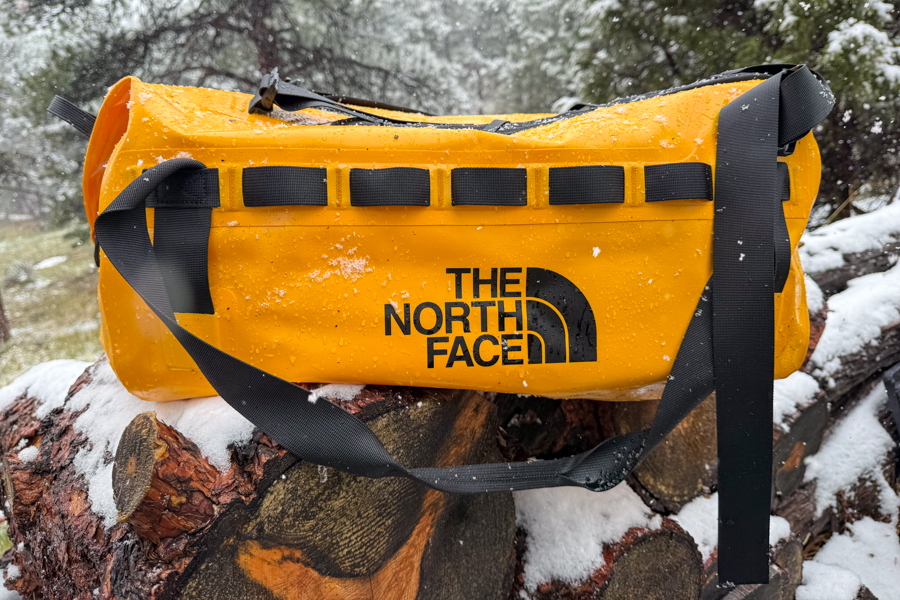
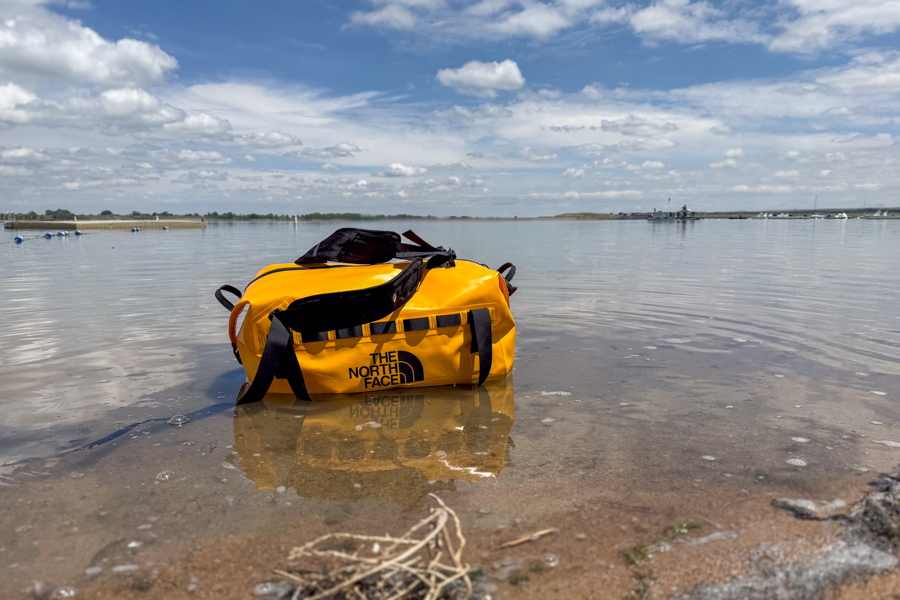
The North Face Base Camp Waterproof Duffel 50L is the most waterproof bag we have ever tested, earning a special spot on our guide to the best duffels. Fully welded construction, oversized waterproof zippers, and a 1000D TPU-coated shell combine to create a bag that kept its contents completely dry through a week of Colorado rain and snow, a garden hose soaking, and a 30-second bathtub submersion. It is one of only two bags in our lineup we would trust without a dry bag liner in serious saturated conditions.
The downsides are there, but they’re expected for a fully sealed bag. First, the price reflects the top-notch materials and waterproof construction. The carry system gets the job done, but it’s not especially cushy, organization is minimal, and the large zipper teeth can snag soft materials. This is a bag built for throwing on a raft or dragging on a sled, not for daily airport carry.
How We Tested
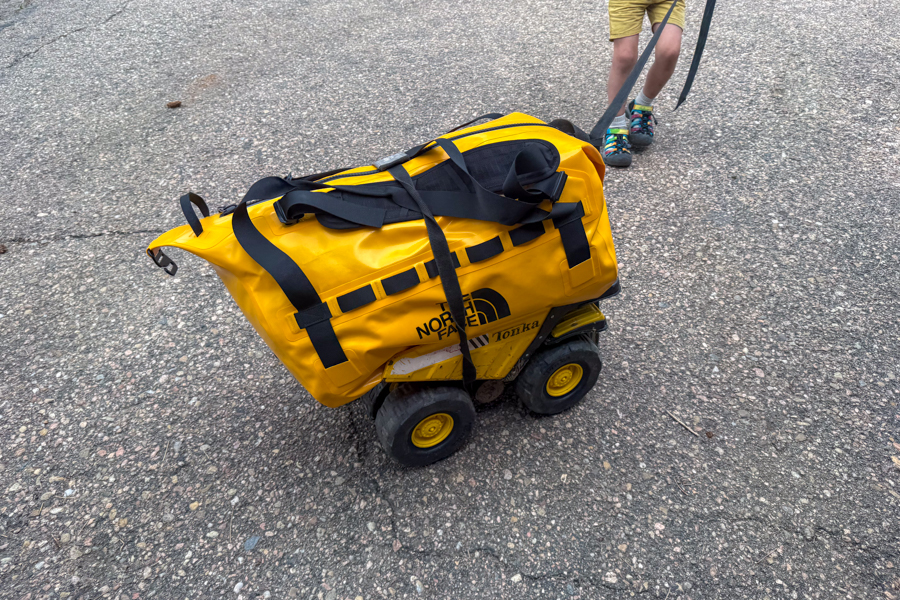
We left the North Face Base Camp Waterproof Duffel outside in Colorado rain and snow for a full week, soaked it deliberately with a garden hose, and submerged it in a bathtub for 30 seconds to stress-test its waterproofing claims. We also put it through the same durability tests as every other duffel in our lineup, including a memorable hour of pavement dragging courtesy of a four-year-old and a dump truck.
Quick Specs
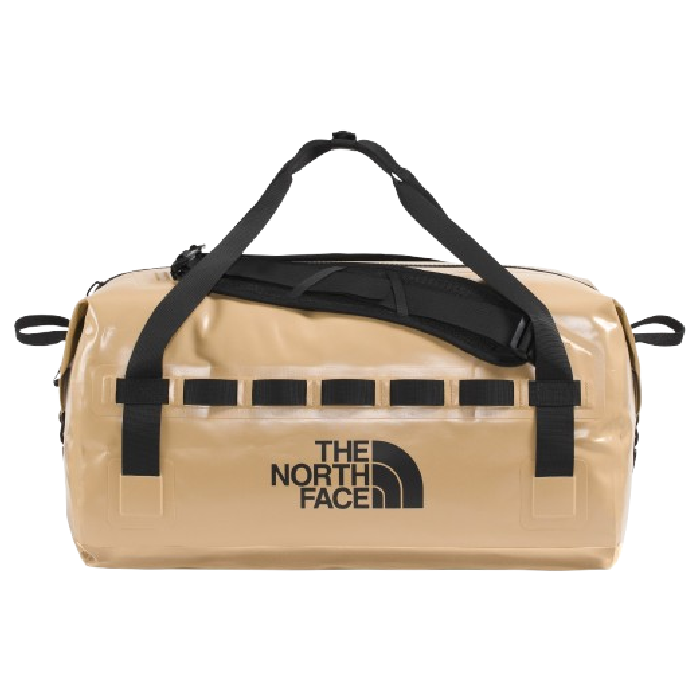
The North Face Base Camp Waterproof Duffel
Best Duffel for River Trips
CleverHiker Rating: 4.6/5.0
Price: $320
Weight: 2 lb. 15.3 oz.
Capacity: 50 L
Dimensions: 11.4 x 20.9 x 12.8
Pros
- Fully waterproof
- Very Durable
- Fully welded construction
- Lightweight compared to other waterproof duffels
Cons
- Mediocre carry comfort
- One internal pocket
Carry Comfort
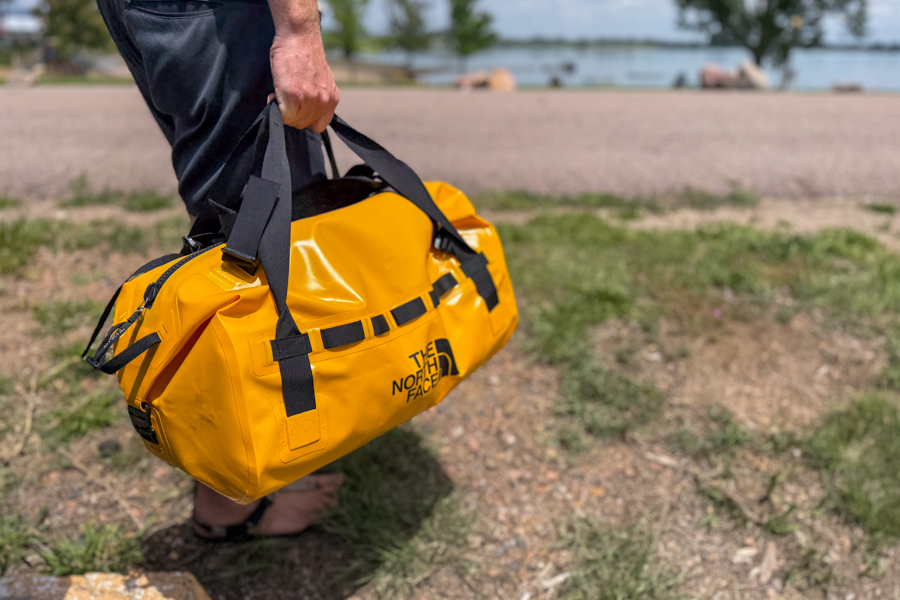
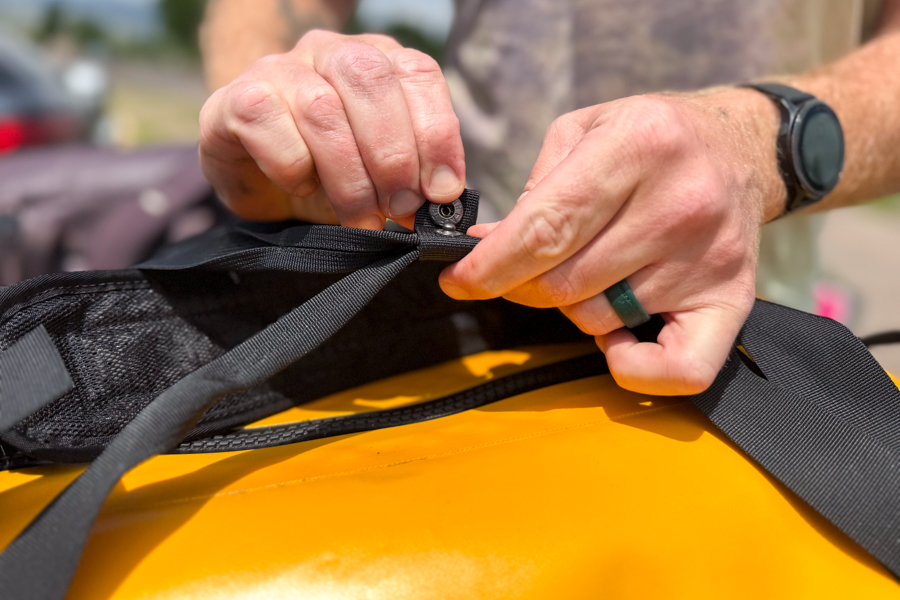
The Base Camp WP carries fine for short hauls, which is really what it’s built for (from the boat to the beach, from the sled to the dome tent), so comfort is not the focus of this bag. The tote handles aren’t padded, so carrying a fully loaded bag by hand gets uncomfortable pretty quickly. The end grab handles are small, but they’re useful for quick lifts into a truck bed, onto a boat, or around camp. The backpack straps are removable, though they take more effort to detach than most bags we tested, so we’d probably leave them on unless you have a specific reason to remove them.
The waterproof TPU-coated material also doesn’t breathe, so the back panel can get warm and sweaty when you’re carrying it as a backpack on hot days or through airports. For short carries from the car to camp, the dock to the boat, or the driveway to the garage, it’s totally manageable. For longer slogs through terminals or across campgrounds, the lack of breathability and padding is more noticeable.
We do like the daisy chain lash points, which are well placed for strapping the bag to a sled, kayak deck, truck bed, or wherever else you need it to stay put.
Compressibility & Packability
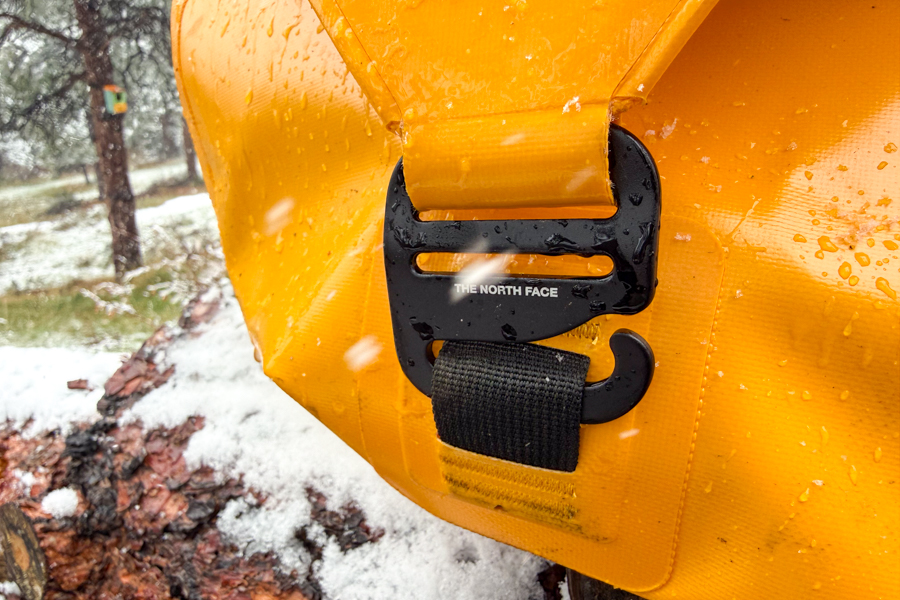
The Base Camp WP does not pack down compactly. The thick 1000D TPU-coated shell holds its shape and resists compression in ways thinner duffel materials do not. There are no traditional compression straps, but metal end clips on each end of the bag compress the ends and help lower the overall profile. We found the clips to work well enough to compress a fully loaded 50L bag into carry-on compliance on several airlines. The daisy chain lash points on the exterior are well-positioned for strapping the bag down on a sled or kayak deck.
At 50 liters, the Base Camp WP meets carry-on requirements for many airlines, making it more travel-friendly than its expedition-style build might suggest. The tradeoff is storage. The stiff, waterproof shell does not fold down small, so it takes up more room in a closet, garage, or gear bin than a packable duffel.
Durability
The Base Camp WP is built to withstand serious abuse. The 1000D recycled polyester with a full TPU coating is the burliest shell material in our duffel lineup, and the fully welded construction eliminates stitched seams, which are often weak points on weather-resistant bags. We left it outside for a week, soaked it with a garden hose, dragged it across pavement, and generally treated it like a bag we did not personally own. We still came away without any real durability concerns. In our experience, The North Face’s “nearly indestructible” claim actually feels pretty fair here.
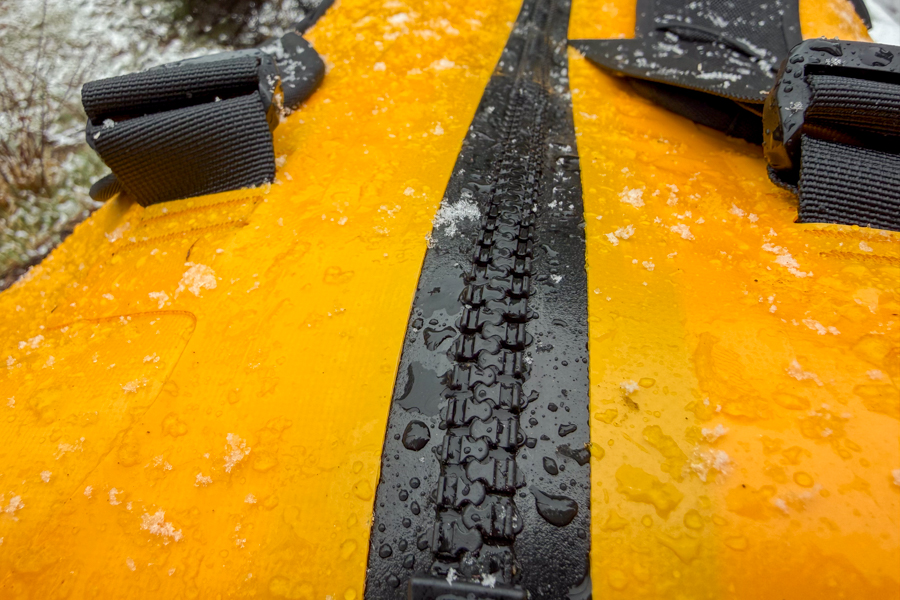
The one durability note worth mentioning isn’t about the bag wearing out, but about what it can do to your gear. The large teeth on the waterproof zipper can catch on soft fabrics if you’re not paying attention. We had a puffy jacket snag during testing and tear slightly, which was a bummer. It’s easy enough to avoid, but you’ll want to feed soft or compressible items carefully around the zipper, especially when the bag is fully loaded and you’re working with a tighter opening.
Weather Resistance
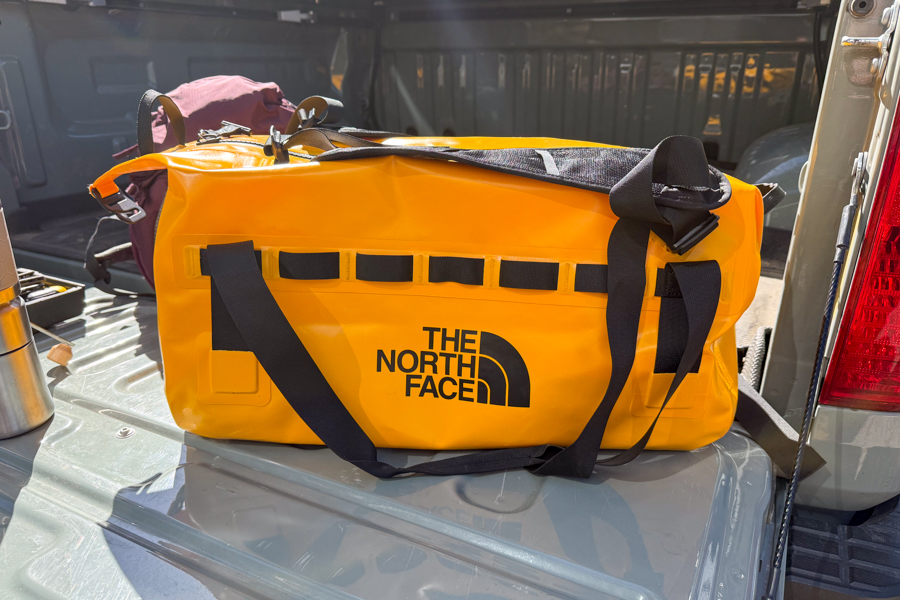
The Base Camp WP is in a different category than most duffels we tested. While other bags rely on water-resistant fabrics or DWR coatings to shed moisture, this one is waterproof by construction. The fully welded seams and oversized waterproof zippers mean there’s no coating to wear off and no stitched seams slowly letting water in over time.
In real life, that means you can leave it on a raft, set it in a snowbank, or have it slide off a kayak deck into the water without immediately panicking about what’s inside. That level of confidence is hard to beat, and in our lineup, only the YETI Panga offers a comparable level of protection.
For river trips, backcountry ski days, boat travel, and expedition-style use where wet gear could seriously derail the plan, the Base Camp WP is the right tool for the job. Bear in mind that if moisture gets inside the duffel, it won’t easily evaporate, so make sure to store it dry and air it out if water gets through an opening.
Organization
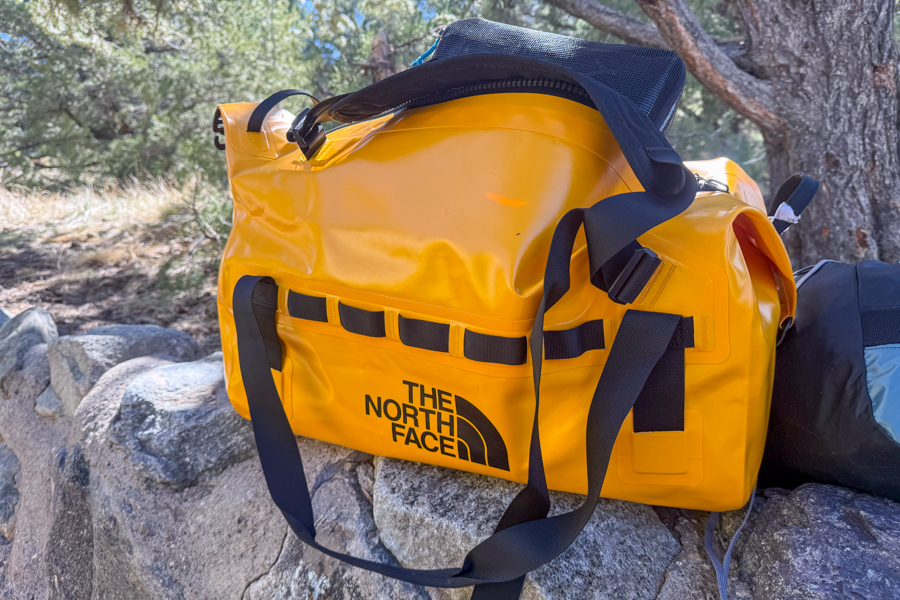
There’s not a lot to say about the organization of this bag. The main compartment is one big open space, and the only built-in organization is a single internal zippered pocket with a key clip for small valuables like a phone, wallet, or keys. That’s pretty much it.
For a waterproof expedition-style duffel, we think that’s the right approach. Extra pockets and dividers would add weight, bulk, and more places for things to fail. If you like having a system, packing cubes are definitely the move. They work well with the wide D-shaped opening and make it much easier to find what you need without digging through the whole bag.
We also like the exterior daisy chain lash points, which add some versatility. They’re useful for clipping on accessories, securing the bag to a raft or kayak, or strapping it down when you need it to stay put.
Should You Buy the North Face Base Camp Waterproof Duffel?
If you need a fully waterproof duffel for river trips, rafting, backcountry skiing, boat travel, or any trip where your gear is likely to get seriously wet, the Base Camp WP is the strongest option in our lineup. The waterproofing is not just theoretical. We tested it hard, and it works. The build quality is excellent, and the 50-liter capacity is a good size for everything from a weekend kit to a longer, more dialed setup.
It’s not the bag we’d choose for daily travel, airport commutes, or anyone who cares more about carry comfort and organization than waterproof protection. The unpadded handles, minimal pockets, zipper snag risk, and non-breathable back panel are the trade-offs for everyday use.
But for the specific trips this bag is built for, it’s outstanding. When keeping your gear dry matters more than anything else, the Base Camp WP is the bag we’d want.
What Other Duffels Should You Consider?
If you like the North Face Base Camp Waterproof Duffel, here are a few other options from our guide to the best duffel bags also worth considering.
YETI Panga 50L Review: The other fully waterproof option in our lineup and the most direct comparison to the Base Camp WP. The Panga uses a different waterproofing approach with a dryhaul fabric and similar welded construction. Both bags perform at a high level for waterproofing. The Panga is heavier at over 5 lbs but has a different carry system worth comparing if you are deciding between the two.
Patagonia Black Hole 55L Review: For travelers who want TNF-level durability and weather resistance without the fully waterproof construction or the price, the Black Hole is the closest alternative. It is not submersible, but it handles hard use and moderate weather reliably and at a significantly lower price point.
Gregory Alpaca 60L Review: If you need more capacity and your use involves rugged travel rather than full submersion, the Alpaca 60 offers exceptional build quality and above-average weather resistance in a larger package. It is not waterproof but holds up well in moderate rain and rough handling.