


Bottom Line
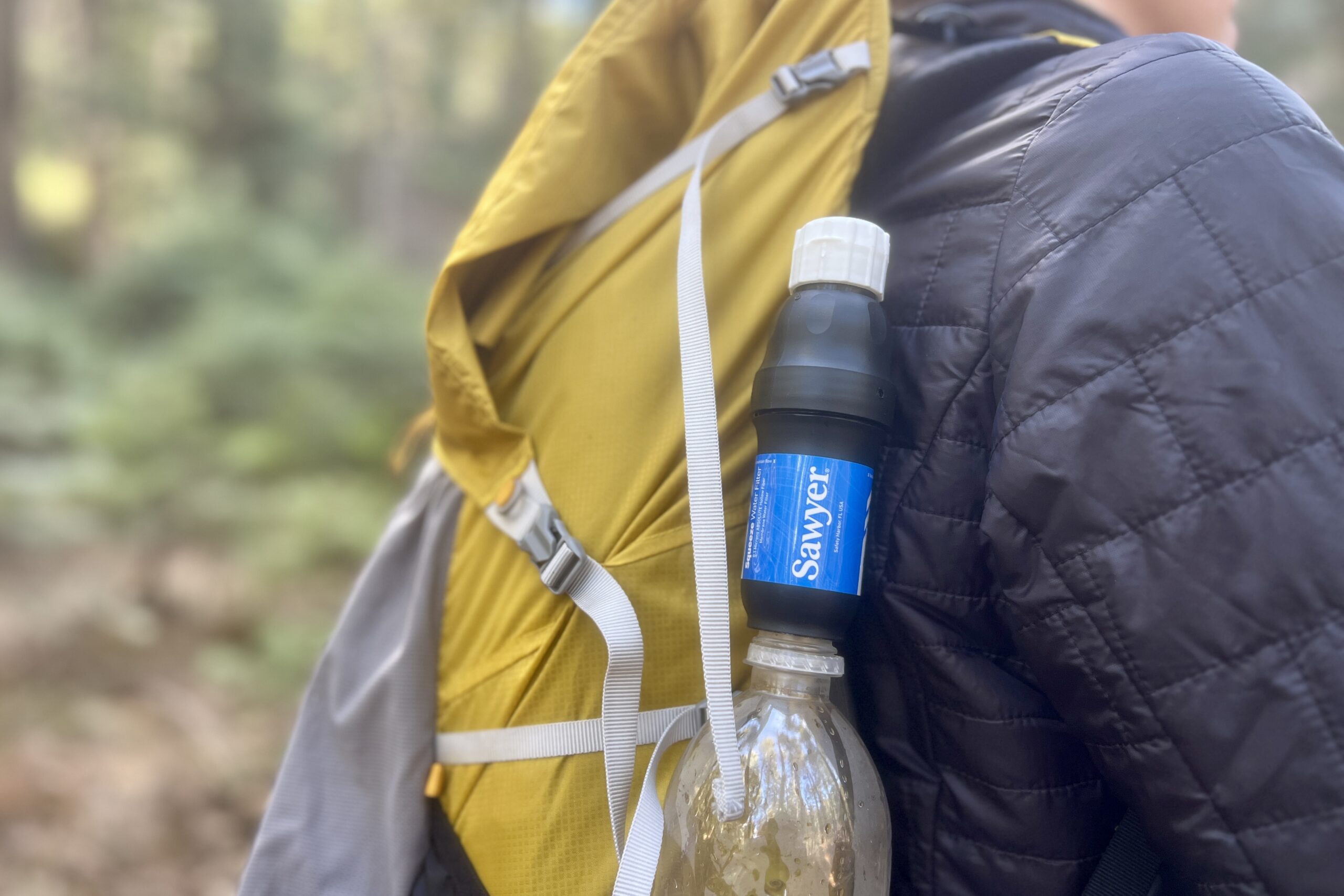
The Sawyer Squeeze is our top backpacking water filter because it balances low weight, dependable performance, and a long service life better than most alternatives. Across 15,000 miles of use on thru-hikes and shorter trips, we’ve relied on it to treat water from clear mountain streams and far less appealing sources. The standard 28 mm threading works with many common bottles, including the Smartwater bottles we often carry, so building a compact filtration setup is easy.
The 0.1-micron hollow-fiber filter removes bacteria and protozoa but is not a virus purifier, and it won’t solve heavy-metal or chemical contamination. Regular backflushing is essential, particularly after treating silty water, and the included pouches are a weak point. Even with those drawbacks, its low weight and versatility make it a compelling choice for solo backpackers and long-distance hikers.
See how our all-around favorite compares with other treatment systems in the best backpacking water filters guide.
How We Tested
Our team has used the Sawyer Squeeze for 15,000 miles across multiple thru-hikes and shorter backpacking trips. We’ve filtered clear water as well as challenging, sediment-heavy sources, including water in livestock country. We assessed treated-water quality, ease of collection and filtration, flow rate, packed weight, cleaning demands, and performance over extended use.
Quick Specs
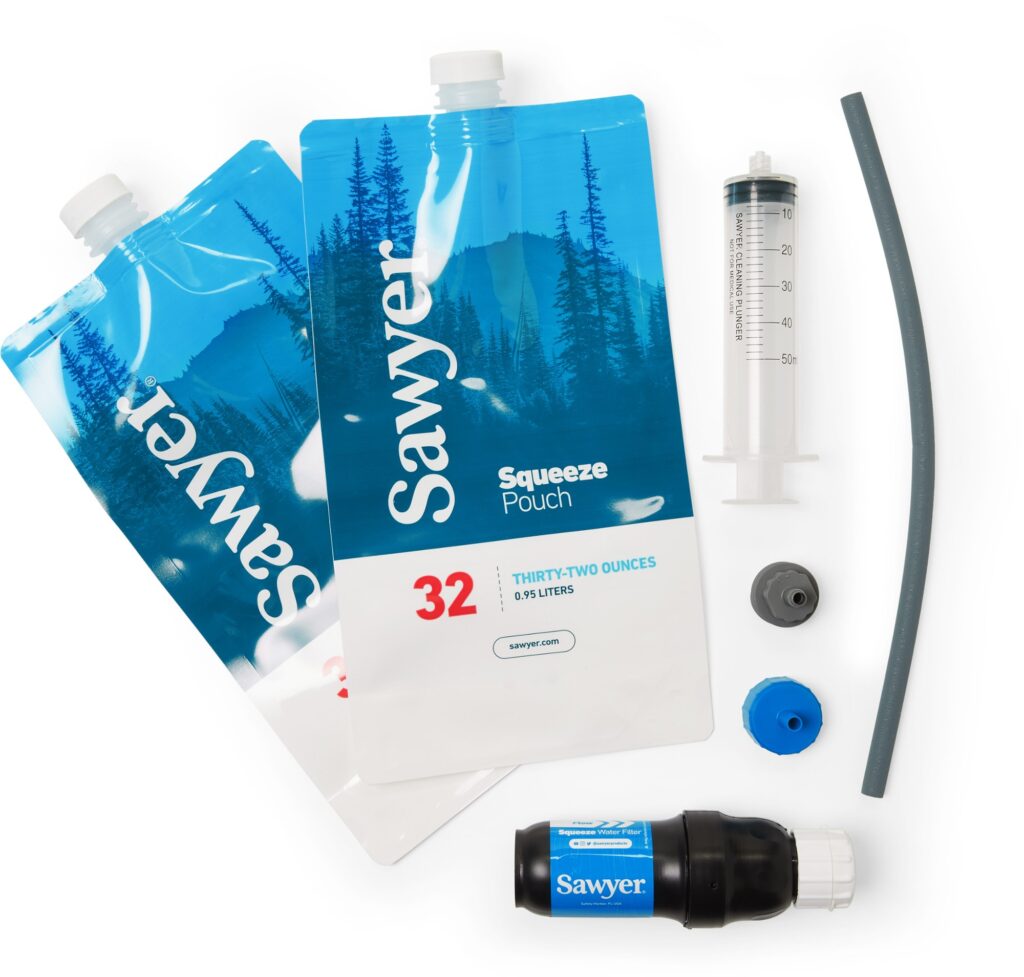
Sawyer Squeeze
Best Backpacking Water Filter Overall
CleverHiker Rating: 4.6/5.0
Price: $46
Weight: 2.5 oz.(filter only)
Flow Rate: 1.7 L/min
Filter Pore Size: 0.1 microns
Lifetime Volume: 378,000 L
Pros
- Lightweight and compact
- Compatible with common 28 mm bottles
- Fast flow when maintained
- Excellent long-term value
- Simple to operate
Cons
- Included squeeze pouches wear out
- Needs regular syringe backflushing
- Cannot remove viruses or chemical contaminants

Water Quality
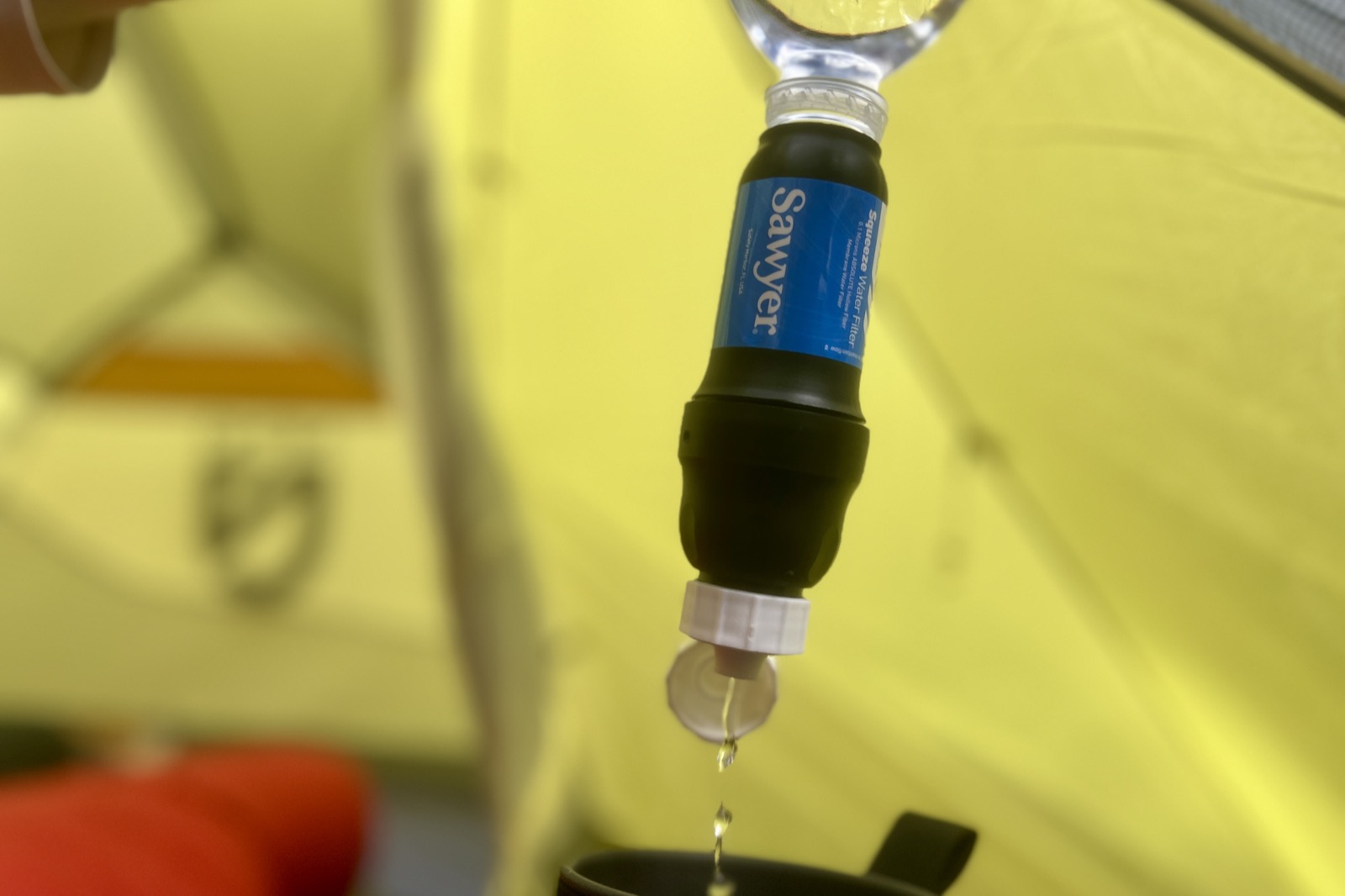
The Sawyer Squeeze uses a 0.1-micron hollow-fiber membrane to remove bacteria, including E. coli, and protozoa such as giardia and cryptosporidium. It also filters microplastics. In our trips, treated water has generally tasted clean and neutral, even when the source looked uninviting. That makes it a practical tool for the typical backcountry sources backpackers encounter.
There are important limits. The Squeeze has no carbon element, so it is not designed to remove dissolved chemicals, pesticides, or heavy metals, and it does not reliably remove viruses. Those gaps matter when water may contain sewage or industrial runoff, particularly on some international trips. We still choose the cleanest available source, because sediment that can be filtered out also clogs the membrane faster.
Water Quality Score: 4.7/5.0
Ease of Use
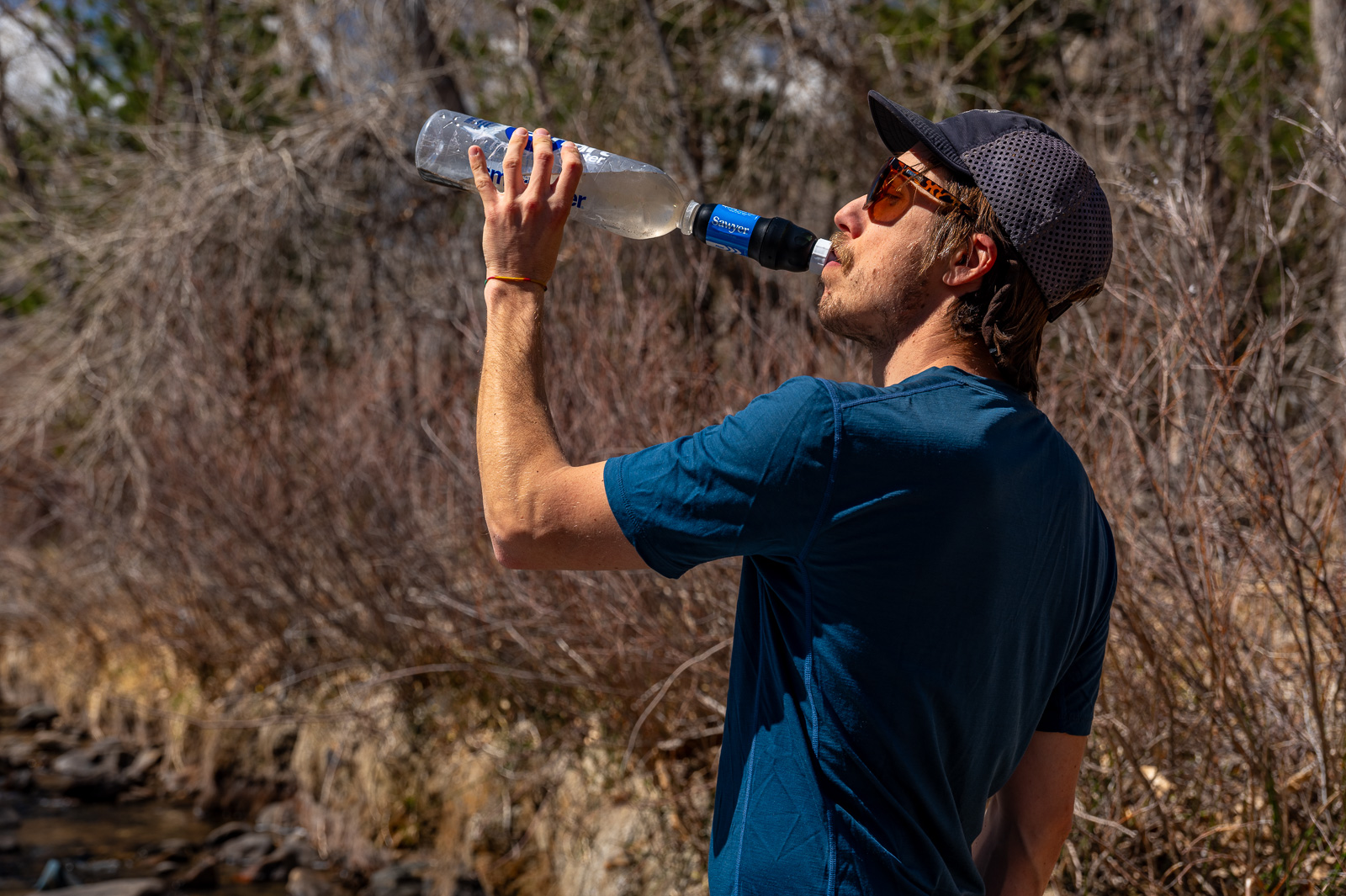
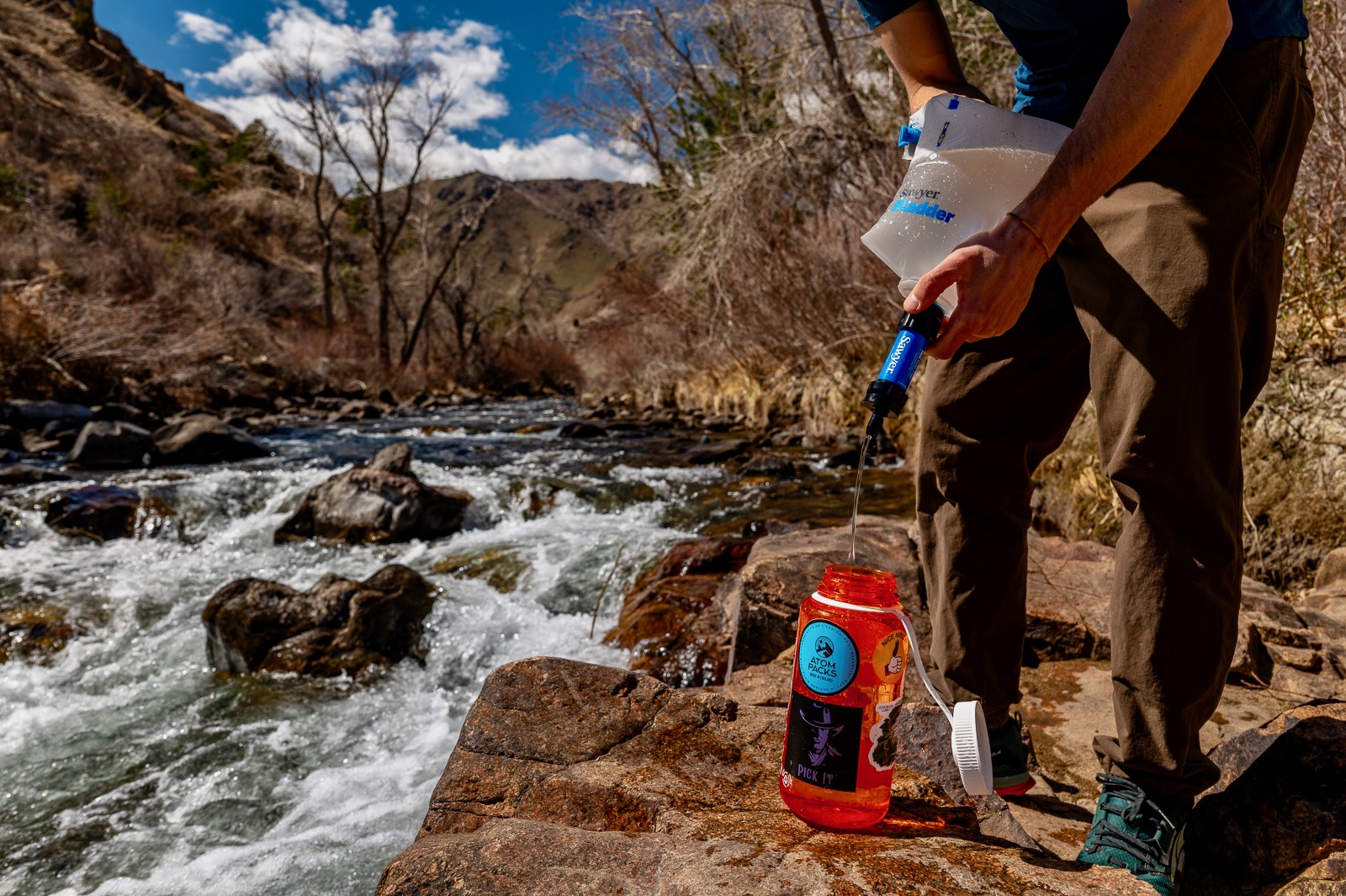
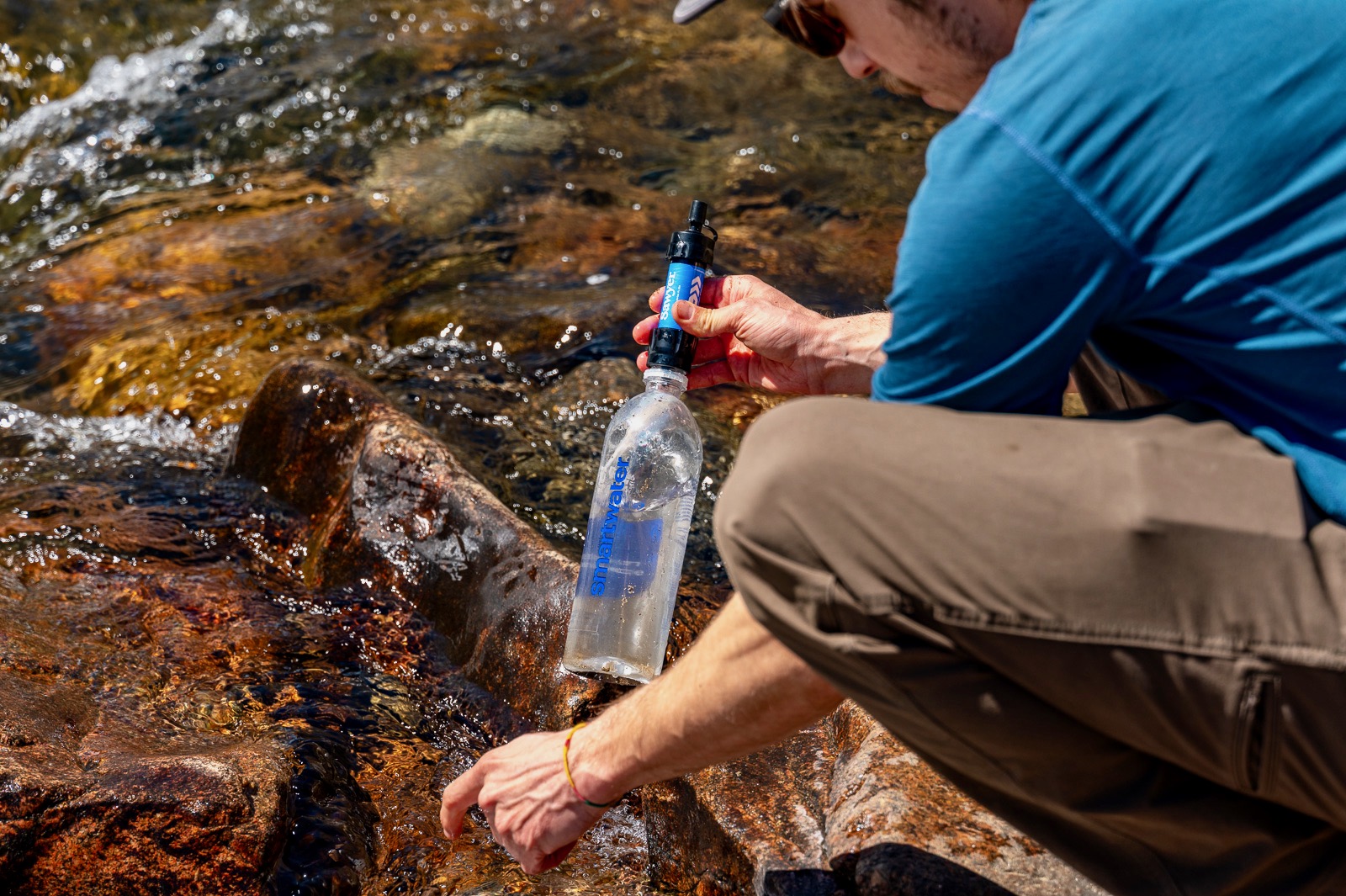
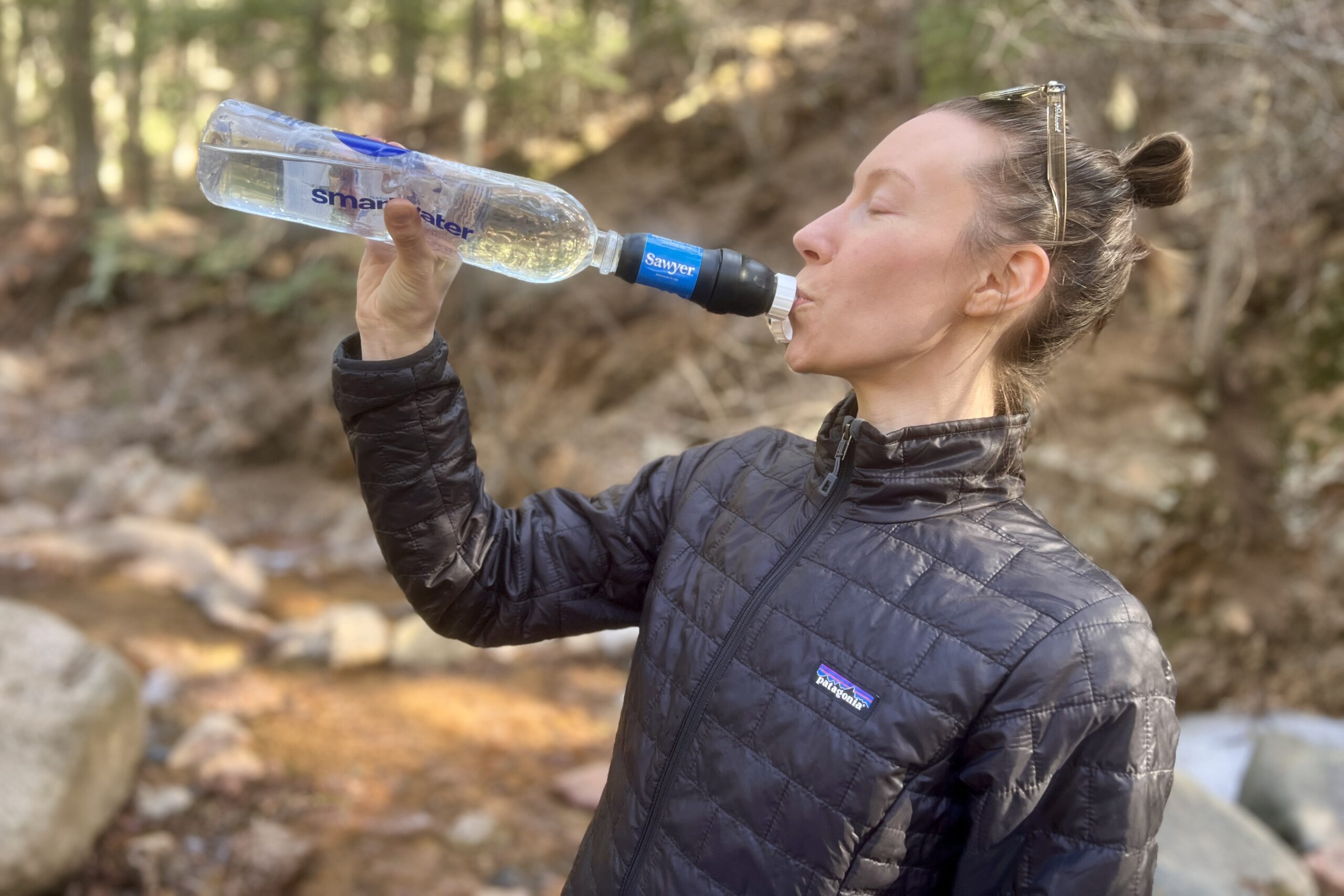
The basic process is quick to learn: collect untreated water in a compatible container, screw on the filter, and squeeze into a clean bottle. The 28 mm threads allow us to use an ordinary Smartwater bottle rather than depend on the included bags. We can also drink through the filter directly, keeping the system simple when we’re moving.
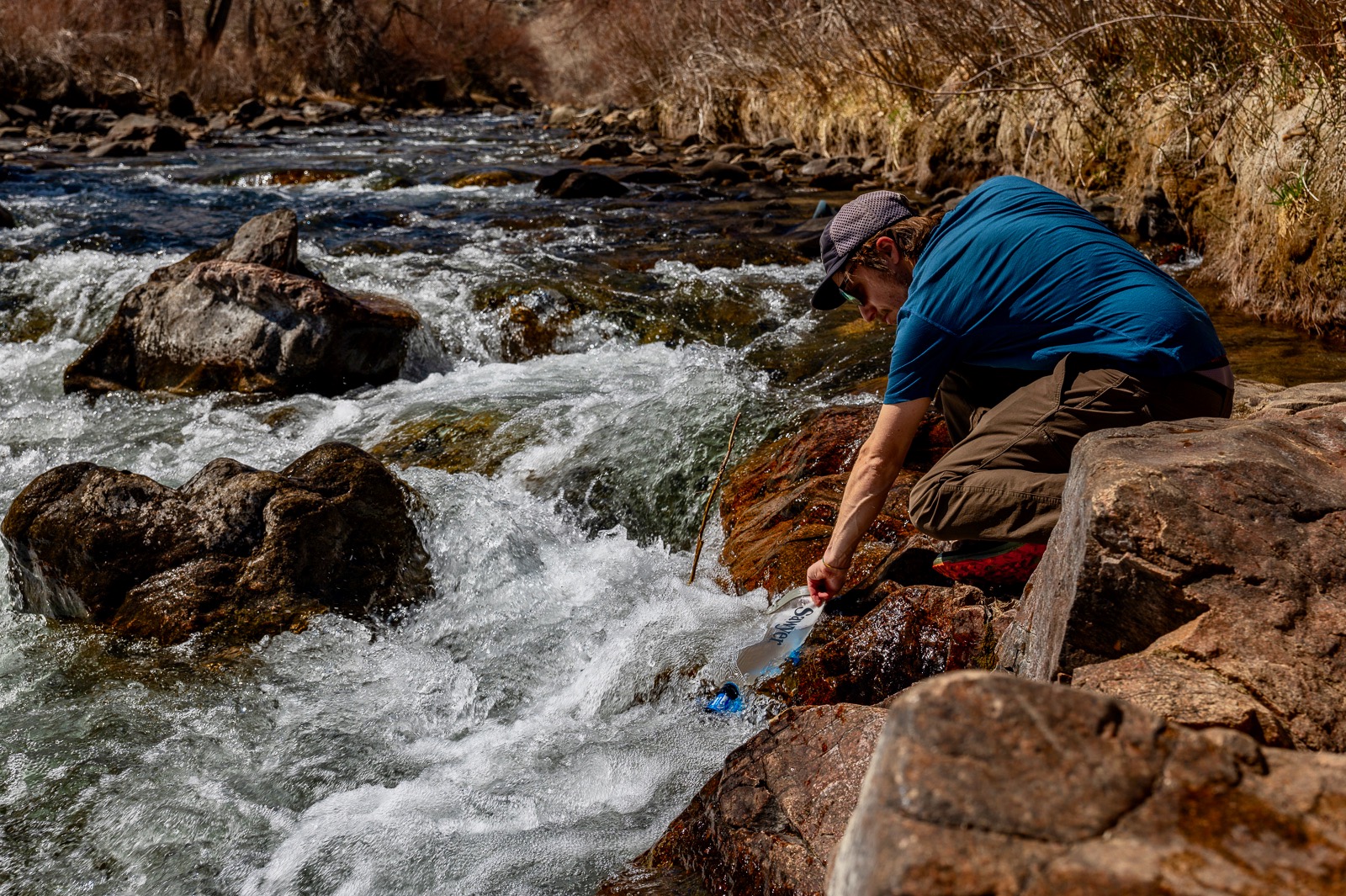
An included inline adapter allows use with compatible hydration setups. Collecting water is less convenient at shallow, still sources, where a flexible pouch can be difficult to fill. A rigid bottle helps scoop water in those conditions and can then be used to squeeze through the filter. That flexibility is a major advantage over systems tied to a proprietary reservoir.
Ease of Use Score: 4.5/5.0
Treatment Time
A clean Sawyer Squeeze moves water quickly enough for everyday solo backpacking. In our hands-on tests, squeezing a liter from a reasonably clear source generally took just under a minute. Sawyer lists a flow rate of 1.7 liters per minute, but real-world time depends on how hard you squeeze and how clean the membrane is. The standard Squeeze flows faster than the smaller Sawyer Mini and Micro, which is why we favor it despite their lower weight.
Flow can drop dramatically when sediment accumulates. During testing with an older unit that hadn’t been cleaned consistently, a single liter took about three and a half minutes. We recommend backflushing regularly and using a bandana as a basic prefilter at visibly silty sources. That bit of maintenance can make a bigger difference to treatment time than small differences in listed flow rates.
Treatment Time Score: 4.5/5.0
Weight
At a listed 2.5 ounces for the filter alone, the Squeeze is light enough to justify on long-distance trips where every ounce counts. It takes up little space and can stay attached to a bottle in a backpack’s side pocket. We’ve carried it across extended hikes precisely because it offers useful filtration without the weight of a pump or large gravity setup.
The complete system is heavier once a bottle, bag, and cleaning syringe are included. Those components are worth considering when comparing it with all-in-one filters such as the Katadyn BeFree. Even then, the Squeeze’s ability to use bottles we already carry helps keep the overall system simple and light.
Weight Score: 4.7/5.0
Maintenance & Longevity
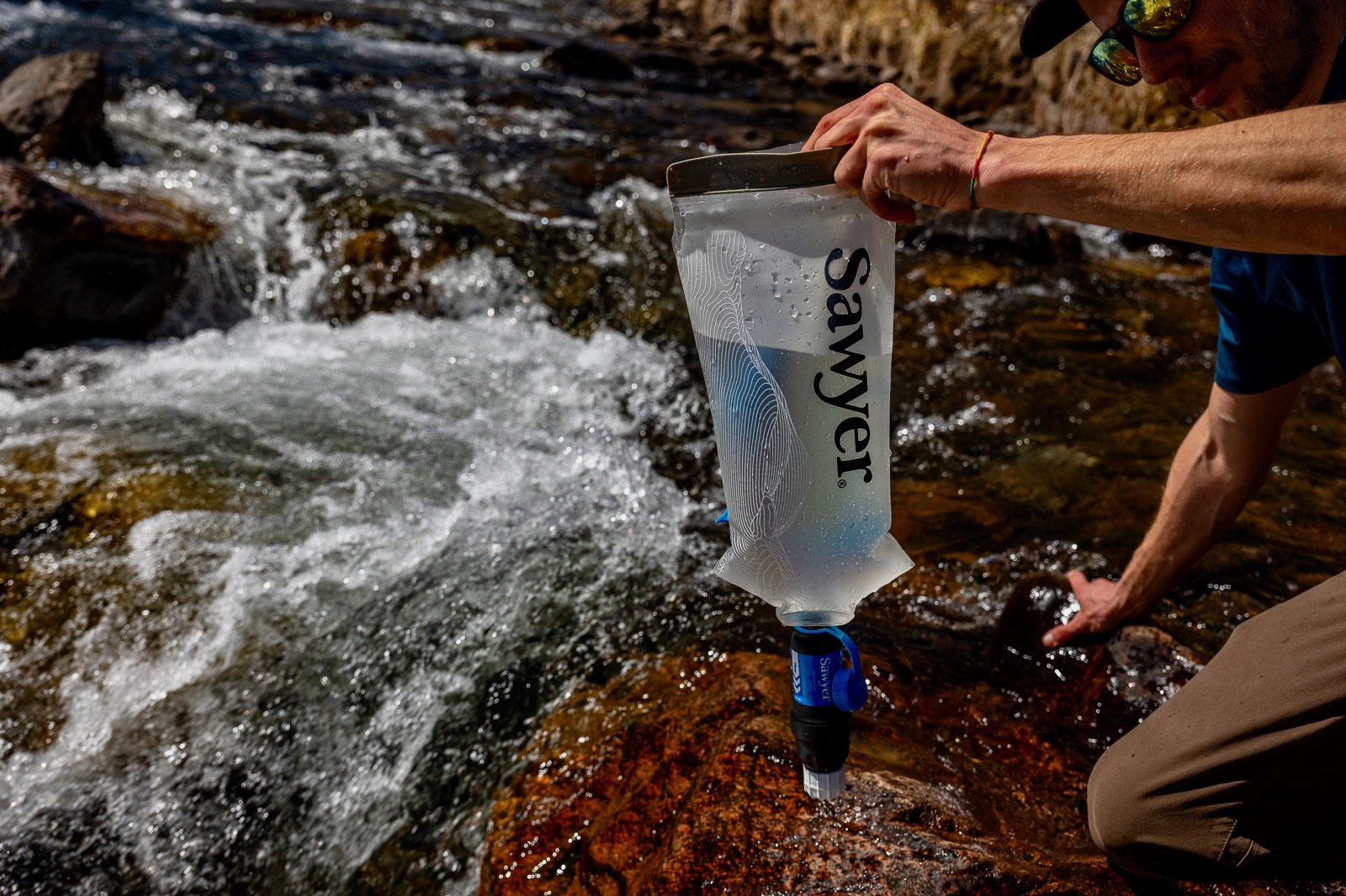
Backflushing is the main upkeep requirement. Sawyer supplies a syringe to force clean water backward through the membrane and dislodge debris. On trips with fairly clear sources, we can go longer between cleanings; in desert or silty conditions, we need to clean it much more often. A well-maintained filter flows considerably better than one left to clog.
The filter’s stated lifetime volume is exceptionally high at 378,000 liters, but that’s not a promise that every unit will retain a usable flow rate indefinitely. In practice, we have replaced units well before that theoretical limit because of clogging. The included squeeze pouches are also less durable than the filter itself, and we’ve seen them develop leaks or failed seams. A sturdier compatible container is a worthwhile upgrade.
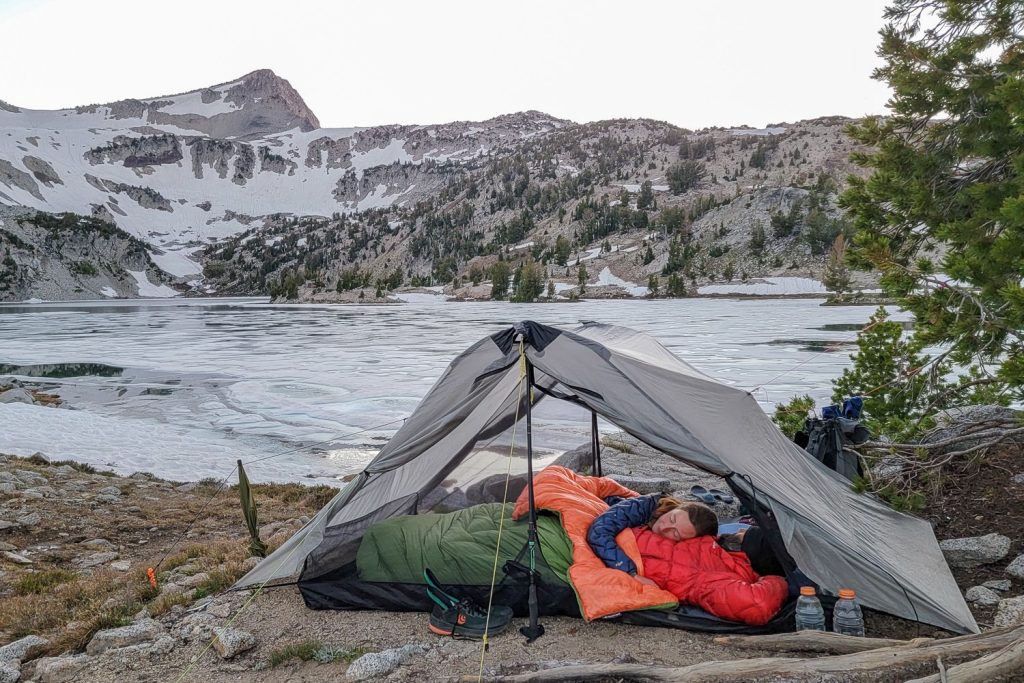
Freezing is a more serious concern than inconvenience. Ice can damage the hollow fibers, and that damage is not reliably visible afterward. On cold nights, we protect a used filter inside our sleeping bag instead of leaving it exposed. If a used filter may have frozen, don’t assume that an apparently normal flow means it remains safe.
Maintenance & Longevity Score: 4.5/5.0
Should you Buy the Sawyer Squeeze?
For solo backpackers, thru-hikers, and anyone who values a compact water-treatment setup, the Sawyer Squeeze is an excellent purchase. It pairs dependable protection against common backcountry bacteria and protozoa with low weight, wide bottle compatibility, and an unusually long rated lifespan. Our extended testing supports its place at the top of our backpacking filter recommendations.
Choose something else if you need viral purification, don’t want to carry backflushing supplies, or routinely treat water for a group. The Katadyn BeFree is easier to clean in the field, while the Platypus GravityWorks makes bulk filtration more convenient at camp. Those options solve different problems rather than making the Squeeze obsolete.
What Other Water Filters Should you Consider?
Check out our full guide to backpacking water filters for more group-friendly options or for use against viruses and heavy metals.
Katadyn BeFree Review: The BeFree is a strong alternative for hikers who prioritize a fast initial flow and simple cleaning. Instead of carrying a backflushing syringe, you can shake the filter in clean water to remove debris. It’s light and convenient for drinking directly from its bottle, but its narrower bottle compatibility and tendency to clog sooner make the Sawyer Squeeze a better long-term fit for some backpackers.
Platypus QuickDraw Review: Consider the QuickDraw when a tougher included reservoir and convenient filling are worth a modest weight increase. In our testing, it delivered a strong flow, and the reservoir was substantially sturdier than Sawyer’s included pouches. The full system is heavier and bulkier than the Squeeze, though, and its listed filter lifespan is much shorter.
Platypus GravityWorks Review: Pairs and small groups may prefer the GravityWorks because gravity handles filtration while they set up camp or take a break. Its two large reservoirs are well suited to processing several liters at once, without squeezing bottle after bottle. At 11.5 ounces and $135, it is substantially heavier, bulkier, and costlier than the Squeeze, making it less appealing for solo ultralight travel.