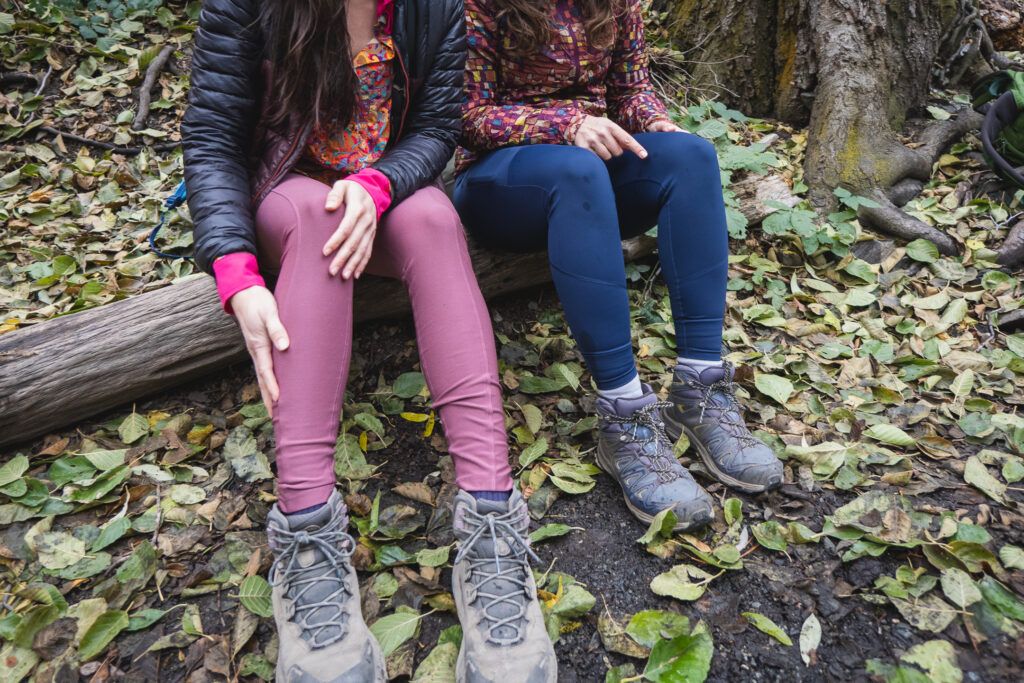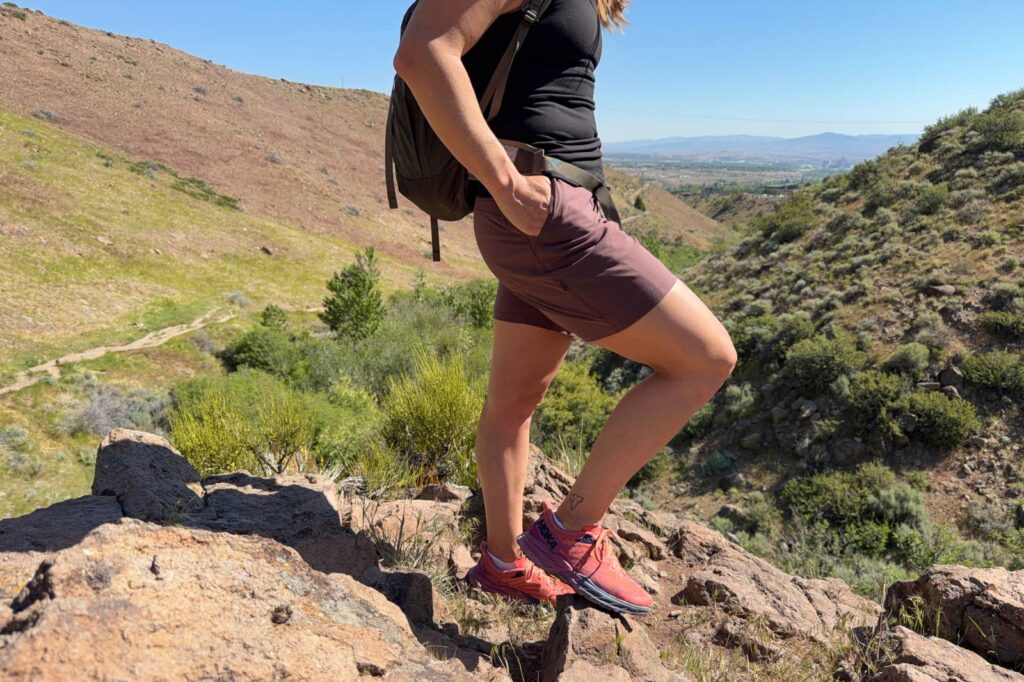
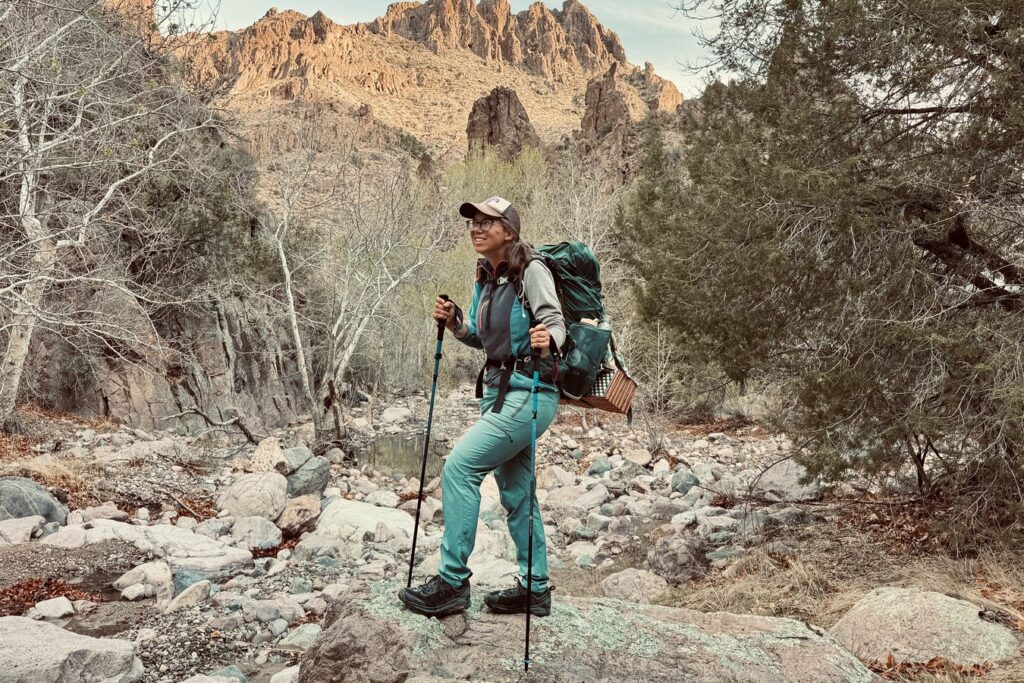
CleverHiker researched more than 40 women’s hiking pants and tested 13 leading models across backpacking trips, day hikes, off-trail routes, creek crossings, desert terrain, alpine conditions, and everyday wear. Our testers have used these pants throughout the Southwest and beyond, comparing comfort and mobility, durability, breathability, features, and weather resistance to identify the best options for different types of hikers.
Editor’s Note: We updated this guide on October 13, 2026 after updating current prices and confirming product specifications.
How We Test Women’s HIking Pants
We tested this lineup on 13 backpacking trips spanning 11 wilderness areas, with field use ranging from hot desert routes and steep mountain trails to brushy off-trail travel, rain, creek crossings, and casual wear around town. We supplemented field use with side-by-side mobility, abrasion, drying, pocket, and spray tests so that performance differences were judged under comparable conditions.
And for more info, check out some of our other popular gear guides:

#1. Best Women’s Hiking Pants Overall

The Arc’teryx Gamma earns our top spot because it combines exceptional durability and weather resistance with better breathability and mobility than its burly softshell construction suggests. Our testing on rough, overgrown Arizona routes left the fabric looking remarkably fresh after conditions that damaged or pilled lighter pants.

Quick Picks For Women’s Hiking Pants
Check out this quick list of the best hiking pants for women if you’re in a hurry, or continue scrolling to see our full list of favorites with in-depth reviews.
1. Best Hiking Pants Overall: Arc’teryx Gamma Pant ($200)
2. Best Roll-up Hiking Pants: KUHL Freeflex Roll-Up ($109)
3. Best Pocket Design: Duluth Dry on the Fly ($90)
4. Best Durable Hiking Pants with a Classic Fit: prAna Halle Straight ($98)
5. Best Convertible Hiking Pants: REI Sahara Convertible ($90)
6. Lightweight, Stretchy & Breathable Hiking Pants: Outdoor Research Ferrosi ($110)
7. Best Budget Hiking Pants: REI Trailmade ($80)
8. Best Value Hiking Pants: Baleaf Laureate ($39)
9. Best Jogger Pants: Athleta Trekkie North Jogger ($99)
10. Best Durable Leggings for Hiking: Fjallraven Abisko Trekking Tights HD ($185)
11. Best Ultralight Hiking Pants for Women: Mountain Hardwear Dynama Ankle ($99)
12. Best Everyday Activewear Pants: The North Face Aphrodite 2.0 ($95)

Arc’teryx Gamma Pant
Best Hiking Pants Overall
CleverHiker Rating: 4.9/5.0
Price: $200
Measured Weight: 10.4 oz.
Inseam: 31 in.
Fit: Fitted
Fabric: Nylon/spandex weave
Pros
- Extremely durable
- Easy-to-use waist cinch
- Wind-resistant
- DWR finish
- Made with recycled materials
Cons
- Expensive
The Arc’teryx Gamma Pant is our best women’s hiking pant for hikers who regularly deal with rough terrain, wind, brush, and changeable weather. During backpacking on badly overgrown Arizona routes, the Gamma took repeated contact with pokey vegetation and trail obstacles without meaningful damage, which is the clearest reason it sits at the top of this field.
Its weather performance is nearly as impressive as its durability. The softshell fabric resists wind and sheds light moisture far better than most conventional hiking pants, while still breathing well enough for dry, warm conditions. The cut is more technical than casual, but the fabric stretches enough that uphill movement and scrambling never felt unusually restrictive in our testing.
The compromise is cost. Hikers who spend most of their time on maintained trails can get perfectly capable pants for far less, and the Gamma’s premium construction is difficult to justify if abrasion resistance and weather protection are not priorities. But for backpackers who routinely push through brush, scramble, or hike in exposed conditions, the extra toughness is meaningful rather than cosmetic.
Compared with the KUHL FreeFlex, the Gamma offers stronger weather protection and a more protective softshell feel; the FreeFlex is less expensive and has better trail storage. If your priority is maximum protection without moving all the way to rain pants, the Gamma is the strongest choice in this lineup.


KUHL Freeflex Roll-Up
Best Roll-up Hiking Pants
CleverHiker Rating: 4.8/5.0
Price: $109
Measured Weight: 11.9 oz.
Inseam: 26.5 in.
Fit: Relaxed
Fabric: Polyester
Pros
- Exceptionally durable
- Soft fabric is very comfortable
- Plethora of pockets
- Articulated knees make them easy to move in
- Highly breathable
- Stylish
- Inclusive sizing
Cons
- Not very weather-resistant
The KUHL Freeflex Roll-Up is one of the most complete all-around hiking pants we tested, especially for hikers who want durability, storage, and breathability without the stiff feel of a heavier technical pant. We used the Freeflex from Arizona to Alaska, including off-trail travel through alder, devil’s club, creek crossings, and steep gullies, and the fabric held up unusually well.
Six useful pockets, articulated knees, a comfortable waistband, and roll-up cuffs make the Freeflex particularly practical on long days. The soft fabric feels better against the skin than the Gamma’s more protective softshell, and the pants dry fast enough to remain comfortable after sweat or water crossings.
The weakness is wet weather. The Freeflex absorbs moisture more readily than our weather-resistance leaders, so hikers who expect sustained rain should pair them with rain pants rather than rely on the fabric’s surface treatment. That tradeoff is easier to accept on rugged, dry trips where breathability and abrasion resistance matter more.
Choose the Freeflex over the Gamma if you want more pockets, a softer feel, and a lower price without giving up much durability. Choose the Gamma when wind and rain protection matter more than storage. For most hikers who want a technical pant that can handle repeated hard use, the Freeflex is an excellent long-term value.

Duluth Dry on the Fly
Best Pocket Design
CleverHiker Rating: 4.7/5.0
Price: $90
Measured Weight: 12 oz.
Inseam: 27.5 in.
Fit: Bootcut
Fabric: 97% nylon, 3% spandex
Pros
- Tons of secure, roomy pockets
- Durable nylon resists wear and tear
- Versatile for trail and everyday use
- Belt loops for a secure fit
- Roll-up hems with snaps
Cons
- Limited mobility vs. joggers
- Not fully waterproof
- Heavier fabric dries slower
The Duluth Dry on the Fly is our favorite option for hikers who actually use their pockets. Its hip and cargo storage is more functional than anything else in this lineup, with enough room for a phone, wallet, dog gear, snacks, and other small items without requiring constant pack access.
That storage would not matter much if the pants were clumsy on trail, but the Dry on the Fly also proved durable and versatile. We wore them backpacking, around town, to work, and even during dog-training activities, and the sturdy nylon held up well across those very different uses. Belt loops and roll-up hems add practical adjustability that many lighter joggers skip.
The tradeoff is a heavier, more traditional feel. The fabric does not move as freely as the Athleta Trekkie North, The North Face Aphrodite, or Mountain Hardwear Dynama, and it takes longer to dry than the fastest pants in the group. Light moisture is manageable, but this is not the pair we would trust instead of rain pants.
The Dry on the Fly makes the most sense for hikers who value utility and storage over low weight or a barely-there feel. The FreeFlex is better for more rugged, athletic movement, while the REI Sahara adds convertible versatility and faster drying. For everyday usefulness plus real trail capability, though, Duluth’s pocket design is hard to beat.

prAna Halle Straight
Best Durable Hiking Pants with a Classic Fit
CleverHiker Rating: 4.6/5.0
Price: $98
Measured Weight: 12.2 oz.
Inseam: 30 in.
Fit: Straight Leg
Fabric: 97% nylon, 3% elastane
Pros
- Big hip pockets
- Versatile
- DWR finish
Cons
- Not as comfortable as some
- Slow drying time
The prAna Halle Straight is a dependable traditional hiking pant for people who want straightforward durability, useful pockets, and a familiar straight-leg fit. On rough Arizona trails, the fabric handled brush and even a hard fall on rock with only minor damage, giving it more confidence-inspiring toughness than lighter comfort-first pants.
The Halle does not dominate any single performance category, but that is part of its appeal. It offers competent weather resistance, deep hip pockets, a waist drawstring, and enough mobility for full hiking days without leaning heavily into either technical softshell construction or casual jogger styling.
Comfort and drying speed are the main limitations. The fabric feels more structured than the Outdoor Research Ferrosi, Trekkie North Jogger, or Aphrodite, and it holds moisture longer than the REI Sahara or Trailmade. Hikers who prioritize a soft, stretchy feel may find those alternatives easier to live in.
Choose the Halle when you want a classic hiking pant that can tolerate brush, repeated trail use, and light weather without paying Arc’teryx prices. The FreeFlex is more feature-rich and breathable, while the Ferrosi is stretchier and more water-resistant. The Halle remains a strong middle-ground choice for hikers who value traditional fit and solid durability.

REI Sahara Convertible
Best Convertible Hiking Pants
CleverHiker Rating: 4.5/5.0
Price: $90
Measured Weight: 12.7 oz.
Inseam: 29 in.
Fit: Relaxed
Fabric: 96% nylon, 4% spandex
Pros
- Highly versatile
- Breathable
- Many useful pockets
- Easily converts to shorts
- Inclusive sizing
Cons
- Top and bottom can show uneven signs of wear
- somewhat unflattering as pants and as shorts
The REI Sahara Convertible is the best choice here for hikers who want one garment to cover both pants and shorts. The zip-off legs make temperature swings, deep creek crossings, and hot afternoons easier to manage without carrying a second bottom layer.
That versatility comes with strong technical performance. On backpacking trips in Colorado’s San Juan Mountains, the Sahara dried very quickly after getting wet and performed well in rain relative to most of the lineup. The pants also include a useful set of pockets and have improved durability compared with earlier versions.
The zipper that creates the convertible design is also the biggest comfort compromise. We felt more resistance around the thigh during uphill movement than in simpler stretch pants, and the shorts-and-pants hybrid look is more functional than flattering. Hikers who rarely remove the lower legs may prefer a standard pant with fewer seams.
The Sahara is most compelling for backpackers who want ventilation, fast drying, and flexible coverage in one piece. The Trailmade is lighter and cheaper for straightforward trail use, while the Ferrosi feels smoother in motion. If convertible functionality is genuinely useful to you, the Sahara executes it better than any other pant in this guide.

Outdoor Research Ferrosi
Lightweight, Stretchy & Breathable Hiking Pants
CleverHiker Rating: 4.4/5.0
Price: $110
Measured Weight: 9 oz.
Inseam: 30.5 in.
Fit: Straight Leg
Fabric: 86% ripstop nylon, 14% spandex
Pros
- Comfortable
- Tear resistant
- Repels water
- Made with recycled materials
Cons
- Fabric is prone to pilling
The Outdoor Research Ferrosi is a strong choice for hikers who want a light, stretchy pant with excellent mobility and some of the best water repellency in the category. On steep trails in Arizona’s Chiricahua Mountains, the fabric moved easily with us and never felt like it was fighting uphill strides.
The Ferrosi also handles light moisture better than many soft, breathable pants. Water beads readily on the fabric, and the thin material manages sweat and drying well enough for variable conditions. Its clean styling also makes it one of the easier technical pants to wear away from the trail.
The main concern is surface durability in brush. Although the fabric resisted outright tearing, it developed pilling when exposed to abrasive vegetation, so we would not choose it for repeated bushwhacking or badly overgrown routes. The Freeflex and Gamma are both better tools for that kind of abuse.
For maintained trails, travel, and everyday hiking, the Ferrosi offers an appealing blend of comfort, stretch, low weight, and weather resistance. It is the better choice than the Freeflex when mobility and water repellency matter more than long-term abrasion resistance, and it is far more casual-feeling than the Gamma.

REI Trailmade
Best Budget Hiking Pants
CleverHiker Rating: 4.3/5.0
Price: $80
Measured Weight: 8.1 oz.
Inseam: 29.25 in.
Fit: Relaxed
Fabric: 94% nylon, 6% spandex
Pros
- Affordable
- Stylish
- Articulated knees make them easy to move in
- Highly breathable
- Inclusive sizing
Cons
- Trades some durability for low weight
The REI Trailmade is our favorite budget hiking pant for people who want low weight, good mobility, useful pockets, and quick drying without a premium price. During backpacking trips in Colorado’s San Juan Mountains, the Trailmade stayed comfortable through long days and felt less restrictive than many traditional hiking pants.
Breathability is a major strength. The light fabric dries quickly, articulated knees help with movement, and the relaxed cut works well for ordinary trail hiking in warm or fair weather. At $80, the Trailmade gives beginners and occasional backpackers a lot of the performance that matters most without paying for specialized construction.
Durability is the tradeoff. Sharp branches, rough rock, and heavy brush are more likely to damage this fabric than the Freeflex, Gamma, Halle, or Baleaf Laureate. That makes the Trailmade a better fit for maintained trails than for frequent off-trail travel.
Choose the Trailmade when budget, breathability, and comfort are higher priorities than maximum toughness. The Baleaf costs much less and is surprisingly durable, but the Trailmade has a more polished hiking-specific fit and feature set. For most new hikers, it is an easy place to start.


Baleaf Laureate
Best Value Hiking Pants
CleverHiker Rating: 4.2/5.0
Price: $39
Measured Weight: 8.1 oz.
Inseam: 30 in.
Fit: Relaxed
Fabric: 90% polyester, 10% spandex
Pros
- Affordable
- Great value
- Mesh pocket liners for increased breathability
- Surprisingly durable for the price
- Many color options
Cons
- Wets out quickly
- Pockets could be larger
The Baleaf Laureate is the standout value of this category because its $39 price comes with much better durability and trail comfort than we expected. We used it on day hikes, backpacking trips, river outings, and overgrown trails, and the fabric held up well enough that it became one of our more frequently chosen pairs.
Warm-weather performance is another reason the Laureate punches above its price. Mesh pocket liners provide extra ventilation, the fabric is light, and the relaxed fit is easy to wear for a wide range of low-key outdoor activities. It also comes in enough colors to appeal to hikers who care about everyday versatility.
Wet weather exposes the budget compromises. The fabric wets out quickly, and the pockets are less useful than those on the Dry on the Fly, Freeflex, or Sahara. We would not pick the Laureate for rainy shoulder-season backpacking without a separate shell.
The Laureate makes the most sense for hikers who want capable pants at the lowest possible price without dropping into disposable-feeling gear. The Trailmade is more polished and technical, while the FreeFlex is far tougher for repeated rugged use. But for pure performance per dollar, the Baleaf is difficult to beat.

Athleta Trekkie North Jogger
Best Jogger Pants
CleverHiker Rating: 4.1/5.0
Price: $99
Measured Weight: 9.5 oz.
Inseam: 29.3 in.
Fit: Straight
Fabric: 95% nylon, 5% spandex
Pros
- Exceptionally comfortable
- Stretchy fabric is easy to move in
- Stylish
- Better pockets than most joggers
- Inclusive sizing
Cons
- Takes a long time to dry
The Athleta Trekkie North Jogger is our favorite jogger-style option for hikers who want exceptional comfort without giving up useful pockets or reasonable durability. The stretchy fabric and relaxed feel work well for hiking, climbing, mountain biking, travel, and everyday use, and our test pair has stayed in regular rotation for years.
Unlike many joggers, the Trekkie gives you storage that is actually useful on trail. The pockets are large enough for modern phones, and zippers help keep valuables secure while moving. The ripstop fabric also tolerates more abrasion than we expected from such a soft, casual-feeling pant.
Moisture management is the clear weakness. The fabric soaks up water readily and takes a long time to dry, so the Trekkie is a poor choice for wet climates, extended rainy trips, or backpacking where damp clothing may stay damp overnight.
Choose the Trekkie for dry-weather hiking and multi-sport use when comfort and versatility matter more than weather protection. The Aphrodite offers a similar comfort-first idea at a slightly lower price, while the Dynama is lighter and dries faster. The Athleta earns its place by combining jogger comfort with better storage and durability than most pants in this style.

Fjallraven Abisko Trekking Tights HD
Best Durable Leggings for Hiking
CleverHiker Rating: 4.0/5.0
Price: $185
Measured Weight: 9.3 oz.
Inseam: 32 in.
Fabric: 71% polyester, 29% elastane; Cordura in reinforced areas
Pros
- Easy to move in
- Reinforced knees and rear
- Secure pockets
- Waist tie
Cons
- Expensive
- Fall down easily
- Fabric is prone to pilling
- Soak up water quickly
The Fjallraven Abisko Trekking Tights HD are the best option here for hikers who prefer leggings but still want reinforcement in high-wear areas. In Arizona’s Chiricahua Mountains, the stretchy main fabric allowed excellent freedom of movement while reinforced knees and seat panels added useful protection for scrambling, logs, and rough surfaces.
Those reinforcements make the Abisko more trail-ready than ordinary athletic tights, and secure pockets plus a waist tie improve their backcountry practicality. They work particularly well for slower-paced backpacking and routes where crouching or climbing over obstacles is common.
The limitations are significant at $185. The main fabric can pill in brush, the tights tend to slide down during faster movement, and they absorb moisture readily. We would not choose them for wet, cold trips or high-output trail running.
The Abisko is a specialized choice rather than a general recommendation. Hikers who simply want comfortable pants have less expensive options in the Trekkie North, Aphrodite, and Dynama; hikers who need maximum durability are better served by the Gamma or Freeflex. But for someone committed to a legging fit who wants reinforced protection, the Abisko is the most technical option in this guide.
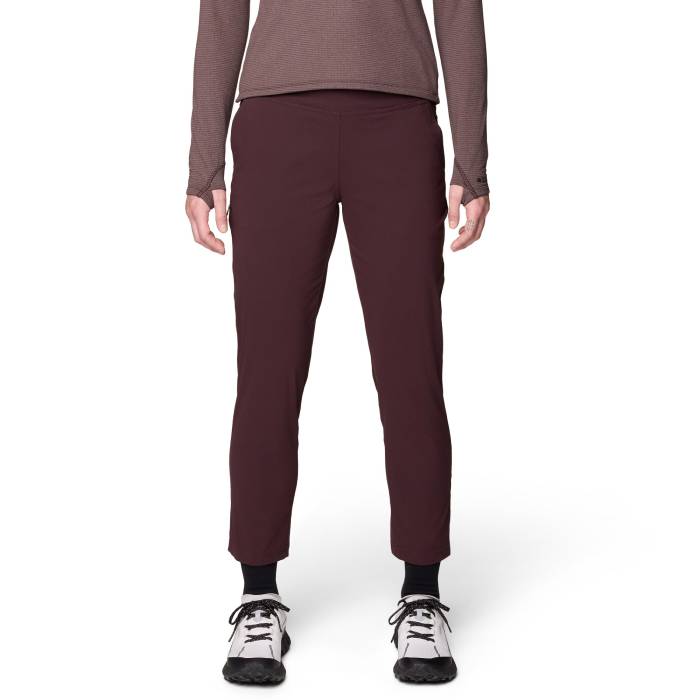
Mountain Hardwear Dynama Ankle
Best Ultralight Hiking Pants for Women
CleverHiker Rating: 3.9/5.0
Price: $99
Measured Weight: 7.2 oz.
Inseam: 28 in.
Fit: Tapered
Fabric: 94% nylon, 6% elastane
Pros
- Soft, lightweight fabric feels great
- Flattering, stylish jogger cut
- Very comfortable for hiking or lounging
- Improved durability vs. past versions
- Quick drying after rain or creek crossings
Cons
- Minimal, shallow pockets
- Waist tie is not very functional
- Few features compared to competitors
- Not ideal for rugged terrain
The Mountain Hardwear Dynama Ankle is the lightest pant in our measured lineup and a strong option for hikers who prioritize low weight, comfort, and quick drying. At 7.2 ounces measured, it feels noticeably lighter and less substantial than traditional hiking pants, which is exactly the point for warm, mellow trips.
The fabric is soft enough for lounging and stretches easily during hiking or climbing. Our testing also found that it dries quickly after rain or water crossings, and the current version is more durable than earlier Dynama pants we have used.
Features are intentionally minimal. The pockets are shallow, the waist tie does not add much security, and this is not the pant we would choose for bushwhacking or repeated contact with rough rock. The Freeflex, Gamma, or Halle all provide more protection.
The Dynama is best for hikers who want one lightweight pair for town, travel, and maintained trails. The Trailmade offers more technical hiking features at a lower price, while the Trekkie North has better storage and a more substantial feel. For ultralight comfort and fast drying, however, the Dynama occupies a useful niche.

The North Face Aphrodite 2.0
Best Everyday Activewear Pants
CleverHiker Rating: 3.9/5.0
Price: $95
Measured Weight: 8.6 oz.
Inseam: 29 in.
Fit: Straight Leg
Fabric: 95% nylon, 5% elastane
Pros
- Above average comfort
- Less expensive
- Easy to adjust the length with an ankle cinch
- Stretchy fabric is easy to move in
- Lightweight
- Inclusive sizing
Cons
- Minimal pockets
- Not as durable
The North Face Aphrodite 2.0 is a comfort-first hiking pant that bridges the gap between trail clothing and everyday activewear. The soft fabric and loose fit feel close to sweatpants, which makes these an easy choice for mellow hikes, travel days, dog walks, and casual use around town.
Compared with most jogger-style pants, the Aphrodite has slightly more useful storage and enough durability for ordinary maintained trails. Adjustable ankle cinches add flexibility, and the stretch fabric makes walking and lounging equally comfortable.
The compromise is technical performance. Pocket capacity is limited compared with traditional hiking pants, and we saw pilling and loose threads that make the Aphrodite a poor choice for brushy off-trail routes. Weather resistance is also modest, so wet conditions call for rain pants.
Choose the Aphrodite if you want comfort and everyday versatility first, with enough trail performance for typical hikes. The Trekkie North has better pockets and stronger durability, while the Dynama is lighter and dries faster. The Aphrodite is the most appealing when hiking is only one of several ways you plan to use the pants.
Product Comparison Table
| oSort | Product | Price | Measured Weight | Inseam | Fit | Fabric | Comfort | Durability | Breathability | Features | Weather Resistance | 0 |
Arc’teryx Gamma Pant View at REI View at Amazon 
|
$200 | 10.4 oz. | 31 in. | Fitted | Nylon/spandex weave | 4.2 | 5.0 | 4.7 | 3.9 | 4.9 | 1 |
KUHL Freeflex Roll-Up View at REI View at KUHL
|
$109 | 11.9 oz. | 26.5 in. | Relaxed | Polyester | 4.3 | 4.8 | 4.4 | 4.9 | 3.9 | 2 |
Duluth Dry on the Fly View at Duluth |
$90 | 12 oz. | 27.5 in. | Bootcut | 97% nylon, 3% spandex | 3.9 | 4.9 | 4.4 | 5.0 | 4.2 | 3 |
prAna Halle Straight View at REI View at prAna |
$98 | 12.2 oz. | 30 in. | Straight Leg | 97% nylon, 3% elastane | 4.0 | 4.6 | 4.4 | 4.3 | 4.5 | 4 |
REI Sahara Convertible View at REI
|
$90 | 12.7 oz. | 29 in. | Relaxed | 96% nylon, 4% spandex | 3.7 | 4.5 | 4.9 | 4.8 | 4.6 | 5 |
Outdoor Research Ferrosi View at REI View at Amazon
|
$110 | 9 oz. | 30.5 in. | Straight Leg | 86% ripstop nylon, 14% spandex | 4.5 | 3.8 | 4.4 | 4.5 | 4.8 | 6 |
REI Trailmade View at REI 
|
$80 | 8.1 oz. | 29.25 in. | Relaxed | 94% nylon, 6% spandex | 4.4 | 3.8 | 4.9 | 4.7 | 4.3 | 7 |
Baleaf Laureate View at Amazon
|
$39 | 8.1 oz. | 30 in. | Relaxed | 90% polyester, 10% spandex | 4.1 | 4.6 | 4.5 | 4.2 | 4.8 | 8 |
Athleta Trekkie North Jogger View at Athleta |
$99 | 9.5 oz. | 29.3 in. | Straight | 95% nylon, 5% spandex | 4.9 | 4.3 | 3.1 | 3.9 | 3.6 | 9 |
Fjallraven Abisko Trekking Tights HD View at Amazon View at Backcountry |
$185 | 9.3 oz. | 32 in. | Next to Skin, High Waist | 71% polyester, 29% elastane; Cordura in reinforced areas | 3.9 | 4.1 | 4.1 | 3.7 | 3.5 | 10 |
Mountain Hardwear Dynama Ankle View at REI View at Mountain Hardwear |
$99 | 7.2 oz. | 28 in. | Tapered | 94% nylon, 6% elastane | 4.6 | 4.5 | 4.7 | 3.5 | 4.1 | 11 |
The North Face Aphrodite 2.0 View at REI View at Amazon |
$95 | 8.6 oz. | 29 in. | Straight Leg | 95% nylon, 5% elastane | 4.8 | 3.8 | 4.1 | 4.1 | 3.7 |
|---|

Analysis & Results
What Women’s Hiking Pants Offer the Best Value?
Value is not simply the lowest price. The strongest value picks combine enough comfort, durability, breathability, weather performance, and useful features to justify what you pay and how often you can use them.
The Baleaf Laureate is the clearest price outlier at $39, yet it performed respectably enough in durability, breathability, and comfort that it never felt like a throwaway budget option. It is the best choice for shoppers trying to minimize cost, as long as wet-weather performance and premium pockets are not priorities.
The REI Trailmade costs more but offers a more refined hiking-specific package, including articulated knees, quick drying, low measured weight, and broad sizing. Its lower durability keeps it from being the obvious choice for rough routes, but on maintained trails it delivers strong day-to-day performance for $80.
The KUHL Freeflex represents a different kind of value. It is not cheap, but its durability, storage, and broad usefulness mean frequent hikers can reasonably expect to use it across many trips and seasons. The Arc’teryx Gamma is harder to call a value for average hikers, but for people who repeatedly expose pants to brush, rock, wind, and light precipitation, paying more for its protective construction can make sense.
Which Women’s Hiking Pants Are the Most Comfortable & Mobile?
Comfort in this category depends on both how the fabric feels and how freely the pants move while climbing, stepping over obstacles, or hiking uphill. Soft joggers generally feel best against the skin, while technical pants often trade some softness for structure and protection.
The North Face Aphrodite 2.0, Athleta Trekkie North Jogger, and Mountain Hardwear Dynama Ankle form the comfort-first group. They use soft, stretchy fabrics and relaxed or tapered cuts that make them pleasant for long periods of casual wear as well as hiking.
The Ferrosi is the strongest technical option for mobility. Its high-stretch fabric performed well on steep terrain without the drag we felt from more structured designs. The Freeflex also moves well thanks to articulated knees, while the Gamma is impressively mobile for a protective softshell.
Traditional pants such as the Halle and Dry on the Fly feel more substantial. They remain comfortable enough for full trail days, but hikers who are sensitive to fabric resistance or prioritize a barely-there feel will notice the difference.
Which Women’s Hiking Pants Are the Most Durable?
The Arc’teryx Gamma is the durability benchmark in this lineup. Repeated bushwhacking and contact with rough vegetation left our pair with almost no visible wear, making it the obvious first choice for hikers who spend significant time off trail or on badly overgrown routes.
The Duluth Dry on the Fly and KUHL Freeflex are close behind for different reasons. Duluth uses a sturdy nylon fabric that tolerates everyday wear and backcountry use, while the Freeflex survived difficult off-trail travel in Alaska and Arizona with minimal damage. The Halle also performed well around brush and sharp rock.
The Baleaf Laureate deserves special mention because its durability is unusually strong for the price. By contrast, the Ferrosi resists tearing but pills in abrasive vegetation, and the Trailmade trades toughness for low weight. Comfort-first pants such as the Aphrodite show wear sooner when pushed into rough conditions.
Which Women’s Hiking Pants Are the Most Breathable?
The REI Sahara Convertible and REI Trailmade are the strongest warm-weather choices in the current field. Both dry quickly, and the Sahara adds the ability to remove the lower legs entirely when temperatures rise.
The Gamma also breathes surprisingly well considering its softshell construction. That makes it more versatile than many weather-resistant pants, though it still feels more substantial than the ultralight Trailmade or Dynama.
The Freeflex and Ferrosi strike a useful middle ground, moving sweat well while retaining enough fabric to feel protective. The Baleaf’s mesh pocket liners also add ventilation at a very low price.
Slow-drying joggers are the main caution. The Athleta Trekkie is extremely comfortable when dry, but it holds onto moisture much longer than our leaders. That matters most on multi-day trips where wet clothing may not fully dry overnight.
Which Women’s Hiking Pants Have the Best Features?
The Duluth Dry on the Fly leads the category for storage. Its large, secure pockets hold more than the rest of the field, and belt loops plus roll-up hems make the pants useful for both trail and everyday use.
The Freeflex is another feature-rich option with six practical pockets, a waist adjustment, belt loops, and roll-up capability. The Sahara stands out for convertible legs, while still providing enough pockets to carry a phone and other small essentials.
The Trailmade offers a simpler but well-balanced feature set for the price. Athleta’s Trekkie deserves credit for bringing genuinely useful zippered pockets to a jogger, which is uncommon in comfort-first designs.
Minimalist pants such as the Dynama intentionally give up storage and technical hardware in exchange for lower weight or a cleaner casual feel. That can be a reasonable trade, but hikers who routinely carry a phone, map, snacks, or other gear in their clothing will be happier with Duluth, Freeflex, or Sahara.
Which Women’s Hiking Pants Handle Weather Best?
The Arc’teryx Gamma offers the strongest overall protection from wind and light precipitation. Its softshell fabric resists moisture longer than most pants here and provides useful wind resistance without feeling like a rain shell.
The Outdoor Research Ferrosi is another strong wet-weather option for lighter-duty hiking. Its fabric beads water well and dries relatively quickly, though pilling in brush limits how aggressively we would use it off trail. The REI Sahara combines good water repellency with excellent drying speed, making it particularly practical when conditions change throughout the day.
The Halle provides solid light-weather performance through its DWR finish, while the Trailmade sits in the middle of the pack. The Freeflex, Athleta, Baleaf, and Aphrodite are weaker choices when rain is likely, and the Abisko tights absorb enough moisture that we would be cautious in cold, wet conditions.

How to Choose Hiking Pants
What Fit Should I Choose for Hiking Pants?
Fit affects both comfort and mobility. Relaxed and jogger-style pants usually leave more room through the seat and thighs, which can make stepping up, scrambling, and sitting more comfortable, but loose fabric can also snag or allow loaded pockets to swing.
Straight or fitted cuts feel cleaner and often use less fabric, but they need enough stretch, articulated knees, or a gusseted crotch to prevent restriction. The best fit is one that stays in place under a backpack hipbelt, does not bind when you lift your knees, and gives you enough room for your normal hiking stride.

How Durable Do My Hiking Pants Need to Be?
Durability matters most when your trails include brush, blowdowns, scrambling, rough rock, or off-trail travel. Heavier nylon, reinforced panels, and tightly woven softshell fabrics generally tolerate abrasion better than very light or exceptionally soft materials.
For well-maintained trails, extreme toughness is less important, and lighter fabrics can be more comfortable in hot weather. Think honestly about where you hike most often: buying the burliest pants available adds weight and cost if you rarely expose them to abrasion, while ultralight pants can become frustrating if they constantly snag.

How Much Weather Resistance Do I Need?
Most hiking pants are water-resistant, not waterproof. A DWR finish or tightly woven fabric can shed drizzle, dew, and brief splashes, but sustained rain usually requires dedicated rain pants.
Weather resistance is most useful when paired with reasonable drying speed. Pants that bead water but take a long time to dry can still be uncomfortable after a creek crossing or prolonged rain. For shoulder-season trips, consider wind resistance too, since a slightly denser fabric can feel much warmer on exposed ridges.

Should I Choose Convertible, Roll-Up, or Standard Hiking Pants?
Convertible pants offer the widest temperature range because the lower legs zip off entirely. They are excellent for hot afternoons, deep creek crossings, and trips where you want both shorts and pants without packing both, but the zipper seam can feel bulky and the styling is usually more technical.
Roll-up pants are faster to adjust and avoid a zipper around the thigh. Standard pants are the simplest and often the most comfortable, especially when paired with ankle cinches or stretch fabric. Choose based on whether you will actually use the conversion feature rather than assuming more features are automatically better.
What Pockets Are Most Useful on Hiking Pants?
Pocket placement matters as much as pocket count. Hip pockets are easy to reach while wearing a backpack, but they must be deep enough that a phone does not interfere with your stride or fall out. Leg pockets can be excellent for maps and electronics if they hold objects close to the thigh.
Back pockets are usually less useful under a pack hipbelt. Zippers or secure closures are valuable for expensive items, but they can create pressure points if placed directly under backpack straps. Think about what you actually carry in your pants rather than simply choosing the pair with the most pockets.

What Fabric Works Best for Hiking Pants?
Nylon is common because it offers good abrasion resistance for its weight. Polyester can feel softer and dry well, while elastane or spandex adds stretch for mobility. Softshell fabrics use denser weaves and stretch to improve wind and weather protection.
There is no single ideal blend. Hot-weather hikers often benefit from thin, fast-drying fabrics, while bushwhackers and shoulder-season hikers may prefer heavier materials. The best fabric is the one that balances comfort, durability, drying speed, and protection for your typical conditions.
How Much Should I Spend on Hiking Pants?
Good hiking pants exist across a wide price range. Spending more usually buys better fabrics, stronger construction, more refined fit, or specialized weather performance, but a high price does not automatically make a pant better for casual trails.
Budget shoppers should focus on the basics: secure fit, useful mobility, acceptable durability, and enough pockets for their needs. Frequent hikers may get better long-term value from a more durable pair that survives years of use. The key is paying for performance you will actually notice rather than premium features that do not match your hiking.
Why Trust CleverHiker
Lead tester Bailey Bremner has spent nearly 700 nights outside and logged around 9,000 trail miles across the United States. Her experience includes major thru-hikes such as the Colorado Trail and Continental Divide Trail, along with rugged off-trail routes including the Western Wanderer Route, Columbine Route, and San Luis Loop.
That background is especially relevant to hiking pants because Bailey regularly travels through brush, blowdowns, rock, desert vegetation, alpine weather, and long stretches of remote trail where clothing failures are more than a minor inconvenience. She has tested this category in environments ranging from the San Juan Mountains and Arizona Sky Islands to Alaska, using the pants for backpacking, day hiking, travel, and daily wear.
Our recommendations combine that field experience with controlled side-by-side testing so that comfort, durability, drying, storage, and weather protection are compared consistently rather than judged from a single outing.

Testing Methodology
How Do We Test Comfort & Mobility?
We judge comfort by combining long-duration field use with a repeatable mobility comparison. Each pant is worn on real hikes and backpacking trips with a loaded pack so we can notice waistband pressure, fabric feel, zipper placement, binding, and how the cut behaves over a full day.
For mobility, we lift each leg until the fabric begins to resist movement and compare how freely different cuts allow the knee and hip to rise. Stretch, articulated knees, gussets, and overall patterning all influence the result. We then use field experience to check whether the controlled test matches how the pants actually feel while climbing, stepping over logs, and hiking uphill.
How Do We Test Durability?
We evaluate durability through both repeated trail use and controlled abrasion. In the field, we pay attention to wear from pack hipbelts, cuffs rubbing against rock and mud, brush, blowdowns, scrambling, and ordinary washing and use.
To make comparisons fairer across pants tested on different trips, we also rub sections of fabric against rough surfaces such as bark and pokey branches. We look for pilling, thread pulls, thinning, snags, and holes. Reinforced panels are considered in context: they can protect high-wear areas even when the main fabric is lighter or softer.
How Do We Test Breathability?
Breathability includes both airflow and how quickly a pant gets rid of moisture. We wear each pair in warm conditions and during sustained effort, noting whether the fabric feels clammy or traps heat.
We also run a side-by-side drying test by soaking the lower portion of each pant and timing how long it takes to dry under the same environmental conditions. This gives us a consistent comparison while field use reveals how ventilation features, fabric thickness, roll-up cuffs, and convertible legs affect comfort in practice.
How Do We Assess Features?
We focus on features that materially improve hiking rather than counting every zipper or adjustment equally. Pockets receive the most attention because they must be large, secure, and accessible while wearing a backpack.
We test pocket usability with a modern smartphone and movement, then consider waist adjustments, belt loops, ankle cinches, roll-up systems, convertible legs, and other details. A feature earns credit when it solves a real trail problem without creating a new annoyance such as pressure, swinging weight, or complicated operation.
How Do We Test Weather Resistance?
We compare weather resistance with both field use and a controlled spray test. Each pant is misted from a consistent distance while we count how long water continues to bead before soaking through the outer fabric.
We combine that result with experience in rain, wet vegetation, creek crossings, wind, and damp conditions. This metric is about useful resistance, not waterproofing: hiking pants are not substitutes for rain shells in sustained storms. We also consider drying behavior because a pant that wets out quickly can still be workable if it sheds moisture fast afterward.

Conclusion
The best hiking pants balance mobility, durability, breathability, storage, and enough weather protection for the conditions you actually hike in. Technical softshells are worth the extra cost for rough terrain and exposed weather, while lighter pants and joggers can be better choices for maintained trails, hot climates, and everyday use.
Fit and pocket design matter more than they seem on paper, especially once a backpack is loaded and you are moving for hours. Choose the pair that solves your most common trail problems rather than the one with the longest feature list.