

Bottom Line
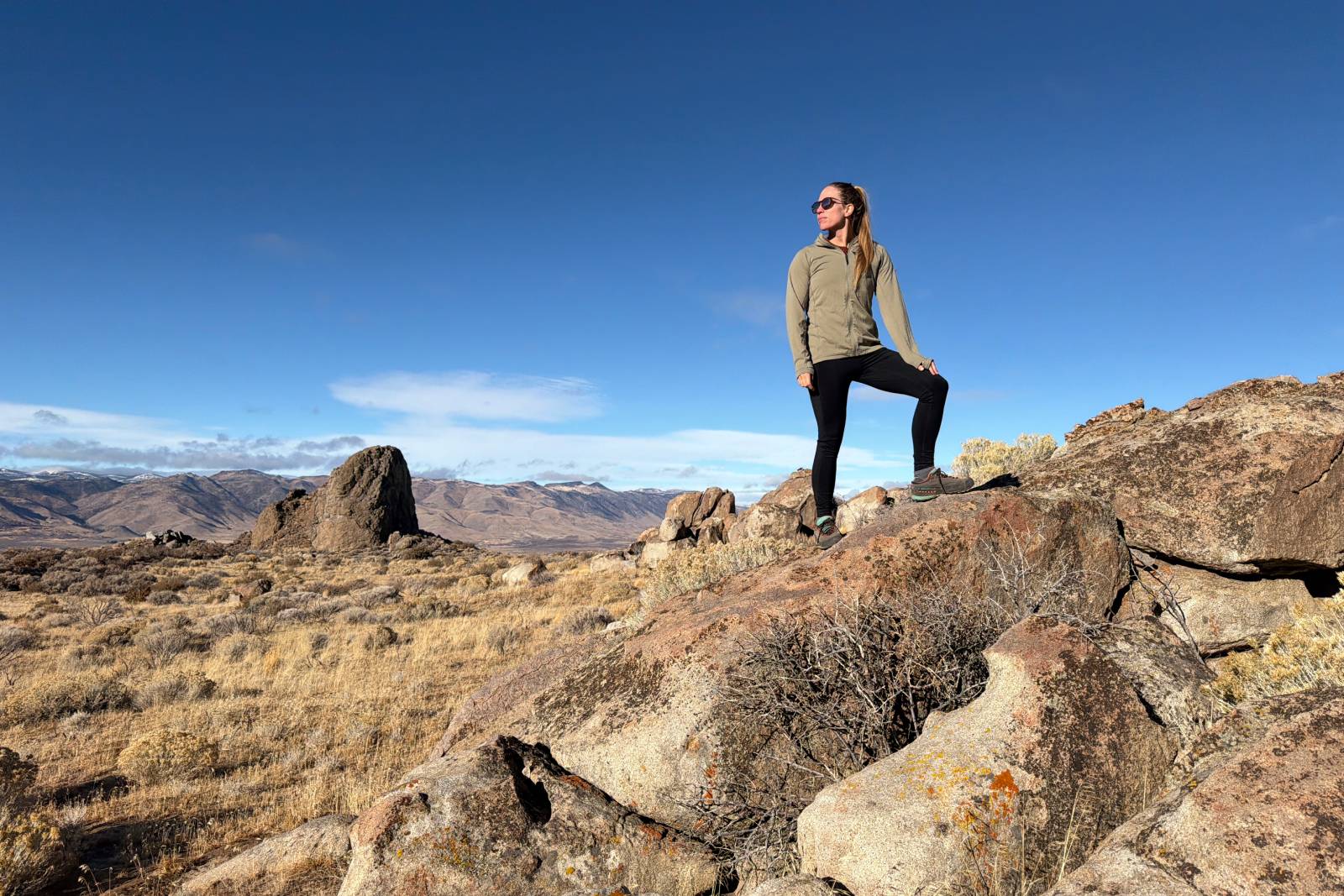
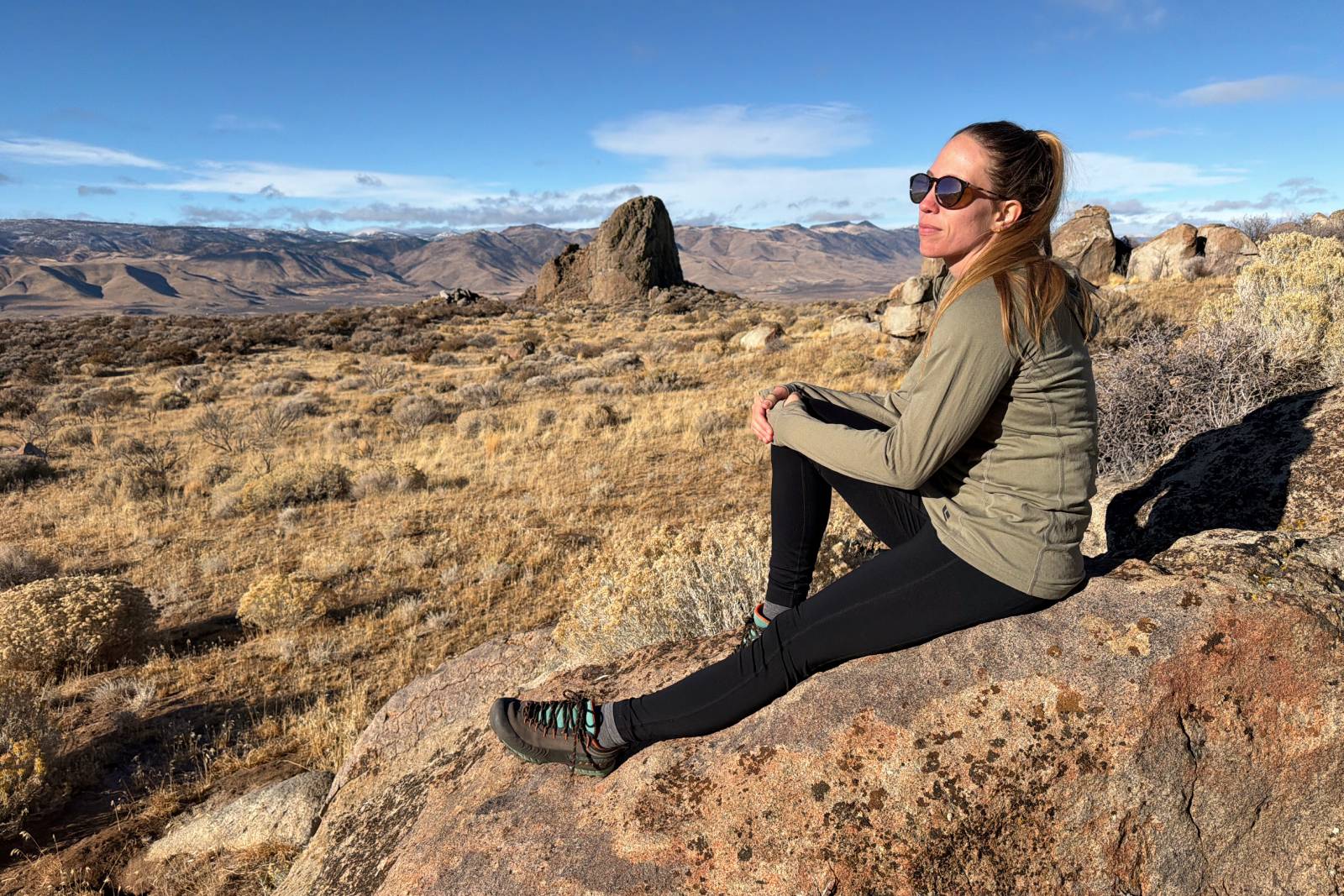
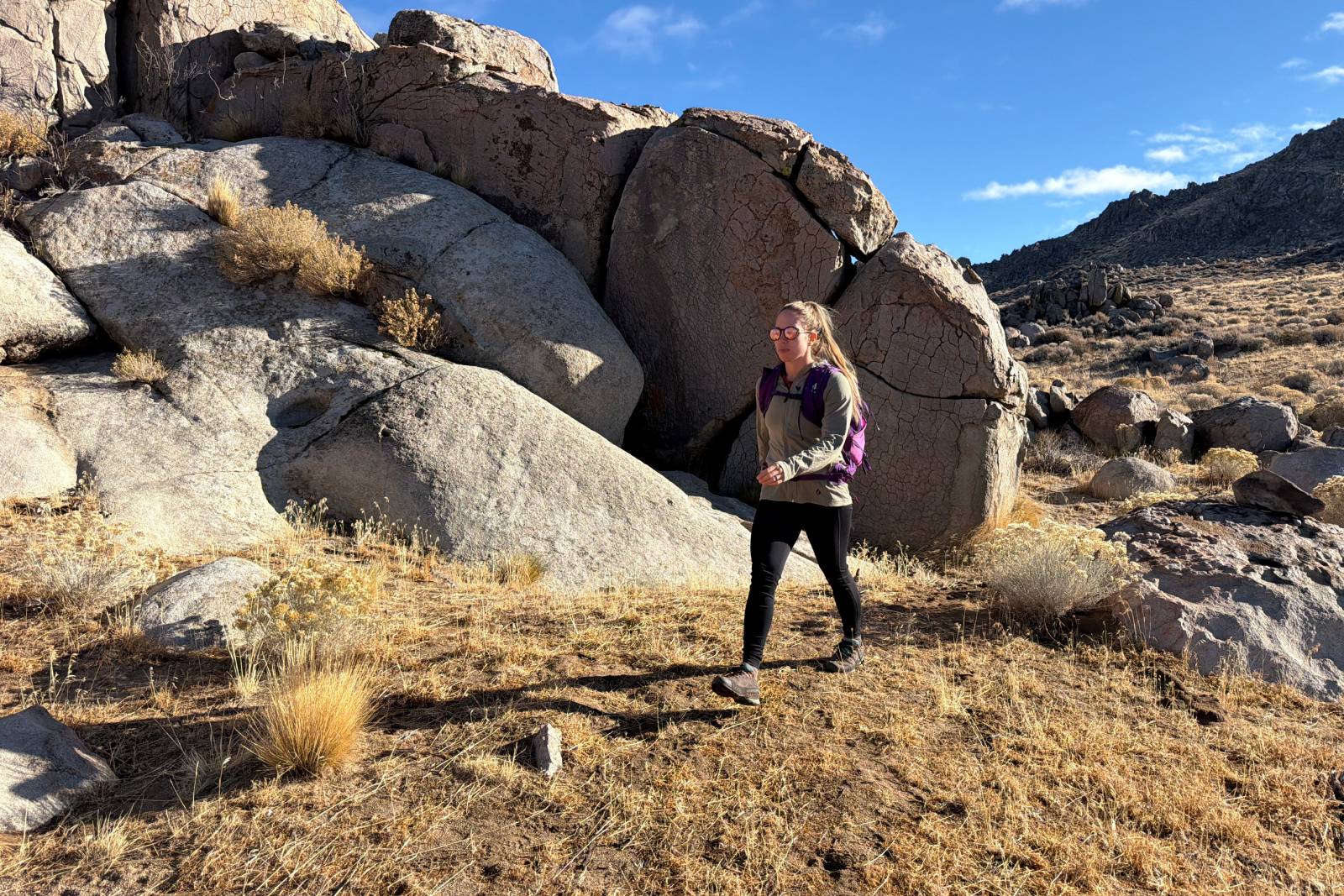
The Black Diamond Coefficient Hoody (men’s / women’s) is a high-output specialist. On an overcast, 45-degree-Fahrenheit hike on the Sierra Front Trail in Reno, we climbed steadily in the Coefficient over a tank top without needing to unzip it to cool off. The gridded fleece released heat better than both the Patagonia Micro D Pullover or Outdoor Research Vigor Plus Hoodie we tested alongside it. If you run warm or spend most of the day moving, that breathable construction is the reason to buy it.
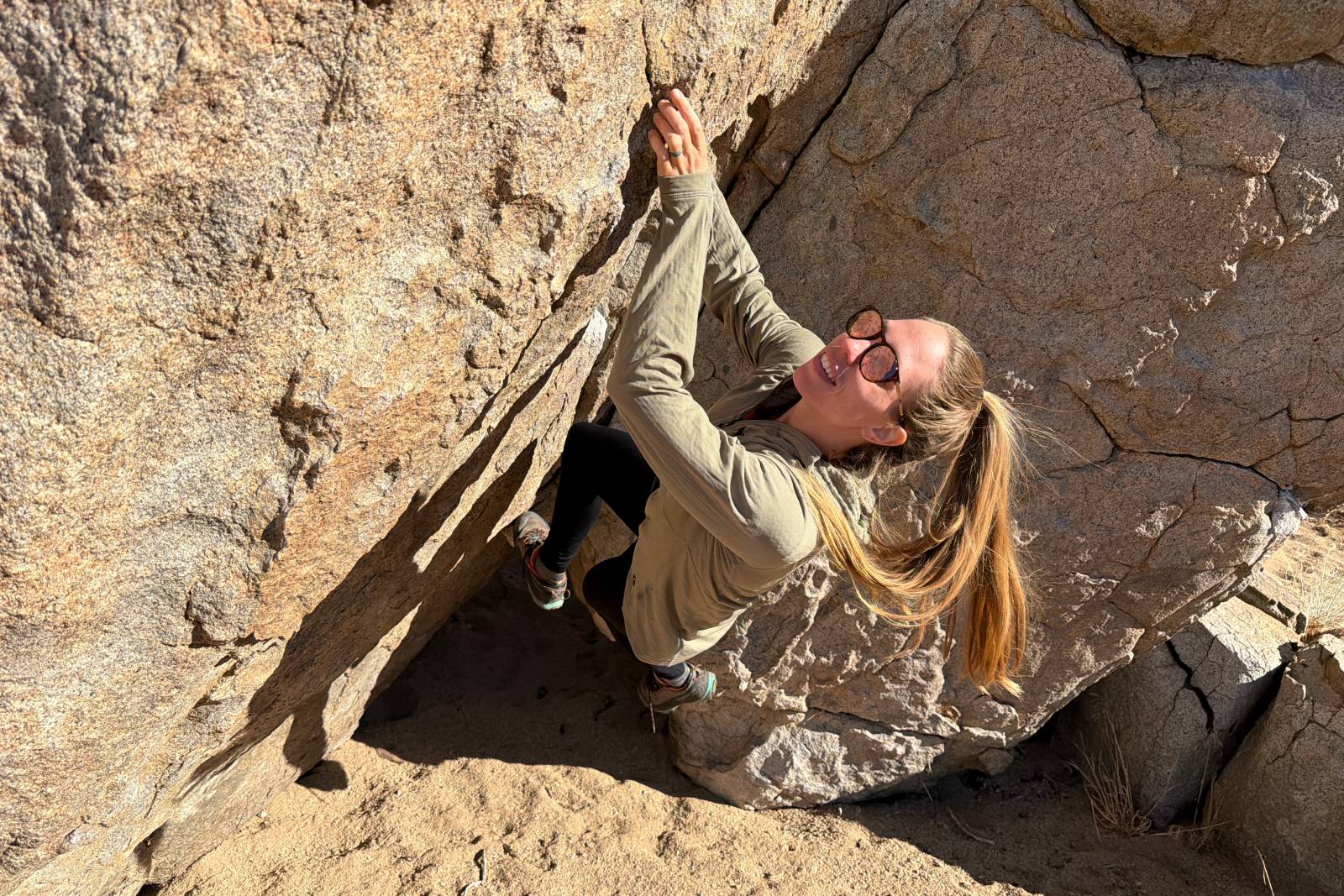
It is also unusually easy to carry. Our women’s medium weighed 10.1 ounces on our scale – much less than the manufacturer’s listed figure – and we compressed it small enough to fit in one hand. The close-fitting hood slipped beneath a climbing helmet, the stretchy fabric moved comfortably while bouldering, and we saw no wear after climbing, about 10 miles of hiking, and five wash cycles.
The Coefficient does give up some everyday conveniences and cold-weather protection to stay airy. We felt a little chilly in shaded, 45-degree conditions as wind passed through the fabric, and the only pocket sits on the chest, where a phone felt awkward and heavy. Our medium was also looser and longer than we expected for an athletic fleece, so we’d try our normal small next time. If you’re looking for something different, our best fleece jackets guide runs the gamut from cozy and casual to technical and winter-ready.
How We Tested
We wore the women’s Coefficient Hoody for 10+ miles of hiking, including a five-mile outing with approximately 1,000 feet of climbing on the Sierra Front Trail in Reno, Nevada. We also wore it as a midlayer during an early-season ski day at Mount Rose and as an outer layer while bouldering in California.
As part of our comparison process, we washed the fleece five times and weighed it on our scale. We also compared its packed size with the Patagonia Micro D and Outdoor Research Vigor Plus and inspected it for snags, pilling, and seam damage after use.
Quick Specs
- Manufacturer Weight: 1 lb. 3.3 oz.
- Materials: 51% polyester, 36% nylon, 13% elastane
- Hood: Yes, low-profile and under-the-helmet-compatible
- Pockets: One zippered chest pocket; no hand pockets
- Closure: Full-length main zipper
- Tested Size & Fit: Women’s medium; long and loose for our tester who usually wears a size small
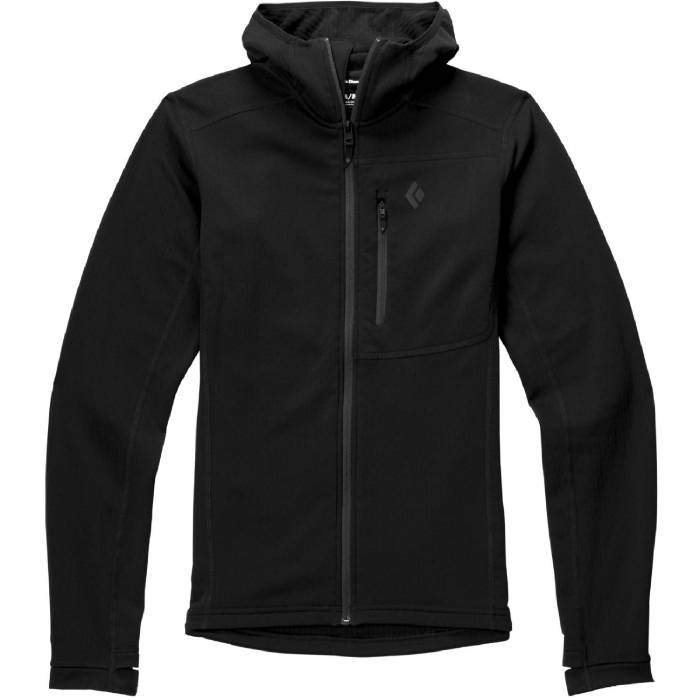
Black Diamond Coefficient Hoody
Breathable Fleece for High-Output Hikes
CleverHiker Rating: 4.3/5.0
Price: $199
Measured Weight: 10.1 oz.(women’s medium)
Pros
- Excellent breathability
- Very compressible
- Comfortable during exertion
- Under-the-helmet hood
- Thin fabric held up surprisingly well to rough use
Cons
- Wind penetrates easily
- Limited stationary warmth
- No hand pockets
- Chest storage feels awkward
Warmth
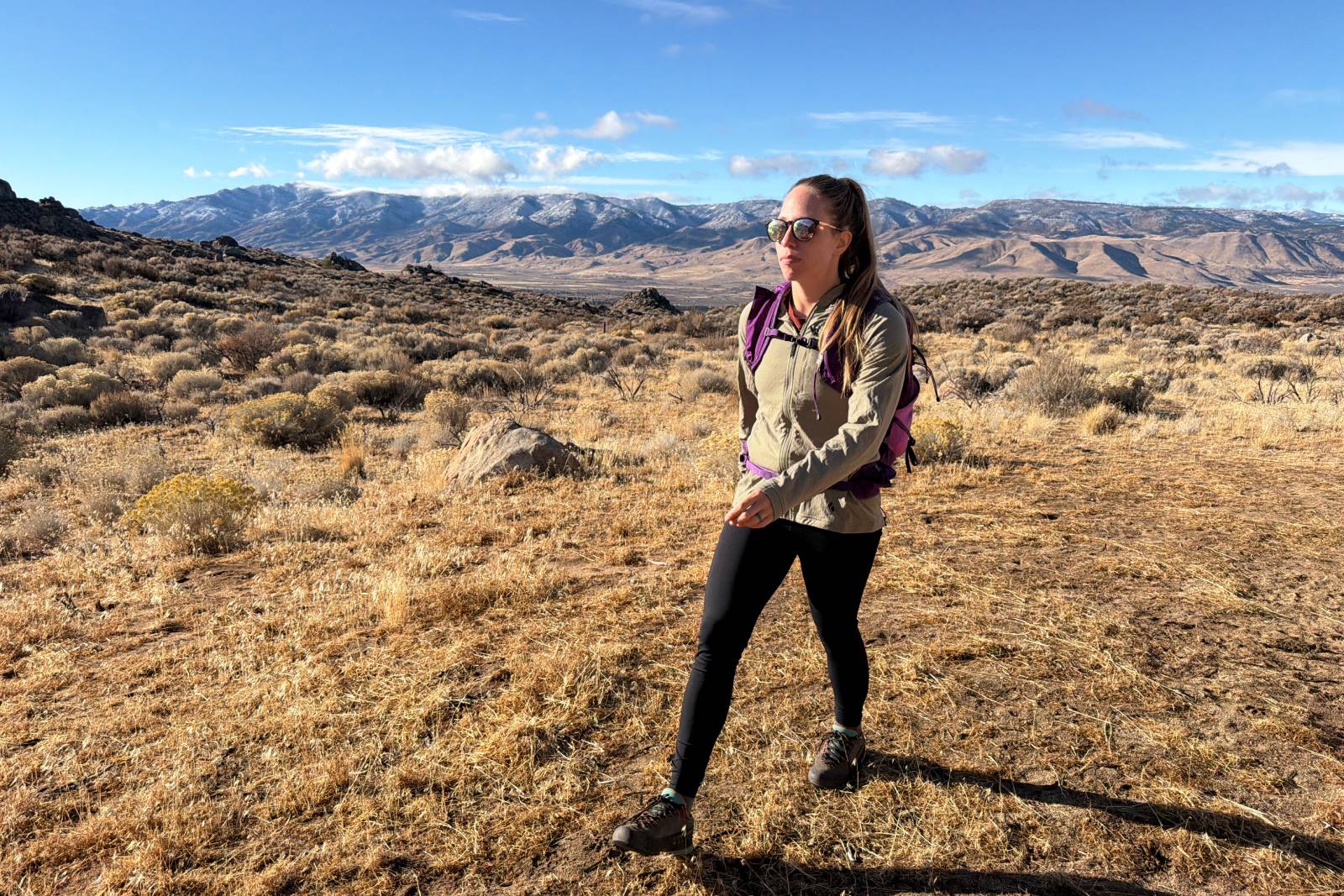
The Coefficient was the least warm of the three fleeces in our testing, which is part of its appeal as an active midlayer. The gridded fabric traps some warmth next to the skin while still allowing air to move through it. When we hiked uphill in 45 degrees without wind, the balance felt just right. We kept the jacket fully zipped throughout a steady climb despite generating plenty of body heat.
When we stopped in the shade on another 45-degree day, the same permeability felt less comfortable. Air passed through the fleece more readily than through the Patagonia Micro D, and it was markedly less protective than the thick Outdoor Research Vigor Plus. We’d use it to manage warmth while moving, then add a wind-blocking outer layer when the pace slows or the temperature drops. In other words, it is not our first choice for standing around at a chilly belay without another layer.
Warmth Score: 4.0 / 5.0
Comfort
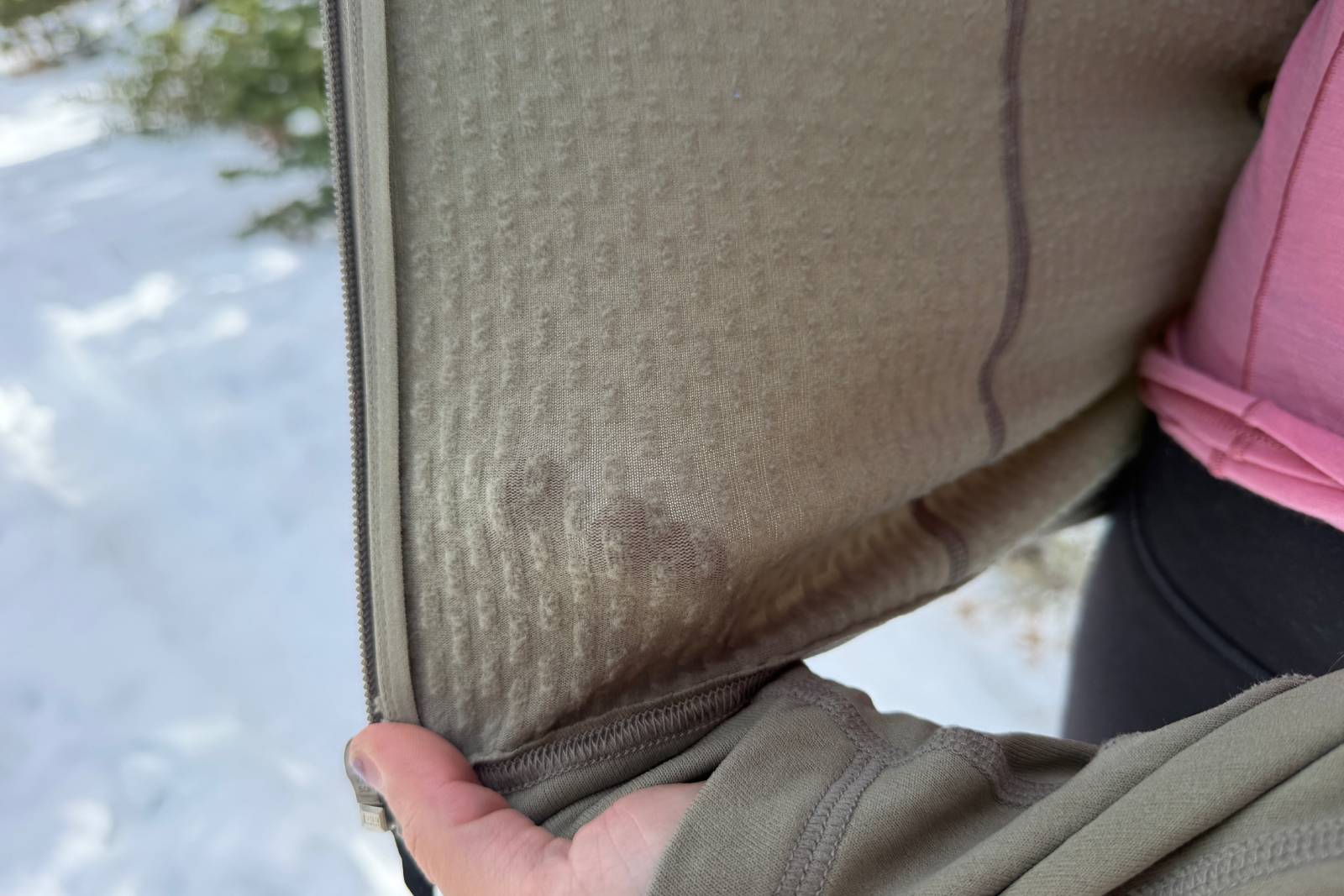
The Coefficient felt light and flexible while hiking and bouldering, and we appreciated how its airy interior prevented the clammy feel that can accompany a thicker fleece. It kept us more comfortable in direct sun than the Micro D or Vigor Plus. We didn’t experience any seam rubbing, riding up, or restriction during testing.
Sizing was less dialed-in. We usually wear a size small but tested a women’s medium, and the Coefficient had a noticeably long, roomy fit for something designed as a slim alpine midlayer. The length worked nicely beneath a backpack, but we would opt for our regular size if we wanted to slip a close-cut shell over it. The lightweight, airy feel offers a different kind of comfort compared to the Micro D’s plush, casual softness.
Comfort Score: 4.6 / 5.0
Durability
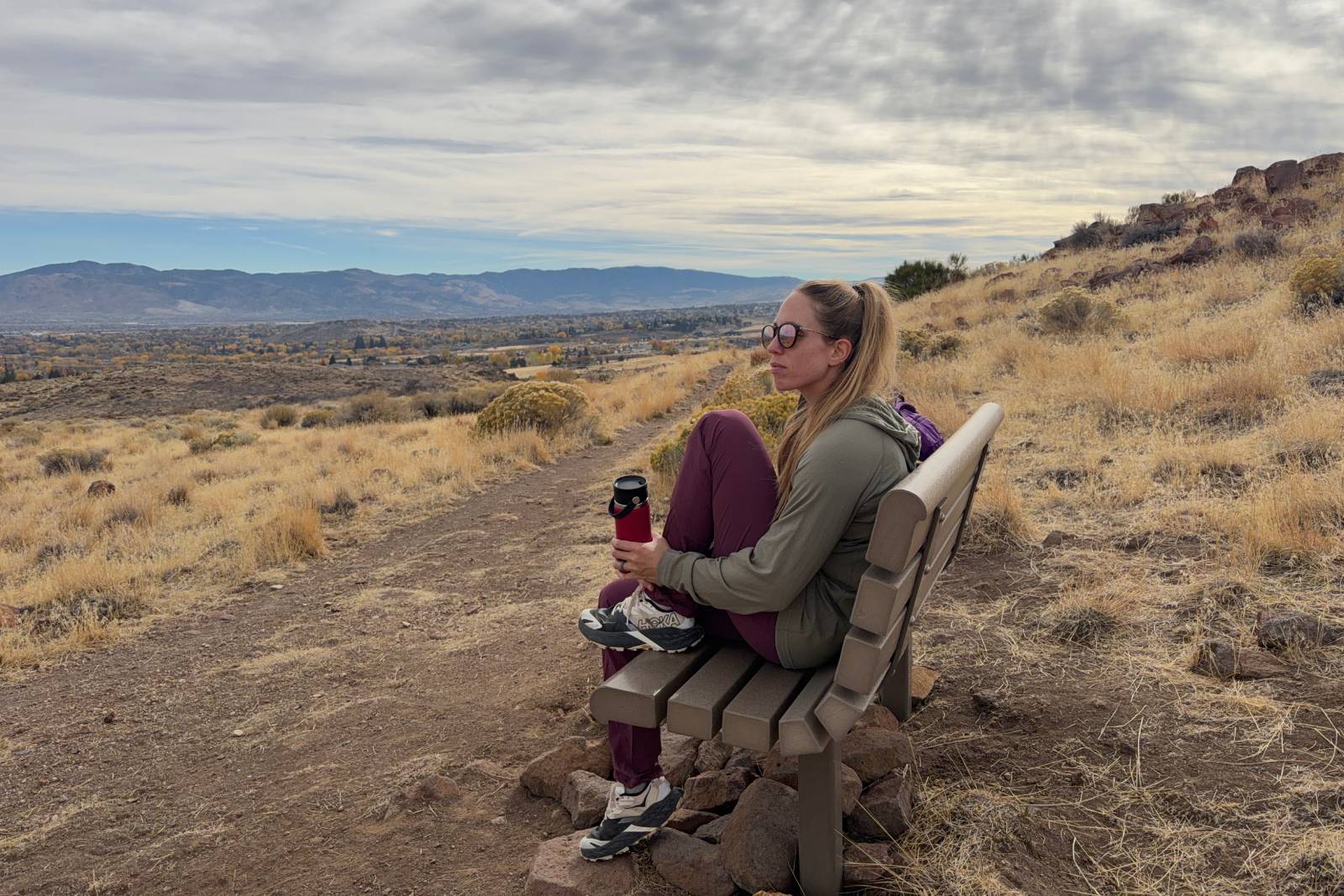
Despite its thin hand feel, the Coefficient withstood our testing without visible damage. We wore it while bouldering on rough rock, hiked at least 10 miles, and ran it through five wash cycles. We did not find pilling, snags, or stretched seams afterward, which is reassuring for such a light fleece.
We were still more cautious with it around sharp rock and equipment than with the Vigor Plus. The Coefficient’s open, thin fabric seems easier to catch on branches or abrasive edges than the Vigor Plus’s tough outer face. At the other end of the spectrum, the Micro D suffered pilling after contact with Velcro. If you stick to its intended use as a midlayer (with occasional standalone wear), the Coefficient should have a long and healthy lifespan.
Durability Score: 4.0 / 5.0
Weight & Packed Size
The Coefficient squeezed into the smallest bundle of the three fleeces we tested, fitting into one hand when compressed. Its soft, flexible, gridded construction made it easy to tuck around other equipment, and we could imagine stashing it in a stretchy pack side pocket. The Patagonia Micro D weighed less at 6.5 ounces but remained fluffier and larger when compressed, while the Vigor Plus occupied roughly twice the Coefficient’s packed volume.
Our women’s medium weighed in at 10.1 ounces, which is considerably below Black Diamond’s published 1-pound-3.3-ounce figure. In use, it felt much closer to the Patagonia Micro D Pullover (6.5 ounces) than the Outdoor Research Vigor Plus Hoodie (1 pound, 0.9 ounces), which aligns with our scale reading. Combined with its small packed size, this makes the Coefficient an appealing fleece to throw in your pack and don/doff as conditions change.
Weight & Packed Size Score: 4.6 / 5.0

Features
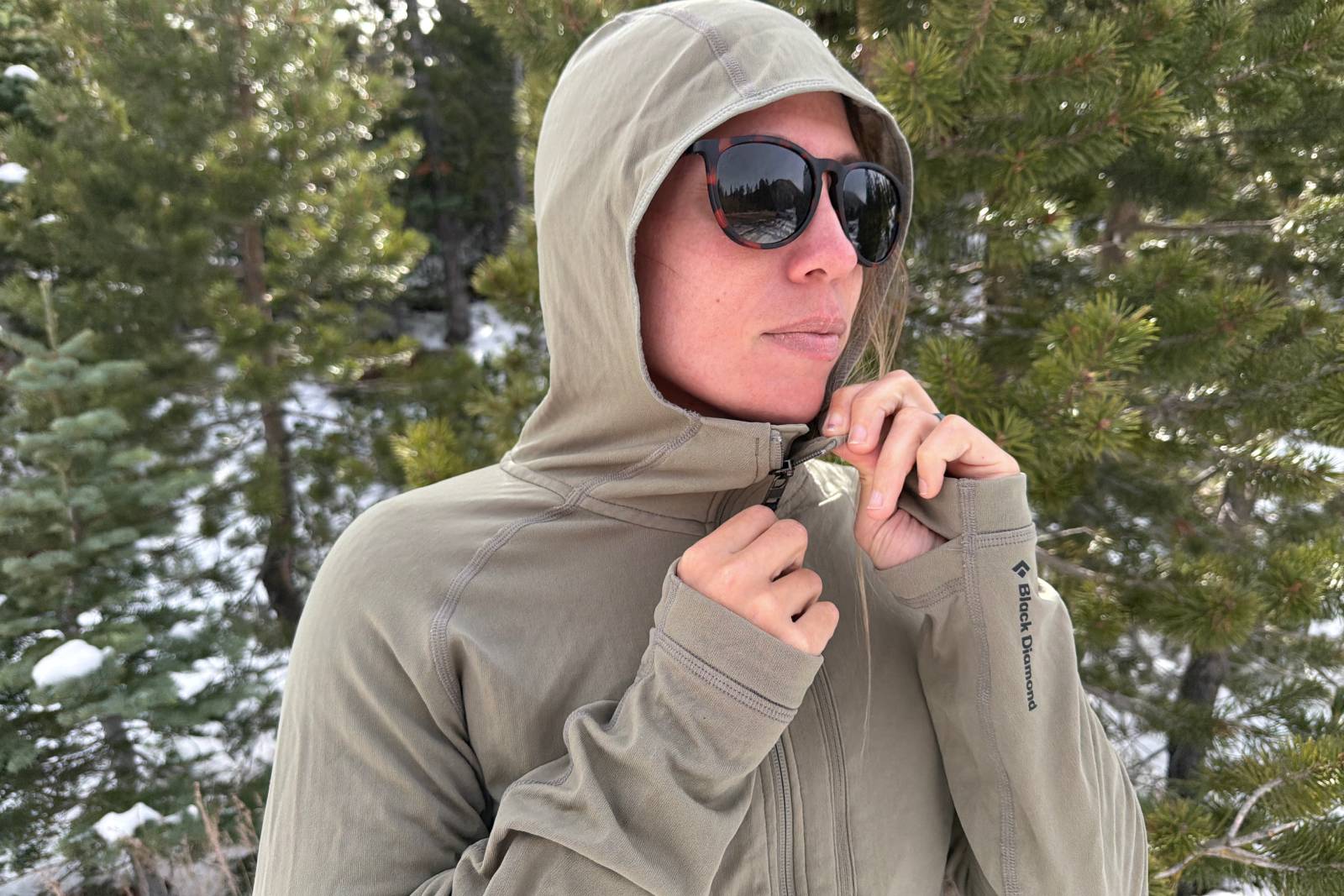
The low-profile hood is very functional. We wore it on its own and under a climbing helmet and found that it fit closely without getting in the way. The jacket’s long cut stayed in place under a hipbelt, and the front zipper made it easy to adjust coverage and ventilation. Black Diamond also included integrated thumb loops, which were comfortable and helpful for layering.
The large zippered chest pocket has a breathable mesh backing and room for a phone, but its location did not work well for us. Heavier items flopped around against our chest, and we repeatedly reached for hand pockets that weren’t there. To be fair, the jacket is intended to be worn as a midlayer, and it serves that purpose well. But for occasional standalone use, the storage layout is less than ideal.
Features Score: 4.4 / 5.0
Should You Buy The Black Diamond Coefficient Hoody?
We like the Coefficient for shoulder-season hikes, bouldering, and climbing when you want something that’s breathable but still traps some warmth when you stop moving. Its ability to dump heat kept us comfortable during sustained movement in 40-degree weather, and it packs down nicely for stashing in a pack. The close-fitting hood and well-executed thumb loops contribute to the performance slant.
If you primarily want a fleece for warmth at rest, consider a thicker option. We felt the Coefficient lose heat quickly in shaded, breezy conditions, and we didn’t appreciate having to store everything in one awkwardly positioned chest pocket. Go with your usual size if you want a more streamlined, technical fit; our medium (which was one size up from our usual choice) felt noticeably long and loose.
What Other Fleece Jackets Should You Consider?
Patagonia Micro D Pullover Review: The Micro D is the softer, warmer option for post-hike breaks, cool evenings, and everyday comfort. In our testing, it trapped heat more readily and felt plush against the skin, but that same quality made it less breathable while hiking uphill. It also lacks pockets and showed minor pilling after Velcro contact, whereas the Coefficient emerged from our testing without damage.
Outdoor Research Vigor Plus Hoodie Review: The Vigor Plus is better suited to genuinely cold, rugged conditions, with a more protective outer face, extra coverage, and several useful pockets. We appreciated it on a 35-degree hike and when bouldering on rough granite. The tradeoffs are considerably more weight, bulk, and a stiff collar that caused frequent discomfort.
Rab Ascendor Light Hoody Review: For a step down in price, the Ascendor Light is similarly technical and easy to move in. The slim-fitting design is lightweight, breathable, and does a good job retaining heat (though, like the Coefficient, it provides limited stationary warmth). Both jackets lack hand pockets, which is a reasonable omission for midlayer use.