

Bottom Line
The Mountain Hardware Stretch Ozonic rain pants (men’s / women’s) feel more like stretchy hiking clothing than a conventional rain shell. Its soft fabric, quiet movement, and adjustable leg ventilation make it one of the most comfortable choices for people who actually walk for hours in rain pants. We would choose it over a stiffer three-layer shell for trips where comfort and mobility dominate.
We tested the Ozonic through early-season mountain conditions in Colorado, then used shower and pooled-water trials. Water stayed out, even under direct spray and after extended standing water on the fabric. The combination of a comfortable waist, thigh pocket, and venting gives it far more everyday utility than a bare-bones ultralight layer.
The important compromise is abrasion risk. The flexible face can catch on branches, so we would not make this our first choice for brushy routes or harsh mountaineering. At $175, its value lies in how pleasant it is to wear. Browse our best rain pants guide for alternatives.
How We Tested
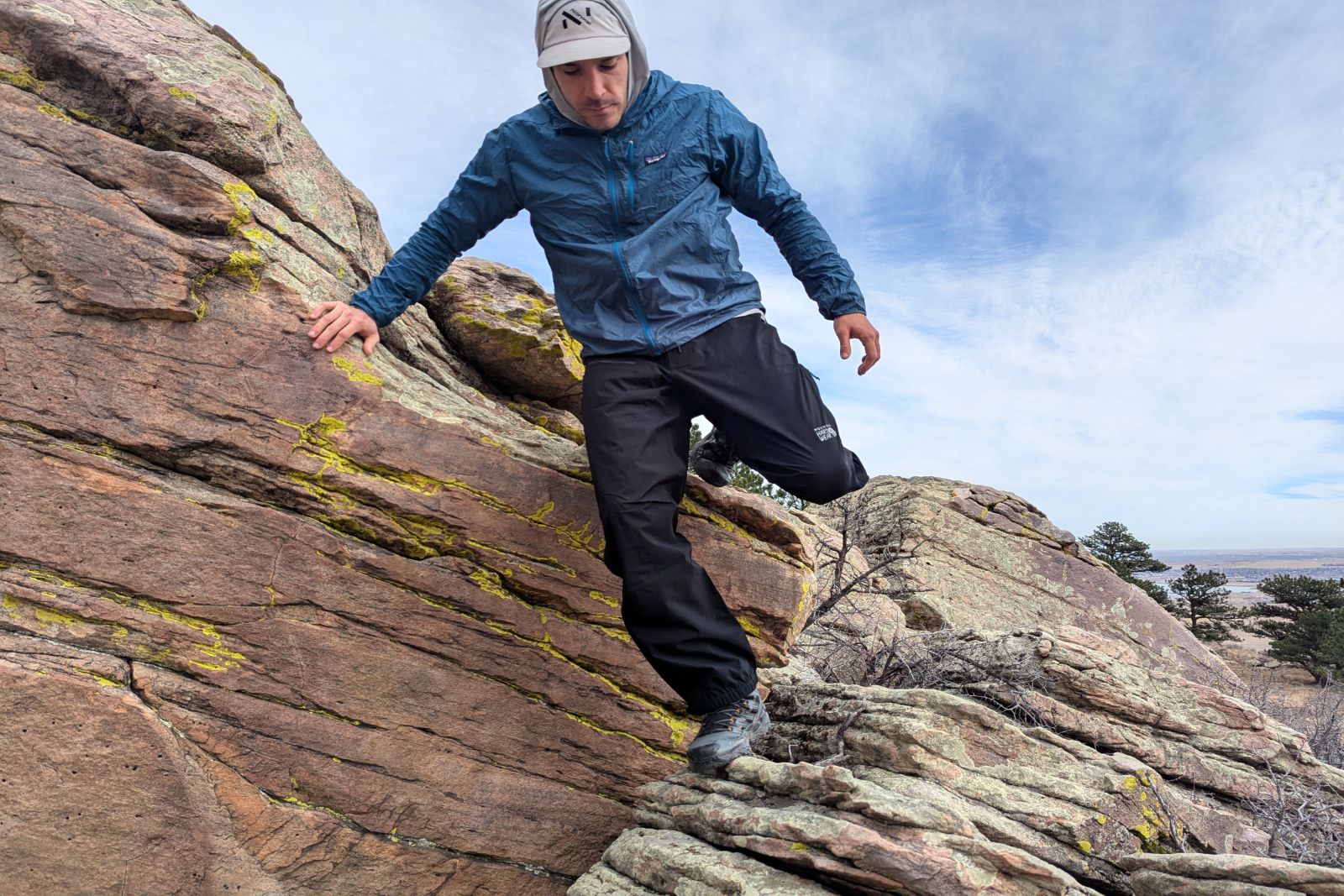
For the published test led by Ian Atkinson, we wore the Stretch Ozonic over three months on Colorado local trails and in early mountain snow. To challenge its waterproof fabric, we ran direct shower tests and let water pool on the material for more than an hour. We also assessed kneeling, squatting, scrambling, the leg-zipped airflow, and signs of snagging after rugged use.
Quick Specs
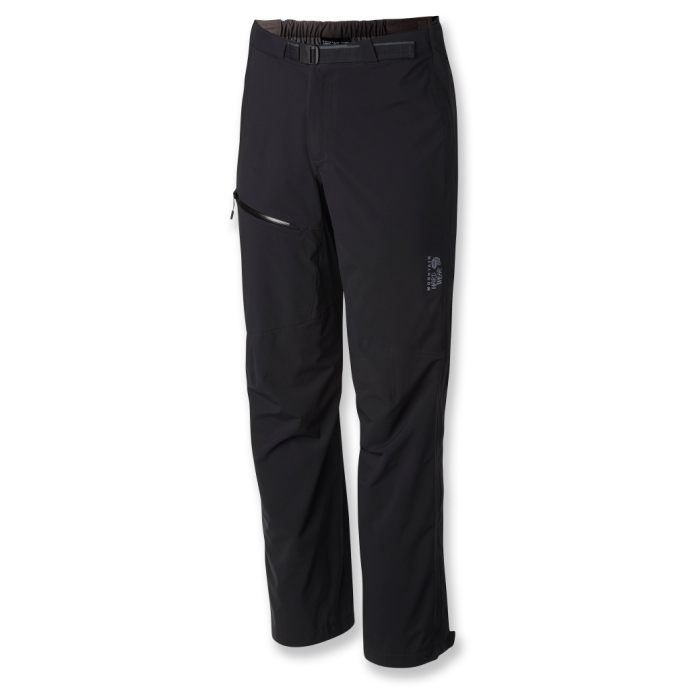
Mountain Hardwear Stretch Ozonic
Best rain pants overall
Price: $175
Measured Weight: 10.9 oz. / 10.6 oz.(Men’s/Women’s)
Pros
- Comfortable (stretchy)
- Quiet
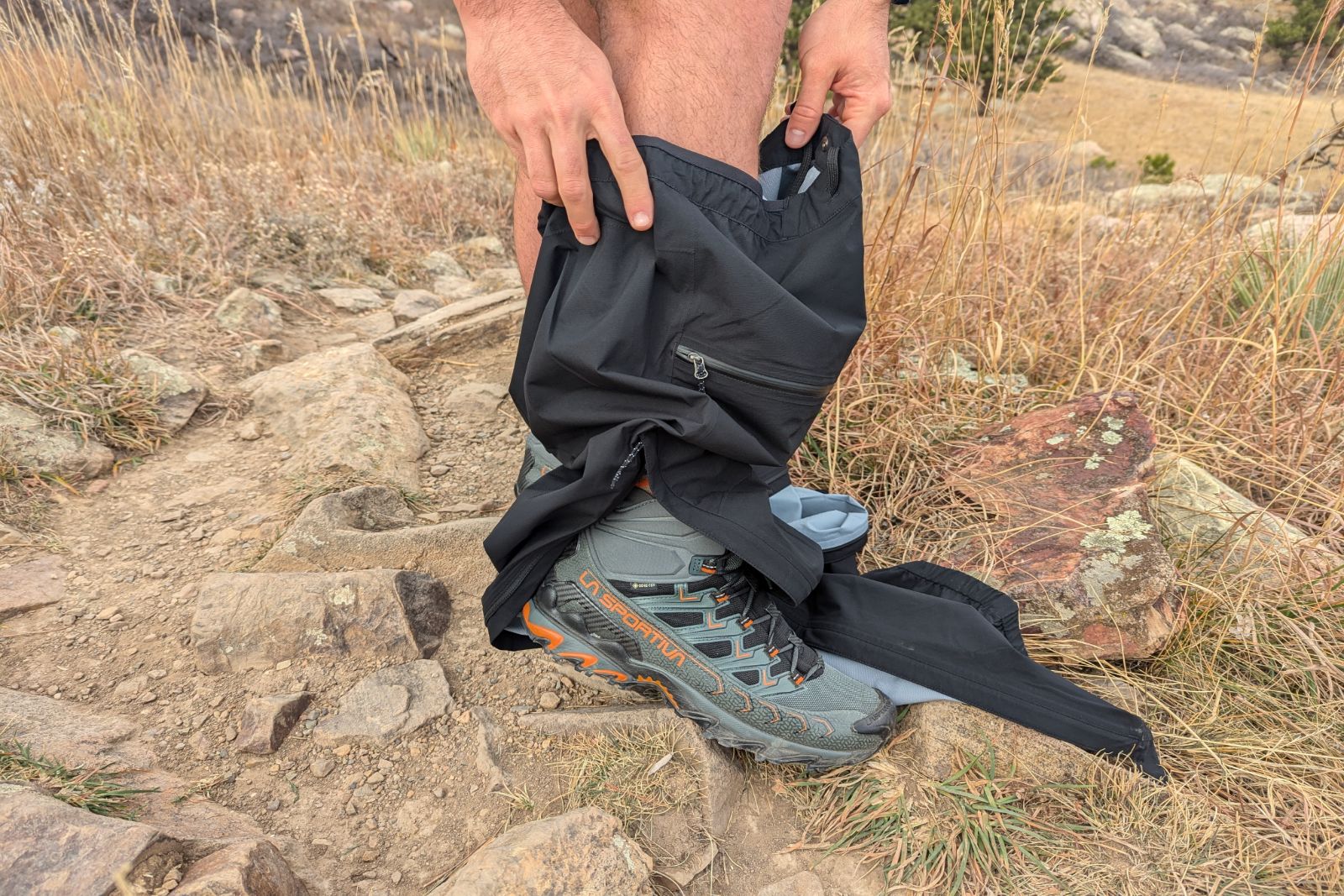
- Full-length zippers for ventilation and easy on/off
- Pack into their own pocket
- Men's have a built-in belt
Cons
- A bit heavier and bulkier than ultralight options
- Limited uses for pocket due to placement

Comfort & Mobility
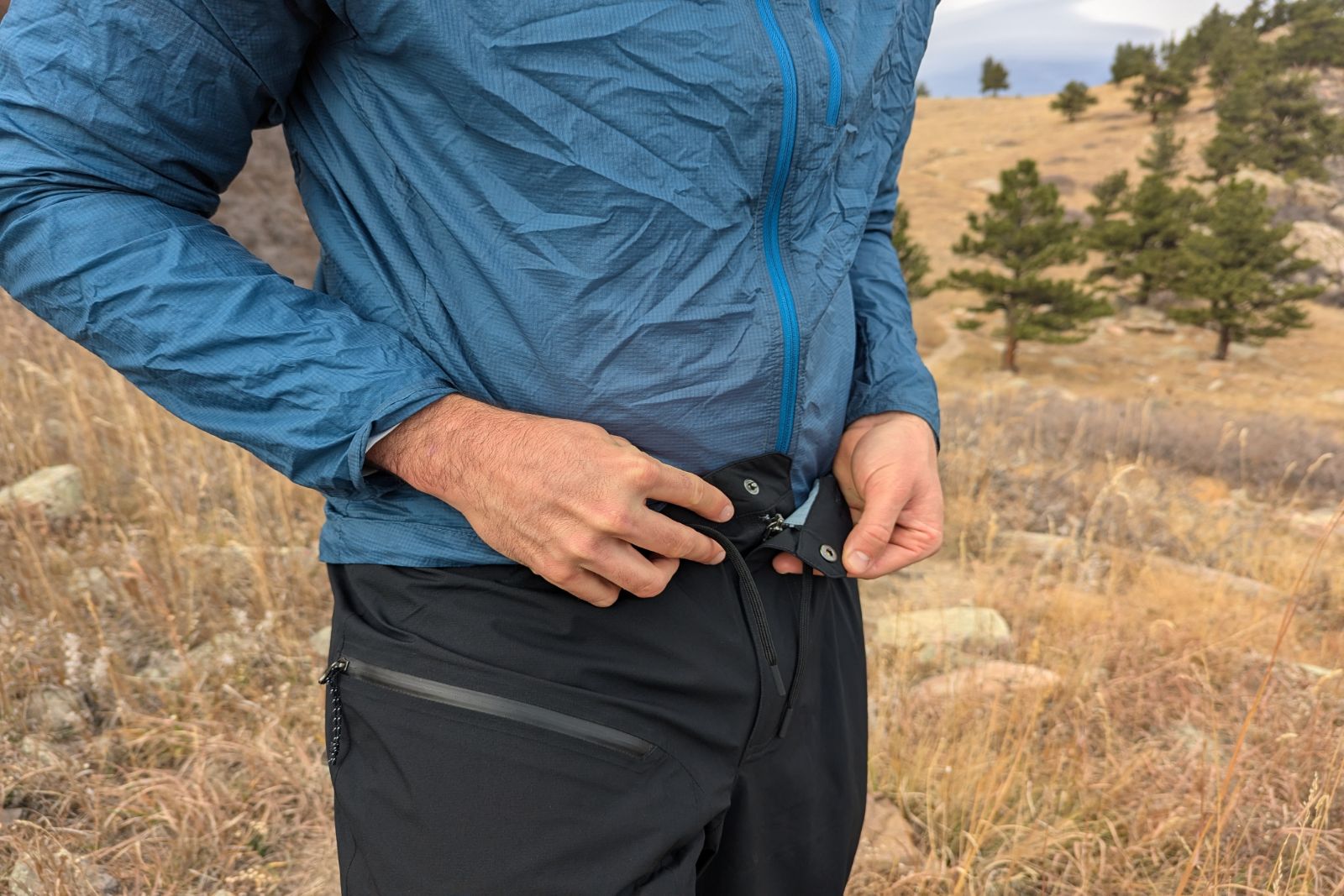
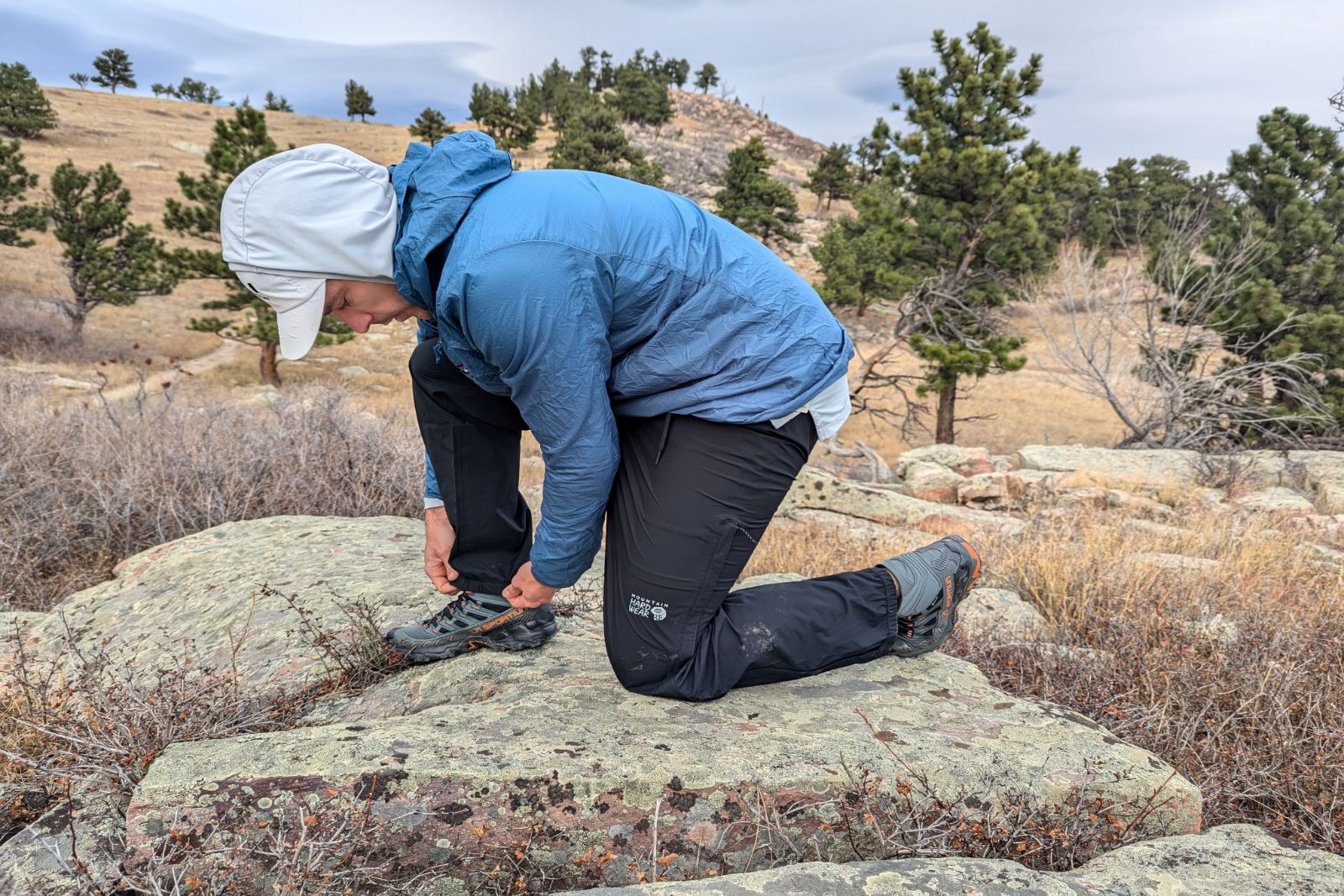
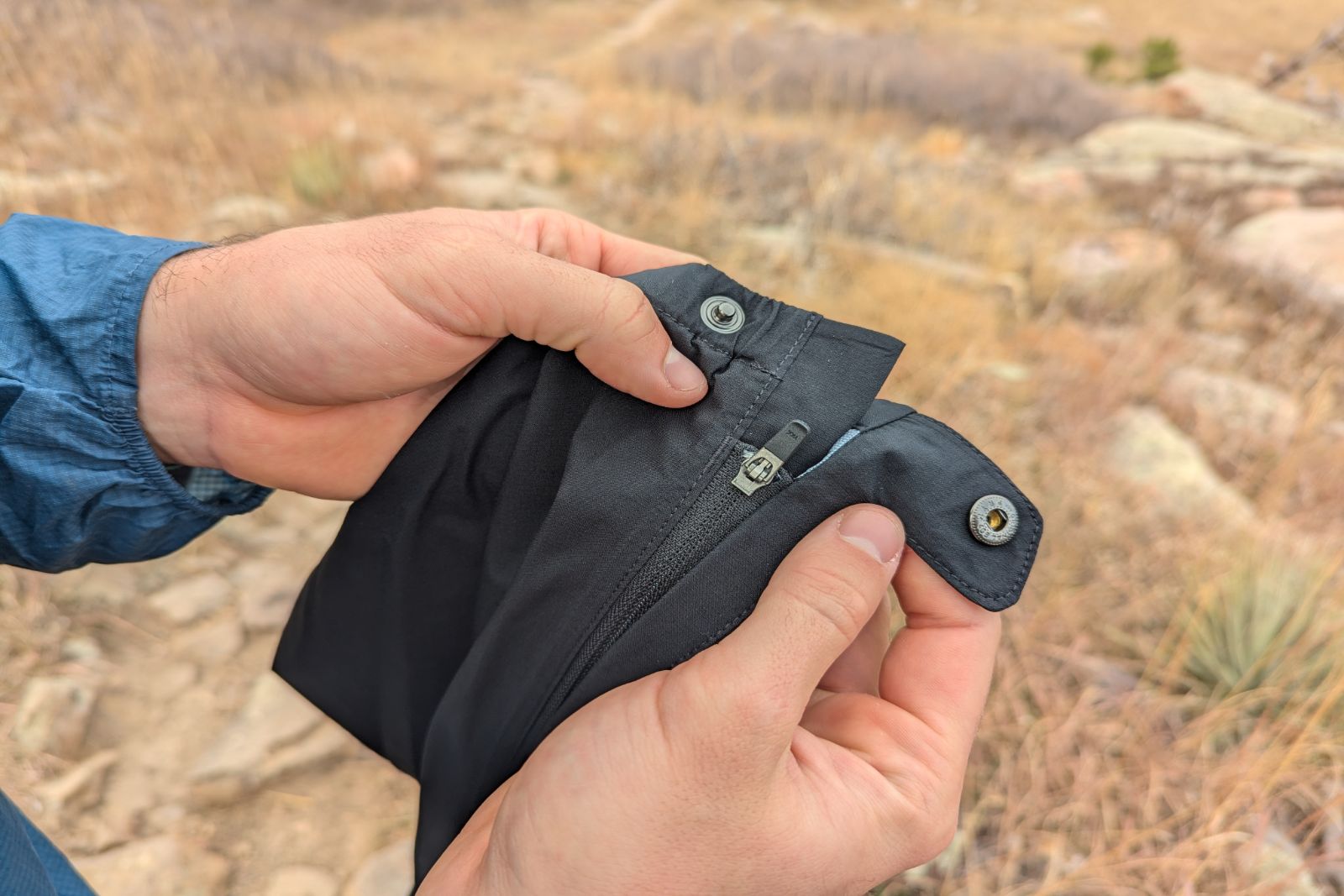
The stretch in the Ozonic fabric genuinely changes how these pants feel while hiking. Squatting to tie boots, kneeling near camp, and stepping high over trail obstacles take less effort than in stiff waterproof pants. During Colorado testing, the elastic waistband and snap closure were comfortable rather than restrictive.
The fabric also makes noticeably less noise. During squats and awkward steps, we didn’t get the pulling sensation at the seat and knees that often comes with stiff waterproof pants. That matters on long hikes when the constant swish of a rigid shell becomes irritating. The fit is neither excessively baggy nor so trim that ordinary hiking layers bunch underneath.
Comfort & Mobility Score: 4.7/5.0
Weather Resistance
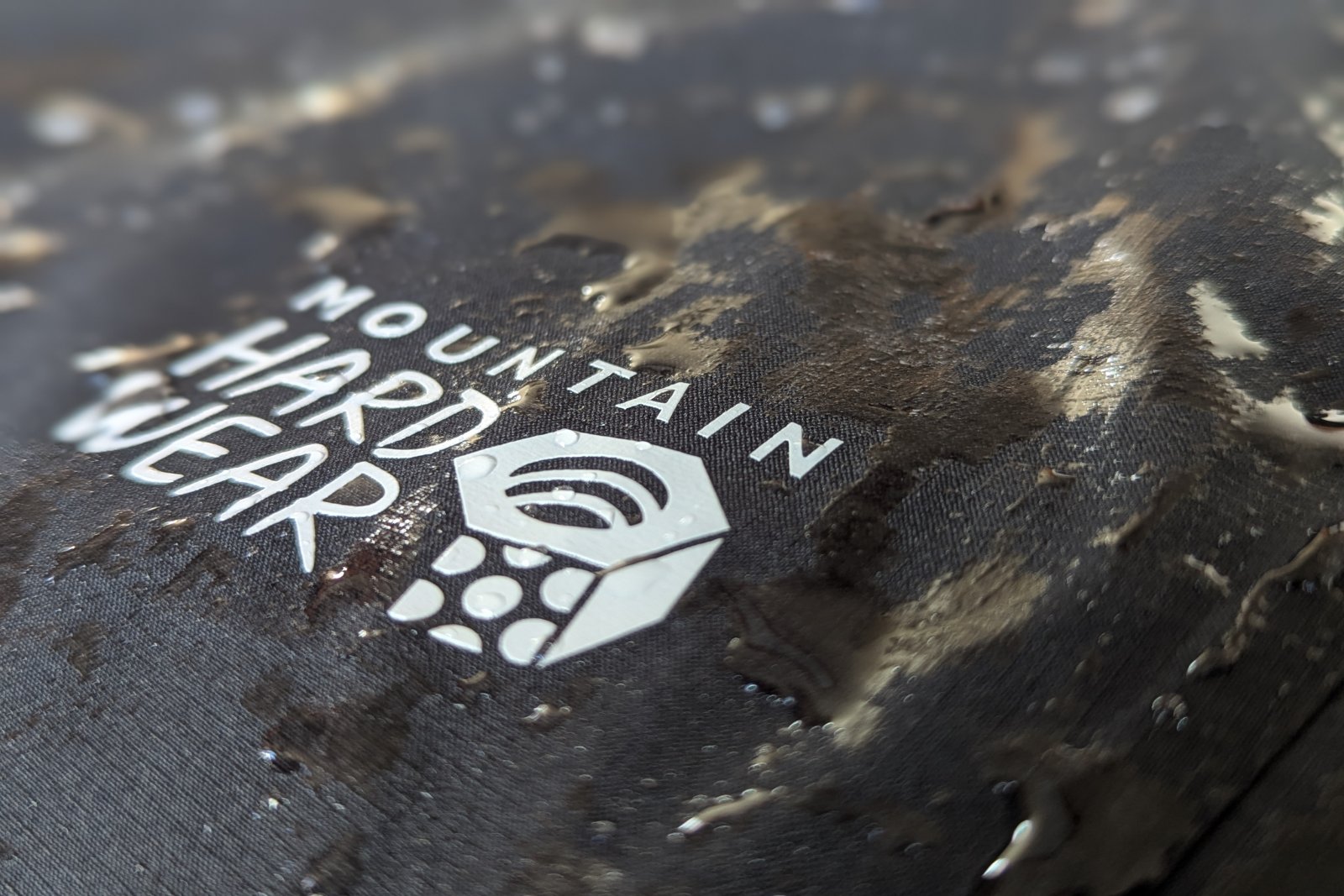
The Ozonic stood up to both outdoor exposure and our controlled tests. We saw no leakage after direct shower pressure or after water had pooled on its surface for over an hour. The fabric also served well as a wind barrier in cold alpine weather.
This is a 2.5-layer waterproof pant intended for hiking and backpacking, not an armored mountaineering shell. The pooled-water and shower tests supported its waterproofing even though the fabric feels remarkably soft against the skin. Its comfort-focused face fabric is more vulnerable to snagging than the rugged Beta or Torrentshell. A hiker expecting prolonged contact with brush should weigh that limitation separately from its excellent water protection.
Weather Resistance Score: 4.6/5.0
Ventilation
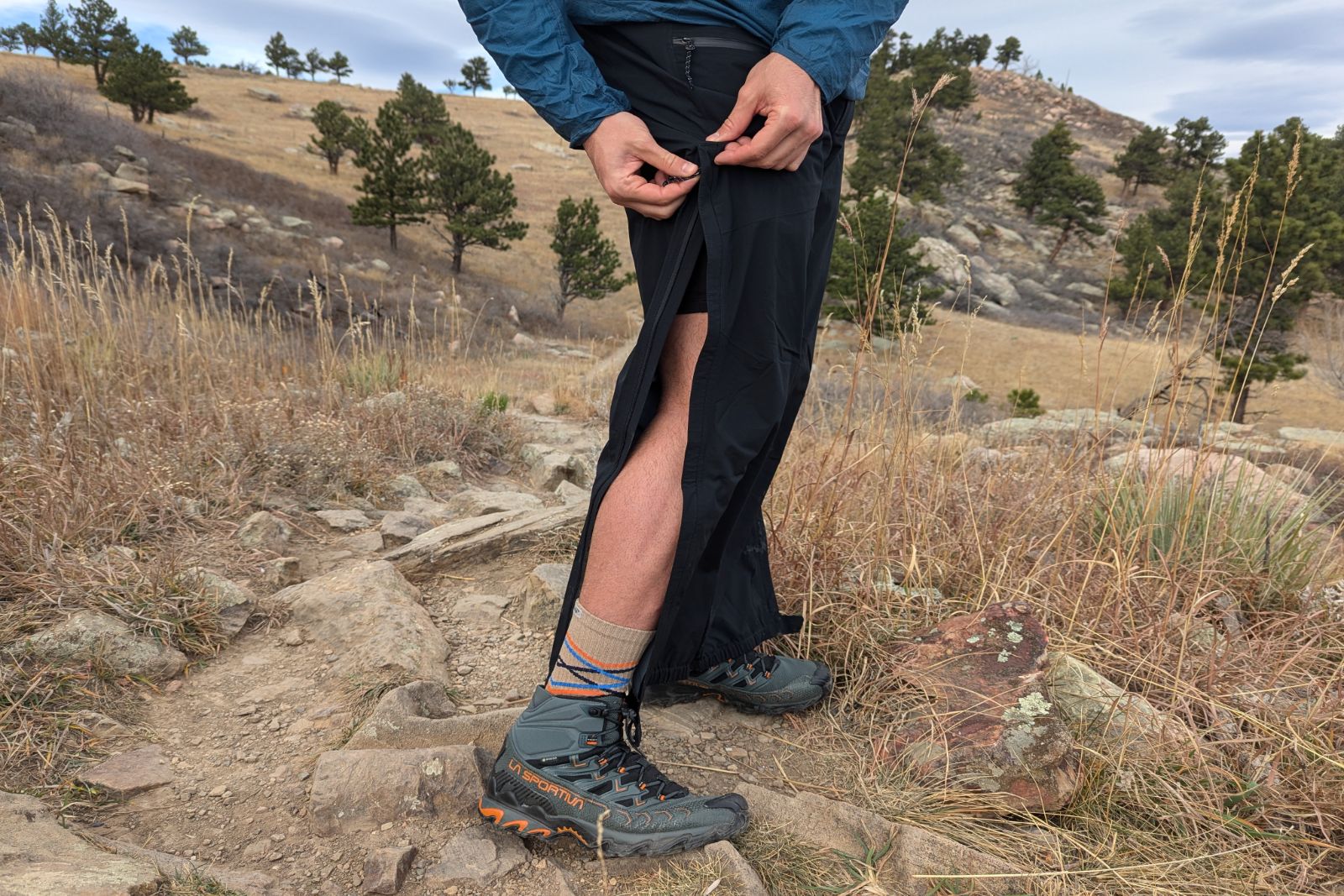
Adjustable side closures let us release heat at different points along the legs. Two zipper pulls allow multiple ventilation configurations on the long side openings. They give us more control over airflow than the short ankle zippers on minimalist shells.
We particularly appreciated being able to regulate airflow without making a full wardrobe change. Two zipper sliders let us adjust the opening based on the climb and the weather, while the not-too-baggy cut avoids a lot of flapping. The reasonably fitted legs also leave a little room for passive circulation without excess fabric flapping around.
Ventilation Score: 4.7/5.0
Weight
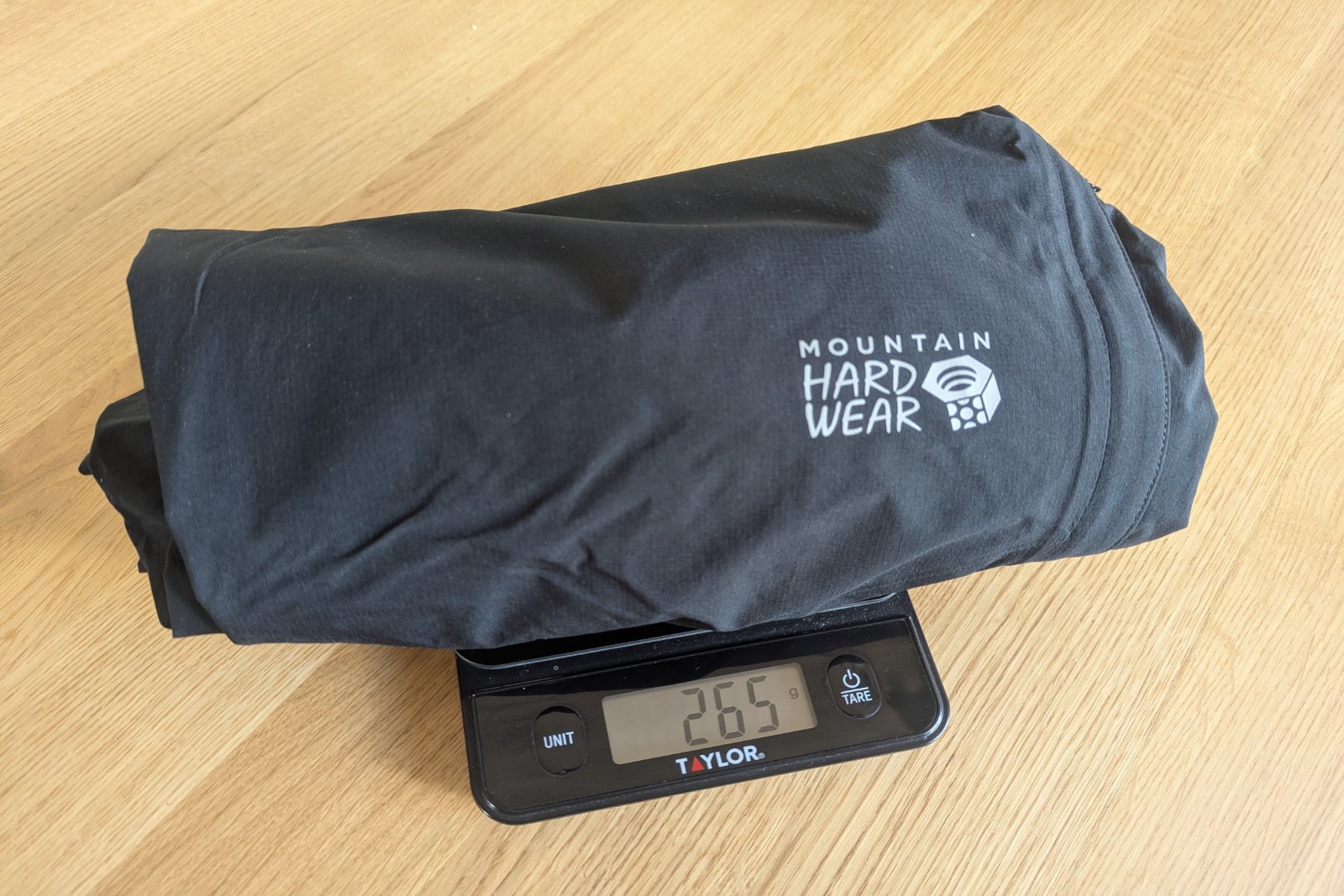
The live gear guide lists 10.9 ounces for the men’s version and 10.6 ounces for women’s. That is a competitive weight for a shell carrying vents, secure storage, and comfortable stretch fabric, but it is not ultralight.
Its soft fabric packs into a manageable bundle for a small backpack or travel bag. The side zipper hardware and roomy thigh pocket add useful function at the expense of a few ounces. Someone who values minimum carried weight above every other feature will still prefer the Vertice or Helium, while regular rain-pants users receive meaningful comfort and convenience in return for the extra ounces.
Weight Score: 4.7/5.0
Durability
We did not find significant wear during our Colorado outings, including travel on rougher trails. The stretchy face isn’t automatically fragile, but sharp branches can catch it more easily than the tougher face of the Beta. Nevertheless, the pliable ripstop face can snag when a branch catches it at the wrong angle. That is a material limitation rather than evidence that it fails under ordinary trail use.
The Ozonic is a better long-term bet for maintained trails and careful backcountry travel than repeated bushwhacking. Hikers who routinely scrape rock or force their way through brush will find more reassuring protection in a thicker, less stretchy shell.
Durability Score: 4.3/5.0
Should You Buy the Mountain Hardware Stretch Ozonic Rain Pants?
Buy the Ozonic if traditional shells feel too rigid, loud, or awkward. It provides real waterproofing while letting you move comfortably through camp chores, steep hikes, and mild alpine weather.
Choose something else for thorny brush, heavy abrasion, or specialized winter mountaineering. The $175 price is easiest to justify if comfort matters whenever the skies open, rather than only on rare emergency outings.
What Other Rain Pants Should You Consider?
Still want to shop for a rainy day? Here are some top contenders to the Mountain Hardware Stretch Ozonics in our best rain pants gear guide.
Black Diamond Fineline Stretch Review: The Fineline is another mobility-first option, with a sleeker fit and low packed weight. Its full-length side openings are convenient when changing over footwear. Unlike the slightly roomier Ozonic, its slim cut can be restrictive with bulky base layers, and it is not designed for punishing abrasion.
Patagonia Torrentshell 3L Review: Pick the Torrentshell if a long-lasting, brush-resistant shell is more important than a soft feel. Its three-layer material handled deliberate rubbing on a Colorado boulder field and offers substantial weather protection for less money. The price you pay is stiffness, walking noise, and a bulkier packed shape.
Arc’teryx Beta Review: The Beta makes more sense for exposed, cold, severe-weather routes where a protective GORE-TEX shell and boot-compatible design matter most. It offers stronger alpine-specific protection but feels bulkier and less flexible during casual hiking. It’s also considerably more expensive than the Ozonic.